Feeling uncertain about what to expect in your upcoming interview? We’ve got you covered! This blog highlights the most important Cardiovascular Endurance interview questions and provides actionable advice to help you stand out as the ideal candidate. Let’s pave the way for your success.
Questions Asked in Cardiovascular Endurance Interview
Q 1. Explain the physiological mechanisms underlying cardiovascular endurance.
Cardiovascular endurance, simply put, is your body’s ability to sustain prolonged physical activity. It’s fueled by the efficient delivery of oxygen and nutrients to working muscles and the removal of metabolic waste products like carbon dioxide and lactic acid. This intricate process involves several key physiological mechanisms:
Respiratory System: Your lungs work harder, increasing both the volume of air inhaled and exhaled (tidal volume) and the breathing rate (respiratory rate). This boosts oxygen uptake.
Cardiovascular System: Your heart pumps more blood per beat (stroke volume) and beats faster (heart rate), increasing cardiac output (the amount of blood pumped per minute). Blood vessels in working muscles dilate (vasodilation), increasing blood flow and oxygen delivery to the muscles. The heart itself becomes more efficient, able to pump more blood with each beat.
Muscular System: Muscles adapt to become more efficient at using oxygen (oxidative capacity). They also increase their capacity to utilize fatty acids as fuel, sparing glycogen stores (carbohydrate storage) and delaying fatigue. This adaptation contributes to the ability to sustain exercise for longer periods.
Metabolic System: Your body becomes better at utilizing oxygen to produce energy (ATP) and at buffering lactic acid, delaying the onset of fatigue. This is crucial for endurance performance, allowing for sustained effort.
Think of it like a well-oiled machine. The better the coordination between your lungs, heart, blood vessels, and muscles, the greater your cardiovascular endurance.
Q 2. Describe the various methods for assessing cardiovascular fitness (e.g., VO2 max, lactate threshold).
Assessing cardiovascular fitness involves various methods, each providing a unique insight into your fitness level:
VO2 Max (maximal oxygen consumption): This is the gold standard, measuring the maximum amount of oxygen your body can utilize during intense exercise. It’s typically measured in a laboratory setting using a graded exercise test on a treadmill or cycle ergometer, analyzing your oxygen uptake at progressively increasing intensities. A higher VO2 max indicates greater cardiovascular fitness.
Lactate Threshold: This is the exercise intensity at which lactate production exceeds lactate clearance. It represents a point where your body can no longer maintain the current workload solely by aerobic metabolism and starts relying increasingly on anaerobic metabolism (which produces lactic acid, causing fatigue). Determining lactate threshold often involves blood lactate analysis during a graded exercise test. A higher lactate threshold indicates better cardiovascular fitness, as you can sustain higher intensities before accumulating lactate.
Submaximal Exercise Tests: These tests estimate VO2 max and lactate threshold based on heart rate responses during submaximal exercise. They are simpler and less expensive than maximal tests but are less accurate.
Field Tests: These tests, like the 1.5-mile run or the Cooper test (12-minute run), assess cardiovascular fitness indirectly using distance covered or time taken. While convenient and inexpensive, they lack the precision of laboratory-based assessments.
The choice of assessment method depends on the context, available resources, and the specific information needed. For example, a general fitness assessment might use a field test, while a more detailed evaluation for an athlete might involve VO2 max testing.
Q 3. What are the different training methods used to improve cardiovascular endurance?
Improving cardiovascular endurance involves various training methods, each with its unique benefits:
Continuous Training: This involves exercising at a steady pace for a prolonged duration, typically at a moderate intensity (e.g., jogging for 30-60 minutes). It improves aerobic capacity and fat burning.
Interval Training: This involves alternating periods of high-intensity exercise with periods of rest or low-intensity exercise. It’s excellent for improving both aerobic and anaerobic capacity. Example: 400m repeats with equal rest periods.
Fartlek Training: This is a Swedish term meaning ‘speed play’. It involves varying the intensity and pace of running throughout a session, incorporating bursts of speed and periods of recovery. It enhances both speed and endurance, improving cardiovascular and metabolic efficiency.
Circuit Training: This method involves performing a series of exercises at different stations, with short rest periods in between. It improves both cardiovascular fitness and muscular strength and endurance.
Tempo Runs: Sustained runs at a comfortably hard pace. Improves lactate threshold.
The optimal training method depends on individual goals, fitness level, and available time. A well-rounded program often incorporates a combination of these methods to achieve comprehensive improvements.
Q 4. Explain the concept of training zones and their relevance to cardiovascular training.
Training zones represent different intensity levels during cardiovascular training, typically based on your maximum heart rate (MHR) or percentage of VO2 max. They are crucial for effective training because different intensities stimulate different physiological adaptations.
Here’s a common breakdown:
Zone 1 (Very Light): Low intensity, often used for warm-up or recovery. Heart rate around 50-60% of MHR. Improves recovery and metabolic efficiency.
Zone 2 (Light): Moderate intensity, ideal for building an aerobic base and improving endurance. Heart rate around 60-70% of MHR. Improves stamina and fat burning.
Zone 3 (Moderate): Harder intensity, increasing cardiovascular capacity and lactate threshold. Heart rate around 70-80% of MHR. Improves cardiovascular capacity.
Zone 4 (Hard): High intensity, improving speed and anaerobic capacity. Heart rate around 80-90% of MHR. Enhances speed and power.
Zone 5 (Maximal): Maximum intensity, for short, all-out efforts. Heart rate above 90% of MHR. Improves VO2 max.
Using training zones allows for systematic progression and prevents overtraining. It ensures that you’re training at the appropriate intensity to achieve specific goals. For example, a beginner might focus primarily on zones 1 and 2, while an elite athlete might incorporate all zones.
Q 5. How do you design a cardiovascular training program for a beginner?
Designing a cardiovascular training program for a beginner should prioritize building a solid aerobic base and avoiding injuries.
Start Slowly: Begin with short durations (15-20 minutes) at a low intensity (Zone 1-2). This allows the body to gradually adapt.
Gradual Progression: Gradually increase duration and intensity over time. A good rule of thumb is to increase either duration or intensity by no more than 10% per week.
Consistency is Key: Aim for at least 3-4 sessions per week, ensuring adequate rest days for recovery.
Choose Activities You Enjoy: This ensures adherence and makes the process more enjoyable. Options include walking, cycling, swimming, or any other activity you find enjoyable.
Listen to Your Body: Pay attention to pain or discomfort and adjust your program accordingly. Rest when needed.
Include Warm-up and Cool-down: A 5-10 minute warm-up and cool-down are essential to prepare the body for exercise and aid recovery.
Example: A beginner’s program might start with 3 sessions per week of 20-minute brisk walks, gradually increasing the duration to 45 minutes over several weeks before progressing to jogging or other activities.
Q 6. How do you design a cardiovascular training program for an elite athlete?
Designing a cardiovascular training program for an elite athlete requires a more sophisticated approach, incorporating periodization (structured training cycles), advanced training methods, and meticulous monitoring.
Periodization: The training year is divided into different phases (macrocycles), each with specific goals and training methods. These include preparation, competition, and transition phases.
High-Volume Training: Elite athletes train at high volumes (duration and intensity) to maximize adaptations. This might involve multiple sessions per day or week.
Advanced Training Methods: Incorporating advanced methods like high-intensity interval training (HIIT), tempo runs, and altitude training is crucial for pushing the physiological limits.
Monitoring and Adjustment: Regular monitoring of training load, performance, and physiological markers (e.g., heart rate variability, lactate levels) is essential for adjusting the program based on individual needs and recovery status.
Individualization: The program should be tailored to the athlete’s specific sport, strengths, and weaknesses, incorporating specific drills and exercises relevant to their sport.
Nutritional and Rest Strategies: Optimal nutrition and sleep are critical to support high-volume training and enhance recovery.
For example, an elite marathon runner’s program might involve a combination of long slow distance runs, tempo runs, interval training, and hill workouts, strategically planned throughout the year to optimize performance at key competitions.
Q 7. What are the adaptations that occur in the cardiovascular system in response to endurance training?
Endurance training induces significant adaptations in the cardiovascular system, enhancing its efficiency and capacity:
Increased Stroke Volume: The heart becomes more efficient, pumping more blood with each beat, increasing stroke volume.
Increased Cardiac Output: The combination of increased stroke volume and heart rate leads to a higher cardiac output, delivering more oxygen and nutrients to the muscles.
Increased Blood Volume: The blood volume increases, further enhancing oxygen delivery capacity.
Increased Capillarization: The density of capillaries (tiny blood vessels) in muscles increases, improving oxygen and nutrient diffusion into the muscle tissues.
Improved Mitochondrial Density: The number of mitochondria (powerhouses of the cells) in muscle cells increases, boosting the capacity for aerobic energy production.
Increased Myoglobin Content: Myoglobin, an oxygen-binding protein in muscle cells, increases, improving oxygen storage and utilization within the muscles.
Lower Resting Heart Rate: The heart becomes more efficient, requiring fewer beats per minute at rest.
Improved Blood Lipid Profile: Endurance training can improve blood lipid profiles, reducing the risk of cardiovascular disease.
These adaptations demonstrate the profound impact of endurance training on cardiovascular health and performance. The body’s remarkable capacity to adapt to stress leads to significant improvements in fitness levels.
Q 8. Explain the importance of periodization in cardiovascular training programs.
Periodization in cardiovascular training is like strategically planning a marathon, not just running every day at the same pace. It involves systematically manipulating training variables—volume, intensity, and frequency—over time to optimize performance and minimize the risk of injury and burnout. Instead of consistently high-intensity workouts, periodization divides training into distinct phases: a preparatory phase focusing on building a base, a competitive phase emphasizing race-specific training, and a recovery phase allowing for rest and regeneration.
- Preparatory Phase: Focuses on building a strong aerobic base through moderate-intensity, long-duration training. Think building the foundation of a house – you need a solid base before you can build the walls.
- Competitive Phase: Introduces higher-intensity workouts, including interval training and tempo runs, to improve speed and endurance. This is like fine-tuning the car before the race – optimizing performance.
- Recovery Phase: Emphasizes active recovery and reduced training volume to allow the body to repair and adapt. This is the crucial downtime after the race, allowing the body to recover and prepare for the next challenge.
For example, a cyclist might start with long, easy rides in the preparatory phase, gradually increasing the duration and incorporating hill climbs. In the competitive phase, they might include high-intensity interval training sessions and race simulations. Finally, the recovery phase involves shorter, easier rides or complete rest.
Q 9. Describe the role of nutrition in supporting cardiovascular endurance.
Nutrition is the fuel for your cardiovascular engine. Proper nutrition plays a crucial role in supporting cardiovascular endurance by providing the energy needed for training, promoting recovery, and minimizing the risk of injury. It’s about providing the right types and amounts of nutrients at the right times.
- Carbohydrates: The primary fuel source for endurance activities. Complex carbohydrates like whole grains, fruits, and vegetables provide sustained energy.
- Protein: Essential for muscle repair and growth, crucial for recovery after intense training. Lean sources like chicken, fish, beans, and lentils are excellent choices.
- Fats: Provide energy and support hormone production. Healthy fats like avocados, nuts, and olive oil should be included.
- Hydration: Crucial for maintaining body temperature and preventing dehydration, which can significantly impair performance.
- Micronutrients: Vitamins and minerals play various roles in energy production and overall health. A balanced diet generally ensures adequate intake.
Imagine a car—it needs the right type of fuel (carbohydrates) for optimal performance. Regular maintenance (protein for muscle repair) and proper lubrication (hydration) are vital. Ignoring these aspects will lead to poor performance and potential breakdowns.
Q 10. How do you monitor and adjust training based on physiological indicators?
Monitoring and adjusting training based on physiological indicators is crucial for optimizing performance and preventing overtraining. These indicators provide valuable feedback on the body’s response to training.
- Heart Rate Variability (HRV): A measure of the variation in time intervals between heartbeats. Lower HRV can indicate increased stress and potential overtraining.
- Resting Heart Rate (RHR): A consistently elevated RHR can signal overtraining or inadequate recovery.
- Lactate Threshold: The point at which lactate production exceeds removal. Monitoring lactate threshold helps determine appropriate training intensities.
- Performance Data: Tracking race times, training paces, and power output provides objective measures of progress or decline.
- Subjective Feedback: Monitoring perceived exertion (RPE), sleep quality, mood, and appetite provides valuable insights into overall well-being.
For example, if an athlete’s HRV consistently decreases, and their RHR increases, it may be a sign to reduce training volume or intensity. Similarly, a decline in performance despite increased training volume would warrant a reassessment of the training plan.
Q 11. Explain the concept of overtraining and its symptoms.
Overtraining, also known as overreaching, occurs when the volume, intensity, or frequency of training exceeds the body’s capacity to recover. It’s like constantly demanding more from your engine without giving it time to cool down and recharge. This leads to a state of chronic fatigue and decreased performance.
- Physical Symptoms: Persistent fatigue, muscle soreness, decreased performance, frequent illness, sleep disturbances.
- Psychological Symptoms: Irritability, decreased motivation, anxiety, depression.
- Physiological Symptoms: Elevated resting heart rate, decreased heart rate variability, increased blood pressure.
Imagine a marathon runner who consistently trains at high intensity without adequate rest. Their body will eventually break down, resulting in decreased performance, injuries, and potentially burnout.
Q 12. How do you prevent overtraining in endurance athletes?
Preventing overtraining requires a holistic approach, focusing on both training and recovery.
- Appropriate Training Loads: Gradually increase training volume and intensity to allow the body to adapt. Avoid sudden jumps in training.
- Adequate Rest and Recovery: Prioritize sufficient sleep, nutrition, and active recovery strategies. Include rest days and deloading periods in the training plan.
- Monitoring Physiological Indicators: Regularly assess HRV, RHR, and other indicators to detect early signs of overtraining.
- Listen to Your Body: Pay attention to subjective feedback, including fatigue levels, mood, and appetite. Don’t ignore warning signs.
- Individualized Training Plans: Training programs should be tailored to individual needs and capabilities.
Think of it like a gardener nurturing a plant—you need to provide the right amount of water (training), sunlight (intensity), and nutrients (nutrition), but also allow for rest periods to avoid overwatering or over-fertilizing.
Q 13. What is the importance of recovery in cardiovascular training?
Recovery is not just about rest; it’s an active process that allows the body to adapt to training stress and rebuild. It’s the time when the body repairs damaged tissues, replenishes energy stores, and strengthens itself. Without adequate recovery, training becomes counterproductive, leading to overtraining and injuries.
- Sleep: 7-9 hours of quality sleep is crucial for muscle repair and hormonal regulation.
- Nutrition: Replenishing glycogen stores and providing essential nutrients is vital for recovery.
- Active Recovery: Low-intensity activities like walking, swimming, or cycling promote blood flow and reduce muscle soreness.
- Stress Management: Techniques like yoga, meditation, or deep breathing can help reduce stress and improve recovery.
Consider a blacksmith forging a sword. They can’t constantly hammer the metal; they need to cool it down periodically to prevent cracking. Similarly, athletes need recovery periods to allow their bodies to adapt to training stress and build resilience.
Q 14. What are the common injuries associated with endurance training?
Endurance training, while beneficial, increases the risk of certain injuries due to repetitive stress and high impact.
- Runner’s Knee (Patellofemoral Pain Syndrome): Pain around the kneecap due to overuse or improper running form.
- Plantar Fasciitis: Inflammation of the plantar fascia, the tissue on the bottom of the foot.
- Shin Splints (Medial Tibial Stress Syndrome): Pain along the shinbone due to overuse or improper footwear.
- Stress Fractures: Tiny cracks in the bone due to repetitive stress.
- Achilles Tendinitis: Inflammation of the Achilles tendon.
These injuries often occur due to factors like improper training progression, inadequate footwear, biomechanical issues, or lack of rest and recovery. Prevention strategies include proper warm-up and cool-down routines, gradual increase in training load, appropriate footwear, and addressing biomechanical imbalances.
Q 15. How do you prevent injuries related to cardiovascular endurance training?
Preventing injuries in cardiovascular endurance training is paramount. It’s not about avoiding all activity, but about smart training. We achieve this through a multi-pronged approach focusing on gradual progression, proper warm-up and cool-down, and attentive listening to your body.
Gradual Progression: Think of building a house – you don’t build the roof before the foundation. Similarly, gradually increase training volume and intensity. A common mistake is increasing mileage or intensity too quickly, leading to overuse injuries like runner’s knee or shin splints. A good rule of thumb is to increase weekly mileage by no more than 10%.
Proper Warm-up and Cool-down: A dynamic warm-up, involving exercises that mimic the activity (e.g., light jogging, leg swings for running), prepares muscles and joints for exertion. A cool-down, with light cardio and static stretches, helps reduce muscle soreness and improve recovery.
Listen to Your Body: Pain is your body’s way of telling you something is wrong. Don’t ignore aches or pains; rest or modify your training as needed. Ignoring pain can lead to chronic injuries. Rest and recovery are crucial parts of the training process.
Proper Footwear and Equipment: Invest in appropriate running shoes that fit well and provide adequate support. For other activities, make sure equipment is properly adjusted and in good condition.
Strength Training: Incorporating strength training builds muscle strength and stability, reducing the risk of injuries. We’ll discuss this in more detail in a later question.
Career Expert Tips:
- Ace those interviews! Prepare effectively by reviewing the Top 50 Most Common Interview Questions on ResumeGemini.
- Navigate your job search with confidence! Explore a wide range of Career Tips on ResumeGemini. Learn about common challenges and recommendations to overcome them.
- Craft the perfect resume! Master the Art of Resume Writing with ResumeGemini’s guide. Showcase your unique qualifications and achievements effectively.
- Don’t miss out on holiday savings! Build your dream resume with ResumeGemini’s ATS optimized templates.
Q 16. Describe the role of heart rate variability in assessing training status.
Heart rate variability (HRV) is the variation in the time interval between consecutive heartbeats. It’s a powerful indicator of the autonomic nervous system’s balance and is a valuable tool for assessing training status. High HRV generally suggests good fitness and recovery, while low HRV may indicate overtraining or illness.
In practical terms, we use HRV data to personalize training plans. For instance, if an athlete’s HRV is consistently low, it might signal a need for reduced training volume or increased rest. Conversely, consistently high HRV suggests the athlete is well-recovered and ready for a more intense training block. We track HRV trends over time, looking for patterns rather than focusing on single data points.
It’s important to note that HRV is just one piece of the puzzle. It needs to be considered alongside other factors like performance metrics, perceived exertion, and subjective wellness reports.
Q 17. What are the benefits of interval training for cardiovascular endurance?
Interval training, which involves alternating high-intensity bursts with periods of rest or low-intensity activity, offers significant benefits for cardiovascular endurance. It’s incredibly effective because it improves both aerobic and anaerobic fitness.
Improved VO2 Max: High-intensity intervals push your body to its limits, increasing your maximum oxygen uptake (VO2 Max), a key indicator of aerobic fitness.
Enhanced Lactate Threshold: Interval training improves your lactate threshold – the point at which lactate production exceeds removal. This allows you to sustain higher intensities for longer periods.
Increased Mitochondrial Density: High-intensity intervals stimulate the growth of mitochondria, the powerhouses of your cells, improving your body’s ability to use oxygen efficiently.
Time Efficiency: You can achieve significant fitness improvements in less time compared to traditional steady-state cardio. For a busy athlete, this is a huge advantage.
An example of an interval training workout could be 8 x 400m repeats at near-maximal effort with 400m jog recovery between each repeat. The specific intervals and recovery periods are adjusted based on the athlete’s fitness level and training goals.
Q 18. How do you incorporate strength training into a cardiovascular endurance program?
Strength training is not optional but essential for optimal cardiovascular endurance performance. It significantly reduces the risk of injury, improves efficiency of movement, and can even enhance endurance performance itself.
Injury Prevention: Stronger muscles provide better support to joints, reducing the risk of overuse injuries, especially in high-impact activities.
Improved Running Economy: Strength training, particularly focusing on the lower body, can improve running economy. This means you can run the same distance with less effort, resulting in improved performance and reduced fatigue.
Enhanced Power Output: Strength training increases the power output of muscles, leading to greater speed and acceleration during activities.
I typically incorporate strength training 2-3 times per week, focusing on compound exercises (squats, deadlifts, lunges, rows) that work multiple muscle groups simultaneously. The exercises are chosen based on the athlete’s specific needs and the demands of their chosen sport. It’s important to maintain a balance between strength and endurance training to prevent overtraining and maximize results.
Q 19. Explain the importance of flexibility and mobility in endurance training.
Flexibility and mobility are often overlooked but are critical components of a comprehensive endurance training program. They enhance performance, reduce injury risk, and promote recovery.
Improved Range of Motion: Flexibility and mobility exercises increase the range of motion in joints, allowing for more efficient movement patterns during exercise. This leads to better performance and reduced strain on muscles and joints.
Injury Prevention: Tight muscles and limited mobility can increase the risk of injury. Regular stretching and mobility work help to counteract this.
Enhanced Recovery: Flexibility exercises help to reduce muscle soreness and stiffness, improving recovery after training sessions.
I usually recommend incorporating flexibility and mobility work into the daily routine, focusing on both static (holding a stretch) and dynamic (moving stretches) exercises. Specific exercises will be chosen based on the athlete’s individual needs and any muscle imbalances.
Q 20. Describe the role of sleep in optimizing cardiovascular endurance performance.
Sleep is not merely a period of rest; it’s a crucial time for physical and mental restoration. Adequate sleep is vital for optimizing cardiovascular endurance performance.
Hormonal Regulation: During sleep, the body releases hormones that promote muscle repair and growth. Insufficient sleep can disrupt this process, hindering recovery and potentially impacting performance.
Immune Function: Sleep deprivation weakens the immune system, making athletes more susceptible to illness, which can disrupt training and compromise performance.
Cognitive Function: Sleep is essential for cognitive function, which is important for making sound training decisions and reacting appropriately during competition.
Improved Cardiovascular Function: Studies have shown a link between sleep quality and cardiovascular health, indicating that adequate sleep can positively impact the efficiency of the heart and circulatory system.
I always emphasize the importance of 7-9 hours of quality sleep per night to my athletes. Strategies for improving sleep quality include maintaining a regular sleep schedule, creating a relaxing bedtime routine, and optimizing the sleep environment (dark, quiet, and cool).
Q 21. How do you assess an athlete’s readiness to return to training after an injury?
Assessing an athlete’s readiness to return to training after an injury is a crucial step in preventing re-injury and ensuring a safe and effective return to competition. It’s not just about the absence of pain, but a holistic assessment of the athlete’s physical and functional capacity.
Medical Clearance: The athlete must receive medical clearance from a physician or physical therapist confirming that the injury has healed sufficiently.
Pain-Free Range of Motion: The athlete should have full pain-free range of motion in the injured area.
Functional Movement Assessment: Tests should assess the athlete’s ability to perform functional movements related to their sport without pain or compensation. This might involve running, jumping, or specific sport-specific drills.
Gradual Return to Training: A phased return to training is essential, starting with low-intensity activities and gradually increasing volume and intensity over time. This is a critical stage in injury prevention.
Monitoring for Signs of Re-injury: Close monitoring for any signs of pain, swelling, or decreased function is crucial throughout the return-to-training process.
This process often requires collaboration between the athlete, coach, physician, and physical therapist. A structured and cautious approach is key to ensuring a successful and sustainable return to training.
Q 22. Explain the importance of proper warm-up and cool-down routines.
Proper warm-up and cool-down routines are crucial for optimizing cardiovascular training, injury prevention, and overall performance. Think of it like preparing your car engine before a long drive and letting it cool down afterwards.
Warm-up: A good warm-up gradually increases your heart rate and blood flow, preparing your muscles and cardiovascular system for exertion. This typically involves 5-10 minutes of light cardio, such as brisk walking or jogging, followed by dynamic stretching (movements like arm circles and leg swings) to improve range of motion. This prevents muscle strains and prepares your body for the demands of the workout.
Cool-down: Equally important is the cool-down, which gradually reduces your heart rate and allows your body to recover. This usually involves 5-10 minutes of low-intensity cardio, followed by static stretching (holding stretches for 20-30 seconds), promoting flexibility and reducing muscle soreness. This helps prevent blood pooling in the limbs and aids in the removal of metabolic waste products from muscles.
Example: A warm-up for a 30-minute run could involve 5 minutes of brisk walking, followed by dynamic stretches such as arm circles, leg swings, and torso twists. The cool-down could consist of 5 minutes of slow walking and static stretches holding each for 20-30 seconds, targeting major muscle groups like quads, hamstrings, and calves.
Q 23. What are some strategies for motivating clients to maintain their cardiovascular fitness?
Maintaining cardiovascular fitness requires consistent effort and motivation. Strategies to keep clients engaged include setting realistic goals, incorporating variety, and fostering a sense of community.
- Goal Setting: Collaboratively establish SMART goals (Specific, Measurable, Achievable, Relevant, Time-bound). Instead of a vague goal like ‘get fitter’, aim for concrete milestones like ‘run a 5k in under 30 minutes in three months’.
- Variety: Avoid monotony by offering diverse activities – running, swimming, cycling, dancing. This prevents boredom and challenges different muscle groups. Cross-training can also reduce the risk of overuse injuries.
- Community Building: Group training sessions, fitness challenges, or online support groups create a sense of accountability and camaraderie, making fitness a social experience. Share success stories and celebrate milestones together.
- Tracking Progress: Utilizing fitness trackers or apps visually showcases improvement, reinforcing positive reinforcement. Clients seeing their progress motivates them to continue.
- Reward System: Small rewards for meeting milestones can boost motivation. These don’t have to be extravagant; a new workout outfit or a relaxing massage can be motivating.
Example: For a client aiming to improve their cardiovascular fitness, you might start with a 30-minute brisk walk three times a week. Gradually increase the duration or intensity by adding interval training (alternating between high and low intensity) or hill sprints. Then, introduce cycling or swimming to maintain variety and prevent boredom. Regularly track their progress and celebrate their achievements together.
Q 24. How do you adapt training programs to accommodate individual differences and limitations?
Adapting training programs for individual differences is critical for safety and effectiveness. This requires understanding their current fitness level, any limitations (physical or health conditions), and their personal goals.
- Fitness Assessment: A thorough assessment, including medical history, fitness tests (e.g., resting heart rate, VO2 max), and movement screenings, helps determine a starting point and identify limitations.
- Progressive Overload: Gradually increasing the intensity, duration, or frequency of workouts ensures continuous progress without overtraining or injury. This might involve increasing running distance, adding incline to walks, or incorporating higher intensity intervals.
- Individualization: Tailor programs to accommodate specific needs. For example, a client with arthritis may benefit from low-impact activities like swimming or cycling, while someone with asthma needs to manage exertion carefully. Modifications to exercises are also critical; using modified push-ups for someone with back pain.
- Modifications: Offer modifications of exercises to suit different skill levels and physical capabilities. This can involve reducing repetitions, using lighter weights, or adjusting exercise positions.
- Regular Monitoring and Adjustment: Closely monitor the client’s response to training and adjust the program as needed. This may involve reducing intensity if they experience pain or excessive fatigue. Open communication is paramount here.
Example: A client with knee pain might benefit from cycling or elliptical training instead of running. A beginner might start with short walks and gradually progress to jogging, while an experienced runner might incorporate speed intervals and hill work. Modifications may be implemented to adjust the intensity or impact of specific exercises.
Q 25. Describe the relationship between cardiovascular endurance and overall health.
Cardiovascular endurance is strongly linked to overall health, impacting various systems and reducing the risk of chronic diseases. Strong cardiovascular health is like having a robust engine in your body.
- Reduced Risk of Chronic Diseases: Improved cardiovascular fitness lowers the risk of heart disease, stroke, type 2 diabetes, certain cancers, and obesity. It strengthens the heart muscle, improves blood pressure and cholesterol levels, and helps regulate blood sugar.
- Improved Mental Health: Exercise releases endorphins, which have mood-boosting effects. Regular cardiovascular activity can reduce symptoms of anxiety and depression and enhance cognitive function.
- Increased Energy Levels: A stronger cardiovascular system efficiently delivers oxygen and nutrients to the body’s tissues, leading to increased stamina and energy levels throughout the day.
- Better Sleep Quality: Regular physical activity promotes better sleep patterns and reduces insomnia. It helps regulate your body’s natural sleep-wake cycle.
- Stronger Immune System: Moderate exercise can strengthen the immune system, making you less susceptible to infections.
Example: Studies have shown that individuals with higher levels of cardiovascular fitness have a significantly lower risk of developing heart disease and other chronic illnesses compared to those with lower fitness levels. Regular exercise enhances the body’s ability to handle stress, improving both physical and mental well-being.
Q 26. What are the key considerations for designing a cardiovascular program for a client with a pre-existing medical condition?
Designing a cardiovascular program for a client with a pre-existing medical condition requires careful consideration and collaboration with their physician. It’s crucial to prioritize safety and gradually increase intensity.
- Medical Clearance: Always obtain medical clearance from their physician before starting any exercise program. This is especially important for clients with heart conditions, diabetes, or other health concerns.
- Individualized Assessment: Conduct a thorough assessment to understand the specific limitations and restrictions related to their condition. This includes understanding medication use and potential side effects.
- Low-Impact Activities: Choose low-impact activities that minimize stress on joints and the cardiovascular system. Walking, swimming, cycling, and water aerobics are often suitable choices.
- Gradual Progression: Start with a very low intensity and gradually increase the duration and intensity of exercise as tolerated. Closely monitor their response throughout.
- Symptom Monitoring: Teach the client to recognize and respond appropriately to any symptoms such as chest pain, shortness of breath, dizziness, or unusual fatigue. Stress the importance of stopping if these occur.
- Medication Considerations: Be aware of any medications they are taking that may affect their exercise response. Certain medications can impact heart rate and blood pressure.
Example: A client with hypertension (high blood pressure) might start with 15 minutes of brisk walking three times a week, gradually increasing duration and intensity under medical supervision. Regular monitoring of blood pressure is crucial. Exercise should be adjusted based on their response and medical advice.
Q 27. Explain the role of technology (e.g., wearables) in monitoring and tracking cardiovascular fitness.
Technology, such as wearable fitness trackers and heart rate monitors, plays a significant role in monitoring and tracking cardiovascular fitness. Think of them as advanced dashboards for your body.
- Heart Rate Monitoring: Wearables accurately measure heart rate during exercise, providing valuable data on intensity levels and training zones. This helps ensure clients are working within their target heart rate ranges.
- Activity Tracking: Track steps, distance, calories burned, and duration of workouts. This helps clients visualize their progress and maintain motivation.
- Sleep Monitoring: Many devices track sleep patterns, which is crucial because sleep quality affects recovery and overall fitness. Poor sleep can hinder progress.
- Data Analysis: Data from wearables can be analyzed to identify trends and adjust training programs accordingly. This provides personalized feedback and allows for adjustments to intensity or duration.
- Objective Measurement: Provides objective data that supplements subjective feedback, leading to a more comprehensive understanding of fitness progress.
Example: Using a heart rate monitor, a client can ensure they are exercising within their target heart rate zone during a run. A fitness tracker can show the total distance covered and calories burned, providing clear evidence of progress and motivating continued engagement.
Q 28. How do you communicate effectively with athletes and clients about their cardiovascular fitness progress?
Effective communication is crucial for client success and building trust. It involves active listening, clear explanations, and providing constructive feedback.
- Active Listening: Pay attention to their concerns, questions, and feedback. Show empathy and understanding.
- Clear Explanations: Explain the ‘why’ behind training plans. Educate clients about the benefits of cardiovascular fitness and how the program is designed to achieve their goals. Avoid technical jargon unless necessary.
- Visual Aids: Charts, graphs, and other visuals help illustrate progress and make data easier to understand.
- Regular Check-ins: Schedule regular check-in sessions to discuss progress, address concerns, and make adjustments to the program as needed.
- Constructive Feedback: Provide both positive reinforcement and constructive criticism. Focus on their strengths and areas for improvement.
- Open Communication Channels: Encourage open communication outside of scheduled sessions. Provide methods for them to contact you with questions or concerns.
Example: Instead of simply saying ‘your VO2 max increased’, you could explain what that means for their fitness level and how it translates to improved endurance and performance during activities. Show them graphs illustrating their progress, and highlight their achievements to maintain motivation.
Key Topics to Learn for Cardiovascular Endurance Interview
- Physiological Responses to Exercise: Understand the body’s adaptations to cardiovascular stress, including changes in heart rate, stroke volume, cardiac output, and oxygen uptake. Explore the role of various energy systems during exercise.
- Training Principles and Methods: Discuss the application of principles like progressive overload, specificity, and individualization in designing cardiovascular training programs. Analyze different training methods such as interval training, continuous training, and circuit training.
- Assessment and Monitoring of Cardiovascular Fitness: Familiarize yourself with various methods used to assess cardiovascular fitness, including VO2 max testing, submaximal exercise tests, and field tests. Understand how to interpret and analyze the results.
- Exercise Prescription and Programming: Learn how to design safe and effective cardiovascular exercise programs for individuals with varying fitness levels and health conditions. Consider factors like age, gender, and pre-existing health issues.
- Influence of Genetics and Lifestyle Factors: Discuss the role of genetics and lifestyle factors (diet, sleep, stress management) on cardiovascular health and endurance performance. Understand the interplay between training and these factors.
- Recovery and Adaptation: Explore the importance of recovery strategies in optimizing cardiovascular training adaptations. Discuss the physiological processes involved in recovery and the impact of various recovery methods.
- Common Cardiovascular Issues and their Management: Gain an understanding of common cardiovascular issues and how exercise prescription may be modified to address them safely and effectively.
Next Steps
Mastering Cardiovascular Endurance is crucial for advancement in many health and fitness-related roles, opening doors to exciting career opportunities and higher earning potential. A strong resume is your key to unlocking these opportunities. To maximize your chances of getting noticed by employers and Applicant Tracking Systems (ATS), create a professional and ATS-friendly resume. ResumeGemini can help you build a compelling resume that showcases your skills and experience effectively. We offer examples of resumes tailored to Cardiovascular Endurance to guide you. Invest in your future; invest in a strong resume with ResumeGemini.
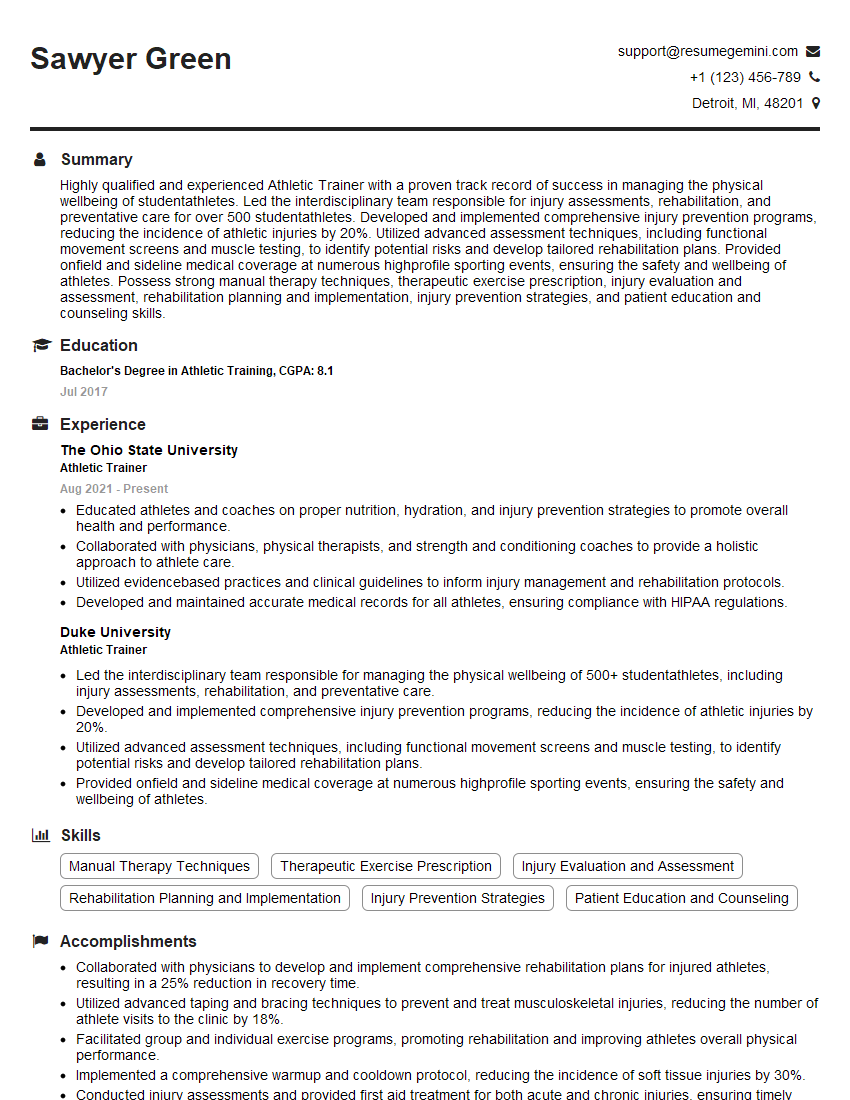
Athletic Trainer Resume Sample
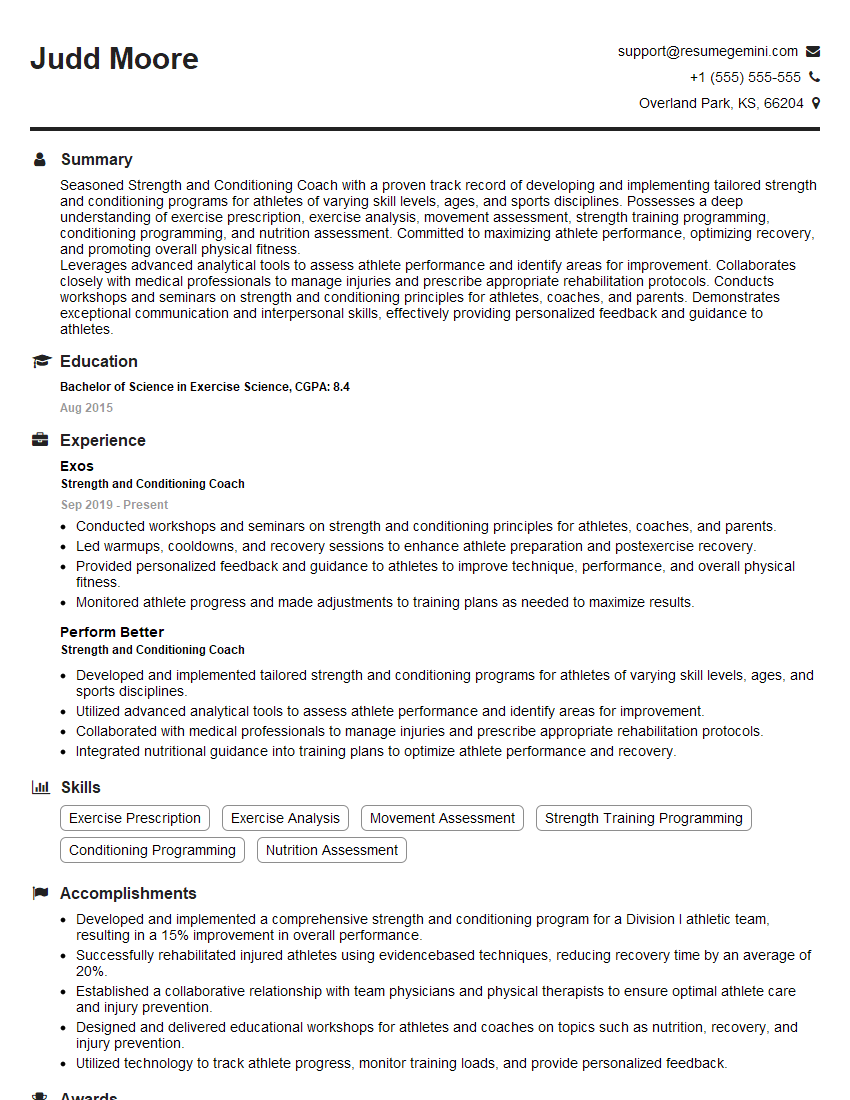
Strength and Conditioning Coach Resume Sample
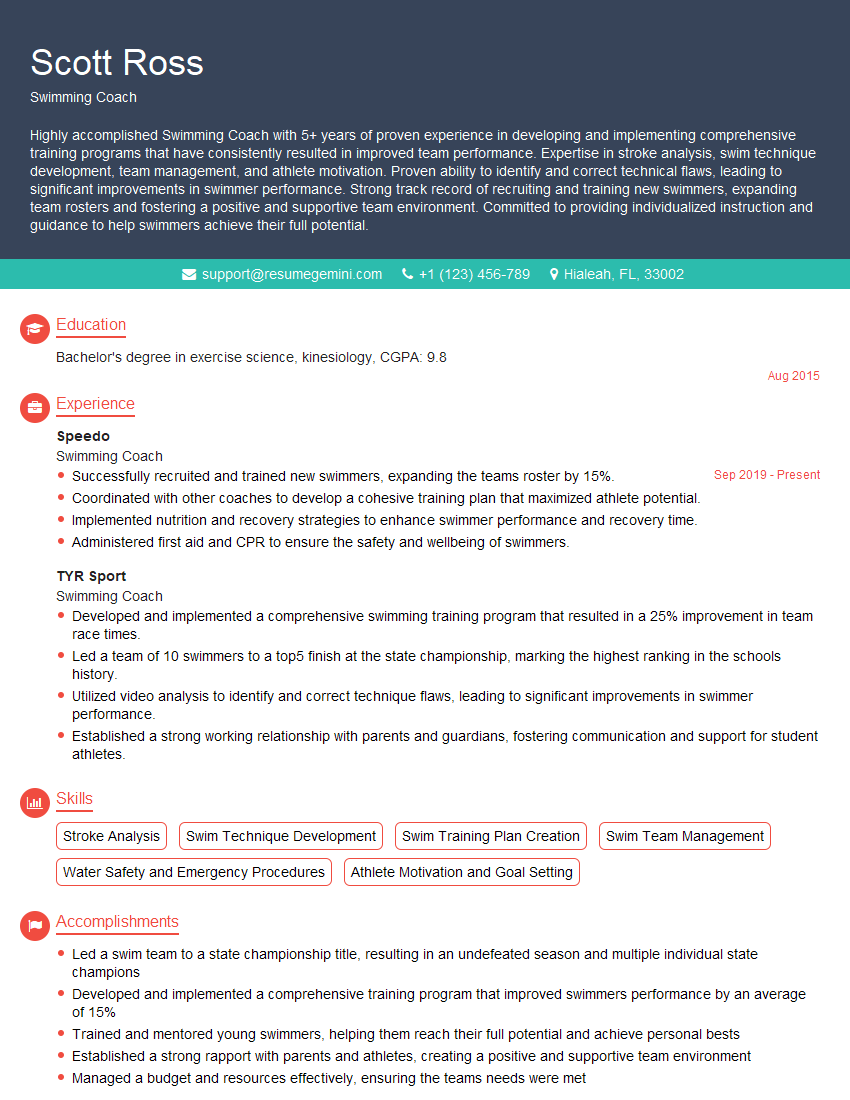
Swimming Coach Resume Sample
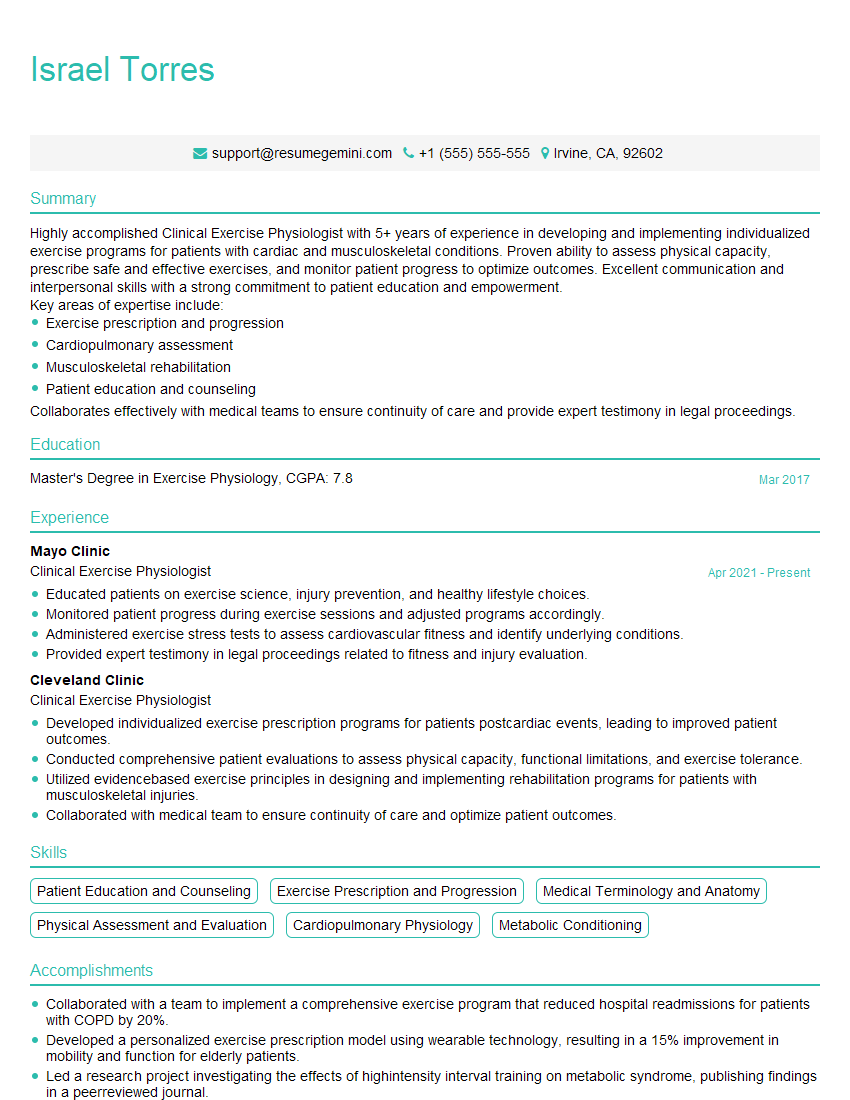
Clinical Exercise Physiologist Resume Sample
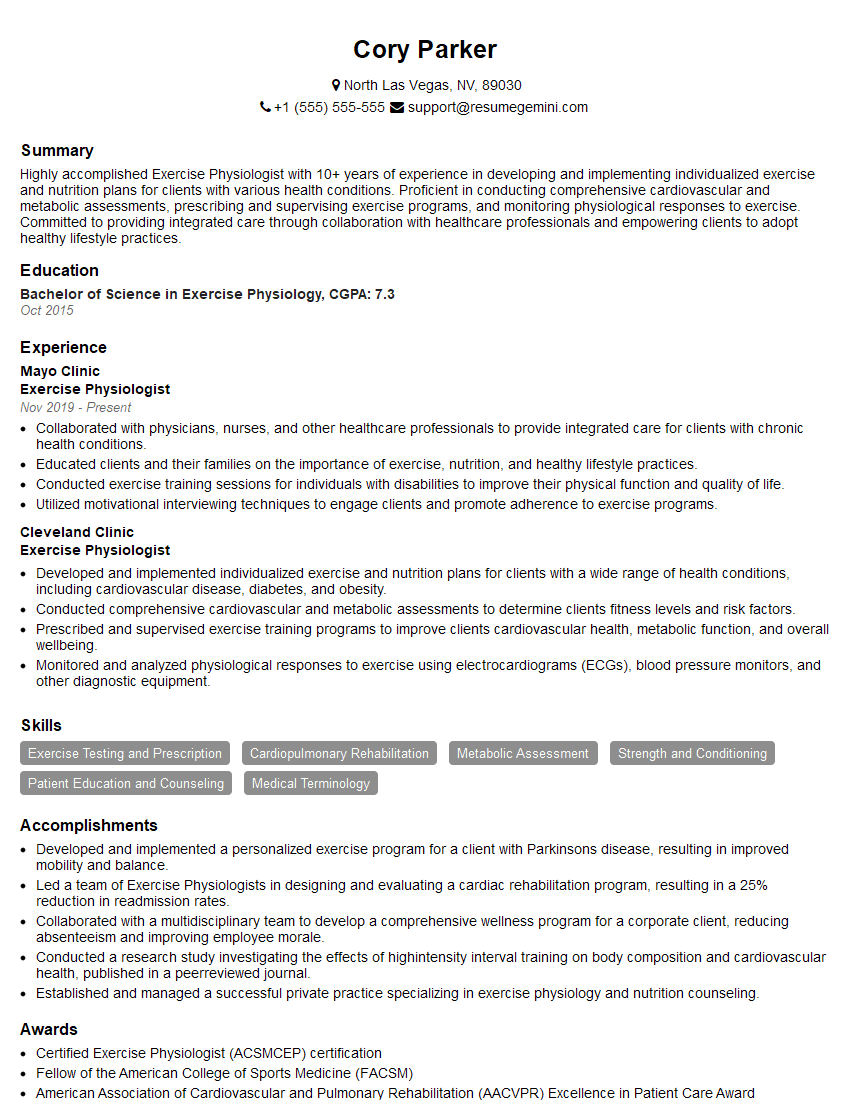
Exercise Physiologist Resume Sample

Kinesiologist Resume Sample

Occupational Therapist Resume Sample
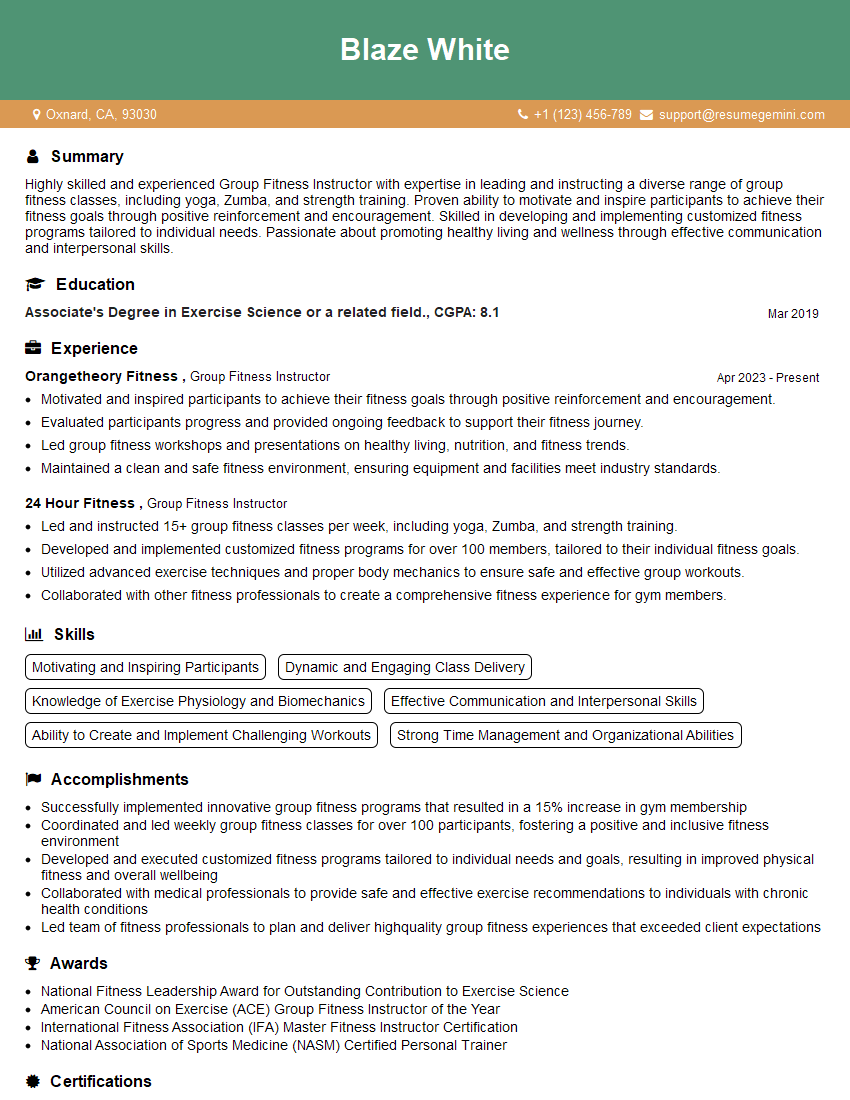
Group Fitness Instructor Resume Sample
Explore more articles
Users Rating of Our Blogs
Share Your Experience
We value your feedback! Please rate our content and share your thoughts (optional).
What Readers Say About Our Blog
Very informative content, great job.
good