Preparation is the key to success in any interview. In this post, we’ll explore crucial Cargo Slinging interview questions and equip you with strategies to craft impactful answers. Whether you’re a beginner or a pro, these tips will elevate your preparation.
Questions Asked in Cargo Slinging Interview
Q 1. What are the different types of cargo slings?
Cargo slings come in various types, each designed for specific lifting applications. The choice depends on factors like load weight, shape, and handling environment. Here are some key types:
- Polyester Web Slings: These are popular due to their high strength-to-weight ratio, flexibility, and resistance to abrasion. They are available in various widths and configurations (e.g., endless rounds, eye-and-eye, etc.). Think of them as the workhorses of the sling world.
- Nylon Web Slings: Similar to polyester, but with slightly less strength. They’re known for their shock absorption capabilities, making them suitable for delicate loads or those prone to sudden movements.
- Chain Slings: These are extremely robust and durable, ideal for heavy-duty lifting operations. They’re usually made from high-grade alloy steel and come in various grades to reflect their strength. Picture lifting a massive engine block or a section of steel.
- Wire Rope Slings: These are strong and versatile, often used for heavier and more awkwardly shaped loads. Different wire rope constructions provide different levels of flexibility and resistance to kinking. They’re frequently seen in industrial applications requiring high tensile strength.
- Synthetic Fiber Rope Slings: These slings are relatively lightweight and durable but may require more careful handling compared to steel slings. They are often used for materials that would be scratched or damaged by a more rigid sling.
Selecting the right sling is crucial for safety and efficiency. Each type has its strengths and weaknesses, making a proper assessment of the load vital.
Q 2. Explain the importance of proper sling selection.
Proper sling selection is paramount for safety and preventing accidents. Choosing the wrong sling can lead to catastrophic failures, causing injury, damage to goods, and costly downtime. The selection process needs to consider:
- Load Weight and Distribution: The sling’s Working Load Limit (WLL) must exceed the weight of the load, taking into account any potential uneven weight distribution.
- Load Shape and Size: The sling must be capable of securely encompassing the load and providing proper support. Improper fitting could cause slippage or damage.
- Environmental Conditions: Factors like temperature extremes, exposure to chemicals, or the presence of sharp edges influence sling material selection. A sling suitable for high temperatures might not be ideal for extreme cold.
- Lifting Angle: The angle at which the sling lifts the load affects its capacity. Lifting at a shallow angle reduces the effective WLL. For example, a sling designed for vertical lifting might only withstand a fraction of its rated load if used at a 45-degree angle.
- Type of Lifting Equipment: Compatibility with the crane hook, lifting point, or other equipment is essential. A mismatch could lead to unintended slippage or damage.
Ignoring these factors can lead to accidents and significant consequences, highlighting the importance of a thorough and informed selection process. Always consult the sling manufacturer’s guidelines and relevant safety standards.
Q 3. How do you determine the working load limit (WLL) of a sling?
The Working Load Limit (WLL) is the maximum load a sling can safely lift under normal operating conditions. It’s crucial never to exceed this limit. The WLL is clearly marked on the sling itself—usually by a tag or label. This information is provided by the manufacturer based on rigorous testing and design specifications.
The WLL isn’t just a single number; it depends on the type of sling, its configuration (e.g., single leg vs. choker hitch), and the angle at which the load is lifted. For example, a three-legged sling configuration has a higher WLL than a single leg because the weight is distributed across multiple points. Reduction factors are applied to the WLL based on the angle of the sling to the load. You’ll usually find these reduction factors documented in manufacturer’s data sheets or relevant safety guidelines.
Always check the sling’s manufacturer’s documentation and comply with relevant industry standards to correctly determine and understand the WLL in your specific circumstances. Never guess or rely on approximations.
Q 4. Describe the different types of sling hitches and their applications.
Sling hitches refer to how the sling is attached to and wraps around the load. The hitch affects the load distribution and the sling’s WLL. Different hitches are suited to various load shapes and conditions.
- Vertical Hitch: The sling is attached directly to the load’s lifting points. This is the most straightforward and provides the highest WLL.
- Basket Hitch: Two or more legs of a sling are used to lift the load from underneath. This is excellent for distributing the load evenly and provides a secure hold for symmetrical objects.
- Choker Hitch: One leg of the sling is wrapped around the load. This is suitable for cylindrical objects but significantly reduces the WLL. It’s vital to understand the reduction factors associated with choker hitches.
- Bridle Hitch: Two or more legs of a sling are used to lift a load from multiple points. This arrangement allows for lifting a load from the sides, useful for large or irregularly shaped objects.
Improper hitch selection can lead to load instability, sling damage, and even catastrophic failure. Choosing the right hitch is essential for the safe and efficient handling of the cargo.
Q 5. What are the common causes of sling failure?
Sling failures can have severe consequences. Understanding the common causes is critical for prevention. The most frequent causes include:
- Overloading: Exceeding the sling’s WLL is the primary cause of failure. This can lead to sudden breakage, especially with sudden movements or shocks.
- Improper Hitches: Incorrect hitching techniques can create stress concentrations, weakening the sling and leading to premature failure.
- Abrasion and Wear: Contact with sharp edges or rough surfaces can gradually weaken the sling fibers or wires, reducing its strength over time. Regular inspection is key.
- Chemical Damage: Exposure to certain chemicals can degrade the sling material, reducing its strength and flexibility.
- Heat Damage: Excessive heat can weaken or melt synthetic slings and reduce the strength of metal components.
- Kinking and Crushing: Kinks in wire rope or sharp bends in web slings can create stress points, leading to sudden breaks.
- Improper Storage: Leaving slings exposed to the elements or improperly stacked can cause damage and premature wear.
Careful handling, regular inspection, and adhering to safety regulations are vital to mitigating these risks.
Q 6. How do you inspect a sling for damage before use?
Before each use, a thorough inspection of the sling is crucial. This helps prevent accidents and ensures the sling is fit for purpose. Here’s a step-by-step inspection process:
- Visual Inspection: Carefully examine the entire sling for any signs of damage, including cuts, abrasions, burns, fraying, kinks, or distortions.
- Check for Wear and Tear: Look for any signs of excessive wear or degradation of the sling material. Pay attention to areas prone to wear, such as contact points with the load or lifting points.
- Examine the Stitching (for Web Slings): Check all stitching for broken or loose threads. This indicates significant weakening of the sling’s structure.
- Inspect the Fittings and Connections: Ensure that all shackles, hooks, and other attachments are secure and undamaged. Check for cracks, deformations, or corrosion.
- Verify the WLL Marking: Make sure the WLL is clearly visible and legible. If the marking is missing or unreadable, the sling should be immediately removed from service.
- Check for Heat Damage: Look for any signs of discoloration or melting, indicating heat exposure.
If any damage is found, the sling should be immediately removed from service and replaced. Remember, your safety and the safety of others depend on a meticulous inspection.
Q 7. What safety precautions should be taken when using cargo slings?
Safety is paramount when working with cargo slings. Following these precautions is essential:
- Only use slings rated for the load weight and conditions: Never exceed the WLL.
- Inspect the sling thoroughly before each use: Look for damage or wear.
- Use the correct sling hitch: Choose the appropriate method for the load’s shape and weight distribution.
- Ensure proper load balance: Prevent overloading or uneven weight distribution.
- Avoid sharp edges and abrasion: Protect the sling from potential damage.
- Use appropriate PPE (Personal Protective Equipment): Wear gloves and other safety gear as necessary.
- Follow all relevant safety regulations and company procedures: Stay informed and comply with best practices.
- Use proper lifting techniques: Avoid sudden movements or jerky operations.
- Regular training: Ensure all personnel are trained on safe slinging techniques.
- Maintain proper sling storage: Keep slings clean, dry, and in good condition.
Prioritizing safety not only protects workers but also prevents costly equipment damage and downtime.
Q 8. Explain the importance of load balancing.
Load balancing in cargo slinging is crucial for safety and efficiency. It ensures that the weight of the load is distributed evenly across all the sling legs, preventing overloading of any single leg and minimizing the risk of sling failure. Imagine trying to carry a heavy box with one arm – it’s unstable and dangerous. Load balancing is like using both arms, distributing the weight for stability and control.
Uneven load distribution can lead to premature wear and tear on the slings, potentially causing catastrophic failure during lifting operations. This can result in damage to the cargo, equipment, and even injuries to personnel. Proper load balancing significantly reduces these risks.
Achieving balanced loading involves careful consideration of the load’s center of gravity and the sling’s configuration. Factors like sling length, angle, and the load’s shape all influence load distribution. For example, using multiple slings at different angles can be beneficial for awkwardly shaped loads. It’s critical to visually inspect the sling angles and adjust them as needed to ensure a balanced lift.
Q 9. How do you calculate the safe working load for a multi-leg sling?
Calculating the safe working load (SWL) for a multi-leg sling is more complex than for a single-leg sling. It’s not simply dividing the sling’s SWL by the number of legs. The angle of the sling legs significantly impacts the load each leg bears. The formula incorporates a ‘vertical component’ factor which decreases as the angle between the sling legs and the vertical increases.
For example, with a two-leg sling at a 60-degree angle, each leg carries approximately 87% of the total load. For a three-leg sling at 60 degrees, each leg carries approximately 58% of the load. These factors are typically found in sling manufacturer’s tables or relevant safety guidelines.
Example: A two-leg sling with each leg having an individual SWL of 10,000 kg at a 60-degree angle will have a total SWL of approximately 11,547 kg (10,000 kg * 1.1547). The 1.1547 factor represents the multiplier related to the vertical component and angle. Never exceed the manufacturer’s rated SWL for the sling and always consult appropriate load charts or software for accurate calculation based on the specific sling configuration and load conditions.
Q 10. Describe the proper techniques for attaching slings to loads.
Proper sling attachment is paramount. Improper attachment is a leading cause of sling failures and accidents. Always ensure the sling is properly seated in the load’s attachment points, preventing slippage or damage to the sling or the load. Sharp edges or points on the load must be protected using padding or chafing gear to prevent the sling from being cut or abraded.
- Choose the Right Sling: Select a sling appropriate for the load’s weight, size, and shape. Consider the sling material’s properties in relation to the load’s characteristics.
- Inspect Before Use: Always thoroughly inspect the sling before each use, looking for any signs of wear, damage, or defects. Reject slings that show signs of wear and tear beyond the acceptable limits.
- Even Distribution: Ensure even weight distribution by carefully positioning the sling around or under the load. Adjust the angles to distribute weight uniformly.
- Proper Hitches: Use correct hitching methods as specified in the sling manufacturer’s instructions. Improper hitching can weaken the sling and lead to failure.
- Secure Connections: Ensure all connections are secure and properly fastened. Never use worn or damaged fittings.
Remember: Always prioritize safety! If unsure about any aspect of sling attachment, seek guidance from a qualified supervisor or safety professional.
Q 11. What are the regulations and standards governing cargo slinging?
Regulations and standards governing cargo slinging vary depending on the region and industry, but they share common goals: safety and efficiency. Key standards often referenced include:
- ASME B30.9: This standard in the US covers slings used in lifting applications, specifying requirements for design, construction, testing, and safe use. It’s widely adopted by many industries.
- EN 1492-1: This European standard covers wire rope slings, detailing design, testing, and marking requirements.
- Local Regulations: National and regional regulations will often supplement these standards, adding specific requirements based on local conditions and industry practices.
Compliance is vital. Regular inspections, training for personnel, and maintaining detailed records are all critical aspects of adhering to regulations. Ignoring these standards can result in severe penalties, including fines and even legal action in cases of accidents.
Q 12. What is the significance of using a tag line?
A tag line is a secondary, lighter-weight rope or line used to guide and control the load during lifting. It’s not intended to support the main weight, but rather to assist with positioning, preventing swaying, and ensuring a smooth, controlled lift. Think of it as a guiding hand, providing stability and precision during lifting operations.
Using a tag line is particularly beneficial when lifting heavy loads in confined spaces or when working with loads that are awkward or unbalanced. The tag line adds an extra layer of control, reducing the risk of accidents and damage to the load. It’s an essential safety precaution that helps prevent swings or uncontrolled movements of the load, protecting both equipment and workers.
Q 13. How do you handle different sling materials (e.g., wire rope, synthetic fiber)?
Different sling materials have unique properties that make them suitable for specific applications:
- Wire Rope Slings: Strong, durable, and suitable for heavy loads and harsh environments. However, they can be prone to kinking and require regular inspection for wear and corrosion.
- Synthetic Fiber Slings (Nylon, Polyester, etc.): Lighter, more flexible, and less prone to kinking than wire rope. They are often preferred for lighter to medium loads and applications requiring less abrasion resistance, but require careful selection based on the chemical environment. Excessive heat can damage them significantly.
Proper handling depends on the material. Wire rope slings must be protected from sharp edges, while synthetic slings should be shielded from excessive abrasion and heat. Always refer to the manufacturer’s guidelines for safe handling and storage of each sling type. Regular inspections are crucial to identify any potential problems.
Q 14. What are the limitations of each sling type?
Each sling type has inherent limitations:
- Wire Rope Slings: Susceptible to corrosion, kinking, and damage from sharp edges. Their weight can also be a limiting factor for some applications.
- Synthetic Fiber Slings: Sensitive to heat, certain chemicals, and UV radiation. They may be less durable than wire rope slings in harsh environments and can be damaged by abrasion.
- Chain Slings: While strong, chains can suffer damage from impact and may be more susceptible to wear than other options.
Understanding these limitations is vital for selecting the appropriate sling for a given task. Using the wrong sling type can lead to failure, accidents, and damage to property. Always choose the sling that is most appropriate for the task and conditions.
Q 15. What are the signs of a damaged sling?
Identifying a damaged sling is crucial for preventing accidents. Look for several key indicators: Visible damage such as cuts, abrasions, burns, or fraying of the webbing or wire rope are obvious signs of damage. Discoloration, particularly in the case of synthetic slings, can indicate heat damage or chemical degradation. Stiffness or unusual kinks in the sling can point to internal damage not immediately visible. Excessive wear on the stitching or metal fittings like shackles and hooks are critical indicators as well. Lastly, any unusual smell (like burning) can be a warning sign of internal damage. Think of it like inspecting a safety belt – you wouldn’t use one with obvious rips or fraying, the same principle applies here. Regularly scheduled inspections are vital.
- Example: A synthetic sling showing signs of melting near the hook indicates potential heat damage and should be immediately removed from service.
- Example: A wire rope sling with broken strands is a serious hazard and needs immediate replacement.
Career Expert Tips:
- Ace those interviews! Prepare effectively by reviewing the Top 50 Most Common Interview Questions on ResumeGemini.
- Navigate your job search with confidence! Explore a wide range of Career Tips on ResumeGemini. Learn about common challenges and recommendations to overcome them.
- Craft the perfect resume! Master the Art of Resume Writing with ResumeGemini’s guide. Showcase your unique qualifications and achievements effectively.
- Don’t miss out on holiday savings! Build your dream resume with ResumeGemini’s ATS optimized templates.
Q 16. How do you address a damaged sling?
Addressing a damaged sling involves immediate removal from service. Never attempt to repair a damaged sling yourself; this is extremely dangerous. Damaged slings should be clearly marked as unusable, and then properly disposed of according to company and regulatory guidelines. You would typically tag the sling with a “Do Not Use” tag and submit it for inspection or discard, depending on the company policy. It’s vital to remember that a seemingly minor defect can lead to catastrophic failure during a lift, jeopardizing both personnel and equipment. Proper documentation of the damage and disposal is critical.
Example: If a wire rope sling shows broken wires, it must be immediately removed and replaced with a certified and undamaged sling. Attempting to repair the broken wires is incredibly dangerous and would be a gross violation of safety regulations.
Q 17. Describe the proper procedures for removing a sling from a load.
Removing a sling from a load requires careful and deliberate steps to maintain safety. First, ensure the load is securely supported either by the crane or other means to prevent it from unexpectedly shifting. Then, systematically and gradually loosen the sling’s attachment points, ensuring that the load remains stable throughout the process. Never remove all slings simultaneously; it’s best to follow a structured process, removing one at a time while keeping the others in place to maintain the weight. Once all slings are removed, inspect the slings for any new damage that may have occurred during the lift before storing them. Always check the load to make sure it’s secure before moving the supporting equipment. Think of it like carefully removing blankets from a sleeping child – slow, gentle, and deliberate movements to avoid startling or upsetting the child (in this case, the load).
Q 18. How do you communicate with crane operators during a lift?
Clear and concise communication with crane operators is paramount. Use standardized hand signals, and if visibility is limited, employ a two-way radio system. Always confirm that the operator understands your instructions before initiating any lift. Avoid ambiguous language; be direct and specific. It is important to employ clear pre-lift check lists and use appropriate signals to ensure the crane operator and the ground crew are on the same page before any lift. Before commencing, confirm load weight, the intended lift point, and the potential hazards. During the lift, provide clear instructions and communicate any unexpected developments immediately.
Example: Instead of saying “Lift it slowly,” you would say “Slowly lift load to a height of 10 feet then stop.”
Q 19. What are your responsibilities regarding safety during cargo slinging operations?
My responsibilities regarding safety during cargo slinging operations are comprehensive and multifaceted. They include ensuring all slings are inspected for defects prior to each use; verifying the load weight and confirming that the chosen slings have sufficient working load limits (WLL) for the task; correctly attaching the slings to the load and crane hook, following all safety guidelines; communicating clearly with crane operators; maintaining a safe working distance from the load and the crane, during the lift; and reporting all incidents, near misses or any observed unsafe practices immediately. Continuous training and a commitment to adhering to all safety protocols are non-negotiable aspects of my role. I’m responsible for knowing and applying all relevant regulations and standards. It’s my responsibility to prevent accidents – it’s not just about my own safety, but the safety of everyone on the site.
Q 20. Explain the concept of angle of slinging and its impact on WLL.
The angle of slinging refers to the angle formed between the sling legs and the vertical axis. A smaller angle (closer to vertical) results in higher tension on the sling legs and reduces the sling’s effective working load limit (WLL). Conversely, a larger angle (closer to horizontal) increases the tension on the sling legs which drastically reduces the WLL. The WLL is typically reduced in proportion to the cosine of the angle. The closer the angle is to 90 degrees, the closer to zero the effective WLL. Therefore, it’s critical to maintain a suitable sling angle (usually recommended to keep it as close to vertical as practical) to ensure the safety of the lift. It’s like trying to lift a heavy object with two ropes – the more horizontal the ropes, the harder you have to pull to lift the object and the greater the stress on the ropes. Always refer to the manufacturer’s guidelines regarding safe sling angles for the specific type of sling being used.
Example: A sling with a 60-degree angle will typically have a lower effective WLL than one used at a 30-degree angle.
Q 21. Describe various knot tying techniques for slings.
Various knot-tying techniques are used depending on the sling material and application; however, it’s crucial to remember that improper knotting can significantly weaken the sling and render it unsafe. Knots should only be used when specifically approved for the type of sling material by the manufacturer. The most important thing is to never use a knot that could damage the sling. Many synthetic slings are damaged if you create any sharp bends in the webbing. Some common knots, however, include the bowline knot. A bowline is a type of knot that forms a closed loop at the end of a rope. It can be useful in situations where you need a loop that won’t slip or tighten. However, it is often not used for slinging as there are better and safer methods.
Important Note: The use of knots on slings is generally discouraged due to the potential for weakening the sling and creating stress points which may cause unexpected failure. Consult the sling manufacturer’s recommendations for proper attachment methods. Always prioritize using appropriate sling hardware such as shackles, hooks, and other certified fittings rather than relying on knots. The safety of the lift is paramount.
Q 22. What actions should you take if you encounter an unsafe slinging situation?
Encountering an unsafe slinging situation demands immediate and decisive action. Safety is paramount. My first step would always be to stop the operation immediately. This prevents any potential accidents. Next, I’d isolate the hazard, preventing anyone from approaching the unsafe area. This might involve cordoning off the area or halting other nearby activities. Then, I would assess the situation, identifying the specific cause of the unsafe condition. Is it a damaged sling? An improperly rigged load? A faulty lifting mechanism? Once the root cause is identified, I would report the issue to my supervisor and initiate the necessary corrective actions, which may involve repairing or replacing equipment, adjusting the rigging, or re-evaluating the lifting plan. Finally, and crucially, I would document the incident thoroughly, including photos, details of the unsafe condition, corrective actions taken, and the names of individuals involved. This documentation is crucial for preventing future incidents and for any potential investigation.
For example, if I noticed fraying on a sling, I would immediately stop the lift, flag the sling as unsafe, and report it for replacement. I would not compromise on safety, even if it means delaying the operation.
Q 23. How do you ensure compliance with relevant safety regulations?
Ensuring compliance with safety regulations is an ongoing process, not a one-time task. It starts with a thorough understanding of all applicable regulations, including OSHA (in the US) or equivalent standards in other countries. This includes familiarization with regulations on sling types, inspection procedures, load limits, and safe operating practices. I diligently follow the manufacturer’s instructions for all lifting equipment and ensure all slings are inspected regularly, often before each use, according to a documented schedule. This includes checking for signs of wear, damage, or defects. I maintain meticulous records of all inspections and training, readily available for audits. I participate actively in safety training sessions to stay updated on best practices and any regulatory changes. Moreover, I ensure that everyone involved in the lifting operation is properly trained and understands the risks involved. Regular safety meetings and toolbox talks reinforce safe work practices and address potential hazards proactively.
For instance, our company uses a color-coded system for slings to indicate their inspection status, ensuring that only approved slings are used. We also use a digital system for recording inspections, providing an easily accessible, auditable record.
Q 24. How do you maintain accurate records of sling inspections and usage?
Accurate record-keeping is essential for both safety and legal compliance. We utilize a combination of methods to maintain precise records of sling inspections and usage. Each sling has a unique identification number, which is recorded in our database along with its manufacturer, type, capacity, and inspection date. Our inspection process involves a detailed checklist, documenting any signs of wear, damage, or defects. Digital photographs are often taken to support the findings. This information is entered into a computerized system, allowing for easy access and reporting. This system generates automatic reminders for upcoming inspections. Usage records include the date, time, location, and the type of load lifted for each sling. All records are securely stored and readily available for review by management, safety inspectors, or any other authorized personnel. This comprehensive system allows us to track the entire life cycle of each sling, ensuring its safe and compliant use.
For example, if a sling fails, we can trace its history, identify any potential contributing factors, and take corrective action to prevent future failures. This data is also crucial for insurance purposes.
Q 25. Describe your experience with different types of lifting equipment.
My experience encompasses a wide range of lifting equipment, from various types of slings – including round slings, chain slings, wire rope slings, and synthetic web slings – to different hoisting mechanisms like cranes, forklifts, and overhead gantries. I’m proficient in operating and inspecting these, understanding their individual capabilities and limitations. I’m familiar with the different types of crane systems, including mobile cranes, tower cranes, and overhead traveling cranes. I understand the importance of selecting the appropriate equipment for the job, considering factors like load weight, height, and the surrounding environment. Furthermore, I have experience with specialized lifting equipment, including vacuum lifters and magnetic lifters, for specific applications. My hands-on experience extends to the safe attachment and detachment of loads using various rigging techniques. My knowledge isn’t solely theoretical; I’ve consistently applied it across diverse construction, industrial, and manufacturing settings.
For instance, I’ve worked with heavy-duty chain slings for lifting steel beams on construction sites and used round slings for delicate loads in a warehouse environment. Each situation requires understanding the strengths and limitations of different equipment to ensure a safe lift.
Q 26. What are the different types of hitches and which one is most suitable for different loads?
Different hitches are used to distribute the load effectively and safely. The choice depends on the shape and weight of the load, and the available sling points. Common hitches include the choker hitch, basket hitch, and vertical hitch.
- Choker Hitch: Uses a single sling wrapped around the load. Suitable for smaller, relatively compact loads, but be aware that the sling takes more stress with this method, requiring careful attention to sling capacity.
- Basket Hitch: Employs two or more slings to support the load from multiple points. This is ideal for larger, heavy objects as the load is distributed more evenly among the slings. It provides increased stability.
- Vertical Hitch: A straightforward method where the sling hangs vertically beneath the load. This is best for loads with a top lifting point.
Selecting the appropriate hitch is critical for load stability and the longevity of the sling. Improper hitching can lead to sling failure and potential accidents. The load chart plays a vital role here; the correct hitch ensures that the load is distributed within the sling’s safe working load limit.
For example, a heavy steel plate would benefit from a basket hitch, spreading the load across multiple slings to reduce stress on any single one. A smaller, cylindrical drum might be suitable for a choker hitch, provided the sling is rated accordingly.
Q 27. How do you handle unexpected problems during a lift?
Unexpected problems during a lift require calm, decisive action, prioritizing safety above all else. My immediate response involves stopping the lift immediately. Then, I would assess the situation to identify the root cause of the problem. Is the load shifting? Is there a mechanical failure? Once the problem is understood, I would communicate clearly with the crane operator and any other personnel involved. We would work together to address the problem. This may involve adjusting the rigging, securing the load further, or calling for additional support. If the problem is beyond my immediate ability to resolve, I would immediately report it to my supervisor and seek professional assistance. The safety of personnel and equipment is my top concern, and I would never attempt to proceed with a lift if there is any doubt about its safety.
For example, if the load starts to swing unexpectedly, I would signal the crane operator to stop the lift immediately. We would then assess why the load swung, perhaps due to improper rigging or wind conditions. Once the issue is resolved, we would proceed cautiously, paying extra attention to load stability.
Q 28. Explain your understanding of load charts and how they are used
Load charts are essential tools for safe slinging practices. They provide the safe working load limits (SWL) for different slings under various configurations and angles. Understanding and correctly using load charts is crucial to prevent sling failure and ensure the safety of the lift. Each sling type (e.g., chain, wire rope, synthetic webbing) has its own load chart, showing how the safe working load decreases with different angles and hitches. For instance, a sling’s SWL is significantly reduced when used at angles greater than 30 degrees from vertical. Before any lift, I carefully consult the load chart for the specific sling being used, considering the load weight, hitch type, and angle. If the load exceeds the SWL under the intended configuration, I would not proceed with the lift unless a different, more suitable sling is available, or the lift plan is adjusted to reduce stress on the sling.
Using load charts is not just about numbers; it’s about understanding the relationships between load weight, sling type, angle, and safety. A load chart is my guide to making informed decisions, ensuring each lift is performed safely and within the limits of the equipment.
Key Topics to Learn for Your Cargo Slinging Interview
- Understanding Different Sling Types: Learn the characteristics and applications of various sling types (e.g., wire rope, chain, synthetic webbing) and their limitations. Consider the factors influencing sling selection for different cargo types and weights.
- Safe Slinging Techniques: Master proper hitching and rigging techniques to ensure safe and efficient cargo handling. Understand the importance of load angles, proper attachment points, and avoiding overloading.
- Load Capacity and Weight Distribution: Accurately calculate load capacity and ensure even weight distribution to prevent accidents and damage. Familiarize yourself with relevant safety regulations and weight limits.
- Inspection and Maintenance of Slings: Learn how to inspect slings for wear and tear, damage, and defects. Understand proper maintenance procedures to extend sling lifespan and maintain safety.
- Hazard Identification and Risk Mitigation: Develop your ability to identify potential hazards associated with cargo slinging and implement effective risk mitigation strategies. This includes understanding environmental factors and potential equipment malfunctions.
- Emergency Procedures: Be prepared to discuss emergency procedures in case of accidents or equipment failure, emphasizing safety protocols and communication strategies.
- Regulations and Compliance: Demonstrate your knowledge of relevant safety regulations and industry best practices for cargo slinging. Understanding compliance requirements is crucial.
Next Steps
Mastering cargo slinging opens doors to rewarding careers in logistics, maritime, and construction industries, offering excellent growth potential and competitive salaries. To significantly boost your job prospects, crafting an ATS-friendly resume is essential. This allows your application to be easily scanned and recognized by applicant tracking systems used by many employers. We recommend using ResumeGemini to create a compelling and effective resume that showcases your skills and experience. ResumeGemini provides helpful tools and resources, including examples of resumes tailored specifically to the Cargo Slinging field, to help you present yourself in the best possible light.
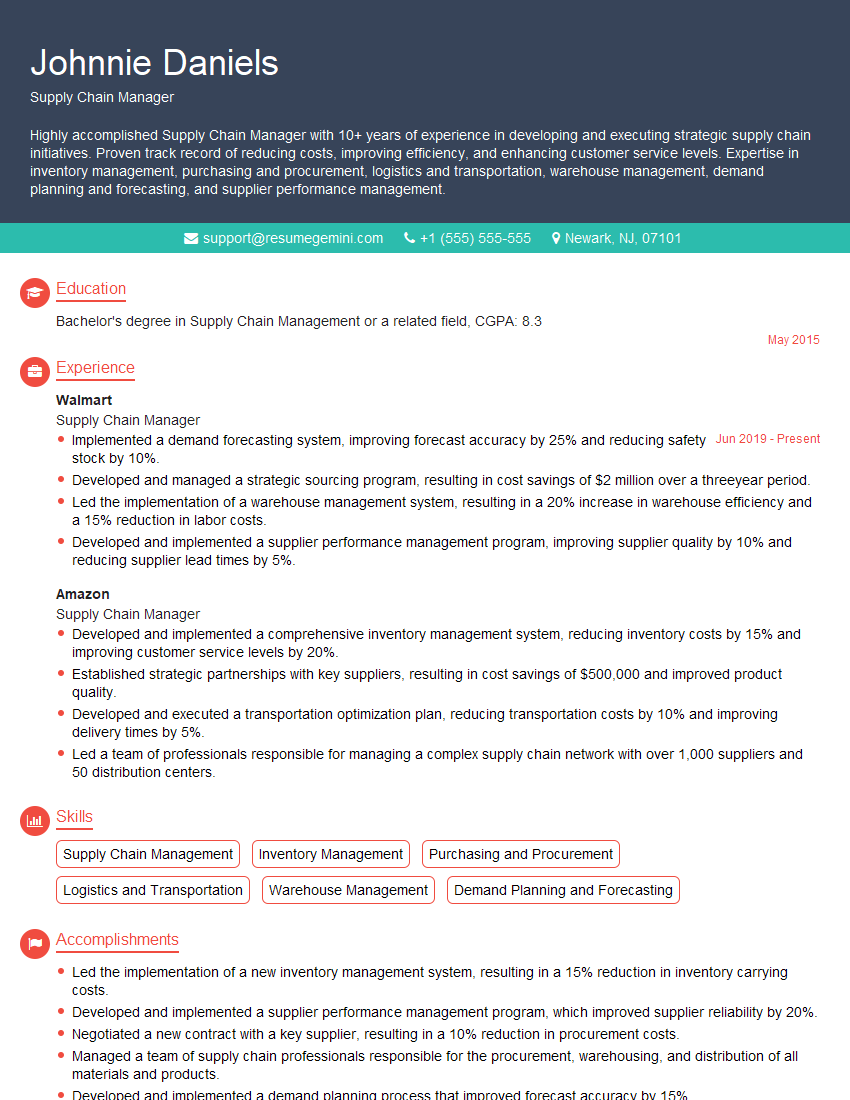
Supply Chain Manager Resume Sample

Warehouse Supervisor Resume Sample

Logistics Coordinator Resume Sample

Safety Officer Resume Sample

Crane Operator Resume Sample

Load Planner Resume Sample

Freight Forwarder Resume Sample

Heavy Equipment Operator Resume Sample
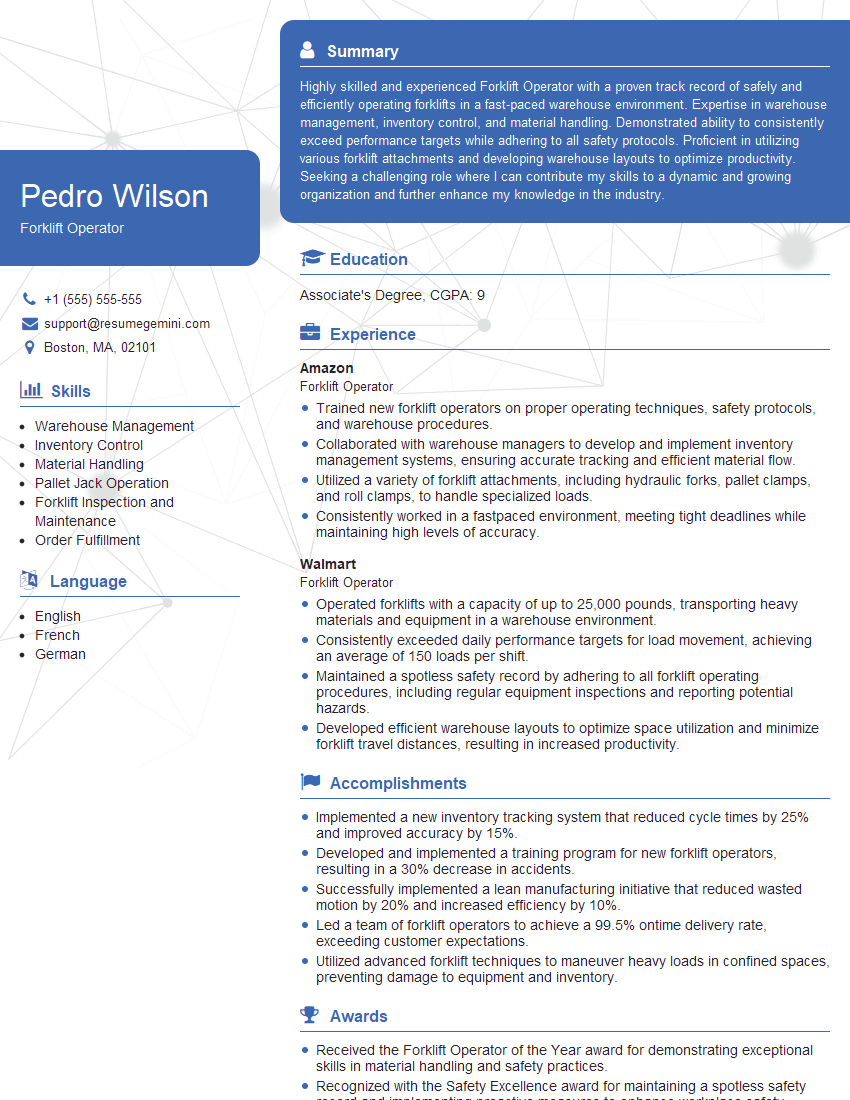
Forklift Operator Resume Sample

Rigger Resume Sample

Material Handling Technician Resume Sample
Explore more articles
Users Rating of Our Blogs
Share Your Experience
We value your feedback! Please rate our content and share your thoughts (optional).
What Readers Say About Our Blog
Very informative content, great job.
good