Are you ready to stand out in your next interview? Understanding and preparing for Carpentry Basics interview questions is a game-changer. In this blog, we’ve compiled key questions and expert advice to help you showcase your skills with confidence and precision. Let’s get started on your journey to acing the interview.
Questions Asked in Carpentry Basics Interview
Q 1. Explain the difference between hardwoods and softwoods.
The difference between hardwoods and softwoods lies primarily in their botanical classification, not their physical hardness. Hardwoods come from deciduous trees (trees that lose their leaves annually), while softwoods come from coniferous trees (cone-bearing, evergreen trees). Generally, hardwoods are denser and more durable than softwoods, making them suitable for furniture and flooring. However, some softwoods, like Douglas fir, are surprisingly strong and are used in construction. Think of it like this: oak (hardwood) is famously strong and used for furniture, while pine (softwood) is lighter and often used for framing.
- Hardwoods: Oak, Maple, Cherry, Walnut (typically denser, more durable, and more expensive).
- Softwoods: Pine, Fir, Spruce, Cedar (typically less dense, more readily available, and less expensive).
While the general rule holds true, exceptions exist. Balsa wood, for instance, is a hardwood but incredibly soft, while yew, a softwood, is exceptionally dense and strong. The best way to determine a wood’s suitability is by considering its specific properties for the project rather than relying solely on the hardwood/softwood distinction.
Q 2. Describe the various types of wood joints.
Wood joints are crucial for connecting pieces of wood securely and aesthetically. There’s a vast array, but some common ones include:
- Butt Joint: The simplest, where two pieces meet end-to-end. Often requires glue and screws or nails for strength.
- Lap Joint: One piece overlaps the other, providing more surface area for glue and increased strength. Variations include half-lap, and miter lap.
- Miter Joint: Two pieces are cut at angles and joined, often used for picture frames or decorative moldings. Needs glue and usually reinforcing techniques like biscuits or splines.
- Dovetail Joint: Interlocking ‘tails’ and ‘pins’ create an extremely strong joint, commonly used in drawers and fine furniture. Requires precise cutting.
- Mortise and Tenon Joint: A tenon (a projection) fits into a mortise (a hole), creating a strong and relatively simple joint. Often used in chairs and tables.
- Dado Joint: A groove (dado) is cut into one piece to accept the edge of another, often used in shelving.
Choosing the right joint depends on the project’s requirements for strength, aesthetics, and complexity. A simple butt joint might suffice for a shed, while a dovetail joint would be necessary for high-quality joinery.
Q 3. How do you select the appropriate wood for a specific project?
Selecting the right wood depends entirely on the project’s purpose, desired aesthetic, and budget. Factors to consider include:
- Strength and Durability: For structural elements like beams, hardwoods like oak or strong softwoods like Douglas fir are preferable. For less demanding projects, a softer wood like pine is sufficient.
- Appearance: The wood’s grain, color, and finish influence the overall look. Some woods, like cherry, darken beautifully over time.
- Workability: Some woods are easier to work with than others. Softwoods are generally easier to cut and shape than hardwoods.
- Cost: Hardwoods and exotic woods tend to be more expensive than softwoods.
- Stability: Certain woods are more prone to warping or cracking than others. This is particularly important for larger projects or those exposed to the elements.
For example, building a sturdy outdoor bench requires a rot-resistant and durable wood like cedar or redwood. In contrast, crafting a delicate jewelry box might utilize a visually appealing hardwood like mahogany or cherry.
Q 4. What safety precautions do you take when using power tools?
Safety is paramount when working with power tools. My approach always starts with preparation and meticulous attention to detail:
- Personal Protective Equipment (PPE): Safety glasses, hearing protection, dust mask, and appropriate clothing (long sleeves, closed-toe shoes) are mandatory.
- Tool Maintenance: Regularly check for sharp blades, secure clamps, and functioning safety features. Dull blades require more force, increasing the risk of kickback.
- Work Area: Keep the work area clean, well-lit, and free of clutter. Ensure adequate ventilation, especially when working with dust-producing tools.
- Proper Technique: Always operate tools according to the manufacturer’s instructions. Avoid forcing the tool; let it do the work.
- Emergency Plan: Know where the nearest first-aid kit and emergency contact information are located.
- Disconnect Power: Always unplug the tool before making adjustments or changing blades.
I never rush my work, taking the time to assess the situation and anticipate potential risks. Safety is not an option, it’s a fundamental aspect of my carpentry practice.
Q 5. Explain the process of measuring and cutting lumber accurately.
Accurate measuring and cutting are fundamental in carpentry. My process involves:
- Careful Measurement: Use a measuring tape to take precise measurements, double-checking them before making any cuts. I often measure twice, cut once.
- Marking: Clearly mark the cutting line on the wood using a pencil or marking gauge. I use a sharp pencil to avoid errors.
- Choosing the Right Tool: Select the appropriate saw for the material and cut type (hand saw, circular saw, miter saw, etc.).
- Secure Workpiece: Always clamp the wood securely to the work surface to prevent movement during cutting. Using a vise or clamps is crucial for safety and accuracy.
- Controlled Cuts: Make slow, steady cuts to ensure accuracy and avoid tear-out. If using a power saw, maintain consistent speed and pressure.
- Double-Check: After cutting, check the dimensions to ensure accuracy. Minor adjustments might be necessary.
Using a combination square and speed square helps ensure accuracy and to create precise angles. Practicing consistent technique and understanding your tools are essential for mastering this skill.
Q 6. How do you read and interpret blueprints?
Reading blueprints requires understanding architectural symbols, scales, and conventions. My approach involves:
- Understanding the Scale: Identify the scale used in the blueprint (e.g., 1/4″ = 1′). This allows converting measurements on the blueprint to real-world dimensions.
- Identifying Views: Recognize different views (plan, elevation, section) and their purpose. Plan views show the layout from above, elevations show the sides, and sections show the interior structure.
- Symbol Recognition: Familiarize oneself with common symbols representing doors, windows, walls, plumbing, electrical fixtures, and other elements.
- Dimensions and Specifications: Carefully examine dimensions, material specifications, and notes provided on the drawings. Any ambiguities should be clarified before beginning work.
- Overall Layout: Grasp the overall arrangement and relationship between different parts of the structure to ensure a cohesive understanding of the project.
I always verify measurements and details multiple times to prevent mistakes. Communicating with the architect or designer to address any questions or uncertainties is crucial for project success. Experience and a methodical approach are vital for accurately interpreting blueprints.
Q 7. Describe your experience with different types of saws.
My experience encompasses a variety of saws, each suited for specific tasks:
- Hand Saws: These offer precise control for intricate cuts, but are more labor-intensive. Rip saws are for cutting wood along the grain, crosscut saws for cutting across the grain.
- Circular Saws: Versatile and powerful for various cuts, including ripping and crosscutting. Important to use safety precautions like a blade guard and anti-kickback pawls.
- Miter Saws: Ideal for making accurate angle cuts, particularly useful for framing and trim work. Accurate setups are essential for precise miter joints.
- Jigsaw: Excellent for cutting curves and intricate shapes in wood, plywood, and other materials.
- Reciprocating Saw (Sawzall): Powerful for demolition and rough cuts, particularly useful for cutting through thicker materials and awkward shapes.
- Table Saw: Ideal for making straight, precise cuts in larger pieces of wood. Excellent for ripping and crosscutting. Requires understanding of safety procedures like push sticks and feather boards.
The choice of saw depends heavily on the material, the type of cut needed, and the level of precision required. Each saw has its strengths and weaknesses, and understanding these nuances leads to efficient and safe woodworking.
Q 8. What are the different types of nails and screws, and when would you use each?
Nails and screws, while both fasteners, differ significantly in their application and holding power. Choosing the right one depends heavily on the project and the type of wood.
- Nails: Come in various types like common nails (general purpose), finish nails (smaller heads for less visible fastening), brads (tiny nails for delicate work), and casing nails (for trim). I’d use common nails for framing, finish nails for attaching trim or molding where the head needs to be less prominent, brads for intricate joinery, and casing nails for things like crown molding. Nails are driven in quickly, but their holding power relies on friction and wood fiber engagement. They’re easily removed, which can be advantageous or a drawback depending on the need.
- Screws: Offer superior holding power compared to nails due to their threads, creating a strong mechanical bond. There are various types like wood screws (for joining wood pieces), drywall screws, sheet metal screws, and machine screws. Wood screws, for example, come in different head types (flat, pan, oval) and drive types (Phillips, slotted, square). I choose wood screws for applications requiring stronger, more permanent fastening, such as assembling furniture or attaching heavy items to a wall. They are more time-consuming to install but offer greater strength and resistance to loosening.
For instance, I wouldn’t use nails to attach a heavy shelf to a wall; screws provide much better holding strength and resistance to pull-out. But for quick assembly of a simple wooden box, nails would suffice.
Q 9. How do you ensure the squareness of a structure?
Ensuring squareness is critical in carpentry because any deviation accumulates, leading to a structurally unsound and aesthetically displeasing result. I use a combination of tools and techniques:
- Square: A simple try square or speed square is fundamental. I check the corners of every frame and structure repeatedly during construction.
- Measuring Tape and Pythagorean Theorem: For larger structures, I measure the diagonals. If the diagonals are equal, the structure is square (a2 + b2 = c2). Any discrepancy indicates a need for adjustment.
- Framing Square: Especially helpful for marking cuts at precise angles.
- Laser Level: A laser level helps establish perfectly plumb and level lines, ensuring squareness over larger areas.
- Diagonal Bracing: Once a structure is square, I add diagonal bracing to maintain squareness during further construction. This prevents racking, or the distortion of the structure’s shape.
For example, when building a deck frame, I meticulously check the squareness of each section using the diagonals before proceeding with decking. A slightly off-square frame can lead to uneven decking and an unstable structure.
Q 10. Explain the process of finishing wood (sanding, staining, sealing).
Finishing wood enhances its appearance and durability. It involves several steps:
- Sanding: This smooths the wood surface, removing imperfections. I start with coarser grit sandpaper (e.g., 80 grit) to remove major imperfections and gradually move to finer grits (e.g., 120, 180, 220) for a progressively smoother finish. Sanding with the grain is essential to prevent scratches.
- Staining: This adds color and highlights the wood grain. I usually apply stain with a brush or rag, ensuring even coverage. The type of stain (oil-based, water-based) influences the final look and the need for a sealant.
- Sealing: A sealant protects the wood from moisture, UV damage, and wear. Common sealants include polyurethane (for a glossy finish), varnish (for a durable, clear finish), and shellac (for a smoother finish).
The choice of stain and sealant depends on the wood type, the intended use, and the desired look. For instance, outdoor furniture needs a durable, weather-resistant sealant, while indoor furniture might only need a varnish or polyurethane for protection.
Q 11. How do you handle damaged or warped lumber?
Damaged or warped lumber can significantly impact a project’s quality. The approach depends on the extent of the damage and the project’s requirements:
- Minor Warping: For slight warping, I can often use clamps and weights to try to flatten the board. Leaving it under pressure for a few days can sometimes correct minor bends.
- Significant Warping: If the warp is substantial, I might need to cut the board into smaller, usable pieces or discard it entirely. Using the warped parts for less visible areas or in a way that hides the damage is sometimes possible.
- Knots and Cracks: These can be filled using wood filler, sanded smooth, and then stained or sealed over. Larger knots or cracks might require more extensive repair or necessitate choosing an alternative piece of wood.
- Damaged Edges: I can often cut off the damaged edges of the board if the remaining piece is still long enough for my needs.
Ultimately, choosing high-quality lumber from the outset helps mitigate these issues. I always inspect lumber carefully before using it in a project.
Q 12. Describe your experience with different types of fasteners.
My experience encompasses a wide range of fasteners, each suited for specific tasks and materials:
- Nails: I’m proficient in using various nail types for different applications, including framing, finishing, and delicate work. I understand the importance of selecting the correct nail size and type for the material and application. I’m also comfortable with using a nail gun for efficiency in large projects.
- Screws: I have extensive experience with wood screws, drywall screws, and other types of screws. I can choose appropriate screw lengths, diameters, and head types to ensure optimal strength and appearance. I’m skilled in using a variety of screw driving tools, including both manual and power drivers.
- Other Fasteners: My experience also includes working with staples (for upholstery and some framing applications), bolts (for heavy-duty connections), and construction adhesives (for added strength and stability in certain applications). I know when it’s appropriate to use these alternative fastening methods to maximize project durability and success.
For example, recently I used heavy-duty bolts and construction adhesive to build a sturdy workbench, ensuring maximum strength and stability given its intended heavy-duty usage.
Q 13. What are the common problems encountered in carpentry, and how do you solve them?
Carpentry, while rewarding, presents several common challenges:
- Wood Movement: Changes in humidity can cause wood to expand and contract, leading to warping, cracking, and loosening of joints. To mitigate this, I select appropriately dried lumber and use joinery techniques that accommodate movement.
- Inaccurate Measurements: Improper measurements lead to poorly fitting joints and structural problems. I always double-check my measurements and utilize precise measuring tools. I also account for the blade kerf (the width of the cut) when making cuts.
- Weak Joints: Poorly constructed joints can lead to structural failure. I employ robust joinery techniques, using appropriate fasteners and glues to create strong, stable connections.
- Tool Malfunction: Damaged or improperly maintained tools can negatively impact the work. Regular tool maintenance and sharpening is critical. I understand the operation and safety of all the tools I use.
For instance, when dealing with wood movement, I employ techniques like using biscuits or dowels to strengthen joints and account for expansion and contraction. A key to solving these is planning and prevention; careful measurement and planning significantly reduces the chances of encountering these problems.
Q 14. Describe your experience with hand tools.
I have extensive experience with a variety of hand tools, vital for precise work and on-site situations where power tools may not be feasible or appropriate:
- Hand Saws: I’m skilled in using rip saws (for cutting with the grain), crosscut saws (for cutting across the grain), and backsaws (for fine, precise cuts). Proper saw technique is crucial for clean cuts.
- Chisels and Mallet: These are essential for shaping, carving, and mortising. I understand the importance of sharp chisels and proper mallet technique for controlled and precise work.
- Planes: I use various hand planes (e.g., smoothing plane, block plane) to smooth and shape wood surfaces, achieving a superior finish compared to sanding alone. Proper plane maintenance is key to their effectiveness.
- Measuring Tools: I’m proficient in using measuring tapes, squares, levels, and marking gauges to ensure accuracy and precision in my work. Knowing how to accurately interpret measurements and scale drawings is fundamental.
- Other hand tools: My experience extends to the use of clamps, screwdrivers, hammers, and a variety of specialized hand tools for specific tasks.
My experience with hand tools is not only about proficiency, but also about understanding the nuances of their use – the feel, the sensitivity, the precision they allow in fine woodwork that’s often difficult to replicate with power tools.
Q 15. How do you maintain your tools?
Maintaining my tools is paramount to my efficiency and the quality of my work. It’s more than just wiping them down; it’s a systematic process that ensures longevity and optimal performance. This involves regular cleaning, lubrication, sharpening, and proper storage.
- Cleaning: After each use, I thoroughly clean my tools, removing sawdust, debris, and adhesive residue. A wire brush, compressed air, and appropriate solvents are essential for this. For example, I’d use a rag and mineral spirits to clean paint off a chisel, then oil it to prevent rust.
- Sharpening: Sharp tools are safer and more efficient. I regularly sharpen blades, chisels, and plane irons using sharpening stones and honing guides. A dull tool requires more force, leading to fatigue and potential injury. Think of it like trying to cut a piece of bread with a butter knife – it’s far more difficult and messy.
- Lubrication: Moving parts, like hinges on clamps or moving parts on saws, need regular lubrication to prevent wear and tear. I use appropriate lubricants, such as WD-40 for light lubrication and specialized oils for heavier-duty tools.
- Storage: Proper storage protects tools from damage and rust. I keep my tools organized in a well-ventilated toolbox or on a pegboard, ensuring that each tool has its designated place. This prevents accidental damage and makes it easy to find the right tool when I need it.
Career Expert Tips:
- Ace those interviews! Prepare effectively by reviewing the Top 50 Most Common Interview Questions on ResumeGemini.
- Navigate your job search with confidence! Explore a wide range of Career Tips on ResumeGemini. Learn about common challenges and recommendations to overcome them.
- Craft the perfect resume! Master the Art of Resume Writing with ResumeGemini’s guide. Showcase your unique qualifications and achievements effectively.
- Don’t miss out on holiday savings! Build your dream resume with ResumeGemini’s ATS optimized templates.
Q 16. Explain the importance of proper tool maintenance.
Proper tool maintenance is not merely about extending the lifespan of your tools; it’s about safety, efficiency, and producing high-quality work. Neglecting maintenance leads to a cascade of negative consequences.
- Safety: Dull or damaged tools are more likely to slip, causing injury. For instance, a dull chisel is far more prone to slipping off the wood, potentially causing a nasty cut. Regular maintenance ensures tools function as intended, minimizing risks.
- Efficiency: Sharp, well-maintained tools work more effectively, reducing the time and effort required to complete a task. This translates to improved productivity and faster project completion times. Imagine trying to plane wood with a dull plane – it’s a slow, laborious, and often frustrating process.
- Quality of Work: Tools in good condition produce cleaner, more precise cuts and joints. This results in superior craftsmanship and a finished product that meets the highest standards. A perfectly sharpened plane, for instance, will produce a smooth, even surface on the wood, far superior to one achieved with a dull tool.
Q 17. How do you work effectively as part of a team?
Effective teamwork in carpentry is built on clear communication, mutual respect, and a shared commitment to achieving project goals. I believe in contributing my expertise while actively listening to and respecting the input of others.
- Communication: I ensure clear and consistent communication with team members, clarifying roles, tasks, and timelines. This might involve daily briefings, discussing potential challenges, and providing constructive feedback.
- Collaboration: I’m comfortable taking direction and delegating tasks as needed. I’m also proactive in identifying and addressing potential issues, seeking input from my colleagues to find the best solutions. For example, if I encounter a structural problem, I’d discuss it with the foreman and other skilled carpenters to ensure the correct approach is taken.
- Respect: I treat all team members with respect, valuing their contributions and experience, regardless of their role. A positive and collaborative work environment is essential for productive teamwork.
Q 18. Describe your experience working with different materials (plywood, MDF, etc.).
My experience encompasses a wide range of materials commonly used in carpentry. Each material presents unique properties that require specific techniques and tools for optimal results.
- Plywood: Plywood is a versatile material known for its strength and stability. I’m adept at using various plywood grades for different applications, understanding its tendency to layer-split if screws aren’t properly pre-drilled.
- MDF (Medium-Density Fiberboard): MDF is a smoother, denser material than plywood, ideal for finishing and intricate details. However, it’s less durable than plywood and can be challenging to screw into without splitting. I always use appropriate countersinking techniques when working with MDF to prevent tear-out.
- Solid Wood: Working with various solid woods, like oak, pine, or maple, requires an understanding of their unique grain patterns and hardness. This influences tool selection (e.g., different types of chisels for different woods) and cutting techniques to prevent tearing or chipping.
I adapt my approach based on the material’s properties and the project’s requirements, selecting appropriate tools and techniques for each situation. For example, I would use a different type of saw for cutting hardwoods versus softer woods.
Q 19. How do you manage your time effectively on a project?
Effective time management on a project requires careful planning and consistent execution. My approach involves breaking down the project into smaller, manageable tasks, creating a realistic schedule, and regularly monitoring progress.
- Project Breakdown: I meticulously break down the project into sequential tasks, creating a detailed checklist. This makes it easier to track progress and allocate time efficiently.
- Scheduling: I develop a realistic schedule, considering potential delays and unexpected challenges. This includes buffer time to account for unforeseen circumstances. I use project management tools or even a simple spreadsheet to visualize the schedule.
- Progress Monitoring: I regularly monitor my progress against the schedule, making adjustments as necessary. This might involve daily or weekly reviews, noting progress and identifying potential bottlenecks.
For example, if I am building a custom bookshelf, I would first plan out the cuts and assemble the individual parts before working on the finish.
Q 20. How do you prioritize tasks on a construction site?
Prioritizing tasks on a construction site requires a clear understanding of project dependencies, deadlines, and safety considerations. My approach is based on a combination of urgency and importance.
- Safety First: Safety is always the top priority. Tasks that mitigate safety risks, such as installing guardrails or securing scaffolding, are always prioritized.
- Dependencies: Tasks that are prerequisites for subsequent tasks are prioritized to avoid delays. For example, framing must be completed before insulation can be installed.
- Deadlines: Tasks with approaching deadlines are given higher priority to avoid project delays. This involves careful planning and effective delegation to ensure these deadlines are met.
I use a combination of visual aids, like task lists and project schedules, and frequent communication with the project manager to ensure that I’m always working on the most important tasks.
Q 21. What is your experience with building codes and regulations?
I have a thorough understanding of building codes and regulations, recognizing their critical role in ensuring structural integrity, safety, and compliance. My experience includes familiarity with local, regional, and national standards.
- Code Familiarity: I’m well-versed in relevant building codes, including those related to structural design, electrical wiring, plumbing, and fire safety. I understand how these regulations impact my work and strive for strict adherence.
- Permitting: I understand the importance of obtaining necessary permits and inspections before, during, and after the construction phase. I know when permits are required and how to acquire them.
- Compliance: I make sure all my work is compliant with the relevant codes and regulations, contributing to safe and structurally sound buildings. This might involve using approved materials and techniques, adhering to specified dimensions, and ensuring proper installation procedures.
For example, I know that certain types of wood are not allowed in load-bearing structures in my area, and I would never use them. Understanding and adhering to these codes isn’t just about avoiding penalties; it’s about ensuring the safety of the building’s occupants.
Q 22. Describe a time you had to troubleshoot a problem on a project.
Troubleshooting is a crucial part of carpentry. One project involved building a custom bookcase with intricate crown molding. After installing the shelves, I noticed a slight bow in one of the side panels, causing the shelves to be uneven. Initially, I suspected the wood had warped during the drying process. However, upon closer inspection, I realized I’d overlooked a minor error during the initial framing. I had slightly miscalculated the angle of a support brace, creating the bowing effect. My solution involved carefully removing the affected section, correcting the brace angle, and reinstalling the section with wood glue and clamps to ensure a perfect fit. The key was systematically checking each step of the process to identify the root cause of the problem. This meticulous approach ensured the bookcase’s structural integrity and overall aesthetic appeal.
Q 23. How do you ensure the structural integrity of a project?
Ensuring structural integrity is paramount in carpentry. It involves a multi-faceted approach. First, using properly dried lumber is essential – wood with excessive moisture can warp and compromise the structure. Second, precise measurements and cuts are critical; even minor inaccuracies accumulate, leading to instability. Third, proper joinery techniques (like mortise and tenon, dovetail, or biscuit joints) provide strong connections between components. Fourth, always use the appropriate fasteners – the right screws, nails, or bolts for the specific application and wood type. Finally, understanding load-bearing principles is crucial. You need to know where the weight will be concentrated and reinforce those areas accordingly. Imagine building a deck: you wouldn’t just nail planks to a few supports; you’d use strong beams, joists, and a proper foundation to distribute the weight evenly. This is about safety and longevity of the structure.
Q 24. What is your experience with using levels and plumb bobs?
Levels and plumb bobs are indispensable for ensuring accuracy in carpentry. I’m proficient with both. A level confirms horizontal surfaces, while a plumb bob ensures vertical alignment. For instance, when installing cabinets, I use a level to ensure the countertop is perfectly horizontal and a plumb bob to make sure the cabinet itself is perfectly vertical. Even slight deviations can lead to visual imperfections and structural issues. I’ve also utilized a laser level for larger projects, enabling me to check alignment over longer distances with greater speed and accuracy. It’s about creating a solid, stable structure that looks professional.
Q 25. Describe your experience with installing cabinets.
I have extensive experience installing cabinets, from simple kitchen cabinets to more complex bathroom vanities and custom built-ins. My process includes meticulous planning, ensuring precise measurements and checking the wall for any irregularities. I always start by leveling and squaring the base cabinets and then use shims to ensure they are perfectly aligned. Accurate wall preparation and carefully planned measurements are crucial to ensure the cabinets are perfectly level, plumb, and aligned with each other and surrounding structures. I then install the upper cabinets, ensuring consistent spacing and level alignment. Accurate measurements and proper shimming are crucial for a seamless finished look that’s both functional and visually appealing. I’ve installed numerous types, including framed and frameless cabinets, showcasing my versatility.
Q 26. How do you ensure accuracy in your work?
Accuracy is fundamental to carpentry. I use a combination of methods. Precise measuring tools like tape measures, squares, and calipers are a must. Double-checking measurements is a habit I’ve cultivated over the years. I also utilize marking tools like pencils and marking gauges for creating clean, consistent lines. In addition to manual tools, I’m comfortable using digital measuring devices for enhanced accuracy, especially on larger projects. The key is to take your time and meticulously review each step. For example, when cutting lumber, I always perform test cuts on scrap wood to check my settings before cutting the final piece. This methodical approach minimizes errors and ensures consistent results.
Q 27. What is your experience with using a router?
The router is a versatile power tool I use extensively for creating various shapes and profiles in wood. I’m experienced with different router bits, from those for creating simple rabbets and dadoes to those for more complex molding profiles. Safety is paramount when using a router. I always use appropriate safety equipment, including eye protection and hearing protection. I also ensure the workpiece is securely clamped down to prevent kickback and ensure the router bit is sharp to avoid tearout. I’ve used it for everything from creating decorative edges on cabinets to shaping intricate curves in furniture pieces. For instance, I recently used a router to create a custom cove molding for a client’s mantelpiece, achieving a precise and professional finish. Proper technique and regular maintenance are key to safe and efficient router operation.
Q 28. Explain the process of framing a wall.
Framing a wall involves several steps. First, I’d lay out the wall’s dimensions on the floor, using the proper measurements. Then, I’d cut the studs (vertical framing members) to the correct height, usually using a miter saw for accuracy. Next, I’d lay the bottom and top plates (horizontal framing members) in place, ensuring they’re square and level. Then I’d stand the studs upright at the correct spacing, usually 16 inches on center, and secure them to the plates using nails or screws. Next, I’d add bracing elements, such as diagonal braces or blocking, for added stability. Finally, I’d check for squareness and plumbness using a level and plumb bob to ensure the wall is structurally sound. This process ensures a strong, stable, and perfectly aligned wall suitable for further construction.
Key Topics to Learn for Your Carpentry Basics Interview
- Safety Procedures and Regulations: Understanding and applying OSHA safety standards, proper use of Personal Protective Equipment (PPE), and safe handling of tools and materials. Practical application includes describing your experience with various safety protocols on past projects.
- Hand Tool Usage and Maintenance: Proficiency in using common hand tools like hammers, saws, chisels, levels, and measuring tapes. This includes demonstrating knowledge of their proper maintenance and sharpening techniques.
- Measuring and Layout Techniques: Accurate measuring, transferring measurements, and creating precise layouts for cuts and assemblies. Practical application includes describing your experience in accurately measuring and cutting materials for specific projects.
- Basic Carpentry Joints: Understanding and demonstrating knowledge of common joints like butt joints, lap joints, miter joints, and dado joints. Knowing when to use each joint effectively is key.
- Wood Selection and Properties: Familiarity with different types of wood, their properties (hardness, grain, etc.), and suitability for different applications. This includes knowing how to identify common wood types.
- Blueprint Reading and Interpretation: Ability to read and interpret basic construction drawings, understanding plans, specifications, and dimensions. Practical application includes explaining how you have used blueprints in previous work.
- Fastening Techniques: Understanding different methods of fastening materials, including nailing, screwing, and using other connectors. This includes knowledge of appropriate fastener types for various materials and applications.
- Problem-Solving and Troubleshooting: Demonstrating the ability to identify and resolve common carpentry problems, such as warped wood or inaccurate measurements. This involves explaining your approach to troubleshooting during a project.
Next Steps
Mastering Carpentry Basics is crucial for career advancement in the construction industry. A strong foundation in these skills will significantly improve your job prospects and open doors to more challenging and rewarding opportunities. To maximize your chances of landing your dream job, creating a professional and ATS-friendly resume is essential. ResumeGemini is a trusted resource that can help you build a compelling resume highlighting your skills and experience. We provide examples of resumes tailored to Carpentry Basics to guide you through the process, helping you present your qualifications effectively and land that interview.
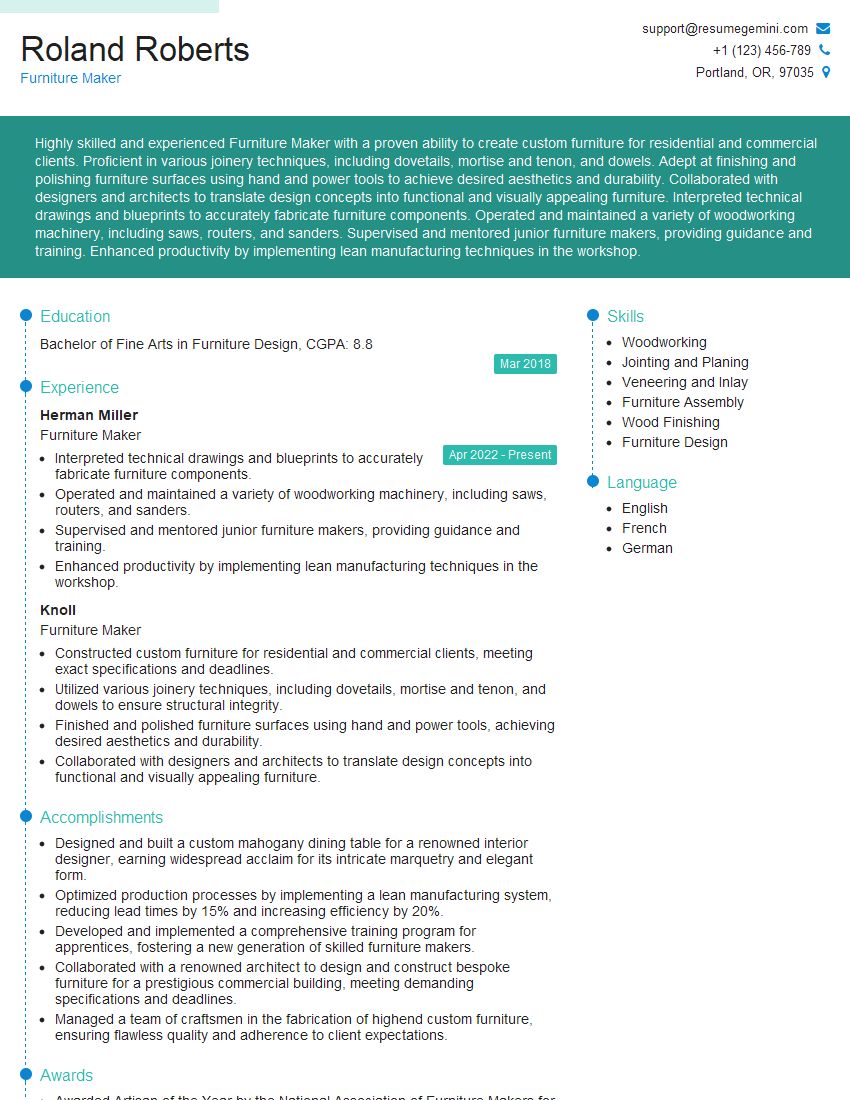
Furniture Maker Resume Sample
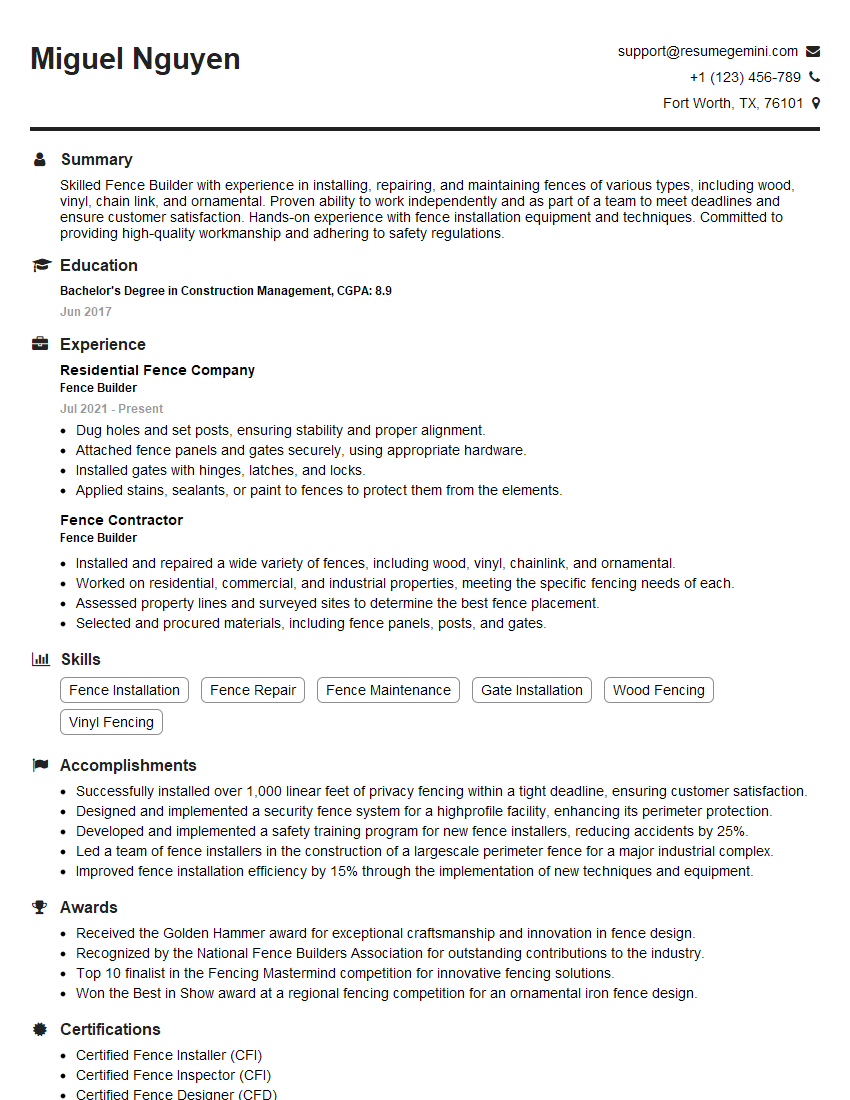
Fence Builder Resume Sample
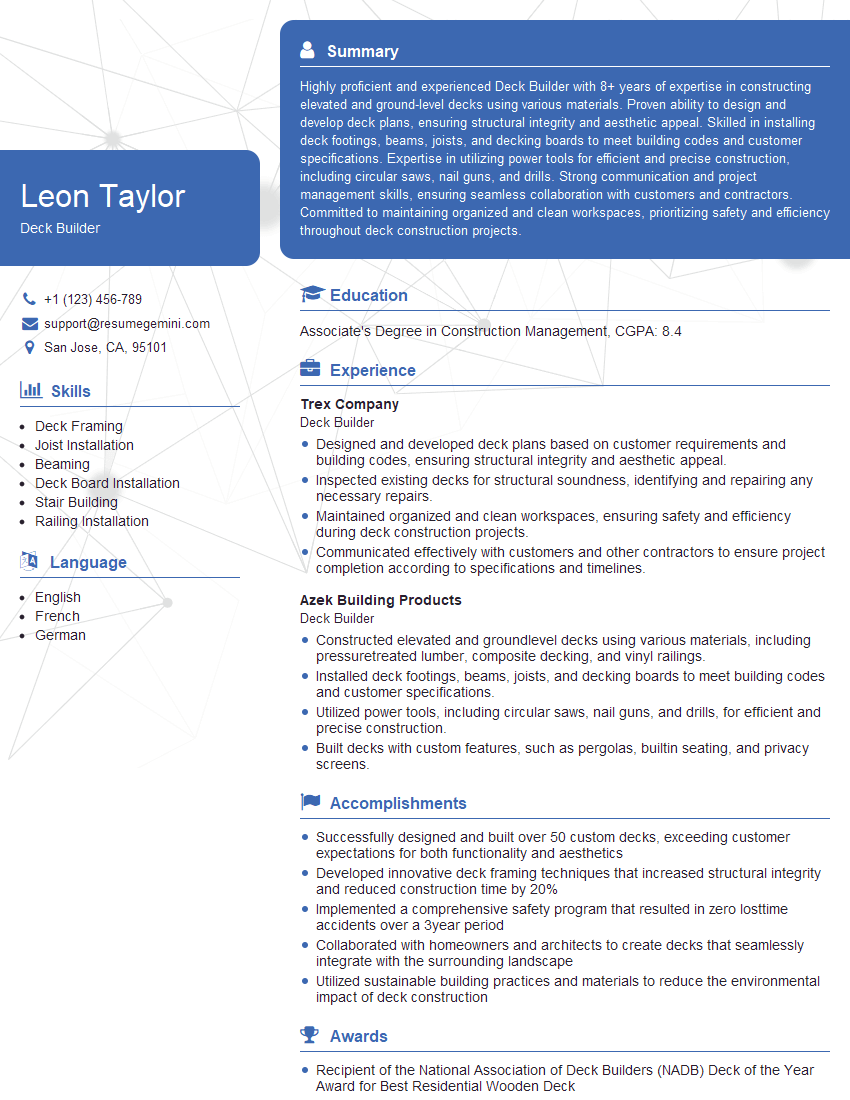
Deck Builder Resume Sample
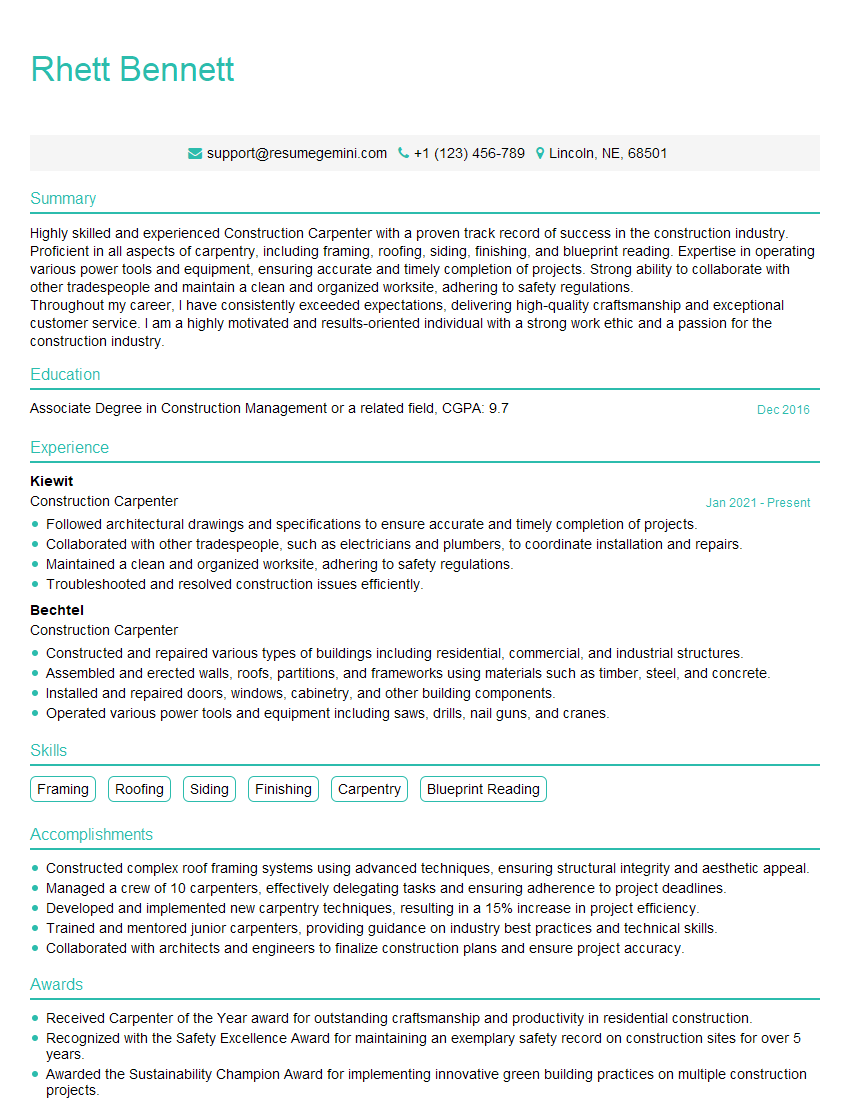
Construction Carpenter Resume Sample
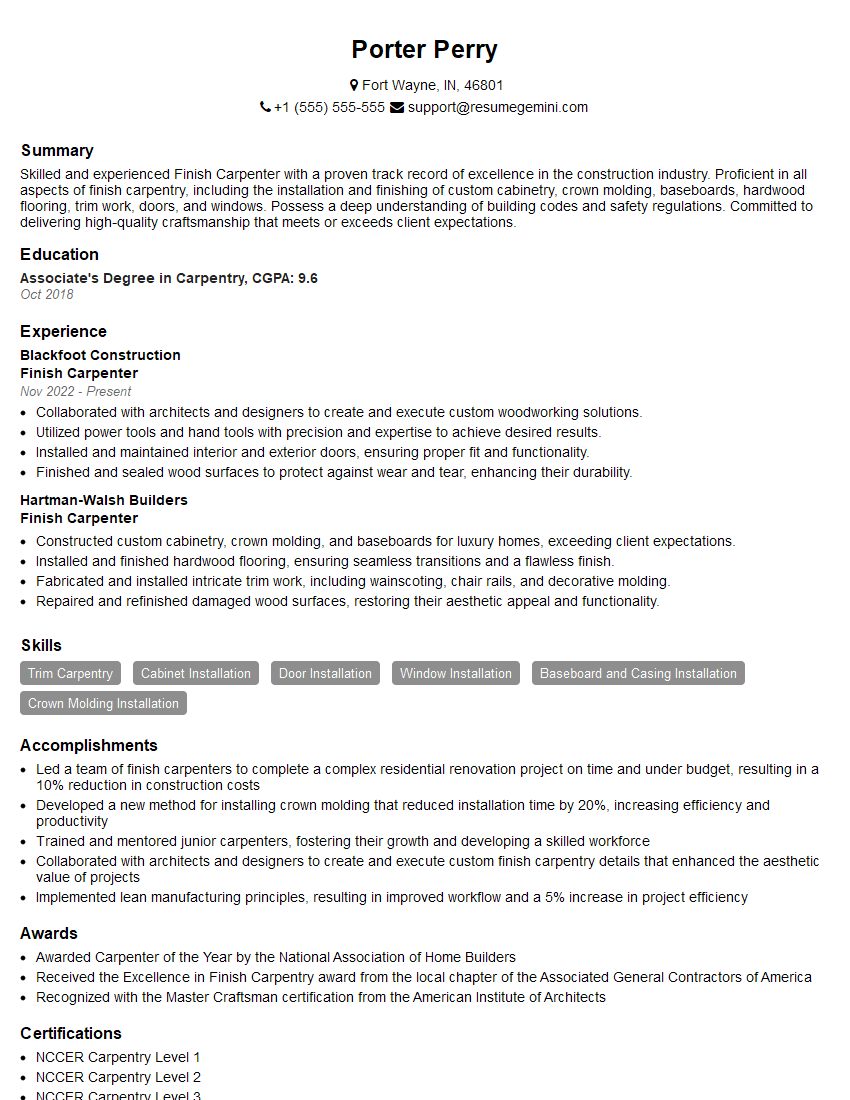
Finish Carpenter Resume Sample
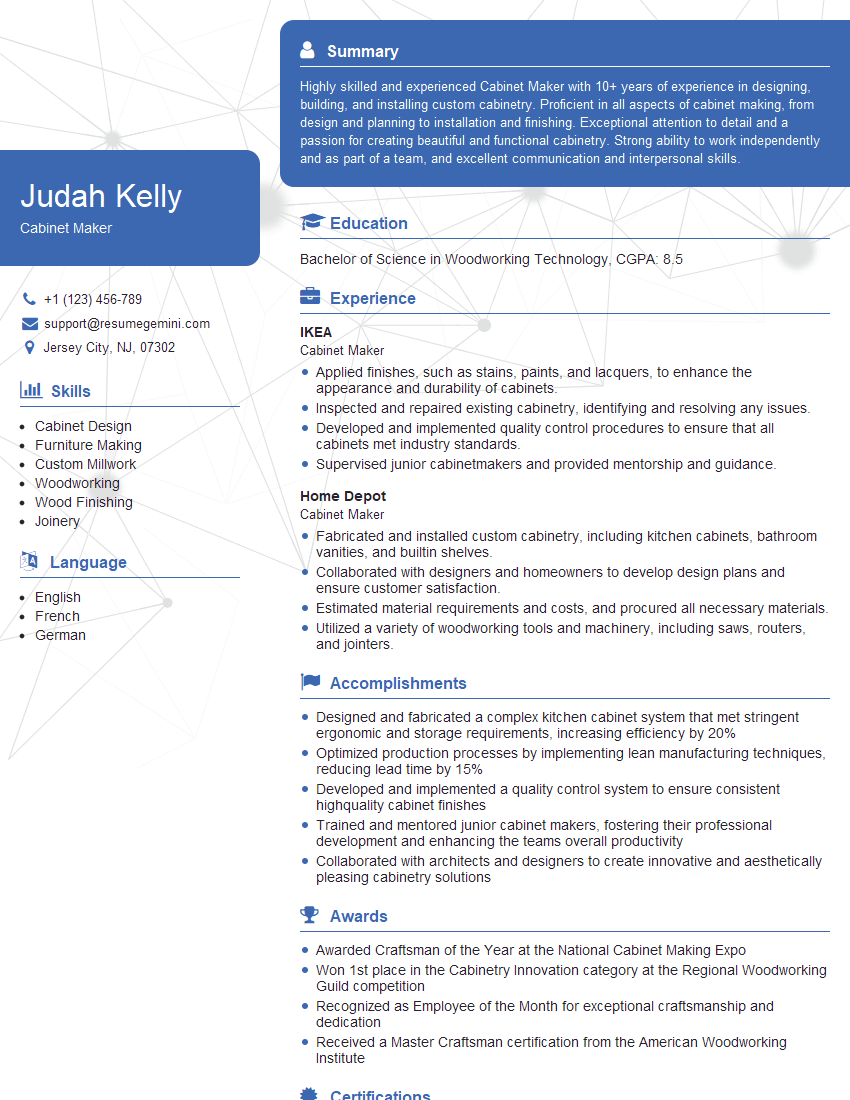
Cabinet Maker Resume Sample
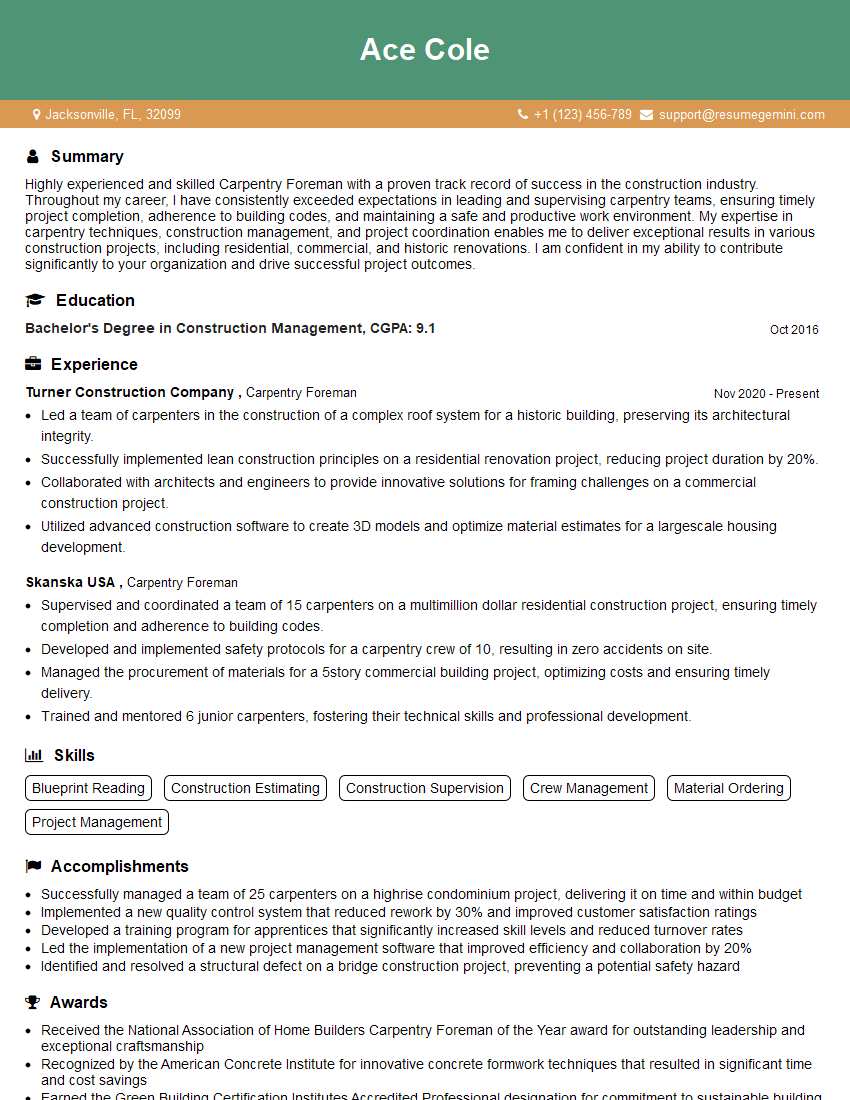
Carpentry Foreman Resume Sample
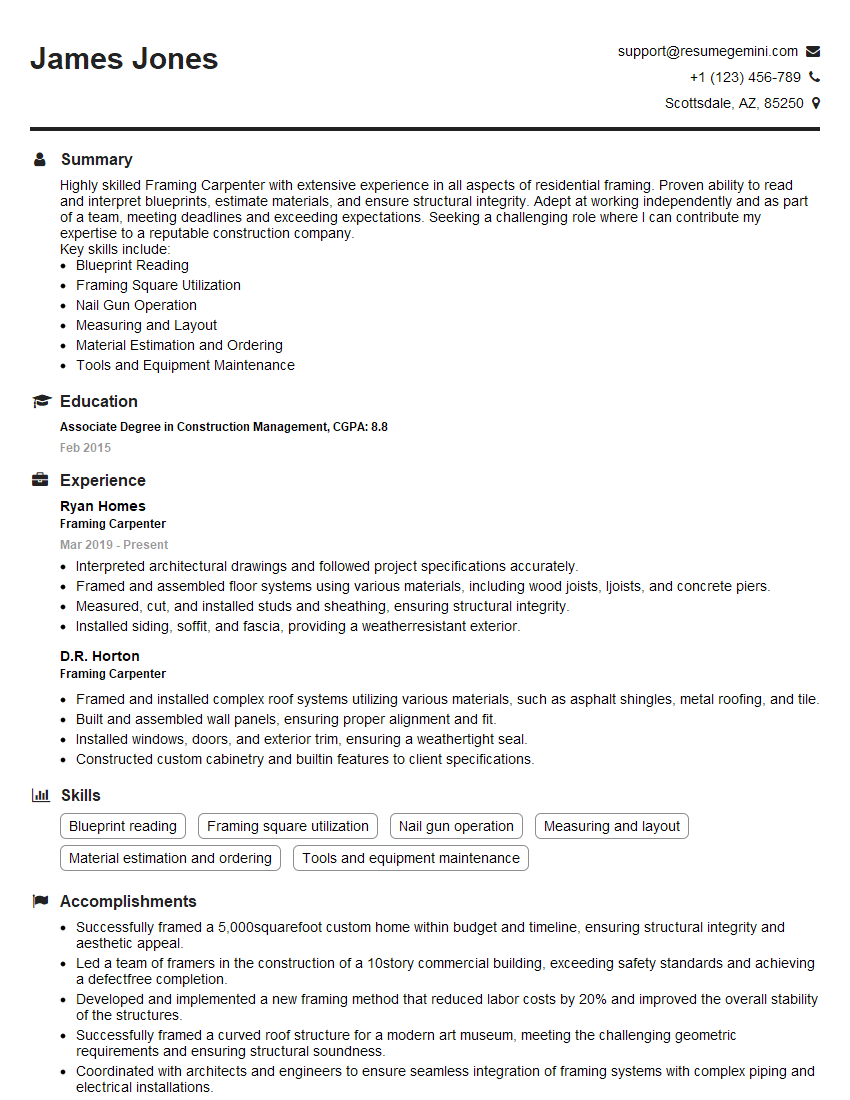
Framing Carpenter Resume Sample
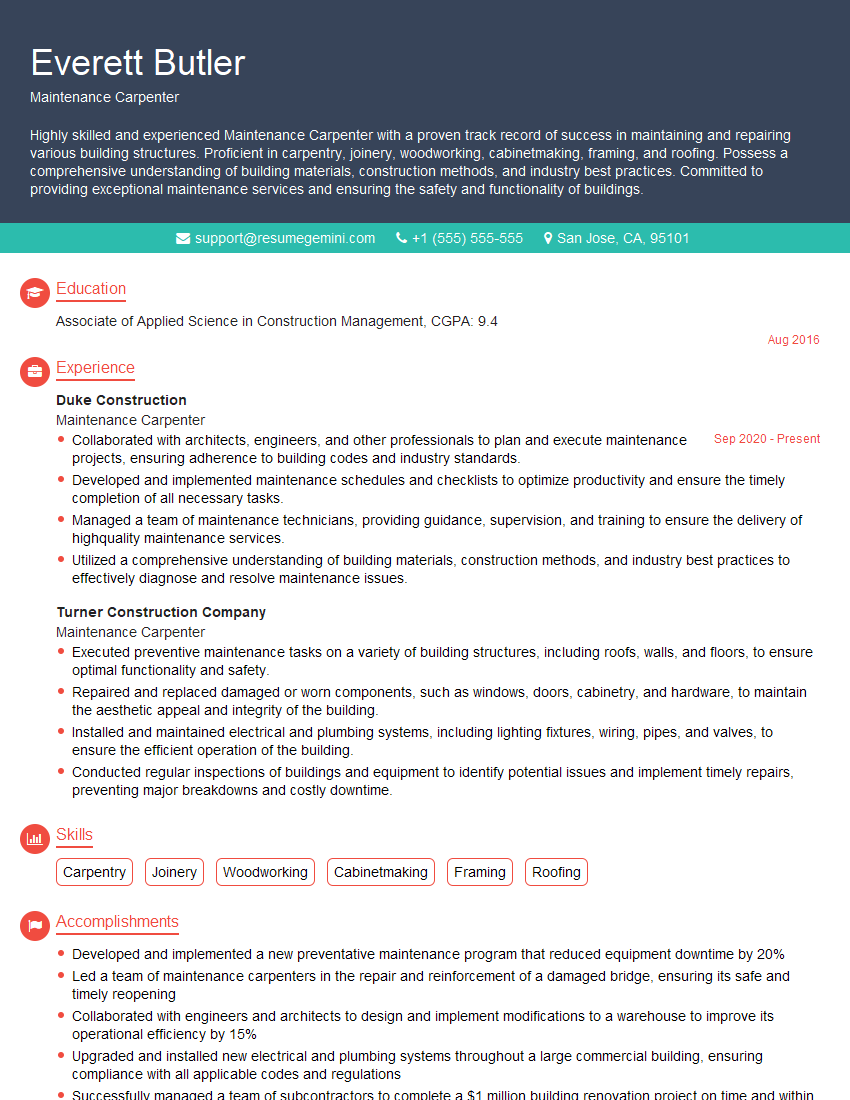
Maintenance Carpenter Resume Sample
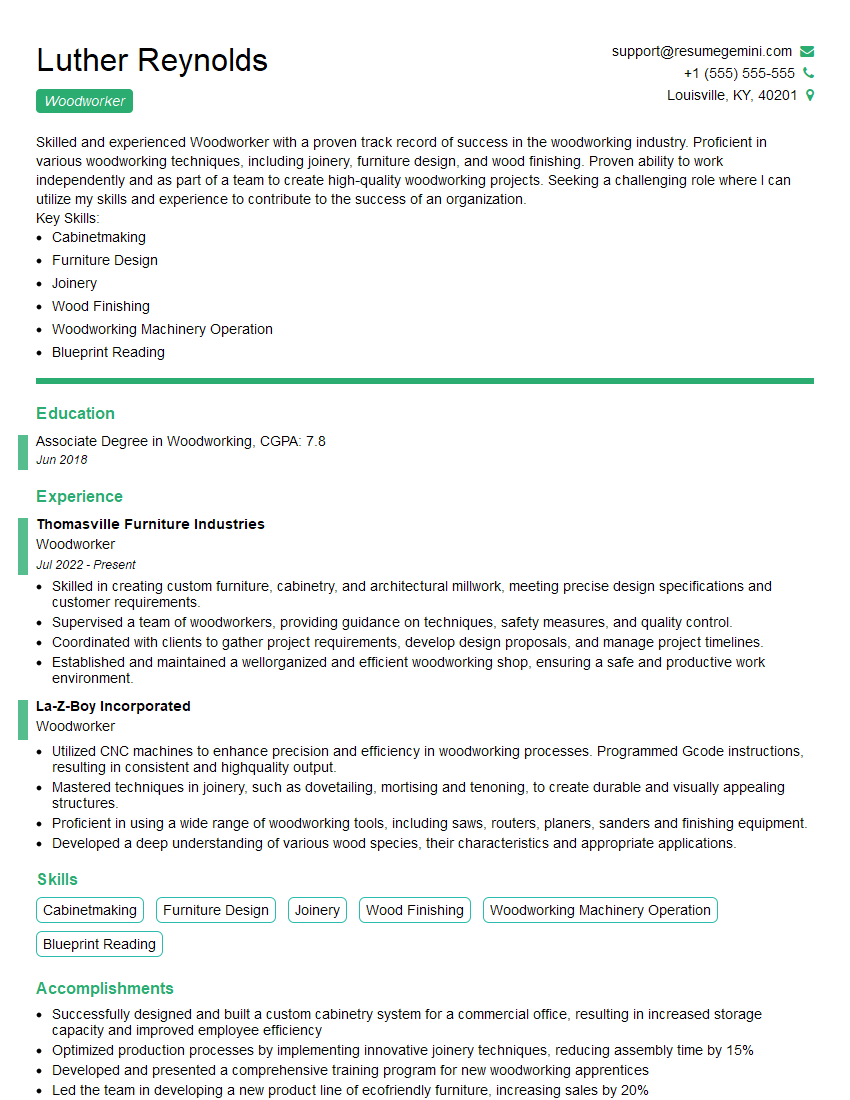
Woodworker Resume Sample
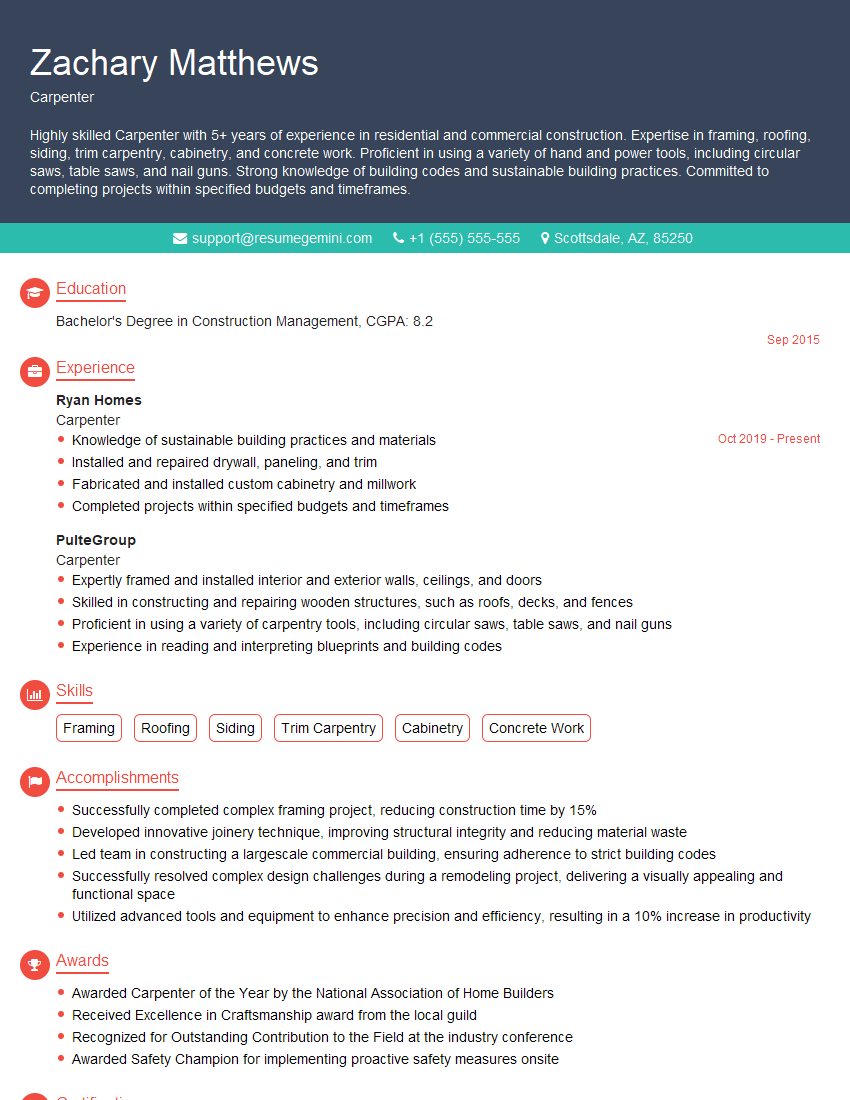
Carpenter Resume Sample
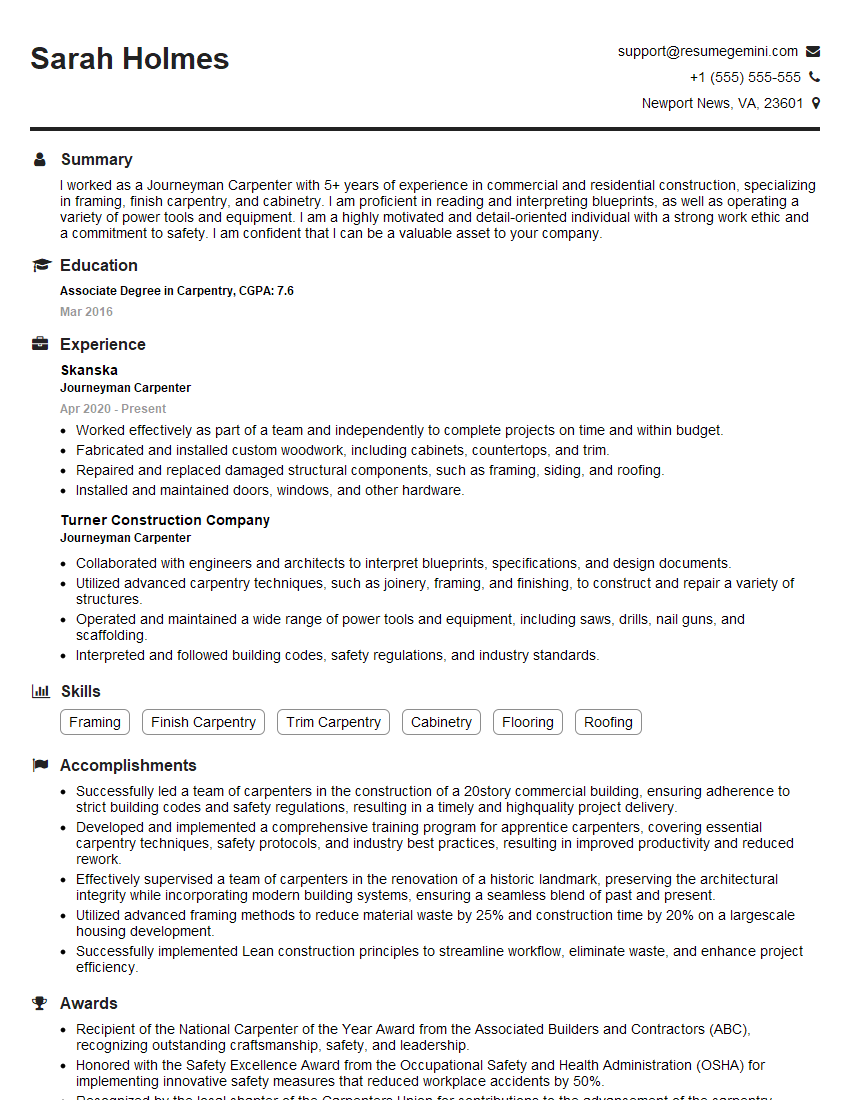
Journeyman Carpenter Resume Sample
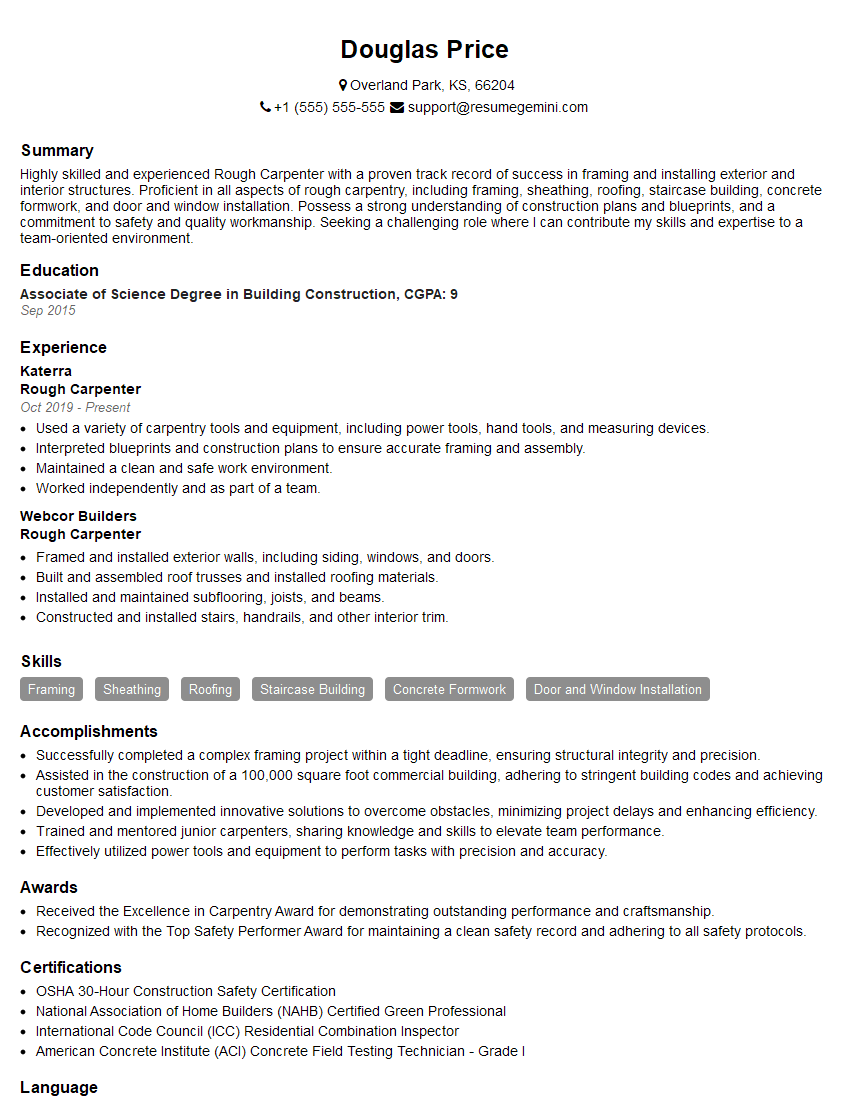
Rough Carpenter Resume Sample
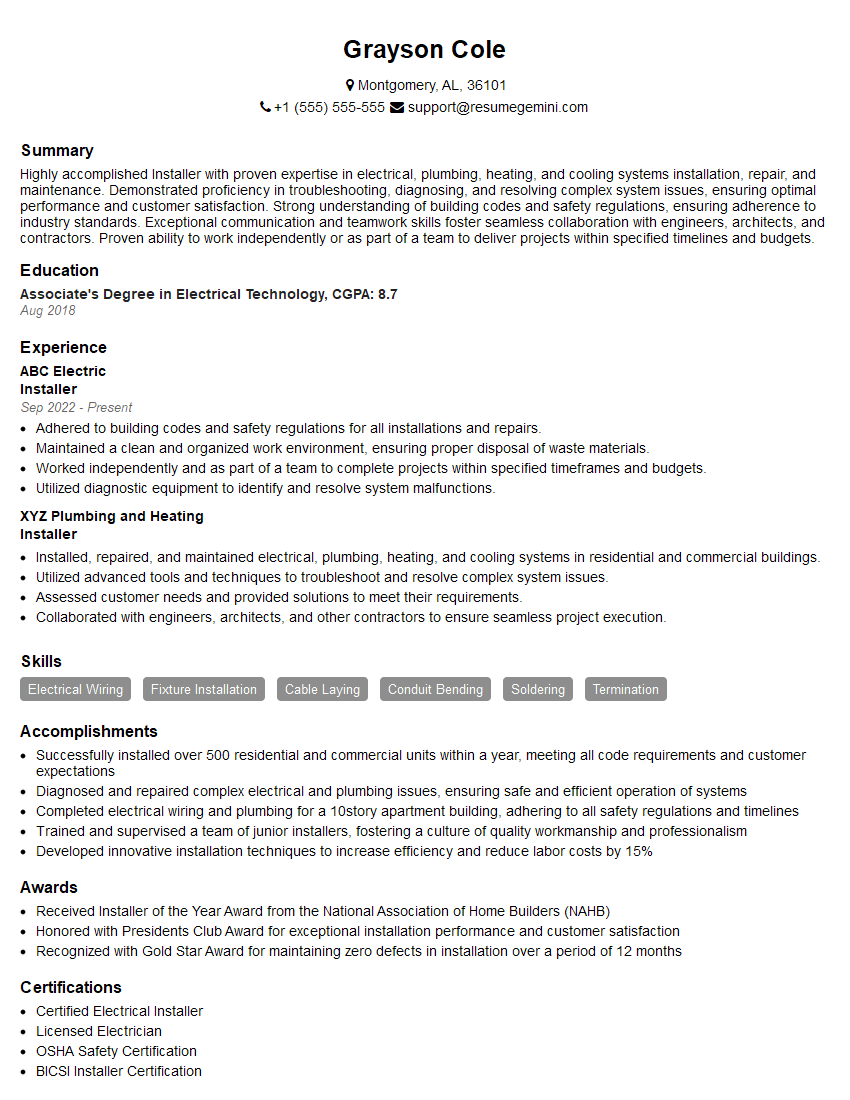
Installer Resume Sample
Explore more articles
Users Rating of Our Blogs
Share Your Experience
We value your feedback! Please rate our content and share your thoughts (optional).
What Readers Say About Our Blog
Attention music lovers!
Wow, All the best Sax Summer music !!!
Spotify: https://open.spotify.com/artist/6ShcdIT7rPVVaFEpgZQbUk
Apple Music: https://music.apple.com/fr/artist/jimmy-sax-black/1530501936
YouTube: https://music.youtube.com/browse/VLOLAK5uy_noClmC7abM6YpZsnySxRqt3LoalPf88No
Other Platforms and Free Downloads : https://fanlink.tv/jimmysaxblack
on google : https://www.google.com/search?q=22+AND+22+AND+22
on ChatGPT : https://chat.openai.com?q=who20jlJimmy20Black20Sax20Producer
Get back into the groove with Jimmy sax Black
Best regards,
Jimmy sax Black
www.jimmysaxblack.com
Hi I am a troller at The aquatic interview center and I suddenly went so fast in Roblox and it was gone when I reset.
Hi,
Business owners spend hours every week worrying about their website—or avoiding it because it feels overwhelming.
We’d like to take that off your plate:
$69/month. Everything handled.
Our team will:
Design a custom website—or completely overhaul your current one
Take care of hosting as an option
Handle edits and improvements—up to 60 minutes of work included every month
No setup fees, no annual commitments. Just a site that makes a strong first impression.
Find out if it’s right for you:
https://websolutionsgenius.com/awardwinningwebsites
Hello,
we currently offer a complimentary backlink and URL indexing test for search engine optimization professionals.
You can get complimentary indexing credits to test how link discovery works in practice.
No credit card is required and there is no recurring fee.
You can find details here:
https://wikipedia-backlinks.com/indexing/
Regards
NICE RESPONSE TO Q & A
hi
The aim of this message is regarding an unclaimed deposit of a deceased nationale that bears the same name as you. You are not relate to him as there are millions of people answering the names across around the world. But i will use my position to influence the release of the deposit to you for our mutual benefit.
Respond for full details and how to claim the deposit. This is 100% risk free. Send hello to my email id: [email protected]
Luka Chachibaialuka
Hey interviewgemini.com, just wanted to follow up on my last email.
We just launched Call the Monster, an parenting app that lets you summon friendly ‘monsters’ kids actually listen to.
We’re also running a giveaway for everyone who downloads the app. Since it’s brand new, there aren’t many users yet, which means you’ve got a much better chance of winning some great prizes.
You can check it out here: https://bit.ly/callamonsterapp
Or follow us on Instagram: https://www.instagram.com/callamonsterapp
Thanks,
Ryan
CEO – Call the Monster App
Hey interviewgemini.com, I saw your website and love your approach.
I just want this to look like spam email, but want to share something important to you. We just launched Call the Monster, a parenting app that lets you summon friendly ‘monsters’ kids actually listen to.
Parents are loving it for calming chaos before bedtime. Thought you might want to try it: https://bit.ly/callamonsterapp or just follow our fun monster lore on Instagram: https://www.instagram.com/callamonsterapp
Thanks,
Ryan
CEO – Call A Monster APP
To the interviewgemini.com Owner.
Dear interviewgemini.com Webmaster!
Hi interviewgemini.com Webmaster!
Dear interviewgemini.com Webmaster!
excellent
Hello,
We found issues with your domain’s email setup that may be sending your messages to spam or blocking them completely. InboxShield Mini shows you how to fix it in minutes — no tech skills required.
Scan your domain now for details: https://inboxshield-mini.com/
— Adam @ InboxShield Mini
Reply STOP to unsubscribe
Hi, are you owner of interviewgemini.com? What if I told you I could help you find extra time in your schedule, reconnect with leads you didn’t even realize you missed, and bring in more “I want to work with you” conversations, without increasing your ad spend or hiring a full-time employee?
All with a flexible, budget-friendly service that could easily pay for itself. Sounds good?
Would it be nice to jump on a quick 10-minute call so I can show you exactly how we make this work?
Best,
Hapei
Marketing Director
Hey, I know you’re the owner of interviewgemini.com. I’ll be quick.
Fundraising for your business is tough and time-consuming. We make it easier by guaranteeing two private investor meetings each month, for six months. No demos, no pitch events – just direct introductions to active investors matched to your startup.
If youR17;re raising, this could help you build real momentum. Want me to send more info?
Hi, I represent an SEO company that specialises in getting you AI citations and higher rankings on Google. I’d like to offer you a 100% free SEO audit for your website. Would you be interested?
Hi, I represent an SEO company that specialises in getting you AI citations and higher rankings on Google. I’d like to offer you a 100% free SEO audit for your website. Would you be interested?