Interviews are opportunities to demonstrate your expertise, and this guide is here to help you shine. Explore the essential Floral Trends and Styles interview questions that employers frequently ask, paired with strategies for crafting responses that set you apart from the competition.
Questions Asked in Floral Trends and Styles Interview
Q 1. Describe your experience with different floral arrangement styles (e.g., modern, rustic, romantic).
My experience spans a wide range of floral arrangement styles, each demanding a unique approach. Modern arrangements prioritize clean lines, minimalist palettes, and often feature architectural elements. Think sculptural arrangements with a focus on texture and form, perhaps using orchids, calla lilies, and succulents in a monochromatic scheme. Rustic style leans towards natural, earthy tones and textures. I incorporate wildflowers, foliage like eucalyptus and berries, and often use materials like burlap and wood in the design. For example, a rustic bridal bouquet might feature garden roses, dahlias, and Queen Anne’s lace loosely gathered. Romantic styles evoke feelings of elegance and softness. Pastel color palettes, flowing lines, and delicate flowers like peonies, roses, and hydrangeas are key. Think cascading bouquets, lush centerpieces, and a focus on creating a sense of dreamy abundance.
I’ve honed my skills across these styles by working on diverse projects, from intimate weddings to large-scale corporate events. This experience allows me to adapt my technique to various contexts and client preferences, ensuring each arrangement reflects the desired mood and aesthetic.
Q 2. What are the current top three floral design trends?
Three prominent floral design trends currently shaping the industry are:
- Sustainable and Locally Sourced Flowers: An increasing awareness of environmental impact is driving a shift towards using locally grown, seasonal blooms. This reduces the carbon footprint associated with transporting flowers long distances and supports local businesses. It also ensures the flowers are at their peak freshness.
- Textural Variety and Unexpected Combinations: Designers are moving beyond traditional pairings and experimenting with unusual textures and color combinations. This includes incorporating dried flowers, grasses, and seed pods alongside fresh blooms, creating more dynamic and visually interesting arrangements.
- Bold Color Palettes and Statement Pieces: Muted tones are giving way to vibrant and unexpected color palettes. Single-color arrangements with strong focal points are gaining popularity, creating striking visual impact. This could involve a large, statement flower as the centerpiece surrounded by complementary foliage.
These trends reflect a desire for both elegance and originality, sustainability and artistry, creating designs that are unique and impactful.
Q 3. How do you source high-quality flowers for your arrangements?
Sourcing high-quality flowers is crucial for creating exceptional arrangements. My process involves a multi-pronged approach:
- Developing Strong Relationships with Local Growers: I prioritize building close relationships with local flower farms and wholesalers. This ensures access to the freshest, highest-quality blooms, often harvested just before delivery.
- Careful Selection and Inspection: I personally inspect each delivery to ensure the flowers meet my stringent quality standards. This involves assessing factors like bloom stage, stem length, hydration, and overall condition.
- Diversifying Sources: To ensure consistent supply, I maintain relationships with several growers and wholesalers, which helps mitigate potential supply chain issues and allows access to a wider variety of flowers.
- Seasonal Awareness: I’m deeply aware of seasonal availability. This helps in selecting the most appropriate flowers based on the season, ensuring that the flowers are not only fresh but also appropriately priced.
This meticulous approach guarantees that the flowers used in my arrangements are always of the highest quality, resulting in stunning and long-lasting designs.
Q 4. Explain your process for creating a floral design based on a client’s brief.
Creating a floral design based on a client’s brief is a collaborative process. It starts with a thorough consultation to understand their vision, including:
- Event Type and Style: Wedding, corporate event, funeral, etc., and the desired aesthetic (e.g., rustic, modern, romantic).
- Color Palette and Preferences: Discussions around preferred colors, favorite flowers, and any dislikes are vital.
- Budget Constraints: Setting a realistic budget ensures both client satisfaction and feasibility.
- Venue and Logistics: Understanding the venue’s size, style, and any logistical challenges (e.g., transport, setup time) influences design choices.
Following the consultation, I develop a detailed design proposal, including sketches, flower selections, and a cost breakdown. I always iterate with the client until we achieve a design that perfectly matches their expectations. Finally, I carefully execute the design, paying close attention to detail and ensuring the final arrangement surpasses expectations.
Q 5. How do you handle difficult or demanding clients?
Handling demanding clients requires patience, understanding, and excellent communication skills. My approach involves:
- Active Listening: I always listen carefully to their concerns, even if they are expressed forcefully. Understanding their perspective is the first step to resolution.
- Empathy and Validation: Acknowledging their feelings and showing empathy goes a long way in defusing tense situations. Reiterating their concerns shows that I’m actively working towards a solution.
- Clear and Honest Communication: I explain the design process clearly, manage expectations proactively, and address concerns transparently. This reduces misunderstandings and potential conflicts.
- Offering Alternatives: When necessary, I suggest alternative options that fit within the budget and timeframe while meeting (as much as possible) their aesthetic preferences. This demonstrates flexibility and willingness to compromise.
By focusing on communication and understanding, I aim to transform even difficult situations into positive collaborations, resulting in beautiful arrangements and satisfied clients.
Q 6. What are your favorite floral design tools and techniques?
My favorite tools and techniques blend traditional craftsmanship with modern innovations. These include:
- Floral Shears and Knives: Precision cutting is crucial for creating clean lines and maintaining the integrity of the flowers. I use high-quality, sharp tools for this.
- Floral Tape and Wire: These are essential for securing stems and creating intricate designs, especially for bouquets and corsages.
- Floral Foam: This provides a stable base for arranging flowers, especially in larger centerpieces.
- Digital Design Software: I often use software to visualize designs before execution, especially for large projects. This allows for client feedback and iterative refinement.
- Water Picks and Hydration Techniques: Maintaining the freshness of flowers is paramount. I employ techniques like hydrating flowers before arranging and using water picks to extend their lifespan.
Beyond specific tools, my approach emphasizes understanding the natural properties of each flower – its weight, texture, and how it interacts with other elements – to achieve harmonious and balanced arrangements.
Q 7. Describe a time you had to overcome a creative challenge in floral design.
One memorable creative challenge involved creating a centerpiece for a wedding with a very specific, almost impossible color palette: a deep teal, a vibrant coral, and a dusty rose. These colors are not naturally found together in many flowers and presented a considerable challenge in achieving harmony.
To overcome this, I spent considerable time researching flower varieties that could approximate the desired shades. I experimented with different combinations of roses, dahlias, and hypericum berries, focusing on subtle variations in hue and texture. Ultimately, I incorporated some unexpected elements like succulents and deep green foliage to act as a bridge between these disparate colors. The resulting arrangement was a harmonious surprise, even exceeding the client’s expectations. This experience reinforced the importance of thorough research, experimentation, and confidence in one’s ability to adapt and find creative solutions to unique problems.
Q 8. How do you maintain the freshness of flowers throughout an event?
Maintaining the freshness of flowers throughout an event is crucial for its visual appeal and success. Think of it like caring for a delicate living organism; they need the right conditions to thrive. This involves a multi-pronged approach:
- Proper Hydration: Flowers should be re-cut at an angle under running water immediately before arranging. This removes air bubbles from the stems, allowing better water uptake. Using floral food, which contains preservatives and nutrients, is also essential. I always recommend changing the water regularly, ideally twice a day, and ensuring the containers are clean to prevent bacterial growth. For larger events, we use hydration systems with specialized pumps to continually circulate nutrient-rich water.
- Temperature Control: Avoid extreme temperatures. Direct sunlight and heat can wilt flowers rapidly. In hot venues, we use fans to create air circulation or strategic placement away from direct sunlight and heat sources. Cold temperatures can also damage certain blooms.
- Humidity: Maintaining appropriate humidity levels is vital. A slightly humid environment is preferable for most flowers. In very dry conditions, we use humidifiers or mist flowers lightly to prevent dehydration.
- Flower Selection: Choosing hardy varieties known for their longevity is crucial. For example, roses and lilies are generally more durable than delicate blossoms like orchids, which need more careful handling and potentially additional support structures.
For instance, at a recent wedding, we used a combination of refrigerated storage prior to the ceremony and strategically placed misting fans to keep the arrangements vibrant for the duration of the event, which lasted from 11 am to 11 pm.
Q 9. What software or tools do you use for floral design planning and management?
Floral design planning and management require efficient software and tools. I primarily use a combination of:
- Floral design software: Programs like
Floral ManagerorBloomThatallow for precise design planning, client communication, and inventory management. I use them to create detailed 3D renderings of arrangements, helping clients visualize the final product and allowing for collaborative adjustments. They also help me track the cost of each project from sourcing to delivery. - Project management tools:
AsanaorTrelloare essential for managing multiple projects simultaneously. I create project boards to visualize tasks, deadlines, and team assignments, ensuring timely completion of each project. This is particularly useful for large events requiring coordination with other vendors like caterers and venue managers. - Spreadsheet software:
Microsoft ExcelorGoogle Sheetsare indispensable for budgeting, inventory tracking, and client communication. I use them to maintain meticulous records of flower costs, materials, and labor, ensuring accurate pricing and financial reporting.
Combining these software solutions allows for seamless planning, execution, and management of my floral design projects, reducing errors and increasing efficiency.
Q 10. Explain your understanding of color theory in floral design.
Color theory is fundamental to floral design; it’s the art of using color to evoke emotion and create harmony or contrast. Understanding color relationships is vital in creating visually appealing and impactful arrangements. I consider three main aspects:
- Color Wheel: The color wheel helps illustrate relationships between colors. Complementary colors (opposite each other on the wheel, e.g., red and green) create high contrast and vibrancy. Analogous colors (adjacent to each other, e.g., blue, blue-green, and green) create a harmonious and soothing effect. Triadic colors (three equally spaced colors, e.g., red, yellow, and blue) offer a balanced and energetic palette.
- Color Temperature: Warm colors (reds, oranges, yellows) evoke energy and warmth, while cool colors (blues, greens, purples) create a calming and serene atmosphere. I strategically use these temperatures to adjust the mood of a space.
- Color Value and Saturation: Light and dark variations (value) and intensity (saturation) of colors impact the overall look. A mix of light and dark shades of a color adds depth and dimension, while variations in saturation can create focal points.
For example, a wedding with a romantic atmosphere might benefit from a palette of soft pinks, peaches, and creams (analogous colors with low saturation), while a vibrant birthday party might use bright reds, oranges, and yellows (complementary colors with high saturation).
Q 11. Discuss your experience with different types of floral preservation techniques.
Floral preservation is a specialized skill that allows us to extend the life of beautiful blooms beyond their natural lifespan. I’m experienced in several techniques, each with its pros and cons:
- Air Drying: This is a simple method, ideal for smaller, delicate flowers like lavender or baby’s breath. It involves hanging flowers upside down in a dark, dry place for several weeks. The downside is that it can result in some color loss and shrinkage.
- Pressing: Pressing flowers between absorbent papers under weight is effective for preserving flat flowers like pansies or daisies for use in artwork or crafting. This method flattens the flowers completely.
- Freezing: Freezing flowers in glycerol solutions can maintain their shape and color, but it requires specialized equipment and can be time-consuming. It’s suitable for larger, more complex flower arrangements, though some texture might change.
- Resin Encapsulation: Encapsulating flowers in resin creates stunning, long-lasting preserved pieces, preserving their color and three-dimensional shape. This technique is often used in jewelry or decorative art.
I select the preservation method based on the type of flower, the desired outcome, and the client’s budget. For instance, air drying is a cost-effective option for smaller events, while resin encapsulation might be appropriate for a high-value piece.
Q 12. How do you manage your time effectively when working on multiple floral projects?
Managing time effectively when juggling multiple floral projects requires a structured approach. I utilize several strategies:
- Prioritization: I rank projects by deadline and importance, focusing my energy on the most time-sensitive tasks first. Using project management software, I set clear deadlines and track progress to prevent falling behind schedule.
- Time Blocking: I allocate specific time blocks for each task or project in my day. This prevents multitasking and improves focus, leading to greater efficiency. For example, I might dedicate two hours in the morning to sourcing flowers and three hours in the afternoon to arrangement design.
- Delegation: When appropriate, I delegate tasks to assistants or team members, freeing up my time for more complex design work. This allows for better use of time and skills.
- Efficient Workflows: I optimize my workflow by streamlining repetitive tasks. For example, I maintain a well-organized floral studio and utilize efficient tools and techniques to reduce wasted time.
By consistently applying these strategies, I can effectively manage multiple complex projects while meeting deadlines and maintaining high quality.
Q 13. What is your experience with floral budgeting and costing?
Floral budgeting and costing are critical for the success and profitability of any floral business. It involves careful consideration of various factors:
- Flower Costs: This is the most significant expense. I track wholesale flower prices, factoring in seasonal variations and demand. I use spreadsheets to track prices from various suppliers, ensuring I get the best value for money.
- Materials Costs: This includes containers, ribbons, wire, floral foam, and other supplementary materials. Accurate cost tracking is essential for accurate project pricing.
- Labor Costs: I factor in the time spent on sourcing, arranging, delivery, and setup. This can involve hourly wages for myself and my team.
- Overhead Costs: This encompasses rent, utilities, insurance, and other business-related expenses. These costs are included in the overall pricing structure to ensure profitability.
- Profit Margin: A healthy profit margin is crucial. I calculate this based on overall expenses and desired profit level. This is added to the cost to determine the final price.
By meticulously tracking all expenses and calculating a fair profit margin, I can accurately price projects, ensuring both profitability and client satisfaction. I also offer different pricing tiers to cater to varied budgets.
Q 14. Describe your knowledge of various flower types and their characteristics.
My knowledge of various flower types and their characteristics is extensive. This includes understanding their:
- Durability: Some flowers like roses and lilies are known for their longevity, while others, like orchids, require more careful handling.
- Color Range: Each flower type offers a diverse color palette. Roses, for instance, come in countless colors and shades, while some flowers like calla lilies have a more limited palette.
- Texture and Form: Flowers vary in texture, from delicate petals to sturdy stems. Understanding these variations allows me to create interesting contrasts and textures in my arrangements.
- Seasonal Availability: Certain flowers are seasonal, impacting availability and cost. Knowing this allows me to plan my designs accordingly and provide alternative options.
- Symbolic Meaning: In many cultures, flowers carry symbolic meanings. Knowing this helps tailor the arrangements to the client’s desires and event context.
For example, I know that hydrangeas are excellent for creating volume and texture, while tulips add a touch of elegance and are very versatile. Knowing these nuances allows me to create arrangements that are not only beautiful but also appropriate for the occasion and client preferences.
Q 15. How familiar are you with sustainable floral practices?
Sustainable floral practices are paramount to my work. It’s not just about aesthetics; it’s about minimizing the environmental impact of the floral industry. This involves several key strategies.
- Sourcing Locally and Seasonally: I prioritize sourcing flowers from local growers whenever possible. This reduces transportation emissions and supports the local economy. Choosing seasonal blooms ensures they are at their peak beauty and require less energy to cultivate.
- Using Eco-Friendly Materials: I avoid non-biodegradable materials like plastic foam and opt for sustainable alternatives such as recycled vases, natural fibers for wrapping, and compostable containers.
- Reducing Waste: Careful planning and precise ordering minimize waste. Leftover flowers are often donated to charities or composted, preventing them from ending up in landfills.
- Supporting Fair Trade Practices: I actively seek out suppliers committed to fair labor practices, ensuring ethical treatment of workers throughout the supply chain.
- Water Conservation: I employ techniques to conserve water, such as using water-efficient floral foam or designing arrangements that require less water overall.
For example, for a recent wedding, I collaborated with a local farm specializing in organic, heirloom varieties. This not only resulted in stunning arrangements but also minimized the carbon footprint associated with transportation.
Career Expert Tips:
- Ace those interviews! Prepare effectively by reviewing the Top 50 Most Common Interview Questions on ResumeGemini.
- Navigate your job search with confidence! Explore a wide range of Career Tips on ResumeGemini. Learn about common challenges and recommendations to overcome them.
- Craft the perfect resume! Master the Art of Resume Writing with ResumeGemini’s guide. Showcase your unique qualifications and achievements effectively.
- Don’t miss out on holiday savings! Build your dream resume with ResumeGemini’s ATS optimized templates.
Q 16. What is your approach to creating a cohesive floral scheme for an event?
Creating a cohesive floral scheme requires a meticulous approach. It starts with a deep understanding of the event’s theme, style, and overall aesthetic.
- Client Consultation: A thorough discussion with the client is essential to understand their vision, preferences, and budget. This includes discussing color palettes, flower types, and preferred styles.
- Mood Board Creation: I often create a mood board—a visual representation of the chosen color scheme, textures, and overall design aesthetic. This serves as a guide throughout the design process.
- Flower Selection: Selecting the right flowers is critical. This involves considering the event’s season, venue, and the client’s preferences. I consider factors like bloom size, shape, texture, and longevity.
- Arrangement Design: The arrangement design should complement the overall event design. This includes considering the height, width, and placement of each arrangement.
- Testing and Refinement: Before the actual event, I conduct test runs to ensure the arrangements look perfect and meet the client’s expectations. This allows for adjustments and refinement before the big day.
For instance, for a rustic-chic wedding, I might incorporate wildflowers, textured greenery, and neutral tones, creating a natural and elegant feel.
Q 17. How do you incorporate seasonal flowers into your designs?
Seasonal flowers are not only more sustainable but also often more vibrant and fragrant. I leverage seasonal availability in my designs by creating arrangements that reflect the beauty of each season.
- Research and Planning: I meticulously research the flowers in season at the time of the event. This informs my flower selection and design concepts.
- Flexibility and Adaptability: I am flexible and adaptable, willing to adjust my initial design ideas based on what’s readily available and at its peak. This ensures the highest quality and most beautiful arrangements.
- Highlighting Seasonal Characteristics: I emphasize the unique characteristics of seasonal flowers in my arrangements. This might involve showcasing specific colors, textures, or shapes associated with a particular season.
- Creating Seasonal Themes: I often build entire floral themes around seasonal blooms. For example, a spring event might feature tulips, daffodils, and hyacinths, while a fall event could incorporate sunflowers, dahlias, and asters.
For a summer wedding, I might utilize bright sunflowers, vibrant zinnias, and lush greenery, capturing the essence of the season.
Q 18. What are the challenges of working with exotic or unusual flowers?
Working with exotic or unusual flowers presents unique challenges. Their rarity often translates to higher costs and limited availability, requiring advanced planning and specialized handling.
- Sourcing and Logistics: Sourcing these flowers often requires working with specialized importers and ensuring timely delivery. The logistics can be complex and require careful coordination.
- Handling and Care: Exotic flowers often have specific care requirements that differ from common varieties. Understanding these requirements is crucial to maintaining their freshness and beauty. This might involve specialized storage or handling techniques.
- Cost Considerations: Exotic flowers are typically more expensive than commonly available varieties. This needs to be transparently communicated to clients and factored into the overall budget.
- Allergenicity and Safety: Some exotic flowers might cause allergic reactions or contain harmful substances. I am mindful of these factors and take precautions to ensure the safety of all involved.
For instance, when using orchids, I ensure they are kept in optimal humidity levels to prevent wilting and maintain their elegant appearance.
Q 19. Describe your experience with designing floral arrangements for various event types (weddings, corporate events, etc.).
My experience spans a wide range of event types, each with its unique floral design requirements.
- Weddings: Wedding floral design demands a high level of artistry and attention to detail. I work closely with couples to translate their vision into stunning arrangements, from bouquets and centerpieces to ceremony decor.
- Corporate Events: Corporate events often require a more formal and sophisticated approach. I create designs that align with the company’s branding and the event’s overall theme, reflecting professionalism and elegance.
- Private Parties: Private parties offer more flexibility in design styles. I adapt my approach to the client’s specific preferences, creating arrangements that reflect their personality and celebrate the occasion.
- Galas and Fundraisers: These events usually call for grand and impactful floral designs. I create show-stopping arrangements that complement the venue and enhance the overall ambiance.
A recent corporate event required minimalist designs featuring orchids and succulents, reflecting the client’s modern and sleek brand identity.
Q 20. How do you handle flower delivery and installation logistics?
Efficient flower delivery and installation are crucial for event success. I employ a systematic approach to ensure timely and flawless execution.
- Detailed Planning: I create detailed delivery schedules, factoring in travel time, setup requirements, and potential traffic delays.
- Reliable Transportation: I utilize temperature-controlled vehicles to transport flowers, maintaining their freshness during transit.
- Experienced Team: I have a skilled team to assist with installation, ensuring efficient and precise placement of arrangements.
- Communication and Coordination: Clear communication with the venue and event staff is crucial for smooth installation. This might involve site visits and detailed setup plans.
- Contingency Planning: I have backup plans in place to handle unexpected delays or challenges, such as inclement weather or unforeseen logistical issues.
For example, for a large wedding, I coordinate delivery and setup with the venue management to ensure seamless integration with other event services.
Q 21. What are your strategies for dealing with damaged or wilted flowers?
Dealing with damaged or wilted flowers requires quick thinking and problem-solving skills.
- Careful Inspection: Upon receiving flowers, I meticulously inspect them for damage or signs of wilting. This allows for early identification and timely action.
- Rehydration and Conditioning: Wilted flowers can often be revived through rehydration and conditioning techniques. This might involve trimming stems, hydrating them in water, or using floral preservatives.
- Strategic Arrangement: If some flowers are beyond repair, I strategically arrange the remaining blooms to minimize the visibility of damaged pieces. This might involve creative use of greenery or other fillers.
- Replacement Flowers: In cases of significant damage or wilting, I have backup flowers on hand or utilize my network of suppliers to quickly source replacements. This ensures the overall design remains intact.
- Communication with Client: If issues cannot be fully resolved, I transparently communicate the situation with the client, explaining the solutions and ensuring they are satisfied.
Recently, I successfully salvaged a wilted bouquet by rehydrating the flowers, strategically arranging them with lush greenery, and subtly incorporating backup blooms to create a stunning outcome.
Q 22. How do you stay updated on the latest floral trends and industry news?
Staying ahead in the floral industry requires a multi-pronged approach. I religiously follow industry publications like Floral Management and American Flowers Weekly, attending workshops and conferences whenever possible – events like the SAF (Society of American Florists) convention are invaluable for networking and trend spotting. I also actively engage with online communities and forums, following influential floral designers on social media platforms like Instagram and Pinterest for daily inspiration and to see what’s trending globally. Furthermore, I subscribe to trend forecasting services that provide insights into color palettes, design styles, and popular flower varieties predicted for upcoming seasons. This constant engagement ensures I remain informed and adapt my designs to current market preferences.
Q 23. Describe your experience with managing a floral design team or assistants.
I’ve had the pleasure of leading and mentoring floral design teams for over [Number] years. My management style focuses on fostering collaboration and individual growth. I begin by clearly defining roles and responsibilities, ensuring each team member understands their contribution to the overall project. Regular team meetings are crucial, allowing open communication, feedback exchange, and brainstorming sessions. I encourage creativity by providing opportunities for skill development through workshops and providing access to industry resources. I believe in leading by example, showcasing my design process, and fostering a positive, supportive environment where experimentation is encouraged. For instance, when working on a large wedding, I assign specific tasks based on each assistant’s strengths, perhaps one specializing in wiring techniques while another handles intricate bouquet arrangements. This division of labor ensures efficiency and allows team members to excel in their areas of expertise.
Q 24. How do you balance creativity with client expectations in floral design?
Balancing creativity with client expectations is a delicate art. It’s about finding a harmonious blend where the client’s vision is honored while my creative expertise elevates the design. I begin by engaging in a thorough consultation with the client, actively listening to their preferences, understanding their style, and asking clarifying questions. Visual aids like mood boards, photos, and fabric swatches are invaluable tools in this process. Once I have a firm grasp of their expectations, I present design concepts that incorporate their ideas, yet introduce my unique creative flair. This often involves proposing several options, showcasing diverse styles and color palettes while explaining the rationale behind each choice. Ultimately, the goal is to create a design that exceeds expectations while remaining true to the client’s vision – a perfect marriage of artistry and personalized service. For example, if a client wants a “romantic” wedding, I might show them several variations, ranging from a lush garden style to a more minimalist, elegant approach.
Q 25. What are your pricing strategies for floral arrangements?
My pricing strategies are multifaceted, ensuring fairness and profitability. I utilize a cost-plus pricing model, carefully calculating the cost of materials (flowers, containers, supplies), labor, and overhead expenses. This ensures I recover all costs and earn a fair profit margin. However, I also consider the complexity and design scale, adjusting pricing accordingly. A smaller, simple arrangement will have a different price point than a large, intricate installation. Furthermore, I offer different packages tailored to different budgets and event scales, providing options that cater to a range of client needs. For example, a basic package might include a set number of flowers and a standard vase, while a premium package could offer premium flowers, unique vessels, and additional design elements.
Q 26. Explain your understanding of different floral mechanics and techniques.
Floral mechanics are fundamental to creating stunning, long-lasting arrangements. My expertise encompasses a wide range of techniques, including wiring (to create curves and angles), taping (to secure stems and create sturdy structures), and the use of floral foam (to provide stability and hydration). I’m proficient in various binding methods, from hand-tying bouquets to creating intricate corsages. I understand the importance of proper hydration techniques to extend the life of the flowers. This involves using appropriate solutions and ensuring proper water levels in vases and containers. Knowledge of different flower types and their unique handling requirements is crucial; for example, delicate orchids require a gentler approach compared to sturdy sunflowers. Mastering these mechanics allows me to create arrangements with both beauty and longevity, ensuring client satisfaction.
Q 27. How would you design a floral arrangement for a specific theme or color palette?
Designing a floral arrangement around a specific theme or color palette starts with thorough research and planning. I begin by creating a mood board, gathering images and inspiration relevant to the chosen theme. If it’s a rustic wedding, I might use natural textures and earthy tones; for a modern event, I’d opt for sleek lines and minimalist designs. The color palette dictates the flower choices, considering complementary and contrasting hues. I select flowers, foliage, and fillers that align with the overall aesthetic, considering texture, shape, and size for visual balance. For instance, a monochromatic design focused on shades of purple might incorporate lavender, hydrangeas, and violets, with eucalyptus or ferns adding textural contrast. The arrangement’s form (round, cascading, linear) is also chosen to complement the theme and space. This meticulous planning ensures a cohesive and visually stunning final product.
Q 28. Describe your experience with using different floral containers and vessels.
My experience with floral containers is extensive. I understand that the vessel is as crucial as the flowers themselves. I’ve worked with a diverse range of materials and styles, including classic glass vases, rustic wooden boxes, modern ceramic containers, and even repurposed vintage finds. The choice of container depends heavily on the arrangement style and the event theme. For a formal event, elegant crystal vases might be ideal; a casual setting might call for more rustic or whimsical containers. Beyond the aesthetic appeal, the functionality of the container is important. I consider factors like size, shape, and the ease of arranging flowers within the vessel. I’m also adept at adapting containers to suit specific arrangements; for instance, I might use a clear glass vase to showcase the beauty of a minimalist bouquet, while a textured ceramic vase might be perfect for a more dramatic design. The key is to select a container that complements and enhances the overall visual impact of the floral arrangement.
Key Topics to Learn for Floral Trends and Styles Interview
- Current Floral Design Trends: Understanding the evolution of floral design aesthetics, including popular color palettes, textures, and arrangement styles (e.g., modern minimalist, romantic bohemian, classic traditional).
- Floral Design Principles: Mastering the fundamentals of balance, proportion, harmony, rhythm, and emphasis in creating visually appealing arrangements. Practical application includes analyzing existing arrangements and critiquing their effectiveness.
- Seasonal Floral Selection and Sourcing: Knowledge of seasonal flower availability, characteristics, and optimal handling techniques. This includes understanding the impact of seasonality on cost and design choices.
- Floral Mechanics and Techniques: Proficiency in various wiring, taping, and arranging techniques to create durable and aesthetically pleasing designs. Practical application includes demonstrating knowledge of different tools and materials used in floral design.
- Sustainability and Ethical Sourcing: Understanding the importance of eco-friendly practices in floral design, including sourcing locally grown flowers, reducing waste, and promoting sustainable packaging.
- Event Styling and Design: Applying floral design principles to specific events (weddings, corporate events, etc.), considering the event theme, venue, and client preferences. Problem-solving includes adapting designs to various space constraints and budgets.
- Color Theory and its Application: Understanding the psychological impact of color and its effective application in floral design to create specific moods and atmospheres. Practical application involves creating mood boards and choosing color palettes for different occasions.
- Business Acumen in Floral Design: Understanding pricing strategies, client communication, project management, and marketing techniques relevant to the floral design industry.
Next Steps
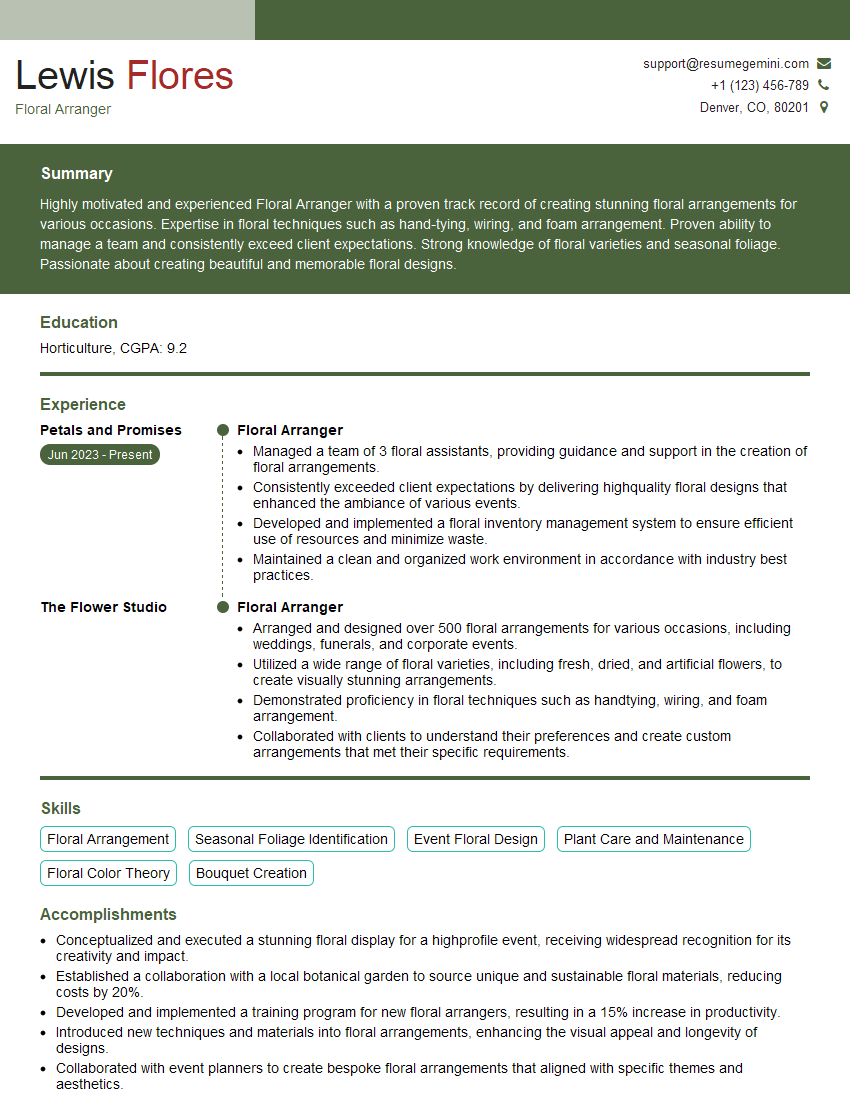
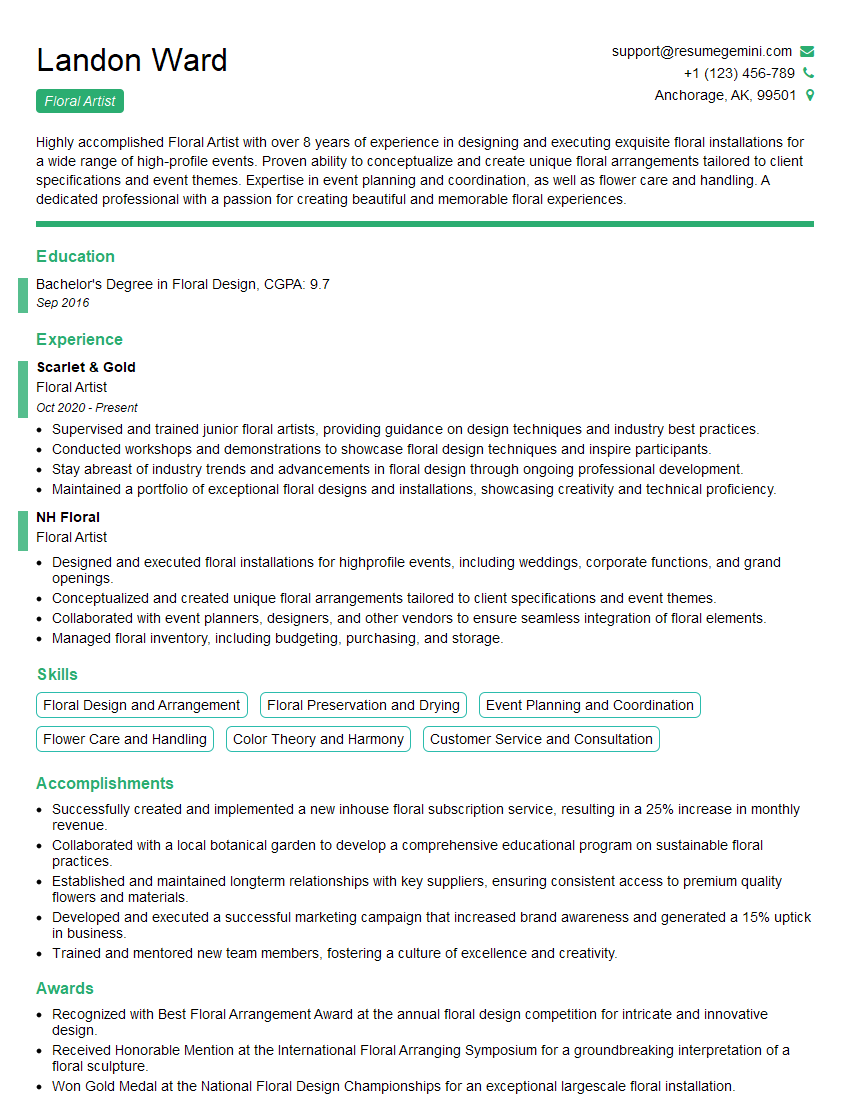
Mastering Floral Trends and Styles is crucial for career advancement in this dynamic and creative industry. A strong understanding of these topics will significantly enhance your interview performance and open doors to exciting opportunities. To maximize your job prospects, creating a well-crafted, ATS-friendly resume is essential. ResumeGemini is a trusted resource that can help you build a professional and impactful resume tailored to the specific requirements of floral design roles. Examples of resumes tailored to showcasing expertise in Floral Trends and Styles are available to guide you.
Explore more articles
Users Rating of Our Blogs
Share Your Experience
We value your feedback! Please rate our content and share your thoughts (optional).
What Readers Say About Our Blog
Very informative content, great job.
good