The thought of an interview can be nerve-wracking, but the right preparation can make all the difference. Explore this comprehensive guide to Cartoon Storytelling interview questions and gain the confidence you need to showcase your abilities and secure the role.
Questions Asked in Cartoon Storytelling Interview
Q 1. Explain your process for creating a compelling storyboard.
Creating a compelling storyboard is like crafting a visual blueprint for your animated story. It’s a sequential narrative expressed through drawings and concise descriptions. My process begins with a thorough understanding of the script, identifying key moments and emotional beats. I then break down the narrative into scenes, focusing on action and character interaction. I create thumbnail sketches – quick, small drawings – to visualize each scene and determine the best camera angles and composition. These thumbnails allow for quick iteration and experimentation. Once I’m satisfied with the overall flow and pacing of the thumbnails, I refine them into more detailed storyboards, adding dialogue, character expressions, and action notes. For example, instead of just ‘Character A walks across the room,’ I’d specify the character’s posture, facial expression, and the overall mood of the scene. Finally, I review and revise the storyboard based on feedback from the team, ensuring clarity, consistency, and visual appeal.
- Step 1: Script Analysis – Deep understanding of the plot, characters, and emotional arc.
- Step 2: Scene Breakdown – Dividing the script into logical scenes and shots.
- Step 3: Thumbnail Sketching – Quick visualization of scenes to determine composition and camera angles.
- Step 4: Detailed Storyboarding – Refining thumbnails, adding dialogue, character details, and action notes.
- Step 5: Review and Revision – Incorporating feedback for clarity, consistency, and overall impact.
Q 2. Describe your experience with different animation styles (e.g., 2D, 3D, stop motion).
My experience spans various animation styles, each with unique strengths and challenges. I’ve worked extensively with 2D animation, appreciating its classic charm and expressive capabilities. Think of the fluidity and character design in shows like Adventure Time. The process is often more streamlined and allows for a lot of creative freedom in character design and movement. I’ve also explored the detailed realism of 3D animation, particularly its ability to render complex environments and believable movement. The level of detail in films like Toy Story is a testament to this style’s potential. Finally, I’ve dabbled in stop-motion animation, captivated by its tactile nature and unique aesthetic. The stop-motion style, reminiscent of films like Coraline, requires meticulous attention to detail but produces a distinct, almost tangible quality.
Each style requires a different approach to storytelling. 2D allows for stylized exaggeration, while 3D demands a more grounded approach to realism. Stop-motion necessitates careful planning due to its time-intensive nature. Understanding these differences is key to effective storytelling within each medium.
Q 3. How do you incorporate character development into your storyboards?
Character development in storyboarding isn’t just about visual appearance; it’s about revealing personality, motivations, and arcs through visual storytelling. I integrate character development by focusing on their physicality, expressions, and interactions. For example, a character’s posture can convey confidence or nervousness. Their facial expressions – a subtle eyebrow raise, a clenched jaw – can speak volumes without dialogue. I use small details – a specific walk, a nervous habit, a recurring prop – to establish consistent personality traits. Their interactions with other characters reveal their relationships and how they influence one another. The visual story complements the script, offering another layer to character development. Consider a scene where a character overcomes their fear; their posture changes from hunched and timid to upright and confident, demonstrating their growth visually.
Q 4. Explain your understanding of pacing and timing in animation.
Pacing and timing are fundamental aspects of animation storytelling. Pacing refers to the speed at which the narrative unfolds, and timing dictates the duration and rhythm of actions and movements. Think of a dramatic scene – a slow, deliberate pace builds suspense, while a rapid-fire sequence creates excitement. Poor pacing can lead to a boring or rushed narrative. Timing affects how actions appear; a character’s movement might feel natural or cartoonishly exaggerated depending on the timing. In my storyboards, I carefully consider the number of frames for each action to achieve the desired effect. A long pause can emphasize a character’s emotion, while quick movements might show nervous energy. I often use annotations to specify timing: ‘HOLD 2 SECONDS’ or ‘SLOW MOVEMENT’. Mastering pacing and timing is crucial to create a dynamic and engaging narrative.
Q 5. How do you handle feedback and revisions on your work?
Handling feedback and revisions is a collaborative process crucial for creating a successful animated project. I actively seek feedback from directors, producers, and other team members throughout the storyboarding process. I approach critiques constructively, viewing them as opportunities for improvement rather than personal attacks. I maintain open communication, clarifying any misunderstandings or concerns. I create a system for tracking revisions using annotation and version control. For example, I might use colored pens to mark changes during a review session, clearly indicating what has been added, deleted, or modified. After incorporating the feedback, I present a revised version for further review, ensuring a collaborative and effective approach.
Q 6. Describe your experience with different animation software (e.g., Toon Boom Harmony, After Effects).
My experience encompasses several animation software packages, each with its own strengths and weaknesses. I’m proficient in Toon Boom Harmony, a powerful 2D animation software known for its robust drawing tools and efficient workflow. I appreciate its flexibility for creating various animation styles, from traditional cel animation to more modern, digital techniques. I’ve also worked with Adobe After Effects, a versatile compositing and visual effects software, often used for adding special effects and enhancing the visual appeal of the storyboards. My choice of software depends on the project’s specific requirements and animation style. For example, a project requiring complex 2D animation would favor Toon Boom Harmony, while one demanding intricate special effects would utilize After Effects’ capabilities. Proficiency in multiple software packages allows me to adapt to different project needs and efficiently contribute to the production pipeline.
Q 7. How do you ensure visual consistency across a series of storyboards?
Maintaining visual consistency across a series of storyboards is essential for creating a cohesive and professional-looking animated piece. I achieve this through several strategies. Firstly, I establish a style guide at the beginning of the project which includes character designs, color palettes, and environment details. This guide serves as a reference point for all storyboard artists involved. Secondly, I maintain consistent camera angles and composition throughout the series. Sudden shifts in perspective can disrupt the flow of the narrative. Thirdly, I pay close attention to the details, such as character expressions, lighting, and background elements, ensuring consistency in their depiction across different scenes. For instance, if a character has a specific hairstyle or clothing item in one scene, it should be consistent across all scenes. Finally, regular review and revisions with the team help catch any inconsistencies early in the process. This systematic approach ensures a visually unified and engaging final product.
Q 8. How do you create believable character movement and expressions?
Creating believable character movement and expressions in cartoons hinges on understanding the principles of animation and character design. It’s not just about drawing pretty pictures; it’s about conveying emotion, personality, and weight. We use techniques like squash and stretch to emphasize impact and fluidity, anticipation to prepare the audience for an action, staging to ensure the pose is clear, straight ahead action and pose-to-pose to manage the flow of movement, follow through and overlapping action for realism, and slow in and slow out to create natural easing. For expressions, subtle shifts in eyebrow position, eye size, and mouth shape can dramatically alter a character’s emotional state. For example, a slight downturn of the mouth coupled with narrowed eyes instantly communicates sadness, whereas wide eyes and a raised eyebrow can convey surprise. I often use reference material – studying real-life human expressions and animal movements – to inform my work and ensure believability.
Consider a scene where a character is surprised by a sudden loud noise. To animate this effectively, I’d first design an anticipation pose where the character is relaxed. Then, using squash and stretch, the body might momentarily compress before stretching out in a surprised pose, eyes widening, mouth slightly open. The hair might also follow through, adding a sense of realism to the movement. This layered approach adds depth and believability.
Q 9. Explain your approach to designing memorable and engaging characters.
Designing memorable and engaging characters requires a deep understanding of audience appeal and storytelling. I start by developing a strong character concept, focusing on their personality, motivations, and flaws. This includes defining their physical characteristics, such as their body shape, clothing style, and unique features, that instantly communicate their essence. A character’s visual design should reflect their inner world. Think of Mickey Mouse – his circular form inherently projects friendliness and playfulness. Conversely, a villain might be depicted with sharper angles and darker colors to emphasize their menacing nature.
I also consider the role the character plays in the narrative. Are they the protagonist, antagonist, or a supporting character? Understanding their function helps me to tailor their visual design and personality to fit the story. For instance, a comedic relief character might have exaggerated features or quirky movements to amplify the humour. Finally, consistency is crucial. Once the character’s design and personality are established, it’s vital to maintain consistency throughout the animation to avoid confusing the audience.
One approach I use is creating a detailed character sheet, including multiple poses, close-ups of facial expressions, and alternative outfits. This helps to build a comprehensive understanding of the character and ensure consistency across different scenes and projects.
Q 10. How do you translate a script or narrative into a visual storyboard?
Translating a script or narrative into a visual storyboard involves breaking down the story into a series of sequential images that represent key moments and actions. It’s essentially a visual roadmap for the animation process. I begin by reading the script multiple times, identifying key scenes, pivotal dialogue exchanges, and moments of emotional weight. Then, I create thumbnail sketches, focusing on composition, camera angles, character positioning, and action. This rough draft serves as a blueprint, allowing for adjustments and refinements before moving on to detailed storyboarding.
The detailed storyboard will incorporate more refined drawings, including accurate character designs and background elements. Each panel also includes concise descriptions of actions, dialogue, sound effects, and camera movements. It’s a collaborative process, often involving discussions with the director, writers, and animators to ensure that the visual representation accurately conveys the story’s intent. I often employ different types of storyboards depending on the needs of the project. Sometimes, a simple sketch-based storyboard is enough, while other times, I might create more detailed panels which already indicate the style of the final animation.
For example, a scene with a character running might be translated into a series of storyboards showing the character’s legs moving, their hair flowing, and maybe even a slight blur effect to indicate speed. The storyboard would also define the camera movement, like a panning shot following the character as they run.
Q 11. How familiar are you with different camera angles and their effects on storytelling?
I’m very familiar with different camera angles and their impact on storytelling. Camera angles are a powerful tool for controlling the audience’s perspective and emotions. A high angle shot, for example, can make a character appear vulnerable or insignificant, while a low angle shot can make them appear powerful or intimidating. A close-up focuses attention on a character’s emotions and expressions; a wide shot establishes the setting and context.
Other important camera techniques include: extreme close-up (focusing on a specific detail), medium shot (showing a character from the waist up), long shot (showing a character’s full body in context), over-the-shoulder shot (looking over one character’s shoulder at another), and point-of-view (POV) shot (showing the scene from a character’s perspective).
The use of these angles can dramatically affect the mood and meaning of a scene. For instance, in a suspenseful scene, I might use low-angle shots of the villain, building up a sense of menace, and then switch to high-angle shots of the protagonist, portraying their vulnerability.
Q 12. Explain your experience with working in a team environment.
I have extensive experience collaborating within team environments, ranging from small independent projects to larger studio productions. I believe in open communication, active listening, and a collaborative spirit. I thrive in environments where creative ideas are shared and refined through constructive feedback. My role often involves working closely with directors, writers, animators, voice actors, and other production staff. This demands strong interpersonal skills and a commitment to clear and concise communication. I value diverse perspectives and encourage open dialogue to ensure the final product meets the highest standards.
On past projects, I’ve been responsible for facilitating team meetings, providing constructive criticism, mediating creative disagreements, and offering support to team members. Effective teamwork is not just about doing one’s own task; it’s about understanding the roles of others and contributing to the project’s overall success. I have a knack for spotting potential conflicts early on and for finding mutually beneficial solutions.
Q 13. How do you manage deadlines and prioritize tasks efficiently?
Managing deadlines and prioritizing tasks efficiently is crucial in animation. I employ a variety of techniques, including project management tools and a well-structured workflow. I typically start by breaking down a large project into smaller, manageable tasks, assigning deadlines to each and using a task management system (like Trello or Asana) to track progress. Prioritization involves identifying critical path tasks – those that directly impact the completion of the overall project – and focusing on them first.
I also build in buffer time to account for unexpected delays or complications. Regular progress checks and communication with team members are essential to address any potential issues early on. Time management is not about working longer hours; it’s about working smarter. This involves focusing on the most important tasks during peak productivity periods and delegating tasks where appropriate. Learning to say ‘no’ to non-essential tasks is also crucial to avoid becoming overwhelmed.
Q 14. Describe your experience with pre-visualization techniques.
I have significant experience with pre-visualization techniques, such as animatics and pre-vis, which are vital for planning complex animation sequences. Animatics involve creating a rough animation using storyboards and voice-overs to visualize the timing and flow of a scene. This allows for early identification of pacing issues, story inconsistencies, or areas that require additional refinement before the actual animation begins. It’s a cost-effective way to identify potential problems early on.
Pre-vis, on the other hand, is a more advanced technique using 3D modeling and animation to create a more detailed representation of the final product. This is particularly useful for complex scenes with camera movements, character interactions, or special effects. Pre-vis helps to refine camera angles, choreography, and the overall visual storytelling before committing to expensive and time-consuming animation. For example, a fight scene with multiple characters might be pre-visualized to ensure the choreography is clear, the camera angles are optimal, and the action is easy to understand before getting started with the final animation.
Q 15. How do you use visual metaphors and symbolism in your storytelling?
Visual metaphors and symbolism are crucial for enriching cartoon storytelling beyond the literal. They allow us to communicate complex ideas, emotions, and themes in a visually engaging way that resonates with the audience on a deeper level. Think of it like adding layers of meaning to your story, much like a well-written novel.
Example 1: Using a wilting flower to represent a character’s dwindling hope. The visual directly conveys the character’s emotional state without needing lengthy dialogue.
Example 2: Employing recurring imagery, such as a specific bird or a particular color, to symbolize a character’s personality or a recurring theme within the narrative. For instance, a dark, stormy sky could consistently foreshadow a character’s internal conflict.
The key is to make the symbolism subtle yet powerful, allowing the audience to discover these layers on their own, enhancing their engagement with the story. Overly obvious symbolism can feel heavy-handed and detract from the narrative’s flow.
Career Expert Tips:
- Ace those interviews! Prepare effectively by reviewing the Top 50 Most Common Interview Questions on ResumeGemini.
- Navigate your job search with confidence! Explore a wide range of Career Tips on ResumeGemini. Learn about common challenges and recommendations to overcome them.
- Craft the perfect resume! Master the Art of Resume Writing with ResumeGemini’s guide. Showcase your unique qualifications and achievements effectively.
- Don’t miss out on holiday savings! Build your dream resume with ResumeGemini’s ATS optimized templates.
Q 16. How do you solve visual problems related to storytelling?
Solving visual problems in storytelling often involves creative problem-solving and iteration. It’s a process that hinges on understanding the core issue and exploring multiple solutions.
Identifying the Problem: First, pinpoint the specific visual challenge. Is it a matter of unclear character design, inconsistent backgrounds, or a pacing issue in the animation?
Brainstorming Solutions: Explore various approaches. Could a different camera angle clarify the action? Would a simplified character design enhance readability? Perhaps a change in color palette could better convey the mood.
Prototyping and Testing: Create quick sketches or rough animations to test different solutions. This helps you visualize the impact of each change before committing to a final design.
Iteration and Refinement: Based on the test results, refine the solution. This iterative process allows for continuous improvement and ensures the final product effectively communicates the story.
For example, if a scene is too cluttered, simplifying the background or using selective focus can improve clarity and guide the viewer’s attention to the crucial elements.
Q 17. How do you maintain a consistent visual style throughout a project?
Maintaining a consistent visual style is essential for creating a cohesive and believable world. This requires careful planning and execution throughout the entire production process.
Style Guide: Creating a comprehensive style guide is paramount. This document should detail everything from character design and proportions to color palettes, line weights, and background styles. This guide acts as a reference point for the entire team.
Regular Check-ins: Consistent review of the work ensures everyone adheres to the established style. Regular meetings and feedback sessions are crucial for catching inconsistencies early on.
Digital Assets: Utilize a central repository for all assets, ensuring that everyone accesses the same versions of characters, backgrounds, and props. This minimizes discrepancies and promotes uniformity.
Think of it like building with Lego bricks; each brick needs to fit seamlessly with the others. Inconsistency in your visual style would be like using different types of bricks that don’t connect properly – it breaks the overall aesthetic and feel of the construction.
Q 18. Describe your process for designing backgrounds that enhance the story.
Backgrounds aren’t just scenery; they’re storytelling tools. They set the stage, establish mood, and provide context to the action. My process for designing effective backgrounds involves a deep understanding of the narrative.
Storyboarding and Script Analysis: I begin by thoroughly analyzing the storyboard and script to understand the story’s setting, mood, and the information conveyed by each scene. What kind of environment best reflects the story’s tone and the emotions of the characters?
Mood Board Creation: I compile reference images, color palettes, and textures to establish the visual style of the background. This ensures consistency and helps visualize the overall look and feel.
Composition and Perspective: I carefully consider the composition and perspective to guide the viewer’s eye and enhance the storytelling. For example, a high-angle shot can emphasize a character’s vulnerability, while a low-angle shot can make them appear powerful.
Detail and Simplicity: Finding the balance between detail and simplicity is crucial. Too much detail can clutter the scene, while too little can make it feel empty. The level of detail should complement the action and the story’s focus.
For example, a bustling marketplace could enhance a scene of excitement, whereas a dark, lonely forest might highlight a character’s isolation.
Q 19. How do you create a sense of mood and atmosphere in your animations?
Creating mood and atmosphere in animation involves a multifaceted approach, leveraging various visual and technical elements.
Color Palettes: Warm colors evoke feelings of happiness and comfort, while cool colors can establish a sense of melancholy or mystery. For instance, a scene bathed in warm oranges and yellows might depict a sunny, joyful moment, whereas cool blues and purples could create a mysterious or even threatening atmosphere.
Lighting: Strategic use of light and shadow can dramatically impact the mood. High-key lighting creates a bright, cheerful feel, whereas low-key lighting creates a darker, more dramatic atmosphere.
Backgrounds: As mentioned earlier, backgrounds play a significant role. A cluttered and chaotic background can reflect a character’s internal turmoil, while a serene and peaceful background can convey calm and tranquility.
Camera Angles and Movement: The camera’s perspective and movement can significantly influence the viewer’s emotional response. A slow, deliberate camera movement can create suspense, while a fast, dynamic movement can convey excitement.
By carefully orchestrating these visual elements, you can subtly influence the viewer’s emotional response, creating an immersive and engaging experience.
Q 20. Explain your understanding of color theory and its role in animation.
Color theory is fundamental to animation. Understanding color relationships and their psychological impact allows animators to craft visually compelling and emotionally resonant stories.
Color Harmonies: Utilizing color harmonies like complementary (colors opposite each other on the color wheel), analogous (colors next to each other), and triadic (three colors evenly spaced) creates visually pleasing and balanced compositions. For example, complementary colors can create high contrast and visual excitement, while analogous colors offer a more harmonious and soothing feel.
Color Temperature: Warm colors (reds, oranges, yellows) advance in space, appearing closer to the viewer, while cool colors (blues, greens, purples) recede, creating depth and perspective. This is useful in setting a scene’s mood and drawing attention to specific elements.
Color Psychology: Different colors evoke different emotions. Red can represent passion or anger, blue can suggest calmness or sadness, and green can represent nature or envy. Animators use this knowledge to enhance the narrative and support the story’s themes.
A skilled animator understands how to use color not just for aesthetics but also to subconsciously influence the audience’s feelings and interpretations of the story.
Q 21. How do you incorporate sound design into your animation process?
Sound design is an integral part of animation, enhancing the visual narrative and creating a more immersive experience. It’s not just about adding music; it’s about crafting a soundscape that complements and amplifies the visual storytelling.
Foley Effects: Creating realistic sounds – like footsteps, clothing rustling, or objects hitting the ground – adds depth and realism to the animation. These sounds are often recorded separately and layered to enhance the visual action.
Music and Score: Music sets the tone and emotional atmosphere. A dramatic score can amplify suspenseful moments, while upbeat music can enhance comedic scenes. The music should support the visual narrative and enhance the overall emotional impact.
Sound Effects: Specific sound effects are carefully chosen to enhance the action. A whooshing sound accompanying a quick movement or a sharp clang for a metal-on-metal collision adds another layer of realism and excitement.
Dialogue and Voice Acting: Clear and expressive voice acting is crucial for delivering the narrative and conveying the characters’ emotions effectively. The vocal performance should be carefully coordinated with the animation to create a cohesive whole.
Think of sound design as another layer of paint – it adds texture, depth, and richness to the animation, making it far more impactful and engaging than a purely visual experience.
Q 22. Describe your experience with different storytelling techniques (e.g., flashbacks, foreshadowing).
Storytelling techniques like flashbacks and foreshadowing are crucial for enriching narratives in cartoons. Flashbacks provide context, revealing past events to illuminate the present. For instance, in a cartoon about a superhero’s origin story, a flashback might show their childhood trauma that motivates them. Foreshadowing, on the other hand, hints at future events, building suspense and anticipation. A subtle visual cue, like a villain’s ominous shadow looming over the protagonist, could foreshadow a future conflict. I’ve used both extensively. In one project, a flashback sequence revealed the reason for a character’s intense fear of heights, adding emotional depth. In another, a series of increasingly ominous weather patterns foreshadowed a climactic storm.
Beyond flashbacks and foreshadowing, I am adept at using other techniques such as parallel storytelling (interweaving multiple narratives), in media res (starting the story in the middle of the action), and unreliable narration (where the narrator’s perspective is skewed or deceptive). Each technique requires a nuanced understanding of pacing and audience engagement to be effective.
Q 23. How do you balance artistic expression with technical requirements?
Balancing artistic expression with technical requirements is a constant juggling act. The artistic vision—the style, character design, and overall aesthetic—must be achieved within the constraints of the production pipeline: deadlines, budget, technical limitations of the animation software, etc. My approach involves thorough planning and communication. Before any significant design work, I collaborate closely with the technical team (animators, riggers, compositors) to ensure artistic choices are feasible. This may involve making compromises – for example, simplifying a complex character design to speed up the animation process, or altering a scene’s composition to ease rendering times. The key is to find creative solutions that maintain the artistic integrity while respecting technical limitations. A recent project involved designing a character with intricate fur. Working with the technical team, we explored simplified fur techniques to maintain the character’s look without slowing down the rendering pipeline significantly.
Q 24. How do you adapt your style to different project needs?
Adaptability is crucial. My style is versatile, allowing me to cater to diverse project needs. For a whimsical children’s cartoon, I might use bright, bold colors and exaggerated character designs. A gritty, realistic drama would require a more subdued palette and nuanced character expressions. This adaptability extends to storytelling techniques as well; a fast-paced action sequence demands quick cuts and dynamic camera angles, whereas a slow, character-driven scene might rely on long takes and subtle visual cues. I recently transitioned from working on a light-hearted animated sitcom to a serious historical drama. This demanded a shift in my visual language, from cartoonish exaggeration to a more grounded, realistic style. This involved researching accurate period clothing, architecture, and even color palettes to ensure authenticity.
Q 25. Describe your experience with storyboarding for different genres (e.g., comedy, drama, action).
Storyboarding across different genres requires a deep understanding of each genre’s conventions and audience expectations. Comedy relies on visual gags, clear character expressions, and well-timed pacing. A comedic storyboard needs to emphasize the absurdity or humor of the situation through exaggerated poses and action lines. Drama, conversely, might focus on subtle character interactions and evocative settings to build tension and emotional impact. My approach to storyboarding a dramatic scene would involve more careful consideration of framing, lighting, and character positioning to convey emotion. Action sequences need to be clear, concise, and visually dynamic, using panel layouts that showcase the energy and movement. I have experience across all these genres. For example, I recently completed a storyboard for a comedic chase scene that emphasized the slapstick nature of the situation by using fast cuts, dynamic camera angles, and exaggerated physical comedy. In contrast, I’ve also worked on a dramatic story where the focus was on facial expressions and slow, deliberate camera movements to convey the emotional weight of a difficult conversation.
Q 26. How familiar are you with the principles of animation?
I’m intimately familiar with the twelve principles of animation (squash and stretch, anticipation, staging, straight ahead action and pose-to-pose, follow through and overlapping action, slow in and slow out, arcs, secondary action, timing, exaggeration, solid drawing, appeal). These are fundamental to creating believable and engaging animation. Understanding these principles allows me to contribute effectively to the overall animation process, not just the storyboarding stage. For example, a well-timed ‘slow in and slow out’ on a character’s movement can significantly enhance the impact of a dramatic moment. Or understanding ‘squash and stretch’ can help in better emphasizing a character’s reaction, or even to create a sense of weight or impact. My work consistently reflects a deep understanding and application of these principles.
Q 27. How do you use visual storytelling to convey emotion?
Visual storytelling is paramount in conveying emotion. Color palettes, character expressions, body language, camera angles, and even the overall composition of a scene all contribute to the emotional tone. For example, dark, muted colors and low-key lighting can create a sense of sadness or fear, while bright, vibrant colors and dynamic camera movements can convey excitement or joy. A character’s posture – slumped shoulders for sadness, a clenched fist for anger – can communicate emotions instantly. I’ve worked on projects where a single close-up shot, focusing on a character’s tear-filled eyes, was more effective than any dialogue in conveying profound sorrow. The way I compose a shot, whether using a high-angle to portray vulnerability or a low-angle to suggest power, is a critical part of this emotional storytelling.
Q 28. Explain your understanding of the relationship between story and character design.
Story and character design are inextricably linked. Character design should directly reflect the character’s personality, background, and role within the story. A timid, shy character might have a small, round physique and subdued colors, while a powerful villain might be tall, imposing, and dressed in dark, sharp lines. The design informs the audience’s first impressions, setting the stage for their behavior and interactions within the narrative. The overall aesthetic of the character design also needs to align with the tone and style of the story. A highly stylized character design might not be appropriate for a realistic drama, and vice versa. In a recent project, I designed a protagonist whose scruffy appearance and worn-out clothing immediately communicated their impoverished background and resilience, setting the stage for their journey throughout the story. The character’s design instantly conveyed vital information about their personality and their place in the narrative.
Key Topics to Learn for Cartoon Storytelling Interview
- Narrative Structure: Understanding story arcs, pacing, and character development within the constraints of a visual medium. Practical application: Analyzing existing cartoons to identify effective narrative techniques.
- Character Design & Animation Principles: Creating believable and engaging characters, applying principles of animation (squash and stretch, anticipation, etc.) to bring them to life. Practical application: Sketching character concepts and developing simple animation sequences.
- Visual Storytelling Techniques: Utilizing composition, color palettes, and camera angles to enhance the narrative and emotional impact. Practical application: Creating storyboards that effectively communicate the story’s progression.
- Humor and Comedy in Animation: Understanding different types of comedic timing, slapstick, and character-driven humor within the context of cartoon storytelling. Practical application: Analyzing comedic elements in successful cartoons.
- Style and Genre: Exploring different animation styles (e.g., 2D, 3D, stop-motion) and genres (e.g., comedy, action, drama) and their impact on storytelling. Practical application: Identifying your own stylistic preferences and strengths.
- Software Proficiency (if applicable): Demonstrating familiarity with industry-standard software like Toon Boom Harmony, Adobe Animate, or other relevant animation programs. Practical application: Showcasing your portfolio and project experience.
- Collaboration and Teamwork: Highlighting your ability to work effectively within a team environment, contributing to collaborative projects, and understanding different roles in animation production. Practical application: Describing your experience in group projects and your contributions.
Next Steps
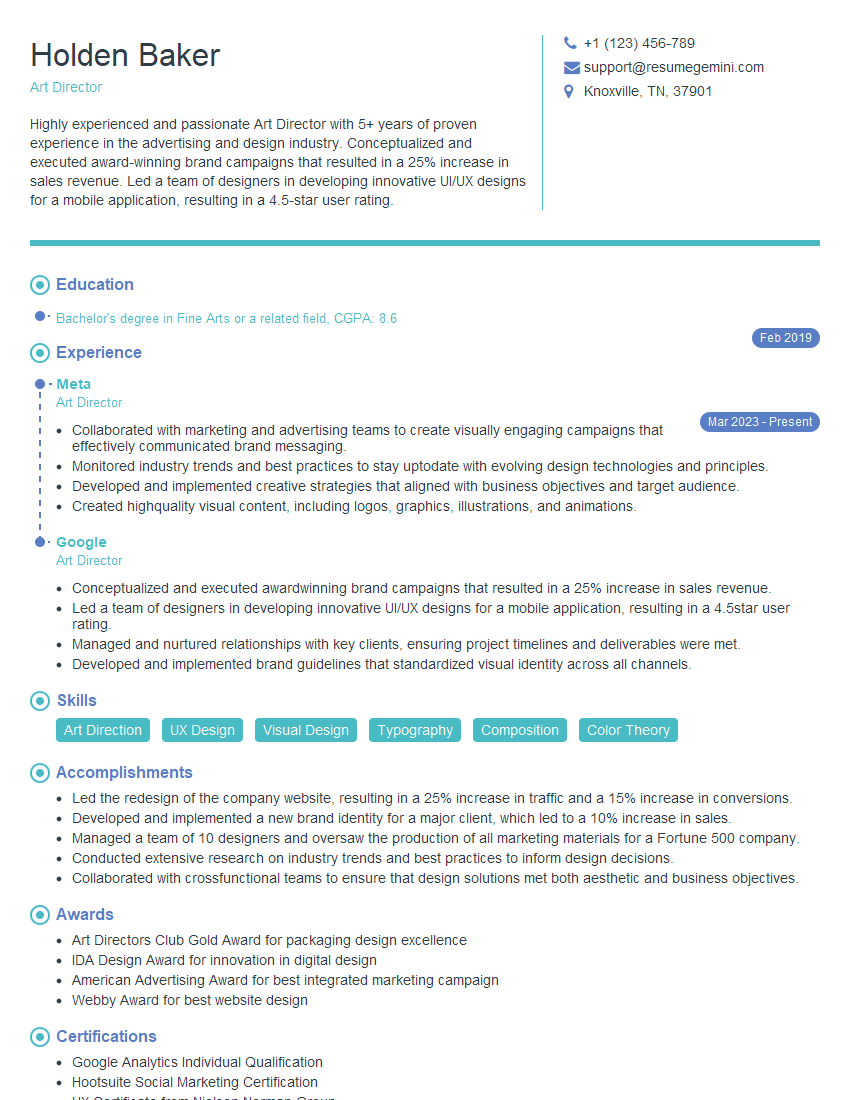
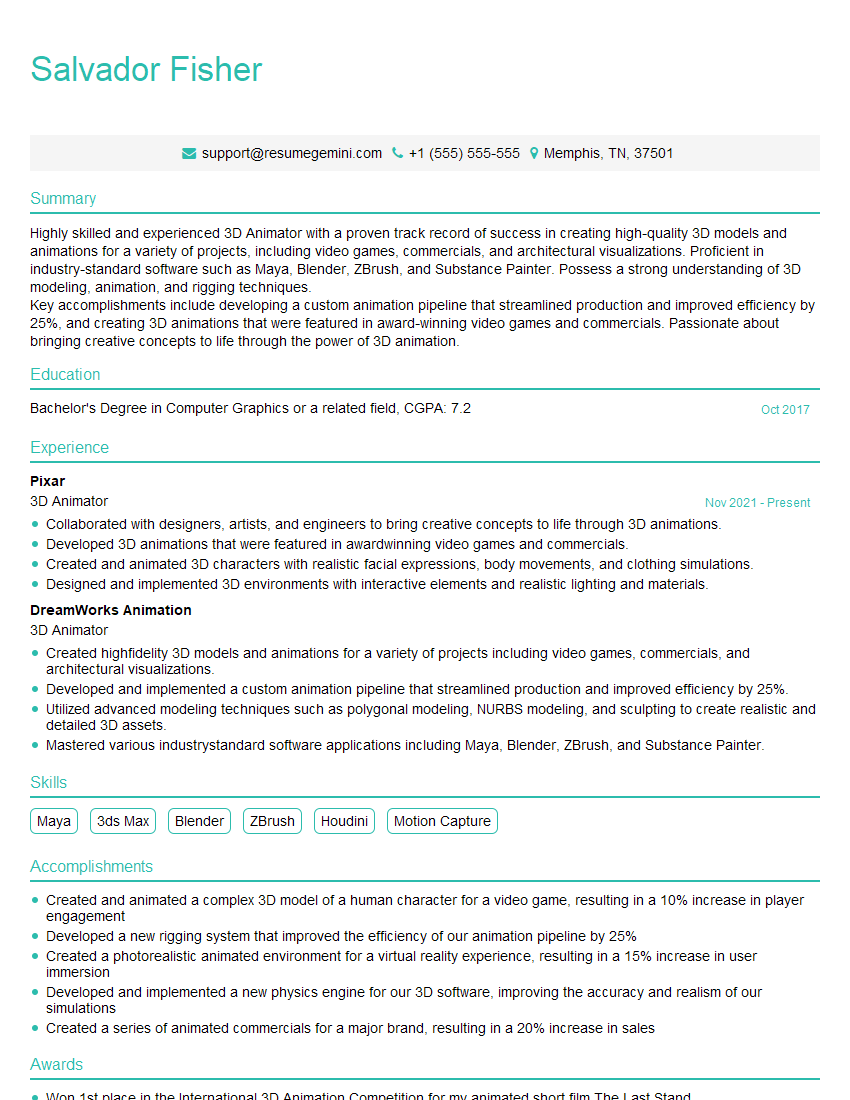
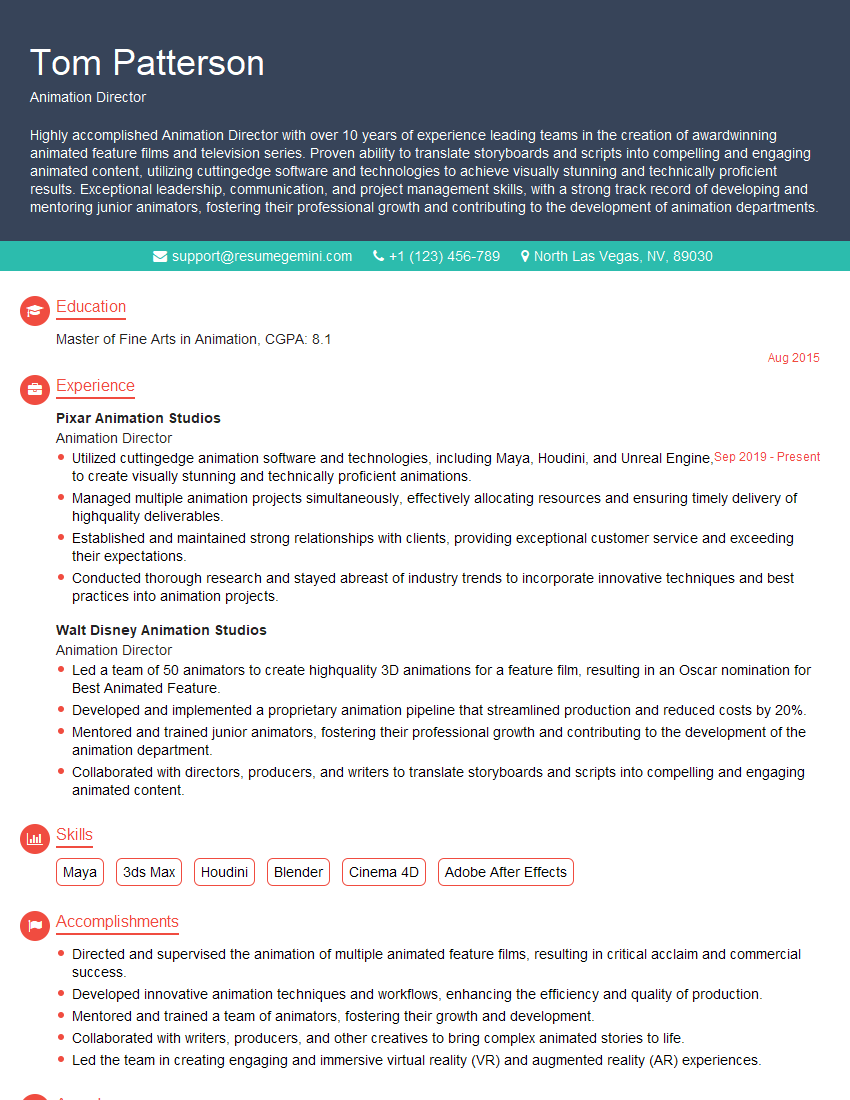
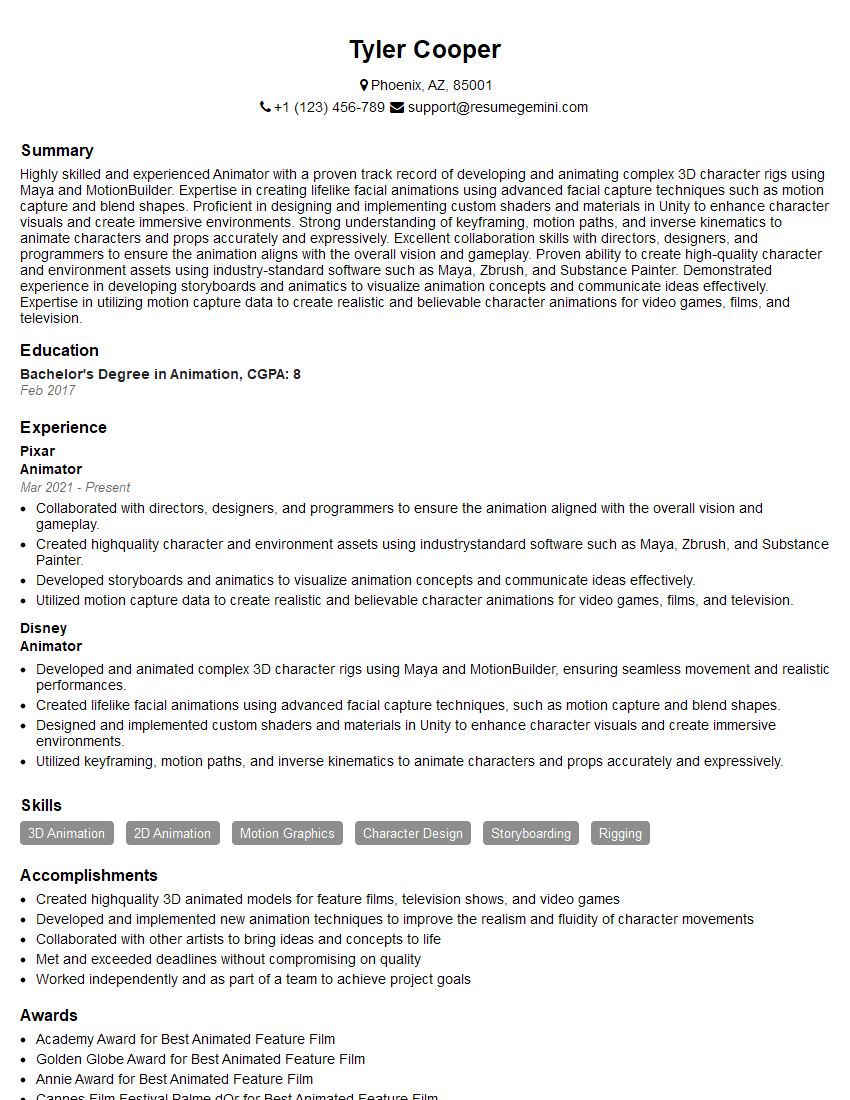
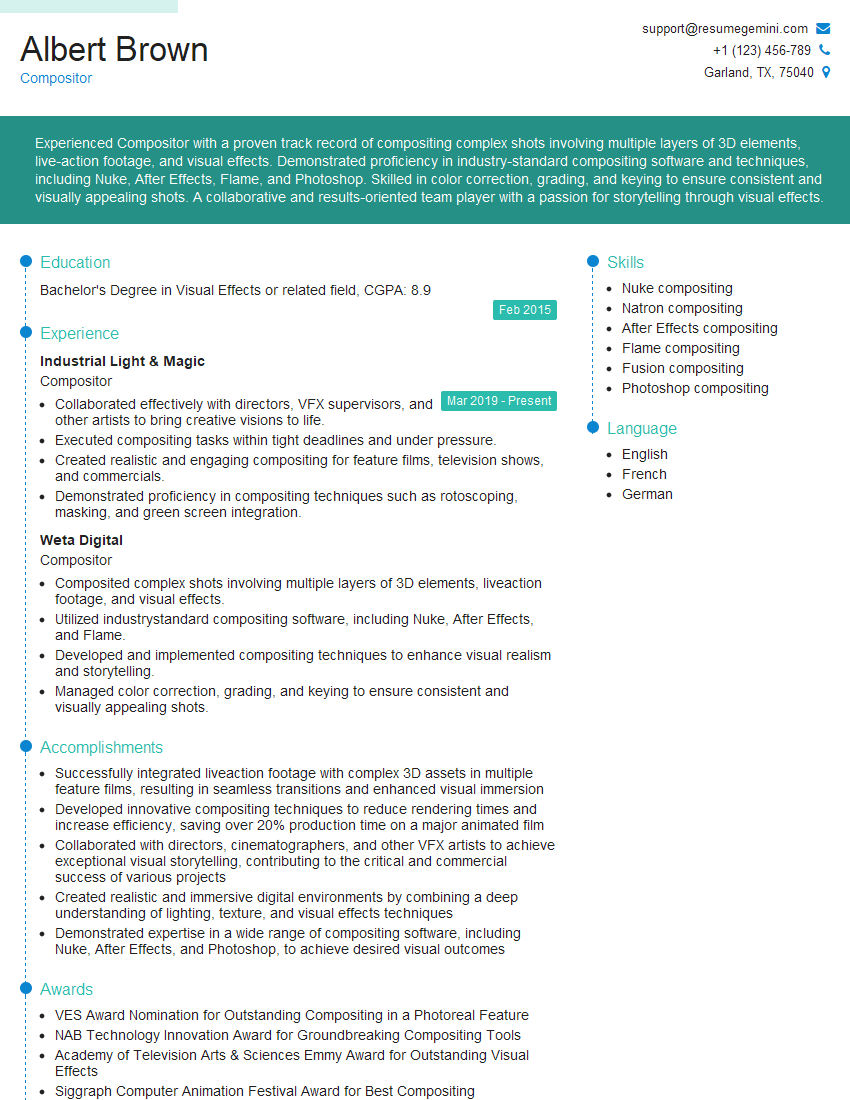
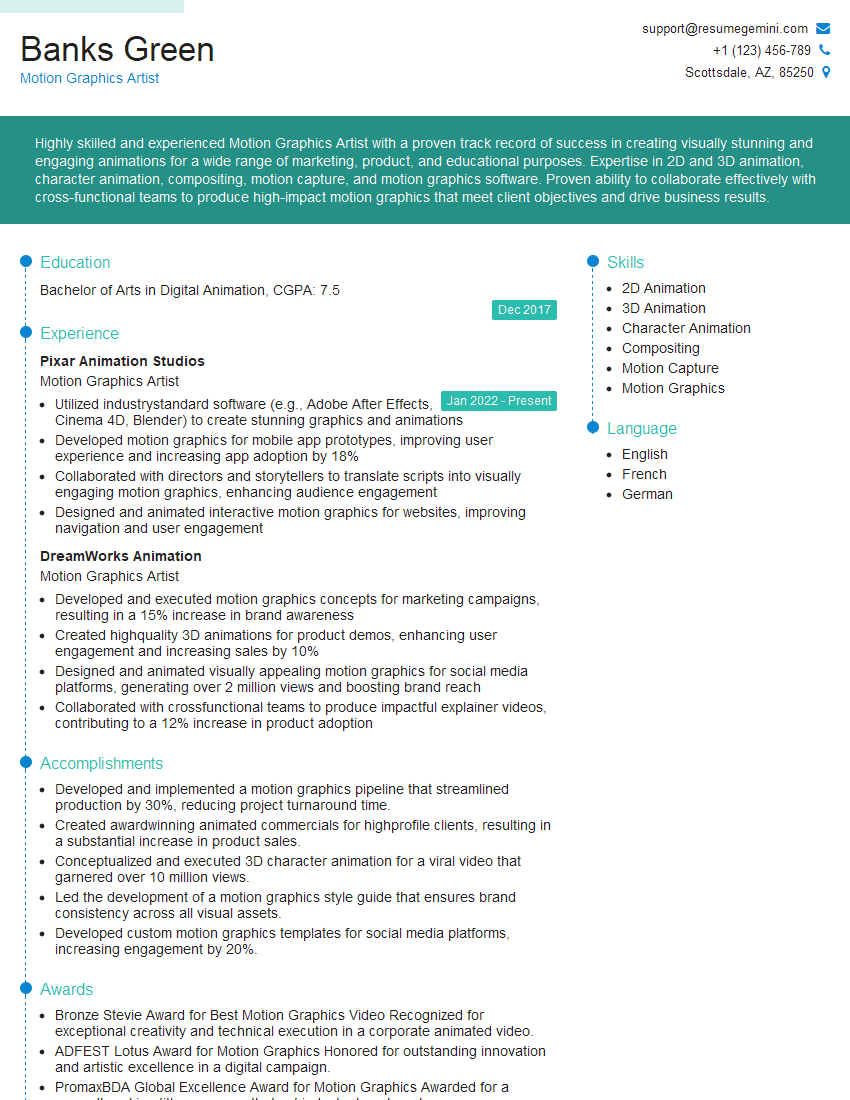
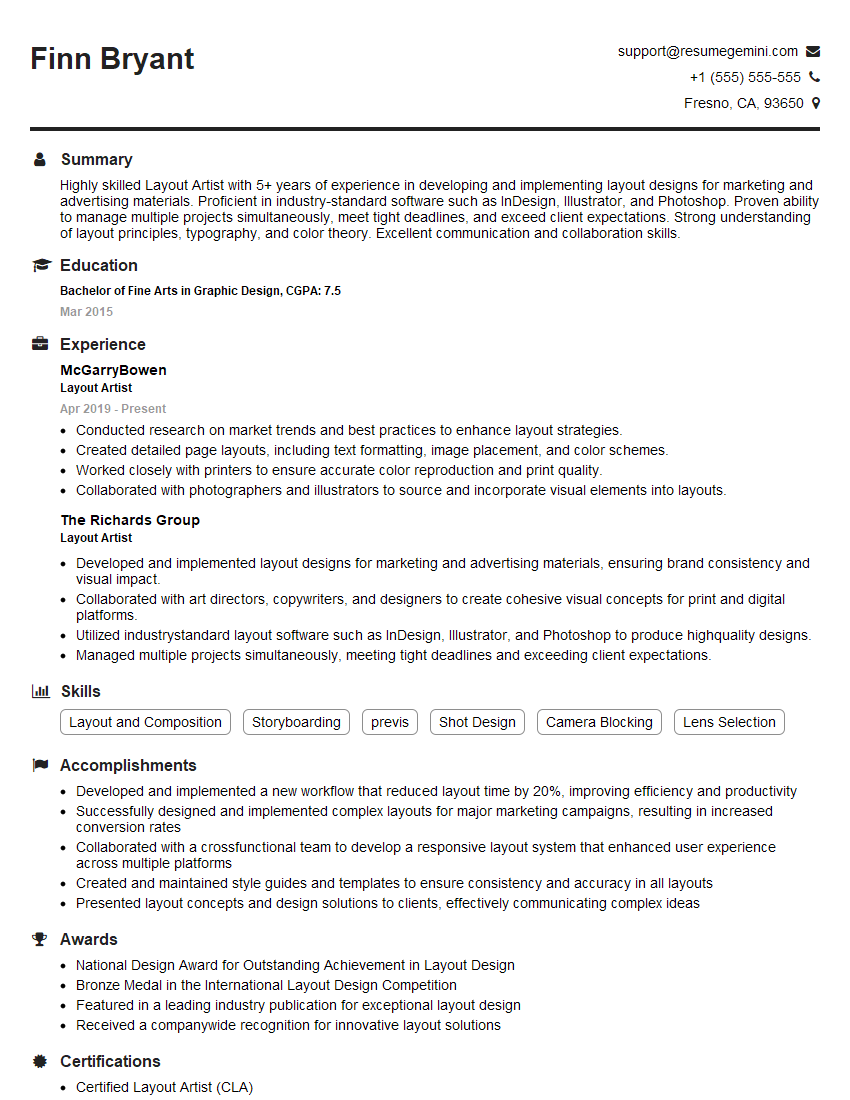
Mastering cartoon storytelling opens doors to exciting and fulfilling careers in animation, film, and interactive media. A strong resume is crucial for showcasing your skills and experience to potential employers. To maximize your job prospects, create an ATS-friendly resume that highlights your accomplishments and demonstrates your understanding of the key concepts discussed above. ResumeGemini is a trusted resource for building professional and impactful resumes. They offer examples of resumes tailored to the Cartoon Storytelling field, helping you present yourself effectively to recruiters and hiring managers.
Explore more articles
Users Rating of Our Blogs
Share Your Experience
We value your feedback! Please rate our content and share your thoughts (optional).
What Readers Say About Our Blog
Very informative content, great job.
good