Unlock your full potential by mastering the most common Cemetery Regulations interview questions. This blog offers a deep dive into the critical topics, ensuring you’re not only prepared to answer but to excel. With these insights, you’ll approach your interview with clarity and confidence.
Questions Asked in Cemetery Regulations Interview
Q 1. What are the key federal and state regulations governing cemetery operations in your state?
Cemetery regulations are a complex interplay of federal and state laws. At the federal level, the most significant influence comes from the Federal Trade Commission (FTC), which regulates the advertising and sales practices of funeral homes and cemeteries. However, the majority of regulations governing cemetery operations are established at the state level. In my state, the key regulations cover aspects such as:
- Licensing and Registration: Cemeteries must obtain and maintain proper licenses, adhering to specific operational standards. This includes maintaining accurate records and ensuring the physical condition of the cemetery meets regulatory standards.
- Burial Practices: Strict guidelines exist concerning the handling of human remains, including embalming, cremation, and burial procedures. These regulations are designed to protect public health and safety.
- Perpetual Care: Regulations mandate the establishment and maintenance of perpetual care funds to ensure the long-term upkeep of the cemetery grounds. Specific requirements exist regarding the management and investment of these funds.
- Record Keeping: Comprehensive and accurate record-keeping is paramount, including details of each interment, plot ownership, and financial transactions.
- Consumer Protection: State regulations are designed to protect consumers from deceptive or unfair practices in the sale of cemetery plots and services.
Understanding these state-specific regulations is crucial for ensuring compliance and maintaining ethical operations. For instance, we regularly review updates to the state’s administrative code that pertains to cemetery practices.
Q 2. Explain the process for obtaining necessary permits for burials and interments.
The process for obtaining permits for burials and interments typically involves several steps. First, a death certificate must be obtained from the appropriate authorities. This certificate is then submitted to the cemetery along with the purchase agreement for a plot. The cemetery itself will then file for the necessary burial permit with the relevant county or state agency. This application process often includes providing details about the deceased, the plot location, and the proposed method of interment.
Once the permit is issued, it’s presented to the funeral home or other authorized party before the interment. Failure to secure the necessary permits can result in significant legal repercussions and penalties for the cemetery.
For example, we had a case where the death certificate was delayed. To ensure a timely burial, our team communicated with the relevant office to expedite the process, minimizing any distress for the bereaved family.
Q 3. Describe your experience with handling and maintaining cemetery records.
Maintaining accurate and comprehensive cemetery records is a critical aspect of our operations. Our system uses a combination of digital databases and physical filing systems. The digital database contains detailed records of every interment, including the deceased’s name, date of birth and death, plot location, and the name of the purchaser of the plot. The physical records include copies of death certificates, burial permits, plot deeds, and any other relevant documentation. We follow a strict data entry and verification process to ensure accuracy, regularly conducting audits and backups to prevent data loss. This meticulous record-keeping is essential not only for compliance but also for providing families with accurate information about their loved ones’ final resting places.
I have over 15 years’ experience in this area, and I’m proficient in using cemetery management software, along with effective methods for indexing and retrieving physical files, ensuring easy access for administrative purposes, legal inquiries, and family inquiries.
Q 4. How do you ensure compliance with regulations regarding the handling of human remains?
Compliance with regulations regarding the handling of human remains is our utmost priority. We strictly adhere to all relevant state and local health codes and regulations. This includes ensuring that all burials and cremations are performed by licensed and qualified professionals. We maintain detailed records of all handling procedures, including transportation, preparation, and interment. Furthermore, we ensure the safe and proper disposal of any medical waste or other hazardous materials. Regular inspections and training for our staff are integral to maintaining these high standards and staying abreast of any changes in relevant legislation or best practices.
For instance, we recently implemented a new training program covering updated procedures for handling cremated remains, focusing on best practices for storage and respectful handling.
Q 5. What are your procedures for addressing complaints or violations of cemetery regulations?
Our procedure for addressing complaints or violations of cemetery regulations involves a multi-step process designed to ensure fairness and resolve issues efficiently. Any complaints are carefully documented and investigated promptly. This may involve reviewing records, interviewing staff, and possibly contacting external agencies if necessary. We strive to communicate openly with complainants, keeping them informed of our progress and findings. If a violation is confirmed, we take appropriate corrective action, which may include disciplinary measures for staff, modifications to our procedures, or restitution to affected parties. Serious or recurring violations may result in further reporting to the relevant regulatory agencies.
For example, we recently received a complaint about the condition of a particular section of the cemetery. Our investigation led to the implementation of a new landscaping plan, addressing the concerns and improving the overall appearance of that area.
Q 6. How familiar are you with the regulations concerning perpetual care funds?
I am very familiar with the regulations concerning perpetual care funds. These funds are crucial for the long-term maintenance and upkeep of the cemetery. Regulations typically specify how these funds must be established, invested, and managed. This includes requirements for transparency, accountability, and the use of appropriate investment strategies to ensure the fund’s sustainability. Regular audits and reporting are often mandated to ensure compliance. Mismanagement of perpetual care funds can result in severe penalties for the cemetery. Understanding these regulations is essential to guarantee that the cemetery can fulfill its long-term obligations to maintain the grounds and provide ongoing care for the gravesites.
We regularly review our perpetual care fund investments to ensure compliance with state regulations, choosing low-risk, stable investments that provide adequate returns for long-term maintenance.
Q 7. Explain the process of opening and closing gravesites according to regulations.
The process of opening and closing gravesites adheres strictly to regulations to ensure both safety and respect. Opening a gravesite typically begins with the precise location of the plot, using cemetery maps and records. Heavy machinery is used cautiously to avoid damage to surrounding areas. The grave is then carefully excavated, with the excavated soil being carefully stored and managed to prevent contamination or damage. After the burial, the grave is backfilled with the original soil, ensuring proper compaction to prevent settling. The process of closing the gravesite requires meticulous care to ensure the ground is properly restored to its original condition. This prevents potential hazards such as sinkholes, and allows for the preservation of the landscaping and overall aesthetics of the cemetery.
We use specialized equipment and trained personnel for grave opening and closing, prioritizing safety and minimizing disruption to adjacent gravesites.
Q 8. Describe your experience in managing cemetery grounds and maintaining landscaping.
Managing cemetery grounds and maintaining landscaping requires a multifaceted approach focusing on aesthetics, safety, and respect for the deceased. It’s not just about mowing lawns; it’s about preserving a serene and dignified environment.
My experience includes overseeing a team responsible for all aspects of groundskeeping, from routine lawn maintenance and shrub trimming to more specialized tasks like tree care and seasonal plantings. We utilize sustainable practices like water conservation techniques and integrated pest management to minimize environmental impact. For example, we implemented a rainwater harvesting system to irrigate the grounds, reducing our reliance on municipal water. Furthermore, we carefully select plantings appropriate for the local climate and soil conditions to ensure long-term health and minimize maintenance needs. We also regularly inspect headstones and markers for damage, making repairs as needed, and addressing any issues like settling or erosion.
We maintain detailed records of all landscaping activities, including the types of plants used, fertilizers and pesticides applied, and any maintenance or repair work undertaken. This documentation is crucial for compliance with regulations and for future planning and budgeting purposes.
Q 9. How do you ensure the accuracy and completeness of cemetery records?
Accuracy and completeness in cemetery records are paramount. These records are not just administrative; they are vital to families seeking information about their loved ones and for the proper management of the cemetery itself.
We employ a multi-layered approach. First, we use a robust, computerized database system that tracks plot ownership, interment details (date, location, individual names), and any associated documentation like burial permits and memorialization records. This system allows for easy searching and reporting. Second, we implement rigorous data entry protocols, including double-checking all information and regular data audits to identify and correct any inconsistencies. Third, all documentation, including original burial permits and family contracts, is meticulously filed and archived both physically and digitally for easy retrieval. We utilize a version control system for important documents to ensure that we always have a clear audit trail of changes.
Imagine a family trying to locate a relative’s grave. Accurate records ensure they can quickly and easily find the information they need, providing comfort during a difficult time. Regular audits are critical for uncovering and correcting any errors that might creep in, ensuring the long-term accuracy and reliability of our records.
Q 10. How do you manage and resolve conflicts related to burial arrangements or family disputes?
Conflicts related to burial arrangements or family disputes can be sensitive and challenging. My approach centers on open communication, empathy, and a commitment to finding fair and equitable solutions.
When a conflict arises, I initiate a meeting with all involved parties to understand their concerns and perspectives. I act as a neutral mediator, facilitating open dialogue and ensuring all voices are heard. I often refer to the cemetery’s rules and regulations, contracts, and relevant laws to clarify expectations and resolve disagreements. In cases involving legal or property disputes, I recommend seeking legal counsel for the involved parties. Documentation is key; I meticulously record all meetings, agreements, and decisions.
For example, a family dispute over the placement of a memorial marker was resolved through a series of mediated discussions, carefully referencing the relevant sections of the cemetery’s rules and regulations. The resulting agreement was documented and signed by all parties, ensuring a clear understanding and preventing future conflicts.
Q 11. What are the safety regulations you adhere to while working in a cemetery?
Safety is a top priority in cemetery operations. We adhere to a comprehensive set of safety regulations covering a range of hazards.
These include:
- Personal Protective Equipment (PPE): All staff members are provided with and required to wear appropriate PPE, such as safety glasses, gloves, and steel-toe boots, depending on the task.
- Heavy Equipment Operation: Operators of heavy machinery like excavators and mowers are required to undergo extensive training and adhere to strict safety protocols, including pre-operation inspections and maintaining safe operating distances.
- Hazardous Materials Handling: We follow all relevant guidelines for the safe storage, handling, and disposal of pesticides, herbicides, and other chemicals.
- Emergency Preparedness: We have a detailed emergency plan in place, including procedures for responding to injuries, accidents, or natural disasters. Regular drills and training sessions ensure staff readiness.
- Weather Safety: We monitor weather conditions carefully and adjust operations as needed to ensure the safety of staff during severe weather events.
Regular safety inspections are conducted to identify and address potential hazards proactively. We also encourage a culture of safety awareness among all staff members, emphasizing the importance of reporting any unsafe conditions or near-miss incidents.
Q 12. What are your procedures for handling exhumations?
Exhumations are handled with the utmost care and respect, strictly adhering to legal and regulatory requirements. They are only undertaken with proper authorization and under the supervision of licensed professionals.
Our procedures include:
- Obtaining Legal Authorization: We only proceed with an exhumation after receiving all necessary legal authorizations, including court orders or family consent forms.
- Notification and Coordination: We notify relevant parties, including the family, law enforcement (if necessary), and any other stakeholders. We also coordinate with funeral homes and other professionals involved in the process.
- Careful Excavation: The exhumation is carefully conducted by trained personnel, using appropriate tools and techniques to minimize damage to the remains and surrounding area.
- Proper Identification and Documentation: A thorough visual inspection is made, the remains are carefully identified, and detailed records of the process are maintained.
- Reprocessing and Reinterment (if applicable): After the exhumation is completed, the remains are prepared for transport and re-interment (if applicable), adhering to all relevant health and safety regulations.
Exhumations are emotionally charged events, requiring sensitivity and professionalism. We strive to maintain the dignity of the deceased and provide support to the family throughout the process.
Q 13. Explain your understanding of regulations related to the sale of cemetery plots.
Regulations governing the sale of cemetery plots are designed to protect consumers and ensure the long-term viability of cemeteries. These regulations vary by jurisdiction but typically include provisions relating to:
- Licensing and Permits: Cemeteries are typically required to obtain licenses and permits to operate and sell plots.
- Disclosure of Information: Buyers must be provided with full and accurate information about the plot, including size, location, and any restrictions on its use.
- Perpetual Care: Many jurisdictions require cemeteries to establish perpetual care funds to ensure the ongoing maintenance of the cemetery grounds.
- Endowment Care: Funds may be set aside for the ongoing care of the cemetery, ensuring its maintenance long into the future.
- Consumer Protection: Regulations often include provisions to protect consumers from fraudulent or misleading sales practices.
- Property Rights: Regulations define the rights and responsibilities of plot owners and the cemetery authority.
Understanding these regulations is critical to ensure compliance and to protect both the cemetery and the families purchasing plots. We maintain detailed records of all plot sales, ensuring accurate tracking of ownership and financial transactions.
Q 14. How do you manage and maintain the cemetery’s infrastructure?
Maintaining a cemetery’s infrastructure involves ongoing upkeep and planned improvements to ensure its functionality and longevity. This includes everything from roadways and drainage systems to fencing and lighting.
Our approach involves:
- Regular Inspections: We conduct routine inspections of all infrastructure components, identifying any needed repairs or replacements. This includes assessing road surfaces, drainage systems, fencing, and lighting, identifying and repairing any damage or wear and tear.
- Preventative Maintenance: We implement a preventative maintenance schedule to address potential issues before they become major problems. This involves tasks like regular cleaning of drainage systems and timely repair of minor damages.
- Capital Improvement Planning: We develop a long-term plan to address larger infrastructure needs, such as road resurfacing, fence replacement, or the installation of new lighting systems. This plan includes budgeting for these improvements and securing necessary funding.
- Compliance with Regulations: We ensure all infrastructure components comply with relevant building codes, safety standards, and accessibility guidelines.
A well-maintained infrastructure is essential for the safe and efficient operation of a cemetery. It ensures accessibility for visitors and provides a safe working environment for staff. Regular inspections and preventative maintenance help to avoid costly repairs in the future and keep the cemetery in optimal condition.
Q 15. How do you handle the disposal of cremated remains?
Handling cremated remains involves a multifaceted approach prioritizing respect and adherence to regulations. Families have several options: inurnment in a designated niche within a columbarium (a structure with compartments for urns), burial in the ground (often in a dedicated section), scattering in a designated scattering garden, or keeping the remains at home. Each option has specific procedures. For inurnment, we verify the death certificate and the appropriate paperwork before placing the urn. For ground burial, we ensure the container meets cemetery regulations, often requiring a specific type of urn or container. Scattering necessitates adherence to local environmental regulations and often requires a designated area. We always maintain meticulous records, including the location of the remains and any relevant information provided by the family. We treat every set of remains with the utmost dignity and respect, ensuring a peaceful and respectful final disposition.
Career Expert Tips:
- Ace those interviews! Prepare effectively by reviewing the Top 50 Most Common Interview Questions on ResumeGemini.
- Navigate your job search with confidence! Explore a wide range of Career Tips on ResumeGemini. Learn about common challenges and recommendations to overcome them.
- Craft the perfect resume! Master the Art of Resume Writing with ResumeGemini’s guide. Showcase your unique qualifications and achievements effectively.
- Don’t miss out on holiday savings! Build your dream resume with ResumeGemini’s ATS optimized templates.
Q 16. Describe your experience with cemetery mapping and surveying.
Cemetery mapping and surveying are crucial for accurate record-keeping and efficient land management. My experience involves utilizing Geographic Information Systems (GIS) software to create detailed maps showing the location of each interment, existing structures (e.g., mausoleums, columbariums), pathways, and other features. This includes conducting regular surveys using GPS and other surveying equipment to verify boundaries, identify potential issues, and ensure the accuracy of our records. For example, we recently used drone technology to create high-resolution aerial imagery to update our maps and identify any unmarked graves or potential land encroachments. This ensures efficient planning for future interments and helps prevent errors in locating graves for family members.
Q 17. Explain your knowledge of regulations concerning the use of chemicals and pesticides in the cemetery.
Regulations concerning chemicals and pesticides in cemeteries are stringent, focusing on environmental protection and public health. We adhere strictly to Integrated Pest Management (IPM) principles, prioritizing non-chemical methods like biological controls and habitat modification before resorting to pesticides. When chemical use is necessary, we choose environmentally friendly products with minimal impact on groundwater and wildlife. We meticulously maintain records of all pesticide applications, including product names, application dates, and areas treated. These records are readily available for regulatory audits. For example, we use specific types of grass that require less maintenance and are less prone to pest infestations, reducing the need for chemical treatments. We’re also actively exploring sustainable landscaping techniques.
Q 18. How do you ensure the security of the cemetery grounds and property?
Cemetery security is a paramount concern. We employ a multi-layered approach, including regular patrols (both day and night), surveillance cameras strategically placed throughout the grounds, and perimeter fencing. Access is controlled through locked gates and entry logs that track visitors. We also actively engage with local law enforcement, fostering a strong collaborative relationship to address any issues proactively. We provide regular training to our staff on security protocols and incident response. Additionally, we maintain a clear and visible communication strategy to inform visitors about safety procedures. We strive to create a safe and peaceful environment while respecting the sanctity of the grounds.
Q 19. What are the regulations regarding memorialization and grave markers?
Regulations regarding memorialization and grave markers vary, but generally aim to maintain uniformity and aesthetic integrity within the cemetery. Size, material, and design restrictions are common. For example, we may have rules about the maximum height of headstones, acceptable materials (e.g., granite, bronze), and the type of engraving allowed. We also have procedures for approving designs before installation to prevent unsuitable or conflicting monuments. We carefully balance allowing families to express their grief and remembrance with the overall aesthetic and practical needs of maintaining the cemetery. All installations must comply with strict safety standards, ensuring structural stability and preventing hazards.
Q 20. How do you handle inquiries and requests from families regarding burial arrangements?
Handling inquiries and requests from families requires sensitivity and professionalism. We provide comprehensive information about burial options, costs, and procedures. We offer support throughout the process, from pre-need planning to the final arrangements. We actively listen to families’ concerns and offer guidance within the framework of cemetery regulations and available resources. Our staff undergoes training on grief counseling and compassionate communication. We maintain open and honest communication, providing prompt responses and keeping families informed every step of the way. We aim to make a difficult process as manageable as possible.
Q 21. How do you communicate with regulatory agencies regarding compliance matters?
Communication with regulatory agencies is crucial for maintaining compliance. We proactively submit all required reports and documentation, ensuring timely and accurate information exchange. We actively participate in regulatory inspections and address any identified issues promptly and comprehensively. We maintain detailed records to demonstrate our compliance with all relevant laws and regulations. We build strong relationships with the agencies, fostering open communication and collaboration. A collaborative approach helps us continuously improve our operations and ensure adherence to best practices.
Q 22. Describe your experience with budgeting and financial management in a cemetery setting.
Budgeting and financial management in a cemetery are crucial for ensuring its long-term sustainability. It involves meticulous tracking of income streams, which include plot sales, interment fees, memorialization options, and perpetual care funds. Expenses encompass grounds maintenance, administrative salaries, infrastructure upkeep (roads, landscaping), and regulatory compliance costs. My experience includes developing and managing annual budgets, forecasting revenue and expenses, monitoring cash flow, and ensuring compliance with all relevant accounting standards. For example, in my previous role, I successfully implemented a new budgeting software which improved accuracy by 15% and streamlined the budgeting process by 20%. I also developed a five-year financial plan that projected future needs and secured funding for a major cemetery expansion project, ensuring its financial viability for decades to come. This involved a thorough cost-benefit analysis and the exploration of multiple financing options, including bond issuance and private investment.
Q 23. How do you stay updated on changes in cemetery regulations and best practices?
Staying current with cemetery regulations and best practices requires a multi-faceted approach. I actively engage with professional organizations like the Cemetery Association and attend their conferences and workshops, staying abreast of emerging trends and legislative changes. I also subscribe to relevant industry publications and actively monitor state and federal regulatory websites for updates on environmental regulations, interment procedures, and consumer protection laws. Furthermore, I maintain regular communication with industry colleagues through professional networking events and online forums, sharing insights and best practices. This continuous learning ensures that our cemetery remains compliant and adopts the most efficient and ethical operational methods.
Q 24. What is your experience in developing and implementing cemetery policies and procedures?
Developing and implementing cemetery policies and procedures is paramount for smooth operations and adherence to regulations. My experience covers every stage, from drafting initial proposals to final implementation and staff training. For instance, I led the development of a new policy regarding the installation of memorial structures, addressing size limitations, material restrictions, and ensuring consistency across the cemetery grounds. This required extensive research, collaboration with stakeholders (families, monument suppliers), and careful consideration of safety and aesthetic aspects. The implementation included creating detailed guidelines, staff training sessions, and a review process to ensure consistent application of the policy. Another example involved creating clear procedures for handling pre-need arrangements and ensuring the security and proper accounting of pre-paid funds, minimizing potential disputes and maximizing customer satisfaction.
Q 25. Explain your understanding of environmental regulations relevant to cemetery operations.
Environmental regulations are central to cemetery operations. My understanding encompasses federal and state laws concerning groundwater protection, soil contamination from embalming fluids, waste management (including handling of hazardous materials), and air quality. This includes knowledge of specific regulations regarding the use of liners in grave sites, the permitted types of embalming fluids, and the proper disposal of waste generated during interment and grounds maintenance. For example, I’ve personally managed the implementation of a new waste management system compliant with EPA regulations, reducing our environmental footprint and minimizing our risk of non-compliance. This involved identifying suitable disposal sites, training staff on proper waste segregation, and regular monitoring to ensure adherence to established procedures. We also implemented a rainwater harvesting system to irrigate the grounds, thereby reducing our water consumption.
Q 26. How would you handle a situation where a family member disputes a cemetery’s policy?
Handling family disputes requires a compassionate yet firm approach. My strategy involves active listening to understand their concerns, carefully reviewing the relevant cemetery policies, and clearly explaining the reasons behind the policy in question. I prioritize empathy and strive to find a mutually agreeable solution whenever possible. If a compromise cannot be reached, I would document the dispute thoroughly, outlining all attempts at resolution, and escalate the matter to the appropriate authority, possibly involving legal counsel if necessary. Transparency and clear communication are key to de-escalating conflict and fostering a respectful relationship with the bereaved family. In one instance, a family disputed a policy on the size of a headstone. By explaining the safety and aesthetic considerations, and offering alternative solutions, like smaller, approved memorials, we were able to reach a mutually acceptable resolution. The key was to ensure they felt heard and understood.
Q 27. Describe a time you had to troubleshoot a problem related to cemetery operations and how you solved it.
One time, we experienced significant water damage to a section of the cemetery due to a burst water main. My immediate response involved contacting emergency services to repair the main, then coordinating efforts to assess the damage and mitigate further harm. We implemented a damage control plan involving pumping out excess water, drying affected areas, and carefully inspecting headstones and grave sites for damage. We also contacted affected families, providing updates and support, ensuring transparency during the crisis. This involved close collaboration with contractors, insurance providers, and our legal team. The successful resolution involved meticulous documentation, timely communication, and a focus on restoring the area to its previous condition, minimizing disruption to visitors and maintaining the cemetery’s respectful atmosphere. The experience highlighted the importance of proactive infrastructure maintenance and a well-defined emergency response plan.
Q 28. How familiar are you with different types of burial methods and their regulatory requirements?
I am highly familiar with various burial methods and their associated regulatory requirements. This includes traditional in-ground burial, cremation with inurnment (ground burial or above-ground niches), entombment in mausoleums, and scattering of ashes. Each method has its specific regulatory aspects, such as depth requirements for graves, construction standards for mausoleums, and guidelines for the handling and disposal of cremated remains. For instance, I’m knowledgeable about the regulations regarding the use of burial vaults and liners to prevent ground subsidence and environmental contamination. My understanding extends to the legal requirements surrounding the transfer and storage of cremated remains, as well as the rules governing the installation of memorials and grave markers. Knowledge of these diverse regulations is essential for ensuring compliance and providing families with informed choices while maintaining the cemetery’s aesthetic and operational integrity.
Key Topics to Learn for Cemetery Regulations Interview
- Burial and Interment Procedures: Understanding the legal and practical aspects of burial, including plot selection, grave opening and closing, and the handling of remains.
- Grave Marker and Monument Regulations: Knowing the rules and restrictions concerning the size, type, and placement of grave markers and monuments, including material limitations and permitting processes.
- Maintenance and Groundskeeping: Familiarizing yourself with best practices for maintaining the cemetery grounds, including landscaping, upkeep of structures, and adherence to environmental regulations.
- Perpetual Care and Endowment Funds: Understanding the financial aspects of cemetery operation, including perpetual care agreements, endowment funds, and their legal implications.
- Record Keeping and Documentation: Mastering the accurate and efficient record-keeping of plot sales, burials, maintenance activities, and financial transactions; understanding data privacy regulations.
- Regulatory Compliance: Knowing local, state, and federal regulations governing cemetery operations, including health and safety standards, environmental protection, and consumer protection laws.
- Dealing with Families and Grieving Individuals: Developing empathy and professionalism in communication and interactions with families during difficult times, handling sensitive situations with tact and respect.
- Safety and Security Protocols: Understanding and implementing appropriate safety procedures for personnel and visitors, including emergency protocols and security measures.
- Sales and Marketing (if applicable): If the role involves sales, understanding how to market cemetery services sensitively and ethically to potential clients.
Next Steps
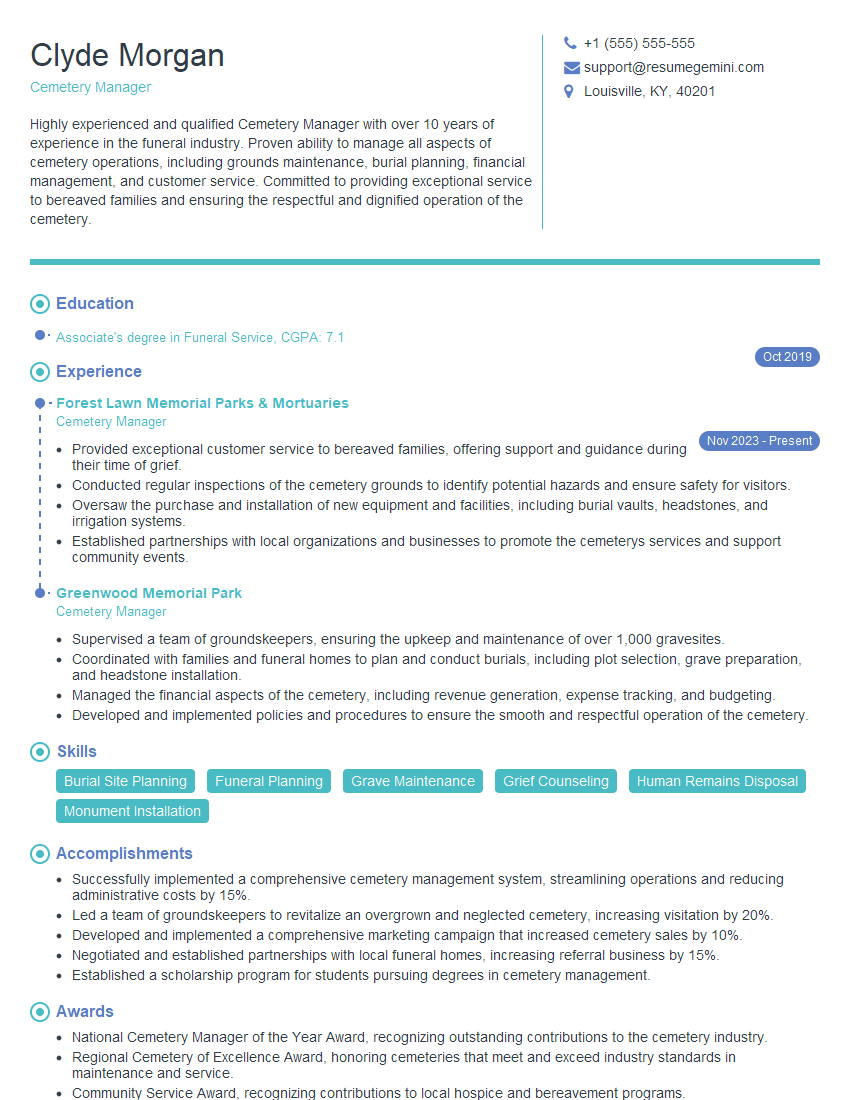
Mastering Cemetery Regulations demonstrates your commitment to ethical and efficient operations, crucial for career advancement in this sensitive and responsible field. A strong understanding of these regulations will significantly improve your job prospects and allow you to present yourself as a knowledgeable and capable candidate. To further enhance your application, create an ATS-friendly resume that highlights your relevant skills and experience. ResumeGemini is a trusted resource that can help you build a professional and effective resume tailored to the specific requirements of Cemetery Regulations positions. Examples of resumes tailored to this field are available within ResumeGemini to guide you.
Explore more articles
Users Rating of Our Blogs
Share Your Experience
We value your feedback! Please rate our content and share your thoughts (optional).
What Readers Say About Our Blog
Very informative content, great job.
good