Every successful interview starts with knowing what to expect. In this blog, we’ll take you through the top Central Office Switching Systems interview questions, breaking them down with expert tips to help you deliver impactful answers. Step into your next interview fully prepared and ready to succeed.
Questions Asked in Central Office Switching Systems Interview
Q 1. Explain the difference between circuit switching and packet switching.
Circuit switching and packet switching are two fundamental methods for transmitting data across a network. Imagine you’re sending a letter: circuit switching is like building a dedicated, direct postal route specifically for your letter. The entire path is reserved exclusively for your communication, ensuring a dedicated connection until the letter arrives. Packet switching, on the other hand, is like breaking your letter into smaller packets and sending them independently across different, potentially shared routes. These packets may take different paths and arrive at the destination at slightly different times, then reassembled.
- Circuit Switching: Establishes a dedicated physical connection between two communicating devices for the duration of the call. Think of a traditional phone call – a physical path is created between your phone and the recipient’s phone. This guarantees bandwidth and low latency but is inefficient when idle.
- Packet Switching: Breaks data into smaller packets, each sent independently across the network. This is how the internet works. It’s efficient because network resources aren’t held for idle periods, and it offers greater resilience to failures as packets can take alternate routes.
In short: Circuit switching offers dedicated bandwidth and low latency, ideal for real-time applications like voice calls. Packet switching offers flexibility, efficiency, and resilience, making it ideal for data transfer over the internet.
Q 2. Describe the functionality of a Signaling System 7 (SS7) network.
Signaling System 7 (SS7) is a complex, crucial network protocol that handles signaling information for telephone calls. Instead of carrying the voice itself, it manages the setup, maintenance, and termination of calls. Think of it as the air traffic control for phone calls. It coordinates the route a call takes, manages billing information, and provides other important call control functions.
Key functionalities include:
- Call setup and routing: SS7 determines the best path for a call to reach its destination, considering factors like network congestion and available resources.
- Number portability: SS7 allows you to keep your phone number even if you switch carriers. It maps your number to your current provider.
- Call billing: SS7 tracks call duration and other relevant details for billing purposes.
- 800 number routing: SS7 directs calls to the appropriate organizations based on 800 numbers.
- Emergency services: Plays a critical role in routing emergency calls to the correct emergency services location.
SS7 operates on a network of signaling points (SSPs), message transfer parts (MTPs), and various databases. The messages are passed through a series of nodes until they reach their destination.
Q 3. What are the key components of a modern Central Office?
A modern Central Office (CO) is the heart of a telecommunications network, responsible for connecting subscribers to each other and to the wider network. It’s evolved significantly from the traditional switchboards. Here are key components:
- Switching System: The core component, responsible for connecting calls. This could be a software-defined network (SDN) based solution or a traditional time-division multiplexing (TDM) switch.
- Media Gateways: Convert between various communication protocols, for example, translating between traditional TDM voice and IP-based VoIP calls.
- Signaling Systems (SS7, SIP): Handle the control and signaling aspects of calls, managing call setup, routing, and tear-down.
- Network Interfaces: Connect the CO to the wider telecommunications network (e.g., connections to other COs, long-distance carriers, and internet providers).
- Power Systems: Provide reliable power to ensure uninterrupted service.
- Monitoring and Management Systems: Provide tools for monitoring network performance, diagnosing faults, and managing resources.
The CO also incorporates robust security measures to protect against various threats.
Q 4. Explain the role of a Media Gateway in VoIP communications.
A Media Gateway is a crucial component in VoIP (Voice over Internet Protocol) communications. It acts as a translator between the analog world of traditional phone lines and the digital world of IP networks. Think of it as a linguistic interpreter for voice calls.
Its primary role is to convert analog voice signals into digital packets suitable for transmission over an IP network and vice versa. This allows traditional phones to communicate with VoIP phones and other IP-based devices. Key functions include:
- Analog-to-digital conversion (ADC): Converts the analog voice signal from a traditional phone into a digital signal that can be sent over the IP network.
- Digital-to-analog conversion (DAC): Converts the digital signal received from the IP network back into an analog signal for a traditional phone.
- Codec conversion: Converts between different codecs (compression/decompression algorithms) used to encode voice data. This ensures compatibility between various VoIP systems.
- Protocol conversion: Handles the conversion between different signaling protocols, such as SS7 and SIP (Session Initiation Protocol).
Media Gateways are essential for integrating VoIP into existing telecommunications infrastructure.
Q 5. How does call routing work in a Central Office?
Call routing in a Central Office is a sophisticated process that involves determining the optimal path for a call to reach its destination. It utilizes a combination of techniques and databases. When you make a call, several steps take place:
- Number analysis: The CO analyzes the dialed number to determine the type of call (local, long-distance, international).
- Routing table lookup: The CO consults its routing tables, which contain information about various destinations and the most efficient paths to reach them. This table is constantly updated based on network conditions.
- Call setup: The CO establishes a connection with the appropriate destination. This might involve using SS7 signaling to coordinate with other COs or long-distance carriers.
- Call completion: Once a connection is established, the call is completed, and the parties can communicate.
The efficiency and reliability of call routing are critical for a high-quality telecommunications experience. Advanced routing algorithms are used to optimize the path and manage network congestion.
Q 6. Describe different types of multiplexing techniques used in telecommunications.
Multiplexing is a technique that allows multiple signals to share a single communication channel. Imagine a highway with multiple lanes – each lane represents a separate signal, and the highway itself represents the shared channel.
- Time-Division Multiplexing (TDM): Divides the transmission time into slots. Each signal gets a dedicated time slot to transmit its data. Think of it like a round-robin schedule. Traditional telephone systems rely heavily on TDM.
- Frequency-Division Multiplexing (FDM): Divides the available bandwidth into frequency channels. Each signal is assigned a unique frequency channel to transmit its data. Think of radio stations – each broadcasts at a unique frequency.
- Wavelength-Division Multiplexing (WDM): Similar to FDM, but used in fiber optic communication. Each signal is transmitted on a different wavelength of light.
- Code-Division Multiple Access (CDMA): Allows multiple signals to share the same frequency band by using unique codes to differentiate them. Think of it like assigning each car a unique code to prevent collisions on a single-lane road.
The choice of multiplexing technique depends on factors such as bandwidth requirements, cost, and the type of communication medium.
Q 7. What are the advantages and disadvantages of TDM and packet switching?
TDM and packet switching offer different strengths and weaknesses:
- Time-Division Multiplexing (TDM):
- Advantages: Guaranteed bandwidth, low latency (delay), well-suited for real-time applications like voice calls.
- Disadvantages: Inefficient use of bandwidth when channels are idle, less flexible than packet switching, susceptible to single point of failure.
- Packet Switching:
- Advantages: Efficient use of bandwidth, greater flexibility and scalability, resilience to network failures (packets can take alternate routes).
- Disadvantages: Variable latency (delay), can experience packet loss, requires more complex network management.
In essence, TDM excels in guaranteeing low latency for real-time communication, while packet switching prioritizes efficient bandwidth utilization and resilience, making it ideal for data communication where occasional delays are acceptable.
Q 8. Explain the concept of Quality of Service (QoS) in a telecom network.
Quality of Service (QoS) in a telecom network prioritizes certain types of traffic over others, ensuring critical services receive the bandwidth and resources they need, even during periods of high network congestion. Think of it like a hospital emergency room – life-threatening cases are treated first, regardless of how many other patients are waiting. In a telecom network, this might mean prioritizing voice calls over data transfers, ensuring clear, uninterrupted conversations. QoS is implemented using various mechanisms, such as differentiated services (DiffServ) and integrated services (IntServ), which mark and prioritize packets based on their service class.
For example, a VoIP call might be assigned a higher QoS priority than a file download. If network congestion occurs, the VoIP call is less likely to experience packet loss or jitter (irregular arrival of packets), leading to better call quality. This ensures that crucial services maintain their performance even under stress.
Q 9. How does a Central Office handle congestion?
A Central Office handles congestion through a variety of methods. The primary strategy is traffic management, which involves techniques to regulate the flow of calls. This can include call blocking – refusing new calls when capacity is reached – and call queuing – placing calls in a waiting line until a path becomes available. More sophisticated techniques include call routing algorithms that dynamically reroute calls to less congested paths.
Another key strategy is statistical multiplexing. This technique makes efficient use of available resources by sharing bandwidth among multiple calls. The system continuously monitors call traffic and adapts its resource allocation based on real-time demand. If congestion persists, the Central Office may also trigger alarms alerting technicians to investigate and possibly add more capacity to the system.
Imagine a busy highway. During rush hour, traffic congestion occurs. The Central Office acts as the traffic controller, managing the flow of cars (calls) to prevent gridlock. It might use methods like diverting traffic to less congested routes (alternative paths in the network) or temporarily halting new cars (calls) from entering the highway (blocking calls).
Q 10. Describe the different types of telephone lines (e.g., POTS, ISDN).
There are several types of telephone lines, each offering different capabilities:
- Plain Old Telephone Service (POTS): This is the traditional analog telephone line, providing basic voice communication. It’s a simple, reliable technology, but bandwidth is limited, and it doesn’t support data transmission efficiently.
- Integrated Services Digital Network (ISDN): ISDN provides digital communication over existing telephone lines, offering higher bandwidth than POTS and supporting both voice and data simultaneously. It came in different configurations (Basic Rate Interface (BRI) and Primary Rate Interface (PRI)), offering varying numbers of channels.
- Digital Subscriber Line (DSL): DSL uses existing copper telephone lines to provide high-speed digital data transmission. Various DSL technologies exist, such as ADSL (Asymmetric DSL), which offers faster downstream (internet to user) speeds than upstream (user to internet).
- Fiber to the x (FTTx): This describes various architectures where optical fiber is used to deliver broadband services closer to the customer. FTTx provides extremely high bandwidth and is becoming increasingly prevalent.
Each type of line serves a specific purpose, and the choice depends on the user’s needs and the available infrastructure.
Q 11. Explain the function of a digital cross-connect system (DCS).
A Digital Cross-Connect System (DCS) is a high-speed, electronically controlled switching system that provides flexible and efficient management of transmission facilities. It allows telecom operators to quickly and easily rearrange connections between different parts of their network, without having to physically rewire the system. This makes it crucial for network management and provisioning.
Imagine a large city’s highway system. A DCS is like a sophisticated traffic control center that can instantly reroute traffic based on demand or road closures. Instead of physically changing roads, the DCS electronically switches connections between different parts of the network, enabling quick provisioning of new services or rerouting traffic around failures.
DCSs are used to interconnect various network elements, such as T-carriers, SONET/SDH systems, and other high-speed transmission facilities. They offer significant benefits in terms of flexibility, reduced downtime, and improved network efficiency.
Q 12. What are common protocols used in Central Office switching?
Several protocols are used in Central Office switching, depending on the specific function and technology involved. Some common ones include:
- SS7 (Signaling System No. 7): A common signaling protocol used for call setup and control in public switched telephone networks (PSTNs). It handles various aspects of call processing, including routing, billing, and call management.
- ISUP (ISDN User Part): A protocol within SS7 that handles signaling for ISDN calls.
- SIP (Session Initiation Protocol): A widely used protocol for VoIP (Voice over Internet Protocol) that establishes and manages multimedia communication sessions, including voice and video calls.
- MGCP (Media Gateway Control Protocol): Used to control media gateways in VoIP networks.
- H.248/Megaco): Another protocol used to control media gateways, often considered a successor to MGCP.
The specific protocol used depends on the generation and capabilities of the switching system and the type of services it supports. Older systems might primarily rely on SS7, while newer, VoIP-centric systems rely more on SIP and related protocols.
Q 13. How does a Central Office handle emergency calls (911)?
Central Offices handle emergency calls (911) with the utmost priority. These calls are typically routed through dedicated pathways and prioritized over all other calls. This ensures minimal delay and a high probability of connection, even during periods of high network congestion. The call routing system often prioritizes 911 calls using specific signaling mechanisms that bypass typical call processing steps.
In addition to routing prioritization, the Central Office may also automatically provide the caller’s location information to the emergency dispatch center, significantly aiding in the response. The design and implementation of 911 handling are subject to strict regulatory requirements to ensure the reliability and effectiveness of the emergency service.
This system is designed for fault tolerance; if one pathway fails, backup paths are immediately available. The whole process is critical, so it’s extensively tested and monitored for performance and reliability.
Q 14. Describe your experience with troubleshooting switching system issues.
Throughout my career, I’ve extensively handled troubleshooting switching system issues. My approach follows a structured methodology: I start with a thorough understanding of the symptoms, including the impact on services and the affected areas. I then consult network monitoring tools to identify potential causes, analyzing logs, performance metrics, and error messages. This often involves examining call detail records (CDRs) to pinpoint the exact time and nature of failures.
For example, I once worked on an issue where a sudden increase in call failures occurred in a specific geographical area. By analyzing network performance data, I identified excessive jitter on a particular T1 line. Further investigation revealed a faulty line card in the Central Office, which was promptly replaced, resolving the issue. Another instance involved a complex problem with SS7 signaling where a systematic approach, testing signaling links and analyzing protocol traces, allowed me to identify a misconfigured signaling router.
My experience includes working with various vendor equipment, including Lucent, Nortel, and Alcatel-Lucent systems. I’m proficient in using network monitoring tools, protocol analyzers, and other diagnostic equipment. My problem-solving methodology relies on a systematic approach, combining technical knowledge with methodical investigation to isolate the root cause and implement effective solutions.
Q 15. Explain your experience with network monitoring tools in a telecom environment.
Network monitoring in a telecom environment is crucial for maintaining service quality and identifying potential issues proactively. My experience encompasses using a variety of tools, ranging from basic SNMP (Simple Network Management Protocol) monitoring to sophisticated solutions like those offered by vendors such as Huawei, Cisco, and Juniper. These tools allow us to monitor key performance indicators (KPIs) such as call completion rates, call blocking rates, and latency.
For example, using SNMP, we can monitor CPU utilization, memory usage, and interface traffic on our switches and routers. This provides a real-time view of the network’s health. More advanced tools provide predictive analytics, alerting us to potential problems before they impact customers. I’ve also used network management systems (NMS) that provide a centralized view of the entire network, allowing for efficient troubleshooting and reporting.
In one instance, our NMS alerted us to unusually high CPU utilization on a specific switch. Through further investigation using the detailed logs provided by the NMS, we discovered a rogue process consuming excessive resources. Identifying and resolving this issue prevented a potential service disruption.
Career Expert Tips:
- Ace those interviews! Prepare effectively by reviewing the Top 50 Most Common Interview Questions on ResumeGemini.
- Navigate your job search with confidence! Explore a wide range of Career Tips on ResumeGemini. Learn about common challenges and recommendations to overcome them.
- Craft the perfect resume! Master the Art of Resume Writing with ResumeGemini’s guide. Showcase your unique qualifications and achievements effectively.
- Don’t miss out on holiday savings! Build your dream resume with ResumeGemini’s ATS optimized templates.
Q 16. How do you ensure network security in a Central Office?
Network security in a Central Office is paramount, as it protects sensitive customer data and ensures the continued operation of essential communication services. Our security strategy employs a multi-layered approach, including:
- Firewall protection: Firewalls act as the first line of defense, preventing unauthorized access to the network.
- Intrusion Detection/Prevention Systems (IDS/IPS): These systems actively monitor network traffic for malicious activity, alerting us to potential threats and automatically blocking them.
- Access control lists (ACLs): These restrict access to sensitive network resources based on IP addresses, ports, and other criteria. This prevents unauthorized access to critical systems.
- Regular security audits and penetration testing: We conduct regular security assessments to identify vulnerabilities and ensure our security measures are effective. This also includes simulating attacks to identify and address potential weaknesses.
- Regular software and firmware updates: Keeping our equipment updated with the latest security patches is crucial in mitigating known vulnerabilities.
- Physical security: Strict access control measures, such as security cameras and physical barriers, are used to protect the physical infrastructure of the Central Office.
Imagine a scenario where a malicious actor gains access to our network. Our layered security approach would detect and contain this intrusion, preventing widespread damage and protecting customer data. This multi-layered approach ensures robust protection against various threats.
Q 17. Describe your familiarity with different types of telecommunication equipment.
My familiarity with telecommunication equipment spans a wide range of technologies. I have extensive experience with legacy Time Division Multiplexing (TDM) switching systems like those from Lucent Technologies and Nortel, as well as modern IP-based solutions from Cisco, Juniper, and Ericsson. This includes:
- Switching systems: From traditional circuit-switched systems to VoIP softswitches and session border controllers (SBCs).
- Routers and network infrastructure: Experience with various routing protocols (e.g., BGP, OSPF) and network management tools.
- Transmission equipment: Familiarity with different transmission technologies, including T1/E1, DS3/E3, and optical fiber.
- Signaling systems: Experience with SS7 (Signaling System No. 7) and SIP (Session Initiation Protocol).
Understanding the nuances of different equipment is essential for effective troubleshooting and network design. For example, troubleshooting a call quality issue might involve analyzing network performance on a router, the signaling path using a protocol analyzer, and the configuration of a specific switch port.
Q 18. What are the challenges of migrating from legacy switching systems to VoIP?
Migrating from legacy switching systems to VoIP presents several challenges:
- High initial investment: Replacing legacy equipment with VoIP infrastructure requires significant upfront costs.
- Network infrastructure upgrades: VoIP requires a robust network infrastructure with sufficient bandwidth and QoS (Quality of Service) capabilities. Upgrading the existing network might be necessary.
- Integration complexities: Integrating VoIP with existing legacy systems can be challenging and may require specialized expertise.
- Security concerns: VoIP networks are vulnerable to various security threats that need to be addressed with appropriate security measures.
- Training and support: Staff training on the new VoIP system is essential for successful implementation and ongoing maintenance.
- Number porting: Transferring existing phone numbers to the new VoIP system can be complex and time-consuming.
One significant challenge is ensuring seamless integration with existing systems. This often involves a phased migration approach to minimize disruption to services.
Q 19. Explain the concept of a call detail record (CDR).
A Call Detail Record (CDR) is a record containing comprehensive information about a telephone call. Think of it as a detailed receipt for each call made. These records typically include the following information:
- Calling number: The telephone number initiating the call.
- Called number: The telephone number receiving the call.
- Call start time: The exact time the call began.
- Call end time: The exact time the call ended.
- Call duration: The length of the call.
- Call type: The type of call (e.g., voice, fax, data).
- Location information: Depending on the system, location data might be included.
- Billing information: Used for call billing and accounting.
CDRs are crucial for billing, network monitoring, fraud detection, and reporting. Analyzing CDRs can help identify trends, pinpoint areas of network congestion, and detect fraudulent activities like call-bombing.
Q 20. How do you perform capacity planning for a Central Office?
Capacity planning for a Central Office involves forecasting future traffic demands and ensuring that the infrastructure can handle this growth. This is a crucial aspect of ensuring continued service quality and avoiding costly disruptions. The process typically involves:
- Traffic forecasting: Analyzing historical call data and predicting future call volume and traffic patterns.
- Equipment capacity assessment: Determining the current and future capacity of existing switching equipment, routers, and other network components.
- Technology selection: Choosing the appropriate technology to meet future demands, considering factors like scalability, cost-effectiveness, and maintainability.
- Network simulation: Using network simulation tools to model different scenarios and evaluate the impact of various capacity upgrades.
- Contingency planning: Developing strategies to manage unexpected surges in traffic or equipment failures.
For example, we might use a combination of historical data analysis and predictive modeling to estimate the increase in call volume over the next five years. Based on this forecast, we can plan for necessary upgrades to ensure the Central Office can handle the increased load. This proactive approach minimizes disruptions and ensures optimal network performance.
Q 21. Describe your experience with network maintenance and upgrades.
Network maintenance and upgrades are ongoing processes vital for ensuring reliable and efficient telecommunications services. My experience includes:
- Preventive maintenance: Regularly performing scheduled maintenance tasks, such as hardware inspections, software updates, and system backups.
- Corrective maintenance: Troubleshooting and resolving network faults and service interruptions.
- Upgrades: Planning and executing network upgrades to improve performance, capacity, and security.
- Documentation: Maintaining detailed documentation of network configurations, maintenance procedures, and troubleshooting steps.
- Collaboration: Working effectively with other teams, including engineering, operations, and customer support.
In one instance, we needed to upgrade a legacy switch to a newer model. This involved meticulous planning, including coordinating downtime with minimal disruption to customers, migrating existing configurations to the new switch, and conducting rigorous testing before cutover. Successful execution of this upgrade ensured improved performance and enhanced reliability for our customers.
Q 22. What are the key performance indicators (KPIs) for a Central Office?
Key Performance Indicators (KPIs) for a Central Office are crucial for monitoring its efficiency and service quality. They fall into several categories:
- Call Processing KPIs: These measure the core functionality. Examples include call setup time (how quickly a call connects), call completion rate (percentage of calls successfully completed), blocking probability (percentage of calls blocked due to congestion), and average call duration. A high call setup time indicates potential network congestion or equipment issues, while a low completion rate suggests problems with call routing or handoffs.
- Network Availability KPIs: These focus on uptime and reliability. Examples include mean time between failures (MTBF) – the average time the system runs before a failure – and mean time to repair (MTTR) – the average time it takes to fix a failure. A high MTBF is desired, while a low MTTR indicates efficient maintenance procedures. We also track service availability percentage, aiming for near 100%.
- Resource Utilization KPIs: These monitor the efficient use of resources. Examples include CPU utilization, memory usage, and trunk utilization (percentage of available lines in use). High resource utilization can indicate a need for capacity upgrades or optimization. Think of it like a restaurant – high CPU utilization is like a fully booked restaurant needing more tables, and high trunk utilization is like a restaurant running out of phone lines to take orders.
- Security KPIs: This is increasingly crucial. We track things like the number of security incidents, successful intrusion attempts (or lack thereof), and mean time to detection (MTTD) for security breaches.
Regularly monitoring these KPIs allows proactive identification of potential problems, ensuring the Central Office operates smoothly and provides high-quality service to its subscribers. For example, a sudden spike in blocking probability might indicate a need for immediate investigation and potential capacity expansion.
Q 23. Explain your experience with different types of switching fabrics.
My experience encompasses various switching fabrics, each with its strengths and weaknesses. I’ve worked extensively with:
- Time-Division Multiplexing (TDM): This older technology uses time slots to allocate resources. It’s relatively simple but less flexible and scalable compared to newer technologies. I’ve maintained and troubleshooted TDM-based systems, focusing on issues related to timing synchronization and circuit allocation.
- Space-Division Switching: This approach uses dedicated physical paths between inputs and outputs. While robust, it’s less efficient for large-scale networks. My experience includes working with crossbar switches in legacy systems and understanding their limitations in terms of scalability and cost.
- Packet Switching: This is the dominant technology today, using packets to route calls. I have significant experience with ATM (Asynchronous Transfer Mode) and IP-based switching, troubleshooting network congestion and optimizing routing protocols in IP/MPLS networks. This includes deploying and managing Quality of Service (QoS) mechanisms to prioritize voice traffic.
- Software-Defined Networking (SDN): I’ve been involved in implementing SDN principles in newer Central Office deployments, leveraging programmability for enhanced flexibility and automation. This allows for dynamic resource allocation and improved network management efficiency.
Understanding these different fabrics is critical for making informed decisions about network architecture, upgrades, and troubleshooting. For instance, migrating from a TDM-based system to an IP-based system requires careful planning and execution to minimize service disruptions.
Q 24. How do you handle a major network outage in a Central Office?
Handling a major network outage requires a systematic and swift response. My approach involves these steps:
- Immediate Assessment: Quickly identify the scope and impact of the outage. This includes determining which services are affected and how many subscribers are experiencing problems. This often involves using network monitoring tools and collecting data from various sources.
- Fault Isolation: Pinpoint the root cause of the outage using diagnostic tools and analyzing network logs. This might involve checking equipment status, cable integrity, and software configurations.
- Emergency Restoration: Implement immediate steps to restore service as quickly as possible. This may involve activating backup systems, rerouting traffic, or deploying temporary workarounds. We would prioritize essential services based on their impact on public safety.
- Permanent Repair: Once the immediate problem is addressed, the permanent repair will involve a thorough investigation of the root cause, fixing any underlying issues, and implementing preventive measures to avoid similar future outages. This may involve equipment repair or replacement, software updates, and potentially network design modifications.
- Post-Outage Analysis: After the service is restored, a thorough analysis of the outage is conducted to identify areas for improvement, enhance disaster recovery plans, and implement changes to prevent future incidents. We document the entire process for future reference and to improve our response capabilities.
Effective communication is also crucial during an outage. Keeping stakeholders (subscribers, supervisors, etc.) informed about the progress of the restoration process is key to maintaining confidence and minimizing disruption.
Q 25. Describe your experience working with vendors and suppliers of telecom equipment.
My experience with telecom equipment vendors and suppliers is extensive. I’ve worked with major players like Cisco, Nokia, Ericsson, and Juniper, as well as smaller, specialized companies providing niche solutions. My interactions encompass the entire lifecycle of equipment:
- Procurement: Defining specifications, conducting vendor evaluations, negotiating contracts, and managing the procurement process.
- Implementation: Overseeing installation, testing, and integration of new equipment into the existing network. This involves close collaboration with vendor engineers.
- Maintenance & Support: Working with vendors to resolve technical issues, schedule maintenance, and manage warranty claims. This includes negotiating service level agreements (SLAs) to ensure acceptable response times.
- Upgrades: Planning and executing equipment upgrades and software updates, again in close collaboration with vendors to ensure smooth transitions and minimal downtime.
Building strong relationships with vendors is critical for securing timely support, obtaining favorable pricing, and ensuring the success of large-scale projects. For example, during a recent network upgrade, I successfully negotiated a contract with a vendor that provided cost savings while meeting all our technical requirements.
Q 26. What are the regulatory compliance requirements for a Central Office?
Regulatory compliance is paramount for Central Offices. Compliance requirements vary by region and jurisdiction but generally include:
- E-911 (Emergency Services): Ensuring the accurate and reliable routing of emergency calls. This involves adhering to specific standards and regulations regarding call handling and location information.
- Network Security: Implementing security measures to protect the network from unauthorized access and cyber threats. This often involves complying with industry best practices and relevant security standards.
- Data Privacy: Protecting the privacy of customer data and complying with laws and regulations related to data protection, such as GDPR or CCPA (depending on the location).
- Accessibility Compliance: Meeting requirements related to accessibility for people with disabilities, ensuring that services are accessible to all users.
- Interconnection Requirements: Complying with regulations on interconnection with other carriers and providers, ensuring interoperability and fair competition.
- Spectrum Management: Adhering to regulations governing the use of radio frequencies if applicable.
Non-compliance can lead to significant penalties, fines, and reputational damage. Maintaining a robust compliance program involving regular audits, training, and documentation is crucial.
Q 27. Explain your understanding of different numbering plans (e.g., E.164).
Numbering plans are fundamental to the functioning of telecommunication networks. E.164 is the most widely used international numbering plan. It’s a hierarchical system that defines the structure of telephone numbers globally.
Understanding E.164 is vital for proper call routing. A typical E.164 number consists of a country code (+1 for the US, +44 for UK, etc.), a national destination code (area code), and a subscriber number. For example, +1 212 555 1212. The structure allows for global connectivity and efficient call routing across different networks.
Beyond E.164, I’m familiar with other numbering schemes like IN (Intelligent Network) numbering, which allows for more advanced features like call routing based on time of day or caller ID, and various national numbering plans adapted to specific countries’ needs. A solid grasp of these plans is essential to ensure proper call routing, interoperability, and efficient network management.
Q 28. Describe your experience with network virtualization in a telecom context.
Network virtualization is transforming the telecom industry, offering significant benefits in terms of flexibility, scalability, and cost efficiency. My experience includes working with:
- Virtualized network functions (VNFs): Replacing traditional hardware-based network elements with software-based equivalents running on virtual machines or containers. This allows for greater flexibility in deploying and managing network services.
- Network Function Virtualization Infrastructure (NFVI): This is the underlying infrastructure providing the compute, storage, and networking resources needed to run VNFs. Experience with NFVI includes the ability to optimize its performance and ensure the smooth operation of virtualized network functions.
- Software-Defined Networking (SDN): SDN’s use of centralized control for managing the network’s data plane allows greater programmability and automation in virtualized environments. This experience includes working with SDN controllers and managing the network’s data path programmatically.
Virtualization allows for more efficient use of resources, reducing capital expenditure and operational costs. It enables rapid deployment of new services and simplifies network upgrades. For example, we successfully migrated a portion of our Central Office’s call processing functions to a virtualized environment, reducing hardware costs and increasing the speed of service deployment. The benefits are significant, allowing us to be more agile and responsive to evolving customer needs.
Key Topics to Learn for Central Office Switching Systems Interview
- Call Processing Fundamentals: Understanding call setup, routing, and termination processes within a central office. Explore different switching techniques and their implications.
- Signaling Systems: Mastering SS7 (Signaling System No. 7) principles, including its architecture, protocols (e.g., ISUP, SCCP), and role in call control. Understand the evolution towards newer signaling protocols.
- Network Elements: Familiarize yourself with key components like line cards, digital cross-connect systems (DCS), media gateways, and their interaction within the central office.
- Traffic Engineering and Network Management: Learn about techniques for optimizing network performance, handling traffic congestion, and monitoring system health. Consider aspects of capacity planning and resource allocation.
- Troubleshooting and Maintenance: Develop your problem-solving skills by exploring common issues, fault diagnosis methods, and maintenance procedures within a central office environment. Consider practical application of network monitoring tools.
- Security in Switching Systems: Understand the vulnerabilities and security threats specific to central office systems and the measures taken to mitigate them. Explore concepts like call security and fraud prevention.
- IP Telephony Integration: Explore the convergence of traditional TDM and IP-based telephony within the central office and the challenges involved. Understand VoIP technologies and their impact on call processing.
- Next-Generation Networks (NGN): Gain a high-level understanding of the evolution of switching systems towards software-defined networking (SDN) and network functions virtualization (NFV).
Next Steps
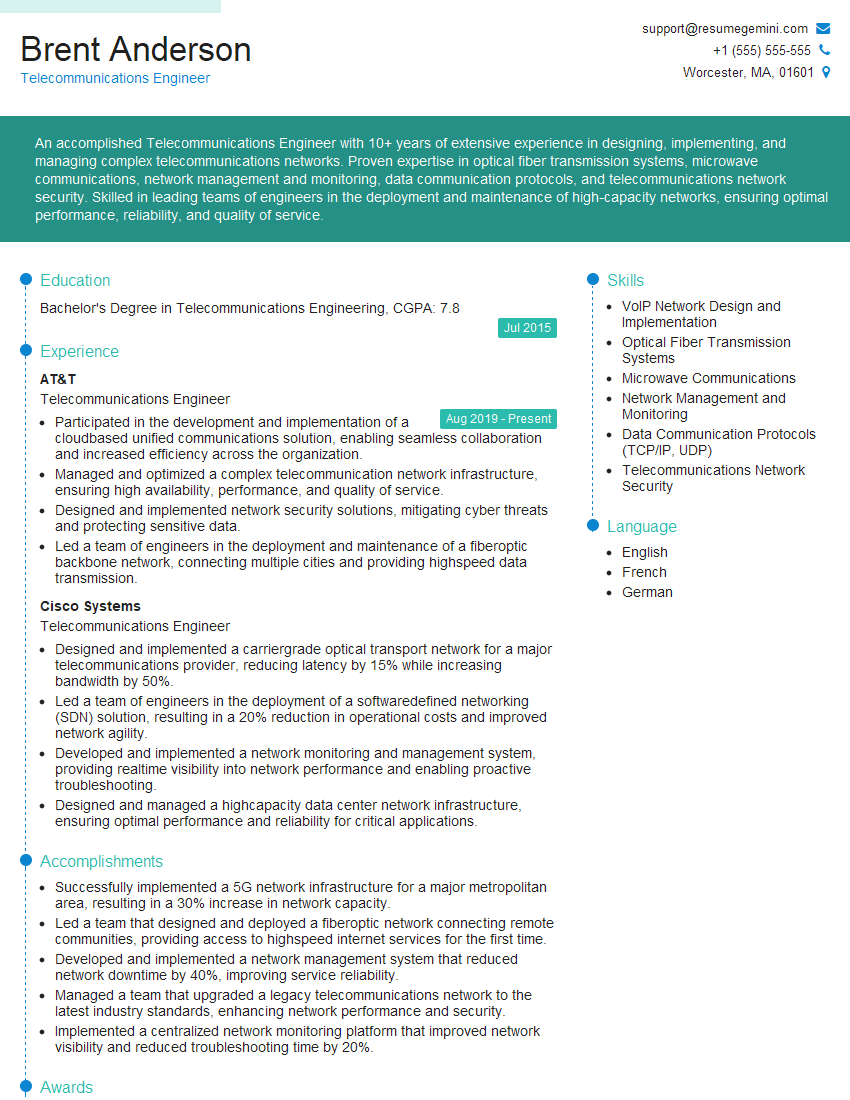
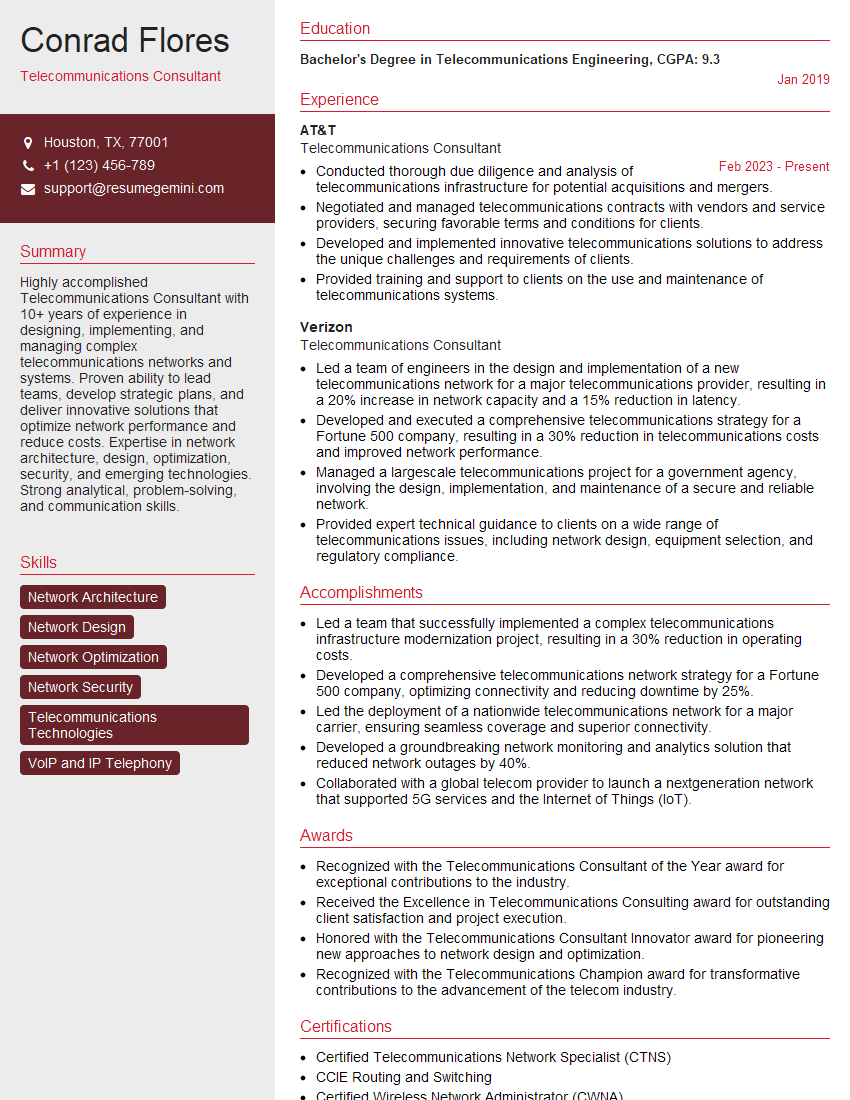
Mastering Central Office Switching Systems opens doors to exciting and rewarding careers in telecommunications, offering opportunities for continuous learning and advancement. To maximize your job prospects, crafting an ATS-friendly resume is crucial. A well-structured resume highlights your skills and experience effectively, increasing your chances of getting noticed by recruiters. We strongly encourage you to leverage ResumeGemini, a trusted resource for building professional and impactful resumes. ResumeGemini provides valuable tools and templates to help you create a compelling document that showcases your expertise. Examples of resumes tailored specifically to Central Office Switching Systems are available to help guide your efforts.
Explore more articles
Users Rating of Our Blogs
Share Your Experience
We value your feedback! Please rate our content and share your thoughts (optional).
What Readers Say About Our Blog
Very informative content, great job.
good