Feeling uncertain about what to expect in your upcoming interview? We’ve got you covered! This blog highlights the most important Certified HACCP Auditor interview questions and provides actionable advice to help you stand out as the ideal candidate. Let’s pave the way for your success.
Questions Asked in Certified HACCP Auditor Interview
Q 1. Explain the seven principles of HACCP.
The seven principles of HACCP (Hazard Analysis and Critical Control Points) provide a systematic approach to food safety. Think of them as a roadmap to preventing hazards from entering your food production process. They are:
- Conduct a Hazard Analysis: Identify potential biological, chemical, and physical hazards that could occur at each step of the food production process. This involves brainstorming and considering all possible scenarios.
- Determine Critical Control Points (CCPs): Identify steps in the process where hazards can be prevented, eliminated, or reduced to acceptable levels. These are the points where control is essential. Imagine these as checkpoints where you’re verifying safety.
- Establish Critical Limits: Set measurable limits for each CCP. These limits are the boundaries that must be met to prevent or reduce the hazard to a safe level. This is like setting the acceptable temperature range for cooking.
- Establish Monitoring Procedures: Define how you will monitor the CCPs to ensure the critical limits are being met. This includes setting frequencies and recording data. Think of this as regular quality checks.
- Establish Corrective Actions: Determine what steps will be taken if a critical limit is not met. This is your action plan in case something goes wrong, like determining what to do when the cooking temperature is too low.
- Establish Verification Procedures: Outline the procedures for confirming that the HACCP plan is working effectively. Think of this as auditing your own system. Regular reviews and updates are key.
- Establish Record-Keeping and Documentation Procedures: Document all aspects of the HACCP plan, including the hazard analysis, CCPs, critical limits, monitoring results, corrective actions, and verification activities. This provides an audit trail and allows for continuous improvement.
Q 2. Describe the process of conducting a HACCP hazard analysis.
A HACCP hazard analysis is a systematic process of identifying and evaluating potential hazards in food production. It involves a team of experts from different areas, including production, quality control, and microbiology. The process typically follows these steps:
- Describe the product: Detail the food product, its intended use, target consumers, and anticipated shelf life.
- Identify intended use and consumers: Understand who will be consuming the product and how it will be used.
- Develop a flow diagram: Create a visual representation of the entire food production process, from raw materials to the finished product. This will help visualize each step.
- Conduct a hazard analysis for each step: Identify biological, chemical, and physical hazards associated with each step. For example, Salmonella contamination during poultry processing (biological), pesticide residues in vegetables (chemical), or broken glass in a finished product (physical).
- Evaluate the likelihood and severity of each hazard: Determine how likely each hazard is to occur and the severity of its potential consequences. Risk assessment matrices are commonly used to achieve this.
The outcome of the hazard analysis is a list of potential hazards and their associated risks, which forms the basis for the next steps in the HACCP plan.
Q 3. How do you identify critical control points (CCPs) in a food production process?
Critical Control Points (CCPs) are steps in the food production process where control can prevent, eliminate, or reduce a food safety hazard to an acceptable level. Identifying CCPs requires careful evaluation of the hazard analysis. A decision tree approach is often used. Ask yourself for each step in the process:
- Is there a hazard present? If no, move to the next step in the process.
- Can this hazard be prevented or eliminated at this step? If yes, it’s a potential CCP. If no, go to the next step.
- Can the hazard be reduced to an acceptable level at this step? If yes, it’s a potential CCP. If no, move to the next step.
Example: In the production of canned goods, the thermal processing (heating) step is a CCP because it reduces the risk of Clostridium botulinum spores. Proper cooking temperature is critical for destroying these harmful spores.
Q 4. What are the critical limits for each CCP and how are they determined?
Critical limits are the maximum or minimum values that must be met at each CCP to ensure the food safety hazard is controlled. They are measurable parameters. Determining critical limits requires scientific evidence and knowledge of the hazard, process, and product. Examples of critical limits are:
- Temperature: Minimum internal temperature of cooked poultry (e.g., 74°C/165°F) to eliminate Salmonella.
- Time: Minimum time for holding food at a specific temperature to inhibit microbial growth.
- pH: Specific pH level in a food product to prevent microbial growth.
- Water Activity (Aw): Maximum Aw to prevent the growth of specific microorganisms.
- Available Chlorine: Minimum level of chlorine in wash water to reduce bacterial contamination.
Critical limits are often based on scientific data, industry best practices, and regulatory requirements. For example, the minimum cooking temperature for poultry might be set based on studies demonstrating the lethality of heat against Salmonella.
Q 5. Explain the monitoring procedures for CCPs.
Monitoring procedures describe how CCPs are regularly checked to ensure that critical limits are being met. These procedures must be clearly defined, easily understood, and practically applicable. They should include:
- Frequency: How often the CCP will be monitored (e.g., every hour, every batch).
- Method: How the critical limit will be measured (e.g., using a thermometer, pH meter, chlorine test kit).
- Responsibility: Who is responsible for monitoring the CCP.
- Data recording: How the monitoring data will be recorded and stored.
Example: Monitoring the internal temperature of cooked chicken during production. A designated employee uses a calibrated thermometer to check the temperature at multiple locations in each batch every hour, recording the results on a pre-printed form. This data then gets entered into a database. Failure to follow monitoring procedures weakens the overall safety of the food.
Q 6. What corrective actions should be taken if a CCP is not met?
Corrective actions are the steps to be taken if a critical limit is not met at a CCP. These actions should be detailed and ensure the affected food is handled appropriately to prevent hazard transmission. They should include:
- Identify the problem: Determine the cause of the deviation from the critical limit.
- Immediate actions: Take immediate steps to correct the situation (e.g., adjust equipment settings, reprocess the food).
- Disposition of affected product: Decide whether to rework, discard, or otherwise manage the affected product to prevent it from reaching consumers.
- Prevent recurrence: Implement actions to prevent the problem from happening again (e.g., staff training, equipment calibration, process adjustments).
- Record Keeping: Meticulous record-keeping of corrective actions is crucial for traceability.
Example: If the internal temperature of chicken during cooking falls below the critical limit (74°C/165°F), the batch is immediately removed from the oven, the oven temperature is checked and adjusted, and the chicken is either reprocessed or discarded, depending on the extent of the deviation and company policy. The deviation, corrective actions, and the disposition of the affected product are carefully documented.
Q 7. Describe the verification procedures used to ensure the HACCP plan is effective.
Verification procedures ensure the HACCP plan is working as intended. They provide a check on the effectiveness of the entire system. These procedures include:
- Review of HACCP plan: Periodic review of the HACCP plan to ensure it remains current and relevant.
- Verification of CCP monitoring data: Regular review of CCP monitoring data to identify trends and patterns. Statistical Process Control (SPC) charts are often used.
- Calibration of monitoring equipment: Ensuring all equipment used for monitoring CCPs is properly calibrated. This is especially important for thermometers, pH meters, and other measuring devices.
- Internal audits: Regular internal audits to assess compliance with the HACCP plan.
- Product testing: Regular microbiological and chemical testing of finished products to verify the effectiveness of the HACCP plan.
Verification procedures help identify areas for improvement and ensure the ongoing effectiveness of the HACCP system. They provide a feedback loop to adjust the system and prevent future failures.
Q 8. How do you document and record HACCP plan activities?
Documenting and recording HACCP plan activities is crucial for demonstrating compliance and continuous improvement. This involves meticulous record-keeping across all seven HACCP principles.
Hazard Analysis: Detailed records of the hazard analysis, including identified hazards, their severity, likelihood of occurrence, and control measures, should be documented. This might involve flowcharts, spreadsheets, or dedicated software. For example, a record might detail the risk of Salmonella in poultry processing and the control measures implemented to mitigate this risk, such as temperature monitoring and proper sanitation.
Critical Control Points (CCPs): Clearly defined CCPs with justification should be documented. This includes the rationale for selecting each CCP and the scientific evidence supporting its criticality. For instance, a CCP might be the cooking temperature of chicken to eliminate Salmonella, with documentation specifying the minimum temperature and holding time.
Critical Limits: Precise critical limits for each CCP must be established and recorded. These are measurable parameters that must be met to control the hazard. For example, the critical limit for cooking chicken might be an internal temperature of 74°C (165°F).
Monitoring Procedures: Detailed monitoring procedures, including the frequency, methods, and personnel responsible for monitoring each CCP, should be recorded. This might include temperature logs, visual inspections, or chemical testing with detailed records of each measurement taken.
Corrective Actions: Procedures for handling deviations from critical limits should be documented. This involves specifying the corrective actions to be taken, the responsible parties, and verification steps to ensure effectiveness. A documented deviation might involve a batch of chicken not reaching the required temperature; the corrective action might be discarding the batch and reviewing the cooking process.
Verification Procedures: Methods for verifying the effectiveness of the HACCP plan are crucial. This includes internal audits, review of records, and other verification activities. These activities and their outcomes should be meticulously documented.
Record Keeping: All the above records need to be kept in a readily accessible, well-organized manner. A comprehensive system that allows for easy retrieval and review of all relevant documentation is necessary. This often involves using a combination of paper records and digital systems.
Q 9. What are the legal requirements for HACCP implementation in your region?
Legal requirements for HACCP implementation vary significantly by region. In many countries, HACCP is mandated by law for specific food sectors (e.g., meat, seafood, dairy). These laws often define which foods are subject to HACCP, the specific requirements for HACCP plan development and implementation, and the penalties for non-compliance. It’s crucial to consult the relevant regulatory bodies in your specific region to understand the precise legal obligations. For instance, the Food Safety Modernization Act (FSMA) in the United States significantly impacts HACCP implementation for food processors, while the European Union has its own comprehensive food safety legislation, including requirements for HACCP in various food sectors. Ignoring or misinterpreting these laws can lead to significant legal repercussions, including fines, product recalls, and business closure.
Q 10. How do you conduct a HACCP audit?
Conducting a HACCP audit involves a systematic evaluation of the food safety management system to determine its effectiveness.
Pre-audit Planning: This stage involves defining the scope of the audit, identifying relevant documents, and assembling the audit team.
Document Review: A thorough review of HACCP documentation, including the hazard analysis, CCPs, monitoring procedures, and records, is essential to identify any gaps or inconsistencies.
On-site Inspection: The audit team observes the food processing operations, verifying that procedures are being followed correctly and that critical limits are being consistently met. This often includes interviews with staff, observation of the facility, and examination of equipment and processes.
Verification of Records: Audit team verifies the accuracy and completeness of records related to CCP monitoring, corrective actions, and other key activities.
Interviewing Personnel: The team will interview personnel at various levels to understand their knowledge of the HACCP plan, their roles and responsibilities, and the effectiveness of training programs.
Report Writing: A detailed audit report summarizing the findings, including areas of compliance and non-compliance, is compiled. This report includes recommendations for corrective actions and improvements to the HACCP plan.
Follow-up: A follow-up audit may be conducted to verify that corrective actions have been implemented and are effective. This ensures the ongoing effectiveness of the HACCP system.
Throughout the audit, a focus on objectivity, evidence-based assessment, and a clear understanding of the applicable regulations and standards is crucial. It’s important to note that the audit process isn’t punitive, but rather a mechanism to improve food safety practices.
Q 11. What are the key indicators of a successful HACCP program?
A successful HACCP program is evidenced by several key indicators:
Consistent compliance with critical limits: Regular monitoring demonstrates the effective control of hazards.
Effective corrective action procedures: Deviations are addressed promptly and effectively, preventing product contamination.
Reduced incidence of food safety incidents: A successful HACCP plan minimizes or eliminates foodborne illness outbreaks.
Improved product quality and consistency: Implementing a well-designed HACCP system ensures consistent adherence to safety and quality standards.
Positive internal and external audits: Successful audits highlight compliance and the overall effectiveness of the program.
Employee engagement and training: Well-trained and engaged employees are essential for a successful HACCP system.
Strong documentation and record-keeping: Meticulous records are essential for traceability, compliance verification, and continuous improvement.
These indicators demonstrate that the HACCP plan is not only in place but also effectively implemented and continually monitored to guarantee the safety of products.
Q 12. Describe your experience with different food processing environments.
My experience encompasses a wide range of food processing environments, including:
Meat processing: I have audited numerous meat processing facilities, encompassing beef, poultry, and pork production, focusing on aspects like slaughter, processing, and packaging.
Dairy processing: I’ve worked with various dairy plants, evaluating the production of milk, cheese, yogurt, and other dairy products, paying attention to sanitation, pasteurization, and other critical control points.
Seafood processing: My experience includes audits of seafood processing facilities, concentrating on the handling, processing, and preservation of various types of fish and shellfish. This includes hazard analysis related to parasites and toxins.
Produce processing: I’ve audited facilities involved in the processing and packaging of fruits and vegetables. Key areas of focus were hygiene, sanitation, and preventing contamination.
Ready-to-eat food manufacturing: Experience with facilities producing ready-to-eat meals, including the crucial aspects of preventing contamination and ensuring safe storage and transportation. I’ve focused on controlling hazards like Listeria and other pathogens in these environments.
This diverse experience allows me to understand the specific challenges and regulatory requirements of different food processing environments, adapting my audit approach to each unique context.
Q 13. How do you handle conflicts or disagreements during an audit?
Handling conflicts or disagreements during an audit requires a professional and objective approach. My strategy involves:
Open Communication: Creating a safe space for open dialogue is key. I encourage all parties to express their perspectives clearly and respectfully.
Focus on Facts: I prioritize objective evidence-based discussions, using documented evidence and data to support claims or counterclaims.
Neutral Facilitation: I act as a neutral facilitator, guiding the discussion towards a mutually agreeable solution. I don’t take sides but encourage everyone to collaborate on finding a resolution.
Escalation Protocol: If a resolution cannot be reached at the current level, I have a clear escalation process in place to involve senior management or regulatory bodies as needed.
Documentation: All disagreements and resolutions reached are documented comprehensively to maintain transparency and accountability.
The goal is always to find a solution that ensures food safety and promotes continuous improvement, fostering a collaborative environment rather than one of conflict.
Q 14. Explain your understanding of prerequisite programs (PRPs).
Prerequisite Programs (PRPs) are fundamental operational and sanitation practices essential for supporting the effectiveness of a HACCP plan. They are the foundational elements that establish the necessary environment for controlling food safety hazards. Think of them as the building blocks upon which the HACCP system is built. Without solid PRPs, the HACCP plan will struggle to be effective. Examples of PRPs include:
Good Manufacturing Practices (GMPs): These encompass the general hygienic conditions and practices necessary to produce safe food. This includes aspects like personnel hygiene, facility maintenance, and pest control.
Sanitation Standard Operating Procedures (SSOPs): These are detailed procedures for cleaning and sanitizing equipment and facilities to prevent microbial contamination.
Supplier Approval Program: A system for vetting and approving suppliers to ensure they meet required food safety standards.
Pest Control Program: Strategies and procedures to prevent and control pest infestations in the facility.
Allergen Control Program: Procedures to prevent cross-contamination of allergenic ingredients.
Traceability System: A system for tracking and tracing food products throughout the production process. This is crucial for identifying and removing contaminated products.
PRPs are not part of the seven principles of HACCP, but they are essential prerequisites that must be in place for a HACCP system to function effectively. Without these fundamental practices, the HACCP plan alone cannot guarantee food safety.
Q 15. What are the limitations of a HACCP system?
While HACCP is a powerful food safety management system, it does have limitations. It’s crucial to understand these limitations to ensure effective implementation and avoid over-reliance.
Reactive rather than proactive: HACCP primarily focuses on identifying and controlling hazards already present in the process. It doesn’t necessarily predict emerging threats or anticipate future changes in the food production environment. Think of it as a firefighter putting out fires, not preventing them entirely. A proactive approach involves continuous improvement and innovation.
Reliance on accurate data: The effectiveness of HACCP depends heavily on accurate data collection and analysis. Inaccurate data leads to flawed CCPs (Critical Control Points) and ineffective control measures. Imagine a thermometer consistently reading 5 degrees lower than actual temperature – your CCP for cooking temperature would be completely off.
Limited scope without supplementary programs: HACCP is a specific system focusing on biological, chemical, and physical hazards. Other crucial aspects of food safety, like allergen management or ethical sourcing, aren’t explicitly addressed by HACCP and need separate, complementary systems.
Implementation challenges: Effective HACCP implementation requires significant training, resources, and commitment from all personnel. Resistance to change or inadequate staff training can severely hamper the system’s effectiveness. This is where effective communication and training (as described in question 2) becomes crucial.
Potential for human error: Despite its structured approach, human error remains a possibility. Failure to properly monitor CCPs, inadequate record-keeping, or deviations from established procedures can compromise the system’s integrity. Regular audits and staff training are essential to minimize this risk.
Career Expert Tips:
- Ace those interviews! Prepare effectively by reviewing the Top 50 Most Common Interview Questions on ResumeGemini.
- Navigate your job search with confidence! Explore a wide range of Career Tips on ResumeGemini. Learn about common challenges and recommendations to overcome them.
- Craft the perfect resume! Master the Art of Resume Writing with ResumeGemini’s guide. Showcase your unique qualifications and achievements effectively.
- Don’t miss out on holiday savings! Build your dream resume with ResumeGemini’s ATS optimized templates.
Q 16. How do you communicate effectively with food production staff about HACCP?
Effective communication with food production staff about HACCP is paramount. I approach it using a multi-faceted strategy focusing on clarity, engagement, and practical application.
Plain language and visual aids: Avoid technical jargon. Use simple, clear language and visual aids like flowcharts, diagrams, and videos to explain complex concepts. For instance, instead of discussing ‘microbial contamination,’ I’d explain ‘harmful bacteria making people sick’.
Interactive training sessions: Engaging workshops and hands-on training sessions are far more effective than passive lectures. Involving staff in mock hazard analyses and CCP identification makes them active participants and improves understanding.
Regular feedback and open communication: Creating a culture of open communication is essential. Regular feedback sessions allow staff to voice concerns, ask questions, and contribute ideas. This empowers them to feel ownership over the HACCP system.
Role-playing and real-life scenarios: Using real-life scenarios or role-playing to illustrate the impact of non-compliance is incredibly helpful. For instance, simulating a scenario where failure to monitor a CCP leads to a product recall helps them understand the consequences.
Tailored training to roles and responsibilities: Training should be tailored to each individual’s role and responsibilities. A line worker will need different training than a production supervisor or manager.
Q 17. How do you adapt your auditing approach to different company sizes and structures?
Adapting my auditing approach to different company sizes and structures is crucial for effective evaluation. My approach is flexible and incorporates the following elements:
Understanding the context: Before starting the audit, I spend time understanding the company’s size, structure, products, processes, and resources. A small bakery will require a different audit approach than a large multinational food processing plant.
Scaled approach to sampling: In smaller companies, a more comprehensive review of all aspects might be feasible. In larger companies, a stratified sampling approach, focusing on critical areas and representative samples, is more appropriate.
Tailoring the scope: The audit scope should be tailored to the company’s specific HACCP plan and the identified critical control points. Focus on the areas most critical to food safety.
Resource allocation: The time and resources allocated to the audit should reflect the complexity and size of the operation. A larger operation will warrant a more extensive audit with a larger team.
Communication adjustments: Communication strategies need to be adapted to the organizational culture. Direct, informal communication may be effective in smaller companies, while more formal reporting structures may be necessary in larger organizations.
Q 18. Explain your experience with different food safety standards (e.g., ISO 22000).
My experience encompasses various food safety standards, including ISO 22000, which I view as complementary to HACCP. HACCP forms the core of many food safety management systems. ISO 22000 provides a comprehensive framework for food safety management that integrates HACCP with other elements, such as prerequisites programs (PRPs).
I’ve conducted numerous audits against both standards, observing similarities and key differences. For example, while both emphasize hazard analysis and control, ISO 22000 incorporates a broader scope, including management responsibility, resource management, and continual improvement. It’s a more holistic approach addressing the entire food safety management system, not just the process-specific hazards tackled by HACCP. My experience allows me to seamlessly integrate the auditing principles from both, leading to a more comprehensive and robust evaluation.
I’ve worked with companies certified in both, highlighting the strengths and weaknesses in their implementation and providing recommendations for improvement. I understand the interplay between these standards and others like BRCGS or IFS, ensuring a well-rounded and effective approach to food safety auditing.
Q 19. How do you stay updated on current food safety regulations and best practices?
Staying updated on food safety regulations and best practices is a continuous process. My strategy involves a multi-pronged approach:
Subscription to professional journals and newsletters: I subscribe to leading food safety journals and newsletters published by organizations like the FDA, EFSA, and industry bodies. This provides me with up-to-date information on regulations, emerging hazards, and best practices.
Participation in industry conferences and workshops: Attending conferences and workshops allows me to network with other professionals, learn from experts, and stay abreast of current trends. I actively seek out events focusing on emerging issues and technological advancements in food safety.
Continuous professional development: I actively pursue ongoing professional development opportunities, including webinars, online courses, and certifications, to maintain my expertise and stay current with the latest advancements in food safety.
Monitoring regulatory agency websites: I regularly check the websites of relevant regulatory agencies (e.g., FDA, USDA) for updates on regulations, guidance documents, and enforcement actions.
Membership in professional organizations: Membership in professional organizations (e.g., Institute of Food Technologists) offers access to resources, networking opportunities, and continuing education materials.
Q 20. How do you manage time effectively during an audit?
Effective time management during an audit is crucial. My approach involves meticulous planning and execution:
Pre-audit planning: Before commencing the audit, I develop a detailed audit plan that outlines the scope, objectives, methodology, and timeline. This involves reviewing the company’s HACCP plan, production schedules, and relevant documentation.
Prioritization of critical areas: I prioritize the audit based on risk assessment and focus on critical control points and high-risk areas. This ensures that the most important aspects are thoroughly reviewed within the allocated time.
Efficient sampling techniques: I utilize efficient sampling techniques to minimize the time spent collecting data while still ensuring the representative nature of the samples.
Clear communication and coordination: Clear communication and coordination with the audited company’s personnel are essential to maintain the audit’s momentum and efficiency. I ensure all necessary personnel are available and prepared.
Regular progress checks: Throughout the audit, I conduct regular progress checks to ensure that I’m on track to meet the planned timeline. This allows for adjustments to be made as needed.
Q 21. What are your strengths and weaknesses as a HACCP auditor?
As a HACCP auditor, my strengths lie in my analytical skills, attention to detail, and ability to communicate complex information clearly. I excel at identifying potential weaknesses in HACCP plans and offering practical, actionable recommendations for improvement. I am also adept at adapting my approach to different company sizes and structures.
One area I am constantly working on is my delegation skills. While I can efficiently manage audits independently, improving my ability to delegate tasks within a team will be beneficial for larger-scale audits. I also continually strive to enhance my knowledge on emerging technologies and their application to food safety, ensuring I stay at the forefront of the field.
Q 22. Describe a time you identified a significant food safety hazard during an audit.
During an audit of a seafood processing plant, I discovered a significant hazard related to temperature control. While reviewing the temperature logs for their refrigerated storage, I noticed inconsistent temperatures, with several instances where the temperature exceeded the safe threshold for extended periods. This was particularly concerning as the facility stored highly perishable items like raw fish and shellfish. This posed a significant risk of bacterial growth, potentially leading to foodborne illness. I immediately flagged this as a critical non-compliance issue.
The inconsistency wasn’t a simple oversight; further investigation revealed a malfunctioning refrigeration unit that hadn’t been properly maintained. The facility’s maintenance logs lacked proper documentation of regular checks and servicing. This highlighted a systemic failure in preventative maintenance, a key element of a robust HACCP plan.
Q 23. How did you resolve a critical control point issue during an audit?
In a meat processing facility, I identified a critical control point (CCP) issue concerning the cooking temperature of ground beef patties. The HACCP plan specified a minimum internal temperature of 71°C (160°F) to eliminate pathogens like E. coli. However, during the audit, I observed that the cooking process wasn’t consistently reaching this temperature. Many patties were significantly undercooked.
My resolution involved a multi-pronged approach. First, I collaborated with the production manager to calibrate the cooking equipment’s temperature sensors and validate their accuracy. Second, we re-trained the kitchen staff on proper temperature monitoring and cooking procedures, emphasizing the importance of using calibrated thermometers and verifying internal temperature through core sampling. Finally, we implemented a more robust monitoring system with regular spot checks and documented temperature readings throughout the cooking process. The facility adopted a more rigorous CCP monitoring and record keeping system and this issue was promptly resolved.
Q 24. Explain your experience with root cause analysis in relation to food safety issues.
Root cause analysis (RCA) is crucial in identifying the underlying reasons for food safety failures, not just addressing the symptoms. I utilize various RCA techniques, including the ‘5 Whys’ method and fishbone diagrams. For example, in a case involving repeated instances of cross-contamination, using the 5 Whys, we started with ‘Why did cross-contamination occur?’ Answer: ‘Improper handwashing practices.’ ‘Why were handwashing practices improper?’ ‘Insufficient training on proper procedures.’ ‘Why was the training insufficient?’ ‘Lack of a robust training program.’ ‘Why was there no robust training program?’ ‘Management didn’t prioritize food safety training adequately.’ This revealed the root cause as a lack of management commitment to food safety training, leading to subsequent improvements in training methodology and supervision. The fishbone diagram visually helped organize contributing factors, such as equipment design, employee training, and procedural inadequacies.
Q 25. What software or tools do you use to conduct and document audits?
I utilize a combination of software and tools for efficient audit management. For documentation and report generation, I rely on specialized HACCP audit software like [mention a specific software, e.g., ‘AuditPro’ or ‘Food Safety Manager’] which allows for streamlined data entry, automated report generation, and secure data storage. These systems facilitate tracking of non-conformances, corrective actions, and follow-up activities. Additionally, I use digital checklists on tablets for on-site observations, ensuring real-time data capture and reducing reliance on paper-based methods. For data analysis and visualization, I utilize spreadsheet software such as Microsoft Excel to generate charts and graphs, illustrating trends and patterns in audit data.
Q 26. How do you deal with non-compliance issues during a HACCP audit?
Dealing with non-compliance requires a structured approach. Upon identifying a non-compliance issue, I first document it meticulously, including date, time, location, description of the violation, and supporting evidence (photos, temperature readings). Then, I discuss the issue with the responsible personnel, explaining the regulatory requirements and the potential consequences of non-compliance. The next step is collaborative development of a corrective action plan (CAPA) that addresses the root cause of the issue and prevents recurrence. This CAPA is documented and monitored for effectiveness. The severity of the non-compliance dictates the required follow-up – a minor issue might only need a short-term correction, while a critical violation may require immediate corrective actions and potentially regulatory reporting. Verification of the effectiveness of corrective actions is crucial to ensure sustainable improvements.
Q 27. Explain your understanding of traceability and recall procedures.
Traceability and recall procedures are essential components of a food safety management system. Traceability is the ability to track a product through all stages of production, from raw materials to final product and distribution. This is crucial for identifying the source of a contamination or adulteration. A robust traceability system allows for efficient product recall. Recall procedures should be documented and regularly tested to ensure effectiveness. They need to outline steps for product identification and segregation, notification of affected parties (retailers, consumers), and product retrieval. Clear communication channels and timely response are key during a recall. A well-designed traceability system utilizes batch numbers, lot codes, and potentially barcodes or RFID technology to ensure precise tracking of products. In practice, this could involve maintaining detailed records in every phase of processing and accurately documenting every step in the production and distribution process.
Q 28. How would you respond to pressure from management to overlook a food safety violation?
Maintaining the integrity of the audit and upholding food safety standards are paramount. If I faced pressure to overlook a food safety violation, I would firmly but professionally refuse. My response would involve clearly explaining the potential consequences of ignoring the violation, both legally and ethically, emphasizing the potential risks to consumers. I would document the pressure applied and the decision to maintain my professional objectivity. If the pressure persisted, I would escalate the issue to higher management levels or even regulatory authorities, if necessary. My ethical obligation is to protect public health and ensure compliance with food safety regulations, and this supersedes any external pressure.
Key Topics to Learn for Certified HACCP Auditor Interview
- HACCP Principles: Understand the seven principles of HACCP in detail and be prepared to discuss their application in various food processing environments.
- Hazard Analysis: Demonstrate your ability to identify potential biological, chemical, and physical hazards in food production, from raw materials to finished products. Practice conducting thorough hazard analyses using different methodologies.
- Critical Control Points (CCPs): Explain how to determine CCPs within a food safety plan, including the criteria for selection and justification.
- Critical Limits: Discuss the establishment and monitoring of critical limits for each CCP, and the importance of accurate measurement and record-keeping.
- Monitoring Procedures: Describe different monitoring methods and their effectiveness in ensuring CCPs are under control. Be prepared to discuss frequency, accuracy, and corrective actions.
- Corrective Actions: Explain the importance of having documented corrective actions in place for deviations from critical limits and how to investigate and address root causes.
- Verification Activities: Discuss various verification activities, such as internal audits, environmental monitoring, and product testing, and their role in validating the HACCP plan’s effectiveness.
- Record Keeping and Documentation: Highlight the importance of detailed and accurate record-keeping throughout the HACCP process, emphasizing compliance with regulatory requirements.
- Regulatory Compliance: Demonstrate your understanding of relevant food safety regulations and how HACCP principles align with them (e.g., FDA, USDA regulations).
- Problem-Solving and Decision-Making: Be prepared to discuss scenarios requiring quick, effective decision-making regarding food safety issues and deviations from the HACCP plan.
Next Steps
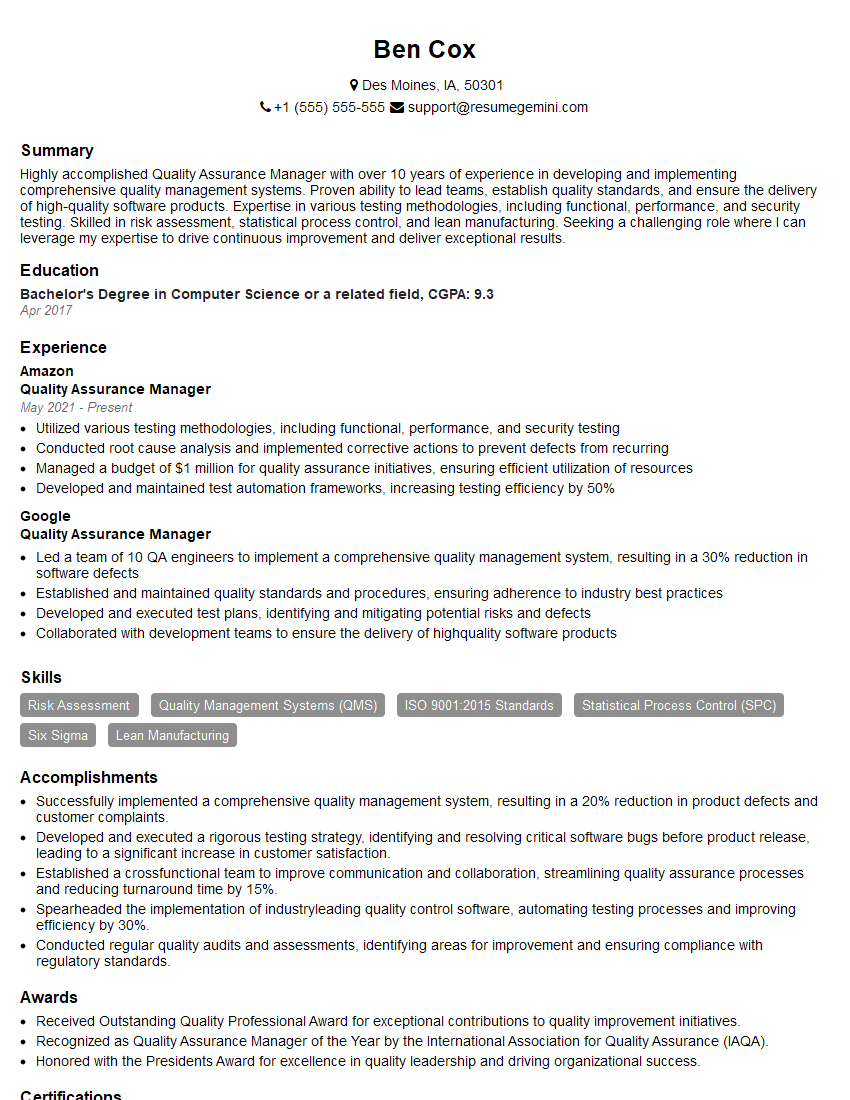
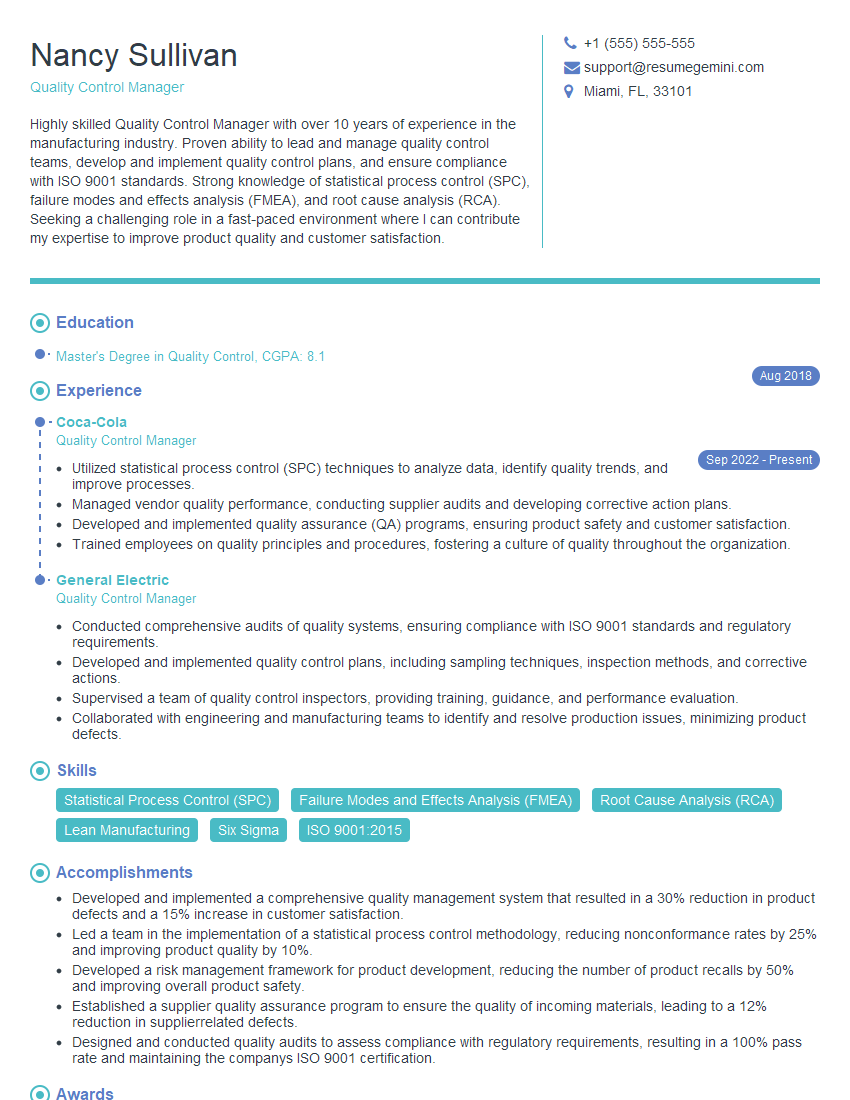
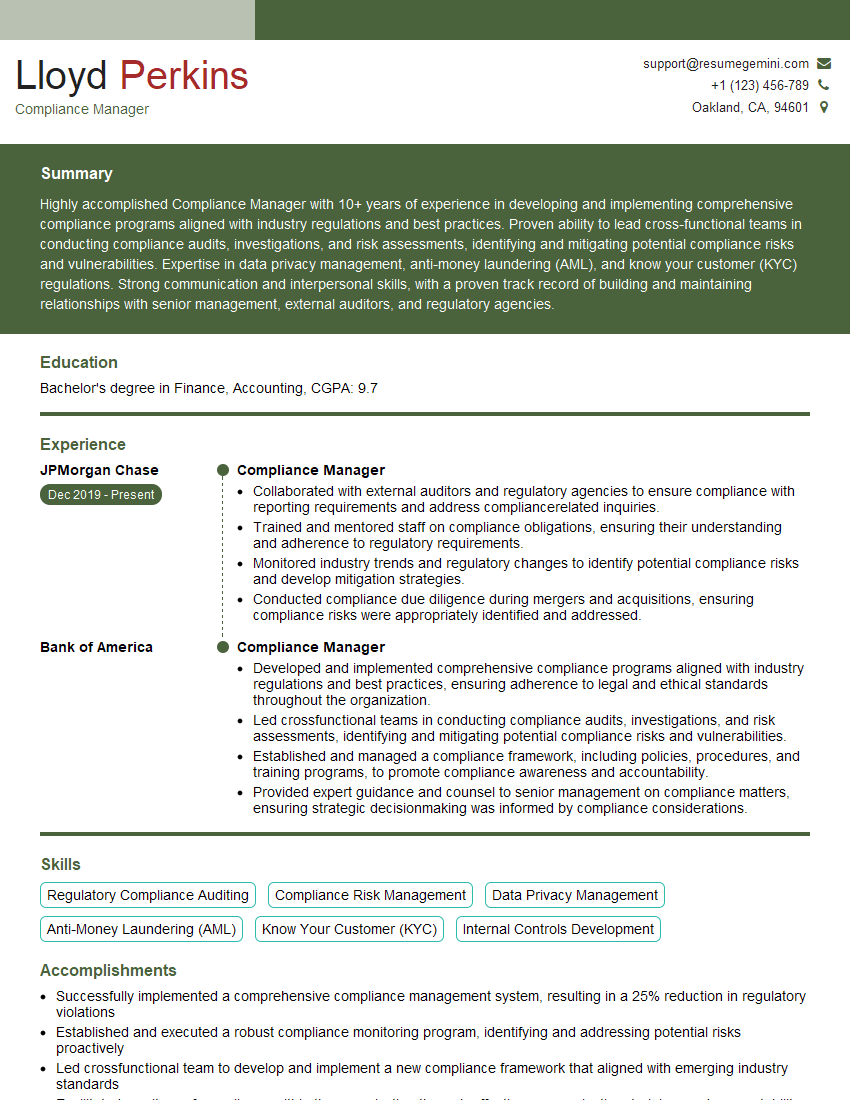
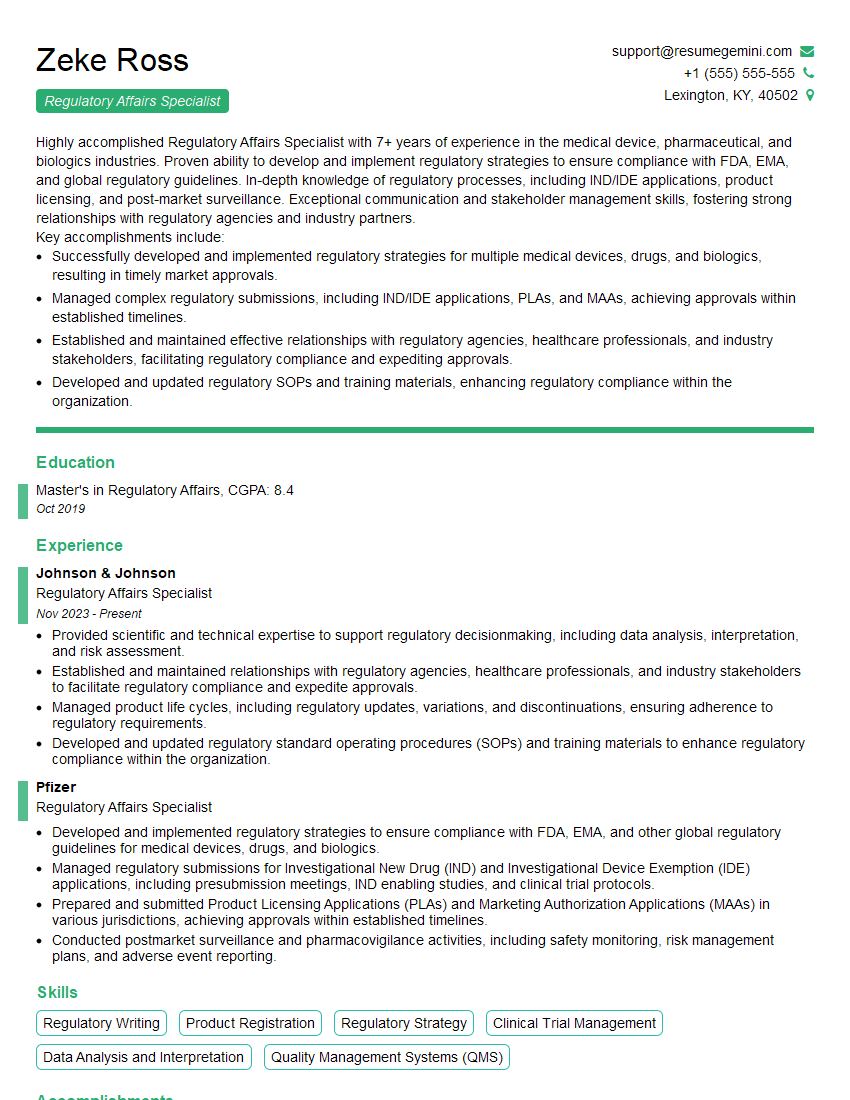
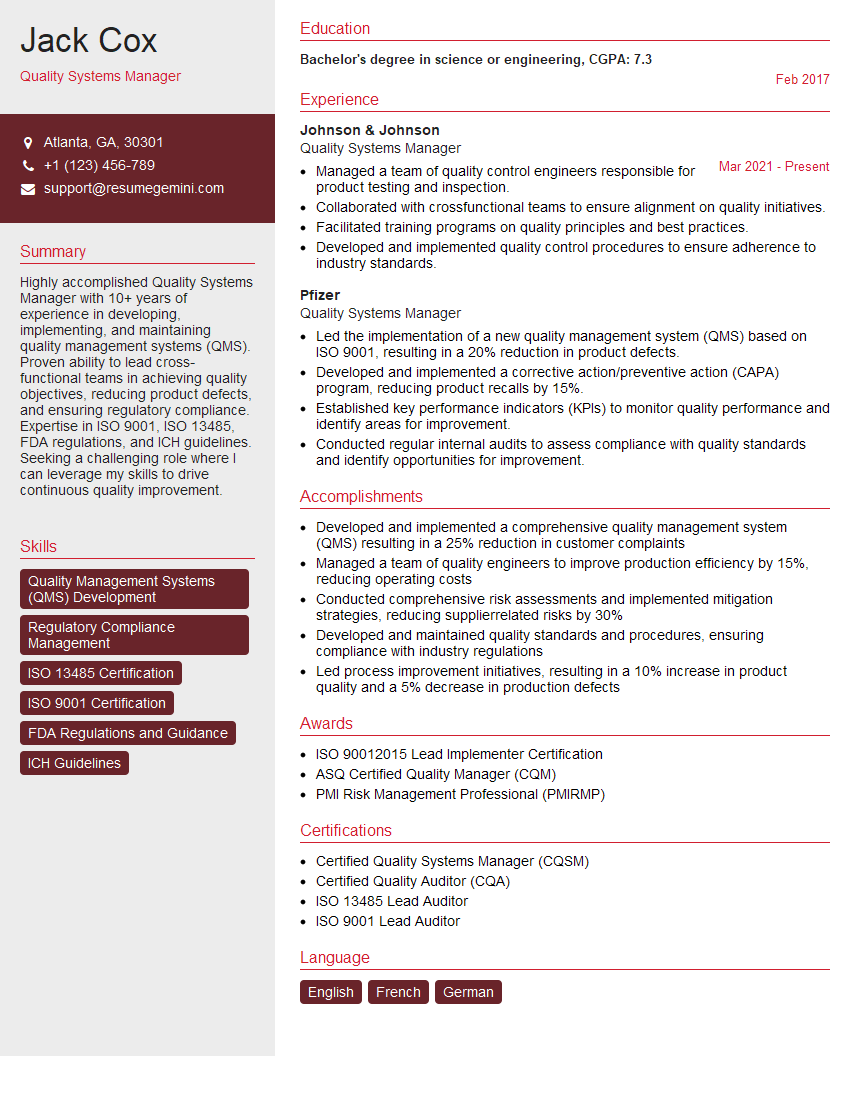
Mastering the Certified HACCP Auditor principles significantly enhances your career prospects within the food industry, opening doors to leadership roles and higher earning potential. To maximize your job search success, create a compelling and ATS-friendly resume that showcases your skills and experience effectively. ResumeGemini is a trusted resource to help you build a professional resume that stands out. Examples of resumes tailored to Certified HACCP Auditor roles are provided to guide you in crafting your own.
Explore more articles
Users Rating of Our Blogs
Share Your Experience
We value your feedback! Please rate our content and share your thoughts (optional).
What Readers Say About Our Blog
Very informative content, great job.
good