Unlock your full potential by mastering the most common Changeup interview questions. This blog offers a deep dive into the critical topics, ensuring you’re not only prepared to answer but to excel. With these insights, you’ll approach your interview with clarity and confidence.
Questions Asked in Changeup Interview
Q 1. Explain the ADKAR model of change management.
The ADKAR model is a widely recognized framework for individual change management. It focuses on the five key steps individuals must go through to successfully adopt a change: Awareness (understanding the need for change), Desire (wanting to participate in and support the change), Knowledge (knowing how to change), Ability (having the skills and resources to change), and Reinforcement (continuing to support the change over the long term). Think of it like learning to ride a bike: you need to be aware of the bike, desire to learn to ride, know how to balance and pedal, be able to physically do it, and then reinforce your skill through practice.
Each stage requires specific actions and support. For instance, to foster awareness, you might use compelling communication to highlight the business need for change. To build desire, you might involve employees in the change process and clearly articulate the benefits for them. Knowledge is achieved through training and coaching. Ability is supported through providing the necessary tools and resources, while reinforcement involves ongoing communication, feedback, and recognition.
Q 2. Describe your experience with Kotter’s 8-step change model.
Kotter’s 8-step change model provides a comprehensive framework for leading organizational change. My experience with this model involves applying it in various projects, from implementing new CRM systems to restructuring teams. The model’s iterative nature ensures a structured approach, starting with establishing a sense of urgency and culminating in anchoring the changes in the organizational culture.
- Creating Urgency: I’ve successfully used data-driven presentations and compelling narratives to illustrate the need for change and build momentum.
- Building a Guiding Coalition: I’ve built teams of influential leaders with diverse skills and perspectives to ensure broad buy-in and support.
- Formulating a Strategic Vision and Initiatives: I’ve collaborated with stakeholders to create a clear vision, outlining goals and objectives.
- Enlisting a Volunteer Army: I’ve actively sought out and empowered individuals who are passionate about the change.
- Enabling Action by Removing Barriers: I’ve focused on identifying and removing obstacles, both structural and cultural.
- Generating Short-Term Wins: I’ve planned and celebrated early successes to maintain motivation and momentum.
- Sustaining Acceleration: I’ve ensured continuous progress by adapting the strategy based on feedback and results.
- Instituting Change: I’ve worked to integrate the changes into the organization’s culture and processes.
Q 3. How do you identify stakeholders impacted by a change initiative?
Identifying stakeholders is crucial for successful change management. My approach involves a multi-faceted strategy. First, I use a stakeholder mapping exercise to visually represent all individuals or groups who could be affected by the change. This involves brainstorming sessions, reviewing organizational charts, and interviewing key personnel. I categorize stakeholders based on their level of influence and interest (high/low), using a matrix to prioritize engagement strategies.
Secondly, I use impact assessment analysis to specifically evaluate the potential positive and negative impacts of the change on each identified stakeholder. This detailed evaluation helps tailor communication and mitigation strategies. For instance, a high-influence, high-interest stakeholder will require close collaboration and proactive communication. A low-influence, low-interest stakeholder may only need minimal updates.
Q 4. What strategies do you use to manage resistance to change?
Resistance to change is inevitable. My approach is proactive and collaborative, focusing on understanding the root causes of resistance. I employ several strategies:
- Open Communication: Transparent communication about the reasons for change, its benefits, and the process involved is paramount. Addressing concerns proactively reduces uncertainty and builds trust.
- Participation and Involvement: Actively involving stakeholders in the change process helps build ownership and reduce resistance. This could involve soliciting feedback, conducting workshops, or establishing working groups.
- Addressing Concerns: Listening actively and empathetically to concerns is critical. This involves providing opportunities for dialogue and addressing valid concerns through appropriate solutions.
- Negotiation and Compromise: Where possible, negotiating solutions that address stakeholder concerns is important. This may involve adjustments to the change plan or providing additional support.
- Leadership Support: Visible and consistent support from senior management is vital in overcoming resistance.
In one project, resistance stemmed from fear of job losses due to automation. By openly addressing these fears, offering retraining opportunities, and demonstrating that the change would lead to increased efficiency and new roles, I was able to successfully navigate the resistance.
Q 5. How do you measure the success of a change initiative?
Measuring the success of a change initiative requires a multi-faceted approach using both qualitative and quantitative data. Key performance indicators (KPIs) are established upfront, aligned with the project’s goals. These KPIs should be measurable and trackable.
- Quantitative Measures: These could include metrics such as improved efficiency, reduced costs, increased productivity, enhanced customer satisfaction scores, or higher employee engagement scores.
- Qualitative Measures: This involves gathering feedback through surveys, interviews, and focus groups to assess stakeholder perceptions and experiences of the change. This provides valuable insights into the overall impact and effectiveness of the initiative.
For example, when implementing a new software system, we tracked adoption rates, user satisfaction scores, and the reduction in processing time. We also conducted post-implementation surveys to gather qualitative feedback.
Q 6. Describe your experience with change communication planning and execution.
Effective change communication is critical. My approach involves a well-defined communication plan developed early in the change process. This plan identifies key messages, target audiences, and communication channels. It also outlines a timeline for communication, including pre-change, during-change, and post-change activities.
I utilize a variety of communication methods, including town hall meetings, emails, newsletters, intranet updates, and one-on-one conversations. The choice of method depends on the target audience and the message’s complexity. For example, complex technical changes might require more detailed training sessions, while simple announcements can be communicated effectively through email.
Consistent and timely communication is key to keeping stakeholders informed and engaged throughout the change process. I ensure feedback loops are built into the communication strategy to address concerns and maintain transparency.
Q 7. Explain your approach to risk management in change projects.
Risk management is a crucial aspect of change projects. My approach involves a systematic process starting with risk identification. This involves brainstorming sessions, reviewing historical data, and consulting with stakeholders to identify potential risks. I then analyze the likelihood and potential impact of each identified risk, prioritizing them based on their severity.
Next, I develop risk mitigation strategies for each identified risk. This might include contingency plans, risk transfer mechanisms (e.g., insurance), or risk avoidance strategies (e.g., changing the project plan). The chosen strategy depends on the nature of the risk and the resources available.
Throughout the project, I continuously monitor and evaluate risks, updating the risk register and adjusting mitigation plans as needed. Regular risk reviews ensure that emerging risks are identified and addressed promptly. Effective risk management minimizes negative impacts and enhances the project’s chance of success.
Q 8. How do you handle conflicting priorities during a change implementation?
Conflicting priorities are a common challenge in change management. Imagine trying to build a house – you need strong foundations, sturdy walls, and a reliable roof, all at the same time. Similarly, in a change initiative, you might have competing demands for resources, timelines, and stakeholder attention. To handle this effectively, I use a prioritization framework that combines urgency, impact, and feasibility. I’d start by clearly defining all priorities, then use a matrix (like a MoSCoW method – Must have, Should have, Could have, Won’t have) to categorize them based on their relative importance to the overall change goals. This enables informed decision-making, allowing for the delegation or postponement of less critical tasks to ensure focus on the most impactful elements first. Open communication with all stakeholders is crucial throughout this process, ensuring transparency and preventing misunderstandings. For example, if a project requires a new software but the budget is tight, I would work to find creative solutions like negotiating with vendors or exploring alternative cost-effective options instead of abandoning the entire project.
Q 9. What tools and techniques do you use to track change progress?
Tracking change progress requires a multi-faceted approach. I utilize a combination of tools and techniques to ensure visibility and accountability. Project management software, such as Jira or Asana, is essential for task management, progress tracking, and reporting. These platforms allow for real-time monitoring of individual tasks and milestones, facilitating proactive identification and mitigation of potential roadblocks. Regular status meetings, coupled with visual progress dashboards (e.g., Kanban boards or Gantt charts), provide a shared understanding of the project’s health. Beyond digital tools, I also leverage regular communication with stakeholders through emails, presentations and reports to keep them informed. Key performance indicators (KPIs) are meticulously chosen and monitored to quantify progress toward achieving pre-defined change objectives. For instance, in a change initiative to improve customer satisfaction, I might track metrics such as Net Promoter Score (NPS) and customer feedback responses, using them to regularly evaluate the success of implemented changes.
Q 10. How do you ensure change initiatives align with organizational strategy?
Aligning change initiatives with organizational strategy is paramount for successful implementation. Think of it like navigating with a map – the organizational strategy is the destination, and each change initiative should be a step on the path towards it. Before initiating any change, I ensure a thorough review of the organization’s strategic goals, objectives and priorities. I then perform a gap analysis to identify how the proposed change will contribute to bridging any gaps. This often involves extensive stakeholder engagement to understand their perspectives and ensure the change resonates with the overall organizational direction. Creating a documented connection between the initiative and the overall strategy, with clearly defined outcomes and measurable success criteria, ensures everyone is working towards the same goals. For example, if the company’s strategic goal is to increase market share by 15%, a change initiative focused on improving product quality or customer service would be directly aligned and contribute towards this goal, and that alignment would be clearly articulated in the change proposal.
Q 11. Describe your experience with change impact assessments.
Change impact assessments are crucial for understanding the potential consequences of a change initiative. This process involves systematically identifying and evaluating the effects of a change on various aspects of the organization. I use a structured approach, often starting with a stakeholder analysis to pinpoint those affected by the change. Then, I perform a detailed assessment that examines potential impacts on processes, technology, people, and the organization’s culture. This analysis might involve surveys, interviews, or workshops to gather data. Based on the assessment, I develop mitigation strategies to minimize negative impacts and leverage opportunities created by the change. For example, during a system upgrade, the impact assessment might reveal a potential decrease in productivity for the first week. This would prompt the creation of a training program to reduce this disruption and possibly identify ways to even improve productivity post-implementation. The key is to identify both the risks and the opportunities, preparing for the former and maximizing the latter.
Q 12. How do you build consensus and buy-in for change initiatives?
Building consensus and buy-in is essential for successful change. It’s about getting everyone on board, not just telling them what to do. I achieve this through a combination of strategies. Firstly, I actively involve stakeholders early and frequently in the change process. This could be through workshops, surveys, interviews, or informal discussions, ensuring their perspectives are considered. I focus on transparent communication, providing clear and consistent information about the change initiative, its purpose, its benefits, and the potential challenges. Addressing concerns promptly and honestly is also critical. Secondly, I emphasize the benefits of the change for individuals and the organization as a whole, articulating a compelling narrative that resonates with different stakeholder groups. Finally, I foster a culture of collaboration and shared responsibility. This approach is particularly important, creating a sense of ownership and increasing commitment among those involved in the change process. For example, establishing a steering committee with representatives from different departments promotes collective decision-making and increases buy-in.
Q 13. What’s your experience with different change management methodologies (Agile, Waterfall, etc.)?
My experience spans various change management methodologies, including Agile and Waterfall. Waterfall is a linear approach, well-suited for projects with clearly defined requirements and stable scope. It emphasizes thorough planning upfront and sequential execution. Agile, on the other hand, is iterative, embracing flexibility and adaptation. It is ideal for projects where requirements evolve and collaboration is key. I select the appropriate methodology based on the project’s characteristics. For example, a large-scale IT system implementation might benefit from a Waterfall approach due to its structured nature, while a project aimed at improving customer experience might use Agile principles to enable faster iterations and incorporate customer feedback continuously. My expertise lies in adapting and integrating elements from different methodologies to best suit the specific context of the change initiative. For instance, I might adopt Agile’s iterative approach for certain modules within a larger Waterfall project, maximizing the benefits of both methodologies.
Q 14. How do you prioritize change requests?
Prioritizing change requests requires a structured approach. I typically use a multi-criteria decision-making process. This involves identifying key criteria for prioritization, such as urgency, business value, feasibility, and risk. Each change request is then evaluated against these criteria, often using a weighted scoring system. This provides a quantifiable basis for ranking the requests. Stakeholder input is crucial here; a change request with high business value but low urgency might be given a lower priority compared to one with high urgency and moderate business value. Visualization tools, such as prioritization matrices, help to communicate the rationale and ensure transparency. For example, a request to fix a critical security vulnerability will likely take precedence over an enhancement request for a minor feature, even if the enhancement offers long-term benefits. This structured approach ensures that resources are allocated efficiently, focusing on the most impactful changes first.
Q 15. Describe a situation where a change initiative failed. What were the lessons learned?
One change initiative I witnessed fail involved the implementation of a new CRM system. The failure stemmed from a lack of thorough planning and insufficient employee buy-in. Management announced the change abruptly, providing minimal training and neglecting to address employees’ concerns about the system’s complexity and its impact on their daily workflows. This led to widespread resistance, decreased productivity, and ultimately, the project’s abandonment after significant investment.
The key lessons learned were the crucial need for:
- Thorough Needs Assessment: Understanding the existing challenges and ensuring the new system directly addresses them.
- Stakeholder Engagement: Involving employees from the outset, actively soliciting feedback, and addressing their concerns. This includes providing adequate training and support.
- Phased Rollout: Implementing the change gradually, starting with a pilot group to test and refine the system before wider deployment.
- Clear Communication: Maintaining transparent communication throughout the process, explaining the reasons for the change, its benefits, and the anticipated challenges.
- Strong Leadership Support: Visible and consistent leadership support is vital to demonstrate commitment and foster confidence among employees.
In short, neglecting the human element of change management is a recipe for disaster.
Career Expert Tips:
- Ace those interviews! Prepare effectively by reviewing the Top 50 Most Common Interview Questions on ResumeGemini.
- Navigate your job search with confidence! Explore a wide range of Career Tips on ResumeGemini. Learn about common challenges and recommendations to overcome them.
- Craft the perfect resume! Master the Art of Resume Writing with ResumeGemini’s guide. Showcase your unique qualifications and achievements effectively.
- Don’t miss out on holiday savings! Build your dream resume with ResumeGemini’s ATS optimized templates.
Q 16. How do you create a change management plan?
Creating a change management plan involves a structured approach. I typically follow these steps:
- Define the Need for Change: Clearly articulate the business problem the change is addressing and the desired outcomes. This establishes a clear purpose.
- Assess the Current State: Analyze existing processes, technologies, and employee behaviors to understand the starting point.
- Develop a Vision and Strategy: Create a compelling vision for the future state, outlining how the change will improve things. Develop a strategic roadmap outlining phases and timelines.
- Plan Communication and Engagement: Design a comprehensive communication plan to keep everyone informed and engaged. Outline methods for soliciting feedback and addressing concerns.
- Develop a Training and Support Plan: Ensure employees have the skills and resources they need to successfully adopt the changes. This includes hands-on training, documentation, and ongoing support.
- Establish a Measurement Framework: Define key performance indicators (KPIs) to track the progress and success of the change initiative.
- Manage Resistance: Anticipate and address potential resistance proactively. Identify key stakeholders who may resist change and develop strategies to win them over.
- Plan for Sustainability: Outline steps to ensure the changes are integrated into daily operations and become a permanent part of the organizational culture.
This detailed plan serves as a roadmap for the entire change process, helping to keep the initiative on track and mitigate potential problems.
Q 17. What are the key elements of a successful change management strategy?
A successful change management strategy rests on several key elements:
- Strong Leadership: Visible and consistent leadership support is crucial. Leaders need to champion the change and demonstrate their commitment.
- Clear Communication: Open and transparent communication is essential to keep employees informed, address concerns, and build buy-in.
- Employee Engagement: Involving employees throughout the process, actively seeking their input, and addressing their concerns fosters ownership and reduces resistance.
- Comprehensive Training and Support: Providing adequate training and ongoing support ensures employees have the skills and resources they need to adapt to the changes.
- Effective Change Management Methodology: Employing a structured framework like ADKAR (Awareness, Desire, Knowledge, Ability, Reinforcement) provides a systematic approach to managing change.
- Measurement and Monitoring: Tracking key metrics allows for adjustments and ensures the initiative stays on track.
- Risk Management: Identifying and mitigating potential risks helps prevent delays and failures.
These elements work in concert to create a robust strategy that increases the likelihood of successful change adoption.
Q 18. How do you involve employees in the change process?
Employee involvement is paramount for successful change. Here’s how to effectively engage them:
- Early and Frequent Communication: Share information openly and honestly, providing regular updates and opportunities for feedback.
- Active Listening and Feedback Mechanisms: Establish mechanisms for employees to share their thoughts and concerns, such as surveys, focus groups, and town hall meetings.
- Participatory Decision-Making: Involve employees in the decision-making process wherever possible, giving them a sense of ownership.
- Recognition and Rewards: Acknowledge and reward individuals and teams for their contributions to the change effort.
- Addressing Concerns and Resistance: Actively listen to concerns, address them empathetically, and provide support to those struggling with the change.
- Champions and Change Agents: Identify and train influential employees to become champions and advocate for the change within their teams.
Remember, treating employees as partners, not just recipients of change, fosters a more collaborative and successful transformation.
Q 19. What metrics do you use to track the adoption of a new process or technology?
Metrics for tracking change adoption depend on the specific initiative, but some common examples include:
- User Adoption Rate: The percentage of employees using the new process or technology.
- Process Efficiency: Improvements in speed, cost, or quality resulting from the new process.
- Employee Satisfaction: Employee feedback on the usability and effectiveness of the change.
- Error Rates: Reduction in errors or defects due to the change.
- Productivity Gains: Measurable improvements in output or efficiency.
- Customer Satisfaction: Improvements in customer satisfaction related to the change.
These metrics help quantify the impact of the change and provide valuable data for adjustments and future improvements.
Q 20. How do you handle unexpected challenges during a change implementation?
Unexpected challenges are inevitable during change implementation. My approach involves:
- Proactive Risk Assessment: Identifying potential challenges before they occur helps in developing contingency plans.
- Flexible Planning: A rigid plan is unlikely to survive unexpected twists. Flexibility allows for course correction.
- Communication and Transparency: Openly communicating challenges and the steps taken to address them maintains trust and reduces anxiety.
- Problem-Solving Teams: Assembling cross-functional teams to quickly analyze and solve problems promotes collective intelligence.
- Data-Driven Decision Making: Using metrics to understand the impact of challenges and guide decision making.
- Adaptability and Resilience: A willingness to adapt the plan as needed is crucial for navigating unforeseen circumstances.
The key is to remain calm, assess the situation objectively, and develop solutions collaboratively.
Q 21. How do you ensure sustainability of a change initiative after implementation?
Ensuring sustainability requires embedding the change into the organizational culture. This involves:
- Integration into Processes and Systems: The new process or technology should be seamlessly integrated into daily operations.
- Ongoing Training and Support: Continued training and support help employees maintain proficiency and address any emerging issues.
- Performance Management: Incorporating the new process or technology into performance goals and evaluations reinforces its importance.
- Continuous Improvement: Establishing mechanisms for ongoing feedback and improvement ensures the change remains relevant and effective.
- Leadership Reinforcement: Consistent leadership support and reinforcement helps to sustain the momentum and prevent backsliding.
- Celebrating Successes: Acknowledging and celebrating successes keeps morale high and reinforces the value of the change.
Sustainability is not a one-time event; it’s an ongoing commitment to maintaining the gains achieved through the change initiative.
Q 22. What is your experience with change control boards?
Change Control Boards (CCBs) are crucial for managing changes within projects, especially in regulated industries. My experience involves actively participating in numerous CCBs across various projects, from small-scale software updates to large-scale infrastructure overhauls. I’ve served in different capacities – as a presenter proposing changes, as a reviewer assessing the impact and feasibility of proposed changes, and as a chair guiding the discussion and decision-making process.
My role typically includes preparing comprehensive change requests, documenting risks and mitigations, and presenting a cost-benefit analysis. I am proficient in navigating the often-complex dynamics of CCB meetings, ensuring all stakeholders have their voices heard and decisions are reached collaboratively and efficiently. For example, in a recent project involving a critical system update, I successfully navigated a potential conflict between the development team’s desire for rapid deployment and the operational team’s concern for stability by proposing a phased rollout plan that mitigated risks and met all stakeholders’ needs.
- Preparing and submitting well-structured change requests with clear justification.
- Assessing the impact of proposed changes on different aspects of the project.
- Facilitating collaborative decision-making among stakeholders with differing perspectives.
- Documenting and tracking all change requests and decisions.
Q 23. How do you use data to inform change decisions?
Data is the bedrock of informed change decisions. I leverage data analysis to understand the ‘why’ behind the need for change, to assess the impact of proposed changes, and to measure the success of implemented changes. This involves identifying relevant data sources, performing statistical analysis, and visualizing data to communicate findings effectively.
For instance, if a company is considering implementing a new CRM system, I would analyze existing data on customer interactions, sales performance, and marketing campaign effectiveness to assess the potential benefits of the new system. I’d also use data to estimate the cost of implementation and to project the return on investment. After implementation, I would track key metrics to monitor the success of the change and identify areas for improvement. This might involve analyzing user adoption rates, sales figures, customer satisfaction scores, or other relevant metrics, depending on the specific change initiative.
My data analysis skills extend to using various tools such as SQL, Excel, and data visualization software like Tableau to extract insights from raw data and transform them into actionable knowledge.
Q 24. Describe your experience with training and development related to change initiatives.
Training and development are essential components of successful change management. My experience encompasses designing, developing, and delivering training programs tailored to various audiences and change initiatives. I believe in a blended approach, combining online modules with instructor-led sessions and on-the-job coaching to maximize effectiveness.
For instance, during the implementation of a new project management methodology, I created a comprehensive training program that included online modules introducing the new concepts, followed by hands-on workshops where participants practiced applying the methodology in simulated scenarios. Post-training, I provided ongoing coaching and support to help participants integrate the new methodology into their daily work. I always incorporate feedback mechanisms to ensure the training effectively addresses participants’ needs and enhances their understanding and adoption of the change.
I also tailor training materials to different learning styles and technological proficiency levels, using a variety of methods, such as videos, interactive exercises, and case studies, to make learning engaging and effective.
Q 25. What is your experience with different change management software tools?
I have experience with several change management software tools, each with its strengths and weaknesses. My proficiency extends to tools like Jira (for tracking and managing change requests), ServiceNow (for IT service management and change management), and Microsoft Project (for project scheduling and tracking). I also have experience with more specialized change management platforms that provide features like risk assessment, communication management, and impact analysis.
The selection of the appropriate tool depends heavily on the organization’s specific needs and the scale of the change initiative. For example, a small-scale project might benefit from a simpler tool like a spreadsheet, while a large-scale enterprise-wide transformation would require a robust, integrated platform.
My expertise lies not just in using these tools, but also in configuring and customizing them to meet specific project requirements. I understand how to leverage the reporting and analytical capabilities of these tools to track progress, identify potential roadblocks, and measure the overall success of the change initiative.
Q 26. How do you facilitate effective change workshops and meetings?
Facilitating effective change workshops and meetings requires a structured approach that combines strong communication, active listening, and skillful conflict resolution. I start by clearly defining the objectives of the meeting and setting the agenda beforehand. This ensures everyone is on the same page and the meeting stays focused. During the meeting, I encourage active participation from all attendees, using various techniques like brainstorming, group discussions, and role-playing to ensure engagement.
I also utilize visual aids, such as whiteboards or presentation software, to illustrate key concepts and make information more accessible. I actively manage time and ensure that all key decisions are documented and action items are clearly assigned. After the meeting, I promptly circulate the minutes and follow up on assigned action items to ensure accountability and progress.
For example, in a recent workshop aimed at addressing resistance to a new process, I used a collaborative approach, involving participants in redesigning aspects of the process to build ownership and buy-in. The outcome was a significantly improved process and a greatly reduced level of resistance.
Q 27. How do you tailor your change management approach to different organizational cultures?
Organizational culture significantly impacts the effectiveness of change management. My approach is highly adaptable, recognizing that a one-size-fits-all strategy rarely succeeds. I carefully analyze the organizational culture before developing a change management plan, identifying key stakeholders, understanding communication styles, and assessing the level of risk tolerance.
For instance, in a highly hierarchical organization, I would leverage formal communication channels and top-down leadership to drive change. In a more flat, collaborative organization, I would foster a participatory approach, involving employees in the change process from the outset. In cultures valuing innovation, I would emphasize the benefits of the change and encourage experimentation. In cultures prioritizing stability, I would focus on risk mitigation and gradual implementation.
My ability to adapt is crucial for success. I constantly monitor the response to the change and adjust my approach as needed, ensuring the change is implemented effectively and sustainably within the existing organizational context.
Q 28. Describe your experience with developing a change communication plan.
A well-defined change communication plan is critical to ensuring the success of any change initiative. My experience involves developing comprehensive communication plans that outline the key messages, target audiences, communication channels, and timelines for delivering information.
I start by identifying all relevant stakeholders and segmenting them based on their roles, levels of influence, and information needs. Then I craft key messages that are clear, concise, and tailored to each audience, using language they understand and addressing their specific concerns. I select appropriate communication channels – emails, intranet posts, town hall meetings, individual conversations – depending on the message and the audience.
For example, during a recent organizational restructuring, I developed a communication plan that included a series of town hall meetings for all employees, targeted emails for specific departments, and regular updates on the intranet. This multi-channel approach ensured that all employees received timely and relevant information, reducing uncertainty and fostering buy-in.
Finally, I always incorporate feedback mechanisms into the communication plan to gauge audience understanding and address any concerns.
Key Topics to Learn for Changeup Interview
- Change Management Methodologies: Understand the core principles of various change management frameworks and their practical applications in different organizational contexts. Consider the pros and cons of each approach.
- Stakeholder Analysis & Management: Learn how to identify key stakeholders, assess their influence and interests, and develop strategies for effective communication and engagement throughout the change process. Practice analyzing complex stakeholder relationships.
- Risk Assessment & Mitigation: Develop skills in identifying potential risks associated with organizational change, analyzing their impact, and devising mitigation strategies. Practice building and presenting risk registers.
- Communication & Engagement Strategies: Explore different communication channels and techniques for effectively conveying change initiatives to diverse audiences. Consider how to address resistance to change proactively.
- Change Measurement & Evaluation: Understand the importance of establishing key performance indicators (KPIs) to track progress and measure the success of change initiatives. Learn how to interpret data and adapt strategies based on results.
- Leadership & Sponsorship: Explore the crucial role of leadership in driving successful change. Understand how to secure and maintain executive sponsorship.
- Resistance to Change & Management: Learn to identify and address the root causes of resistance to change, developing strategies for effective conflict resolution and persuasion.
- Technology’s Role in Change Management: Explore how technology can facilitate and support change initiatives, including project management software and communication tools.
Next Steps
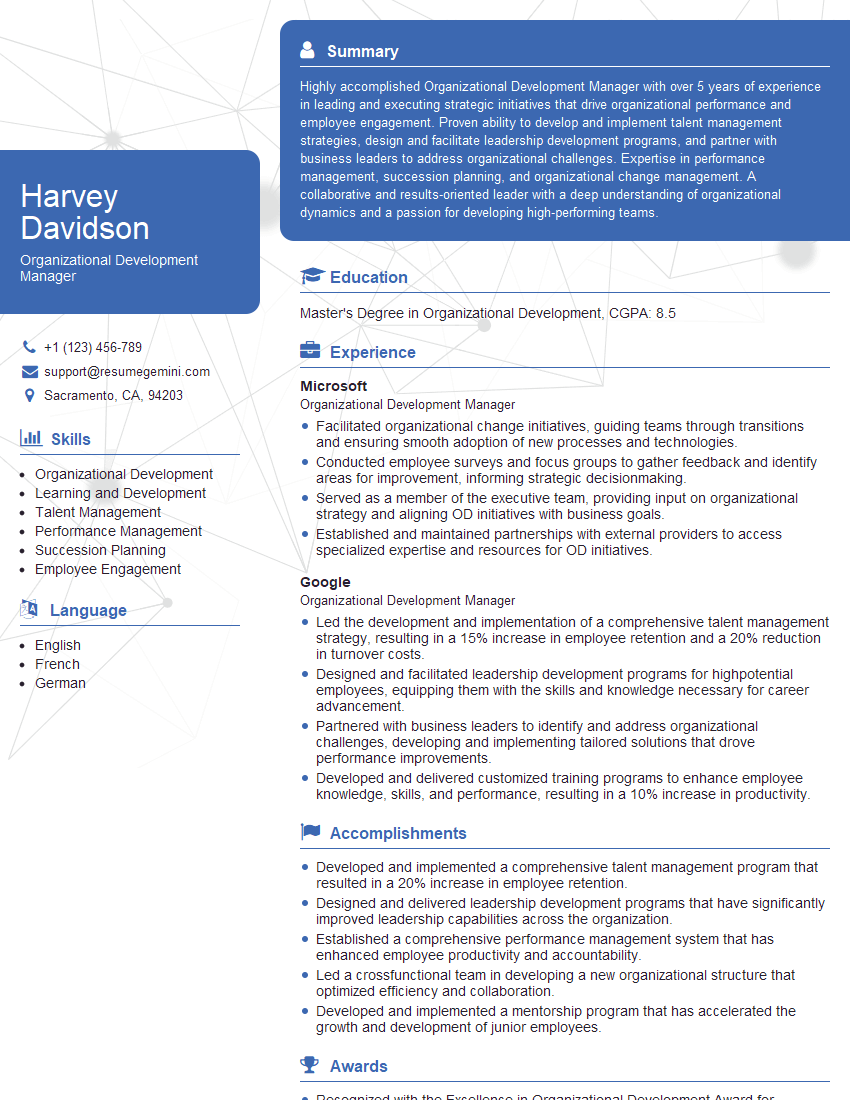
Mastering Changeup principles is crucial for career advancement in today’s dynamic business environment. Demonstrating a strong understanding of change management significantly enhances your value to potential employers. To increase your chances of landing your dream role, focus on crafting an ATS-friendly resume that effectively highlights your relevant skills and experience. We strongly recommend using ResumeGemini, a trusted resource for building professional and impactful resumes. Examples of resumes tailored to highlight Changeup expertise are available below to help guide your resume creation.
Explore more articles
Users Rating of Our Blogs
Share Your Experience
We value your feedback! Please rate our content and share your thoughts (optional).
What Readers Say About Our Blog
Attention music lovers!
Wow, All the best Sax Summer music !!!
Spotify: https://open.spotify.com/artist/6ShcdIT7rPVVaFEpgZQbUk
Apple Music: https://music.apple.com/fr/artist/jimmy-sax-black/1530501936
YouTube: https://music.youtube.com/browse/VLOLAK5uy_noClmC7abM6YpZsnySxRqt3LoalPf88No
Other Platforms and Free Downloads : https://fanlink.tv/jimmysaxblack
on google : https://www.google.com/search?q=22+AND+22+AND+22
on ChatGPT : https://chat.openai.com?q=who20jlJimmy20Black20Sax20Producer
Get back into the groove with Jimmy sax Black
Best regards,
Jimmy sax Black
www.jimmysaxblack.com
Hi I am a troller at The aquatic interview center and I suddenly went so fast in Roblox and it was gone when I reset.
Hi,
Business owners spend hours every week worrying about their website—or avoiding it because it feels overwhelming.
We’d like to take that off your plate:
$69/month. Everything handled.
Our team will:
Design a custom website—or completely overhaul your current one
Take care of hosting as an option
Handle edits and improvements—up to 60 minutes of work included every month
No setup fees, no annual commitments. Just a site that makes a strong first impression.
Find out if it’s right for you:
https://websolutionsgenius.com/awardwinningwebsites
Hello,
we currently offer a complimentary backlink and URL indexing test for search engine optimization professionals.
You can get complimentary indexing credits to test how link discovery works in practice.
No credit card is required and there is no recurring fee.
You can find details here:
https://wikipedia-backlinks.com/indexing/
Regards
NICE RESPONSE TO Q & A
hi
The aim of this message is regarding an unclaimed deposit of a deceased nationale that bears the same name as you. You are not relate to him as there are millions of people answering the names across around the world. But i will use my position to influence the release of the deposit to you for our mutual benefit.
Respond for full details and how to claim the deposit. This is 100% risk free. Send hello to my email id: [email protected]
Luka Chachibaialuka
Hey interviewgemini.com, just wanted to follow up on my last email.
We just launched Call the Monster, an parenting app that lets you summon friendly ‘monsters’ kids actually listen to.
We’re also running a giveaway for everyone who downloads the app. Since it’s brand new, there aren’t many users yet, which means you’ve got a much better chance of winning some great prizes.
You can check it out here: https://bit.ly/callamonsterapp
Or follow us on Instagram: https://www.instagram.com/callamonsterapp
Thanks,
Ryan
CEO – Call the Monster App
Hey interviewgemini.com, I saw your website and love your approach.
I just want this to look like spam email, but want to share something important to you. We just launched Call the Monster, a parenting app that lets you summon friendly ‘monsters’ kids actually listen to.
Parents are loving it for calming chaos before bedtime. Thought you might want to try it: https://bit.ly/callamonsterapp or just follow our fun monster lore on Instagram: https://www.instagram.com/callamonsterapp
Thanks,
Ryan
CEO – Call A Monster APP
To the interviewgemini.com Owner.
Dear interviewgemini.com Webmaster!
Hi interviewgemini.com Webmaster!
Dear interviewgemini.com Webmaster!
excellent
Hello,
We found issues with your domain’s email setup that may be sending your messages to spam or blocking them completely. InboxShield Mini shows you how to fix it in minutes — no tech skills required.
Scan your domain now for details: https://inboxshield-mini.com/
— Adam @ InboxShield Mini
Reply STOP to unsubscribe
Hi, are you owner of interviewgemini.com? What if I told you I could help you find extra time in your schedule, reconnect with leads you didn’t even realize you missed, and bring in more “I want to work with you” conversations, without increasing your ad spend or hiring a full-time employee?
All with a flexible, budget-friendly service that could easily pay for itself. Sounds good?
Would it be nice to jump on a quick 10-minute call so I can show you exactly how we make this work?
Best,
Hapei
Marketing Director
Hey, I know you’re the owner of interviewgemini.com. I’ll be quick.
Fundraising for your business is tough and time-consuming. We make it easier by guaranteeing two private investor meetings each month, for six months. No demos, no pitch events – just direct introductions to active investors matched to your startup.
If youR17;re raising, this could help you build real momentum. Want me to send more info?
Hi, I represent an SEO company that specialises in getting you AI citations and higher rankings on Google. I’d like to offer you a 100% free SEO audit for your website. Would you be interested?
Hi, I represent an SEO company that specialises in getting you AI citations and higher rankings on Google. I’d like to offer you a 100% free SEO audit for your website. Would you be interested?