Preparation is the key to success in any interview. In this post, we’ll explore crucial Prosthetics Design interview questions and equip you with strategies to craft impactful answers. Whether you’re a beginner or a pro, these tips will elevate your preparation.
Questions Asked in Prosthetics Design Interview
Q 1. Explain the difference between a myoelectric and body-powered prosthesis.
The key difference between myoelectric and body-powered prostheses lies in how they are controlled. A body-powered prosthesis uses the body’s own movements to operate. Think of it like a harness system; the user’s remaining limb muscles and shoulder movements activate cables and levers that control the prosthetic hand or hook. For example, a transradial amputee might flex their shoulder to open a body-powered hook. This type of prosthesis is often simpler and less expensive, but requires more strength and coordination.
In contrast, a myoelectric prosthesis uses electromyography (EMG) sensors to detect electrical signals produced by muscles. These signals, generated when a user attempts to contract a muscle, are then interpreted by a computer and translated into movement in the prosthetic device. Imagine it like a sophisticated translator: your muscle signals are the input, and the prosthetic’s motion is the output. This type allows for more intricate and natural-looking movements, as it responds directly to the user’s intended action; however, it’s more complex and often more expensive, requiring careful fitting and training for optimal control.
Q 2. Describe the process of socket fabrication for a transtibial amputation.
Socket fabrication for a transtibial (below-knee) amputation is a meticulous process crucial for prosthetic success. It starts with a thorough assessment of the residual limb, including its shape, length, and muscle bulk. This informs the choice of socket design (e.g., patellar-tendon bearing, total-surface bearing). Then, a negative model is created, typically using a plaster or silicone bandage directly molded to the residual limb. This mold acts as the blueprint for the socket.
The next step involves creating a positive model from the negative model, often using a cast resin. This allows for adjustments and refinements. Then, the actual socket is fabricated from chosen materials (e.g., carbon fiber, polyethylene). This process may involve several iterations to achieve an accurate fit and comfortable pressure distribution. The final socket is carefully checked for pressure points and optimal alignment, using techniques such as pressure mapping to ensure it supports the limb effectively without causing discomfort or skin breakdown.
For example, during the fitting process, we may use various techniques to ensure proper alignment and pressure distribution throughout the socket. This ensures the prosthesis fits snugly yet comfortably and doesn’t restrict blood flow.
Q 3. What are the common materials used in prosthetic construction, and what are their advantages and disadvantages?
Prosthetic construction uses a variety of materials, each with its own advantages and disadvantages. Common materials include:
- Polypropylene: Durable, lightweight, relatively inexpensive, and easy to shape and modify. However, it can be less comfortable over prolonged use than some other options.
- Carbon fiber: Extremely strong and lightweight, providing excellent durability and cosmetic appeal, although it’s more expensive than polypropylene.
- Polyethylene: Offers good impact resistance and shock absorption, making it useful in socket construction, but is relatively heavier than other options.
- Silicone: Used for liners and cosmetic covers due to its flexibility and comfort against the skin. However, it’s not as durable as other materials.
- Titanium and other metals: Used in components requiring high strength and durability, like joint mechanisms, but they can be heavier than composites.
Material selection depends on factors such as the level of amputation, the patient’s activity level, and their budget. For instance, an active individual might benefit from a carbon fiber socket for its lightweight strength, whereas a less active person might find a polypropylene socket sufficient.
Q 4. How do you assess the fit and function of a prosthesis?
Assessing the fit and function of a prosthesis involves a multi-faceted approach. Fit is evaluated through visual inspection, palpation (feeling for pressure points), and measurement. We look for signs of pressure sores, skin breakdown, or areas of excessive tightness or looseness. Pressure mapping systems can provide quantitative data on pressure distribution within the socket. A poorly fitting socket can lead to discomfort, skin irritation, and even limb-volume changes.
Function is assessed by observing the patient’s ability to perform activities of daily living (ADLs) with the prosthesis. We evaluate gait patterns, ease of donning and doffing, control of the terminal device (hand or hook), and overall comfort. Objective measures might include gait analysis using motion capture technology, strength testing, and questionnaires assessing the patient’s satisfaction and ability to perform specific tasks.
For instance, we might assess gait smoothness and symmetry, look for signs of excessive effort, and conduct functional tests (e.g., opening and closing jars, using cutlery) to fully evaluate prosthetic performance.
Q 5. Explain the different types of suspension systems used in prosthetic limbs.
Suspension systems secure the prosthesis to the residual limb, preventing slippage and ensuring stability. Several types exist:
- Suction suspension: This relies on creating a vacuum seal between the socket and the limb. It’s comfortable and provides good suspension, particularly for transtibial amputations, but requires careful limb preparation and a well-fitting socket. An insufficient seal can lead to slippage.
- Sleeve suspension: A stretchy liner is placed over the residual limb, creating a snug fit inside the socket. This system is generally more comfortable for individuals with sensitive skin or fluctuating limb volume.
- Pin suspension: A pin or pins attach the socket to a specialized liner or the residual limb itself. It provides a secure suspension but requires a precisely placed pin and can cause discomfort if poorly aligned.
- Belt suspension: A strap or belt wraps around the limb and is attached to the socket, providing additional security, often used in conjunction with other systems. This is commonly used with body-powered prostheses.
The choice of suspension system depends on individual needs and limb characteristics. For example, someone with significant limb volume changes might benefit from sleeve suspension, while an individual prioritizing a secure and stable fit might prefer pin suspension.
Q 6. What are the considerations for designing a prosthesis for a child versus an adult?
Designing a prosthesis for a child presents unique challenges compared to an adult. Children are still growing, requiring prostheses that can adapt to their changing body dimensions. Modular designs, allowing for easy adjustments and replacements as the child grows, are preferred. The prosthesis must also be lightweight and durable to withstand the rigors of active play. It should also be aesthetically pleasing to the child, incorporating features that encourage engagement and body image acceptance.
Adult prostheses prioritize functionality and optimal performance for specific activities. A more tailored approach to socket design and fitting is possible because their body shape has largely stabilized. However, for adults the focus is more likely on maximizing strength and durability to withstand day to day wear and tear.
For example, a child might require a prosthesis with adjustable components that can accommodate growth spurts, whereas an adult would need a prosthesis optimized for their specific activity level and lifestyle.
Q 7. How do you address skin breakdown and pressure sores associated with prosthetic use?
Skin breakdown and pressure sores are significant concerns in prosthetic use. Preventing them requires careful attention to socket fit, appropriate suspension, and diligent skin care. Regular inspection of the residual limb is essential to identify any signs of redness, irritation, or blistering. Properly fitting socks and liners can help manage moisture and friction. Using appropriate cushioning materials within the socket can reduce pressure on bony prominences. Pressure mapping can help pinpoint high-pressure areas.
If skin breakdown occurs, prompt treatment is crucial. This may involve cleaning the area, applying appropriate dressings, and adjusting the prosthesis to relieve pressure. In severe cases, medical intervention may be necessary. Patient education on proper hygiene, skin care, and limb care is paramount in preventing and managing skin complications.
For instance, we might utilize silicone liners with pressure-relieving inserts to minimize pressure on vulnerable areas and educate the patient on the importance of regular limb inspections and hygiene to proactively address any potential issues.
Q 8. Describe the process of taking measurements and creating a cast for a prosthetic.
Creating a prosthetic begins with meticulous measurement and casting of the residual limb. Think of it like creating a custom-fitted shoe – we need a perfect mold to ensure a comfortable and functional prosthetic.
Measurement: We use various tools, including calipers and tape measures, to obtain precise measurements of the limb’s length, circumference, and shape at multiple points. This ensures accurate representation of the limb’s contours. For example, we’ll measure the distal end (end furthest from the body) to determine the socket interface.
Casting Material Selection: We select the appropriate casting material based on the individual’s limb characteristics and the desired level of detail. Plaster of Paris is a common and cost-effective option, providing excellent detail. Other materials, like silicone, offer greater flexibility and may be preferred for sensitive skin.
Casting Procedure: The limb is carefully prepared, often with a stockinette to protect the skin and facilitate easy removal of the cast. Layers of casting material are applied, ensuring even distribution and eliminating air bubbles. A positive cast, mirroring the limb’s exact shape, is formed. We often use padding to account for soft tissue changes throughout the day.
Cast Modification: The cast might require minor adjustments for optimal fit and function, considering factors like pressure points and alignment. This involves careful sculpting or adding materials to the positive cast before the socket is fabricated.
Q 9. What are the ethical considerations involved in prosthetic care?
Ethical considerations in prosthetic care are paramount. We strive for the highest level of patient autonomy, ensuring informed consent at every stage. This includes fully explaining the process, the prosthetic’s limitations, and available alternatives.
Confidentiality: Protecting patient information is crucial, respecting their privacy and dignity throughout the process.
Equity and Access: Ensuring fair and equitable access to quality prosthetic care, regardless of socioeconomic background or location, is a critical ethical responsibility. We must advocate for policies that bridge this gap.
Beneficence and Non-maleficence: We must always act in the best interests of our patients, striving to maximize benefits while minimizing potential harm. Careful consideration of materials, design, and fitting are vital to avoid complications like skin breakdown or nerve irritation.
Informed Consent: Open communication and transparent discussions regarding potential risks and benefits, treatment options and realistic expectations, are essential to obtaining fully informed consent.
Q 10. Explain the role of different types of sensors in myoelectric prostheses.
Myoelectric prostheses use sensors to detect muscle activity, translating these signals into controlled prosthetic movement. Think of it as a sophisticated bridge between your nervous system and the artificial limb.
Electromyography (EMG) Sensors: These are the primary sensors, detecting the subtle electrical signals produced by muscle contractions. Multiple sensors are placed on the residual limb, each monitoring a specific muscle group. The signals from these sensors are then processed to control different functions of the prosthesis.
Force Sensors: Some advanced myoelectric prostheses incorporate force sensors within the hand or other components. These sensors provide feedback on the grip force, allowing for more delicate and precise movements. For example, this is crucial for tasks that require varying grip strength.
Position Sensors: These are used to track the position and orientation of the prosthetic components. This data is integrated with the EMG signals to provide more natural and coordinated movements, such as smoothly rotating the wrist.
Pressure Sensors: These sensors in the socket help monitor skin pressure distribution to identify and prevent potential discomfort or injury.
Q 11. How do you manage patient expectations regarding prosthetic function and limitations?
Managing patient expectations is a crucial aspect of prosthetic care. Realistic expectations lead to greater patient satisfaction and successful prosthetic use. We aim for open, honest conversations throughout the process.
Pre-operative Counseling: Before surgery or fitting, we thoroughly explain the capabilities and limitations of the specific prosthesis. We use videos, photos, and simulations to illustrate this. We will also discuss the rehabilitation process.
Setting Realistic Goals: We collaboratively set realistic, achievable goals with each patient, tailoring the rehabilitation program to their individual needs and abilities. We work toward functional goals that are meaningful to the patient’s life style.
Addressing Concerns: We provide a supportive environment where patients can openly express concerns, frustrations, or disappointments. We actively listen and collaboratively address issues that arise, focusing on problem-solving and adjustment.
Ongoing Support: Post-fitting, we offer ongoing support, regular follow-up appointments, and adjustments as needed. We encourage patients to ask questions and help them build confidence in their new limb.
Q 12. What are the different types of prosthetic feet and their applications?
Prosthetic feet are designed for various activity levels and needs. The choice depends on the patient’s lifestyle, activity level, and the level of ambulation required.
Single-Axis Feet: These are simple and cost-effective, providing basic ankle movement in one plane (dorsiflexion and plantarflexion). Suitable for low-activity individuals.
Multi-Axis Feet: These offer more natural movement, accommodating multiple planes of motion, providing better stability and adaptability to uneven terrain. Ideal for individuals with higher activity levels.
Energy-Storing Feet: These feet incorporate springs or other energy-storage mechanisms, providing greater energy return during gait, reducing the energy expenditure of the patient. Excellent for individuals requiring increased energy efficiency.
Dynamic Response Feet: These offer sophisticated adaptation to various walking conditions, providing enhanced stability and comfort. They are often preferred by active individuals.
Q 13. Discuss the impact of different socket designs on prosthetic comfort and function.
The socket is the interface between the prosthetic and the residual limb. Its design significantly impacts both comfort and function. A poorly designed socket can lead to pain, skin breakdown, and impaired prosthetic use.
Suspension Systems: The way the prosthetic is suspended plays a major role. Suction sockets rely on negative pressure; other systems use straps or liners to provide a secure fit. Each approach has implications for comfort and stability.
Socket Material: Materials like hard plastics or flexible materials influence the socket’s ability to accommodate limb volume changes and redistribute pressure. Flexible materials might be more comfortable for some, while rigid materials might provide superior support.
Socket Geometry: The shape and design of the socket are crucial for proper alignment and weight distribution. The alignment of the prosthetic components influences the gait pattern.
Socket Fit: A well-fitted socket should snugly accommodate the limb without excessive pressure or gaps. A proper fit prevents excessive movement or discomfort. Regular monitoring for pressure areas is critical.
Q 14. How do you address phantom limb pain in prosthetic patients?
Phantom limb pain (PLP) is a common and challenging issue for amputees. It’s a neurological phenomenon involving pain felt in the missing limb. Addressing this requires a multidisciplinary approach.
Pharmacological Interventions: Medications like anticonvulsants, antidepressants, and opioids may be prescribed to manage the pain. The selection and dosages depend on the severity and type of pain.
Physical Therapy: Techniques like desensitization, mirror therapy, and range-of-motion exercises can be highly effective in reducing PLP. This approach trains the nervous system to adapt.
Psychological Interventions: Therapy techniques including cognitive behavioral therapy (CBT) and mindfulness-based techniques can significantly reduce the emotional distress often associated with PLP, aiding in pain management.
Transcutaneous Electrical Nerve Stimulation (TENS): TENS units deliver electrical impulses to the nerves, which can provide pain relief. This method is less invasive than other pain management strategies.
Prosthetic Socket Adjustments: A well-fitting, comfortable socket can often alleviate pressure-related pain and contribute to overall relief.
Q 15. Describe the process of aligning and fitting a prosthetic limb.
Aligning and fitting a prosthetic limb is a meticulous process requiring expertise and precision. It involves several key steps, starting with a thorough assessment of the residual limb. This includes measuring the limb’s length, circumference, and shape, noting any bony prominences or areas of sensitivity. Then, a socket is created – a custom-made interface between the limb and the prosthesis. This socket is crucial for proper weight distribution and comfort. The socket’s fit is refined through a series of adjustments and fittings, often involving the use of various materials and techniques to achieve optimal comfort and function.
Next, the prosthetic components are attached to the socket. This might include a knee joint, ankle joint, foot, or a hand, depending on the type of limb. The alignment of these components is critical for proper gait and function. We use specialized tools and techniques to ensure the components are aligned correctly, allowing the patient to move naturally and efficiently. We often use gait analysis to help identify any misalignments or areas needing adjustments.
Finally, the prosthesis is fitted to the patient, ensuring optimal comfort and function. This involves assessing the patient’s ability to don and doff the prosthesis, as well as their ability to perform activities of daily living. Post-fitting, follow-up appointments are crucial to monitor for any issues and make necessary adjustments for optimal fit and function. For example, a patient might need adjustments to their socket as their residual limb volume changes over time due to edema or other factors.
Career Expert Tips:
- Ace those interviews! Prepare effectively by reviewing the Top 50 Most Common Interview Questions on ResumeGemini.
- Navigate your job search with confidence! Explore a wide range of Career Tips on ResumeGemini. Learn about common challenges and recommendations to overcome them.
- Craft the perfect resume! Master the Art of Resume Writing with ResumeGemini’s guide. Showcase your unique qualifications and achievements effectively.
- Don’t miss out on holiday savings! Build your dream resume with ResumeGemini’s ATS optimized templates.
Q 16. What are some common complications associated with prosthetic use, and how do you manage them?
Several complications can arise from prosthetic use. Socket-related issues are common, such as skin irritation, pressure sores, and poor fit. These can be managed through diligent skin care, socket modifications, and careful monitoring. Phantom limb pain (PLP), a persistent pain sensation in the missing limb, can be addressed with medication, physical therapy, and techniques like mirror therapy.
Mechanical issues with the prosthetic itself, such as component failure or loosening, require repair or replacement. Regular maintenance and scheduled check-ups are crucial in preventing these issues. Infection can be a significant complication, and meticulous hygiene practices are vital. We educate patients about appropriate hygiene and cleaning procedures to minimize the risk of infection. Other issues can include contractures (tightening of muscles and tendons), edema (swelling), and psychological challenges. Addressing these requires a multidisciplinary approach, involving prosthetists, physical therapists, psychologists, and other specialists.
Q 17. Explain the role of rehabilitation in prosthetic fitting and use.
Rehabilitation plays a vital role throughout the prosthetic journey. It begins before the prosthesis is even fitted. Pre-prosthetic rehabilitation focuses on preparing the residual limb for prosthetic use. This includes scar management, desensitization of the limb, and strengthening exercises to improve muscle function and range of motion. It’s like preparing the soil before planting a seed. Without proper groundwork, the prosthesis won’t function optimally.
Once the prosthesis is fitted, rehabilitation helps the patient learn to use it effectively. This involves gait training, strengthening exercises, and activities of daily living (ADL) training. Physical and occupational therapists work closely with the patient to develop their skills and improve their independence. They help the patient adapt to the prosthesis and regain their functional capabilities. For instance, a patient might initially require assistance with walking, but through rehabilitation, they would progressively regain their balance and confidence in ambulation.
Q 18. How do you assess patient suitability for different types of prostheses?
Assessing patient suitability for different types of prostheses involves a comprehensive evaluation. This includes assessing the patient’s physical condition, the level of limb loss, their activity level, and their overall health. For example, an active individual might benefit from a microprocessor-controlled knee, offering more sophisticated gait patterns than a simpler, mechanically controlled one. Someone with a higher level of limb loss may benefit from a more complex prosthesis that mimics the biomechanics of the natural limb.
We also evaluate the patient’s psychological factors, their motivation and commitment to rehabilitation, and their support system. A realistic assessment of the patient’s expectations is crucial. Certain medical conditions, like poor circulation or nerve damage, can impact the suitability of certain prosthesis designs. Discussions with the patient, their family, and other medical professionals are incorporated to ensure the prosthesis is a good fit for the individual and their unique circumstances. A collaborative approach provides the best outcomes.
Q 19. What are the latest advancements in prosthetic technology?
Recent advancements in prosthetic technology are remarkable. Myoelectric control allows for more intuitive and natural control of prostheses using muscle signals. Microprocessor-controlled knees adapt to changing terrain and gait patterns, providing a more natural walking experience. 3D printing is revolutionizing socket fabrication, allowing for customized designs and improved comfort. Targeted muscle reinnervation (TMR) reroutes nerves to provide improved control signals for prostheses.
Furthermore, advancements in materials science offer lighter, stronger, and more durable prostheses. Osseointegration, where the prosthesis is directly attached to the bone, provides a more stable and secure connection. The development of sensory feedback systems is pushing the boundaries of prosthetic technology, aiming to restore some level of sensory perception to the user, leading to improved control and functionality. These advancements are constantly evolving, leading to ever-improving outcomes and quality of life for amputees.
Q 20. Describe your experience with different types of prosthetic components (e.g., hands, knees, feet).
My experience spans a wide range of prosthetic components. I’ve worked extensively with body-powered prostheses, which rely on the user’s own strength to operate. While less sophisticated, they can be highly effective and provide a good option for certain individuals. I have also worked extensively with myoelectric hands and arms, offering a greater degree of dexterity and control. With myoelectric hands, you can see the benefits of advanced technology. The ability to finely control individual fingers opens new possibilities for the user. I’m also experienced with various knee and foot components, selecting the appropriate components based on the patient’s activity level and specific needs.
For instance, I’ve worked with patients who require specialized feet for increased stability, while others require energy-efficient feet for enhanced endurance. Each component selection needs careful consideration, and I tailor the combination to best meet the patient’s individual requirements and lifestyle. This personalized approach enhances their independence and improves their quality of life.
Q 21. Explain the importance of patient education in prosthetic care.
Patient education is paramount in prosthetic care. It’s not just about providing a prosthesis; it’s about empowering the patient to manage their care effectively. We educate patients on proper socket care, including cleaning and skin inspection. We provide guidance on donning and doffing the prosthesis, ensuring they understand how to use the device correctly and safely. Crucially, we teach patients about recognizing and managing potential complications, such as skin irritation or phantom limb pain.
We emphasize the importance of regular follow-up appointments and maintenance. We demonstrate exercises that contribute to strength, flexibility, and overall physical well-being. This involves creating a partnership with the patient. A well-informed patient is more likely to successfully adapt to prosthetic use and will understand the importance of self-care, preventing complications and maximizing the longevity and efficacy of their prosthesis. We provide ongoing support and resources to help them thrive in their new reality.
Q 22. How do you handle situations where a prosthesis doesn’t meet a patient’s expectations?
Addressing unmet patient expectations with a prosthesis requires a multi-faceted approach. It starts with thorough communication and realistic expectations setting during the initial consultation. I always emphasize that a prosthesis is a tool, and its effectiveness hinges on proper fitting, training, and the patient’s commitment to rehabilitation.
If a prosthesis falls short, I begin by carefully reviewing the initial assessment, design specifications, and the patient’s feedback. This often involves revisiting the socket fit, adjusting alignment, or modifying the control system. For instance, if a patient finds a socket too tight, causing discomfort and skin irritation, we may need to adjust the socket’s volume and pressure points using a combination of adjustments to the existing socket liner, or even a complete remake. Similarly, if the control system for a myoelectric hand isn’t providing adequate dexterity, we might need to re-map the sensor locations, tweak the control algorithms, or explore alternative control strategies.
Open and honest communication is crucial. I actively listen to the patient’s concerns, validate their feelings, and collaboratively explore potential solutions. Sometimes, a simple modification suffices; other times, a redesign or even a completely new prosthesis might be necessary. Ultimately, the goal is to achieve a functional and satisfying outcome that meets the patient’s needs and enhances their quality of life.
Q 23. Describe your experience with different types of prosthetic materials (e.g., silicone, carbon fiber).
My experience spans a wide range of prosthetic materials, each with unique properties impacting both functionality and aesthetics. Silicone, for example, excels in its soft, lifelike texture, making it ideal for cosmetic prostheses, particularly for facial or breast reconstruction. However, silicone’s durability is limited; it can tear or degrade over time, requiring more frequent maintenance and replacement. Its relatively high cost is another factor to consider.
Carbon fiber, on the other hand, is known for its exceptional strength-to-weight ratio. This makes it perfect for components requiring high durability and lightweight design, such as prosthetic limbs. It’s also relatively easy to shape and customize, allowing for intricate designs. However, carbon fiber can be brittle and susceptible to damage from impacts. I’ve also worked extensively with titanium alloys, renowned for their strength, biocompatibility, and resistance to corrosion – making them excellent choices for components subjected to significant stress or implanted directly into the bone.
The selection of materials depends critically on the specific application, patient needs, and activity levels. For instance, an active athlete might benefit from a carbon fiber limb, while a patient seeking primarily cosmetic restoration might prefer silicone.
Q 24. What software or CAD/CAM systems are you familiar with in prosthetic design?
Proficient use of CAD/CAM (Computer-Aided Design/Computer-Aided Manufacturing) software is indispensable in modern prosthetic design. My expertise includes several leading software packages, such as SolidWorks, Geomagic Freeform, and Autodesk Inventor. These programs enable me to create highly accurate three-dimensional models of prosthetic components, considering intricate anatomical details and individual patient measurements.
The CAD software allows me to design the prosthesis virtually, refining the design iteratively and simulating its performance under various conditions before fabrication. This reduces the need for costly and time-consuming physical prototypes. Furthermore, the CAD models can be directly transferred to CAM software, which controls the manufacturing process, often involving CNC (Computer Numerical Control) milling or 3D printing, ensuring precision and repeatability.
For example, in designing a socket for a transtibial prosthesis, I use CAD software to create a precise 3D model based on the patient’s residual limb scan. The software then guides the CNC machine to mill the socket from a suitable material, resulting in a custom-fit device.
Q 25. Explain the process of custom fabrication of a prosthetic component.
Custom fabrication of a prosthetic component is a meticulous process that blends artistry and engineering precision. It typically starts with a thorough assessment of the patient’s needs and residual limb characteristics. This involves taking detailed measurements, creating a 3D scan of the limb, and possibly performing range of motion assessments.
Next, I use CAD software to design the component, tailoring it to the patient’s unique anatomy and activity level. The design incorporates various factors like material selection, weight distribution, and points of articulation. Once the CAD model is finalized, it’s exported to CAM software which generates instructions for the chosen manufacturing process, such as 3D printing, CNC milling, or casting.
The manufacturing process involves precisely machining or printing the component from the chosen material. After fabrication, the component undergoes rigorous quality control checks to ensure it meets specifications and is free of defects. The final step involves fitting the component to the patient, performing adjustments as needed, and providing comprehensive training on prosthesis use and maintenance.
Q 26. How do you adapt prosthetic designs for specific patient needs and activity levels?
Adapting prosthetic designs for individual needs and activity levels is paramount to achieving successful functional outcomes. This involves careful consideration of numerous factors, including the patient’s age, occupation, lifestyle, and the level of dexterity or strength required.
For example, a young, active patient might require a lightweight, robust prosthesis capable of withstanding high impact forces, perhaps incorporating advanced materials like carbon fiber and specialized joints. In contrast, an elderly patient might prioritize comfort and ease of use, leading to a design that prioritizes simplicity and reduced weight. The design would also consider the patient’s existing strength and endurance capabilities.
Another crucial aspect is the incorporation of activity-specific features. A musician might require a prosthesis with exceptionally fine motor control in the fingers, while a construction worker might necessitate a design prioritizing strength and durability over delicate manipulation. Through careful assessment and customized design, we can optimize the prosthesis to meet the specific challenges and demands of the patient’s daily life.
Q 27. Describe your experience working with a multidisciplinary team in prosthetic care.
Collaboration is the cornerstone of effective prosthetic care. I regularly work with a multidisciplinary team, including physiatrists, occupational therapists, physical therapists, and prosthetists. This collaborative approach ensures holistic patient care, addressing both the physical and psychological aspects of limb loss.
The physiatrist provides medical guidance and manages any underlying medical conditions. Occupational therapists assist in adaptive training and developing strategies for daily living tasks. Physical therapists focus on strengthening and conditioning the residual limb and improving overall physical fitness. The prosthetist, including myself, is responsible for the design, fabrication, and fitting of the prosthesis.
Regular team meetings allow us to share information, coordinate care, and make informed decisions based on the patient’s progress. For instance, the physical therapist’s feedback on a patient’s strength and range of motion guides my design choices, ensuring the prosthesis’s functionality aligns with the patient’s capabilities. This collaborative approach leads to more effective, personalized care and ultimately better patient outcomes.
Q 28. What are your strategies for staying updated on the latest advances in the field of prosthetics?
Staying abreast of the latest advancements in prosthetics requires a proactive and multi-pronged approach. I actively participate in professional organizations like the American Academy of Orthopaedic Surgeons (AAOS) and the International Society for Prosthetics and Orthotics (ISPO), attending conferences and workshops to learn about new materials, technologies, and clinical practices.
Regularly reviewing peer-reviewed journals and research publications keeps me updated on cutting-edge research and clinical trials. I also maintain a professional network with colleagues, sharing experiences and discussing emerging trends. Online resources, such as professional society websites and specialized databases, are valuable sources of information.
Furthermore, I actively seek opportunities for continuing education and professional development through workshops and online courses offered by reputable institutions. This continuous learning ensures that I remain at the forefront of the field, providing my patients with the most advanced and effective care possible.
Key Topics to Learn for Prosthetics Design Interview
- Biomechanics of the Musculoskeletal System: Understanding joint kinematics, muscle forces, and lever systems is crucial for designing functional prosthetics.
- Materials Science in Prosthetics: Explore the properties of various materials (e.g., polymers, composites, metals) used in prosthetic construction and their suitability for different applications. Consider factors like strength, weight, durability, and biocompatibility.
- Prosthetic Socket Design and Fabrication: Learn about different socket designs (e.g., total surface bearing, patellar tendon bearing), fabrication techniques (e.g., CAD/CAM, traditional methods), and the importance of proper fit and alignment for comfort and function.
- Control Systems for Prostheses: Familiarize yourself with different control mechanisms (e.g., body-powered, myoelectric, externally powered) and their advantages and limitations. Understand the principles behind signal processing and pattern recognition in myoelectric prostheses.
- Gait Analysis and Biosignal Processing: Knowing how to interpret gait data and using biosignals (EMG, etc.) to control prostheses is vital for advanced designs.
- Patient Assessment and Rehabilitation: Understand the process of assessing patient needs, fitting prostheses, and providing post-fitting rehabilitation and support. This includes communication and empathy skills.
- Ethical Considerations and Regulatory Compliance: Be prepared to discuss ethical considerations related to prosthetic design and the regulatory landscape governing prosthetic devices.
- Advanced Prosthetic Technologies: Explore emerging technologies like osseointegration, targeted muscle reinnervation (TMR), and advanced sensor integration.
- Troubleshooting and Problem-Solving: Practice identifying and resolving common issues related to prosthetic design, fit, and function.
Next Steps
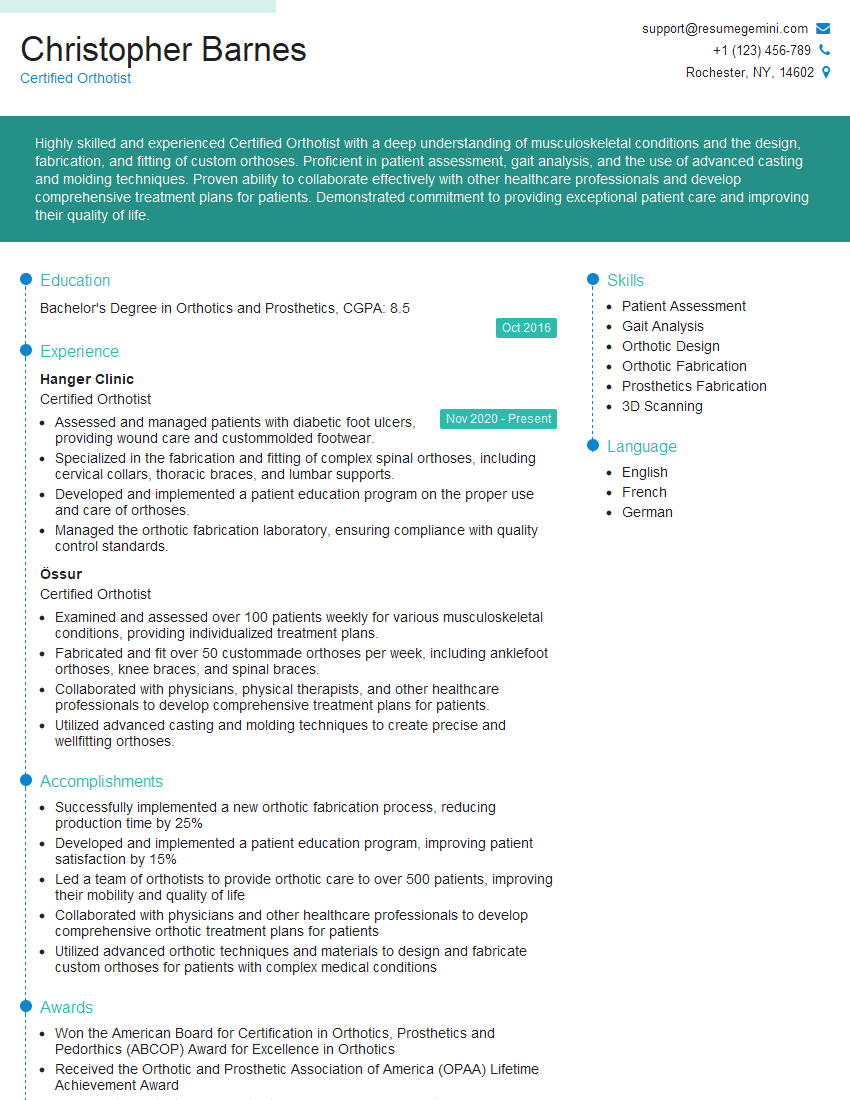
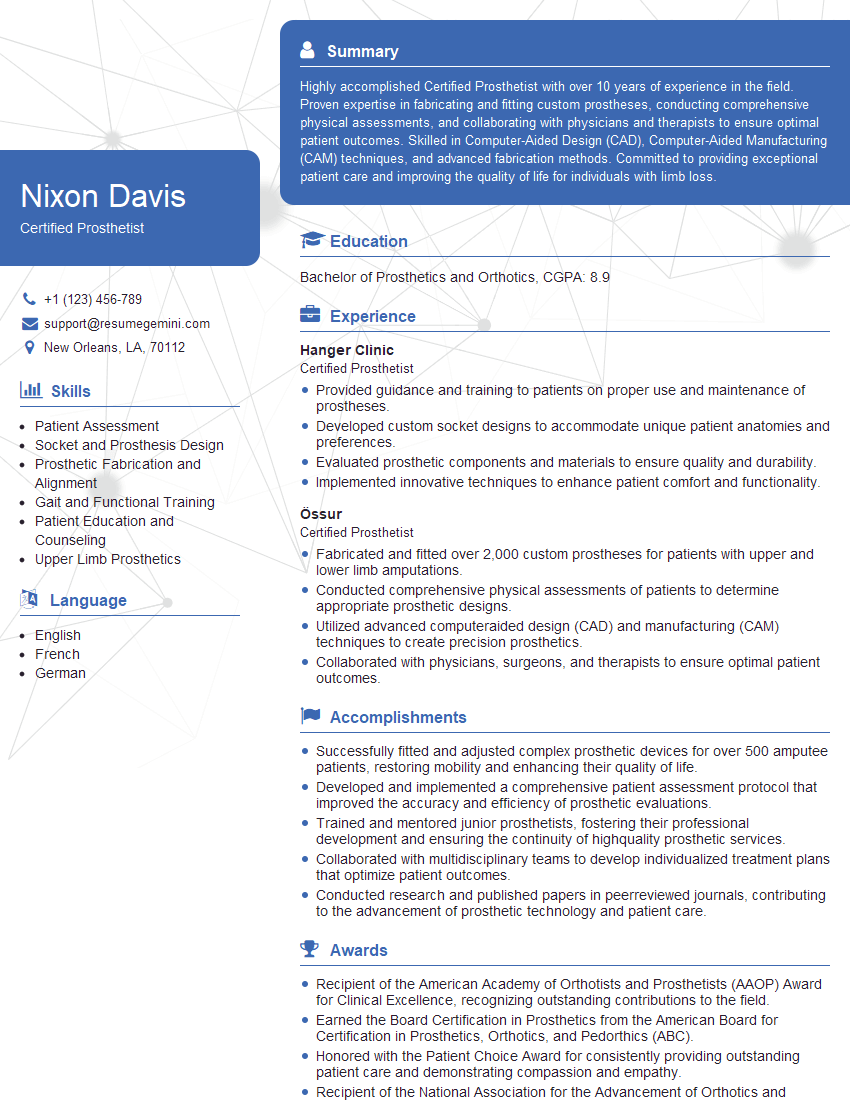
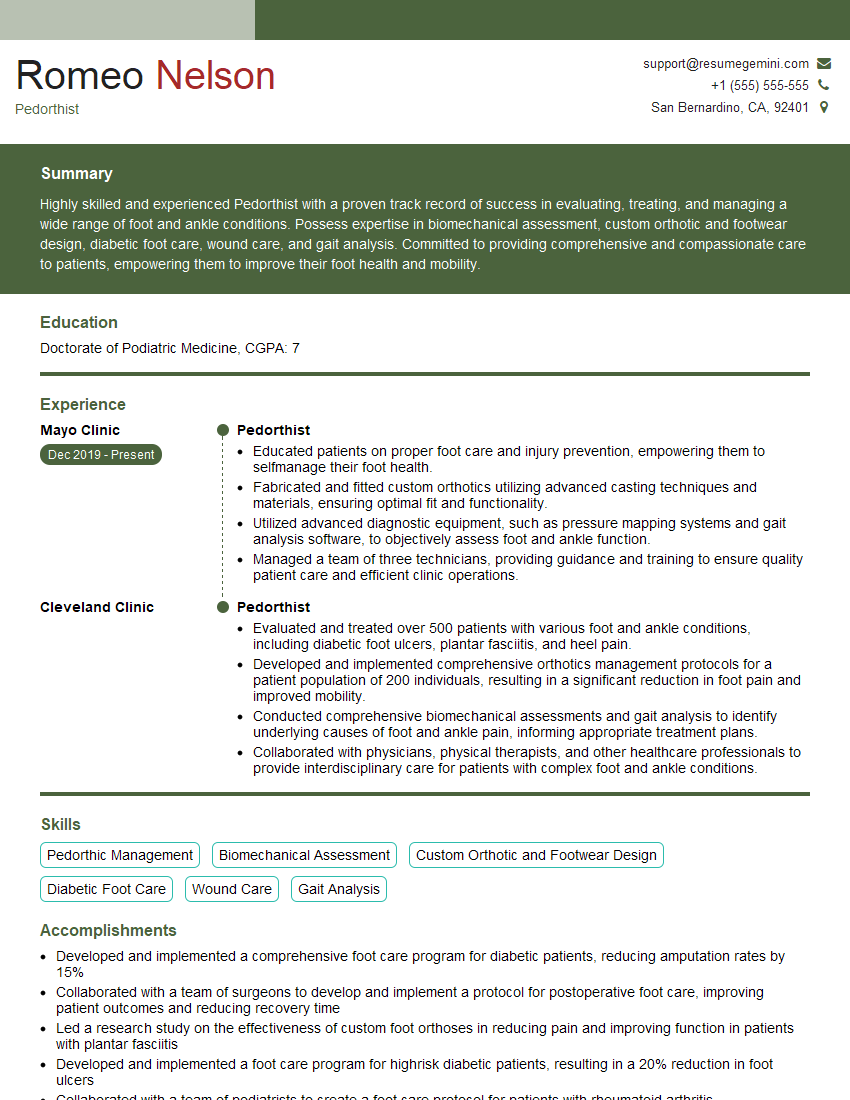
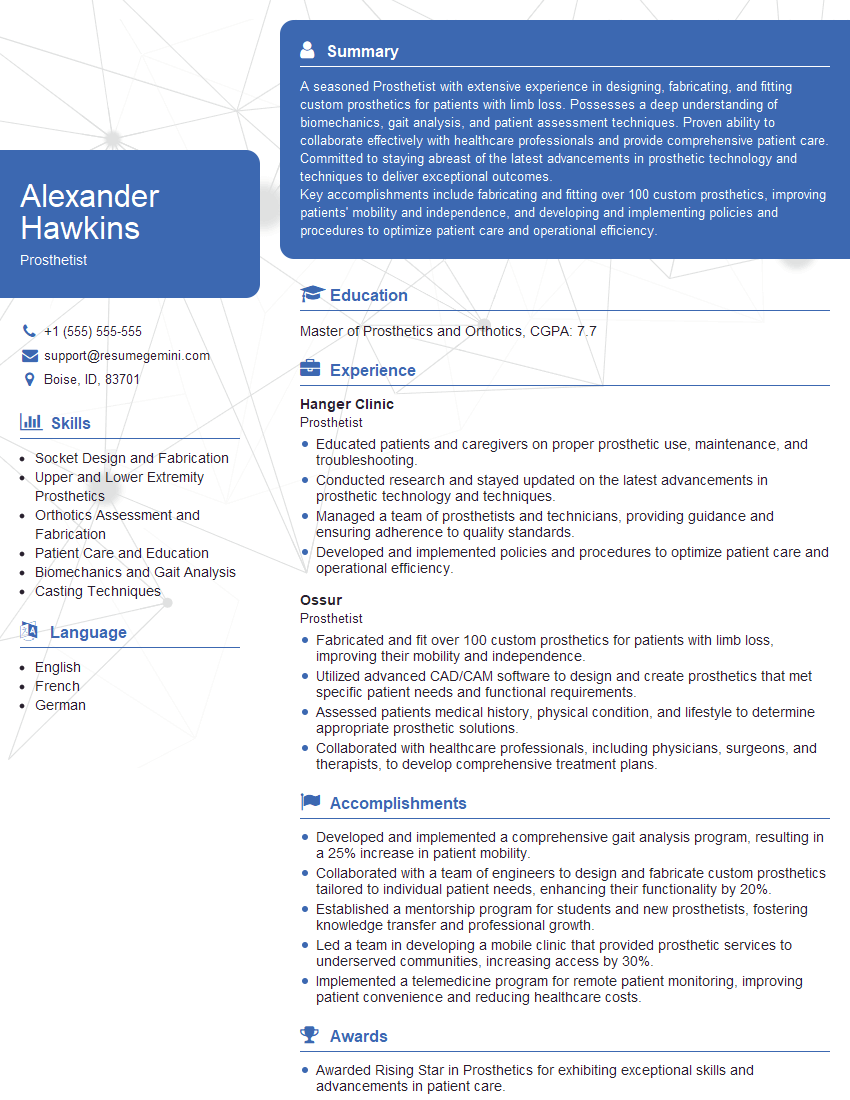
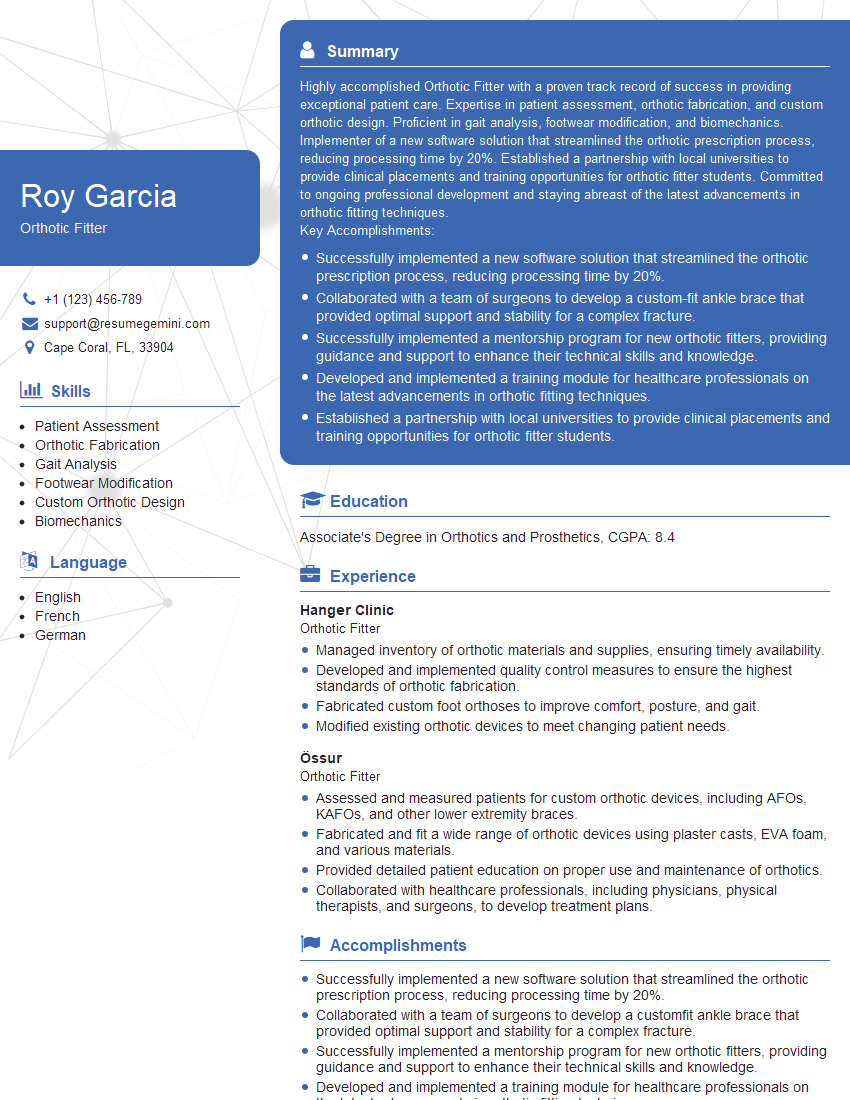
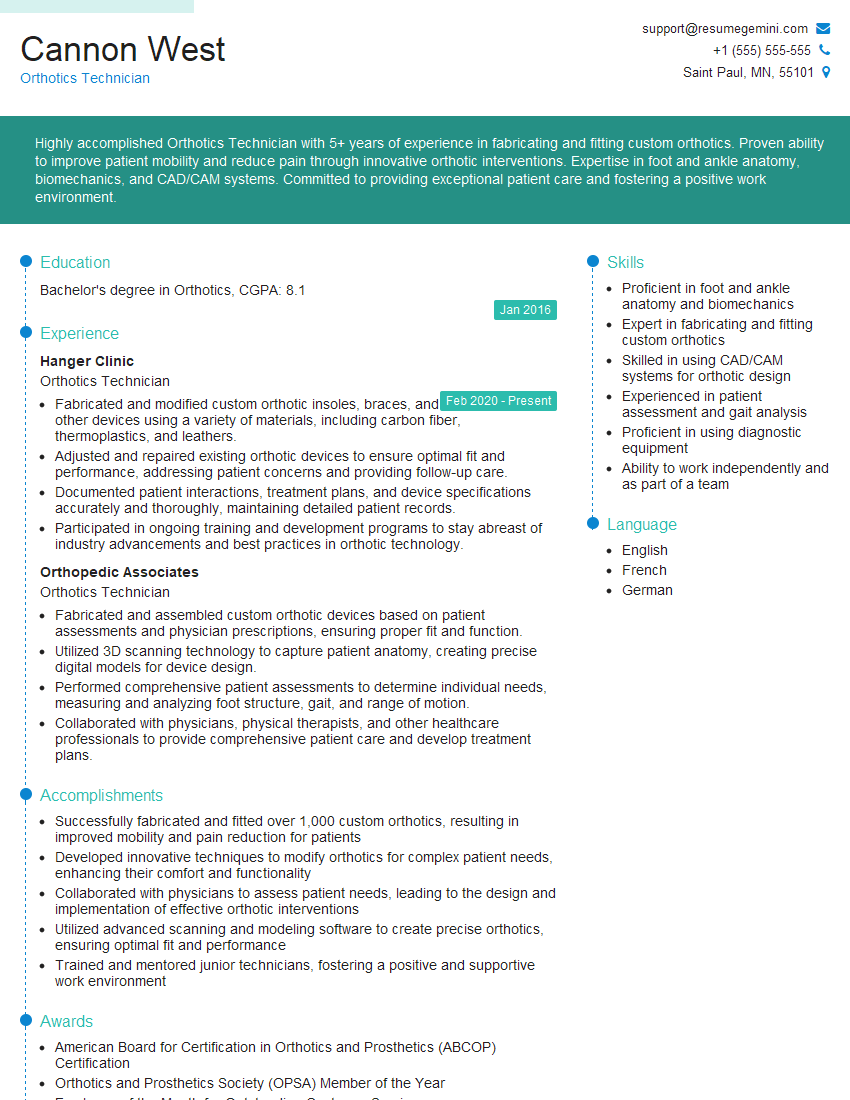
Mastering Prosthetics Design opens doors to a rewarding career impacting lives significantly. To maximize your job prospects, creating a strong, ATS-friendly resume is crucial. ResumeGemini is a trusted resource to help you build a professional and impactful resume that showcases your skills and experience effectively. We provide examples of resumes tailored to Prosthetics Design to help guide you. Take the next step towards your dream career today!

Explore more articles
Users Rating of Our Blogs
Share Your Experience
We value your feedback! Please rate our content and share your thoughts (optional).
What Readers Say About Our Blog
Very informative content, great job.
good