Unlock your full potential by mastering the most common Channel and Dike Maintenance interview questions. This blog offers a deep dive into the critical topics, ensuring you’re not only prepared to answer but to excel. With these insights, you’ll approach your interview with clarity and confidence.
Questions Asked in Channel and Dike Maintenance Interview
Q 1. Describe your experience with various dike construction materials and their suitability for different environments.
Dike construction material selection is crucial for long-term stability and depends heavily on the specific environmental conditions. Think of it like choosing the right foundation for a house – you wouldn’t use the same materials in a desert as you would in a swamp.
- Clay: A readily available and cost-effective material, particularly suitable for areas with low permeability and minimal seepage. However, it can be susceptible to erosion and requires careful compaction. I’ve worked on projects where we used compacted clay cores, reinforced with geotextiles, to create highly stable dikes in relatively dry climates.
- Sand: Offers good drainage, making it suitable for areas prone to high water tables. However, it’s more prone to erosion than clay and requires careful grading and potentially stabilization with vegetation or geotextiles. I remember a project where we used a sand-clay mixture to balance permeability and erosion resistance in a coastal setting.
- Rock: Provides exceptional strength and durability, ideal for high-velocity flow areas or situations where extreme stability is needed. However, it’s expensive and requires specialized equipment for placement. We used riprap (loose stone) extensively in a river dike project to protect against scour and wave action.
- Concrete: Offers the highest strength and durability, but is the most expensive option. It’s often used in critical sections of dikes or for structures like spillways and control gates. I oversaw a project that employed pre-cast concrete blocks to construct a section of a seawall, ensuring long-term resistance to saltwater erosion.
- Geosynthetics: Materials like geotextiles and geomembranes are increasingly used to enhance the performance of other materials. They improve drainage, reduce erosion, and provide added strength. I’ve found them invaluable in improving the stability of older dikes with compromised materials.
The choice ultimately depends on a comprehensive site investigation considering factors like soil type, water level fluctuations, wave action, and the available budget. It requires a thorough understanding of geotechnical engineering principles.
Q 2. Explain the process of assessing dike stability and identifying potential weaknesses.
Assessing dike stability is a multi-faceted process that combines visual inspection, geotechnical investigations, and hydraulic modeling. It’s similar to a doctor’s checkup – you need to examine the patient (dike) thoroughly to diagnose any issues.
- Visual Inspection: This involves identifying visible signs of distress, such as erosion, cracks, settlement, seepage, or vegetation changes. High-resolution imagery, including drones, can be very useful here.
- Geotechnical Investigations: This includes soil sampling and laboratory testing to determine soil properties like shear strength, permeability, and compressibility. This provides quantitative data to assess the stability of the dike material itself.
- Hydraulic Modeling: This involves simulating water flow around and over the dike under different scenarios (e.g., high water levels, storm surges). This helps identify potential areas of stress or failure.
- Instrumentation: Installing instruments like piezometers (to measure pore water pressure) and inclinometers (to measure displacement) allows for continuous monitoring of dike behavior. This early warning system can be crucial in preventing failures.
By combining these methods, we can create a comprehensive stability assessment and identify potential weaknesses. The process often involves developing a detailed stability analysis, which can use software programs such as Slope/W or GeoStudio.
Q 3. How do you identify and prioritize maintenance needs for a network of channels and dikes?
Prioritizing maintenance needs for a network of channels and dikes requires a systematic approach. Imagine it as managing a large portfolio of assets; you need a clear strategy to optimize resource allocation.
- Risk Assessment: Each dike and channel section is assessed based on its risk of failure, considering factors such as its condition, location, potential consequences of failure, and exposure to hazards.
- Condition Assessment: This involves rating the condition of each structure based on factors like erosion, seepage, cracking, and vegetation growth. Often this employs a standardized scoring system.
- Prioritization Matrix: A matrix combining risk and condition assessment helps prioritize maintenance actions. High-risk, poor-condition structures are addressed first.
- Life-Cycle Cost Analysis: This considers the costs of different maintenance options and their impact on the long-term performance of the structures. It helps optimize resource allocation over time.
- Scheduling: A maintenance schedule is developed based on the prioritization, considering seasonal factors and the availability of resources. Regular inspections are crucial for early detection of problems.
This integrated approach ensures that resources are efficiently allocated to address the most critical maintenance needs first, balancing immediate threats with long-term sustainability.
Q 4. What methods do you use to monitor erosion and sedimentation in channels and around dikes?
Monitoring erosion and sedimentation is vital for maintaining channel capacity and dike integrity. Think of it as a constant health check for the water system.
- Regular Surveys: Topographic surveys using techniques like LiDAR (Light Detection and Ranging) or traditional surveying methods are conducted to map channel cross-sections and dike profiles. Changes over time indicate erosion or sedimentation.
- Sediment Sampling: Collecting sediment samples allows for analysis of grain size distribution, organic matter content, and pollutant levels. This helps understand sedimentation patterns and their potential impacts.
- Velocity Measurements: Using flow meters, the velocity of water flow in channels can be measured. High velocities can indicate erosion-prone areas, while low velocities might suggest sedimentation problems.
- Erosion Pins/Markers: These are strategically placed in the channel bed and along the dike slopes to measure changes in elevation over time. This provides a simple, yet effective method of monitoring erosion.
- Remote Sensing: Satellite imagery and aerial photography can be used to monitor changes in channel morphology and dike conditions over larger areas, and over time.
By employing a combination of these methods, we can accurately track changes in channel and dike geometry and implement timely interventions to mitigate erosion and sedimentation issues. The frequency of monitoring is adjusted based on the risk level and the dynamism of the environment.
Q 5. Describe your experience with different types of channel dredging equipment and techniques.
Channel dredging equipment and techniques are selected based on the channel dimensions, sediment type, and environmental considerations. It’s like choosing the right tools for a specific job.
- Bucket Dredgers: These are versatile dredgers that use a bucket to excavate and transport sediment. They are suitable for a wide range of sediment types and channel sizes but can be less efficient for very large projects. I’ve used this type for smaller maintenance dredging projects.
- Trailing Suction Hopper Dredgers: These use a suction pipe to excavate sediment and pump it into a hopper for transport. They are highly efficient for large-scale dredging projects, especially in soft sediments. This was essential for a large-scale channel deepening project I oversaw.
- Cutter Suction Dredgers: These utilize a rotating cutter to break up denser sediments before suctioning them. They are effective for removing hard compacted material but can be more expensive to operate. This is often necessary to deal with very consolidated sediment layers.
- Grab Dredgers: These use a clamshell bucket to grab and lift sediment. They’re suitable for smaller-scale dredging, removal of obstructions, or working in confined spaces. I’ve found this useful for removing debris or clearing obstructions from channels.
The choice of dredging technique and equipment also takes into account environmental regulations to minimize ecological impacts. This often involves careful planning and mitigation measures to protect aquatic life and water quality.
Q 6. How do you manage risks associated with dike breaches or failures?
Managing the risks associated with dike breaches or failures is paramount. It’s about proactively mitigating the catastrophic consequences of a failure.
- Early Warning Systems: Installing instrumentation like piezometers and inclinometers allows for early detection of potential problems, enabling timely interventions.
- Emergency Response Plans: Developing detailed plans outlining actions to be taken in case of a dike breach, including evacuation procedures and resource allocation, is crucial.
- Regular Inspections and Maintenance: Proactive maintenance minimizes the likelihood of failures, and regular inspections enable the identification of problems before they escalate.
- Risk-Based Design and Construction: Designing and constructing dikes with adequate safety factors and using appropriate materials and techniques reduces the likelihood of failure.
- Public Awareness: Educating the public about dike safety and emergency procedures is crucial to minimizing risks during a potential breach.
Furthermore, post-failure analysis is essential to understand the causes of a breach and implement measures to prevent future occurrences. This might involve detailed geotechnical and hydraulic analysis and often leads to improvements in design standards and maintenance procedures.
Q 7. Explain your understanding of hydraulic principles relevant to channel and dike maintenance.
Understanding hydraulic principles is fundamental to effective channel and dike maintenance. It’s the science behind how water moves and interacts with the structures.
- Flow Dynamics: Understanding concepts like flow velocity, discharge, and shear stress is crucial for predicting erosion and sedimentation patterns in channels. This helps determine the need for dredging or bank protection measures.
- Hydraulic Modeling: Using computer models to simulate water flow under different conditions helps predict water levels, flow velocities, and forces acting on dikes. This allows for assessment of stability and the identification of weak points.
- Sediment Transport: Knowing how sediment is transported by water (e.g., bedload, suspended load) helps understand sedimentation patterns in channels and design appropriate mitigation measures. This is critical in managing channels prone to silting.
- Open Channel Flow: Understanding concepts like Manning’s equation, which relates flow velocity, channel geometry, and roughness, helps in assessing channel capacity and potential flood risks.
- Hydrology: Understanding rainfall patterns, runoff, and water levels is crucial in assessing the risk of flooding and designing adequate drainage systems.
These principles are applied throughout the lifecycle of channel and dike maintenance, from design and construction to monitoring and remediation. A strong grasp of hydraulics is essential for making informed decisions and ensuring the safety and sustainability of the water management system.
Q 8. How do you develop and implement a channel and dike maintenance schedule?
Developing a channel and dike maintenance schedule requires a systematic approach that balances preventative measures with reactive repairs. It’s like planning regular check-ups for your body – you catch small issues before they become major problems.
- Assessment: We begin with a thorough inspection of the entire system, identifying potential weaknesses, erosion points, vegetation encroachment, and structural damage. This often involves visual surveys, drone inspections, and potentially sonar or subsurface investigations for hidden problems.
- Prioritization: Based on the assessment, we prioritize maintenance tasks. Critical areas requiring immediate attention (e.g., significant erosion) are addressed first, followed by preventative measures in less critical areas. This prioritization is often based on risk assessment, considering factors like proximity to populated areas and potential flood impact.
- Scheduling: The schedule considers seasonal factors (e.g., less work during flood season, increased vegetation management in the growing season). We also factor in the availability of equipment and personnel, creating a realistic timetable. This may involve using specialized software to optimize the workflow.
- Implementation and Monitoring: The schedule is implemented, with regular monitoring and feedback loops to ensure effectiveness. We track progress, record any unforeseen issues, and adapt the schedule accordingly. Post-maintenance inspections are critical to verifying the work’s success.
For instance, in a project I managed in the Netherlands, we implemented a predictive maintenance model using sensor data to monitor dike stability, allowing us to schedule repairs proactively and prevent costly emergency interventions.
Q 9. Describe your experience with using GIS software for channel and dike management.
GIS (Geographic Information System) software is indispensable for channel and dike management. It’s like having a detailed, interactive map of the entire system.
- Data Integration: We integrate various data layers such as topographic surveys, soil maps, historical maintenance records, and even real-time sensor data (water levels, ground movement). This comprehensive view allows us to identify patterns, predict future problems, and make informed decisions.
- Spatial Analysis: GIS allows us to perform spatial analysis, determining the proximity of structures to high-risk areas, calculating distances for efficient routing of maintenance crews, and modeling flood scenarios.
- Visualization: The visual representation of data in GIS makes it easy to communicate complex information to stakeholders, including engineers, policymakers, and the public. We can create interactive maps showing areas requiring attention, the progress of maintenance projects, and potential flood risks.
- Software examples: I have extensive experience using ArcGIS and QGIS. For example, using ArcGIS, I created a system that automatically flagged areas exceeding pre-defined erosion thresholds, alerting us to potential problems before they escalated.
Q 10. How do you ensure compliance with relevant environmental regulations during maintenance activities?
Environmental compliance is paramount. We meticulously follow all relevant regulations concerning water quality, endangered species, and habitat preservation. It’s about ensuring our maintenance activities don’t cause more harm than good.
- Permits and Approvals: We obtain all necessary permits before starting any work. This involves interacting with environmental agencies and adhering to their guidelines.
- Erosion and Sediment Control: We employ best management practices to minimize erosion and sediment runoff during construction or maintenance activities, including using silt fences, sediment basins, and proper drainage techniques.
- Water Quality Monitoring: We monitor water quality before, during, and after maintenance to ensure no adverse effects on aquatic life. This involves testing for pollutants, turbidity, and other relevant parameters.
- Habitat Protection: Where sensitive habitats are present, we employ specialized techniques to minimize disturbance. This might involve working outside of breeding seasons or using environmentally friendly materials.
In one project, we had to navigate strict regulations concerning a protected bird species near a dike. We adjusted our work schedule to avoid the breeding season and used noise-reduction techniques during construction.
Q 11. What safety procedures do you implement during channel and dike maintenance operations?
Safety is the top priority in channel and dike maintenance. We implement a robust safety program that covers all aspects of the work, from planning to execution. It’s like a well-rehearsed play, ensuring everyone knows their role and the potential risks.
- Risk Assessment: Before any work begins, we conduct a thorough risk assessment, identifying potential hazards such as equipment malfunction, confined spaces, and exposure to hazardous materials.
- Personal Protective Equipment (PPE): We provide and enforce the use of appropriate PPE, including hard hats, safety vests, eye protection, and hearing protection.
- Emergency Response Plan: We have a detailed emergency response plan in place, including communication protocols, evacuation procedures, and first-aid response.
- Training and Supervision: All personnel involved receive thorough training on safe work practices. Experienced supervisors monitor activities and ensure compliance with safety protocols.
- Regular Inspections: We conduct regular inspections of equipment and work areas to identify and address any potential safety hazards.
For instance, our safety protocols include regular inspections of all equipment, ensuring that all machinery is properly maintained. In one instance, a pre-emptive inspection prevented the breakdown of a heavy machine near a water body, preventing a potential injury.
Q 12. How do you manage and mitigate the impact of extreme weather events on channel and dike infrastructure?
Extreme weather events pose a significant threat to channel and dike infrastructure. Managing their impact requires proactive measures and a robust response plan. It’s like fortifying your house against hurricanes – you prepare in advance and have a plan for when the storm hits.
- Predictive Modeling: We use weather forecasts and hydrological models to predict the potential impact of extreme weather events. This allows us to pre-position resources and take preventative measures.
- Strengthening Infrastructure: We invest in strengthening existing infrastructure to withstand extreme weather conditions. This may involve raising dike heights, improving drainage systems, and employing more resilient construction materials.
- Emergency Response: We have a comprehensive emergency response plan to address damage caused by extreme weather. This involves rapid assessment, damage control, and repair activities.
- Monitoring and Surveillance: During extreme weather events, we continuously monitor water levels, dike stability, and other relevant parameters. This enables us to respond effectively to any developing crises.
During a major storm surge, our proactive measures, including reinforced sections of the dikes and a well-coordinated emergency response team, prevented significant damage. The quick response and pre-emptive measures limited the disruption and averted a potential catastrophe.
Q 13. Describe your experience with different types of vegetation management techniques in and around waterways.
Vegetation management is crucial in maintaining channel and dike stability. Uncontrolled vegetation can clog waterways, weaken dikes, and create ideal conditions for erosion. It’s like keeping a garden in check – you need to prune and maintain it to prevent overgrowth.
- Mechanical Methods: This involves using equipment such as mowers, tractors, and excavators to remove vegetation. This is effective for large areas but can be disruptive to the environment.
- Chemical Methods: Herbicides are used to control unwanted vegetation. This is a targeted approach that can be effective but requires careful application to avoid harming desirable plants or aquatic life.
- Biological Methods: This involves using natural methods like introducing grazing animals or employing biological controls to manage vegetation. This is a more environmentally friendly approach but may be slower to show results.
- Integrated Approaches: Often, a combination of mechanical, chemical, and biological methods is employed. This integrated approach optimizes effectiveness while minimizing environmental impact.
In one project, we used an integrated approach: initially, we used mechanical clearing to remove dense vegetation, followed by targeted herbicide application to prevent regrowth, and finally, introduced grazing goats to maintain the cleared areas over the long-term, promoting biodiversity and preventing future overgrowth.
Q 14. How do you determine the appropriate level of maintenance needed based on historical data and current conditions?
Determining the appropriate level of maintenance requires a careful analysis of historical data and current conditions. It’s about understanding the system’s history and present state to develop a tailored maintenance plan.
- Historical Data Analysis: We review past maintenance records, flood events, and erosion patterns to identify trends and predict future needs. This provides a historical context for making informed decisions.
- Current Condition Assessment: A comprehensive assessment of current conditions, including visual inspections, hydrological data, and geotechnical surveys, is necessary to identify immediate needs and potential future problems.
- Risk Assessment: By combining historical data and current conditions, we perform a risk assessment to prioritize maintenance activities. Areas with a high risk of failure or potential for significant damage are given priority.
- Predictive Modeling: Advanced techniques, such as predictive modeling, can be used to forecast future conditions and the potential impact of various scenarios, allowing for proactive maintenance planning.
For example, by analyzing historical erosion rates and current water flow patterns, we were able to predict areas where accelerated erosion was likely to occur. This allowed us to allocate resources proactively, preventing a larger and more costly maintenance project down the line.
Q 15. Explain your experience with conducting post-maintenance inspections and reporting.
Post-maintenance inspections are crucial for verifying the effectiveness of completed work and identifying any potential issues before they escalate. My process involves a systematic approach, starting with a pre-defined checklist covering all aspects of the project. This checklist includes visual inspections for structural integrity, assessing erosion control measures, verifying alignment and dimensions, and checking for any signs of damage or settling. I meticulously document all findings, including photographic evidence, using specialized software to create detailed reports. These reports are then shared with relevant stakeholders, highlighting any necessary remedial actions or adjustments to future maintenance plans. For example, during a recent dike reinforcement project, a post-inspection revealed minor settling in one section. This was promptly addressed by compacting the underlying soil, preventing a more significant problem later.
For example, a typical report includes sections on:
- Project Overview: Details about the location, dates, and scope of work.
- Inspection Methodology: Description of the inspection process and tools used.
- Findings: Detailed description of observations, including photographs and measurements. This section would clearly note any deviations from specifications.
- Recommendations: Suggestions for corrective actions, if needed, and preventative maintenance.
- Conclusion: Summary of the overall condition and compliance with project requirements.
Career Expert Tips:
- Ace those interviews! Prepare effectively by reviewing the Top 50 Most Common Interview Questions on ResumeGemini.
- Navigate your job search with confidence! Explore a wide range of Career Tips on ResumeGemini. Learn about common challenges and recommendations to overcome them.
- Craft the perfect resume! Master the Art of Resume Writing with ResumeGemini’s guide. Showcase your unique qualifications and achievements effectively.
- Don’t miss out on holiday savings! Build your dream resume with ResumeGemini’s ATS optimized templates.
Q 16. How do you estimate the cost of various channel and dike maintenance projects?
Cost estimation for channel and dike maintenance projects is a multi-faceted process. It requires a thorough understanding of the scope of work, local material costs, labor rates, and potential unforeseen challenges. I typically employ a bottom-up approach, breaking the project into smaller, manageable tasks. Each task is then individually costed, considering factors such as:
- Material Quantities: Precise calculations based on engineering drawings and site surveys. This includes everything from soil and gravel to concrete and specialized equipment.
- Labor Costs: Hourly rates for skilled workers, factoring in the complexity of the task and potential overtime. This also includes costs associated with supervision and safety personnel.
- Equipment Rental or Purchase: Costs associated with renting or purchasing necessary machinery, factoring in fuel consumption and maintenance.
- Contingency: A percentage added to cover unforeseen issues or delays. Experience helps in determining a realistic contingency amount, ranging from 5% to 15% depending on project risk.
- Permits and Licenses: Costs associated with any required permits or licenses.
Software tools, like specialized project management and estimation software, can be invaluable in streamlining this process. These tools allow for easy modification of estimates, reflecting real-time changes and generating comprehensive reports. For example, I might use a spreadsheet or software to track the costs associated with dredging a specific section of a channel, including hourly rates for the dredging equipment and crew, and the cost of disposal of the dredged material.
Q 17. Describe your experience with working with different stakeholders (e.g., contractors, government agencies) on maintenance projects.
Effective collaboration with stakeholders is crucial for successful channel and dike maintenance. My experience includes working with contractors, government agencies (e.g., environmental protection agencies, water management authorities), landowners, and local communities. I believe in establishing clear communication channels from the outset, ensuring all parties understand their roles and responsibilities. This often involves regular meetings, progress updates, and transparent documentation of all decisions. Conflict resolution is sometimes necessary, and I aim to achieve this through open dialogue, finding mutually acceptable solutions that minimize disruption and maximize project efficiency. For instance, in one project, I had to negotiate with a local community regarding access to their land for a dike reinforcement project, successfully achieving agreement by offering them compensation and ensuring minimal disruption to their daily activities.
Strong stakeholder management involves:
- Regular Communication: Keeping everyone informed through regular meetings, email updates, and progress reports.
- Conflict Resolution: Addressing disagreements promptly and fairly, seeking collaborative solutions.
- Relationship Building: Cultivating strong relationships based on trust and mutual respect.
- Transparency: Openly sharing information and being accountable for decisions.
Q 18. How do you handle unexpected issues or emergencies during maintenance work?
Unexpected issues during maintenance are inevitable. My approach involves a proactive risk assessment before any work begins, identifying potential problems and developing contingency plans. However, when unexpected events occur (e.g., severe storms, equipment failure, discovery of unforeseen ground conditions), my response is swift and methodical. This involves:
- Immediate Assessment: A rapid evaluation of the situation to determine the severity of the problem and potential risks.
- Emergency Response: Implementing pre-defined emergency procedures, contacting relevant stakeholders, and deploying appropriate resources.
- Damage Control: Taking immediate steps to mitigate the damage and prevent further deterioration, this may involve temporarily reinforcing a weakened section of a dike.
- Problem Solving: Working collaboratively with the team to develop and implement solutions, often involving modifications to the original plan.
- Documentation: Thoroughly documenting the incident, including the cause, response, and remedial actions taken.
For example, during a dike repair project, an unexpected flash flood occurred. We immediately deployed emergency pumps to prevent overtopping, contacted the relevant authorities, and implemented a revised plan to complete the repair work after the flood subsided. The incident was fully documented for future risk assessments.
Q 19. Explain your understanding of the different types of dike failures and their causes.
Dike failures can have devastating consequences, so understanding their causes is paramount. Failures can be categorized into several types, each with its own set of contributing factors:
- Piping: Water seeps through the dike material, creating channels that erode the soil, weakening the structure and eventually leading to collapse. This is often exacerbated by poor compaction or the presence of permeable layers within the dike.
- Overtopping: Water levels exceed the dike’s height, causing widespread erosion and potential breaching. This can be caused by unusually high water levels, inadequate freeboard (the difference between the water level and the top of the dike), or wave action.
- Slope Instability: Erosion or instability of the dike’s slopes can cause landslides or sloughing, weakening the structure. This can be due to poor soil conditions, inadequate drainage, or vegetation loss.
- Foundation Failure: Weakness or settlement of the underlying foundation can cause the dike to fail. This might result from inadequate foundation preparation or changes in the subsoil conditions.
- Construction Defects: Poor construction practices, use of inadequate materials, or insufficient compaction can weaken the dike from the beginning, increasing the risk of failure.
Understanding these failure mechanisms allows for proactive measures during design, construction, and maintenance to minimize the risk. Regular inspections, appropriate drainage systems, and effective erosion control measures are crucial preventative steps.
Q 20. What are some common challenges encountered during channel and dike maintenance and how have you addressed them?
Channel and dike maintenance presents numerous challenges. Some common ones include:
- Weather Conditions: Extreme weather events can disrupt work, damage infrastructure, and increase the risk of failures. We mitigate this with flexible scheduling and contingency plans.
- Access Limitations: Reaching remote areas or working in confined spaces can be difficult and time-consuming. Careful planning and the use of specialized equipment are necessary.
- Material Availability: Securing sufficient quantities of suitable materials can be challenging, especially in remote locations. Pre-ordering and alternative material sourcing strategies are crucial.
- Budget Constraints: Maintaining infrastructure on a limited budget requires careful prioritization and efficient resource allocation. This includes careful project scoping and cost estimation.
- Environmental Considerations: Minimizing environmental impact during maintenance requires careful planning and adherence to regulations. This includes measures to protect water quality and wildlife habitats.
Addressing these challenges requires a multifaceted approach. For example, when dealing with budget constraints, I focus on prioritizing critical maintenance tasks, exploring cost-effective materials and methods, and applying for grants where applicable. Similarly, environmental considerations are addressed through the use of environmentally friendly materials, minimizing waste, and adherence to strict environmental regulations.
Q 21. How do you ensure the long-term sustainability of channel and dike infrastructure?
Ensuring the long-term sustainability of channel and dike infrastructure involves a proactive and holistic approach that encompasses several key aspects:
- Regular Inspections and Maintenance: Establishing a comprehensive inspection program and carrying out regular maintenance to address minor issues before they escalate into major problems. This also includes adapting maintenance schedules based on observed conditions and environmental factors.
- Adaptive Management: Continuously monitoring the performance of the infrastructure and adjusting maintenance strategies based on observed trends and changes in environmental conditions. Climate change impacts are a key factor to incorporate in this.
- Robust Design and Construction: Using appropriate materials and construction techniques during initial design and construction to ensure the longevity and resilience of the infrastructure. Employing advanced materials and construction techniques can dramatically extend a structures lifespan.
- Environmental Stewardship: Minimizing environmental impact during maintenance and construction. Sustainable practices and consideration for the broader ecosystem contribute to long-term sustainability.
- Community Engagement: Involving local communities in maintenance and planning to build awareness and support for the long-term sustainability of the infrastructure. Local knowledge can also significantly improve maintenance planning.
Investing in long-term sustainability is not merely cost-effective; it’s a crucial investment in protecting lives, property, and the environment. By proactively addressing potential issues, adapting to changing conditions, and fostering strong stakeholder relationships, we can ensure the reliable performance of channel and dike infrastructure for generations to come.
Q 22. Describe your experience with using hydrological modeling software.
Hydrological modeling software is crucial for predicting water flow, sediment transport, and erosion within channel and dike systems. My experience spans several years using software packages like HEC-RAS (Hydrologic Engineering Center’s River Analysis System) and MIKE 11. I’ve utilized these tools to simulate various scenarios, including extreme rainfall events and changes in upstream flow regimes, to assess the stability and performance of existing infrastructure and to design effective maintenance strategies.
For example, in one project, we used HEC-RAS to model the impact of a proposed dredging operation on downstream water levels and sediment deposition. The model helped us optimize the dredging plan, minimizing environmental disruption while ensuring sufficient channel capacity. Another instance involved using MIKE 11 to simulate the effectiveness of different dike reinforcement strategies in mitigating flood risks during a projected 100-year flood event. This allowed us to make data-driven decisions, selecting the most cost-effective and efficient solution.
Q 23. How do you prioritize maintenance tasks in situations with limited resources?
Prioritizing maintenance tasks with limited resources requires a systematic approach. I typically employ a risk-based prioritization framework, combining aspects of urgency, likelihood of failure, and potential consequences. This often involves a multi-criteria decision analysis (MCDA) that incorporates factors like the condition of the structure, its importance to flood protection, and the potential cost of failure (e.g., economic losses, environmental damage, loss of life).
For instance, I might use a scoring system where each dike section receives a score based on its inspection rating, proximity to populated areas, and the estimated cost of repair. Sections with the highest combined scores would be prioritized for immediate attention. This ensures that resources are allocated to address the most critical maintenance needs first, even when working with limited budgets.
Q 24. What are some innovative techniques you are familiar with for improving channel and dike maintenance efficiency?
The field of channel and dike maintenance is constantly evolving. I’m familiar with several innovative techniques designed to improve efficiency. These include the use of:
- Drone technology: Drones equipped with high-resolution cameras and sensors allow for rapid and cost-effective inspection of large stretches of channels and dikes, identifying potential problems early on.
- Bioengineering techniques: Using vegetation to stabilize banks and reduce erosion is a sustainable and environmentally friendly approach, often proving more effective and cost-efficient in the long term than traditional methods like concrete revetments.
- Advanced materials: New, durable materials for dike reinforcement, such as geosynthetics and high-strength composites, can enhance longevity and reduce the frequency of maintenance interventions.
- Predictive maintenance: Leveraging data from sensors embedded in structures and hydrological models to anticipate potential failures and schedule maintenance proactively, minimizing downtime and costs.
For example, we successfully implemented a drone-based inspection program that reduced inspection time by 70% while improving the accuracy of defect identification. Similarly, integrating bioengineering techniques into our maintenance strategies has resulted in significant cost savings and environmental benefits.
Q 25. How do you document and track maintenance activities?
Meticulous documentation and tracking of maintenance activities are vital for ensuring accountability, optimizing resource allocation, and informing future maintenance planning. We utilize a comprehensive system that includes:
- Digital asset management system: Storing detailed information on each channel and dike section, including its history, condition, and maintenance records.
- Geographic Information Systems (GIS): Integrating spatial data to map the location of all structures and maintenance activities, providing a clear visual representation of the entire network.
- Work order management system: Tracking individual maintenance tasks, assigning responsibilities, recording completion dates, and documenting materials used.
- Regular reporting: Providing summary reports on maintenance activities, budgets, and performance indicators to relevant stakeholders.
We also adhere to strict quality control procedures to ensure accuracy and reliability of the data collected. This ensures that we have a complete and readily accessible record of past and ongoing maintenance work.
Q 26. Describe your experience with developing and implementing a channel maintenance plan.
Developing and implementing a channel maintenance plan requires a thorough understanding of the hydrological regime, the condition of the infrastructure, and the available resources. The process typically involves:
- Comprehensive assessment: Conducting detailed inspections to assess the condition of channels and dikes, identifying potential risks and vulnerabilities.
- Risk analysis: Evaluating the likelihood and consequences of potential failures, prioritizing maintenance needs accordingly.
- Maintenance strategy definition: Selecting appropriate maintenance techniques based on factors such as cost, environmental impact, and effectiveness.
- Budget allocation: Establishing a realistic budget that addresses both routine and major maintenance activities.
- Implementation and monitoring: Executing the maintenance plan, tracking progress, and making adjustments as needed.
In a recent project, I led the development of a comprehensive maintenance plan for a river system prone to flooding. This included implementing a robust inspection program, upgrading aging infrastructure, and implementing innovative erosion control measures. The resulting plan significantly improved the flood resilience of the area.
Q 27. Explain your understanding of the impact of climate change on channel and dike infrastructure.
Climate change significantly impacts channel and dike infrastructure, primarily through increased frequency and intensity of extreme weather events (e.g., floods, droughts, storms). Rising sea levels exacerbate coastal erosion, putting pressure on seawalls and dikes. Changes in rainfall patterns can lead to increased sedimentation, altering channel morphology and hydraulic characteristics. More frequent and intense rainfall events can overwhelm existing drainage systems and increase the load on channel and dike infrastructure.
To address these challenges, maintenance strategies need to be adapted. This might involve incorporating climate projections into risk assessments, designing infrastructure that is more resilient to extreme events, and implementing adaptive management strategies that allow for flexible responses to changing conditions. For example, incorporating climate change projections into hydrological models allows us to anticipate the effects of future extreme events and plan appropriate preventative measures.
Q 28. How do you communicate effectively with both technical and non-technical audiences regarding maintenance activities?
Effective communication is essential for successful channel and dike maintenance. When communicating with technical audiences (engineers, hydrologists), I use precise terminology and technical details to convey complex information accurately. For non-technical audiences (community members, policymakers), I employ clear, concise language, avoiding jargon, and utilize visuals like maps and diagrams to illustrate key concepts. I also employ analogies and real-world examples to help them grasp the implications of maintenance activities.
For example, when explaining the importance of dike maintenance to a community meeting, I might use an analogy comparing a dike to a dam, highlighting the potential consequences of failure. I also use maps to show the areas that would be affected by a flood and explain how maintenance reduces the risk. Active listening and engagement are essential to answer questions clearly and address their concerns.
Key Topics to Learn for Channel and Dike Maintenance Interview
- Hydraulics and Hydrology: Understanding water flow dynamics, erosion processes, and the impact of rainfall on channel stability and dike integrity. Practical application: Analyzing hydrological data to predict potential flooding scenarios and inform maintenance schedules.
- Sediment Management: Methods for controlling sediment deposition and erosion within channels and around dikes. Practical application: Designing and implementing sediment removal strategies to maintain channel capacity and prevent dike breaches.
- Structural Integrity of Dikes: Assessing dike stability, identifying weaknesses, and implementing repair strategies. Practical application: Performing inspections, interpreting geotechnical data, and proposing solutions to address structural deficiencies.
- Material Selection and Properties: Understanding the properties of various materials used in dike construction and maintenance (e.g., clay, concrete, geotextiles). Practical application: Choosing appropriate materials for specific applications based on cost, durability, and environmental impact.
- Maintenance Planning and Scheduling: Developing effective maintenance plans that balance cost, risk, and operational needs. Practical application: Creating and managing a schedule for routine inspections, repairs, and preventative maintenance activities.
- Environmental Considerations: Understanding the environmental impact of channel and dike maintenance activities and implementing environmentally sound practices. Practical application: Minimizing disruption to aquatic ecosystems during maintenance operations.
- Safety Procedures and Regulations: Adhering to safety protocols and relevant regulations during all maintenance activities. Practical application: Implementing risk assessments and safety plans to protect workers and the environment.
- Equipment and Technology: Familiarity with various tools, machinery, and technologies used in channel and dike maintenance. Practical application: Selecting the appropriate equipment for different tasks and troubleshooting equipment malfunctions.
- Budgeting and Cost Estimation: Preparing and managing budgets for channel and dike maintenance projects. Practical application: Accurately estimating project costs and tracking expenditures.
- Project Management: Planning, executing, and monitoring channel and dike maintenance projects. Practical application: Managing resources, timelines, and budgets to ensure successful project completion.
Next Steps
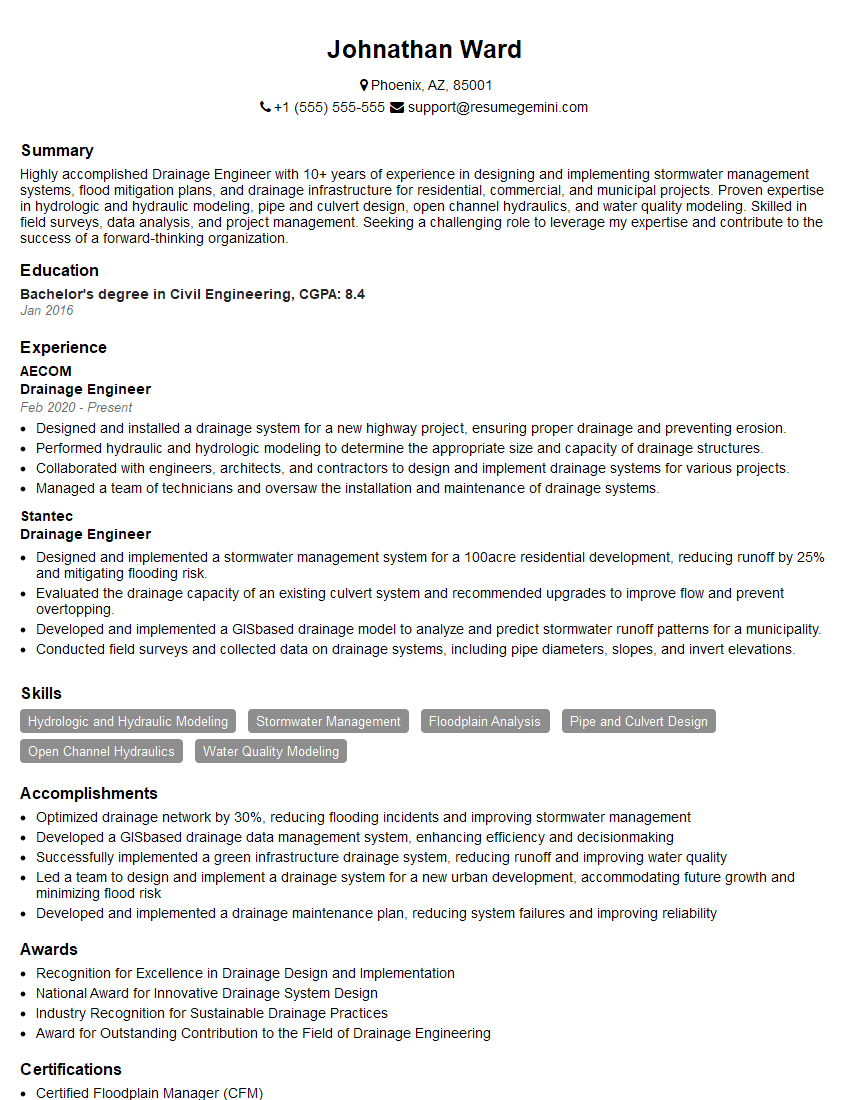
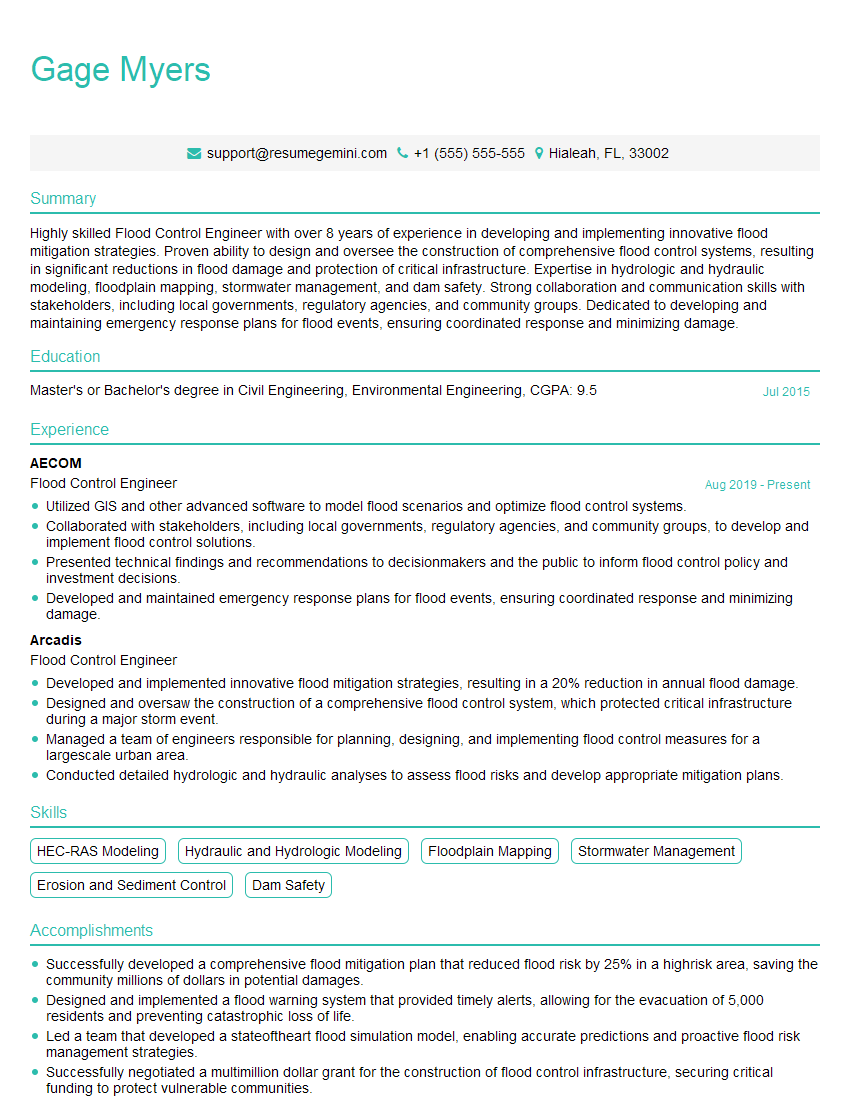
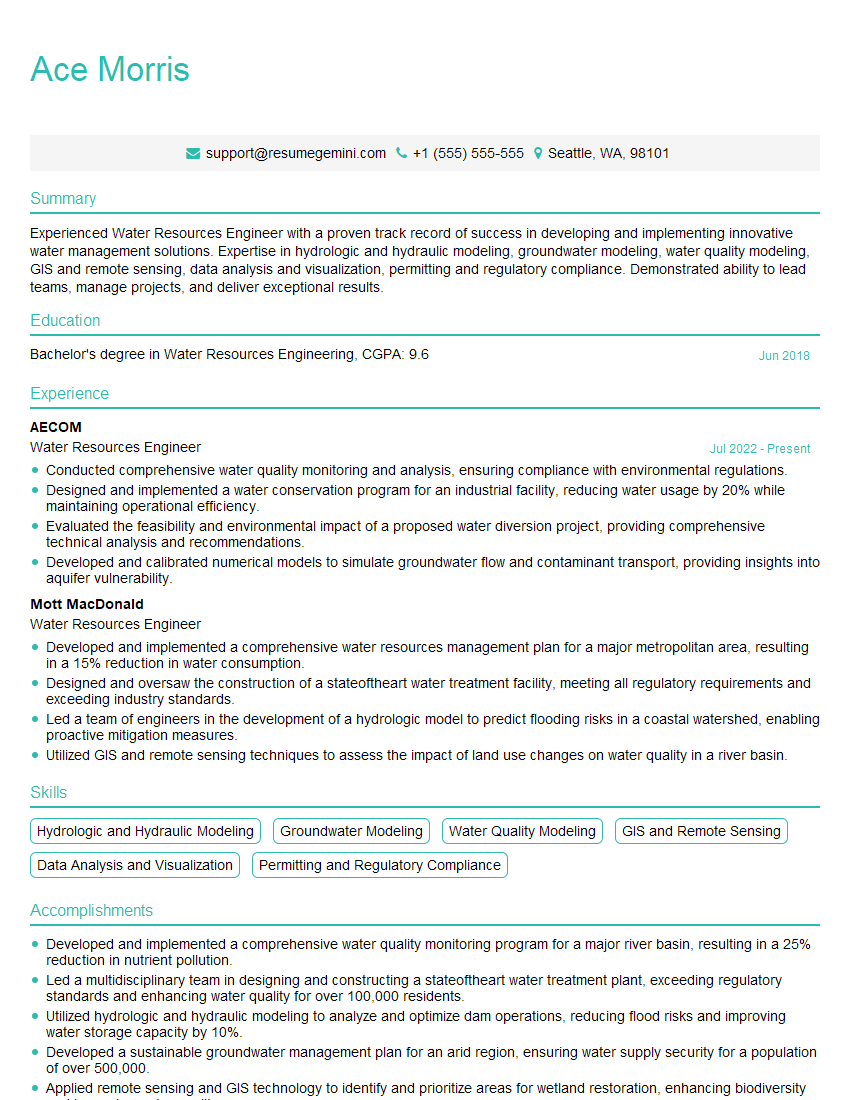
Mastering Channel and Dike Maintenance opens doors to a rewarding career with significant opportunities for growth and specialization. A strong resume is crucial for showcasing your skills and experience to potential employers. Creating an ATS-friendly resume, optimized for Applicant Tracking Systems, will significantly increase your chances of getting your application noticed. ResumeGemini is a trusted resource to help you build a professional and effective resume tailored to the specifics of your career goals. Examples of resumes tailored to Channel and Dike Maintenance are available to further guide you in this process. Invest the time to create a compelling resume – it’s your first impression and a key to unlocking your career potential in this field.
Explore more articles
Users Rating of Our Blogs
Share Your Experience
We value your feedback! Please rate our content and share your thoughts (optional).
What Readers Say About Our Blog
Very informative content, great job.
good