Every successful interview starts with knowing what to expect. In this blog, we’ll take you through the top Check Endorsement interview questions, breaking them down with expert tips to help you deliver impactful answers. Step into your next interview fully prepared and ready to succeed.
Questions Asked in Check Endorsement Interview
Q 1. Explain the purpose of check endorsement.
Check endorsement is the process of signing the back of a check to transfer ownership to someone else. Think of it like a digital signature for a physical document. It verifies that you, the payee (the person or business the check is written to), authorize the transfer of funds. Without proper endorsement, the check cannot be cashed or deposited. It acts as proof that you received the check and agree to its transfer.
Q 2. What are the different types of check endorsements?
There are several types of check endorsements, each serving a specific purpose. The most common are:
- Blank Endorsement: Simply signing your name on the back. This is the riskiest as anyone can cash it. Think of it like handing over cash without a receipt – easy to lose.
- Special Endorsement: ‘Pay to the order of [Name]’ followed by your signature. This directs the payment to a specific person or entity. It’s like adding a specific recipient to your cash transfer.
- Restrictive Endorsement: ‘For deposit only’ followed by your signature and account number. This limits the check to deposit only into your account. This is the safest method, adding another layer of security to the cash transfer.
- Qualified Endorsement: Used when you’re signing on behalf of someone else (e.g., a company representative). It typically includes a title, ‘Pay to the order of [Name], By [Your Name], [Your Title]’. This clarifies the signatory’s authority.
Q 3. Describe a situation where an incorrect endorsement led to a problem.
Imagine a small business owner, Sarah, received a check payable to ‘Sarah’s Bakery’. She endorsed it blankly and left it on her desk overnight. An employee, unaware of its significance, mistakenly used it for personal expenses. This caused a substantial financial loss for Sarah’s Bakery, highlighting the danger of a blank endorsement and demonstrating a lapse in internal controls.
Q 4. How do you handle a check with a missing or incomplete endorsement?
A check with a missing or incomplete endorsement cannot be processed. The process involves contacting the payer (the person or company that wrote the check) to clarify the situation. If the payer can verify the recipient’s identity, they may issue a replacement check with corrected details. If the original check cannot be retrieved, contacting the bank and providing proper identification might help resolve the issue. In situations where verification is difficult, the check could be considered void.
Q 5. What are the implications of endorsing a check for deposit only?
Endorsing a check ‘For deposit only’ limits its negotiability. Only the specified account can receive the funds. This minimizes the risk of theft or loss compared to a blank endorsement. If someone tries to cash a ‘For deposit only’ check, the bank will reject it, thus providing an extra layer of security.
Q 6. What are the security risks associated with improper check endorsement?
Improper check endorsement creates significant security risks. Blank endorsements, for example, make the check vulnerable to theft and fraud. Forged endorsements can lead to unauthorized access to funds. Incomplete or unclear endorsements can delay processing and create confusion, allowing potential misuse. Essentially, it’s like leaving your front door unlocked—an open invitation for trouble.
Q 7. How do you prevent fraudulent check endorsements?
Preventing fraudulent check endorsements requires a multi-faceted approach:
- Use restrictive endorsements: Always endorse checks ‘For deposit only’.
- Implement strong internal controls: Establish clear procedures for handling checks, including immediate endorsement and secure storage.
- Regularly reconcile bank statements: This helps identify any unauthorized transactions.
- Employee training: Educate employees on proper check endorsement procedures and security best practices.
- Use check fraud detection software: Many banking and accounting systems offer features to detect potentially fraudulent check activities.
Remember, vigilance and consistent application of these measures are crucial in mitigating the risks of fraudulent check endorsements.
Q 8. Explain the process of endorsing a check for deposit into a business account.
Endorsing a check for deposit into a business account involves writing specific instructions on the back of the check, authorizing the bank to credit the funds to your company’s account. This process is crucial for security and accountability.
- Find the endorsement area: This is usually on the back, near the top.
- Write the endorsement: Use a restrictive endorsement for added security:
For Deposit Only [Your Business Account Number] [Your Business Name]. This prevents anyone else from cashing the check. - Sign the endorsement: An authorized signatory of the business, often someone with signing authority, must sign the endorsement.
- Date the endorsement (optional but recommended): This helps with record-keeping.
- Deposit the check: Deposit the endorsed check via your company’s bank account – either by mobile deposit, at an ATM, or in person at a branch.
Example: Imagine receiving a check payable to “Acme Corp.” The endorsement would look something like this: For Deposit Only 1234567890 Acme Corp. [Signature of Authorized Signatory]
Q 9. How do you verify the legitimacy of a check before endorsement?
Verifying the legitimacy of a check before endorsement is a critical step to prevent fraud. This process involves a thorough examination of several aspects:
- Check the issuer’s information: Confirm the name and address of the payer match what you expect.
- Verify the amount: Ensure the numerical and written amounts match and are correct.
- Inspect the check for alterations: Look for any signs of tampering, such as erasures, inconsistencies in ink, or unusual markings.
- Check the check number: Make sure it’s sequential if you’ve received other checks from the same issuer.
- Examine the check for security features: Many checks incorporate watermarks, microprinting, or other security elements. Familiarize yourself with your bank’s security standards.
- Contact the issuer (if necessary): If you have any doubts about the check’s authenticity, call the issuer to confirm its legitimacy.
Example: If a check looks unusually faded or has a different font than other checks from the same source, it warrants further investigation. A quick call to the issuer can quickly verify its validity.
Q 10. What is a restrictive endorsement, and when is it used?
A restrictive endorsement limits how a check can be used. It adds an extra layer of security by preventing it from being cashed or negotiated by anyone other than the intended recipient’s bank.
It’s used when you want to ensure the check is only deposited into a specific account. The most common form is “For Deposit Only.” Adding your account number increases security even further.
Example: For Deposit Only 1234567890 John Smith restricts this check to be deposited only into John Smith’s account with account number 1234567890.
Q 11. Describe the procedure for handling a stale-dated check.
A stale-dated check is one that has passed its expiration date – typically six months. Handling these requires caution and a clear process:
- Contact the issuer: Reach out to the payer to confirm if they still intend to honor the check.
- Consider the reason for staleness: If there’s a valid explanation, like an oversight, the check can be re-issued.
- Document everything: Keep a detailed record of the communications and actions taken.
- Do not deposit it without confirmation: Depositing a stale-dated check without confirmation could lead to non-payment.
- If refused, archive the check appropriately: Following your company’s record management policy for such situations.
Example: If a check is over six months old, I would call the payer to confirm they still wish to honor the check before considering whether to request a new one or archive the existing one.
Q 12. What are the legal ramifications of forging a check endorsement?
Forging a check endorsement is a serious crime with significant legal ramifications. It’s considered a form of fraud and can result in:
- Criminal charges: Including felony charges depending on the amount involved.
- Civil lawsuits: The wronged party can sue for financial losses and damages.
- Imprisonment: Jail time is a possibility, especially for large sums.
- Fines: Substantial fines can be levied in addition to other penalties.
- Damage to reputation: The consequences can extend beyond legal penalties, affecting personal and professional reputation.
The penalties vary widely depending on jurisdiction and the specific circumstances of the case.
Q 13. How do you handle a check with a damaged endorsement?
A check with a damaged endorsement requires careful handling. The main concern is ensuring the endorsement remains legible and verifiable.
- Assess the damage: Determine the extent of the damage. Is the signature partially obscured, or is the endorsement entirely illegible?
- Contact the payer if necessary: If the endorsement is severely damaged or illegible, contacting the payer to confirm the legitimacy of the check might be necessary.
- Consider the bank’s policy: Some banks might have specific guidelines regarding damaged endorsements. It’s always advisable to check with your bank first.
- Document everything: Create a detailed record of the damage and any actions taken.
- Obtain written confirmation (if applicable): If contacting the payer, secure written confirmation in case disputes arise later.
Example: If a small portion of the signature is smudged, the bank might still accept it. However, a completely illegible endorsement would likely be rejected.
Q 14. What steps do you take to ensure accurate record-keeping of endorsed checks?
Accurate record-keeping of endorsed checks is crucial for financial accountability and auditing purposes. This involves a multi-faceted approach:
- Detailed check register: Maintain a detailed log of each check received, including the date, check number, payer, amount, endorsement details, and deposit date.
- Image retention: Store digital images of the endorsed checks, which most banks provide. This allows for easy access and retrieval if needed.
- Reconciliation: Regularly reconcile the check register with bank statements to ensure accuracy and detect any discrepancies.
- Secure storage: Store physical checks in a secure, organized manner, following your company’s retention policies.
- Auditable trail: Ensure all actions related to endorsed checks, from receipt to deposit, are documented and readily auditable.
Example: Implementing a robust accounting software that automates these tasks and provides comprehensive reporting facilitates efficient and accurate record-keeping.
Q 15. How do you reconcile discrepancies related to endorsed checks?
Reconciling discrepancies on endorsed checks requires a methodical approach. It begins with a careful comparison of the check details – the amount, payee name, and endorsement – against the corresponding entry in the accounting system. Discrepancies can arise from various sources: simple data entry errors, fraudulent alterations, or mismatched endorsements.
My process involves:
- Identifying the discrepancy: Pinpoint the exact difference between the check and the record. Is the amount different? Does the endorsement match the payee?
- Investigating the source: Review supporting documentation like invoices, purchase orders, or bank statements. If the discrepancy is a difference in amounts, I check for possible mathematical errors or evidence of alteration. For mismatched endorsements, I verify the identity of the endorser.
- Contacting relevant parties: If the discrepancy cannot be resolved internally, I reach out to the payer (if possible), the bank, or the individual who endorsed the check to clarify the situation.
- Documenting the resolution: Once the discrepancy is resolved, I meticulously document the findings, the corrective actions taken, and any updates to the accounting records. This documentation is crucial for audit trails and preventing future errors.
For example, if a check for $100 is recorded as $1,000, I’d investigate whether it’s a simple data entry error or a more serious issue. If an endorsement doesn’t match the payee, I’d investigate potential fraud.
Career Expert Tips:
- Ace those interviews! Prepare effectively by reviewing the Top 50 Most Common Interview Questions on ResumeGemini.
- Navigate your job search with confidence! Explore a wide range of Career Tips on ResumeGemini. Learn about common challenges and recommendations to overcome them.
- Craft the perfect resume! Master the Art of Resume Writing with ResumeGemini’s guide. Showcase your unique qualifications and achievements effectively.
- Don’t miss out on holiday savings! Build your dream resume with ResumeGemini’s ATS optimized templates.
Q 16. What software or systems are you familiar with for managing check endorsements?
My experience encompasses several software and systems for managing check endorsements. These range from simple accounting software packages like QuickBooks and Xero, which track check payments and provide basic reporting, to sophisticated enterprise resource planning (ERP) systems like SAP and Oracle, which offer more comprehensive functionalities including automated check processing and workflow management.
I’m also familiar with specialized check imaging and processing systems that capture and digitally store check images, streamlining reconciliation and reducing physical storage needs. These systems often include features for advanced fraud detection and security. Furthermore, I’ve worked with bank portals that provide real-time visibility into check clearing and endorsement status. The specific system used depends on the organization’s size and complexity.
Q 17. Explain the importance of internal controls in check endorsement procedures.
Strong internal controls are paramount in check endorsement procedures to mitigate the risk of fraud, errors, and loss. Think of them as the safety nets and checkpoints within the system. Without them, a single individual might have too much control and create opportunities for misappropriation.
Key internal controls include:
- Segregation of duties: No single person should be responsible for the entire process, from receiving checks to recording payments. This prevents collusion and fraud.
- Authorization and approval: Check endorsements should be authorized by appropriate personnel, particularly for larger amounts or unusual payments.
- Regular reconciliation: Checks should be reconciled regularly against bank statements to identify any discrepancies or missing checks.
- Physical security: Checks should be stored securely to prevent theft or unauthorized access.
- Access controls: Only authorized personnel should have access to check processing systems and data.
- Independent verification: A separate individual should verify the accuracy of check endorsement and recording.
For instance, the person who receives a check shouldn’t be the same person who records the payment in the accounting system. This division ensures accountability and limits opportunities for manipulation.
Q 18. How do you identify and report suspicious check endorsement activities?
Identifying suspicious check endorsement activities requires a keen eye for detail and a thorough understanding of normal processes. Red flags include:
- Alterations: Any changes to the check amount, payee, or date raise suspicion.
- Forged endorsements: Endorsements that don’t match the payee’s signature are clear indicators of fraud.
- Unusual endorsements: Endorsements that are unusually sloppy or inconsistent with past endorsements from the same payee.
- Missing endorsements: Checks missing necessary endorsements should be investigated.
- Discrepancies in amounts: Differences between the check amount and the recorded amount should be fully investigated.
- Checks payable to cash: These are more vulnerable to fraud and require stricter controls.
When suspicious activity is detected, I immediately report it to my supervisor or the designated fraud reporting channel within the organization. This involves documenting all relevant evidence, such as the check itself, supporting documentation, and any observations made during the investigation. Reporting promptly is crucial to minimizing potential losses and preserving evidence.
Q 19. What are your strategies for preventing check fraud?
Preventing check fraud requires a multi-layered approach focusing on both procedural and technological safeguards:
- Strict internal controls: As discussed previously, this includes segregation of duties, authorization, reconciliation, and access control.
- Check fraud detection software: Many banking and accounting systems offer sophisticated software to detect anomalies and potentially fraudulent checks.
- Positive pay systems: This system compares the details of checks presented for payment against a list of authorized checks, flagging any discrepancies.
- High-security checks: Using checks with enhanced security features like watermarking, microprinting, and special inks can deter fraudsters.
- Employee training: Educating employees about check fraud schemes and best practices is essential in preventing internal fraud.
- Regular audits: Routine audits help identify vulnerabilities and ensure compliance with best practices.
For example, implementing a positive pay system significantly reduces the risk of fraudulent checks being processed. Regular employee training on recognizing forged signatures or altered checks can also make a big difference.
Q 20. How do you handle a situation where a check is payable to multiple parties?
When a check is payable to multiple parties, the endorsement process requires careful attention to ensure proper authorization and payment. Typically, all payees listed on the check must endorse it. The method of endorsement depends on the context and the payer’s instructions.
Common scenarios and handling approaches:
- Joint payees: All payees must endorse the check. A simple endorsement by each payee is usually sufficient.
- Specific instructions: If the check specifies a particular endorsement method (e.g., ‘Pay to the order of A and B’), this must be followed precisely.
- Corporate payees: If the check is payable to a company, the endorsement should be in the name of the company, usually with an authorized signatory’s signature.
For example, a check made payable to ‘John Doe and Jane Doe’ requires both John and Jane to endorse the check before it can be cashed. If the check has specific instructions, like ‘Pay to the order of John Doe only,’ then only John can endorse it.
Q 21. What is your experience with different endorsement methods (e.g., electronic, manual)?
My experience covers both manual and electronic check endorsement methods. Manual endorsement involves physically signing the back of a paper check. This method is still prevalent but carries a higher risk of fraud and is less efficient. Electronic endorsements are increasingly common and offer significant advantages.
Different electronic endorsement methods exist:
- Remote deposit capture: Businesses can deposit checks remotely using scanners, eliminating the need for physical trips to the bank. The bank then electronically processes the endorsements.
- Check truncation: Checks are imaged and electronically processed, with the physical check destroyed or stored in an archive. This speeds up processing and reduces storage needs.
- Electronic signatures: Using digital signatures on electronic checks provides a secure and auditable record.
I’m proficient in all these methods and understand the security and compliance implications of each. Electronic endorsements offer benefits like improved security, faster processing, and reduced costs compared to manual endorsements, which can be cumbersome and time-consuming.
Q 22. How do you handle checks with alterations or inconsistencies?
Checks with alterations or inconsistencies require immediate attention and careful scrutiny. My process begins with a visual inspection for any obvious changes – irregularities in ink, erasures, or differences in handwriting. I then verify the check’s details against the corresponding invoice or payment request. Discrepancies could include mismatched amounts, altered payee names, or unauthorized signatures.
For example, if a check amount is altered, I would compare it with the original documentation and if the discrepancy can’t be reconciled, I would flag it as potentially fraudulent. If the payee name is altered, I’d investigate whether the new payee is legitimate or if there’s an attempt to redirect funds improperly.
If a problem is detected, I follow established protocols which usually include notifying my supervisor, potentially contacting the payer or payee to clarify the details, and ensuring the check is properly documented and secured. In cases of suspected fraud, I would collaborate with the legal and security departments.
Q 23. Describe your experience with bank reconciliation processes related to check endorsements.
Bank reconciliation involving check endorsements is crucial for accurate financial reporting. My experience includes reviewing bank statements to identify all processed checks, comparing them to our internal records (e.g., check register, accounting software), and reconciling any discrepancies.
This process ensures all endorsed checks have been properly accounted for and that there are no outstanding checks or unexplained discrepancies. I utilize specialized software to automate parts of this process, ensuring efficiency and accuracy. Any discrepancies found are investigated thoroughly, tracing the check’s journey from issuance to endorsement and deposit to identify the root cause and resolve any issues. For example, a missing check in the bank statement could indicate a potential loss or theft that needs to be reported immediately.
Q 24. How familiar are you with regulations and compliance related to check endorsement?
I am highly familiar with regulations and compliance related to check endorsements, including those related to the Bank Secrecy Act (BSA), anti-money laundering (AML) regulations, and other relevant state and federal laws. Understanding these regulations is paramount to preventing fraud and ensuring the company’s financial integrity.
My knowledge covers aspects like proper endorsement procedures, record-keeping requirements, and procedures for handling suspicious activity. I stay updated on changes in legislation and participate in relevant compliance training. For example, I’m knowledgeable on the importance of proper endorsement types to mitigate risks of check fraud and ensure that funds are deposited only into authorized accounts.
Q 25. Explain your understanding of the Uniform Commercial Code (UCC) and its relation to check endorsements.
The Uniform Commercial Code (UCC), specifically Article 3, governs negotiable instruments, including checks. It outlines the requirements for a valid check, the implications of proper endorsements, and the liabilities of various parties involved in a check transaction.
My understanding of the UCC extends to knowing the different types of endorsements (blank, special, restrictive), their legal consequences, and how these endorsements impact a check’s negotiability. For example, a restrictive endorsement limits how a check can be further negotiated, offering additional protection against fraud. A thorough understanding of the UCC ensures compliance and mitigates potential legal risks related to check handling.
Q 26. What is your experience with managing high volumes of checks and endorsements?
I have extensive experience managing high volumes of checks and endorsements, primarily using automated systems to improve processing efficiency. I have worked with check processing machines that can handle thousands of checks daily and implemented various strategies to ensure smooth, error-free processing.
These strategies have included implementing rigorous quality control checks at various stages of the process, and the use of electronic imaging and data capture systems to minimize manual handling. The goal is always to minimize processing time, reduce errors, and improve overall accuracy, all while maintaining compliance with regulatory requirements.
Q 27. Describe your process for resolving issues related to rejected or returned checks.
My process for resolving issues with rejected or returned checks starts with identifying the reason for rejection. This could be due to insufficient funds, incorrect account information, or problems with the endorsement. Once the reason is identified, I document the issue and take appropriate steps to remedy it.
For insufficient funds, contact with the payer is necessary to arrange payment. For incorrect account information, corrections are made and the check is re-submitted. If the problem is an endorsement issue, I will work to obtain a proper endorsement and resubmit the check. Throughout this process, I maintain detailed records of all communications and actions taken, ensuring complete traceability and accountability.
Q 28. How do you prioritize and manage your workload when dealing with check endorsements?
Prioritizing and managing my workload involves using a combination of techniques including task prioritization matrices, workflow management tools, and regular review of my to-do list. Urgency and importance of the task dictate the priority. Checks with potential fraud, or those nearing deadlines for deposit, naturally take precedence.
I leverage technology to streamline processes, automating repetitive tasks and focusing my time on more complex issues or exceptions. Effective communication with team members and stakeholders is also critical to managing expectations and ensuring timely resolution of issues.
Key Topics to Learn for Check Endorsement Interview
- Types of Endorsements: Understand the different types of check endorsements (blank, restrictive, special, qualified) and their implications for negotiability and liability.
- Legal Implications: Grasp the legal ramifications of incorrect or fraudulent endorsements, including potential consequences for both the payer and payee.
- Risk Management: Explore strategies for mitigating risk associated with check endorsements, such as proper verification procedures and secure handling practices.
- Practical Application: Familiarize yourself with real-world scenarios involving check endorsement, such as processing payments, identifying fraudulent checks, and resolving endorsement-related discrepancies.
- Regulatory Compliance: Review relevant regulations and compliance standards related to check endorsement and handling, ensuring you understand best practices.
- Technology and Check Endorsement: Explore how technology, such as automated check processing systems, impacts check endorsement procedures and security.
- Problem-Solving: Practice identifying and resolving common problems related to check endorsements, such as missing or incorrect endorsements, and discrepancies in amounts.
Next Steps
Mastering check endorsement is crucial for career advancement in finance, accounting, and related fields. A strong understanding demonstrates attention to detail, adherence to regulations, and a commitment to financial accuracy – highly valued skills in today’s job market. To maximize your job prospects, creating an ATS-friendly resume is essential. ResumeGemini is a trusted resource that can help you craft a compelling and effective resume tailored to highlight your expertise in check endorsement. Examples of resumes specifically designed for Check Endorsement roles are available to guide you through the process. Take advantage of these resources to present yourself in the best possible light to potential employers.
Chief Financial Officer (CFO) Resume Sample
Credit Manager Resume Sample
Director of Finance Resume Sample
Financial Controller Resume Sample
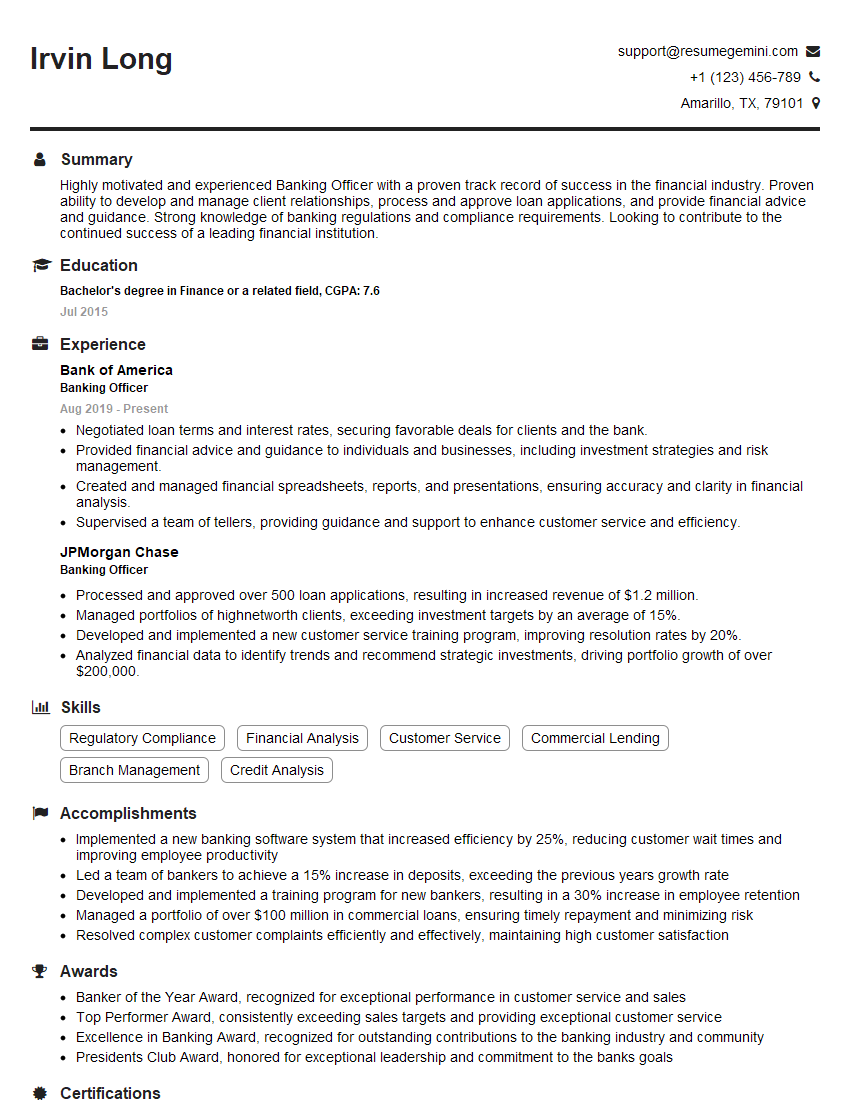
Banking Officer Resume Sample
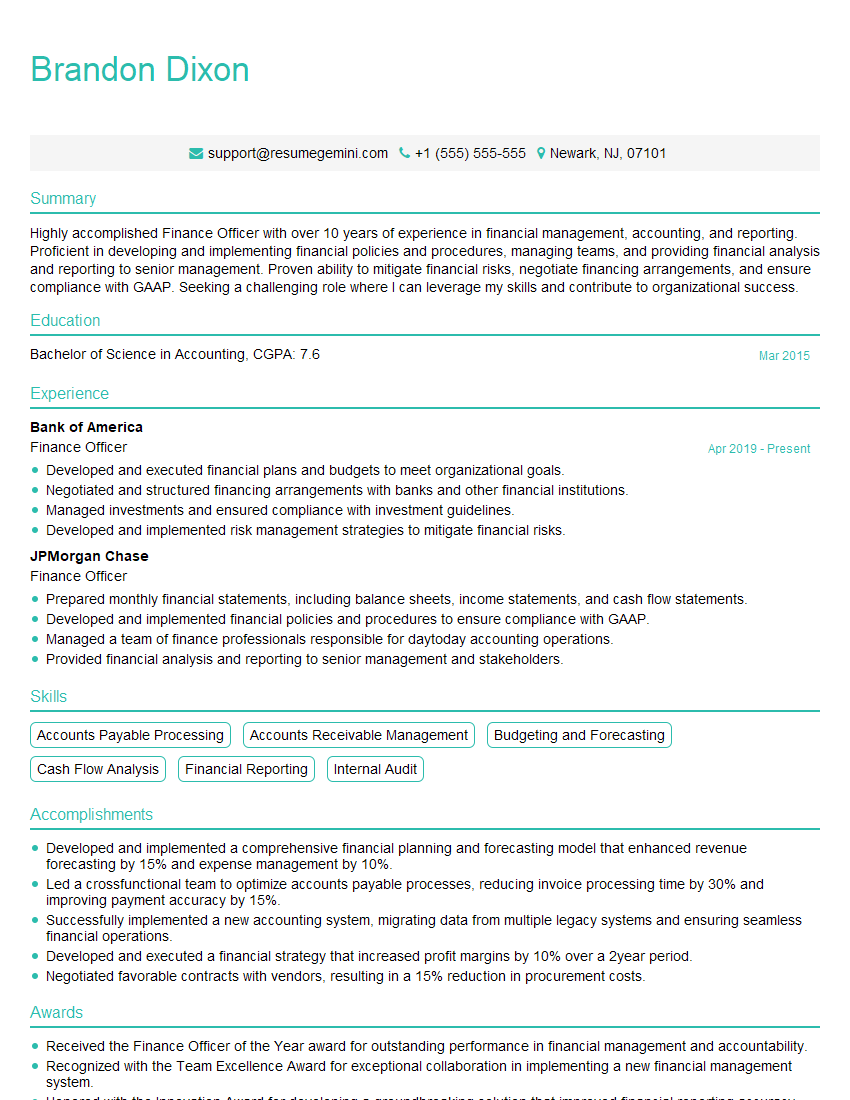
Finance Officer Resume Sample
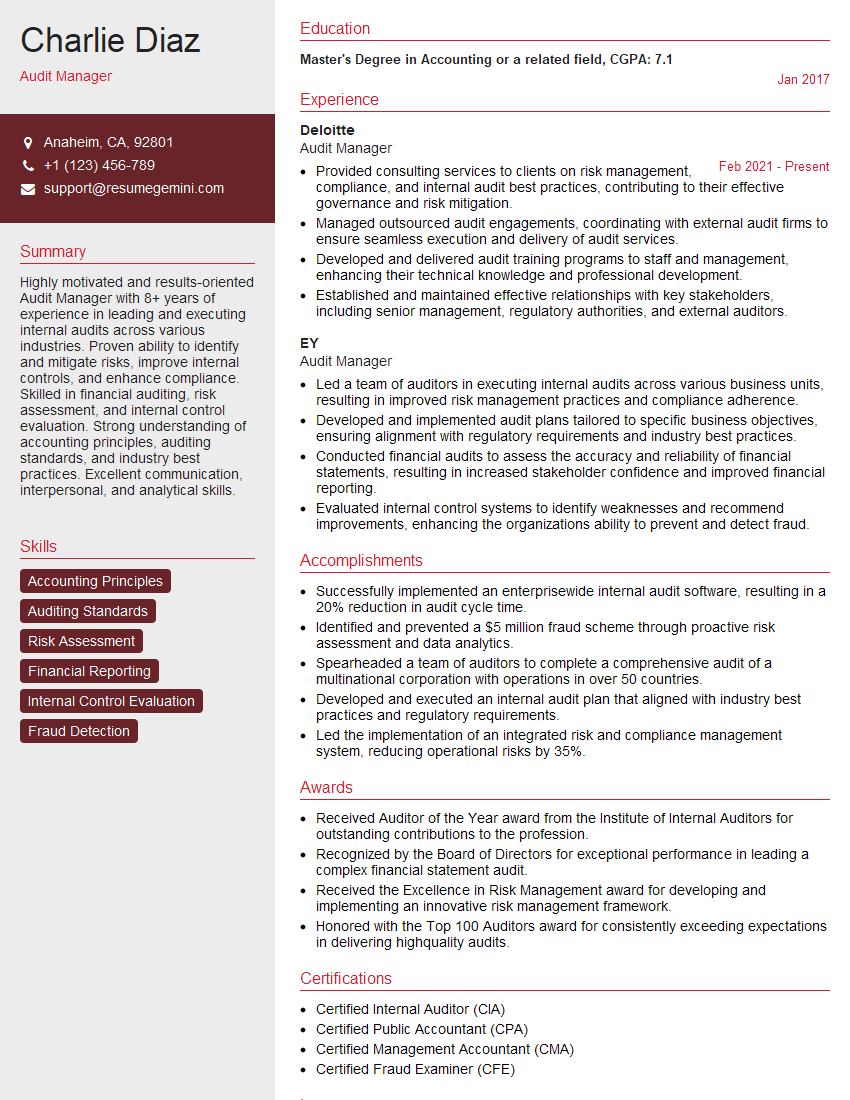
Audit Manager Resume Sample

Compliance Officer Resume Sample
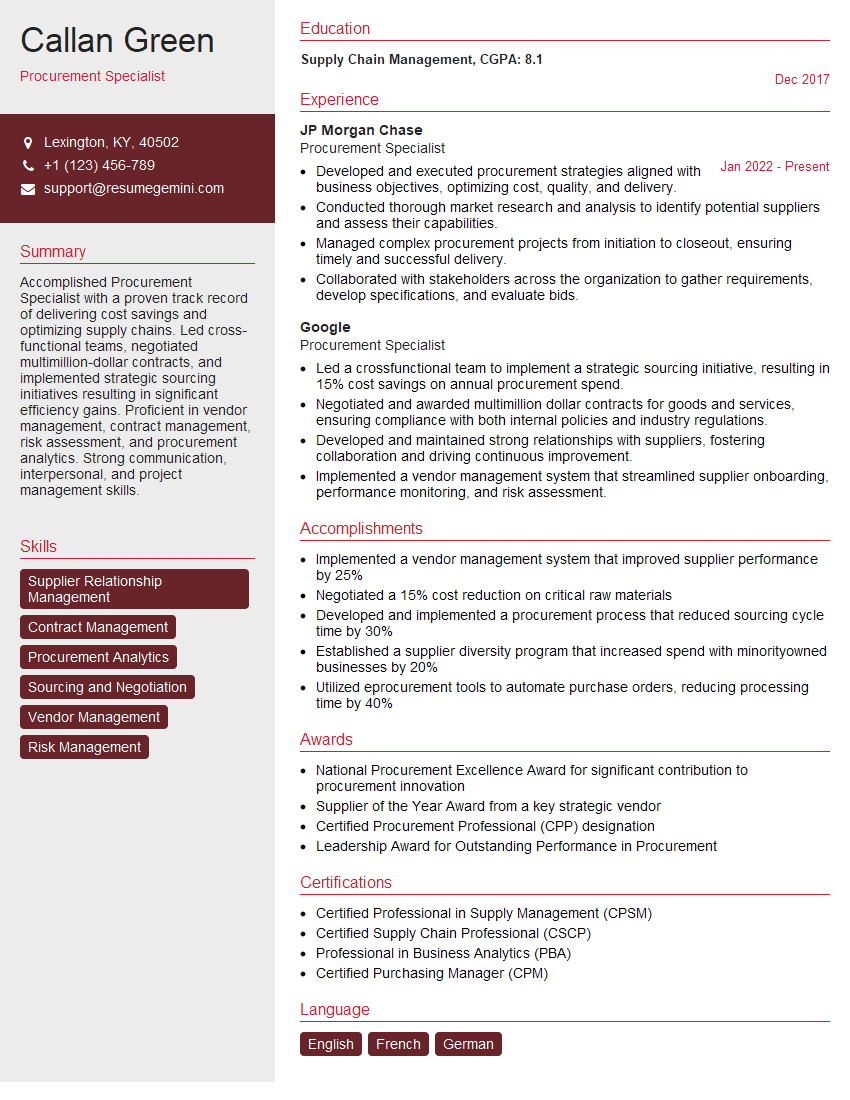
Procurement Specialist Resume Sample
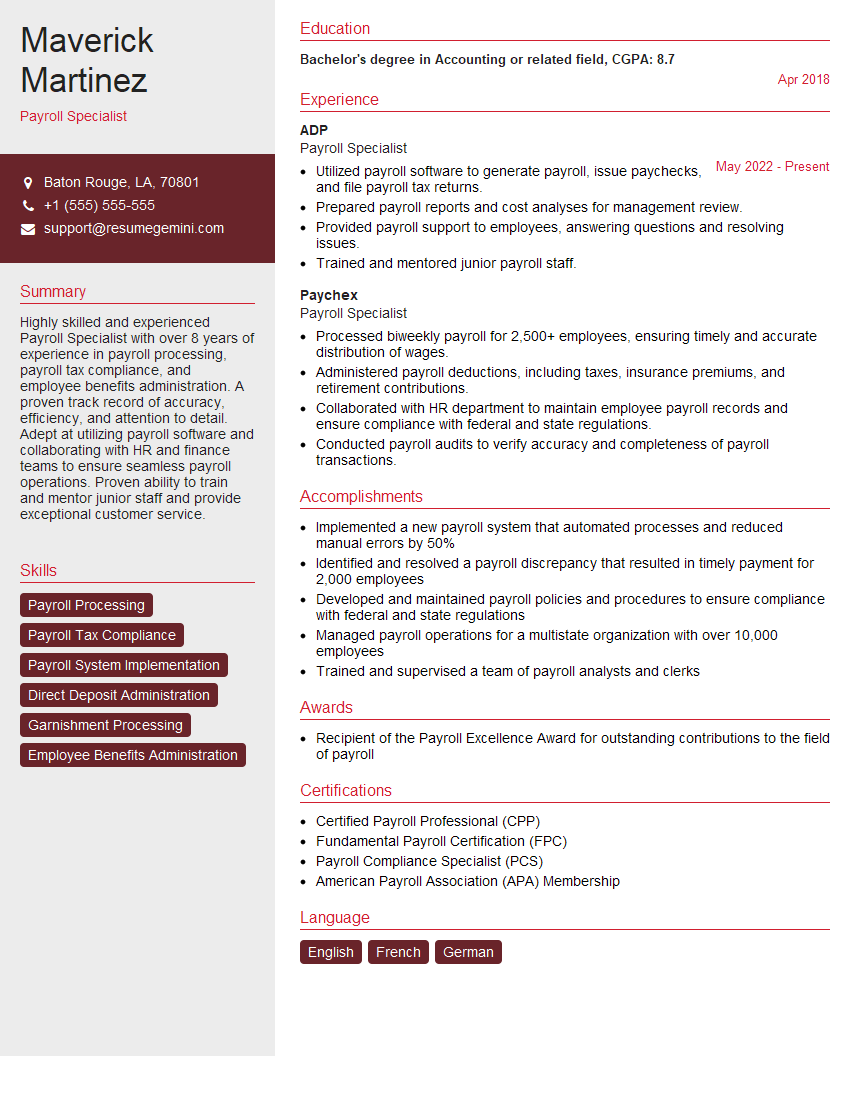
Payroll Specialist Resume Sample
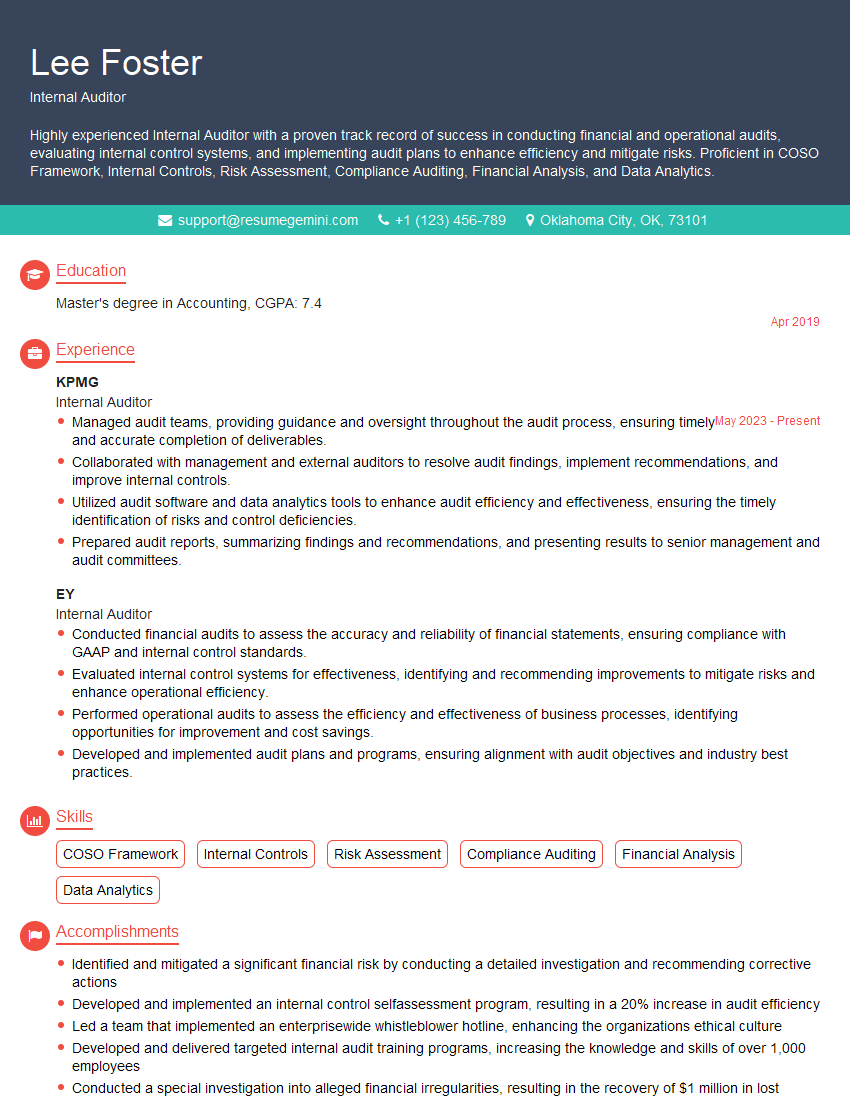
Internal Auditor Resume Sample
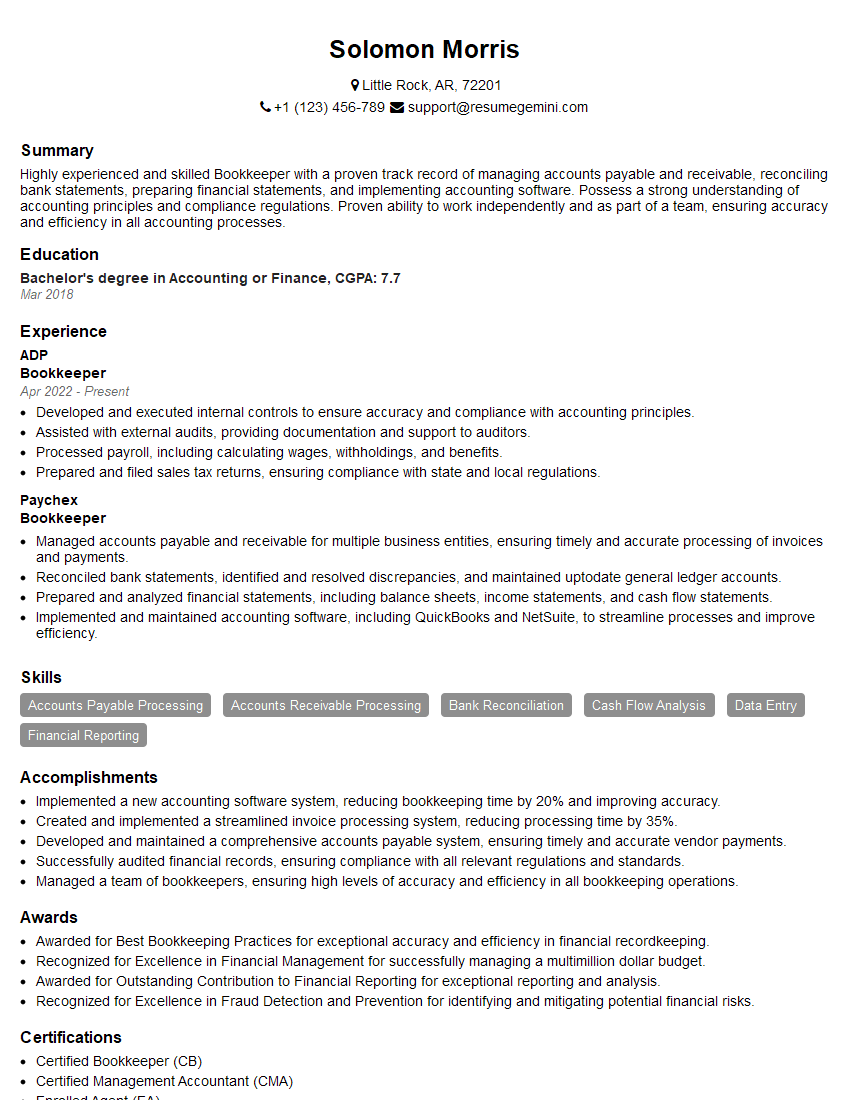
Bookkeeper Resume Sample
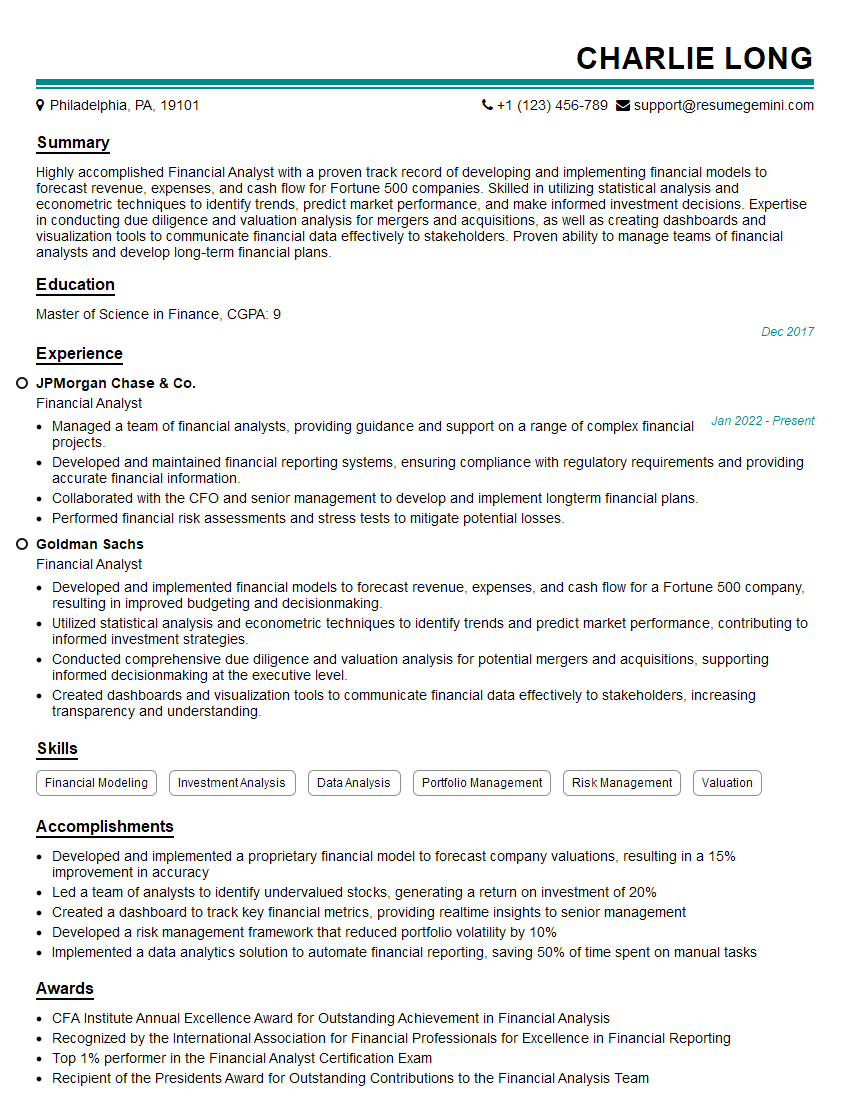
Financial Analyst Resume Sample
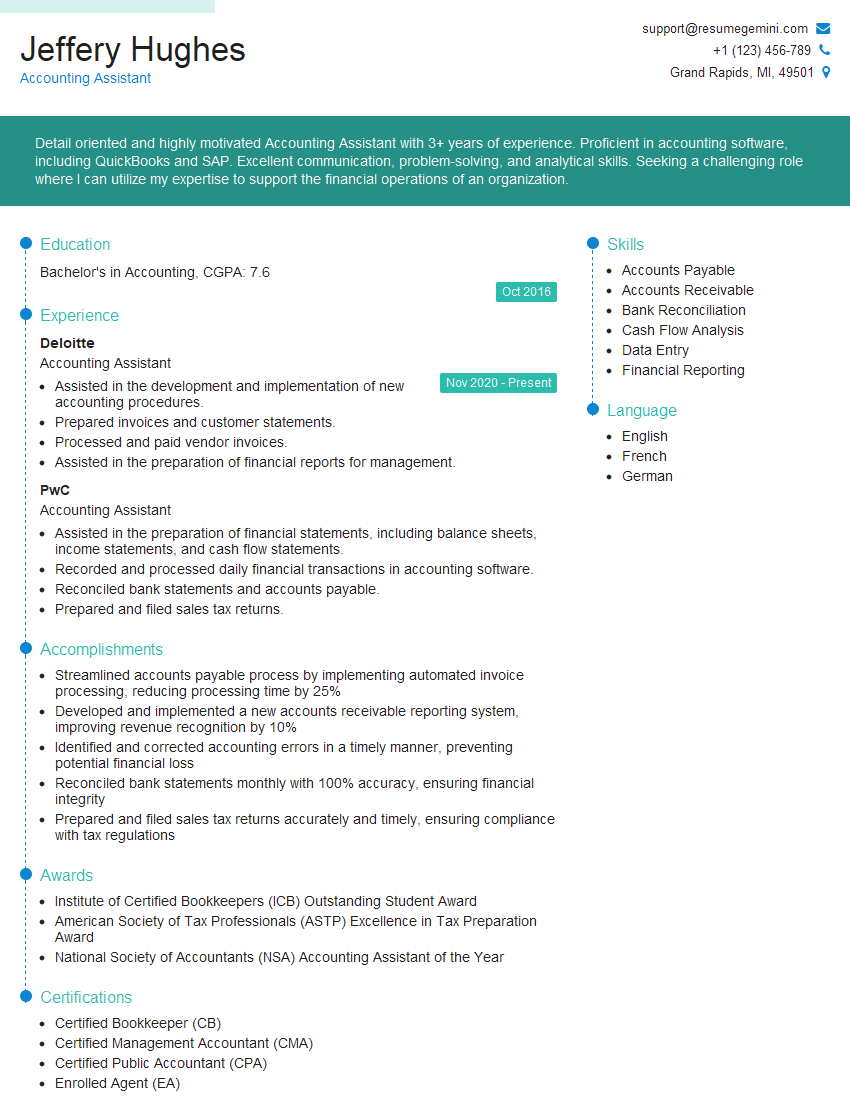
Accounting Assistant Resume Sample
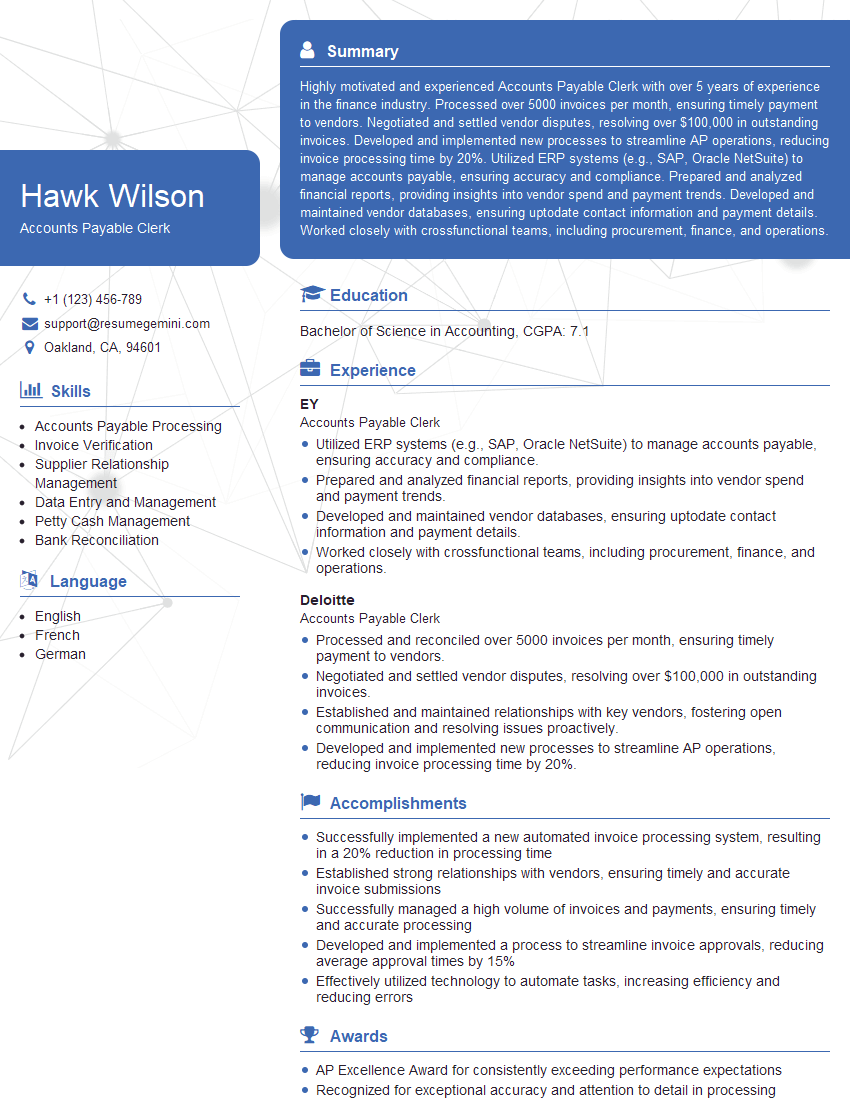
Accounts Payable Clerk Resume Sample
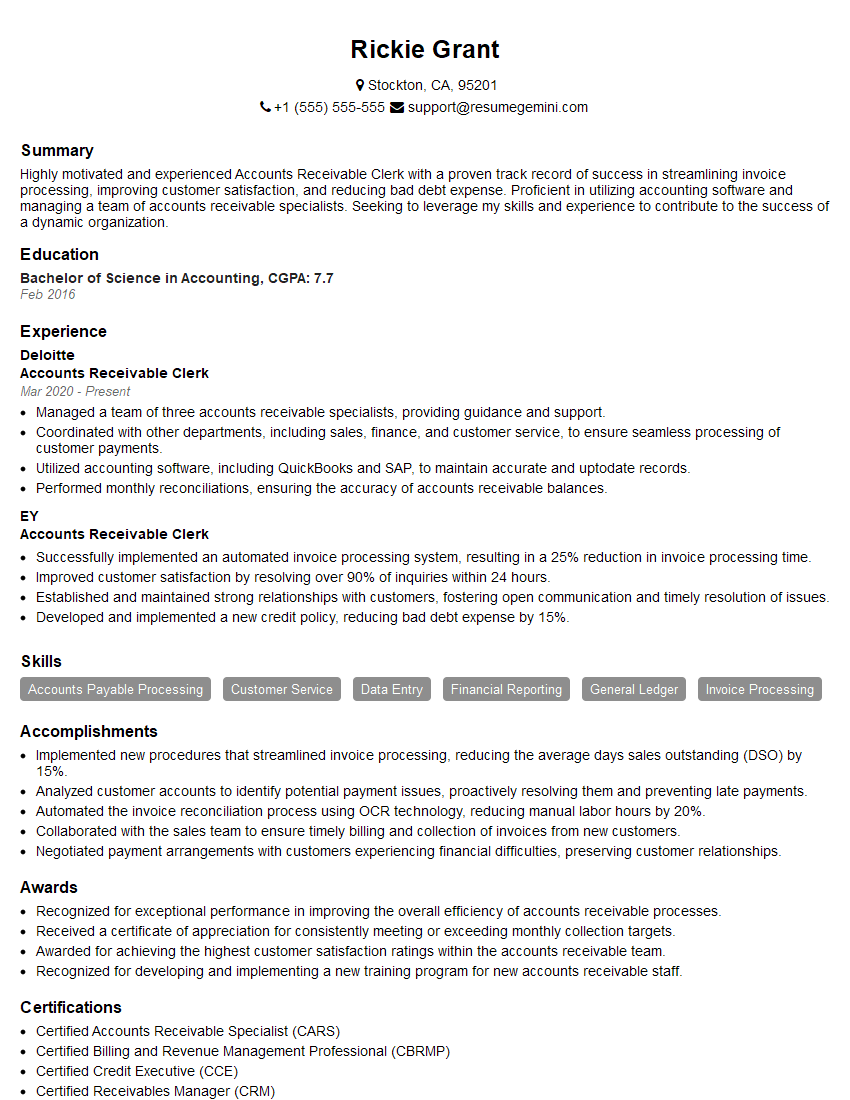
Accounts Receivable Clerk Resume Sample
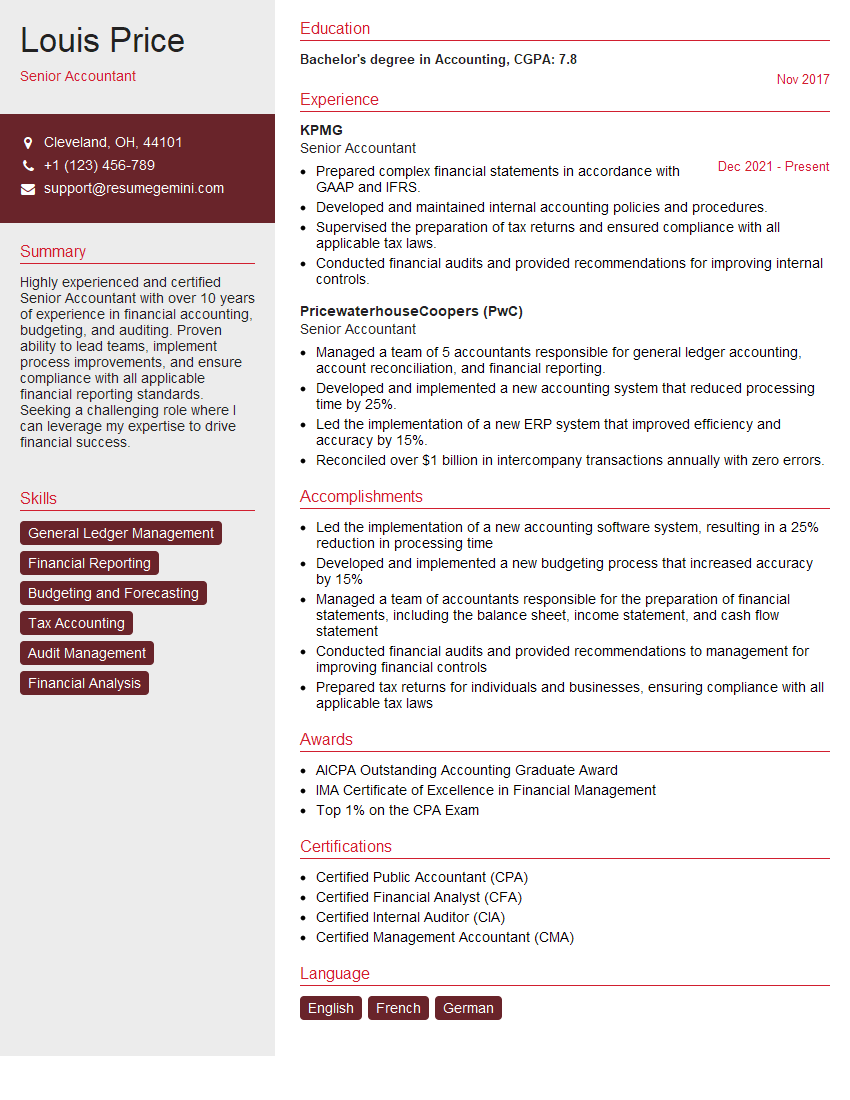
Senior Accountant Resume Sample
- Chief Financial Officer (CFO)
- Credit Manager
- Director of Finance
- Financial Controller
- Banking Officer
- Finance Officer
- Audit Manager
- Compliance Officer
- Procurement Specialist
- Payroll Specialist
- Internal Auditor
- Bookkeeper
- Financial Analyst
- Accounting Assistant
- Accounts Payable Clerk
- Accounts Receivable Clerk
- Senior Accountant
Explore more articles
Users Rating of Our Blogs
Share Your Experience
We value your feedback! Please rate our content and share your thoughts (optional).
What Readers Say About Our Blog
Very informative content, great job.
good