Preparation is the key to success in any interview. In this post, we’ll explore crucial Chillers interview questions and equip you with strategies to craft impactful answers. Whether you’re a beginner or a pro, these tips will elevate your preparation.
Questions Asked in Chillers Interview
Q 1. Explain the different types of chillers (absorption, centrifugal, screw, etc.) and their applications.
Chillers are crucial for maintaining low temperatures in various applications. They come in several types, each with unique characteristics and best-suited uses. Let’s explore some of the most common:
- Absorption Chillers: These utilize heat, typically from steam or hot water, to drive the refrigeration cycle. They are often found in applications where waste heat is readily available, making them environmentally friendly in such scenarios. For example, a combined heat and power (CHP) plant might use its waste heat to power an absorption chiller for building cooling.
- Centrifugal Chillers: These utilize high-speed centrifugal compressors to circulate refrigerant. They are known for their high efficiency at larger cooling capacities, making them ideal for large commercial buildings, data centers, and industrial processes. Imagine a massive office complex – a centrifugal chiller could easily handle the cooling needs of thousands of square feet.
- Screw Chillers: These employ rotating screw compressors to compress the refrigerant. They offer a balance between efficiency and capacity, making them suitable for medium to large applications. Think of a hospital or a large manufacturing facility – a screw chiller provides reliable and efficient cooling for their needs.
- Reciprocating Chillers: These use piston-type compressors, offering good efficiency at smaller capacities. They are commonly found in smaller commercial buildings or industrial processes needing less cooling power than a centrifugal or screw chiller. They’re a reliable choice for smaller scale applications.
- Scroll Chillers: These utilize scroll compressors, known for their quiet operation and high efficiency at smaller to medium capacities. Ideal for smaller commercial buildings or applications where noise is a concern.
The choice of chiller depends heavily on the cooling load, available energy source, budget, and environmental considerations. Each type presents a trade-off between initial cost, operating efficiency, and maintenance needs.
Q 2. Describe the refrigeration cycle in a chiller.
The refrigeration cycle in a chiller is a closed-loop process involving four key stages, similar to a household refrigerator, but on a larger scale:
- Evaporation: The refrigerant, a low-boiling point fluid, absorbs heat from the chilled water in the evaporator, changing from a liquid to a low-pressure vapor. This cools the chilled water.
- Compression: The low-pressure refrigerant vapor is compressed by the compressor, increasing its temperature and pressure significantly.
- Condensation: The high-pressure, high-temperature refrigerant vapor releases heat to condenser water in the condenser, changing back into a high-pressure liquid.
- Expansion: The high-pressure liquid refrigerant passes through an expansion valve, reducing its pressure and temperature, and preparing it to re-enter the evaporator and repeat the cycle.
This continuous cycle efficiently removes heat from the chilled water, providing cooling for the building or process.
Q 3. How do you troubleshoot a chiller that is not producing enough chilled water?
Troubleshooting a chiller producing insufficient chilled water requires a systematic approach. Here’s a breakdown:
- Check the chilled water flow rate and temperature: Are they within the expected range? Low flow or high supply temperature indicate problems.
- Inspect the condenser water system: High condenser water temperature suggests poor heat rejection. Check for fouling, low flow rate, or scaling in the condenser.
- Examine the compressor operation: Is it running properly and at the correct speed? Abnormal sounds or vibrations point to potential issues.
- Check the refrigerant charge: Low refrigerant levels significantly reduce cooling capacity. This requires specialized equipment to measure and add refrigerant safely.
- Inspect the evaporator: Look for fouling or scaling that can impede heat transfer.
- Review the controls and sensors: Check for any malfunctioning sensors or control issues that might be limiting chiller output.
- Analyze the chiller logs and alarms: Modern chillers record operational data, providing invaluable clues for troubleshooting.
Often, a combination of factors leads to reduced chilled water production. A methodical check is key.
Q 4. What are the common causes of chiller compressor failures?
Compressor failures are a major concern in chiller operation. Common causes include:
- Lack of lubrication: Insufficient or contaminated lubricant leads to friction and premature wear.
- High discharge pressure: This can result from condenser problems, restricted refrigerant flow, or compressor issues.
- Overheating: Excessive heat damage can be caused by insufficient cooling, refrigerant leaks, or electrical faults.
- Mechanical wear and tear: Normal wear and tear over time can lead to internal component failure.
- Contamination: Moisture or other contaminants in the refrigerant can severely damage the compressor.
- Electrical faults: Faulty motors, wiring, or controls can lead to compressor failure.
- Vibration: Excessive vibration can cause mechanical damage to the compressor.
Regular maintenance, including oil analysis and vibration monitoring, is crucial in preventing compressor failures.
Q 5. Explain the role of condenser water in a chiller.
Condenser water plays a vital role in rejecting the heat absorbed by the refrigerant from the chilled water. The hot refrigerant vapor releases its heat to the condenser water, converting back to a liquid. This condenser water then needs to be cooled, typically in a cooling tower, before being recirculated back to the condenser.
Think of it as a crucial heat sink. Without sufficient condenser water flow and appropriate cooling, the chiller would overheat and fail to operate efficiently. The temperature of the condenser water directly impacts the efficiency and performance of the entire chiller system.
Q 6. How do you maintain optimal chiller efficiency?
Maintaining optimal chiller efficiency involves a multi-pronged approach:
- Regular maintenance: This includes cleaning condenser coils, checking refrigerant levels, inspecting the compressor, and lubricating moving parts. This preventative approach avoids costly breakdowns and maximizes operational efficiency.
- Proper water treatment: Treating both chilled and condenser water prevents scaling and fouling, ensuring efficient heat transfer.
- Optimized control strategies: Modern chillers often employ advanced control systems. Optimizing these settings can significantly impact efficiency.
- Regular monitoring: Continuous monitoring of key parameters allows for early detection of problems and helps maintain optimal performance.
- Energy-efficient components: Selecting chillers with high-efficiency compressors, fans, and pumps contributes significantly to reducing energy consumption.
Efficiency gains translate directly to cost savings and reduced environmental impact.
Q 7. What are the safety precautions when working with a chiller?
Safety is paramount when working with chillers. Here are essential precautions:
- Lockout/Tagout procedures: Always follow strict lockout/tagout procedures before performing any maintenance or repair work to prevent accidental startup.
- Personal Protective Equipment (PPE): Use appropriate PPE, including safety glasses, gloves, and hearing protection, whenever working near or on a chiller.
- Refrigerant handling: Many refrigerants are harmful if inhaled or exposed to skin. Follow all manufacturer guidelines when handling refrigerant.
- High-voltage components: Be aware of high-voltage components within the chiller and avoid contact.
- Confined space entry: If accessing confined spaces within the chiller is necessary, follow all confined space entry procedures.
- Proper training: Only qualified personnel should perform maintenance and repair on chillers.
Never compromise on safety. Following proper procedures and using appropriate safety measures can prevent serious injury or even death.
Q 8. Describe the different types of chiller controls.
Chiller controls are crucial for efficient operation and maintaining optimal performance. They manage various parameters to ensure the chiller delivers the required cooling capacity while minimizing energy consumption. Different types exist, each offering varying degrees of sophistication and control capabilities.
- On/Off Control: This is the simplest form, cycling the chiller on and off based on a setpoint temperature. Think of it like a household thermostat; it’s easy to understand but less precise.
- Capacity Control: This allows the chiller to modulate its output, adjusting cooling capacity to match the load demand. This is more energy-efficient than simple on/off control as it avoids unnecessary cycling. Imagine a car’s accelerator – smoothly adjusting speed instead of constantly stopping and starting.
- Lead-Lag Control: This type is employed when multiple chillers work in tandem. One chiller (the lead) operates primarily, while the other (the lag) kicks in only when the load increases beyond the lead’s capacity. This ensures balanced operation and prolonged lifespan.
- Variable Frequency Drive (VFD) Control: VFDs control the speed of the chiller’s compressor motor, precisely adjusting cooling capacity according to the demand. This offers the most precise and energy-efficient control and is commonly used in modern chiller systems. Think of it as a finely tuned engine, always running at the optimal RPM.
- Building Management Systems (BMS) Integration: Modern chillers often integrate with BMS, allowing centralized monitoring and control of the entire HVAC system. This provides a holistic view of building energy performance and enhances overall efficiency.
Q 9. How do you interpret chiller performance data?
Interpreting chiller performance data requires a systematic approach. Key parameters need to be analyzed to assess the chiller’s efficiency and identify potential problems. Let’s consider some crucial metrics:
- Cooling Capacity: This indicates the chiller’s ability to remove heat, usually measured in tons of refrigeration (TR). Consistent deviation from the rated capacity signals potential issues.
- Energy Consumption: Monitoring kW/TR (kilowatts per ton of refrigeration) reveals the chiller’s energy efficiency. Higher values indicate lower efficiency and potential for improvement.
- Head Pressure: This pressure reflects the compressor’s workload. High head pressure often indicates a problem with the condenser, such as scaling or airflow restriction.
- Evaporator Pressure: Low pressure could indicate refrigerant leaks or issues with the evaporator, leading to reduced cooling capacity.
- Subcooling and Superheat: These parameters reflect the thermodynamic efficiency of the refrigeration cycle. Deviating from optimal values suggests potential imbalances or refrigerant issues.
- Water Flow Rates: Checking both the chilled water and condenser water flow rates is crucial to ensure adequate heat transfer. Low flow rates can lead to reduced efficiency and overheating.
Analyzing trends over time is just as important as looking at individual data points. A gradual decline in efficiency, for instance, might indicate the need for preventive maintenance.
Q 10. What are the common chiller alarm conditions and their causes?
Chiller alarms signal potential problems requiring immediate attention. Identifying the cause is critical to prevent further damage and ensure uninterrupted operation. Here are some common alarm conditions and their potential causes:
- High Head Pressure: This can be caused by condenser fouling, restricted condenser water flow, or refrigerant overcharge.
- Low Head Pressure: Possible causes include refrigerant leaks, compressor malfunction, or insufficient refrigerant charge.
- High Discharge Temperature: This could be caused by low condenser water flow, condenser fouling, or compressor problems.
- Low Suction Pressure: Likely causes include refrigerant leaks, evaporator fouling, or insufficient refrigerant charge.
- High Compressor Amperage: This signifies an overload on the compressor, potentially due to high head pressure, insufficient lubrication, or mechanical problems.
- High/Low Water Flow Alarm: This is a common issue caused by blocked pipes, malfunctioning pumps, or faulty sensors.
- Refrigerant Leaks: These can lead to various issues, including reduced cooling capacity and potential environmental hazards. Regular leak checks are vital.
Addressing these alarms promptly and correctly is essential for ensuring the reliable and safe operation of the chiller.
Q 11. Explain the importance of regular chiller maintenance.
Regular chiller maintenance is paramount for optimizing performance, extending lifespan, and preventing costly breakdowns. It’s a proactive approach that pays off significantly.
- Improved Efficiency: Regular cleaning and servicing maintain optimal performance, leading to reduced energy consumption and operational costs.
- Extended Lifespan: Preventive maintenance prevents premature wear and tear, extending the chiller’s lifespan considerably.
- Reduced Downtime: By addressing potential issues early, maintenance minimizes unexpected breakdowns and costly downtime.
- Safety: Regular inspections and servicing ensure the chiller operates safely, reducing the risk of leaks and other hazardous situations.
- Warranty Compliance: Many chiller manufacturers require regular maintenance to maintain warranty coverage.
Think of it like servicing your car – regular checks and maintenance prevent major issues down the road.
Q 12. How do you perform a chiller oil analysis?
Chiller oil analysis is a crucial part of preventive maintenance. It helps in assessing the condition of the compressor and lubrication system. The process typically involves collecting an oil sample, which is then sent to a laboratory for analysis.
The lab tests the oil for various parameters, including:
- Acidity: High acidity indicates degradation of the oil, often due to overheating or contamination.
- Water Content: Presence of water can cause corrosion and reduce the oil’s lubricating properties.
- Particle Count: Elevated particle counts suggest wear and tear within the compressor.
- Viscosity: Changes in viscosity indicate oil degradation or contamination.
The lab report provides valuable insights into the oil’s condition, allowing for proactive maintenance decisions. For example, if the analysis reveals high acidity or significant wear particles, a compressor overhaul might be necessary to avoid a catastrophic failure.
Q 13. What are the different types of chiller cooling towers?
Chiller cooling towers are essential for dissipating the heat absorbed by the chiller’s condenser. Different types are available, each with its own advantages and disadvantages:
- Induced Draft Cooling Towers: These use a fan to pull air through the tower, improving airflow and efficiency, especially in areas with low wind speeds.
- Forced Draft Cooling Towers: These employ a fan to push air through the tower. They are less sensitive to wind conditions but can be noisier.
- Natural Draft Cooling Towers: These rely solely on natural airflow (stack effect) to dissipate heat. They are relatively simple but require larger structures and are less efficient than mechanical draft towers.
- Crossflow Cooling Towers: Air flows perpendicular to the water flow. They are often more compact than counterflow towers.
- Counterflow Cooling Towers: Air and water flow in opposite directions, maximizing heat transfer. They are generally more efficient but can be larger.
The choice of cooling tower depends on factors such as available space, budget, and climate conditions.
Q 14. How do you troubleshoot a chiller with high head pressure?
High head pressure in a chiller is a significant problem that needs prompt attention. Troubleshooting involves a systematic approach to identify the root cause:
- Check Condenser Water Flow: Insufficient flow restricts heat dissipation, leading to high head pressure. Verify flow rates and check for any blockages in the condenser water piping.
- Inspect Condenser for Fouling: Scaling, dirt, or other contaminants can impede heat transfer. Clean the condenser coils thoroughly to improve efficiency.
- Verify Condenser Fan Operation: Ensure the condenser fans are functioning correctly. Faulty fans reduce airflow and contribute to high head pressure.
- Check Refrigerant Charge: Overcharging the refrigerant can significantly increase head pressure. Proper refrigerant charge levels should be verified.
- Inspect Compressor: Compressor problems such as worn bearings or internal damage can also cause high head pressure. A thorough inspection might be necessary.
- Examine Pressure Relief Valve: A malfunctioning pressure relief valve might not be relieving the excessive pressure, exacerbating the problem.
By systematically checking these components, you can effectively troubleshoot a chiller with high head pressure. If the problem persists, consulting a qualified technician is recommended.
Q 15. How do you troubleshoot a chiller with low head pressure?
Low head pressure in a chiller indicates a problem with the refrigerant flow on the discharge side of the compressor. Think of it like a clogged pipe – the refrigerant isn’t flowing freely, leading to reduced cooling capacity. Troubleshooting involves systematically checking several areas.
Check for restrictions: Examine the discharge line for blockages, kinks, or excessive bends. A partially closed valve is a common culprit. Also inspect the condenser for fouling; dirty condenser coils restrict airflow, leading to increased head pressure and ultimately, low head pressure as the system struggles.
Assess condenser performance: Ensure sufficient airflow across the condenser. Check the condenser fan motors for proper operation and inspect the fan blades for damage or debris buildup. Also, verify the condenser water flow rate and temperature if it’s a water-cooled chiller. Insufficient cooling water will lead to higher condenser pressure and ultimately lower head pressure.
Verify compressor function: Make sure the compressor is operating correctly. Low head pressure could indicate a failing compressor, suction valve problems, or insufficient refrigerant charge. Monitor compressor amps – excessively high amps suggest a problem.
Check refrigerant charge: An insufficient refrigerant charge is a prime suspect. Low refrigerant levels will reduce the head pressure as there is less refrigerant to compress. Always follow the proper safety procedures when handling refrigerants.
Inspect expansion valve: A malfunctioning expansion valve (in expansion valve chillers) can restrict refrigerant flow to the evaporator, leading to low head pressure on the discharge side. Check for proper operation and adjust as necessary.
Remember to always consult the chiller’s service manual for specific troubleshooting steps and safety precautions. Safety first!
Career Expert Tips:
- Ace those interviews! Prepare effectively by reviewing the Top 50 Most Common Interview Questions on ResumeGemini.
- Navigate your job search with confidence! Explore a wide range of Career Tips on ResumeGemini. Learn about common challenges and recommendations to overcome them.
- Craft the perfect resume! Master the Art of Resume Writing with ResumeGemini’s guide. Showcase your unique qualifications and achievements effectively.
- Don’t miss out on holiday savings! Build your dream resume with ResumeGemini’s ATS optimized templates.
Q 16. Describe the different types of chiller valves and their functions.
Chillers utilize various valves for controlling refrigerant flow, water flow, and overall system operation. Here are some key types:
Solenoid Valves: These electrically actuated valves open and close to control refrigerant flow, often used for switching between different chiller operating modes or isolating sections of the system. Think of them as simple on/off switches for refrigerant.
Expansion Valves (TXV/EV): These automatic valves regulate refrigerant flow into the evaporator based on the evaporator’s temperature and pressure. They maintain optimal refrigerant flow for efficient cooling. Imagine them as precision metering valves constantly adjusting to maintain the ideal refrigerant flow.
Globe Valves: These manually operated valves provide shut-off and throttling capabilities for water flow in condenser and evaporator loops. They allow for isolating components and manually adjusting flow rates. Think of them as the manual controls for the water circuits.
Ball Valves: Similar to globe valves, but they offer quicker on/off control of water flow. They are usually used for isolation and quick shut off rather than fine-tuning the flow.
Check Valves: These prevent reverse flow in piping systems. They’re essential for ensuring refrigerant or water flows in the intended direction.
The specific valves used vary depending on the chiller’s design and application. Understanding their function is vital for proper operation and troubleshooting.
Q 17. Explain the concept of chiller capacity control.
Chiller capacity control refers to the ability to adjust the chiller’s cooling output to match the building’s actual cooling load. This improves energy efficiency and prevents overcooling. Several methods exist:
On/Off Cycling: The simplest method; the chiller runs at full capacity or shuts off completely. This is inefficient as it leads to large temperature swings.
Capacity Modulation (Load Following): The chiller adjusts its cooling capacity continuously to match the building’s load. This is achieved by controlling the refrigerant flow, speed of compressors (if variable speed), or other parameters. This is like a dimmer switch for cooling – precisely adjusting output.
Multiple Compressors: Using multiple compressors that can be individually turned on or off allows for more precise capacity control than simple on/off cycling.
Variable Frequency Drives (VFDs): VFDs control the speed of the chiller’s compressor motor, enabling smooth and efficient capacity modulation.
The best method depends on factors such as chiller type, building load profile, and energy efficiency targets. Modern chillers often employ sophisticated capacity control strategies to maximize efficiency.
Q 18. How do you balance a chiller system?
Balancing a chiller system ensures that all components receive the correct flow rates of refrigerant and water. Imbalances lead to reduced efficiency and potential equipment damage. The process generally involves:
Measuring flow rates: Using flow meters, measure the flow rates in all branches of the chilled water and condenser water circuits.
Identifying imbalances: Compare the measured flow rates to the design flow rates. Discrepancies indicate an imbalance.
Adjusting valves: Adjust control valves on the chilled water and condenser water loops to correct the flow imbalances. This may involve opening or closing valves to achieve the correct flow rates.
Verifying balance: Re-measure flow rates after adjustments to ensure the system is properly balanced.
Documenting settings: Record the final valve settings for future reference.
Balancing requires careful attention to detail and precise measurements. It’s often best done by experienced HVAC technicians using specialized tools. An unbalanced system is like a poorly coordinated team – some members work harder while others slack, reducing overall performance.
Q 19. What are the environmental concerns related to chillers?
Chillers have environmental impacts, primarily related to their refrigerant and energy consumption. The key concerns are:
Refrigerant emissions: Many traditional refrigerants are potent greenhouse gases or ozone-depleting substances. Leaks contribute to climate change and ozone depletion. Modern chillers increasingly use refrigerants with lower global warming potential (GWP) and ozone depletion potential (ODP).
Energy consumption: Chillers consume significant amounts of electricity, contributing to greenhouse gas emissions. Efficient chiller design, proper operation, and regular maintenance are crucial for minimizing energy use.
Water consumption (water-cooled chillers): Water-cooled chillers use large quantities of water for condenser cooling. This can strain water resources and lead to thermal pollution if the discharge water is not properly managed. Options like air-cooled chillers and water conservation strategies can mitigate this impact.
The HVAC industry is continuously developing more sustainable chiller technologies and practices to reduce the environmental footprint of these essential systems. Choosing low-GWP refrigerants and implementing efficient operation strategies are key to minimizing the environmental impact.
Q 20. Describe the process of commissioning a new chiller.
Commissioning a new chiller involves a systematic process to ensure it’s installed correctly, operates efficiently, and meets design specifications. This process typically involves:
Pre-commissioning inspection: Before starting the chiller, inspect the installation for proper wiring, piping, and equipment connections. This is like a pre-flight check for an airplane, ensuring everything is in place and ready.
Start-up and testing: Start the chiller and perform various tests to verify its functionality, including checking refrigerant levels, pressures, temperatures, and electrical parameters. This involves verifying that the chiller is operating as intended.
Performance testing: Conduct comprehensive performance tests under various operating conditions to verify it meets its rated capacity and efficiency levels. This is like a performance evaluation – seeing if the chiller delivers on its promises.
Documentation: Record all test results, measurements, and observations. This documentation serves as a record of the chiller’s performance and any identified issues.
Training: Provide training to facility personnel on operating and maintaining the chiller. Proper training ensures that the system will continue to run effectively after installation.
Final inspection and report: Conduct a final inspection to confirm that all commissioning activities are completed satisfactorily. A final report summarizes all findings and recommendations.
Thorough commissioning ensures a long lifespan, optimal performance, and minimizes potential problems down the line.
Q 21. Explain the role of a chiller in a building’s HVAC system.
In a building’s HVAC system, a chiller plays a critical role in providing chilled water for air conditioning. It’s the heart of the cooling system, working much like a refrigerator on a large scale.
The chiller cools water, which is then circulated through a network of pipes to air handling units (AHUs) or fan coil units (FCUs) throughout the building. These units use the chilled water to cool the air, providing comfortable temperatures for occupants. The warm water returns to the chiller to be recooled, creating a continuous cycle. Think of it as a circulatory system, with the chiller as the pump that cools the ‘blood’ (chilled water) which then cools the entire building.
Different types of chillers exist, each with its own advantages and disadvantages, depending on the building’s needs and climate. Understanding the chiller’s role is crucial for optimizing the building’s HVAC system’s overall efficiency and reliability.
Q 22. How do you diagnose and repair chiller leaks?
Diagnosing and repairing chiller leaks requires a systematic approach. First, safety is paramount – always isolate the chiller and de-energize electrical components before commencing any work. Then, we need to identify the source of the leak. This often involves visual inspection, looking for obvious signs like dripping water or pooling refrigerant. We might use leak detection dyes or electronic leak detectors for harder-to-find leaks. Common leak locations include pump seals, valve packings, brazed joints, and heat exchanger tubes.
Repair methods vary depending on the leak’s location and severity. Small leaks in brazed joints might be repaired using specialized brazing techniques. Larger leaks may require replacing components like pumps or heat exchangers. For gasket leaks, replacing or repairing the gasket is usually sufficient. Remember, refrigerant leaks are serious and require handling according to environmental regulations. Proper disposal and handling of refrigerants are crucial aspects of this process. Always consult the chiller’s manufacturer documentation and relevant safety guidelines.
For example, I once encountered a chiller with a persistent leak that proved incredibly difficult to pinpoint. We used a combination of dye tracing and ultrasonic leak detection. The dye helped visualize the refrigerant pathway and narrowed down the location. Ultrasonic detection helped us isolate the leak within a specific heat exchanger tube bundle. A section of the tube bundle needed to be replaced, a process requiring specialized equipment and expertise.
Q 23. What are the different types of chiller piping and their applications?
Chillers utilize various piping materials, each suited to specific applications and conditions. The choice depends on factors such as refrigerant type, pressure, temperature, and corrosive potential.
- Copper: Widely used for its excellent thermal conductivity, strength, and ease of brazing. It’s common in smaller chillers and low-pressure systems. However, it can be susceptible to corrosion in certain environments.
- Stainless Steel: Offers superior corrosion resistance compared to copper, making it ideal for systems handling aggressive refrigerants or operating in harsh conditions. It’s often found in larger industrial chillers.
- Carbon Steel: A cost-effective option, but it needs to be properly coated or galvanized to prevent corrosion, especially in environments with high humidity. It’s often used for larger piping runs and in less demanding applications.
- Plastic Piping (e.g., PVC, CPVC): Used for lower-pressure applications, often in secondary loops and non-refrigerant piping circuits, because it’s inexpensive and lightweight. But, it has limitations regarding temperature and pressure.
For instance, a large industrial chiller handling ammonia might employ stainless steel piping throughout to ensure safety and longevity. Meanwhile, a smaller HVAC chiller could use copper piping for its refrigerant circuits. The secondary water loops may use plastic pipes for less demanding, low-pressure applications. The selection of the correct pipe material is critical for the long term reliability and safety of the chiller system.
Q 24. How do you optimize chiller operation for energy efficiency?
Optimizing chiller operation for energy efficiency involves a multi-faceted approach. It’s not just about turning the chiller on and off; it’s about smart management and regular maintenance.
- Regular Maintenance: Cleaning condenser coils, checking pump efficiency, and ensuring proper refrigerant levels significantly reduce energy consumption. A dirty condenser can reduce efficiency by 15-20%.
- Load Matching: Running the chiller at the correct capacity for the building’s load helps minimize energy waste. This often involves sophisticated control systems that adjust chiller output based on real-time demand.
- Free Cooling: When the outside air is cool enough, using it directly for cooling can significantly reduce chiller energy usage. This requires a well-designed system with appropriate controls.
- Optimized Cycling: Avoid frequent on/off cycling, which can lead to increased wear and tear and energy inefficiency. Variable speed drives for pumps and compressors help achieve smoother operation and reduce energy consumption.
- Proper Setpoints: Maintaining optimal water temperatures and pressures ensures efficiency. Excessive cooling leads to energy waste.
For example, implementing a building management system (BMS) with advanced chiller controls allowed a client to reduce their energy consumption by approximately 15% simply by optimizing load management and scheduling. Regular maintenance, combined with effective control strategies, can lead to substantial energy savings.
Q 25. What are the advantages and disadvantages of different chiller types?
Different chiller types offer distinct advantages and disadvantages, influencing their suitability for specific applications.
- Absorption Chillers: Use heat as the primary energy source, making them suitable for locations with ample waste heat or cogeneration systems. They are less efficient than other types, though, and require a reliable heat source.
- Electric Chillers: Utilize electricity to power compressors. They are highly efficient and provide precise control but are reliant on a stable electricity supply. The operating costs can be high depending on electricity prices.
- Steam-Driven Chillers: Use steam as the energy source. They’re an efficient option when steam is already available, as might be the case in an industrial plant. However, they are large and require a consistent steam supply.
- Centrifugal Chillers: Operate over a wide range of capacities, making them suitable for large buildings with variable cooling loads. They are efficient at higher loads, though their efficiency at partial loads is lower.
- Reciprocating Chillers: Relatively simple and inexpensive, but less efficient than centrifugal chillers, especially at partial loads.
For example, a hospital may favor an electric chiller for its reliability and precise control, while a manufacturing plant might choose a steam-driven chiller to utilize waste heat from its production process. The choice depends on the site-specific conditions and priorities.
Q 26. How do you handle emergency situations involving a chiller malfunction?
Handling chiller malfunctions requires a swift and organized response. Safety should be the top priority. Immediately isolate the chiller, de-energize electrical components, and evacuate the area if necessary. Depending on the nature of the emergency, this might involve shutting down affected sections of the HVAC system.
Next, assess the situation. Is there a refrigerant leak? Is there overheating? Are there unusual noises? Use the available monitoring systems and diagnostic tools to identify the problem. Then, contact qualified service technicians and follow established emergency procedures. Many companies have comprehensive emergency response plans tailored to chiller failures.
For example, a high-pressure alarm might signal a serious problem requiring immediate attention, while a minor leak might allow time for a scheduled service call. Having a well-defined emergency plan and trained personnel is crucial in mitigating the impact of chiller malfunctions and ensuring the safety and comfort of occupants.
Q 27. Explain the concept of chiller load management.
Chiller load management refers to the strategies employed to optimize the chiller’s operation in response to the fluctuating cooling demands of a building or process. It involves matching the chiller’s output to the actual cooling load, preventing unnecessary energy consumption.
Strategies include lead-lag control (where chillers alternate operation), sequencing (starting and stopping chillers based on load), and variable-speed drives (adjusting compressor and pump speeds for precise capacity control). A sophisticated Building Management System (BMS) plays a key role in managing the chiller loads dynamically. Data from sensors throughout the building is analyzed to determine the optimal chiller operation for each instance.
For example, a multi-chiller system might use a lead-lag control strategy. One chiller runs at full capacity initially. As the load increases, a second chiller comes online. Once the demand subsides, the first chiller cycles off, conserving energy. Load management minimizes energy waste and ensures efficient and reliable cooling.
Q 28. What are the key performance indicators (KPIs) for chiller performance?
Key Performance Indicators (KPIs) for chiller performance provide insights into its efficiency, reliability, and overall health. Regular monitoring of these KPIs enables proactive maintenance and optimization.
- Coefficient of Performance (COP): The ratio of cooling output to energy input. A higher COP indicates greater energy efficiency.
- Energy Consumption (kWh): Tracks the total energy consumed by the chiller over a given period.
- Refrigerant Charge: Ensures the chiller has the correct amount of refrigerant; significant deviations can impact efficiency.
- Water Flow Rate and Pressure: Monitors the efficiency of the water pumps and the overall hydraulic performance of the system.
- Condenser Water Temperature: Elevated temperatures suggest potential fouling or inefficient heat rejection.
- Compressor Amperage and Run Time: Indicates compressor health and potential operational issues.
- Chilled Water Temperature: Tracks the temperature of the chilled water leaving the chiller, indicating whether it is meeting the cooling demand.
Tracking these KPIs enables proactive maintenance and prevents major failures. For example, a consistently low COP could suggest problems with the compressor or condenser coils, prompting timely intervention and avoiding costly repairs.
Key Topics to Learn for Chillers Interview
- Refrigeration Cycle Fundamentals: Understanding the basic vapor-compression cycle, including components like compressors, condensers, evaporators, and expansion valves. This forms the core of chiller operation.
- Chiller Types and Applications: Familiarize yourself with different chiller types (e.g., centrifugal, screw, absorption, air-cooled, water-cooled) and their suitability for various applications (e.g., HVAC, industrial processes).
- Chiller Controls and Automation: Learn about different control systems used in chillers, including PLC programming and supervisory control systems. Understanding how to troubleshoot and optimize chiller performance is crucial.
- Energy Efficiency and Optimization: Explore methods for improving chiller energy efficiency, such as implementing variable-frequency drives (VFDs) and optimizing condenser water flow.
- Troubleshooting and Maintenance: Develop your understanding of common chiller problems, their causes, and effective troubleshooting techniques. Knowledge of preventative maintenance schedules is also valuable.
- Safety Procedures and Regulations: Be familiar with safety regulations and best practices related to working with refrigerants and high-pressure systems.
- Water Treatment and Chemistry: Understand the importance of water treatment in preventing scaling and corrosion within the chiller system.
- Capacity Calculations and Load Estimation: Learn how to calculate the required chiller capacity for a given application based on heat load estimations.
Next Steps
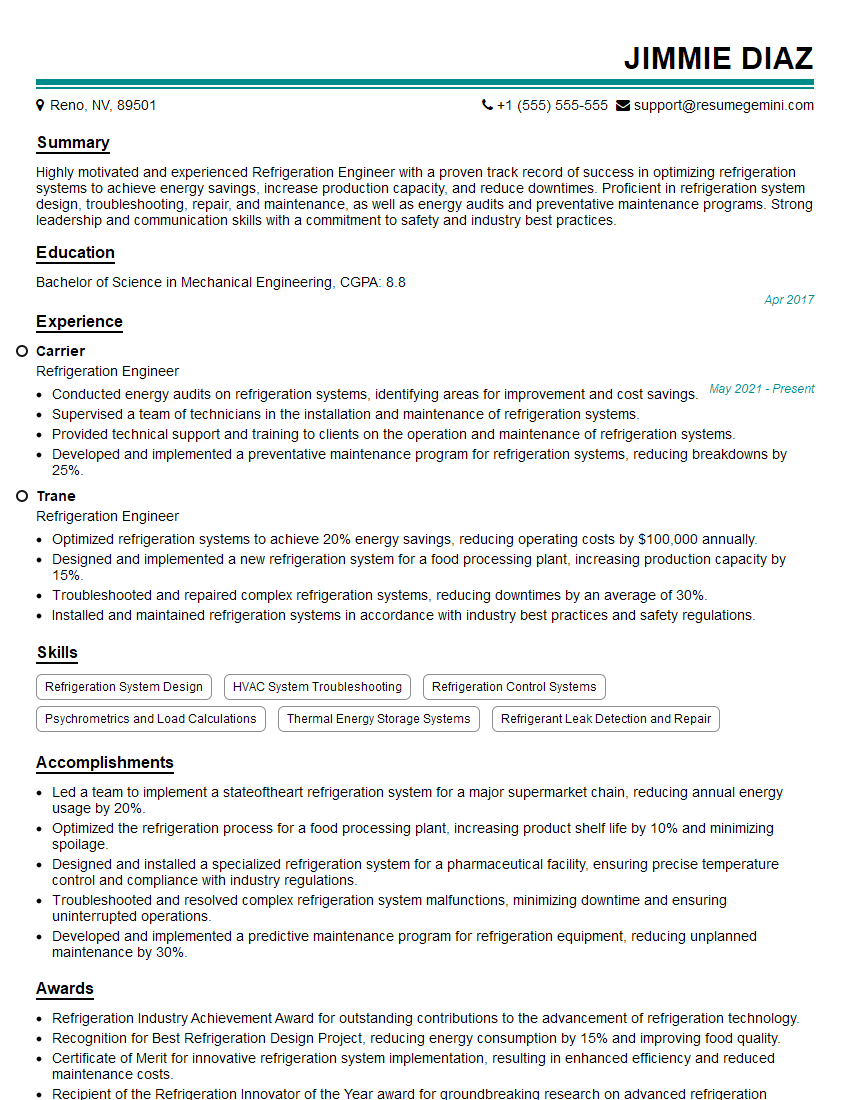
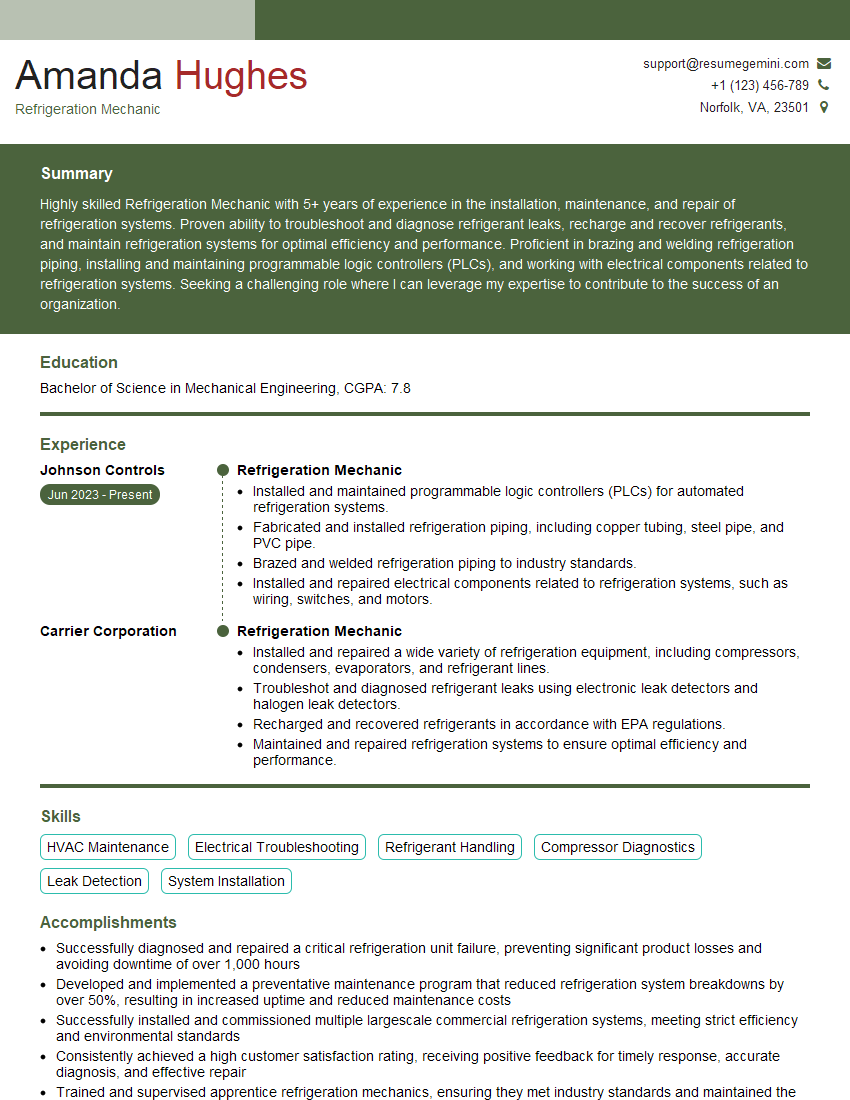
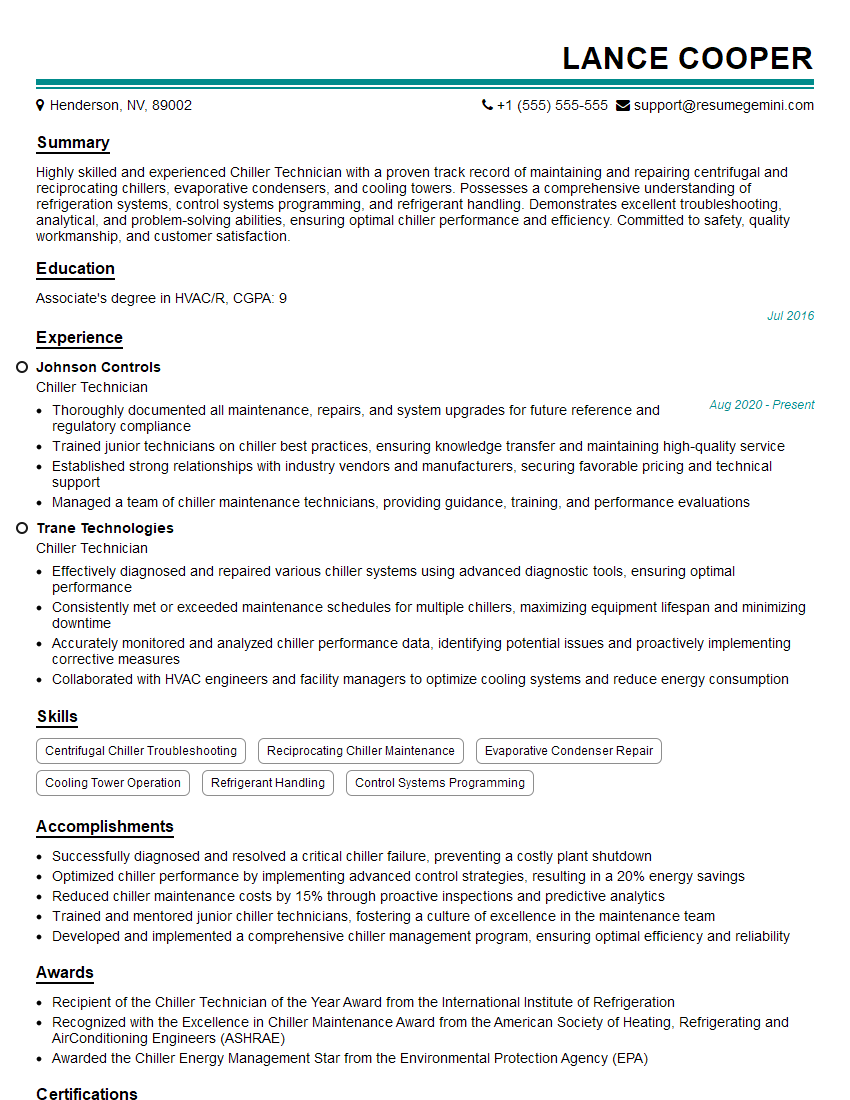
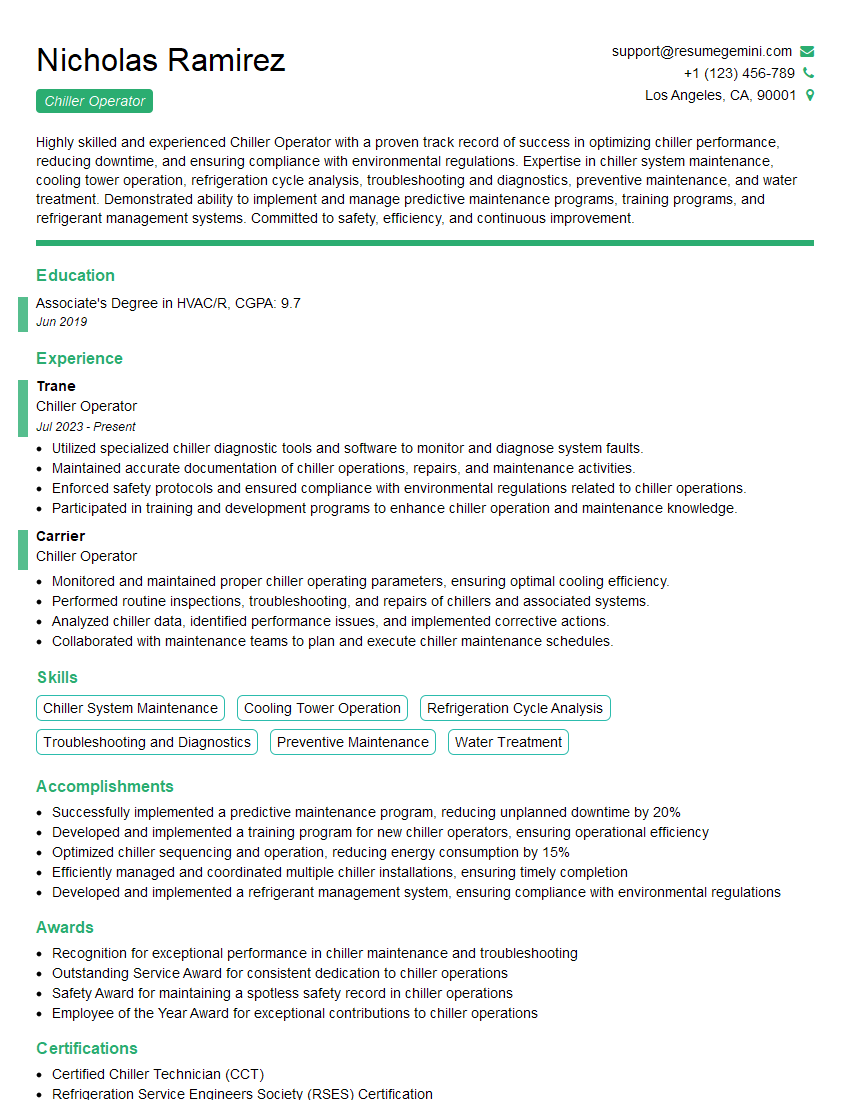
Mastering chiller technology opens doors to exciting and rewarding career opportunities in HVAC, industrial refrigeration, and building management. A strong understanding of chillers demonstrates valuable technical expertise and problem-solving skills highly sought after by employers. To significantly enhance your job prospects, focus on crafting a compelling and ATS-friendly resume that effectively highlights your skills and experience. ResumeGemini is a trusted resource that can help you build a professional resume that stands out. Examples of resumes tailored to the Chillers field are available to guide you.
Explore more articles
Users Rating of Our Blogs
Share Your Experience
We value your feedback! Please rate our content and share your thoughts (optional).
What Readers Say About Our Blog
Very informative content, great job.
good