The thought of an interview can be nerve-wracking, but the right preparation can make all the difference. Explore this comprehensive guide to Choir Management interview questions and gain the confidence you need to showcase your abilities and secure the role.
Questions Asked in Choir Management Interview
Q 1. What software do you use for choir management and scheduling?
For choir management and scheduling, I primarily use a combination of tools. A dedicated choral management software like Choir Manager or SingSharp is invaluable for tracking member details, attendance, communication, and scheduling rehearsals and performances. These often integrate calendar functions and allow for easy communication through email or messaging features. I also utilize a shared online calendar, such as Google Calendar, for easy access and collaboration among singers and myself. This allows members to easily see upcoming events and commitments. Finally, a simple spreadsheet program like Google Sheets or Microsoft Excel helps to manage financial records, including membership dues and performance expenses. The key is finding a system that integrates well and suits the choir’s specific needs and technological comfort level. For a smaller choir, even a well-organized system of spreadsheets and a shared calendar can be entirely sufficient.
Q 2. Describe your experience recruiting and retaining choir members.
Recruiting and retaining choir members is a multifaceted process. Recruitment involves actively engaging the community. This might include promoting auditions through local music schools, community centers, social media (Facebook, Instagram), and local newspapers. I also emphasize the joy of singing and the community aspect of choir membership. Open rehearsals are a great way to showcase our work and encourage new members. Retention strategies focus on building a strong sense of community and providing a rewarding experience. This includes clear communication, recognition of individual contributions, opportunities for leadership roles (section leaders), and ensuring the repertoire is varied and engaging. I actively solicit feedback from choir members to address any concerns and adapt accordingly. For instance, one year we found that members were feeling burnt out due to a heavy performance schedule, so we adjusted our calendar to offer more breathing room. This honest communication is crucial for a sustainable and thriving choir.
Q 3. How do you handle conflicts within a choir?
Conflicts are inevitable in any group setting. When conflicts arise within the choir, my approach emphasizes open communication and mediation. I encourage members to express their concerns respectfully and privately, whenever possible. I facilitate a discussion to understand each perspective, focusing on finding common ground and solutions rather than assigning blame. Sometimes, this requires separate conversations with individuals before a group meeting to help de-escalate tension. I also maintain a clear set of guidelines and expectations for choir behavior to prevent and mitigate conflicts. These guidelines cover everything from rehearsal etiquette to communication protocols. In rare cases, if conflict cannot be resolved through mediation, I may need to involve external resources, such as conflict resolution specialists. The goal is always to create a positive and respectful environment where everyone feels comfortable and valued.
Q 4. What strategies do you use to improve vocal technique?
Improving vocal technique is an ongoing process. My strategies involve a combination of individual and group instruction. This begins with foundational exercises focusing on breath support, posture, and vocal resonance. I regularly incorporate vocal warm-ups to prepare the vocal cords and improve flexibility. I also provide individualized feedback, paying attention to each singer’s strengths and weaknesses. For example, if a singer struggles with pitch accuracy, I’ll implement targeted exercises to improve their ear training and intonation. Listening to recordings of rehearsals is also a helpful tool to identify areas for improvement. I might also invite guest vocal coaches specializing in specific techniques to offer workshops or masterclasses, enriching the learning experience for everyone. Progress is tracked through observation, informal and formal assessments, and feedback from both the conductor and peers.
Q 5. How do you manage rehearsal time effectively?
Effective rehearsal management is key. I start each rehearsal with a clear agenda and a focused warm-up. I allocate specific time slots for different activities, such as vocal technique exercises, section work, and full choir rehearsals. I utilize efficient techniques like working on challenging sections in smaller groups to allow for individual attention. We also use efficient rehearsal methods, such as the ‘divide and conquer’ approach where a complex piece is broken down into manageable sections which are worked upon individually before the full piece is brought together. Regular breaks are crucial to prevent fatigue and maintain focus. Additionally, I encourage active participation from choir members, assigning them specific roles and responsibilities which develops teamwork and leadership skills. Finally, I make sure to end rehearsals on a positive note, reinforcing the progress made and building anticipation for the next rehearsal.
Q 6. How do you select repertoire appropriate for your choir’s skill level?
Selecting appropriate repertoire is essential for maintaining motivation and fostering a sense of accomplishment. I consider the choir’s skill level, vocal range, and musical style preferences when choosing pieces. I start by assessing the choir’s current capabilities, evaluating their strengths and weaknesses in areas such as intonation, rhythm, and dynamic control. I choose pieces that challenge the choir, but not to the point of frustration. A good balance of familiar and new pieces, easy and moderately difficult pieces, helps to maintain engagement and prevent monotony. I also consider the overall theme or narrative of concerts, aiming for a cohesive and enjoyable program. We frequently review recordings of previous performances to ensure that repertoire selections align with the choir’s capability. The goal is to choose music that is both challenging and rewarding, allowing the choir to grow musically while also enjoying the process.
Q 7. What are your methods for assessing choir member progress?
Assessing choir member progress is an ongoing process, not a one-time event. I use several methods to track individual and collective progress. This includes regular observation during rehearsals, paying close attention to intonation, rhythm, vocal quality, and overall performance. Informal feedback sessions are important for encouraging the choir members and helping them identify their strengths and weaknesses. Formal assessments, like sectionals or individual performance evaluations, can be scheduled to provide more detailed feedback. I also keep records of attendance and participation to track commitment levels. Finally, recordings of rehearsals and performances provide valuable data to identify improvement areas and showcase progress over time. These assessments are not solely about marking scores; they’re designed to help each member understand their progress and set goals for future improvement.
Q 8. How do you create a positive and supportive rehearsal environment?
Creating a positive and supportive rehearsal environment is crucial for a choir’s success. It’s about fostering a sense of community, mutual respect, and individual growth. Think of it like building a team – you need collaboration and encouragement to achieve a shared goal.
Open Communication: Establish clear expectations from the start, encouraging open dialogue about challenges or concerns. Regular check-ins with individual singers can help identify and address specific needs.
Positive Reinforcement: Focus on celebrating successes, both big and small. Highlight individual strengths and progress, rather than dwelling on mistakes. A simple ‘well done’ or specific praise for a challenging passage can make a big difference.
Respectful Feedback: Offer constructive criticism in a kind and supportive way, always emphasizing improvement and growth. Frame corrections as suggestions rather than accusations. I often use the ‘sandwich method’ – positive comment, constructive feedback, positive comment.
Inclusive Atmosphere: Create a welcoming space where everyone feels valued and respected, regardless of their skill level or background. Encourage social interaction amongst members to build camaraderie.
Fun and Engagement: Incorporate games or activities into rehearsals to break the ice and boost morale. A little laughter can go a long way in reducing stress and improving performance.
Q 9. Describe your experience with budgeting and fundraising for choir activities.
Budgeting and fundraising are essential aspects of choir management. It’s about balancing artistic aspirations with financial realities. I’ve had experience with everything from small-scale fundraising events to securing grants from arts councils.
Detailed Budgeting: I always start with a comprehensive budget that outlines all anticipated expenses (music, venue rental, travel, advertising etc.) and potential revenue streams (ticket sales, donations, sponsorships). Spreadsheet software is invaluable for this.
Diversified Fundraising: I employ a multi-faceted approach to fundraising. This can include organizing concerts with ticket sales, applying for grants, seeking corporate sponsorships, and creating crowdfunding campaigns online. Engaging with the community through smaller events can also raise awareness and funds.
Transparency and Accountability: Maintaining clear financial records is vital. I ensure all income and expenditure are meticulously documented, and I regularly provide financial reports to the choir members or governing body.
Grant Writing: I’ve successfully secured grants from arts councils by crafting compelling proposals that clearly articulate the choir’s artistic goals, community impact, and financial needs.
Q 10. How do you handle choir member absences and coverages?
Managing absences and coverages requires proactive planning and a flexible approach. It’s like managing a team’s availability for an important project – you need a strategy to deal with unforeseen circumstances.
Attendance Tracking: I use a system to track attendance, identifying potential absences in advance. This allows for proactive planning and communication.
Part-Specific Rehearsal: If a key part is missing, we’ll dedicate extra rehearsal time to the sections affected, ensuring the choir can still perform successfully.
Designated Understudies: Encouraging choir members to learn multiple parts helps mitigate the impact of absences, reducing reliance on a single person for a specific role. This creates a more robust and resilient choir.
Flexible Arrangements: I encourage members to communicate absences well in advance. When possible, we find ways to accommodate unavoidable absences without compromising the performance.
Q 11. How do you prepare a choir for a performance?
Preparing a choir for a performance involves a multi-stage process that combines musical training, technical refinement, and psychological preparation. It’s like training for a sporting event – it requires dedication, practice, and strategy.
Rehearsal Schedule: A well-structured rehearsal schedule is essential, balancing technical work with expressive performance. This schedule should include sufficient time for individual part work, sectionals, and full choir rehearsals.
Technical Refinement: This involves focusing on aspects like intonation, diction, balance, and blend. I use a combination of ear training and score study to address technical issues.
Expressive Performance: We explore the emotional content of the music, fostering musicality and creating a compelling performance. This includes focusing on dynamics, phrasing, and articulation.
Dress Rehearsals: Dress rehearsals are critical in simulating performance conditions. This helps to identify any last-minute issues and solidify the performance.
Performance Psychology: I help the choir manage performance anxiety through relaxation techniques and positive self-talk. Building confidence and reducing stress is essential for a successful performance.
Q 12. What is your approach to working with accompanists or instrumentalists?
Working with accompanists and instrumentalists requires clear communication, mutual respect, and a collaborative spirit. It’s a partnership focused on achieving a unified and harmonious sound.
Pre-Rehearsal Planning: I discuss the musical requirements with the accompanist or instrumentalist beforehand, clarifying details about tempo, dynamics, and phrasing. This includes sharing scores and discussing stylistic interpretations.
Open Communication: Maintaining open communication is key. During rehearsals, I offer constructive feedback while valuing their professional expertise.
Collaborative Approach: I view them as partners, not simply as accompanying musicians. Their insights and suggestions are valued, contributing to a richer musical experience.
Technical Rehearsal: Dedicated rehearsal time is allocated to coordinate between choir and instrumentalists/accompanist to ensure seamless integration.
Q 13. Describe your experience with different vocal styles and techniques.
My experience encompasses a wide range of vocal styles and techniques, from classical choral repertoire to contemporary gospel and jazz. Understanding the nuances of different styles is crucial for effective choir direction.
Classical Choral Music: This requires precision in intonation, diction, and phrasing, a focus on blending, and an understanding of historical performance practices.
Contemporary Styles: This may involve a more expressive and improvisational approach, incorporating elements of rhythm, groove, and vocal percussion. Flexibility and adaptability are key.
Vocal Techniques: My expertise includes breath control, resonance, vocal placement, and diction techniques. I tailor my approach to suit individual vocal types and the demands of the repertoire.
Q 14. How do you address vocal health concerns among choir members?
Vocal health is paramount. Preventing vocal strain and injuries is crucial for maintaining a healthy and vibrant choir. This involves education, awareness, and proactive measures.
Vocal Hygiene Education: I provide education on proper hydration, vocal rest, and avoiding vocal strain. This includes strategies for preventing colds and other illnesses that can affect vocal health.
Warm-up and Cool-down Routines: I implement comprehensive warm-up and cool-down exercises at each rehearsal to prepare the vocal cords and prevent strain.
Individual Vocal Checks: Regular checks on individual singers’ voices help to identify and address potential problems early on. I encourage singers to report any discomfort or pain immediately.
Referral to Specialists: If a singer experiences persistent vocal problems, I encourage them to seek advice from a vocal coach or medical professional.
Q 15. How do you manage the logistics of choir travel and performances?
Managing choir travel and performances requires meticulous planning and attention to detail. It’s akin to orchestrating a complex puzzle, ensuring every piece falls into place for a smooth and successful experience.
- Transportation: I begin by securing reliable transportation, considering factors like the number of singers, the distance, and the budget. This could involve chartering a bus, arranging carpools, or utilizing public transport. For larger choirs or longer distances, I’d explore cost-effective options like comparing bus charter companies and negotiating group rates.
- Accommodation: If an overnight stay is required, I research and book suitable accommodation – considering proximity to the performance venue, comfort levels, and budget constraints. I always confirm booking details well in advance and verify amenities to ensure the singers’ comfort.
- Performance Venue Coordination: This involves confirming all aspects with the venue, including stage access, sound equipment availability, dressing room facilities, and any potential logistical requirements. A site visit beforehand is crucial to identify potential challenges and develop contingency plans.
- Travel Insurance and Permits: Comprehensive travel insurance is essential to mitigate potential risks and unexpected events. I also ensure all necessary travel permits and documentation are in place, especially for international travel.
- Itinerary and Communication: A detailed itinerary is crucial for keeping everyone informed, including travel times, performance schedules, meal arrangements, and any other relevant information. Clear and consistent communication with the singers is key throughout the entire process.
For example, during a recent trip with a youth choir to a regional competition, I meticulously planned bus travel, secured accommodation with ample rehearsal space, and coordinated with the competition organizers weeks in advance. The smooth execution ensured the choir focused on the performance itself, resulting in a stunning success.
Career Expert Tips:
- Ace those interviews! Prepare effectively by reviewing the Top 50 Most Common Interview Questions on ResumeGemini.
- Navigate your job search with confidence! Explore a wide range of Career Tips on ResumeGemini. Learn about common challenges and recommendations to overcome them.
- Craft the perfect resume! Master the Art of Resume Writing with ResumeGemini’s guide. Showcase your unique qualifications and achievements effectively.
- Don’t miss out on holiday savings! Build your dream resume with ResumeGemini’s ATS optimized templates.
Q 16. What are your strategies for promoting choir concerts and events?
Promoting choir concerts and events requires a multifaceted approach, leveraging various marketing channels to reach a wide audience. Think of it as building excitement and anticipation, creating a buzz that attracts potential attendees.
- Social Media Marketing: Utilizing platforms like Facebook, Instagram, and Twitter allows for targeted advertising and direct engagement with potential audience members. Visually appealing posts, including photos and videos of rehearsals and previous performances, are key to generating interest.
- Website and Email Marketing: A well-designed website with event details, ticket purchasing options, and choir information is essential. Email marketing campaigns can effectively target specific audience segments, providing updates and reminders about upcoming events.
- Public Relations: Reaching out to local media outlets, such as newspapers, radio stations, and television channels, can create significant publicity. Press releases announcing concerts and events are vital for generating interest.
- Community Outreach: Collaborating with local businesses, schools, and community organizations can broaden your reach. This could involve distributing flyers, posters, or partnering on promotional events.
- Ticket Sales Platforms: Utilizing online ticket sales platforms (e.g., Eventbrite, Ticketmaster) streamlines the ticket purchasing process for attendees and provides valuable data on ticket sales.
For instance, when promoting a Christmas concert, we used a combination of social media campaigns featuring stunning visuals, email newsletters to our mailing list, and partnerships with local businesses to offer discounted tickets. The strategic approach resulted in a sold-out concert.
Q 17. Describe your experience with using technology to enhance choir rehearsals and performances.
Technology plays a transformative role in enhancing both choir rehearsals and performances. It allows for increased efficiency, improved communication, and enhanced creative expression.
- Rehearsal Software: Software like ‘Finale’ or ‘Sibelius’ allows for easy distribution of sheet music and facilitates collaborative annotation. This streamlines the rehearsal process and enables efficient feedback.
- Recording and Playback: Recording rehearsals using digital audio workstations (DAWs) allows for self-assessment by singers. Playback aids in identifying areas for improvement and tracking progress over time.
- Online Collaboration Tools: Platforms such as Zoom or Google Meet facilitate rehearsals for geographically dispersed singers, enabling remote participation and collaboration.
- Performance Enhancement Technology: Stage lighting and sound systems are increasingly controlled by advanced software, enabling stunning visuals and precise sound quality that contributes greatly to the immersive experience for the audience.
- Video Production and Streaming: Recording and streaming performances online expands the reach of the choir to a global audience, enabling wider appreciation of their talent and facilitating greater engagement with audiences.
For example, during the pandemic, we transitioned to online rehearsals using Zoom, integrating interactive elements to maintain engagement. We also live-streamed concerts, reaching a significantly larger audience than we could have achieved with in-person events alone. This showcases the immense flexibility and creative potential that technology unlocks for choral ensembles.
Q 18. How do you evaluate the success of a choir performance or program?
Evaluating the success of a choir performance or program is multifaceted, requiring a balanced approach that encompasses artistic merit, audience reception, and logistical efficiency.
- Artistic Merit: This involves assessing the quality of the performance, including factors like vocal tone, balance, phrasing, dynamics, intonation, and overall musical interpretation. Feedback from experienced musicians or music professionals can provide valuable insight.
- Audience Reception: This is gauged through things such as audience response, applause, standing ovations, and post-performance feedback. Surveys or informal conversations with audience members can provide valuable feedback on the concert experience.
- Logistical Efficiency: This encompasses evaluating the planning, execution, and effectiveness of travel, venue coordination, marketing, and budget management. Identifying areas for improvement is important to enhance future events.
- Member Satisfaction: It’s also crucial to assess member satisfaction, gauging their enjoyment of the experience, as this directly impacts choir retention and morale.
- Goal Achievement: Referencing the pre-set goals of the program or concert helps determine if the anticipated outcomes were achieved, whether it be audience size, funds raised, or artistic aims.
A recent spring concert exceeded expectations based on audience feedback, positive reviews, and a substantial increase in our social media following, indicating a successful outcome across multiple metrics.
Q 19. What is your approach to working with diverse groups of singers?
Working with diverse groups of singers requires sensitivity, understanding, and a commitment to inclusivity. It’s about creating a supportive environment where everyone feels valued and respected.
- Creating a Safe and Welcoming Environment: Establish clear guidelines on respectful behavior and communication to ensure inclusivity. Encourage open dialogue and address any concerns promptly.
- Understanding Different Musical Backgrounds: Recognize that singers may have diverse musical experiences and skill sets. Adapting teaching methods to accommodate varied skill levels is crucial for inclusive participation.
- Respecting Cultural Differences: Be mindful of different cultural norms and traditions. This includes considering attire, dietary requirements, and any cultural sensitivities that may affect participation.
- Adapting Repertoire: Selecting a diverse repertoire that reflects the singers’ backgrounds and interests fosters a sense of belonging. This could involve pieces from different cultures, historical periods, or musical genres.
- Open Communication: Encourage open communication and feedback from all singers to foster a sense of shared ownership and mutual respect.
In one choir, I successfully integrated singers from various cultural backgrounds by incorporating pieces from their musical traditions into the repertoire, creating a vibrant and enriching experience for everyone.
Q 20. How do you adapt your methods to different age groups or skill levels of singers?
Adapting methods to different age groups and skill levels necessitates a flexible and adaptable approach to teaching and rehearsal techniques. It’s about tailoring the experience to meet the specific needs and developmental stages of each group.
- Age-Appropriate Materials: Selecting age-appropriate music is crucial. Younger singers require simpler melodies and rhythms, while older singers can handle more complex arrangements and vocal techniques.
- Differentiated Instruction: Providing differentiated instruction involves tailoring the rehearsal process to accommodate diverse skill levels. This might include providing additional support to less experienced singers or offering more challenging exercises for advanced singers.
- Learning Styles: Recognizing diverse learning styles is critical. Some singers learn best through visual cues, while others benefit from auditory or kinesthetic approaches. Utilizing a multi-sensory approach enhances learning for everyone.
- Engagement Strategies: Engaging younger singers often involves incorporating games, interactive activities, and movement. Older singers might benefit from more in-depth musical analysis and exploration of the historical context of the pieces.
- Communication Styles: Adapting communication styles is crucial. Younger singers require clearer, simpler instructions, while older singers appreciate more nuanced explanations and discussions.
For example, when working with children, I incorporated movement and games into rehearsals to maintain their attention and enthusiasm. For adult singers, I engaged them in deeper discussions about musical interpretation and history.
Q 21. What are your strategies for providing constructive feedback to choir members?
Providing constructive feedback to choir members is essential for their growth and improvement. It requires a balance of positivity, specificity, and encouragement. It’s not about criticism, but about guidance and support.
- Positive Reinforcement: Begin with positive feedback, highlighting strengths and accomplishments before addressing areas for improvement. This creates a supportive atmosphere.
- Specific and Actionable Feedback: Focus on specific aspects of the performance, offering concrete suggestions for improvement. Avoid vague or general comments. For instance, instead of saying ‘try to sing better’, suggest ‘focus on improving your breath support by engaging your diaphragm more’.
- Focus on the Technique, Not the Person: Separate the performance from the performer. Offer feedback on the vocal technique rather than making personal criticisms. For example, say ‘The intonation was slightly sharp in that section’ rather than ‘You sang that note badly’.
- Individual and Group Feedback: Offer feedback in both individual and group settings. Individual feedback allows for personalized guidance, while group feedback clarifies common areas for improvement for the entire choir.
- Create a Culture of Learning: Foster a culture where constructive feedback is seen as a valuable tool for growth. Encourage singers to offer each other feedback in a supportive way.
I always make sure to frame my feedback within the context of improving the overall performance and celebrating individual growth. A positive and supportive feedback environment motivates singers to continuously improve their skills and contribute to the success of the choir.
Q 22. How do you handle unexpected challenges during rehearsals or performances?
Handling unexpected challenges during rehearsals or performances requires a calm, decisive approach and a flexible mindset. Think of it like conducting a ship through a storm – you need a clear plan, but also the ability to adapt to changing conditions.
Problem Identification: Quickly assess the situation. Is a singer ill? Is there a technical malfunction? Has a piece of music been misplaced?
Immediate Solution: Implement a quick fix. If a singer is absent, can another member cover their part? If there’s a technical issue, can we improvise or take a short break for troubleshooting? For a misplaced piece, can we use digital copies?
Communication: Clearly communicate the issue and the plan to the choir. Reassurance is key, maintaining their morale is paramount. A calm and confident demeanor from the conductor goes a long way.
Long-Term Prevention: After the event, analyze what went wrong and implement preventative measures. This could involve creating a more robust backup system, having substitute singers on standby, or improving communication protocols.
For example, once during a performance, the lighting unexpectedly went out. We quickly transitioned to a cappella singing of a song we knew by heart, turning the unexpected darkness into an intimate and memorable moment. The audience loved the impromptu change, and it built camaraderie within the choir.
Q 23. What is your experience with copyright and licensing for choral music?
Copyright and licensing for choral music are crucial for ethical and legal reasons. It’s about respecting the composers and publishers who create the music we love. Think of it as acknowledging the authors of a book you’re reading – you wouldn’t just copy it without permission.
Understanding Copyright: It’s vital to understand that using copyrighted music without permission is illegal. This includes public performances, recordings, and distribution.
Licensing: Organizations like ASCAP, BMI, and SESAC manage the rights for many musical works. Securing the appropriate license is essential before any public performance or recording of copyrighted choral music. The license usually specifies the performance timeframe, venue, and number of performances.
Public Domain Music: Music that’s in the public domain is free to use. However, even for public domain pieces, it’s good practice to properly attribute the composer.
Per-Copy Licensing: Some publishers may offer per-copy licensing for choral arrangements, allowing each choir member to purchase their own copy of the music.
I always make sure to research and obtain the necessary licenses well in advance of any performance or recording, keeping meticulous records of all licenses acquired.
Q 24. How do you maintain accurate records of choir members, attendance, and finances?
Maintaining accurate records is essential for smooth choir management, ensuring accountability, and managing resources effectively. This is analogous to maintaining a well-organized business – you can’t operate efficiently without knowing your assets and liabilities.
Membership Database: A digital database, possibly a spreadsheet or dedicated software, is crucial. It should contain contact information, emergency contacts, payment history, attendance records, and any relevant medical information (with consent).
Attendance Tracking: A simple sign-in sheet at each rehearsal or a dedicated app can efficiently track attendance. This data is valuable for evaluating participation, identifying potential issues, and planning future activities.
Financial Records: All income and expenditure should be meticulously documented. This includes membership fees, fundraising events, concert ticket sales, and any expenses related to music, costumes, or venue hire. Consider using accounting software for ease of management.
I use a combination of a spreadsheet for basic membership details and an accounting program for financial management. This system allows me to generate reports for audits, track expenses, and easily communicate financial information to choir members and supporters.
Q 25. Describe your experience with conducting auditions for choir members.
Auditions should be fair, inclusive, and focused on assessing the singer’s suitability for the choir. It’s not about finding the ‘perfect’ voice but about building a balanced and harmonious ensemble. Think of it as a team selection process—you need a variety of skills to form a strong unit.
Preparation: Prepare a selection of musical excerpts that showcase different vocal ranges and styles. This gives a fair assessment of the applicant’s skills.
Fair Assessment: Use a standardized scoring system to ensure impartiality. Focus on vocal technique, musicality, sight-reading ability, and their ability to blend with other voices.
Feedback: Provide constructive feedback to each applicant, regardless of the outcome. This shows respect for their effort and helps them improve.
Diversity: Aim for a diverse choir, encompassing various vocal ranges, ages, and backgrounds. This enriches the choir’s sound and fosters a welcoming atmosphere.
I always ensure a comfortable and supportive atmosphere during auditions, emphasizing the importance of participation and encouraging each applicant to perform their best.
Q 26. How do you incorporate audience engagement into your choir performances?
Audience engagement elevates the performance experience for both the choir and the audience, creating a shared sense of joy and appreciation. It’s about creating a connection, not just delivering a performance.
Program Notes: Well-written program notes provide context and insights into the music, allowing the audience to appreciate the artistry on a deeper level.
Introduction/MC: A brief introduction before the performance, explaining the selections or the choir’s history, can increase audience interest and anticipation.
Interaction: A brief conversation or interaction with the audience during the performance, if appropriate for the style of music, can add warmth and personality.
Visual Elements: Consider incorporating visual elements such as lighting or choreography to enhance the performance and captivate the audience.
In one performance, we introduced each piece with a short, engaging anecdote about the composer or the history of the music. This helped the audience understand and connect with the pieces much more deeply.
Q 27. What are your methods for building relationships with the choir and its supporters?
Building strong relationships is the backbone of successful choir management. It’s about fostering a sense of community and shared purpose, similar to building strong team relationships in any organisation.
Communication: Regular communication is key. This can include newsletters, emails, social media updates, or informal gatherings.
Social Events: Organize social events to foster camaraderie among members. This can strengthen bonds and create a stronger sense of belonging.
Feedback Mechanisms: Establish clear channels for feedback from choir members. This shows you value their opinions and helps you improve choir management.
Recognition and Appreciation: Show appreciation for members’ dedication and contributions. Acknowledge milestones, celebrate achievements, and give constructive feedback.
We organize an annual choir retreat, combining rehearsals with fun activities. This opportunity allows the choir members to build connections outside of the formal rehearsal environment.
Q 28. How do you ensure the safety and well-being of choir members during rehearsals and performances?
Ensuring the safety and well-being of choir members is paramount. It requires a proactive and comprehensive approach, much like planning for safety in any group activity.
Risk Assessment: Regularly assess potential risks, such as slips, trips, falls in performance venues, or health issues during rehearsals. Address these with preventative measures.
First Aid and Emergency Plan: Have a first-aid kit readily available and ensure at least one person has basic first-aid training. Establish clear emergency procedures and communication protocols.
Venue Safety: Before each rehearsal or performance, assess the venue’s safety, including accessibility for people with disabilities, emergency exits, and potential hazards.
Health Considerations: Be mindful of health concerns, especially during periods of illness. Encourage hygiene practices and ensure adequate ventilation and hydration.
We always have a designated first-aider at all rehearsals and performances. We also maintain a comprehensive emergency contact list for all choir members.
Key Topics to Learn for Choir Management Interview
- Artistic Vision & Programming: Understanding how to curate a diverse and engaging repertoire, balancing artistic merit with audience appeal and choir capabilities. Practical application: Developing a season’s program, considering stylistic variety, singer skill levels, and audience demographics.
- Member Recruitment & Retention: Strategies for attracting new singers and fostering a positive and inclusive choir environment to minimize turnover. Practical application: Designing effective audition processes, creating welcoming social events, and implementing effective communication channels.
- Budget Management & Fundraising: Developing and managing a choir’s budget, securing funding through grants, donations, and ticket sales. Practical application: Creating a realistic budget, identifying potential funding sources, and tracking expenses effectively.
- Rehearsal Techniques & Leadership: Employing effective rehearsal strategies to maximize efficiency and achieve musical excellence. Practical application: Designing productive rehearsal plans, providing constructive feedback, and motivating singers to reach their full potential.
- Performance Logistics & Administration: Organizing and executing successful concerts and performances, including venue booking, marketing, ticket sales, and technical aspects. Practical application: Managing contracts, coordinating with venue staff, and overseeing all aspects of performance execution.
- Communication & Collaboration: Effectively communicating with singers, board members, donors, and the wider community. Practical application: Maintaining open and transparent communication channels, resolving conflicts constructively, and building strong relationships with stakeholders.
- Legal & Ethical Considerations: Understanding copyright laws, contracts, and best practices for ethical conduct in choir management. Practical application: Ensuring compliance with relevant regulations and maintaining ethical standards in all activities.
Next Steps
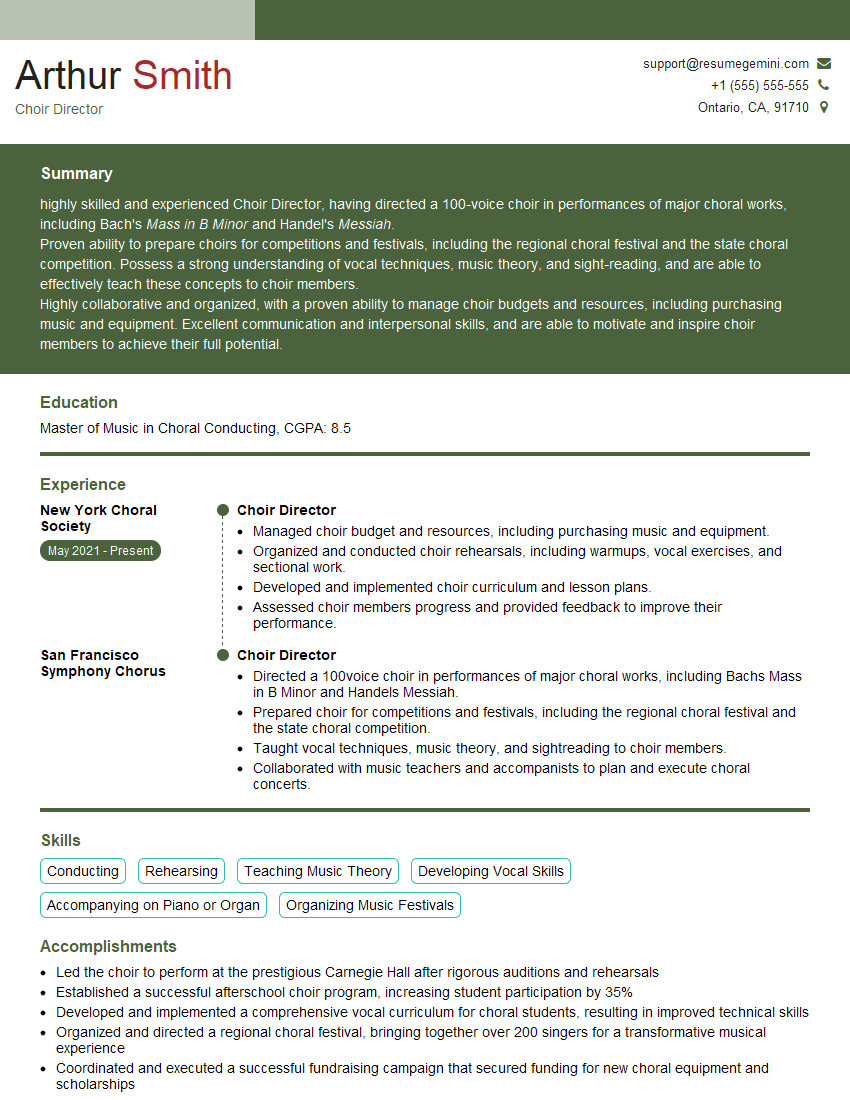
Mastering Choir Management opens doors to rewarding careers filled with creative expression and community engagement. To significantly enhance your job prospects, a well-crafted, ATS-friendly resume is crucial. ResumeGemini is a trusted resource that can help you build a professional and impactful resume, ensuring your qualifications shine. Examples of resumes tailored to Choir Management are available to help guide you.
Explore more articles
Users Rating of Our Blogs
Share Your Experience
We value your feedback! Please rate our content and share your thoughts (optional).
What Readers Say About Our Blog
Very informative content, great job.
good