Every successful interview starts with knowing what to expect. In this blog, we’ll take you through the top Circuit Board Wiring interview questions, breaking them down with expert tips to help you deliver impactful answers. Step into your next interview fully prepared and ready to succeed.
Questions Asked in Circuit Board Wiring Interview
Q 1. Explain the difference between surface mount and through-hole components.
The key difference between surface mount (SMT) and through-hole components lies in how they’re attached to the PCB. Think of it like this: through-hole components are like old-fashioned nails, sticking through the board and soldered on both sides, while surface mount components are like tiny stickers, affixed only to the surface.
- Through-hole components have leads (legs) that extend through the PCB and are soldered on the opposite side. They’re typically larger and easier to handle manually, making them suitable for prototyping or applications where robust connections are paramount. Examples include larger resistors, capacitors, and connectors.
- Surface mount components have no leads; instead, they have small pads that solder directly onto the PCB’s surface. They are much smaller, allowing for higher component density and miniaturization. They are commonly found in modern electronics like smartphones and laptops. Examples include many integrated circuits (ICs), smaller resistors and capacitors.
Choosing between SMT and through-hole depends on factors like board size, component size, cost, and manufacturing process. Smaller devices often favor SMT for space saving, while larger designs may incorporate both technologies.
Q 2. Describe various PCB trace routing techniques and their applications.
PCB trace routing is the process of designing the pathways (traces) for electrical signals on a circuit board. Effective routing is crucial for signal integrity and minimizing noise. Several techniques exist:
- Manhattan routing: Traces run only horizontally or vertically, creating a grid-like pattern. This is simple but may not be the most efficient in terms of space. It’s often used for prototyping or simpler boards.
- 45-degree routing: Traces can run at 45-degree angles in addition to horizontal and vertical, allowing for more compact layouts. This technique is a good balance between simplicity and efficiency.
- Auto-routing: PCB design software automatically routes the traces, often based on a set of rules. While convenient, it may not always yield the optimal layout and often needs manual review and adjustments for critical signals.
- Manual routing: The designer manually places and routes each trace, giving them full control over the process and allowing for fine-tuning for optimal performance. This is common for high-speed circuits or those requiring precise signal control.
The choice of technique depends on the design complexity, signal speed, space constraints, and designer expertise. High-speed designs, for example, demand careful manual routing and often require consideration of impedance matching and signal integrity rules.
Q 3. What are the considerations for choosing different PCB materials (e.g., FR4, Rogers)?
The choice of PCB material significantly impacts the board’s performance and reliability. Different materials have varying properties in terms of thermal conductivity, dielectric constant, and loss tangent.
- FR4 (fiberglass-reinforced epoxy): This is the most common and cost-effective material. It offers a good balance of properties, making it suitable for many general-purpose applications. However, it has limitations at higher frequencies due to its relatively high dielectric constant and loss tangent.
- Rogers materials (e.g., RO4003, RO4350): These are high-frequency materials used in applications demanding excellent signal integrity, such as high-speed digital circuits and microwave applications. They have lower dielectric constants and loss tangents than FR4, reducing signal attenuation and distortion at high frequencies. They are, however, more expensive.
Factors to consider include the operating frequency, required dielectric constant, thermal management needs, and budget. For simple low-frequency circuits, FR4 is usually sufficient. High-frequency or high-power applications may require the superior performance and cost of materials like Rogers.
Q 4. How do you determine the appropriate size and gauge of wire for a given application?
Selecting the appropriate wire size and gauge involves considering the current carrying capacity, voltage drop, and mechanical robustness required. The American Wire Gauge (AWG) system is commonly used to specify wire size, with smaller AWG numbers indicating thicker wires.
A larger gauge (smaller AWG number) is needed for higher currents to prevent overheating and voltage drop. To determine the correct gauge, refer to AWG tables that list current carrying capacity for various wire types and insulation materials. This information is also available through online calculators. Additionally, consider the mechanical strain the wire will endure and choose a gauge that can withstand it. Using too thin of a gauge can lead to breakage and short circuits.
For example, a high-current application like powering a motor might require a thicker wire (e.g., 10 AWG or lower) while a low-current application such as a sensor signal might only need a thin wire (e.g., 24 AWG or higher). It’s always recommended to overestimate the current carrying capacity by a safety margin to avoid issues.
Q 5. Explain the importance of grounding and shielding in PCB design.
Grounding and shielding are critical for managing noise and ensuring signal integrity in PCB design. They act as a reference point for all signals and protect against electromagnetic interference (EMI).
- Grounding: A well-designed ground plane provides a low-impedance path for return currents, minimizing noise and preventing signal reflections. Multiple ground planes are sometimes used to separate different types of signals. The ground plane should be continuous and well-connected.
- Shielding: Shielding involves encasing sensitive components or traces within a conductive material (e.g., metal foil or a metal enclosure) to block external electromagnetic fields from interfering with the signals. Shielding is particularly crucial for high-speed circuits and those susceptible to EMI.
Poor grounding and shielding can lead to signal degradation, malfunctions, and even system failure. Consider the susceptibility of your circuit to noise and choose appropriate grounding and shielding techniques accordingly. This often involves strategic placement of ground planes, careful signal routing, and use of shielding cans or enclosures.
Q 6. What are the different types of connectors used in PCB design, and when would you use each?
Many connectors are used in PCB design, each suited to specific applications. The selection depends on factors such as signal type (analog, digital, high-speed), number of pins, required durability, and cost.
- Through-hole connectors: These are soldered directly to the PCB, offering robust connections. Common types include terminal blocks, screw terminals, and DIN connectors.
- Surface mount connectors: These are smaller and suitable for high-density applications. Examples include edge connectors, mezzanine connectors, and various types of chip connectors.
- Ribbon connectors: These are often used for connecting PCBs to displays or other peripherals using ribbon cables.
- Board-to-board connectors: These are specifically designed for connecting multiple PCBs and come in various types based on signal speeds and pin counts.
- Circular connectors: These are durable and often used in applications requiring high reliability, like aerospace or industrial settings.
For example, a high-speed data link would likely require a specialized high-speed connector with impedance matching, while a simple power connection might only need a robust screw terminal. The selection process should always consider the specific needs of the application.
Q 7. Describe your experience with PCB design software (e.g., Altium, Eagle, KiCad).
I have extensive experience with several leading PCB design software packages, including Altium Designer, Eagle, and KiCad. My proficiency encompasses schematic capture, PCB layout, routing, simulation, and generating manufacturing files.
Altium Designer: I’ve used Altium extensively for complex, multi-layer designs, leveraging its advanced features for high-speed signal routing, impedance control, and thermal analysis. I’m proficient in using Altium’s libraries and creating custom components.
Eagle: Eagle is a solid choice for simpler projects, and I’ve found it particularly useful for prototyping and smaller designs. Its user-friendly interface and efficient routing capabilities make it suitable for quick turnaround projects.
KiCad: KiCad is a powerful open-source option, and I’m comfortable using it for various designs, particularly where cost-effectiveness is a key concern. While its learning curve is slightly steeper than some commercial packages, its capabilities are quite impressive.
In each software, my approach involves a structured design methodology, beginning with a well-defined schematic, followed by careful component placement and routing, and finally, rigorous design rule checks and simulations before releasing files for manufacturing. My experience ensures robust and reliable designs created efficiently and effectively.
Q 8. How do you ensure signal integrity in high-speed PCB designs?
Signal integrity in high-speed PCB designs refers to the accurate and reliable transmission of signals without distortion or loss. High-speed signals, traveling at speeds approaching the speed of light, are susceptible to various forms of interference and degradation. Ensuring signal integrity is crucial for the proper functioning of any high-speed circuit.
- Controlled Impedance: Maintaining a consistent impedance throughout the signal path is paramount. This prevents reflections and signal distortion. We achieve this through careful design of trace width, spacing, and dielectric layer thickness. Simulation tools like HyperLynx are essential for optimizing impedance.
- Careful Routing: High-speed traces should be routed away from high-power planes and other noise sources. Minimizing bends and keeping traces as straight as possible helps reduce signal reflections. Using differential pairs, where two signals are routed closely together, helps cancel out common-mode noise.
- Proper Termination: Terminating the signal lines at the source and destination with the appropriate impedance (typically 50 ohms) absorbs reflections and prevents signal ringing. The type of termination (series, parallel, or both) depends on the specific application.
- Decoupling Capacitors: Strategically placed decoupling capacitors are essential to suppress noise and provide a stable power supply to the high-speed components. These are usually placed very close to the IC pins.
- Grounding and Shielding: A well-designed ground plane and shielding helps to minimize EMI (electromagnetic interference) and crosstalk between signals. Multiple ground planes can be employed for better noise reduction.
For example, in designing a high-speed data acquisition system, neglecting impedance control would lead to signal attenuation and timing errors, resulting in inaccurate data readings. Proper termination would minimize signal reflections and guarantee data integrity.
Q 9. What are the common causes of PCB failures, and how can they be prevented?
PCB failures can stem from various causes, broadly categorized into design flaws, manufacturing defects, and environmental factors.
- Design Flaws: These include incorrect component placement, inadequate thermal management (leading to overheating and component failure), insufficient clearance between traces (causing shorts), and improper impedance control (resulting in signal integrity issues).
- Manufacturing Defects: Common issues are solder bridges (unintentional connections between traces), insufficient solder joints (leading to intermittent connections), damaged traces due to improper handling, and component placement errors.
- Environmental Factors: Exposure to extreme temperatures, humidity, or corrosive substances can degrade the PCB and its components. Vibration and mechanical stress can also lead to cracks in the board or solder joints.
Prevention involves a multi-faceted approach:
- Rigorous Design Reviews: Thorough design reviews, including simulations and checks for design rule violations, are essential to catch potential issues early.
- Controlled Manufacturing Processes: Strict adherence to manufacturing specifications, quality checks at each stage of production, and proper handling of PCBs minimize manufacturing defects.
- Conformal Coating or Encapsulation: Protecting the PCB with a conformal coating or encapsulation helps to shield it from environmental factors.
- Robust Design for Thermal Management: Incorporate heat sinks, thermal vias, and appropriate component selection to manage heat dissipation effectively.
For instance, a poorly designed power supply circuit might overheat, leading to component damage and system failure. Implementing proper thermal vias and heat sinks can prevent this. Similarly, using a conformal coating protects the board from moisture-induced corrosion in harsh environments.
Q 10. Explain your understanding of impedance matching and its importance.
Impedance matching refers to the practice of ensuring that the impedance of a transmission line (such as a PCB trace) is equal to the impedance of the source and load. This is crucial for efficient signal transmission, minimizing reflections, and maximizing power transfer.
Think of it like a water pipe. If the pipe diameter suddenly changes, some water will be reflected back, creating turbulence. Similarly, a mismatch in impedance causes signal reflections. These reflections can lead to signal distortion, attenuation, and even damage to sensitive components.
The importance of impedance matching is especially pronounced in high-speed digital and RF circuits. Mismatched impedance can result in:
- Signal Reflections: Reflections cause signal distortion and ringing, potentially leading to data errors.
- Signal Attenuation: Some signal energy is lost due to reflections, weakening the signal strength.
- Standing Waves: Reflections can create standing waves on the transmission line, leading to unpredictable signal behavior.
We achieve impedance matching through techniques such as using transmission lines of appropriate characteristic impedance, employing termination resistors at the end of the line, and using matching networks (e.g., L-match, Pi-match).
For example, in high-speed data communication, impedance mismatches can cause significant signal degradation, leading to data loss and system instability. In antenna design, impedance matching is crucial for efficient power transfer from the transmitter to the antenna and vice-versa.
Q 11. How do you troubleshoot a faulty circuit board?
Troubleshooting a faulty circuit board requires a systematic approach.
- Visual Inspection: Begin by carefully examining the board for any obvious physical defects such as broken traces, damaged components, or solder bridges. A magnifying glass can be helpful.
- Schematic Review: Review the schematic to understand the circuit’s functionality and identify potential failure points based on the symptoms.
- In-Circuit Testing: Use a multimeter to check the voltage and continuity at various points in the circuit, comparing readings with the expected values based on the schematic.
- Signal Tracing: Use an oscilloscope to observe the signal waveforms at different points in the circuit, identifying any abnormalities or unexpected behavior.
- Component Testing: Test individual components (resistors, capacitors, ICs) using a multimeter or other specialized test equipment to identify faulty parts.
- Logic Analyzer (For Digital Circuits): For digital circuits, a logic analyzer can capture the digital signals to pinpoint timing or logic errors.
- Thermal Imaging: Using a thermal imaging camera can identify components that are excessively heating, indicating a potential problem.
For example, if a circuit isn’t powering on, you might first check the power supply voltage. If the voltage is okay, you can then check for continuity in the power path to identify a potential break in the circuit. Systematic testing helps pinpoint the faulty component or connection, leading to a quick and efficient repair.
Q 12. Describe your experience with various soldering techniques (e.g., surface mount, through-hole).
My experience encompasses both surface mount (SMT) and through-hole soldering techniques. SMT involves placing surface-mount components onto pads on the PCB surface, while through-hole soldering connects components with leads that pass through the board.
- Surface Mount Technology (SMT): I’m proficient in using various SMT soldering methods, including reflow soldering (using a reflow oven or hot air station) and hand soldering (using a fine-tipped soldering iron). I understand the importance of proper temperature profiles in reflow soldering to avoid component damage. I also have experience with stencil printing for applying solder paste accurately.
- Through-Hole Technology: I’m skilled in hand soldering through-hole components, ensuring clean, strong solder joints that are free of bridges and cold solder joints. I understand techniques for managing heat effectively to avoid damaging sensitive components.
I’ve worked with various soldering irons and hot air stations, and I’m familiar with different solder types (lead-free and leaded), understanding their properties and how they affect the solder joint quality. In a past project, using a hot air station to reflow surface mount components was crucial for achieving a reliable high-density interconnect, whereas careful hand-soldering was needed for delicate through-hole connectors to avoid damaging their pins.
Q 13. What are the common manufacturing processes involved in PCB production?
PCB manufacturing is a multi-stage process. The common steps include:
- Artwork and Design: The process begins with creating the PCB layout using CAD software. This involves placing components, routing traces, and defining design rules.
- Film Generation: The design is converted into photo-sensitive films (often using photoplotting), which serve as masters for the manufacturing process.
- Substrate Preparation: Copper-clad laminate (the PCB base material) is cleaned and prepared for etching.
- Photolithography and Etching: The photo-sensitive films are used to create a patterned etching of the copper, defining the traces and pads.
- Drilling: Holes are drilled through the substrate for through-hole components.
- Plating: The drilled holes and PCB traces are plated with copper (and sometimes other metals) to enhance conductivity and durability.
- Solder Mask Application: A protective layer is applied to the PCB to prevent solder from bridging between traces.
- Silkscreen Printing: Component and trace markings are printed on the PCB.
- Component Placement and Soldering: Components are placed on the PCB and soldered using SMT or through-hole methods.
- Testing and Inspection: The completed PCB undergoes testing to ensure functionality and compliance with specifications.
Understanding these processes is important for quality control and efficient collaboration with manufacturers. For example, issues during the etching process might lead to faulty traces, highlighting the need for rigorous quality control at each stage.
Q 14. How do you interpret a PCB schematic?
Interpreting a PCB schematic involves understanding the graphical representation of an electronic circuit. It shows the interconnection of components and their values.
Each component is represented by a symbol, and lines connecting symbols represent the wires. The schematic provides information about:
- Components: The types and values of all components used (e.g., resistors, capacitors, transistors, integrated circuits).
- Interconnections: How the components are connected to each other, forming the circuit.
- Signals: The flow of signals through the circuit, often indicated by signal names.
- Power Supply: The power supply connections to the circuit.
- Ground: The ground connections.
Reading a schematic requires familiarity with electronic component symbols and the ability to trace signal paths. For instance, a simple resistor symbol would be represented by a zig-zag line, while an IC might be depicted by a rectangular symbol with pins indicating its connections. Understanding the circuit’s function requires combining the information from the schematic with the knowledge of the individual component functions.
By systematically analyzing the schematic, one can understand the intended behavior of the circuit and perform troubleshooting or design modifications more effectively. For example, tracing the path of a particular signal helps in understanding its origin and its eventual destination within the circuit.
Q 15. What are your experiences with different types of PCB manufacturing processes?
My experience encompasses a wide range of PCB manufacturing processes, from the traditional through-hole technology (THT) to the prevalent surface mount technology (SMT). I’ve worked extensively with various techniques within these categories. For example, in THT, I’ve managed projects using wave soldering, selective soldering, and hand soldering for smaller, more intricate components. In SMT, I’ve utilized reflow soldering with various profiles optimized for different component types and densities. Furthermore, I’ve been involved in advanced processes like high-density interconnect (HDI) PCB manufacturing and flexible printed circuit (FPC) fabrication, understanding the unique challenges and advantages each offers. My experience also includes working with different substrate materials, including FR-4, high-Tg materials, and ceramic substrates, each demanding a specific approach to ensure quality and reliability.
For instance, one project involved a high-speed communication device requiring HDI technology to achieve the necessary trace density and signal integrity. The design considerations were significantly different compared to a simple project using standard FR-4 material and THT components. We had to carefully manage the thermal stresses during reflow to prevent delamination and optimize the manufacturing process to account for the fine pitch components. Another project involved flexible PCBs for a wearable device, requiring a thorough understanding of material selection and bending radii limits to ensure the durability and functionality of the device.
Career Expert Tips:
- Ace those interviews! Prepare effectively by reviewing the Top 50 Most Common Interview Questions on ResumeGemini.
- Navigate your job search with confidence! Explore a wide range of Career Tips on ResumeGemini. Learn about common challenges and recommendations to overcome them.
- Craft the perfect resume! Master the Art of Resume Writing with ResumeGemini’s guide. Showcase your unique qualifications and achievements effectively.
- Don’t miss out on holiday savings! Build your dream resume with ResumeGemini’s ATS optimized templates.
Q 16. Explain the concept of thermal management in PCB design.
Thermal management in PCB design is crucial for ensuring the reliability and longevity of electronic devices. Heat generated by components, especially high-power components like processors and power regulators, needs to be effectively dissipated to prevent overheating and potential failures. Poor thermal management can lead to component degradation, reduced performance, and even catastrophic failures. Think of it like a car engine – if it overheats, it can seize. Similarly, electronic components can suffer irreversible damage from excessive heat.
Effective thermal management involves several strategies. These include the use of heat sinks, thermal vias (metalized holes connecting different PCB layers to improve heat conduction), copper pours (large areas of copper to spread heat), and the strategic placement of components to optimize airflow. Material selection also plays a role; using high thermal conductivity materials can significantly improve heat dissipation. Simulation tools like ANSYS and FloTHERM are commonly used to predict temperature distributions and optimize the thermal design before physical prototyping. For example, a high-power LED driver PCB might require a large copper pour underneath the power components, coupled with a heat sink attached to the top layer, to effectively dissipate heat and prevent damage.
Q 17. Describe your understanding of EMI/EMC compliance and how it relates to PCB design.
EMI/EMC compliance refers to ensuring that a device meets the electromagnetic interference (EMI) and electromagnetic compatibility (EMC) standards set by regulatory bodies like the FCC and CE. EMI refers to unwanted electromagnetic emissions from a device that can interfere with other devices. EMC, on the other hand, refers to a device’s ability to function correctly in an electromagnetic environment without being susceptible to interference. Poor EMI/EMC performance can lead to malfunction, unreliable operation, and regulatory non-compliance. This is critical for any product going to market.
PCB design plays a vital role in achieving EMI/EMC compliance. Strategies include using appropriate shielding techniques, implementing filtering circuits (both input and output filtering), using controlled impedance traces, and employing ground planes to minimize noise and unwanted emissions. Proper layout and routing techniques, such as minimizing loop areas and using twisted pair wiring, also significantly impact EMI/EMC performance. During the design phase, simulation tools are used to predict potential problems, and testing procedures are implemented to verify compliance with relevant standards. A common example is the use of ferrite beads on high-speed signal lines to reduce EMI emissions.
Q 18. What are the different types of PCB layers and their functions?
A PCB can have multiple layers, each serving a specific purpose. The most common layers include:
- Signal Layers: These carry the electrical signals between components. Multiple signal layers are common in complex designs to reduce crosstalk and improve routing efficiency.
- Power Planes: These are usually solid copper layers dedicated to supplying power and ground to the components. They provide a stable and low-impedance path for power distribution, minimizing noise and voltage fluctuations.
- Ground Planes: These are similar to power planes but dedicated to ground connections. They are crucial for shielding and reducing noise. Multiple ground planes can be used to separate different signal groups.
- Inner Layers: These are buried layers between the top and bottom layers, often used for signal routing or additional power/ground planes. They contribute to overall signal integrity and thermal management.
The number of layers depends on the complexity of the design. A simple PCB might only have two layers (top and bottom), while a complex high-speed design could have 10 or more layers. Each layer’s function is meticulously planned to optimize the overall performance and reliability of the board.
Q 19. How do you manage design changes and revisions in a PCB project?
Managing design changes and revisions in a PCB project requires a robust system for tracking and implementing those changes effectively. Using a version control system like Git for schematic and layout files is crucial. Each revision should be clearly documented, with notes specifying the changes made and the rationale behind them. A formal change request process ensures that all stakeholders are aware of the proposed changes and their impact. Before implementing any change, a thorough impact assessment should be conducted to identify potential conflicts with other design aspects.
When significant design changes are introduced, a design review is critical to verify the functionality and manufacturability of the revised design. The use of a collaborative design platform allows real-time review and feedback, streamlining the revision process. Furthermore, updated Gerber files, reflecting the latest revisions, should be promptly generated and distributed to the manufacturer, with proper change order documentation to avoid production delays and errors.
Q 20. Explain the process of generating manufacturing documentation for a PCB.
Generating manufacturing documentation for a PCB involves creating a complete set of files that convey all the necessary information to the PCB manufacturer. This documentation typically includes:
- Gerber files: These are vector-based files representing the different layers of the PCB, including copper layers, solder mask, silkscreen, and drill data. They are the primary files used by the manufacturer to fabricate the PCB.
- Drill files: These specify the location and size of the holes needed for components and vias.
- Bill of Materials (BOM): This lists all the components required for assembly, along with their specifications and part numbers.
- Assembly drawings: These drawings illustrate the placement of components on the PCB.
- Mechanical drawings: These provide the overall dimensions and any mechanical features of the PCB.
- Fabrication specifications: These specify requirements like minimum trace widths, minimum hole sizes, and surface finish.
Accuracy and completeness of this documentation are paramount to prevent errors in the manufacturing process and ensure the final product meets the design specifications. I use specialized software like Altium Designer or Eagle to generate these files and meticulously review them before sending them to the manufacturer. This includes performing design rule checks (DRC) to verify compliance with the fabrication capabilities of the manufacturer.
Q 21. What are the key considerations for selecting a suitable power supply for a PCB?
Selecting a suitable power supply for a PCB involves considering several factors:
- Voltage and Current Requirements: The power supply must provide the correct voltage and sufficient current to meet the needs of all components on the PCB. This involves calculating the total power consumption of the circuit.
- Efficiency: A highly efficient power supply minimizes power loss and heat generation, enhancing the overall system efficiency.
- Regulation: The power supply’s ability to maintain a stable output voltage under varying load conditions is crucial. Poor regulation can lead to unstable operation and component malfunction.
- Size and Form Factor: The physical size and mounting requirements of the power supply must be compatible with the available space on the PCB and the overall system design.
- EMI/EMC Compliance: The power supply must comply with EMI/EMC standards to avoid interference with other components or systems.
- Cost: Finding a balance between performance, features, and cost is important.
For instance, a high-power application might necessitate a switching power supply for its higher efficiency compared to a linear regulator. Conversely, a low-power application could utilize a simple linear regulator for its simplicity and cost-effectiveness. Proper selection requires a detailed analysis of the power requirements and operating conditions of the entire system.
Q 22. How do you ensure the reliability and durability of your PCB designs?
Ensuring the reliability and durability of PCB designs is paramount. It involves a multi-faceted approach starting from the initial design phase and extending through manufacturing and testing. Think of it like building a house – you wouldn’t use substandard materials or poor construction techniques. Similarly, PCB design requires careful consideration of several factors.
- Component Selection: Choosing high-quality, reliable components with appropriate operating temperature ranges and certifications is crucial. Using components with a longer lifespan reduces the risk of failures.
- Trace Routing and Width: Proper trace routing minimizes signal interference and ensures sufficient current carrying capacity. Thinner traces are prone to higher resistance and overheating, while wider traces might lead to unnecessary space consumption. Careful consideration of trace width based on current requirements is essential.
- Thermal Management: Heat is a major enemy of electronics. Effective thermal management, including the use of heat sinks, vias for heat dissipation, and appropriate component placement, is crucial to prevent overheating and premature failure.
- Material Selection: The choice of PCB substrate material (FR-4, high-Tg materials, etc.) greatly impacts durability and performance. High-Tg materials offer better resistance to temperature changes and mechanical stress.
- Design Rules and Constraints: Adhering to strict design rules, including minimum trace widths, clearances, and spacing, prevents shorts and opens, which are major sources of failure. These rules are often defined by the IPC standards.
- Manufacturing Process Consideration: Understanding the manufacturing processes (SMT, through-hole, etc.) and designing for manufacturability (DFM) ensures the final product is built to specification and meets quality standards.
By meticulously considering these factors, we significantly improve the reliability and longevity of the PCB designs, resulting in robust and dependable products.
Q 23. What are your experiences with different types of testing procedures for PCBs (e.g., functional testing, in-circuit testing)?
Testing is an indispensable part of the PCB design process. It verifies functionality and identifies potential issues before mass production. I’ve extensively worked with various testing procedures, including:
- Functional Testing: This involves testing the complete PCB functionality to ensure it meets the specified requirements. This might include automated test equipment (ATE) performing various tests, simulating real-world conditions, and verifying signal integrity and timing.
- In-Circuit Testing (ICT): ICT directly tests the connections between components on the PCB. It verifies that components are correctly soldered and connected according to the design. This is excellent for catching soldering errors or component placement issues early on.
- Fly Testing: This is a form of functional testing where the board is tested while mounted in the final product environment, mimicking the working environment to ensure full operational integrity.
- Boundary Scan Testing (JTAG): Utilizing JTAG interfaces allows for testing of internal nodes and circuitry without needing direct access, greatly simplifying testing for complex PCBs.
The choice of testing procedure often depends on the complexity of the PCB, budget constraints, and desired level of testing coverage. A combined approach is often the most effective, providing comprehensive verification of the PCB’s functionality and reliability.
Q 24. Explain your familiarity with PCB standards and guidelines (e.g., IPC standards).
I am very familiar with various PCB standards and guidelines, primarily the IPC (Institute for Printed Circuits) standards. These standards provide a baseline for consistent and reliable PCB design and manufacturing. IPC standards cover everything from design rules (IPC-2221) to acceptance criteria (IPC-A-600) and manufacturing processes. Understanding these standards is essential to ensure the PCB meets industry best practices, minimizing the risk of failures and promoting interoperability.
For instance, IPC-2221 defines the recommended clearances and spacing between traces, components, and vias, preventing shorts and improving signal integrity. IPC-A-600 outlines the acceptance criteria for the manufactured PCB, defining acceptable visual defects and ensuring quality control throughout the manufacturing process.
Adhering to these standards not only improves the reliability of the PCB but also facilitates communication and collaboration between designers, manufacturers, and customers. It provides a common language and set of expectations, leading to more efficient and successful projects.
Q 25. Describe a time you had to solve a complex problem related to circuit board wiring.
I once encountered a challenging issue involving intermittent signal loss on a high-speed data acquisition PCB. The problem was particularly frustrating because it was only reproducible under specific environmental conditions (high temperature and humidity). Initial troubleshooting pointed towards faulty components, but replacement didn’t resolve the issue.
We systematically investigated all aspects of the design, including the trace routing, component placement, grounding scheme, and signal integrity. Ultimately, we discovered that the intermittent signal loss was caused by trace impedance mismatch combined with the expansion and contraction of the PCB material under varying temperature and humidity conditions. The mismatch caused signal reflections, leading to data loss.
The solution involved modifying the trace routing to optimize impedance matching, adding controlled impedance lines to reduce reflection, and incorporating additional grounding planes to reduce noise. We also implemented improved thermal management to minimize the temperature fluctuations that were exacerbating the problem. After these modifications, the signal loss was eliminated, and the PCB functioned reliably under all tested conditions. This experience highlighted the importance of a thorough understanding of signal integrity principles and the need for systematic problem-solving techniques in PCB design.
Q 26. What is your experience with different types of wire insulation and their properties?
My experience encompasses a wide range of wire insulation materials, each with its unique properties. The choice of insulation depends heavily on the application, considering factors such as temperature, voltage, chemical resistance, and flexibility.
- PVC (Polyvinyl Chloride): A common and cost-effective option, offering good insulation properties but limited temperature resistance and flexibility. Suitable for low-voltage, low-temperature applications.
- Teflon (PTFE): Excellent high-temperature and chemical resistance, making it suitable for demanding applications. However, it is more expensive and less flexible than PVC.
- Silicone Rubber: High-temperature resistance and flexibility, often used in automotive and aerospace applications. It also offers good dielectric strength.
- PU (Polyurethane): Offers good abrasion resistance and flexibility, commonly used in applications requiring movement or vibration resistance.
- Ethylene Propylene Rubber (EPR): Offers good heat and chemical resistance, often seen in high-voltage applications.
Understanding the properties of different insulation materials allows me to choose the most appropriate option for a given application, ensuring the wire harness meets the required specifications and provides long-term reliability.
Q 27. Describe your familiarity with design for manufacturing (DFM) principles in PCB design.
Design for Manufacturing (DFM) is a critical aspect of PCB design that focuses on optimizing the design for efficient and cost-effective manufacturing. It’s about thinking ahead and considering the manufacturing process throughout the design phase, rather than as an afterthought. This proactive approach helps prevent costly revisions and delays later in the project.
Key aspects of DFM in PCB design include:
- Component Selection: Choosing components readily available from reliable suppliers.
- Component Placement: Optimizing component placement to minimize manufacturing time and costs, avoiding tight spaces that make component placement difficult.
- Trace Routing: Designing traces that are easily manufacturable, avoiding extremely fine traces that are difficult to produce with high yield.
- Solder Mask and Silkscreen Design: Ensuring that solder mask and silkscreen designs are clear and unambiguous, aiding in proper soldering and identification of components.
- Drill Hole Sizes: Using standard drill hole sizes to avoid issues during the manufacturing process.
- Testability: Designing the PCB with test points to simplify the testing process.
By incorporating DFM principles, we create designs that are easier to manufacture, leading to faster turnaround times, reduced costs, and a higher yield of functional PCBs. It’s a crucial aspect of creating a successful and cost-effective product.
Key Topics to Learn for Circuit Board Wiring Interview
- Schematic Reading and Interpretation: Understanding circuit diagrams, component identification, and tracing signal paths.
- Soldering Techniques: Proficiency in various soldering methods (through-hole, surface mount), including proper techniques for minimizing damage and ensuring strong joints. Practical application: Troubleshooting faulty solder joints.
- Component Placement and Orientation: Understanding component placement guidelines, polarity considerations, and the impact of incorrect placement on circuit functionality.
- Wiring Techniques: Mastering different wiring methods (point-to-point, using wire harnesses, etc.) Practical application: Optimizing wire routing for signal integrity and minimizing crosstalk.
- Testing and Troubleshooting: Using multimeters, oscilloscopes, and other diagnostic tools to identify and resolve wiring faults. Practical application: Diagnosing intermittent connections or short circuits.
- Circuit Board Layout Principles: Understanding the impact of component placement on signal integrity, EMI/RFI shielding, and thermal management.
- IPC Standards and Best Practices: Familiarity with industry standards and guidelines for circuit board assembly and testing.
- Safety Procedures: Understanding and adhering to safety protocols when working with electrical components and equipment.
- Common Circuit Board Components and their Functions: A solid grasp of the function and properties of resistors, capacitors, inductors, integrated circuits, etc.
- Troubleshooting Common Wiring Issues: Open circuits, short circuits, cold solder joints, and other common problems.
Next Steps
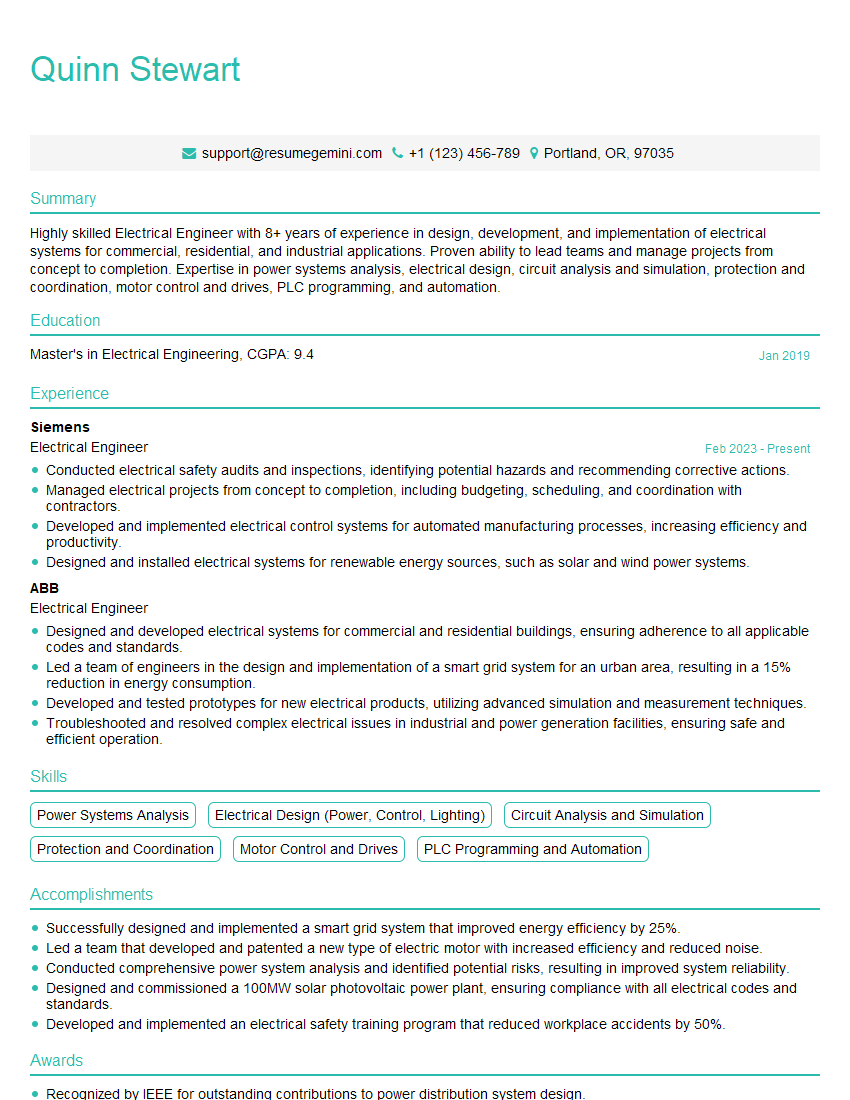
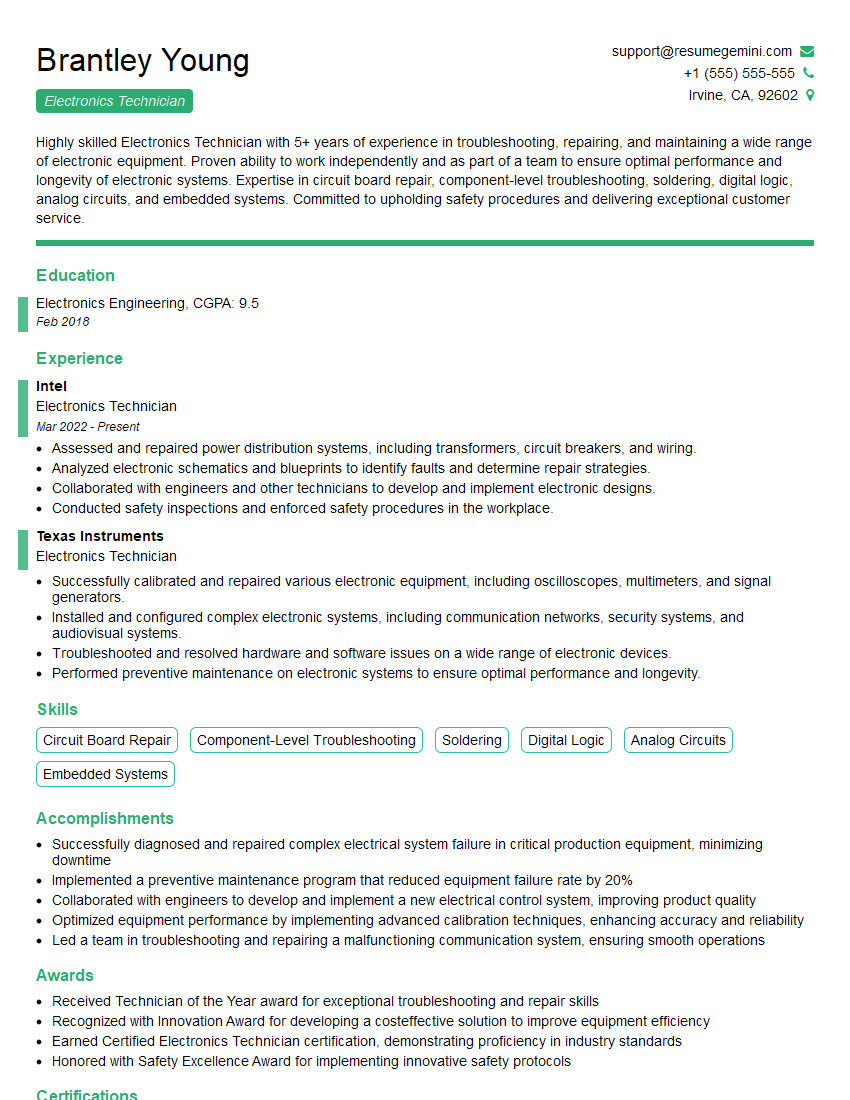
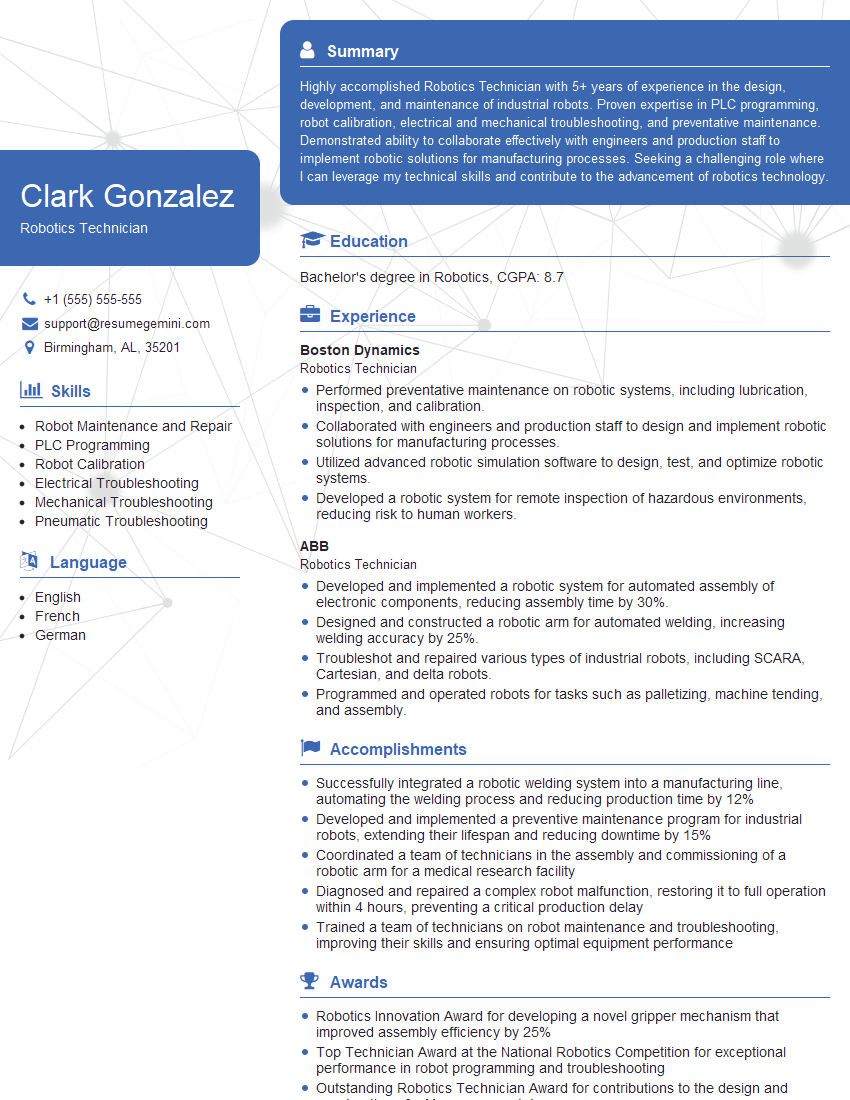
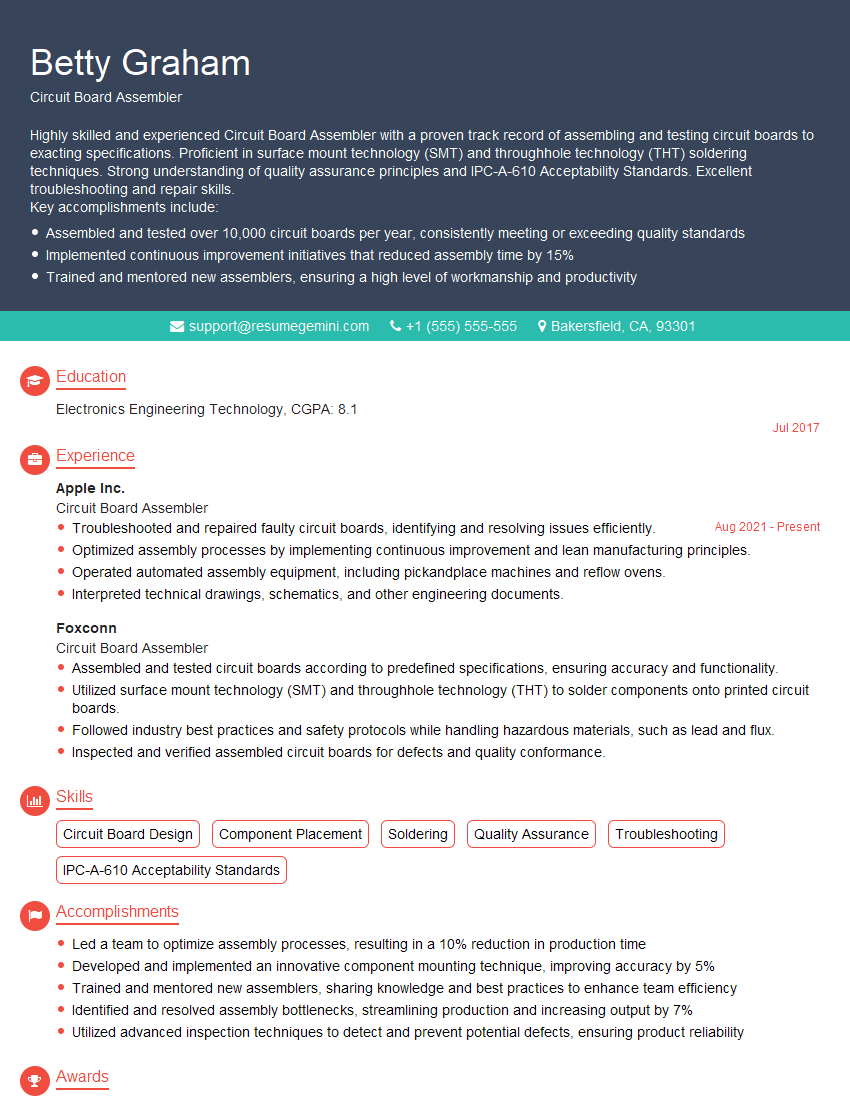
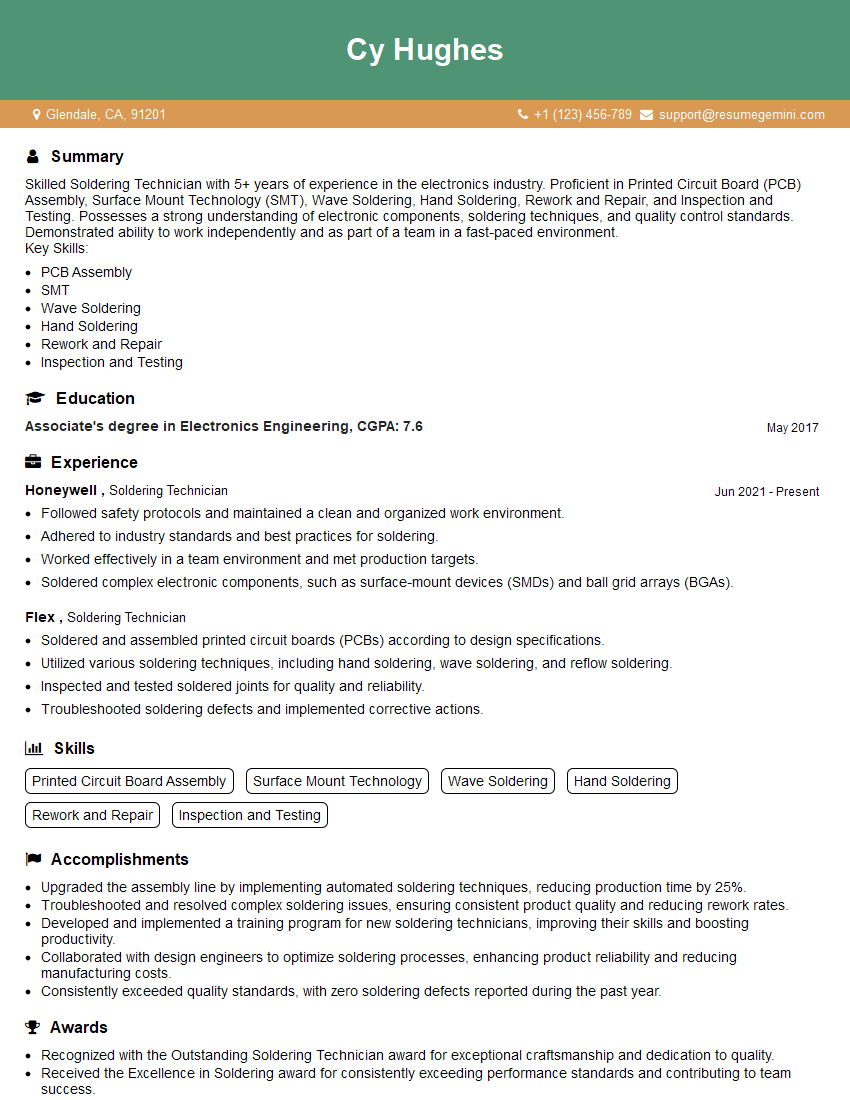
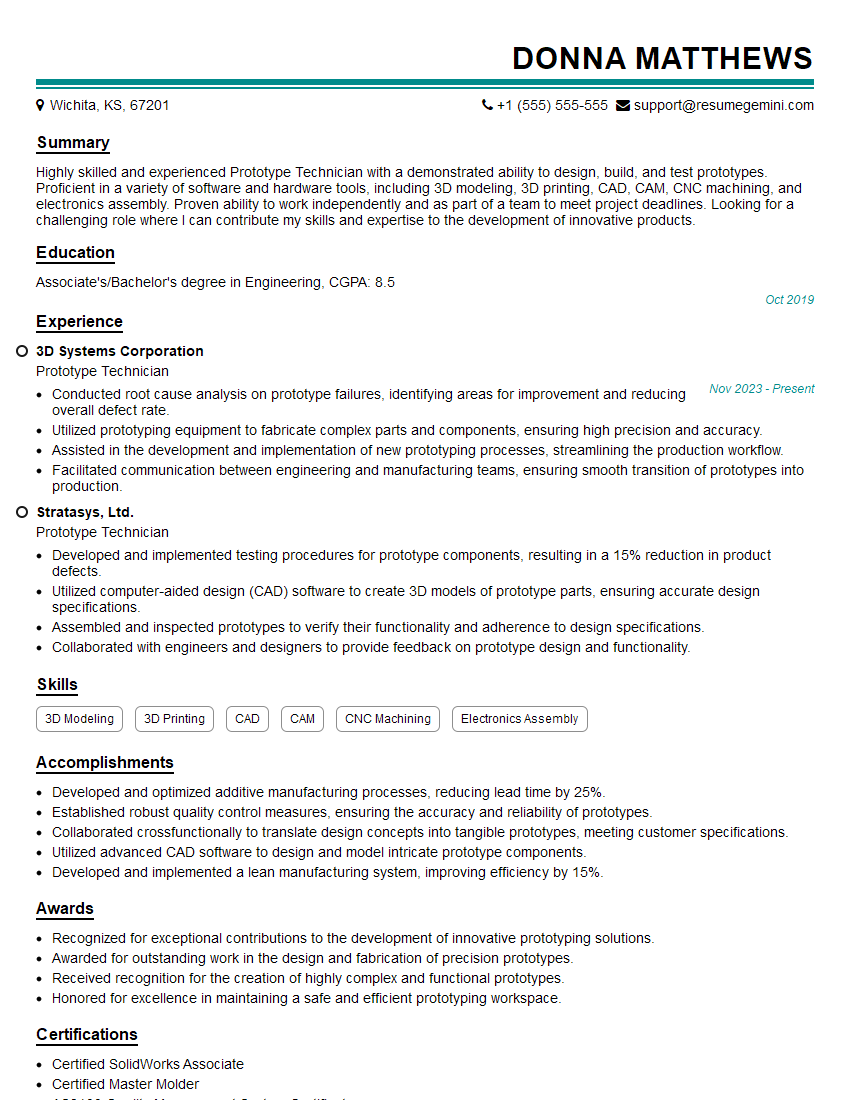
Mastering circuit board wiring opens doors to exciting career opportunities in electronics manufacturing, repair, and design. A strong foundation in these skills significantly enhances your employability and paves the way for career advancement. To increase your chances of landing your dream job, it’s crucial to present yourself effectively. Creating an ATS-friendly resume is paramount in today’s competitive job market. We recommend using ResumeGemini, a trusted resource for crafting professional and impactful resumes. ResumeGemini offers examples of resumes tailored to Circuit Board Wiring to help you get started. Take advantage of these resources and present your skills and experience in the best possible light!

Explore more articles
Users Rating of Our Blogs
Share Your Experience
We value your feedback! Please rate our content and share your thoughts (optional).
What Readers Say About Our Blog
Very informative content, great job.
good