The thought of an interview can be nerve-wracking, but the right preparation can make all the difference. Explore this comprehensive guide to Claiming Process Management interview questions and gain the confidence you need to showcase your abilities and secure the role.
Questions Asked in Claiming Process Management Interview
Q 1. Describe your experience with different claims management systems.
My experience spans various claims management systems, from legacy on-premise solutions to modern cloud-based platforms. I’ve worked with systems like Guidewire ClaimCenter, Duck Creek Claims, and several bespoke systems developed in-house. Each system offers unique functionalities, but my expertise lies in understanding their core processes – intake, investigation, adjudication, and payment – and optimizing them for efficiency and accuracy. For instance, with Guidewire ClaimCenter, I spearheaded the implementation of automated workflows that reduced claim processing time by 15%. In contrast, working with a bespoke system required a deeper understanding of the underlying code to customize workflows and reporting functionalities to meet specific business needs. This diverse experience allows me to adapt quickly to new systems and leverage their strengths to achieve optimal claim management.
Q 2. Explain your understanding of claims lifecycle management.
Claims lifecycle management encompasses all stages of a claim, from initial reporting to final settlement. Think of it as a carefully orchestrated process. It starts with the first notice of loss (FNOL), where the claim is registered and initial information is gathered. This is followed by investigation, where the validity and extent of the claim are assessed. Next comes adjudication, where the claim is evaluated against the policy terms and a decision is made on liability and indemnity. Finally, the claim is settled, with payment issued or the claim denied. Throughout this process, constant monitoring, communication with the claimant, and documentation are crucial. Effective lifecycle management employs technology and streamlined processes to ensure efficiency, accuracy, and regulatory compliance. For example, using automated task assignments based on claim type significantly speeds up processing and improves consistency.
Q 3. How do you prioritize claims based on urgency and complexity?
Prioritization is key to efficient claims management. We use a multi-faceted approach considering both urgency and complexity. Urgency might be determined by factors like potential for significant financial loss, regulatory deadlines, or claimant distress. Complexity depends on the nature of the claim – whether it involves multiple parties, extensive investigation, or legal complexities. A matrix is often used, combining these factors to create a prioritized queue. Claims with high urgency and complexity are tackled first, followed by those with high urgency and low complexity, and so on. For example, a claim involving a serious injury with potential for significant litigation would be prioritized over a simple, straightforward claim for minor damage. We also use sophisticated software that automatically assigns priority scores based on pre-defined rules.
Q 4. What are your methods for identifying and mitigating potential fraud?
Fraud detection and mitigation are critical. We employ a multi-layered approach that combines data analytics, advanced algorithms, and human expertise. Data analytics help identify patterns suggestive of fraud, such as unusually high claim frequency from a single location or claims with similar details filed around the same time. Algorithms can flag potentially fraudulent claims based on predefined risk scores. Human review is equally important – experienced adjusters can identify subtle inconsistencies or red flags missed by automated systems. For example, we might flag a claim for further investigation if the claimant’s account of events contradicts witness statements or photographic evidence. Regular training for our adjusters to spot patterns and tactics used by fraudsters is also essential.
Q 5. How do you handle high-volume claims processing efficiently?
Handling high-volume claims efficiently requires a combination of automation, process optimization, and effective resource allocation. Automating tasks like data entry, document processing, and initial claim assessments frees up adjusters to focus on complex claims. Process optimization involves streamlining workflows, eliminating redundancies, and employing technologies that expedite claim processing. Effective resource allocation ensures that claims are assigned to adjusters with the appropriate skills and experience. For instance, deploying optical character recognition (OCR) for document processing can significantly reduce manual data entry time. Furthermore, adopting a case management system with automated routing and task assignment optimizes resource allocation based on adjuster skill sets and workload.
Q 6. Describe your experience with claims reserving and forecasting.
Claims reserving and forecasting are crucial for financial planning and risk management. Claims reserving involves estimating the amount of money needed to settle future claims. This estimate is based on various factors, including the number of open claims, the severity of the claims, and historical claim data. Forecasting projects future claim costs based on trends and patterns in historical data and anticipated changes in the business environment. We use actuarial techniques and statistical models to develop these reserves and forecasts. Accurate reserving and forecasting are essential for setting premiums, managing solvency, and making informed business decisions. For example, a sudden increase in the number of high-severity claims might indicate a need for a review of underwriting practices or a premium adjustment.
Q 7. Explain your knowledge of regulatory compliance within claims management.
Regulatory compliance is paramount in claims management. We need to adhere to numerous regulations, including those related to data privacy (like GDPR and CCPA), consumer protection, and fair claims handling practices. Our processes and systems are designed to meet these requirements. This involves implementing robust data security measures, maintaining accurate records, ensuring transparency in claim handling, and timely communication with claimants. We conduct regular audits and training to ensure our teams are up-to-date on all relevant regulations. Failure to comply can result in hefty fines and reputational damage, so maintaining compliance is a top priority.
Q 8. How do you ensure accuracy and completeness in claims documentation?
Ensuring accuracy and completeness in claims documentation is paramount to efficient and fair claims processing. It involves a multi-pronged approach focusing on standardized procedures, thorough training, and robust technology.
Standardized Forms and Templates: We utilize pre-designed forms and templates to guide claimants in providing all necessary information. This reduces ambiguity and ensures consistency across all claims.
Data Validation Checks: Our system incorporates automated checks to identify inconsistencies or missing data. For example, if a claim for medical expenses lacks supporting documentation like receipts or diagnostic reports, the system flags it for immediate attention. This prevents incomplete claims from progressing further.
Training and Quality Assurance: All claims processors undergo rigorous training on documentation requirements. We regularly conduct quality assurance reviews to identify areas for improvement in both documentation and processing.
Clear Communication with Claimants: We provide clear, concise instructions and readily accessible communication channels (e.g., phone, email, portal) to address claimant queries and ensure they provide all necessary information. For instance, if a claimant is unsure about what constitutes acceptable documentation, we proactively offer guidance.
Think of it like building a house – you wouldn’t start construction without a complete blueprint. Similarly, a complete and accurate claim document is the foundation for a smooth and timely resolution.
Q 9. What is your experience with claims audits and quality control?
Claims audits and quality control are integral to maintaining the integrity of the claims process. My experience involves both proactive and reactive measures.
Proactive Audits: I’ve designed and implemented regular audits focusing on specific claim types or processors to identify trends and areas for improvement. For instance, a recent audit revealed a high denial rate for a particular type of claim, leading to process refinement and enhanced training on that specific claim type.
Reactive Audits: These are triggered by specific issues, like a significant increase in claim denials or inconsistencies in payment amounts. These audits help pinpoint the root cause and implement corrective actions. We might discover a systemic problem in our data validation process that requires a software update, or perhaps a lack of clarity in policy interpretation that needs additional training.
Key Performance Indicators (KPIs): We monitor several KPIs such as claim processing time, accuracy rate, and denial rate. These metrics are tracked regularly to highlight potential issues before they escalate into major problems.
Regular Reporting: Detailed audit reports are generated and presented to management, highlighting both positive outcomes and areas for improvement. This ensures continuous process refinement and enhanced quality control.
Essentially, claims auditing is like a health check for our claims process; it proactively identifies and addresses potential problems, minimizing errors and ensuring smooth operation.
Q 10. How do you manage challenging or difficult claimants?
Managing challenging claimants requires empathy, patience, and a structured approach. It’s about understanding their perspective while adhering to established claim procedures.
Active Listening and Empathy: I start by actively listening to the claimant’s concerns, attempting to understand their situation from their perspective. This helps diffuse tension and build rapport. Showing empathy goes a long way in de-escalating a difficult situation.
Clear and Concise Communication: I use clear, concise language, avoiding jargon, to explain the claims process and any decisions made. I also provide written confirmation of our discussions to avoid miscommunication.
Escalation Protocol: If the situation remains unmanageable, I follow a clear escalation protocol to involve a supervisor or other appropriate personnel.
Documentation: Meticulous documentation of all communications and actions is crucial for transparency and accountability. It provides a clear record of the steps taken to resolve the issue.
Imagine it like conflict resolution; you need to understand both sides of the story and work towards a fair and mutually agreeable solution within the constraints of the process.
Q 11. Describe your experience with claim denial processes and appeals.
Claim denial processes and appeals are critical components of effective claims management. They require a fair and transparent approach.
Clear Denial Reasons: When a claim is denied, a clear and concise explanation of the reason for denial is provided to the claimant. This includes referencing specific policy clauses or requirements that weren’t met. We avoid ambiguous language.
Appeals Process: We have a well-defined appeals process that allows claimants to challenge denial decisions. This involves providing additional documentation or clarifying information. Each appeal is reviewed carefully and fairly.
Timely Response: We aim to respond to appeals within a defined timeframe, keeping the claimant informed of the progress. This ensures that the process isn’t unnecessarily protracted.
External Review: In cases where internal appeals are unsuccessful, we may utilize external review processes, such as independent medical reviews, to ensure fairness and objectivity.
Just like a court system, the appeals process ensures that claims are reviewed thoroughly and that decisions are fair and consistent with the established policies.
Q 12. How do you collaborate with other departments, like underwriting or legal?
Collaboration with other departments, such as underwriting and legal, is crucial for effective claims management. It ensures a holistic and informed approach to claim resolution.
Underwriting: We work closely with underwriting to ensure that policy coverage is accurately assessed and applied in claim evaluation. For instance, we might consult with underwriting to clarify ambiguities in policy wording or to verify the validity of coverage for specific circumstances.
Legal: The legal department provides guidance on complex claims with potential legal ramifications or where regulatory compliance is critical. They offer crucial input on claim denials that may lead to litigation. This ensures that our processes are legally sound and minimizes risks.
Communication Channels: We utilize regular meetings, shared platforms, and direct communication to maintain open and transparent collaboration with these departments.
Information Sharing: Sharing relevant information promptly and efficiently amongst departments is vital. This enables quicker decision-making and avoids delays in claim resolution.
This collaborative approach is akin to a well-coordinated team; each department plays a vital role in achieving a successful outcome.
Q 13. What metrics do you use to track claims management performance?
We track various metrics to monitor and improve claims management performance. These metrics provide insights into efficiency, accuracy, and customer satisfaction.
Claim Cycle Time: The average time taken to process a claim from submission to settlement. This helps us identify bottlenecks in the process.
Claim Accuracy Rate: The percentage of claims processed correctly, minimizing errors and ensuring fair payments.
Claim Denial Rate: The percentage of claims denied. High denial rates can point to areas for improvement in the claims process or policy clarity.
Customer Satisfaction Scores: Feedback from claimants regarding their experience with the claims process. This provides valuable insights into areas requiring improvement in our service.
Cost per Claim: The total cost of processing a claim, including personnel, technology, and other expenses. This helps us optimize our processes for efficiency.
These metrics are like a dashboard, giving us a clear view of the overall health of our claims management process.
Q 14. How do you handle escalated claims or complaints?
Escalated claims or complaints require a structured and prompt response to maintain customer satisfaction and protect the company’s reputation.
Immediate Acknowledgement: The claimant is immediately acknowledged and informed that their complaint is being addressed.
Thorough Investigation: A thorough investigation is conducted to understand the root cause of the issue. This may involve reviewing claim documentation, interviewing staff, and gathering additional information.
Fair and Timely Resolution: A fair and timely resolution is offered to the claimant, considering the circumstances and applicable policies. This might include a revised payment, an apology, or other appropriate measures.
Documentation: All communication and actions related to the escalated claim are meticulously documented to maintain transparency and accountability.
Senior Management Involvement: In more serious or complex cases, senior management may be involved to oversee the resolution and ensure compliance with company policies.
Think of it as damage control; swift and appropriate action is needed to minimize negative impact and restore trust.
Q 15. What is your approach to improving claims processing efficiency?
Improving claims processing efficiency hinges on a multi-pronged approach focusing on automation, process optimization, and employee empowerment. My strategy starts with a thorough analysis of the current claims process, identifying bottlenecks and areas ripe for improvement. This often involves mapping the entire process flow, from initial claim submission to final settlement, using tools like process mapping software.
Once bottlenecks are identified, I leverage technology such as Robotic Process Automation (RPA) to automate repetitive tasks like data entry and verification. This frees up human resources to focus on more complex and nuanced aspects of claim adjudication. Simultaneously, I work on streamlining workflows, reducing unnecessary steps, and improving communication between different departments involved in the process. This can include implementing a centralized claims management system and ensuring clear communication protocols. Finally, I believe in investing in employee training and development to enhance their skills and efficiency in handling claims. For example, providing specialized training on fraud detection or advanced claim adjudication techniques improves quality and speed.
For instance, in a previous role, we implemented an RPA bot to automate the data extraction from claim forms, reducing processing time by 40% and significantly minimizing manual errors. This was coupled with a new training program for adjusters that focused on faster and more accurate claim assessments, resulting in an overall 60% increase in processing efficiency.
Career Expert Tips:
- Ace those interviews! Prepare effectively by reviewing the Top 50 Most Common Interview Questions on ResumeGemini.
- Navigate your job search with confidence! Explore a wide range of Career Tips on ResumeGemini. Learn about common challenges and recommendations to overcome them.
- Craft the perfect resume! Master the Art of Resume Writing with ResumeGemini’s guide. Showcase your unique qualifications and achievements effectively.
- Don’t miss out on holiday savings! Build your dream resume with ResumeGemini’s ATS optimized templates.
Q 16. Explain your understanding of different types of insurance claims.
Insurance claims can be categorized in several ways, but a common approach is to group them by the type of insurance coverage. We have:
- Health Insurance Claims: These cover medical expenses, ranging from doctor visits and hospital stays to prescription drugs. They are typically submitted by the insured individual or their healthcare provider, and involve detailed medical documentation.
- Auto Insurance Claims: These involve accidents and damages to vehicles. They can be first-party claims (damage to one’s own car) or third-party claims (damage caused to another person’s property). Auto claims frequently require appraisals and involve legal considerations.
- Homeowners/Renters Insurance Claims: These cover damage to property caused by events like fire, theft, or natural disasters. They involve assessing the damage, determining the cause, and negotiating settlements.
- Workers’ Compensation Claims: These cover medical expenses and lost wages for employees injured on the job. They involve strict legal and regulatory requirements.
- Life Insurance Claims: These claims are made upon the death of an insured individual. They require proof of death and often involve beneficiary verification.
Further, claims can be categorized by their complexity, urgency, and the level of investigation needed (e.g., simple claims versus complex ones involving fraud investigation). Understanding these different types is crucial for designing efficient and effective claims processing workflows.
Q 17. Describe your experience with claims reporting and analytics.
My experience in claims reporting and analytics is extensive. I’m proficient in using various data analysis techniques and tools to track key performance indicators (KPIs) related to claims processing. This includes metrics like average processing time, claim denial rates, cost per claim, and the number of claims handled per adjuster.
I regularly generate reports that provide insights into areas for improvement. These reports can highlight trends, such as specific types of claims that experience higher denial rates or longer processing times. This data-driven approach allows for proactive interventions, such as implementing new procedures, adjusting staffing levels, or improving training programs. I’m comfortable using various software tools for this, including SQL, data visualization tools like Tableau or Power BI, and specialized claims management systems that provide built-in reporting functionalities.
For example, in a prior role, I identified a significant spike in denied claims for a specific type of auto accident using trend analysis. This led to further investigation, which uncovered a deficiency in our adjuster training regarding a recent change in state regulations. Addressing this training gap significantly improved claim approval rates.
Q 18. How do you stay updated on industry best practices and changes in regulations?
Staying current on industry best practices and regulatory changes is paramount. I utilize a multi-faceted approach. I actively subscribe to industry publications and journals like the Insurance Information Institute’s publications. I also regularly attend industry conferences and webinars, networking with other professionals and learning about new technologies and methodologies.
Professional organizations like the American Academy of Actuaries and various state insurance departments also provide valuable resources and updates. Online resources, including government websites and industry news aggregators, offer insights on regulatory shifts. Furthermore, I participate in ongoing professional development programs to ensure my knowledge remains up-to-date on best practices and emerging trends within the claims management field. This ensures I’m always equipped to navigate the evolving landscape of claims processing.
Q 19. What software or tools are you proficient in for claims management?
I’m proficient in several software and tools used for claims management. My experience includes working with various claims management systems (CMS), both cloud-based and on-premise. These systems typically include features for claim intake, adjudication, payment processing, and reporting. I’m also skilled in using data analysis tools like SQL and visualization software such as Tableau and Power BI, as mentioned previously. My expertise extends to document management systems and various communication platforms that support seamless collaboration within the claims processing team and with external stakeholders.
Specific examples include Guidewire ClaimCenter, which is a popular CMS, and other tools for optical character recognition (OCR) for automating data entry from paper documents. My proficiency extends to various workflow management and project management software for optimizing claims processes.
Q 20. How do you use technology to improve the claims process?
Technology plays a vital role in improving the claims process. As noted, RPA automates repetitive tasks, freeing up adjusters for more complex cases. AI-powered tools can improve fraud detection by analyzing claims data for anomalies and identifying potentially fraudulent activities. OCR technology can automate data extraction from various sources, including paper documents and scanned images, significantly reducing manual data entry.
Advanced analytics, using tools like machine learning, can predict claim outcomes, enabling better resource allocation and faster settlements. Furthermore, secure online portals and mobile applications improve communication and provide policyholders with real-time updates on their claim status, increasing transparency and satisfaction. For instance, using predictive modeling, we can identify high-risk claims earlier, allowing for earlier intervention and preventing potential losses.
Q 21. How do you handle sensitive or confidential information related to claims?
Handling sensitive and confidential information related to claims requires a strict adherence to privacy regulations and best practices. I always follow company policies and relevant laws, like HIPAA for health information and other state/federal regulations as applicable, ensuring compliance at all times.
This includes using secure systems for data storage and transmission, implementing strong access controls, and conducting regular security audits. All employees are trained on data privacy protocols and are held accountable for maintaining the confidentiality of claim information. We utilize data encryption both in transit and at rest, and we implement multi-factor authentication to prevent unauthorized access. Furthermore, access to sensitive information is granted only on a need-to-know basis, and any data breaches are promptly reported and investigated. In short, data security is paramount, and we employ rigorous processes and technologies to protect sensitive claim information.
Q 22. Describe a time you had to make a difficult decision in a claims situation.
One of the toughest decisions I faced involved a high-value liability claim where the evidence was ambiguous. The claimant’s account of the incident differed significantly from our insured’s version, and there was limited independent corroborating evidence. The financial implications were substantial, potentially impacting our insurer’s reserves.
Instead of rushing to a judgment, I meticulously reviewed all documentation – police reports, witness statements, medical records, and even social media posts – looking for inconsistencies or biases. I then consulted with our legal team and a claims specialist experienced in similar cases. We weighed the potential costs of litigation against the probability of winning based on the evidence. After a thorough analysis, we decided to offer a settlement slightly above our initial estimate to avoid protracted and expensive litigation. This decision, while difficult financially in the short-term, minimized long-term legal costs and reputational risks. The outcome demonstrated the value of a comprehensive, evidence-based approach even in ambiguous situations.
Q 23. What is your experience with subrogation and recovery efforts?
Subrogation and recovery are crucial aspects of claims management, involving pursuing third parties responsible for a loss to recoup our payments. My experience spans numerous cases involving both first-party and third-party claims. For instance, I successfully recovered significant funds in a case where a car accident was caused by a faulty traffic signal. We successfully subrogated against the municipality responsible for maintaining the signal, recovering the costs of vehicle repairs and medical expenses for our insured.
I’m adept at identifying potential subrogation opportunities, preparing compelling legal documentation, negotiating settlements, and even pursuing litigation when necessary. This involves thorough investigation, building strong cases, and coordinating with legal counsel to maximize recovery. I use specialized software to track subrogation efforts and maintain records, ensuring timely and efficient recovery.
Q 24. How do you identify and address potential bottlenecks in the claims process?
Identifying bottlenecks in the claims process requires a multi-faceted approach. I typically start by analyzing key performance indicators (KPIs) such as claim cycle time, average handling time, and customer satisfaction scores.
- Data Analysis: I leverage data analytics tools to identify stages in the claims process where delays frequently occur. For example, prolonged appraisal times or difficulties in obtaining medical records can often be significant bottlenecks.
- Process Mapping: Creating a visual representation of the claims process allows for easy identification of areas requiring improvement. This often reveals hidden inefficiencies.
- Stakeholder Interviews: Talking to adjusters, underwriters, and even customers directly provides insights into their challenges and frustrations. This helps identify hidden procedural issues or systemic problems.
Once bottlenecks are identified, I implement solutions such as process automation, improved communication channels, and additional staff training. The effectiveness of these solutions is then measured using the KPIs, allowing for continuous improvement.
Q 25. What is your experience with claims automation and AI technologies?
I have extensive experience with claims automation and AI technologies. We currently use AI-powered tools for tasks such as fraud detection, automated document processing (like extracting information from police reports), and preliminary claim triage.
For example, our AI system analyzes claim data to identify potential red flags indicating fraudulent activity, reducing the workload on adjusters and mitigating financial losses. The system uses machine learning algorithms to identify patterns associated with fraudulent claims, flagging them for further investigation.
While AI significantly improves efficiency and accuracy, it is crucial to maintain human oversight to ensure fairness and address exceptional circumstances where AI might miss subtleties or require nuanced judgment.
Q 26. How do you measure the success of your claims management strategies?
Measuring the success of claims management strategies involves tracking several key metrics:
- Claim Cycle Time: The time taken to resolve a claim from inception to closure. Shorter cycle times indicate efficiency.
- Customer Satisfaction: Measured through surveys and feedback, indicating how satisfied customers are with the claims process.
- Cost per Claim: The total cost of handling a claim, including adjuster salaries, legal fees, and settlement amounts. Lower costs indicate improved efficiency.
- Reserve Accuracy: The accuracy of initial claim reserves, reflecting the predictability of claims costs.
- Subrogation Recovery Rate: The percentage of losses recovered through subrogation efforts.
By regularly monitoring these metrics, I can assess the effectiveness of strategies and make data-driven improvements to the claims process. Benchmarking against industry standards is also vital to ensure we maintain best practices.
Q 27. How would you improve the customer experience within the claims process?
Improving the customer experience in claims processing is paramount. It involves a customer-centric approach throughout the entire process.
- Proactive Communication: Regular updates and clear communication at every stage – avoiding jargon and providing easily understandable information.
- Accessible Channels: Offering multiple ways for customers to contact us, such as online portals, phone, email, and even text messaging.
- Empathy and Personalization: Treating each customer as an individual and addressing their concerns with compassion and understanding.
- Simplified Processes: Streamlining claim forms and procedures to minimize paperwork and frustration.
- Self-Service Options: Providing online tools allowing customers to track their claim status, submit documents, and answer simple questions without human intervention.
By focusing on these elements, we can create a positive customer experience even during a stressful time.
Q 28. What are some common challenges in claims management, and how do you address them?
Common challenges in claims management include:
- Fraudulent Claims: Detecting and mitigating fraudulent claims requires robust systems and expertise.
- Complex Cases: Claims involving significant injuries or property damage often require extensive investigation and legal expertise.
- Data Management: Effectively managing large volumes of data, ensuring accuracy, and maintaining data security is crucial.
- Regulatory Compliance: Adhering to ever-changing regulations and laws across various jurisdictions is essential.
- Customer Expectations: Balancing timely claim resolution with thorough investigation can be challenging, especially when dealing with demanding customers.
To address these, we use a combination of technological solutions like AI-powered fraud detection, well-defined processes, thorough staff training, and strong communication strategies. Proactive risk management, strong internal controls, and a commitment to continuous improvement are also critical for successful claims management.
Key Topics to Learn for Claiming Process Management Interview
- Claim Intake and Registration: Understanding the initial stages of claim processing, including data entry accuracy and validation, and adherence to regulatory compliance.
- Claim Investigation and Verification: Exploring methods for investigating the validity of claims, verifying supporting documentation, and identifying potential fraud or inconsistencies. Practical application: Discuss techniques for efficient document review and data analysis.
- Claim Adjudication and Payment Processing: Delving into the decision-making process for claim approval or denial, including the application of relevant policies and procedures. Practical application: Explain your understanding of different payment methods and their associated risks.
- Claim Reserves and Forecasting: Understanding the principles of claim reserving and their impact on financial reporting. Practical application: Discuss how to estimate future claim payouts based on historical data and trends.
- Claims Management Systems (CMS): Demonstrating familiarity with various CMS software and their functionalities, including data management, reporting, and workflow automation. Practical application: Discuss your experience with specific CMS platforms or your ability to quickly learn new systems.
- Regulatory Compliance and Legal Frameworks: Understanding the legal and regulatory requirements impacting claim processing, including data privacy and security regulations. Practical application: Discuss your understanding of relevant legislation and how it influences claim handling.
- Process Improvement and Optimization: Exploring strategies for identifying bottlenecks and inefficiencies in the claim processing workflow and implementing solutions to enhance efficiency and accuracy. Practical application: Discuss your experience with Lean methodologies, Six Sigma, or other process improvement frameworks.
- Communication and Stakeholder Management: Highlighting the importance of effective communication with claimants, internal teams, and external stakeholders throughout the claim lifecycle. Practical application: Describe your approach to handling difficult conversations or managing conflicting priorities.
Next Steps
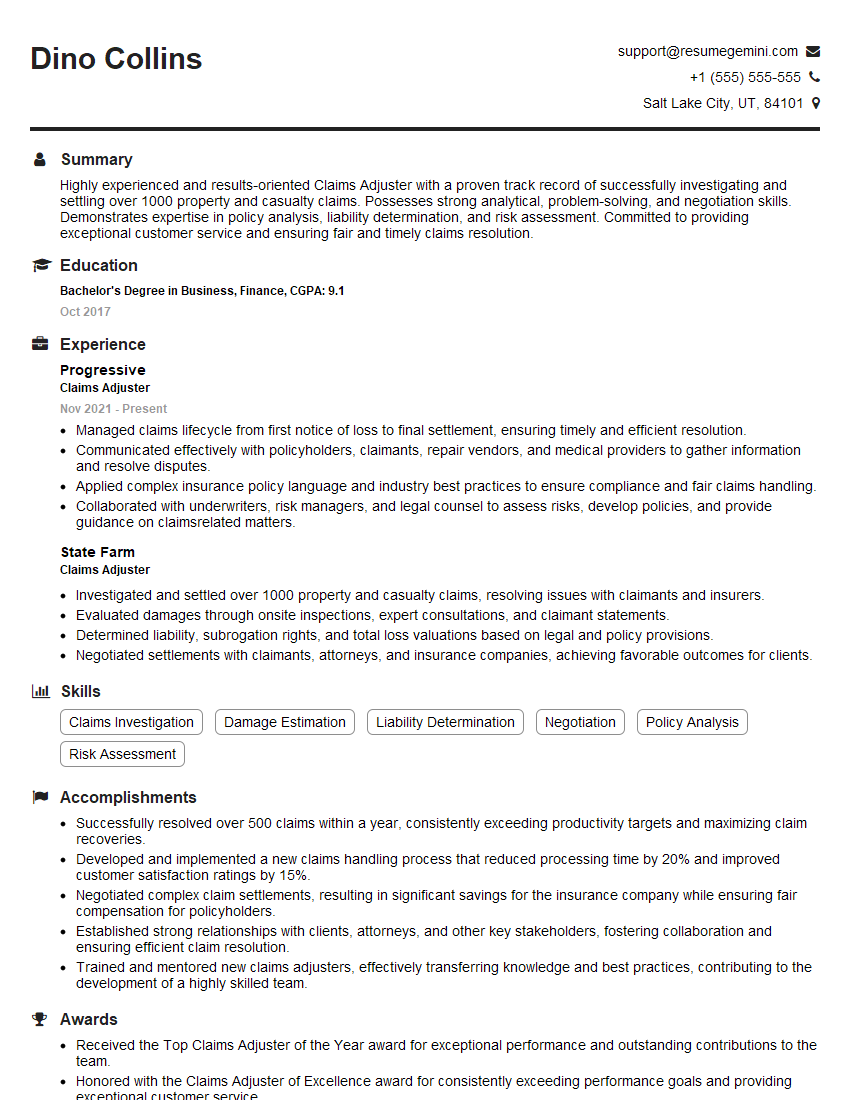
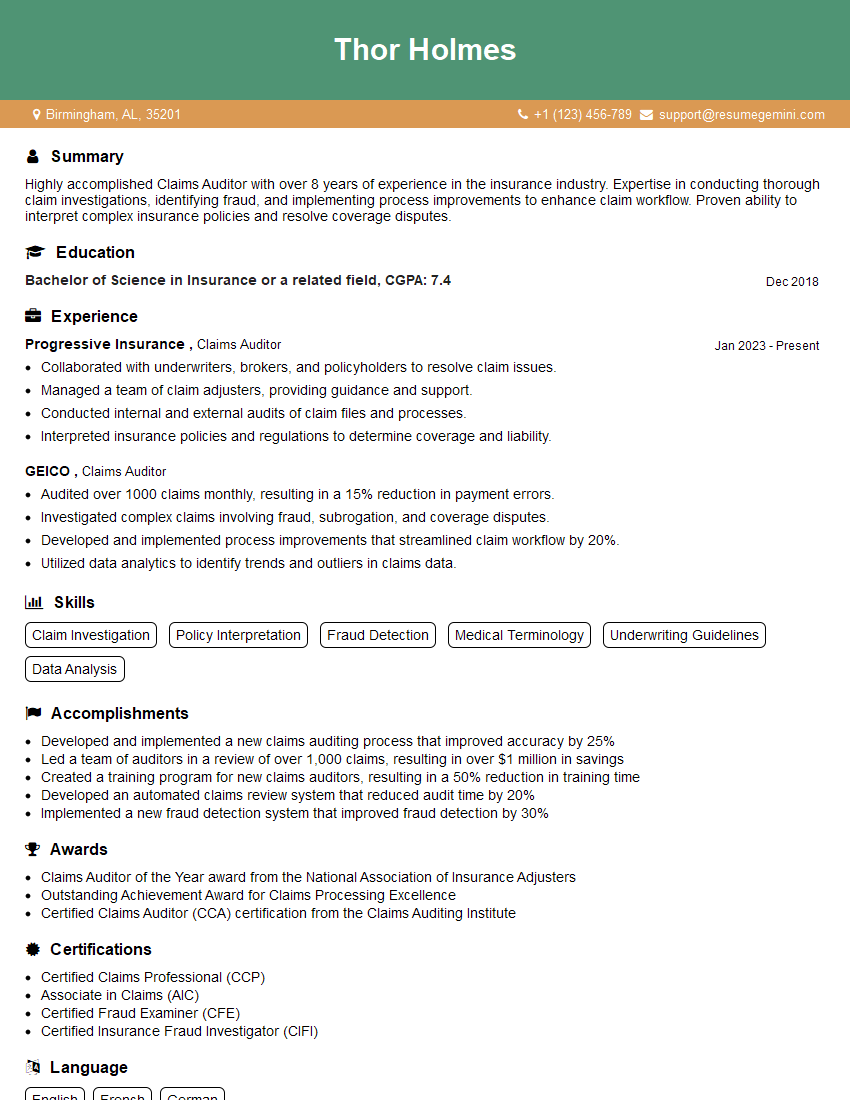
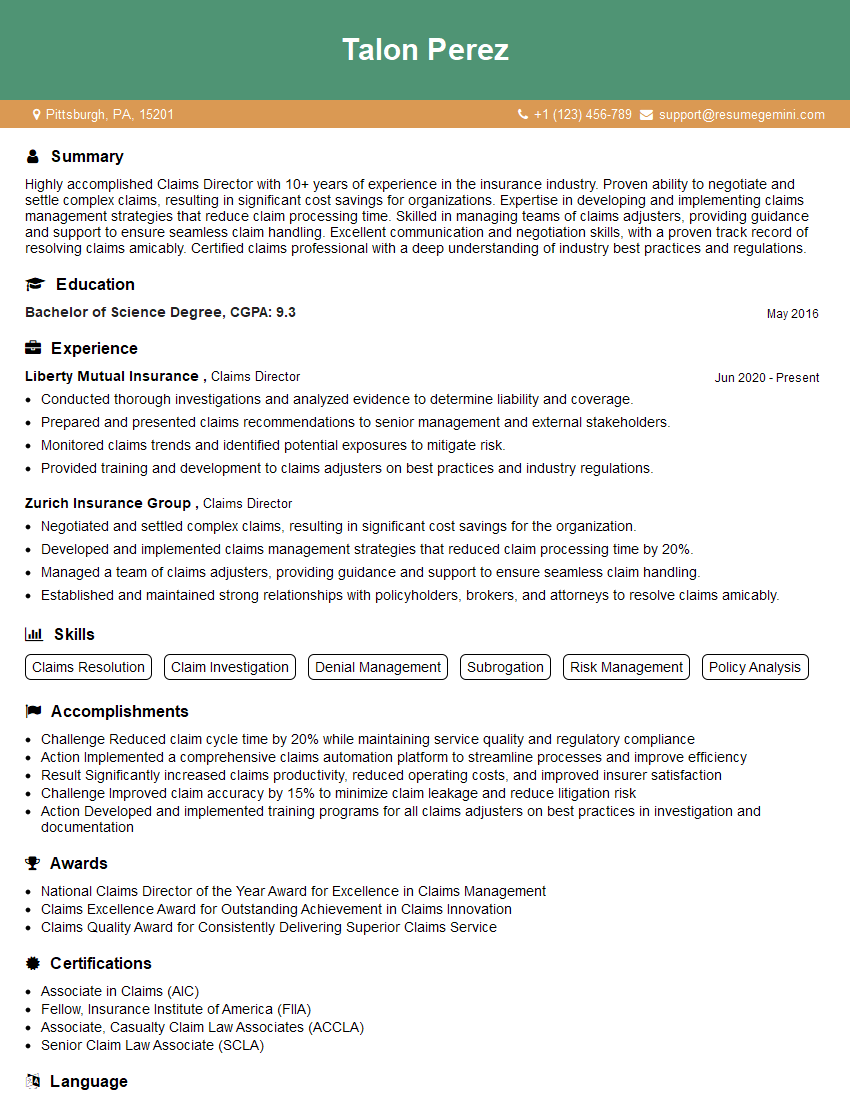
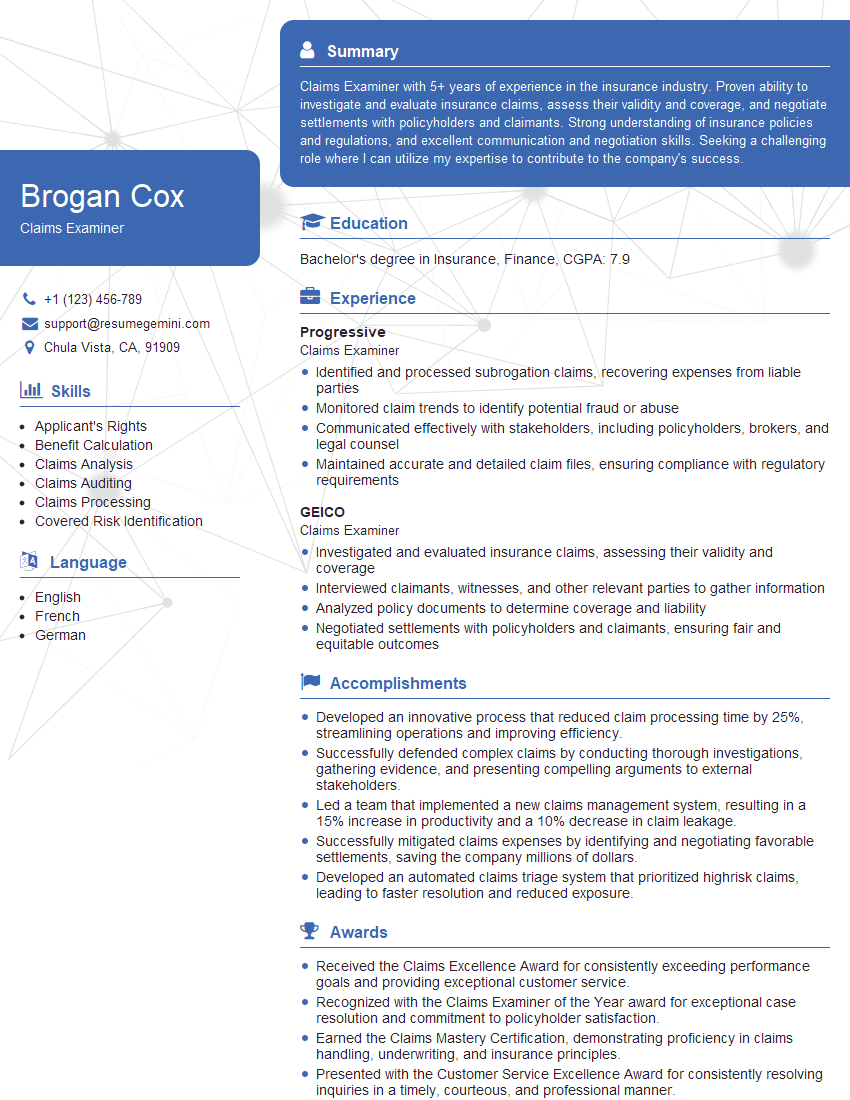
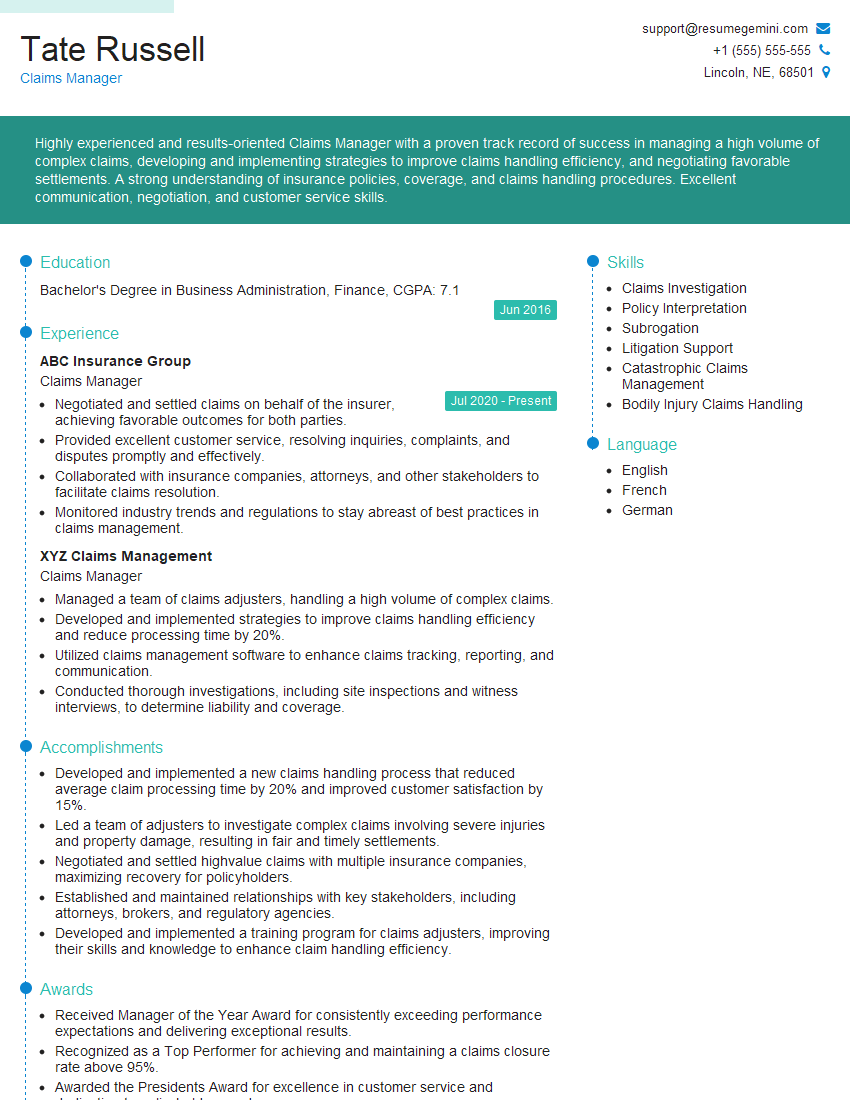
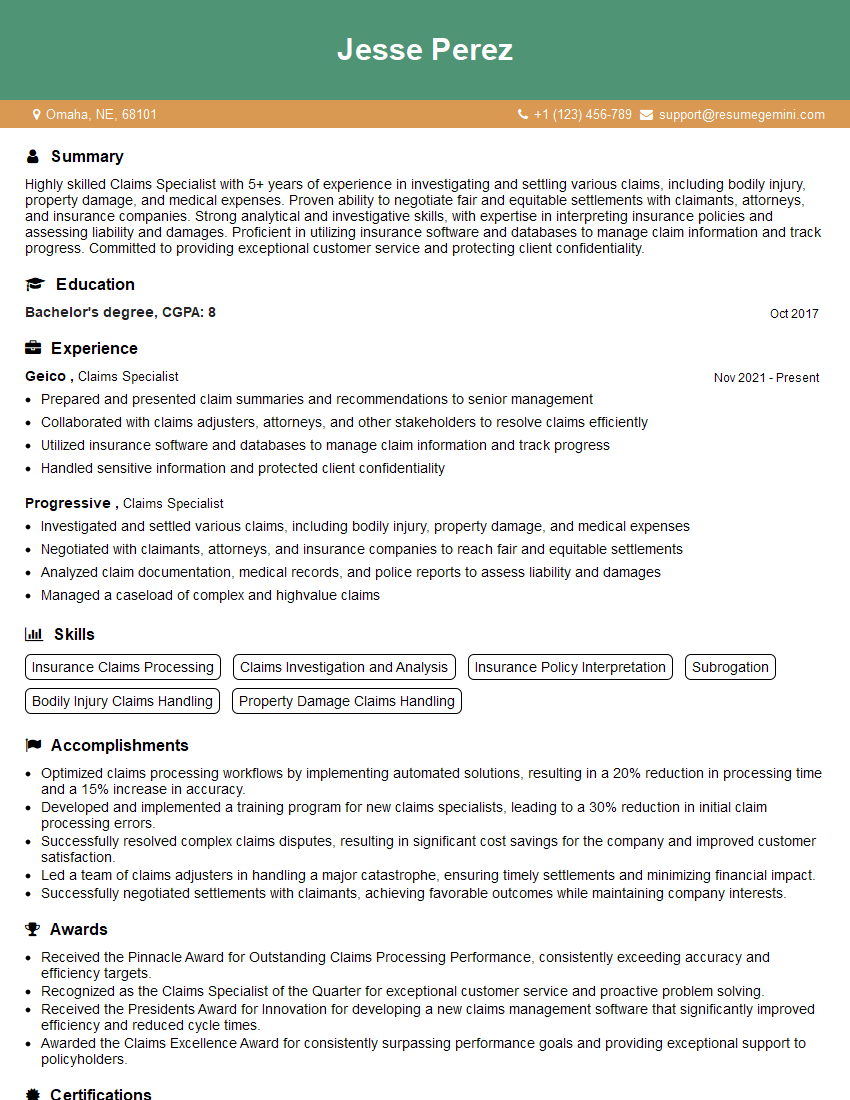
Mastering Claiming Process Management opens doors to exciting career advancements, offering opportunities for specialization and leadership roles within insurance, healthcare, or other related industries. To maximize your job prospects, focus on creating a compelling and ATS-friendly resume that showcases your skills and experience effectively. ResumeGemini is a trusted resource to help you build a professional and impactful resume. Examples of resumes tailored to Claiming Process Management are available to guide you, demonstrating best practices for highlighting your qualifications. Invest time in crafting a strong resume; it’s your first impression on potential employers.

Explore more articles
Users Rating of Our Blogs
Share Your Experience
We value your feedback! Please rate our content and share your thoughts (optional).
What Readers Say About Our Blog
Very informative content, great job.
good