Interviews are more than just a Q&A session—they’re a chance to prove your worth. This blog dives into essential Clay Mining interview questions and expert tips to help you align your answers with what hiring managers are looking for. Start preparing to shine!
Questions Asked in Clay Mining Interview
Q 1. Describe the different types of clay and their industrial applications.
Clay is categorized based on its mineralogical composition, particle size, and plasticity. Different types possess unique properties making them suitable for various applications.
- Kaolin: Primarily composed of kaolinite, it’s known for its whiteness, low plasticity, and high refractoriness. Widely used in paper coating, ceramics, and pharmaceuticals.
- Ball Clay: A highly plastic clay, rich in montmorillonite and illite, used in pottery, sanitaryware, and refractories due to its ability to bind and shape.
- Bentonite: Mostly composed of montmorillonite, it exhibits excellent swelling properties when hydrated. Used in drilling muds, foundry sands, and as a sealant.
- Fireclay: High alumina content makes it resistant to high temperatures, crucial for making bricks, tiles, and refractory materials.
- Illite: A non-swelling clay, used in various applications, including fillers in plastics, paints and construction materials.
For example, the unique plasticity of ball clay is essential for creating intricate shapes in pottery, while the refractoriness of fireclay is critical in lining high-temperature industrial furnaces.
Q 2. Explain the process of clay exploration and resource assessment.
Clay exploration and resource assessment is a multi-stage process starting with initial geological surveys and progressing to detailed resource estimations.
- Geological Reconnaissance: Identifying potential clay deposits using geological maps, satellite imagery, and surface exploration.
- Geophysical Surveys: Employing techniques like seismic surveys or electromagnetic methods to map subsurface structures and clay layers.
- Drilling and Sampling: Drilling boreholes to collect representative clay samples at various depths for laboratory analysis. The number and spacing of boreholes depend on the size and complexity of the deposit.
- Laboratory Analysis: Determining the mineralogical composition, particle size distribution, plasticity, and other relevant properties of the clay samples.
- Resource Estimation: Utilizing collected data to estimate the quantity and quality of the clay resource using geostatistical methods. This involves creating 3D models of the deposit and determining the grade and tonnage of the clay.
A successful exploration program minimizes risk and ensures that the mining operation is economically viable by accurately defining the resource before any significant investment in mining infrastructure.
Q 3. What are the common mining methods used for clay extraction?
Clay extraction methods vary depending on the deposit’s size, depth, and geological conditions. Common methods include:
- Open-pit Mining: Suitable for near-surface deposits, involving the removal of overburden and extraction of clay using excavators and bulldozers. This method is cost-effective for large, shallow deposits.
- Underground Mining: Used for deeper deposits where open-pit mining is impractical. Techniques include room and pillar mining or drift mining, where tunnels are excavated to access the clay.
- Hydraulic Mining: Involves using high-pressure water jets to dislodge and transport clay from the deposit. This method is particularly suited for soft, unconsolidated clay deposits.
The choice of mining method involves careful consideration of factors such as environmental impact, cost-effectiveness, safety, and the specific properties of the clay deposit.
Q 4. Discuss the environmental considerations in clay mining.
Clay mining, like any other extractive industry, has significant environmental impacts that require careful management. Key considerations include:
- Land Degradation: Open-pit mining leads to habitat loss and soil erosion. Proper land reclamation and restoration practices are crucial.
- Water Pollution: Clay processing can generate wastewater containing suspended solids and chemicals. Effective water treatment and management are essential to prevent water contamination.
- Dust Generation: Mining and processing activities can generate significant dust, affecting air quality and human health. Dust suppression techniques are vital.
- Noise Pollution: Heavy machinery can create noise pollution impacting nearby communities. Noise mitigation measures should be implemented.
- Greenhouse Gas Emissions: The energy consumption associated with mining and processing can contribute to greenhouse gas emissions.
Environmental impact assessments (EIAs) are mandatory before commencing any clay mining operation to identify potential risks and develop mitigation strategies. Sustainable mining practices, such as minimizing land disturbance, water conservation, and efficient energy use, are crucial for reducing environmental impacts.
Q 5. How do you ensure the safety of workers in a clay mine?
Worker safety in clay mining requires a comprehensive approach encompassing various measures:
- Engineering Controls: Implementing safety features in equipment, such as guards, emergency stops, and automated systems, to reduce hazards.
- Administrative Controls: Developing and implementing safety procedures, training programs, and regular inspections to ensure compliance with safety regulations.
- Personal Protective Equipment (PPE): Providing and enforcing the use of appropriate PPE such as hard hats, safety glasses, respirators, and high-visibility clothing to protect workers from hazards.
- Emergency Response Planning: Establishing emergency response plans, including evacuation procedures and first aid protocols, to deal with potential accidents or emergencies.
- Regular Health Monitoring: Implementing regular health checks for workers to detect and address any health problems related to the mining environment, such as silicosis.
A strong safety culture fostered by open communication, worker participation, and consistent enforcement of safety rules is critical for a safe working environment.
Q 6. What are the key performance indicators (KPIs) for a clay mine?
Key Performance Indicators (KPIs) for a clay mine reflect its efficiency, profitability, and sustainability. Important KPIs include:
- Production Rate (tonnes/day or tonnes/year): Measures the amount of clay extracted and processed.
- Operating Costs ($/tonne): Tracks the cost of mining and processing per unit of clay.
- Grade (%): Indicates the concentration of the desired clay mineral in the extracted material.
- Recovery Rate (%): Represents the proportion of the clay mineral recovered from the mined material.
- Safety Performance (Lost Time Injury Frequency Rate – LTIFR): Measures the number of lost-time injuries per million hours worked.
- Environmental Performance (water usage, emissions): Monitors environmental impact.
- Profitability (Net Present Value – NPV, Internal Rate of Return – IRR): Assesses the financial performance of the mine.
Regular monitoring and analysis of these KPIs are essential for optimizing operations, ensuring profitability, and minimizing risks.
Q 7. Explain the process of clay beneficiation and processing.
Clay beneficiation and processing involves several steps to enhance the quality and suitability of the clay for specific applications. The exact process depends on the type of clay and its intended use.
- Drying: Reducing the moisture content of the clay, often done using sun drying, air drying, or rotary dryers.
- Crushing and Grinding: Breaking down the clay into smaller particles to achieve the desired size distribution.
- Screening and Classification: Separating the clay into different size fractions using screens or classifiers.
- Washing: Removing impurities such as sand, silt, and organic matter by washing the clay with water.
- Magnetic Separation: Removing magnetic impurities using magnetic separators.
- Chemical Treatment: In some cases, chemical treatments like bleaching or acid activation are employed to enhance specific properties of the clay.
- Drying (final): Further drying of the processed clay to reach the desired moisture content.
For example, kaolin used in paper coating undergoes extensive processing to ensure brightness and particle size distribution, while ball clay for ceramics requires specific particle size and plasticity adjustments during processing.
Q 8. Describe your experience with clay mine design and planning.
Clay mine design and planning is a critical phase, requiring a deep understanding of geology, engineering, and environmental regulations. It’s essentially creating a blueprint for safe and efficient extraction. My approach starts with a thorough geological survey to identify the clay deposit’s size, quality, and depth. This informs the choice of mining method – whether open-pit, underground, or a combination. We then design the mine layout, considering factors like access roads, overburden removal strategies, bench heights (for open-pit mines), and support systems (for underground mines). Safety is paramount; the design incorporates elements like berms, drainage systems, and emergency escape routes. Environmental impact assessments are integrated throughout the process, ensuring minimal disturbance to the surrounding ecosystem. For instance, in a recent project, we optimized the mine layout to minimize deforestation, resulting in a 20% reduction in environmental impact compared to the initial design.
We also factor in the processing and transportation aspects during planning. The location of the processing plant, the transportation routes, and the storage facilities are all carefully considered to ensure efficiency and cost-effectiveness. For example, locating the plant closer to the mine reduces transportation costs and minimizes wear and tear on equipment.
Q 9. How do you manage waste materials generated from clay mining?
Waste management in clay mining is crucial for environmental protection. It involves responsibly handling overburden (the material above the clay seam), rejects (clay unsuitable for processing), and process waste. My strategy focuses on minimizing waste generation in the first place, through careful pre-mining planning and selective extraction. We strive to find beneficial uses for waste materials whenever possible. Overburden can sometimes be used for land reclamation or as fill material in construction projects. Rejects, if suitable, can be used in other applications, such as brick making or as a component in lightweight aggregate. For any remaining waste, we follow stringent procedures for disposal, such as creating lined landfills to prevent contamination of groundwater. Regular monitoring of water quality and soil conditions is crucial to ensure the effectiveness of our waste management practices. For instance, in one project, we successfully utilized overburden to create a wildlife habitat adjacent to the mine site, enhancing the biodiversity of the region.
Q 10. What are the regulatory requirements for clay mining in your region?
Regulatory requirements for clay mining vary by region but generally cover environmental protection, worker safety, and land reclamation. In my region, we must obtain permits from multiple agencies, including the Department of Environmental Conservation, the Mining Safety Authority, and the local planning authority. These permits require detailed plans for mine design, waste management, water management, air quality control, and mine closure. We’re subject to regular inspections, both planned and unannounced, to ensure compliance with all regulations. Failure to comply can result in significant penalties, including fines and even mine closure. Regular environmental monitoring, including water quality testing and noise level monitoring, is mandatory, and reports must be submitted to the regulatory authorities at set intervals. Specific regulations often cover aspects such as blasting limits, noise pollution control, and the rehabilitation of the mined area after the mine’s closure. For example, we have recently had to update our operations to meet new stricter regulations on water usage and discharge.
Q 11. Explain the importance of geological mapping in clay mining.
Geological mapping is the foundation of successful clay mining. It involves systematically identifying and characterizing the clay deposit’s extent, thickness, quality, and geological structure. This detailed mapping helps determine the optimal mining method, predict potential challenges, and estimate the recoverable clay reserves. Techniques such as drilling, geophysical surveys (e.g., seismic surveys), and laboratory analyses are used to create accurate maps and cross-sections of the deposit. These maps provide crucial information about the clay’s properties, such as its plasticity, shrinkage, and firing behavior, which are vital for determining its suitability for various applications. Accurate geological mapping also helps in planning mine infrastructure, including access roads, drainage systems, and processing facilities. Without precise mapping, we risk encountering unexpected geological conditions, which can significantly impact project cost and timeline.
Q 12. How do you handle unexpected geological conditions during mining?
Unexpected geological conditions, such as unforeseen faults, water inflows, or variations in clay quality, are inherent risks in clay mining. Our response involves a multi-step approach. First, we conduct thorough pre-mining investigations to minimize surprises, using advanced techniques like 3D geological modeling. However, even with thorough planning, unforeseen circumstances may arise. If we encounter unexpected conditions during mining, we immediately halt operations to assess the situation. Geotechnical engineers are consulted to evaluate the stability of the mine and propose mitigation strategies. This might involve adjusting the mining plan, implementing additional support systems, or modifying extraction techniques. Detailed documentation of these unexpected events and the remedial actions taken is crucial for future planning and risk management. In one instance, we discovered an unexpected fault line. We immediately stopped work, conducted further investigations, and revised the mining plan to incorporate additional support measures, preventing a potential collapse.
Q 13. Describe your experience with mine ventilation and dust control.
Mine ventilation and dust control are critical for ensuring a safe and healthy working environment in clay mining. Dust generation is a significant hazard, posing risks to both worker health and the surrounding environment. Our approach involves implementing a comprehensive dust suppression strategy. This includes techniques like water spraying, dust collectors, and the use of specialized equipment that minimizes dust generation. Ventilation systems, often incorporating large fans and strategically placed vents, are designed to maintain adequate airflow and remove dust particles from the work area. Regular monitoring of air quality ensures compliance with safety standards. We also equip workers with appropriate personal protective equipment (PPE), including respirators, to minimize their exposure to dust. For example, in one of our mines, the implementation of a new ventilation system and a water spraying system decreased dust levels by over 60%, leading to a significant improvement in worker health and safety.
Q 14. How do you ensure efficient transportation and handling of clay?
Efficient transportation and handling of clay are essential for cost-effective operation. The choice of transport method depends on factors like the mine’s location, the scale of the operation, and the distance to the processing plant. Methods include conveyor belts, trucks, and rail transport. Careful planning is needed to optimize the flow of material from the mining face to the processing plant, minimizing handling and transportation time. We use specialized equipment such as excavators, loaders, and dump trucks, designed for efficient clay handling. Regular maintenance of equipment and optimized loading/unloading procedures are vital. The use of modern technology, such as GPS tracking of trucks and automated conveyor systems, improves efficiency and reduces downtime. To enhance efficiency, we’ve recently implemented a real-time tracking system for our trucks, which has reduced transportation time by approximately 15% and minimized fuel consumption.
Q 15. What are the common challenges faced in clay mining operations?
Clay mining, while seemingly straightforward, presents several unique challenges. These can be broadly categorized into geological, operational, and environmental factors.
- Geological Variability: Clay deposits are rarely uniform. Variations in clay type, moisture content, and the presence of other materials (e.g., rocks, organic matter) can significantly impact excavation efficiency and product quality. For example, encountering unexpectedly hard layers can severely damage equipment and slow down production.
- Water Management: Clay is often found in saturated conditions, leading to significant dewatering challenges. This not only affects excavation but also poses environmental concerns.
- Environmental Regulations: Stringent environmental regulations regarding dust control, water pollution, and land reclamation are common and crucial to comply with. Failing to meet these can result in hefty fines and reputational damage.
- Equipment Maintenance: The abrasive nature of clay can cause rapid wear and tear on mining equipment, leading to increased maintenance costs and downtime.
- Market Fluctuations: The price of clay, like many commodities, can fluctuate significantly, impacting profitability and investment planning.
Successfully navigating these challenges requires careful planning, robust equipment, proactive environmental management, and adaptable operational strategies.
Career Expert Tips:
- Ace those interviews! Prepare effectively by reviewing the Top 50 Most Common Interview Questions on ResumeGemini.
- Navigate your job search with confidence! Explore a wide range of Career Tips on ResumeGemini. Learn about common challenges and recommendations to overcome them.
- Craft the perfect resume! Master the Art of Resume Writing with ResumeGemini’s guide. Showcase your unique qualifications and achievements effectively.
- Don’t miss out on holiday savings! Build your dream resume with ResumeGemini’s ATS optimized templates.
Q 16. Explain your experience with mine dewatering and water management.
Mine dewatering and water management are critical aspects of responsible clay mining. My experience encompasses designing and implementing dewatering systems ranging from simple surface drainage to sophisticated subsurface drainage using well points and sumps.
In one project, we encountered a high-water table that threatened to inundate the mine pit. We employed a multi-pronged approach: first, installing a network of deep wells to lower the water table gradually. Second, we implemented a series of surface drainage ditches and berms to divert surface runoff. Third, we monitored water quality continuously to ensure compliance with environmental regulations. We used data logging equipment to track water levels and flow rates, allowing for real-time adjustments to the dewatering strategy. This systematic approach ensured efficient dewatering while minimizing environmental impact.
Effective water management also involves careful planning for the disposal or reuse of extracted water, minimizing contamination of surface and groundwater resources.
Q 17. Describe your experience with mine closure and reclamation.
Mine closure and reclamation are crucial for environmental responsibility and fulfilling regulatory obligations. My experience involves developing and executing detailed closure plans, incorporating techniques such as land contouring, topsoil replacement, and revegetation to restore the mined area to a productive state.
I’ve been involved in projects where we worked with environmental consultants to create habitat restoration plans, ensuring the return of native flora and fauna. This includes conducting baseline ecological studies before mining begins to assess the existing ecosystem and develop effective post-mining restoration strategies. For instance, one project involved re-profiling the land to create a series of ponds to enhance biodiversity while creating a more aesthetically pleasing landscape.
Properly managing mine closure ensures long-term environmental sustainability and minimizes the potential for future liability.
Q 18. How do you utilize technology to improve efficiency in clay mining?
Technology plays a crucial role in enhancing efficiency and safety in modern clay mining. We utilize several technologies to optimize operations:
- GPS-guided excavation equipment: This technology allows for precise excavation, minimizing over-excavation and waste generation.
- Remote sensing and drones: Drones equipped with high-resolution cameras and sensors can provide real-time monitoring of the mine site, detecting potential hazards and helping to optimize excavation strategies.
- Data analytics and predictive maintenance: Analyzing data from various sources (e.g., equipment sensors, weather data) allows for predictive maintenance, reducing downtime and optimizing equipment lifespan.
- Automated haulage systems: Autonomous trucks and loaders can increase efficiency and safety by reducing reliance on human operators in hazardous environments.
By integrating these technologies, we can achieve significant improvements in productivity, safety, and environmental performance.
Q 19. Explain your understanding of different types of mining equipment.
My experience encompasses a wide range of mining equipment used in clay extraction, including:
- Excavating equipment: This includes hydraulic excavators, bulldozers, and front-end loaders, each suited for specific tasks and ground conditions. The choice depends on the clay’s consistency and the scale of the operation.
- Hauling equipment: Articulated dump trucks, belt conveyors, and trucks are commonly employed to transport excavated clay to processing facilities.
- Processing equipment: This varies significantly based on the intended use of the clay. It might include crushers, screens, mixers, drying equipment, and kilns for specific applications.
- Dewatering equipment: This includes well points, sumps, pumps, and pipelines for removing water from the mine pit.
Understanding the capabilities and limitations of each piece of equipment is crucial for efficient and safe operation. Regular maintenance and operator training are equally important to optimize performance and prevent accidents.
Q 20. What is your experience with budget management in a clay mining context?
Budget management in clay mining requires a detailed understanding of all costs involved, from exploration and extraction to processing, transportation, and reclamation. I use a combination of forecasting, budgeting, and cost control techniques to manage expenses effectively.
This includes developing detailed cost estimates for each phase of the project, regularly monitoring actual expenditures against the budget, and implementing corrective actions if variances arise. I utilize various software tools for budgeting, cost tracking, and reporting, ensuring transparency and accountability.
Experience has taught me the importance of contingency planning. Unexpected issues (e.g., geological surprises, equipment malfunctions) can significantly impact costs, and having a contingency fund is crucial for mitigating these risks.
Q 21. How do you manage and resolve conflicts within a mining team?
Conflict resolution within a mining team is essential for maintaining productivity and a positive work environment. My approach focuses on open communication, active listening, and collaborative problem-solving.
I typically start by identifying the root cause of the conflict, ensuring all parties feel heard and understood. I encourage open discussion and facilitate a collaborative process to find mutually acceptable solutions. When necessary, I involve mediation techniques to help conflicting parties reach an agreement.
Creating a respectful and inclusive work environment is key to preventing conflicts. This involves clear communication channels, establishing fair and consistent work practices, and providing regular feedback and training to team members.
Q 22. What are your experience with risk assessment and mitigation in clay mining?
Risk assessment and mitigation in clay mining is crucial for ensuring the safety of personnel and the environment, and for the economic viability of the operation. It involves systematically identifying potential hazards, analyzing their likelihood and severity, and implementing control measures to reduce or eliminate risks.
My approach begins with a thorough site-specific hazard identification, considering factors like geological instability, equipment failure, weather events (flooding, landslides), and human error. We then use methods like Fault Tree Analysis (FTA) or HAZOP (Hazard and Operability Study) to evaluate the probability and consequence of identified hazards. This quantitative analysis allows us to prioritize mitigation strategies.
For example, in one project, we identified a high risk of slope failure due to heavy rainfall. Our mitigation strategy included installing advanced monitoring systems to detect early warning signs of instability, implementing controlled blasting techniques to stabilize the slopes, and establishing emergency evacuation plans. Regular inspections and training were crucial for maintaining the effectiveness of these controls.
- Hazard Identification: Geological surveys, site inspections, equipment audits.
- Risk Assessment: FTA, HAZOP, quantitative risk assessment.
- Mitigation Strategies: Engineering controls (slope stabilization, drainage systems), administrative controls (safety protocols, training), personal protective equipment (PPE).
- Monitoring and Review: Regular inspections, audits, and reporting.
Q 23. Describe your experience with quality control in clay processing.
Quality control in clay processing is paramount for meeting customer specifications and maintaining product consistency. It involves monitoring and controlling the properties of the clay at each stage of the process, from extraction to final product. This ensures the clay meets the required standards for its intended application (e.g., ceramics, bricks, construction).
My experience includes implementing rigorous testing protocols at every stage. This includes testing for particle size distribution using sieve analysis and laser diffraction, plasticity index, moisture content, and chemical composition. We use statistical process control (SPC) to monitor process parameters and identify deviations from target values. For instance, if the plasticity index falls outside the acceptable range, we investigate the cause – whether it’s variation in the raw material or a problem with the processing equipment – and adjust the process accordingly.
Furthermore, we employ visual inspection methods to check for impurities and color consistency. Regular calibration of testing equipment is also vital to ensure accurate and reliable results. Documentation and record-keeping are essential aspects of our quality control system, ensuring traceability and accountability.
Q 24. How do you ensure compliance with health and safety regulations?
Ensuring compliance with health and safety regulations is an absolute priority in clay mining. This involves meticulous adherence to all relevant legislation, industry best practices, and company-specific safety policies. It’s not just about ticking boxes; it’s about fostering a strong safety culture within the team.
Our approach is multifaceted. It starts with comprehensive risk assessments, as described previously. We then develop and implement detailed safety procedures for all operations, including safe work practices for machinery operation, handling of hazardous materials, and emergency response. We provide regular safety training to all personnel, covering topics such as hazard recognition, risk control, and the use of PPE.
We maintain detailed records of all safety training, inspections, and incidents. Regular safety audits are conducted by internal and external specialists to identify areas for improvement. We also actively engage with regulatory agencies to ensure our operations remain compliant. For instance, we might conduct regular dust monitoring to meet air quality standards or implement noise control measures to minimize worker exposure to excessive noise.
Q 25. How do you handle potential environmental incidents or spills?
Environmental incidents, such as clay spills or leaks from processing facilities, can have significant environmental consequences. A robust emergency response plan is critical for minimizing these impacts and ensuring regulatory compliance.
Our plan involves rapid containment and cleanup procedures, using appropriate equipment and materials. We’ve established clear communication protocols to notify relevant authorities (environmental agencies, emergency services) in a timely manner. The plan includes detailed procedures for assessing the extent of the spill, identifying affected areas, and implementing remediation strategies. This might involve physical removal of contaminated soil, water treatment, and revegetation efforts.
After any incident, we conduct a thorough investigation to determine the root cause and implement corrective actions to prevent similar events from occurring in the future. Detailed reports are submitted to regulatory agencies, documenting the incident, remediation efforts, and lessons learned. The post-incident investigation often involves analyzing data from environmental monitoring systems to assess the long-term impact.
Q 26. Describe your experience with data analysis and reporting in clay mining.
Data analysis and reporting are crucial for optimizing clay mining operations and making informed decisions. We collect a wide range of data, including geological data, production data, equipment performance data, and environmental monitoring data.
We utilize various software tools for data analysis, such as statistical packages (e.g., R, SPSS) and specialized mining software to process and analyze this data. This analysis helps us to identify trends, patterns, and anomalies that can inform operational improvements. For example, we might use data analysis to optimize the blasting parameters to maximize ore recovery while minimizing environmental impacts. Similarly, we can analyze equipment performance data to schedule maintenance and repairs proactively, minimizing downtime.
Reporting is equally important. We generate regular reports on production, costs, safety, and environmental performance. These reports are used to track progress towards targets, identify areas for improvement, and communicate performance to stakeholders. Clear and concise visualizations of key performance indicators (KPIs) are crucial for effective communication.
Q 27. What are your skills in using relevant mining software and technologies?
Proficiency in relevant mining software and technologies is essential for efficient and effective clay mining operations. My skills encompass a range of software, including:
- Geographic Information Systems (GIS): Used for geological mapping, site planning, and environmental impact assessment. I am proficient in ArcGIS and QGIS.
- Mine planning software: For optimizing mine design, scheduling production, and managing resources. Experience includes using MineSight and Vulcan.
- Data analysis software: As mentioned earlier, I’m proficient in R and SPSS for statistical analysis and data visualization.
- Equipment monitoring systems: I’m familiar with various systems for monitoring equipment performance and predicting maintenance needs. This often involves working with SCADA systems.
Beyond software, I have experience with various technologies, such as drone surveys for topographic mapping and remote sensing techniques for geological exploration. This allows for faster, more efficient data collection and more accurate planning.
Q 28. Explain your understanding of sustainable clay mining practices.
Sustainable clay mining involves balancing the economic benefits of extraction with the environmental and social impacts. It’s about ensuring that the activity doesn’t compromise the availability of resources for future generations, and minimizes its footprint on the surrounding ecosystem.
Key aspects of sustainable clay mining include:
- Minimizing land disturbance: Using efficient extraction methods and reclaiming mined areas to restore land to its original state or a more beneficial use.
- Water management: Implementing effective water management strategies to minimize water consumption and pollution. This includes recycling water and treating wastewater.
- Waste management: Minimizing waste generation through efficient processing and recycling. Properly managing waste materials (e.g., tailings) to prevent environmental damage.
- Revegetation: Replanting vegetation to restore habitats and prevent erosion.
- Community engagement: Engaging with local communities to address their concerns and ensure that the operation benefits the local population.
- Energy efficiency: Employing energy-efficient technologies and processes to reduce the carbon footprint.
In practice, this means carefully considering the entire life cycle of the clay, from extraction to disposal, and optimizing processes to minimize environmental impacts throughout.
Key Topics to Learn for Clay Mining Interview
- Geological Exploration & Survey: Understanding clay deposit formation, geological mapping techniques, and resource estimation methodologies.
- Clay Mineralogy & Characterization: Identifying different clay types, analyzing their physical and chemical properties, and understanding their suitability for various applications.
- Mining Methods & Equipment: Familiarize yourself with open-pit mining, underground mining techniques, and the machinery used in each. Consider the environmental impact of different methods.
- Mine Planning & Operation: Understanding mine design, production scheduling, cost analysis, and safety protocols in clay mining operations.
- Environmental Regulations & Sustainability: Knowledge of environmental impact assessments, reclamation strategies, and adherence to relevant environmental regulations in clay mining.
- Health & Safety: Understanding and applying relevant safety procedures, regulations, and best practices within a clay mining environment.
- Processing & Beneficiation: Learn about the processes involved in refining raw clay into usable products, including drying, grinding, and purification techniques.
- Quality Control & Assurance: Understanding the importance of maintaining consistent product quality throughout the mining and processing stages.
- Data Analysis & Reporting: Ability to analyze geological data, production data, and cost data to make informed decisions and generate accurate reports.
- Problem-Solving & Decision-Making: Demonstrate your ability to approach challenges in a systematic way, considering various factors and making well-reasoned decisions.
Next Steps
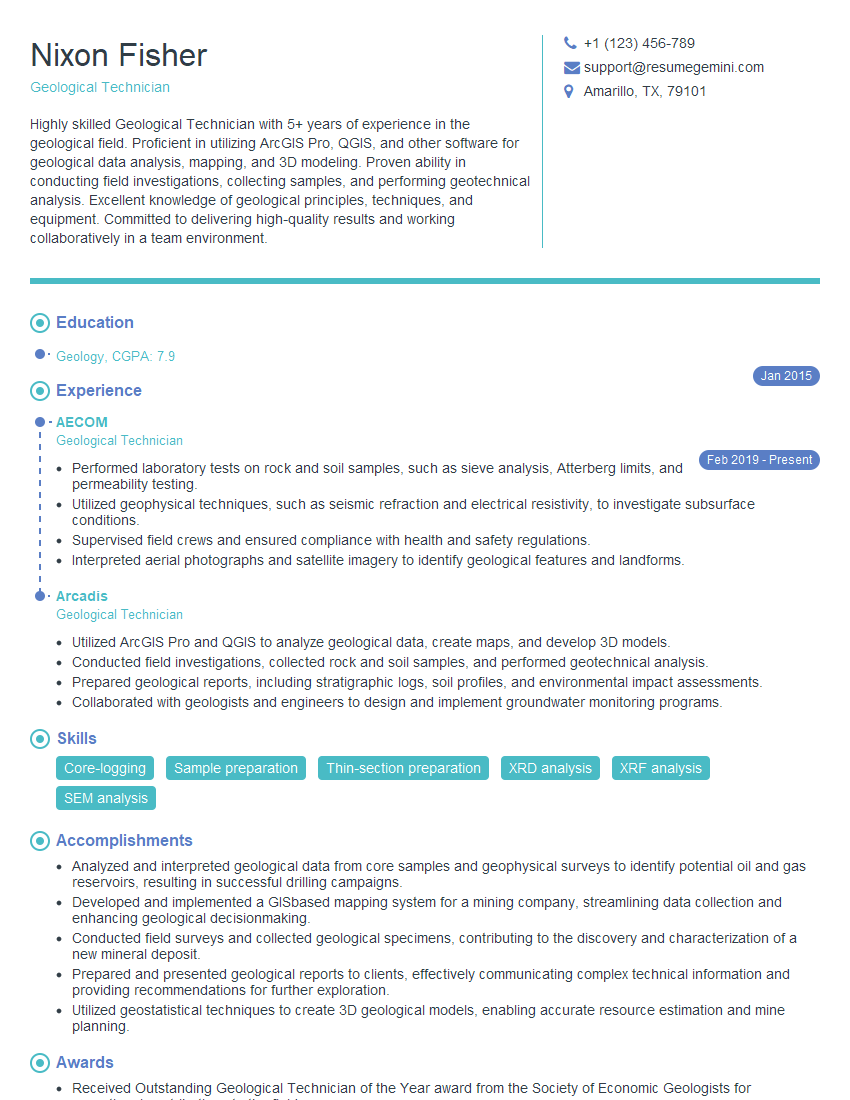
Mastering the intricacies of clay mining opens doors to a rewarding career with significant growth potential. The industry values professionals with strong technical skills and a commitment to safety and sustainability. To maximize your job prospects, crafting a compelling and ATS-friendly resume is crucial. ResumeGemini is a trusted resource to help you build a professional resume that showcases your skills and experience effectively. Examples of resumes tailored specifically to the clay mining industry are available to guide you.
Explore more articles
Users Rating of Our Blogs
Share Your Experience
We value your feedback! Please rate our content and share your thoughts (optional).
What Readers Say About Our Blog
Very informative content, great job.
good