Preparation is the key to success in any interview. In this post, we’ll explore crucial Coating Application Techniques interview questions and equip you with strategies to craft impactful answers. Whether you’re a beginner or a pro, these tips will elevate your preparation.
Questions Asked in Coating Application Techniques Interview
Q 1. Explain the difference between solvent-based and water-based coatings.
The primary difference between solvent-based and water-based coatings lies in their respective solvents. Solvent-based coatings use organic solvents like mineral spirits or xylene to dissolve the binder (the polymer that holds the pigment together), creating a smooth, easily applied liquid. These solvents evaporate during the curing process, leaving behind the solid coating film. Water-based coatings, also known as latex or acrylic coatings, utilize water as the solvent. This makes them significantly more environmentally friendly, as they produce fewer volatile organic compounds (VOCs) – harmful air pollutants.
Think of it like this: solvent-based coatings are like oil paints, where the oil acts as the solvent, allowing for easy blending and application. Water-based coatings are more akin to watercolor paints, where water is the solvent, resulting in a different consistency and application method. Solvent-based coatings generally offer better durability and faster drying times, while water-based coatings are easier to clean up and are better for the environment. The choice depends on the specific application and desired properties.
Q 2. Describe the various surface preparation techniques before coating application.
Proper surface preparation is paramount to ensuring good coating adhesion and longevity. This typically involves a multi-step process:
- Cleaning: Removing dirt, grease, oil, and other contaminants using appropriate solvents or detergents. This step is fundamental; a dirty surface will prevent proper adhesion.
- Abrasive Blasting (or other abrasive methods): For highly contaminated or rusted surfaces, abrasive blasting removes loose material and creates a profile for better mechanical bonding. The type of abrasive (e.g., glass beads, aluminum oxide) depends on the substrate and desired surface roughness.
- Profiling (roughening): Creates a textured surface to improve mechanical interlocking between the coating and substrate. This can be achieved through various techniques such as sandblasting, wire brushing, or chemical etching, depending on the material.
- Priming (sometimes): Applying a primer acts as an intermediary layer between the substrate and the topcoat. It promotes adhesion, enhances corrosion resistance, and can improve the topcoat’s appearance and performance. Primers can be selected based on substrate type and topcoat compatibility.
- Surface inspection: Before coating application, a thorough visual inspection is crucial to ensure the surface is clean, dry, and properly prepared. Any remaining defects can severely impact the final result.
For instance, preparing a metal surface for a protective coating might involve abrasive blasting to remove rust, followed by a thorough cleaning and the application of a zinc-rich primer before the final topcoat.
Q 3. What are the key factors influencing the selection of a specific coating type?
Selecting the right coating type depends on several crucial factors, all weighing in on the overall cost, durability, and intended use. These factors include:
- Substrate type: Different materials (metal, wood, plastic, concrete) require coatings with different properties to ensure good adhesion and performance.
- Environmental conditions: The coating must withstand the expected temperature, humidity, UV exposure, and chemical exposure. For example, a coating for outdoor use needs to be UV-resistant, while a coating for a chemical plant needs to be chemically resistant.
- Desired properties: Consider the required properties such as durability, gloss level, color, corrosion resistance, and chemical resistance. A coating for a car would prioritize aesthetics and UV resistance, while a coating for a bridge would prioritize corrosion protection and durability.
- Cost: Different coatings have varying costs associated with materials, application, and potential maintenance. Finding a balance between performance and cost is essential.
- Application method: The coating must be compatible with the chosen application method (spray, brush, roller, etc.). Some coatings may be unsuitable for certain methods.
For example, choosing a coating for a marine environment would necessitate a coating with excellent UV and salt-spray resistance, high durability, and possibly antifouling properties.
Q 4. How do you ensure proper adhesion of a coating to a substrate?
Ensuring proper coating adhesion relies on meticulous surface preparation (as discussed earlier) and selecting a coating compatible with the substrate. Several techniques further enhance adhesion:
- Surface cleaning: This is the cornerstone of good adhesion. Any contaminants will create a weak bond.
- Proper surface profile: A roughened surface provides increased mechanical interlocking with the coating.
- Primer selection: Primers often improve adhesion by creating a compatible surface for the topcoat. They can also provide corrosion protection.
- Correct application techniques: Applying the coating at the correct thickness and viscosity, using the appropriate application method (spray, brush, roller) prevents defects that can lead to poor adhesion.
- Environmental control: Controlling temperature and humidity during application and curing prevents issues such as premature drying or poor film formation.
For example, using a suitable primer for wood before applying an oil-based paint will significantly enhance adhesion and prevent peeling or flaking.
Q 5. Explain the importance of viscosity control in coating application.
Viscosity control is crucial for achieving a uniform, defect-free coating. Viscosity, or the thickness of the coating material, directly affects the application process and the final film quality. Too high viscosity leads to difficulty in application, potentially causing uneven film thickness, while too low viscosity can result in runs, sags, and pinholes.
Think of pouring honey (high viscosity) versus water (low viscosity): honey requires more effort and is less likely to spread evenly, while water flows freely and may not create a uniform layer. Viscosity is typically adjusted by adding thinners or thickeners to the coating material. It is often measured using a viscosity cup or a rotational viscometer to ensure it falls within the manufacturer’s recommended range for optimal application.
Q 6. Describe different spray application methods (e.g., airless, HVLP, electrostatic).
Spray application is a common method for applying coatings efficiently and uniformly. Different spray methods offer varying levels of transfer efficiency and atomization quality:
- Airless Spray: Uses high pressure to force the coating material through a small nozzle, producing a fine spray without the use of compressed air. It’s known for its high transfer efficiency, making it suitable for large-scale projects. However, it can produce a coarser finish.
- High-Volume Low-Pressure (HVLP) Spray: Employs a larger volume of air at lower pressure than conventional air spray. This results in better atomization and less overspray, minimizing material waste and improving the finish quality. It’s a good choice for detailed work.
- Electrostatic Spray: Applies an electrical charge to the coating material, attracting it to the grounded substrate. This enhances transfer efficiency, reducing overspray and improving film uniformity, particularly on irregularly shaped objects. It is commonly used for applying powder coatings.
The choice of spray method depends on the coating material, substrate, desired finish, and overall project scale. For instance, an airless sprayer might be used for painting a large fence, while an HVLP sprayer might be better suited for applying a high-quality automotive finish.
Q 7. How do you troubleshoot common coating application problems (e.g., orange peel, runs, sags)?
Troubleshooting coating application problems requires understanding the root cause. Here’s a breakdown of common issues and their solutions:
- Orange Peel: A bumpy, textured surface resembling an orange peel. Often caused by improper atomization, too high viscosity, or insufficient air pressure. Solution: Adjust spray parameters (pressure, nozzle size, distance), reduce viscosity, ensure proper air circulation.
- Runs and Sags: Excess coating material accumulating in areas due to high viscosity, excessive application, or insufficient drying time. Solution: Reduce viscosity, apply thinner coats, allow sufficient drying time between coats, use proper application techniques.
- Pinholes: Small holes in the coating film. Can be caused by trapped air bubbles, insufficient mixing, or contamination. Solution: Ensure proper mixing of the coating, eliminate trapped air bubbles, clean the surface thoroughly before application.
- Fisheyes: Small crater-like defects. Often caused by silicone contamination from the surface or the coating itself. Solution: Thorough cleaning, use of silicone-removing agents, and ensuring all materials are clean.
- Poor Adhesion: Coating peels or flakes off the surface. Indicates insufficient surface preparation or incompatibility between the coating and substrate. Solution: Re-prepare the surface, use a compatible primer, choose a coating suitable for the substrate.
A systematic approach is key. Carefully observe the defect, analyze the application process, and adjust accordingly. Sometimes, a trial run on a sample piece can help identify and resolve the issue before applying it to the main project.
Q 8. What are the safety precautions you must take while applying coatings?
Safety is paramount in coating application. It’s not just about following rules; it’s about protecting yourself and others from potential hazards. These hazards can include exposure to volatile organic compounds (VOCs), flammability risks from solvents, and physical hazards like slips, trips, and falls due to spilled materials.
- Respiratory Protection: Always wear appropriate respirators, especially when working with solvents or powders. The type of respirator depends on the specific coating and its VOC content – a properly fitted N95 mask might suffice for some low-VOC paints, but a more advanced respirator might be required for others. Regular respirator fit testing is crucial.
- Eye Protection: Safety glasses with side shields are a minimum; consider using a face shield for added protection against splashes.
- Skin Protection: Wear chemically resistant gloves, long sleeves, and coveralls to protect your skin from contact with the coating material. Dispose of contaminated clothing properly.
- Proper Ventilation: Work in well-ventilated areas or use appropriate ventilation equipment to reduce exposure to VOCs. This might include using exhaust fans, open windows, or specialized spray booths.
- Fire Safety: Coatings and solvents are often flammable. Keep away from ignition sources, have fire extinguishers readily available, and understand the fire safety procedures in your workspace.
- Material Safety Data Sheets (MSDS): Always consult the MSDS for each coating product to understand its specific hazards and safety precautions.
- Spill Response: Have a plan for dealing with spills. Know the proper cleanup procedures for the specific coating you’re using and ensure you have the appropriate absorbent materials on hand.
For instance, during a project involving epoxy coatings, I ensured everyone wore full respirators and coveralls, and we had a designated spill kit readily accessible.
Q 9. Explain the different types of curing processes for coatings.
Curing is the process by which a coating transitions from a liquid or semi-liquid state to a solid, durable film. There are several types of curing processes, each with its own advantages and disadvantages:
- Oxidative Curing (Air Drying): This involves the reaction of the coating with oxygen in the air. It’s a simple, cost-effective method commonly used for oil-based paints. However, it’s generally slower than other methods and can be affected by environmental conditions like humidity and temperature.
- Evaporative Curing: This relies on the evaporation of solvents to form a solid film. It’s common for lacquers and some acrylic coatings. The speed of curing depends on factors such as air circulation, temperature, and the type of solvent used.
- Thermal Curing (Baking): This involves applying heat to accelerate the chemical reactions that lead to curing. Common in powder coatings and some industrial coatings, this method provides excellent durability but requires specialized equipment like ovens.
- UV Curing: Ultraviolet (UV) light initiates a photochemical reaction that cures the coating rapidly. This is used in applications requiring quick turnaround times, such as printing inks and some automotive coatings.
- Radiation Curing (Electron Beam): Similar to UV curing, but uses electron beams to initiate the curing process. It’s often used for high-speed industrial applications.
- Chemical Curing: This involves the chemical reaction between two or more components, such as a resin and a hardener. Epoxy and polyurethane coatings are common examples, offering exceptional durability and adhesion.
Choosing the right curing process depends on the coating type, desired properties, and project requirements. For instance, a high-performance automotive coating might use a combination of thermal and UV curing for optimal durability and speed.
Q 10. How do you ensure the proper mixing ratio of coatings and hardeners?
Accurate mixing ratios are critical for achieving the desired properties of the coating, including cure speed, hardness, and durability. Inaccurate ratios can lead to poor performance or even complete failure of the coating.
- Follow Manufacturer’s Instructions: The most important step is to meticulously follow the manufacturer’s instructions. The recommended ratio is usually clearly stated on the product label or in the technical data sheet.
- Use Accurate Measurement Tools: Avoid using imprecise tools like ordinary cups and spoons. Use graduated cylinders, measuring scales, or other accurate measuring devices. The level of accuracy required depends on the sensitivity of the coating to mixing ratios.
- Thorough Mixing: Once the proper amounts of each component are measured, they must be thoroughly mixed to ensure a homogeneous blend. This could involve using a mechanical mixer or stirring by hand; the specific technique is again dictated by the manufacturer’s instructions.
- Mixing Time: Ensure sufficient mixing time to achieve complete homogenization. Insufficient mixing may result in areas of different chemical compositions, affecting the coating’s performance.
- Mixing Vessels: Use clean and appropriate mixing vessels to prevent contamination. Clean containers ensure there’s no interference from residues that can alter the mix.
In my experience, I’ve encountered instances where slight deviations from the recommended ratio led to significant differences in the final coating’s properties. Always err on the side of caution and ensure precise measurement and mixing.
Q 11. What is the importance of environmental conditions (temperature, humidity) on coating application?
Environmental conditions significantly influence coating application and performance. Temperature and humidity directly affect the evaporation rate of solvents, the curing process, and the final film properties.
- Temperature: High temperatures can accelerate solvent evaporation, potentially leading to pinholes or other surface defects. Low temperatures can slow down curing and reduce the effectiveness of certain chemical reactions. Ideal temperature ranges are usually specified in the product’s technical data sheet.
- Humidity: High humidity can interfere with the curing process, especially for coatings that cure via oxidative reactions. Excess moisture can also lead to poor adhesion and surface defects. Low humidity can sometimes make the coating overly brittle.
- Dew Point: Paying attention to the dew point is essential; if the dew point is close to the ambient temperature, condensation can occur on the surface of the substrate, impairing adhesion.
For example, applying a water-based coating in high humidity conditions can significantly increase drying times and potentially lead to a weaker, less durable finish. Understanding the impact of temperature and humidity allows for better planning and execution of the coating process, ensuring optimal results.
Q 12. Describe your experience with different coating application equipment.
I have extensive experience with a range of coating application equipment, including:
- Spray Guns (Airless, HVLP, Conventional): I’m proficient in using different types of spray guns for various coating applications. Airless sprayers deliver high-volume, low-pressure coating, ideal for larger projects. HVLP (High Volume Low Pressure) sprayers are excellent for fine finishes, minimizing overspray. Conventional spray guns require air compressors and offer greater control but are less efficient.
- Brush and Roller Application: While seemingly simpler, brush and roller applications require skill to achieve uniform coatings without brush marks or roller texture. The choice depends on the surface and coating type.
- Dip Coating: This method is used for uniform coating of small parts, often in automated systems.
- Flow Coating: This involves immersing the substrate in a bath of coating and then draining the excess. Suitable for larger parts that can be easily submerged.
- Electrostatic Coating: This method uses static electricity to apply powder coatings, resulting in uniform coverage and minimal overspray.
My experience extends to both manual and automated application methods, and I’m comfortable working with various types of coating materials such as epoxies, polyurethanes, and acrylics.
Q 13. How do you maintain and clean coating application equipment?
Proper maintenance and cleaning of coating application equipment are crucial for ensuring consistent coating quality, preventing clogging, and extending the lifespan of the equipment.
- Regular Cleaning: After each use, the equipment must be thoroughly cleaned to remove any residual coating material. The cleaning method depends on the type of coating used. Solvents are often necessary but must be compatible with the equipment’s materials.
- Disassembly: For more thorough cleaning, some equipment components might need to be disassembled. Follow manufacturer’s instructions carefully during this process.
- Fluid Management: Regular checks of fluid lines for blockages or leaks are essential.
- Air Filters: Spray guns often use air filters that require regular cleaning or replacement. Clogged filters reduce efficiency and can affect the coating’s quality.
- Storage: Proper storage of equipment is important to prevent damage and corrosion. Cover the equipment when not in use to protect it from dust and moisture.
- Scheduled Maintenance: Regular maintenance tasks such as lubrication and inspection of wearing parts are recommended to maintain peak performance.
For example, after using an airless sprayer for an epoxy coating, I would flush the system with the appropriate solvent, dismantle the tip and filter for cleaning, and lubricate moving parts as needed.
Q 14. How do you measure the film thickness of a coating?
Measuring film thickness is essential for ensuring the coating provides adequate protection and performance. Several methods are used:
- Wet Film Thickness: This is measured immediately after application using a wet film thickness gauge. This gauge has a calibrated scale to measure the thickness of the wet coating.
- Dry Film Thickness: This is measured after the coating has fully cured using a dry film thickness gauge. These gauges typically use either magnetic or electronic methods to determine the thickness of the cured film.
- Destructive Testing: In some cases, destructive testing methods are used to precisely determine film thickness. This involves cutting a cross-section of the coated material and examining it under a microscope.
- Ultrasonic Testing: This non-destructive method uses ultrasound waves to measure the thickness of the coating.
The choice of method depends on the coating type, the substrate, and the required accuracy. For instance, in a critical application, we might use a combination of wet and dry film thickness gauges along with ultrasonic testing for precise verification.
Q 15. What are the different types of coating defects and their causes?
Coating defects are imperfections that detract from the appearance, performance, or durability of a coating. They can arise from various sources, including improper surface preparation, incorrect application techniques, poor-quality materials, or environmental factors. Let’s explore some common defects:
- Orange Peel: A bumpy, uneven surface resembling an orange peel. This often results from excessive spraying distance, high air pressure, or improper viscosity of the coating.
- Cratering: Small, crater-like depressions in the coating’s surface. This can be caused by contamination (e.g., silicones), insufficient mixing, or rapid solvent evaporation.
- Pinholing: Tiny holes that appear in the coating film. Common causes include trapped air bubbles, improper curing conditions, or volatile contaminants within the coating material.
- Fisheyes: Circular imperfections resembling fish eyes. These are often caused by incompatible materials (such as silicones or waxes) in the substrate or coating.
- Runs and Sags: Excess coating material that flows unevenly down a vertical surface. This is typically caused by applying too much coating at once or using too low a viscosity coating.
- Blistering: Bubbles that form beneath the coating surface, often caused by trapped moisture or gases in the substrate.
- Cracking: Cracks or fissures that appear on the coating’s surface. This can be caused by stresses due to thermal expansion, substrate movement, or inadequate coating flexibility.
Understanding the cause of the defect is crucial for implementing corrective action and preventing its recurrence.
Career Expert Tips:
- Ace those interviews! Prepare effectively by reviewing the Top 50 Most Common Interview Questions on ResumeGemini.
- Navigate your job search with confidence! Explore a wide range of Career Tips on ResumeGemini. Learn about common challenges and recommendations to overcome them.
- Craft the perfect resume! Master the Art of Resume Writing with ResumeGemini’s guide. Showcase your unique qualifications and achievements effectively.
- Don’t miss out on holiday savings! Build your dream resume with ResumeGemini’s ATS optimized templates.
Q 16. How do you identify and address coating defects?
Identifying coating defects requires a keen eye and a systematic approach. Visual inspection is the primary method, often complemented by tools like microscopes for closer examination of smaller defects. I typically use a checklist during inspection to ensure thoroughness and consistency. For instance, I’ll check for surface smoothness, gloss uniformity, presence of defects like those mentioned earlier, and adherence to specifications.
Addressing coating defects depends heavily on their nature and severity. Minor defects, such as light orange peel, might be acceptable depending on the application’s requirements. However, more serious issues, like blistering or cracking, may require more significant interventions. This could involve removing and reapplying the coating, surface preparation, or even investigating substrate issues. Always adhere to safety protocols when performing corrective actions.
For example, if I identify fisheyes, I’d first investigate the substrate for silicone contamination, then carefully clean and re-prepare the surface before reapplying the coating. A systematic approach and detailed documentation are key.
Q 17. What are the quality control procedures you follow during coating application?
Quality control in coating application is paramount. My procedures typically involve:
- Substrate Preparation: Thorough cleaning, abrasion, and surface treatment to ensure proper adhesion.
- Material Quality Control: Checking the coating material’s properties (viscosity, solids content, etc.) against specifications and ensuring proper mixing and thinning.
- Application Control: Monitoring the application parameters (spray pressure, nozzle distance, coating thickness) to maintain consistency.
- Environmental Monitoring: Controlling temperature, humidity, and air circulation to optimize curing and prevent defects.
- In-process Inspection: Regular visual inspections during the application process to identify and correct defects early.
- Final Inspection: A thorough visual and instrumental inspection upon completion to verify the coating’s quality against predetermined standards and specifications.
- Documentation: Maintaining detailed records of materials used, application parameters, and inspection results to ensure traceability and quality assurance.
Using these methods allows for proactive identification and mitigation of problems before they significantly impact the final product’s quality.
Q 18. Explain your experience with different types of substrates (e.g., metal, wood, plastic).
My experience spans a variety of substrates, each requiring a tailored approach.
- Metal Substrates: These often require surface preparation techniques such as abrasive blasting or chemical cleaning to remove rust, mill scale, or other contaminants. The choice of coating is crucial and depends on factors such as corrosion resistance requirements and the intended environment. I have worked extensively with various metals, including steel, aluminum, and galvanized steel.
- Wood Substrates: Proper sanding and surface treatment are essential. Primers are often necessary to improve adhesion and seal the wood, preventing moisture absorption which may lead to coating failure. Different wood types (hardwoods vs. softwoods) require different levels of surface preparation.
- Plastic Substrates: These often require special cleaning agents and surface treatments (e.g., corona treatment or flame treatment) to enhance surface energy and ensure adequate adhesion. The coating needs to be compatible with the plastic type, avoiding chemical reactions or incompatibility.
Adaptability and attention to substrate-specific needs are essential for achieving high-quality coating applications.
Q 19. How do you select the appropriate coating for a specific substrate and application?
Selecting the right coating involves considering several factors: the substrate’s properties (material, porosity, surface energy), the desired coating performance (e.g., corrosion resistance, chemical resistance, abrasion resistance, UV resistance, aesthetics), and the intended application environment (exposure to chemicals, temperature fluctuations, moisture, etc.).
For example, a coating for an outdoor steel structure needs excellent corrosion resistance, UV stability, and durability. An epoxy coating would be a suitable choice in this case. In contrast, a food-contact surface might require a coating that is food-safe, chemically inert, and easy to clean, where an acrylic or polyurethane coating might be appropriate. This process also involves referencing relevant standards and specifications.
Thorough research and testing, often using samples, are essential before making a final selection.
Q 20. What are your experience with different types of coating systems (e.g., epoxy, polyurethane, acrylic)?
I have extensive experience with various coating systems:
- Epoxy Coatings: Known for their excellent adhesion, chemical resistance, and mechanical strength. I’ve used these extensively in industrial applications, including corrosion protection for steel structures and flooring systems.
- Polyurethane Coatings: Offer exceptional abrasion resistance, flexibility, and weatherability. I’ve applied these to various substrates, from wood furniture to automotive parts, leveraging their durability and aesthetic qualities.
- Acrylic Coatings: Often chosen for their ease of application, quick drying times, and relatively low cost. I’ve used acrylics in many applications, including architectural coatings and decorative finishes. I am familiar with both water-based and solvent-based formulations.
My expertise extends to understanding the specific properties of each system, the appropriate application techniques, and their compatibility with different substrates.
Q 21. Describe your experience with color matching techniques.
Color matching is a crucial aspect of many coating projects. My experience involves using various techniques to achieve accurate color replication:
- Spectrophotometry: Using a spectrophotometer to measure the color of the target and then adjusting the coating formula to match the numerical color coordinates.
- Visual Matching: Comparing the coating color to the target under standardized lighting conditions to achieve a visual match. This often involves iterative adjustments to the coating formula.
- Computer Color Matching (CCM) Systems: Using specialized software to input color data and determine the optimal pigment and resin combinations to achieve the desired color.
Factors like lighting conditions, substrate color, and the coating’s finish (gloss, matte, etc.) all influence color matching. Precise measurements and a solid understanding of color theory are crucial for accurate and repeatable results. I’m adept at using various color matching tools to achieve consistent color across large projects.
Q 22. How do you handle waste generated during coating application?
Waste management in coating application is crucial for environmental responsibility and regulatory compliance. It involves a multi-pronged approach focusing on minimizing waste generation, proper collection, and responsible disposal.
- Minimization: This starts with accurate material estimation to avoid over-application. Employing advanced application techniques like airless spraying or electrostatic application can significantly reduce overspray and material waste. Regular equipment maintenance prevents leaks and drips, further minimizing waste.
- Collection: Dedicated containers are essential for collecting overspray, spills, and used solvents. These containers should be clearly labeled and stored securely to prevent accidental spills or exposure. Different waste streams (e.g., solvent-based coatings vs. water-based) need separate containers.
- Disposal: Waste disposal methods depend on the type of coating and local regulations. Hazardous waste, like solvent-based coatings, requires special handling and disposal by licensed contractors. Water-based coatings may have less stringent disposal requirements, often allowing for disposal through municipal waste systems. Always consult local environmental regulations and safety data sheets (SDS) for proper disposal procedures.
For example, in a recent project painting a large industrial structure, we implemented a closed-loop system for the airless spraying equipment, capturing overspray for later reuse or responsible disposal. This reduced waste by over 40% compared to traditional methods.
Q 23. What is your understanding of VOC (Volatile Organic Compound) regulations?
Volatile Organic Compound (VOC) regulations are designed to limit the emission of organic compounds that contribute to air pollution and smog formation. These regulations impact the coatings industry significantly, as many coatings contain VOCs as solvents or components. My understanding encompasses various aspects:
- Limits: Regulations specify maximum allowable VOC content in coatings, often expressed in grams per liter (g/L) or pounds per gallon (lb/gal). These limits vary depending on the coating type and application (e.g., automotive, architectural).
- Compliance: Manufacturers must comply with VOC limits by formulating low-VOC coatings or using compliant solvents. Application methods also play a role; minimizing overspray through proper techniques contributes to VOC emission reduction.
- Testing and Reporting: Regular testing is required to verify that the VOC content of the coatings meets regulatory standards. Documentation and reporting procedures are crucial for demonstrating compliance.
- Regional Variations: VOC regulations can differ significantly between countries, states, and even localities. Therefore, understanding the specific regulations applicable to the project location is essential.
For instance, working on a project in California requires a deep understanding of the stringent CARB (California Air Resources Board) regulations for VOC emissions, which are far stricter than those in some other states.
Q 24. Explain your experience with different types of testing methods for coatings.
My experience with coating testing methods is extensive and covers various aspects of coating performance and quality. Testing ensures that the applied coating meets the project specifications and provides the required durability and protection.
- Adhesion Testing: Methods like cross-cut testing and pull-off testing evaluate the adhesion of the coating to the substrate. This is crucial to prevent delamination or peeling.
- Hardness Testing: Tests like pencil hardness, Knoop hardness, and Barcol hardness assess the mechanical resistance of the coating to scratching and abrasion.
- Gloss and Color Measurement: Spectrophotometers measure the gloss and color of the coating to ensure uniformity and compliance with specified color standards.
- Film Thickness Measurement: Instruments like wet film combs and dry film thickness gauges measure the thickness of the applied coating to ensure it meets specified requirements.
- Corrosion Resistance Testing: Salt spray testing, humidity testing, and electrochemical impedance spectroscopy (EIS) evaluate the ability of the coating to protect the substrate from corrosion.
- Durability Testing: This encompasses various tests, including UV exposure testing, weathering testing, and impact testing, to assess the long-term performance of the coating under various environmental conditions.
In a recent project involving marine coatings, we conducted extensive salt spray testing and UV exposure testing to ensure the chosen coating could withstand harsh marine environments for the required lifespan.
Q 25. How do you stay updated with the latest advancements in coating application techniques?
Staying updated in the dynamic field of coating application techniques requires a multi-faceted approach.
- Industry Publications and Journals: Regularly reading journals like the Journal of Coatings Technology and attending conferences like the Waterborne Symposium keeps me abreast of the latest research and innovations.
- Manufacturer Training and Webinars: Coating manufacturers frequently offer training programs and webinars on new products and application techniques. Participating in these sessions provides valuable hands-on knowledge and insights.
- Professional Organizations: Membership in professional organizations like the American Coatings Association (ACA) provides access to industry news, standards, and networking opportunities.
- Online Resources and Databases: Utilizing online databases and research platforms to access scientific literature and patents allows me to explore specific topics and emerging technologies in detail.
- Networking and Collaboration: Engaging with colleagues and industry experts through conferences and online forums facilitates knowledge exchange and exposes me to diverse perspectives.
For instance, I recently attended a webinar on the application of advanced UV-curable coatings, which led to the successful implementation of a faster and more efficient coating process in one of my projects.
Q 26. Describe a challenging coating application project and how you overcame the challenges.
One challenging project involved applying a specialized high-performance coating to a large, complex-shaped offshore wind turbine tower. The challenges were threefold:
- Access: Reaching all areas of the tower presented significant logistical difficulties. Using traditional scaffolding methods was impractical due to height and cost. We overcame this by strategically using rope access techniques and specialized spray equipment.
- Weather Sensitivity: The coating had strict environmental requirements for application, and the offshore location made weather conditions unpredictable. We implemented a real-time weather monitoring system and used advanced predictive modeling to optimize application windows and minimize downtime.
- Surface Preparation: The tower’s surface had various imperfections that required careful preparation to ensure optimal coating adhesion. This necessitated a multi-stage surface preparation process involving abrasive blasting, and meticulous cleaning to meet the strict surface profile requirements.
By carefully planning each phase of the project, employing advanced technologies, and working closely with our specialized rope access team and coating supplier, we successfully completed the project on time and within budget, delivering a high-quality, durable coating that exceeded expectations.
Q 27. What is your experience working with specifications and standards related to coatings?
Working with coating specifications and standards is fundamental to my role. My experience includes:
- Understanding Specifications: I am proficient in interpreting detailed coating specifications that outline required properties like film thickness, gloss, color, adhesion, durability, and chemical resistance. This includes understanding industry standards such as ASTM and ISO standards.
- Material Selection: I use my knowledge of specifications to select the most suitable coatings for a given application, ensuring that the chosen product meets or exceeds all the performance requirements.
- Quality Control: I use the specifications as a benchmark for quality control during the coating application process, ensuring that the applied coating meets the defined criteria. This includes overseeing testing and inspection procedures.
- Documentation: I meticulously document all aspects of the coating application process, including material usage, application methods, and testing results. This ensures full traceability and compliance with the specifications.
For instance, in a recent project for a pharmaceutical facility, we meticulously followed GMP (Good Manufacturing Practices) standards and FDA guidelines, ensuring full compliance with stringent regulatory requirements throughout the coating process.
Q 28. Describe your understanding of health and safety regulations related to coating applications.
Health and safety regulations related to coating application are paramount and dictate many aspects of the work. My understanding includes:
- Personal Protective Equipment (PPE): I am well-versed in selecting and using appropriate PPE, including respirators, gloves, eye protection, and protective clothing, to safeguard workers from exposure to hazardous materials.
- Material Safety Data Sheets (MSDS/SDS): I meticulously review MSDS/SDS for all coatings and solvents before commencing any work to identify potential hazards and necessary precautions.
- Ventilation and Containment: I understand the importance of providing adequate ventilation or using appropriate containment measures to prevent the buildup of hazardous vapors and fumes.
- Emergency Procedures: I am trained in emergency response protocols, including handling spills, fires, and medical emergencies, and ensure that appropriate safety equipment is available on-site.
- Worker Training: I participate in and oversee worker training programs focused on safe handling of coating materials and equipment, ensuring everyone is aware of potential hazards and safety protocols.
- Regulatory Compliance: I am familiar with relevant OSHA (Occupational Safety and Health Administration) and local regulations concerning hazardous materials handling and workplace safety.
In all my projects, a thorough risk assessment is conducted before the start of work to identify potential hazards and implement appropriate control measures. This ensures the safety of all personnel involved.
Key Topics to Learn for Coating Application Techniques Interview
- Fundamentals of Coating Chemistry: Understanding polymer science, resin types, solvent systems, and their impact on film properties (adhesion, hardness, durability).
- Application Methods: Detailed knowledge of spray coating (airless, air assisted, electrostatic), dip coating, roll coating, brush coating, and their respective advantages and limitations. Include practical experience with equipment calibration and maintenance.
- Coating Defects and Troubleshooting: Identifying common coating flaws (e.g., orange peel, pinholes, fisheyes) and understanding the root causes and corrective actions. This includes practical experience in diagnosing and resolving issues on the production line.
- Surface Preparation: Importance of proper surface cleaning, pretreatment (e.g., sandblasting, chemical etching), and its direct impact on coating adhesion and longevity.
- Quality Control and Testing: Understanding relevant testing methods (e.g., film thickness measurement, adhesion testing, gloss measurement) and their significance in ensuring coating quality and compliance with specifications.
- Health and Safety Regulations: Familiarity with relevant safety procedures, handling of hazardous materials (MSDS), and compliance with environmental regulations in coating application.
- Process Optimization: Experience or theoretical understanding of techniques for improving coating efficiency, reducing waste, and minimizing environmental impact.
- Specific Coating Types: Deep dive into specific coating types relevant to your target roles (e.g., powder coatings, liquid coatings, UV curable coatings, etc.) and their unique application requirements.
Next Steps
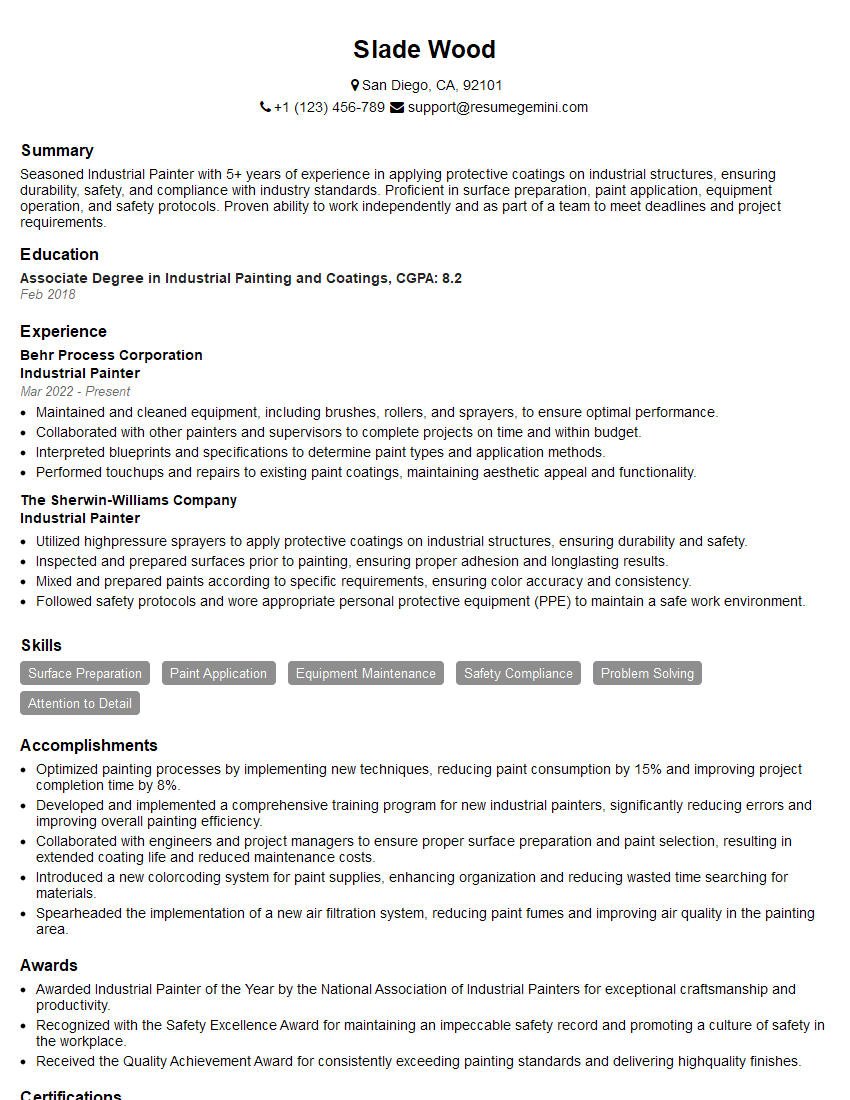
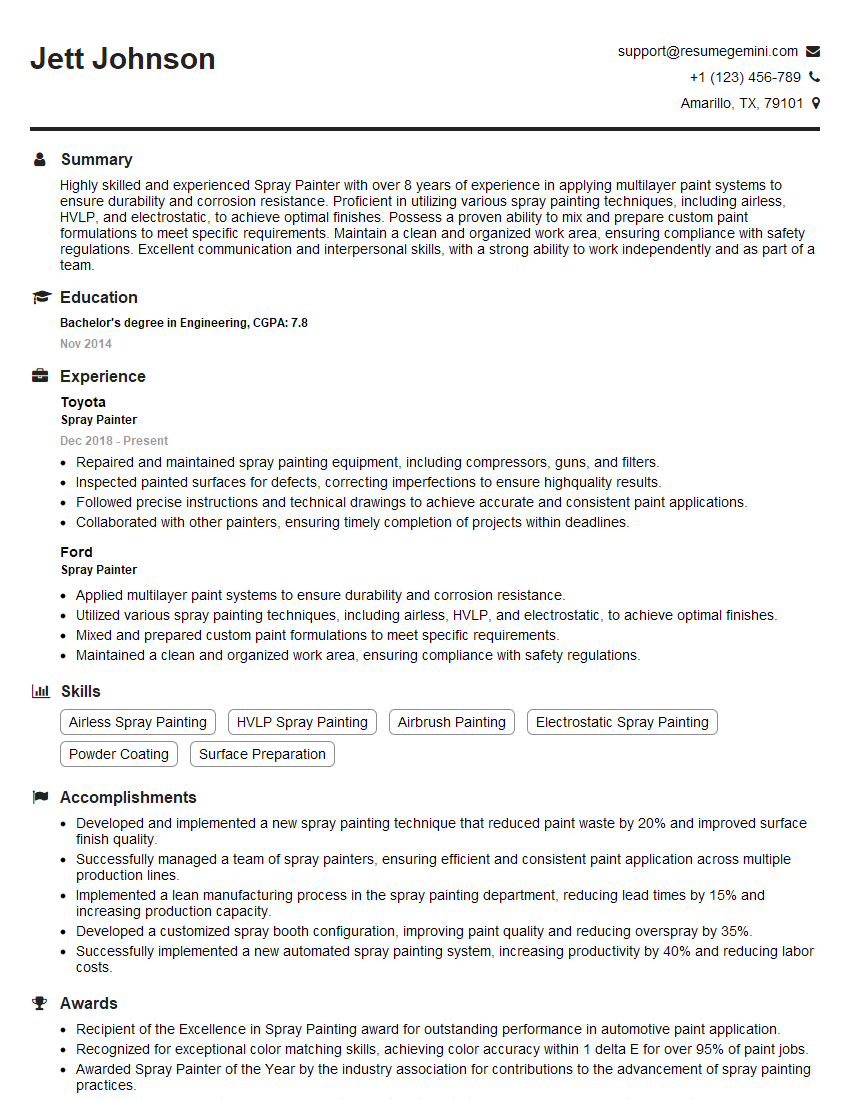
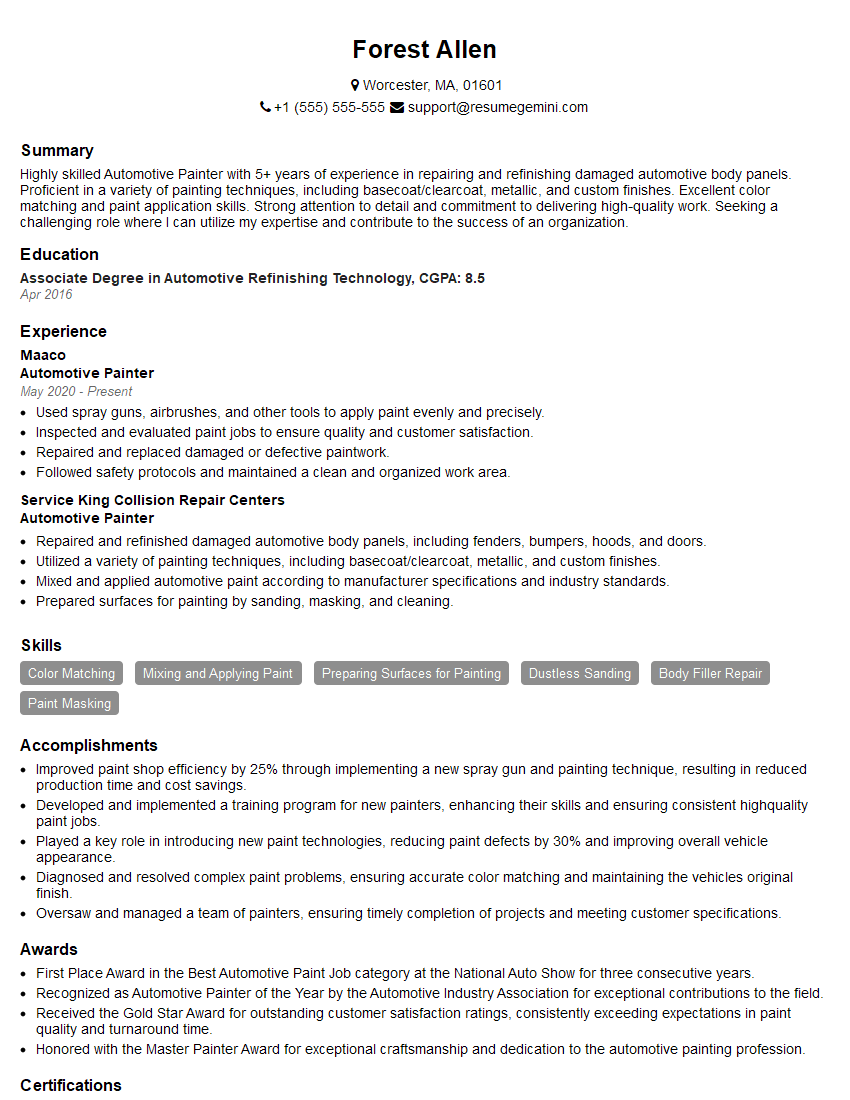
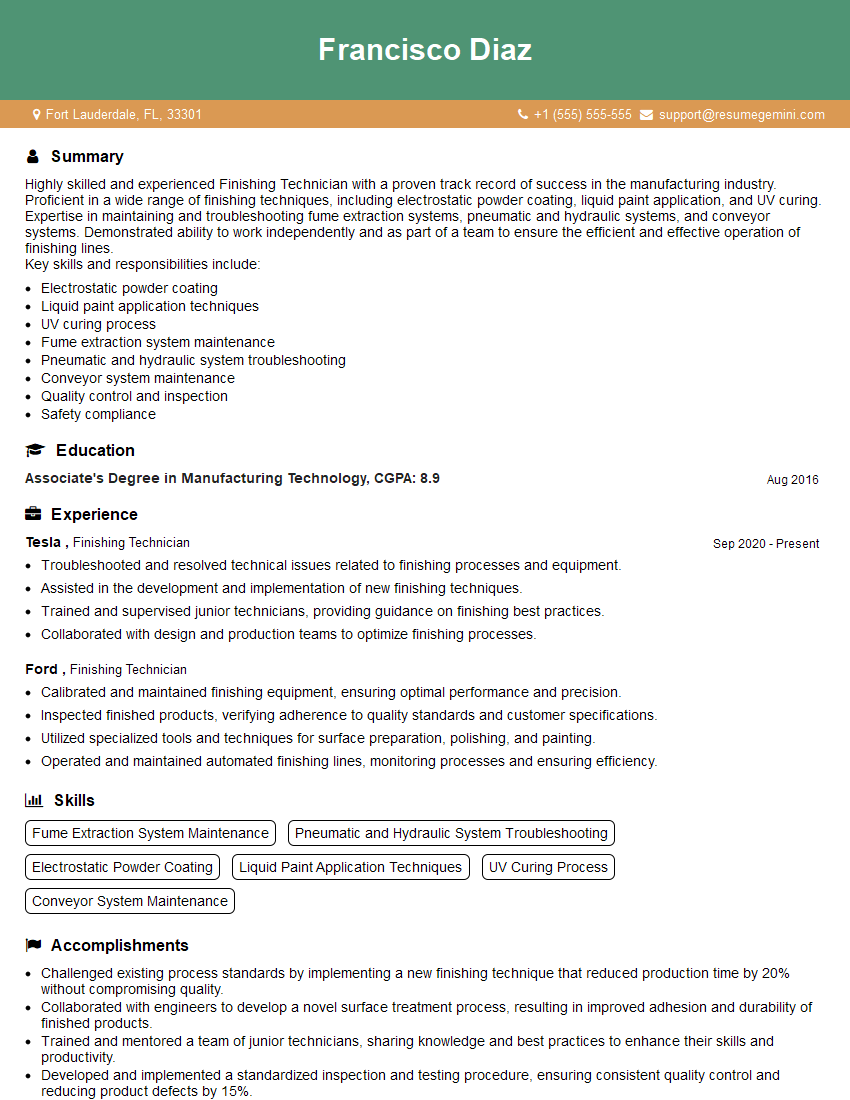
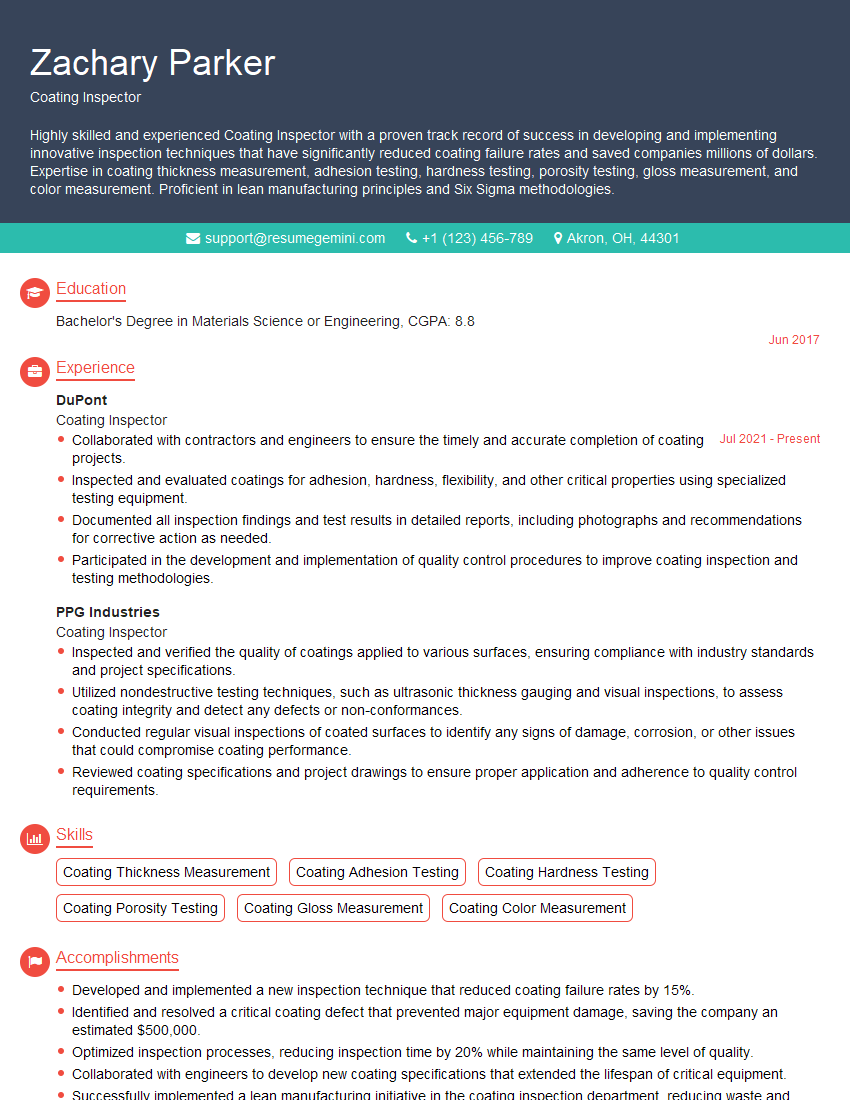
Mastering Coating Application Techniques is crucial for career advancement in this dynamic field. A strong understanding of these principles will significantly enhance your prospects for securing your ideal role. To maximize your chances, crafting a compelling and ATS-friendly resume is essential. ResumeGemini is a trusted resource that can help you build a professional resume that showcases your skills and experience effectively. Examples of resumes tailored to Coating Application Techniques are available to help guide your process.
Explore more articles
Users Rating of Our Blogs
Share Your Experience
We value your feedback! Please rate our content and share your thoughts (optional).
What Readers Say About Our Blog
Attention music lovers!
Wow, All the best Sax Summer music !!!
Spotify: https://open.spotify.com/artist/6ShcdIT7rPVVaFEpgZQbUk
Apple Music: https://music.apple.com/fr/artist/jimmy-sax-black/1530501936
YouTube: https://music.youtube.com/browse/VLOLAK5uy_noClmC7abM6YpZsnySxRqt3LoalPf88No
Other Platforms and Free Downloads : https://fanlink.tv/jimmysaxblack
on google : https://www.google.com/search?q=22+AND+22+AND+22
on ChatGPT : https://chat.openai.com?q=who20jlJimmy20Black20Sax20Producer
Get back into the groove with Jimmy sax Black
Best regards,
Jimmy sax Black
www.jimmysaxblack.com
Hi I am a troller at The aquatic interview center and I suddenly went so fast in Roblox and it was gone when I reset.
Hi,
Business owners spend hours every week worrying about their website—or avoiding it because it feels overwhelming.
We’d like to take that off your plate:
$69/month. Everything handled.
Our team will:
Design a custom website—or completely overhaul your current one
Take care of hosting as an option
Handle edits and improvements—up to 60 minutes of work included every month
No setup fees, no annual commitments. Just a site that makes a strong first impression.
Find out if it’s right for you:
https://websolutionsgenius.com/awardwinningwebsites
Hello,
we currently offer a complimentary backlink and URL indexing test for search engine optimization professionals.
You can get complimentary indexing credits to test how link discovery works in practice.
No credit card is required and there is no recurring fee.
You can find details here:
https://wikipedia-backlinks.com/indexing/
Regards
NICE RESPONSE TO Q & A
hi
The aim of this message is regarding an unclaimed deposit of a deceased nationale that bears the same name as you. You are not relate to him as there are millions of people answering the names across around the world. But i will use my position to influence the release of the deposit to you for our mutual benefit.
Respond for full details and how to claim the deposit. This is 100% risk free. Send hello to my email id: [email protected]
Luka Chachibaialuka
Hey interviewgemini.com, just wanted to follow up on my last email.
We just launched Call the Monster, an parenting app that lets you summon friendly ‘monsters’ kids actually listen to.
We’re also running a giveaway for everyone who downloads the app. Since it’s brand new, there aren’t many users yet, which means you’ve got a much better chance of winning some great prizes.
You can check it out here: https://bit.ly/callamonsterapp
Or follow us on Instagram: https://www.instagram.com/callamonsterapp
Thanks,
Ryan
CEO – Call the Monster App
Hey interviewgemini.com, I saw your website and love your approach.
I just want this to look like spam email, but want to share something important to you. We just launched Call the Monster, a parenting app that lets you summon friendly ‘monsters’ kids actually listen to.
Parents are loving it for calming chaos before bedtime. Thought you might want to try it: https://bit.ly/callamonsterapp or just follow our fun monster lore on Instagram: https://www.instagram.com/callamonsterapp
Thanks,
Ryan
CEO – Call A Monster APP
To the interviewgemini.com Owner.
Dear interviewgemini.com Webmaster!
Hi interviewgemini.com Webmaster!
Dear interviewgemini.com Webmaster!
excellent
Hello,
We found issues with your domain’s email setup that may be sending your messages to spam or blocking them completely. InboxShield Mini shows you how to fix it in minutes — no tech skills required.
Scan your domain now for details: https://inboxshield-mini.com/
— Adam @ InboxShield Mini
Reply STOP to unsubscribe
Hi, are you owner of interviewgemini.com? What if I told you I could help you find extra time in your schedule, reconnect with leads you didn’t even realize you missed, and bring in more “I want to work with you” conversations, without increasing your ad spend or hiring a full-time employee?
All with a flexible, budget-friendly service that could easily pay for itself. Sounds good?
Would it be nice to jump on a quick 10-minute call so I can show you exactly how we make this work?
Best,
Hapei
Marketing Director
Hey, I know you’re the owner of interviewgemini.com. I’ll be quick.
Fundraising for your business is tough and time-consuming. We make it easier by guaranteeing two private investor meetings each month, for six months. No demos, no pitch events – just direct introductions to active investors matched to your startup.
If youR17;re raising, this could help you build real momentum. Want me to send more info?
Hi, I represent an SEO company that specialises in getting you AI citations and higher rankings on Google. I’d like to offer you a 100% free SEO audit for your website. Would you be interested?
Hi, I represent an SEO company that specialises in getting you AI citations and higher rankings on Google. I’d like to offer you a 100% free SEO audit for your website. Would you be interested?