Are you ready to stand out in your next interview? Understanding and preparing for Cocktail Preparation interview questions is a game-changer. In this blog, we’ve compiled key questions and expert advice to help you showcase your skills with confidence and precision. Let’s get started on your journey to acing the interview.
Questions Asked in Cocktail Preparation Interview
Q 1. What are the classic components of a well-made Old Fashioned?
The Old Fashioned, a timeless classic, is deceptively simple yet relies on precise execution for perfection. Its core components are:
- High-quality Bourbon or Rye Whiskey: This forms the base, and the choice significantly impacts the final flavor profile. A good quality bourbon or rye with notes of vanilla, spice, or caramel will elevate the drink.
- Sugar: Traditionally, a sugar cube is used, but simple syrup is equally acceptable. The sugar dissolves and sweetens the drink, balancing the whiskey’s intensity.
- Angostura Bitters: These aromatic bitters add a complex layer of herbal, spicy, and slightly bitter notes that are crucial to the Old Fashioned’s character. A few dashes are sufficient, as too many can overpower the whiskey.
- Water: A small amount of water is used to dissolve the sugar and to temper the alcohol. Using good quality water improves the final product.
- Orange Twist: The final garnish – expressing the oils from an orange twist over the drink adds a bright, citrusy aroma and a touch of elegance.
The precise ratios are adaptable to personal preference, but a solid starting point is one sugar cube, two dashes of bitters, and a splash of water, all muddled together before adding whiskey and ice. The key is balance – a harmonious blend of sweetness, bitterness, and the whiskey’s character.
Q 2. Explain the difference between shaking and stirring cocktails.
Shaking and stirring are crucial techniques in cocktail preparation, each serving a different purpose and impacting the drink’s texture and dilution.
- Shaking: This is primarily used for cocktails containing dairy products (cream, milk, egg whites), juices, or ingredients that require vigorous mixing to emulsify and chill rapidly. The vigorous action creates a frothy texture and more significant dilution than stirring.
- Stirring: This method is ideal for cocktails that consist primarily of spirits and liqueurs. It gently chills the drink and dilutes it minimally, preserving the flavors’ integrity and ensuring a cleaner, less frothy finish. Stirring is generally preferred for drinks that should be clear and showcase nuanced flavors.
Think of it like this: shaking is for drinks that need a creamy texture and faster chilling, while stirring is for drinks where you want to maintain clarity and delicate flavor balance. For example, a Margarita (with juice) would be shaken, whereas a Manhattan (whiskey, vermouth, bitters) would be stirred.
Q 3. Describe the proper muddling technique and when it’s appropriate.
Muddling involves gently crushing ingredients like herbs, fruits, or spices to release their aromas and flavors. It’s not about pulverizing, but rather about releasing the essential oils and juices.
- Technique: Use a muddler (a sturdy pestle-like tool) and gently press down on the ingredients, rotating the muddler to crush evenly. Avoid excessive force, which can result in bitter compounds being released and create a pulpy mixture.
- Appropriate Use: Muddling is ideal for cocktails featuring ingredients that benefit from a gentle release of their flavors, such as mint leaves in a Mojito, berries in a Bramble, or basil leaves in a Basil Smash. It’s crucial to use this technique carefully to avoid over-muddling and extracting undesirable bitterness.
For instance, when making a Mojito, gently muddle the mint leaves with a bit of simple syrup to release their fresh aroma before adding other ingredients. Over-muddling can lead to bitter mint; a light touch is paramount.
Q 4. Name three different types of ice and their ideal uses in cocktails.
Different types of ice impact the cocktail’s temperature and dilution rate, influencing its final taste and texture. Here are three examples:
- Kula Ice: These large, clear ice cubes melt slower than regular ice. This is beneficial for drinks that should stay cold over a longer period, minimizing dilution and ensuring the flavors don’t get watered down, such as Old Fashioneds or Manhattans. The clarity also enhances the drink’s visual appeal.
- Crushed Ice: Ideal for drinks that require rapid chilling and a more refreshing, textured mouthfeel, such as Daiquiris or Mojitos. The large surface area facilitates faster cooling and melting, creating a slightly more diluted drink but adding a pleasant chill.
- Sphere Ice: These perfectly round ice cubes offer a slower melt rate than regular cubes due to their shape, reducing dilution and keeping drinks consistently chilled for longer. They’re a visually striking choice, often used in high-end cocktail bars.
Q 5. What are some common garnishes and how do they complement different drinks?
Garnishes are more than just decoration; they complement and enhance the cocktail’s flavor and aroma. Here are a few examples:
- Orange Twist/Wheel: Often used in Old Fashioneds and Manhattans, the oils expressed from the orange peel add a bright, citrusy aroma that cuts through the richness of the spirits.
- Lime Wedge: Common in Margaritas and Daiquiris, the lime adds tartness and complements the citrusy or fruity flavors.
- Maraschino Cherry: Typically used in Manhattans or Old Fashioneds (as a less common alternative), the cherry adds sweetness and a touch of nostalgia, playing off the spirits’ intensity.
- Mint Sprig: A staple in Mojitos and Juleps, mint adds a refreshing herbaceousness and complements the sweet and sour components of these drinks.
- Fruit Slices or Berries: These garnishes add visual appeal and offer a burst of flavor, often used in fruity cocktails like Caipirinhas or Cosmos.
The choice of garnish should enhance, not mask, the drink’s flavor profile. A simple, well-chosen garnish can elevate the overall experience.
Q 6. How do you maintain a clean and organized bar station?
Maintaining a clean and organized bar station is crucial for efficiency, hygiene, and professional presentation. Here are key aspects:
- Mise en Place: Before service begins, gather all necessary ingredients, tools, and glassware. Having everything within easy reach streamlines the cocktail-making process and ensures speed and efficiency.
- Cleanliness: Regularly wipe down surfaces, clean spills promptly, and wash glassware thoroughly. Sanitize tools and surfaces to maintain hygiene standards.
- Organization: Arrange bottles and tools logically, optimizing workflow. Similar items should be grouped together, and frequently used items should be readily accessible.
- Inventory Management: Track inventory to prevent shortages and maintain consistency in the offerings. Rotate stock to minimize waste.
Consider the bar station as a well-oiled machine. A clean, organized station promotes a smooth and efficient service flow, reducing errors and stress, and ensuring the highest quality drinks are served.
Q 7. Describe your experience with various types of liquor (e.g., whiskey, rum, gin).
My experience with various types of liquor is extensive, encompassing a deep understanding of their production methods, flavor profiles, and ideal applications in cocktails.
- Whiskey: I possess in-depth knowledge of Bourbon, Rye, Scotch, Irish, and Japanese whiskeys. I understand the nuances of grain types, aging processes, and the resulting flavor profiles, allowing me to select the appropriate whiskey for various cocktails based on desired taste characteristics.
- Rum: I’m familiar with various rum styles, including light, dark, spiced, and aged rums, sourced from different regions. This understanding allows me to choose the appropriate rum for cocktails ranging from classic Daiquiris to more complex tiki drinks.
- Gin: I have a strong grasp of the botanical variations that influence gin’s flavor profile. I can differentiate between London Dry Gin, Old Tom Gin, and New Western Style Gins and select appropriate gins based on their botanical composition for specific cocktails.
Beyond these core spirits, my experience extends to Tequila, Vodka, Mezcal, and a range of liqueurs and aperitifs. This broad knowledge base allows me to create diverse and innovative cocktails, always prioritizing the selection of high-quality spirits to ensure exceptional flavor.
Q 8. How do you manage inventory and prevent waste?
Inventory management in a bar is crucial for profitability and smooth operations. It’s like running a well-oiled machine – each part needs to be in the right place at the right time. My approach involves a multi-pronged strategy focusing on meticulous tracking, smart purchasing, and proactive waste reduction.
- Regular Stock Takes: I conduct weekly inventory checks, comparing physical stock to my digital inventory management system. This allows me to identify discrepancies quickly, preventing stockouts or overstocking.
- FIFO (First-In, First-Out): I strictly adhere to the FIFO method, ensuring that older stock is used before newer stock. This minimizes spoilage, particularly with perishable goods like fresh juices and garnishes.
- Par Stock Levels: I establish par stock levels for each ingredient, representing the ideal amount to have on hand. This helps me optimize ordering, preventing waste from overstocking while avoiding shortages.
- Recipe Standardization: Precisely measured recipes minimize ingredient waste. I ensure every bartender uses the same recipe and measurements, preventing inconsistencies and unnecessary pours.
- Creative Waste Reduction: Instead of discarding leftover ingredients, I actively seek creative ways to use them. For example, leftover fruit purees might become a base for a new cocktail, and citrus peels can be used for infusions or garnishes.
By consistently employing these techniques, I ensure we minimize waste, control costs, and maintain optimal stock levels, enhancing both profitability and operational efficiency.
Q 9. What are some common mistakes bartenders make, and how do you avoid them?
Many common mistakes stem from a lack of attention to detail or a rushed workflow. Here are a few frequent errors and how I avoid them:
- Inconsistent Measurements: Using inaccurate measurements leads to inconsistent cocktails. I emphasize precision using jiggers and other measuring tools, training staff to follow standardized recipes diligently.
- Poor Technique: Shaking or stirring incorrectly can negatively impact the cocktail’s texture and flavor. Proper technique, taught through hands-on training and regular practice, ensures consistency and quality.
- Neglecting Quality Control: Failing to taste-test and adjust recipes regularly leads to inconsistent quality. I incorporate regular quality checks throughout the shift, ensuring all drinks meet our standards.
- Ignoring Hygiene: Poor hygiene can compromise the safety and appeal of the drink. We maintain impeccable cleanliness standards for equipment, glassware, and work surfaces. Regular cleaning protocols are strictly enforced.
- Lack of Organization: A chaotic bar leads to mistakes and slow service. A well-organized bar, with all ingredients easily accessible, allows for efficient workflow.
By focusing on training, standardized procedures, and a commitment to quality control, we minimize these common errors and create a consistent, high-quality product.
Q 10. Explain the importance of proper glassware selection for different cocktails.
Glassware selection is vital; it enhances both the aesthetics and the drinking experience. The wrong glass can diminish a cocktail’s appeal, affecting its temperature, aroma, and even taste.
- Martini Glass: The iconic V-shape is designed to showcase the drink’s color and aroma, perfect for crisp, chilled cocktails like Martinis and Cosmopolitans.
- Rocks Glass (Old Fashioned): The sturdy, short shape is ideal for cocktails on the rocks, keeping the drink cool and allowing for generous ice.
- Highball Glass: Its tall, slender form is best suited for long drinks, allowing for ample ice and plenty of room for mixers and garnishes.
- Coupe Glass: The elegant, shallow bowl is best for cocktails that don’t require much ice, such as the French 75, preserving aromas.
- Nick & Nora Glass: A smaller version of a coupe glass, it’s perfect for delicate cocktails served chilled.
Selecting the appropriate glassware elevates the entire experience, transforming a simple drink into a visually appealing and sophisticated offering.
Q 11. How do you handle a rush or a large order efficiently?
Handling a rush or a large order efficiently requires a combination of preparation, teamwork, and smart strategies. It’s like conducting an orchestra, each section playing its part in harmony.
- Mise en Place: Having all ingredients prepped and measured in advance is essential. This ensures a smooth and quick service during peak hours.
- Teamwork and Communication: Clear communication between bartenders is crucial. We divide tasks efficiently, delegating responsibilities based on individual strengths and the order’s complexity.
- Prioritization: During a rush, prioritize orders efficiently, ensuring timely service to all customers. Often a ‘first come, first served’ approach with a clear visual queue system works best.
- Batching Cocktails: For large, similar orders, batching the preparation of common components saves significant time. This allows for the efficient assembly of multiple cocktails simultaneously.
- Time Management: Efficient time management is key. This includes minimizing unnecessary steps and movements. An organized bar setup is essential for swift cocktail preparation.
By applying these strategies, we maintain a high level of service quality even during the busiest periods.
Q 12. Describe your experience with point-of-sale (POS) systems.
I have extensive experience with various POS (Point of Sale) systems, including Toast, Square, and Micros. My expertise extends beyond basic order entry to utilizing their reporting and inventory management capabilities.
- Order Entry and Processing: I’m proficient in using POS systems to efficiently enter orders, manage payments, and generate receipts. Speed and accuracy are crucial here, minimizing customer wait times.
- Inventory Management Integration: I can use the POS system’s inventory module to track stock levels, monitor consumption, and generate reports to inform purchasing decisions, reducing waste and optimizing profitability.
- Sales Reporting and Analysis: POS data provides valuable insights into sales trends, popular cocktails, and peak hours. I utilize these reports to adjust inventory, staffing levels, and even the cocktail menu.
- Troubleshooting: I am adept at resolving minor technical issues with the POS system to ensure uninterrupted service. I also know when to call for technical support if necessary.
- Employee Training: I’m experienced in training new employees on the proper use of the POS system, ensuring consistent data entry and efficient order processing.
Proficiency with POS systems is indispensable for managing a bar efficiently and effectively.
Q 13. How do you calculate the cost of a cocktail?
Calculating the cost of a cocktail requires careful attention to detail. It’s not just about the price of the alcohol; it also involves considering all the ingredients and overhead.
The formula is relatively straightforward:
Cost per cocktail = (Cost of all ingredients) + (Overhead Costs / Number of Cocktails)Let’s break it down:
- Cost of all ingredients: This includes the cost of all spirits, mixers, garnishes, and any other components in the cocktail. These costs should be tracked meticulously using a perpetual inventory system.
- Overhead Costs: This includes labor costs (bartender salaries), rent, utilities, and other operational expenses. It needs to be apportioned accurately per cocktail to account for these indirect costs.
- Number of Cocktails: This represents the total number of cocktails that can be made using a given batch of ingredients.
For example, if the total cost of ingredients for a batch of 10 margaritas is $15, and the allocated overhead cost per cocktail is $2, then the cost per margarita is ($15/10) + $2 = $3.50.
Accurately calculating cocktail costs is essential for pricing strategies, optimizing profitability, and ensuring responsible financial management.
Q 14. How do you deal with a difficult or demanding customer?
Handling difficult or demanding customers requires patience, diplomacy, and a focus on de-escalation. The goal is to resolve the situation amicably while maintaining professionalism.
- Active Listening: I begin by carefully listening to the customer’s complaint, acknowledging their concerns without interruption. Showing empathy is crucial.
- Empathy and Validation: Even if I don’t agree with the customer’s perspective, acknowledging their feelings can help de-escalate the situation. I might say something like, “I understand your frustration.”
- Problem-Solving: Once I understand the issue, I try to find a solution that addresses the customer’s concerns. This might involve replacing a drink, offering a discount, or simply explaining the situation.
- Professionalism: I always maintain a professional demeanor, avoiding arguments or escalating the situation. A calm and respectful approach is key to de-escalation.
- Seeking Assistance: If I’m unable to resolve the issue on my own, I don’t hesitate to seek help from a manager or supervisor.
Remember, a positive customer experience is paramount. Even when dealing with challenging situations, maintaining composure and employing effective communication skills can often turn a negative interaction into a positive one.
Q 15. How do you ensure the safety and hygiene standards are met in the bar?
Maintaining safety and hygiene in a bar is paramount. It’s not just about preventing illness; it’s about creating a welcoming and trustworthy environment for our guests. My approach is multi-faceted and starts with meticulous cleanliness.
- Regular Sanitation: All surfaces, including bars, glassware, ice bins, and tools, are sanitized regularly throughout the day, following strict protocols using food-grade sanitizers. We adhere to a schedule that includes pre-opening and post-closing deep cleans, as well as frequent mid-shift spot checks.
- Food Safety: If we’re serving food alongside drinks, all food handling adheres to stringent food safety standards, including proper temperature control, handwashing protocols, and preventing cross-contamination.
- Ingredient Storage: Proper storage of all ingredients is essential. We maintain appropriate temperatures for perishable items and use a FIFO (First In, First Out) system to minimize waste and ensure freshness. This also minimizes the risk of spoilage and potential contamination.
- Employee Training: All staff receive comprehensive training on hygiene protocols, including proper handwashing techniques, safe food handling, and the importance of personal hygiene. Regular refresher courses reinforce best practices.
- Pest Control: We maintain a proactive pest control program to prevent infestations and maintain a sanitary environment. This involves regular inspections and preventative measures.
Ultimately, maintaining high hygiene standards isn’t just a checklist; it’s an ingrained part of our bar’s culture. It’s about creating an environment where both staff and guests feel safe and confident.
Career Expert Tips:
- Ace those interviews! Prepare effectively by reviewing the Top 50 Most Common Interview Questions on ResumeGemini.
- Navigate your job search with confidence! Explore a wide range of Career Tips on ResumeGemini. Learn about common challenges and recommendations to overcome them.
- Craft the perfect resume! Master the Art of Resume Writing with ResumeGemini’s guide. Showcase your unique qualifications and achievements effectively.
- Don’t miss out on holiday savings! Build your dream resume with ResumeGemini’s ATS optimized templates.
Q 16. Describe your knowledge of different cocktail styles (e.g., sour, old fashioned, highball).
Cocktail styles offer incredible diversity. Understanding these styles allows for crafting drinks that meet a wide range of palates and occasions.
- Sour: These cocktails are built on a foundation of a spirit, citrus juice (usually lemon or lime), and a sweetener (often simple syrup). The balance of tartness, sweetness, and the spirit’s character defines a great sour. A classic example is the Whiskey Sour.
- Old Fashioned: Characterized by their simplicity and focus on the spirit, Old Fashioneds typically involve a spirit (usually whiskey or bourbon), sugar (often muddled with bitters), and a citrus twist. The emphasis is on the spirit’s inherent qualities.
- Highball: These are tall, refreshing cocktails, usually composed of a spirit and a mixer (soda water, tonic water, ginger ale, etc.). The spirit is generally a smaller component, resulting in a light and easily drinkable cocktail. The Gin and Tonic is a prime example.
- Daiquiri: A simple yet elegant style, the daiquiri emphasizes the quality of the rum and a perfect balance of rum, lime juice, and simple syrup.
- Martini: Known for its sophisticated simplicity, the martini typically combines gin or vodka with vermouth, often garnished with an olive or lemon twist. The ratio of vermouth to spirit significantly impacts the final drink’s profile.
Understanding the fundamental elements of each style enables customization and creative exploration within the framework of classic cocktail construction.
Q 17. What are some classic cocktails and their recipes?
Many classic cocktails stand the test of time due to their balanced flavor profiles and simple elegance.
- Old Fashioned: 2 oz Bourbon or Rye Whiskey, 1 sugar cube, 2 dashes Angostura bitters, Orange twist.
- Manhattan: 2 oz Rye Whiskey, 1 oz Sweet Vermouth, 2 dashes Angostura bitters, Maraschino cherry.
- Margarita: 2 oz Tequila, 1 oz Cointreau or Triple Sec, 1 oz Fresh Lime Juice, Salt rim (optional).
- Daiquiri: 2 oz White Rum, 1 oz Fresh Lime Juice, ¾ oz Simple Syrup.
- Negroni: 1 oz Gin, 1 oz Campari, 1 oz Sweet Vermouth, Orange peel.
These are just a few examples, and variations exist depending on personal preference and ingredient availability. The key is understanding the balance of flavors and how adjustments can be made to suit individual taste.
Q 18. How do you adjust recipes based on customer preferences or ingredient availability?
Adaptability is crucial in bartending. Adjusting recipes is about understanding the fundamental flavor components and how they interact. I approach adjustments systematically.
- Customer Preferences: If a customer prefers a less sweet drink, I might reduce the simple syrup or add a touch more citrus. If they prefer a stronger spirit presence, I might increase the spirit amount slightly. Open communication is key here – understanding their preferences helps me create a truly personalized experience.
- Ingredient Availability: Sometimes, a specific ingredient isn’t available. Instead of simply omitting it, I find a suitable substitute. For example, if I’m out of fresh lime juice, I might use a high-quality lime cordial, but I’ll adjust the sweetness accordingly to maintain balance.
- Seasonal Adjustments: I adapt recipes based on seasonal ingredients. Using fresh, seasonal fruits or herbs adds a unique dimension and allows me to showcase the best of what’s available. For example, in summer I might incorporate fresh berries into a sour variation.
The goal is not to simply ‘replace’ an ingredient but to understand its function within the recipe and find an alternative that maintains the intended flavor profile and balance.
Q 19. What are some current trends in the cocktail industry?
The cocktail industry is constantly evolving, reflecting changing tastes and innovative techniques.
- Low-Alcohol and Non-Alcoholic Cocktails: There’s a growing demand for sophisticated non-alcoholic and low-alcohol options that don’t compromise on flavor complexity. This involves creating nuanced flavor profiles using techniques like using high-quality non-alcoholic spirits and creative layering of flavor.
- Sustainability: There’s a strong focus on sustainability, from sourcing ingredients locally and ethically to minimizing waste and using eco-friendly practices.
- Experimentation with Flavors: Bartenders are constantly experimenting with unique flavor combinations, incorporating unusual ingredients and exploring different flavor profiles.
- Focus on Quality Ingredients: The industry places increasing value on high-quality, fresh, and locally-sourced ingredients.
- Cocktail Culture: The overall rise of cocktail culture and awareness continues to drive innovation and creativity within the industry.
Staying current involves continuous learning, attending industry events, and experimenting with new techniques and ingredients.
Q 20. Explain your experience with different types of syrups and mixers.
Syrups and mixers are essential components in creating diverse and flavorful cocktails. My understanding encompasses their properties, uses, and how to incorporate them effectively.
- Simple Syrup: The foundation, it’s simply sugar dissolved in water. Variations include flavored simple syrups (e.g., vanilla, rosemary, lavender) which add depth and complexity.
- Rich Syrups: These syrups incorporate additional ingredients beyond sugar and water, such as honey, agave nectar, or even fruit purées, resulting in richer, more complex flavors.
- Specialty Syrups: These can include orgeat syrup (almond), falernum (a blend of spices, liqueurs, and sugar), or various fruit-based syrups, each with a unique flavor profile to complement different drinks.
- Mixers: Beyond syrups, mixers such as soda water, tonic water, ginger ale, juices, and sodas all play crucial roles. The quality of these significantly impacts the cocktail’s taste.
I understand the subtleties of each mixer and how to balance their sweetness, acidity, and other characteristics to achieve the desired flavor profile in a cocktail. Knowing when to use a tart mixer versus a sweeter one is crucial to balancing the drink. For example, a citrus juice complements a sour but is inappropriate for a spirit-forward Old Fashioned.
Q 21. Describe your understanding of wine and beer pairings with cocktails.
Pairing wine and beer with cocktails is a more recent trend, but it offers exciting opportunities for creating unique tasting experiences. The approach involves considering complementary flavor profiles and balancing the intensity of the drinks.
- Complementary Flavors: Look for similar flavor notes or those that complement each other. For example, a citrus-forward cocktail might pair well with a Sauvignon Blanc due to the shared citrus notes. A smoky mezcal cocktail might pair well with a robust red wine with notes of dark fruit and spice.
- Intensity Balance: Consider the intensity of the alcohol content and the complexity of flavors. A lighter cocktail might pair well with a light-bodied wine or a crisp beer, while a more complex cocktail could stand up to a bolder wine or beer.
- Regional Pairings: Exploring regional pairings can also be fascinating, particularly when considering cocktails with strong regional ties. A cocktail featuring tequila, for example, might pair well with a Mexican beer such as a lager.
- Experimental Approach: Don’t shy away from experimenting! The best pairings often arise from unexpected combinations. Taste and experience are invaluable in this area.
Careful consideration of flavors, aromas, and intensity is essential for a successful pairing. Ultimately, finding the right combination is a creative and experimental process.
Q 22. How do you stay updated on new cocktail techniques and trends?
Staying ahead in the cocktail world requires a multifaceted approach. I religiously follow prominent cocktail publications like Imbibe and Difford’s Guide, absorbing articles on emerging techniques and ingredient trends. I also actively engage with the online cocktail community, participating in forums like Reddit’s r/cocktails and following influential bartenders on Instagram and YouTube. This provides valuable insights into innovative methods, such as the use of sous vide for infusions or the exploration of unique ice shapes for enhanced dilution control. Additionally, attending industry conferences and workshops, like the Tales of the Cocktail festival, allows me to network with peers and learn directly from leading mixologists, experiencing new flavor profiles and techniques firsthand.
Q 23. What are your strengths and weaknesses as a bartender?
My greatest strength is my adaptability and creativity. I thrive in environments that demand quick thinking and problem-solving. I can swiftly adjust to unexpected changes in service demands and creatively craft cocktails using limited ingredients. For example, during a recent shortage of a key liqueur, I successfully substituted it with a combination of other spirits and flavourings, resulting in a surprisingly popular variation. However, a weakness I’m actively working on is delegation. As I take immense pride in my craft, I sometimes find it challenging to relinquish tasks, especially in high-pressure situations. I’m actively practicing improved communication and trust-building with my teams to overcome this.
Q 24. Describe your experience working in a fast-paced environment.
My experience in a high-volume, fast-paced bar environment has honed my ability to prioritize tasks efficiently and remain calm under pressure. During a busy Friday night, for example, I seamlessly manage multiple orders, prioritize urgent requests, and ensure quality control, all while maintaining a friendly and efficient service. This involves meticulous organization – pre-batching high-demand cocktails, knowing my inventory well, and maintaining clear communication with support staff. The skill of multitasking and anticipating customer needs, such as having garnishes prepped, is crucial. Ultimately, maintaining a positive attitude and teamwork are essential to navigate the intensity smoothly. The pressure helps focus my skills and brings out the best in my efficiency and resourcefulness.
Q 25. What is your preferred method for making a Margarita?
My preferred method for making a Margarita is the classic, shaken style, emphasizing fresh ingredients. I start with a high-quality tequila (Blanco or Reposado, depending on preference), fresh lime juice (always freshly squeezed!), and agave nectar. The ratios I typically use are 2:1:1 (tequila:lime juice:agave nectar), although this can be adjusted to taste. I meticulously measure each component using a jigger for consistency. Then, I vigorously shake the ingredients with ice in a Boston shaker until the shaker is thoroughly chilled. This ensures proper dilution and a beautifully frothy texture. Finally, I double strain the drink into a chilled coupe or rocks glass with a salted rim, garnishing with a lime wedge. The key is balance: the tartness of the lime, the sweetness of the agave, and the character of the tequila should harmoniously combine.
Q 26. How do you handle a spilled drink or other bar accidents?
Handling spills and accidents requires swift and professional action. First, my immediate priority is guest safety, ensuring no one is injured. For spills, I quickly contain the area, using appropriate absorbent materials to clean up the mess, minimizing slip hazards. I apologize sincerely to any affected guests and offer to replace any damaged items. If the accident involves broken glass, I use a designated brush and dustpan to carefully collect the shards, disposing of them in a secure container. Depending on the severity, I’ll inform my manager, documenting the incident for safety reporting. Maintaining a calm demeanor is crucial in these situations, reassuring both guests and fellow staff. Effective communication and a proactive approach help prevent further issues and ensure a smooth recovery.
Q 27. How do you maintain a professional appearance and demeanor?
Maintaining a professional appearance and demeanor is paramount in my role. This includes adhering to the bar’s dress code, ensuring cleanliness and neatness at all times. My uniform is always immaculate, my shoes polished, and my hands clean and well-groomed. Beyond attire, my demeanor is equally important. I strive for a friendly yet professional approach, engaging with guests warmly and respectfully, offering assistance and answering questions clearly and accurately. Active listening, effective communication, and a sincere smile are vital in creating a positive guest experience. Essentially, I aim to present a polished image that reflects positively on both myself and the establishment.
Q 28. Explain your experience with cocktail competitions or events.
I’ve had the privilege of participating in several cocktail competitions, including the regional finals of the prestigious ‘Mixology Masters’ competition last year. This experience was invaluable in sharpening my skills, both in the technical aspects of cocktail creation and in the performance aspects of presentation and communication. I placed second, a testament to my skills and dedication. The competition involved creating original cocktails under tight time constraints, demonstrating my ability to think creatively while working efficiently. I particularly enjoyed the challenge of using unusual and underutilized ingredients in my signature cocktail, ‘The Alchemist’s Elixir’, which showcased my creative flair and innovative mixology skills. Participating in such events also reinforces the importance of constantly learning and refining one’s craft.
Key Topics to Learn for Cocktail Preparation Interview
- Cocktail Categories & Classifications: Understanding different cocktail families (e.g., Highballs, Sours, Old Fashioneds) and their defining characteristics.
- Ingredient Knowledge: Deep familiarity with spirits (types, brands, flavor profiles), liqueurs, mixers, garnishes, and their applications in various cocktails.
- Recipe Mastery: Accurate measurement techniques, understanding ratios and proportions, and the ability to execute recipes consistently and efficiently.
- Mixing Techniques: Proficiency in shaking, stirring, muddling, layering, and other essential mixing methods, understanding which technique best suits each cocktail.
- Garnish & Presentation: Knowledge of appropriate garnishes for different cocktails and the importance of visually appealing presentation.
- Bar Equipment & Tools: Familiarity with common bar tools (e.g., jiggers, shakers, strainers, muddlers) and their proper usage.
- Hygiene & Sanitation: Understanding and applying safe food handling practices, maintaining cleanliness of work surfaces and equipment.
- Inventory Management: Basic understanding of stock control, recognizing when supplies are low, and suggesting reordering.
- Troubleshooting & Problem Solving: Ability to identify and rectify common issues (e.g., inconsistent drink quality, ingredient shortages) and adapt to unexpected situations.
- Customer Service & Interaction: Understanding the importance of providing excellent customer service, taking orders accurately, and handling customer requests professionally.
Next Steps
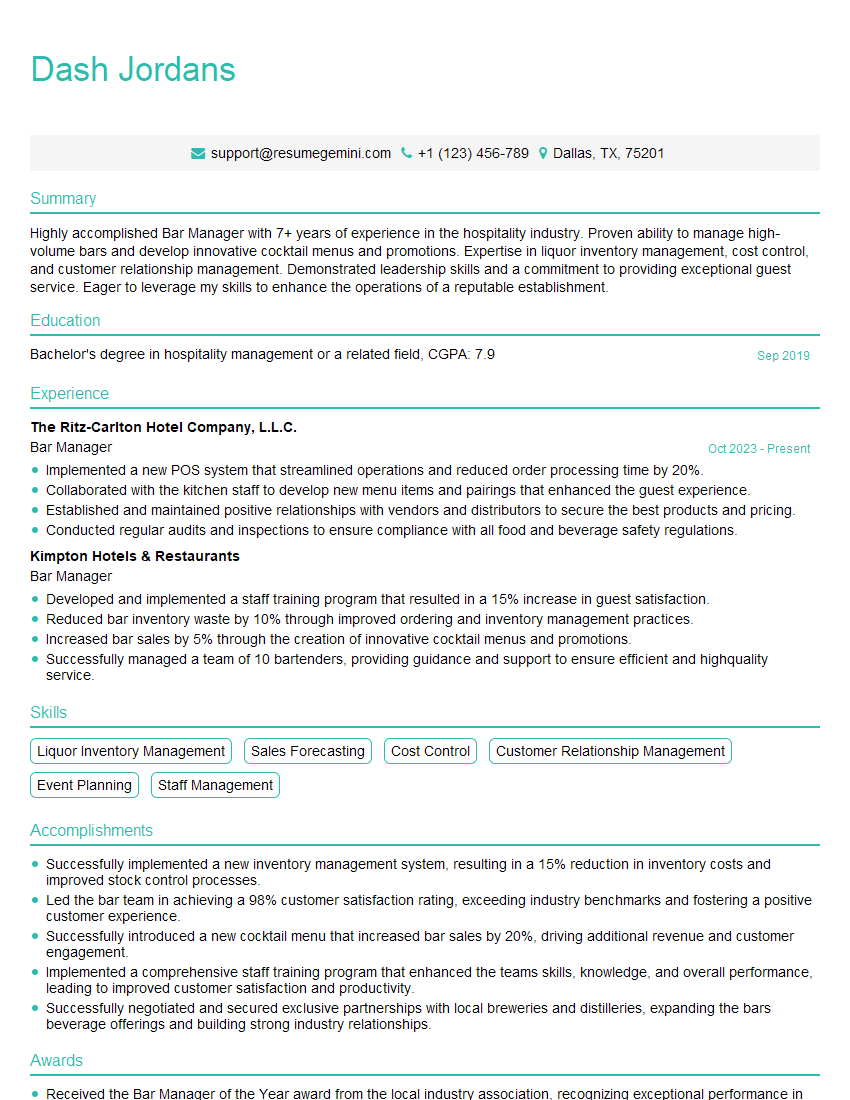
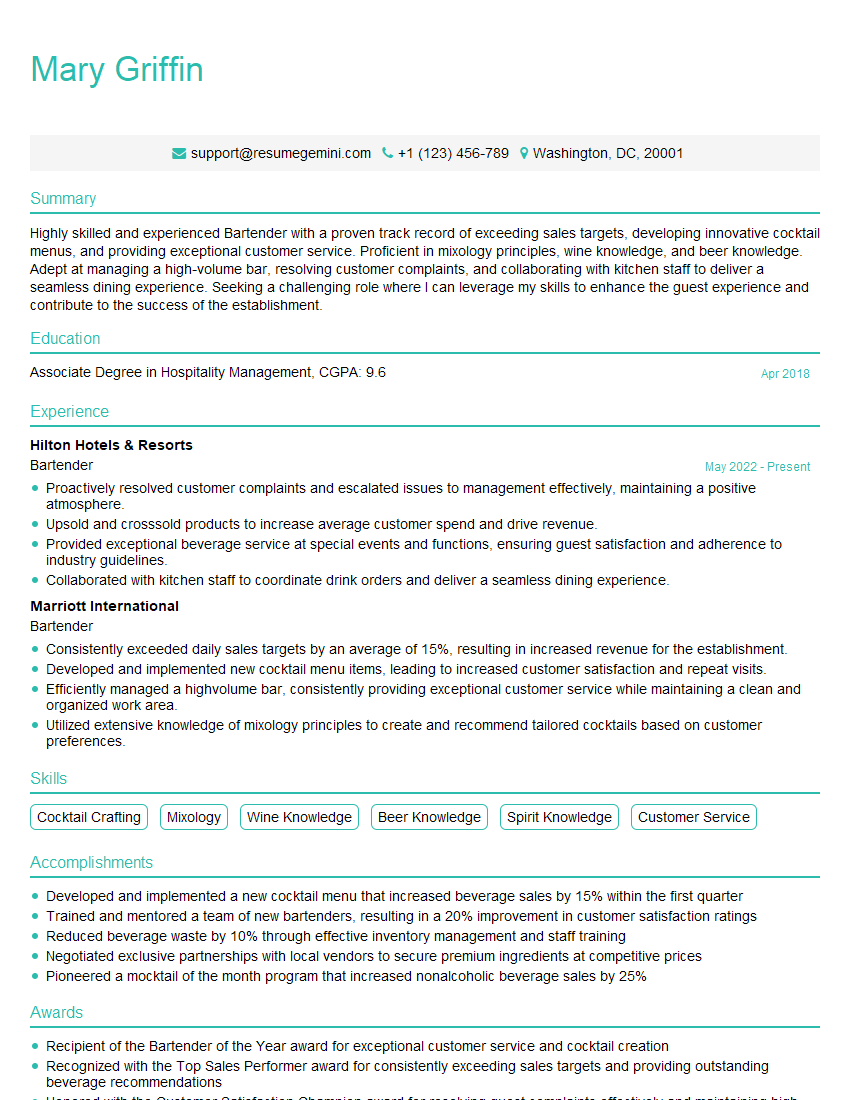
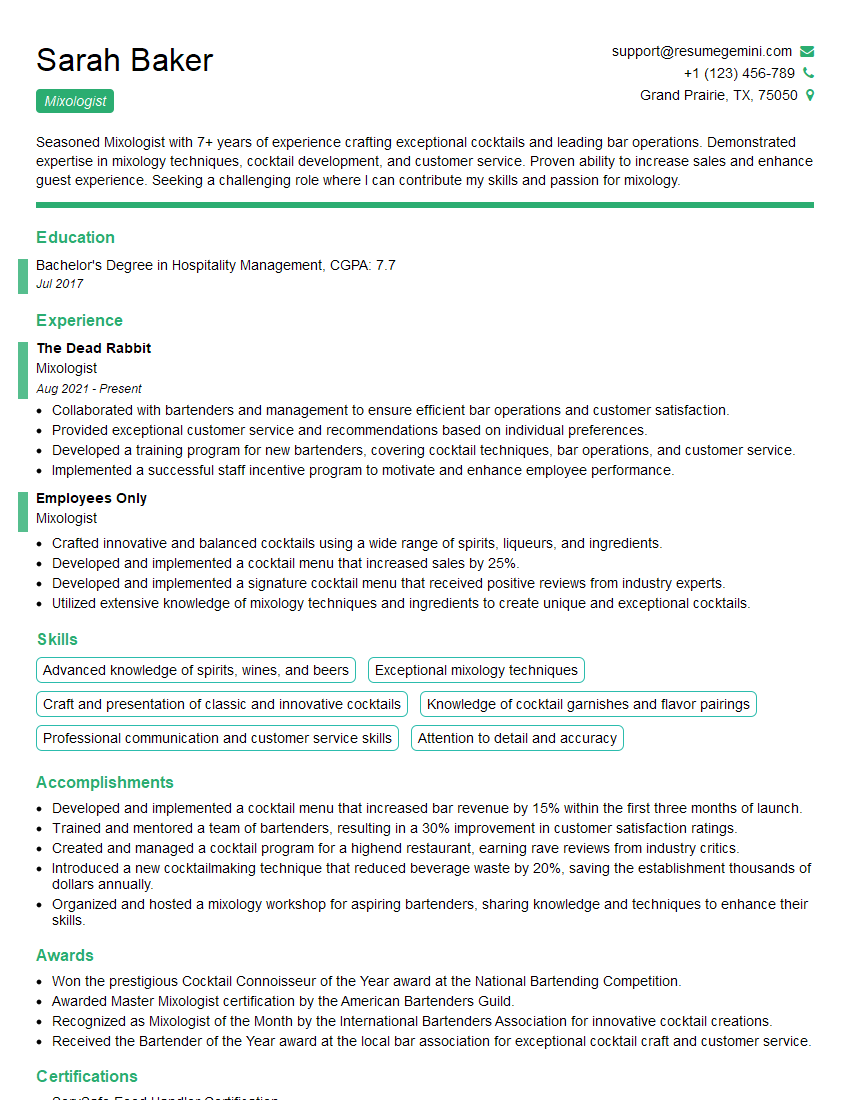
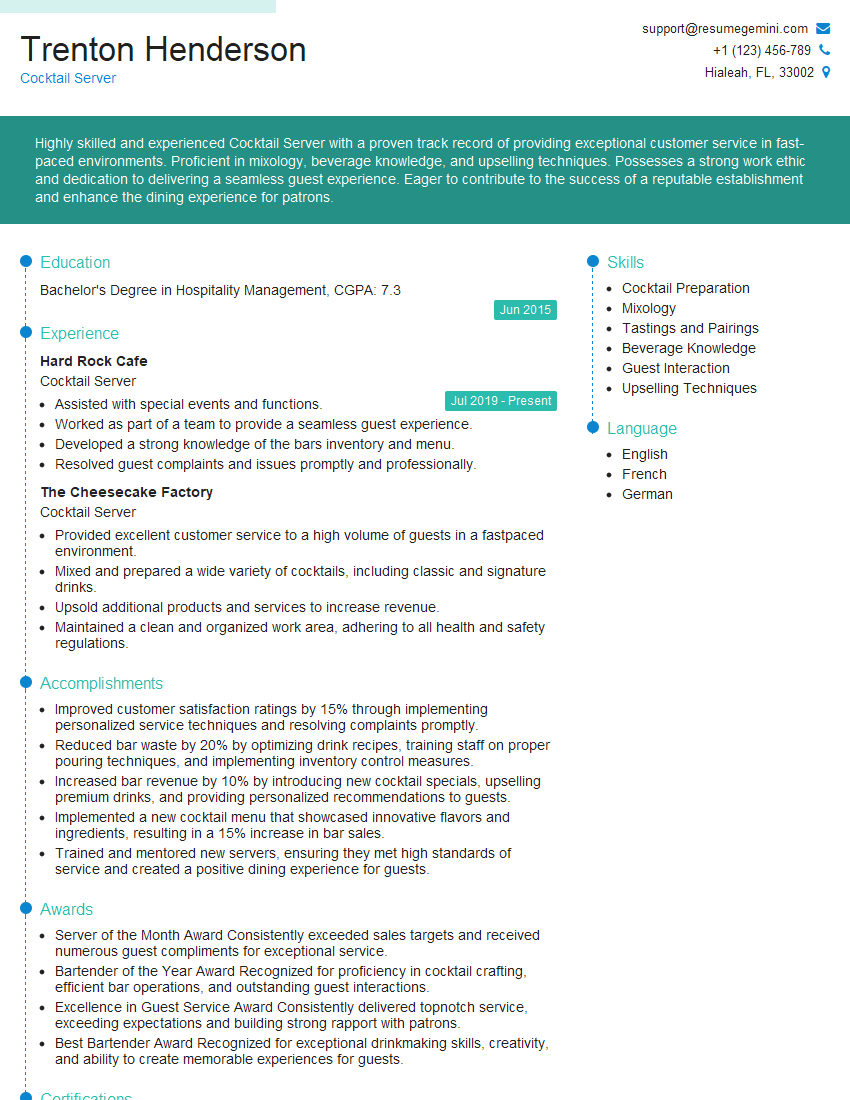
Mastering cocktail preparation is crucial for career advancement in the hospitality industry, opening doors to exciting opportunities and higher earning potential. A well-crafted resume is your first step towards landing your dream job. Make sure your resume is ATS-friendly to ensure it gets noticed by recruiters. To help you create a standout resume that highlights your skills and experience, we recommend using ResumeGemini. ResumeGemini offers a user-friendly platform and provides examples of resumes tailored to the Cocktail Preparation field, ensuring your application makes a lasting impression.
Explore more articles
Users Rating of Our Blogs
Share Your Experience
We value your feedback! Please rate our content and share your thoughts (optional).
What Readers Say About Our Blog
good