Interviews are opportunities to demonstrate your expertise, and this guide is here to help you shine. Explore the essential Code Compliance and Standards interview questions that employers frequently ask, paired with strategies for crafting responses that set you apart from the competition.
Questions Asked in Code Compliance and Standards Interview
Q 1. Explain the difference between coding standards and coding style guides.
While the terms “coding standards” and “coding style guides” are often used interchangeably, there’s a subtle but important distinction. Coding standards are mandatory rules that must be followed to ensure code consistency, maintainability, and security across a project or organization. They often address crucial aspects like naming conventions, error handling, and security protocols. Think of them as the ‘laws’ of your codebase. A coding style guide, on the other hand, provides recommendations and best practices for formatting and readability. It focuses on elements such as indentation, spacing, and comment styles. These are more like ‘suggestions’ aimed at improving code aesthetics and comprehension.
Example: A coding standard might mandate the use of camelCase for variable names (e.g., myVariable) and require all functions to have comprehensive error handling. A style guide, however, might suggest using two spaces for indentation instead of tabs and recommend writing clear and concise comments.
Q 2. Describe your experience with version control systems and their role in maintaining code compliance.
Version control systems (VCS), primarily Git, are indispensable for maintaining code compliance. They provide a history of all code changes, allowing us to track modifications, revert to previous versions if necessary, and ensure that only approved code gets integrated into the main codebase. I’ve extensively used Git in numerous projects, leveraging branching strategies like Gitflow to manage feature development, bug fixes, and code reviews separately from the main branch (typically ‘main’ or ‘master’). This approach prevents rogue changes from affecting the stable codebase and facilitates easier tracking of compliance-related updates.
For example, if a developer introduces a change that violates coding standards, the VCS allows us to quickly identify the offending commit, revert it, and address the issue before it impacts the production environment. Furthermore, the commit history acts as an audit trail, providing transparency and accountability.
Q 3. How would you handle a situation where a developer refuses to adhere to coding standards?
Handling a developer’s refusal to adhere to coding standards requires a thoughtful and structured approach. First, I’d engage in a private conversation to understand the reason behind their resistance. Perhaps they’re unaware of the standards, find them overly restrictive, or have valid concerns about their practicality. Open communication is key.
If the reason is lack of awareness, I’d provide them with clear documentation and training on the established coding standards. If they have legitimate concerns, we’d discuss them collaboratively and potentially adjust the standards where appropriate. However, if the refusal persists despite these efforts, more formal steps would be necessary. This could involve escalating the issue to their manager or team lead, implementing code review processes to catch violations early, or, as a last resort, disciplinary action. Ultimately, consistent enforcement is crucial to maintain code quality and compliance.
Q 4. What are some common code quality metrics you use to assess compliance?
Several code quality metrics are essential for assessing compliance. These include:
- Code Complexity: Metrics like Cyclomatic Complexity (measuring the number of independent paths through code) help identify overly complex functions that might be difficult to understand, maintain, and debug. High complexity often indicates a violation of ‘Keep it Simple, Stupid’ (KISS) principle, a common coding standard element.
- Code Coverage: This metric indicates the percentage of code that is covered by automated tests. Low code coverage suggests potential vulnerabilities and inadequate testing, which conflicts with common security standards.
- Maintainability Index: This metric (often calculated by static analysis tools) estimates how easy it is to maintain and modify the code. A low maintainability index highlights areas that need refactoring to adhere to standards of readability and modularity.
- Lines of Code (LOC): While not a perfect measure, excessively long functions or classes often indicate a violation of modularity principles, making code harder to understand and maintain.
By consistently monitoring these metrics, we can identify potential compliance issues early and implement corrective actions.
Q 5. Explain your understanding of code reviews and their importance in maintaining code compliance.
Code reviews are an indispensable part of maintaining code compliance. They provide a systematic way to ensure code meets the established standards, improves quality, and enhances collaboration within the team. During a code review, multiple developers examine the code for functionality, adherence to standards, security vulnerabilities, and overall readability. This process acts as a second pair of eyes, catching errors and inconsistencies that might otherwise slip through.
I’ve been involved in numerous code reviews, utilizing platforms like GitHub and GitLab. I actively look for deviations from coding standards, check for security vulnerabilities, and provide constructive feedback to the author. Furthermore, code reviews facilitate knowledge sharing and promote best practices among team members. A well-structured code review process is a proactive measure to ensure compliance.
Q 6. How do you ensure code complies with security best practices?
Ensuring code complies with security best practices is paramount. This involves several key steps:
- Secure Coding Practices: Adhering to secure coding standards that address common vulnerabilities such as SQL injection, cross-site scripting (XSS), and cross-site request forgery (CSRF) is essential.
- Input Validation: Rigorous input validation is crucial to prevent malicious code injection. All inputs should be sanitized and validated before being used in the application.
- Regular Security Audits: Conducting regular security audits and penetration testing helps identify and address potential vulnerabilities.
- Dependency Management: Using a secure and up-to-date dependency management system to avoid vulnerabilities in third-party libraries and frameworks is critical.
- Secure Configuration: Proper configuration of servers, databases, and other system components minimizes potential attack vectors.
Employing these strategies, combined with using static analysis tools and code reviews, is crucial for building secure and compliant applications.
Q 7. Describe your experience with static code analysis tools.
I have considerable experience with various static code analysis tools, including SonarQube, FindBugs, and ESLint (for JavaScript). These tools automatically analyze code for potential bugs, security vulnerabilities, and compliance violations against coding standards. They provide detailed reports highlighting areas needing improvement, drastically speeding up the code review process and improving code quality. For example, SonarQube can identify potential null pointer exceptions, inefficient algorithms, and code that doesn’t adhere to defined complexity limits. This allows for proactive problem-solving, rather than reactive debugging.
I integrate these tools into the development workflow, performing analysis during the build process or on a scheduled basis. The results are used to drive improvements in code quality and help enforce coding standards, making them valuable assets in ensuring code compliance.
Q 8. How do you handle conflicts between different coding standards?
Resolving conflicts between coding standards often involves a delicate balance of pragmatism and principle. Imagine you’re building with LEGOs – you might have two different instruction manuals (coding standards) suggesting slightly different ways to construct the same part of the model. The key is to establish a prioritization process.
Identify the Core Conflict: First, pinpoint the exact points of disagreement between the standards. Are they about formatting (e.g., indentation style), naming conventions, or more fundamental architectural decisions?
Analyze the Impact: Assess the potential consequences of adhering to each standard. Does one compromise security, readability, or maintainability more significantly than the other? For example, a standard requiring overly verbose variable names might impact readability, while inconsistent indentation can lead to errors.
Prioritize Based on Context: Prioritization often depends on the project’s context. For a small internal project, a less strict standard might suffice. However, for a large, publicly facing application, stricter standards aligned with industry best practices (like OWASP) would be prioritized.
Negotiate and Document: Involve stakeholders in discussions to reach a consensus. Clearly document the decisions made and the rationale behind them. This ensures consistency and clarity for the entire team.
Use a Style Guide: Create a single, unified style guide that synthesizes the best aspects of the conflicting standards. This guide becomes the single source of truth for coding practices on the project.
Q 9. How do you stay up-to-date with the latest coding standards and best practices?
Staying current with coding standards and best practices is crucial. It’s like staying updated on the latest building codes – outdated practices can lead to structural weaknesses and vulnerabilities. My strategy involves a multi-pronged approach:
Regularly Review Industry Publications: I follow reputable sources like OWASP, SANS Institute, and relevant professional organizations (e.g., IEEE for software engineering). They publish regular updates, reports, and guidelines.
Attend Conferences and Webinars: Conferences and webinars provide insights into the latest research and practical applications of new standards and best practices. They’re also great for networking and learning from experienced professionals.
Engage with Online Communities: Participation in online forums, Stack Overflow, and GitHub communities provides exposure to real-world challenges and the innovative solutions being developed.
Utilize Static Code Analysis Tools: Tools like SonarQube, Checkstyle, and ESLint help automate the process of identifying code that deviates from best practices and established standards.
Follow Key Influencers and Blogs: Numerous blogs and online personalities specialize in software development best practices and standards. Following these resources allows you to easily stay informed about changes and new techniques.
Q 10. Explain your process for identifying and resolving code compliance issues.
My process for identifying and resolving code compliance issues is systematic and proactive, much like a doctor’s diagnosis and treatment plan. It involves:
Static Code Analysis: I start by using automated tools to scan the codebase for common vulnerabilities and deviations from the established standards. This provides a broad overview of potential problems.
Code Reviews: Peer code reviews are essential. Multiple sets of eyes catch errors and inconsistencies that automated tools might miss, leveraging the collective experience of the team.
Unit and Integration Testing: Rigorous testing is vital for verifying code functionality and compliance with security requirements. Failing tests pinpoint areas needing attention.
Security Audits: Depending on the project’s sensitivity, formal security audits by specialists are critical. These audits usually involve penetration testing and vulnerability assessments.
Prioritization and Remediation: Once issues are identified, they are prioritized based on their severity and impact. This prioritization ensures that the most critical problems are addressed first. Remediation involves making the necessary code changes and retesting to verify the fix.
Documentation: Thorough documentation is maintained throughout the process, including the identified issues, remediation steps, and verification results.
Q 11. Describe a time you had to enforce code compliance despite resistance.
In a previous project, we were developing a critical financial application. A senior developer, resistant to changes, continued using outdated encryption methods despite explicit requirements for modern, more secure algorithms. This was a case of enforcing compliance despite resistance. My approach:
Demonstrate the Risk: I first presented him with clear evidence illustrating the vulnerability of his approach, showcasing real-world examples of similar systems being exploited.
Collaboration and Education: Instead of confrontation, I focused on a collaborative approach. We engaged in a constructive discussion, explaining the importance of adhering to the security standards and illustrating the benefits of the modern encryption methods.
Escalation as Necessary: When the discussions weren’t resulting in the required changes, I escalated the matter to project management, highlighting the security risks and the potential legal consequences of non-compliance.
Support and Guidance: Once the decision to update the encryption was made, I offered technical support to refactor the code, ensuring a smooth transition and minimizing disruption to the overall project schedule. The key here was to make it easier to comply than to resist.
Eventually, he understood the necessity and was thankful for the support.
Q 12. How familiar are you with industry-specific coding standards (e.g., HIPAA, PCI DSS)?
I have substantial familiarity with industry-specific coding standards like HIPAA and PCI DSS. These regulations have specific requirements regarding data security, access control, and auditing, all directly impacting code development.
HIPAA (Health Insurance Portability and Accountability Act): My understanding of HIPAA extends to its implications for protecting patient health information (PHI), including data encryption, access controls, and audit trail generation within healthcare applications.
PCI DSS (Payment Card Industry Data Security Standard): I’m proficient in the requirements related to securing credit card data, such as proper handling of sensitive authentication data, secure coding practices to prevent injection attacks, and regular security vulnerability assessments.
Understanding these standards requires more than just knowing the regulations; it involves applying them effectively during the software development lifecycle – from design and architecture to implementation and testing.
Q 13. What are some common vulnerabilities you look for during code reviews?
During code reviews, I focus on common vulnerabilities, which are like weak points in a building’s structure. My checklist includes:
SQL Injection: Improper handling of user inputs that allows malicious SQL code to be executed.
Cross-Site Scripting (XSS): Vulnerabilities that allow attackers to inject malicious scripts into websites viewed by other users.
Cross-Site Request Forgery (CSRF): Tricking a user into performing unwanted actions on a web application in which they’re currently authenticated.
Authentication and Authorization Flaws: Weak passwords, insufficient access control, and inadequate session management.
Unvalidated Redirects and Forwards: Allowing attackers to redirect users to malicious websites.
Insecure Direct Object References: Allowing users to access resources they shouldn’t be able to access.
Sensitive Data Exposure: Improper storage or transmission of sensitive data.
I also look for insecure libraries and outdated dependencies, which can introduce vulnerabilities.
Q 14. Explain the concept of code maintainability and how it relates to compliance.
Code maintainability and compliance are intrinsically linked. Think of a house – a well-maintained, well-organized house is easier to inspect and ensure compliance with building codes. Similarly, well-maintained code is easier to audit and verify compliance with security and coding standards. Key aspects of maintainable code that support compliance include:
Readability and Understandability: Clean, well-documented code is easier to audit and ensure that it meets the established requirements. Poorly written code is difficult to understand and therefore harder to assess for compliance.
Modularity and Reusability: Modular code is easier to test and maintain. This promotes better understanding and thus improves the overall confidence in meeting compliance standards.
Testability: Well-written, testable code is easier to verify for compliance through automated testing and manual code reviews. This approach minimizes the risk of overlooking vulnerabilities or inconsistencies.
Version Control: Using a robust version control system helps track changes, making it simpler to trace issues and ensure compliance throughout the software lifecycle.
In essence, maintainable code reduces the effort and time required for compliance audits and reduces the chance of overlooking critical issues.
Q 15. How do you measure the effectiveness of your code compliance efforts?
Measuring the effectiveness of code compliance efforts requires a multi-faceted approach. It’s not just about checking boxes; it’s about understanding the impact on the overall quality, security, and maintainability of the software. I typically use a combination of quantitative and qualitative metrics.
Quantitative Metrics: These provide hard numbers. Examples include:
- Static Code Analysis Results: Tracking the number of code violations identified by automated tools over time. A reduction indicates improvement.
- Defect Density: Measuring the number of bugs found per line of code. Lower density suggests better compliance with coding standards leading to fewer errors.
- Security Vulnerability Reports: Monitoring the number and severity of security vulnerabilities discovered through penetration testing or static analysis. A decrease signifies improved security compliance.
- Code Coverage: Measuring the percentage of codebase covered by automated tests. High coverage indicates better compliance with testing standards, improving the chances of detecting and fixing bugs early.
Qualitative Metrics: These provide insights into the effectiveness of the process and its impact on the team.
- Developer Surveys: Gathering feedback from developers on the ease of adhering to standards and the value they perceive in doing so. This helps identify areas for improvement in our processes or guidelines.
- Code Reviews: Regular code reviews can identify violations not caught by automated tools and serve as training opportunities for developers. Improved code quality after reviews signifies compliance effectiveness.
- Incident Reporting: Analyzing whether compliance failures are causing any production incidents or security breaches. This direct link helps demonstrate the value of compliance.
By combining these metrics, we get a holistic view of how effective our code compliance program is and identify areas for improvement.
Career Expert Tips:
- Ace those interviews! Prepare effectively by reviewing the Top 50 Most Common Interview Questions on ResumeGemini.
- Navigate your job search with confidence! Explore a wide range of Career Tips on ResumeGemini. Learn about common challenges and recommendations to overcome them.
- Craft the perfect resume! Master the Art of Resume Writing with ResumeGemini’s guide. Showcase your unique qualifications and achievements effectively.
- Don’t miss out on holiday savings! Build your dream resume with ResumeGemini’s ATS optimized templates.
Q 16. Describe your experience with automated testing and its role in ensuring compliance.
Automated testing is an indispensable part of ensuring code compliance. It allows us to catch violations early in the development lifecycle, reducing the cost and effort associated with fixing them later. My experience encompasses a wide range of automated testing techniques:
Unit Testing: I’ve used frameworks like JUnit (Java) and pytest (Python) to write unit tests that verify the functionality of individual code modules. This ensures adherence to coding standards within each unit. For example, ensuring proper error handling or adherence to naming conventions.
Integration Testing: I’ve utilized tools and techniques to test the interaction between different modules or components. This verifies compliance with interface specifications and data exchange standards.
Static Code Analysis: I have extensive experience using tools like SonarQube and FindBugs to automatically detect code smells, potential bugs, security vulnerabilities, and deviations from coding standards. These tools significantly improve early identification of compliance issues.
Dynamic Code Analysis: I have used tools to perform runtime analysis to find bugs, memory leaks, or security vulnerabilities that might not be apparent from static analysis. This ensures compliance with runtime constraints and security requirements.
By integrating these automated tests into the Continuous Integration/Continuous Deployment (CI/CD) pipeline, we achieve continuous compliance monitoring and feedback, making it easier to maintain standards across the entire project.
Q 17. How would you approach the task of creating a new coding standards document?
Creating a new coding standards document requires a collaborative and iterative approach. It’s not just about imposing rules; it’s about creating a shared understanding and commitment to quality.
Gather Requirements: Begin by defining the project’s goals, target audience (developers), and specific compliance requirements (industry standards, security regulations).
Choose a Style Guide: Select an established style guide (like Google Java Style Guide or PEP 8 for Python) as a foundation. This provides a solid starting point and reduces the need to reinvent the wheel. Adapt it to fit your specific needs.
Collaborate and Iterate: Involve developers in the process. Organize workshops or meetings to discuss coding conventions, best practices, and any specific project requirements. Iteratively refine the document based on feedback and consensus. This fosters ownership and buy-in from the team.
Prioritize Clarity and Consistency: Ensure the document is concise, well-structured, and easy to understand. Use clear and unambiguous language, avoiding jargon where possible. Maintain consistency in formatting and terminology throughout the document.
Document Rationale: Don’t just state the rules; explain the reasoning behind them. This helps developers understand the purpose and value of each standard, leading to better compliance. For example, if you mandate a specific naming convention, explain why it improves code readability and maintainability.
Tool Integration: Integrate the standards with automated tools like linters, static analyzers, and formatters. This ensures automated enforcement and feedback, facilitating compliance.
Regular Review and Updates: The document should be a living document, updated regularly to reflect changes in technology, best practices, or project requirements. Regularly review and update the document to ensure ongoing relevance and effectiveness.
This structured approach ensures that the resulting coding standards document is practical, effective, and accepted by the development team.
Q 18. What are some common challenges in maintaining code compliance in a large team?
Maintaining code compliance in a large team presents several challenges:
Inconsistency: Different developers may have varying coding styles and levels of experience, leading to inconsistencies in the codebase.
Lack of Awareness: Some developers might be unaware of the coding standards or their importance.
Time Constraints: Pressure to meet deadlines may lead to shortcuts that compromise code quality and compliance.
Tooling Limitations: Automated tools might not catch all violations, especially subtle ones requiring human judgment.
Onboarding Challenges: New team members might not be familiar with the existing coding standards.
Resistance to Change: Developers might resist changes to their established habits or preferences.
To mitigate these challenges, I advocate for:
Comprehensive Training: Ensuring all team members understand and are well-versed in the coding standards.
Strong Code Review Practices: Implementing rigorous code review processes to identify and correct violations.
Automated Enforcement: Utilizing static analysis tools and linters to automate the detection of violations.
Clear Communication: Regularly communicating the importance of compliance and providing support to developers.
Continuous Improvement: Regularly reviewing and updating the standards and processes based on feedback and experience.
By addressing these challenges proactively, we can ensure that code compliance remains a priority even in large and dynamic teams.
Q 19. How do you balance the need for code compliance with the need for rapid development?
Balancing code compliance with the need for rapid development is a critical aspect of software development. It’s not an either/or situation; rather, it’s about finding the right balance.
My approach focuses on:
Prioritization: Focusing on the most critical compliance aspects first, addressing security vulnerabilities and potential production issues before minor style violations. This ensures that the most important issues are addressed without slowing down development significantly.
Automation: Leveraging automated tools for code analysis, testing, and formatting. This ensures that many compliance checks are performed automatically, freeing up developers’ time.
Incremental Improvement: Instead of attempting to enforce all standards at once, focus on implementing them gradually. This allows the team to adjust to the changes and reduces the risk of overwhelming them.
Continuous Feedback: Providing developers with regular feedback on their code quality and compliance. This helps them improve their coding practices and reduces the number of violations over time.
Education and Training: Investing in developer education to ensure that they understand the importance of code compliance and the best practices for achieving it. This improves long-term adherence to standards.
Clear Communication: Openly discussing the tradeoffs between speed and quality with the team. Ensuring everyone is aware of the priorities and the rationale behind any decisions.
By implementing these strategies, we can ensure that code quality and compliance are maintained without significantly sacrificing development speed.
Q 20. Explain your understanding of software licensing and compliance.
Software licensing and compliance is crucial to avoid legal and financial risks. My understanding encompasses several key aspects:
License Types: I’m familiar with various open-source and commercial software licenses (e.g., GPL, MIT, Apache, proprietary licenses). Understanding the terms and conditions of each license is vital to ensure proper usage.
Compliance Audits: I understand the importance of conducting regular audits to verify that all software used within the organization is properly licensed. This includes checking for compliance with license terms regarding usage, distribution, and modification.
License Management: I’m experienced with license management tools and processes. These help track licenses, ensure proper usage, and prevent accidental non-compliance.
Open Source Contribution: I understand the implications of contributing to and modifying open-source software, including ensuring adherence to license requirements when incorporating changes back into our projects.
Legal Implications: I recognize the legal and financial implications of non-compliance, which can include hefty fines, legal battles, and reputational damage.
In my practice, I ensure that all software used in development is properly licensed and that the team understands the license terms. We maintain a clear record of all licenses and regularly review them to ensure ongoing compliance.
Q 21. How do you handle outdated or obsolete code in your compliance efforts?
Handling outdated or obsolete code in compliance efforts requires a strategic approach. Simply ignoring it can lead to security vulnerabilities and maintainability issues.
Assessment: The first step is to identify outdated code segments. This might involve code analysis tools, manual inspection, or a combination of both. We need to understand the extent of the obsolescence and potential risks.
Risk Assessment: Evaluate the risks associated with the outdated code. Is it still actively used? Does it pose any security threats? Does it affect the stability or performance of the system? Prioritize based on the level of risk.
Remediation Strategies: Depending on the assessment, we’ll employ different strategies:
Refactoring: If the code is still essential, we’ll refactor it to meet current standards and improve maintainability. This ensures compliance with modern best practices.
Removal: If the code is no longer used or poses significant security risks, we’ll remove it, ensuring no dependencies are broken.
Replacement: If feasible, the outdated component could be replaced with a modern alternative. This would address both compliance and efficiency concerns.
Documentation: If removal or refactoring is not immediately feasible, we’ll properly document the obsolete code, clearly marking its status and potential risks. This ensures future developers are aware.
Testing: After any remediation, thorough testing is critical to ensure that the changes haven’t introduced new bugs or vulnerabilities. This verifies the compliance of the updated or removed code.
By systematically addressing outdated code, we can maintain the integrity, security, and compliance of the software while improving its overall quality and maintainability.
Q 22. Describe your experience with documenting code compliance procedures.
Documenting code compliance procedures is crucial for maintaining a consistent and auditable record of how we meet regulatory and internal standards. My approach involves creating a living document that’s easily accessible and understandable by all team members. This document includes:
- A clear definition of compliance requirements: This specifies the relevant standards (e.g., PCI DSS, HIPAA, ISO 27001) and how they apply to our codebase. I’ll include links to the official standards and any internal interpretations.
- Detailed processes: This section outlines step-by-step procedures for various compliance activities, such as code reviews, security testing, and vulnerability remediation. I use flowcharts and diagrams to visualize complex processes. For example, the process for handling a security vulnerability might include steps like discovery, assessment, remediation, testing, and documentation.
- Tools and technologies: I document the specific tools used for static analysis, dynamic testing, and vulnerability scanning, along with instructions on how to use them effectively. Examples include SonarQube for static analysis, OWASP ZAP for dynamic testing, and Nessus for vulnerability scanning.
- Roles and responsibilities: This section clearly defines who is responsible for each step of the compliance process, fostering accountability and ownership.
- Templates and checklists: Providing templates for documentation simplifies the process and ensures consistency. Checklists ensure that no critical step is missed.
- Version control and updates: The document itself should be version-controlled, allowing for easy tracking of changes and updates. This ensures everyone has access to the latest version.
For example, in a recent project involving HIPAA compliance, I created a comprehensive document detailing our processes for handling protected health information (PHI), including secure coding practices, data encryption methods, and audit trail logging. This document was regularly reviewed and updated to reflect changes in regulations and our development practices.
Q 23. What are the key differences between black-box and white-box testing in a compliance context?
Black-box and white-box testing are both crucial for code compliance, but they differ significantly in their approach. Imagine you’re testing a car: black-box testing is like checking if it starts, accelerates, and brakes correctly – you don’t know how the internal mechanisms work. White-box testing, on the other hand, is like inspecting the engine and transmission to understand how it all functions internally.
- Black-box testing: This method focuses on the functionality of the code without looking at the internal structure or implementation. It aims to verify that the code meets its specified requirements. Common techniques include functional testing, integration testing, system testing, and user acceptance testing (UAT). The emphasis is on input and output, ensuring the system produces expected results under various conditions.
- White-box testing: This involves examining the internal structure and logic of the code. It helps uncover vulnerabilities, code quality issues, and logical errors that black-box testing might miss. Common white-box techniques include unit testing, code reviews, and static analysis. This approach allows for a detailed inspection of the code’s structure, control flow, and data flow, making it essential for ensuring compliance with coding standards and security best practices.
In a compliance context, black-box testing is crucial for verifying that the system operates as intended and meets functional requirements, while white-box testing is essential for verifying code quality, security, and adherence to coding standards. They complement each other, creating a robust approach to ensure compliance.
Q 24. How do you ensure code compliance across multiple platforms and environments?
Ensuring code compliance across multiple platforms and environments requires a strategic approach that prioritizes portability and standardization. This is akin to building a house that can withstand various climates: you need a strong foundation and adaptable designs.
- Containerization and Virtualization: Using Docker or similar containerization technologies allows us to create consistent environments across different platforms. This isolates the application from the underlying operating system and infrastructure, reducing discrepancies.
- Infrastructure as Code (IaC): Tools like Terraform or Ansible enable us to define and manage our infrastructure in a consistent and repeatable manner, ensuring that the environment on each platform is identical.
- Platform-agnostic code: Writing code that’s independent of specific operating systems or libraries promotes portability. This might involve using cross-platform frameworks or leveraging abstraction layers.
- Automated testing: Comprehensive automated tests ensure that our code behaves consistently across different environments. This involves running tests on multiple platforms during the continuous integration/continuous deployment (CI/CD) process.
- Configuration management: Using configuration management tools like Chef or Puppet helps to standardize settings and configurations across environments, ensuring consistency and reducing the risk of platform-specific compliance issues.
For instance, when deploying an application to both AWS and Azure, we use Docker to ensure consistency across both platforms. We also leverage Terraform to define the infrastructure, enabling consistent setup regardless of the cloud provider. Automated tests further verify consistent behaviour across platforms.
Q 25. Describe your experience working with different types of code bases (e.g., legacy systems, new projects).
My experience encompasses working with a wide range of codebases, from mature legacy systems to brand-new greenfield projects. Each presents unique challenges in relation to compliance:
- Legacy systems: Often lack proper documentation, making compliance assessment more challenging. The focus is on understanding the existing code’s behavior, identifying potential vulnerabilities, and implementing necessary updates while minimizing disruption. Prioritization is key. We might use techniques like refactoring and incremental updates to achieve compliance goals without a complete rewrite.
- New projects: These offer a greater opportunity to build compliance into the project from the start. Implementing secure coding practices, automated testing, and static analysis tools from the beginning is much more effective than retrofitting these elements later. This includes utilizing design patterns that enhance security and maintainability.
For instance, working on a legacy system, I used static analysis tools to identify potential vulnerabilities and then prioritized fixes based on risk assessment. For a new project, I incorporated security considerations during the design phase, leading to secure code by design and reducing post-development remediation efforts. This proactive approach simplifies compliance significantly.
Q 26. How do you communicate code compliance issues and solutions effectively?
Effective communication of code compliance issues and solutions is crucial for team collaboration and success. This involves clarity, concision, and the right channels. It’s like giving clear directions to ensure everyone arrives at the same destination.
- Clear and concise reporting: When reporting issues, I prioritize accuracy, including specific lines of code, severity levels, and potential impact. I avoid jargon and use plain language.
- Prioritization based on risk: Not all issues are created equal. Prioritizing critical vulnerabilities first and using a risk-based approach helps manage the workload and allocate resources effectively.
- Actionable recommendations: Instead of simply highlighting problems, I provide concrete solutions and remediation steps. This includes providing code examples and links to relevant documentation.
- Appropriate channels: Utilizing issue tracking systems, regular meetings, and email communications ensures that the right information reaches the right people at the right time.
- Visual aids: Diagrams, charts, and code snippets can significantly improve understanding and engagement.
For example, when reporting a SQL injection vulnerability, I’d pinpoint the exact line of code, explain the potential consequences, provide a suggested remediation, and offer a link to relevant documentation on secure coding practices.
Q 27. What are your preferred methods for tracking and managing code compliance metrics?
Tracking and managing code compliance metrics is essential for continuous improvement. This provides a data-driven approach for identifying areas needing attention and measuring progress towards compliance goals.
- Automated dashboards: Tools like SonarQube, Jenkins, or custom-built dashboards provide real-time visibility into key metrics such as code coverage, vulnerability density, and code quality scores.
- Regular reporting: I prepare periodic reports summarizing compliance metrics, including trends and potential issues. This involves identifying areas requiring attention and proactive remediation.
- Issue tracking systems: Tools like Jira or GitHub issues allow us to track identified issues, their status, and the assigned individuals for timely resolution.
- Data analysis: I use data analysis techniques to identify patterns, root causes, and areas of improvement. This involves utilizing historical data to create predictive models to identify potential future problems.
For instance, I’d track metrics like the number of critical vulnerabilities found during static analysis, the time taken to resolve vulnerabilities, and the overall code quality score. These metrics help identify trends and highlight areas requiring improvements in our processes or code.
Key Topics to Learn for Code Compliance and Standards Interview
- Building Codes and Regulations: Understanding the fundamental principles behind building codes (e.g., IBC, IRC) and their practical application in construction projects. This includes familiarity with different code editions and amendments.
- Plan Review and Inspection Procedures: Gain a thorough understanding of the plan review process, including identifying potential code violations and conducting effective field inspections to ensure compliance.
- Code Interpretation and Enforcement: Develop strong skills in interpreting complex code language and applying it to real-world scenarios. Practice explaining code requirements clearly and concisely to stakeholders.
- Common Code Violations and Remediation Strategies: Familiarize yourself with frequently encountered code violations and develop strategies for addressing them effectively and efficiently. This includes understanding the appropriate corrective actions and documentation.
- Safety Regulations and Standards: Master relevant safety regulations and standards related to construction and building operations, ensuring a focus on hazard identification and mitigation.
- Sustainability and Green Building Codes: Understand the increasing importance of sustainable building practices and how green building codes influence design and construction. Be prepared to discuss LEED or other relevant green building certifications.
- Problem-Solving and Decision-Making: Develop your ability to analyze complex situations, identify code violations, and propose practical solutions while adhering to legal and ethical standards.
- Communication and Collaboration: Practice effective communication with contractors, architects, engineers, and other stakeholders. Understand the importance of teamwork and conflict resolution in ensuring compliance.
- Documentation and Reporting: Become proficient in documenting inspection findings, violations, and corrective actions. Understand the importance of clear and accurate reporting.
Next Steps
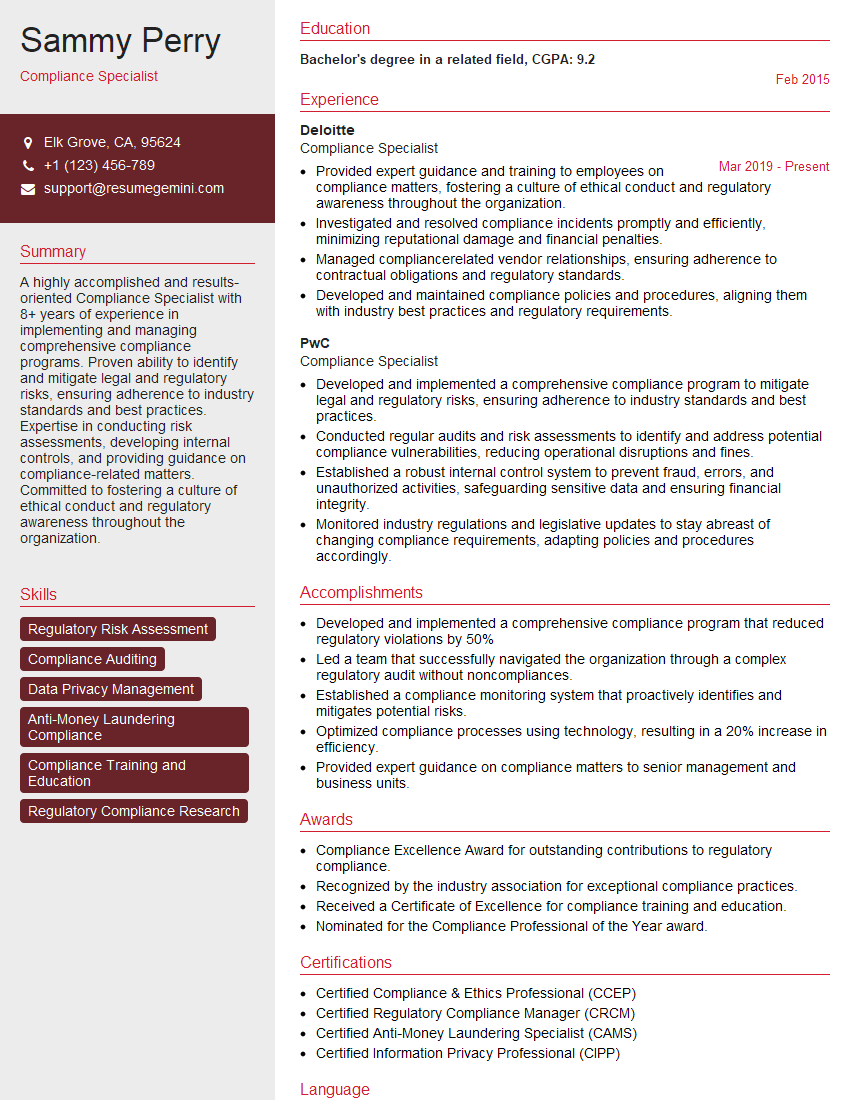
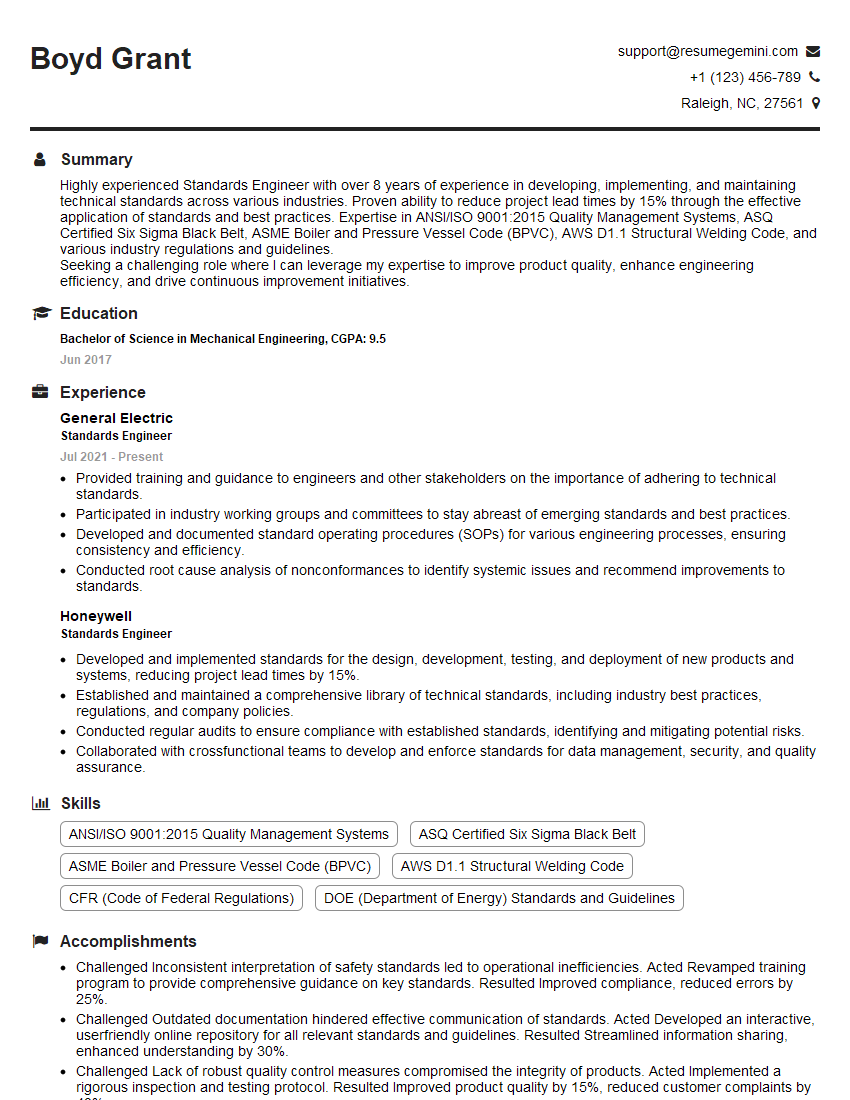
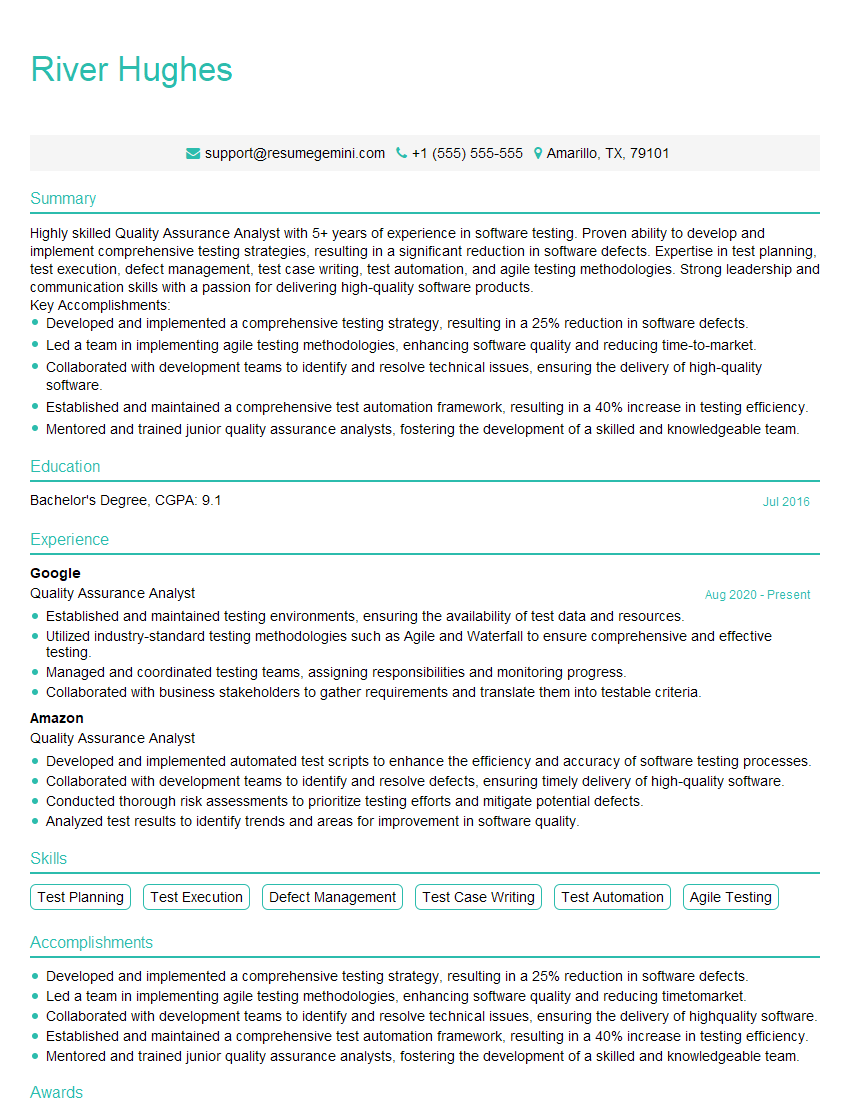
Mastering Code Compliance and Standards is crucial for a successful and rewarding career in the construction and building industry. A strong understanding of these principles demonstrates your commitment to safety, quality, and legal compliance, leading to increased career opportunities and higher earning potential. To maximize your job prospects, create an ATS-friendly resume that highlights your skills and experience effectively. ResumeGemini is a trusted resource that can help you build a professional and impactful resume tailored to the specific requirements of Code Compliance and Standards positions. Examples of resumes tailored to this field are available for your review to help guide your resume building process.
Explore more articles
Users Rating of Our Blogs
Share Your Experience
We value your feedback! Please rate our content and share your thoughts (optional).
What Readers Say About Our Blog
Very informative content, great job.
good