Interviews are opportunities to demonstrate your expertise, and this guide is here to help you shine. Explore the essential Collaboration on Choral Commissions and Performances interview questions that employers frequently ask, paired with strategies for crafting responses that set you apart from the competition.
Questions Asked in Collaboration on Choral Commissions and Performances Interview
Q 1. Describe your experience in commissioning new choral works.
Commissioning new choral works is a rewarding yet complex process that involves identifying a need, finding the right composer, managing expectations, and ensuring a successful premiere. My experience spans over fifteen years, encompassing commissions for various choral ensembles, from community choirs to professional groups. I’ve worked with both established and emerging composers, resulting in diverse works ranging from a cappella settings of traditional folk songs to large-scale orchestral choral pieces.
One particularly memorable commission involved a piece commemorating the centennial of a local historical event. The process involved extensive research into the historical context to ensure the music accurately reflected the period’s spirit and emotions. This included collaborating closely with historians and community members to gather information that informed the composer’s creative process.
Another project highlighted the importance of considering the specific capabilities of the choir. A smaller, less experienced ensemble required a piece with a less technically demanding score, while a professional choir was able to tackle a more challenging and complex composition. The key is tailoring the commission to the choir’s skillset and ensuring artistic integrity throughout the process.
Q 2. Explain your process for selecting composers for a choral commission.
Selecting composers is a crucial step. My process involves a multi-stage approach combining research, auditions, and personal connections. I typically begin by researching composers whose styles align with the desired aesthetic and the capabilities of the choir. This often involves reviewing their previous works, listening to recordings, and reading reviews.
Next, I might hold an open call for submissions or directly approach composers whose work I admire. This can involve requesting scores and recordings of relevant works, and potentially holding informal interviews to discuss their creative vision and approach.
The final selection is based on a combination of factors: the composer’s artistic vision, their experience working with choral ensembles, their understanding of the commission’s requirements (both musical and thematic), and their ability to effectively communicate and collaborate.
For instance, when commissioning a piece celebrating nature, I would prioritize composers who demonstrated a sensitivity to environmental themes and an ability to translate these themes into musical language that resonates with a choral setting.
Q 3. How do you manage the budget for a choral commission?
Budget management for choral commissions is essential for a successful project. A detailed budget is created upfront, encompassing composer fees (which can vary significantly based on the composer’s experience and the scope of the work), rehearsal fees, score preparation costs, printing costs, potential travel expenses for the composer, and performance-related expenses.
Securing funding is a key component. Sources can include grants, private donations, institutional support, and ticket sales from the premiere performance. Throughout the process, transparent communication with the composer and all involved parties ensures that everyone understands the budgetary constraints and how funds are being allocated. Regular monitoring of expenses against the budget is crucial to avoid overspending.
For example, if the initial budget is tight, we may explore creative solutions such as utilizing free or low-cost score preparation software or leveraging volunteer support where possible. Prioritizing the essential expenses (composer fees and score preparation) while finding cost-effective solutions for other areas is crucial.
Q 4. What strategies do you employ to ensure effective collaboration between the composer, singers, and conductor?
Effective collaboration is paramount. I facilitate this by establishing clear communication channels and setting regular meetings involving the composer, conductor, and representatives from the choir. These meetings serve as a platform to discuss progress, address concerns, and make necessary adjustments to the score based on the singers’ capabilities and the conductor’s interpretation.
Open communication is key. This includes establishing clear expectations about the creative process, deadlines, and the roles of each participant. I often encourage the composer to attend rehearsals to observe the choir’s performance and make necessary adjustments in real-time. Regular feedback sessions, both formal and informal, ensure that everyone stays informed and any challenges are addressed promptly.
Building trust and mutual respect among all parties is essential. I work to create a collaborative environment where everyone feels comfortable expressing their ideas and concerns. This participatory approach leads to a richer and more successful outcome.
Q 5. How do you handle disagreements or creative differences during a choral commission process?
Disagreements or creative differences are inevitable in any collaborative art project. My approach is to address these conflicts constructively and collaboratively. The first step is open dialogue, encouraging each party to clearly and respectfully articulate their concerns. I often act as a mediator, facilitating a discussion that allows each voice to be heard and understood.
Finding common ground is crucial. This may involve exploring compromises, modifying the initial vision, or revisiting the objectives of the commission. Sometimes, it may require a gentle push towards a solution that prioritizes the overall artistic integrity of the work while respecting the concerns of all stakeholders. It is important to remember that flexibility and a willingness to adapt are key to navigating disagreements successfully.
For instance, if a disagreement arises about the tempo of a particular section, I would facilitate a discussion between the composer and the conductor, perhaps even involving singers’ feedback, to reach a mutually agreeable solution that best serves the musical intention and the choir’s technical capabilities.
Q 6. Describe your experience working with diverse choral groups.
Working with diverse choral groups is a deeply enriching experience. It allows exposure to a wide range of musical styles, cultural traditions, and vocal techniques. My approach centers on inclusivity and sensitivity to the unique characteristics of each ensemble. This includes understanding the choir’s cultural background, vocal ranges, and stylistic preferences.
Adaptations are often needed to ensure the commissioned work resonates with the choir and its community. For example, working with a choir predominantly featuring singers from a specific cultural background might involve incorporating elements of their musical heritage into the composition or choosing a text that is relevant to their shared experiences.
Moreover, I emphasize clear and respectful communication that is culturally sensitive. This ensures that everyone feels valued and respected, contributing to a positive and productive working environment. This consideration extends beyond just the selection of repertoire to encompass all aspects of the collaborative process, ensuring a welcoming and empowering environment for all involved.
Q 7. How do you select repertoire for choral performances?
Selecting repertoire for choral performances is a multifaceted process involving careful consideration of many factors. It starts with defining the performance’s overall theme or objective. Is it a celebratory concert, a thematic exploration of a specific composer, or a showcase of diverse musical styles?
Once the theme is established, I consider the choir’s capabilities. This includes its vocal range, technical skills, and experience. The chosen pieces must be challenging yet achievable for the ensemble. I also assess the audience’s potential expectations and preferences, attempting to create a program that is both engaging and enjoyable.
Program diversity is another key factor. The ideal program will include a balance of styles, periods, and composers, to offer a varied and enriching experience for the audience. Finally, the narrative arc of the program is considered – how the pieces flow together to create a cohesive and meaningful musical journey. This ensures a satisfying and memorable performance experience for both the choir and the audience.
Q 8. What criteria do you use to evaluate the quality of choral performances?
Evaluating a choral performance goes beyond simply enjoying the music; it requires a critical ear and an understanding of choral technique. I assess several key areas. Firstly, tonal quality is paramount. Does the choir produce a unified, resonant sound? Are the individual voices blended effectively, or are there noticeable imbalances? I also listen for intonation – is the choir singing accurately in tune? Next, rhythm and precision are crucial. Does the choir maintain a steady beat and perform with rhythmic accuracy? Further, expression and dynamics are essential for conveying the emotional depth of the music. Does the choir vary the volume and tempo appropriately to express the nuances of the piece? Finally, diction and articulation contribute to overall clarity and understanding. Are the words clearly sung and understood by the audience? A superb performance excels in all these areas, creating a captivating and unified musical experience.
For example, in judging a performance of Bach’s Mass in B minor, I’d be particularly attentive to the intricate counterpoint and the need for precise intonation in the fugues. A performance of a contemporary piece might prioritize vocal color and expressive freedom over strict rhythmic adherence.
Q 9. Describe your experience in planning and organizing choral concerts.
Planning and organizing choral concerts involves meticulous attention to detail, starting months in advance. I begin by selecting repertoire that aligns with the choir’s capabilities and the desired artistic vision for the concert. This often involves researching different composers, considering the stylistic range and the audience’s preferences. Next, I develop a detailed budget, encompassing venue rental, musician fees, marketing, printing, and any other necessary expenses. This includes securing funding through grants, ticket sales, and sponsorships. Then, I book the performance venue, considering its acoustics, seating capacity, and accessibility. Simultaneously, I manage the marketing and publicity efforts through various channels, including social media, press releases, and posters. On the day of the concert, I oversee the stage setup, sound check, and usher coordination to ensure a seamless and professional presentation. For a recent concert featuring works by female composers, we partnered with a local arts council for funding and leveraged social media influencers to boost attendance.
Q 10. How do you promote choral performances and attract audiences?
Promoting choral performances involves a multi-faceted approach. I believe in building relationships with local media outlets, submitting press releases and inviting them to attend rehearsals. Social media marketing is crucial, utilizing platforms like Facebook, Instagram, and even TikTok to reach a diverse audience. Creating visually appealing posters and flyers, distributing them strategically in the community, is still very effective. We also engage in community outreach, partnering with local schools and businesses. Collaborating with other arts organizations for cross-promotion creates synergy. Building an email list allows for direct communication with our audience, providing them with updates on upcoming concerts and exclusive content. We’ve also found that offering pre-concert talks or engaging post-concert receptions can enhance the experience and encourage repeat attendance. For example, for a recent concert featuring world music, we partnered with a local ethnic restaurant for a post-concert reception, increasing engagement.
Q 11. What are your strategies for managing rehearsal schedules and logistics?
Managing rehearsal schedules and logistics requires careful planning and efficient communication. I use online scheduling tools to coordinate rehearsals, considering the availability of singers and the complexity of the repertoire. I create a detailed rehearsal plan, breaking down each piece into manageable sections and allocating specific timeframes for different aspects, like vocal technique, interpretation, and dynamics. Clear communication is key; I regularly send email updates to singers, detailing rehearsal schedules, deadlines, and any changes in plans. I also utilize online platforms to share scores and recordings, allowing singers to prepare effectively at home. Furthermore, I ensure the rehearsal space is suitable, with adequate acoustics and seating arrangements. I have found that establishing a collaborative environment and actively seeking feedback from singers is also paramount to managing rehearsals effectively. This process includes addressing concerns about rehearsal time conflicts, ensuring equitable distribution of vocal parts, and addressing any individual technical challenges.
Q 12. How do you address performance-related challenges such as vocal issues or technical difficulties?
Performance-related challenges are inevitable. Vocal issues, such as singers becoming ill, can be addressed by having understudies prepared or by making intelligent adjustments to the program if necessary. Technical difficulties, like microphone malfunctions, are best mitigated by having backup equipment and a technically proficient sound engineer. My strategy is to maintain a calm and proactive approach, working collaboratively with the singers and technical team to find solutions. Thorough rehearsals and clear communication are essential in preventing many issues, while having contingency plans in place minimizes the impact of unexpected events. For example, in one performance, a singer experienced a sudden voice issue. We smoothly transitioned to a pre-prepared understudy, ensuring a seamless performance. This requires thorough preparation and trust within the team.
Q 13. How do you ensure the accuracy and quality of choral scores and parts?
Ensuring accurate and high-quality choral scores and parts involves several steps. I always work with reputable music publishers or obtain permission directly from composers or copyright holders. I thoroughly check the scores for any errors, inconsistencies, or unclear markings. Software such as Sibelius or Finale can aid in this process. I then prepare individual parts for each singer, clearly marking vocal ranges, dynamics, and articulations. I often conduct a careful proofing process, involving multiple people to check for accuracy before distribution to the singers. Maintaining a well-organized system for storing and managing scores and parts is crucial, ensuring easy access and preventing loss or damage. Any necessary adjustments or corrections to the parts are meticulously documented and communicated to the singers. Regular updates and versions are controlled to maintain consistency and accuracy.
Q 14. Describe your experience working with music publishers or copyright holders.
My experience working with music publishers and copyright holders has been largely positive. I always ensure to obtain the necessary permissions and licenses well in advance of any performance. I work closely with publishers to secure the best possible arrangements, including the provision of high-quality scores and the clarification of any performance rights. Open communication and a respectful approach are key. I meticulously record all details of the licensing agreements and always ensure that the proper royalties and fees are paid according to the terms. Maintaining a strong professional relationship with publishers helps to streamline the process and ensures smooth collaborations. For instance, when commissioning a new work, we meticulously negotiate the contract with the composer, ensuring clear terms regarding performance rights, publishing rights, and payment schedules.
Q 15. Explain your familiarity with different choral styles and techniques.
My familiarity with choral styles spans centuries and diverse cultures. I’m proficient in Renaissance polyphony, with its intricate counterpoint and focus on vocal blending; Baroque choral works, characterized by grandeur and ornamentation; Classical choral music, emphasizing clarity and balance; Romantic choral music, often showcasing emotional intensity and dramatic expression; and contemporary choral styles, encompassing minimalism, atonality, and diverse world music influences. Beyond style, my understanding encompasses various techniques, including vocal production (breath support, resonance, diction), conducting techniques (beat patterns, phrasing, dynamics), score analysis (understanding harmonic progressions, melodic lines, and rhythmic complexities), and arranging/adapting music for different vocal ensembles.
For example, when preparing a Renaissance motet, my focus is on achieving a homogenous sound, precise intonation, and a deep understanding of the contrapuntal lines. In contrast, a contemporary piece might demand a more expressive and individualistic approach, emphasizing unique vocal timbres and rhythmic freedom.
Career Expert Tips:
- Ace those interviews! Prepare effectively by reviewing the Top 50 Most Common Interview Questions on ResumeGemini.
- Navigate your job search with confidence! Explore a wide range of Career Tips on ResumeGemini. Learn about common challenges and recommendations to overcome them.
- Craft the perfect resume! Master the Art of Resume Writing with ResumeGemini’s guide. Showcase your unique qualifications and achievements effectively.
- Don’t miss out on holiday savings! Build your dream resume with ResumeGemini’s ATS optimized templates.
Q 16. How do you assess the vocal abilities of singers and assign parts?
Assessing vocal abilities involves a multifaceted approach. I begin with individual auditions, observing vocal range, tone quality, intonation accuracy, and sight-reading skills. I listen for breath control, diction, and overall musicianship. Beyond technical skills, I also assess the singer’s musicality, their ability to blend with others, and their responsiveness to direction. Part assignment is based on vocal range, proficiency, and the overall balance needed for the choir’s sound. For instance, sopranos with exceptionally clear high notes might be assigned solo passages, while those with strong blending abilities might be placed in the inner voices. This process considers not just individual capabilities, but how those capabilities contribute to the overall ensemble sound.
I often use a combination of formal assessments and informal observation during rehearsals to fine-tune part assignments. Flexibility is key; if someone demonstrates unexpected growth during rehearsals, part adjustments may be made to optimize the choral sound.
Q 17. Describe your approach to conducting rehearsals and leading choral groups.
My rehearsal approach is collaborative and focused. I begin with a thorough analysis of the score, highlighting challenging passages and stylistic nuances. Rehearsals combine technical work (e.g., diction, breathing exercises, intonation drills) with musical interpretation (expressive phrasing, dynamics, articulation). I incorporate interactive techniques, such as sectionals and individual coaching, to address specific needs. I prioritize clear communication, providing constructive feedback and encouraging questions. I strive to create a positive and supportive atmosphere, fostering mutual respect and artistic growth among the singers.
For example, if a section struggles with a complex rhythmic passage, I might break it down into smaller units, focusing on rhythmic accuracy before building to the full passage. If singers struggle with specific dynamics, I use body language and visual cues to express them, making sure everyone understands how different dynamic markings translate into sound.
Q 18. What are your strategies for motivating and inspiring singers?
Motivating and inspiring singers requires a blend of positive reinforcement, challenging repertoire, and opportunities for growth. I emphasize the collaborative aspect of choral singing, highlighting the collective power and beauty that emerges from unified voices. I share insights into the historical and cultural context of the music, enriching the singers’ understanding and fostering a deeper connection to the work. Providing opportunities for individual expression, while maintaining ensemble cohesion, is crucial. I celebrate successes, acknowledge effort, and create a sense of shared achievement and accomplishment.
A memorable instance was when we prepared a challenging contemporary piece. The singers initially felt daunted, but through collaborative exploration and celebrating small victories along the way, their confidence soared, resulting in a moving and deeply affecting performance.
Q 19. How do you manage the performance anxiety of singers?
Performance anxiety is a common challenge, and I address it through a combination of strategies. I create a supportive rehearsal environment where singers feel safe to take risks and express themselves without judgment. I incorporate techniques like breathing exercises, mindfulness practices, and visualization to help manage anxiety. We also use mock performances and dress rehearsals to simulate the actual performance environment and build confidence. Emphasizing the joy of making music together helps shift the focus from fear to shared creative experience.
I encourage open communication: singers are welcome to express their concerns without fear of reprisal, which creates a more trusting, less pressurized environment during rehearsals and performances.
Q 20. Describe your experience with using technology to enhance choral performances.
Technology plays a significant role in enhancing choral performances. I utilize digital audio workstations (DAWs) for creating accompaniment tracks, adding sound effects, and post-production processing. Video recording and analysis of rehearsals can be beneficial for identifying areas for improvement. Projection systems can enhance the audience experience by displaying lyrics or visual elements synchronized with the music. Virtual collaboration tools allow singers to rehearse remotely, broadening participation and accessibility. For instance, I’ve used Zoom for virtual rehearsals, which has been especially helpful during periods of social distancing.
Using software for score creation and editing is another way to improve the choral experience, especially for large ensembles. Properly formatted digital scores can be shared easily among singers and conductors, making the preparation process much more efficient.
Q 21. What are your strategies for ensuring inclusive and equitable participation in choral activities?
Ensuring inclusive and equitable participation is paramount. I actively recruit from diverse backgrounds, creating a welcoming atmosphere for singers of all ages, ethnicities, abilities, and socioeconomic backgrounds. I adapt rehearsal practices to meet individual needs, providing accommodations as necessary. I select repertoire that reflects the diversity of musical traditions and avoids perpetuating harmful stereotypes. I foster a culture of respect and inclusivity, where every voice is valued and heard. Open communication and active listening are key to identifying and addressing any potential barriers to participation.
For example, if I have singers with disabilities, I work with them to find ways to adapt the music or rehearsals, possibly using assistive technologies or adjusting performance spaces to meet individual accessibility needs.
Q 22. How do you maintain relationships with composers and other collaborators?
Maintaining strong relationships with composers and collaborators is crucial for successful choral commissions. It’s built on mutual respect, clear communication, and consistent engagement. I prioritize open dialogue throughout the entire process, from initial concept discussions to final rehearsals. This includes regular meetings, both in-person and virtual, to discuss progress, address concerns, and ensure everyone’s vision is aligned.
For example, when commissioning a new work, I’ll schedule multiple meetings with the composer to discuss the desired style, instrumentation, text selection, and performance context. I actively solicit feedback from singers throughout the rehearsal process, ensuring their input is incorporated. This collaborative approach builds trust and fosters a sense of shared ownership in the final product. I also maintain consistent contact through email and phone calls, ensuring prompt responses and keeping everyone informed of any updates or changes. Building personal connections beyond the professional realm often strengthens working relationships, too – perhaps attending a composer’s other performances or inviting them for a post-concert meal.
Q 23. Describe your experience with grant writing or fundraising for choral projects.
Grant writing and fundraising are essential for many choral projects, and I have extensive experience in this area. My approach is strategic and multifaceted. It starts with identifying appropriate funding opportunities through thorough research of grant databases and foundation websites. I meticulously craft compelling proposals that highlight the artistic merit of the project, the community impact, and the detailed budget justification. This includes strong narratives that emphasize the project’s uniqueness and its potential for reaching a wide audience.
For instance, one successful grant proposal focused on a commission celebrating the diverse musical heritage of our city. We showcased the community engagement aspect – workshops with local schools and community outreach events – to demonstrate the broader societal benefit beyond the concert itself. The inclusion of detailed financial projections and a strong letter of support from community leaders further strengthened our application. I also actively cultivate relationships with potential donors, inviting them to rehearsals or concerts, and providing regular updates on the project’s progress. This personal touch builds trust and encourages continued support.
Q 24. How do you evaluate the success of a choral commission or performance?
Evaluating the success of a choral commission or performance goes beyond simply counting audience numbers. It’s a multifaceted assessment that considers artistic achievement, audience engagement, and community impact. Artistic success is measured by the quality of the composition, the singers’ technical proficiency, the emotional impact of the performance, and the overall aesthetic coherence. Audience engagement is judged by factors such as audience size, positive reviews, social media feedback, and the overall atmosphere during the performance.
Community impact is evaluated by the project’s reach, its influence on the community, and the level of participation from diverse groups. For example, a successful commission might receive positive critical acclaim, high audience attendance, strong social media buzz, and evidence of increased community participation in related events. Post-performance surveys can provide valuable insight into audience perception, while feedback from singers and collaborators offer invaluable reflections on the entire process. Ultimately, a holistic view encompassing artistic excellence, audience connection, and community benefit is key to measuring the project’s overall success.
Q 25. How do you adapt your approach to different performance venues and contexts?
Adapting to different performance venues and contexts is crucial. Each venue presents unique acoustic challenges, technical limitations, and audience expectations. My approach involves careful site visits to assess the acoustics, stage dimensions, lighting capabilities, and available technology. This informs decisions regarding repertoire selection, seating arrangements, amplification needs, and staging.
For instance, a small, intimate church setting might necessitate a more introspective repertoire, while a large concert hall might allow for a more expansive and dramatic work. Furthermore, understanding the audience demographics and expectations for a specific venue or context helps me curate a program that is both artistically satisfying and contextually relevant. This might mean choosing pieces that resonate with the specific cultural or historical setting, or incorporating elements of audience participation or interactive engagement.
Q 26. What are your strategies for handling unexpected events or emergencies during a performance?
Handling unexpected events during a performance requires a calm, decisive, and proactive approach. We have a detailed emergency plan that addresses potential scenarios, such as power outages, sudden illness among singers, or instrumental malfunctions. This plan includes designated roles and responsibilities for each team member. For instance, we have a backup sound system and lighting setup, and we rehearse contingency plans, such as adjusting the program or substituting pieces.
During a recent performance, a singer experienced a sudden illness just before their solo. Our pre-planned procedure was immediately activated: the understudy stepped in flawlessly, demonstrating the effectiveness of our preparedness. Effective communication among the team is essential during emergencies, ensuring everyone is aware of the situation and their role in resolving it. Maintaining a calm demeanor is crucial to reassure the singers and the audience, minimizing disruption and maintaining the integrity of the performance to the greatest extent possible.
Q 27. Describe your experience working within diverse cultural contexts in relation to choral music.
Working within diverse cultural contexts enriches the choral experience immensely. My approach involves deep research into the cultural significance of musical traditions relevant to the project. This includes collaborating with musicians and scholars from the respective cultures to ensure authenticity and avoid cultural misrepresentation.
For example, when working on a project featuring music from a specific region, I engage experts from that region to advise on instrumentation, vocal techniques, and stylistic nuances. I actively include singers and instrumentalists from the represented cultures in the performance, promoting a sense of ownership and empowering diverse voices. The selection of repertoire should not only be of high artistic value, but also reflect respect and understanding of the cultural context. This collaborative approach ensures an authentic and respectful representation of diverse musical traditions.
Q 28. How do you balance artistic vision with practical considerations in choral projects?
Balancing artistic vision with practical considerations is a constant challenge in choral projects. It involves a nuanced understanding of both the artistic ambitions and the logistical realities. This requires careful planning, budgeting, and resource allocation. My approach prioritizes clear communication and open dialogue with all stakeholders, including the composer, singers, and administrative staff.
For example, if the composer envisions a large-scale orchestral work, I need to assess the feasibility of securing the necessary orchestra, rehearsal space, and funding. I might negotiate with the composer to consider a smaller-scale arrangement to fit within the available resources. This involves collaborative decision-making, ensuring the artistic integrity of the project is maintained while adapting to the constraints of the budget and logistical challenges. Compromise and creative problem-solving are crucial in navigating these competing demands.
Key Topics to Learn for Collaboration on Choral Commissions and Performances Interview
- Understanding the Commissioning Process: Explore the stages involved, from initial contact with composers to contract negotiation and final payment.
- Collaborating with Composers: Discuss effective communication strategies, navigating creative differences, and fostering a productive working relationship.
- Program Planning & Selection: Analyze the factors influencing repertoire choices, balancing artistic vision with practical considerations like budget and performer capabilities.
- Budget Management & Fundraising: Understand the financial aspects of choral commissions, including securing funding, managing expenses, and ensuring transparency.
- Performance Logistics & Production: Examine the practicalities of staging a choral performance, including venue selection, marketing, rehearsal scheduling, and technical requirements.
- Copyright & Legal Considerations: Understand the legal framework surrounding musical performance rights, contracts, and permissions.
- Marketing & Audience Engagement: Explore strategies to promote choral performances and build a strong audience base.
- Post-Performance Evaluation & Analysis: Discuss methods for assessing the success of a performance, identifying areas for improvement, and gathering feedback.
- Problem-Solving in Collaborative Environments: Develop strategies for conflict resolution, negotiation, and effective communication within a team.
- Technological Applications in Choral Music: Explore the use of technology in areas such as score preparation, rehearsal tools, and virtual performances.
Next Steps
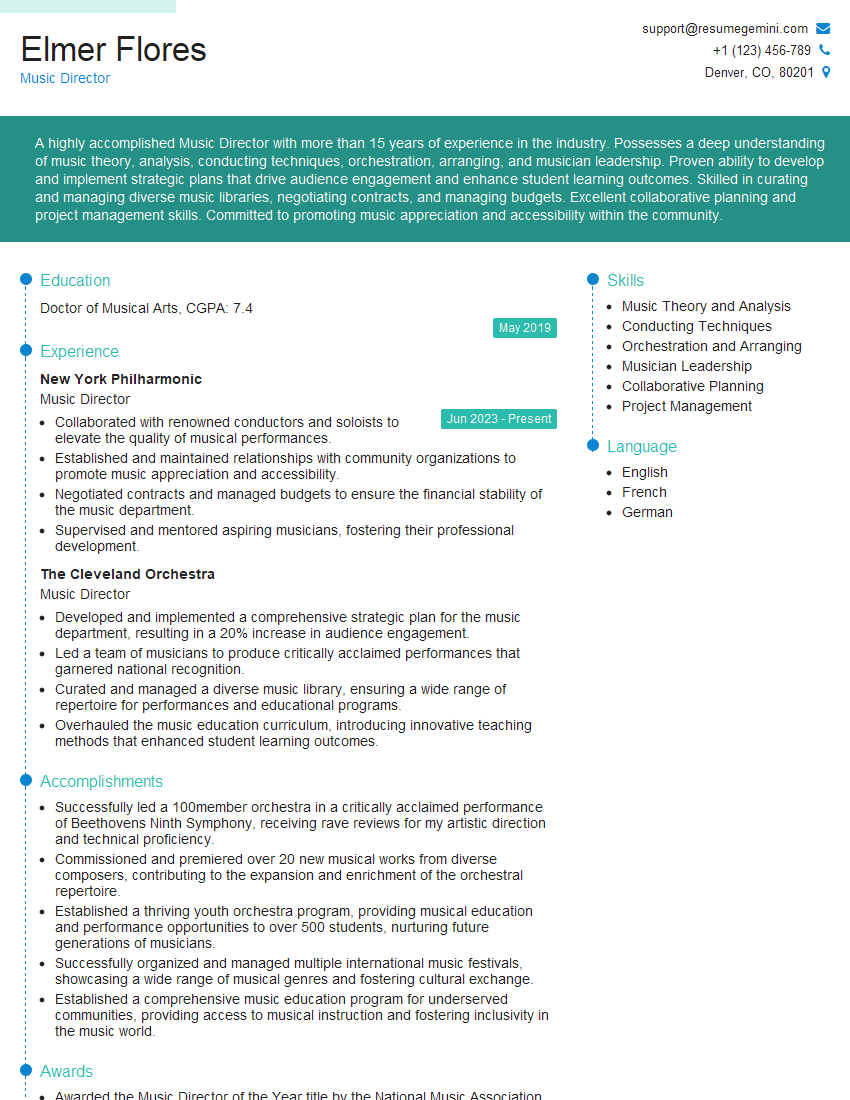
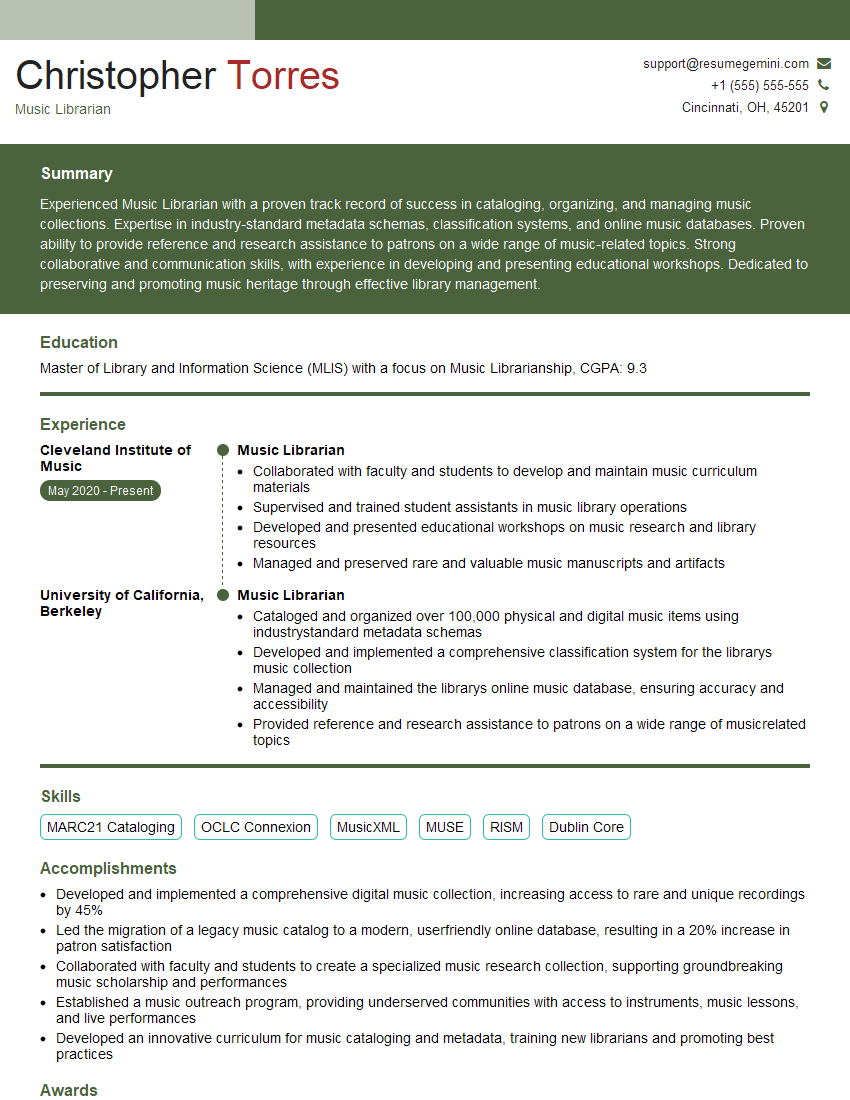
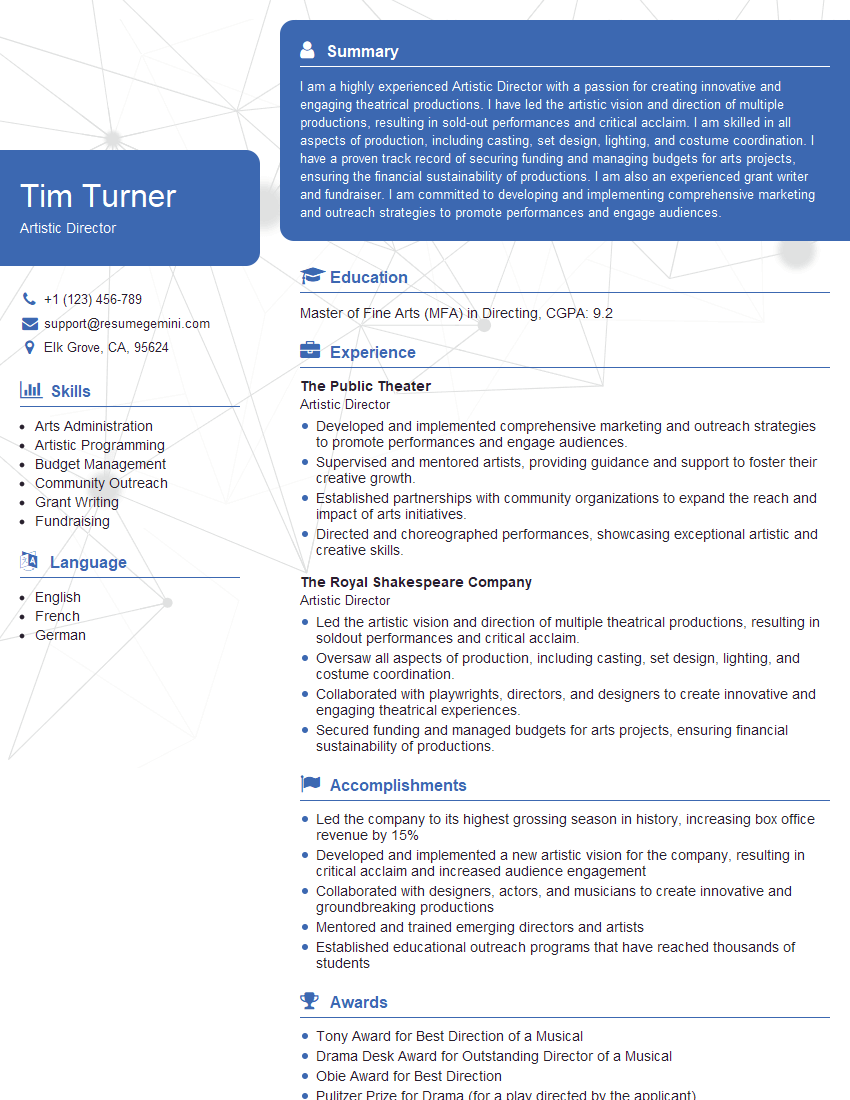
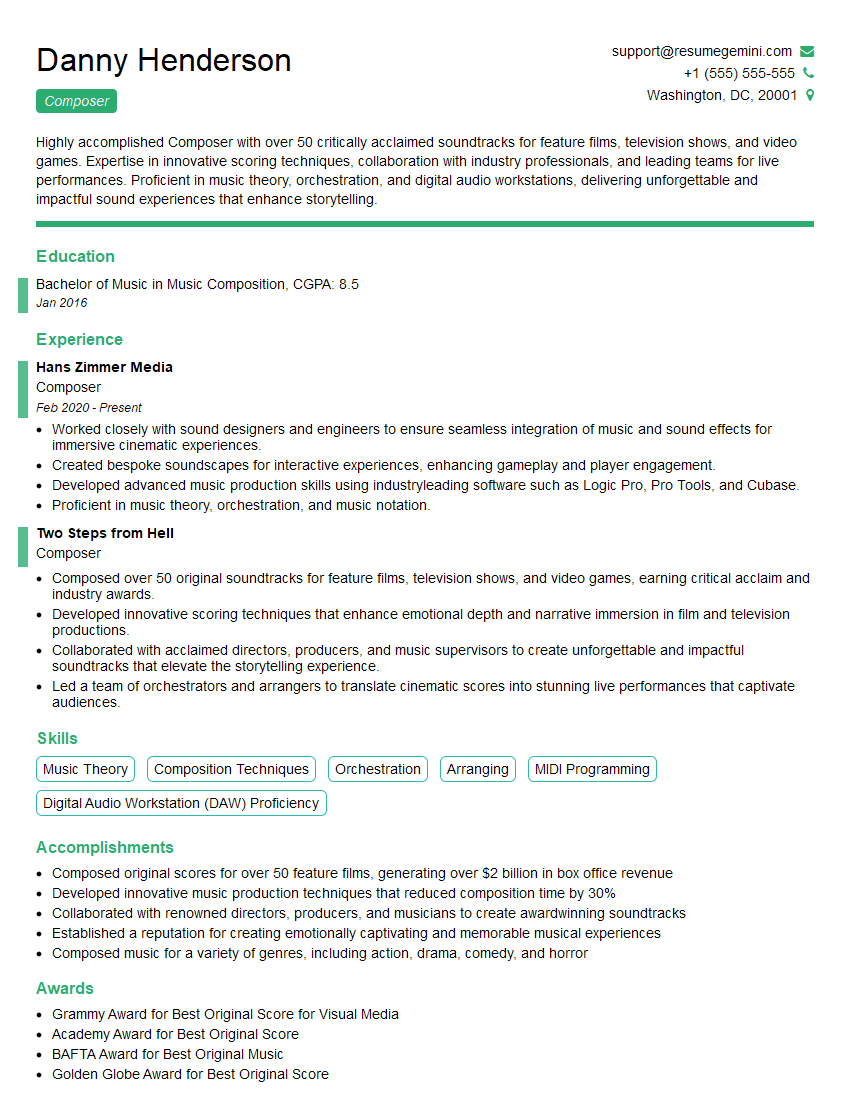
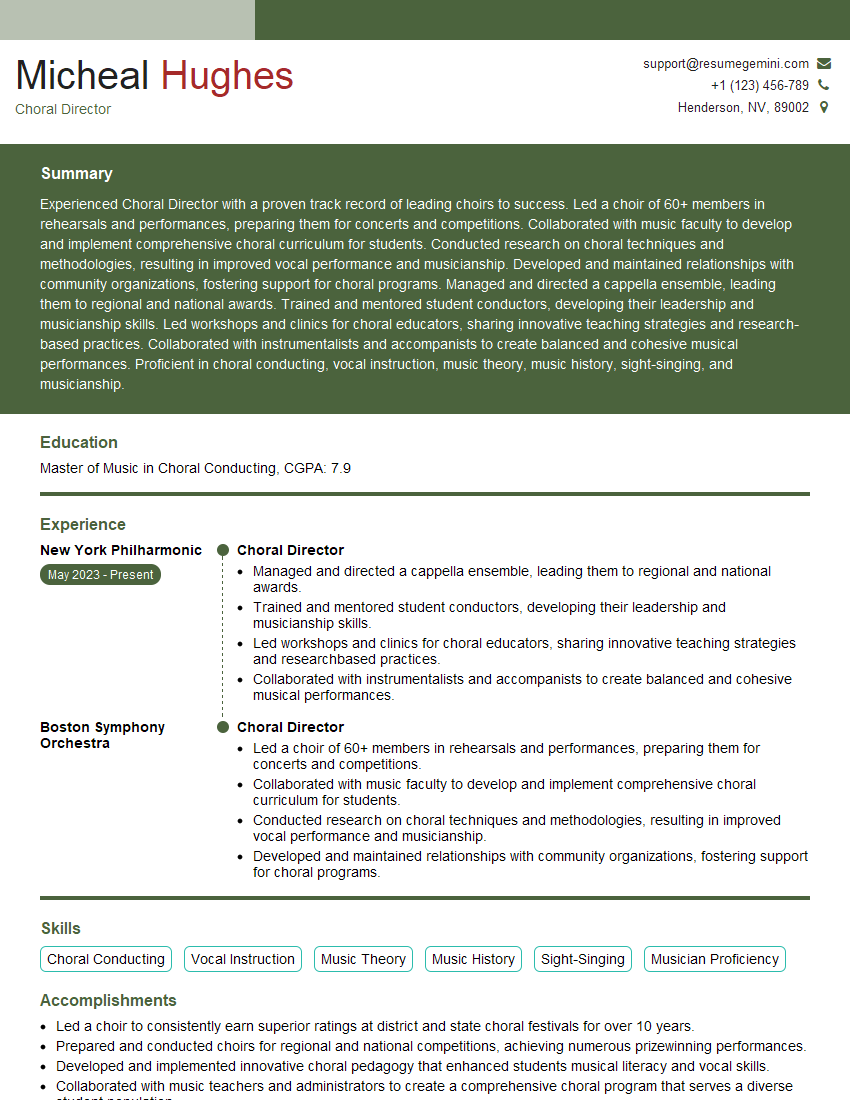
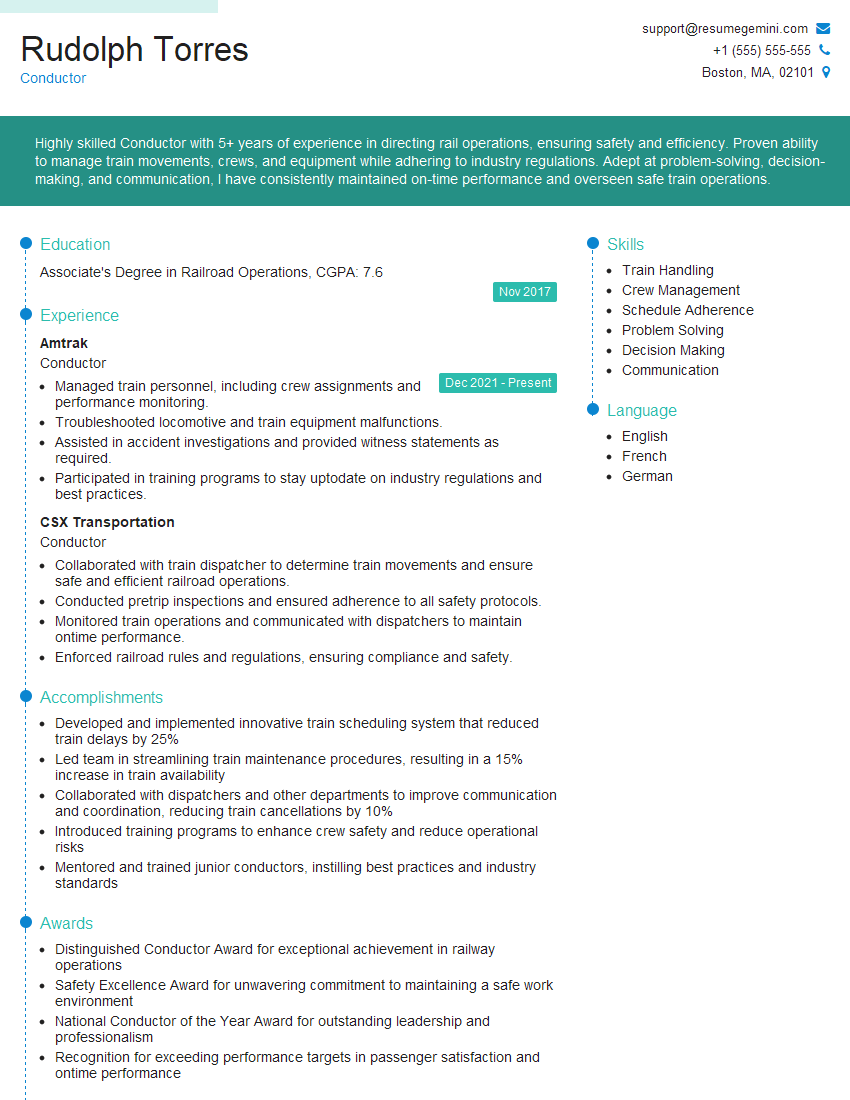
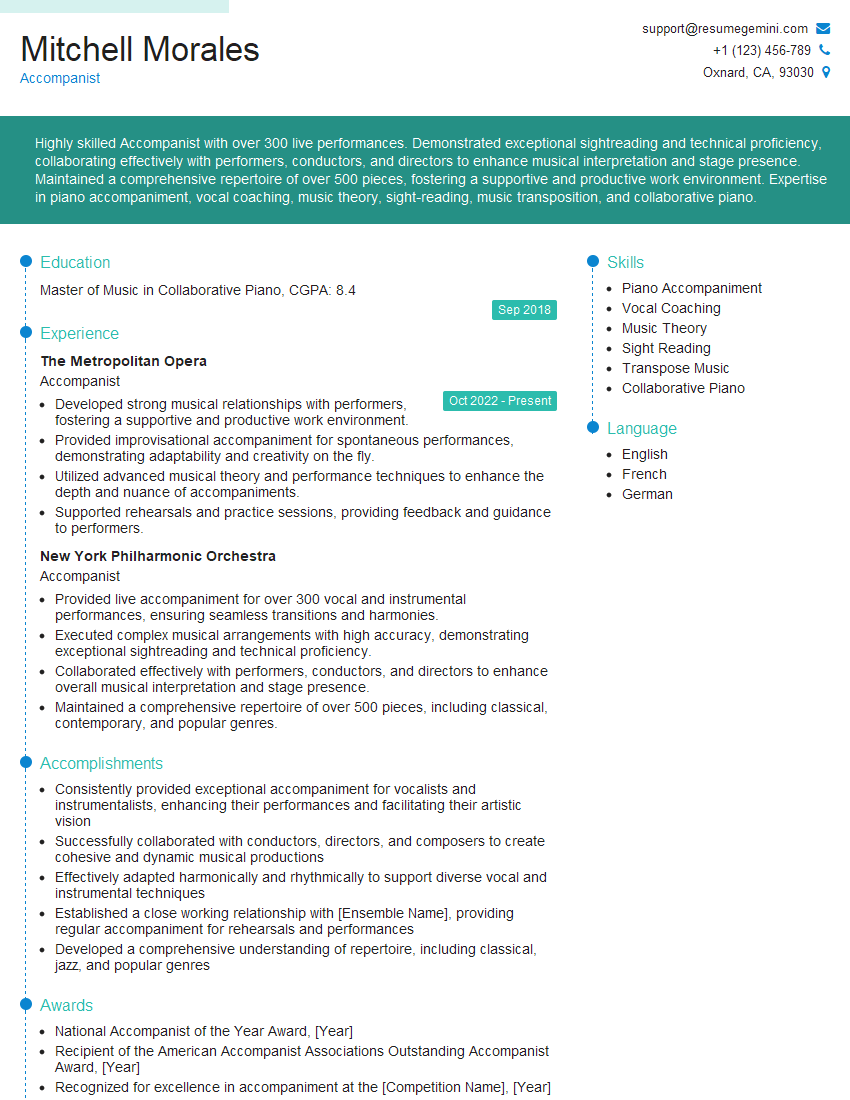
Mastering collaboration on choral commissions and performances significantly enhances your career prospects within the vibrant choral music world. It showcases valuable skills in project management, communication, artistic vision, and financial acumen – all highly sought after in arts administration and musical leadership roles. To increase your chances of landing your dream job, creating a strong, ATS-friendly resume is crucial. ResumeGemini is a trusted resource for building professional resumes that highlight your skills and experience effectively. Examples of resumes tailored to Collaboration on Choral Commissions and Performances are provided to help you build a compelling application showcasing your unique qualifications.
Explore more articles
Users Rating of Our Blogs
Share Your Experience
We value your feedback! Please rate our content and share your thoughts (optional).
What Readers Say About Our Blog
Very informative content, great job.
good