Are you ready to stand out in your next interview? Understanding and preparing for Collaboration with Clergy and Worship Staff interview questions is a game-changer. In this blog, we’ve compiled key questions and expert advice to help you showcase your skills with confidence and precision. Let’s get started on your journey to acing the interview.
Questions Asked in Collaboration with Clergy and Worship Staff Interview
Q 1. Describe your experience collaborating with clergy on worship planning.
Collaborating with clergy on worship planning requires a delicate balance of understanding theological vision and practical execution. My approach involves several key steps: Firstly, early and frequent communication is crucial. I schedule regular meetings, often well in advance of a service, to discuss the upcoming themes, scripture readings, and overall desired tone. Secondly, I actively listen to the clergy’s vision, ensuring I understand their theological interpretations and pastoral intentions. Thirdly, I offer creative suggestions while remaining sensitive to the spiritual context. This might involve proposing specific musical selections, suggesting liturgical changes, or offering alternative ways to communicate the sermon’s message. Finally, I maintain detailed documentation of all decisions made, including rationale and any alternative ideas considered. This helps avoid misunderstandings and provides a valuable record for future reference. For example, in planning a service around the theme of forgiveness, I collaborated with the pastor to select hymns focusing on redemption and reconciliation, incorporating a reflective moment of silent prayer, and incorporating a congregational song that emphasized community.
Q 2. How do you manage conflicting viewpoints among worship team members?
Managing conflicting viewpoints within a worship team necessitates a facilitative leadership style. I find that creating a safe and respectful space for open dialogue is paramount. We use a structured approach: Firstly, we clearly define the goal – for instance, selecting music for a specific service. Then, we allow each member to express their ideas fully, without interruption. After everyone has spoken, I help the team identify common ground and areas of disagreement. Then, we collaboratively explore potential solutions, weighing the pros and cons of each option. If consensus proves difficult, I may suggest a vote or a trial period for alternative choices. The key is to ensure everyone feels heard and valued, even if their initial preferences aren’t selected. A recent example involved a disagreement over the style of music for a youth service. After a frank discussion, we decided on a blended approach, incorporating elements of both contemporary and traditional styles to satisfy diverse preferences.
Q 3. Explain your approach to resolving disagreements between clergy and music staff.
Resolving disagreements between clergy and music staff requires a mediation approach. My role is to act as a neutral facilitator, helping both parties articulate their perspectives clearly and empathetically. I begin by ensuring each party understands the other’s concerns. This often involves active listening and summarizing each person’s viewpoints to confirm mutual understanding. Then, I guide them towards a mutually acceptable solution, focusing on finding common ground and compromising where necessary. Sometimes, this requires creatively reframing the issue. For instance, a disagreement over the length of a musical selection might be resolved by exploring alternative ways to incorporate the desired music into the service without disrupting the flow. Building a strong relationship based on trust and respect is key to prevent future conflicts.
Q 4. How have you successfully integrated diverse musical styles into worship services?
Integrating diverse musical styles necessitates careful planning and sensitivity to the congregation’s demographics and preferences. I begin by researching the various musical styles prevalent within our congregation. I then engage in conversations with the music team and clergy to determine what styles would be appropriate and well-received. The selection process considers theological appropriateness, lyrical content, and musical quality. For example, we might incorporate gospel music for a service focusing on joy and celebration, while using more reflective styles for services centered on sorrow or repentance. Creating a seamless transition between different styles is also crucial. This may involve using instrumental interludes or carefully sequencing songs to maintain the overall flow and coherence of the worship service. Using a variety of instruments and vocal styles also enhances the overall experience.
Q 5. Describe a time you had to adapt worship plans due to unforeseen circumstances.
Adapting worship plans due to unforeseen circumstances requires flexibility and resourcefulness. One instance involved a sudden illness of a key musician the day of a major service. My immediate response was to activate our contingency plan, which involved assigning alternative musicians and quickly rehearsing substitute pieces. I collaborated closely with the clergy to adjust the order of service subtly to accommodate the change in musical lineup. We also utilized available technology to incorporate pre-recorded elements that would normally have been performed live. We communicated the change transparently to the congregation, highlighting the collective response and resilience of the worship team. The service proceeded successfully, emphasizing the team’s ability to adapt and overcome unexpected obstacles. This experience underscored the importance of having a comprehensive contingency plan and a cohesive team prepared to handle unforeseen issues.
Q 6. How do you ensure all team members feel valued and respected?
Ensuring all team members feel valued and respected involves fostering a culture of appreciation, collaboration, and open communication. I make it a point to recognize individual contributions, both publicly and privately. This could involve acknowledging someone’s creativity, praising their dedication, or simply expressing gratitude for their hard work. I encourage team members to share their ideas freely and create opportunities for them to develop their skills and assume leadership roles within the team. Regular team-building activities, outside of service preparation, help foster stronger relationships and a sense of camaraderie. Openly soliciting feedback is crucial, creating a safe space for everyone to express concerns and suggestions. Addressing issues promptly and fairly contributes to a positive and inclusive environment. We regularly conduct team evaluations to assess strengths and identify areas for improvement.
Q 7. How do you handle feedback from clergy on worship services?
Handling feedback from clergy on worship services requires a responsive and professional approach. I begin by actively listening to their feedback, expressing gratitude for their input, and acknowledging any valid concerns. I then carefully analyze the feedback, identifying any actionable insights or areas for improvement. I follow up with the clergy to discuss the feedback and outline the steps I plan to take to address their concerns. For instance, if the clergy feels that a particular musical selection was inappropriate, I would carefully consider their reasons, potentially researching alternative options for future services. I also seek clarification where needed, ensuring I fully understand their perspectives and intentions. Documenting the feedback and my response helps track progress and ensure consistency in implementing changes. Maintaining open communication channels ensures ongoing dialogue and prevents misunderstandings.
Q 8. What strategies do you use to foster effective communication within the worship team?
Effective communication within a worship team is the cornerstone of a successful service. It’s not just about sharing information; it’s about building relationships and fostering a shared vision. My strategy involves a multi-pronged approach.
Regular Meetings: We hold weekly meetings, utilizing a structured agenda to cover announcements, upcoming services, logistical details, and open discussion. This creates a predictable rhythm of communication and allows for proactive problem-solving.
Open Communication Channels: Beyond formal meetings, we utilize a dedicated communication platform (like Slack or a group email) for quick updates, questions, and sharing resources. This allows for immediate clarification and prevents bottlenecks.
Constructive Feedback Sessions: We regularly dedicate time for constructive feedback, ensuring everyone feels heard and valued. This involves active listening, respectful dialogue, and a focus on solutions rather than blame.
Clear Roles and Responsibilities: We have a clearly defined organizational chart, outlining individual roles and responsibilities within the team. This reduces confusion and ensures that tasks are completed efficiently.
Appreciation and Recognition: We regularly acknowledge and appreciate the contributions of each team member. This boosts morale and encourages continued dedication.
For example, during one particularly challenging service involving multiple musical styles, open communication via our dedicated communication channel allowed for swift adjustments to timings and coordination of technical aspects, resulting in a seamless and moving service.
Q 9. How do you balance the needs of the congregation with the vision of the clergy?
Balancing congregational needs with the clergy’s vision requires skillful diplomacy and a deep understanding of both perspectives. It’s about finding a harmonious synergy, not a compromise that dilutes either element.
Active Listening: I prioritize active listening to the congregation’s feedback through surveys, informal conversations, and focus groups. This helps identify their spiritual needs and preferences, ensuring the services resonate with them.
Collaborative Planning: I actively involve the clergy in the planning process, ensuring their theological vision is integrated into every aspect of the service. This prevents misalignment and ensures the service reflects the church’s overall mission.
Transparent Communication: I maintain transparent communication between the clergy and the congregation, explaining the rationale behind decisions and addressing concerns promptly. This builds trust and mutual understanding.
Finding Common Ground: I look for common ground between the congregation’s desires and the clergy’s vision. For instance, if the clergy wishes to emphasize a particular theme, I can explore how to incorporate that theme in ways that resonate with the congregation’s preferences in music or style.
In one instance, the clergy envisioned a more contemporary style of service, while a significant portion of the older congregation preferred traditional hymns. By incorporating a mix of contemporary and traditional elements, using diverse musical styles, and providing clear explanations, we successfully bridged this gap, creating a service that satisfied both groups.
Q 10. Describe your experience with liturgical planning and execution.
Liturgical planning and execution is a process that requires meticulous attention to detail and a deep understanding of theological and cultural contexts. My experience encompasses all stages, from initial concept to final execution.
Thematic Development: I begin by collaborating with the clergy to define the overarching theme and liturgical goals for each service. This sets the tone and informs all subsequent decisions.
Scripture Selection: Carefully selected scripture readings that align with the theme, offering relevant and thought-provoking texts for the congregation.
Order of Service Creation: Developing a detailed order of service that includes prayers, hymns, readings, and other elements, ensuring a logical flow and an engaging experience.
Music Selection and Coordination: Selecting music that complements the liturgical theme and coordinating with musicians to ensure seamless execution. This includes coordinating rehearsals and providing any necessary musical support.
Technical Coordination: Ensuring that the technical aspects of the service, such as sound, lighting, and projections, are properly coordinated and executed.
Post-Service Evaluation: Evaluating the effectiveness of the service, identifying areas for improvement, and incorporating feedback for future services.
For example, in planning a service commemorating a significant historical event, we carefully selected readings and hymns that reflected both the historical context and the contemporary relevance of the event. The resulting service was deeply moving and provided a meaningful experience for the congregation.
Q 11. How do you incorporate technology into worship services effectively?
Technology can significantly enhance worship services, fostering deeper engagement and accessibility. However, it’s crucial to use it thoughtfully and purposefully, avoiding distractions and maintaining reverence.
Live Streaming: We use live streaming to reach congregants who cannot attend in person, broadening our reach and fostering community beyond geographical limitations.
Presentation Software: Presentation software (PowerPoint, Keynote) is utilized for visually engaging elements, such as scripture passages, images, or announcements.
Digital Hymn Display: Digital hymn displays replace paper hymnals, enhancing accessibility and allowing for dynamic updates.
Audio/Visual Enhancements: High-quality sound and lighting systems are essential for enhancing the overall experience, improving clarity and engagement.
Online Giving Platforms: Secure online platforms facilitate convenient and accessible donation options.
We ensure that technology remains a tool to enhance worship, not dominate it. For instance, when using presentation software, we maintain a balance between visually engaging content and the importance of personal connection and active participation.
Q 12. How do you manage the budgets of worship-related programs?
Managing the budget for worship-related programs requires careful planning, transparency, and accountability. I employ a multi-step process to ensure fiscal responsibility.
Budget Creation: Collaboratively creating a detailed budget with the clergy and financial oversight committee, outlining anticipated expenses and revenue streams.
Expense Tracking: Implementing a system for tracking all expenses related to worship, including music, technology, supplies, and guest speakers.
Revenue Management: Identifying and managing various revenue streams, such as donations, fundraising events, and grants.
Regular Reporting: Providing regular financial reports to the financial oversight committee and the clergy, ensuring transparency and accountability.
Cost-Effective Practices: Exploring cost-effective solutions for various program needs, without compromising quality.
For example, we successfully negotiated lower rates with music publishers, reducing our annual expenses and enabling us to allocate funds to other critical areas. This exemplifies how effective financial planning benefits the overall worship program.
Q 13. How do you ensure the accessibility of worship services for all members of the congregation?
Ensuring accessibility of worship services is a moral imperative. It means creating an inclusive environment where all members of the congregation, regardless of physical, sensory, or cognitive abilities, can fully participate.
Accessible Facilities: Confirming our facilities meet ADA (Americans with Disabilities Act) guidelines, with features like ramps, accessible restrooms, and designated seating.
Assistive Listening Devices: Providing assistive listening devices for hearing impaired congregants.
Large Print Materials: Offering large print bulletins and hymnals for visually impaired congregants.
Sign Language Interpreters: Providing sign language interpreters for deaf and hard-of-hearing congregants when needed.
Inclusive Language: Using inclusive language in prayers and announcements.
Sensory-Friendly Options: Considering the needs of congregants with sensory sensitivities, such as offering quiet areas or reduced stimulation options.
In one instance, we implemented a live captioning system for our online streaming, dramatically increasing the accessibility of our services to a wider audience, including those with hearing impairments.
Q 14. What is your experience with volunteer management in a church setting?
Volunteer management in a church setting requires building trust, fostering a sense of community, and ensuring effective task delegation. My experience emphasizes a structured yet compassionate approach.
Clear Roles and Expectations: Clearly defining roles, responsibilities, and expectations for each volunteer position.
Training and Support: Providing adequate training and ongoing support to volunteers, ensuring they feel equipped to perform their tasks effectively.
Communication and Recognition: Maintaining regular communication with volunteers, expressing appreciation for their contributions, and providing opportunities for feedback.
Scheduling and Coordination: Implementing a fair and efficient scheduling system that accommodates volunteers’ availability.
Conflict Resolution: Developing strategies for addressing conflicts or disagreements among volunteers.
Volunteer Appreciation Events: Organizing events to acknowledge and celebrate the contributions of volunteers.
For example, we established a mentorship program pairing experienced volunteers with newcomers, leading to better integration and skill development within the volunteer base. This has been pivotal to maintaining a consistently strong and engaged volunteer team.
Q 15. How do you handle conflict between volunteers in the worship team?
Handling conflict among volunteers requires a proactive and compassionate approach. It’s crucial to address issues promptly and fairly to prevent escalation and maintain team morale. My first step is always to listen to each individual involved, ensuring they feel heard and understood. I encourage open communication and facilitate a discussion where each person can express their perspective without interruption. I then work to identify the root cause of the conflict, which might involve differing opinions on musical styles, scheduling issues, or even personality clashes.
Once the core issue is clear, I collaborate with the volunteers to find a mutually acceptable solution. This could involve compromising on a musical arrangement, adjusting the rehearsal schedule, or mediating a personality conflict through clear communication guidelines and expectations. Sometimes, a simple apology from one party can resolve the tension. If the conflict persists, I might involve a senior member of the church leadership for additional support and guidance. The goal is always to preserve the team’s unity and ensure everyone feels valued and respected.
For example, I once had a conflict between a seasoned musician who preferred traditional hymns and a newer volunteer who was passionate about contemporary worship songs. By facilitating a discussion, we discovered a solution that incorporated both styles into the service, ensuring everyone’s talents were used and the congregation experienced a diverse and engaging worship experience.
Career Expert Tips:
- Ace those interviews! Prepare effectively by reviewing the Top 50 Most Common Interview Questions on ResumeGemini.
- Navigate your job search with confidence! Explore a wide range of Career Tips on ResumeGemini. Learn about common challenges and recommendations to overcome them.
- Craft the perfect resume! Master the Art of Resume Writing with ResumeGemini’s guide. Showcase your unique qualifications and achievements effectively.
- Don’t miss out on holiday savings! Build your dream resume with ResumeGemini’s ATS optimized templates.
Q 16. Describe your experience in developing and implementing worship training programs.
Developing and implementing worship training programs requires careful planning and consideration of the team’s needs and skill levels. My approach involves a needs assessment to identify areas requiring improvement, whether it’s musical skills, technical proficiency, or leadership development. I then design a curriculum that addresses these specific needs, incorporating a mix of practical training, theoretical knowledge, and opportunities for hands-on practice.
For instance, I’ve developed a comprehensive training program for our worship team that covers topics such as vocal technique, instrument proficiency, sound mixing, lighting operation, and team dynamics. The program includes workshops, mentorship opportunities, and regular feedback sessions. I also incorporate elements of spiritual formation to nurture the volunteers’ spiritual growth and ensure alignment with the church’s mission. The program’s effectiveness is regularly evaluated through participant feedback, observations, and assessment of the quality of worship services.
One successful example was a training module focused on effective communication within the worship team. This involved role-playing exercises and practical scenarios to teach conflict resolution, active listening, and giving constructive feedback. The result was a noticeable improvement in teamwork and a more positive team environment. I use a blended learning approach, combining online resources with in-person workshops, making it flexible and accessible for busy volunteers.
Q 17. How do you maintain a positive and supportive team environment?
Maintaining a positive and supportive team environment is paramount for effective worship ministry. This involves fostering open communication, valuing each team member’s contributions, and creating a culture of mutual respect and encouragement. Regular team meetings are crucial, providing a platform for sharing updates, brainstorming ideas, and addressing concerns. These meetings aren’t just about tasks; they’re opportunities for team building and relationship-building.
I actively promote a culture of appreciation by acknowledging individual contributions, both large and small. A simple “thank you” or public acknowledgment during a service goes a long way in boosting morale. I also encourage team members to support and encourage each other, creating a sense of camaraderie and shared purpose. This can be fostered through social events and team-building activities outside of rehearsals or services.
Creating a safe space where team members feel comfortable sharing concerns and offering constructive feedback is vital. I strive to address any issues promptly and fairly, ensuring everyone feels heard and valued. This is particularly important when dealing with diverse personalities and skill levels within the team.
Q 18. How do you measure the effectiveness of worship services?
Measuring the effectiveness of worship services requires a multifaceted approach that goes beyond simply counting attendance. While attendance is a relevant metric, it doesn’t fully capture the impact of the service on the congregation. Therefore, I employ a combination of quantitative and qualitative methods.
Quantitative methods include tracking attendance, measuring the level of participation (singing, prayer, offering), and collecting feedback through surveys or comment cards. Qualitative methods involve observing the congregation’s engagement during the service – their attentiveness, participation in singing and responses to the sermon – and seeking out informal feedback from members of the congregation. I also value anecdotal evidence from conversations with individuals about how the service impacted their lives.
For example, post-service surveys can gauge satisfaction with the music selection, sermon content, and overall experience. Analyzing this data provides valuable insights into what resonates with the congregation and areas for improvement. The goal is to create a worship experience that is both meaningful and engaging for all attendees. I believe that a truly effective worship service leaves people feeling connected to God and to each other.
Q 19. Describe your experience in creating and managing worship schedules.
Creating and managing worship schedules requires careful planning and organization. My approach involves a collaborative process, working closely with the worship team and the church leadership to create a schedule that meets the needs of the congregation and the availability of team members. I utilize a shared digital calendar or scheduling software to ensure transparency and accessibility for all involved.
The schedule needs to accommodate various liturgical events, special services, and seasonal changes. It’s essential to account for individual preferences and commitments within the team while balancing the need for consistency and continuity in the worship services. I also build in sufficient time for rehearsals and preparation, allowing the team to adequately practice and refine their performances. Regular review and adjustment of the schedule are important, ensuring it remains relevant and effective.
For instance, I use a software system that allows for easy scheduling, conflict resolution, and communication updates. This approach streamlines the process, reduces misunderstandings, and helps in maintaining a seamless flow of worship services throughout the year. Clear communication about schedule changes is paramount to ensuring the team stays informed and prepared.
Q 20. How do you involve the congregation in the planning of worship services?
Involving the congregation in the planning of worship services fosters a sense of ownership and shared responsibility. I encourage congregation participation through various methods, including feedback mechanisms, suggestion boxes, focus groups, and regular communication channels.
For example, we use a suggestion box to gather ideas for hymns, readings, or sermon topics from the congregation. This creates a sense of belonging and allows diverse perspectives to shape the worship experience. We also hold focus groups with representatives from various age groups and backgrounds to gain insights into their preferences and needs. Surveys after services also help gauge overall satisfaction and gather constructive feedback.
Regular announcements about upcoming worship services and opportunities for involvement are made to encourage active engagement. By incorporating these suggestions into the planning process, the congregation feels heard and valued, leading to a more meaningful and relevant worship experience for everyone. This collaborative approach builds community and fosters a stronger sense of unity.
Q 21. How do you handle criticism of worship services?
Handling criticism of worship services requires a mature and thoughtful approach. It’s crucial to remember that criticism, when offered constructively, can be a valuable tool for growth and improvement. My approach involves listening carefully and respectfully to any criticism, regardless of how it is presented. I seek to understand the perspective of the person offering the criticism, avoiding defensiveness or immediate rebuttal.
I value constructive feedback and try to separate valid concerns from personal opinions or subjective judgments. When appropriate, I engage in a dialogue with the person offering the criticism to clarify their concerns and explore potential solutions together. If the criticism is not constructive, I try to gently redirect the conversation towards a more positive and helpful exchange. In some cases, I might involve the church leadership for assistance in addressing complex or sensitive issues.
For example, if someone criticizes the choice of music, I will ask them to clarify what aspects of the music they found unsatisfactory and what alternatives they might suggest. This creates an opportunity for dialogue and a collaborative approach to creating a more meaningful worship experience.
Q 22. What is your experience with copyright regulations related to church music?
Copyright regulations surrounding church music can be complex, but understanding them is crucial for legal compliance and ethical practice. Essentially, using copyrighted music in a worship service requires obtaining the necessary licenses or permissions. This typically involves contacting the copyright holder, usually a publishing house or composer, to secure the rights for performance or reproduction. Many organizations offer blanket licenses for churches, covering a vast repertoire of songs, simplifying the process. Failing to obtain these licenses could lead to legal action and hefty fines. I have extensive experience navigating these complexities, from negotiating licenses for specific pieces to understanding the nuances of collective licensing agreements like those offered by CCLI (Christian Copyright Licensing International) or OneLicense. For example, in my previous role, I successfully negotiated a reduced-rate license for a new hymnal that saved the church thousands of dollars annually. I also implemented a system for tracking and renewing licenses to ensure continuous compliance.
Q 23. Describe your process for selecting music for worship services.
Selecting music for worship services is a thoughtful process balancing theological meaning, congregational engagement, and musical quality. It begins with understanding the liturgical theme or sermon topic for the service. I then consider the style of music that best reflects the message and the preferences of the congregation. This often involves collaborative discussion with the pastor, worship team, and other key stakeholders. We might explore different genres, from traditional hymns to contemporary praise songs, while keeping in mind accessibility for everyone. For instance, if the sermon focuses on themes of comfort and peace, we might choose gentle, reflective songs. Conversely, if the theme is celebratory, we would opt for more uplifting and energetic music. A crucial step is testing out different musical selections during rehearsals to gauge their impact on the overall worship experience. Finally, the selected songs are carefully arranged to create a cohesive and powerful flow throughout the service.
Q 24. How do you ensure the technical aspects of worship services run smoothly?
Ensuring smooth technical execution during worship services requires meticulous planning and proactive problem-solving. This starts well before the service itself, with comprehensive technical rehearsals involving all team members – sound engineers, projectionists, musicians, and videographers. We run through every element, including audio levels, lighting cues, video transitions, and any special effects. I personally oversee these rehearsals, addressing any potential issues beforehand. During the service, I maintain close communication with the technical team, monitoring sound levels, video playback, and lighting to ensure everything is functioning optimally. We have a well-defined troubleshooting protocol for addressing any unexpected technical glitches, such as having backup equipment readily available and team members trained to handle various scenarios. For example, having a secondary audio system and backup projector ensures we can continue the service seamlessly even in the event of equipment failure. This proactive approach prevents disruptions and maintains a smooth, focused worship experience.
Q 25. How do you incorporate visual elements into worship services?
Visual elements play a significant role in enhancing the worship experience by creating a mood and reinforcing the message. We strategically integrate visuals such as projected lyrics, thematic images, and video clips that complement the music and sermon. For example, during a sermon on creation, we might use stunning visuals of nature. The projected lyrics ensure everyone can participate actively in singing. The choice of images and video clips is always carefully considered to ensure their aesthetic appeal and relevance to the liturgical theme. We also ensure the visuals aren’t distracting or overpowering, but rather enhance the overall atmosphere of worship, promoting reverence and engagement.
Q 26. What software or technology are you proficient in for managing worship elements?
Proficiency in various software and technologies is vital for managing worship elements effectively. I’m proficient in Planning Center Online for scheduling and communication, ProPresenter for running slides and videos, and various Digital Audio Workstations (DAWs) like Logic Pro X or Ableton Live for pre-production and post-production of music. My experience also includes using ChurchTrac for managing church data and attendance. We also use various video editing software, allowing us to create compelling and relevant visuals for the services. I regularly stay updated on the latest technologies and software, integrating the most effective tools into our workflow. This ensures efficiency, collaboration, and an enhanced worship experience.
Q 27. How do you foster spiritual growth among worship team members?
Fostering spiritual growth among worship team members is a high priority. I believe this happens through both formal and informal means. We hold regular team meetings that go beyond simply planning the services; they include time for prayer, reflection, and sharing personal testimonies. We also engage in Bible study and spiritual formation activities to strengthen our faith individually and as a team. Creating a supportive and encouraging environment where team members feel valued and celebrated is crucial. I actively encourage personal mentorship, pairing experienced members with newer ones for guidance and support. Through these combined efforts, we aim to nurture a deep, shared faith that translates into passionate and meaningful worship.
Q 28. How have you demonstrated leadership in a church setting?
My leadership in a church setting has been multifaceted. I’ve spearheaded the development of new worship initiatives, leading to increased congregational engagement. For example, I introduced a contemporary worship service that attracted a younger demographic, revitalizing the church’s overall outreach. I’ve also mentored and trained new members of the worship team, empowering them to develop their skills and contribute effectively to the services. My ability to collaborate effectively with the pastor and other church leaders to ensure a cohesive and spiritually fulfilling worship experience has been a key aspect of my leadership. Beyond that, I’ve taken the initiative to improve processes and systems for better efficiency, including the implementation of new software and streamlined communication channels. I consistently seek opportunities to improve and enhance our service, demonstrating a commitment to the vision and growth of the church.
Key Topics to Learn for Collaboration with Clergy and Worship Staff Interview
- Understanding Diverse Theological Perspectives: Explore different denominational approaches to worship and ministry, demonstrating your sensitivity and adaptability to varying belief systems.
- Effective Communication Strategies: Practice clear, respectful, and empathetic communication techniques for collaborative planning and conflict resolution with clergy and staff. Consider scenarios involving differing opinions on liturgical practices or program implementation.
- Teamwork and Shared Leadership: Discuss your experience in collaborative environments, highlighting instances where you contributed to a shared vision and navigated group decision-making processes. Emphasize your ability to support and empower others.
- Respecting Boundaries and Confidentiality: Demonstrate a deep understanding of the importance of maintaining confidentiality and respecting the sensitive nature of pastoral work and congregational information.
- Practical Application of Liturgical Knowledge: Showcase your understanding of liturgical practices, including the order of service, hymns, and the symbolic meaning behind various elements of worship. Explain how your skills contribute to the seamless flow of services.
- Conflict Resolution and Problem-Solving: Prepare examples demonstrating your ability to mediate disagreements, address concerns diplomatically, and find mutually beneficial solutions within a faith-based context.
- Event Planning and Logistics: Discuss your experience in planning and executing events, demonstrating organizational skills and attention to detail within the specific context of church events, such as weddings, funerals, or special services.
- Spiritual Sensitivity and Emotional Intelligence: Highlight your ability to be sensitive to the spiritual needs of both clergy and congregants, demonstrating emotional intelligence and an understanding of pastoral care.
Next Steps
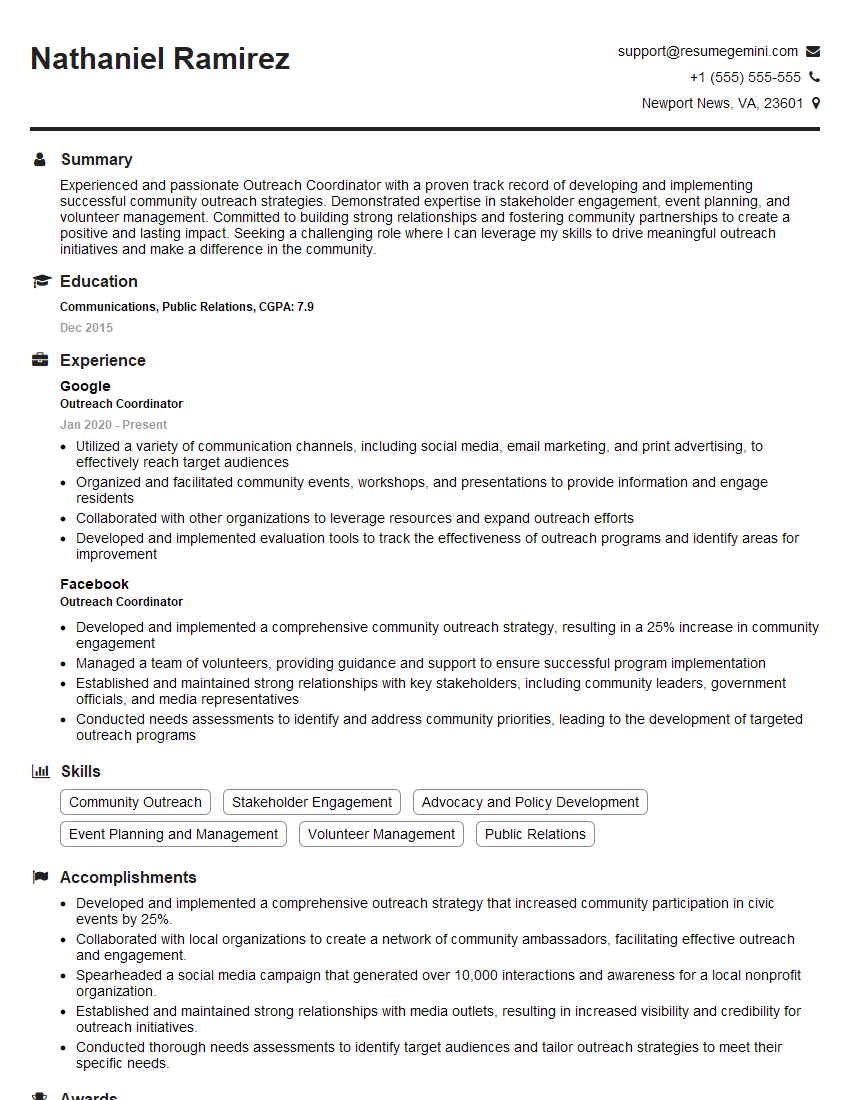
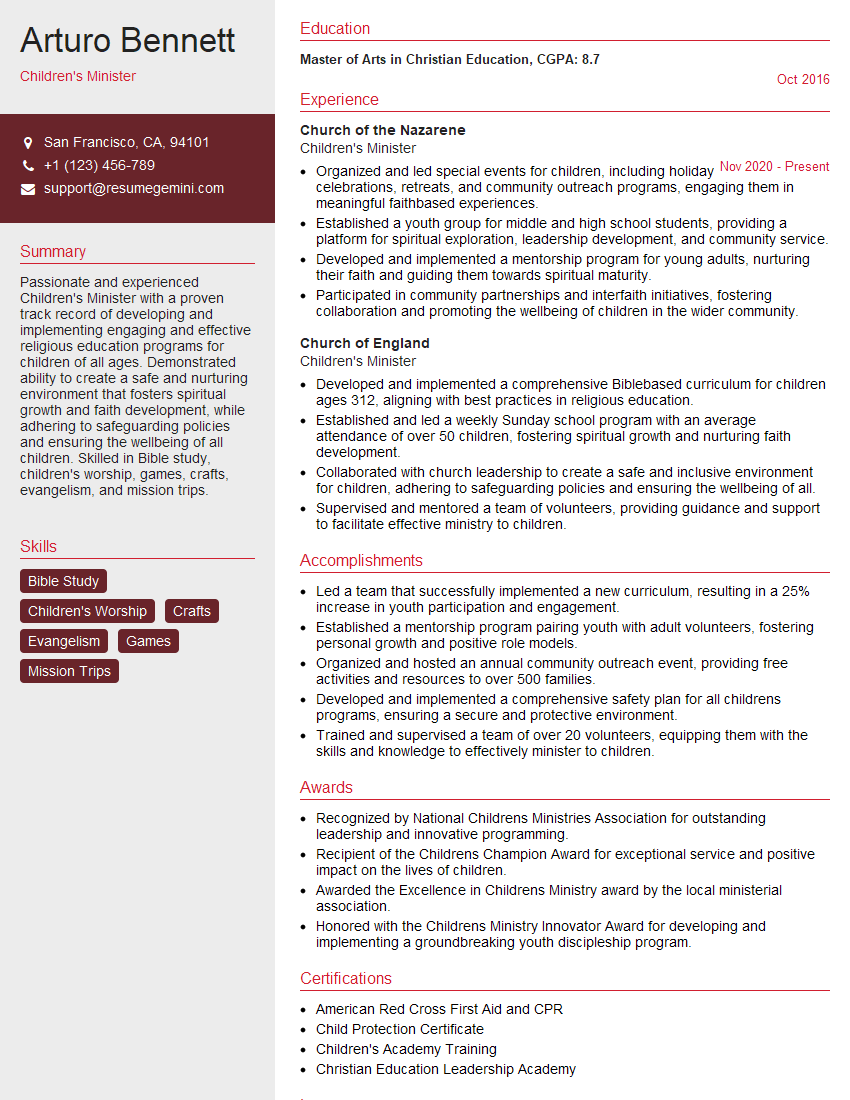
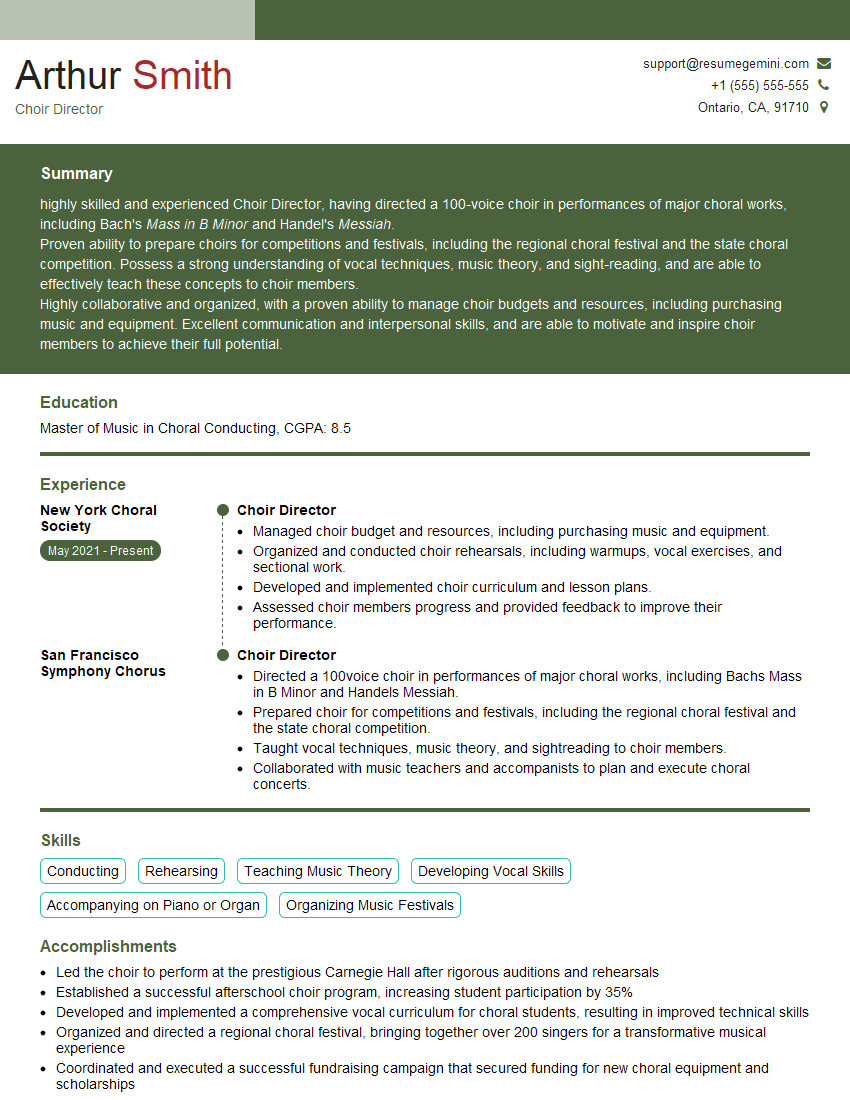
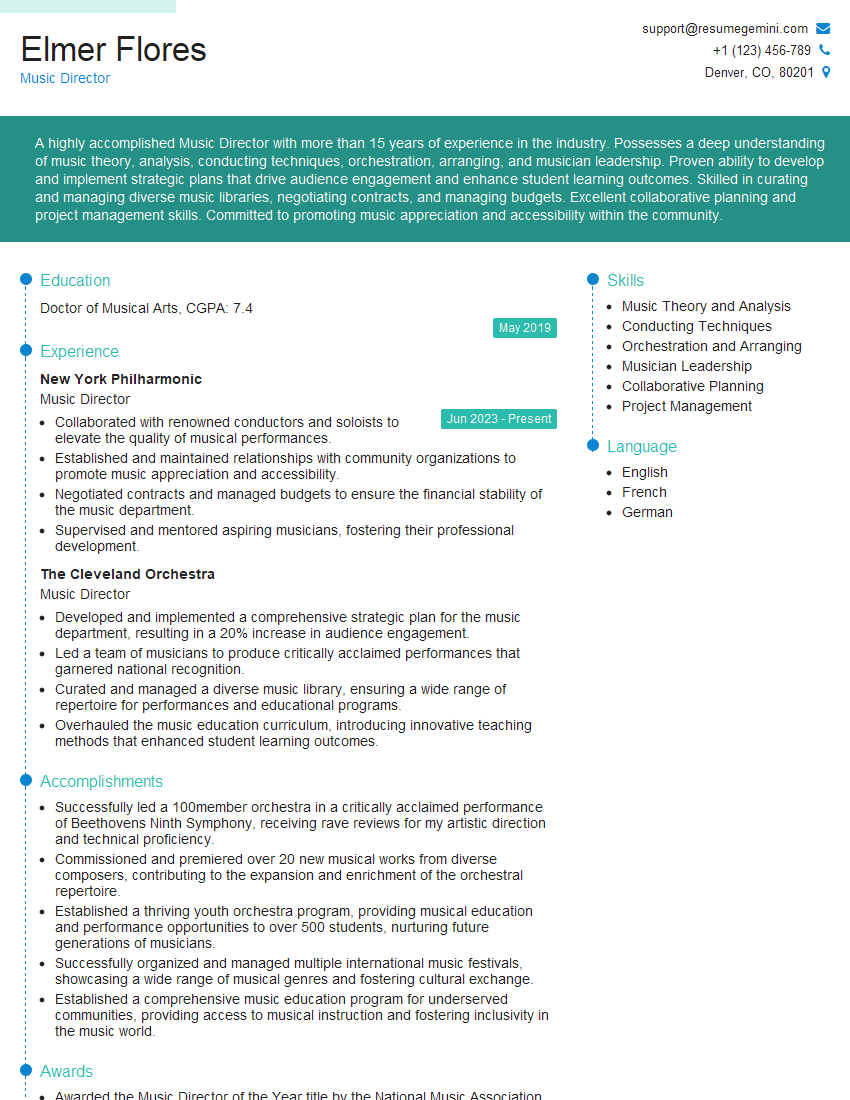
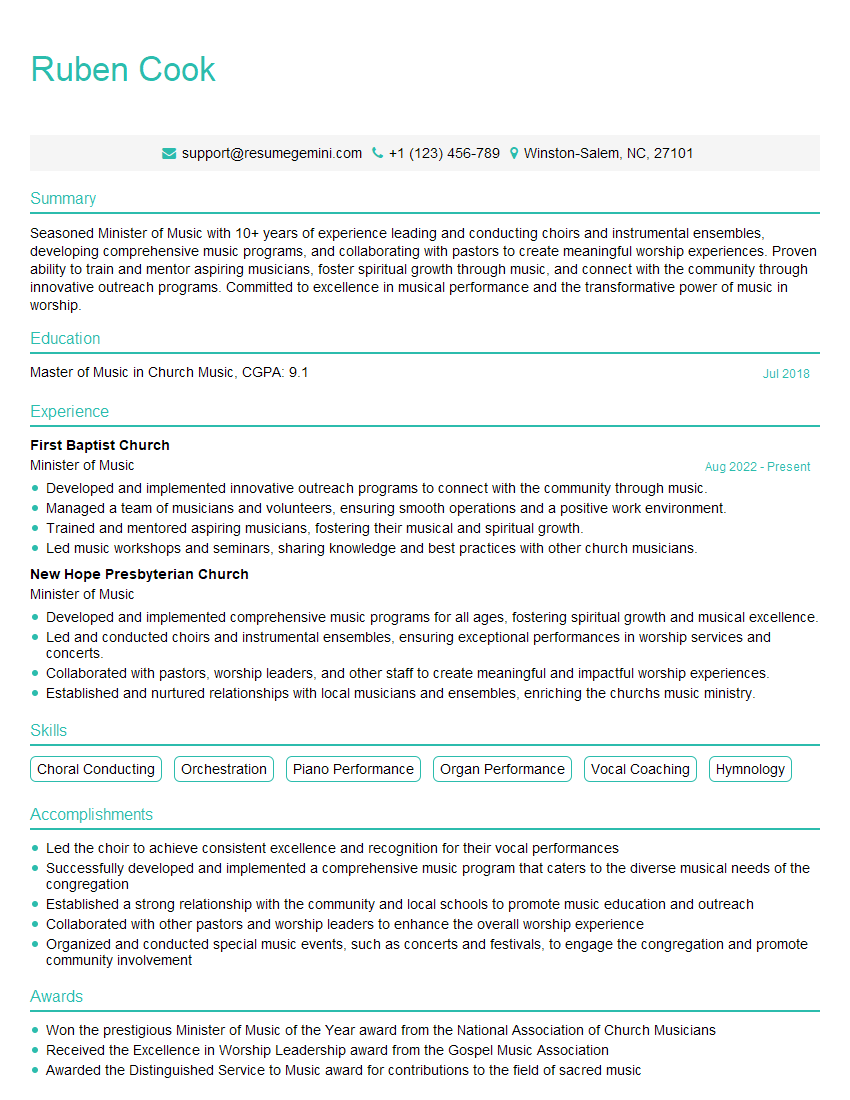
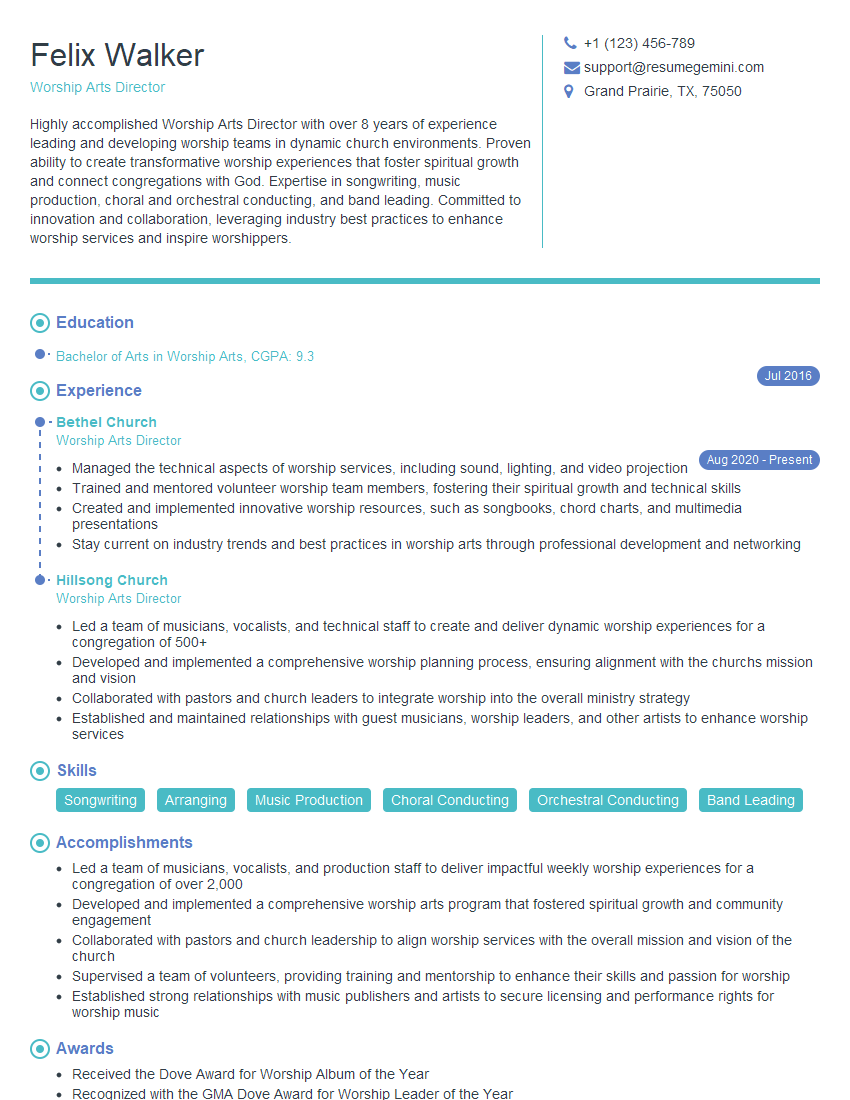
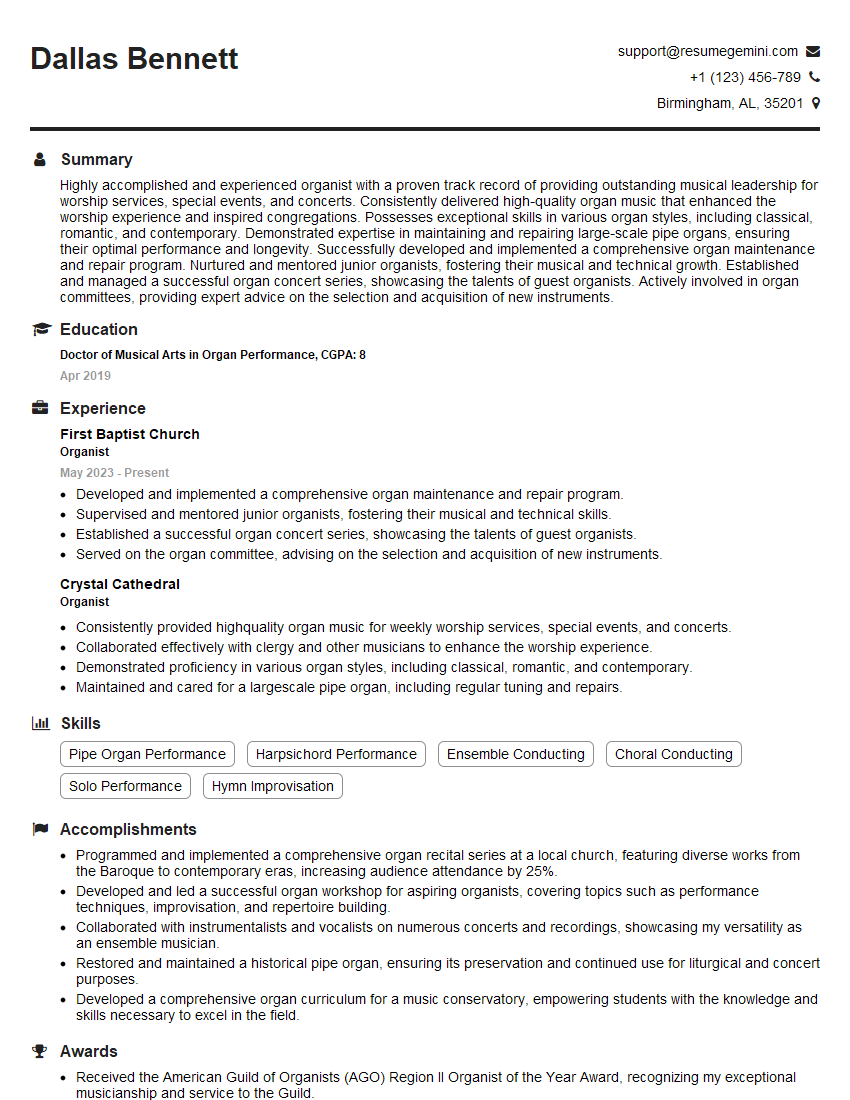
Mastering collaboration with clergy and worship staff is crucial for career advancement in ministry-related roles. It demonstrates your ability to work effectively within a faith-based organization, contributing to a supportive and thriving community. To significantly boost your job prospects, invest in creating an ATS-friendly resume that clearly highlights your relevant skills and experience. ResumeGemini is a trusted resource for building professional resumes that get noticed. We offer examples of resumes tailored to Collaboration with Clergy and Worship Staff to help guide you. Take advantage of these resources and elevate your application to stand out from the competition!

Explore more articles
Users Rating of Our Blogs
Share Your Experience
We value your feedback! Please rate our content and share your thoughts (optional).
What Readers Say About Our Blog
Very informative content, great job.
good