Unlock your full potential by mastering the most common Collaboration with Worship Planning Team interview questions. This blog offers a deep dive into the critical topics, ensuring you’re not only prepared to answer but to excel. With these insights, you’ll approach your interview with clarity and confidence.
Questions Asked in Collaboration with Worship Planning Team Interview
Q 1. Describe your experience in collaborating with diverse teams on worship planning projects.
Collaborating with diverse worship planning teams requires a nuanced understanding of individual strengths, communication styles, and theological perspectives. My experience involves working with musicians, pastors, tech teams, and volunteers, each bringing unique skills and viewpoints. I prioritize active listening and creating a safe space where everyone feels comfortable sharing ideas. For example, in one project, we had a team with varying musical preferences – some favoring traditional hymns, others contemporary praise songs. By facilitating open dialogue, we crafted a service that blended these styles organically, satisfying the diverse tastes and creating a unified worship experience.
- Active Listening: I make sure I truly hear and understand everyone’s input, regardless of how different it may be from my own or the group consensus.
- Empathy and Respect: Creating a respectful atmosphere is crucial. I value the contributions of each team member, acknowledging their expertise and experience.
- Clear Communication: I ensure everyone understands the project goals and their individual roles. This transparency prevents misunderstandings.
Q 2. How do you manage conflicting priorities and deadlines within a worship planning team?
Managing conflicting priorities and deadlines in worship planning requires a proactive and organized approach. I use project management techniques like creating detailed schedules, assigning responsibilities, and setting realistic deadlines. Regular check-ins help monitor progress and address potential roadblocks early on. For instance, if a musician’s availability conflicts with a crucial rehearsal, I would work collaboratively to find an alternative solution, perhaps shifting their segment or finding a suitable substitute. Prioritization is key: we assess the importance of each task and allocate resources accordingly, ensuring that essential elements are completed first.
- Prioritization Matrix: I use a matrix to rank tasks based on urgency and importance, allowing us to focus on high-priority items.
- Regular Check-ins: Short, frequent meetings (e.g., weekly) keep everyone informed and allow for quick problem-solving.
- Flexibility: Unexpected issues are inevitable. A flexible approach ensures the plan can adapt to changes.
Q 3. What strategies do you employ to foster effective communication within a worship team?
Effective communication is the cornerstone of successful worship planning. I employ various strategies to foster open and honest dialogue. This includes utilizing various communication channels – email for formal updates, group chats for quick questions, and in-person meetings for in-depth discussions. In one project, we used a shared online calendar and project management tool to track tasks, deadlines, and resource allocation, ensuring transparency and accountability. Regular feedback sessions allow team members to share their perspectives and address concerns promptly.
- Multi-Channel Communication: Using a mix of methods caters to different communication styles.
- Regular Meetings: Consistent communication keeps everyone informed and on the same page.
- Feedback Mechanisms: Creating opportunities for feedback fosters improvement and team unity.
Q 4. Explain your approach to conflict resolution within a team setting related to worship planning.
Conflict resolution is an inevitable part of team collaboration. My approach focuses on creating a safe environment for expressing differing viewpoints. I encourage active listening and empathetic understanding. I facilitate discussions to identify the root causes of disagreements, focusing on the issue, not personalities. In one instance, a disagreement arose over the choice of music for a specific liturgical element. Rather than imposing a decision, I led a discussion where each team member explained their reasoning, ultimately leading to a compromise that integrated elements from both proposals.
- Active Listening: Hearing all sides of the issue is crucial before attempting a solution.
- Focus on the Issue: Keeping the discussion focused on the problem, not the people involved, reduces emotional tension.
- Collaborative Solutions: Aiming for solutions that address the needs of all stakeholders fosters a sense of shared ownership.
Q 5. How do you ensure all team members’ contributions are valued and incorporated into the worship plan?
Ensuring all team members’ contributions are valued requires consistent effort and intentionality. I create an inclusive environment where everyone feels empowered to share their ideas. I actively solicit input from each member, acknowledging their expertise and perspective. We use brainstorming sessions to generate diverse ideas and collaboratively refine the worship plan, making sure that every voice is heard. Regular feedback sessions, both individually and as a group, allow me to gauge everyone’s satisfaction and address any concerns.
- Brainstorming Sessions: Creating a space for free-flowing ideas generates diverse input.
- Individual Check-ins: Regular one-on-one meetings give individuals an opportunity to express their concerns.
- Acknowledgement and Appreciation: Publicly recognizing and appreciating individual contributions boosts morale and participation.
Q 6. Describe your experience in developing and implementing a worship plan.
Developing and implementing a worship plan involves a multifaceted process. It begins with understanding the liturgical context, the congregation’s needs and preferences, and the overall theme or message for the service. This involves collaborative discussions with the pastoral team to determine the overall theological direction and message. Then, we select readings, music, and prayers, ensuring alignment with the chosen theme. We create a detailed schedule and assign tasks to team members, ensuring effective time management and resource allocation. The final step is a thorough rehearsal to ensure a smooth and impactful worship experience.
- Liturgical Understanding: A firm grasp of the liturgical calendar and traditions is vital.
- Congregational Needs: Considering the demographics and spiritual needs of the congregation shapes the service design.
- Detailed Scheduling: Careful planning ensures efficient time management during the service.
Q 7. How do you balance creative freedom with liturgical requirements in worship planning?
Balancing creative freedom with liturgical requirements demands careful consideration and skillful negotiation. The liturgical framework provides structure and meaning, offering a foundation for creativity. However, creative expression can enrich and enhance the liturgical experience, making it more engaging and relevant to the congregation. Finding this balance involves open communication between the worship team and the clergy, ensuring alignment between creative elements and liturgical norms. For example, while a contemporary song might not be traditionally part of a specific liturgical event, its message or musical style could be adapted to enhance the service without compromising its integrity. The key is collaborative discussion and mutual respect for both the liturgical tradition and artistic expression.
- Collaborative Discussion: Open communication between creative and liturgical leaders ensures alignment.
- Adaptation and Innovation: Finding creative ways to express liturgical themes in fresh and engaging ways.
- Respect for Tradition: Understanding and honoring the existing liturgical framework.
Q 8. How do you handle unexpected technical issues during a worship service?
Handling unexpected technical issues during a worship service requires a calm, proactive approach and a well-defined contingency plan. Think of it like a live performance – things can go wrong, and your ability to react swiftly is crucial.
Our team maintains a detailed checklist of potential problems and solutions. For instance, we have backup audio equipment, a secondary projector, and pre-recorded music tracks for every song. We also designate specific team members as ‘technical troubleshooters’ who are responsible for addressing issues immediately. If the main sound system fails, the troubleshooter switches to the backup system seamlessly, minimizing disruption. Communication is key; we use hand signals and a dedicated communication channel (like a walkie-talkie system) to avoid audible disruptions during the service. After the service, we conduct a post-mortem review to identify the root cause of the issue and prevent recurrence. This might involve updating equipment, improving training, or refining our contingency plans.
For example, once during a live stream, the internet connection dropped. Our troubleshooter immediately switched to a mobile hotspot, minimizing the downtime to less than a minute. The pre-recorded backup music helped maintain the flow of the service. Our post-mortem led to an upgrade in our internet service provider for better reliability.
Q 9. What software or tools are you proficient in using for worship planning and coordination?
Proficiency in various software and tools is essential for effective worship planning. We utilize a suite of tools tailored to different aspects of planning. For scheduling and communication, we rely on Planning Center Online, which allows for team collaboration, task assignment, and seamless integration with other tools. For creating presentations, we use ProPresenter, which provides a user-friendly interface for integrating media, lyrics, and graphics. Canva is a valuable tool for creating visually appealing graphics and social media posts. We also leverage Google Workspace (Sheets, Docs, Drive) for document management and collaboration among team members. Finally, we use a church management software (depending on the specific church) to manage volunteer schedules, attendance, and other administrative tasks. The choice of software depends on the specific needs and budget of the church, but the key is integration and seamless workflow across platforms.
Q 10. How do you incorporate feedback from congregants into future worship plans?
Incorporating congregant feedback is vital for creating meaningful and relevant worship experiences. We utilize multiple methods to gather this feedback. We regularly distribute feedback forms, both physical and digital, immediately after services. These forms usually include open-ended questions as well as rating scales on specific elements of the service. We also actively monitor social media comments and messages from congregants. We hold regular focus groups or informal conversations to directly engage with members of the congregation. We analyze the feedback, looking for patterns and recurring themes. This data helps us adjust our planning for future services. For instance, if feedback consistently shows a preference for certain types of music or sermon topics, we incorporate those preferences into future plans. Transparency is key; we acknowledge the feedback we receive and explain how we’re addressing it in future services.
Q 11. Describe a time you had to adapt a worship plan due to unforeseen circumstances.
One time, our lead singer became ill just hours before a major Easter service. This required immediate adaptation. We had already prepared backup singers, but they weren’t as familiar with all the songs. We quickly decided to focus on simpler songs that the backup singers could manage, making a few strategic adjustments to the order of the service. We also emphasized congregational singing for some parts, encouraging participation. While the service wasn’t exactly as planned, it was still impactful. The congregation understood the situation, and their participation contributed to a meaningful experience. This situation highlighted the importance of having backup plans and a flexible approach. It also reminded us of the power of community in overcoming unforeseen challenges.
Q 12. How do you ensure the worship service is inclusive and accessible to all members of the congregation?
Ensuring inclusivity and accessibility is paramount. This begins with prayerful consideration of the diverse needs within our congregation. We aim for diverse representation in our music selection, sermon topics, and participation. We make our services accessible to those with disabilities by using large print bulletins, offering sign language interpretation, ensuring wheelchair accessibility, and providing assistive listening devices. We also are mindful of cultural sensitivity in our music and messaging. We actively seek feedback from members of the congregation with disabilities to ensure our services are truly accessible and inclusive. This involves going beyond simply providing accommodations and fostering an environment where everyone feels welcomed and valued.
Q 13. How do you manage the logistics of a large-scale worship event?
Managing the logistics of a large-scale worship event necessitates meticulous planning and effective delegation. We utilize project management tools, like Trello or Asana, to coordinate various aspects. We develop a comprehensive event timeline, assigning responsibilities to specific team members or committees. This involves coordinating venue booking, security, parking, catering, volunteers, sound and lighting, and potentially external vendors. We create detailed checklists for each area, and we conduct regular meetings to monitor progress and address any challenges. Clear communication is paramount, ensuring everyone understands their roles and responsibilities. A post-event review is essential to identify areas for improvement, evaluating the effectiveness of the logistics and identifying areas needing adjustment for future events.
Q 14. How do you delegate tasks effectively within a worship planning team?
Effective delegation within a worship planning team involves understanding team members’ strengths and assigning tasks accordingly. I delegate based on individual skills and availability, fostering a sense of ownership and responsibility. Clear expectations are crucial; each task comes with a detailed description, deadlines, and expected outcomes. Regular check-ins and open communication are implemented to ensure progress and address any roadblocks. We use collaborative tools to facilitate task management and communication. I also empower team members by providing them with the authority and resources to execute their tasks independently. Finally, I provide regular feedback and recognition to reinforce their contributions and strengthen the team dynamic.
Q 15. How do you measure the success of a worship service?
Measuring the success of a worship service goes beyond simply counting attendees. It’s about assessing the overall impact on the congregation and their connection with God. I use a multi-faceted approach, incorporating both quantitative and qualitative data.
Quantitative Measures: Attendance figures provide a baseline, but I also track things like offering contributions (as an indicator of engagement and generosity), participation in post-service activities (like fellowship or small groups), and online engagement (views of service recordings, social media interactions).
Qualitative Measures: These are crucial. I actively seek feedback through surveys, informal conversations, and observations during the service itself. I look for signs of genuine worship, emotional connection, and spiritual growth. For example, a post-service survey might include questions like: ‘What part of the service resonated most with you?’ or ‘How did the service impact your spiritual well-being?’
Long-term Impact: Ultimately, the most significant measure is the long-term impact on individuals and the community. This is harder to quantify directly but can be observed through increased volunteerism, deeper relationships within the congregation, and a demonstrable growth in faith and action.
By combining these methods, I gain a comprehensive understanding of the service’s effectiveness and identify areas for improvement.
Career Expert Tips:
- Ace those interviews! Prepare effectively by reviewing the Top 50 Most Common Interview Questions on ResumeGemini.
- Navigate your job search with confidence! Explore a wide range of Career Tips on ResumeGemini. Learn about common challenges and recommendations to overcome them.
- Craft the perfect resume! Master the Art of Resume Writing with ResumeGemini’s guide. Showcase your unique qualifications and achievements effectively.
- Don’t miss out on holiday savings! Build your dream resume with ResumeGemini’s ATS optimized templates.
Q 16. What are your strategies for motivating and engaging worship team volunteers?
Motivating and engaging worship team volunteers requires a holistic approach focusing on appreciation, empowerment, and ongoing development.
Appreciation and Recognition: Public acknowledgement of their contributions during services and in the church newsletter is crucial. I also organize team dinners or outings to foster camaraderie and build morale.
Empowerment and Ownership: I encourage team members to share ideas, participate in song selection, and take on leadership roles within the team. This fosters a sense of ownership and investment in the worship experience.
Ongoing Development: Providing opportunities for professional development, such as workshops on vocal techniques, music theory, or leadership skills, keeps volunteers engaged and helps them grow in their abilities. I also encourage mentorship opportunities between experienced and newer team members.
Open Communication and Feedback: Creating a safe space for open and honest feedback is vital. Regular team meetings provide a platform to address concerns, brainstorm ideas, and celebrate successes.
For instance, in one church, we started a ‘Worship Team Spotlight’ feature in our weekly bulletin, highlighting a different team member each week. This simple gesture significantly boosted morale and engagement.
Q 17. How do you stay current with trends and best practices in worship planning?
Staying current involves a multi-pronged strategy focused on continuous learning and networking.
Conferences and Workshops: I regularly attend conferences and workshops related to worship leadership, music, and church ministry. These events provide exposure to new ideas, techniques, and best practices.
Professional Organizations: Membership in organizations like the National Association of Pastoral Musicians or similar groups provides access to resources, publications, and networking opportunities with other professionals in the field.
Online Resources and Publications: I actively follow blogs, podcasts, and journals dedicated to worship planning and church music. This allows me to stay abreast of current trends and research.
Mentorship and Collaboration: Connecting with experienced worship leaders through mentorship or collaborative projects allows for the sharing of knowledge and experience.
For example, attending a workshop on inclusive worship practices significantly changed our approach, leading to more diverse and engaging services for our congregation.
Q 18. Describe your experience in creating a budget for worship services and related events.
Budgeting for worship services requires careful planning and prioritization. I typically use a line-item budget, breaking down expenses into different categories.
Music Costs: This includes sheet music, licensing fees for copyright music, and potential payments for guest musicians or artists.
Equipment Maintenance and Upgrades: This covers repairs and replacement of sound systems, instruments, lighting, and projection equipment.
Operational Costs: This includes costs associated with running the service, such as utilities, printing materials, and staff time.
Special Event Costs: This accounts for expenses related to specific services like Christmas or Easter, potentially including additional decorations, music, or guest speakers.
I start by assessing the church’s overall budget and then allocate funds to worship based on its importance to the congregation’s mission. I work closely with the church’s finance team to ensure transparency and accountability. I also explore cost-saving measures where possible, such as negotiating better rates with vendors or utilizing existing resources efficiently. For example, exploring free or low-cost music resources and leveraging volunteer skills effectively can help significantly reduce expenses without compromising quality.
Q 19. How do you manage the selection and scheduling of worship music?
Music selection and scheduling is a collaborative process involving the worship team, pastoral staff, and often the congregation. We use a structured approach.
Thematic Planning: We begin by identifying the overall theme or message for the liturgical year or specific service series. This guides the selection of music that complements the message.
Style and Genre Considerations: We consider the style and genre of music that resonates with our congregation. We strive for a balance that appeals to different age groups and preferences.
Team Input and Rehearsals: The worship team plays a crucial role in choosing music suitable for their skills and capabilities. Sufficient rehearsal time is allocated to ensure a polished and seamless performance.
Scheduling and Rotation: A schedule is created well in advance, ensuring variety and avoiding repetitive song selections. We often rotate songs to allow for a diverse musical experience over time.
For example, we might dedicate a specific Sunday to contemporary Christian music, while another focuses on traditional hymns, ensuring the varied preferences of our congregation are catered to.
Q 20. How do you ensure the legal and copyright aspects of worship music are handled appropriately?
Handling copyright and legal aspects of worship music is non-negotiable. We employ a multi-layered approach to ensure compliance.
Licensing Agreements: We obtain appropriate licenses from organizations such as CCLI (Copyright Licensing International) or OneLicense. These licenses grant permission to reproduce and perform copyrighted music within the context of a worship service.
Careful Song Selection: We exercise caution in choosing songs, ensuring that the chosen music has the necessary licensing available. We verify the licensing details before incorporating any new music into the service.
Documentation and Record Keeping: We meticulously maintain records of all licensed music, including the license numbers and associated agreements. This helps ensure our compliance and facilitates auditing if required.
Education and Training: The worship team members are educated about copyright laws and the importance of licensing. They understand their responsibility in ensuring legal compliance.
Ignoring copyright laws can lead to significant legal liabilities and financial penalties. Therefore, we prioritize responsible music usage.
Q 21. Describe your experience working with different age groups or demographics in a worship setting.
Working with diverse age groups and demographics requires a sensitive and inclusive approach. We tailor our worship services to be engaging and meaningful for all.
Multi-Generational Music Selection: Including a mix of traditional hymns and contemporary Christian music ensures that different age groups feel represented and connected.
Inclusive Language and Themes: We use language and themes that are relatable and meaningful across various demographics, avoiding jargon or culturally specific references that may alienate some members.
Visual Aids and Multimedia: Incorporating visual elements like slides, videos, or live visuals can enhance engagement and accessibility for a wider audience.
Intergenerational Activities: We actively encourage interaction and collaboration between different age groups during the service or through related activities. This fosters a sense of unity and community.
Feedback and Consultation: We actively seek feedback from different age groups to understand their needs and preferences. This ensures that our worship services truly resonate with the entire congregation.
For example, we might incorporate a children’s choir or involve youth leaders in service planning to enhance participation and representation from various age groups. We also regularly conduct surveys and focus groups to ensure our approach is effective and inclusive.
Q 22. How do you handle disagreements among team members regarding worship styles or preferences?
Disagreements about worship styles are inevitable in a team. My approach focuses on respectful dialogue and collaborative problem-solving. I begin by creating a safe space where everyone feels comfortable expressing their opinions. We use active listening to understand each perspective, ensuring everyone feels heard. Then, we brainstorm potential solutions that incorporate elements from various preferences, aiming for a balanced and inclusive service. For instance, if some prefer contemporary music while others favor traditional hymns, we might include both in the service, perhaps alternating styles or incorporating elements of each into a blended piece. This process might involve voting, but ideally, we strive for a consensus that honors the diverse preferences within the team.
- Active Listening: I make sure to paraphrase and summarize each team member’s point to confirm understanding before moving on.
- Compromise and Collaboration: We focus on finding solutions that meet the needs of the majority while respecting the concerns of the minority.
- Prioritization: Sometimes we use a simple prioritization system to determine which aspects are most crucial for the overall service.
Q 23. What is your experience with incorporating multimedia elements into worship services?
I have extensive experience integrating multimedia into worship services. This involves everything from selecting appropriate visuals (slides, videos, animations) to coordinating lighting and sound. My approach is to ensure that multimedia enhances, rather than distracts from, the spiritual message. I work closely with the tech team to ensure seamless transitions and high-quality production. I also understand the importance of accessibility for those who may have visual or auditory impairments. For example, I might utilize large, easy-to-read text on slides and provide audio descriptions where appropriate. In one project, we used projected artwork alongside live music to create an immersive and engaging worship experience. The key is to use technology thoughtfully, allowing it to complement the overall message and the atmosphere of the service.
Q 24. How familiar are you with various liturgical traditions and their impact on worship planning?
My familiarity with various liturgical traditions is extensive. I understand the differences between, for instance, the Roman Catholic Mass, Protestant liturgical practices, non-denominational services, and Pentecostal worship. Understanding these traditions is vital because each one has unique elements that influence how we structure and plan worship. I’m adept at researching and adapting elements from different traditions when appropriate, while always being mindful of maintaining the integrity and theological coherence of the service. For example, when planning a service for a congregation with a blend of liturgical and non-liturgical backgrounds, I incorporate elements that appeal to both, perhaps using a traditional order of service but with a more contemporary style of music.
Q 25. Describe your process for reviewing and updating the worship plan regularly.
The worship plan review and update process is ongoing. We typically meet weekly to review the previous service, gather feedback, and plan for the upcoming service. This includes reviewing the order of service, the music selection, the readings, and any multimedia elements. We also use a digital platform to track changes, tasks, and deadlines, ensuring transparency and accountability. After each service, we conduct a brief post-service evaluation, gathering feedback from attendees and team members to inform future planning. We maintain a central repository for all past and future plans, making it easy to access and review previous services for inspiration and to avoid repetition.
Q 26. How do you maintain a positive and collaborative team environment?
Maintaining a positive and collaborative environment is paramount. I foster this by promoting open communication, mutual respect, and shared responsibility. Regular team-building activities help to build relationships and trust. I actively encourage participation from all team members, ensuring that every voice is heard and valued. We prioritize clear and consistent communication, whether through regular meetings, emails, or online collaboration tools. We also celebrate successes and acknowledge individual contributions to maintain team morale. A culture of appreciation, feedback, and shared goals is crucial to a thriving worship planning team.
Q 27. How would you handle a situation where a team member is consistently underperforming?
Addressing underperformance requires a sensitive and strategic approach. I’d start by having a private conversation with the team member, clearly articulating my observations and concerns. This would involve specific examples of underperformance and its impact on the team. I’d then collaborate with the individual to identify the root causes of the issue – are there skill gaps, personal challenges, or workload issues? Together, we’d develop a plan for improvement, setting clear expectations, deadlines, and providing support and resources where necessary. If the situation doesn’t improve despite these interventions, further action may be required, potentially involving more senior leadership.
Q 28. Describe a time you had to compromise to reach a consensus within a worship planning team.
In one instance, we had a significant disagreement about the length of the service. Some team members wanted a shorter, more dynamic service, while others preferred a longer, more contemplative one. After much discussion and respectful debate, we compromised by creating a modular service structure. This allowed us to vary the length depending on the occasion and the overall theme. We also agreed on clear time limits for each segment to avoid exceeding the desired overall length. This required each team member to be flexible and willing to adjust their contributions accordingly. The solution not only resolved the immediate conflict but also enhanced our team’s ability to adapt to various circumstances and audience needs in the future.
Key Topics to Learn for Collaboration with Worship Planning Team Interview
- Understanding Worship Styles and Preferences: Learn about different worship styles (contemporary, traditional, blended) and how to adapt your communication and collaboration to various preferences within the team.
- Effective Communication and Active Listening: Practice clear, concise communication, both verbal and written. Develop active listening skills to understand team members’ perspectives and concerns.
- Conflict Resolution and Teamwork: Explore strategies for resolving disagreements respectfully and constructively within the team. Understand the importance of compromise and collaborative decision-making.
- Understanding the Worship Planning Process: Familiarize yourself with the typical stages of worship planning, including selecting music, developing themes, and coordinating technical aspects.
- Contribution and Input: Learn how to effectively share your ideas and contribute meaningfully to the planning process while respecting the established vision and leadership of the team.
- Time Management and Organization: Understand the importance of meeting deadlines and managing multiple tasks simultaneously in a fast-paced collaborative environment.
- Technological Proficiency: Depending on the role, familiarity with relevant software or technologies used in worship planning (e.g., presentation software, audio/video equipment) may be beneficial.
- Sensitivity and Inclusivity: Develop an understanding of how to create a welcoming and inclusive worship experience for a diverse congregation.
Next Steps
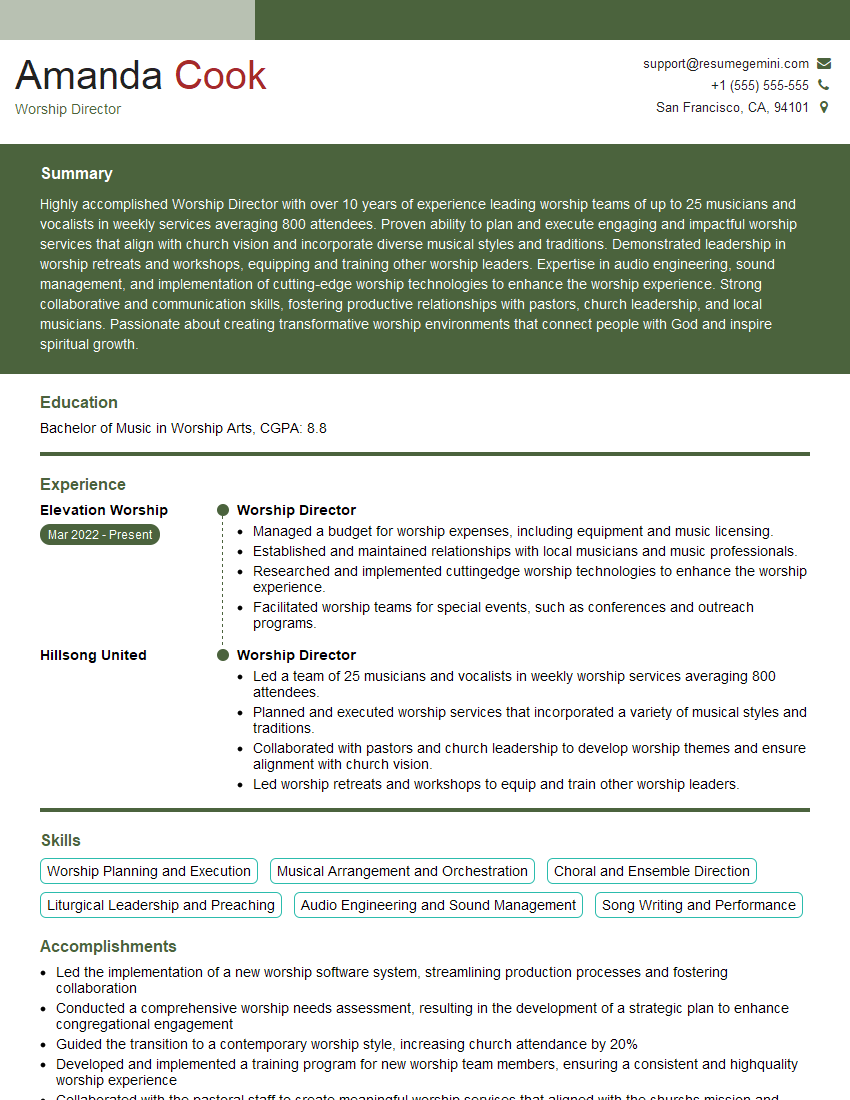
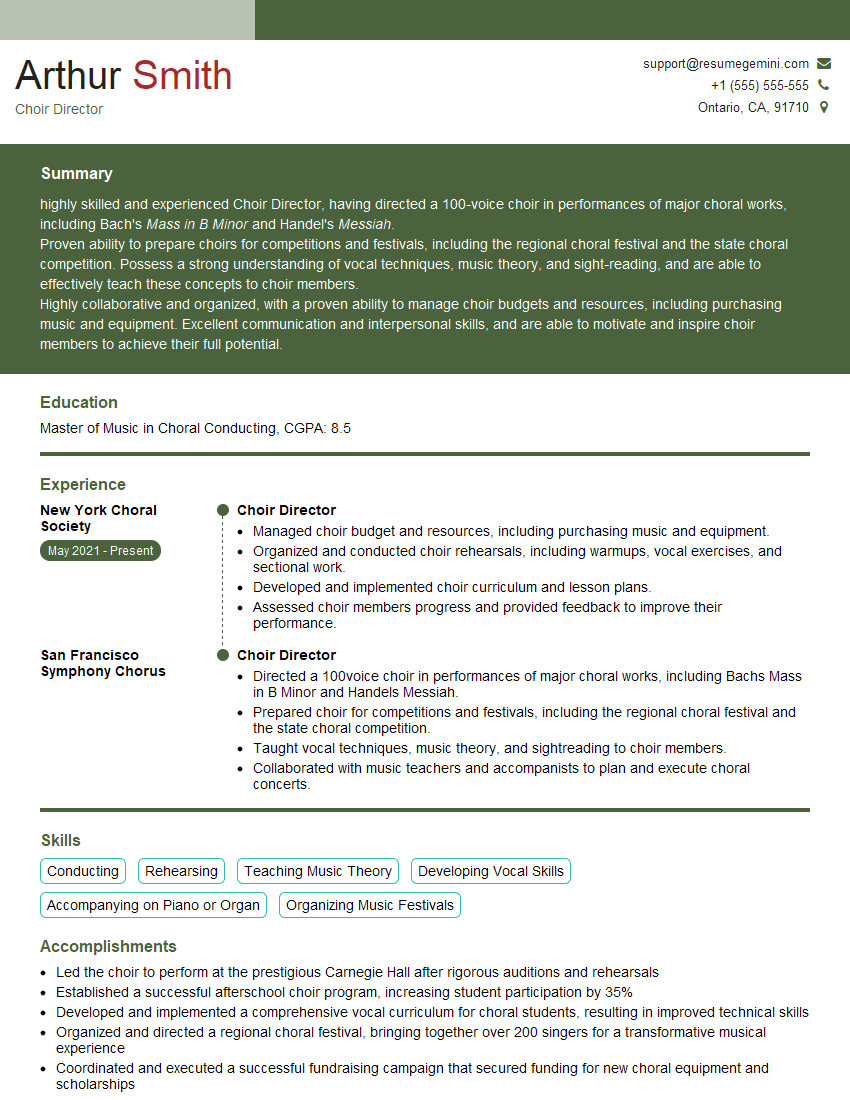
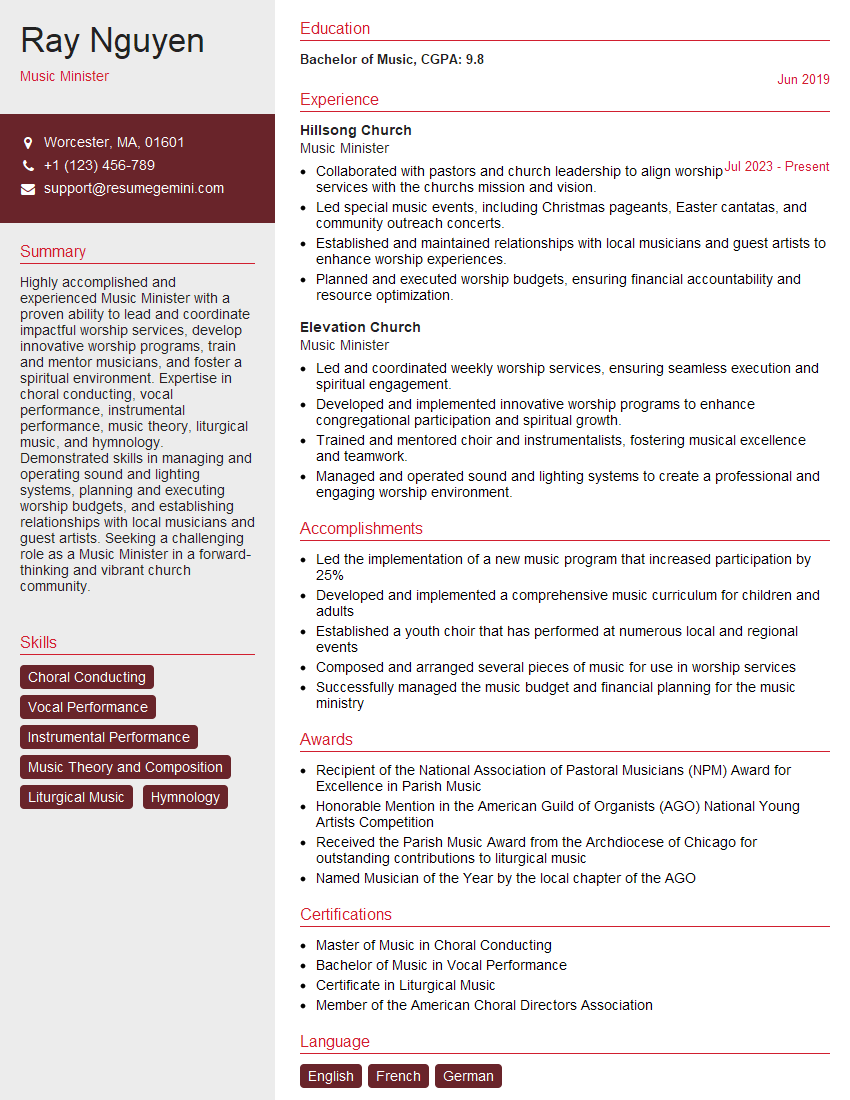
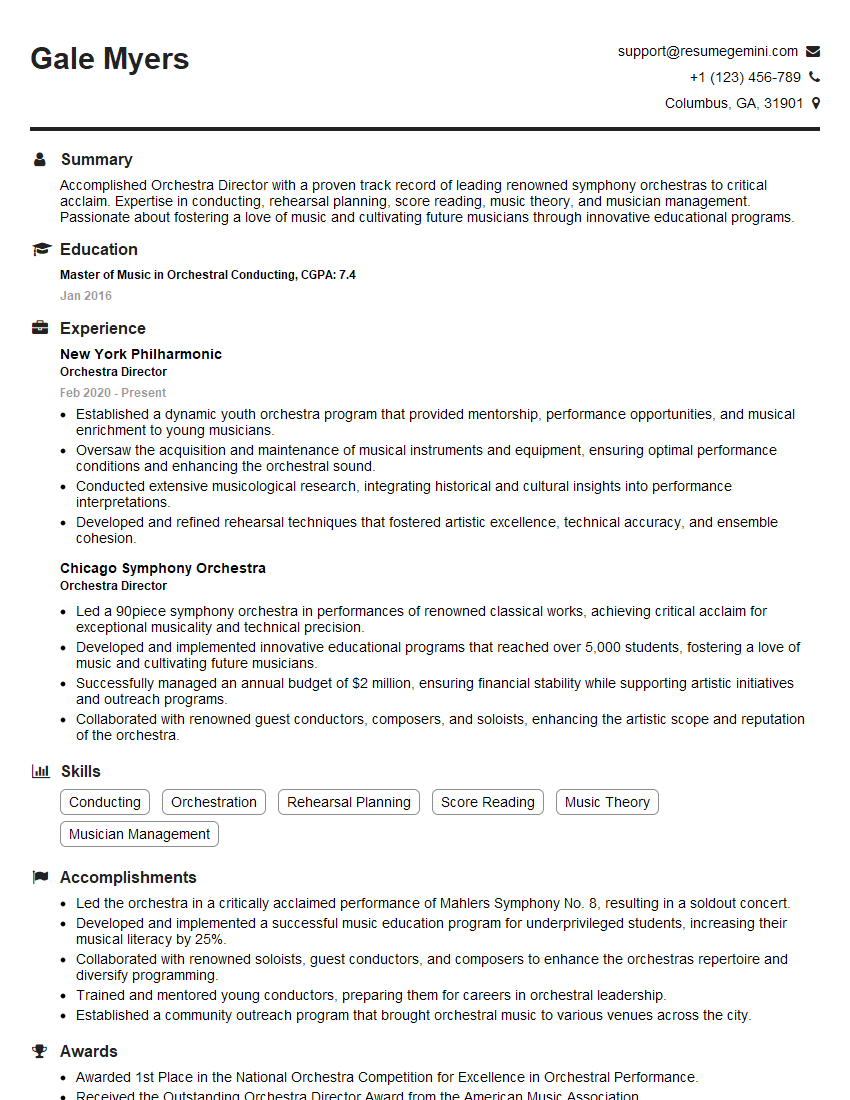
Mastering collaboration within a worship planning team significantly enhances your skills in communication, teamwork, and organizational management – highly valued attributes in many professional settings. This experience translates to a strong competitive advantage in your job search. To further strengthen your application, creating an ATS-friendly resume is crucial for getting your application noticed. ResumeGemini is a trusted resource to help you build a professional and impactful resume that highlights your relevant skills and experiences. Examples of resumes tailored to Collaboration with Worship Planning Team are available to help guide your resume creation process.
Explore more articles
Users Rating of Our Blogs
Share Your Experience
We value your feedback! Please rate our content and share your thoughts (optional).
What Readers Say About Our Blog
Very informative content, great job.
good