The thought of an interview can be nerve-wracking, but the right preparation can make all the difference. Explore this comprehensive guide to Collaborative Work with Conductors and Musicians interview questions and gain the confidence you need to showcase your abilities and secure the role.
Questions Asked in Collaborative Work with Conductors and Musicians Interview
Q 1. Describe your experience in facilitating effective communication between a conductor and musicians.
Effective communication between a conductor and musicians is the bedrock of a successful musical performance. It’s not just about conveying notes and rhythms; it’s about transmitting the emotional intent, the stylistic nuances, and the overall artistic vision. My approach focuses on creating a transparent and open dialogue. This involves:
- Pre-Rehearsal Communication: Distributing scores well in advance, holding pre-rehearsal meetings to discuss the composer’s background, stylistic choices, and interpretive ideas.
- Clear and Concise Instructions: During rehearsals, I employ clear, concise language, avoiding jargon. I use visual cues alongside verbal instructions, particularly when explaining complex rhythmic or melodic passages.
- Active Listening: I encourage musicians to ask questions and share their interpretations. This two-way communication ensures everyone is on the same page and allows for addressing any misunderstandings promptly.
- Individual Attention: I believe in providing individual feedback, addressing specific challenges faced by individual musicians or sections of the orchestra. This personalized approach fosters a sense of trust and encourages improvement.
For example, when working on a particularly complex passage from a Mahler symphony, I might conduct a section individually, focusing on subtle dynamic variations and phrasing before bringing the full orchestra together. This minimizes potential errors and ensures a consistent approach.
Q 2. How do you handle differing interpretations of a musical score amongst musicians?
Differing interpretations are inevitable, and often a source of creative energy! Managing them requires a delicate balance between respecting individual artistic expression and achieving a unified performance. My approach involves:
- Facilitated Discussion: I create a safe space for musicians to articulate their interpretations. I encourage a respectful exchange of ideas, highlighting the merits of different approaches.
- Referring to the Score and Historical Context: I remind the musicians of the composer’s intentions as evident in the score, historical context, and any available letters or writings. This provides a common reference point for discussion.
- Compromise and Collaboration: I guide musicians toward finding a compromise that respects individual perspectives while maintaining musical coherence. Often, a blend of approaches yields the most compelling performance.
- Demonstrating Through Modeling: I often demonstrate different interpretive possibilities myself, modeling various approaches to phrasing, dynamics, and articulation. This allows musicians to hear and understand the subtle differences.
For instance, in a piece with multiple interpretations of a particular phrase, I might ask musicians to present their versions, then guide them toward a unified approach that balances musicality and the spirit of the piece.
Q 3. Explain your process for resolving conflicts that may arise during rehearsals.
Conflicts are a natural part of collaborative work, and addressing them constructively is essential. My process emphasizes:
- Prompt Identification and Addressing: I address conflicts promptly, ensuring they don’t escalate. I create an environment where individuals feel comfortable raising concerns.
- Neutral Facilitation: I act as a neutral mediator, encouraging open communication and active listening from all parties. I focus on understanding the root cause of the conflict rather than placing blame.
- Finding Common Ground: I help conflicting parties identify areas of agreement and build from there. The goal is to find a solution that works for everyone while upholding artistic standards.
- Private Conversations (when necessary): Sometimes, individual conversations are necessary to address personal issues or sensitive concerns in private, before approaching the group as a whole.
For example, if a disagreement arises between the string and wind sections regarding tempo, I would facilitate a discussion where each section explains their reasoning, then guide them toward a compromise that respects the musical balance of the piece.
Q 4. How do you ensure all musicians are prepared and on time for rehearsals and performances?
Ensuring preparedness and punctuality is crucial for efficient rehearsals and flawless performances. My strategies include:
- Clear Communication of Expectations: Providing clear and detailed rehearsal schedules well in advance, including specific instructions on required materials and preparation.
- Regular Communication: Maintaining consistent communication with musicians in the days and weeks leading up to rehearsals and performances, addressing any concerns or questions.
- Pre-Rehearsal Check-Ins: Conducting brief check-ins before each rehearsal to ensure everyone is prepared and ready to work.
- Incentives and Recognition: Celebrating punctuality and preparation. Showing appreciation for commitment enhances team morale and reinforces positive behaviours.
For instance, I might send a weekly email summarizing rehearsal schedules, highlighting important sections to prepare, and offering resources to aid in practice. This consistent communication ensures musicians know exactly what’s expected and helps maintain preparedness.
Q 5. Describe a time you had to adapt quickly to a change in rehearsal plans.
During a rehearsal for a contemporary opera, a key soloist fell ill unexpectedly. We had less than 24 hours until the dress rehearsal. My immediate response was to:
- Assess the Situation: Quickly determine the severity of the problem and available options.
- Consult with the Stage Manager and Composer: Discuss potential solutions, such as using a understudy or making necessary cuts/adaptations to the score.
- Communicate Clearly to the Orchestra: Provide transparent and timely information to musicians, ensuring everyone understood the changes.
- Rehearse Efficiently: Focus rehearsal on the critical sections affected by the change, maximizing the limited rehearsal time.
We ended up employing a talented understudy who, with a few hours of intensive coaching, delivered a superb performance. This situation reinforced the importance of clear communication and adaptability in demanding scenarios.
Q 6. How do you balance the conductor’s vision with the individual contributions of musicians?
Balancing the conductor’s vision with individual musicians’ contributions is a key aspect of collaborative leadership. It’s not a matter of either/or; it’s about integrating both for the best possible result. My approach revolves around:
- Collaborative Interpretation: Encouraging musicians to offer their interpretations while always remaining mindful of the overall artistic vision.
- Open Dialogue: Fostering an environment where musicians feel comfortable sharing their ideas and concerns.
- Compromise and Negotiation: Guiding the discussion toward compromises that respect individual musicians’ contributions while maintaining the overall integrity of the musical work.
- Respect for Musicality: Ultimately, all decisions are driven by the pursuit of excellent musicianship and a compelling performance.
For instance, a string player might suggest a different bowing technique that enhances a particular phrase. If this improves the overall sound and doesn’t clash with the conductor’s vision, it’s embraced. The conductor’s role becomes that of a curator, shaping individual contributions into a unified whole.
Q 7. What techniques do you use to build a positive and collaborative team environment?
Building a positive and collaborative team environment is essential. My strategies include:
- Creating a Safe Space: Fostering a supportive environment where musicians feel comfortable sharing ideas, concerns, and even mistakes without fear of judgment.
- Encouraging Teamwork: Emphasizing the importance of collaboration and mutual respect among musicians.
- Celebrating Successes: Recognizing and acknowledging individual and collective achievements to boost morale and enhance team cohesion.
- Promoting Open Communication: Maintaining transparent communication channels, ensuring clear feedback, and actively addressing conflicts as they arise.
- Building Rapport: Taking time for informal conversations and social interactions to build trust and camaraderie amongst the musicians.
For example, I might start each rehearsal with a brief, informal chat, creating a relaxed atmosphere and allowing time for team bonding, fostering a sense of community essential for collaborative success.
Q 8. How do you address performance issues with individual musicians?
Addressing performance issues with individual musicians requires a delicate balance of directness, empathy, and constructive feedback. It’s crucial to understand the root cause – is it technical proficiency, musical interpretation, or perhaps even a personal issue affecting their performance?
My approach involves a private conversation, beginning with positive reinforcement of their strengths before addressing the specific concern. I’d use specific examples, avoiding vague criticisms like “your playing was sloppy.” Instead, I might say, “During the climax of the second movement, the phrasing in bars 57-62 felt rushed; let’s work on ensuring a smoother legato there.” This focuses on a concrete aspect, allowing for targeted improvement.
I’d also involve active listening – understanding their perspective on the challenge. Sometimes, a musician might be struggling with a particular passage due to an instrument issue or a misunderstanding of the composer’s intent. Addressing these underlying issues is paramount. Following this, we would work together to find solutions – be it extra practice, adjustments to technique, or exploring different interpretive approaches. Regular check-ins and open communication help to ensure continued progress and build trust.
Q 9. How do you maintain professionalism and respect in a high-pressure environment?
Maintaining professionalism and respect in a high-pressure environment, such as an orchestral rehearsal or performance, is critical for a positive and productive collaborative experience. It starts with clear communication – establishing expectations early on, respecting individual contributions, and providing constructive feedback in a timely and respectful manner. This includes clear articulation of roles and responsibilities.
I foster a culture of mutual respect by valuing each musician’s unique contributions and celebrating their successes. Open and honest dialogue is essential, allowing musicians to express concerns or challenges without fear of judgment. It’s important to lead by example – demonstrating professionalism in my conduct, punctuality, and preparedness.
During stressful moments, I focus on maintaining a calm and controlled demeanor, diffusing tension through clear communication and problem-solving. A crucial element is acknowledging the pressure, creating space for collective problem-solving rather than assigning blame. This kind of environment empowers the musicians, fostering a sense of shared responsibility and collective success.
Q 10. Explain your understanding of different rehearsal techniques and their effectiveness.
Rehearsal techniques are diverse and their effectiveness depends heavily on the ensemble’s needs and the piece’s challenges. I utilize a blend of strategies, often tailoring my approach based on the specific repertoire and the musicians’ skill levels.
- Sectionals: Focusing on individual sections allows for detailed work on specific passages, addressing technical and interpretive challenges more effectively. This is particularly useful for addressing balance issues or intricate passages.
- Full rehearsals: These are crucial for integrating the work of individual sections, ensuring balance and cohesion across the entire ensemble. I pay close attention to dynamics, phrasing, articulation, and overall musical flow.
- Analytical study: Before rehearsals, I often lead discussions on the musical structure, historical context, and composer’s intentions. This helps musicians approach the piece with a deeper understanding, impacting their interpretive choices.
- Play-throughs: These less formal rehearsals allow for a less pressured approach, focusing on correcting errors and refining overall phrasing. This reduces the performance pressure.
- Score study sessions: These are dedicated to score study and discussion. This can include identifying phrasing, articulation and dynamic markings.
The effectiveness of each technique is evaluated by observing the ensemble’s progress, their ability to address challenges effectively, and overall musical improvement. I adapt my strategies based on these observations and musician feedback to create the most efficient and productive rehearsal environment.
Q 11. Describe your experience working with diverse musical styles and backgrounds.
My experience spans a broad range of musical styles and backgrounds, from Baroque to contemporary classical music, jazz, and even world music. I have worked with musicians from diverse cultural backgrounds, each bringing unique perspectives and skills to the collaborative process. This diversity is a strength, enriching the musical experience and leading to insightful interpretations.
Working with musicians from different backgrounds requires adaptability and sensitivity. Understanding cultural nuances in musical expression is critical. For example, the rhythmic and melodic interpretations within a piece of traditional African music would differ greatly from a classical piece. It necessitates a flexible approach to conducting and providing feedback, always respecting and appreciating individual styles. It’s about bridging the gap between different musical traditions whilst maintaining the integrity of the piece being performed.
I find the most rewarding moments are when diverse perspectives come together, challenging preconceived notions and leading to new and innovative interpretations of the music. These collaborations have helped me broaden my understanding and appreciation of music in general, fostering a more inclusive and enriching artistic environment.
Q 12. How do you provide constructive feedback to musicians without hindering their creativity?
Providing constructive feedback that fosters creativity requires a nuanced approach. It is crucial to avoid destructive criticism. Instead of focusing solely on flaws, I highlight specific aspects that could be improved, always relating them back to the overall musical goal. My feedback is always framed positively, focusing on enhancing existing strengths rather than dwelling on weaknesses.
I often use analogies and metaphors to communicate musical concepts, making feedback more accessible and understandable. For example, instead of saying “your tempo was inconsistent,” I might say, “imagine the music as a flowing river; let’s ensure the current remains steady and consistent throughout.”
I actively encourage experimentation and exploration during rehearsals, creating a safe space where musicians feel comfortable taking risks without fear of judgment. I make it clear that creative experimentation is valued, and that sometimes exploring unconventional approaches can lead to unexpected musical discoveries. By fostering a supportive environment and offering targeted suggestions rather than dictating, musicians’ creativity is nurtured instead of being stifled.
Q 13. How would you handle a situation where a musician is consistently unprepared?
Consistently unprepared musicians pose a challenge to ensemble cohesion and efficiency. My approach involves a combination of understanding, direct communication, and supportive intervention.
Firstly, I’d schedule a private meeting to understand the reasons behind the consistent lack of preparation. Are there personal issues, technical challenges, or misunderstandings about expectations? This understanding is key before implementing any solutions. Open and honest communication is vital to finding a resolution.
Once the root cause is identified, we’d collaboratively develop a plan for improvement. This might involve setting realistic practice goals, providing targeted support with specific techniques, or arranging extra coaching sessions. Regular check-ins will monitor their progress, ensuring they are on track and addressing any emerging challenges promptly. In severe cases, depending on the context and the impact on the ensemble, further disciplinary actions might be considered in line with the established protocol.
Q 14. How do you support musicians’ technical skill development?
Supporting musicians’ technical skill development is a multifaceted process that goes beyond simple instruction. I believe in providing tailored support and resources to help each musician reach their full potential.
This involves providing targeted exercises and practice strategies that focus on individual weaknesses. I might recommend specific etudes or other pedagogical materials appropriate for their instrument and level. I often bring in specialists such as instrument repair technicians, or specialized teachers for consultation.
In addition to individual guidance, I foster a supportive and collaborative learning environment during rehearsals. By encouraging peer learning and sharing of techniques, musicians can learn from each other and develop their skills through mutual support. Regular feedback, both during rehearsals and after performances, is crucial to providing a clear picture of their progress, highlighting both areas of improvement and demonstrated successes. This holistic approach ensures that technical skill development is an ongoing process and is an integral part of building a skilled and confident ensemble.
Q 15. What strategies do you employ to promote a cohesive ensemble sound?
Achieving a cohesive ensemble sound requires a multifaceted approach focusing on blend, balance, articulation, and intonation. It’s like baking a cake – each ingredient (musician) is crucial, and the recipe (score) must be followed precisely, but the final product depends on the chef’s (conductor’s) skill and the collective effort.
- Detailed Rehearsal Strategies: I prioritize sectional rehearsals to address individual part challenges before combining sections. This allows for targeted feedback and focused problem-solving. For instance, if the string section struggles with a particular passage, we’ll work on it intensely before integrating with the brass.
- Blending Techniques: I guide musicians towards a unified sound through exercises focusing on dynamic matching, consistent articulation, and a shared sense of phrasing. We might practice playing unison passages to develop a shared sense of timing and intonation.
- Active Listening and Feedback: Encouraging active listening is paramount. I facilitate communication between musicians, encouraging them to listen critically to each other and offer constructive feedback. This fosters a collaborative environment where everyone contributes to the collective sound.
- Intonation and Tuning: Regular tuning sessions and exercises targeting intonation issues are vital. Using a tuning app or a skilled tuner helps to establish a solid foundation for the ensemble’s pitch.
Career Expert Tips:
- Ace those interviews! Prepare effectively by reviewing the Top 50 Most Common Interview Questions on ResumeGemini.
- Navigate your job search with confidence! Explore a wide range of Career Tips on ResumeGemini. Learn about common challenges and recommendations to overcome them.
- Craft the perfect resume! Master the Art of Resume Writing with ResumeGemini’s guide. Showcase your unique qualifications and achievements effectively.
- Don’t miss out on holiday savings! Build your dream resume with ResumeGemini’s ATS optimized templates.
Q 16. Describe your experience working with conductors of varying personalities and conducting styles.
My experience spans working with conductors who range from highly expressive and emotionally driven to meticulously precise and technically focused. This diversity has been invaluable. Adaptability is key.
- Expressive Conductors: With these conductors, I focus on understanding their interpretive vision and translating it musically. It’s about grasping their emotional intent and conveying it through my playing. One conductor I worked with was known for his dramatic gestures; understanding his expressive language was crucial to capturing the intended emotion in the music.
- Technically Precise Conductors: With these conductors, the emphasis shifts to accuracy, articulation, and technical proficiency. It demands meticulous attention to detail and precise execution of the score. For example, a conductor known for his exacting standards would have us focus on precise rhythmic accuracy, bowing techniques, and dynamic control.
- Collaborative Approach: Regardless of the conductor’s style, my approach always centers on collaboration. Open communication, mutual respect, and a shared commitment to the performance are crucial for success.
Q 17. How familiar are you with different music notation styles?
My familiarity with music notation styles extends to various historical periods and contemporary practices. I am proficient in reading and interpreting scores written in standard notation, including those employing figured bass, tablature (for lute, guitar, etc.), and modern compositional techniques.
- Historical Notations: I have experience with Baroque figured bass, understanding its implications for harmony and improvisation. I’m comfortable deciphering older notations that might differ slightly from modern practice.
- Contemporary Notations: I can interpret scores that utilize microtonal notation, graphic notation, or other contemporary notational practices. It’s a matter of understanding the composer’s intent and communicating it effectively.
- Software Proficiency: Proficiency in music notation software, like Sibelius or Finale, enables me to create, edit, and understand scores in various formats.
Q 18. How do you utilize technology to improve collaboration in musical settings?
Technology significantly enhances collaboration. Think of it like having a super-efficient communication system for a large orchestra.
- Cloud-Based Score Sharing: Platforms like Google Drive or Dropbox allow for easy sharing and updating of scores and parts. This ensures everyone has the latest version and facilitates quick revisions.
- Online Rehearsal Platforms: Virtual rehearsal platforms allow musicians to rehearse remotely, particularly helpful for geographically dispersed ensembles. These often have features like screen sharing to display scores, enabling real-time feedback.
- Audio/Video Recording and Analysis: Recording rehearsals allows for post-rehearsal analysis, identifying areas for improvement. Software can analyze intonation, timing, and dynamics, providing objective data for targeted improvement.
- Communication Tools: Instant messaging apps or project management software can streamline communication about rehearsal scheduling, part distribution, and problem-solving.
Q 19. Explain your experience with managing musical scores and parts.
Managing scores and parts involves meticulous organization and attention to detail. It’s akin to being a librarian for a musical library.
- Digital Organization: I maintain a well-organized digital library of scores and parts, often using a system of folders and naming conventions for easy access. This is crucial for efficient retrieval and distribution.
- Print Management: For performances requiring physical scores, I oversee the printing process, ensuring accurate formatting and sufficient copies for all musicians. I often double-check the prints for errors in notation or formatting.
- Version Control: Tracking different versions of scores and parts is critical, especially when revisions are made. Clear labeling and documentation ensure everyone is using the correct version.
- Part Extraction and Preparation: I am proficient in extracting individual parts from a full score, ensuring that all cues, markings, and other information are correctly included. I also handle any necessary part adjustments based on the specific needs of the performers.
Q 20. How do you ensure the accurate and timely distribution of musical materials?
Accurate and timely distribution is vital for a smooth rehearsal and performance process. It’s like delivering essential supplies to a construction site – everything must be in place on time.
- Centralized System: Using a centralized platform for distributing scores and parts is highly effective. This might be a cloud storage system, a dedicated rehearsal platform, or a combination of methods. All musicians should have clear instructions on accessing the materials.
- Confirmation of Receipt: After distribution, I follow up with musicians to confirm receipt and address any issues promptly. This prevents last-minute problems.
- Multiple Distribution Methods: Offering multiple distribution methods (e.g., email, cloud storage, physical delivery) caters to various preferences and technical capabilities of musicians.
- Clear Communication: Clear and concise communication regarding deadlines and any changes to the materials is essential.
Q 21. How would you address a technical malfunction during a performance?
Addressing a technical malfunction during a performance requires quick thinking and resourcefulness. It’s all about damage control and maintaining the flow of the performance.
- Preparedness: Having backup plans is crucial. This might include extra microphones, instruments, or a backup sound system. Knowing who’s responsible for addressing what issue is also crucial.
- Problem Identification: Quickly identifying the source of the malfunction is important. Is it a microphone issue, a power outage, or a problem with an instrument?
- Immediate Action: Depending on the severity, I might need to signal for a brief pause, utilize backup equipment, or improvise a solution with the conductor and other musicians. This requires calm and decisive action.
- Audience Management: If necessary, addressing the audience briefly and reassuring them can prevent panic and maintain a positive atmosphere.
- Post-Performance Assessment: After the performance, a review of the incident is valuable to prevent similar problems in future performances. This might involve documenting what happened and discussing potential preventative measures.
Q 22. How would you explain a complex musical passage to musicians with varying skill levels?
Explaining a complex musical passage to musicians of varying skill levels requires a multifaceted approach. I start by breaking down the passage into smaller, manageable sections. For beginners, I focus on the fundamental elements: rhythm, melody, and basic harmony. I might use analogies to everyday life – for example, comparing rhythmic patterns to a heartbeat or a ticking clock. For intermediate players, I delve into more nuanced aspects like phrasing, articulation, and dynamics, using musical examples and demonstrating different interpretive approaches. Advanced players can engage in discussions about the historical context, composer’s intent, and different stylistic interpretations. Visual aids, such as score markings with clear explanations and even short video demonstrations, are invaluable tools. I always encourage questions and foster a collaborative environment where everyone feels comfortable contributing and asking for clarification.
For example, if the passage involves a complex rhythmic motif, I might initially demonstrate the rhythm using body percussion before moving to instrumental practice. Then, I’d work with each skill group individually, adjusting my explanations and exercises to match their capabilities. This tiered approach ensures that everyone understands the material at their own pace, builds confidence, and contributes to a cohesive ensemble performance.
Q 23. What are your strategies for addressing stage management concerns during a performance?
Addressing stage management concerns requires proactive planning and meticulous attention to detail. Before the performance, I collaborate with the stage manager to create a detailed schedule that accounts for instrument placement, entrances and exits, lighting cues, and any special effects. We conduct thorough rehearsals to identify and resolve potential issues, ensuring that the flow of the performance is smooth and efficient. During the performance, I maintain clear and concise communication with the stage manager through pre-agreed signals or verbal cues. This allows for immediate responses to unexpected situations, such as a malfunctioning instrument or a sudden change in the performance space. Contingency plans are crucial. For instance, having backup instruments readily available or alternate arrangements in place for potential disruptions. Post-performance, we conduct a thorough review to identify areas for improvement and document any lessons learned for future productions.
Q 24. How do you contribute to creating a positive and professional performance environment?
Creating a positive and professional performance environment is paramount. I foster a collaborative atmosphere by encouraging open communication, mutual respect, and constructive feedback among musicians. I lead by example, demonstrating professionalism, punctuality, and a genuine passion for music. I actively listen to individual concerns and address them promptly and fairly. Regular breaks during rehearsals prevent fatigue and maintain high energy levels. I also encourage team building activities that promote camaraderie and strengthen the ensemble’s cohesion. A shared understanding of the musical goals and a sense of collective achievement contribute significantly to a positive and highly productive environment. This shared experience transcends the purely musical and strengthens the overall collaborative bond.
Q 25. Describe your experience with budgeting and resource allocation in a musical production.
My experience with budgeting and resource allocation involves careful planning and detailed cost analysis. I begin by identifying all necessary resources, including musicians’ fees, instrument rentals, venue costs, printing, and marketing materials. Then, I develop a detailed budget that outlines anticipated expenses and revenue streams. I explore various funding options, such as grants, sponsorships, and ticket sales, and actively seek out cost-effective solutions without compromising the quality of the production. I utilize spreadsheet software to track expenses, and I maintain transparent communication with stakeholders to ensure that everyone understands the financial aspects of the project. Regular monitoring of the budget allows for adjustments and proactive measures to manage potential shortfalls. For example, in one production, we secured sponsorship by partnering with a local business and securing reduced rental fees for the venue by scheduling during off-peak hours. This thorough approach ensures responsible resource management and helps achieve a financially sustainable project.
Q 26. How do you handle disagreements about tempo, dynamics, or interpretation?
Disagreements about tempo, dynamics, or interpretation are inevitable in collaborative music-making. My approach is to foster open and respectful dialogue. I encourage musicians to articulate their perspectives clearly and provide justifications for their interpretations, referencing the score and the composer’s intentions. I facilitate a balanced discussion, ensuring that all voices are heard and that everyone feels comfortable expressing their opinions. I often suggest compromises that incorporate elements from different perspectives. Sometimes, I’ll suggest we try different approaches and compare the results. The goal is to find a unified interpretation that respects individual artistic contributions while achieving an overall coherent and compelling musical performance. It’s about finding a ‘best fit’ solution rather than forcing a specific interpretation.
Q 27. What are your strategies for motivating musicians to achieve their best performance?
Motivating musicians to achieve their best performance involves creating a stimulating and supportive environment. I emphasize the importance of individual contributions to the overall success of the ensemble. I provide constructive feedback, highlighting both strengths and areas for improvement. I set clear expectations and goals for rehearsals and performances. I celebrate achievements, both big and small, recognizing individual efforts and acknowledging progress. I incorporate elements of fun and enjoyment into rehearsals, creating a relaxed atmosphere that fosters creativity and collaboration. I offer opportunities for musicians to showcase their talents, such as solo performances or featured sections. I also personalize my coaching, tailoring my approach to the individual needs and strengths of each musician. This approach fosters a sense of empowerment and ownership, leading to increased engagement and ultimately higher quality performances.
Q 28. Describe your experience with post-performance feedback and analysis.
Post-performance feedback and analysis are essential for continuous improvement. I conduct a debriefing session with the musicians, where we discuss both the successes and challenges of the performance. This involves gathering feedback through questionnaires, discussions, and observations. I analyze the performance, focusing on areas such as tempo consistency, dynamic control, balance, and overall musicality. This analysis is documented and used to inform future rehearsals and performances. I focus on constructive criticism, highlighting specific areas for improvement and suggesting practical solutions. I also recognize and celebrate achievements, reinforcing positive aspects of the performance. This iterative process of evaluation and refinement ensures continuous growth and improvement in our collective musical abilities. This data contributes to future productions, allowing for informed decision-making and an improved overall performance quality.
Key Topics to Learn for Collaborative Work with Conductors and Musicians Interview
- Understanding the Conductor’s Vision: Learn how to effectively interpret a conductor’s musical intentions, including their stylistic preferences and expressive goals. Consider how different conducting styles influence performance.
- Effective Communication & Nonverbal Cues: Explore the nuances of nonverbal communication in an orchestral setting. Practice actively listening to and responding to subtle cues from the conductor and fellow musicians.
- Responding to Feedback & Adjustments: Develop strategies for receiving and integrating constructive criticism from the conductor during rehearsals and performances. Understand how to adapt your playing in response to real-time feedback.
- Teamwork and Ensemble Playing: Examine the importance of collaborative spirit and mutual respect within an ensemble. Discuss techniques for achieving balance, blend, and intonation in a group setting.
- Problem-Solving in Rehearsal: Consider practical approaches to resolving technical or musical challenges that arise during rehearsals. How do you contribute to finding solutions as a team member?
- Technical Proficiency & Musicality: While not explicitly collaborative, demonstrating a high level of technical skill and musical understanding is crucial for effective collaboration. Be ready to discuss your approach to practicing and developing your musical skills.
- Professionalism and Etiquette: Discuss the importance of punctual arrival, respectful communication, and maintaining a professional demeanor in a collaborative musical environment.
Next Steps
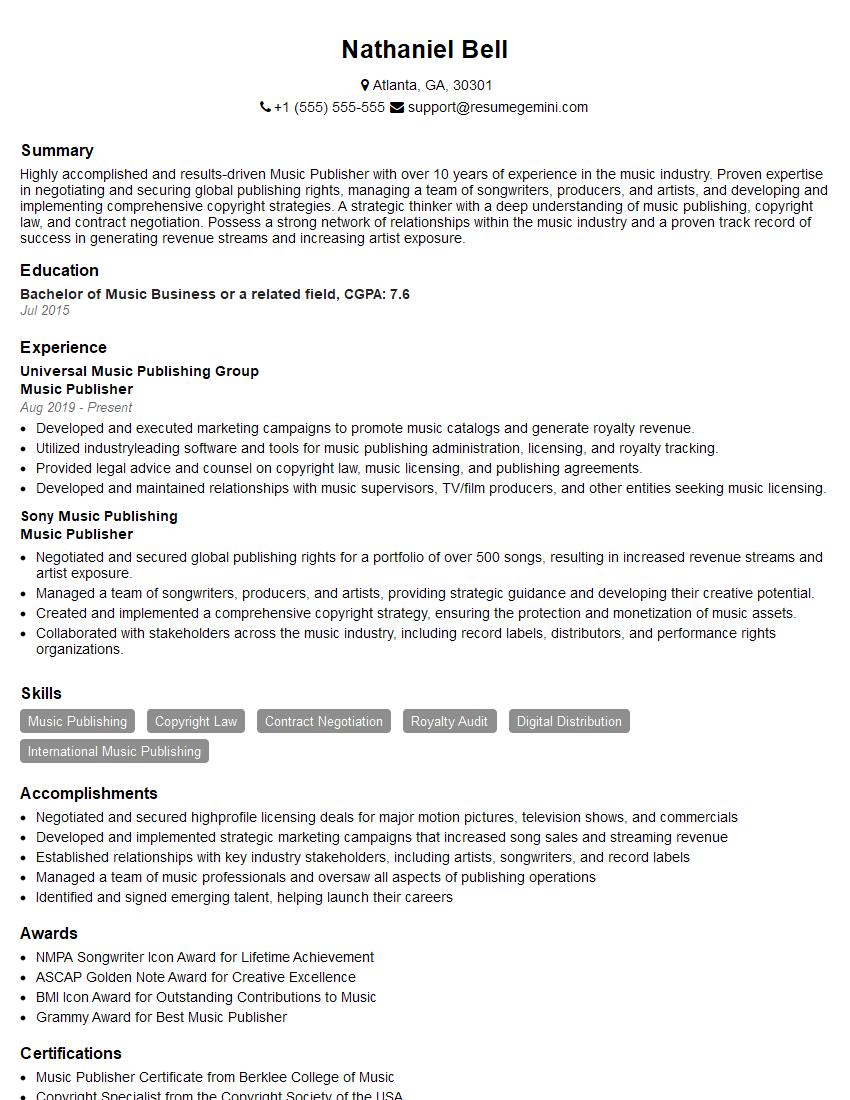
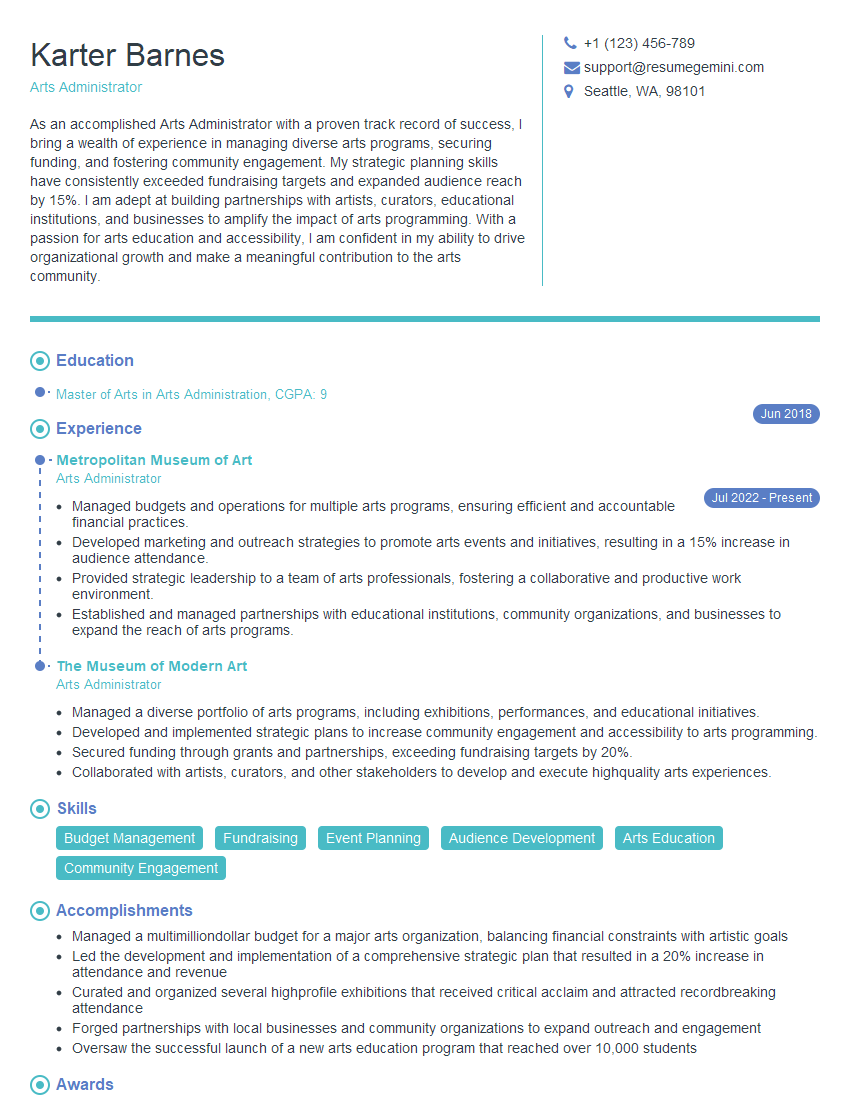
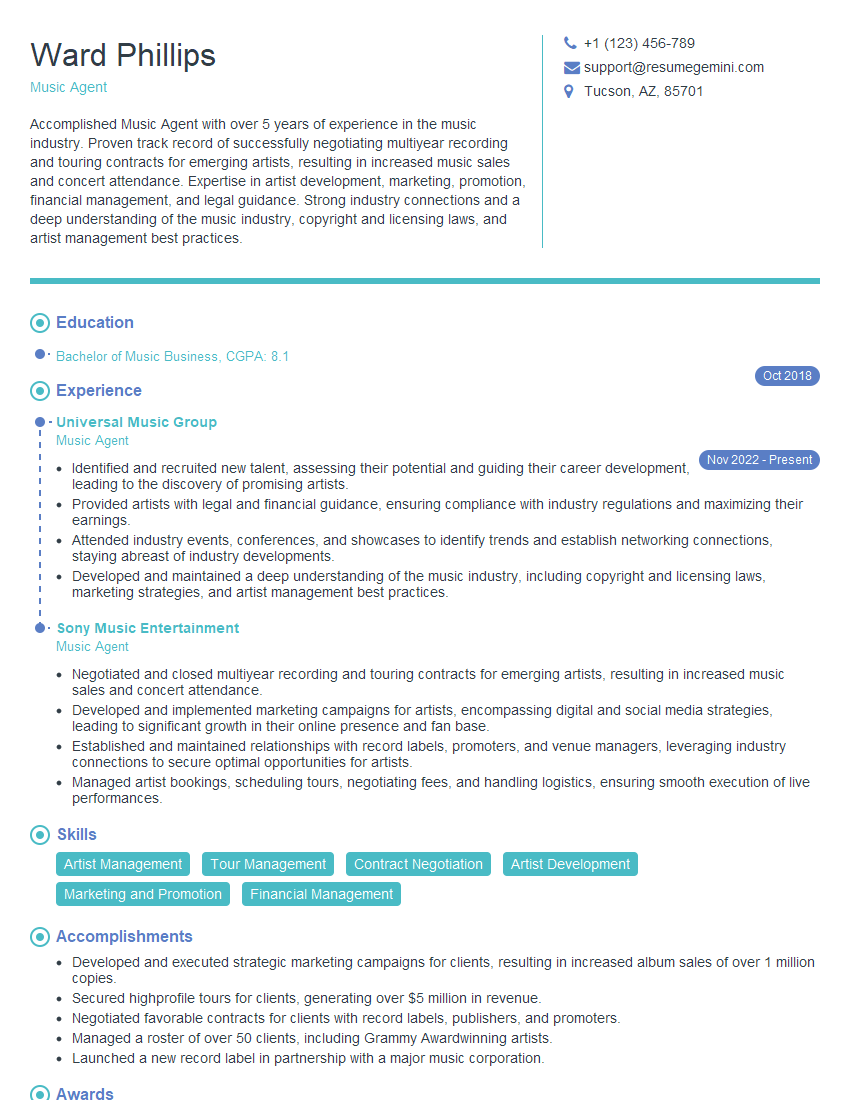
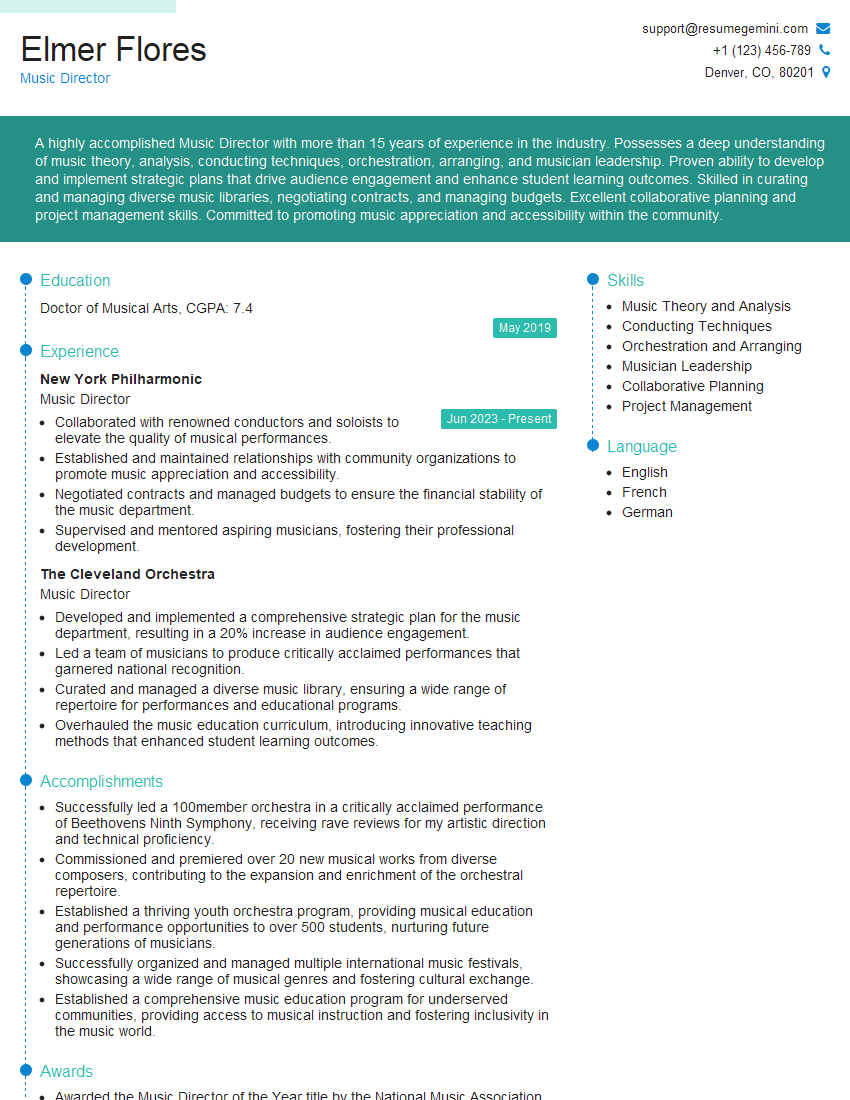
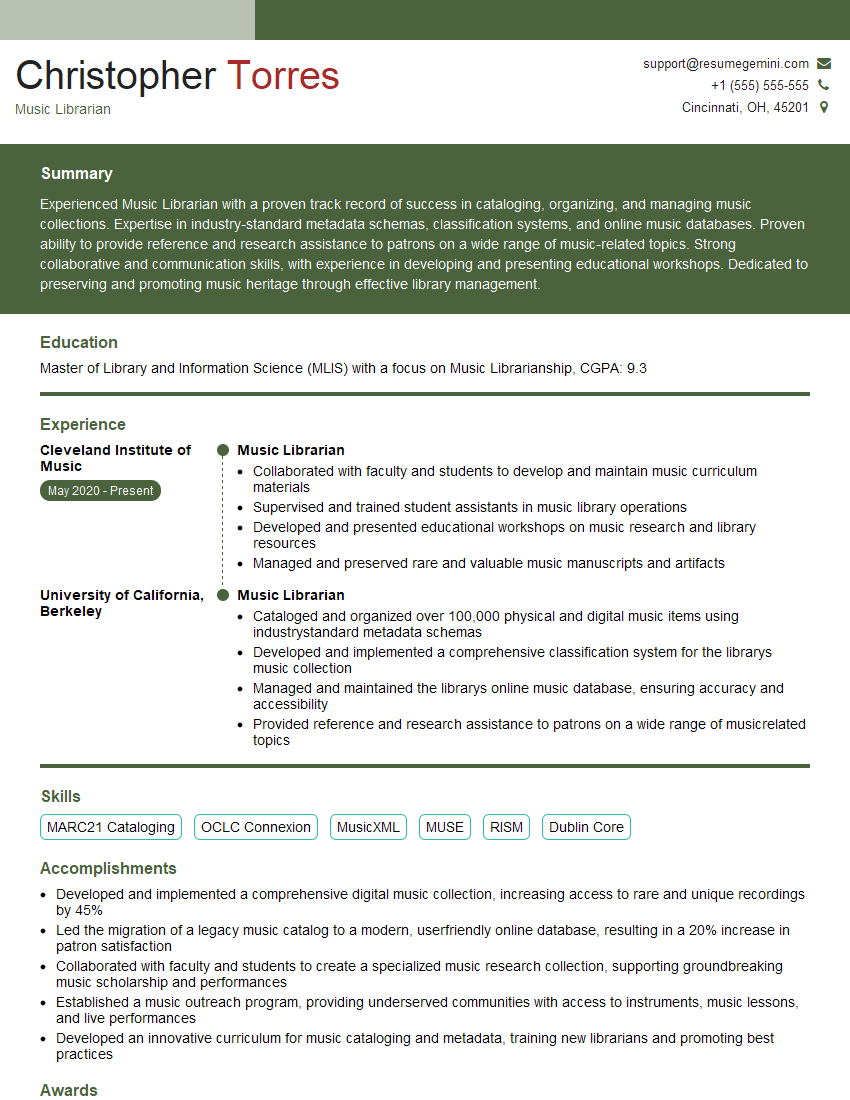
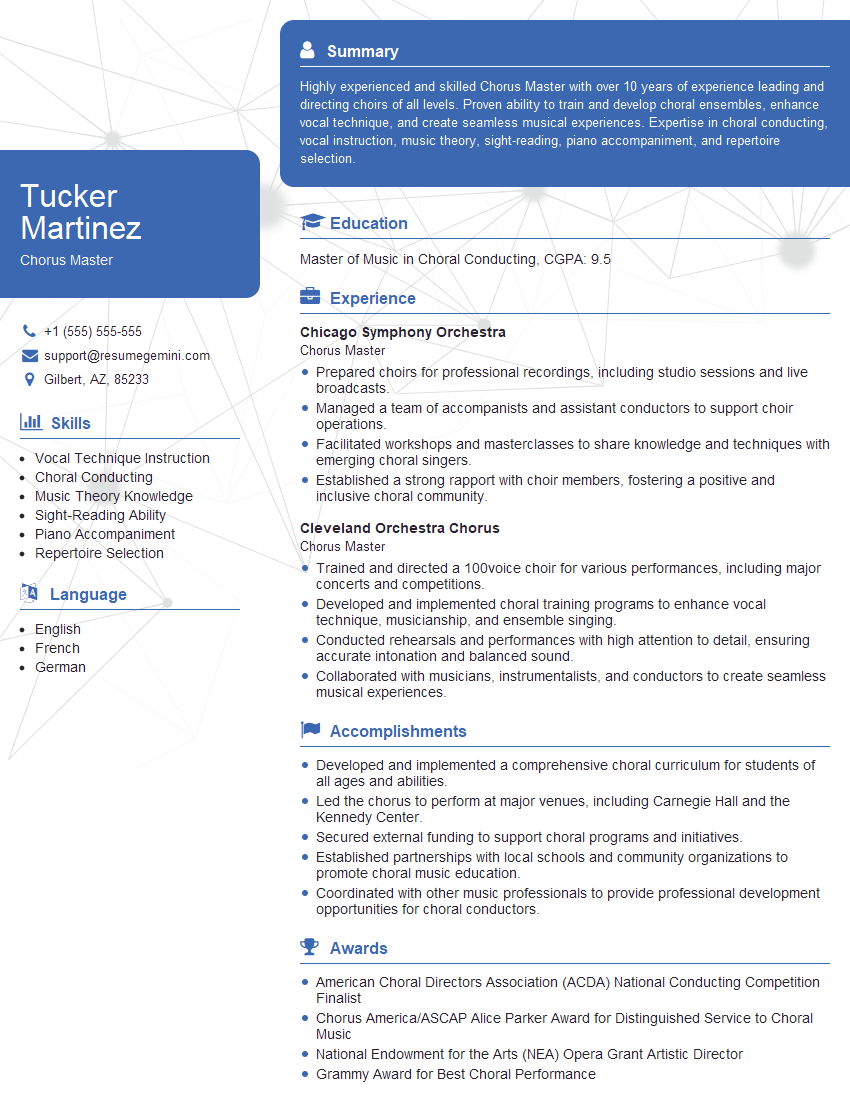
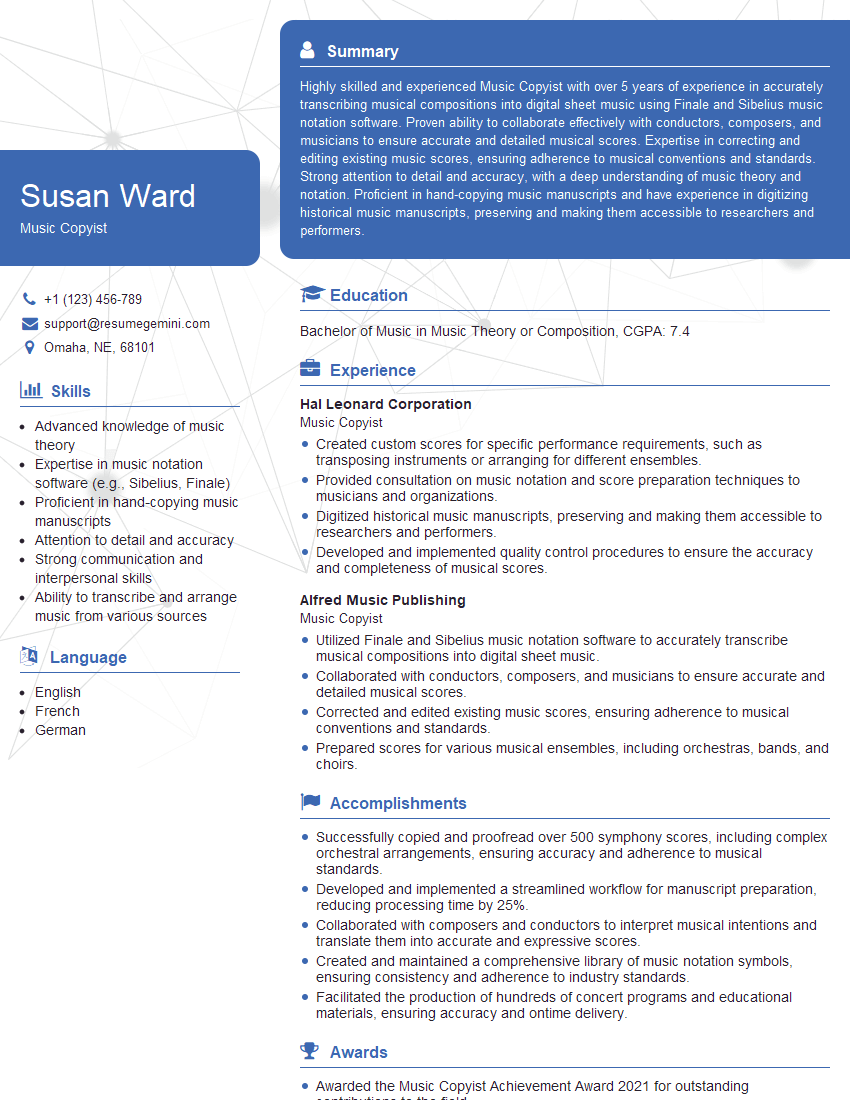
Mastering collaborative work with conductors and musicians is paramount for career advancement in orchestral and musical settings. It demonstrates essential professional skills valued by employers, including adaptability, communication, teamwork, and problem-solving. To significantly boost your job prospects, create an ATS-friendly resume that effectively highlights these skills. We strongly recommend using ResumeGemini to build a professional and impactful resume. ResumeGemini provides tools and examples tailored to showcasing your experience in collaborative work with conductors and musicians, helping you present your qualifications effectively to potential employers. Examples of resumes tailored to Collaborative Work with Conductors and Musicians are available.
Explore more articles
Users Rating of Our Blogs
Share Your Experience
We value your feedback! Please rate our content and share your thoughts (optional).
What Readers Say About Our Blog
Very informative content, great job.
good