Unlock your full potential by mastering the most common Color and Material Selection interview questions. This blog offers a deep dive into the critical topics, ensuring you’re not only prepared to answer but to excel. With these insights, you’ll approach your interview with clarity and confidence.
Questions Asked in Color and Material Selection Interview
Q 1. Explain the principles of color harmony and how you apply them in material selection.
Color harmony is the pleasing arrangement of colors in a design. It’s based on the relationships between colors on the color wheel. In material selection, I apply these principles to create visually appealing and cohesive designs.
For example, analogous harmonies use colors adjacent on the wheel (like blues and greens), creating a calm and natural feel, perfect for a spa or a nature-inspired product. Complementary harmonies use colors opposite each other (like red and green), offering high contrast and visual excitement, suitable for packaging or branding that needs to stand out. Triadic harmonies use three evenly spaced colors (like red, yellow, and blue), providing a vibrant and balanced palette, often used in playful or energetic designs.
I carefully consider the intended mood and functionality of the product when selecting harmonious color palettes. If a calming atmosphere is needed, analogous colors are ideal. If it’s about energy and excitement, complementary or triadic harmonies can effectively work.
Q 2. Describe your experience with different color systems (e.g., Pantone, RAL).
I’ve extensive experience with various color systems, including Pantone and RAL. Pantone is widely used in fashion, graphic design, and printing, known for its precise color matching across different mediums. I frequently use the Pantone Fashion, Home + Interiors system for selecting specific colors for textile applications. RAL, on the other hand, is prevalent in the architectural and industrial design sectors, providing a standardized system for coatings and paints. The numeric codes in RAL make it easy to specify and communicate color choices across teams and manufacturers.
My experience includes translating colors between these systems. For instance, I’ve had to match a client’s preferred Pantone shade to its closest RAL equivalent for a large-scale project involving building materials. This involved using software to cross-reference the color values and conduct physical color comparisons to ensure accuracy. I also ensure the selected color remains consistent across different production runs and materials, addressing any potential variations.
Q 3. How do you assess the durability and sustainability of different materials?
Assessing material durability and sustainability is crucial. Durability involves evaluating factors like abrasion resistance, UV stability, and water resistance through tests and material datasheets. For example, I’d consult the relevant industry standards and test reports to check the abrasion resistance of a fabric for upholstery.
Sustainability is assessed by looking at the material’s lifecycle: sourcing, manufacturing, use, and end-of-life management. I consider factors like recycled content, renewable resources, low carbon footprint, and biodegradability or recyclability. For instance, I prefer bamboo over traditional wood in certain situations due to its faster growth rate and lower environmental impact. Certifications like LEED or Cradle to Cradle are valuable indicators of a material’s sustainability.
I always aim to balance the need for durable and aesthetically pleasing materials with environmentally sound choices. This might involve using a slightly more expensive but sustainable alternative, if it aligns with the project’s goals and budget.
Q 4. Discuss your process for selecting materials considering factors like cost, availability, and performance.
My material selection process considers cost, availability, and performance in a holistic manner. It’s not simply about finding the cheapest option; it’s about optimizing value for money. I start by defining the project’s functional requirements – for instance, the necessary strength, flexibility, or water resistance of a material.
Next, I explore potential materials based on these requirements, comparing their costs and sourcing options. Availability varies depending on the location and global supply chain conditions; I need to consider lead times and potential sourcing disruptions. Performance is evaluated through testing and comparing material specifications. For example, if considering different types of wood, I might compare their density, hardness, and grain patterns to select the best option for the intended use.
Finally, I create a comparative matrix that weighs the different materials based on their performance, cost, and availability, allowing for a data-driven decision. This process ensures a balance between the aesthetic vision and practical constraints.
Q 5. What software or tools are you proficient in for color and material specification?
I’m proficient in several software and tools for color and material specification. Adobe Photoshop and Illustrator are essential for digital color manipulation, creating mock-ups, and generating color palettes. I use specialized software like Autodesk Material Library and other 3D modeling applications to visualize materials in realistic settings and create photorealistic renderings.
I also utilize online color libraries and databases, including those from Pantone and RAL, for precise color matching and specification. Spreadsheet programs like Excel or Google Sheets are crucial for organizing and comparing different materials based on various properties like cost, availability, and technical specifications. Furthermore, I use project management software to track material selections and communicate them effectively with the project team and stakeholders.
Q 6. How do you present your color and material selections to clients or stakeholders?
Presenting color and material selections involves clear and concise communication. I usually begin with a brief overview of the design concept and the guiding principles behind the material choices. This sets the stage for a deeper dive into the specifics.
I use physical samples and digital renderings to visually showcase the selected materials. Detailed specifications, including material names, codes (e.g., Pantone, RAL), and relevant properties, are included in a comprehensive presentation document. This document typically also includes a cost breakdown and sourcing information. I’m prepared to answer questions and justify my choices, offering alternative options if needed. A collaborative approach ensures clients and stakeholders fully understand and approve the final selections.
Q 7. Explain your understanding of color psychology and its impact on design.
Color psychology significantly impacts design. Colors evoke specific emotions and associations. For instance, blue is often associated with calmness and trust, making it suitable for corporate branding or healthcare settings. Red, on the other hand, can represent energy and excitement, ideal for fast-food restaurants or sports brands.
Understanding these associations allows me to create designs that effectively communicate intended messages and evoke desired responses. However, it’s crucial to consider cultural differences, as color meanings can vary across cultures. For example, while white represents purity in Western cultures, it can symbolize mourning in some Eastern cultures. Therefore, a thorough understanding of the target audience is necessary for successful application of color psychology.
My approach involves researching the cultural background and psychological impact of colors before making selections, ensuring the chosen colors align with the project’s goals and resonate positively with the intended users.
Q 8. Describe a time you had to resolve a conflict between aesthetic preferences and material limitations.
Balancing aesthetic ideals with material limitations is a constant challenge in design. One project involved designing a high-end coffee table. The client envisioned a sleek, minimalist design with a vibrant, deep turquoise lacquer finish. However, achieving that specific shade in a durable, scratch-resistant lacquer proved difficult and expensive. The initial material – a high-gloss polyester – didn’t hold the colour as richly as desired. It either faded quickly under UV exposure or became overly expensive to achieve the desired depth.
To resolve this, we explored several options. We tested various lacquer formulations with UV inhibitors, ultimately selecting a slightly altered shade that retained the vibrant turquoise while improving the material’s longevity. This compromise involved a subtle shift in colour but preserved the design’s overall aesthetic and met the client’s durability requirements. The final product retained the intended modern aesthetic but used a more cost-effective and resilient material without significant compromise.
Q 9. How do you stay current with new trends in color and materials?
Staying abreast of color and material trends is crucial. I utilize several methods: I subscribe to industry publications such as Surface Design Journal and Interior Design, attend relevant trade shows like Maison&Objet and ICFF, and actively engage with online platforms like Pinterest and Instagram, focusing on accounts showcasing high-quality design and material innovation. Furthermore, I network with other designers and material suppliers, attending workshops and conferences to gain firsthand insights into emerging trends and technologies. This multifaceted approach keeps me informed about cutting-edge materials like bioplastics, recycled textiles, and innovative color technologies such as iridescent pigments.
Q 10. How familiar are you with different material finishes (e.g., matte, gloss, textured)?
My familiarity with material finishes is extensive. I understand the nuances of each finish and its impact on the overall aesthetic and functionality of a design.
- Matte finishes offer a sophisticated, understated look and can often mask minor imperfections. They are less prone to showing fingerprints and scratches but can be more challenging to clean.
- Gloss finishes provide a sleek, modern feel, reflecting light and creating a sense of luxury. However, they highlight imperfections and may show fingerprints more easily.
- Textured finishes introduce tactile interest and visual depth, creating a richer experience. They come in various forms, from subtly brushed surfaces to boldly embossed patterns. This variety allows for a wide range of aesthetic and functional applications.
Q 11. Describe your experience working with sustainable materials.
Sustainable materials are a central focus of my work. I have extensive experience specifying and sourcing materials with a low environmental impact. This includes recycled and reclaimed materials, such as repurposed wood or recycled metals, as well as materials made from rapidly renewable resources like bamboo or cork. I collaborate closely with suppliers who prioritize ethical sourcing and sustainable manufacturing practices. For example, in a recent project, we utilized reclaimed wood flooring salvaged from a demolished building. This not only reduced waste but also added unique character and a sense of history to the space. I am well-versed in the life cycle assessment of materials to make informed decisions about their environmental impact.
Q 12. Explain your process for creating a mood board or presentation to showcase material palettes.
Creating a compelling mood board or material palette presentation involves a structured process. I begin by understanding the project’s design brief and target audience. Then I gather potential materials, taking detailed samples to accurately represent their textures, colours, and finishes. These samples are arranged thoughtfully on a large board, either physically or digitally. Digital mood boards often utilize software like Adobe Photoshop or InDesign for precise color matching and seamless integration of images and textures. The presentation itself includes not only the visual aspects but also detailed information about each material: its source, sustainability certifications, cost, and maintenance requirements.
Q 13. How would you approach selecting materials for a project with a specific budget constraint?
Budget constraints require a strategic approach to material selection. I start by prioritizing the most essential design elements and focusing on where material impact is most visible. I explore cost-effective alternatives without compromising design integrity. This might involve selecting less expensive but equally durable materials, exploring different finishes (e.g., opting for a laminate instead of solid wood), or finding suppliers offering competitive pricing while maintaining quality. Through careful analysis and creative problem-solving, I can achieve a high-quality design within the given budget constraints. Open communication with the client about material trade-offs is key to ensuring both cost-effectiveness and aesthetic satisfaction.
Q 14. Describe your understanding of color management and profiling.
Color management and profiling are critical for ensuring color consistency across different stages of a project. Color management involves controlling the color reproduction process from initial design to final output. This includes understanding color spaces (like sRGB and Adobe RGB), color profiles (ICC profiles), and how different devices (monitors, printers) interpret and reproduce color. Accurate profiling ensures that the colors I specify are consistently reproduced across all stages – from the digital design phase to the final manufactured product. For example, when specifying a specific shade of blue for a painted wall, a detailed color profile is essential to ensure the painter achieves the precise shade I intended, regardless of the paint brand or lighting conditions.
Q 15. How do you ensure consistency of color across different production methods?
Maintaining color consistency across different production methods is crucial for brand identity and product quality. It requires a multi-faceted approach that begins even before production.
Color Specification: Instead of relying on subjective descriptions like ‘sky blue,’ we utilize standardized color systems such as Pantone Matching System (PMS) or CIE L*a*b*. These systems provide numerical values that are universally understood across different manufacturing processes and locations. For instance, specifying PMS 18-0338C ensures everyone is working with the exact same shade of red.
Color Management System (CMS): Implementing a robust CMS across all digital and physical stages is essential. This involves calibrating monitors, printers, and other equipment to ensure accurate color reproduction. A properly managed CMS helps bridge the gap between digital design and the final physical product, minimizing deviations.
Material Selection & Control: The inherent properties of the material itself can significantly impact color appearance. For instance, the same Pantone color printed on cotton vs. polyester will appear subtly different due to variations in absorption and reflection. Tight control over material sourcing and consistent batching is crucial.
Quality Control Checks: Regular color checks throughout the production process are paramount. This involves using colorimeters or spectrophotometers to measure color values against the specified standards and make adjustments as needed. This process ensures that any deviations are detected early.
Communication & Collaboration: Clear and consistent communication between designers, manufacturers, and quality control personnel is crucial to ensure everyone is on the same page. This includes meticulous documentation of all color specifications and production parameters.
For example, during a recent project involving the production of a line of sustainable packaging, using a standardized color system and regular color checks prevented a costly rework due to subtle color inconsistencies between different printing batches.
Career Expert Tips:
- Ace those interviews! Prepare effectively by reviewing the Top 50 Most Common Interview Questions on ResumeGemini.
- Navigate your job search with confidence! Explore a wide range of Career Tips on ResumeGemini. Learn about common challenges and recommendations to overcome them.
- Craft the perfect resume! Master the Art of Resume Writing with ResumeGemini’s guide. Showcase your unique qualifications and achievements effectively.
- Don’t miss out on holiday savings! Build your dream resume with ResumeGemini’s ATS optimized templates.
Q 16. How familiar are you with different material testing methods?
My familiarity with material testing methods is extensive, covering both physical and chemical properties. I’m proficient in using a wide range of techniques to assess material suitability for different applications.
Mechanical Testing: Tensile strength, flexural strength, impact resistance, and hardness tests are crucial for determining a material’s durability and structural integrity. These tests are vital for selecting appropriate materials for different applications, such as automotive interiors or consumer electronics.
Environmental Testing: Exposure to UV radiation, temperature cycling, humidity, and chemical exposure are crucial in evaluating the material’s long-term performance and resistance to degradation. This is critical in products exposed to harsh conditions like outdoor furniture or construction materials.
Chemical Testing: Flammability testing, toxicity testing, and chemical composition analysis are important for ensuring the safety and regulatory compliance of materials, particularly in products used in food contact, healthcare, or children’s products.
Appearance Testing: Colorfastness, gloss, and texture measurements quantify the aesthetic properties of materials. These are particularly critical for products where visual appeal is key, like fashion or interior design.
I’ve personally used techniques like ASTM D638 (Tensile testing), ASTM D790 (Flexural testing), and spectrophotometry for color assessment in various projects. Selecting appropriate testing methods always involves careful consideration of the application requirements and potential environmental factors.
Q 17. What are your preferred methods for sourcing new materials?
My preferred methods for sourcing new materials are multifaceted and prioritize sustainability, innovation, and performance.
Industry Trade Shows & Conferences: These events are excellent platforms to network with material suppliers, discover innovative materials, and see firsthand the latest developments in material science. I often attend events like K, Heimtextil, and ICFF.
Online Material Databases & Libraries: Resources like MatWeb and Material Connective provide comprehensive databases of materials, their properties, and suppliers. This allows for efficient preliminary research and identification of potential candidates.
Direct Collaboration with Suppliers: Building relationships with reputable material suppliers enables access to exclusive materials, tailored solutions, and technical expertise. Direct engagement ensures I receive detailed information and can discuss specific requirements.
Research & Development Departments: Collaborating with universities or research institutions can lead to innovative and cutting-edge materials that are not yet commercially available. This approach promotes the exploration of truly sustainable and high-performance materials.
Sustainable Material Certifications: I prioritize materials with recognized certifications such as GRS (Global Recycled Standard), OEKO-TEX, or FSC (Forest Stewardship Council) to ensure ethical sourcing and environmental responsibility.
For example, recently I sourced a bio-based alternative to traditional plastics from a university spin-off, resulting in a more sustainable product with superior performance characteristics.
Q 18. Describe your experience with material libraries and databases.
I’ve extensive experience with material libraries and databases, utilizing them effectively throughout the design and selection process. These resources are invaluable for accessing detailed information, comparing different materials, and accelerating the design workflow.
Material Connective: This resource offers a vast library of materials with detailed specifications, including sustainability data. Its search functionality simplifies the search for materials with specific properties.
MatWeb: This database provides comprehensive material property data, including mechanical, thermal, electrical, and optical properties. This data is essential for engineering applications and ensuring material compatibility.
Manufacturer-Specific Databases: Many material manufacturers offer online databases detailing their products, technical specifications, and certifications. This provides a focused and reliable source of information on specific brands and product lines.
In-House Libraries: Maintaining a curated in-house library of physical material samples allows for tactile interaction and visual comparison. This is particularly important when assessing texture, color, and overall aesthetic appeal.
My experience involves leveraging these databases to identify suitable candidates, compare their properties, and ensure that the chosen materials meet all design and performance requirements. The databases streamline the material selection process, saving time and reducing the risk of errors.
Q 19. How do you handle feedback on your color and material choices?
Handling feedback on color and material choices requires a collaborative and open-minded approach. It’s crucial to consider the feedback’s source and context before making any decisions.
Understanding the Context: Feedback from a marketing perspective might prioritize brand consistency, while engineering feedback prioritizes functional performance and durability. Understanding these different viewpoints is essential.
Data-Driven Decision-Making: If the feedback challenges a design choice, I will investigate using data and testing. For instance, if feedback suggests a color isn’t visually appealing, I might conduct user surveys or A/B testing to understand the validity of the concern.
Iterative Process: I view feedback as an opportunity to iterate and improve. I might present refined options based on the feedback received, ensuring a collaborative design process.
Documentation and Transparency: Maintaining clear documentation of design choices, rationale, and feedback helps in tracing decisions and making future design choices more informed.
Balancing Aesthetics and Functionality: I strive to find solutions that meet both aesthetic and functional requirements. Sometimes, compromises must be made, but these decisions should be well-justified and supported by evidence.
For example, during a project involving the design of a consumer electronics device, initial feedback suggested a change in material for aesthetic reasons. After presenting data showing the proposed material compromised structural integrity, we reached a compromise using a similar-looking material that met both aesthetic and performance criteria.
Q 20. Explain your understanding of the relationship between color, light, and texture.
Color, light, and texture are intricately linked, influencing each other to create the overall visual and tactile perception of a material or object. Understanding these relationships is fundamental in color and material selection.
Light & Color: Color is essentially the perception of light reflected off a surface. The spectral composition of the light source significantly influences how a color is perceived. For example, a fabric might appear different under incandescent lighting (warm) compared to fluorescent lighting (cooler).
Texture & Light: Texture affects the way light interacts with a surface. A rough texture scatters light more than a smooth one, influencing the perception of both color and shadow. This is why a matte surface might appear darker than a glossy surface of the same color.
Color & Texture: Color can enhance or diminish the perception of texture. Vibrant colors tend to draw more attention, potentially overshadowing subtle textures. Conversely, muted colors might highlight tactile details.
Metamerism: Two colors might appear identical under one light source but different under another. This phenomenon, known as metamerism, is crucial to consider during material selection to ensure color consistency across different lighting conditions.
Imagine designing a luxury car interior. Careful selection of colors and textures is paramount. A deep, matte leather might evoke a sense of luxury and sophistication, while a lighter, glossy plastic might convey a more modern feel. The interplay of light on these different textures contributes significantly to the overall ambiance and perceived quality.
Q 21. How would you address potential color discrepancies between digital renders and physical samples?
Addressing discrepancies between digital renders and physical samples requires careful attention to detail and a good understanding of the limitations of both digital and physical processes.
Accurate Color Profiles: Ensure that both digital design software and output devices (printers, monitors) utilize accurate color profiles that align with the chosen color system (e.g., Pantone, CIE L*a*b*).
Material Simulation: Use sophisticated rendering software capable of accurately simulating the appearance of various materials under different lighting conditions. This includes taking into account factors like gloss, texture, and translucency.
Physical Mockups: Creating physical mockups is critical for evaluating color and texture in the real world. These mockups help bridge the gap between the digital representation and the final product.
Controlled Lighting Conditions: When comparing digital renders and physical samples, ensure that lighting conditions are consistent and controlled. This prevents discrepancies arising from different light sources.
Iterative Refinement: Use the comparisons between renders and samples to inform refinements in the design and production process, progressively reducing discrepancies.
A common strategy is to create a series of increasingly refined prototypes, starting with basic physical mockups and progressively incorporating more realistic materials and finishes. This iterative approach allows for continuous adjustment and ensures a close match between the digital render and the final product.
Q 22. Explain your experience with different types of fabrics and textiles.
My experience with fabrics and textiles spans a wide range, encompassing natural fibers like cotton, linen, silk, wool, and synthetics such as polyester, nylon, acrylic, and blends. I’m familiar with their various weaves (plain, twill, satin, etc.), knits (jersey, rib, interlock), and finishes (dyeing, printing, coating). I understand the impact of these factors on drape, texture, durability, and cost. For instance, I once worked on a project where the client needed a fabric with both a luxurious feel and high durability for outdoor furniture. After extensive testing, we selected a solution-dyed acrylic fabric, which offered excellent UV resistance and colorfastness alongside a soft hand.
- Natural Fibers: Understanding their breathability, absorbency, and susceptibility to shrinkage and wrinkling is crucial for appropriate application.
- Synthetic Fibers: Their strength, elasticity, wrinkle resistance, and potential environmental impact need careful consideration.
- Blends: Combining natural and synthetic fibers allows for optimization of properties, creating fabrics with unique characteristics.
Q 23. Describe your understanding of material properties like strength, flexibility, and weight.
Material properties like strength, flexibility, and weight are paramount in material selection. Strength refers to a material’s ability to withstand stress without breaking or deforming, measured in tensile strength or compression strength. Flexibility indicates how easily a material bends or deforms without breaking, crucial for applications like apparel or flexible electronics. Weight, or density, impacts cost, shipping, and the overall feel of the product. Think of the difference between a lightweight running shoe and a sturdy hiking boot – the materials chosen directly reflect these properties.
For example, when selecting materials for a chair, we need to balance strength (to support weight), flexibility (for comfort), and weight (for ease of handling and aesthetics). A high-strength steel might be too heavy, while a lightweight plastic might lack sufficient strength. A balance is essential, often achieved through composite materials or clever design.
Q 24. How do you incorporate user feedback into your material selection process?
User feedback is integrated throughout the material selection process. Early-stage feedback, perhaps through surveys or focus groups, helps define desired material characteristics like texture, feel, and durability. Prototypes allow for tangible feedback on color, appearance, and functionality. For instance, in a recent project involving children’s toys, user feedback from parents and children highlighted the importance of non-toxic materials and easy-to-clean surfaces, significantly influencing the final material choices.
I use a systematic approach. I collect feedback, analyze it for recurring themes, and use this data to refine material options. This iterative process ensures the final selection aligns with user needs and expectations.
Q 25. Discuss the importance of considering material safety and regulatory compliance.
Material safety and regulatory compliance are non-negotiable. This involves understanding and adhering to relevant standards like REACH (Registration, Evaluation, Authorisation and Restriction of Chemicals) in Europe, or CPSIA (Consumer Product Safety Improvement Act) in the US. These regulations cover aspects like chemical content, flammability, and heavy metal restrictions. For example, choosing a textile for children’s clothing requires careful consideration of banned substances and flammability requirements, ensuring the safety of the end-user.
I routinely consult safety data sheets (SDS) and work closely with testing labs to verify compliance and manage potential risks associated with materials. This proactive approach minimizes potential legal issues and ensures responsible product development.
Q 26. Explain your experience with 3D modeling and rendering related to color and material representation.
I have extensive experience with 3D modeling and rendering software such as Blender, Cinema 4D, and Keyshot to accurately represent color and material properties. This allows for realistic visualization of designs before physical prototyping, which significantly accelerates the design process and helps in effective communication with clients. I can create photorealistic renderings that showcase the material’s texture, sheen, and color accurately under various lighting conditions.
For instance, I recently used Keyshot to render different wood finishes for a furniture design. The client was able to compare various options virtually, leading to a more informed decision and reducing the need for multiple physical prototypes.
Q 27. How would you create a cohesive material palette for a large-scale project?
Creating a cohesive material palette for a large-scale project requires a strategic approach. I start by identifying the overall aesthetic direction – modern, rustic, minimalist, etc. Then, I select a core set of materials – perhaps 2-3 primary materials and 2-3 accent materials. These are chosen based on their visual compatibility, functional requirements, and cost considerations. The color palette is developed in tandem, ensuring harmony and contrast between the materials and colors. For instance, a palette might feature a neutral base (light gray concrete), a primary material (warm oak wood), and accent materials (black metal and a vibrant teal fabric).
I use mood boards and sample swatches to visualize the palette and ensure visual consistency throughout the project. This organized approach ensures a unified and aesthetically pleasing design.
Q 28. Describe your experience with collaborative design processes involving color and material selection.
Collaborative design processes are fundamental to my workflow. I believe in open communication and active participation from all stakeholders. I facilitate workshops and design reviews to present material options and gather feedback from designers, engineers, and clients. I am proficient in using collaborative tools like cloud-based platforms to share files, provide feedback, and track progress effectively. This ensures everyone is on the same page, fostering a shared understanding and leading to better design outcomes.
For example, in a recent project involving a hotel refurbishment, I facilitated a design workshop where different team members presented their material preferences and design concepts. This collaborative approach helped us arrive at a cohesive design that met the needs and preferences of all stakeholders.
Key Topics to Learn for Color and Material Selection Interview
- Color Theory Fundamentals: Understanding color harmonies (complementary, analogous, triadic), color psychology, and the impact of color on perception and mood. Practical application: Analyzing how color choices influence brand identity and user experience.
- Material Properties & Selection: Knowledge of various materials (plastics, metals, fabrics, wood, etc.), their physical properties (strength, durability, texture), and suitability for different applications. Practical application: Justifying material choices based on cost, performance requirements, and environmental impact.
- Sustainability & Environmental Considerations: Exploring eco-friendly materials, lifecycle assessment, and the ethical sourcing of materials. Practical application: Presenting design solutions that minimize environmental footprint.
- Design Principles & Aesthetics: Applying design principles like balance, contrast, and unity in the selection of colors and materials. Practical application: Creating visually appealing and functional designs that align with the project’s goals.
- Manufacturing & Production Processes: Understanding the limitations and possibilities of different manufacturing techniques and how they influence material choices. Practical application: Choosing materials compatible with specific production methods.
- Cost Analysis & Budgeting: Evaluating the cost-effectiveness of different materials and making informed decisions within budgetary constraints. Practical application: Optimizing material selection for cost-efficiency without compromising quality.
- Communication & Collaboration: Effectively communicating material and color selections to clients and stakeholders. Practical application: Presenting design rationale and justifying choices clearly and persuasively.
Next Steps
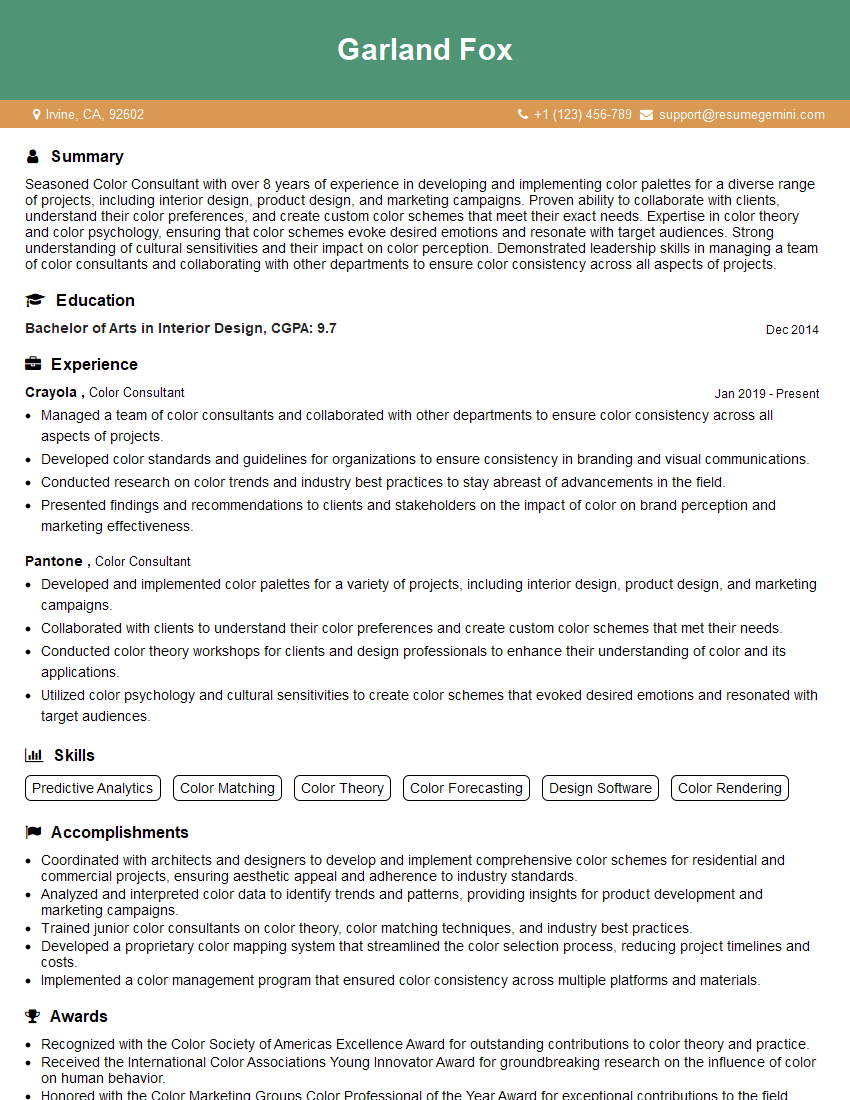
Mastering color and material selection is crucial for career advancement in design, manufacturing, and related fields. A strong understanding of these concepts showcases your design sensibilities, problem-solving abilities, and commitment to creating high-quality, sustainable products. To maximize your job prospects, create an ATS-friendly resume that highlights your skills and experience. ResumeGemini is a trusted resource to help you build a professional and impactful resume. Examples of resumes tailored to Color and Material Selection are available to guide you. Invest time in crafting a compelling resume – it’s your first impression on potential employers.
Explore more articles
Users Rating of Our Blogs
Share Your Experience
We value your feedback! Please rate our content and share your thoughts (optional).
What Readers Say About Our Blog
Very informative content, great job.
good