The thought of an interview can be nerve-wracking, but the right preparation can make all the difference. Explore this comprehensive guide to Color Lifting and Erasing interview questions and gain the confidence you need to showcase your abilities and secure the role.
Questions Asked in Color Lifting and Erasing Interview
Q 1. Explain the process of lifting hair color using bleach.
Lifting hair color with bleach involves using a chemical oxidizing agent, typically hydrogen peroxide, to break down the melanin pigments within the hair shaft. These pigments are responsible for the hair’s natural color and any artificial color previously applied. The bleach lightens the hair by dissolving these pigments, allowing the hair to absorb a new color more effectively. The process is gradual; the higher the volume of peroxide, the faster and more intense the lightening effect. Think of it like slowly erasing a crayon drawing from paper; the bleach gradually removes the color, revealing a lighter base underneath.
The process typically involves mixing bleach powder (usually containing persulfates) with a developer (hydrogen peroxide) to create a paste. This paste is applied to the hair, and the process is carefully monitored to avoid damage. The higher the volume of the developer (e.g., 20, 30, 40 volume), the more aggressive the lightening process. It’s crucial to use appropriate safety measures like gloves and proper ventilation.
Q 2. Describe different types of hair lightening techniques.
Several techniques exist for lightening hair, each with its own benefits and drawbacks. These include:
- Foil highlights: Small sections of hair are isolated with foil and bleach is applied, allowing for precise control and placement of lighter strands. This is great for creating subtle highlights or a more dimensional look.
- Balayage: A freehand painting technique where bleach is applied directly to the hair, creating a soft, sun-kissed effect. It’s less structured than foil highlights and produces a natural-looking gradient.
- Full head bleach: The entire head of hair is bleached to an even level. This is often used as a base for a complete color change to very light shades.
- Lowlights: While not strictly a lifting technique, strategically placed darker tones can create contrast and depth within already lifted hair. This helps to counteract the potential for overly flat or brassy tones.
- Olaplex treatment: This is a bond-building treatment that can be added during the bleaching process to help minimize damage and breakage.
The choice of technique depends on the desired outcome, the client’s hair condition, and the stylist’s expertise.
Q 3. What are the risks associated with excessive hair color lifting?
Excessive hair color lifting carries several risks, primarily damage to the hair’s structure. Over-processing can lead to:
- Hair breakage: The hair shaft becomes weakened and brittle, leading to snapping and breakage.
- Porosity issues: The cuticle layer becomes raised and damaged, resulting in dryness, frizziness, and poor color retention.
- Elasticity loss: The hair loses its ability to stretch and return to its original shape, making it more prone to breakage.
- Burning and scalp irritation: The bleach can cause discomfort and even burns if applied incorrectly or left on for too long.
- Hair discoloration: The hair may turn an undesirable color, such as orange or brassy, due to uneven lifting or improper neutralization.
It’s crucial to carefully assess the hair’s condition before any lifting procedure and use appropriate products and techniques to minimize these risks. Think of it like repeatedly sanding wood – eventually, you’ll sand through the wood entirely.
Q 4. How do you assess the condition of hair before color lifting?
Assessing hair condition before color lifting is paramount to prevent damage and ensure a successful outcome. I would thoroughly examine the hair’s:
- Porosity: How well the hair absorbs moisture. High porosity hair absorbs quickly and may need extra attention to prevent over-processing, while low porosity hair absorbs slowly and may require longer processing times.
- Elasticity: Its ability to stretch and return to its original shape. Poor elasticity indicates fragility and a higher risk of breakage.
- Strength: Its overall resilience and resistance to breakage. A strand test will provide this information.
- Previous chemical treatments: Knowing about any prior perms, relaxers, or color treatments helps to determine the hair’s tolerance for further processing.
- Overall health: This includes factors like dryness, breakage, split ends, and damage.
A thorough consultation with the client, including a review of their hair history and current condition, is essential before beginning any lifting service. Observing the hair closely is key to understanding its characteristics and needs.
Q 5. What products do you use for minimizing hair damage during lifting?
Minimizing hair damage during lifting involves using products designed to protect and strengthen the hair. These include:
- Bond-building treatments (Olaplex, Redken Acidic Bonding Concentrate): These treatments help to protect and rebuild the disulfide bonds within the hair, which are broken down during the lightening process. This reduces breakage and improves overall hair health.
- Low-volume developers: Using a lower volume developer (e.g., 10 or 20 volume) allows for slower, gentler lightening, reducing the risk of damage. This might mean multiple sessions are needed to achieve the desired level of lift.
- Protein treatments: These treatments add strength and structure to the hair, making it more resistant to damage. These are good for hair that is already feeling weak and fragile.
- Deep conditioning treatments: These treatments help to hydrate and nourish the hair, replenishing moisture lost during the lifting process. I would use these before and after color lifting.
- Olaplex No. 4 and No. 5: These at-home maintenance products help to maintain the integrity of the hair and prevent future damage.
Careful application techniques, proper processing times, and meticulous rinsing are also critical factors in minimizing damage.
Q 6. Explain the importance of strand testing before a color correction service.
A strand test is crucial before any color correction service, especially when involving lifting, as it allows you to accurately predict how the hair will react to the chosen products and techniques. It’s a mini-version of the actual service, giving you a preview of the outcome and revealing any potential problems.
The strand test involves taking a small section of hair from an inconspicuous area and applying the bleach mixture. This allows you to check the lightening process in real-time. You can see how fast the hair lifts, if it lifts evenly, and if there are any unexpected reactions. This test informs decisions about processing time, product ratios, and even if the desired level of lift is achievable without significant damage. It’s better to discover potential issues on a single strand than on the entire head of hair.
Q 7. How do you determine the appropriate level of lift needed for a client?
Determining the appropriate lift for a client involves several considerations. First, I would assess the client’s current hair color and determine its level on a color chart. This provides a baseline. Then, I’d consider the client’s desired shade. The difference between their current level and their desired level indicates the amount of lift required. This gap will inform the choice of developer and the overall lifting strategy.
For example, if a client has level 4 hair (medium brown) and desires a platinum blonde (level 10), a significant amount of lift (6 levels) is needed. This would typically require multiple lightening sessions to avoid severe damage, and possibly some lowlights to add dimension without making the look overly flat.
Throughout this process, communication with the client and a clear understanding of their expectations are essential. Realistic expectations are key to avoid disappointment and the need for extreme lifting, leading to potentially damaging situations.
Q 8. Describe your process for color removal, including products and techniques.
Color removal, or lifting, is a delicate process requiring precision and a thorough understanding of hair chemistry. My process begins with a thorough consultation, assessing the client’s hair history, current color, and desired outcome. I then perform a strand test to determine the hair’s porosity and elasticity, crucial for predicting how it will react to the lifting agents. This test helps me select the appropriate products and techniques to avoid damage.
For lifting, I primarily use professional-grade lighteners, typically in powder form mixed with a developer. The developer’s volume (e.g., 10, 20, 30, or 40 volume) directly correlates to the lifting power and potential damage risk; lower volumes are gentler but lift less. I always choose the lowest volume that will achieve the desired lift. I apply the lightener using various techniques depending on the desired result – balayage for highlights, full head bleach for an all-over lift, or a combination thereof. Throughout the process, I closely monitor the hair for signs of damage or over-processing. Once the desired level of lift is achieved, I thoroughly rinse the hair and assess the condition before proceeding to toning.
I also utilize various bond-building products during the lightening process to minimize damage. These products, containing ingredients like amino acids or ceramides, help reinforce the hair’s structure, protecting it from the harsh effects of chemical treatments. Post-lifting, deep conditioning treatments are essential to restore moisture and strength.
Q 9. How do you handle unexpected color results during a lifting process?
Unexpected color results during lifting are common, and managing them requires quick thinking and problem-solving skills. The key is to understand the root cause. For instance, uneven lifting might indicate inconsistent application or variations in hair porosity. Brassiness (yellow or orange tones) can be due to insufficient lifting or incorrect toner selection. A patchy result could be from improper sectioning or insufficient product saturation.
My approach involves a methodical analysis. I’ll first assess the areas of concern and determine the reason for the unevenness. If it’s uneven lightening, I might need to carefully reapply the lightener to the under-lifted sections, paying close attention to processing time and monitoring closely. If it’s brassiness, I can use a toner to neutralize the unwanted tones. In the case of a patchy result, sometimes a color correction is needed to blend the areas. However, I always prioritize the hair’s health; if the hair is already compromised, I’d rather suggest waiting before proceeding with further lifting or correcting.
Q 10. What are the different types of color removers and their applications?
Color removers come in various forms, each with specific applications.
- Color-Stripping Products: These are strong chemical removers designed to lift artificial color, often used to remove unwanted permanent or semi-permanent color. They work by breaking down the color molecules. Their use requires caution due to potential damage.
- Color-Removing Shampoos: These are gentler options ideal for removing faded or build-up of color from semi-permanent dyes or toners. They are less damaging than color strippers but have a less dramatic effect.
- Bleach: As mentioned earlier, bleach lifts natural and artificial color pigments. It’s crucial to use bleach cautiously and correctly to avoid causing significant damage to the hair.
The choice of remover depends heavily on the type and condition of the hair, and the extent of color removal desired. For example, a color-removing shampoo would be suitable for a client wanting to slightly lighten a faded semi-permanent color, while a color stripper might be necessary to remove a stubborn permanent color before recoloring.
Q 11. Explain the concept of ‘toning’ after lifting.
Toning is a crucial step after lifting, acting as a corrective measure to neutralize unwanted undertones and achieve the desired final color. Lifting often leaves hair looking yellow, orange, or brassy due to the exposure of underlying warm pigments. Toning uses semi-permanent or demi-permanent color to deposit pigment and counteract these unwanted tones, creating a more balanced and even result. Think of it as fine-tuning the canvas after the main lifting work is done. The goal is to achieve a neutral, even base before applying the desired final color.
Q 12. How do you choose the right toner for a specific lifting result?
Selecting the right toner depends entirely on the unwanted undertones present in the lifted hair. A color wheel is an invaluable tool here.
- For brassy yellow tones: Use a violet-based toner (purple).
- For orange tones: A blue-based toner will neutralize them.
- For red tones: A green-based toner is needed.
The level of the toner also matters. A level 9 toner will add only a subtle amount of pigment while a level 10 can add more color intensity. I assess the current level of lift (e.g., Level 8, Level 9, Level 10) and the unwanted tones, then use the color wheel to determine the complementary toner shade required to counteract those undesirable tones and to get my client’s final desired color. I always conduct a strand test to ensure the selected toner will produce the desired result before applying it to the entire head.
Q 13. Describe different toning techniques to neutralize unwanted brassiness.
Several techniques can neutralize brassiness.
- Global Toning: This involves applying the toner evenly to the entire head of hair, a common approach for all-over color correction.
- Root to Ends Toning: The toner may be applied to the roots first before being worked down through the lengths. This technique could be used if the roots and ends have different levels of lightness after lifting.
- Selective Toning: This is a targeted application, only on the brassy areas, allowing for more precision and preventing over-toning.
The application method, processing time, and toner concentration all affect the final result. Knowing which technique to use and how long to process it requires experience and a deep understanding of hair chemistry.
Q 14. How do you address underlying pigment issues during color correction?
Addressing underlying pigment issues is critical for successful color correction. It often requires careful assessment to understand the hair’s history and the nature of the underlying pigments. For example, a client with previously dark hair might have underlying warm pigments even after significant lightening, resulting in unexpected tones. The strategy involves multiple steps, potentially including multiple rounds of lifting, clarifying treatments (to remove product build-up), and precise toning. Sometimes, the only way to achieve the desired color is to gradually lift and tone multiple times; going too quickly could result in damaged hair.
Before any correction, a thorough consultation is necessary. Understanding the client’s hair history, previous color treatments, and current hair condition helps me determine the best approach. This also helps to manage client expectations realistically.
Q 15. What are the common causes of uneven color lift?
Uneven color lift is a common frustration in hair coloring, resulting in patches of different shades. Several factors contribute to this inconsistency. Think of it like trying to bake a cake – if your oven temperature isn’t consistent, some parts will cook faster than others.
- Uneven application: The most frequent culprit. Insufficient product saturation in certain areas or overlapping application in others leads to variations in lift.
- Pre-existing damage: Hair that’s already compromised through heat styling, chemical processing, or environmental factors tends to lift unevenly. Porous areas lift faster than healthy areas.
- Product distribution: Using an improper technique, lack of thorough mixing or sectioning, or using the wrong tools can cause product distribution issues.
- Hair porosity: Different sections of hair may have varied porosity levels. Highly porous hair (damaged) absorbs lightening agents faster than low-porosity hair (healthy). This creates uneven results.
- Heat variations: Overlapping heat during processing or inconsistent application of heat from different hair sections can cause uneven lightening.
Addressing these issues requires meticulous technique, careful product application and sectioning, a thorough understanding of hair porosity, and proper heat management.
Career Expert Tips:
- Ace those interviews! Prepare effectively by reviewing the Top 50 Most Common Interview Questions on ResumeGemini.
- Navigate your job search with confidence! Explore a wide range of Career Tips on ResumeGemini. Learn about common challenges and recommendations to overcome them.
- Craft the perfect resume! Master the Art of Resume Writing with ResumeGemini’s guide. Showcase your unique qualifications and achievements effectively.
- Don’t miss out on holiday savings! Build your dream resume with ResumeGemini’s ATS optimized templates.
Q 16. How do you prevent hair breakage during color lifting?
Preventing breakage during color lifting is paramount. It’s like carefully removing layers of paint from a delicate piece of furniture – you want the color to lift, but not the surface!
- Assess hair health: A thorough consultation is key. I evaluate hair condition, porosity, and previous chemical treatments to determine the feasibility and safety of color lifting.
- Strand test: This is crucial. A strand test allows me to assess how the hair reacts to the lightening agent and helps me determine the processing time and potential for damage.
- Bond-building treatments: Olaplex, K18, or similar treatments are invaluable. They create bonds within the hair structure, minimizing breakage during the chemical process.
- Low volume developer: Choosing the lowest volume developer possible to achieve the desired lift minimizes damage. Patience is essential here; several lightening sessions with lower volume developer are better than one aggressive lift.
- Gentle handling: During the lightening process, I use gentle detangling techniques, avoiding aggressive brushing or combing that can weaken the hair.
- Appropriate processing time: Strict adherence to product instructions and careful monitoring of the lightening process is vital.
- Deep conditioning treatments: Following the lifting process, deep conditioning treatments are crucial to restore moisture and strength to the hair.
These steps minimize damage and promote healthier, stronger hair even after a significant color lift.
Q 17. Describe your experience with Olaplex or similar bond-building treatments.
I have extensive experience with Olaplex and similar bond-building treatments. They are invaluable tools in my color correction arsenal. I liken them to scaffolding for a building – they support the hair structure during a major transformation.
I regularly incorporate Olaplex No. 1 and No. 2 into my lifting processes, especially when dealing with heavily processed or damaged hair. Olaplex No. 3 is recommended for at-home maintenance to prolong the benefits. These treatments significantly reduce breakage, improve hair elasticity, and allow for more aggressive lifting while maintaining hair integrity. I’ve seen firsthand how they can transform severely damaged hair, allowing for a successful color correction that would otherwise be impossible or extremely risky.
I’ve also used other bond-building treatments, and my choice depends on the client’s specific needs and hair condition. The key is always to select a treatment that complements the lightening process and helps preserve the structural integrity of the hair.
Q 18. How do you consult with clients about realistic expectations for color lifting?
Managing client expectations is vital for a positive color-lifting experience. It’s about setting realistic goals – like planning a road trip, you need to know the destination and the possible obstacles.
My consultation involves a thorough discussion:
- Photo analysis: We review photos of the desired color and assess its feasibility based on the client’s current hair color and condition.
- Hair assessment: I assess the hair’s porosity, texture, and previous chemical treatments to determine the number of sessions required for safe and effective lifting.
- Realistic timeline: I explain that lifting dark hair to a very light shade usually requires multiple sessions to avoid excessive damage. I might use analogies like ‘peeling an onion,’ illustrating that it’s a gradual process.
- Potential risks: I transparently discuss the possibility of breakage, uneven lifting, or other complications. Open communication is essential.
- Maintenance: I discuss the ongoing care required to maintain the lifted color and the health of the hair, including the use of color-safe shampoos and conditioners.
By setting realistic expectations, I build trust and ensure the client understands the process and potential outcomes.
Q 19. What are the signs of over-processed hair, and how do you handle it?
Over-processed hair exhibits several telltale signs. Think of it like overcooked pasta – it loses its structure and elasticity.
- Excessive breakage: This is a major indicator, often presenting as split ends, snapped strands, or significant hair loss.
- Elasticity loss: Healthy hair stretches and returns to its original shape. Over-processed hair lacks elasticity and may snap easily.
- Rough texture: The hair feels coarse, dry, and brittle to the touch.
- Porosity changes: The hair’s cuticle is damaged, resulting in increased porosity and excessive moisture absorption or loss.
- Color inconsistencies: Uneven color distribution or patches of discoloration may be present.
When I encounter over-processed hair, I prioritize repair. My approach involves:
- Deep conditioning treatments: These help restore moisture and improve elasticity.
- Protein treatments: These strengthen the hair shaft and reduce breakage.
- Olaplex or similar treatments: These rebuild disulfide bonds within the hair structure.
- Avoiding further chemical processing: Any further color or chemical treatments should be delayed until the hair’s health has significantly improved.
- Client education: I educate the client on proper hair care techniques, recommending gentle shampoos and conditioners, avoiding heat styling, and using protective styling methods.
The goal is to restore the hair’s health before considering any further color treatments.
Q 20. How do you repair damaged hair after color correction?
Repairing damaged hair after color correction requires a multifaceted approach. Think of it like restoring a damaged painting – it needs careful cleaning, strengthening, and possibly re-touching.
My strategy focuses on:
- Assessment and diagnosis: I carefully assess the extent of the damage, identifying the type and severity of the issues (breakage, porosity, dryness).
- Deep conditioning treatments: I use intensive hydrating masks and conditioners to replenish lost moisture and improve elasticity.
- Protein treatments: These are essential to rebuild strength and reinforce the hair structure.
- Bond-building treatments: Olaplex or similar treatments are critical for restoring the bonds within the hair shaft, mitigating further damage.
- Low-level chemical treatments (if necessary): If color correction is required to address unevenness or unwanted tones, I use minimal chemical processes, often opting for demi-permanent color.
- Hair cut (if needed): Severely damaged ends might need to be trimmed to prevent further splitting and breakage.
- Home care recommendations: I provide detailed recommendations for at-home care, emphasizing the use of gentle, sulfate-free shampoos and conditioners, minimizing heat styling, and protecting the hair from UV damage.
The repair process is individualized, with the goal of restoring the hair’s health and improving its overall appearance. Patience is key, as substantial repair takes time.
Q 21. Explain the difference between demi-permanent and permanent hair color.
Demi-permanent and permanent hair colors differ significantly in their longevity and how they affect the hair shaft. Think of them like temporary and permanent tattoos.
Demi-permanent color: This type of color coats the hair shaft, depositing color without significant lightening or penetration. The color molecules are larger, preventing deep penetration into the hair cortex. It gradually washes out over several shampoos, usually lasting around 4-6 weeks. It’s ideal for subtle color changes, refreshing existing color, or blending gray hair. It’s generally less damaging than permanent color.
Permanent color: This type of color lifts the natural pigment and deposits new color molecules. It uses ammonia or other alkalizing agents to open the hair cuticle, allowing for deeper penetration. The color is more resistant to fading, lasting until new hair growth appears. It causes more significant changes to the hair’s structure, and therefore carries a greater risk of damage. It’s preferred for drastic color transformations, gray coverage, and longer-lasting results.
The choice between demi-permanent and permanent color depends on the client’s desired outcome, hair condition, and tolerance for risk. I always discuss the pros and cons of each type to ensure the client makes an informed decision.
Q 22. Describe different methods for creating highlights and lowlights.
Creating highlights and lowlights involves lightening or darkening specific sections of hair to add dimension and depth. There are several methods, each offering unique results:
- Foil Highlights/Lowlights: This classic technique uses thin foils to isolate sections of hair, allowing for precise placement of lightener or color. It’s versatile and allows for controlled processing. For example, you might use fine foils for delicate babylights or larger foils for bolder chunky highlights.
- Balayage: A freehand painting technique that creates a natural, sun-kissed look. The color is applied directly to the hair, blending seamlessly for a soft, less-striking effect. It’s ideal for creating a gradual transition of color.
- Ombre/Sombré: These techniques involve a gradual transition of color from dark to light (or vice versa). Ombre features a more dramatic contrast, while sombré offers a softer, more subtle blend. This is achieved by applying lighter shades to the ends of the hair.
- Color Melting: This sophisticated method blends multiple shades together seamlessly, creating a smooth, almost watercolor-like effect. It requires a skilled hand and precise application to achieve a natural-looking transition.
- Highlights using a cap: This method involves pulling strands of hair through a perforated cap to isolate sections. It’s a quicker method for evenly distributed fine highlights suitable for all-over lightening.
The choice of method depends on the desired look, hair type, and client preference.
Q 23. How do you maintain the integrity of the hair while achieving desired results?
Maintaining hair integrity during color lifting and erasing is paramount. My approach focuses on minimizing damage through careful technique and product selection:
- Strand Test: I always perform a strand test before applying any chemical treatment to assess the hair’s porosity and elasticity, determining the appropriate processing time and developer strength.
- Low and Slow Approach: Instead of using high-volume developers, I often opt for lower volume developers and longer processing times to minimize damage. This reduces the risk of over-processing and breakage.
- Olaplex or similar bond-building treatments: These treatments work to rebuild and strengthen disulfide bonds within the hair, protecting it from damage caused by chemical processing. I often incorporate them before, during, and after the coloring process.
- Proper application techniques: I use precise application techniques to avoid overlapping color, which can lead to breakage. For example, when foiling, I ensure the foil sections are neatly folded to prevent the product from dripping or reacting differently.
- Deep conditioning treatments: After lightening, I always apply deep conditioning treatments to replenish moisture and restore the hair’s health. This helps to improve the hair’s elasticity and reduce breakage.
- Proper rinsing and aftercare recommendations: I carefully rinse the hair to remove all traces of chemicals and recommend suitable aftercare products, such as moisturizing shampoos and conditioners, to maintain hair health.
I treat every hair lifting or coloring service as a unique challenge, adapting my approach to the individual needs of my client and their hair’s condition.
Q 24. What safety precautions do you take when working with bleach and other chemicals?
Safety is my top priority when working with bleach and other chemicals. My safety protocols include:
- Proper ventilation: I always work in a well-ventilated area to minimize inhalation of fumes.
- Protective gear: I consistently use gloves, a mask, and eye protection to prevent skin and eye irritation or contact with chemicals.
- Patch test: Before applying any new product or formula, I always perform a patch test on the client’s skin to check for any allergic reactions.
- Accurate measurements and mixing: I carefully measure and mix chemicals according to the manufacturer’s instructions to ensure proper ratios and avoid unintended reactions.
- Safe disposal: I follow all regulations for the safe disposal of used chemicals and waste.
- Emergency preparedness: I keep readily available emergency supplies, like neutralizing agents and eye wash stations, in case of accidental spills or chemical burns.
- Client awareness: I clearly communicate with my clients about the potential risks involved and take their medical history, specifically addressing allergies.
Following these protocols, I strive to create a safe and healthy environment for both myself and my clients.
Q 25. Explain your understanding of color theory as it relates to hair color.
Understanding color theory is fundamental to successful hair coloring. It’s based on the color wheel, which shows the primary colors (red, yellow, blue), secondary colors (green, orange, purple), and tertiary colors (combinations of primary and secondary colors).
- Complementary Colors: Colors opposite each other on the wheel (e.g., blue and orange) cancel each other out. This is useful for neutralizing unwanted tones. For example, to neutralize brassy orange tones in blonde hair, a blue-based toner is used.
- Analogous Colors: Colors next to each other on the wheel (e.g., yellow, yellow-orange, orange) create a harmonious blend. This is often used for subtle, natural-looking color transitions.
- Warm and Cool Tones: Understanding warm (red, yellow, orange) and cool (blue, green, violet) tones helps in choosing colors that complement the client’s skin tone and hair type. This is essential for selecting the most flattering hair color.
- Level System: The level system measures the lightness or darkness of a hair color, with 1 being the darkest (black) and 10 being the lightest (platinum blonde). It is crucial for determining the appropriate lift required for a desired color.
By understanding these principles, I can accurately predict the outcome of color combinations and make adjustments to achieve the client’s desired results.
Q 26. Describe your experience with various hair color brands and their performance.
I have extensive experience with various professional hair color brands, including Wella, Redken, Schwarzkopf, and L’Oréal. Each brand offers its own unique range of products with varying performance characteristics:
- Wella Professionals: Known for its high-quality bleach and color products, especially their Blondor line for lifting and Koleston Perfect for vibrant, long-lasting color.
- Redken: Offers a wide range of innovative products, focusing on damage-preventative technology and customizable color solutions.
- Schwarzkopf Professional: Known for its reliable and versatile products, catering to a wide range of needs and budgets. They offer a solid selection of blonds and a broad color palette.
- L’Oréal Professionnel: Known for its diverse range of shades and innovative formulas, particularly in their DIA Richesse and Majirel lines, offering superior pigment and lasting color.
My choice of brand depends on the specific needs of the client and the desired outcome. I constantly evaluate the performance of different brands and products to ensure I’m using the best tools to achieve optimal results while minimizing hair damage.
Q 27. How do you stay updated on the latest trends and techniques in hair color?
Staying updated in this dynamic field is crucial. I utilize several methods to remain current on the latest trends and techniques:
- Industry Publications: I regularly read trade magazines and online publications, such as Modern Salon and American Salon, to stay informed about new products and techniques.
- Professional Development Courses: I actively participate in advanced training courses and workshops offered by leading hair color brands to enhance my skills.
- Social Media and Online Communities: Platforms like Instagram and YouTube, along with professional forums, provide a wealth of information and inspiration, showcasing the work of leading colorists around the world.
- Networking with other professionals: Attending industry events and conferences allows me to network with colleagues, exchange ideas, and learn from other experts.
- Manufacturer websites and educational resources: I actively use the resources and training materials provided directly by hair color manufacturers.
Continuous learning is an integral part of my professional development. I’m passionate about staying at the forefront of my field.
Q 28. What is your approach to client consultations for color correction services?
Client consultations for color correction are crucial. My approach is thorough and collaborative:
- Detailed Hair History: I gather comprehensive information about the client’s hair history, including previous color treatments, home coloring attempts, and any known allergies. This is essential for assessing the hair’s condition and potential challenges.
- Thorough Consultation: I discuss the client’s desired look, taking into account their skin tone, lifestyle, and hair type. I show them examples of color options from magazines or online platforms.
- Realistic Expectations: I set realistic expectations by explaining the feasibility of achieving the desired results based on the hair’s current condition and the potential limitations of color correction. I explain the process and the potential outcomes, including possible risks and the time investment.
- Detailed Plan: I develop a detailed plan, outlining the steps involved in the color correction process, including the products to be used and the estimated time required.
- Photography: I take before and during pictures to document the progress, discuss color matches, and to clearly show what we are achieving.
- Ongoing Communication: Throughout the process, I maintain open communication with the client, answering any questions and addressing any concerns.
My aim is to build trust and provide the client with a personalized and safe color correction service tailored to their unique needs and hair condition.
Key Topics to Learn for Color Lifting and Erasing Interviews
- Understanding Color Theory: Grasping the color wheel, complementary colors, and how different colors interact during lifting and erasing processes.
- Lifting Techniques: Familiarize yourself with various lifting methods, their effectiveness on different hair types and colors, and potential risks associated with each.
- Erasing Techniques: Master the art of correcting color mistakes, including techniques for removing unwanted tones and achieving a balanced, natural look.
- Product Knowledge: Deep understanding of different color lifting and erasing products, their chemical composition, and appropriate application methods. This includes understanding the strengths and limitations of various products.
- Hair Structure and Health: Know how to assess hair health before and after lifting and erasing treatments. Understanding the impact on hair porosity and elasticity is crucial.
- Safety Protocols: Thorough understanding of safety precautions, including proper ventilation, skin protection, and client consultation to mitigate risks.
- Troubleshooting Common Issues: Be prepared to discuss common problems encountered during color correction (e.g., uneven lifting, unwanted tones, hair damage) and effective solutions.
- Client Consultation and Communication: Discuss your approach to effectively communicating with clients, managing expectations, and addressing concerns.
Next Steps
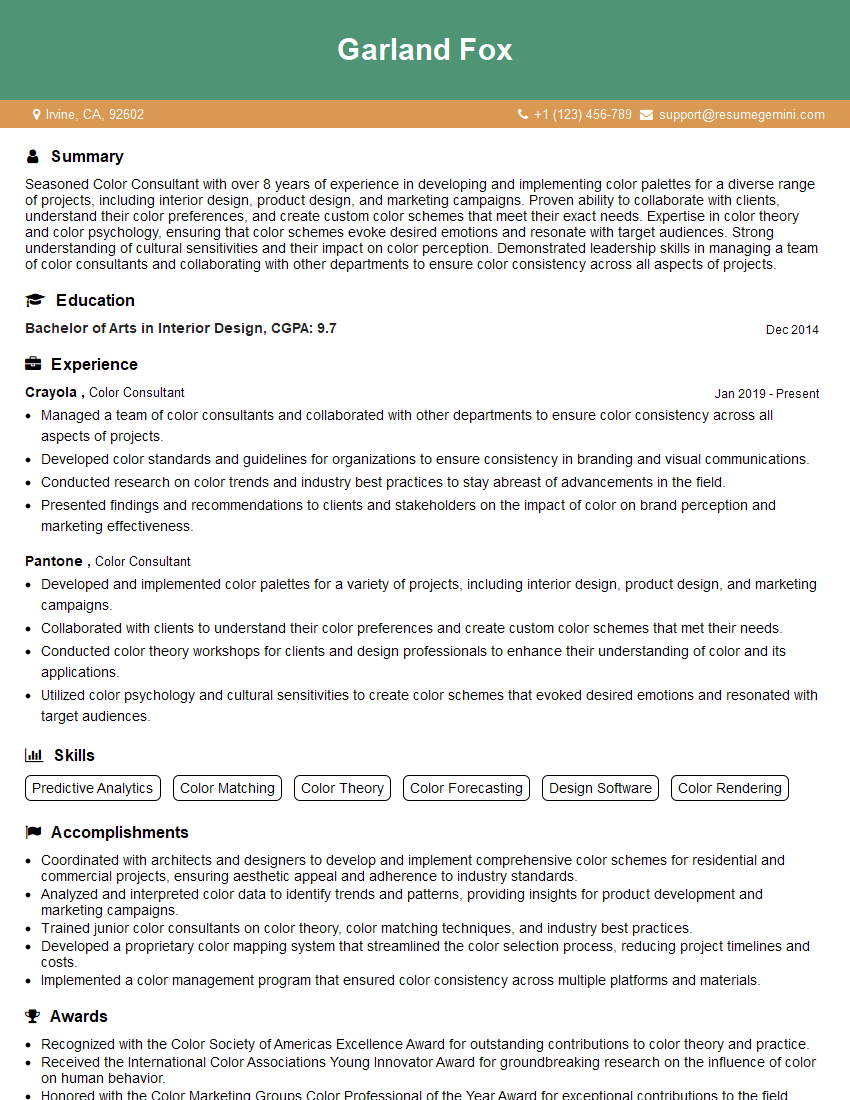
Mastering color lifting and erasing techniques opens doors to exciting career opportunities and higher earning potential within the beauty industry. A strong understanding of these techniques showcases your expertise and dedication to achieving exceptional results. To maximize your job prospects, it’s crucial to present your skills effectively. Creating an ATS-friendly resume is key to getting noticed by potential employers. ResumeGemini is a trusted resource that can help you craft a professional resume that highlights your skills and experience in color lifting and erasing. We provide examples of resumes tailored to this specific field to help guide you through the process.
Explore more articles
Users Rating of Our Blogs
Share Your Experience
We value your feedback! Please rate our content and share your thoughts (optional).
What Readers Say About Our Blog
Very informative content, great job.
good