The thought of an interview can be nerve-wracking, but the right preparation can make all the difference. Explore this comprehensive guide to Color Lifting and Reworking interview questions and gain the confidence you need to showcase your abilities and secure the role.
Questions Asked in Color Lifting and Reworking Interview
Q 1. Explain the process of lifting hair color safely.
Safely lifting hair color involves a meticulous process that prioritizes the health of the hair. It’s not just about achieving the desired lightness; it’s about minimizing damage and breakage. This is achieved through careful selection of products, proper application techniques, and a thorough understanding of your client’s hair history and current condition.
The process generally involves several steps: A thorough consultation to assess the hair’s current state, including porosity, elasticity, and previous chemical treatments. Then, a strand test to determine the appropriate lightening technique and developer volume. The actual lightening process, which may involve multiple applications depending on the desired level of lift. And finally, a deep conditioning treatment to replenish moisture and strength.
Think of it like slowly peeling an onion – you wouldn’t rip it apart all at once! We gently lift the color in stages, to avoid compromising the hair’s integrity.
Q 2. What are the different types of hair lightening products and their strengths/weaknesses?
Several products can lighten hair, each with its own strengths and weaknesses:
- Powder Lighteners: These offer a high level of lift but can be drying if not used carefully. They’re great for achieving significant lightening in a shorter amount of time. However, they require precise mixing and application to avoid patchy results.
- Cream Lighteners: These are gentler on the hair than powders, offering good lift with less dryness. They’re often easier to control and blend, reducing the risk of uneven lightening. However, they may not provide as high a level of lift as powder lighteners.
- Oil Lighteners: Formulated with oils to help reduce damage, oil lighteners are suitable for clients with fragile hair. They often offer a slower, gentler lift but are less aggressive. The lift may not be as dramatic as with other options.
The choice depends on the client’s hair type, condition, and desired outcome. For instance, I might use a cream lightener on fine hair and a powder lightener on thicker, coarser hair that can tolerate a more aggressive approach.
Q 3. How do you assess the current hair condition before starting a color lifting process?
Assessing hair condition before color lifting is crucial to avoid damage. I conduct a thorough consultation, examining:
- Porosity: How easily the hair absorbs moisture. High porosity means the hair is damaged and likely to lift unevenly or break. Low porosity hair needs more time to process.
- Elasticity: The hair’s ability to stretch and return to its original shape. Low elasticity indicates damage and brittleness.
- Previous Chemical Treatments: Knowing about previous perms, relaxers, or color treatments helps predict how the hair will react to lightening.
- Overall Condition: I assess the hair’s health, noting any dryness, damage, or breakage.
I also consider the client’s hair history, asking about their routine, products used, and any sensitivities. This holistic evaluation guides my choice of products and techniques.
Q 4. Describe your approach to achieving a specific lifted shade.
Achieving a specific lifted shade involves a strategic approach. It’s not a one-size-fits-all process.
- Determine the Starting Point: Assess the client’s natural color and any existing color treatments.
- Define the Target Shade: Clarify the desired lightness level and tone.
- Choose the Right Products: Select appropriate lighteners and toners based on the hair’s condition and the desired outcome.
- Plan the Lifting Process: Determine the number of lightening sessions needed based on the amount of lift required. Multiple applications may be necessary to avoid over-processing.
- Monitor the Process: Regularly check the hair during lightening to avoid over-processing. This is crucial for managing lift and preventing damage.
- Tone and Glaze: After the desired lightness is achieved, use toners or glosses to neutralize unwanted brassiness or create the desired shade.
For example, if a client wants to go from dark brown to platinum blonde, it will likely require multiple sessions with careful toning in between to achieve the desired cool blonde, avoiding yellow or orange tones.
Q 5. What techniques do you use to minimize damage during color lifting?
Minimizing damage during color lifting is paramount. I employ several techniques:
- Low and Slow Approach: Instead of trying to lift the hair too quickly, I opt for multiple, gentler lightening sessions.
- Olaplex or Similar Bond Builders: Incorporating bond-building products protects the hair’s integrity during the chemical process. These strengthen the disulfide bonds within the hair shaft.
- Proper Application Techniques: Applying lightener precisely and evenly helps prevent damage from over-processing in specific areas.
- Cool Developer: Using a lower-volume developer minimizes damage while still achieving the desired lift. This also reduces the risk of extreme dryness and breakage.
- Deep Conditioning Treatments: After the lightening process, deep conditioning masks and treatments restore moisture and strength to the hair.
These steps are crucial; I always focus on protecting the hair’s health while achieving the desired result.
Q 6. How do you choose the appropriate developer volume for different hair types and lifting goals?
Developer volume is directly related to the level of lift and potential damage. The higher the volume, the more aggressive the lift, but the greater the risk of damage.
- 10 Volume (3%): Suitable for subtle lightening or toning, low-lift techniques, or clients with sensitive scalps.
- 20 Volume (6%): A good balance between lift and damage, suitable for covering grays or creating subtle highlights.
- 30 Volume (9%): Used for more significant lightening, but requires careful monitoring to avoid over-processing.
- 40 Volume (12%): Used for high-lift blonde results but should only be used on strong, healthy hair and by experienced stylists. High risk of damage.
The choice depends on the client’s hair type and the desired lift. Fine hair might require a lower volume developer to avoid excessive damage, while thicker hair may tolerate a higher volume for quicker lightening. I always tailor my choice to minimize risk while achieving the client’s goal.
Q 7. Explain the importance of strand testing before applying bleach.
Strand testing is a non-negotiable step before any bleaching process. It allows me to see how the client’s hair will react to the chosen lightener and developer, giving me valuable insights into:
- Processing Time: It helps determine how long the lightener needs to be applied to achieve the desired level of lift without over-processing.
- Potential for Damage: It reveals the hair’s susceptibility to breakage or excessive dryness.
- Color Outcome: It helps predict the final color outcome, including any unexpected tones or inconsistencies.
The strand test is a small sacrifice that prevents a major disaster. Imagine applying a lightener to the entire head and discovering the color is patchy or the hair is breaking. Strand testing saves the client’s hair and my reputation!
Q 8. Describe your process for correcting a botched hair color job (e.g., brassiness, uneven lift).
Correcting a botched hair color job requires a systematic approach. First, I thoroughly assess the damage – is it brassiness (yellow or orange tones), uneven lift (patches of different lightness), or both? I then analyze the current hair color and condition. For brassiness, I’d likely use a toner specifically formulated to neutralize those unwanted warm tones, selecting a cool-toned toner (e.g., ash, violet, or blue) based on the existing brassy undertones. For uneven lift, I’ll need to determine why the lift wasn’t consistent. Was it due to improper application, insufficient processing time, or using a lightening product that was too harsh? In cases of uneven lift, I might use a low-volume developer with a gentle lightening product to carefully lighten the darker areas, ensuring even development. Throughout the process, I constantly monitor the hair’s condition, adding protein treatments or deep conditioners as needed to minimize damage.
For example, if a client has brassy highlights and some areas that are significantly darker than others, I’d start with a clarifying shampoo to remove product buildup. Then, I’d apply a toner to the brassy areas, followed by a partial highlight/lowlight to blend the uneven lightening, using foils to isolate sections and control the lift. Finally, I’d finish with a gloss to even out the overall tone and add shine.
Q 9. How do you handle unexpected results during a color lifting service?
Unexpected results during color lifting are a common occurrence, and my response depends entirely on the nature of the issue. If the lift is too light, I might need to use a demi-permanent or semi-permanent color to add depth and tone down the lightness. A root shadow can also be strategically used. If the lift is uneven, as mentioned before, I might use a low-volume developer with a gentle lightening product to carefully lighten the darker areas. If the hair is severely damaged, I would immediately stop the process. I prioritize the health of the hair, and extreme damage takes precedence over achieving a specific color. I’d likely recommend a deep conditioning treatment and potentially advise delaying further color processing until the hair’s integrity has improved. Open and honest communication with the client is crucial during such instances – explaining what happened, why, and how I plan to rectify the situation. It’s vital to retain their trust and manage expectations.
Q 10. What are the key differences between various lightening techniques (e.g., balayage, highlights, foilyage)?
Balayage, highlights, and foilyage are all lightening techniques, but they differ in their application and the final look they achieve. Balayage involves hand-painting lightener onto the hair, creating a sun-kissed, natural-looking effect with soft transitions. Highlights use foils to isolate sections of hair for lightening, giving more precision and control over placement. This allows for bolder contrasts and more defined streaks. Foilyage is a hybrid technique that combines the freehand application of balayage with the precision of foils, offering a balance between natural-looking dimension and defined highlights. Think of it as balayage with added control using foils where needed.
- Balayage: Subtle, natural-looking highlights, less maintenance.
- Highlights: More defined, bolder streaks, requires more frequent touch-ups.
- Foilyage: Blends the best of both worlds: a natural look with precise placement.
Q 11. Explain the concept of toning and its role in color lifting services.
Toning is a crucial step in color lifting services, it’s the process of neutralizing unwanted undertones (brassiness, yellow, orange, etc.) after lightening. It’s like fine-tuning the color after the main lightening process is complete. The lightening process might leave the hair looking a little yellow or brassy. Toning counteracts this by adding color that will neutralize these tones. The toner is selected based on color theory; for example, a cool-toned toner (violet or blue) will neutralize the warmth. Without toning, the final color won’t appear as clean and even; it would be muted and potentially uneven. Toning creates the desired cool, ash, beige, or other shades that enhance and complete the overall color transformation.
Q 12. What are the common causes of uneven lift and how can they be avoided?
Uneven lift results from several factors, including: Inconsistent application of lightener (not saturating strands evenly), using a developer that’s too strong for the hair (over-processing), hair porosity variations (different areas absorb the product differently), improper sectioning, and insufficient processing time.
To avoid this, I ensure even saturation of the hair with lightener during application. I use appropriate developer volume tailored to the hair’s condition and desired lift. I carefully section the hair before applying lightener, paying attention to the direction and density of the sections. I strictly adhere to recommended processing times, frequently checking for lift progress, and using heat to accelerate processing only when necessary and under careful supervision. I also conduct a thorough strand test to assess porosity and how the hair will react to the lightening product.
Q 13. How do you select the correct toner to neutralize unwanted tones?
Selecting the correct toner involves understanding color theory and the existing undertones. If the hair is brassy (yellow/orange), a violet-based toner will neutralize it. If there are reddish undertones, a blue-based toner is ideal. Green undertones might require a red toner. For example, if I’m aiming for an ashy blonde, I’d use a toner with violet and possibly blue pigments to neutralize the warmth. I assess the existing tone by viewing the hair under natural light; it is important to avoid relying solely on artificial lighting. Then, I choose a toner that complements the desired final color, considering its level (lightness or darkness) and the specific shade being targeted. I’ll take into consideration the health and porosity of the hair in determining the toner’s strength too.
Q 14. How do you maintain the integrity of the hair after lifting?
Maintaining hair integrity after lifting requires a multi-pronged approach focusing on deep conditioning and strengthening treatments. I recommend using bond-building treatments during the lifting process itself and after to rebuild and protect the hair’s bonds, preventing further damage. Deep conditioning treatments are essential to replenish moisture and restore elasticity, helping to prevent breakage. At-home care is equally important. I would advise clients to use sulfate-free shampoos and conditioners, avoid heat styling as much as possible, and regularly use deep conditioning masks. I emphasize the importance of limiting exposure to harsh environmental factors and avoiding overly frequent chemical processes.
Q 15. What are the signs of over-processed hair and how do you address them?
Over-processed hair shows several distress signals. Think of your hair like a fabric – excessive processing weakens its fibers. Common signs include extreme dryness and brittleness, leading to breakage and split ends. The hair might feel rough, lack elasticity (meaning it doesn’t bounce back when stretched gently), and appear dull and lifeless. You’ll often see significant porosity (the hair’s ability to absorb moisture), making it feel spongy or even slightly gummy. Color may appear uneven or faded, and the hair might be prone to snapping easily.
Addressing these issues requires a multi-pronged approach. First, I conduct a thorough consultation to understand the client’s hair history and the extent of the damage. Then, I focus on deep conditioning treatments using high-quality products rich in moisturizing and restorative ingredients like hydrolyzed proteins, ceramides, and oils. Protein treatments help rebuild the hair’s structure, while moisturizing agents improve elasticity and reduce breakage. Depending on the severity of the damage, I might recommend a series of treatments spaced several weeks apart. In severe cases, a haircut to remove damaged ends is essential to prevent further breakage. Finally, I advise clients on at-home hair care routines focusing on gentle, sulfate-free shampoos and conditioners, minimizing heat styling, and protecting hair from the sun.
Career Expert Tips:
- Ace those interviews! Prepare effectively by reviewing the Top 50 Most Common Interview Questions on ResumeGemini.
- Navigate your job search with confidence! Explore a wide range of Career Tips on ResumeGemini. Learn about common challenges and recommendations to overcome them.
- Craft the perfect resume! Master the Art of Resume Writing with ResumeGemini’s guide. Showcase your unique qualifications and achievements effectively.
- Don’t miss out on holiday savings! Build your dream resume with ResumeGemini’s ATS optimized templates.
Q 16. Describe your understanding of different hair porosity and its impact on color lifting.
Hair porosity refers to the hair cuticle’s ability to absorb and retain moisture. Think of it like a roof – low porosity is like a tightly sealed roof, resisting moisture; high porosity is a leaky roof, allowing moisture to escape quickly; and medium porosity is just right, allowing for absorption without excessive loss.
Porosity significantly impacts color lifting. Low porosity hair requires more processing time and often benefits from heat to open the cuticle and allow the lightener to penetrate. High porosity hair, however, lifts quickly but is more prone to damage because the cuticle is already compromised. It needs gentler lightening techniques and careful monitoring to prevent over-processing. Medium porosity hair is ideal for lightening, requiring a balance of processing time and technique. Understanding porosity is crucial for tailoring the lightening process to avoid over-processing or uneven results. I always assess the client’s hair porosity using the ‘water test’ (how quickly the hair absorbs a drop of water) before designing a color plan.
Q 17. How do you adapt your color lifting techniques for different hair textures (fine, medium, coarse)?
Hair texture dramatically affects how it responds to color lifting. Fine hair is more fragile and prone to damage, so I use lower-volume developers and shorter processing times to prevent breakage. I may incorporate bond-building treatments to strengthen the hair before and after lightening. Medium hair is relatively easy to work with, allowing for more flexibility in technique and developer volume. Coarse hair, due to its thickness and density, may need higher-volume developers and longer processing times but requires close monitoring to avoid over-processing.
For all textures, I always perform a strand test to check the lift and processing time before applying the lightener to the entire head. I also use precise sectioning and application techniques to ensure even lightening. With fine hair, I might choose to lighten in smaller, more manageable sections. For coarse hair, I might use a more aggressive technique, but always with careful monitoring.
Q 18. What are the safety precautions you take while working with bleach?
Safety is paramount when working with bleach. I always wear appropriate personal protective equipment (PPE), including gloves, a mask, and eye protection. The workspace should be well-ventilated to prevent inhalation of fumes. I never leave bleach unattended during processing. I carefully follow the manufacturer’s instructions for mixing and application. Skin tests are conducted 24-48 hours prior to any bleaching service to check for allergies. I explain the potential risks and aftercare to the client beforehand, ensuring informed consent. In case of any accidents or reactions, I know the proper procedures and have emergency contact information readily available.
Q 19. Explain your process for creating a custom color formula.
Creating a custom color formula starts with a thorough consultation. I assess the client’s current hair color, desired shade, and the condition of their hair. I consider the client’s skin tone and features to recommend a color that flatters their complexion. Then, I consider the lift needed to achieve the desired color and select appropriate bleach and developer combinations. I might use a low-volume developer for delicate lifting or a higher-volume developer for more significant lightening, always keeping in mind the hair’s porosity and texture.
Next, I choose toner and color to create the final shade. I may blend several colors to achieve a unique shade tailored to the client’s preferences and hair characteristics. For example, I might blend a cool blonde with a warm beige to create a natural-looking blonde that suits the client’s skin tone. Finally, I perform a strand test to ensure the formula achieves the desired outcome and doesn’t damage the hair before applying it to the entire head. This ensures a personalized and perfectly executed result.
Q 20. How do you handle client consultations regarding color lifting and reworking?
Client consultations are crucial for successful color lifting and reworking. I begin by listening carefully to the client’s desires, showing images and discussing realistic expectations based on their hair’s current condition. I thoroughly explain the process, including potential risks, processing time, and aftercare. I use visual aids, such as color charts, to illustrate different shades and techniques. Honesty is key; I never make promises I can’t keep. If a client’s desired color isn’t achievable without significant damage, I will suggest alternative options.
For reworking previously damaged hair, I’ll focus on identifying the cause of the damage and creating a repair plan that might include deep conditioning treatments, protein treatments, or even a haircut. The conversation includes honest assessments of the timeline and cost involved. Transparent communication ensures client satisfaction and helps manage expectations throughout the process.
Q 21. What is your experience with various color brands and their lifting capabilities?
I have extensive experience with various color brands, including Wella, Redken, Schwarzkopf, and Olaplex. Each brand offers different formulations and lifting capabilities. For example, Wella Blondor is known for its powerful lightening capabilities, while Olaplex focuses on minimizing damage during the lightening process. My choice of brand depends on the client’s hair condition, the desired outcome, and my overall assessment of the best product for optimal results. I regularly stay updated on new product releases and advanced techniques to ensure I use the most effective and safe products available. This keeps me informed of the latest advancements in color technology and enables me to provide optimal results for my clients.
For instance, some brands offer bleach powders with added bond-building technology, which allows for efficient lifting with less damage. I carefully consider these factors to create the most effective and personalized plan for each client.
Q 22. Describe your experience with corrective color applications.
Corrective color is a crucial aspect of my work, focusing on repairing or improving existing hair color. My experience encompasses a wide range of corrections, from removing unwanted tones and fixing botched dye jobs to creating seamless color transitions and achieving desired shades. I’ve successfully addressed various challenges, including brassiness, uneven color, and unwanted warm or cool undertones. This involves careful assessment of the current hair condition, the desired outcome, and the necessary steps to achieve it safely and effectively. For example, I recently corrected a client’s uneven, faded highlights, restoring a uniform and natural-looking blonde by strategically using low-volume bleach to lift the darker sections and then applying a toner to harmonize the overall tone. My process always prioritizes the health of the hair.
Q 23. How do you manage client expectations regarding the potential results of color lifting?
Managing client expectations is paramount in color lifting. I begin by performing a thorough consultation, honestly assessing the current hair condition and the feasibility of reaching the desired shade. I use photos of previous work and explain the process in detail, highlighting potential limitations based on the hair’s history (previous color treatments, damage level, porosity). For instance, if a client desires a drastic lightening, I’ll explain the possibility of multiple sessions and the potential for damage if the process isn’t carefully managed. This includes explaining the importance of aftercare products and routines. I also show realistic examples of what can be achieved, acknowledging that results can vary and avoiding unrealistic promises. Open communication is key to maintaining trust and ensuring a positive experience.
Q 24. What are some common mistakes in color lifting and how can they be prevented?
Common mistakes in color lifting include using too high a volume developer, leading to breakage and damage; applying bleach unevenly, resulting in patchy results; and overlooking the hair’s porosity and history, which can affect the lifting process. Over-processing is another frequent issue. To prevent these, I always perform a thorough strand test to determine the appropriate developer volume and processing time. I use precise application techniques, ensuring even saturation of the bleach. Moreover, I meticulously assess the hair’s history and condition, adjusting my techniques accordingly. For example, on previously colored hair, I might use a low-volume developer with a bond builder to minimize damage. Using Olaplex or similar bond-building treatments alongside lifting services is a critical preventive measure. Finally, I carefully monitor the hair during the lifting process, stopping if I see signs of over-processing.
Q 25. Explain your knowledge of color theory and how it applies to color lifting.
Color theory is the foundation of successful color lifting and reworking. Understanding the color wheel – primary, secondary, and tertiary colors, and their relationships – is essential for predicting outcomes. For instance, knowing that yellow is the base tone of blonde helps me determine the best toner to neutralize any unwanted brassiness. I use this knowledge to plan the lifting process, selecting the right developer to achieve the desired lightness without unwanted undertones. For example, if a client wants an ashy blonde, I know I need to lift the hair to a pale yellow level and then apply a toner with violet or blue pigments to counteract the yellow and achieve that cool ash effect. This understanding allows me to predict and correct potential issues during the process and maintain the integrity of the hair.
Q 26. How do you maintain your professional skills and stay up-to-date with current color techniques?
Staying updated in this rapidly evolving field requires ongoing professional development. I regularly attend advanced color courses, workshops, and seminars offered by leading brands and educators. I also actively participate in industry events and conferences to network with other stylists and learn about the latest techniques and products. I subscribe to professional hairdressing magazines and follow leading colorists on social media for inspiration and updates on new trends. This continuous learning enables me to adapt my skills, refine my techniques, and offer clients the most innovative and effective color services.
Q 27. Describe a situation where you had to troubleshoot a challenging color lifting problem. What was your approach and solution?
One challenging case involved a client with heavily processed, damaged hair who wanted to go from a dark brown to a platinum blonde. The hair was extremely porous and prone to breakage. My approach was a phased lightening process using low-volume developers and bond-building treatments at each stage. Instead of attempting one drastic lift, I opted for multiple sessions over several weeks, allowing the hair to recover between each treatment. I used Olaplex to minimize damage and monitor the hair’s condition throughout the process. We also discussed realistic expectations, emphasizing the need for patience and hair care. The result was a healthy, beautiful platinum blonde, achieved without compromising the hair’s integrity. This case taught me the importance of prioritizing hair health and client communication even when faced with demanding color transformations.
Q 28. How do you handle client complaints regarding color lifting services?
Handling client complaints involves active listening and empathy. I begin by letting the client express their concerns without interruption. Then, I carefully examine the hair to assess the issue and determine the cause. Transparency is key – I explain my process and potential reasons for any dissatisfaction, offering solutions where possible. This could involve a complimentary corrective treatment, a refund, or a detailed aftercare plan. I always aim to find a mutually agreeable solution that satisfies the client and maintains my professional integrity. Even if a situation is complex, my focus is on resolving the issue and retaining the client’s trust. For example, I recently rectified a slight color imbalance by providing a free toner and suggesting a specific home care routine to maintain the corrected color.
Key Topics to Learn for Color Lifting and Reworking Interview
- Understanding Hair Structure and Chemistry: Knowing the chemical processes involved in lifting and reworking hair color is fundamental. This includes understanding the cuticle, cortex, and medulla, and how different chemical treatments affect them.
- Color Theory Fundamentals: Mastering the color wheel, understanding complementary, analogous, and triadic color schemes is crucial for predicting and correcting color results. This includes knowing how to mix colors to achieve desired shades.
- Lifting Techniques and Products: Familiarize yourself with various lightening techniques, including highlighting, balayage, and full-head bleaching. Understand the different types of lighteners and developers and their impact on hair health.
- Color Correction Strategies: Learn how to identify and correct common color mistakes, such as unwanted brassiness, uneven lightening, and color buildup. This includes understanding different toning and glazing techniques.
- Hair Health and Damage Control: Knowing how to minimize damage during the lifting and reworking process is vital. This includes understanding the importance of proper strand testing, using bond-building treatments, and recommending appropriate aftercare.
- Client Consultation and Communication: Mastering the art of effectively communicating with clients about realistic expectations, potential risks, and aftercare is key to building trust and achieving positive outcomes.
- Safety Procedures and Regulations: Understanding and adhering to all safety regulations and best practices in a salon environment is non-negotiable. This includes proper handling of chemicals and maintaining a clean and organized workspace.
- Assessing Hair Condition: Learn how to accurately assess the health and porosity of hair before beginning any color lifting or reworking process to avoid damage and achieve optimal results.
Next Steps
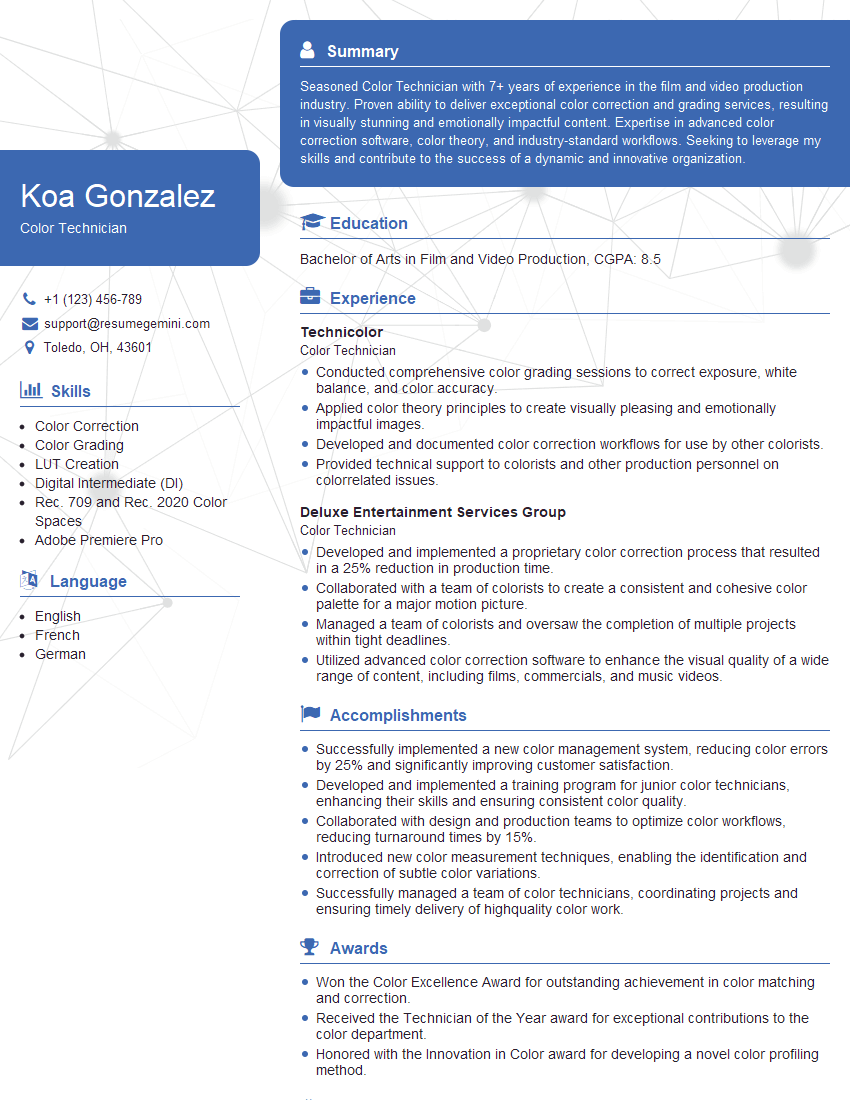
Mastering Color Lifting and Reworking is essential for career advancement in the hairdressing industry, opening doors to higher-paying positions and specialized roles. A well-crafted resume is your first impression on potential employers. Creating an ATS-friendly resume significantly increases your chances of getting your application noticed. ResumeGemini is a trusted resource that can help you build a professional and impactful resume tailored to your skills and experience. Examples of resumes specifically tailored to Color Lifting and Reworking are available to further guide your preparation.
Explore more articles
Users Rating of Our Blogs
Share Your Experience
We value your feedback! Please rate our content and share your thoughts (optional).
What Readers Say About Our Blog
Very informative content, great job.
good