Are you ready to stand out in your next interview? Understanding and preparing for Communication Systems Integration and Connectivity interview questions is a game-changer. In this blog, we’ve compiled key questions and expert advice to help you showcase your skills with confidence and precision. Let’s get started on your journey to acing the interview.
Questions Asked in Communication Systems Integration and Connectivity Interview
Q 1. Explain the OSI model and its layers.
The OSI (Open Systems Interconnection) model is a conceptual framework that standardizes the functions of a telecommunication or computing system without regard to its underlying internal structure and technology. It divides network communication into seven distinct layers, each with a specific responsibility. Think of it like a layered cake, where each layer depends on the one below it to function correctly.
- Layer 7: Application Layer: This is where applications interact with the network. Examples include HTTP (web browsing), SMTP (email), FTP (file transfer).
- Layer 6: Presentation Layer: Handles data formatting and encryption/decryption. It ensures data is presented in a format the application layer can understand.
- Layer 5: Session Layer: Manages connections between applications. It establishes, manages, and terminates sessions.
- Layer 4: Transport Layer: Provides reliable and unreliable data delivery. TCP (Transmission Control Protocol) and UDP (User Datagram Protocol) operate at this layer.
- Layer 3: Network Layer: Handles logical addressing (IP addresses) and routing. It determines the path data takes across the network.
- Layer 2: Data Link Layer: Handles physical addressing (MAC addresses) and error detection. Examples include Ethernet and Wi-Fi protocols.
- Layer 1: Physical Layer: Deals with the physical transmission of data over the network medium (cables, wireless signals). This layer is concerned with the bits themselves.
Understanding the OSI model helps troubleshoot network issues by isolating problems to specific layers. For instance, if a web page won’t load (Application Layer issue), you can systematically check each layer down to identify the root cause. It’s a fundamental concept in networking.
Q 2. Describe the differences between TCP and UDP protocols.
TCP (Transmission Control Protocol) and UDP (User Datagram Protocol) are both transport layer protocols, but they offer different approaches to data delivery. Think of it like sending a package: TCP is like registered mail, while UDP is like sending a postcard.
- TCP: Connection-oriented, reliable, and ordered. It guarantees delivery and ensures data arrives in the correct sequence. It uses acknowledgments and retransmissions to handle lost or corrupted packets. It’s slower but more reliable, ideal for applications requiring guaranteed delivery, like web browsing or file transfer.
- UDP: Connectionless, unreliable, and unordered. It offers faster transmission but doesn’t guarantee delivery or order. It’s simpler and more efficient, making it suitable for applications where speed is prioritized over reliability, such as streaming video or online gaming.
In short: TCP prioritizes reliability, while UDP prioritizes speed. The choice depends on the application’s needs. For example, a video conferencing app might use UDP for the video stream to minimize latency, even if some packets are lost, while using TCP for signaling and control messages.
Q 3. What are the advantages and disadvantages of different network topologies (e.g., star, mesh, ring)?
Network topologies describe how devices are interconnected in a network. Each topology has its own advantages and disadvantages.
- Star Topology: All devices connect to a central hub or switch.
- Advantages: Easy to manage, add/remove devices easily, failure of one device doesn’t affect the entire network.
- Disadvantages: Single point of failure (the central hub/switch), performance can be affected if the central device is overloaded.
- Mesh Topology: Devices connect to multiple other devices, creating redundant paths.
- Advantages: Highly reliable, fault-tolerant, good bandwidth.
- Disadvantages: Expensive to implement, complex to manage.
- Ring Topology: Devices are connected in a closed loop.
- Advantages: Simple to implement (historically), equal access to network resources.
- Disadvantages: Failure of one device can bring down the entire network, difficult to troubleshoot.
The choice of topology depends on factors like budget, network size, reliability requirements, and ease of management. Most modern networks utilize a star topology, often combined with other topologies at higher levels to achieve scalability and reliability.
Q 4. How does routing work in a network?
Routing is the process of selecting a path for data packets to travel across a network from a source to a destination. Routers are network devices that make these decisions based on routing tables. These tables contain information about networks and the best paths to reach them.
The routing process involves several steps: A packet arrives at a router, the router examines the destination IP address, it consults its routing table to find the best path, and it forwards the packet to the next router along that path. This process repeats until the packet reaches its destination. Routing protocols, such as RIP, OSPF, and BGP, are used to dynamically update routing tables, ensuring the network adapts to changes and failures.
Imagine a delivery driver needing to deliver a package; the routing table is like their map, showing the different roads and the fastest routes to the destination. The driver (router) uses the address on the package to select the appropriate path.
Q 5. Explain the concept of subnetting and its purpose.
Subnetting is the process of dividing a larger network (IP address range) into smaller, logical subnetworks. This improves network efficiency, security, and scalability. Each subnetwork has its own subnet mask, which identifies its boundaries.
Imagine a large apartment building. Subnetting is like dividing the building into smaller sections (subnets). Each section has its own address range, making it easier to manage traffic and access control. This prevents broadcasting traffic across the entire building (network), increasing efficiency and security.
The purpose of subnetting is to:
- Reduce broadcast domains: Limiting the scope of broadcasts improves network performance.
- Improve network security: Subnetting allows for more granular access control and security policies.
- Conserve IP addresses: By efficiently allocating addresses, subnetting allows for better utilization of the available IP space.
- Improve network performance: Reducing the size of broadcast domains improves network performance.
Subnetting requires understanding binary notation and subnet masks, as well as IP address classes. Tools and calculators are available to simplify the process.
Q 6. What are the different types of network security threats?
Network security threats are diverse and constantly evolving. They can be broadly categorized as follows:
- Malware: Malicious software, including viruses, worms, Trojans, ransomware, and spyware, designed to damage, disrupt, or gain unauthorized access to systems.
- Phishing: Attempts to trick users into revealing sensitive information, such as usernames, passwords, and credit card details, typically through deceptive emails or websites.
- Denial-of-Service (DoS) and Distributed Denial-of-Service (DDoS) Attacks: Overwhelming a network or server with traffic, rendering it inaccessible to legitimate users.
- Man-in-the-Middle (MitM) Attacks: Intercepting communication between two parties to eavesdrop or manipulate data.
- SQL Injection: Exploiting vulnerabilities in web applications to inject malicious SQL code, potentially compromising sensitive data.
- Zero-Day Exploits: Exploiting previously unknown vulnerabilities before a patch is available.
- Insider Threats: Malicious or negligent actions by individuals within an organization who have legitimate access to systems and data.
Protecting against these threats requires a multi-layered approach, including firewalls, intrusion detection systems, antivirus software, strong passwords, security awareness training, and regular security audits.
Q 7. Describe your experience with network monitoring tools.
Throughout my career, I’ve extensively used various network monitoring tools, adapting my choices to the specific needs of the project. Some of my favorites include:
- SolarWinds Network Performance Monitor: A comprehensive tool providing real-time monitoring of network devices, applications, and servers. I’ve used it to identify performance bottlenecks and proactively address potential issues, significantly improving network uptime. Its reporting and alerting features are invaluable.
- Nagios: An open-source monitoring system that’s highly customizable. I’ve leveraged its flexibility to create tailored monitoring solutions for diverse network environments, including both physical and virtual infrastructure. Its community support and extensive plugin ecosystem are major benefits.
- PRTG Network Monitor: A user-friendly tool with a powerful central management console. I appreciate its intuitive interface and its ability to quickly provide an overview of the network’s health. It’s been particularly helpful for less technical users who need a quick snapshot of network performance.
My experience with these tools extends beyond basic monitoring. I’ve used them to troubleshoot connectivity issues, optimize network configurations, and develop comprehensive reports for management, detailing network performance and security posture. The key is choosing the right tool for the job and knowing how to interpret the data it provides to make informed decisions.
Q 8. How do you troubleshoot network connectivity issues?
Troubleshooting network connectivity issues involves a systematic approach. Think of it like diagnosing a car problem – you wouldn’t just start replacing parts randomly; you’d check the basics first. My process typically starts with the simplest checks and progresses to more complex investigations.
- Basic Checks: I begin by verifying the physical connections: are cables plugged in securely? Is the device powered on? I then check for obvious errors like incorrect IP addresses or DNS settings. Simple ping tests (
ping 8.8.8.8) can quickly determine if a device can reach the internet. - Intermediate Steps: If basic checks fail, I move to more detailed diagnostics. I’ll use tools like
tracert(ortraceroute) to trace the path of a packet to a destination, identifying potential bottlenecks or points of failure. Analyzing network logs from routers, switches, and firewalls provides crucial insights into error messages and potential problems. I’ll also examine network monitoring tools for performance metrics, looking for unusual spikes in latency or packet loss. - Advanced Troubleshooting: For more complex issues, I might use packet capture tools like Wireshark to analyze network traffic at a granular level. This allows me to inspect individual packets and identify problems like corrupted data or incorrect protocol handling. I also leverage network management systems (NMS) to get a holistic view of the network’s health and performance. Finally, collaboration with other teams – such as security or application support – is often crucial for isolating the root cause.
For example, I once worked on a case where users reported intermittent internet access. Through meticulous tracing and log analysis, I discovered a faulty cable in the server room causing intermittent connection drops. A simple cable replacement resolved the issue. Another time, using Wireshark, I identified a misconfiguration in a firewall rule blocking legitimate traffic to a specific application server.
Q 9. What are your experiences with VPNs and firewalls?
VPNs (Virtual Private Networks) and firewalls are essential components of a secure network infrastructure. They work together to protect sensitive data and control network access. Think of a VPN as a secure tunnel and a firewall as a gatekeeper.
- VPNs: I’ve extensive experience with various VPN technologies, including IPsec, SSL/TLS, and OpenVPN. VPNs create encrypted connections between devices, ensuring that data transmitted over public networks (like the internet) remains confidential. I’ve used VPNs to provide secure remote access to company networks, enabling employees to work from anywhere securely. I’ve also configured VPNs for site-to-site connections, securely linking geographically dispersed offices.
- Firewalls: My experience includes configuring and managing both hardware and software firewalls. They act as a barrier between a trusted internal network and untrusted external networks. I’ve worked with various firewall technologies, including Cisco ASA, Palo Alto Networks, and Fortinet. I’m proficient in defining firewall rules to control network traffic based on source/destination IP addresses, ports, protocols, and other criteria. I’ve implemented firewall rules to block malicious traffic, prevent unauthorized access, and enforce security policies.
In one project, I implemented a site-to-site VPN using IPsec to securely connect our company’s headquarters to a remote data center. This allowed us to securely share data and resources between the two locations. In another instance, I enhanced our firewall rules to mitigate a specific DDoS attack by implementing rate-limiting and intrusion detection/prevention rules.
Q 10. Explain your understanding of Quality of Service (QoS).
Quality of Service (QoS) is a set of functionalities that allows preferential treatment to be given to specific network traffic based on defined priorities. Think of it as a traffic management system for your network. Without QoS, all traffic is treated equally, which can lead to performance issues for time-sensitive applications.
QoS mechanisms prioritize traffic based on factors such as application type, source/destination IP address, and port number. Common techniques include:
- Bandwidth allocation: Assigning a specific portion of bandwidth to high-priority traffic.
- Traffic shaping: Controlling the rate at which traffic is sent, preventing congestion.
- Traffic policing: Monitoring traffic and dropping packets that exceed predefined thresholds.
- Class of Service (CoS): Assigning different priorities (e.g., high, medium, low) to network traffic based on pre-defined criteria.
QoS is critical in environments like VoIP (Voice over IP) and video conferencing where latency and jitter can significantly impact the user experience. By prioritizing voice and video traffic, we ensure clear and uninterrupted communication. I have experience implementing QoS policies on Cisco routers and switches to manage bandwidth allocation for various applications in enterprise environments, ensuring optimal performance for critical business applications.
Q 11. Describe your experience with cloud-based connectivity solutions (e.g., AWS, Azure).
Cloud-based connectivity solutions like AWS, Azure, and GCP offer scalable and flexible alternatives to traditional on-premise networking. I have extensive experience with these platforms, leveraging their services to enhance network reach, resilience, and cost-effectiveness.
- Virtual Private Clouds (VPCs): I’ve designed and managed VPCs on AWS and Azure, creating isolated networks within the cloud. This allows secure segmentation of workloads and improved security posture.
- CloudConnect/ExpressRoute: I’ve established hybrid cloud connections using AWS Direct Connect and Azure ExpressRoute, securely linking on-premise networks with cloud resources. This enables seamless integration of cloud services with existing infrastructure.
- Cloud Load Balancers: I’ve configured and managed cloud load balancers to distribute network traffic across multiple instances, improving application availability and performance. This is crucial for handling high volumes of traffic and ensuring fault tolerance.
For instance, I migrated a client’s on-premise application to AWS, leveraging VPCs, Direct Connect, and load balancing to ensure a seamless transition and improved performance. The cloud-based solution provided significant cost savings and increased scalability compared to the on-premise infrastructure.
Q 12. What are your experiences with network virtualization?
Network virtualization is the creation of virtual network devices and resources, abstracting them from the underlying physical hardware. It’s like having virtual machines (VMs) for your network, allowing for greater flexibility and efficiency. This allows multiple virtual networks to coexist on a single physical infrastructure.
- Software-Defined Networking (SDN): I’m familiar with SDN concepts and technologies, utilizing SDN controllers to programmatically manage network devices. This enables centralized network management and automation.
- Network Function Virtualization (NFV): I have experience deploying virtual network functions (VNFs), such as virtual firewalls and load balancers, on virtual machines. This reduces the need for expensive hardware and improves scalability.
- Virtual LANs (VLANs): I’ve configured and managed VLANs to logically segment a network, improving security and performance by isolating different traffic types.
In a recent project, we implemented NFV to replace physical firewalls with virtual ones. This resulted in significant cost savings and improved flexibility, allowing us to easily scale our security infrastructure as needed. The ability to quickly spin up and down virtual networks also improved our disaster recovery capabilities.
Q 13. Explain your experience with network automation tools (e.g., Ansible, Puppet).
Network automation tools like Ansible and Puppet are crucial for managing large and complex networks efficiently. They automate repetitive tasks, reducing human error and improving operational efficiency. They’re like having a robotic assistant to handle all the tedious configuration tasks.
- Ansible: I’ve used Ansible to automate network device configuration, software deployments, and monitoring tasks. Its agentless architecture simplifies deployment and management. I’ve used Ansible playbooks (
yamlfiles) to automate tasks such as configuring interfaces, implementing security policies, and installing software on multiple network devices. - Puppet: I’m also familiar with Puppet, another popular configuration management tool known for its powerful declarative language. Puppet excels in managing the entire infrastructure, including network devices, servers, and applications.
For example, I used Ansible to automate the configuration of hundreds of network switches across multiple data centers, ensuring consistency and reducing deployment time significantly. A simple Ansible playbook might look like this (simplified):
--- - hosts: all tasks: - name: Configure interface ios_config: lines: - interface GigabitEthernet1/1 - description 'Connection to Server Room' - ip address 192.168.1.1 255.255.255.0 This snippet shows a basic example of configuring an interface on a Cisco IOS device using Ansible.
Q 14. How do you ensure network security and compliance?
Ensuring network security and compliance is paramount. It’s a continuous process requiring a multi-layered approach, not a one-time fix. Think of it like building a castle with multiple walls and defenses.
- Security Policies and Procedures: I’ve worked with organizations to develop and implement comprehensive security policies that address access control, data protection, incident response, and compliance with relevant regulations (e.g., GDPR, HIPAA).
- Network Segmentation: I’ve designed and implemented network segmentation to isolate critical systems and sensitive data from untrusted networks. This limits the impact of security breaches.
- Intrusion Detection/Prevention Systems (IDS/IPS): I have experience deploying and managing IDS/IPS systems to detect and prevent malicious activities on the network.
- Regular Security Audits and Penetration Testing: I advocate for regular security audits and penetration testing to identify vulnerabilities and ensure the effectiveness of security measures. This proactive approach helps to prevent security incidents.
For example, I worked on a project where we implemented a multi-factor authentication (MFA) system to enhance access control to our network infrastructure. We also conducted regular penetration testing to identify and address any vulnerabilities before they could be exploited.
Q 15. Describe your experience with SD-WAN technologies.
SD-WAN, or Software-Defined Wide Area Network, is a virtualized WAN that leverages software to control and manage network traffic across geographically dispersed locations. Unlike traditional WANs which rely heavily on expensive and inflexible MPLS connections, SD-WAN uses various transport methods – including MPLS, broadband internet, and LTE – intelligently routing traffic based on factors like cost, bandwidth, and application performance. My experience with SD-WAN includes designing, implementing, and managing SD-WAN solutions for large enterprises, utilizing various vendors like Cisco SD-WAN, VMware SD-WAN, and Versa Networks. This involved tasks such as site surveys, network topology design, configuration of SD-WAN controllers and edge devices, and ongoing monitoring and optimization. For example, I recently implemented a Cisco SD-WAN solution for a multinational corporation, optimizing their network connectivity by dynamically routing traffic based on real-time bandwidth availability and application requirements, resulting in significant cost savings and improved application performance.
In one project, a client was facing high latency issues with their legacy MPLS-based WAN. We migrated them to an SD-WAN solution, leveraging a combination of MPLS and broadband internet connections. By intelligently routing traffic based on application needs (prioritizing critical applications over less sensitive ones), we reduced latency significantly and improved overall application performance.
Career Expert Tips:
- Ace those interviews! Prepare effectively by reviewing the Top 50 Most Common Interview Questions on ResumeGemini.
- Navigate your job search with confidence! Explore a wide range of Career Tips on ResumeGemini. Learn about common challenges and recommendations to overcome them.
- Craft the perfect resume! Master the Art of Resume Writing with ResumeGemini’s guide. Showcase your unique qualifications and achievements effectively.
- Don’t miss out on holiday savings! Build your dream resume with ResumeGemini’s ATS optimized templates.
Q 16. Explain your understanding of different network protocols (e.g., BGP, OSPF).
Network protocols are the set of rules that govern how data is transmitted and received across a network. I have extensive experience with various protocols, including BGP (Border Gateway Protocol) and OSPF (Open Shortest Path First). BGP is an exterior gateway protocol (EGP) used in routing between autonomous systems (ASes), essentially connecting different networks across the internet. It uses path vector routing, meaning routers exchange information about reachable networks and their associated costs. OSPF, on the other hand, is an interior gateway protocol (IGP) used within a single autonomous system to establish routing paths within that network. It uses link-state routing, where each router builds a map of the entire network topology.
Imagine BGP as the interstate highway system connecting major cities across a country, while OSPF is the network of roads within a single city. Both are essential for efficient data transmission, but they operate at different scales and use different mechanisms.
I’ve used BGP extensively in designing and managing large enterprise networks, ensuring efficient and reliable routing of internet traffic. My experience with OSPF has primarily been in optimizing internal network performance and redundancy within a single organization’s network, using features like area-based routing to enhance scalability and performance.
Q 17. How do you handle network performance bottlenecks?
Handling network performance bottlenecks requires a systematic approach. I begin by identifying the bottleneck using network monitoring tools like SolarWinds, PRTG, or Wireshark. This involves analyzing metrics like latency, packet loss, bandwidth utilization, and CPU/memory usage on network devices. Once the bottleneck is identified (e.g., congested link, overloaded router, slow application server), I then implement solutions tailored to the specific cause.
For example, a congested link might be resolved by upgrading the bandwidth or implementing Quality of Service (QoS) policies to prioritize critical traffic. An overloaded router might require upgrading the hardware or optimizing its configuration. A slow application server might require performance tuning, scaling up the hardware or optimizing the database. The key is to use a combination of monitoring, analysis, and targeted interventions to address the root cause of the problem. I often employ a methodical approach: monitoring and data collection, root cause analysis using packet captures and performance metrics, and finally implementing the most effective solution. This may include upgrading hardware, re-architecting the network, or optimizing application performance.
Q 18. What is your experience with network capacity planning?
Network capacity planning is crucial for ensuring that a network can handle current and future demands. It involves forecasting future network traffic growth based on historical data, business projections, and application requirements. I’ve been involved in numerous capacity planning projects, utilizing various tools and methodologies. This includes assessing existing network infrastructure, predicting future bandwidth requirements, and designing network upgrades to meet projected needs.
My approach typically involves gathering historical network traffic data, analyzing trends, and projecting future growth based on factors like the number of users, applications, and expected bandwidth consumption. This information is then used to determine the required capacity for network links, routers, and other infrastructure components. For example, I recently worked on a capacity planning project for a rapidly growing e-commerce company. By analyzing their historical traffic data and projecting their future growth, I determined the need to upgrade their network infrastructure to avoid future bottlenecks.
Q 19. Describe your experience with VoIP technologies.
VoIP (Voice over Internet Protocol) technology allows voice communication over IP networks. My experience encompasses designing, implementing, and troubleshooting VoIP systems using various technologies including SIP (Session Initiation Protocol), H.323, and codecs like G.711 and G.729. This involves configuring VoIP gateways, IP phones, and softphones, as well as integrating VoIP systems with existing network infrastructure. I’ve worked with various VoIP platforms like Cisco Unified Communications Manager and Avaya Aura.
One project involved migrating a client from a traditional PBX system to a cloud-based VoIP solution. This required careful planning and execution, ensuring seamless transition and minimal disruption to their operations. We addressed challenges like network quality, QoS provisioning, and integration with existing directory services.
Q 20. How do you ensure high availability and redundancy in a network?
High availability and redundancy are crucial for ensuring continuous network operation. My approach involves implementing several key strategies: redundant network links (e.g., using multiple internet connections or MPLS links), redundant network devices (e.g., using dual routers or switches), and failover mechanisms (e.g., using hot standby routers or virtual routing redundancy protocols). These ensure that if one component fails, another takes over seamlessly, minimizing downtime. Furthermore, utilizing geographically diverse data centers for key servers is important to protect against wide-area outages.
For example, in a recent project, we implemented a dual-homed network design with redundant internet connections and hot-standby routers. This ensured continuous connectivity even if one internet link or router failed. We also implemented regular backups and disaster recovery plans to ensure business continuity in the event of a major outage.
Q 21. Explain your understanding of network segmentation.
Network segmentation is the practice of dividing a network into smaller, isolated segments. This enhances security by limiting the impact of a security breach and improves performance by reducing network congestion. I’ve implemented network segmentation using various methods, including VLANs (Virtual LANs), firewalls, and VPNs (Virtual Private Networks). VLANs allow you to logically segment a physical network, creating separate broadcast domains. Firewalls control traffic flow between segments, preventing unauthorized access. VPNs create secure connections between remote users and the network or between different network segments.
Imagine a large office building with different departments. Network segmentation is like dividing the building into separate wings, each with its own access control and security measures. This prevents a problem in one department from affecting others and improves security by isolating sensitive data. Effective network segmentation is a crucial element of a robust security posture.
Q 22. What is your experience with wireless network technologies (e.g., Wi-Fi, 5G)?
My experience with wireless network technologies spans several years and encompasses a wide range of protocols and deployments. I’ve worked extensively with Wi-Fi, from basic 802.11g installations to the latest 802.11ax (Wi-Fi 6E) deployments, including site surveys, channel planning, and optimization for maximum throughput and minimal interference. This includes troubleshooting connectivity issues, optimizing roaming, and implementing security protocols like WPA2/3. With 5G, my experience involves understanding its architecture, integrating it with existing networks, and leveraging its capabilities for high-bandwidth applications. For example, I’ve worked on projects integrating 5G for IoT deployments in smart city initiatives, where reliable, low-latency communication was critical.
I’m familiar with various aspects of both technologies, including:
- Wi-Fi: Understanding different frequency bands (2.4GHz, 5GHz, 6GHz), channel selection, MU-MIMO (Multi-User Multiple-Input and Multiple-Output) technology, and Quality of Service (QoS) settings.
- 5G: Familiarity with NR (New Radio) technology, its different frequency bands, network slicing capabilities, and security considerations, as well as its application in private 5G networks for industrial IoT solutions.
This experience allows me to design, implement, and maintain robust and efficient wireless networks, tailored to specific client needs and performance requirements.
Q 23. How do you manage network upgrades and migrations?
Managing network upgrades and migrations requires a structured approach to minimize disruption and ensure a smooth transition. My process typically involves several key phases:
- Planning and Assessment: This initial phase involves a thorough assessment of the existing network infrastructure, identifying bottlenecks, evaluating the performance of current equipment, and defining the goals and objectives of the upgrade. This might involve using network monitoring tools to understand current traffic patterns and identify potential issues.
- Design and Procurement: Based on the assessment, I design the new network architecture, specifying the necessary hardware and software components. This includes selecting vendors, negotiating contracts, and ensuring compatibility with the existing system. Detailed documentation is vital here, including network diagrams and configurations.
- Implementation and Testing: This is where the new infrastructure is implemented, typically in phases to minimize disruption. Rigorous testing is conducted throughout this phase, validating functionality and performance. This might include load testing to simulate peak usage and ensure stability.
- Migration and Cutover: This phase involves carefully migrating services and users to the new network. A detailed cutover plan is crucial to ensure minimal downtime. Often this involves a phased approach, migrating services one at a time or using techniques like downtime windows to manage interruptions.
- Post-Implementation Monitoring and Support: After the migration, ongoing monitoring is vital to identify and address any potential issues. This phase also includes providing ongoing support to users and ensuring the smooth operation of the upgraded network.
For example, in a recent project involving migrating a university campus network to a new 10 Gigabit Ethernet backbone, we implemented a phased approach, migrating different departments one at a time to ensure minimal disruption to their operations.
Q 24. Explain your understanding of network traffic analysis.
Network traffic analysis is crucial for understanding network performance, identifying bottlenecks, and troubleshooting issues. It involves collecting and analyzing data about network activity, such as packet flows, bandwidth utilization, and latency. This helps to identify potential problems and optimize network performance. My understanding encompasses various aspects:
- Protocol Analysis: Examining network traffic at the protocol level, looking at TCP/IP headers, HTTP requests, and other application-level data to understand the behavior of network applications and identify potential issues. Tools like Wireshark are vital here.
- Bandwidth Monitoring: Tracking bandwidth usage over time to identify periods of high utilization and potential bottlenecks. This can reveal inefficient applications or network congestion.
- Latency Analysis: Measuring the delay in data transmission, helping to identify network congestion, faulty equipment, or poor routing. High latency can impact application performance and user experience.
- Security Monitoring: Analyzing network traffic for malicious activity, such as intrusions or denial-of-service attacks. Tools like intrusion detection systems (IDS) and security information and event management (SIEM) systems are essential here.
By analyzing traffic patterns, we can identify inefficiencies and optimize network performance. For instance, analyzing network traffic helped us identify an application consuming excessive bandwidth during peak hours, leading to optimization strategies to improve overall network performance.
Q 25. Describe your experience with different types of cabling (e.g., fiber, copper).
My experience with different types of cabling includes both fiber optic and copper cabling, each with its strengths and weaknesses.
- Copper Cabling: I’ve worked extensively with various copper cabling standards, including Cat5e, Cat6, and Cat6a. Copper cabling is relatively inexpensive and easy to install, suitable for shorter distances and lower bandwidth applications. However, it’s susceptible to electromagnetic interference and has limitations on distance and bandwidth compared to fiber.
- Fiber Optic Cabling: Fiber optic cabling offers superior performance, particularly for longer distances and higher bandwidth applications. It’s less susceptible to electromagnetic interference and can carry significantly more data than copper. However, it’s more expensive and requires specialized equipment for installation and termination. I have experience with different types of fiber, including single-mode and multi-mode fibers.
The choice between copper and fiber depends on the specific application and requirements. For example, high-bandwidth applications like 10 Gigabit Ethernet or 40 Gigabit Ethernet often necessitate fiber optic cabling, while lower bandwidth applications within a smaller area might use copper cabling effectively. A detailed understanding of both types allows me to select the optimal cabling solution for any given project.
Q 26. What is your experience with network documentation and management?
Network documentation and management are critical for ensuring the smooth operation and maintainability of any network. Thorough documentation provides a single source of truth for the network’s configuration, topology, and components. My experience involves:
- Network Diagrams: Creating detailed diagrams depicting the physical and logical layout of the network, including devices, connections, and IP addressing schemes.
- Configuration Management: Maintaining accurate records of the configuration of network devices, including routers, switches, and firewalls. Tools like Ansible or Puppet can be invaluable here.
- Inventory Management: Keeping track of all network hardware and software, including serial numbers, model numbers, and firmware versions. This helps with maintenance, upgrades, and troubleshooting.
- Change Management: Implementing a process for documenting and approving changes to the network configuration to prevent unintended disruptions.
Effective network documentation allows for easier troubleshooting, faster resolution of issues, and more efficient management of the network overall. In a previous role, we implemented a centralized network documentation system, which significantly improved our ability to manage the network and reduce downtime.
Q 27. Describe a challenging network integration project you’ve worked on and how you overcame the challenges.
One challenging project involved integrating a new VoIP system into an existing network with limited bandwidth and numerous legacy devices. The initial challenge was the VoIP system’s demanding bandwidth requirements, which caused significant congestion on the existing network, leading to dropped calls and poor voice quality. The legacy devices added to this complexity, as some were not compatible with the new VoIP protocols. My approach to resolving this involved a multi-pronged strategy:
- Network Assessment: First, we performed a thorough network assessment using tools like network analyzers and traffic monitors to identify bandwidth bottlenecks and pinpoint the impact of the VoIP traffic. This revealed that legacy protocols and lack of QoS policy were contributing to the problem.
- QoS Implementation: We implemented Quality of Service (QoS) policies on the network to prioritize VoIP traffic, ensuring sufficient bandwidth and reducing packet loss. This involved configuring routers and switches to give VoIP traffic higher priority over other less critical applications.
- Network Segmentation: We segmented the network into VLANs (Virtual LANs) to isolate VoIP traffic from other network traffic. This prevented congestion from other applications interfering with VoIP calls.
- Legacy Device Management: We addressed compatibility issues with legacy devices by either replacing incompatible devices or implementing workarounds to ensure integration.
Through careful planning, targeted implementation of QoS, and thoughtful network segmentation, we successfully integrated the new VoIP system, significantly improving call quality and resolving the initial bandwidth issues. This project highlighted the importance of thorough network assessment, proactive planning, and a flexible approach to overcoming integration challenges.
Key Topics to Learn for Communication Systems Integration and Connectivity Interview
- Network Architectures: Understanding various network topologies (e.g., star, mesh, bus), protocols (TCP/IP, OSI model), and their practical implications in system design.
- Network Security: Familiarize yourself with common security threats and mitigation strategies, including firewalls, intrusion detection systems, and encryption techniques. Consider practical applications like securing a corporate network or implementing VPN solutions.
- Integration Technologies: Explore different integration methods like APIs (REST, SOAP), message queues (RabbitMQ, Kafka), and middleware solutions. Think about how to integrate disparate systems efficiently and reliably.
- Cloud Computing and Connectivity: Understand cloud service models (IaaS, PaaS, SaaS) and their role in communication system integration. Explore cloud-based connectivity solutions and their benefits.
- Troubleshooting and Problem Solving: Develop your skills in identifying and resolving network connectivity issues, using diagnostic tools and methodologies. Be prepared to discuss your approach to problem-solving in a system integration context.
- Data Communication Protocols: Gain a strong understanding of various data communication protocols and their applications (e.g., Ethernet, Wi-Fi, Bluetooth). Be ready to discuss their performance characteristics and trade-offs.
- Wireless Communication Systems: Explore different wireless technologies (e.g., cellular, satellite) and their integration into broader communication systems. Consider practical limitations and solutions.
Next Steps
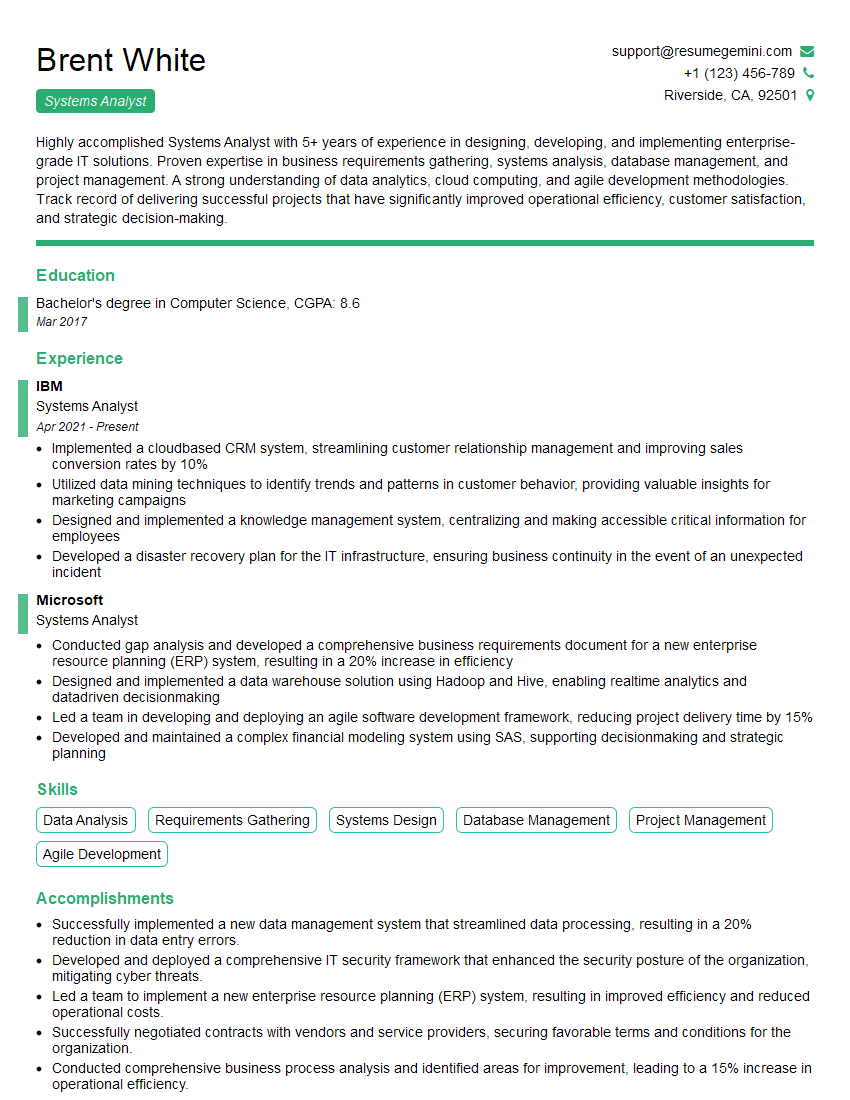
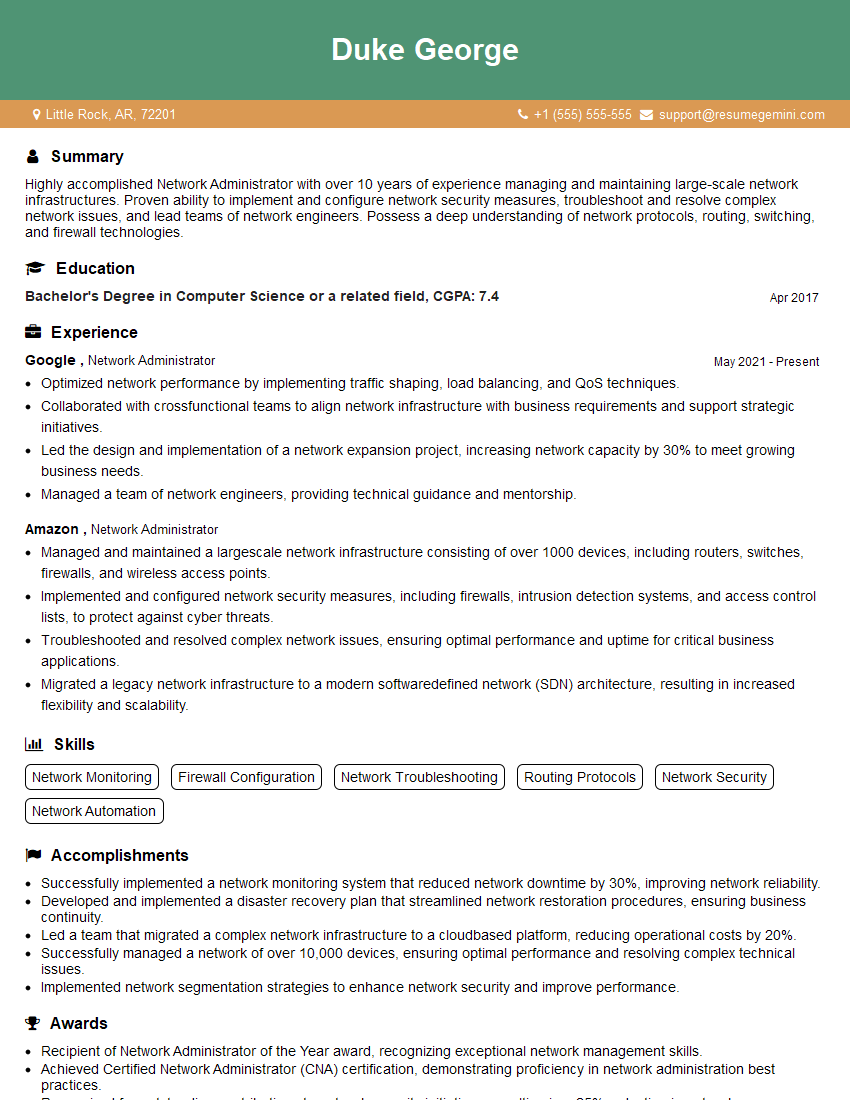
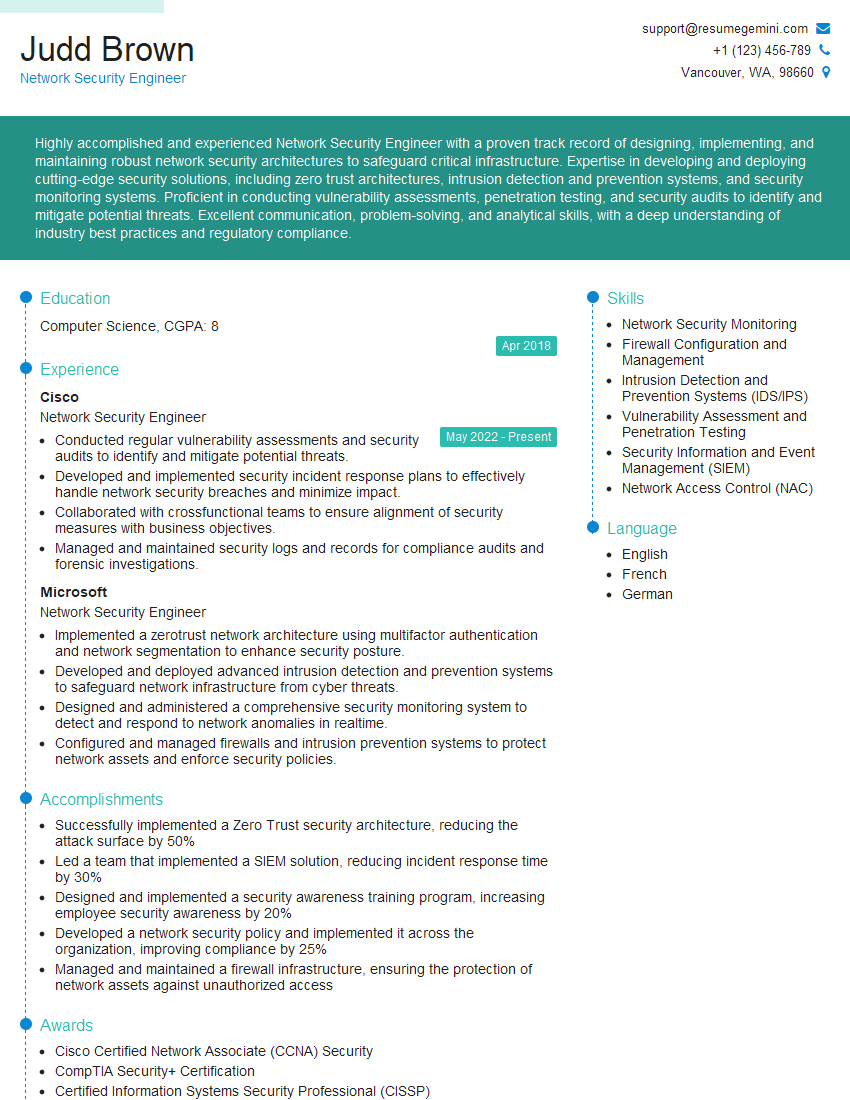
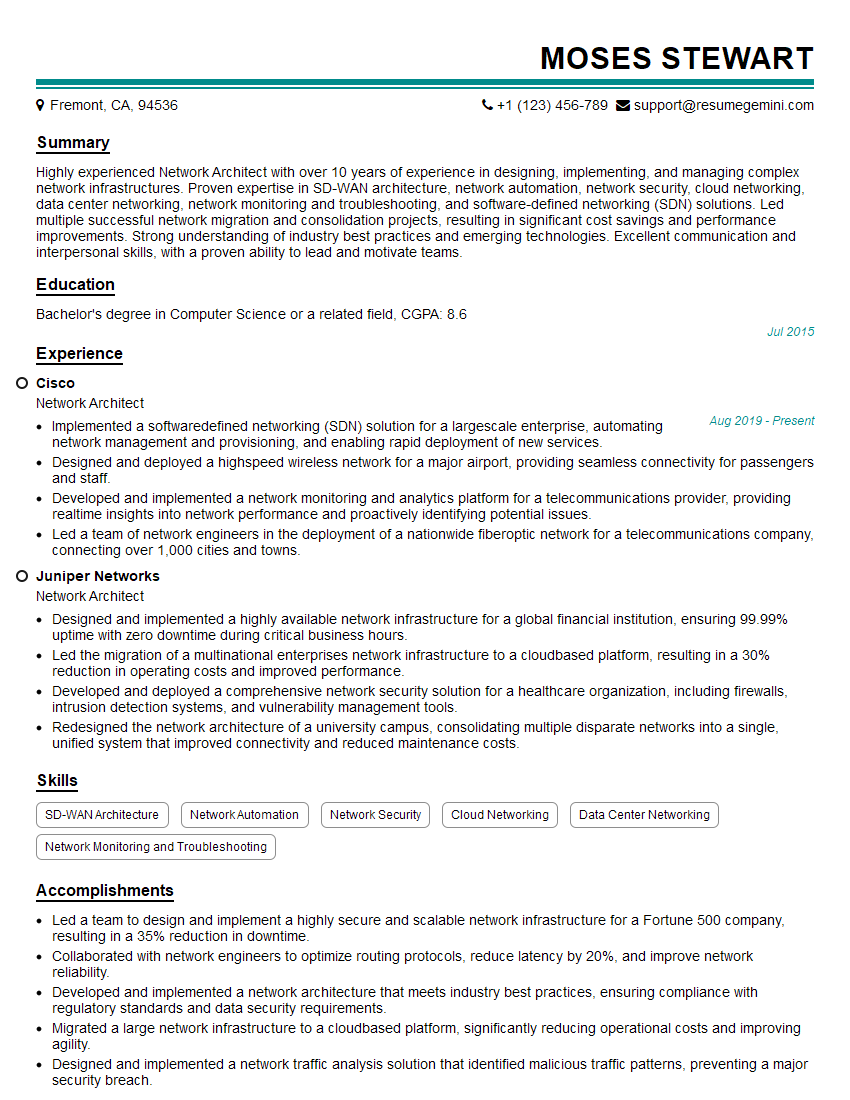
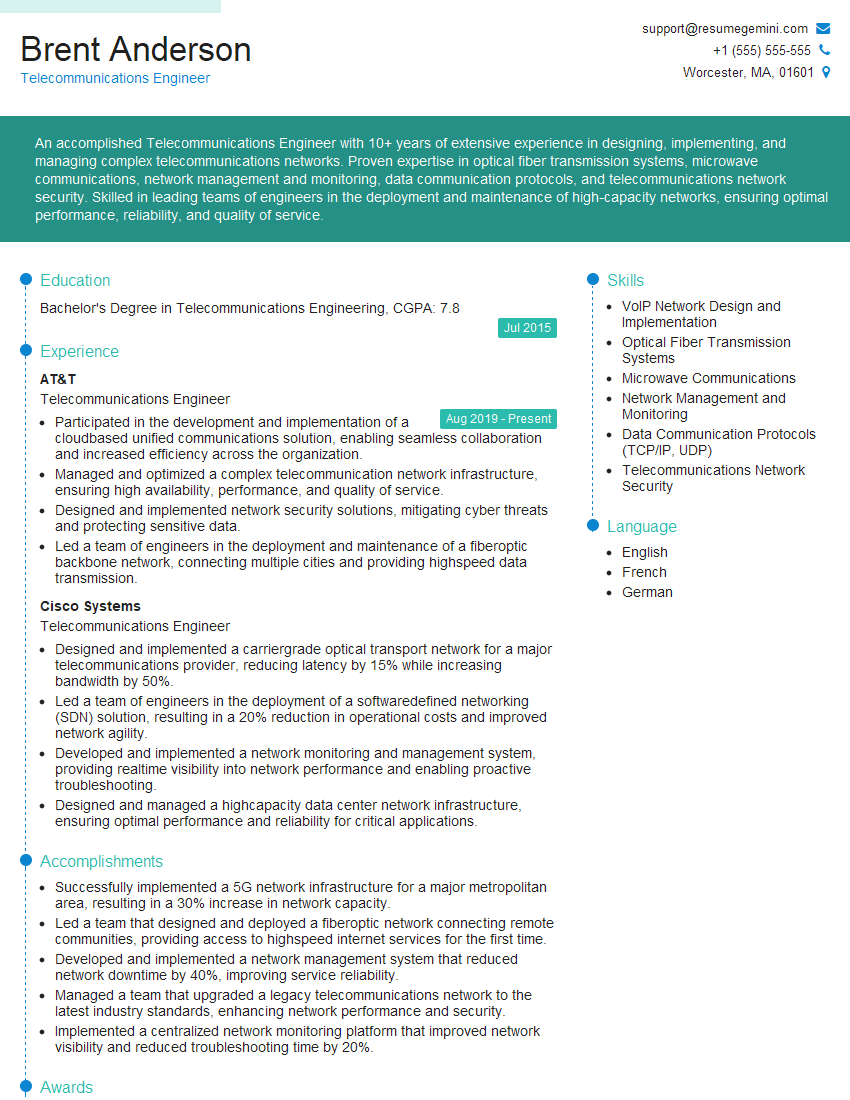
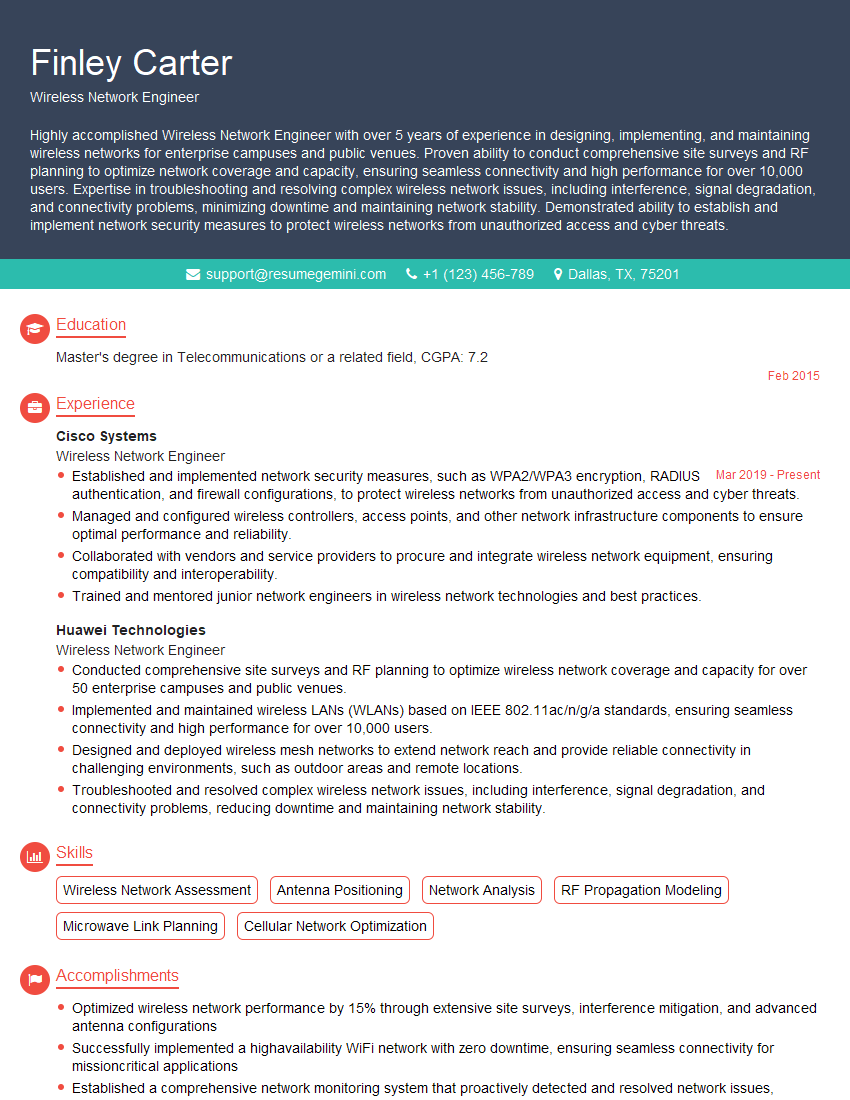
Mastering Communication Systems Integration and Connectivity opens doors to exciting and rewarding careers in a rapidly evolving technological landscape. Proficiency in this area is highly sought after, significantly boosting your job prospects and career growth potential. To maximize your chances, crafting a compelling and ATS-friendly resume is crucial. ResumeGemini is a trusted resource to help you build a professional and impactful resume that highlights your skills and experience effectively. ResumeGemini provides examples of resumes tailored specifically to Communication Systems Integration and Connectivity roles to help you create a winning application.

Explore more articles
Users Rating of Our Blogs
Share Your Experience
We value your feedback! Please rate our content and share your thoughts (optional).
What Readers Say About Our Blog
Hello,
we currently offer a complimentary backlink and URL indexing test for search engine optimization professionals.
You can get complimentary indexing credits to test how link discovery works in practice.
No credit card is required and there is no recurring fee.
You can find details here:
https://wikipedia-backlinks.com/indexing/
Regards
NICE RESPONSE TO Q & A
hi
The aim of this message is regarding an unclaimed deposit of a deceased nationale that bears the same name as you. You are not relate to him as there are millions of people answering the names across around the world. But i will use my position to influence the release of the deposit to you for our mutual benefit.
Respond for full details and how to claim the deposit. This is 100% risk free. Send hello to my email id: [email protected]
Luka Chachibaialuka
Hey interviewgemini.com, just wanted to follow up on my last email.
We just launched Call the Monster, an parenting app that lets you summon friendly ‘monsters’ kids actually listen to.
We’re also running a giveaway for everyone who downloads the app. Since it’s brand new, there aren’t many users yet, which means you’ve got a much better chance of winning some great prizes.
You can check it out here: https://bit.ly/callamonsterapp
Or follow us on Instagram: https://www.instagram.com/callamonsterapp
Thanks,
Ryan
CEO – Call the Monster App
Hey interviewgemini.com, I saw your website and love your approach.
I just want this to look like spam email, but want to share something important to you. We just launched Call the Monster, a parenting app that lets you summon friendly ‘monsters’ kids actually listen to.
Parents are loving it for calming chaos before bedtime. Thought you might want to try it: https://bit.ly/callamonsterapp or just follow our fun monster lore on Instagram: https://www.instagram.com/callamonsterapp
Thanks,
Ryan
CEO – Call A Monster APP
To the interviewgemini.com Owner.
Dear interviewgemini.com Webmaster!
Hi interviewgemini.com Webmaster!
Dear interviewgemini.com Webmaster!
excellent
Hello,
We found issues with your domain’s email setup that may be sending your messages to spam or blocking them completely. InboxShield Mini shows you how to fix it in minutes — no tech skills required.
Scan your domain now for details: https://inboxshield-mini.com/
— Adam @ InboxShield Mini
Reply STOP to unsubscribe
Hi, are you owner of interviewgemini.com? What if I told you I could help you find extra time in your schedule, reconnect with leads you didn’t even realize you missed, and bring in more “I want to work with you” conversations, without increasing your ad spend or hiring a full-time employee?
All with a flexible, budget-friendly service that could easily pay for itself. Sounds good?
Would it be nice to jump on a quick 10-minute call so I can show you exactly how we make this work?
Best,
Hapei
Marketing Director
Hey, I know you’re the owner of interviewgemini.com. I’ll be quick.
Fundraising for your business is tough and time-consuming. We make it easier by guaranteeing two private investor meetings each month, for six months. No demos, no pitch events – just direct introductions to active investors matched to your startup.
If youR17;re raising, this could help you build real momentum. Want me to send more info?
Hi, I represent an SEO company that specialises in getting you AI citations and higher rankings on Google. I’d like to offer you a 100% free SEO audit for your website. Would you be interested?
Hi, I represent an SEO company that specialises in getting you AI citations and higher rankings on Google. I’d like to offer you a 100% free SEO audit for your website. Would you be interested?
good