The thought of an interview can be nerve-wracking, but the right preparation can make all the difference. Explore this comprehensive guide to Communication with Train Crew interview questions and gain the confidence you need to showcase your abilities and secure the role.
Questions Asked in Communication with Train Crew Interview
Q 1. Describe your experience communicating critical information under pressure.
Communicating critical information under pressure requires a calm, methodical approach, prioritizing clarity and conciseness. My experience includes numerous instances of relaying urgent instructions during track closures, unexpected signal failures, and even emergency evacuations. I’ve learned to prioritize the key message, using simple, direct language, and confirming understanding through repetition and feedback. For example, during a sudden power outage affecting a section of track, I had to quickly inform multiple train crews about the affected area, speed restrictions, and alternative routes. I used a standardized procedure, repeating the key information three times and requesting verbal confirmation from each crew before moving on. This systematic approach minimized confusion and ensured all crews understood and acted on the crucial safety directives.
Q 2. How would you handle a situation where a train crew member misinterprets a crucial instruction?
Misinterpretation of crucial instructions can have serious consequences. My first step would be to politely but firmly acknowledge the misunderstanding, avoiding accusatory language. I would then re-state the instructions clearly, using different phrasing if necessary to ensure comprehension. I find visual aids, like diagrams or maps when appropriate, incredibly helpful to clarify complex instructions. I would then ask the crew member to repeat the instructions in their own words, demonstrating their understanding. If the misunderstanding persists, I would involve a supervisor and document the entire situation thoroughly to prevent recurrence. For example, if a crew member misinterpreted a signal instruction, I’d re-explain it using a combination of verbal instructions and perhaps referencing the signal rules, and have them repeat back what they need to do before proceeding.
Q 3. Explain your proficiency in using different communication technologies within a railway environment (e.g., radio, telephone, computer systems).
Proficiency in various communication technologies is paramount in railway operations. I’m experienced in using train radios (including VHF and UHF), landlines, and specialized railway computer systems for dispatching and information sharing. I understand the limitations and strengths of each: train radios are crucial for immediate communication, but prone to interference; landlines offer better clarity but are less mobile. Computer systems provide access to real-time data, but are reliant on functioning infrastructure. I’m adept at adapting my communication style to the technology in use, maintaining a consistent focus on clear, concise messaging regardless of the medium. For instance, using standardized abbreviations on the radio helps convey information quickly, while detailed reports are better suited for computer systems, allowing the creation of an audit trail for later review.
Q 4. How would you ensure clear and concise communication with train crews of varying experience levels?
Effective communication with diverse experience levels necessitates adapting my approach. For experienced crews, I can use more technical jargon and assume a higher level of situational awareness. For newer crews, I employ simpler language, avoiding technical terms unless absolutely necessary, and focus on clearly stating the steps required. I always confirm understanding with every crew, regardless of experience, using techniques like repetition, rephrasing, and seeking clarification. I believe in creating a supportive communication environment where asking clarifying questions is encouraged, ensuring safety takes priority over perceived competence.
Q 5. What strategies do you use to maintain effective communication during emergencies?
During emergencies, maintaining effective communication is crucial. My strategies include utilizing pre-established emergency protocols, using clear, concise, and prioritized instructions, and confirming acknowledgement from each recipient. I would switch to the most reliable communication channel available while ensuring clear escalation procedures are followed, keeping supervisors informed. The use of standardized terminology and avoiding jargon are paramount. Finally, maintaining calm and composure is critical, providing clear direction to prevent panic and confusion. This organized approach allows for swift, coordinated responses in high-stress scenarios. I remember an incident where a derailment occurred; following pre-established protocols, my calm communication helped minimize further harm and aided swift recovery efforts.
Q 6. How would you relay complex information to a train crew in a simple and understandable manner?
Relaying complex information simply involves breaking down complex procedures into smaller, manageable steps. Using analogies and visual aids (where possible) significantly enhances understanding. For instance, instead of explaining complex signal configurations, I would use a simplified diagram or analogy to help the crew understand which signals to look out for and their corresponding meaning. I would also prioritize the key information, focusing on the most critical aspects of the task. Active listening and checking for understanding throughout the explanation is essential. This approach transforms complex instructions into clear, actionable steps, reducing the likelihood of errors and ensuring safety.
Q 7. Describe a situation where you had to resolve a communication breakdown with a train crew. What was the outcome?
I once experienced a communication breakdown where a crew misunderstood a track maintenance schedule. This resulted in a near-miss incident as a train approached a section undergoing maintenance. I resolved this by immediately addressing the misunderstanding, clarifying the schedule using a map and reiterating the importance of checking the timetable thoroughly. I then followed up by sending a written confirmation of the schedule changes via the computer system, creating a readily accessible record for future reference. Afterward, I conducted a brief training session with the crew to ensure better understanding of communication protocols and timetable interpretation. The outcome was a strengthened communication process, improved crew training, and a reinforced emphasis on verifying crucial operational information. The near-miss was a valuable learning experience, leading to improved safety procedures.
Q 8. How familiar are you with railway communication protocols and procedures?
I possess extensive familiarity with various railway communication protocols and procedures, including those governed by national and international regulations. This encompasses a deep understanding of radio communication (using VHF and UHF frequencies), train control systems, and emergency response protocols. I’m proficient in using standard operating procedures for communicating train orders, safety advisories, and operational updates. My knowledge also extends to the use of various communication technologies like the Automatic Train Control (ATC) systems and data transmission systems, understanding their limitations and capabilities.
- Radio Communication: Proficient in using railway radios, adhering to strict communication protocols, including clear enunciation, proper terminology, and concise message delivery. This includes handling emergency situations and utilizing appropriate call signs.
- Train Control Systems: Understanding how different train control systems integrate with communication systems, allowing for efficient and safe train operations. This involves awareness of potential system failures and fallback procedures.
- Written Communication: Experience in creating and interpreting written train orders, ensuring accuracy and clarity in communication, thereby minimizing potential misinterpretations.
Q 9. How would you adapt your communication style to different personality types within a train crew?
Adapting communication style to different personality types within a train crew is crucial for effective teamwork and safety. I employ active listening and observation to gauge individual communication preferences. For example, with a crew member who prefers concise instructions, I would deliver information directly and efficiently. With a more detail-oriented crew member, I would provide more thorough explanations and background information. I would also adjust my tone and language accordingly – maintaining professionalism while adopting a more friendly and collaborative approach with some, and a more direct and authoritative one when necessary, especially in emergency situations.
- Direct and Concise: For crews who prefer efficiency, I would use clear, direct language and avoid unnecessary details.
- Detailed and Explanatory: For those who require more information, I’d provide thorough explanations and contextual details.
- Empathetic and Collaborative: Adapting my tone to foster a sense of teamwork and understanding, especially during stressful situations.
Q 10. Explain how you would prioritize multiple communication requests from different train crews.
Prioritizing multiple communication requests from different train crews requires a systematic approach. I use a combination of urgency and safety as the primary factors. Requests related to immediate safety concerns, like track obstructions or equipment malfunctions, would take precedence over routine operational updates. I employ a triage system, prioritizing based on the potential impact on safety and operational disruptions. I would also document all requests and their processing order, ensuring accountability and transparency.
- Safety First: Immediate safety threats always take priority.
- Urgency Level: Categorize requests based on urgency (high, medium, low).
- Impact Assessment: Evaluate the potential impact of each request on overall train operations.
- Documentation: Maintain a log of all communications to track progress and ensure accountability.
Q 11. How do you ensure the accuracy of information relayed to train crews?
Ensuring accuracy is paramount. I implement a three-step verification process: 1) Source Verification: Confirming the reliability of the information source before relaying it. 2) Cross-referencing: Checking information with multiple sources whenever possible to ensure consistency. 3) Clear and Unambiguous Communication: Using precise language, avoiding jargon, and repeating key information for confirmation. In addition, utilizing written confirmations whenever possible, particularly for critical instructions.
For example, if I receive information about a track closure, I’d verify it through multiple channels (e.g., dispatcher, track supervisor) before transmitting it to the train crews. I would also use clear terminology and potentially even a visual aid (if available) to ensure complete understanding.
Q 12. Describe your experience with using radio communication in a noisy or challenging environment.
I have extensive experience using radio communication in noisy environments, such as busy train yards or during inclement weather. My approach involves using clear and concise language, repeating messages for confirmation, and utilizing appropriate radio etiquette. I also rely on visual cues whenever possible to supplement verbal communication. In particularly challenging auditory conditions, I would switch to alternative communication methods if available, such as written messages or alternative communication channels if the situation warrants.
For example, during a storm, I might supplement radio communication with text messages to relay critical information, ensuring that the message is received and understood, regardless of the noise levels.
Q 13. What steps would you take to confirm that a train crew has received and understood an important message?
Confirming receipt and understanding of critical messages is crucial. I use a combination of techniques: 1) Readback Confirmation: Requesting the crew to read back the message verbatim to ensure accurate transmission. 2) Question and Answer: Asking clarifying questions to ensure the crew understands the instructions and implications. 3) Acknowledgment: Requesting a specific acknowledgement (e.g., “Message received and understood”) from the crew. If confirmation is not received or there’s ambiguity, I would retransmit the message using a different method or channel, if possible, until successful confirmation is received.
Q 14. How do you handle conflicting instructions or information from different sources?
Handling conflicting instructions requires a calm and methodical approach. I would first identify the source of each instruction and evaluate its credibility. Next, I would attempt to reconcile the discrepancies, possibly by contacting the issuing parties directly to clarify the differences. If the conflict cannot be resolved immediately, I would escalate the issue to a senior manager, providing detailed information on each conflicting instruction. In the interim, I’d prioritize safety and temporarily suspend potentially conflicting actions until the discrepancy is resolved. Maintaining clear and concise documentation of all communication and actions is vital throughout this process.
Q 15. How do you manage communication during a scheduled or unscheduled track closure?
Managing communication during a track closure, whether scheduled or unscheduled, requires a multi-faceted approach focused on clear, timely, and consistent information dissemination. For scheduled closures, we utilize pre-planned communication strategies. This involves notifying train crews well in advance through official channels like train dispatch systems, internal communication platforms, and potentially even direct contact. We provide detailed information about the closure: affected lines, times, alternative routes (if available), and safety procedures. We also usually have a designated point of contact to handle any queries or concerns from train crews.
Unscheduled closures demand immediate and decisive action. The primary communication method will depend on the severity and nature of the closure. Emergency alert systems will broadcast critical information to all relevant personnel. Train dispatchers will directly contact affected trains using radio communication or other available means. The focus here shifts to ensuring immediate safety and preventing collisions. After initial safety measures are in place, a systematic notification of all stakeholders will follow, including detailed reasons and predicted resolution time.
Imagine a scenario where a landslide causes an unscheduled closure: Immediate communication to halt all approaching trains would be paramount. Then, an assessment of the situation is broadcast, followed by updates every 15-30 minutes until the line is reopened. This ensures train crews are fully informed and can adjust their schedules accordingly.
Career Expert Tips:
- Ace those interviews! Prepare effectively by reviewing the Top 50 Most Common Interview Questions on ResumeGemini.
- Navigate your job search with confidence! Explore a wide range of Career Tips on ResumeGemini. Learn about common challenges and recommendations to overcome them.
- Craft the perfect resume! Master the Art of Resume Writing with ResumeGemini’s guide. Showcase your unique qualifications and achievements effectively.
- Don’t miss out on holiday savings! Build your dream resume with ResumeGemini’s ATS optimized templates.
Q 16. How would you address a situation where communication equipment malfunctions?
Communication equipment malfunctions are a serious concern, and we have established protocols to address them. The first step involves attempting to diagnose the problem; is it a temporary glitch, a power outage, or a more serious fault with the device itself? We have backup systems in place, including alternative communication methods such as mobile phones, pre-arranged meeting points, and even designated runners in emergency cases.
If the issue impacts a significant part of the communication network, our protocols dictate escalation to the relevant engineering team for immediate repair. In the meantime, we utilize available alternative communication channels to inform all impacted train crews and control centers, emphasizing safety procedures and any necessary adjustments to operations. Documentation is crucial; we record every step taken during the malfunction, including the time of failure, steps attempted for resolution, alternative communication methods used, and the time the system was restored to full functionality. This detailed record is essential for analysis and improving our contingency plans.
Q 17. Explain your knowledge of relevant railway regulations concerning communication procedures.
My understanding of railway regulations concerning communication procedures is extensive. I am fully conversant with all relevant national and international standards pertinent to train dispatching, crew communication, and emergency response protocols. These regulations cover aspects such as:
- Frequency usage and allocation: Strict adherence to allocated radio frequencies and appropriate procedures for channel access.
- Message formats and standards: Using standardized formats and clear, concise language to avoid ambiguity.
- Emergency communication procedures: Well-defined emergency response protocols which must be immediately followed during emergencies, including the use of designated emergency frequencies and clear communication channels.
- Record keeping and documentation: All communications, especially those involving incidents or irregularities, must be carefully documented to facilitate investigations.
Ignoring these regulations can lead to serious consequences, including collisions, delays, and potential safety hazards. My experience includes regular training and assessments to ensure compliance.
Q 18. Describe your experience with using communication systems to coordinate train movements.
I have extensive experience coordinating train movements using various communication systems, including radio dispatch systems, centralized traffic control (CTC) systems, and mobile data terminals (MDTs). I am adept at utilizing these technologies for safe and efficient train operations. For example, I have been involved in coordinating the movement of multiple trains on a busy line, providing them with real-time updates on track occupancy, speed restrictions, and any necessary diversions.
One specific instance involves managing a temporary single-track operation due to scheduled maintenance. Effective communication was crucial to ensure smooth and safe passage of trains in both directions, avoiding potential delays. Using the CTC system to manage train scheduling and providing real-time updates to train crews via radio dispatch proved vital in preventing conflicts and maintaining an efficient service. Effective use of MDTs to display electronic schedules and instructions provided an additional layer of support.
Q 19. How would you investigate and report a communication-related incident?
Investigating and reporting a communication-related incident requires a methodical and thorough approach. First, I would gather all relevant information, including the time and location of the incident, the individuals involved, the nature of the communication failure, and any resulting consequences. This may involve interviewing witnesses, reviewing communication logs, and examining any equipment involved.
The next step involves analyzing the gathered information to determine the root cause of the communication failure. Was it equipment malfunction, human error, or a combination of factors? A detailed report is then compiled, outlining the incident, the investigation process, and the findings, including any recommendations for preventing similar incidents in the future. This report is submitted through the appropriate channels to relevant authorities and management to take the necessary corrective actions.
For example, if a radio communication blackout occurred, the report would detail the duration of the outage, the attempts made to restore communication, the impact on train operations, and any safety measures implemented. The investigation would determine if the outage was due to equipment failure, interference, or operator error, and would include recommendations to upgrade equipment or improve training.
Q 20. What are your strategies for preventing communication errors?
Preventing communication errors involves a multi-pronged approach focused on proactive measures, training, and robust systems. This includes:
- Regular equipment maintenance and testing: Preventative maintenance schedules help detect and fix potential problems before they impact operations.
- Comprehensive training programs: Regular training ensures that all personnel are proficient in using communication equipment and adhering to established procedures.
- Standardized communication protocols: Clear, consistent protocols minimize ambiguity and ensure efficient communication.
- Redundancy and backup systems: Having backup systems in place ensures communication remains available even during equipment failures.
- Clear escalation procedures: Defined processes for reporting and resolving communication issues ensure timely responses.
Proactive approaches like simulated emergency drills enhance the preparedness of all personnel, fostering the ability to handle real-world scenarios confidently and efficiently. Regularly reviewing and updating these protocols and systems, based on lessons learned from past incidents, ensures continuous improvement in safety and efficiency.
Q 21. How would you ensure effective communication with train crews in a multi-lingual environment?
Ensuring effective communication in a multi-lingual environment necessitates a comprehensive strategy. This may involve the use of multilingual communication equipment, such as radios and communication systems that support multiple languages, providing translated instructions and documentation. Furthermore, we ensure the availability of trained translators for situations requiring immediate translation.
We also encourage the use of visual aids, diagrams, and standardized symbols to complement verbal communication, making instructions clearer and easier to understand regardless of language. Training programs should include cultural sensitivity awareness, as well as the ability to recognize and react to diverse communication styles. Having a diverse workforce that reflects the languages spoken by the crews is another approach to improving communication effectiveness, providing better understanding and familiarity for all personnel.
The use of standardized hand signals or simple, widely recognized icons can help bridge language barriers in emergencies or critical situations where voice communication may be difficult or unreliable. For example, a universal symbol for ‘stop’ is easily understood regardless of language.
Q 22. Explain your understanding of the importance of clear and concise communication in maintaining rail safety.
Clear and concise communication is paramount in rail safety because it directly impacts the prevention of accidents and incidents. Ambiguity or delayed information can have catastrophic consequences. Think of it like this: a single miscommunication about a track switch could lead to a derailment. Effective communication ensures that all parties involved – train drivers, signal operators, dispatchers, and maintenance crews – are on the same page, understand instructions precisely, and can react appropriately to changing situations.
- Precision of language: Using precise terminology avoids misinterpretations. For example, instead of saying ‘the train is delayed,’ specifying ‘the train is delayed by 15 minutes due to signal failure at Milepost 12’ provides crucial context.
- Timeliness of information: Timely updates are crucial. Delays in relaying critical information can lead to cascading failures. Imagine a sudden weather event; swift communication ensures trains are slowed or stopped before encountering dangerous conditions.
- Confirmation of understanding: A critical component is verifying that the message is received and understood. This could involve a simple ‘acknowledged’ response or a more detailed confirmation of specific instructions.
Q 23. How familiar are you with various types of railway communication systems (e.g., GSM-R, TETRA)?
I’m highly familiar with various railway communication systems. My experience encompasses both legacy systems and modern digital technologies. GSM-R (Global System for Mobile Communications – Railway) is a prominent example, offering reliable voice and data communication across vast distances. TETRA (Terrestrial Trunked Radio) is another key technology used for secure, group communication, especially crucial for coordinating emergency responses. I’ve also worked with older VHF radio systems and am aware of the challenges in transitioning to newer technologies while maintaining operational continuity.
- GSM-R: Offers high capacity, good coverage, and data services, ideal for large networks.
- TETRA: Provides secure, group communication with features like individual and group calling, ideal for safety-critical situations.
- VHF Radio: Older technology, still used in some areas, offers line-of-sight communication, prone to interference and limited bandwidth.
Understanding the strengths and limitations of each system is vital for selecting the appropriate communication method for different scenarios. For example, GSM-R is preferable for conveying detailed information during planned maintenance, while TETRA might be the better choice for immediate responses to unexpected events.
Q 24. How would you train new employees on effective communication practices within the railway context?
Training new employees involves a multi-faceted approach that combines theoretical knowledge with practical exercises. The training would be modular, incorporating:
- Classroom instruction: Covering communication protocols, emergency procedures, and the specifics of the railway communication systems used.
- Simulated scenarios: Role-playing various communication scenarios, such as responding to emergencies, coordinating train movements during delays, and handling difficult conversations with passengers or colleagues.
- On-the-job training: Mentorship by experienced personnel to observe and participate in real-world communication interactions.
- Regular refresher courses: Ensuring continuous improvement and updates on new technologies or procedures.
Emphasis is placed on clear, concise language, active listening, and the importance of confirming understanding. We utilize various communication tools, such as standardized forms and checklists, to ensure consistency and minimise errors. For instance, we use mock emergency scenarios that test their abilities to quickly transmit crucial information concisely and accurately under pressure.
Q 25. Describe your experience working collaboratively with different departments to ensure effective communication related to train operations.
I’ve extensively collaborated with various departments, including operations, maintenance, signaling, and safety, to improve communication related to train operations. A key project involved streamlining the reporting process for track maintenance updates. By working closely with the maintenance team, we developed a standardized digital reporting system that automatically alerts relevant personnel (train dispatchers, drivers) of track work and potential delays. This reduced miscommunication, improved response times and enhanced safety.
Effective collaboration requires open communication channels, regular meetings, and a shared understanding of goals. The use of shared digital platforms, such as intranets, for updates and alerts has proven highly effective. For example, I worked with the IT department to design a system that allows for real-time tracking of train movements and communication with crews, greatly improving decision-making during unexpected events.
Q 26. How do you maintain accurate records of all communication with train crews?
Maintaining accurate records is crucial for accountability, auditing, and incident investigation. We utilise a combination of methods:
- Digital logging systems: Modern communication systems automatically record all transmissions, including time stamps, participants, and the content of the communication. These logs are securely stored and easily accessible for review.
- Written records: Important communications, particularly those related to safety incidents, are also documented in written reports, providing a permanent record.
- Data archiving: All communication records are archived securely according to industry regulations and data retention policies.
Regular audits are conducted to ensure the integrity and accuracy of the records. This rigorous approach ensures that we can always reconstruct the chain of communication surrounding any event, critical for investigations and continuous improvement.
Q 27. Describe a time you successfully communicated complex technical information to a non-technical audience.
During a major signaling system upgrade, I needed to explain the technical complexities of the new system to a group of non-technical train drivers. Instead of using jargon, I used simple analogies and visuals. For instance, I compared the old system to an older car with manual controls, and the new system to a modern car with advanced features. I also used diagrams and flowcharts to illustrate the process and avoid confusion.
By focusing on the practical impact of the upgrade – improved safety, reduced delays, and increased efficiency – I was able to gain their understanding and cooperation. I also ensured that there was ample time for questions and a feedback session, addressing their concerns directly and providing clear answers. The success of this communication was evident in the smooth transition to the new system with minimal disruption to train operations.
Key Topics to Learn for Communication with Train Crew Interview
- Effective Verbal Communication: Understanding clear and concise language, active listening skills, and adapting communication style to different situations (e.g., emergency vs. routine updates).
- Non-Verbal Communication: Recognizing and interpreting body language, using hand signals effectively, and ensuring visual clarity in diverse weather conditions.
- Radio Communication Protocols: Mastering proper radio etiquette, using standardized terminology, and handling potential communication breakdowns efficiently.
- Emergency Communication Procedures: Knowing and applying protocols for reporting incidents, coordinating responses, and ensuring the safety of passengers and crew in critical situations.
- Technological Communication Tools: Familiarity with various communication technologies used in train operations (e.g., train-to-ground communication systems, onboard displays) and troubleshooting basic technical issues.
- Conflict Resolution and Teamwork: Strategies for resolving disagreements, collaborating effectively with colleagues, and maintaining a positive and professional working relationship.
- Cultural Sensitivity and Diversity: Understanding and respecting diverse communication styles and adapting approaches to interact effectively with a multicultural workforce and passenger base.
- Documentation and Reporting: Accurately documenting all communication related to operational activities, incidents, and maintenance needs.
Next Steps
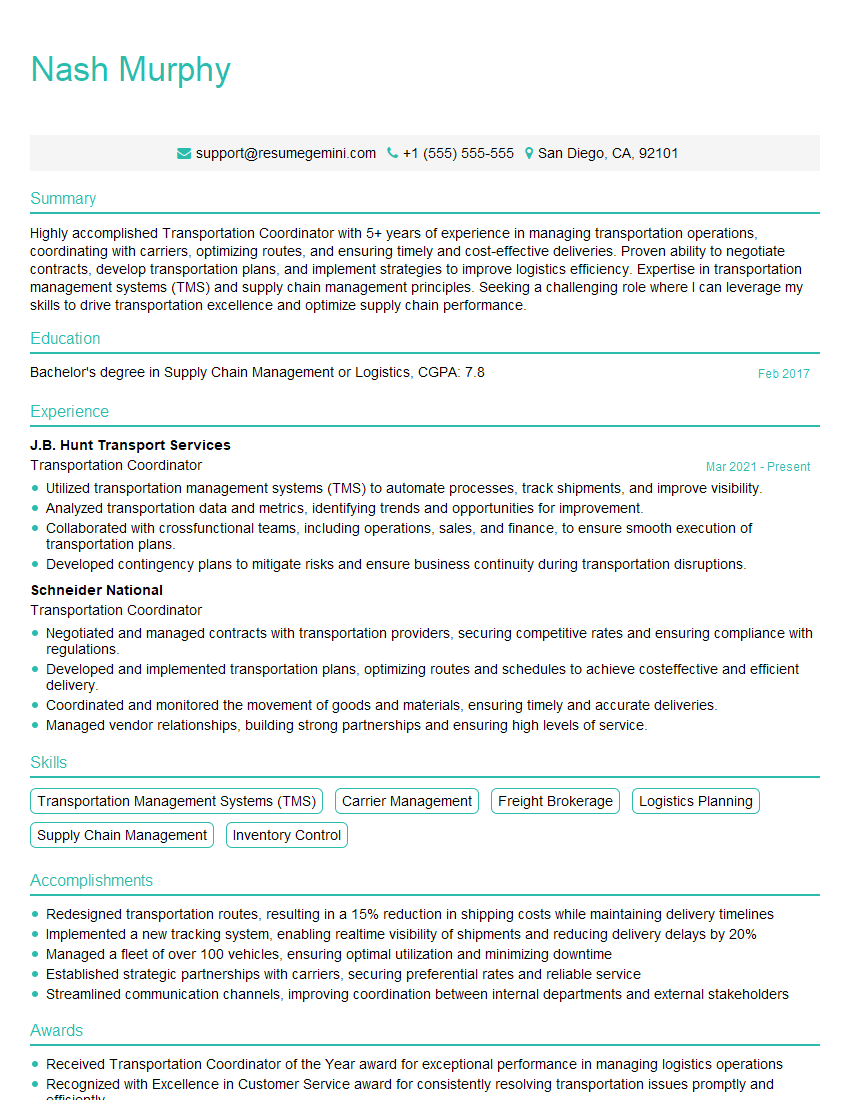
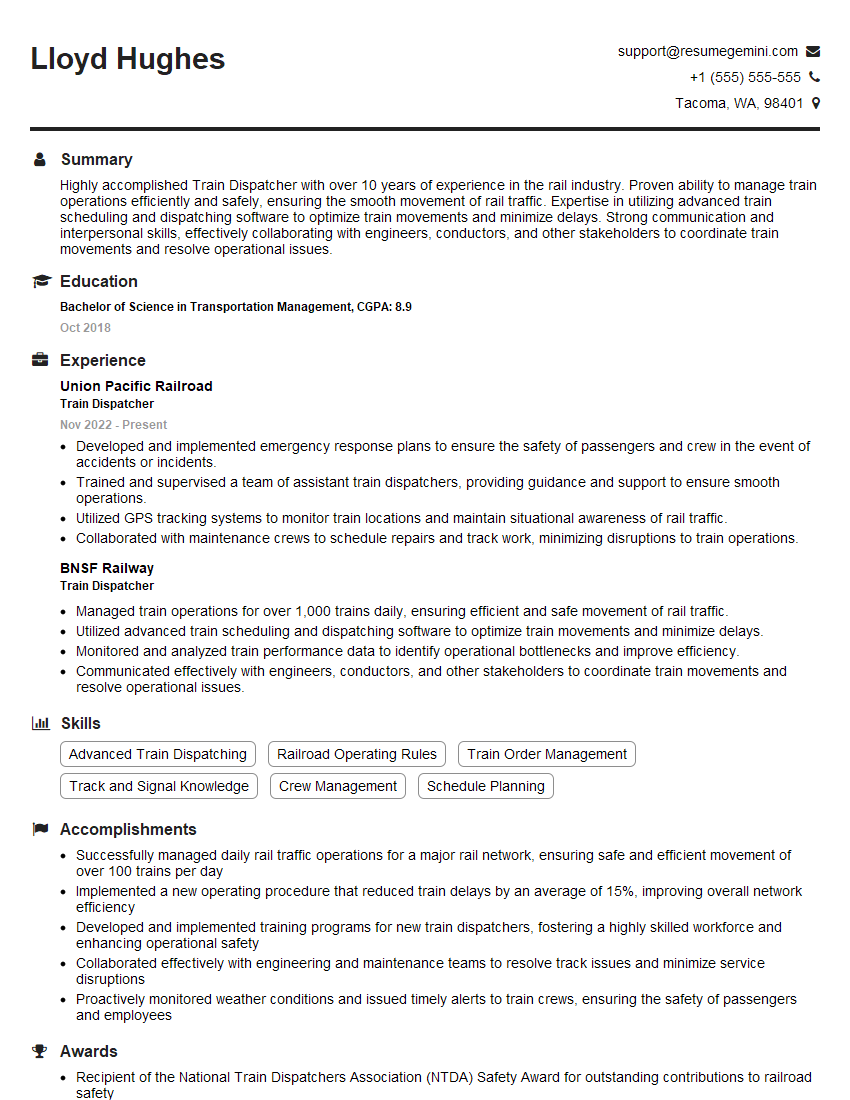
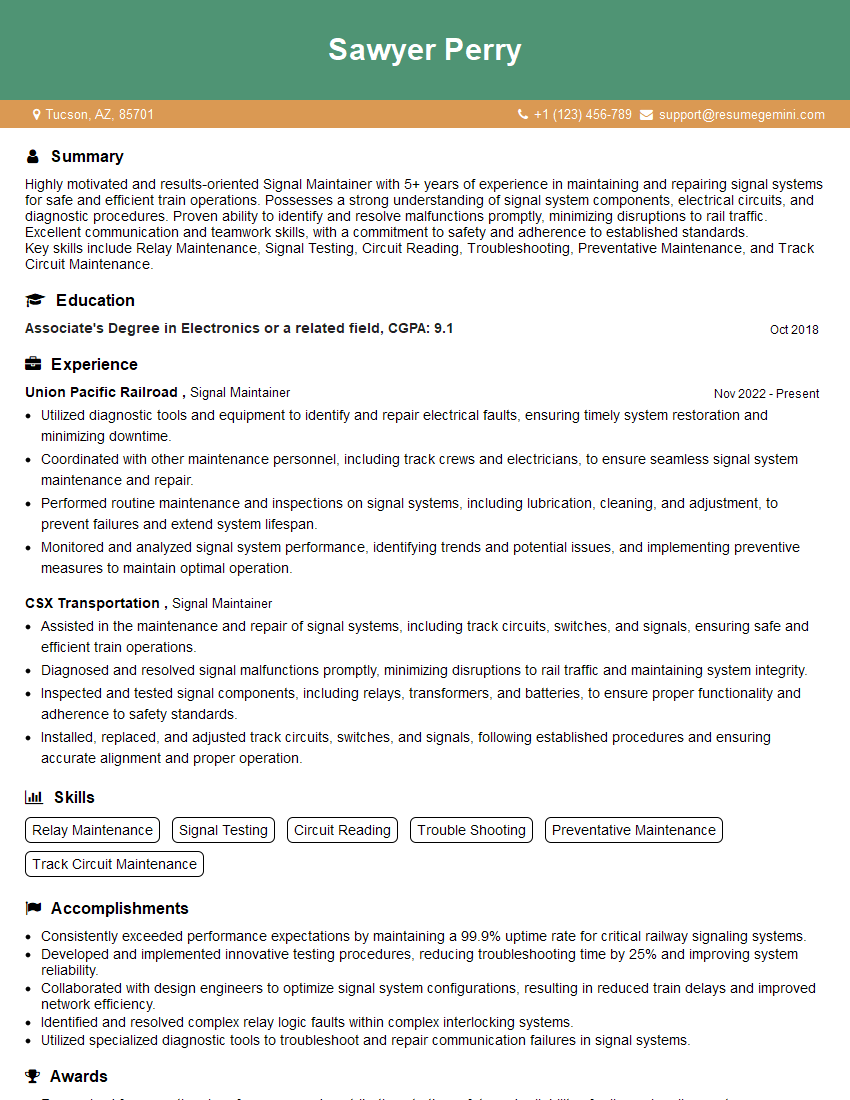
Mastering communication with train crews is crucial for a successful and rewarding career in the rail industry. It directly impacts operational efficiency, safety, and overall team performance. To significantly boost your job prospects, it’s essential to create a resume that Applicant Tracking Systems (ATS) can easily read and understand. ResumeGemini can help you build a professional, ATS-friendly resume that showcases your skills and experience effectively. We offer examples of resumes tailored specifically to Communication with Train Crew roles to help you create a compelling application that stands out from the competition.
Explore more articles
Users Rating of Our Blogs
Share Your Experience
We value your feedback! Please rate our content and share your thoughts (optional).
What Readers Say About Our Blog
Very informative content, great job.
good