Are you ready to stand out in your next interview? Understanding and preparing for Communications and Coordination interview questions is a game-changer. In this blog, we’ve compiled key questions and expert advice to help you showcase your skills with confidence and precision. Let’s get started on your journey to acing the interview.
Questions Asked in Communications and Coordination Interview
Q 1. Describe your experience developing and implementing a communication plan.
Developing and implementing a communication plan involves a systematic approach to ensure consistent and effective messaging. It starts with defining clear objectives – what do we want to achieve with our communication? This might be increasing brand awareness, launching a new product, or managing a crisis. Next, we identify our target audiences: who are we trying to reach, and what are their communication preferences? Then, we select the appropriate channels – email, social media, press releases, internal memos, etc. The plan also outlines key messages, ensuring consistency across all channels. Finally, we establish a timeline and metrics for measuring success. For example, in launching a new software product, we might use a combination of social media marketing campaigns, targeted email newsletters, and a press release to reach developers and businesses. We’d track website traffic, social media engagement, and sales figures to assess effectiveness.
I typically follow a five-step process: 1. Analysis: Defining goals and target audience. 2. Strategy: Choosing channels and key messages. 3. Development: Creating content and materials. 4. Implementation: Distributing the materials and managing communication channels. 5. Evaluation: Measuring results and adjusting as needed. This iterative approach ensures continuous improvement.
Q 2. How do you prioritize competing communication demands?
Prioritizing competing communication demands requires a strategic approach. I use a combination of techniques including urgency, importance, and impact analysis. I apply a matrix where I categorize tasks based on their urgency (immediate, short-term, long-term) and their importance (critical, important, less important) to the overall goals. The intersection of these factors dictates the priority. For example, addressing a critical customer complaint is more urgent and important than drafting a long-term marketing plan. Additionally, I utilize project management tools to visualize tasks, deadlines, and dependencies, helping me to effectively manage my time and resources.
Think of it like a firefighter: you wouldn’t focus on painting the fire station when a building is ablaze. Similarly, I focus on the most critical issues first.
Q 3. Explain your process for managing multiple projects simultaneously.
Managing multiple projects simultaneously requires strong organizational skills and efficient time management. I utilize project management methodologies such as Agile or Kanban, breaking down large projects into smaller, manageable tasks. This allows for better tracking of progress and identification of potential roadblocks. I prioritize tasks based on deadlines and dependencies, using tools like Gantt charts or project management software. Regular check-ins with team members are crucial for ensuring everyone is aligned and on track. Finally, I delegate effectively and communicate progress openly to avoid bottlenecks.
In my experience, using visual tools like Kanban boards to track progress of different projects greatly reduces the stress and risk of overlapping deadlines.
Q 4. What methods do you use to ensure consistent messaging across various platforms?
Ensuring consistent messaging across platforms involves creating a centralized repository of brand guidelines and key messages. This could be a style guide, a brand book, or a shared document accessible to all team members. I use templated materials, ensuring consistent tone, style, and branding across all communication channels. Regular training sessions and internal communication reinforce best practices. Finally, I establish clear communication protocols and feedback mechanisms to swiftly address inconsistencies.
For example, if we’re launching a marketing campaign, we would create a central document outlining the core messaging, tone, and visual assets, ensuring all social media posts, email newsletters, and website updates use the same language and style.
Q 5. How do you handle conflict resolution within a team communication setting?
Conflict resolution in team communication requires a proactive and empathetic approach. I facilitate open dialogue, encouraging all parties to express their perspectives. I focus on active listening, understanding the root cause of the conflict, and separating the issue from the person. I encourage collaborative problem-solving, looking for mutually acceptable solutions. Mediation techniques, such as finding common ground and compromise, are essential tools. If the conflict escalates, I might involve HR or senior management to provide additional support.
It’s vital to remember that conflict isn’t always negative; it can lead to innovation and improved team dynamics if handled constructively.
Q 6. Describe a time you had to adapt your communication style to different audiences.
Adapting communication style to different audiences is crucial for effective communication. In one instance, I was tasked with communicating complex technical information to both a highly technical engineering team and a non-technical executive team. For the engineers, I used precise technical language and detailed explanations. For the executives, I provided a high-level overview, focusing on key takeaways and business implications, avoiding jargon and using simple, clear language. The key is understanding the audience’s knowledge base, interests, and communication preferences, and tailoring your message accordingly. Using visuals, storytelling, and appropriate channels can further enhance understanding.
Think of it like speaking to a child versus an adult – you wouldn’t use the same vocabulary and level of detail.
Q 7. How do you measure the effectiveness of your communication strategies?
Measuring the effectiveness of communication strategies involves setting clear, measurable goals at the outset. This could involve tracking key metrics such as website traffic, social media engagement, sales conversions, customer satisfaction scores, or employee feedback. We use analytics tools to monitor these metrics and assess the impact of our communication efforts. Regular reporting and analysis help to identify what’s working and what needs improvement. A/B testing of different communication approaches can provide valuable insights. Qualitative feedback, such as surveys or focus groups, provides valuable context to quantitative data.
Using a data-driven approach helps to refine our strategies and maximize our impact.
Q 8. How familiar are you with various communication channels (email, social media, presentations)?
I’m highly proficient in utilizing various communication channels, tailoring my approach based on the message, audience, and desired outcome. Email remains a cornerstone for formal communication and detailed information sharing. For instance, I use email to send project briefs, meeting agendas, and formal reports. Social media platforms, like LinkedIn and, where appropriate, others, are valuable for networking, sharing updates, and fostering a sense of community. I carefully select the platform based on the target audience and the nature of the communication. Finally, presentations are crucial for delivering impactful messages to large audiences, whether it’s a team update, a client presentation, or a keynote speech. I adapt my presentation style to the specific audience and context, ensuring clarity and engagement through visual aids and compelling storytelling.
For example, when launching a new product, I might leverage a visually engaging presentation for a client meeting, followed by a series of email updates and targeted social media posts to keep various stakeholders informed. This multi-channel approach guarantees broad reach and ensures everyone receives the information they need, in the format they prefer.
Q 9. What tools or software do you use to manage communication and coordination?
Effective communication and coordination hinge on the right tools. My go-to tools include project management software such as Asana or Monday.com for task assignment, progress tracking, and centralizing communication threads. For real-time collaboration and quick updates, I leverage platforms like Slack or Microsoft Teams. These platforms allow for instant messaging, file sharing, and video conferencing. For scheduling and managing meetings, I rely on tools like Calendly or Outlook, ensuring efficient time management and minimizing scheduling conflicts. Finally, for document management and version control, I utilize tools like Google Drive or SharePoint, guaranteeing easy access and preventing confusion from multiple versions.
I strategically select and integrate these tools depending on the project’s scale, complexity, and team dynamics. For example, a small team might thrive with Slack and a shared Google Drive, while a large, geographically dispersed team might necessitate a more robust solution like Asana integrated with video conferencing tools. The key is selecting the right blend of tools for optimal workflow and communication.
Q 10. How do you build and maintain relationships with stakeholders?
Building and maintaining strong relationships with stakeholders is paramount. This involves active listening, empathy, and consistent, transparent communication. I prioritize understanding their needs, concerns, and perspectives. I achieve this through regular check-ins, both formal and informal, using a variety of communication methods tailored to the individual. For example, a quick phone call might suffice for a daily update with a close collaborator, while a more formal email might be needed to communicate project milestones to senior management. I strive to proactively address any issues, providing timely and relevant information, and actively soliciting feedback. Regular feedback sessions ensure I stay aligned with their expectations and address any potential concerns promptly.
I also actively seek opportunities to build rapport through informal interactions, demonstrating genuine interest in their work and perspectives, strengthening our professional bonds beyond the scope of the project. For instance, taking the time to learn about colleagues’ interests outside of work builds personal connections that foster better professional relationships and communication. This approach cultivates trust and ensures mutual respect, laying the groundwork for effective collaboration and successful project outcomes.
Q 11. How do you handle communication challenges in a fast-paced environment?
Fast-paced environments often present communication challenges. My strategy involves prioritizing clarity, conciseness, and efficient information dissemination. I utilize a combination of tools and techniques to ensure timely and accurate communication. For instance, during urgent situations, I rely heavily on real-time communication channels such as instant messaging or quick phone calls to convey critical information swiftly. I use bullet points, clear headings, and short paragraphs to keep written communications concise and easy to digest. I also leverage visual aids such as dashboards or charts to quickly communicate key performance indicators (KPIs) and project status. Furthermore, regular briefings, both in person and virtually, help keep everyone aligned and updated. For example, during a crisis, a clear, concise, and rapidly disseminated email, followed by a quick follow up call, will ease fears and keep everyone updated while limiting the chaos.
Q 12. Describe your experience working with remote teams.
I have extensive experience collaborating with remote teams. The key to success lies in establishing clear communication protocols and utilizing technology effectively. I rely on project management software to track tasks, deadlines, and progress. Regular virtual meetings, utilizing video conferencing to maintain a personal touch, are crucial for team cohesion and information sharing. Asynchronous communication tools, such as email and project management platforms, allow flexibility for team members in different time zones. However, ensuring consistent communication flow and active participation is essential. I foster a culture of open communication, actively encouraging questions and feedback, and regularly check-in with team members to address any challenges or concerns they might face. I also make an effort to build personal relationships, even remotely, through virtual social interactions, to create a sense of camaraderie and belonging.
For example, I’ve successfully managed remote teams spread across multiple continents using a combination of daily stand-up meetings via video conference, weekly progress reports via email, and regular one-on-one check-ins to ensure individual needs are met. I’ve also found that using online collaboration tools for real-time document editing helps tremendously in improving team efficiency.
Q 13. How do you ensure timely and accurate communication of project updates?
Ensuring timely and accurate communication of project updates requires a structured and proactive approach. I establish clear reporting schedules and utilize appropriate channels for dissemination. Project management software serves as the central repository for updates, ensuring everyone has access to the latest information. Regular status reports, incorporating key milestones and potential roadblocks, are communicated via email or during team meetings. I use visual aids such as dashboards or progress charts to provide a clear overview of project status. Any deviations from the planned schedule or unexpected issues are communicated immediately, providing context and potential solutions. I also employ a system of regular feedback to ensure everyone is aware of their responsibilities and the project’s progress.
For example, I might send a concise weekly email summarizing progress, highlighting key accomplishments, and addressing any emerging challenges. I might also incorporate a visually appealing progress chart to give a quick overview of the project’s current status. If a critical issue arises, I would escalate it immediately, sending a separate alert email and potentially scheduling an urgent team meeting to address the problem promptly and collaboratively.
Q 14. What is your preferred method for disseminating sensitive information?
Disseminating sensitive information demands a cautious and secure approach. I prioritize using encrypted channels for electronic communication, such as secure email platforms or encrypted messaging apps. For highly sensitive information, face-to-face meetings or secure video conferencing are preferred. In all cases, access to the information is strictly controlled, limiting access to only those individuals with a legitimate need to know. Detailed logs of access are maintained for auditing purposes. Any sensitive information shared electronically is also subject to strict confidentiality agreements, ensuring appropriate handling and protection of data. Further, I’m mindful of the legal and regulatory implications of handling sensitive information, ensuring compliance with all relevant guidelines and regulations.
For example, I would never email sensitive financial data; instead, I would utilize a secure file transfer protocol (SFTP) or a secure portal to share this kind of information. Similarly, discussions regarding highly confidential personnel matters would always happen in a private, secure environment, never over unencrypted communication channels.
Q 15. How do you create and maintain a strong communication flow within a team?
Creating and maintaining a strong communication flow within a team is crucial for success. It’s not just about sending messages; it’s about fostering a culture of open dialogue, transparency, and active listening. My approach involves several key strategies:
- Establish Clear Communication Channels: Determining the best way to communicate (email for formal updates, instant messaging for quick questions, project management software for task tracking) and ensuring everyone understands these channels is paramount. For example, in a previous project, we used Slack for daily stand-ups and Asana for task assignments, leading to clear accountability and efficient information sharing.
- Regular Team Meetings: Consistent meetings, whether daily stand-ups or weekly progress reviews, ensure everyone is on the same page. These meetings should have a defined agenda and clear outcomes. I always make sure everyone has the opportunity to contribute and that meeting minutes are documented and distributed.
- Promote Open Feedback: Creating a safe space for team members to voice concerns and provide feedback is essential. This can be achieved through anonymous surveys, regular one-on-one meetings, or informal feedback sessions. I actively solicit feedback and ensure that responses are addressed and acted upon.
- Utilize Collaboration Tools: Leveraging tools like shared documents, wikis, and project management software facilitates real-time collaboration and transparency, reducing information silos. I always select tools that align with the team’s needs and technological proficiency.
- Lead by Example: Effective communication starts with leadership. I actively model clear, concise, and respectful communication in all interactions, encouraging the same from the team.
Career Expert Tips:
- Ace those interviews! Prepare effectively by reviewing the Top 50 Most Common Interview Questions on ResumeGemini.
- Navigate your job search with confidence! Explore a wide range of Career Tips on ResumeGemini. Learn about common challenges and recommendations to overcome them.
- Craft the perfect resume! Master the Art of Resume Writing with ResumeGemini’s guide. Showcase your unique qualifications and achievements effectively.
- Don’t miss out on holiday savings! Build your dream resume with ResumeGemini’s ATS optimized templates.
Q 16. How do you handle situations where information is incomplete or unclear?
Incomplete or unclear information is a common challenge. My approach involves a structured process to address this:
- Identify the Gaps: First, I clearly define what information is missing and what impact this lack of clarity has on the project or decision-making process.
- Source the Information: I actively seek out the missing information, identifying the most reliable sources and individuals who possess this knowledge. This might involve reaching out to stakeholders, conducting research, or reviewing relevant documentation.
- Clarify Assumptions: Frequently, incomplete information necessitates making assumptions. I make these assumptions explicit, documenting them clearly, and highlight the potential risks associated with them.
- Communicate Transparently: I communicate openly with the team about the uncertainty and the steps being taken to gather the necessary information. Transparency builds trust and prevents speculation.
- Develop Contingency Plans: I develop alternate plans that address potential outcomes based on different scenarios resulting from the missing information. This proactive approach helps mitigate potential risks and delays.
For example, once faced with missing data in a market analysis, I proactively identified the source of the discrepancy, communicated the delay, and presented multiple scenarios based on reasonable assumptions to the leadership team, which allowed for informed decision-making despite the incomplete data.
Q 17. Explain your experience in crisis communication management.
Crisis communication demands swift, accurate, and empathetic responses. My experience involves:
- Rapid Assessment: The first step is a thorough assessment of the situation to understand the nature, scope, and potential impact of the crisis.
- Develop a Communication Plan: A well-defined communication plan outlines key messages, target audiences, communication channels, and designated spokespeople. This plan should be regularly updated as the situation evolves.
- Transparent Communication: Honest and transparent communication is crucial, even when facing difficult or uncertain information. Withholding information only breeds speculation and mistrust. During a product recall crisis, for example, I ensured regular, transparent updates to customers, retailers, and stakeholders via press releases, social media, and dedicated customer service lines.
- Empathetic Messaging: Acknowledging the concerns and emotions of affected parties is paramount. Empathetic messaging helps build trust and mitigate negative sentiment.
- Proactive Monitoring: Closely monitoring all communication channels (social media, news outlets, internal communications) allows for quick identification and response to emerging issues.
- Post-Crisis Review: Following the crisis, a thorough review of the communication strategy allows for identifying areas of improvement and refining future plans.
Q 18. Describe your approach to streamlining communication processes.
Streamlining communication processes involves removing bottlenecks and improving efficiency. My approach includes:
- Process Mapping: I begin by mapping the current communication flow to identify inefficiencies and areas for improvement. This involves documenting all communication steps, identifying stakeholders, and assessing time consumption.
- Technology Integration: Leveraging appropriate technology such as project management software, communication platforms, and collaboration tools significantly streamlines information sharing. For instance, migrating from email-based communication to a centralized project management platform significantly reduced miscommunication and improved project tracking in a previous role.
- Standardization: Implementing standardized communication templates, protocols, and reporting procedures improves consistency and reduces ambiguity. This ensures everyone understands the expected format and content of communication.
- Training and Education: Providing team members with training on using new tools and adhering to standardized procedures ensures smooth adoption and effective communication.
- Regular Review: Continuously reviewing and optimizing the processes based on feedback and performance data is critical to maintain efficiency and adaptability.
Q 19. How do you facilitate effective meetings and presentations?
Facilitating effective meetings and presentations involves careful planning and execution. My approach emphasizes:
- Clear Objectives: Every meeting should have a clearly defined purpose and expected outcomes. This ensures participants understand the goal and contribute effectively.
- Structured Agenda: A well-structured agenda with allocated time for each item keeps the meeting focused and on track.
- Active Participation: I encourage active participation from all attendees, fostering a collaborative environment where everyone feels heard. Techniques such as brainstorming and group problem-solving are often employed.
- Visual Aids: Using visual aids in presentations (charts, graphs, images) enhances understanding and engagement.
- Concise Delivery: I aim for clear, concise communication, avoiding jargon and ensuring the information is easily understood.
- Actionable Outcomes: Meetings should conclude with clear action items, assigned responsibilities, and deadlines, ensuring that the meeting’s purpose has been achieved. Minutes should be circulated promptly afterward.
Q 20. What strategies do you use to ensure clear and concise communication?
Clear and concise communication requires a deliberate focus on both content and delivery. My strategies include:
- Know Your Audience: Tailoring the message to the recipient’s knowledge level and background ensures understanding.
- Structure Your Message: Organizing information logically, using headings, bullet points, and summaries, improves readability and comprehension. For example, beginning with a clear summary before diving into details helps capture the audience’s attention and ensures key takeaways are understood.
- Use Simple Language: Avoiding jargon and technical terms, unless absolutely necessary, ensures broad understanding.
- Proofread Carefully: Always proofread for grammar and spelling errors to maintain credibility and professionalism.
- Get Feedback: Seeking feedback on communication materials ensures clarity and identifies potential areas for improvement.
Q 21. How do you adapt your communication style to different personality types?
Adapting communication style to different personality types is crucial for effective interactions. I consider several factors:
- Communication Preferences: Understanding whether someone prefers written, verbal, or visual communication is essential. For example, some individuals may respond better to detailed written instructions, while others might prefer a quick verbal explanation.
- Personality Traits: Considering personality traits like introversion/extroversion, decisiveness/deliberation, etc., helps tailor the communication approach. I might use a more direct and concise style with a decisive individual, whereas a more collaborative and consultative approach might be suitable for someone who is more deliberative.
- Active Listening: Paying close attention to verbal and non-verbal cues helps understand the recipient’s response and adjust the communication accordingly. This includes observing body language, tone of voice, and facial expressions.
- Empathy and Understanding: Approaching communication with empathy and understanding helps build rapport and facilitates effective dialogue.
- Feedback and Adjustments: Continuously seeking and acting on feedback allows for refinement and adjustment of communication styles to better suit different individuals and contexts.
Q 22. Describe a time you had to manage conflicting priorities.
Managing conflicting priorities is a constant challenge in any fast-paced environment. It requires a structured approach, prioritizing tasks based on urgency and importance. I typically use a prioritization matrix, often visualized as a simple 2×2 grid, categorizing tasks as Urgent/Important, Important/Not Urgent, Urgent/Not Important, and Not Urgent/Not Important. This helps me focus on the truly critical tasks first.
For example, during a product launch, I might have a conflicting deadline for a marketing campaign and a critical bug fix. Using the matrix, I would prioritize the bug fix (Urgent/Important) over finalizing less critical aspects of the marketing campaign (Important/Not Urgent), allocating resources accordingly. This involves clear communication with the teams involved, setting realistic expectations, and, if necessary, negotiating adjusted deadlines.
Q 23. How do you utilize technology to enhance communication and coordination?
Technology plays a crucial role in enhancing communication and coordination. I utilize a range of tools to streamline workflows and improve team collaboration. Project management software like Asana or Jira helps in task assignment, tracking progress, and managing deadlines. For real-time communication, we use tools like Slack or Microsoft Teams for instant messaging, file sharing, and video conferencing. These platforms allow for quick dissemination of information and foster a collaborative environment. We also use communication platforms that support video calls with screen sharing to enable collaboration on presentations or documents and facilitate quick problem-solving sessions. This blend of tools ensures everyone stays informed and engaged.
Q 24. How do you identify and address communication breakdowns within a team?
Identifying and addressing communication breakdowns requires proactive monitoring and a willingness to address issues directly. I begin by observing team dynamics – are meetings unproductive? Are deadlines consistently missed? Are there frequent misunderstandings? These are potential red flags. Once a breakdown is identified, I facilitate open and honest conversations with the team members involved. This often involves active listening, seeking clarification, and ensuring everyone understands the issue from different perspectives. Sometimes, a simple misunderstanding of roles or responsibilities is at the root of the problem. Other times, it might be a lack of clarity in communication channels or a failure to use the appropriate technology. I focus on finding the root cause, not just the symptom.
For instance, if a project is falling behind, I wouldn’t just blame the team. I’d investigate – were there unclear instructions? Was there insufficient support provided? By addressing the underlying cause, I prevent future breakdowns.
Q 25. How do you track the progress of multiple projects simultaneously?
Tracking multiple projects simultaneously requires a robust system for organization and prioritization. I rely heavily on project management software, utilizing features like Kanban boards or Gantt charts to visualize the progress of each project. These tools allow me to assign tasks, set deadlines, monitor progress, and identify potential bottlenecks. Regular status meetings, either individually or with the entire team, are essential for staying updated on progress. These meetings allow for early identification of issues and immediate problem-solving. I also use reporting features within the project management software to generate progress reports, highlighting key milestones and risks. This ensures transparency and accountability across all projects.
Q 26. How do you proactively identify potential communication issues?
Proactive identification of potential communication issues involves anticipating challenges before they arise. I achieve this through thorough planning, clear role definition, and establishing robust communication protocols. Before starting a project, I ensure that all team members understand their roles, responsibilities, and the expected communication channels. I also identify potential points of friction – complex tasks, tight deadlines, or areas with a high degree of interdependency. By anticipating these challenges, I can put preventive measures in place, such as scheduling additional communication meetings or using clearer visual aids. Regularly reviewing communication protocols and seeking feedback from the team members ensures that the processes are efficient and effective.
Q 27. What is your experience with internal communication best practices?
My experience with internal communication best practices emphasizes transparency, consistency, and inclusivity. I believe in regular, multi-channel communication to ensure information reaches everyone. This includes using a combination of emails, team meetings, internal newsletters, and informal communication channels to reach diverse audiences and learning styles. Regular feedback mechanisms, like employee surveys or one-on-one meetings, are crucial for gathering insights and making improvements. It’s vital to ensure messages are clear, concise, and tailored to the audience. Using a consistent brand voice and tone across all communication channels enhances the professional image of the organization and strengthens team identity.
For example, during a company restructuring, I would use a multi-pronged approach: a company-wide email announcing the changes, followed by departmental meetings to address specific concerns, and finally, FAQs and internal memos to address common questions. This multifaceted approach ensures everyone stays informed and their concerns are addressed.
Q 28. How do you ensure that all team members are informed and engaged?
Ensuring all team members are informed and engaged requires a two-pronged approach: proactive communication and inclusive practices. Proactive communication involves regularly sharing information, updates, and relevant news, utilizing the communication channels outlined earlier. This helps reduce ambiguity and prevents rumors or misunderstandings. Inclusive practices involve fostering an environment where all team members feel comfortable contributing, sharing their ideas, and expressing concerns. This can be achieved through regular feedback sessions, opportunities for collaboration, and acknowledging contributions. Recognizing and celebrating achievements, both individually and as a team, boosts morale and reinforces the feeling of belonging.
For instance, I’d regularly circulate project updates, acknowledge individual contributions during meetings, and create opportunities for informal interaction outside of work projects – perhaps a team lunch or informal social event – to build rapport and boost team cohesion.
Key Topics to Learn for Communications and Coordination Interview
- Strategic Communication Planning: Understanding how to define communication goals, target audiences, and select appropriate channels for maximum impact. Practical application: Developing a communication plan for a product launch or crisis management.
- Stakeholder Management: Identifying key stakeholders, understanding their needs and expectations, and building strong relationships to facilitate effective communication and collaboration. Practical application: Managing communication with diverse teams across departments or organizations.
- Crisis Communication: Developing and implementing strategies to manage and mitigate reputational damage during crises. Practical application: Crafting clear and concise messaging during a public relations emergency.
- Internal Communication Strategies: Designing and implementing internal communication strategies to improve employee engagement, collaboration, and productivity. Practical application: Creating an effective internal newsletter or intranet strategy.
- Digital Communication & Social Media Management: Leveraging various digital platforms to reach target audiences and manage online reputation. Practical application: Developing and executing a social media strategy to promote a company initiative.
- Cross-Cultural Communication: Understanding and navigating cultural differences to ensure effective communication in diverse settings. Practical application: Adapting communication styles to suit different cultural backgrounds.
- Meeting Facilitation & Coordination: Mastering the skills to plan, organize, and conduct productive meetings, ensuring effective communication and collaborative decision-making. Practical application: Leading meetings that result in actionable outcomes and collaborative solutions.
- Conflict Resolution & Negotiation: Applying effective communication techniques to resolve conflicts and negotiate mutually beneficial solutions. Practical application: Mediating disagreements within a team or between stakeholders.
- Project Coordination & Collaboration: Utilizing effective tools and methods to manage and coordinate projects, ensuring all team members are informed and working efficiently together. Practical application: Managing deadlines and ensuring clear communication among project teams.
Next Steps
Mastering Communications and Coordination is vital for career advancement, opening doors to leadership roles and high-impact positions. An ATS-friendly resume is crucial for getting your application noticed. To significantly boost your job prospects, we recommend using ResumeGemini to craft a professional resume that highlights your skills and experience effectively. ResumeGemini provides examples of resumes tailored to Communications and Coordination roles to help you get started. Invest time in crafting a compelling resume—it’s your first impression on potential employers.
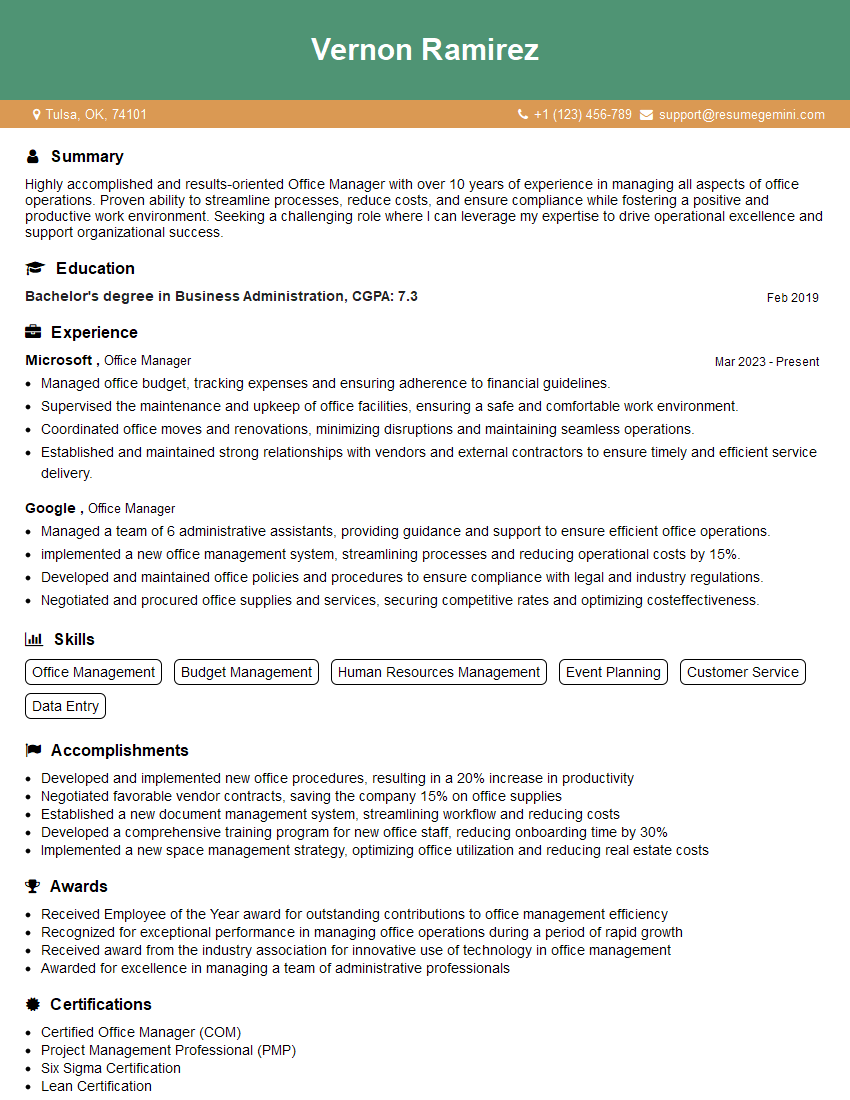
Office Manager Resume Sample

Communications Director Resume Sample

Communications Manager Resume Sample

Marketing Communications Manager Resume Sample
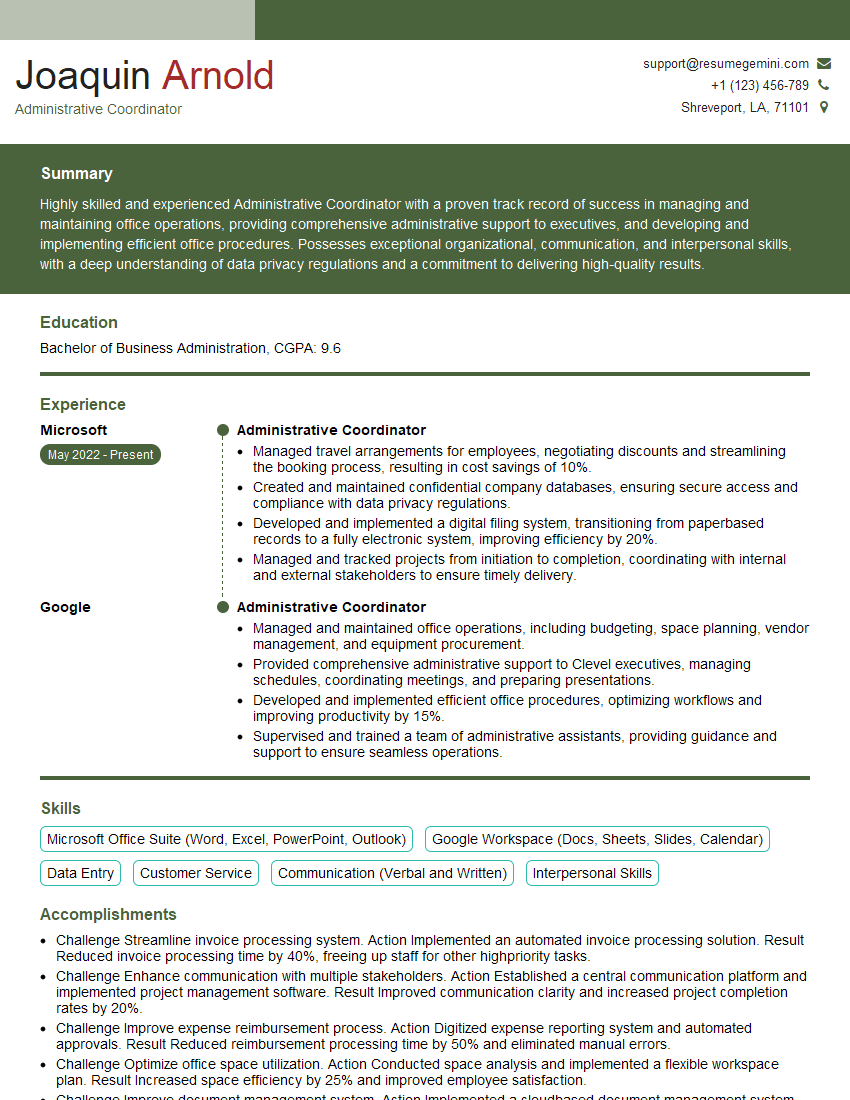
Administrative Coordinator Resume Sample
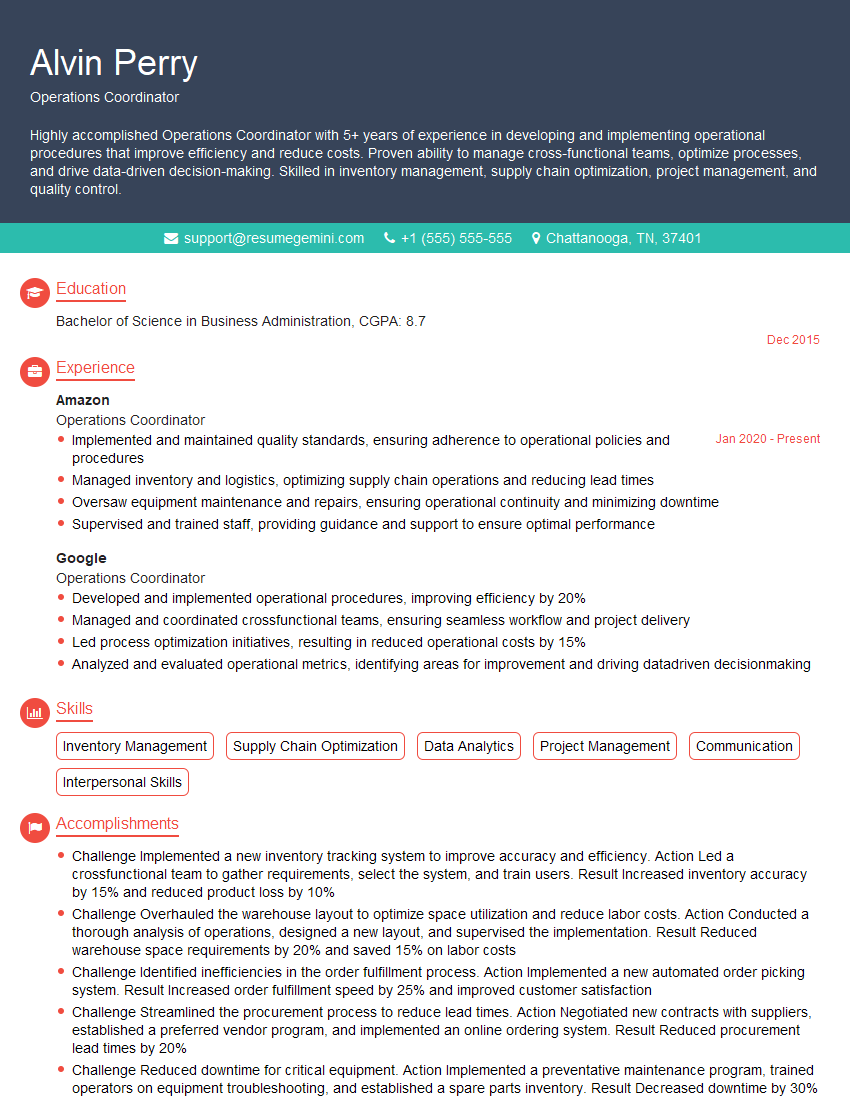
Operations Coordinator Resume Sample
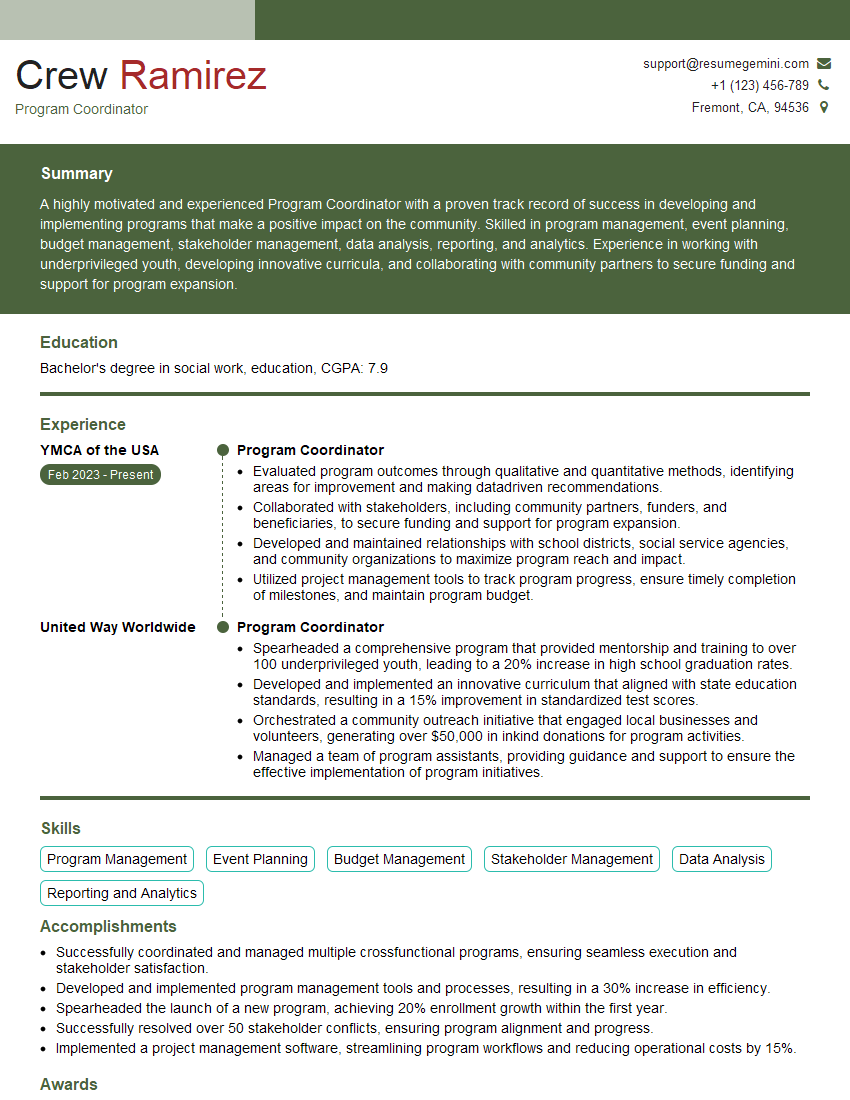
Program Coordinator Resume Sample
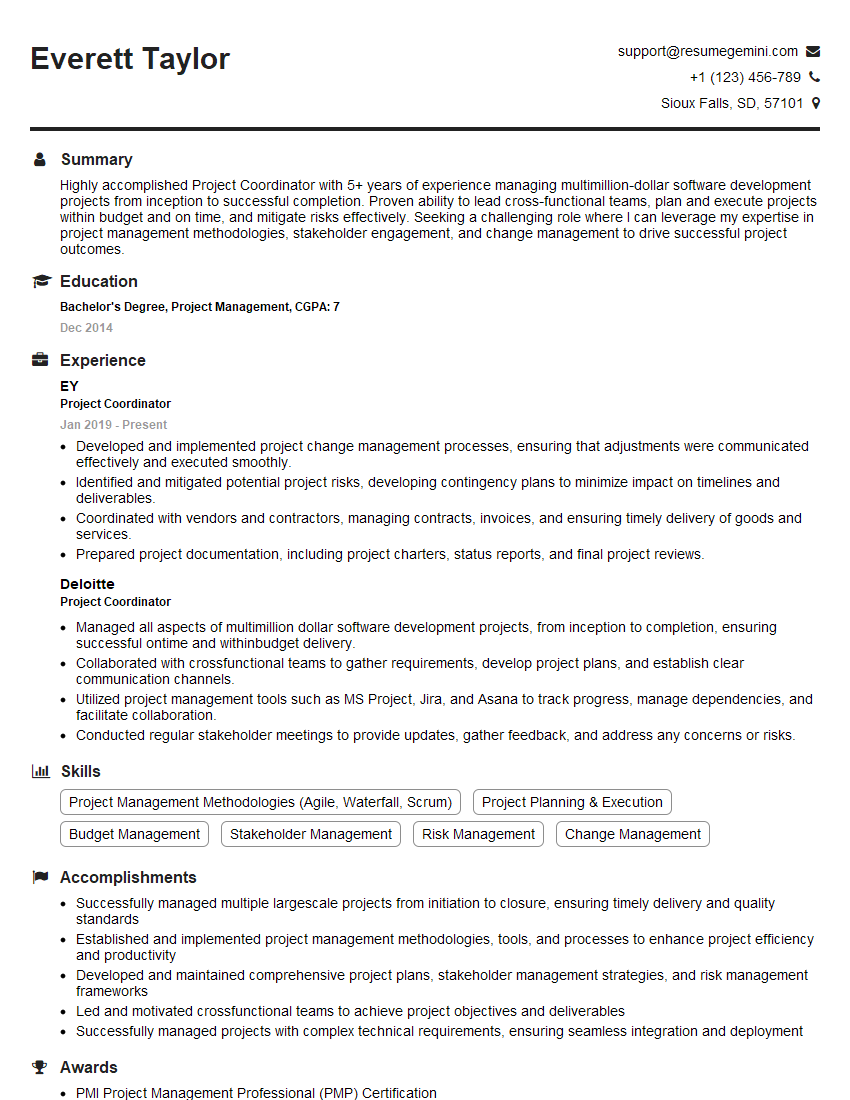
Project Coordinator Resume Sample
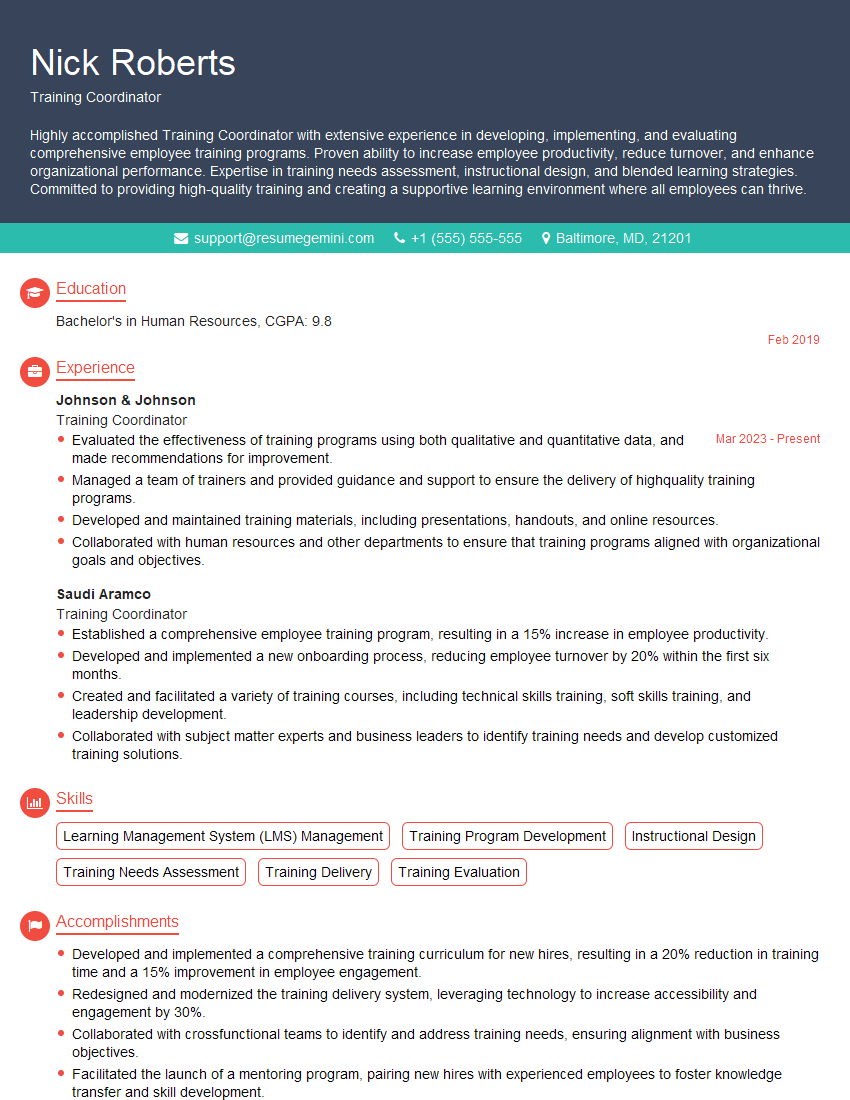
Training Coordinator Resume Sample
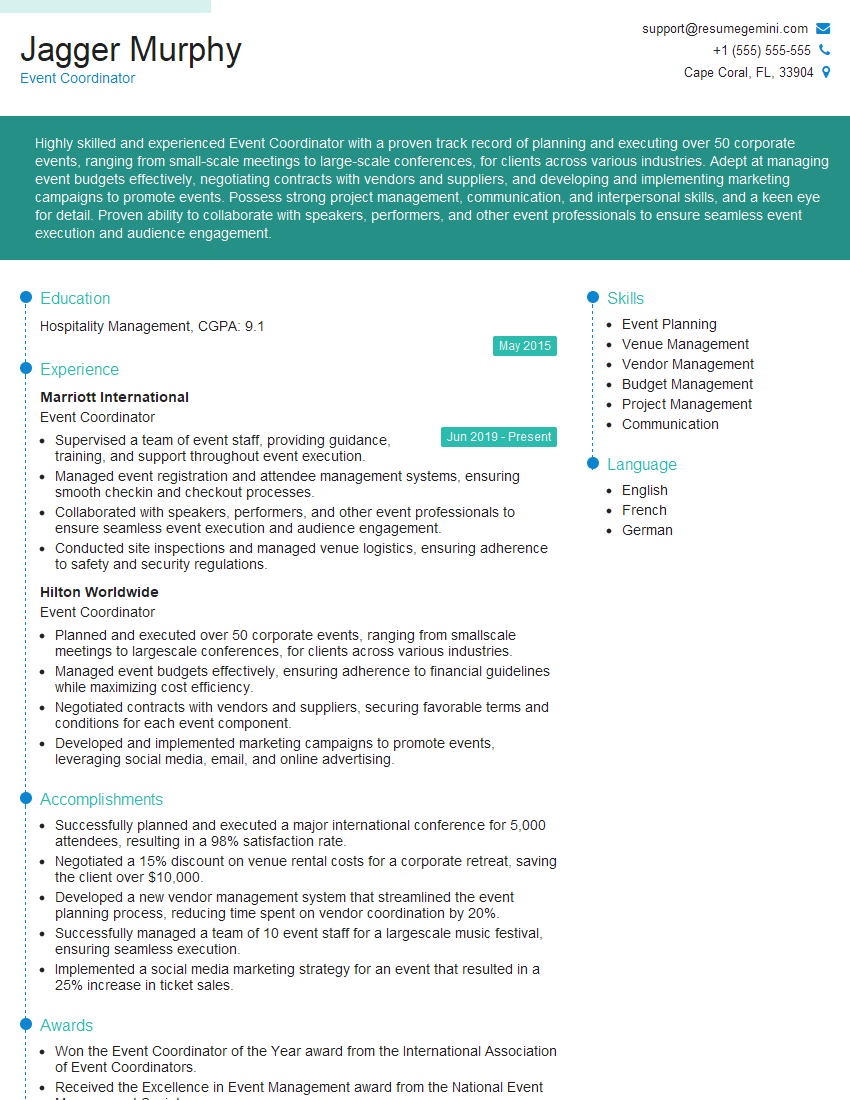
Event Coordinator Resume Sample
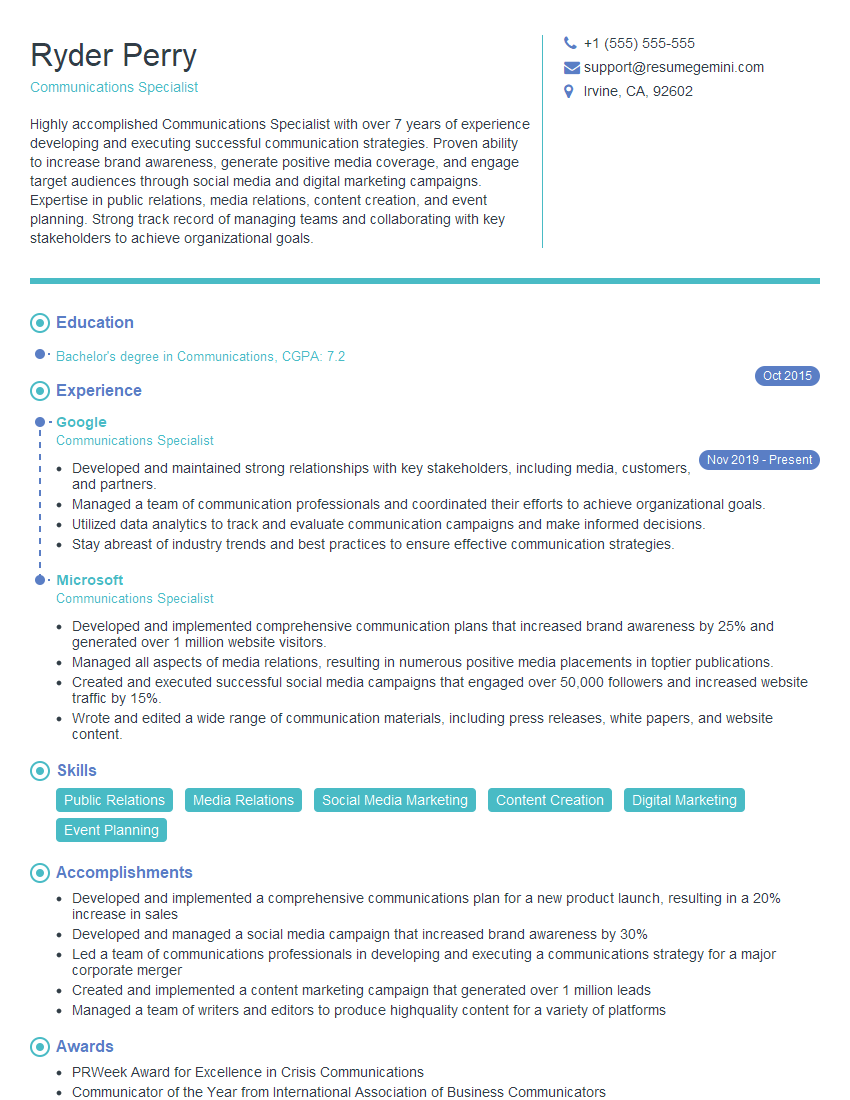
Communications Specialist Resume Sample

Social Media Manager Resume Sample

Communications Consultant Resume Sample
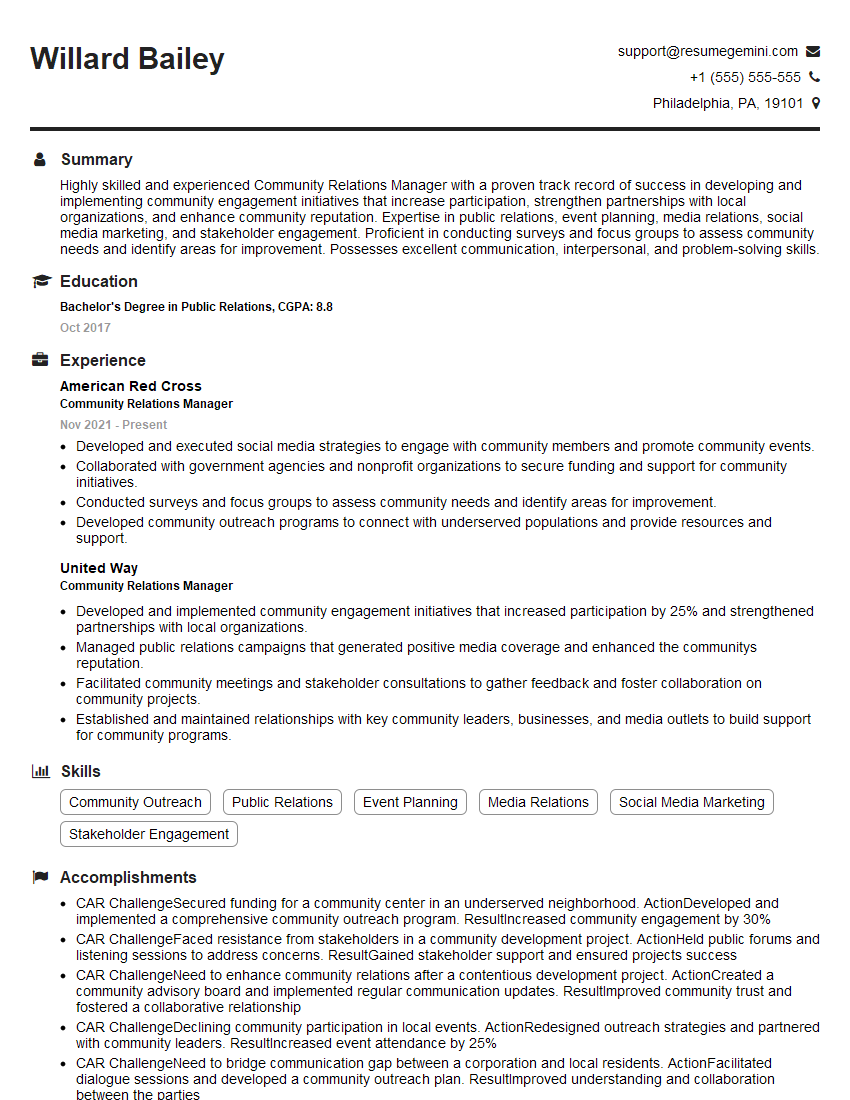
Community Relations Manager Resume Sample
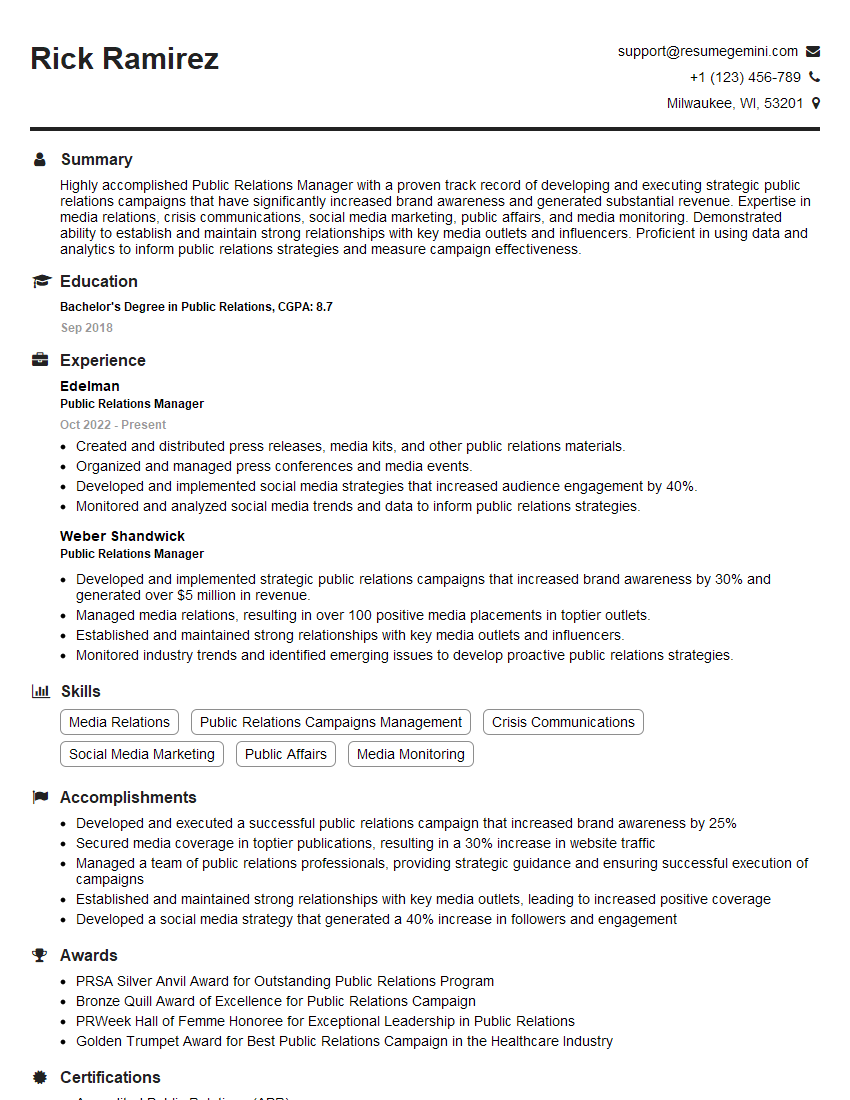
Public Relations Manager Resume Sample
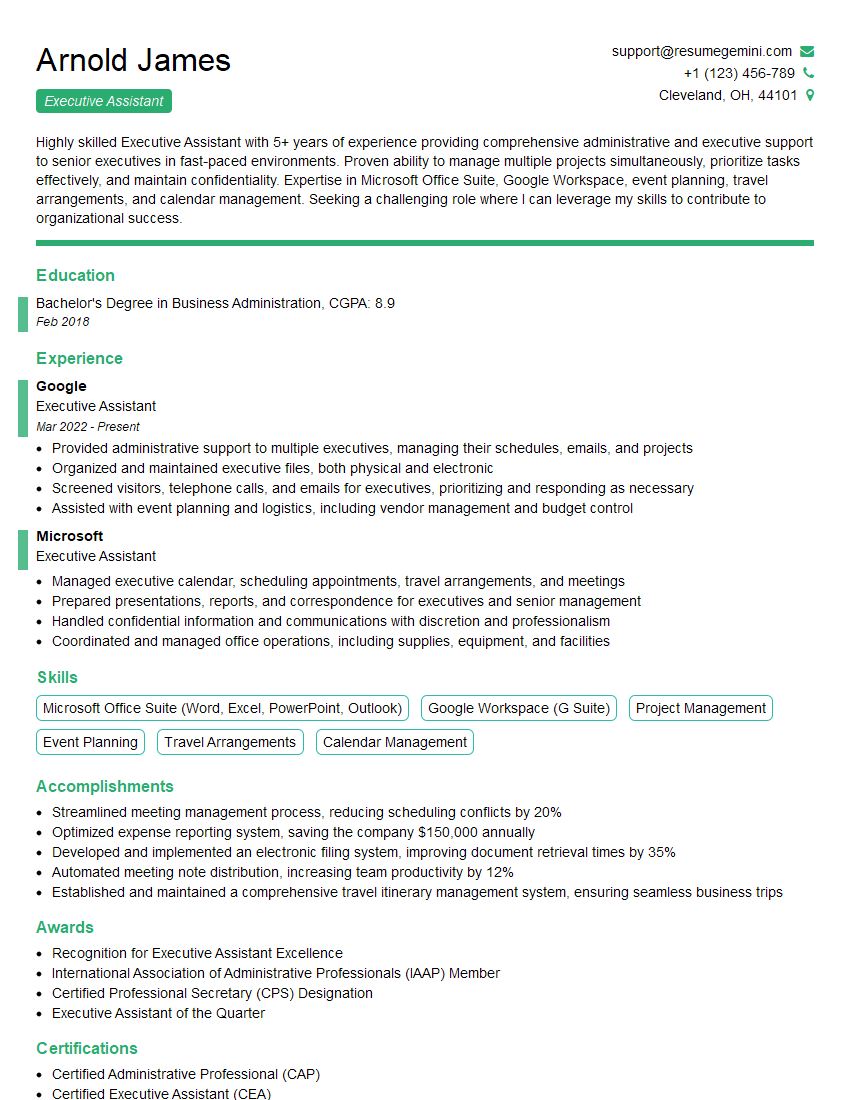
Executive Assistant Resume Sample
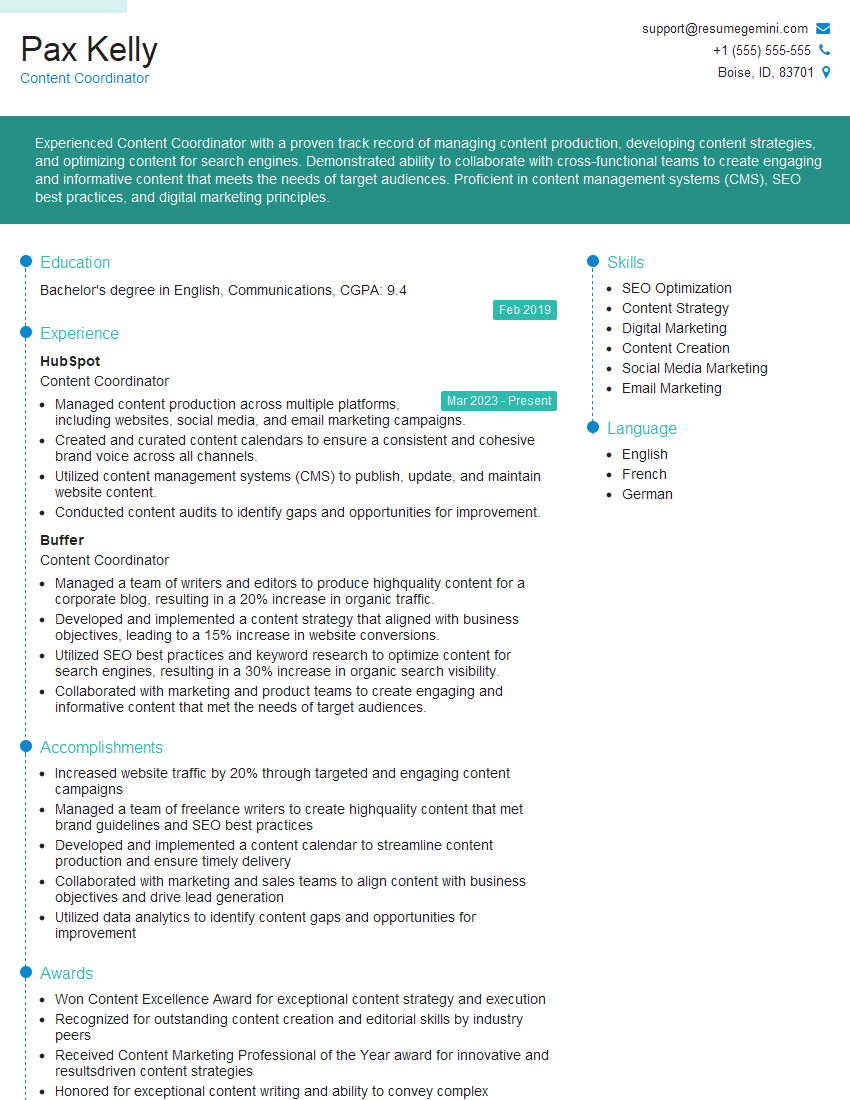
Content Coordinator Resume Sample
- Office Manager
- Communications Director
- Communications Manager
- Marketing Communications Manager
- Administrative Coordinator
- Operations Coordinator
- Program Coordinator
- Project Coordinator
- Training Coordinator
- Event Coordinator
- Communications Specialist
- Social Media Manager
- Communications Consultant
- Community Relations Manager
- Public Relations Manager
- Executive Assistant
- Content Coordinator
Explore more articles
Users Rating of Our Blogs
Share Your Experience
We value your feedback! Please rate our content and share your thoughts (optional).
What Readers Say About Our Blog
Very informative content, great job.
good