Every successful interview starts with knowing what to expect. In this blog, we’ll take you through the top Community Outraech interview questions, breaking them down with expert tips to help you deliver impactful answers. Step into your next interview fully prepared and ready to succeed.
Questions Asked in Community Outraech Interview
Q 1. Describe your experience building and maintaining relationships with community stakeholders.
Building and maintaining relationships with community stakeholders is the cornerstone of effective community outreach. It’s about fostering trust, understanding, and mutual respect. This involves consistent communication, active listening, and demonstrating a genuine commitment to the community’s well-being.
In my previous role at the City Parks Department, I regularly attended community council meetings, organized neighborhood clean-up events, and initiated regular newsletters to keep residents informed about park improvements and upcoming initiatives. I also made a point of having informal conversations with residents during these events, actively soliciting their feedback and addressing their concerns directly. This consistent, two-way communication helped build strong relationships and a sense of shared ownership in our park projects.
For example, one resident voiced concerns about safety in the park at night. Through active listening and collaboration with the local police department, we implemented improved lighting and increased patrol visibility. This demonstrated our commitment to addressing their concerns, strengthening our relationship and community trust.
Q 2. How do you identify key community needs and priorities?
Identifying key community needs and priorities requires a multifaceted approach, blending quantitative and qualitative data. We cannot assume we know what a community needs; we must actively listen and observe.
- Surveys and Questionnaires: These provide quantifiable data on prevalent issues and opinions.
- Focus Groups: These facilitated discussions allow for in-depth exploration of specific topics and enable participants to share their perspectives and experiences.
- Community Meetings and Forums: These open platforms allow for direct interaction with residents, enabling us to hear diverse voices and gain insight into community concerns.
- Data Analysis: Examining existing data such as crime statistics, health reports, and census information helps identify areas needing attention.
- Key Informant Interviews: Engaging with community leaders, representatives from local organizations, and influential individuals provides valuable insights into the community’s dynamics and priorities.
For instance, during a community needs assessment for a neighborhood facing high unemployment rates, we conducted surveys, focus groups with residents, and meetings with local businesses. This mixed-methods approach highlighted a need for job training programs, youth mentorship initiatives, and enhanced business support networks, which were prioritized in our outreach plan.
Q 3. Explain your process for developing and implementing a community outreach plan.
Developing and implementing a community outreach plan is a structured process. It begins with defining clear goals and objectives, then proceeds through strategic planning and execution, followed by monitoring and evaluation.
- Needs Assessment: Identify the specific needs and priorities of the target community (as discussed in the previous answer).
- Goal Setting: Establish measurable and achievable goals. For example, increase volunteer participation by 20% or reduce instances of youth vandalism by 15%.
- Strategy Development: Outline specific strategies to achieve the goals. This might include organizing workshops, establishing partnerships with local organizations, launching awareness campaigns, or providing direct services.
- Resource Allocation: Identify and secure necessary resources, including funding, personnel, volunteers, and materials.
- Implementation: Put the plan into action, monitoring progress and making adjustments as needed. Regular communication with stakeholders is crucial at this stage.
- Evaluation: Assess the plan’s effectiveness based on pre-determined metrics. This involves collecting data and analyzing results to determine successes and areas for improvement.
For example, a plan to combat youth homelessness might involve establishing partnerships with shelters, developing job training programs, and organizing outreach events to connect youth with needed services. Regular progress reports, tracking the number of youth served and their outcomes, would form the basis of the evaluation process.
Q 4. How do you measure the success of a community outreach program?
Measuring the success of a community outreach program requires establishing clear, measurable indicators aligned with the program’s goals. It’s not just about the number of people reached, but the impact on their lives and the community as a whole.
- Quantitative Measures: These include tracking participation rates in programs, the number of people served, changes in community indicators (e.g., crime rates, health outcomes), and the utilization of resources provided.
- Qualitative Measures: These involve gathering feedback through surveys, interviews, focus groups, and observations to understand participants’ experiences and perspectives. This assesses the program’s impact on people’s lives and community well-being.
- Outcome Measures: These focus on the long-term effects of the program. For example, did the job training program lead to increased employment? Did the community garden initiative improve community health?
For example, a literacy program’s success could be measured by tracking the number of participants, the improvement in reading scores, and the increased community engagement in literacy-related events. Qualitative data, such as participant testimonials, would further enhance the evaluation.
Q 5. What strategies do you employ to engage diverse community groups?
Engaging diverse community groups requires cultural sensitivity, inclusivity, and adapting communication strategies to resonate with different cultural backgrounds and needs.
- Language Accessibility: Offer materials and services in multiple languages.
- Cultural Sensitivity: Tailor communication styles and approaches to respect diverse cultural norms and practices.
- Community Representatives: Involve representatives from various community groups in the planning and implementation of outreach activities.
- Accessible Locations and Times: Hold events and meetings in accessible locations and at times convenient for diverse populations.
- Culturally Appropriate Activities: Organize activities that are relevant and appealing to diverse community members.
For example, when working with a community that includes a large immigrant population, we ensured materials were translated into multiple languages, hired bilingual staff, and partnered with local immigrant organizations to reach this specific population effectively. We also held meetings at various locations and times to be accessible to all.
Q 6. Describe your experience working with volunteers.
Working with volunteers requires effective recruitment, training, and appreciation. It’s about creating a positive and supportive environment that fosters their motivation and commitment.
- Clear Roles and Responsibilities: Provide volunteers with clear descriptions of their roles, responsibilities, and expectations.
- Adequate Training: Offer comprehensive training to equip volunteers with the necessary skills and knowledge to perform their tasks effectively.
- Effective Communication: Maintain open and consistent communication with volunteers, keeping them informed about program updates and providing regular feedback.
- Recognition and Appreciation: Express gratitude for volunteers’ contributions through regular acknowledgments, appreciation events, or small tokens of appreciation.
- Supervision and Support: Provide appropriate supervision and support to ensure volunteers feel valued and can perform their roles confidently.
In a recent community garden project, we recruited volunteers through local community centers and social media. We provided a comprehensive training session on gardening techniques and safety procedures and created a volunteer handbook outlining their roles and responsibilities. Regular team meetings and volunteer appreciation events ensured their continued engagement and satisfaction.
Q 7. How do you handle conflict or disagreements within a community?
Handling conflict or disagreements within a community requires a neutral and facilitative approach focused on building consensus and finding solutions that respect everyone’s perspective.
- Active Listening: Listen carefully and empathetically to all parties involved, allowing everyone to express their views and concerns.
- Facilitation and Mediation: Facilitate respectful dialogue between conflicting parties, helping them to identify common ground and find mutually acceptable solutions.
- Conflict Resolution Strategies: Employ appropriate conflict resolution techniques, such as compromise, negotiation, and collaboration.
- Transparent Communication: Maintain transparent communication with all parties involved, keeping them informed about the progress of the conflict resolution process.
- Community Consensus-Building: Seek to build consensus among community members to ensure solutions are broadly acceptable and sustainable.
In one instance, a disagreement arose in a neighborhood over the location of a new community center. By actively listening to both sides, facilitating discussions, and offering various compromise options, we were able to reach a solution that satisfied most community members, preventing the conflict from escalating further.
Q 8. What is your experience with grant writing or fundraising for community projects?
Grant writing and fundraising are essential skills in community outreach. My experience spans over eight years, encompassing the entire grant lifecycle – from identifying funding opportunities and crafting compelling proposals to managing awarded grants and reporting on outcomes. I’ve successfully secured funding for numerous projects, ranging from after-school programs for underprivileged youth to community garden initiatives and adult literacy programs. For example, I recently secured a $50,000 grant from a private foundation to develop a mobile health clinic serving a rural, underserved population. This involved extensive research into the foundation’s priorities, meticulous budget development, and a narrative that powerfully communicated the project’s impact. I’m also proficient in diverse fundraising strategies, including individual donations, corporate sponsorships, and crowdfunding campaigns. Each funding source requires a tailored approach, and I’ve honed my skills in effectively pitching our needs to a diverse range of potential funders.
Q 9. How do you utilize social media to support community outreach efforts?
Social media is an indispensable tool for community outreach. I leverage platforms like Facebook, Instagram, and Twitter to build community engagement, share updates on projects, and disseminate crucial information. For example, during a recent community clean-up initiative, we used Facebook Events to register volunteers, shared progress photos on Instagram, and used Twitter to engage local media and garner broader support. Beyond simply broadcasting information, I use social media to foster two-way communication. We actively respond to comments and questions, conduct polls to gauge community preferences, and create interactive content to enhance participation. Strategic hashtag use and targeted advertising also play a key role in reaching the right audiences. We carefully track analytics to assess campaign effectiveness and continuously refine our strategies based on performance data.
Q 10. How do you adapt your communication style to different audiences?
Adapting communication style is crucial for effective community outreach. I tailor my approach based on factors like audience age, education level, cultural background, and pre-existing knowledge. For example, when communicating with senior citizens, I prioritize clear, concise language, larger fonts, and accessible formats. When working with younger audiences, I might incorporate more visuals, interactive elements, and informal language. For communities with diverse linguistic backgrounds, I ensure materials are translated or interpreted accordingly. Understanding the nuances of each audience ensures that the message resonates and fosters trust. Active listening and careful observation during community meetings are crucial in gauging audience understanding and adapting my communication in real time.
Q 11. Describe a time you had to overcome a challenge in a community outreach project.
During a community garden project, we faced unexpected opposition from a small group of residents concerned about potential noise and increased traffic. To overcome this challenge, we organized a series of community meetings, creating a safe space for open dialogue. We actively listened to their concerns, addressing them with data and solutions, such as establishing noise reduction measures and designing traffic flow strategies. We also invited them to actively participate in the garden’s development, offering them a leadership role in planning specific aspects. This participatory approach transformed initial opposition into active support, culminating in a successful and inclusive project that strengthened community bonds. The key was to acknowledge their concerns, demonstrate empathy, and involve them in the solution.
Q 12. How familiar are you with community needs assessments?
I’m very familiar with community needs assessments. These assessments are crucial for understanding the specific challenges and priorities of a community before designing and implementing outreach programs. They involve gathering data through various methods such as surveys, focus groups, interviews, and secondary data analysis (census data, crime statistics, health reports). My experience involves designing questionnaires, conducting interviews, analyzing quantitative and qualitative data, and preparing comprehensive reports detailing community needs. These reports then serve as a roadmap for developing targeted, effective, and impactful outreach initiatives that actually meet the community’s most pressing needs, rather than assuming what those needs might be.
Q 13. What are some common barriers to effective community outreach, and how do you address them?
Several barriers can hinder effective community outreach. These include communication gaps (language barriers, lack of access to technology), logistical challenges (transportation, scheduling conflicts), mistrust between the community and outreach organizations (historical injustices, lack of transparency), and lack of resources (funding, personnel). To address these, I utilize culturally sensitive communication strategies, flexible program scheduling, transparent project management, community-based participatory research, and advocate for increased funding and resources. Building relationships based on trust and respect is paramount. For instance, partnering with trusted community leaders significantly improves outreach effectiveness and helps overcome pre-existing mistrust.
Q 14. How do you build trust and credibility within a community?
Building trust and credibility is fundamental to successful community outreach. This involves demonstrating genuine commitment to the community’s well-being, actively listening to their concerns, honoring their perspectives, and consistently following through on commitments. Transparency is crucial; sharing information openly, explaining decision-making processes, and being accountable for actions strengthens trust. Collaborating with local organizations and leaders demonstrates that the outreach efforts are rooted in partnership and mutual respect, rather than a top-down approach. Long-term engagement is key – building relationships takes time, consistent presence, and demonstrating commitment beyond a single project.
Q 15. Explain your experience with data collection and analysis in community outreach.
Data collection and analysis are crucial for effective community outreach. It allows us to understand the needs, priorities, and challenges of the community we serve, enabling us to tailor our programs and resources accordingly. My experience involves using a variety of methods, from quantitative surveys and statistical analysis to qualitative approaches like focus groups and interviews. For instance, in a recent project addressing food insecurity, we conducted a household survey to gather demographic data and assess access to healthy food options. We then used statistical software to identify areas with the highest need, allowing us to target our food distribution program more effectively. Further, qualitative data from focus groups helped us understand the underlying reasons for food insecurity, such as transportation issues or lack of awareness about existing resources. This combined approach provided a comprehensive understanding of the problem and guided our intervention strategy. We also utilize GIS mapping to visualize data and identify geographic patterns of need.
Career Expert Tips:
- Ace those interviews! Prepare effectively by reviewing the Top 50 Most Common Interview Questions on ResumeGemini.
- Navigate your job search with confidence! Explore a wide range of Career Tips on ResumeGemini. Learn about common challenges and recommendations to overcome them.
- Craft the perfect resume! Master the Art of Resume Writing with ResumeGemini’s guide. Showcase your unique qualifications and achievements effectively.
- Don’t miss out on holiday savings! Build your dream resume with ResumeGemini’s ATS optimized templates.
Q 16. How do you ensure the sustainability of community outreach initiatives?
Ensuring sustainability in community outreach requires a multifaceted approach focusing on building capacity within the community itself. This means empowering local leaders and organizations to take ownership of initiatives. We achieve this through several strategies:
- Capacity Building: Providing training and mentorship to community members on program management, fundraising, and advocacy.
- Collaboration and Partnerships: Developing strong relationships with local organizations, businesses, and government agencies to secure long-term funding and resources.
- Community Ownership: Designing programs that are driven by community needs and involve community members in all stages, from planning to implementation and evaluation.
- Data-Driven Decision Making: Continuously monitoring and evaluating program impact to make data-informed adjustments and ensure long-term effectiveness.
- Advocacy and Policy Change: Working to influence policies and systems that support community well-being.
Q 17. How do you manage multiple projects and competing priorities?
Managing multiple projects and competing priorities effectively requires strong organizational skills and strategic planning. I utilize project management tools such as Trello or Asana to track deadlines, allocate resources, and monitor progress across all initiatives. Prioritization is key, and I employ methods like the Eisenhower Matrix (urgent/important) to focus on high-impact tasks first. Regular communication with stakeholders is vital to keep everyone informed and aligned on goals. Delegation is also crucial; I empower team members to take ownership of specific tasks, fostering a collaborative environment and ensuring efficient workflow. Finally, I regularly review and adjust my schedule to accommodate unexpected challenges and ensure that I maintain a healthy work-life balance to prevent burnout.
Q 18. Describe your experience with community partnerships and collaborations.
Building strong community partnerships is fundamental to successful outreach. My experience involves collaborating with a diverse range of organizations, including local government agencies, non-profits, schools, businesses, and community-based organizations. I build relationships based on mutual trust and respect, clearly defining roles and responsibilities in collaborative projects. For instance, in a project promoting youth health, we partnered with the local health department, schools, and a youth center to deliver comprehensive health education and resources. This collaborative approach leveraged the unique strengths of each partner and ensured that our program reached a wider audience and had a greater impact.
Q 19. What is your understanding of community capacity building?
Community capacity building is the process of strengthening the assets, skills, and resources within a community to enable it to address its own challenges and achieve its goals. It’s about empowering residents to take control of their future. This involves multiple strategies, including:
- Leadership Development: Identifying and training local leaders to advocate for community needs.
- Skills Training: Providing workshops and training programs to enhance community members’ skills in areas such as grant writing, project management, and advocacy.
- Resource Mobilization: Connecting communities to resources such as funding, technology, and volunteer support.
- Social Network Building: Fostering collaboration and communication among community members and organizations.
Q 20. How do you prioritize outreach efforts when resources are limited?
Prioritizing outreach efforts with limited resources requires a strategic approach. I use a data-driven framework to identify the areas with the greatest need and the initiatives with the highest potential impact. This involves analyzing existing data, conducting needs assessments, and consulting with community leaders to determine the most pressing issues. Cost-benefit analysis helps to evaluate the effectiveness of various strategies. We often focus on building partnerships to leverage external resources and maximize the impact of our limited funds. For example, instead of launching several small programs, we might concentrate our resources on one high-impact initiative that addresses multiple needs simultaneously, such as a community center offering various services under one roof.
Q 21. Describe a time you had to deal with negative publicity or community opposition.
In one instance, a proposed community development project faced significant opposition due to concerns about potential environmental impact. To address this, I initiated a transparent communication strategy. We held multiple community forums, providing detailed information about the project’s environmental safeguards and addressing concerns openly. We also invited experts to answer questions and dispel misconceptions. We actively sought feedback and incorporated suggestions into the project design where feasible. This proactive approach, prioritizing open dialogue and community engagement, ultimately helped to alleviate concerns and gain support for the project. It underscored the importance of active listening and addressing community apprehensions with transparency and sensitivity.
Q 22. How familiar are you with relevant legislation and regulations impacting community outreach?
My familiarity with relevant legislation and regulations impacting community outreach is extensive. I understand that the legal landscape varies depending on the specific context (local, state, federal), and the nature of the outreach program. For instance, I’m well-versed in regulations concerning data privacy (like GDPR and CCPA), ensuring accessibility for individuals with disabilities (ADA compliance), and ethical considerations surrounding research involving human subjects (IRB guidelines). I regularly consult resources like the Department of Justice’s website and relevant legal databases to ensure compliance. In practice, this means I meticulously review any planned outreach materials and activities to guarantee they’re compliant and that the rights of participants are protected. A recent project involved developing a community health survey; I ensured all participant data was anonymized and handled in accordance with HIPAA regulations.
Q 23. What is your experience with event planning and execution for community engagement?
I have a proven track record in planning and executing successful community engagement events. My experience ranges from small-scale neighborhood meetings to large-scale community festivals. My approach is methodical, starting with thorough needs assessments to identify target audiences and their preferred communication channels. This is followed by a detailed planning phase that includes budgeting, securing venues, securing necessary permits, marketing and promotion, volunteer recruitment, and logistical arrangements. For example, I organized a health fair attracting over 500 attendees, securing sponsorships, managing volunteer teams, and coordinating various health screenings. Post-event, I analyze attendance data, feedback forms, and social media engagement to assess the effectiveness of the event and identify areas for improvement. This iterative process allows me to refine my strategies for future events and maximize community impact.
Q 24. How do you ensure accessibility and inclusivity in your outreach strategies?
Ensuring accessibility and inclusivity is paramount in my outreach strategies. It’s not just about compliance; it’s about genuine engagement. I consider accessibility from multiple perspectives: physical, cognitive, sensory, and linguistic. This involves using accessible venues, providing sign language interpreters or other assistive technologies, using clear and concise language (avoiding jargon), and offering materials in multiple formats (large print, audio, Braille). For a recent environmental awareness campaign, I created materials in several languages spoken within the community and designed accessible online resources. I also prioritize culturally sensitive approaches, seeking input from diverse community members to ensure our message resonates authentically. My approach is to build relationships with diverse community groups and leaders in advance, so that our outreach efforts feel welcoming and relevant to all participants.
Q 25. Describe your understanding of ethical considerations in community outreach.
Ethical considerations form the bedrock of my community outreach work. I operate within a framework that emphasizes transparency, respect, and responsibility. This includes obtaining informed consent from participants, protecting their privacy, and being mindful of potential power imbalances. I ensure that all outreach materials are truthful and avoid misleading or manipulative language. Conflicts of interest are proactively addressed and disclosed. For instance, in a past project focused on food insecurity, we ensured our distribution model was equitable and avoided stigmatizing those we served. We prioritized community voice and feedback throughout the process. My ethical commitment is not merely adherence to a code, but a deep-seated commitment to building trust and fostering positive relationships with the communities we serve.
Q 26. How do you track and report on community outreach program outcomes?
Tracking and reporting on program outcomes is crucial for demonstrating impact and guiding future strategies. My approach involves establishing clear, measurable goals at the outset. I then utilize a mix of quantitative and qualitative data collection methods, including surveys, attendance records, feedback forms, case studies, and social media monitoring. I use data visualization tools like spreadsheets and dashboards to present findings in a clear and compelling manner. For example, in a youth mentorship program, I tracked participants’ academic progress, attendance rates, and self-reported confidence levels. This data was used to demonstrate the program’s effectiveness and inform adjustments to the curriculum and delivery methods. Regular reporting ensures transparency and accountability, helping stakeholders understand how outreach efforts are translating into tangible results.
Q 27. What software or tools are you proficient in using for community outreach?
I’m proficient in several software and tools essential for effective community outreach. I regularly use CRM software (like Salesforce or HubSpot) for managing contacts, tracking interactions, and segmenting audiences. For data analysis and reporting, I utilize spreadsheet programs (Excel, Google Sheets) and data visualization tools (Tableau, Power BI). Social media management tools (Hootsuite, Buffer) are integral for promoting events and communicating with community members. I also utilize survey platforms (SurveyMonkey, Typeform) for gathering feedback and conducting needs assessments. My familiarity extends to project management software (Asana, Trello) to ensure efficient planning and execution of outreach initiatives.
Q 28. What are your salary expectations for this Community Outreach role?
My salary expectations for this Community Outreach role are commensurate with my experience, skills, and the responsibilities involved. Considering my extensive background and proven success in delivering impactful community initiatives, I’m targeting a salary range of [Insert Salary Range]. I’m open to discussing this further based on the specifics of the role and the organization’s compensation structure.
Key Topics to Learn for Community Outreach Interview
- Needs Assessment & Program Planning: Understanding the community’s needs, developing effective programs, and outlining measurable goals.
- Community Engagement & Relationship Building: Developing strong relationships with community stakeholders, fostering trust, and building collaborative partnerships.
- Resource Mobilization & Management: Securing funding, managing resources effectively, and ensuring program sustainability.
- Communication & Advocacy: Effectively communicating program goals and impact to diverse audiences, advocating for community needs.
- Program Implementation & Evaluation: Implementing programs effectively, monitoring progress, and evaluating outcomes using data-driven approaches.
- Diversity, Equity, and Inclusion (DEI): Understanding and addressing the diverse needs of the community and promoting equitable access to programs and services. This includes understanding and actively mitigating biases in your work.
- Conflict Resolution & Mediation: Addressing conflicts within the community or amongst stakeholders in a constructive and effective manner.
- Ethical Considerations in Community Outreach: Understanding and adhering to ethical principles and best practices in community engagement.
- Data Analysis & Reporting: Collecting, analyzing, and reporting on program data to demonstrate impact and inform future planning. This might involve using basic statistical methods or data visualization tools.
Next Steps
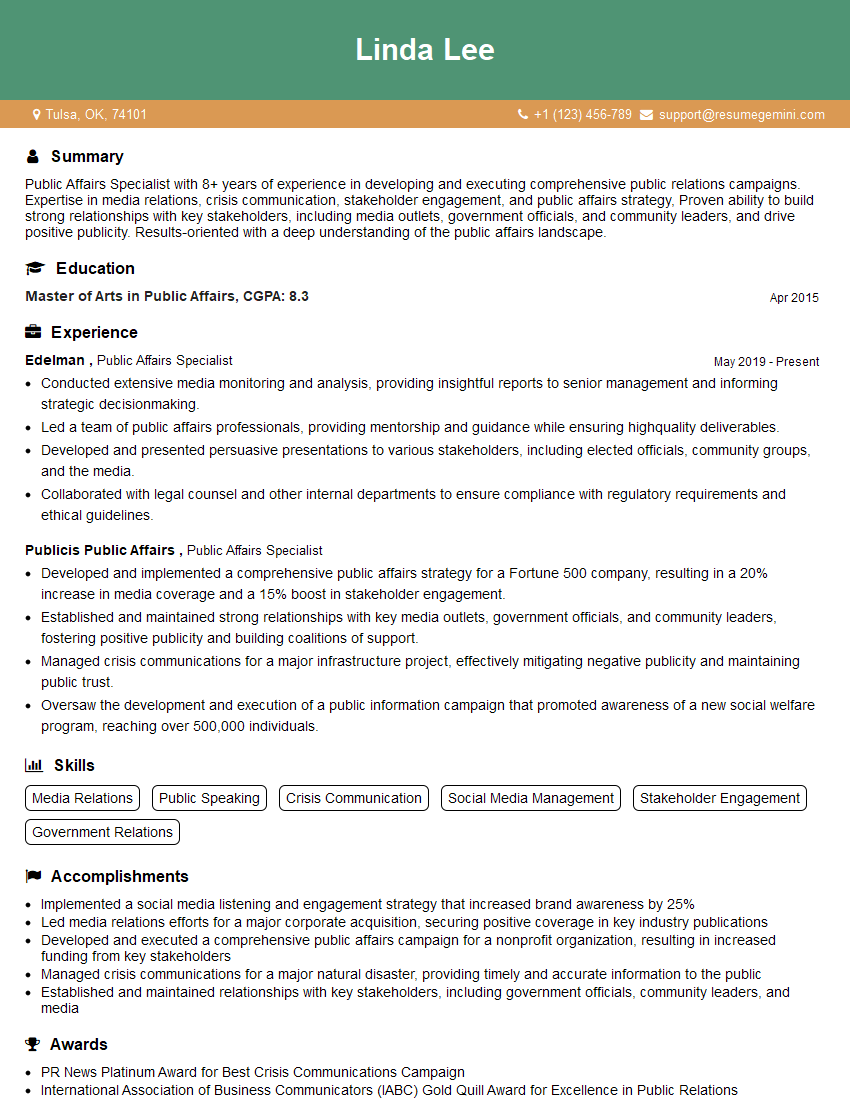
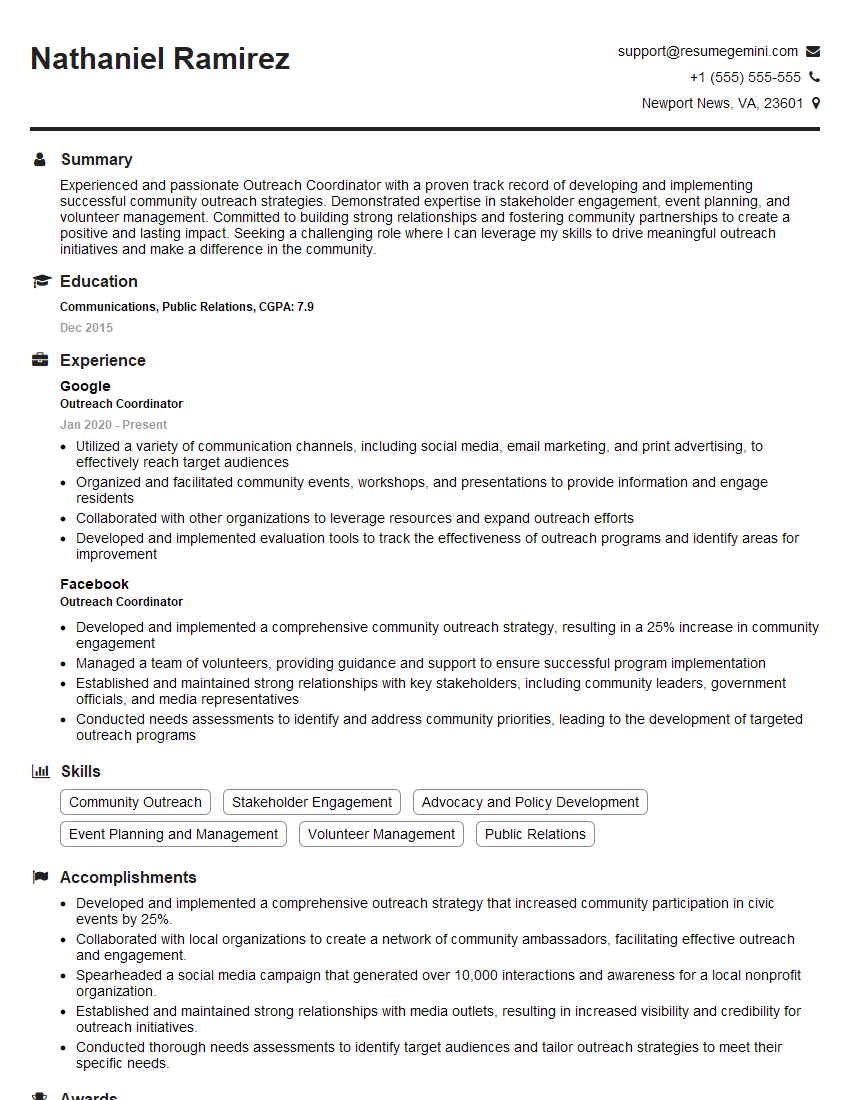
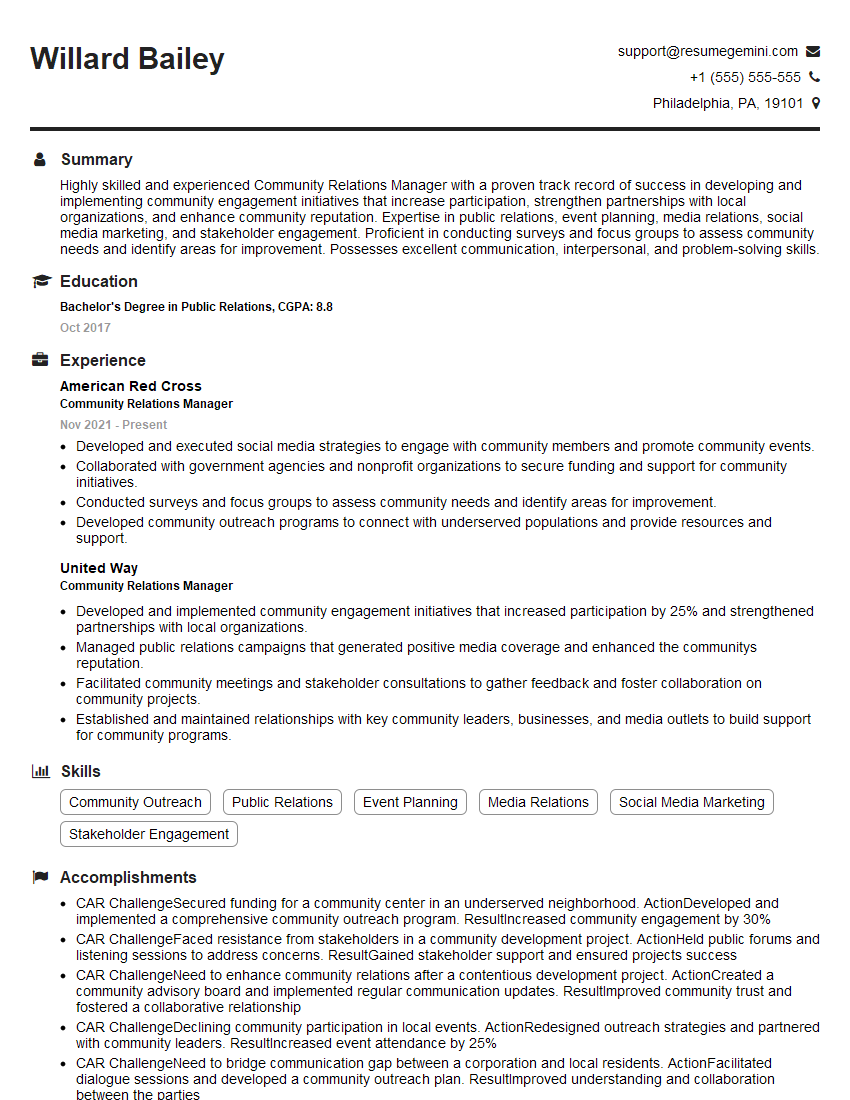
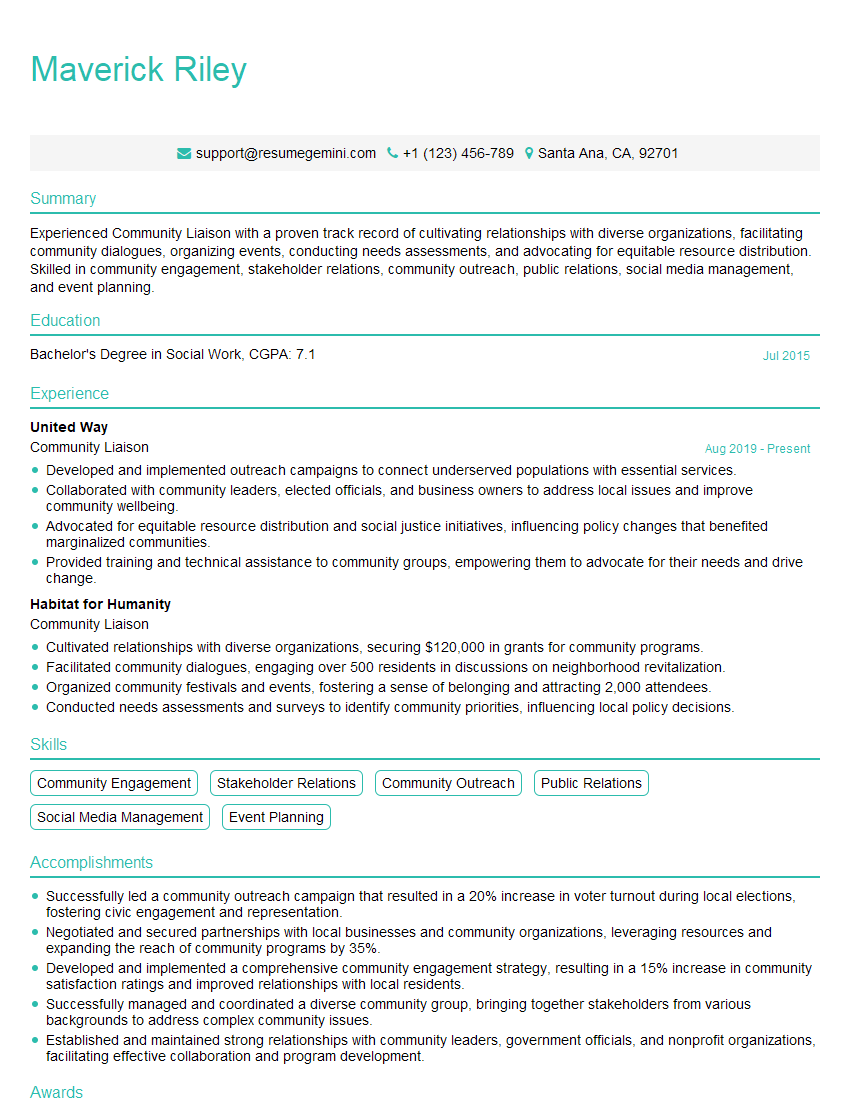
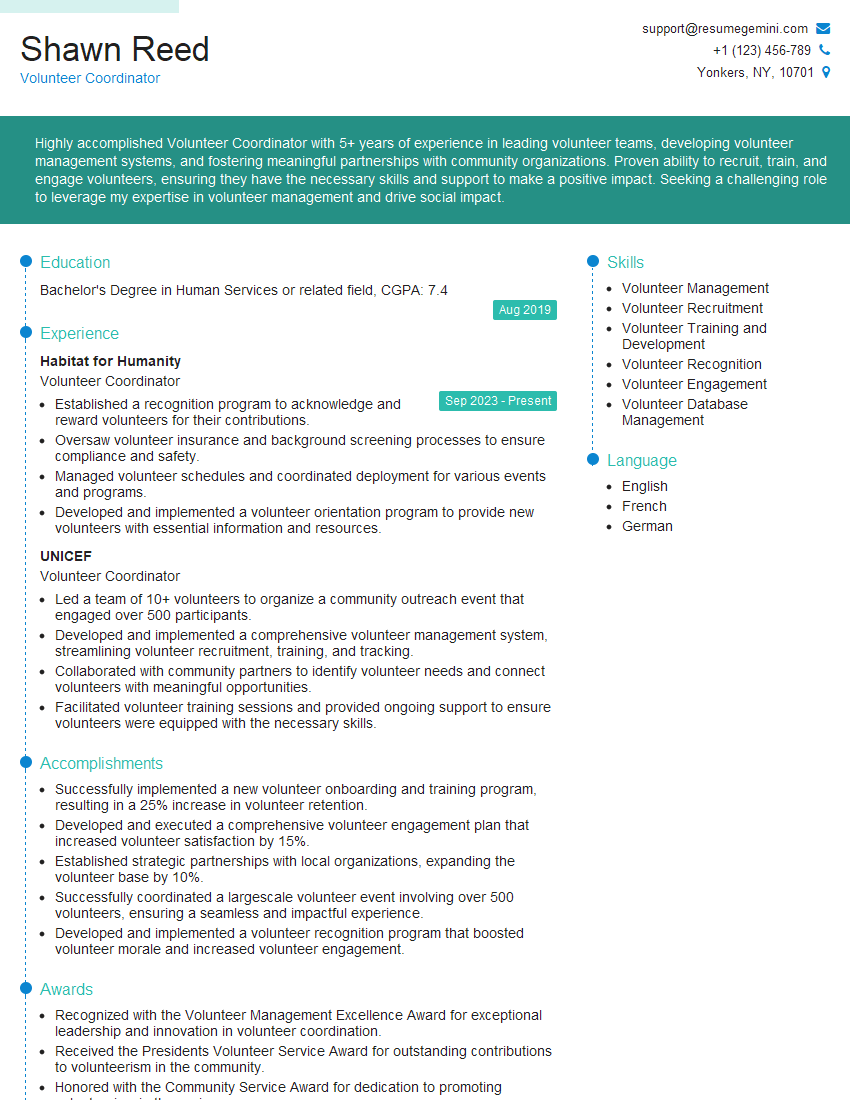
Mastering Community Outreach opens doors to fulfilling careers with significant societal impact. Your expertise in building relationships, mobilizing resources, and advocating for positive change will be highly valued. To maximize your job prospects, creating an ATS-friendly resume is crucial. ResumeGemini is a trusted resource that can help you build a professional resume that stands out. We provide examples of resumes tailored to Community Outreach to guide you. Take advantage of these resources to present your skills and experience effectively and land your dream job.

Explore more articles
Users Rating of Our Blogs
Share Your Experience
We value your feedback! Please rate our content and share your thoughts (optional).
What Readers Say About Our Blog
Very informative content, great job.
good