The right preparation can turn an interview into an opportunity to showcase your expertise. This guide to Compass Navigation interview questions is your ultimate resource, providing key insights and tips to help you ace your responses and stand out as a top candidate.
Questions Asked in Compass Navigation Interview
Q 1. Explain the process of taking a bearing with a compass.
Taking a bearing with a compass involves determining the direction to a specific feature or landmark. Imagine you’re a ship captain needing to navigate towards a lighthouse. Here’s how you’d do it:
- Hold the compass level: Ensure the compass is held horizontally and away from any metal objects that could interfere with the magnetic needle.
- Sight the landmark: Align the compass’s direction of travel arrow (often a small arrow at the base of the sight) with the landmark you’re targeting. Keep both eyes open; use one eye to sight the landmark and the other to view the compass needle.
- Read the bearing: Once the arrow is properly aligned, read the degree measure indicated by the north end of the compass needle. This is your bearing. For example, a bearing of 090 degrees means the landmark is due east.
Remember to account for magnetic declination (explained in a later answer) to obtain the true bearing.
Q 2. Describe the different types of compasses and their uses.
Several types of compasses exist, each suited for different applications:
- Baseplate Compass: A simple, durable compass widely used in hiking and general outdoor navigation. It features a clear baseplate for map work and typically includes a sighting mirror for precise readings.
- Lensatic Compass: A more advanced compass often preferred by surveyors and military personnel. Its lens magnifies the compass markings, improving accuracy, and it often includes features like a clinometer (for measuring slope) and a built-in sighting mechanism.
- Wrist Compass: A smaller, compact compass worn on the wrist, ideal for quick checks of direction while on the move. Its size makes it less precise than larger models but offers convenience.
- Mapping Compass: These compasses are specifically designed for use with maps, featuring rulers, protractors and other features for plotting courses and taking bearings.
- Electronic Compass (GPS-enabled): These integrate with GPS technology to provide digital bearings, location, and often other navigational data. They offer convenience but require batteries and can be susceptible to malfunction.
The choice of compass depends on the complexity of the navigation task and the user’s needs. A simple baseplate compass suffices for most recreational activities, while a lensatic compass offers higher precision for professional use.
Q 3. How do you correct for magnetic declination?
Magnetic declination is the angle between magnetic north (where your compass needle points) and true north (the geographical North Pole). This angle varies depending on your location and is essential to correct for accurate navigation. To correct for declination:
- Find your location’s declination: Consult a declination chart or online tool to find the declination for your specific location. It’s often expressed as degrees east or west.
- Determine the direction of declination: If the declination is east, magnetic north lies east of true north. If it’s west, it lies west of true north.
- Apply the correction: If your compass bearing is, say, 100 degrees and your declination is 10 degrees east, you add 10 degrees to your compass bearing (110 degrees). If the declination were 10 degrees west, you would subtract 10 degrees (90 degrees).
For example, if you’re hiking and your compass shows a bearing of 315 degrees but the magnetic declination in your area is 12 degrees East, the true bearing would be 327 degrees (315° + 12°).
Q 4. What is the concept of back bearings and how are they used?
A back bearing is the bearing taken from a landmark back to your location. It’s 180 degrees opposite the forward bearing. If you are at Point A and take a bearing to Point B (Forward Bearing), the back bearing is the bearing you would take from Point B to get back to Point A. Imagine you’re navigating a forest trail. Knowing the back bearing from a distinctive rock formation allows you to easily retrace your steps to avoid getting lost.
How back bearings are used:
- Retracing steps: Provides a reliable way to return to your starting point.
- Verifying position: Taking a back bearing to a known feature and comparing it to the calculated back bearing can verify your location on the map.
- Triangulation: Used in conjunction with forward bearings for more accurate location determination.
Q 5. Explain how to use a compass with a map.
Using a compass with a map involves orienting the map to match the terrain and then using the compass to navigate along planned routes. Think of planning a hike using a map.
- Orient the map: Rotate the map so that the north arrow on the map aligns with the magnetic north indicated by your compass needle.
- Plan your route: Identify your current location and your destination on the map. Draw a line connecting these points, indicating your desired route.
- Take bearings: Using the compass and the oriented map, determine the bearing to various checkpoints along your route. These bearings are referenced off the map’s orientation.
- Follow the bearings: Walk in the direction indicated by your compass, checking periodically to ensure you’re staying on course.
Regularly check your progress against your map to ensure you haven’t deviated significantly from your planned route. Remember to correct for magnetic declination.
Q 6. Describe the process of resection using a compass and map.
Resection is a method of determining your location on a map by taking bearings to at least two known features. This is like solving a geographical puzzle using your compass and map.
- Identify at least two features: Choose features clearly visible on both the map and in the field (e.g., prominent hills, buildings, intersections).
- Take bearings: Using your compass, take bearings to each identified feature. Record these bearings accurately.
- Plot bearings on the map: On your oriented map, place the compass edge along each feature’s location and draw a line extending in the direction of the taken bearing.
- Determine your location: The intersection point of the lines is your approximate location.
- Refine your position (if possible): Take bearings to a third feature to further refine your location. The point where all three lines intersect is your most accurate location.
Accuracy depends on the precision of your bearings and the selection of features. It’s better to use features as far apart as possible to reduce errors.
Q 7. How do you determine your location using intersection?
Intersection is a method for determining the location of an unseen object by taking bearings to it from two or more known points. This technique is often used in search and rescue operations or surveying.
- Establish known points: Identify your current position (Point A) and at least one other known position (Point B).
- Take bearings: From Point A, take a bearing to the unseen object (e.g., a lost hiker, a landmark). From Point B, also take a bearing to the same unseen object.
- Plot the bearings on the map: On your map, place your compass at Points A and B, respectively. Draw lines from each point in the direction of the bearings taken.
- Locate the intersection: The intersection of the two lines represents the location of the object.
Similar to resection, using a third point increases accuracy. The intersection method is powerful when determining the location of an object without directly observing its location on the map.
Q 8. What are the limitations of a compass?
Compasses, while invaluable navigation tools, have limitations. Their primary limitation stems from the fact that they measure magnetic north, not true north. These two points can differ significantly due to magnetic declination (the angle between magnetic north and true north), which varies geographically and over time. This means a compass reading needs correction to obtain a true bearing. Another limitation is susceptibility to magnetic interference from metallic objects, electrical currents, and even certain geological formations. This interference can cause inaccurate readings, making precise navigation challenging. Lastly, compasses are ineffective when dealing with severely fluctuating magnetic fields or in environments completely devoid of a magnetic field, such as inside certain shielded structures.
For instance, imagine hiking near a large steel transmission tower. The magnetic field created by the tower will significantly affect your compass reading, potentially leading you astray. Similarly, relying solely on a compass in a heavily built-up urban environment with numerous metallic structures could be risky due to the cumulative effect of magnetic disturbances.
Q 9. How do you deal with magnetic interference while using a compass?
Dealing with magnetic interference requires a multi-pronged approach. First and foremost, identify and eliminate the source of interference whenever possible. If you suspect a metallic object is affecting your reading, move a safe distance away from it before taking another bearing. If the source is an electrical current, like a power line, you’ll need to increase your distance significantly, as the interference can extend considerable distances. If that’s not feasible, take multiple readings from different locations and average them; this helps mitigate the effects of localized magnetic anomalies. Always remember that a compass can still be a valuable tool, even when there is some level of interference. Consistent practices of averaging and moving away from potential sources will provide more accurate navigation than simply disregarding the compass entirely.
For example, if navigating near a large metal fence, I’d take a compass reading well away from the fence, possibly 20-30 meters away. If I could not move away, I would take multiple readings at slight variations and average them out. This reduces the likelihood of a consistently inaccurate reading, greatly enhancing the reliability of my overall route planning.
Q 10. Explain the concept of a compass rose.
A compass rose is a circular diagram that shows the directions (North, South, East, West) and their intermediate points. It’s essentially a visual representation of the 360 degrees of a circle. The rose is typically marked in degrees, with North typically at 0 or 360 degrees, East at 90 degrees, South at 180 degrees, and West at 270 degrees. The compass rose is crucial because it provides a standardized way to represent and measure directions, enabling effective communication of bearings and locations. It’s a key component of many maps and navigation tools, acting as a visual key to understanding directional information.
Think of it as a clock face, but instead of hours, it has directions. Learning to read and interpret a compass rose is fundamental to understanding compass bearings and utilizing them in navigation. Every map containing directionally oriented data will utilize a compass rose to maintain consistent understanding of the displayed information.
Q 11. How do you calculate pace count and its importance in navigation?
Pace count involves determining the average number of steps taken to cover a known distance. This provides a means of estimating distance travelled, especially when other methods are unavailable or unreliable. To calculate your pace count, walk a measured distance (e.g., 100 meters) at your normal walking pace and count your steps. Divide the distance by the number of steps to determine your pace length (e.g., meters per step). This becomes your baseline. In practice, terrain affects pace length, so consistent calibration is crucial.
The importance of pace counting is considerable. In situations where GPS is unavailable or unreliable (e.g., dense forest, deep canyons), pace counting allows for the continuous estimation of one’s position relative to a known point or destination. While not perfectly precise, it’s a valuable fallback method, especially when combined with other navigational techniques like compass bearings and map reading. For example, on a military exercise, reliable pace counting may be crucial in maintaining situation awareness and effective coordination of movement.
Q 12. Describe different methods for taking bearings in challenging terrain.
Taking bearings in challenging terrain requires adaptability. In dense vegetation, finding an unobstructed view of the horizon might be impossible. In such cases, taking bearings to prominent landmarks is crucial. Identify a distinct feature (e.g., a tall tree, a rock outcrop) and take its bearing. Then, use your map to identify the landmark, and thereby establish your own position within a margin of error. Another technique is to use resection. This involves taking bearings to at least two identifiable features, then plotting these bearings on the map to determine your location. In mountainous regions, or areas with significant elevation changes, careful consideration of the slope and your position relative to the horizon is necessary, as this will affect compass accuracy. It’s vital to understand that the direction in relation to the compass is not only affected by magnetic variances but also by the tilt of your terrain and the compass itself.
For example, navigating a dense forest, I’d prioritize taking bearings to the tops of clearings, and use these to establish my progress. On a steep incline, I’d keep my compass level to ensure accurate readings. Each step involves constant comparison and adjustment to maintain accuracy.
Q 13. Explain the effect of terrain on compass accuracy.
Terrain significantly affects compass accuracy, primarily due to local magnetic anomalies. Metallic ores within the earth can cause local variations in the magnetic field, resulting in inaccurate readings. Steep inclines also affect accuracy. Holding a compass at an angle, rather than horizontally, distorts the reading. Furthermore, the presence of ferromagnetic materials, such as large rocks containing iron, can create significant interference. These materials can exert a considerable pull on the compass needle, causing large deviations from the true magnetic north.
Imagine navigating a region known for iron ore deposits. Your compass may be significantly pulled toward the ore body, potentially leading you to misinterpret your bearing. This highlights the importance of using multiple techniques and cross-referencing your compass readings with other sources of navigation such as maps or GPS.
Q 14. What are the safety precautions to be taken while using a compass?
Safety precautions while using a compass are crucial. Always ensure your compass is properly calibrated and functioning correctly before embarking on a journey. Keep the compass dry and clean, avoiding direct exposure to water or extreme temperatures which can damage it. When taking bearings, hold the compass level and away from any metallic objects or electronic devices which could interfere with its readings. Never rely solely on a compass for navigation; always use it in conjunction with other navigational aids like maps, GPS devices (when available), and visual landmarks. Furthermore, always inform someone of your planned route and expected return time, to enable rescue efforts if needed.
Failing to heed these warnings can lead to inaccuracies in readings, poor route planning, and ultimately, dangerous situations. A well-maintained compass used intelligently is a valuable tool for safe navigation. Prioritizing safety and proper usage prevents incidents from occurring.
Q 15. How do you use a compass in low-visibility conditions?
Using a compass in low-visibility conditions requires a heightened sense of awareness and reliance on your other navigational tools. Think of it like driving in fog – you need to be extra cautious and precise. The core principle remains the same: orienting yourself to a known point and maintaining a bearing.
Firstly, ensure your compass is properly calibrated and functioning. Then, if you have a map, find a recognizable feature (even a small one) that you can locate on your map and take a bearing to it. This acts as a reference point. Once identified, carefully maintain your bearing to that point, checking your compass regularly against your map. If using a GPS, it should be used in conjunction with the compass for redundancy and to verify your location, not as a sole reliance.
For example, if you’re in dense fog and know you need to head to a distant landmark (like a prominent hill), you’d first locate it (or a smaller, identifiable object closer to you) on your map and take the bearing from your current location. Then, using the compass and walking in a straight line, check your bearing periodically to correct for any drift from obstacles or changing terrain. Remember to use pacing or other methods to estimate distance to avoid straying far off course.
Career Expert Tips:
- Ace those interviews! Prepare effectively by reviewing the Top 50 Most Common Interview Questions on ResumeGemini.
- Navigate your job search with confidence! Explore a wide range of Career Tips on ResumeGemini. Learn about common challenges and recommendations to overcome them.
- Craft the perfect resume! Master the Art of Resume Writing with ResumeGemini’s guide. Showcase your unique qualifications and achievements effectively.
- Don’t miss out on holiday savings! Build your dream resume with ResumeGemini’s ATS optimized templates.
Q 16. How do you plan a route using a compass and map?
Planning a route using a map and compass is akin to planning a road trip with a map and GPS – you need a clear destination and a well-defined path. It involves several steps:
- Identify your starting point and destination: Locate both on your map.
- Plot your route: Draw a line on the map connecting your start and end points, taking into account terrain features and avoiding obstacles. This is your planned route.
- Determine the bearings: Using the map’s gridlines or protractor, determine the magnetic bearing (direction) for each leg of your journey. This is the direction you need to walk using your compass.
- Record bearings and distances: Note down each bearing and the approximate distance for each leg of your journey. Distances can be estimated using the map’s scale.
- Plan for contingencies: Consider alternative routes in case of unexpected obstacles or changes in the terrain.
For example, if you’re planning a hike across a valley, you might identify several key points along the route (e.g., a stream crossing, a ridge line) and determine the bearing and distance to each. This allows you to navigate accurately and stay on course even without clear visibility.
Q 17. Describe the procedure of traversing using a compass and map.
Traversing, or using a compass to walk a specific distance in a given direction, is a critical compass skill – like accurately aiming for a specific target. Imagine you’re walking along a fence line where visibility is obstructed. You need to determine where you are and reach a point a given distance away.
The process involves these steps:
- Identify your starting point on the map: Pinpoint your exact location.
- Determine the desired bearing: Use your map to find the compass bearing to your target location.
- Set your compass to the bearing: Rotate the compass bezel until the desired bearing aligns with the orienting arrow.
- Walk in the specified direction: Follow the compass bearing, keeping the needle aligned with the orienting arrow. Use pacing or another method to maintain the direction and monitor distance.
- Check your progress: Regularly check your position on the map to ensure you are on course. Minor corrections may be needed.
- Estimate distance covered: Use pacing or another distance measuring method to track your progress.
For example, if you need to traverse 500 meters to the west to cross a river (which might not be visible), you would determine a bearing of 270 degrees (west) using your compass, measure 500 meters accurately, maintaining your direction using the compass. Checking map periodically ensures you maintain the correct distance and prevent deviations.
Q 18. How do you estimate distances using a map and compass?
Estimating distances using a map and compass relies on understanding the map’s scale. The scale shows the relationship between the map’s distances and real-world distances. It’s like using a blueprint to gauge the size of an object.
Most maps have a scale indicated either as a ratio (e.g., 1:50,000) or graphically (with a scale bar). The ratio means 1 unit on the map represents 50,000 units in reality. A scale bar visually represents distances using graduated units.
To estimate distance:
- Find the map scale: Locate the map scale clearly written on it.
- Measure the distance on the map: Use a ruler or the map’s scale bar to measure the distance between two points on your map.
- Apply the scale: Multiply the measured map distance by the scale factor (the ratio’s second number). For instance, if the map distance is 2cm and the scale is 1:50,000, then the real-world distance is 2cm * 50,000 = 1,000,000cm = 10km.
As an example, suppose you measure 3cm on a map with a scale of 1:25,000. This means the actual distance is 3cm * 25,000 = 75,000cm = 750 meters.
Q 19. What are the common errors in compass navigation and how to avoid them?
Common errors in compass navigation often stem from carelessness or a lack of understanding. These errors can significantly impact accuracy. The most common errors are:
- Declination error: Failure to adjust for the difference between magnetic north (what your compass points to) and true north (geographic north). This requires using a declination chart for your area.
- Local magnetic interference: Metal objects (like your own equipment, iron ore in the ground, or even power lines) can disrupt the compass needle. Keep your compass away from such objects.
- Incorrect bearing reading: Failing to read the bearing accurately, leading to deviation from the planned route. Practice makes perfect.
- Improper compass handling: Holding the compass incorrectly or not keeping it level can affect its readings.
- Incorrect pacing or distance estimation: Underestimating or overestimating the distance covered leading to large errors.
Avoiding errors requires meticulous preparation and practice. Calibrating your compass, using a proper technique, keeping a level head, and practicing regularly can greatly reduce errors and improve accuracy. Cross-referencing with a map and a secondary navigation tool (GPS) should be done to ensure accuracy and provide redundancy.
Q 20. How do you handle situations where your compass malfunctions?
If your compass malfunctions, your backup navigation skills become crucial. It’s like having a spare tire for your car. You need a plan B.
First, try basic troubleshooting – check the compass for damage or obstruction. Make sure the needle swings freely. But if it still doesn’t function, rely on other methods:
- Map and terrain association: Utilize your map and identify landmarks to estimate your location and direction.
- Celestial navigation: If you know how, use the sun or stars to determine direction.
- Natural indicators: Observe natural features like moss growth on trees (usually on north-facing sides in the Northern Hemisphere), the angle of the sun, and prevailing wind direction.
- GPS device: If you have a GPS, use it to confirm your location and to find your way.
It is essential to always have backup navigation tools and to know how to use them. A malfunctioning compass shouldn’t lead to disorientation if you have alternative methods ready.
Q 21. Explain the importance of maintaining your compass.
Maintaining your compass is like regularly servicing your car – it ensures its longevity and accuracy. Regular maintenance improves reliability and prevents unexpected failures in critical situations.
Key aspects of compass maintenance include:
- Cleaning: Gently clean the compass housing and lens with a soft cloth. Avoid harsh chemicals.
- Storage: Store the compass in a safe, dry place away from magnets or magnetic fields.
- Calibration: Periodically check and recalibrate your compass against a known magnetic north direction using proper techniques.
- Checking for damage: Inspect the compass regularly for any physical damage such as cracks or dents to the casing or if the needle is functioning properly.
- Avoid dropping: Rough handling can damage internal components. Treat the instrument with care.
Properly maintained compasses provide reliable service for years, making them valuable navigation tools. By adopting a routine maintenance strategy, you’ll substantially extend the life of your compass and ensure its continued accuracy.
Q 22. How do you interpret contour lines and their relevance to compass navigation?
Contour lines on a topographic map represent points of equal elevation. Understanding them is crucial for compass navigation because they reveal the terrain’s shape – hills, valleys, ridges – which significantly impacts your route planning and travel. Closely spaced contour lines indicate steep slopes, while widely spaced lines show gentler terrain. Imagine them as slices of a cake; the closer the slices, the steeper the cake’s side.
Relevance to Compass Navigation: Knowing the terrain’s incline helps you estimate travel time and choose the best path. For example, a steep uphill climb requires more time and effort, and you might need to adjust your bearing to avoid unnecessarily difficult routes. Contour lines also help identify potential obstacles like ravines or cliffs, allowing you to plan safer routes.
Example: If you see closely spaced contour lines forming a circular pattern, it suggests a hill. You might choose to circumnavigate it rather than climb directly uphill, saving time and energy. Conversely, if you need to descend quickly, you’d look for a less steep path indicated by more widely spaced contour lines.
Q 23. What are different types of maps used in compass navigation?
Several map types are used in compass navigation, each offering specific advantages.
- Topographic Maps: These are the most common, showing elevation changes through contour lines, and featuring a wealth of detail about terrain features.
- Trail Maps: These simplify navigation by highlighting trails and pathways, often omitting finer terrain details.
- Road Maps: Focus on roads and settlements, ideal for long-distance travel in more developed areas.
- Navigation Charts (Marine/Aviation): Designed for water or air navigation, using different symbols and projections appropriate for these environments.
- Digital Maps (on GPS devices): Though not strictly maps in the traditional sense, these provide valuable supplementary data, including real-time location and route planning.
The choice of map depends on the environment and the nature of the navigational challenge. For wilderness navigation, a topographic map remains essential.
Q 24. Explain the difference between magnetic north and true north.
True North is the direction towards the geographic North Pole, a fixed point on the Earth. Magnetic North is the direction that a compass needle points to, which is the location where the Earth’s magnetic field lines converge. The difference between the two is called magnetic declination or variation.
Because the Earth’s magnetic field is not perfectly aligned with its rotational axis, magnetic north shifts over time and varies geographically. This means your compass needle won’t point directly to true north unless you correct for this declination, which is typically found on the map itself or using a declination chart.
Example: If the magnetic declination in your area is 15° East, your compass needle will point 15° to the east of true north. To find true north, you’d need to adjust your compass reading by subtracting 15°.
Q 25. How do you identify landmarks and use them for navigation?
Landmark identification is vital for cross-checking your compass bearing and ensuring you’re on the right track. Landmarks are prominent features that are easily recognizable, such as:
- Isolated trees or rock formations
- Peaks, ridges, or valleys
- Water bodies (rivers, lakes)
- Man-made structures (buildings, power lines, roads)
Using Landmarks for Navigation:
- Identify a landmark visible from your current location and also depicted on your map.
- Take a bearing to that landmark using your compass.
- Compare this bearing to the bearing indicated on your map for that landmark. Any discrepancy can indicate a navigation error.
- Continue using landmarks as check points throughout your journey.
Example: If your route passes a distinctive red barn, note its position on your map and take a compass bearing to it when you reach that approximate location. If the bearing from your compass matches the map, you know you’re on course.
Q 26. What is the importance of using both map and compass for navigation?
Using both map and compass is crucial for accurate and reliable navigation because they complement each other’s strengths and weaknesses. A compass provides direction, but it offers no sense of location or terrain. A map provides location and terrain information but gives no real-time directional data.
Combined use: The map provides context – showing your location, route, and potential obstacles – and the compass ensures you’re following the planned bearing. Regular cross-referencing between the two verifies accuracy and identifies any navigational errors early.
Example: You want to walk from Point A to Point B. The map shows you a route avoiding a swamp. You use your compass to maintain the bearing indicated by the map for each leg of the journey to ensure you stay on course and don’t inadvertently stray into the swamp.
Q 27. Explain the role of GPS in conjunction with compass navigation.
GPS (Global Positioning System) technology offers a valuable supplement to compass navigation. It provides highly accurate real-time location information and can assist with route planning and tracking. However, it’s important to note that GPS relies on satellite signals, which can be affected by atmospheric conditions, obstacles (dense foliage, canyons), and even deliberate jamming.
Combined use: GPS is excellent for determining your precise location and plotting routes, but the compass maintains its importance as a backup and for accurate bearing information, especially in areas with weak or unavailable GPS signals. A compass does not require external technology and therefore remains reliable in areas where a GPS device may fail.
Example: While hiking in a remote area, you might use GPS to find your initial location and plan your route. However, you’d rely on the compass to maintain your bearing, especially if you encounter areas with poor satellite reception.
Q 28. How would you explain compass navigation to someone with no prior experience?
Imagine a compass as a sophisticated arrow that always points north. Using it for navigation is like following a carefully planned treasure hunt route. You have a map (treasure map) that shows you where you are and where you’re going. The compass helps you walk in the right direction, keeping you on track toward your goal.
You start by orienting your map – aligning it with north using the compass. Then, by finding your position on the map and your destination, you can determine the direction you need to travel. The compass helps you maintain that direction throughout your journey, adjusting as needed for features in the landscape. Remember to regularly consult your map to see if you are still on course.
Think of landmarks on your map – trees, hills, or rivers – as checkpoints to verify you are following the right path. A simple compass and map allow you to travel through unfamiliar terrain with confidence, keeping you safe and on your way.
Key Topics to Learn for Compass Navigation Interview
- Understanding Bearings and Azimuths: Mastering the conversion between magnetic and true north, and accurately calculating bearings using a compass.
- Error Correction and Compensation: Learn about declination, deviation, and other sources of error in compass readings, and how to apply corrections for accurate navigation.
- Navigation Techniques: Familiarize yourself with various navigation methods using a compass, such as triangulation, dead reckoning, and piloting.
- Map Reading and Interpretation: Develop proficiency in reading topographic maps, identifying landmarks, and using map symbols to navigate effectively.
- Practical Application: Consider scenarios involving route planning, landmark identification, and emergency situations to demonstrate practical application of your knowledge.
- Troubleshooting and Problem-Solving: Be prepared to discuss how you would handle compass malfunctions, unexpected terrain, or challenging weather conditions.
- Different Compass Types and their Uses: Gain knowledge about various compass types (e.g., Silva, Suunto) and their strengths and weaknesses in different environments.
- Safety Procedures and Best Practices: Understand safe compass handling and navigation practices, particularly in challenging or remote environments.
Next Steps
Mastering compass navigation is a valuable skill highly sought after in many industries, significantly boosting your career prospects. A strong understanding of this topic demonstrates problem-solving skills, attention to detail, and the ability to navigate complex situations – all crucial attributes for professional success. To further enhance your job search, focus on creating an ATS-friendly resume that highlights your skills and experience effectively. ResumeGemini is a trusted resource that can help you build a professional and impactful resume. We provide examples of resumes tailored to Compass Navigation roles to guide you in showcasing your expertise. Take advantage of these resources to elevate your application and stand out from the competition.
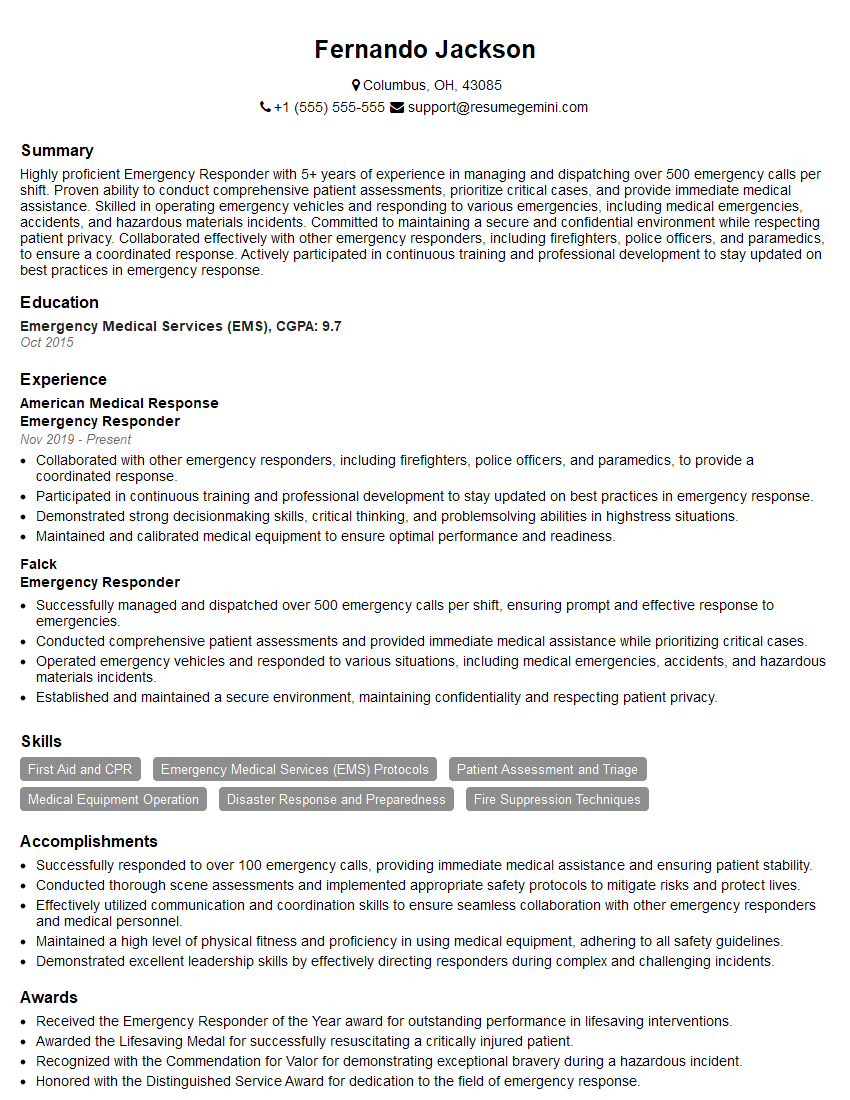
Emergency Responder Resume Sample
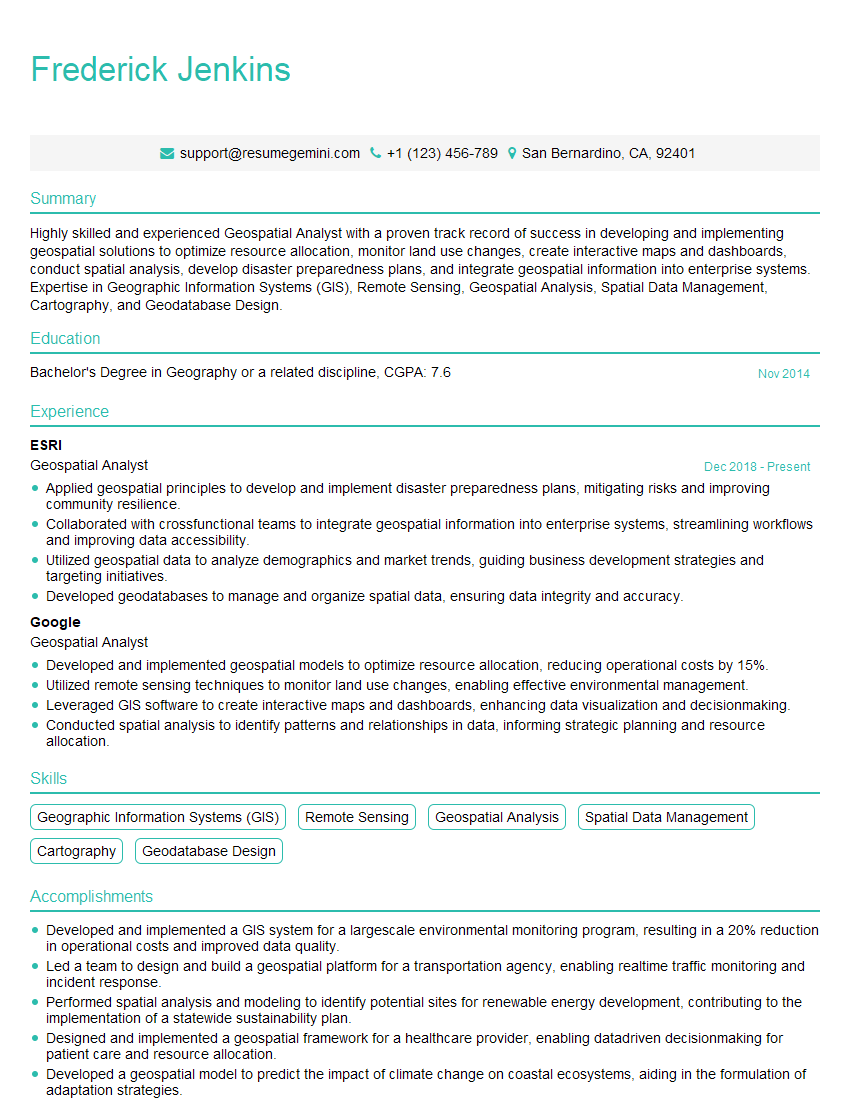
Geospatial Analyst Resume Sample
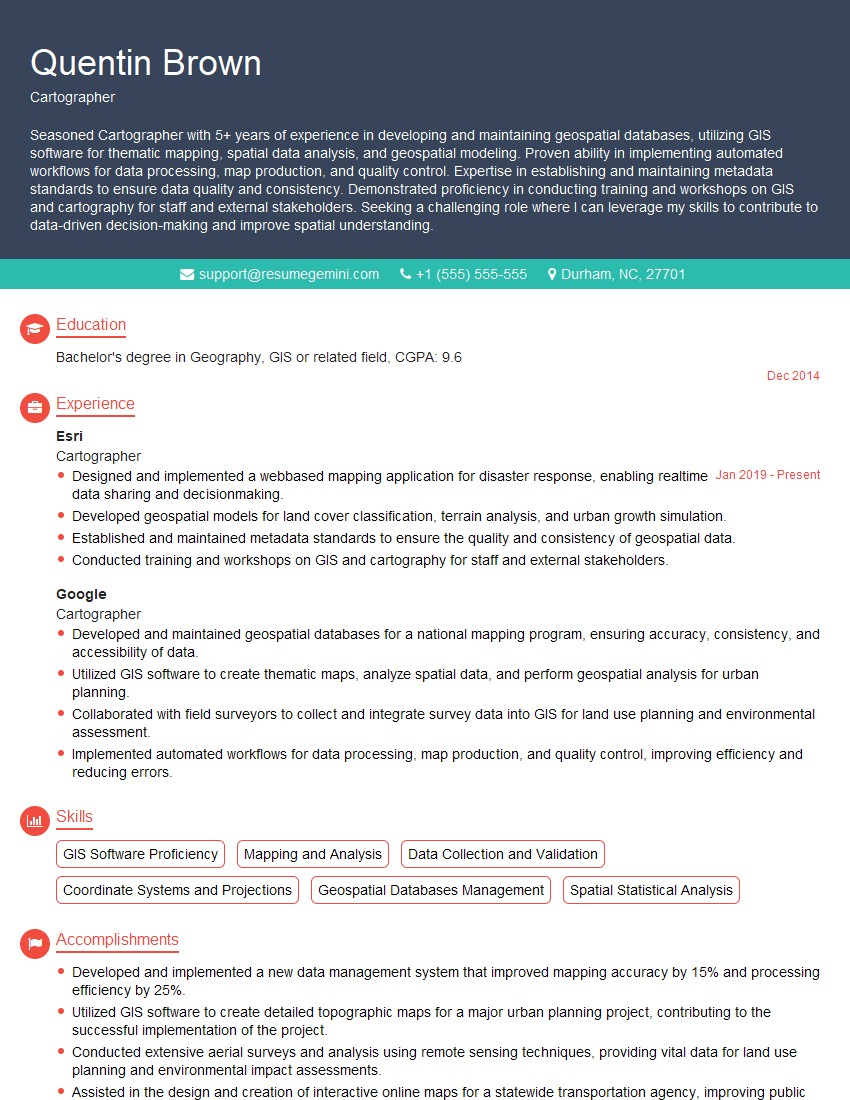
Cartographer Resume Sample
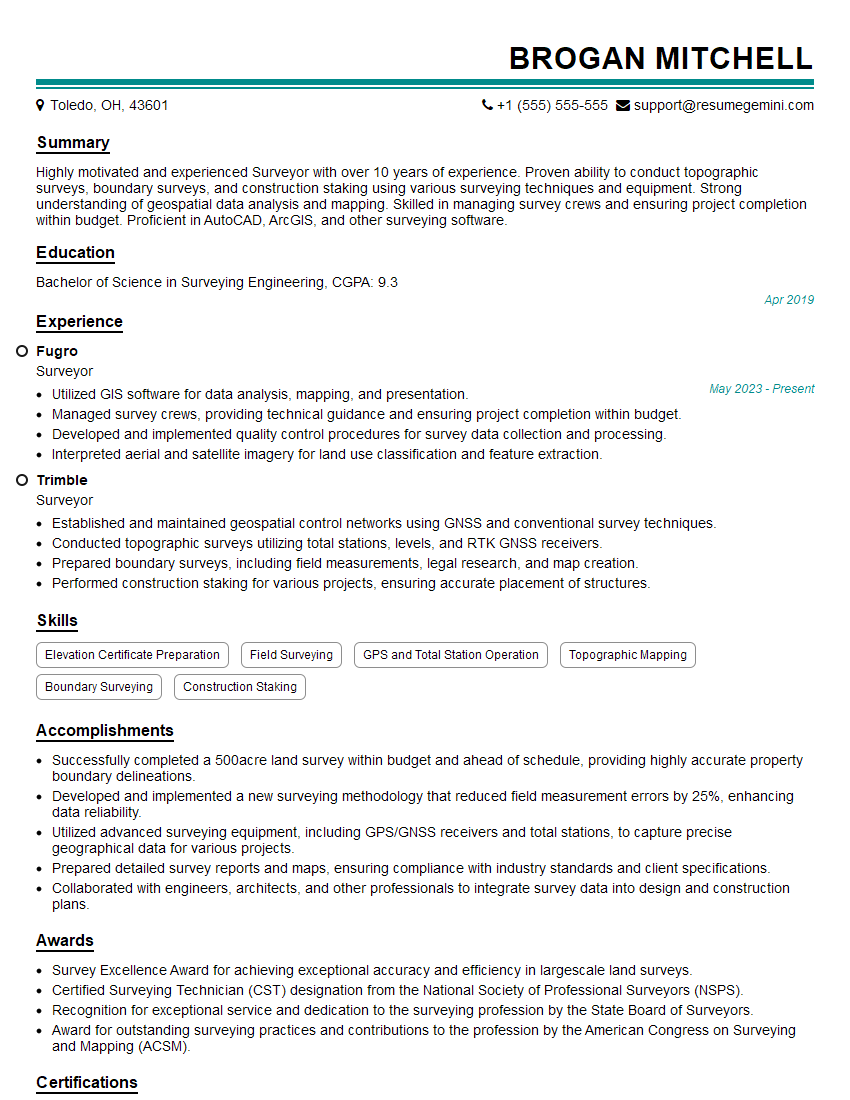
Surveyor Resume Sample
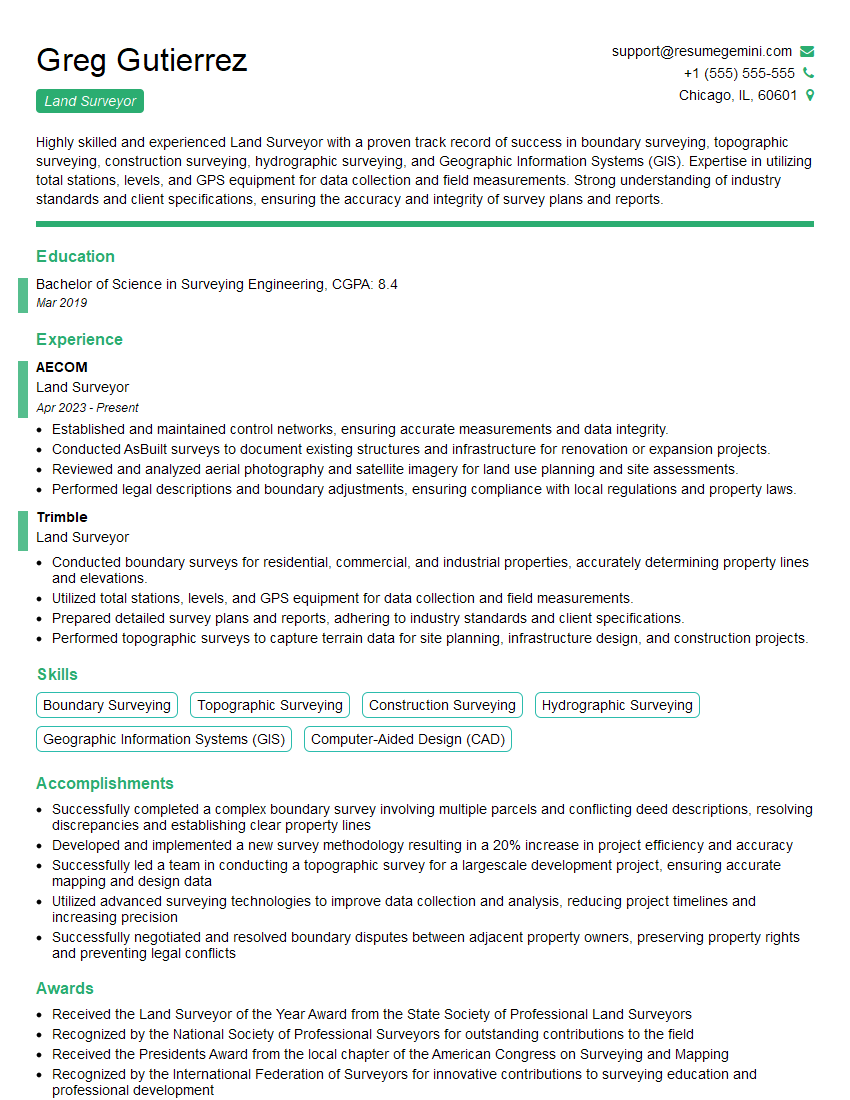
Land Surveyor Resume Sample
Field Technician Resume Sample
Park Ranger Resume Sample
Sailing Instructor Resume Sample
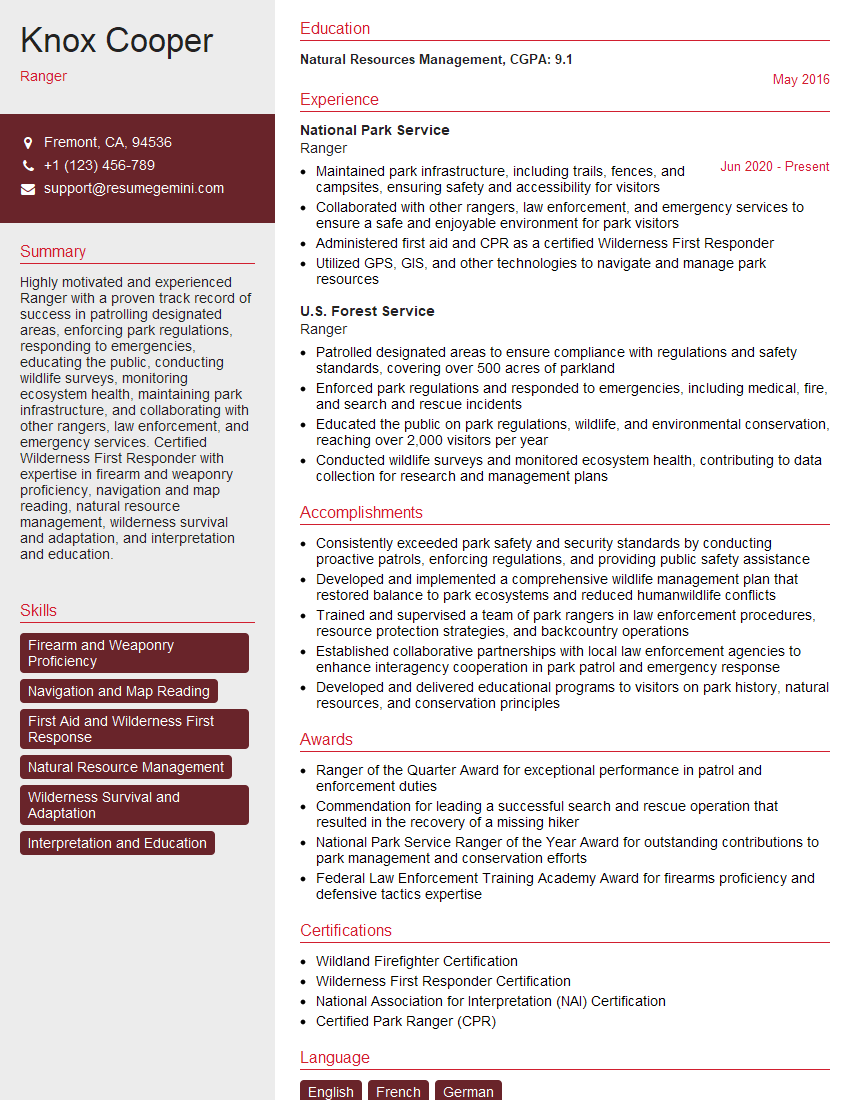
Ranger Resume Sample
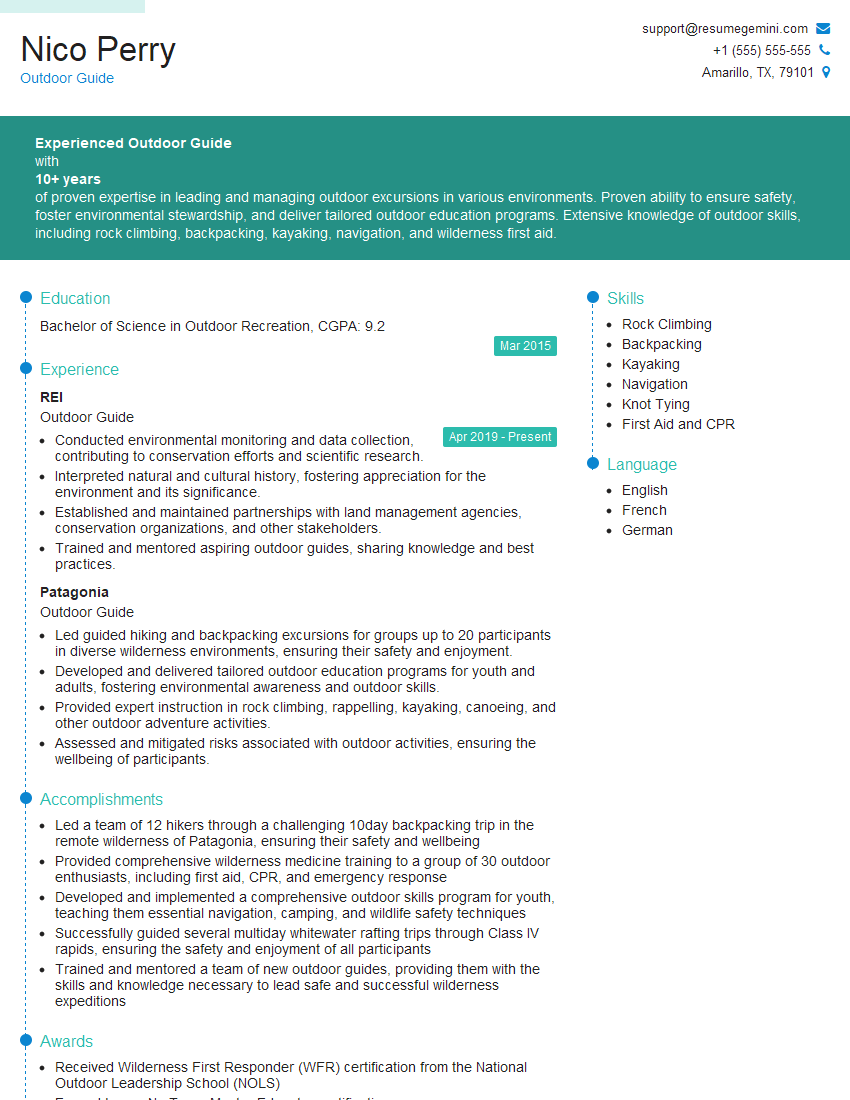
Outdoor Guide Resume Sample
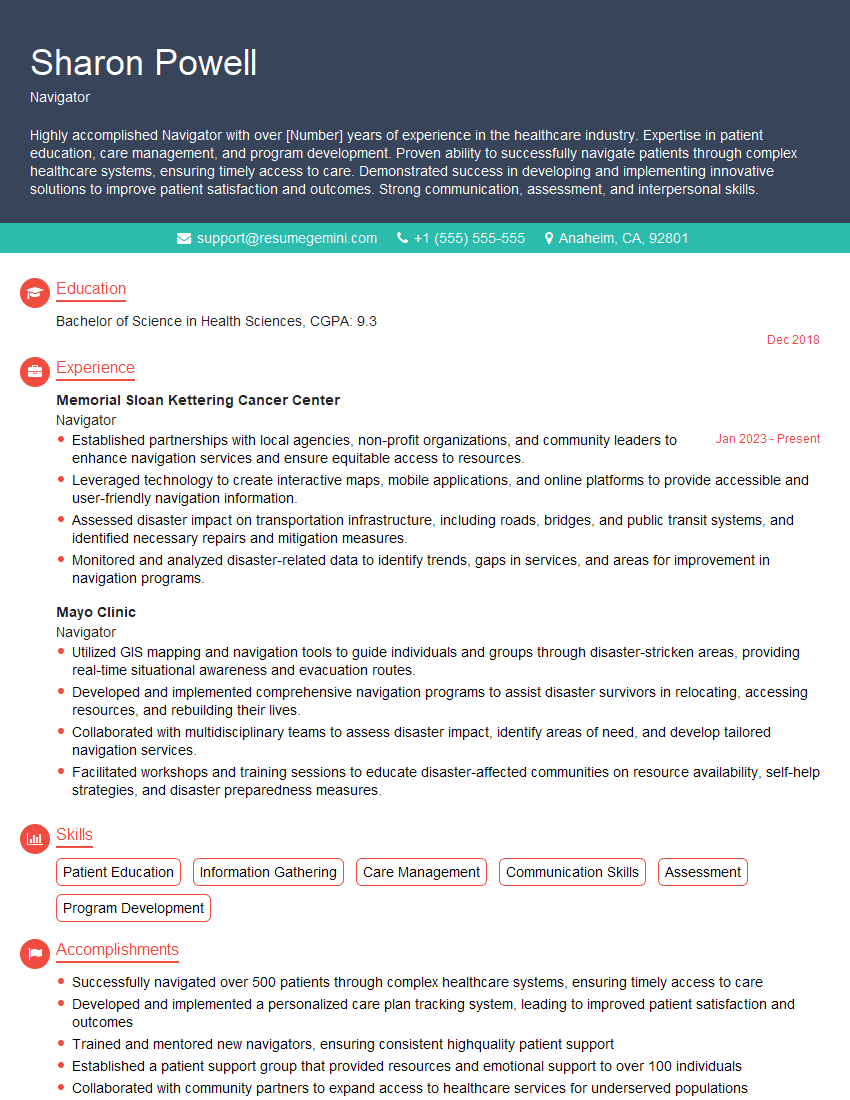
Navigator Resume Sample
Explore more articles
Users Rating of Our Blogs
Share Your Experience
We value your feedback! Please rate our content and share your thoughts (optional).
What Readers Say About Our Blog
Very informative content, great job.
good