Interviews are more than just a Q&A session—they’re a chance to prove your worth. This blog dives into essential Concrete Trowel interview questions and expert tips to help you align your answers with what hiring managers are looking for. Start preparing to shine!
Questions Asked in Concrete Trowel Interview
Q 1. Explain the different types of concrete trowels and their applications.
Concrete trowels come in various types, each designed for specific applications. The most common categories are hand trowels and power trowels. Hand trowels, further categorized by size and material (steel, aluminum, magnesium), are essential for detail work, smaller areas, and finishing around edges. For instance, a small, steel bull float hand trowel is perfect for smoothing small patches, while a larger aluminum finishing trowel is ideal for creating a final, smooth surface on larger areas that are already relatively level.
- Hand Trowels: These include bull floats (for initial leveling), finishing trowels (for creating a smooth surface), and edging trowels (for creating neat edges and corners). The choice depends on the stage of finishing and the desired final texture.
- Power Trowels: These are motorized machines used for large-scale projects, providing efficient and consistent surface finishing. They are categorized by size (diameter of the blades), type (ride-on or walk-behind), and features (e.g., variable speed controls). Ride-on power trowels are used for vast concrete areas like parking lots, whereas walk-behind models are suitable for smaller areas.
The selection depends on the scale of the project, desired finish, and budget. For example, a homeowner might use a hand trowel for a small patio, while a construction company would employ power trowels for a large warehouse floor.
Q 2. Describe the process of preparing a concrete surface for troweling.
Preparing the concrete surface for troweling is crucial for achieving a high-quality finish. This process typically involves several steps:
- Cleaning: Removing any debris, loose material, or contaminants from the surface is paramount. Think of this like preparing a canvas for painting – a clean surface ensures proper adhesion.
- Leveling: Using a screed or bull float, the initial leveling of the concrete is done to ensure a consistent thickness and surface. This step eliminates significant height variations before fine troweling.
- Floating: A bull float is used to remove imperfections and create a smoother, more uniform surface. It’s like doing a preliminary smoothing before the final touches.
- Allowing for Initial Setting: Before applying the finishing trowels, the concrete must achieve the right level of workability. This period allows excess water to evaporate and helps create the necessary consistency for troweling. This ‘setting’ period is crucial, as troweling too early can mar the surface and cause pitting.
Ignoring these steps will lead to unevenness, imperfections, and an unsatisfactory final finish.
Q 3. What are the key factors influencing the choice of trowel for a particular job?
Several factors guide the selection of the right trowel:
- Size of the area: Large areas necessitate power trowels for efficiency; smaller areas are better handled by hand trowels.
- Desired finish: A smooth, polished look requires finishing trowels (hand or power), while a slightly textured surface might only need a bull float.
- Concrete mix: Different concrete mixes require different troweling techniques and therefore different trowel types. A very wet mix might need more aggressive initial floating.
- Budget: Power trowels are a substantial investment; hand trowels are more budget-friendly for small projects.
- Skill level: Operating a power trowel requires training and experience; hand trowels are easier to use for beginners.
For instance, a high-end residential project may require both power and hand trowels to achieve a flawless finish, combining efficiency and detail.
Q 4. How do you ensure a smooth, level concrete surface using a power trowel?
Achieving a smooth, level surface with a power trowel involves a methodical approach:
- Start with a properly prepared surface: As discussed earlier, the initial leveling is crucial. An uneven base will amplify the imperfections regardless of the power trowel’s capabilities.
- Begin with the initial floating: This involves using the power trowel at a low speed and making overlapping passes to achieve even distribution and remove larger inconsistencies.
- Progress to finishing: Gradually increase the speed and reduce blade pressure to achieve a progressively smoother surface. This is akin to refining the surface with successive passes of finer sandpaper.
- Use the appropriate blade type and configuration: Different blade types (e.g., pan blades, finishing blades) are optimized for various stages and desired finishes. The configuration also matters; often a combination of blade types is used in a single job.
- Check for and address imperfections: Regularly inspect the surface and address any remaining unevenness. Minor issues can often be fixed during this stage.
- Proper maintenance: Regular cleaning and maintenance of the power trowel, including blade sharpening, are essential for optimal performance and longevity.
Remember, patience and precision are key. Rushing the process will likely result in an uneven surface.
Q 5. What are the signs of improper concrete mixing affecting the finishing process?
Improper concrete mixing manifests in several ways during the finishing process:
- Excessive water: This leads to a weaker, more porous mix that is difficult to trowel and may lead to excessive bleeding (water separation) or cracking after drying. It can also make the surface more vulnerable to damage.
- Insufficient water: A dry mix is difficult to work with, making it prone to clumping and creating a surface that is uneven and difficult to smooth.
- Inconsistent mix: Uneven distribution of aggregates can result in a surface that is rough and pitted in places. Think of having small rocks sticking out in a seemingly smooth area.
- Lack of proper curing: Inadequate curing will lead to cracking and strength reduction, thus reducing the longevity of the concrete surface and impacting its aesthetic appeal.
Careful attention to the mix design and proper curing procedures is paramount for a successful troweling outcome.
Q 6. Describe your experience with different concrete mixes and their troweling requirements.
My experience encompasses a wide range of concrete mixes, each with unique troweling requirements. For example, high-strength concrete often requires more aggressive troweling due to its rapid setting time. It needs careful timing and quick execution. Conversely, mixes with high slump (water content) necessitate more careful and gradual troweling to prevent surface cracking and water separation. The type of aggregate also plays a role; finer aggregates offer a smoother base, while coarser aggregates might require additional attention during floating.
I’ve worked with mixes designed for specific purposes: those optimized for wear resistance (e.g., industrial floors), decorative finishes, and specialized applications like overlayments. Each mix necessitates tailored troweling techniques to achieve the project’s desired outcome.
For example, I once worked on a project that required a high-gloss finish using a specialized concrete mix with polished aggregates. Achieving that reflective finish involved multiple passes with power trowels using different blade configurations, as well as attention to proper curing to avoid any imperfections.
Q 7. How do you handle challenging situations like uneven surfaces or unexpected delays?
Uneven surfaces and unexpected delays are common challenges in concrete finishing. To handle uneven surfaces, I use a combination of techniques. For minor imperfections, I may rely on the power trowel’s ability to level the surface. For more substantial unevenness, I might incorporate additional materials such as self-leveling compounds or apply multiple passes with the bull float before proceeding with troweling.
Unexpected delays, often caused by weather or material shortages, require proactive adaptation. I might cover the freshly poured concrete to protect it from the elements. If a delay necessitates extended work the following day, I might need to assess the concrete’s setting state carefully before resuming the troweling process and ensure the surface is still workable.
Communication is key in both situations; I inform the project manager about any issues or changes promptly and together we discuss solutions to mitigate any negative impacts on timelines or the quality of the concrete surface. Having contingency plans and the flexibility to adjust based on the circumstances are vital in managing such challenges effectively.
Q 8. What safety precautions do you take while operating a power trowel?
Safety is paramount when operating a power trowel. It’s a powerful machine with spinning blades that can cause serious injury if not handled correctly. My safety routine begins before I even start the engine. I always inspect the machine for any damage or loose parts, ensuring all guards are securely in place. I then check the area around me, making sure it’s clear of any obstacles or people.
- Personal Protective Equipment (PPE): I never operate a trowel without wearing safety glasses or a face shield to protect my eyes from flying debris. Sturdy work boots with steel toes are essential, as is hearing protection due to the loud engine noise. Depending on the job, I might also wear gloves and a hard hat.
- Stable Ground: I ensure the ground is level and stable before starting to prevent accidents caused by the machine tipping.
- Machine Operation: I always start the trowel slowly and gradually increase the speed, allowing myself time to get accustomed to the machine’s behavior. I maintain a firm grip on the controls and never reach over the spinning blades. I also make sure the area is well-lit and avoid working in adverse weather conditions like rain or strong winds.
- Emergency Procedures: I am familiar with the emergency shut-off procedures and ensure everyone around me knows what to do in case of an accident.
Think of it like driving a car – you wouldn’t drive recklessly; the same care and caution must be applied when operating a power trowel.
Q 9. Explain the importance of proper curing after concrete finishing.
Proper curing is crucial for the long-term strength, durability, and overall quality of the concrete. It’s the process of maintaining moisture and temperature in the concrete to allow the hydration process (the chemical reaction that makes concrete hard) to complete effectively. Insufficient curing can lead to several problems, including reduced compressive strength, increased cracking, dusting, and poor resistance to wear.
The most common curing methods include keeping the surface moist by using water curing (sprinkling, ponding, or covering with wet burlap), applying membrane-forming curing compounds (liquid sealants), or using curing blankets (poly sheets and insulation). The choice depends on factors like weather, project size, and aesthetic requirements.
For example, on a recent project, we used a combination of ponding (allowing water to sit on the surface) and a curing compound to ensure consistent moisture and to protect the concrete from early drying. The result was a significantly stronger and more durable concrete surface. The importance of curing is similar to baking a cake – you wouldn’t remove it from the oven prematurely, as the inside wouldn’t cook properly; curing concrete similarly ensures its full potential strength is achieved.
Q 10. How do you achieve different surface finishes (e.g., broom finish, smooth finish)?
Achieving different surface finishes is a key aspect of concrete finishing. The choice of finish depends largely on the intended use and aesthetic preferences. The type of trowel, its speed, and the timing of application all contribute to the final look.
- Smooth Finish: This is achieved by using a power trowel with multiple passes at progressively higher speeds. The goal is to create a very flat, polished surface. Timing is important here; troweling too early can create an uneven texture, while too late can make it difficult to achieve a smooth finish.
- Broom Finish: This is a textured finish created by dragging a stiff broom across the concrete surface while it’s still slightly workable. The broom leaves behind parallel grooves, which improve slip resistance. The angle and pressure applied to the broom impact the depth and spacing of the grooves.
- Other Finishes: Other finishes can be achieved through techniques like using a steel trowel for a smoother, more refined finish, or incorporating specialized tools for stamped concrete or exposed aggregate finishes.
For instance, a smooth finish is perfect for interior floors where aesthetics are prioritized, while a broom finish is ideal for driveways or walkways where slip resistance is crucial. The selection of the finish is a collaborative process between the client and the contractor.
Q 11. What are the common problems encountered during concrete troweling, and how do you solve them?
Several challenges can arise during concrete troweling. Here are a few common issues and their solutions:
- Uneven Surface: This is often caused by inconsistent concrete placement or improper troweling techniques. The solution is careful attention to proper placement of concrete followed by multiple passes with the trowel. Checking the consistency of the concrete mix itself before placing it is also crucial.
- Cracking: This is a serious problem often resulting from insufficient curing, rapid drying, or improper concrete mix design. Prevention focuses on proper curing practices as mentioned earlier, controlling the drying rate, using appropriate admixtures (additives in the concrete mix), and avoiding placing concrete in extremely hot or cold conditions.
- Scaling and Dusting: These surface issues are usually caused by early drying or inadequate curing. The solution involves implementing effective curing methods and potentially using a surface hardener.
- Blade Chatter: This happens when the blades vibrate excessively, leaving an uneven surface. This can result from an unbalanced blade, improper trowel operation, or the concrete surface being too dry or too wet. It’s often resolved by adjusting blade balance, slowing down troweling speed, or altering water content in the concrete.
Problem-solving in concrete troweling requires a keen eye for detail and the ability to adapt to the specific conditions of each job.
Q 12. Describe your experience with different types of concrete toppings or sealers.
My experience encompasses various concrete toppings and sealers, each with its own benefits and applications.
- Concrete Hardeners: These are dry powders that are broadcast onto the fresh concrete surface to increase its durability and compressive strength. They provide resistance to abrasion and scaling, particularly useful for heavily trafficked areas like warehouses or industrial floors. I’ve used several brands, and the application method often requires specialized equipment like a concrete broom to evenly distribute the hardener.
- Colored Concrete Hardeners: These provide aesthetic value and increased durability. I frequently use them to create decorative surfaces. The color is integral to the surface and doesn’t just sit on top. This creates a long-lasting, resilient colored finish.
- Sealers: These protect the concrete from water damage, stains, and weathering. I have used various types, including acrylic sealers (offering good UV protection and water resistance), epoxy sealers (high durability and chemical resistance), and penetrating sealers (allowing the concrete to breathe). Selection depends on the final use of the concrete.
Choosing the right topping or sealer involves considering factors such as expected traffic, environmental conditions, and the desired aesthetic outcome. For example, an epoxy sealer would be suitable for a chemical processing plant floor, whereas an acrylic sealer would be more appropriate for a residential patio.
Q 13. How do you ensure the proper blade maintenance for power trowels?
Proper blade maintenance is vital for optimal performance and safety. Neglecting this can lead to uneven finishes, damage to the trowel, and even potential injuries. My blade maintenance routine includes:
- Regular Inspection: After each use, I thoroughly inspect the blades for damage, wear, and any signs of imbalance. I check for cracks, bends, or missing segments.
- Cleaning: I carefully clean the blades to remove any hardened concrete or debris. This prevents buildup that can affect the blade’s balance and performance. I usually use a wire brush or a specialized concrete removal tool.
- Sharpening: Dull blades create an uneven finish and require more power from the engine. I sharpen blades when needed, using specialized grinding equipment or having them professionally sharpened.
- Balancing: Imbalance can cause excessive vibration and chatter. I use a balancing device or visually inspect for any visible imbalance before using the blades. Sometimes, the slightest adjustment is all it takes.
- Storage: I store the blades carefully to prevent damage. I often use protective covers to prevent corrosion and debris accumulation.
Think of it like keeping a chef’s knife sharp; it improves your work’s quality and increases efficiency. Similarly, well-maintained trowel blades translate to a better concrete finish and enhanced safety.
Q 14. What is the difference between hand troweling and power troweling?
Hand troweling and power troweling are both methods of finishing concrete, but they differ significantly in their tools, scale, and application.
- Hand Troweling: This is a more labor-intensive method using hand tools like steel trowels and bull floats. It’s typically used for smaller areas, for achieving detailed finishes, or in areas where power trowels are impractical (like confined spaces). It allows for more precise control, but it’s slower and more physically demanding.
- Power Troweling: This utilizes a power-driven trowel with rotating blades. It’s much faster and more efficient for larger projects. It produces a smoother, more consistent finish, though it requires more skill to operate effectively and safely.
The choice between hand and power troweling depends on the size of the project, the desired finish, the budget, and the time constraints. For instance, a large warehouse floor would likely require power troweling, while a small decorative patio might be best finished using hand troweling for finer details.
Q 15. Explain your understanding of concrete slump and its influence on troweling.
Concrete slump is a measure of the consistency of fresh concrete. It’s essentially how much the concrete will sag or slump when it’s placed in a cone-shaped mold and then the mold is removed. A higher slump indicates wetter, more fluid concrete, while a lower slump means drier, stiffer concrete. This directly impacts troweling because the slump dictates how easily the concrete can be worked and finished.
For troweling, you want a slump that’s neither too wet nor too dry. Too wet, and the concrete will be difficult to work with, prone to segregation (the separation of water and aggregates), and may not hold its shape. Too dry, and it will be difficult to achieve a smooth, level surface; it’ll likely be too stiff to properly consolidate and finish. The ideal slump for troweling often falls within a range recommended by the concrete supplier and depends on the specific application and desired finish. For instance, a higher slump might be preferable for a large, flat slab to ensure proper consolidation, while a lower slump might work better for a smaller area requiring finer detail.
Career Expert Tips:
- Ace those interviews! Prepare effectively by reviewing the Top 50 Most Common Interview Questions on ResumeGemini.
- Navigate your job search with confidence! Explore a wide range of Career Tips on ResumeGemini. Learn about common challenges and recommendations to overcome them.
- Craft the perfect resume! Master the Art of Resume Writing with ResumeGemini’s guide. Showcase your unique qualifications and achievements effectively.
- Don’t miss out on holiday savings! Build your dream resume with ResumeGemini’s ATS optimized templates.
Q 16. How do you determine the appropriate troweling time for a particular concrete mix?
Determining the appropriate troweling time depends on several factors: the concrete mix design (including water-cement ratio, admixtures, and aggregate type), the ambient temperature and humidity, and the desired surface finish.
I typically follow these steps:
- Check the concrete specifications: The supplier’s mix design often includes guidelines for finishing.
- Assess the concrete’s consistency: Visually inspect the concrete’s slump. A good indicator is how quickly it begins to stiffen.
- Monitor the water loss: Concrete loses moisture as it hydrates. Excessive water loss can lead to rapid stiffening.
- Consider the ambient conditions: Hot and windy conditions accelerate water loss, reducing troweling time. Conversely, cool and humid conditions extend the workable time.
- Use the ‘thumb test’: Gently press your thumb into the concrete. If it doesn’t rebound noticeably, it’s usually time to begin troweling.
- Start with the initial floating: Begin floating to level the surface and remove excess water before using the power trowel. This helps remove surface water and creates a better substrate for final finishing.
It’s crucial to avoid over-troweling, which can lead to excessive abrasion and damage to the surface, resulting in a potentially weaker surface that’s more vulnerable to dusting and cracking.
Q 17. What are the signs of early cracking in concrete and how can it be prevented?
Early cracking in concrete is a serious concern, usually stemming from rapid drying, insufficient curing, or poor mix design. Signs include fine hairline cracks, often appearing within hours or days of placement. Cracks can also be deeper and more pronounced if the concrete is subjected to significant shrinkage.
Prevention strategies include:
- Proper curing: Maintaining sufficient moisture content in the concrete during the initial curing period prevents rapid drying shrinkage. This includes covering the concrete with plastic sheeting, burlap, or using curing compounds.
- Using appropriate admixtures: Retarders can slow down the setting time, giving the concrete more time to cure evenly and reducing the likelihood of shrinkage cracks.
- Controlling the mix design: Adjusting the water-cement ratio is crucial. A lower water-cement ratio reduces shrinkage and improves durability.
- Proper consolidation: Thoroughly vibrating the concrete during placement removes air pockets that can lead to weakness and cracking.
- Joint placement: Creating control joints at appropriate intervals helps mitigate cracking by providing a place for the concrete to crack predictably, preventing large random cracks.
- Avoid placing concrete in freezing conditions: Freezing temperatures can disrupt the hydration process, significantly impacting the concrete’s structural integrity and potential cracking.
Q 18. Describe your experience working with different types of concrete substrates.
My experience encompasses various concrete substrates, including standard concrete, steel-fiber reinforced concrete, and even concrete overlaid on existing surfaces.
Each substrate requires a different approach. Standard concrete’s troweling is fairly straightforward, but steel-fiber reinforced concrete requires a careful approach as it can be more abrasive to the trowel blades. Overlaying on existing surfaces demands even more attention to detail to ensure a level and bonded finished surface, often requiring specific primers or bonding agents.
For example, working with a concrete slab that had significant undulation and surface imperfections required multiple passes with a bull float to even the surface before even attempting to power trowel. I also experienced challenges troweling high-performance concrete, which sets quickly. In this instance, I needed to coordinate my team efficiently to manage the limited workable time.
Q 19. What methods do you use to ensure uniform thickness across a large concrete slab?
Ensuring uniform thickness across a large concrete slab involves a systematic approach. This combines meticulous planning and the proper use of tools and techniques.
My methods include:
- Accurate formwork: Precisely set forms are crucial for establishing the initial thickness.
- Strategic placement: Concrete should be placed in layers to ensure even distribution and minimize segregation.
- Effective screeding: Use a long, straight screed board to level the concrete to the desired thickness.
- Bull floating: A bull float is essential for removing excess water and consolidating the surface, providing an even base for power troweling.
- Power troweling in multiple passes: Begin with low-speed power troweling and gradually increase the speed. Multiple passes help achieve a smoother finish, blending and leveling imperfections.
- Laser leveling: Using laser levels to guide the process can ensure the surface remains perfectly level throughout. This is especially critical for large-scale projects that demand exceptionally high tolerances.
Regular checks with a straight edge during the process help identify and rectify any inconsistencies early on. A well-planned workflow, including consistent monitoring, is key to success.
Q 20. How do you manage and organize the worksite effectively for efficient troweling?
Efficient troweling necessitates a well-organized worksite. This begins with planning and extends to on-site execution.
My approach focuses on:
- Pre-work planning: Defining clear roles and responsibilities, securing necessary equipment and materials, and establishing a logical workflow are crucial. This includes preparing the site, such as clearing debris and ensuring adequate access for equipment and materials.
- Material staging: Strategically placing materials to minimize unnecessary movement and ensure smooth material flow significantly increases the workflow. This prevents bottlenecks and ensures a consistent work pace.
- Team communication: Clear and consistent communication between team members is paramount. This ensures everyone understands their tasks and the overall objectives. Regular updates and feedback sessions are essential to ensure efficiency and quality control.
- Waste management: Establishing clear guidelines and dedicated areas for waste disposal keeps the work area clean and organized, preventing accidents and delays.
- Safety first: Safety is paramount. A well-organized worksite ensures the safe and efficient handling of tools and materials, thus avoiding potential hazards and accidents.
I have found that a well-organized worksite minimizes delays and mistakes, ensuring both efficiency and a quality finish.
Q 21. Explain your understanding of concrete admixtures and their effect on finishing.
Concrete admixtures are chemical substances added to the concrete mix to modify its properties. They significantly impact the finishing process.
Some key admixtures and their effects:
- Set retarders: These extend the setting time, providing more time for finishing. They are especially useful in hot weather or when large pours are involved.
- Accelerators: These shorten the setting time, which can be beneficial in cold weather but reduce the workable time available for troweling.
- Air-entraining agents: These incorporate air into the concrete mix, improving durability and resistance to freeze-thaw cycles. The increased workability can aid in finishing, but too much air can lead to a weaker surface.
- Superplasticizers: These reduce the water content needed for a given slump. This increases strength and workability, improving the ease of troweling while reducing the risk of segregation. However, excessive use can lead to bleeding (water separation on the surface), which requires extra care in the finishing process.
Understanding the effects of admixtures is crucial. Improper use can negatively impact the finishing process, potentially leading to surface defects. Close coordination with the concrete supplier is essential to determine the appropriate admixture for a specific project.
Q 22. How do you adapt your technique to varying weather conditions during troweling?
Adapting troweling techniques to varying weather conditions is crucial for achieving a high-quality, durable concrete finish. Extreme temperatures and humidity significantly impact the concrete’s setting time and workability.
- Hot weather: High temperatures accelerate evaporation, leading to rapid surface drying and potential cracking. To counteract this, I use techniques such as applying a curing compound immediately after finishing to retain moisture. I also might work in early mornings or late evenings when temperatures are cooler, and increase the frequency of water spraying to prevent premature drying. I might also adjust my troweling speed, working more quickly to avoid excessive water evaporation before the concrete sets.
- Cold weather: Low temperatures slow down the setting process and increase the risk of frost damage. In cold weather, I use admixtures to accelerate setting, ensuring the concrete gains sufficient strength before freezing. I might also use heated water for the concrete mix itself. Additionally, I’ll protect the newly poured concrete with insulated blankets or tarps to slow down the cooling process and prevent frost damage.
- Rainy weather: Rain can wash away surface cement paste and create an uneven finish. I typically postpone troweling work until after the rain stops and the surface is dry enough. If work needs to continue in light rain, I’ll use protective coverings over the freshly poured sections.
Understanding these factors and adapting my approach accordingly is essential for consistent results, regardless of weather conditions.
Q 23. What are the common causes of pitting or scaling on a finished concrete surface?
Pitting and scaling on a finished concrete surface are common defects that detract from its aesthetic appeal and can compromise its durability. They usually stem from several key issues:
- Insufficient curing: Rapid moisture loss causes the surface to dry too quickly, leading to shrinkage and cracking which manifest as pitting or scaling.
- Poor concrete mix design: An improperly mixed concrete, lacking sufficient cement or using aggregates of poor quality, can result in a weak surface prone to these defects.
- De-icing salts: The use of de-icing salts in cold climates can cause damage to the concrete surface over time, especially if the concrete wasn’t properly cured initially.
- Aggressive chemicals: Exposure to acidic chemicals can erode the concrete’s surface, leading to scaling and pitting.
- Improper finishing techniques: Over-troweling or improper consolidation of the concrete can create air pockets which eventually surface as pits. Using a trowel that’s too rough or damaged can also lead to surface damage.
Preventing these defects requires careful attention to every stage of the concrete process, from mix design and placement to curing and protection. For instance, always ensure proper consolidation to prevent air pockets, use a well-maintained and appropriate trowel, and apply a high-quality curing compound.
Q 24. Describe your experience with using different types of edging tools.
My experience with edging tools is extensive, encompassing various types suited for different applications and desired finishes. I’m proficient in using bull floats, hand floats, edgers, and groovers.
- Bull floats: I use these for initial leveling and consolidation, creating a smooth, even surface before proceeding to finer finishing work. Their larger size allows for efficient coverage of larger areas.
- Hand floats: These are crucial for detailed work, allowing me to address minor imperfections and achieve a highly polished finish in smaller areas or around intricate features. I often use them for blending the edges and for creating a smooth transition between different sections.
- Edgers: I use edgers to create clean, sharp edges and corners. They’re especially useful for achieving a professional look. I select the appropriate edger based on the desired edge profile, ranging from rounded to crisp, squared edges.
- Groovers: These tools create decorative grooves in concrete surfaces. I’ve used them for both functional purposes (e.g., providing expansion joints) and aesthetic enhancement, adding texture and visual appeal to the final concrete surface.
Choosing the right tool for the task is paramount; the wrong tool can compromise both the quality of the finish and the efficiency of the work. Years of experience have taught me to select and use these tools effectively, consistently achieving high-quality results.
Q 25. How do you ensure compliance with all relevant safety regulations and standards?
Safety is my top priority. I always adhere to all relevant OSHA and other local safety regulations and standards. This commitment includes several key aspects:
- Personal Protective Equipment (PPE): I consistently use appropriate PPE, including safety glasses, gloves, steel-toed boots, and hearing protection. The type and level of protection will vary depending on the specific task and potential hazards.
- Safe Work Practices: I follow safe work practices, such as keeping the work area clean and organized, using proper lifting techniques, and ensuring adequate ventilation, especially when working with potentially hazardous materials.
- Hazard Identification and Mitigation: Before commencing any task, I carefully assess potential hazards and implement appropriate mitigation strategies, such as using fall protection when working at heights or utilizing appropriate signage to alert others of potential dangers.
- Tool Maintenance: I regularly inspect and maintain all my tools to ensure they’re in good working order and pose no safety risks.
- Emergency Procedures: I am familiar with emergency procedures and know how to respond appropriately in case of an accident or injury.
My commitment to safety isn’t just about following regulations; it’s about creating a safe and productive work environment for myself and others. It’s an integral part of my professional practice.
Q 26. Explain your understanding of the different stages of concrete curing.
Concrete curing is a critical process that allows the concrete to gain strength and durability. It involves maintaining adequate moisture and temperature to allow the hydration process to occur effectively. This process is divided into several stages:
- Initial Setting: This is the period immediately after placing the concrete, during which it starts to lose its plasticity and harden. This stage is very sensitive to rapid moisture loss.
- Hardening: This stage is where the majority of the strength development takes place. The hydration of cement continues, forming a strong, interlocking structure of crystals. The duration of this stage depends on several factors including the ambient temperature and the concrete mix composition.
- Curing: This crucial stage involves maintaining moisture and temperature to allow the hydration process to complete effectively. This is commonly done through techniques such as water curing (continuous spraying or ponding), membrane curing (application of a curing compound), or using wet burlap.
- Strength Gain: This is a continuous process even after the curing period, albeit at a slower rate, reaching its ultimate strength after several weeks or months depending on the concrete mix design.
Understanding these stages is vital. Improper curing can lead to a weak, porous concrete surface that is more susceptible to cracking, scaling, and other durability issues. I always follow best practices for curing to ensure the concrete reaches its optimal strength and durability.
Q 27. What are your skills in using hand tools for final finishing work?
I possess a high level of skill in using a variety of hand tools for final finishing work on concrete surfaces. This expertise extends to a range of tools and techniques:
- Hand floats: I use these to create smooth, even surfaces, removing minor imperfections and achieving a polished finish.
- Edgers: I use edgers to produce sharp, clean edges and corners, ensuring a professional aesthetic.
- Groovers: I utilize groovers to create decorative or functional grooves, adding textural interest and providing expansion joints.
- Margin trowels: These tools are indispensable for creating crisp, defined edges and blending sections of the concrete.
- Concrete saws: I use concrete saws for cutting expansion joints. Control and precision are key to executing this correctly.
My skills in using these tools, combined with my understanding of concrete behavior and finishing techniques, ensure a high-quality, durable finish. I am adept at creating a range of finishes—from smooth, polished surfaces to textured, decorative ones—depending on the project requirements.
Key Topics to Learn for Concrete Trowel Interview
- Understanding Concrete Properties: Explore the different types of concrete mixes, their strengths, and how they affect troweling techniques.
- Troweling Techniques: Master various troweling methods (e.g., darbying, bull floating, power troweling) and their applications in different projects.
- Surface Finishing: Learn about achieving different surface finishes (e.g., smooth, broom finished, textured) and the tools and techniques involved.
- Safety Procedures and Regulations: Understand and demonstrate knowledge of safety protocols, including personal protective equipment (PPE) and hazard identification.
- Equipment Operation and Maintenance: Gain proficiency in operating and maintaining various troweling equipment, including power trowels and hand tools.
- Troubleshooting and Problem-Solving: Develop the ability to identify and address common issues encountered during troweling, such as surface imperfections or equipment malfunctions.
- Project Planning and Execution: Understand the role of a concrete troweler within a larger construction project, including scheduling and coordination.
- Estimating and Material Calculations: Learn how to accurately estimate material needs based on project specifications.
- Quality Control and Inspection: Understand methods for ensuring the quality of the finished concrete surface and meeting project specifications.
Next Steps
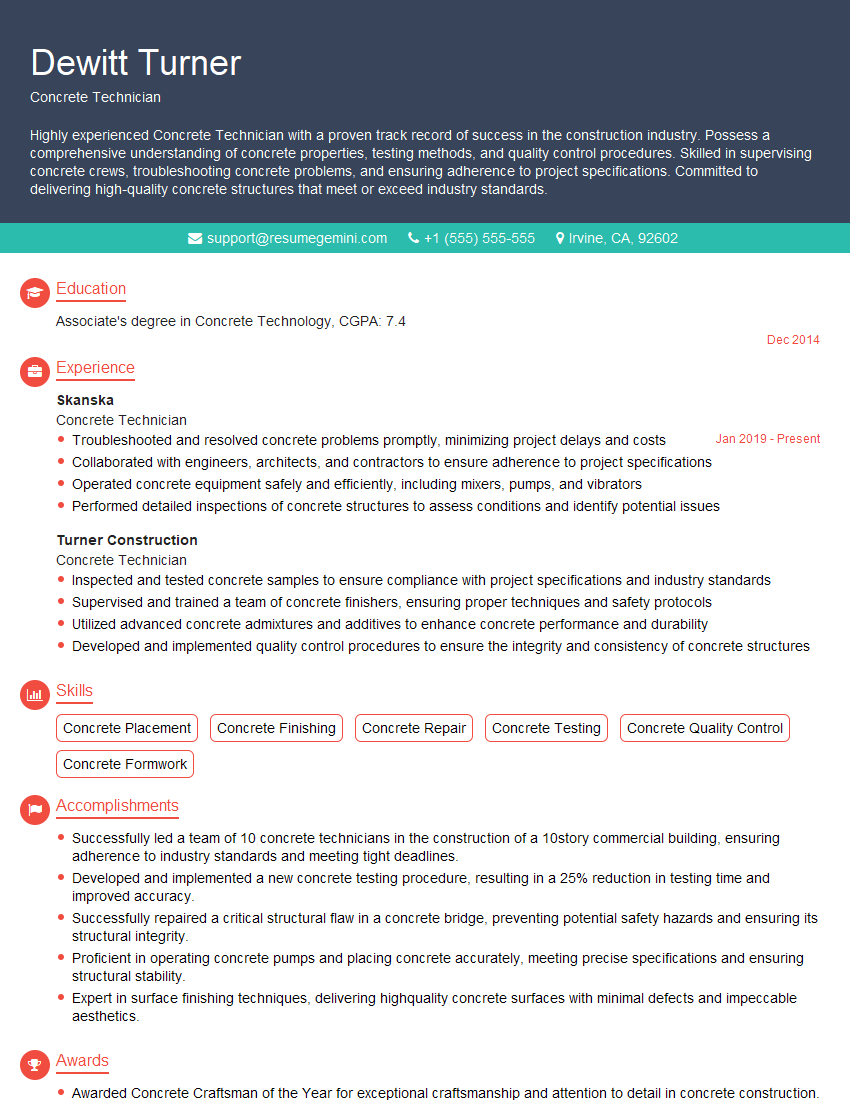
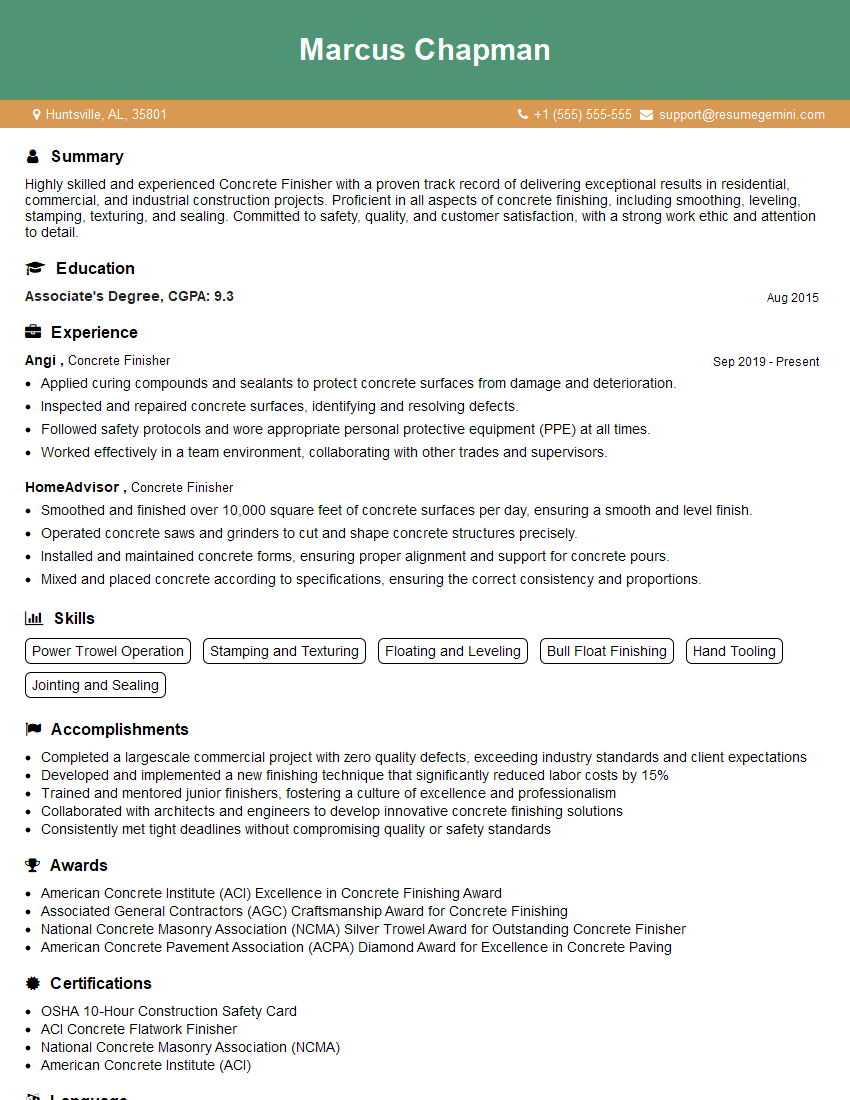
Mastering concrete troweling opens doors to rewarding careers in construction, offering opportunities for advancement and specialization. A well-crafted resume is crucial for showcasing your skills and experience to potential employers. An ATS-friendly resume increases your chances of getting noticed by Applicant Tracking Systems used by many companies. To build a professional and effective resume that highlights your concrete troweling expertise, we highly recommend using ResumeGemini. ResumeGemini provides tools and resources to create a strong resume, and examples of resumes tailored to the Concrete Trowel profession are available to guide you. Take the next step in your career journey – build a winning resume today!


Explore more articles
Users Rating of Our Blogs
Share Your Experience
We value your feedback! Please rate our content and share your thoughts (optional).
What Readers Say About Our Blog
Very informative content, great job.
good