Every successful interview starts with knowing what to expect. In this blog, we’ll take you through the top Congregational Singing interview questions, breaking them down with expert tips to help you deliver impactful answers. Step into your next interview fully prepared and ready to succeed.
Questions Asked in Congregational Singing Interview
Q 1. What are your preferred methods for teaching congregational singing?
My approach to teaching congregational singing is multifaceted, focusing on building confidence and skill gradually. I believe in a blend of active learning and supportive guidance.
- Modeling: I start by demonstrating good vocal technique, including posture, breathing, and tone production. This is often done through leading warm-ups and demonstrating specific phrases from hymns.
- Active Participation: I encourage immediate participation, starting with simple exercises like vocal warm-ups and unison singing of familiar tunes. This builds comfort and familiarity.
- Progressive Difficulty: We build gradually. We start with simpler hymns and songs, slowly introducing more challenging melodies and harmonies as the congregation gains confidence. Regular reviews reinforce what’s been learned.
- Individual Attention: While leading the whole group, I am attentive to individuals who might need extra help, discreetly offering guidance or providing further explanation during practice sessions.
- Positive Reinforcement: Encouragement and positive feedback are crucial. I celebrate the group’s achievements and highlight the improvements they make, both individually and as a whole.
For instance, in one church, we started with simple rounds to improve rhythmic accuracy before progressing to more complex harmonies in our familiar hymns. The result was a noticeable improvement in the overall quality and engagement during our services.
Q 2. How do you select appropriate hymns and songs for different liturgical seasons?
Selecting hymns and songs for different liturgical seasons requires careful consideration of the season’s themes and the overall tone of the worship service.
- Thematic Alignment: I prioritize hymns that directly reflect the theological and emotional themes of the season. For example, during Advent, we focus on hymns of hope and expectation, while Lent brings hymns of penitence and reflection. Easter features joyful, triumphant hymns.
- Variety: I aim for a balance of familiar and less-known hymns, incorporating diverse styles and historical periods to keep the experience fresh and engaging. A good mix of styles appeals to a broader range of preferences.
- Congregational Familiarity: A balance must be struck between introducing new material and singing familiar favorites. This is essential to build congregational confidence and ensure widespread participation. I might introduce one or two lesser-known hymns alongside well-loved classics.
- Musical Suitability: The melodies and harmonies should be appropriate for the congregation’s vocal abilities. Avoiding overly complex or challenging pieces is vital, especially for a less experienced group.
For example, during the Easter season, we might start with the universally known “Christ the Lord is Risen Today,” then introduce a slightly less familiar but still accessible hymn like “Were You There,” and finally include a more contemporary piece to show diversity and the evolving musical landscape of the church.
Q 3. Describe your experience leading congregational singing in diverse settings.
I’ve led congregational singing in various settings, including traditional, contemporary, and multicultural churches. This has required adaptability and sensitivity to different musical preferences and cultural backgrounds.
- Traditional Churches: In traditional settings, I focus on the proper execution of traditional hymns, emphasizing the historical and liturgical context of the music. This involves careful attention to textual accuracy and traditional melodic interpretations.
- Contemporary Churches: Contemporary churches often utilize a broader range of musical styles, including gospel, praise songs, and modern hymns. My approach here includes incorporating participatory elements like hand-clapping or rhythmic movements.
- Multicultural Churches: Leading congregational singing in multicultural contexts requires sensitivity to diverse musical traditions and languages. I often incorporate hymns and songs from different cultural backgrounds, promoting inclusivity and a sense of shared worship.
In one multicultural church, I successfully integrated hymns in English, Spanish, and Tagalog, ensuring that everyone felt represented and involved in the worship experience. This required careful preparation, translation, and sensitivity to cultural nuances.
Q 4. How do you handle a congregation that struggles to sing in tune or with confidence?
Addressing a congregation that struggles with singing in tune or with confidence requires patience, understanding, and a tailored approach.
- Build Confidence: I start by focusing on building confidence through simple exercises and positive reinforcement. Small victories, such as successfully singing a familiar phrase, are celebrated.
- Vocal Warm-ups: Thorough and engaging vocal warm-ups are essential to prepare the voices and improve vocal control. These might include simple scales, humming exercises, and tongue trills.
- Gradual Progression: I use simpler hymns and songs initially, gradually increasing the difficulty as the congregation’s ability improves. This avoids overwhelming the singers and builds their competence.
- Section Singing: Dividing the congregation into smaller sections to sing different parts can make singing more accessible, allowing for more individual attention and a feeling of increased support.
- Accompaniment: Choosing the right accompaniment is crucial. Clear, well-balanced accompaniment helps singers stay in tune and in rhythm.
In one instance, I helped a congregation improve their intonation by incorporating regular listening exercises and using simple rhythmic cues. The congregation gradually became more confident, resulting in more unified and engaging congregational singing.
Q 5. What techniques do you employ to encourage participation from all members of the congregation?
Encouraging participation requires creating an inclusive and welcoming atmosphere.
- Variety of Styles: Offering a variety of musical styles, including traditional hymns, contemporary praise songs, and gospel music, appeals to a broader range of musical tastes, and increases the likelihood of involvement from a wider group.
- Simple Arrangements: Using simple arrangements of hymns and songs reduces complexity and makes them easier to sing, improving the probability of inclusion for people of varying musical abilities.
- Visual Aids: Using lyrics projected on a screen makes it easier for people to follow along, reducing anxiety for those who may not know the words by heart. Large print versions can also prove beneficial.
- Interactive Elements: Incorporating interactive elements, such as call and response sections or simple actions, can help engage the congregation physically and emotionally.
- Modeling Good Participation: By enthusiastically leading and singing with expression myself, I can set a positive example for the rest of the congregation.
For instance, in a service, we used a simple, repetitive gospel song with hand-clapping and foot-tapping, which greatly increased participation, particularly among younger members of the congregation who initially felt more reserved. This boosted their confidence and created an atmosphere of collective joy.
Q 6. Explain your approach to training and mentoring volunteer singers.
Training and mentoring volunteer singers involves a combination of individual instruction, group rehearsals, and ongoing support.
- Individual Assessments: I begin with individual assessments of each volunteer’s vocal abilities and experience to understand their strengths and weaknesses and thus tailor the training plan accordingly.
- Vocal Technique: I provide instruction in basic vocal techniques, including breathing, posture, and tone production. This aims to improve their singing skills and stamina.
- Rehearsal Strategies: During rehearsals, we practice the hymns and songs using sectional work and blend-focused exercises. This approach ensures evenness in tone and allows for individual attention.
- Performance Techniques: I help volunteers develop their performance skills, including phrasing, dynamics, and expression, creating a dynamic and compelling performance for the congregation.
- Ongoing Support and Feedback: I provide ongoing support and feedback, addressing specific issues and celebrating achievements. Regular feedback sessions are very important.
In a recent training, I helped a group of volunteer singers develop their confidence and blend using a technique called ‘call and response’ where I sing a phrase, and they echo it. This helped them become more comfortable with intonation and balance, transforming their group singing.
Q 7. How familiar are you with various hymnody traditions (e.g., Anglican, Methodist, Pentecostal)?
I am very familiar with various hymnody traditions, including Anglican, Methodist, and Pentecostal.
- Anglican Hymnody: I am knowledgeable about the rich history and theological depth of Anglican hymnody, including the contributions of composers like Charles Wesley and Ralph Vaughan Williams. I understand the emphasis on liturgical context and the use of metrical psalms.
- Methodist Hymnody: I recognize the legacy of John and Charles Wesley in shaping Methodist hymnody and its emphasis on personal piety and evangelism. The musical styles often incorporate a simpler and more accessible style.
- Pentecostal Hymnody: I am familiar with the spontaneous and expressive nature of Pentecostal hymnody, including gospel songs and spirituals. This often includes call-and-response elements, rhythmic and emotional intensity, and a greater emphasis on communal expression.
This broad understanding allows me to select and adapt hymns effectively for diverse congregational settings, ensuring a meaningful and engaging worship experience. For example, when leading a service combining elements of Anglican and Pentecostal traditions, I would carefully select hymns that bridge the gap, balancing traditional and more contemporary styles in a meaningful way.
Q 8. What software or technology do you use to enhance congregational singing?
Technology plays a surprisingly significant role in enhancing congregational singing. While it’s not about replacing the human element, it can greatly support it. I primarily use audio playback software like Ableton Live or Logic Pro X to provide accompaniment tracks for hymns. These tracks can feature a variety of instruments, adding richness and texture that a smaller instrumental ensemble might struggle to achieve. This allows for a fuller sound, even with limited resources. I also utilize lyric projection software, projecting the words onto a screen to aid those who might struggle with reading small print or those unfamiliar with the hymn. This helps create a more inclusive and participatory atmosphere. Finally, recording software enables me to create practice tracks or recordings of past services for review and improvement.
For instance, I might use Ableton Live to create a backing track with a simple piano accompaniment, subtle strings, and a light percussion beat for a more contemporary hymn. For a traditional hymn, I might opt for a simple organ accompaniment recorded directly.
Q 9. How do you adapt your leadership style to suit different age groups and musical abilities?
Adapting my leadership style is crucial for effective congregational singing. My approach varies depending on the age group and musical ability. With younger children, I use a more playful and engaging style, incorporating games and movement. Simple melodies, call-and-response techniques, and hand gestures are vital. I often use stories and visual aids to connect with them. For teenagers, I strive to create a more collaborative environment, incorporating their musical preferences where appropriate, while still maintaining reverence. Adults generally appreciate a clearer, more structured approach. I provide more detailed explanations of musical phrasing and dynamics, focusing on accuracy and blending. For those with varying musical abilities, I ensure the chosen music has accessible melodies and harmonies. I also offer multiple options for participation—sometimes singing just the melody, sometimes adding harmonies, allowing everyone to feel comfortable contributing at their level.
For example, with a youth group, we might work on a contemporary Christian song, focusing on rhythm and energy. With a senior group, we might focus on hymns with familiar melodies, paying attention to clear articulation and vocal tone.
Q 10. Describe your experience working with instrumentalists to support congregational singing.
Collaboration with instrumentalists is paramount for enriching congregational singing. Effective teamwork involves clear communication and mutual respect. Before a service, I discuss the desired mood and style with the instrumentalists, providing them with sheet music or a recording of the chosen hymns. I might suggest specific instrumental voicings or dynamic choices to complement the vocal parts. During rehearsals, I provide constructive feedback, ensuring the instrumental accompaniment supports the singers without overpowering them. I actively listen to their suggestions and ideas, recognizing their expertise in their respective instruments. This collaborative approach fosters a sense of shared ownership, enhancing the overall musical experience. A strong relationship with instrumentalists is essential—we’re a team aiming for one goal: beautiful and uplifting congregational singing.
For instance, I might suggest that the organist play a softer accompaniment during verses and a more prominent one during the chorus to emphasize the text.
Q 11. How do you choose appropriate musical arrangements for hymns and songs?
Selecting appropriate arrangements is key to engaging the congregation. My approach involves considering the liturgical context, the theological message of the hymn or song, and the congregation’s musical preferences. I balance familiarity with novelty, choosing pieces that resonate emotionally while also exposing the congregation to new and diverse musical styles. I look for arrangements that are both musically satisfying and theologically appropriate. Simpler arrangements are often preferable for large congregations with varying abilities, while more complex arrangements can be used for smaller, more experienced groups. I also consider the overall flow of the service, ensuring the music selections complement each other in terms of tempo, style, and mood.
For example, during Lent, I might choose more reflective and contemplative arrangements. For joyful occasions, I’d opt for more upbeat and celebratory ones.
Q 12. How do you manage feedback from congregants regarding music selection and style?
Managing feedback is crucial for continuous improvement. I actively solicit feedback through informal conversations, suggestion boxes, and brief surveys. I listen attentively to both positive and negative comments, acknowledging their value. I analyze the feedback, considering its frequency and intensity. Constructive criticism is used to refine my approach and musical choices. While not every suggestion can be implemented, I always explain my decisions transparently, fostering open communication and mutual understanding. The goal is to create a collaborative environment where congregants feel heard and valued, and where the music reflects the community’s preferences while maintaining artistic integrity.
For example, if several congregants request more contemporary music, I might incorporate one or two new songs into the repertoire while still preserving a balance with traditional hymns.
Q 13. What is your approach to introducing new hymns or songs to the congregation?
Introducing new hymns and songs requires a gradual and thoughtful approach. I typically start by introducing them during rehearsals or smaller gatherings, allowing congregants to familiarize themselves with the music before a full service. I might provide lyric sheets or offer a brief explanation of the song’s history or meaning. During the service itself, I’ll use clear announcements and possibly provide a visual aid such as a projected lyric display. I might also provide brief explanations about the history or the composer to enhance understanding and appreciation. Building familiarity through repetition and utilizing multiple opportunities for engagement increases the likelihood of the song becoming a beloved part of the congregation’s repertoire.
For example, I might introduce a new hymn during a Wednesday evening service, then incorporate it into the Sunday service the following week, progressively building the familiarity.
Q 14. How do you address requests for specific hymns or songs from congregants?
Addressing specific requests requires careful consideration. I maintain a list of commonly requested hymns and songs, evaluating them based on their liturgical appropriateness and musical quality. If a request aligns with the overall musical direction, I’ll prioritize including it in the service schedule. If a request is less appropriate for the specific service, I might offer an alternative, explaining my reasoning politely and respectfully. The goal is to balance congregants’ preferences with the overall liturgical and musical coherence of the service. Open and honest communication is crucial in navigating these requests. Sometimes, requests might lead to the discovery of hidden musical talents within the congregation, enriching the musical experience for everyone.
For example, if a congregant requests a hymn that’s not suitable for a particular occasion, I might suggest a similar hymn that is thematically appropriate for the occasion.
Q 15. Describe your experience in creating a welcoming and inclusive environment for all singers.
Creating a welcoming and inclusive environment for congregational singing is paramount. It’s about fostering a sense of belonging where everyone feels comfortable participating, regardless of their musical background or experience. This starts with clear communication – ensuring that everyone understands that participation is valued, not judged.
- Warm and Encouraging Language: Instead of focusing on perfection, I emphasize the joy of making music together. Phrases like ‘Let’s try this together’ are much more effective than ‘Sing louder/softer’.
- Variety of Music: Including a diverse range of musical styles caters to broader preferences, preventing anyone from feeling excluded. This can involve traditional hymns alongside contemporary gospel, folk, or even world music.
- Accessible Arrangements: Simple arrangements, using fewer notes and simpler harmonies, can be more inclusive for those who aren’t experienced singers. I often provide optional parts or simpler harmonies to accommodate different skill levels.
- Inclusive Leadership: My style of leadership is collaborative and empowering, where I encourage singers to express themselves creatively, rather than enforcing strict conformity.
- Positive Reinforcement: Acknowledging and appreciating the efforts of all singers, regardless of their ability, boosts confidence and creates a positive atmosphere.
For example, in one church, I introduced a ‘sing-along’ session before the main service, where people could practice less familiar hymns in a relaxed setting. This helped reduce anxiety and improved participation during the service.
Career Expert Tips:
- Ace those interviews! Prepare effectively by reviewing the Top 50 Most Common Interview Questions on ResumeGemini.
- Navigate your job search with confidence! Explore a wide range of Career Tips on ResumeGemini. Learn about common challenges and recommendations to overcome them.
- Craft the perfect resume! Master the Art of Resume Writing with ResumeGemini’s guide. Showcase your unique qualifications and achievements effectively.
- Don’t miss out on holiday savings! Build your dream resume with ResumeGemini’s ATS optimized templates.
Q 16. How do you assess the musical abilities of a congregation?
Assessing the musical abilities of a congregation isn’t about assigning grades; it’s about understanding their collective strengths and areas for improvement. I use a holistic approach combining observation, informal assessments, and feedback.
- Listening to the Congregation: During regular services, I pay close attention to pitch accuracy, rhythmic precision, and overall blend. This provides a general understanding of their capabilities.
- Informal Practice Sessions: Short, informal rehearsal periods before services offer opportunities to assess their abilities in a less formal setting. Simple exercises on pitch matching or rhythmic accuracy can be incorporated.
- Feedback and Observation: Gathering feedback, both verbal and non-verbal, is crucial. I watch for signs of engagement, confidence, and any challenges singers might face. I also invite feedback, ensuring everyone feels heard.
- Musical Skill Self-Assessment: I might occasionally distribute simple questionnaires to gauge singers’ self-perception of their musical abilities. This helps in tailoring the programming to their needs and capabilities.
It’s important to remember that congregational singing isn’t a performance; it’s a communal act of worship. My goal is not to judge individual skills but to guide the entire group toward a unified and meaningful musical experience.
Q 17. What are your strategies for improving congregational singing skills over time?
Improving congregational singing is a gradual process requiring patience and a multifaceted approach.
- Regular Practice and Rehearsal: Even brief rehearsal times before services are invaluable. I focus on specific techniques like breath control, vocal tone, and diction.
- Targeted Exercises: I introduce targeted vocal exercises, such as scales, warm-ups, and sight-reading practice, to improve technique and musicality. These exercises need to be short, engaging, and relevant to the music performed.
- Workshops and Training: Occasional workshops or training sessions can address specific areas needing improvement, such as vocal technique or sight-reading.
- Educational Resources: Providing resources like hymnals with pronunciation guides or online tutorials can enhance singers’ understanding and competence.
- Positive Feedback and Encouragement: Continuous encouragement and celebrating successes are paramount. Regularly acknowledging improvements, no matter how small, keeps the congregation motivated.
For example, we might focus on improving diction for a month, then transition to working on breath control, gradually building skills and confidence. The key is consistent, patient effort.
Q 18. How do you balance traditional and contemporary music in your programming?
Balancing traditional and contemporary music involves carefully considering the congregation’s preferences, the liturgical context, and the overall musical goals. It’s about finding a harmony, not a forced compromise.
- Understanding the Congregation: I conduct surveys or informal discussions to understand the preferences of the congregation. This helps inform the selection of music.
- Thematic Programming: I often build a cohesive program around themes. For example, a service centered around hope might include both a traditional hymn expressing faith and a contemporary song about perseverance.
- Gradual Introduction of New Styles: Instead of abruptly shifting styles, I gradually introduce new genres, allowing the congregation to adapt and appreciate the diversity of music.
- Blending Styles: I sometimes create arrangements that blend traditional melodies with contemporary harmonies or rhythms, creating a bridge between styles.
- Seasonal Considerations: The liturgical calendar and seasonal celebrations also influence musical programming. Traditional hymns might be emphasized during Advent or Lent, while contemporary songs might be included during more celebratory occasions.
For instance, we might start a service with a well-known traditional hymn, follow with a contemporary gospel song, and then conclude with a more reflective traditional piece. This creates a dynamic and satisfying musical journey for the congregation.
Q 19. How do you handle unexpected technical difficulties during a service?
Unexpected technical difficulties are a reality in any live setting. My approach is based on preparedness, quick thinking, and grace under pressure.
- Pre-Service Checks: A thorough pre-service sound check is essential. I test all equipment (microphones, speakers, sound system) to identify and address potential issues before the service begins.
- Backup Plans: Having backup plans is critical. For example, if the sound system fails, we might revert to unplugged singing, relying on the acoustics of the space.
- Simple Solutions: Sometimes, the solution might be simple. A quick adjustment of microphone levels, or a re-connection of a loose wire, can often resolve minor issues.
- Teamwork and Communication: I work closely with the technical team, ensuring clear communication and a shared understanding of how to handle various scenarios.
- Grace and Flexibility: Acknowledging the technical glitch to the congregation with grace and humor minimizes disruption and shows adaptability.
For example, if a microphone malfunctions during a hymn, I might quickly switch to a backup microphone or simply ask everyone to sing a little louder. The key is to remain calm and find a creative solution.
Q 20. How do you maintain an effective balance between leadership and collaboration in musical ministry?
Balancing leadership and collaboration in musical ministry requires a delicate touch. It’s about empowering the congregation while providing guidance and direction.
- Shared Decision-Making: I actively seek input from the congregation on music choices and styles. This shows respect for their preferences and fosters a sense of ownership.
- Open Communication: Creating a space for open dialogue about music is crucial. Regular meetings or informal conversations provide opportunities to discuss preferences, suggestions, and challenges.
- Delegation and Empowerment: I delegate responsibilities, such as leading a song or assisting with technical aspects, to members of the congregation. This builds confidence and cultivates leadership skills.
- Mentorship and Training: I provide guidance and mentorship to those interested in improving their musical skills or taking on more responsibility within the musical ministry.
- Clear Expectations: Setting clear expectations about participation and rehearsal schedules ensures everyone understands their roles and contributions.
I see my role as facilitating the congregation’s musical expression, not dictating it. This collaborative approach ensures that the music ministry is truly a shared experience.
Q 21. Explain your understanding of copyright laws related to church music.
Copyright laws regarding church music can be complex but are crucial to understand. Essentially, using copyrighted music requires obtaining the necessary licenses or permissions.
- CCLI (Copyright Licensing International): CCLI is a common licensing agency that provides churches with permission to reproduce and perform copyrighted music. They offer various license options depending on the church’s needs.
- OneLicense.net: Similar to CCLI, OneLicense offers licenses for using copyrighted music in church services and other events.
- Public Domain Music: Music in the public domain is not subject to copyright restrictions and can be used freely. However, confirming that a piece is truly in the public domain is essential.
- Direct Contact with Publishers: For specific pieces not covered by blanket licenses, contacting the music publisher or copyright holder directly to obtain permission is necessary.
- Avoiding Copyright Infringement: Using copyrighted music without proper licensing constitutes infringement and can result in legal penalties.
It’s crucial to consult with legal counsel or licensing agencies to ensure compliance with copyright laws. A proper understanding of these laws protects both the church and the composers/publishers of the music.
Q 22. How do you incorporate technology into your congregational music program?
Technology plays a vital role in enhancing congregational singing. We use projection systems to display lyrics, making it easier for participants to follow along, especially with unfamiliar hymns or complex arrangements. This accessibility caters to different age groups and musical literacy levels. Furthermore, digital audio workstations (DAWs) allow for creating high-quality backing tracks with instrumentation that complements the congregational voices, adding richness and depth to the sound. We also utilize online platforms for sharing music, announcements, and rehearsal schedules, promoting efficient communication and participation.
For example, we use a software like Planning Center Online to manage our song selection and distribute digital sheet music to our choir members, saving time and paper. The projected lyrics are carefully formatted to be large and clear, with optional chord charts displayed for instrumentalists.
Q 23. How do you plan and organize music for special services such as weddings or funerals?
Planning music for special services like weddings or funerals requires sensitivity and careful consideration of the occasion’s mood and the family’s preferences. We begin with a consultation to understand their musical tastes and any specific requests. For weddings, this might include processional and recessional music, hymns that hold personal significance, and potentially solo or ensemble performances. For funerals, the focus is usually on comfort and solace; we select pieces that reflect peace, hope, and remembrance, frequently incorporating familiar hymns and reflective instrumental pieces.
The selection process always involves a balance between well-known, singable pieces that unite the congregation and more nuanced selections that add depth and beauty to the service. The arrangement is meticulously planned to ensure a smooth flow and a cohesive emotional arc throughout the service.
Q 24. What are your preferred resources for finding new music for congregational singing?
My preferred resources for finding new music are diverse. I regularly explore hymnals, both traditional and contemporary, seeking pieces that resonate with the congregation’s spiritual journey and musical tastes. Online resources like hymn websites and databases are invaluable tools for discovering new and lesser-known hymns. Attending workshops and conferences provides opportunities to network with other musicians and discover new repertoire. Collaboration with composers and arrangers allows us to commission original pieces tailored to our congregation’s style and needs.
For instance, I recently discovered a beautiful contemporary hymn through a collaboration with a local composer who had written a piece specifically about themes relevant to our community’s current life experiences. This direct interaction provides a level of personalization and relevance that is impossible to find elsewhere.
Q 25. Describe your experience with using various microphones and sound equipment.
My experience with microphones and sound equipment is extensive. I’m proficient in using various types of microphones, including dynamic microphones for vocalists (for their robustness and feedback resistance), condenser microphones for capturing nuanced instrumental sounds, and boundary microphones for ease of placement in a sanctuary. I’m comfortable with mixing consoles, equalizers, compressors, and other audio processing tools to optimize sound quality, ensure balanced levels, and minimize feedback. Understanding the principles of acoustic design is crucial in the context of a church building to ensure sound amplification enhances, rather than detracts from, the worship experience.
For example, in a recent service, we experienced excessive feedback from the vocal microphone. By adjusting the microphone gain and using a feedback suppressor, I was able to quickly resolve the issue and maintain the quality of the audio output.
Q 26. How do you ensure the musical aspects of the service support the overall worship experience?
Ensuring the musical aspects support the overall worship experience is paramount. Music should enhance the spiritual focus, creating an atmosphere of reverence, joy, or reflection, as appropriate to the service. The selection of hymns and musical styles needs to resonate with the theological themes of the service and the congregation’s spiritual maturity. The musicians must be sensitive to the liturgical flow, creating a seamless and meaningful experience for the attendees. Careful attention is paid to the tempo, dynamics, and overall mood to match the tone of the sermon and prayers.
For instance, a service focused on lament would feature reflective and slower music, while a celebration service might involve more upbeat tempos and joyful melodies.
Q 27. How do you foster a sense of community and joy among the singers?
Fostering community and joy among singers is achieved through several key strategies. We create a welcoming and inclusive environment where everyone feels valued and comfortable contributing their talents. Regular rehearsals offer opportunities for social interaction and collaborative music-making. We incorporate fun activities and social events outside of rehearsals to build camaraderie. Recognizing and celebrating the singers’ contributions—both individually and collectively—is essential to boost morale and foster a sense of belonging.
We recently organized a post-rehearsal potluck where singers shared food and stories, further strengthening our bonds. This simple gesture has proved incredibly effective in building a supportive and cheerful environment for our choir.
Q 28. How do you effectively communicate musical intentions to the congregation?
Effective communication of musical intentions is achieved through clear instructions, demonstrations, and consistent feedback. During rehearsals, I clearly explain the musical goals for each piece, demonstrating the desired tempo, dynamics, and phrasing. I provide visual cues through conducting and use verbal explanations to guide singers through complex harmonies and rhythms. I also encourage singers to ask questions and openly share their thoughts and concerns, fostering a two-way communication process. The use of visual aids, such as projected lyrics and chord charts, further supports the understanding and execution of the music.
For example, when introducing a new hymn with a challenging melody, I break it down into smaller phrases, demonstrating the melody and rhythm section by section. Then, we rehearse each section until proficiency is attained, gradually building up to a complete performance. This step-by-step approach ensures that all singers can understand and confidently perform the piece.
Key Topics to Learn for Congregational Singing Interview
- Leading Congregational Song: Understanding various leadership styles, adapting to different congregational dynamics, and effectively communicating musical cues.
- Vocal Technique and Musicianship: Demonstrating strong vocal skills, sight-reading proficiency, and a comprehensive understanding of musical theory relevant to congregational settings (e.g., hymnody, harmony).
- Hymnody and Liturgical Music: Knowledge of different hymn styles, historical context of congregational singing, and understanding the role of music within worship services.
- Accompaniment and Instrumental Skills (if applicable): Proficiency in accompanying hymns on piano, organ, or other instruments, including improvisational skills and sensitivity to congregational participation.
- Planning and Preparation: Selecting appropriate music for different occasions, creating effective rehearsal plans, and managing resources for successful congregational singing.
- Communication and Collaboration: Effectively communicating with pastors, musicians, and congregation members to create a positive and unified musical experience. Problem-solving skills in addressing challenges during services.
- Technology and Equipment: Familiarity with sound systems, microphones, and other technologies used to enhance congregational singing. Troubleshooting technical issues.
Next Steps
Mastering congregational singing opens doors to fulfilling and rewarding careers in ministry, music education, and community engagement. A strong resume is crucial for showcasing your skills and experience to potential employers. Creating an ATS-friendly resume significantly increases your chances of getting your application noticed. ResumeGemini is a trusted resource that can help you build a professional and impactful resume tailored to your specific experience in congregational singing. Examples of resumes tailored to this field are available to further guide your preparation.
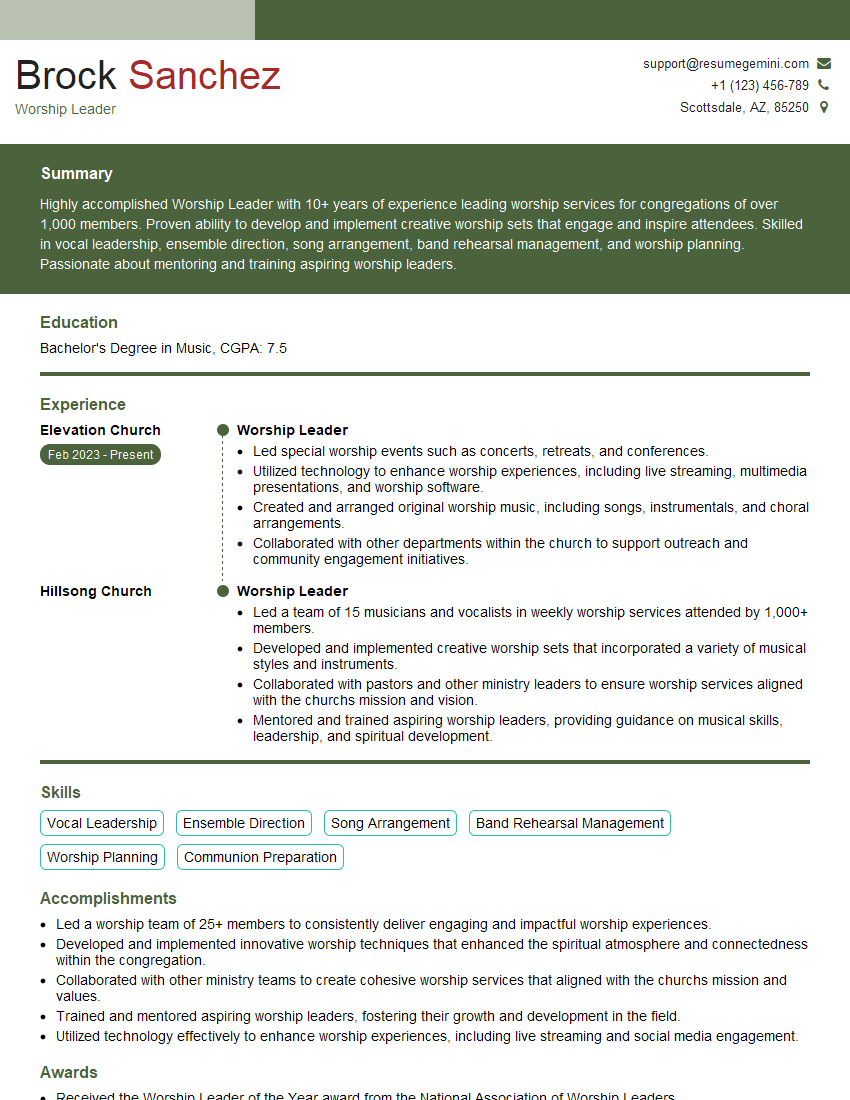
Worship Leader Resume Sample
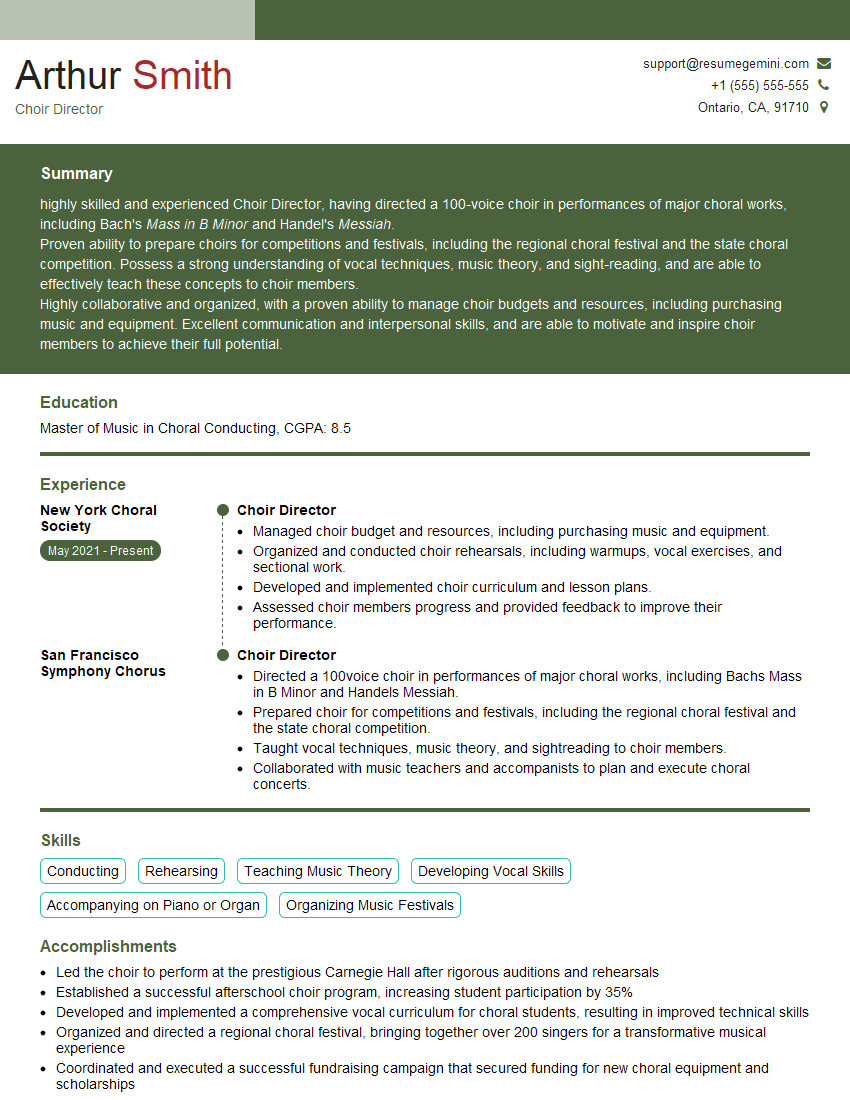
Choir Director Resume Sample
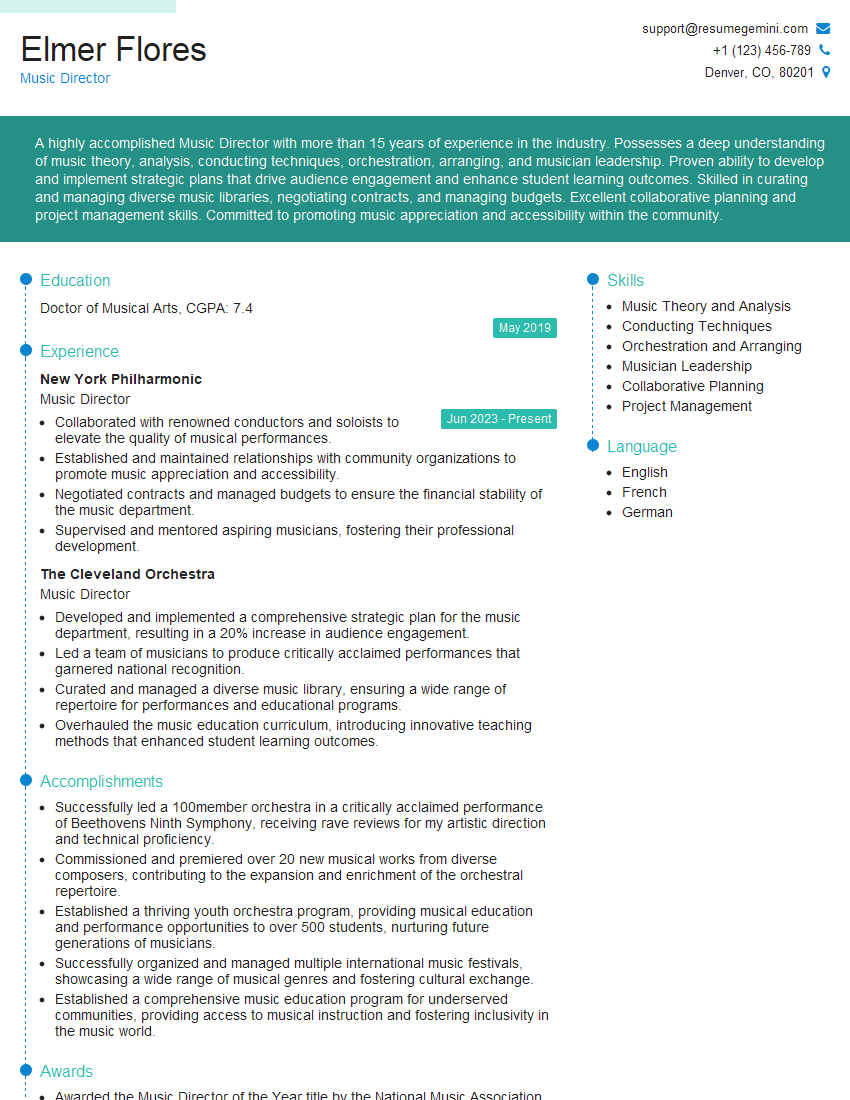
Music Director Resume Sample
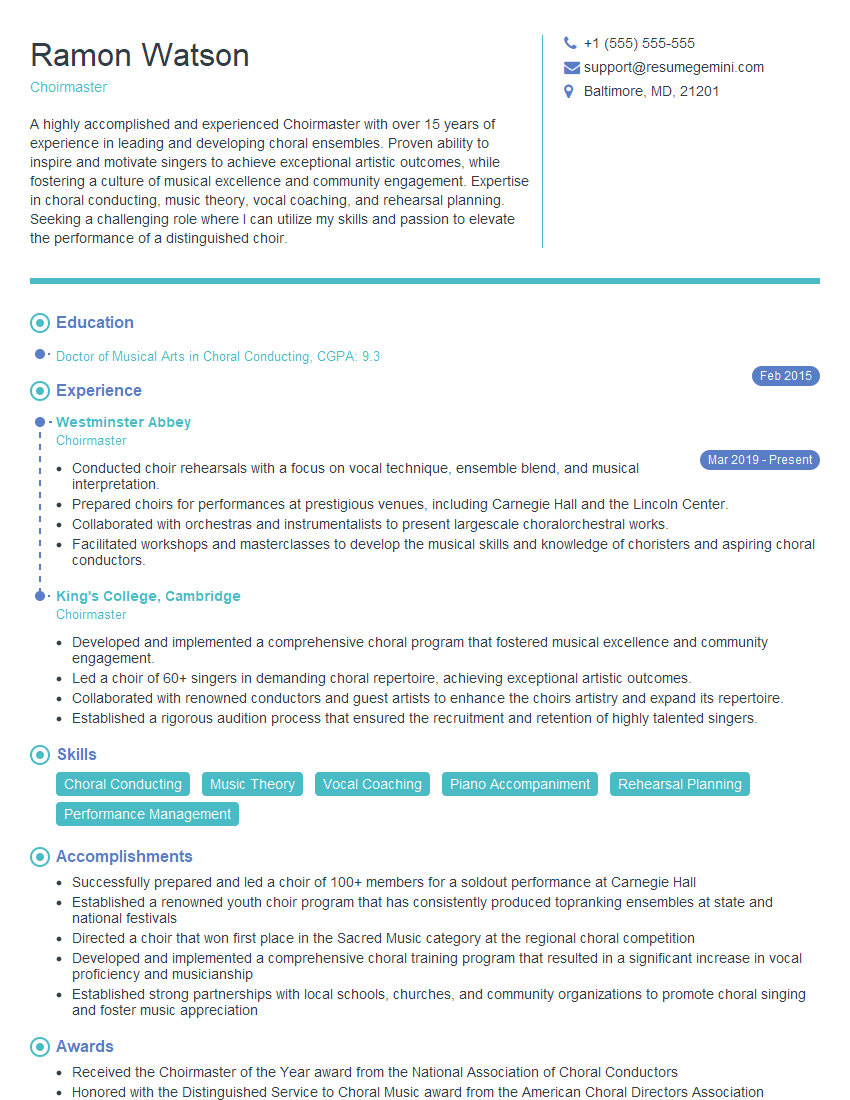
Choirmaster Resume Sample
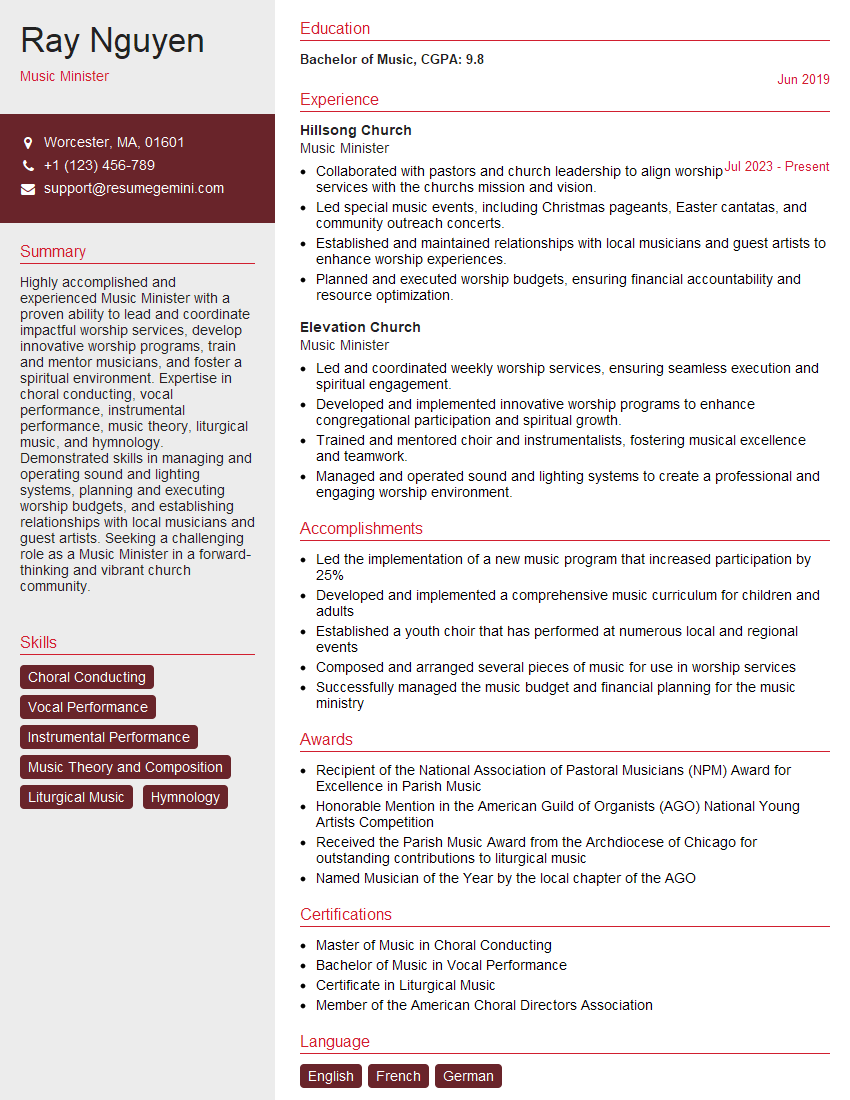
Music Minister Resume Sample
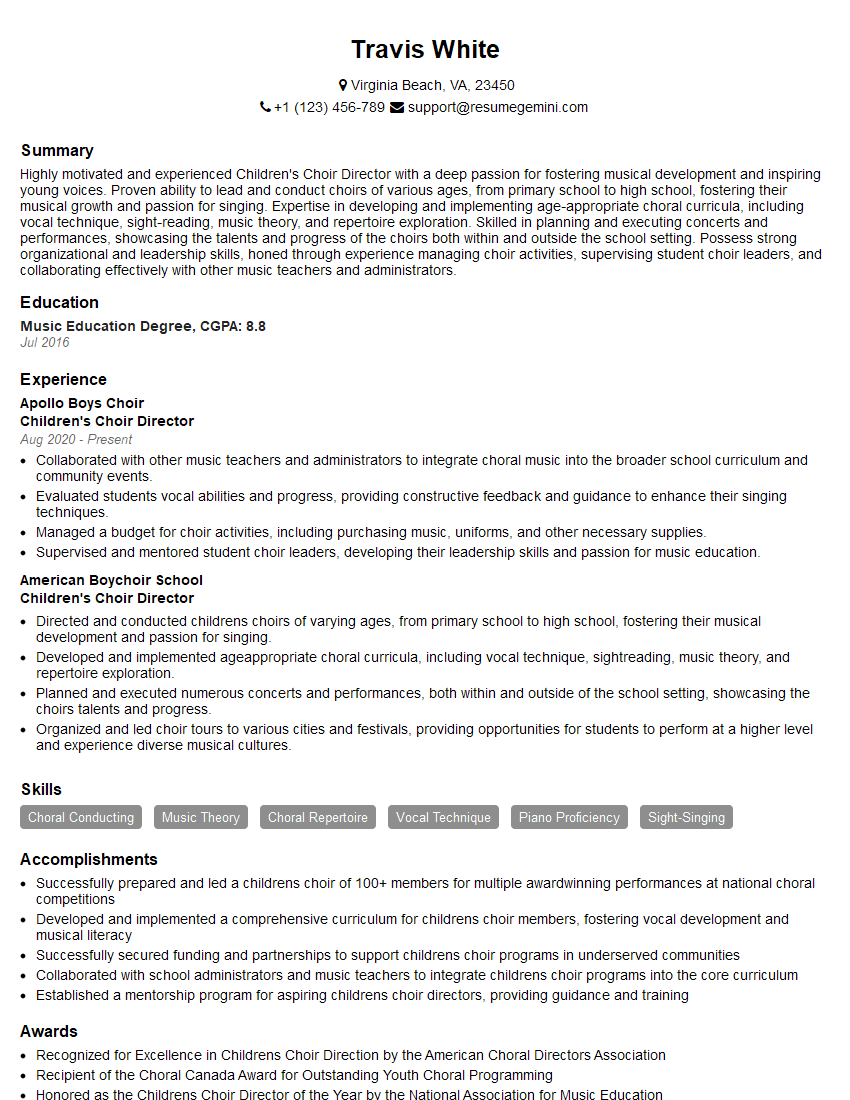
Children’s Choir Director Resume Sample
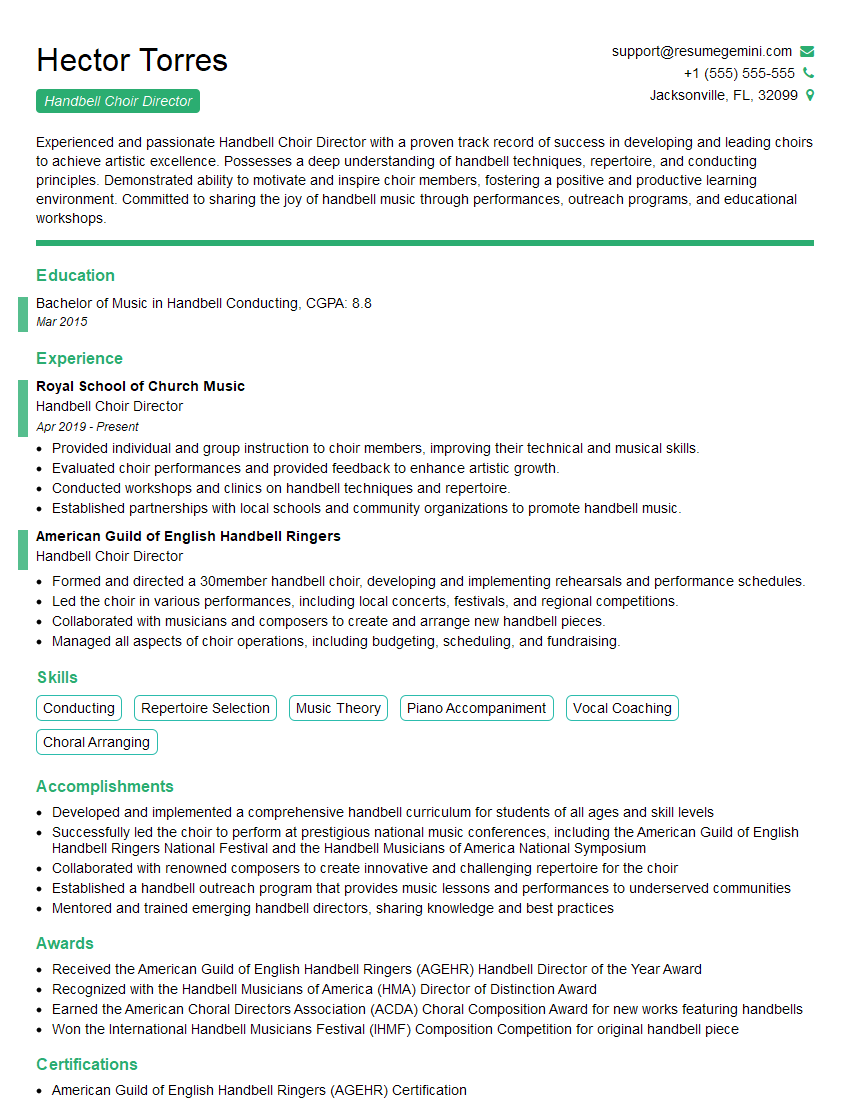
Handbell Choir Director Resume Sample
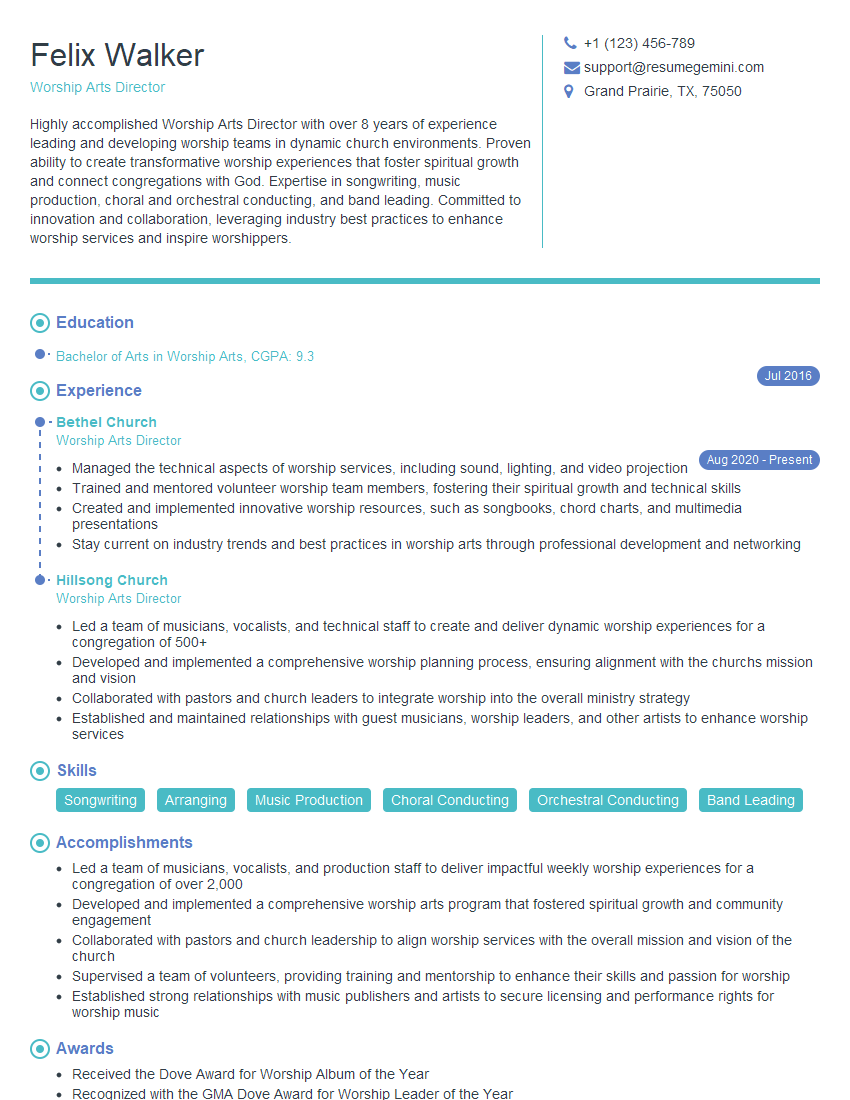
Worship Arts Director Resume Sample
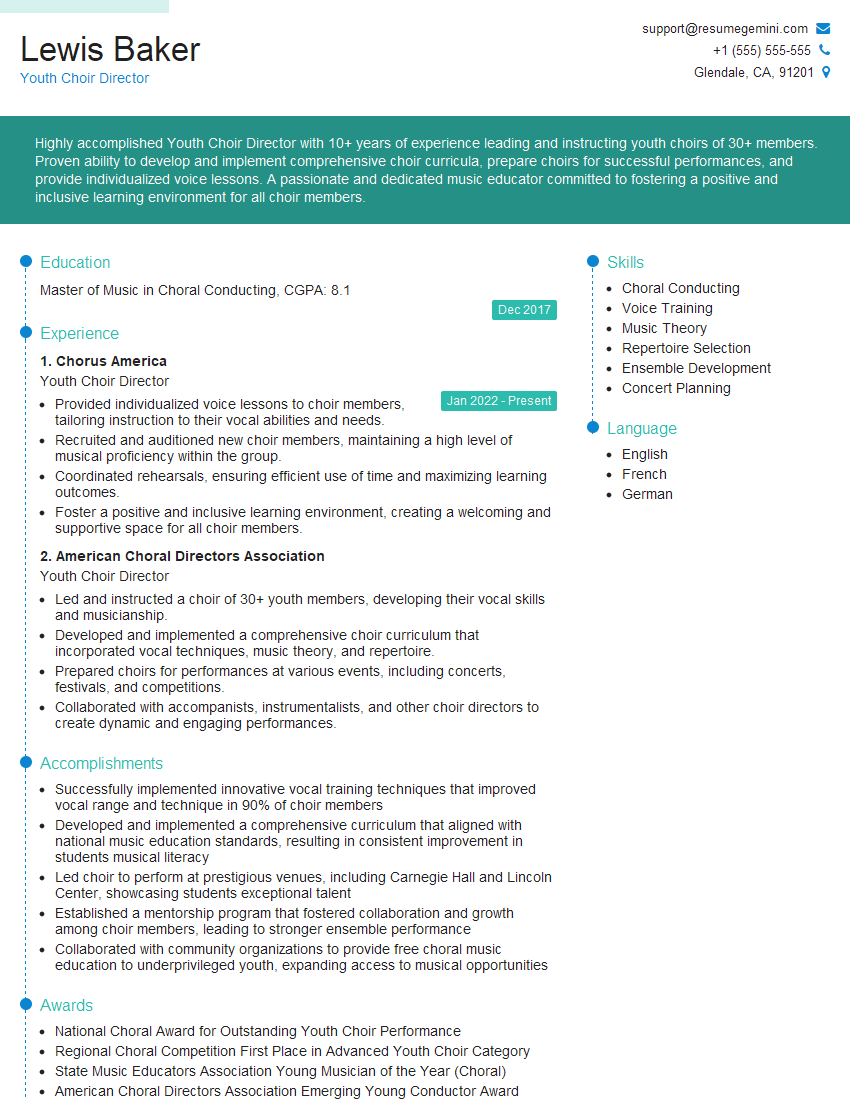
Youth Choir Director Resume Sample
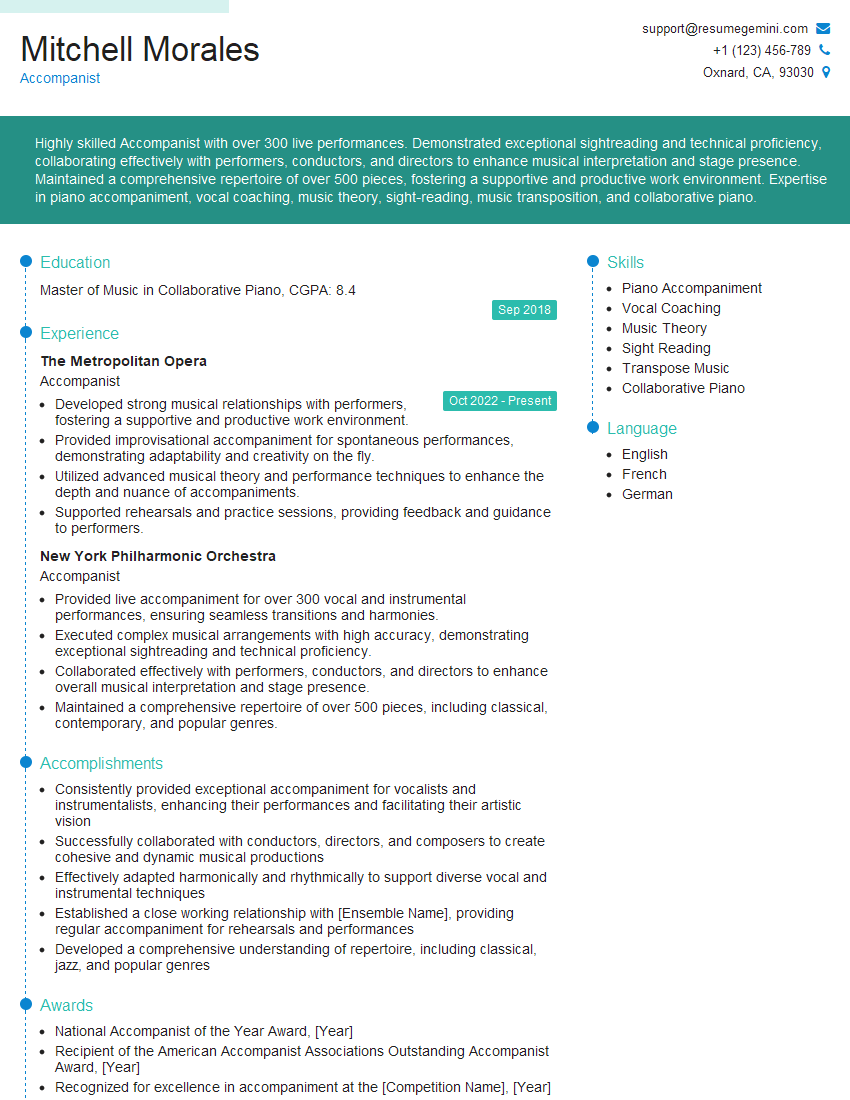
Accompanist Resume Sample
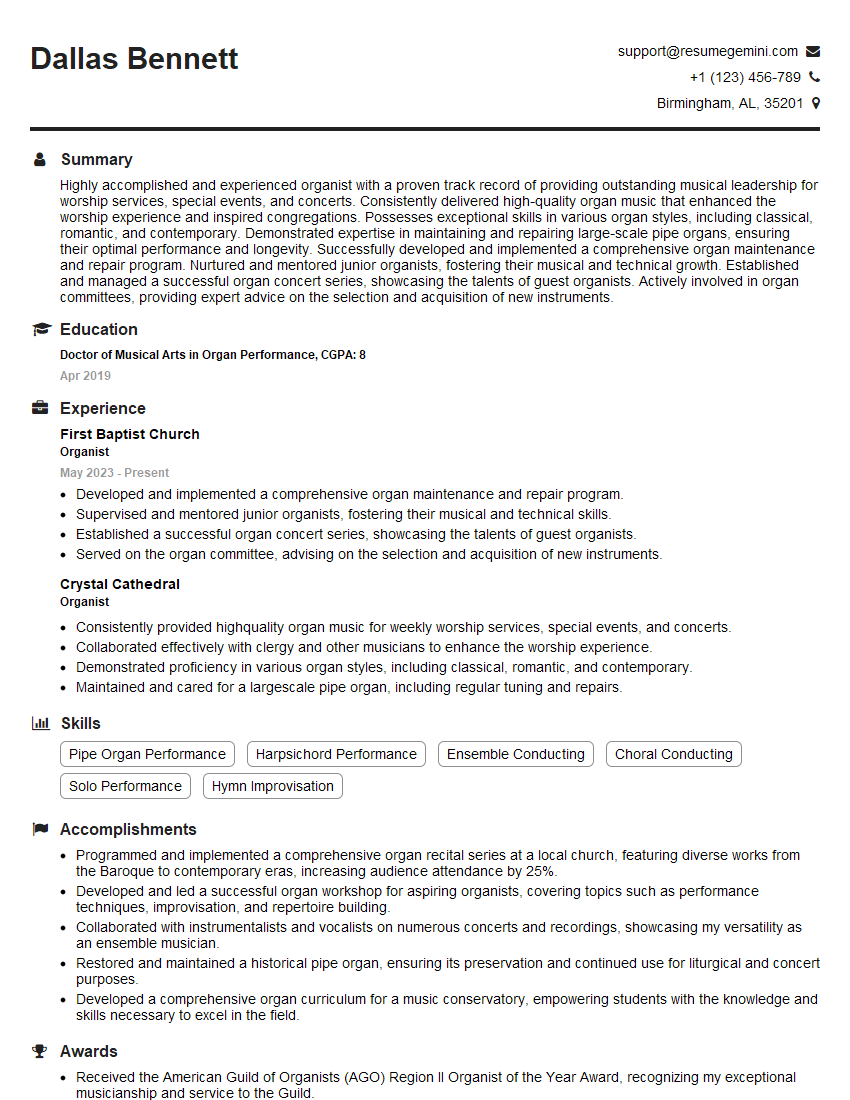
Organist Resume Sample
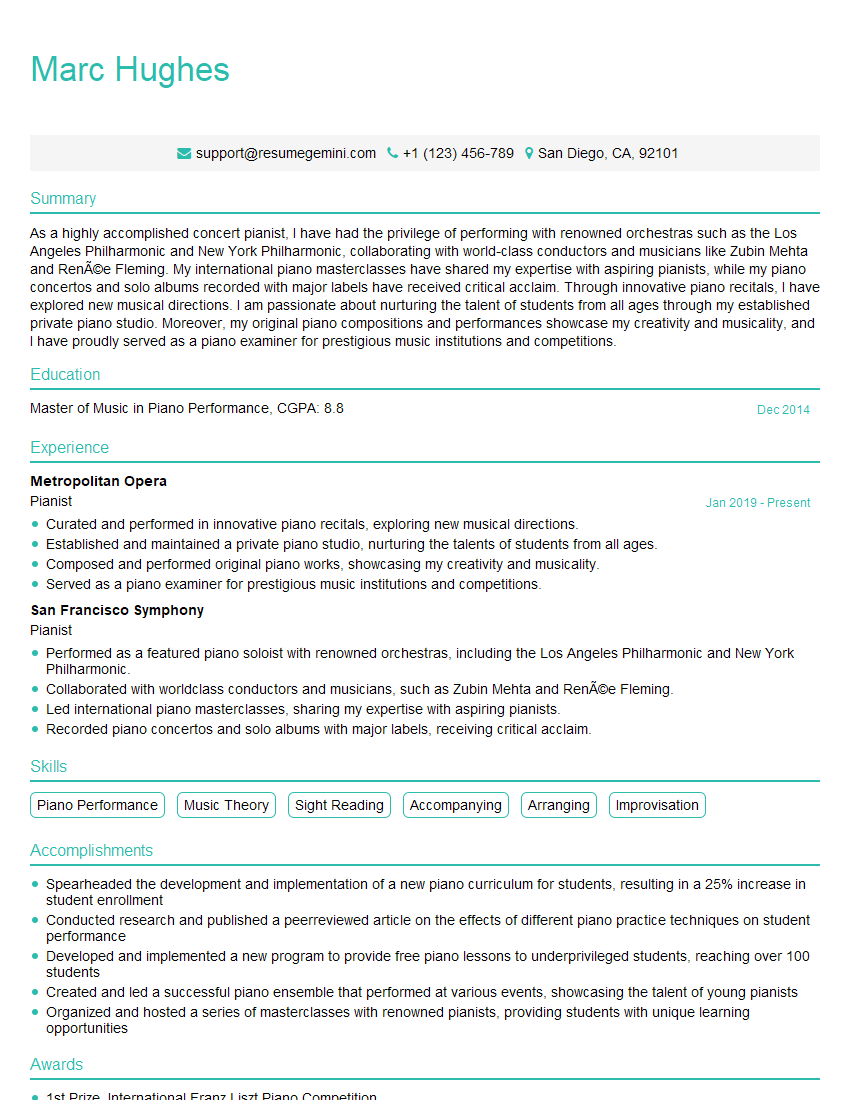
Pianist Resume Sample
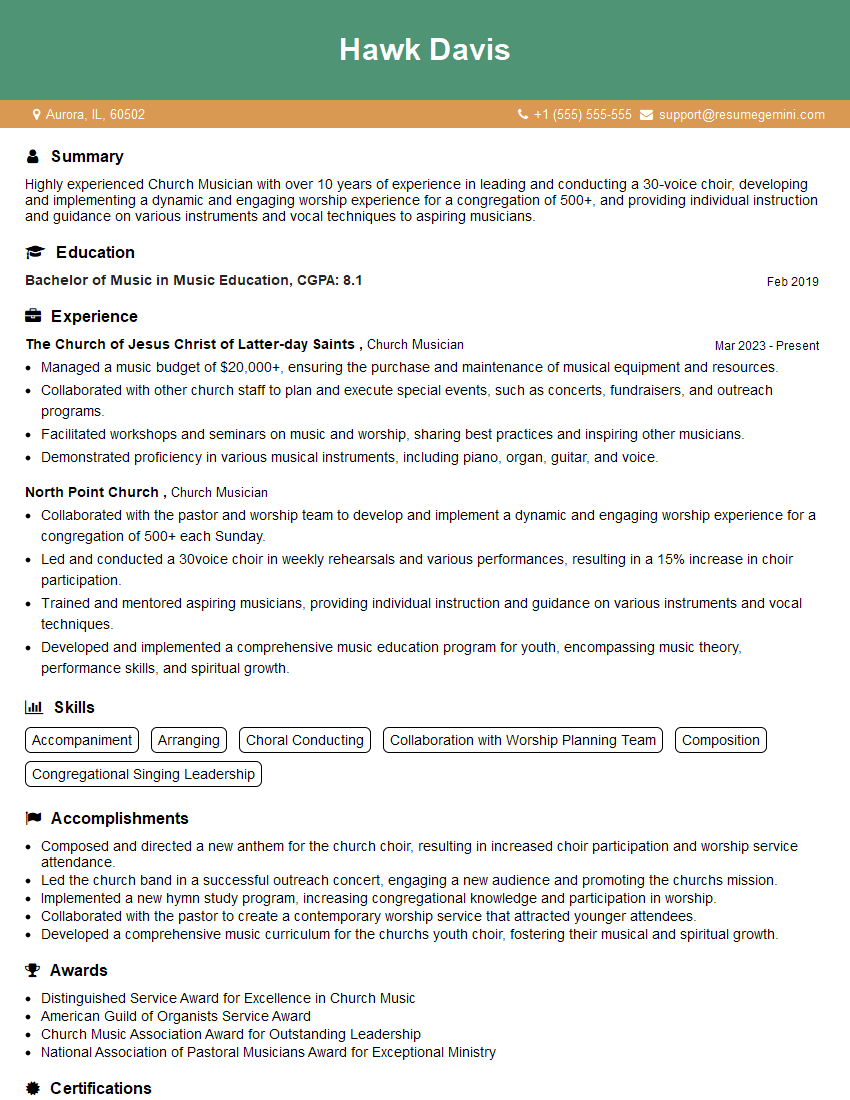
Church Musician Resume Sample
Explore more articles
Users Rating of Our Blogs
Share Your Experience
We value your feedback! Please rate our content and share your thoughts (optional).
What Readers Say About Our Blog
Very informative content, great job.
good