Preparation is the key to success in any interview. In this post, we’ll explore crucial Construction and Maintenance of Outside Plant (OSP) interview questions and equip you with strategies to craft impactful answers. Whether you’re a beginner or a pro, these tips will elevate your preparation.
Questions Asked in Construction and Maintenance of Outside Plant (OSP) Interview
Q 1. Describe your experience with various OSP cable types (e.g., copper, fiber optic).
My experience with OSP cable types spans over a decade, encompassing both copper and fiber optic technologies. With copper, I’ve worked extensively with various gauges and types, from twisted pair for traditional voice and data services to coaxial cables for broadband applications. Understanding the limitations of copper, such as signal attenuation over distance and susceptibility to EMI (Electromagnetic Interference), is crucial for proper design and maintenance. For instance, I’ve encountered situations where choosing the wrong gauge of copper cable resulted in signal degradation, necessitating a costly re-installation.
Fiber optic cables, on the other hand, present a different set of considerations. I have hands-on experience with single-mode and multi-mode fibers, understanding their respective bandwidth capacities and applications. Single-mode fiber, with its higher bandwidth, is essential for long-haul transmission and high-speed data services, while multi-mode fiber is more suitable for shorter distances like within a building or campus network. I’ve also worked with various fiber cable constructions, including armored and unarmored types, selecting the appropriate type depending on the environmental conditions and potential threats like rodents or physical damage. Proper fiber optic cable management is crucial, and I’ve implemented strategies to minimize bending radius and micro-bending losses which can severely affect performance.
Q 2. Explain the process of underground cable installation.
Underground cable installation is a multi-step process that requires meticulous planning and execution. First, we conduct thorough site surveys to identify underground utilities, such as gas lines, water pipes, and other existing cables, using utility locating services and ground penetrating radar. This is crucial to prevent damage to existing infrastructure and ensure crew safety. Next, we excavate trenches to the specified depth and width, carefully following the approved design drawings. The trench width and depth depend on the number of cables and the type of soil.
A protective bedding layer is laid at the bottom of the trench to provide cushioning and prevent damage to the cables. Then, the cables are carefully placed in the trench, often with additional protective conduits or ducts for enhanced protection. We use cable markers to identify the cable types and location. After placing the cables, we backfill the trench, carefully compacting the soil to prevent settling and cable damage. Finally, we conduct testing to ensure the cable integrity and functionality.
For example, in one project, we used a directional boring technique to avoid disturbing a busy roadway, minimizing disruption to traffic and ensuring the safety of the public. This specialized technique is crucial for many projects and it minimizes disruption during the installation.
Q 3. How do you ensure the safety of OSP crews during construction and maintenance?
Safety is paramount in OSP construction and maintenance. We adhere to strict safety protocols, including daily toolbox talks to reinforce safe work practices and hazard identification. All crew members are required to wear appropriate personal protective equipment (PPE), such as hard hats, safety glasses, high-visibility clothing, and gloves. We also utilize traffic control measures, such as flaggers and signage, during road crossings or work near traffic areas. Before commencing any work, we always conduct thorough site-specific risk assessments, identifying potential hazards and implementing control measures.
Furthermore, regular training is mandatory, covering topics such as lockout/tagout procedures for energized equipment, confined space entry, and excavation safety. Emergency response plans are in place and regularly practiced to ensure quick and efficient response to any incidents. We also use tools and equipment that incorporate safety features like automatic shutoff mechanisms and grounding systems. Regular safety audits and inspections help identify potential hazards and ensure our commitment to a safe working environment.
For instance, we once avoided a serious accident by discovering a high-voltage power line during excavation using ground penetrating radar. This prevented a potential electrocution hazard and underscored the importance of our rigorous safety procedures.
Q 4. What are the common challenges encountered during OSP construction?
OSP construction presents numerous challenges. One of the biggest is dealing with unexpected underground utilities. Despite thorough site surveys, encountering unmapped or mis-located utilities is common, requiring careful planning and potentially causing delays and cost overruns. Adverse weather conditions, such as heavy rain or snow, can significantly impact progress and increase safety risks. Difficult terrain, such as rocky soil or areas with dense vegetation, can also add complexity to excavation and cable installation.
Another major challenge is coordinating with other utilities and contractors working in the same area. Efficient communication and collaboration are essential to avoid conflicts and ensure safe and efficient operations. Managing the logistics of materials and equipment delivery can also be challenging, especially in remote or congested areas. Finally, meeting project deadlines while maintaining high-quality standards is constantly a priority. We often have to find creative solutions to overcome these obstacles, like using specialized equipment or adjusting our construction techniques.
For example, in one project, we had to use a smaller trenching machine because of space constraints in a densely populated area. This slowed down the work, but it was essential for avoiding damaging property and ensuring public safety.
Q 5. Explain your experience with different splicing techniques.
My experience with splicing techniques includes both copper and fiber optic cables. For copper cables, I am proficient in various techniques, including Western Union, Britannia, and other methods, depending on the cable type and application. These techniques involve carefully preparing the cable ends, twisting the wires together, and soldering or crimping to ensure a secure and reliable connection. Testing with a continuity tester ensures a solid connection.
For fiber optic cables, I’m skilled in fusion splicing and mechanical splicing. Fusion splicing uses a fusion splicer to melt the fiber ends together, creating a strong and low-loss connection. This method provides the highest quality splice, but requires specialized equipment. Mechanical splicing, on the other hand, uses precision connectors to align and connect the fiber ends. This method is simpler and requires less equipment but generally results in a slightly higher loss compared to fusion splicing. In both cases, careful cleaning of the fiber ends is critical for optimal performance.
Selecting the appropriate splicing technique depends on various factors including the type of fiber, required performance level, budget constraints, and time constraints. Choosing the wrong technique can lead to signal degradation or complete connection failure.
Q 6. How do you troubleshoot fiber optic cable faults?
Troubleshooting fiber optic cable faults requires a systematic approach. I typically start with visual inspection, checking for any signs of physical damage to the cable or connectors. Then, I use an optical time-domain reflectometer (OTDR) to locate faults along the fiber. The OTDR measures the backscattered light to pinpoint the location and type of fault, such as a break, bend, or splice loss.
Once the fault location is identified, I can use other tools, such as a power meter and light source, to further analyze the signal strength and identify the nature of the problem. If the fault is a broken fiber, I will need to perform splicing or replacement. If the fault is due to excessive loss at a connector, I might need to clean or replace the connector. For example, if the OTDR shows a high loss at a splice, I would carefully examine the splice to see if there is a problem with the alignment of the fibers.
The OTDR is indispensable for this process. Its ability to pinpoint the exact location of problems within many kilometers of cable saves significant time and effort. I also use an optical power meter to verify signal strength after repairs.
Q 7. Describe your familiarity with OSP design drawings and specifications.
I have extensive experience interpreting OSP design drawings and specifications. I understand how to read and interpret various symbols and notations commonly used in these documents, such as cable types, conduit sizes, depths, and locations of manholes and splice closures. I’m familiar with different design standards and regulations, ensuring that the construction adheres to all applicable codes and requirements.
The ability to understand these drawings is crucial for planning and executing projects efficiently and safely. I use the design drawings to determine the quantities of materials required, plan the excavation routes, and coordinate with other utilities. I also review the specifications to ensure that the selected materials and equipment meet the required standards for performance and durability. In many cases, deviations from the design must be carefully documented and approved.
For example, I’ve used design drawings to identify potential conflicts with existing underground infrastructure, leading to proactive measures to avoid potential costly delays and safety issues. This ensures the project is completed on time and within budget, without compromising on safety or quality.
Q 8. How do you manage OSP projects within budget and schedule constraints?
Managing OSP projects within budget and schedule requires a proactive, multi-faceted approach. It’s not just about tracking expenses; it’s about meticulous planning, risk mitigation, and efficient execution.
First, a comprehensive project plan is crucial. This includes a detailed breakdown of all tasks, associated costs, and realistic timelines. We utilize project management software to track progress, identify potential delays, and allocate resources effectively. For example, I once managed a fiber optic cable installation project where we used Gantt charts to visualize the dependencies between different stages, such as permitting, trenching, cable laying, and testing. This allowed us to identify potential bottlenecks early on and adjust the schedule accordingly.
Secondly, regular monitoring and reporting are essential. We track actual costs against the budget and identify any variances early. This allows for prompt corrective action. For instance, if material costs unexpectedly rise, we explore alternative suppliers or adjust the design to minimize impact. We hold regular meetings with the project team to review progress, address challenges, and ensure everyone stays aligned.
Thirdly, risk management is paramount. We identify potential risks, such as weather delays, material shortages, or unexpected ground conditions. We develop contingency plans to mitigate these risks and have a system for escalation of issues.
Finally, strong communication is key to successful project management. We maintain clear communication channels with all stakeholders, including clients, contractors, and internal teams. This ensures everyone is informed and collaborative problem-solving is efficient.
Q 9. What are the key performance indicators (KPIs) for OSP maintenance?
Key Performance Indicators (KPIs) for OSP maintenance are crucial for measuring the effectiveness and efficiency of our operations. They should reflect both the quality of service and the cost-effectiveness of our maintenance activities.
- Mean Time To Repair (MTTR): This measures the average time taken to restore service after a failure. A lower MTTR indicates a more efficient maintenance process.
- Mean Time Between Failures (MTBF): This indicates the reliability of the network. A higher MTBF suggests a robust and well-maintained system.
- Service Outage Rate: This measures the frequency and duration of service interruptions. A lower outage rate signifies improved system stability.
- Customer Satisfaction (CSAT): This reflects how satisfied customers are with the responsiveness and quality of maintenance service.
- Maintenance Costs per Unit Length (e.g., per kilometer): This metric helps track the cost-effectiveness of our maintenance efforts.
- Preventive Maintenance Completion Rate: Tracks adherence to scheduled maintenance tasks, essential for preventing larger issues.
By tracking these KPIs, we can identify areas for improvement, optimize our maintenance strategies, and ensure we’re providing reliable and cost-effective service. For instance, a high MTTR might indicate a need for improved inventory management or technician training.
Q 10. Describe your experience with OSP testing equipment.
My experience with OSP testing equipment is extensive, covering a wide range of technologies and tools. I’m proficient in using OTDRs (Optical Time-Domain Reflectometers) to locate faults in fiber optic cables, identifying breaks, bends, and other impairments. I also have experience with TDRs (Time-Domain Reflectometers) for testing copper cables.
I am familiar with various types of cable testers, including those that measure signal strength, attenuation, and return loss. I can utilize spectrum analyzers to identify signal interference and noise levels. I’m also proficient with power meters, which ensure that sufficient power levels reach the network’s endpoints.
Beyond the individual equipment, I understand the importance of proper testing procedures and documentation. For instance, we generate detailed test reports that include visual representations of the cable’s condition, along with any findings. This ensures traceability and aids in future troubleshooting. I’m also experienced in calibrating and maintaining these instruments to guarantee accurate readings, which is crucial for maintaining the integrity of the OSP network. A recent project involved using an OTDR to pinpoint a microbend in a fiber optic line, a task impossible without the proper equipment and expertise.
Q 11. How do you handle emergency repairs in OSP networks?
Handling emergency repairs in OSP networks requires a rapid and coordinated response. Our process is designed to minimize downtime and restore service as quickly and safely as possible.
First, we have a 24/7 emergency response team that is readily available to respond to any reported issues. Once a fault is reported, we immediately use our network monitoring systems to isolate the problem area. This could involve tracing the fault using fault locators or referencing our as-built drawings.
Second, depending on the nature of the problem, we dispatch a qualified repair crew equipped with the necessary tools and materials. Safety is our top priority. Our crews undergo regular safety training and adhere to strict safety protocols, including using appropriate Personal Protective Equipment (PPE).
Third, we prioritize the repair based on the severity of the outage and the number of affected customers. We always aim for the fastest possible restoration of service, which may require working extended hours or employing additional resources. After the repair is completed, we conduct rigorous testing to ensure the network’s functionality is restored and there are no further issues. We then document the entire process, including the cause of the failure, the repair actions taken, and the restoration time. This aids in preventative maintenance strategies in the future. For example, a repeated failure in a specific area might suggest a recurring problem with the underground infrastructure that needs long-term addressing.
Q 12. Explain your understanding of OSP documentation and record-keeping.
OSP documentation and record-keeping are crucial for efficient operations and maintenance, as well as for regulatory compliance. Accurate and up-to-date documentation allows us to plan, execute, and troubleshoot effectively.
We maintain comprehensive records of our network infrastructure, including detailed as-built drawings, cable schematics, equipment specifications, and maintenance logs. The as-built drawings show the actual location and configuration of all OSP components, which is crucial for locating faults and planning new installations. We utilize a Geographic Information System (GIS) for visualizing and managing our network geographically.
Our database contains detailed information about each piece of equipment, including its make, model, serial number, and installation date. Maintenance logs record all repair and maintenance activities performed on the network, including the date, time, nature of the work, and personnel involved.
The quality of this documentation is paramount. We adhere to strict standards for accuracy and completeness, ensuring that all information is current and readily accessible. We utilize a documented change management process to ensure any modifications to the network are accurately reflected in our records. This prevents confusion and facilitates efficient problem resolution. For example, properly documented cable routes make repairs much quicker and safer, avoiding potentially dangerous excavations in unknown areas.
Q 13. What are your experiences with different types of OSP enclosures?
My experience encompasses various OSP enclosures, each with its own advantages and disadvantages.
- Pedestals: These are typically used in roadside locations for housing fiber optic splice closures, network equipment and other components. Their size and capacity vary depending on the needs of the network. I’ve worked with both single- and multi-compartment pedestals.
- Handholes: These are underground chambers that provide access to cables and equipment. They are usually located at intervals along underground cable routes, allowing for splicing, testing, and repair. Their design ensures water drainage and protection from environmental elements.
- Vaults: Larger than handholes, vaults provide more space for equipment and splicing. They are typically used for more substantial installations or where more access is required. I have worked with vaults containing various types of equipment like power distribution gear, multiplexers and cross-connects.
- Cabinets and racks: These are commonly used in central offices and other buildings for housing telecommunications equipment. They provide protection for equipment and facilitate organized cabling.
The selection of the appropriate enclosure depends on various factors, including the size and complexity of the installation, the environmental conditions, and security requirements. For instance, in areas prone to flooding, we would select enclosures with enhanced water resistance features. In high-security areas, we may opt for enclosures with tamper-proof features.
Q 14. How do you ensure the proper grounding of OSP facilities?
Proper grounding of OSP facilities is critical for ensuring the safety of personnel and the protection of equipment from lightning strikes and surges. This involves creating a low-impedance path to the earth to dissipate electrical energy.
We follow strict grounding procedures, beginning with the establishment of a ground system that uses grounding rods driven deep into the earth. We use copper conductors with appropriate cross-sectional area to connect various parts of the OSP infrastructure to the ground system. The connections are made using appropriate clamps and connectors, ensuring a secure and low-resistance connection.
Grounding wires are carefully routed to minimize electromagnetic interference. We often use bonding techniques to connect metal enclosures and equipment together, ensuring a common ground potential. Regular inspection and testing of the grounding system are performed to ensure its effectiveness. We measure ground resistance using a ground tester to verify the integrity of the ground system. We document the results of these tests to ensure compliance with safety standards. Ignoring grounding can have serious consequences, from equipment damage and data loss to the risk of electric shock. A well-designed and maintained grounding system is essential for safe and reliable OSP operations.
Q 15. Describe your experience with aerial cable installation.
Aerial cable installation involves suspending communication cables above ground, typically using poles and specialized hardware. My experience encompasses the entire process, from initial planning and design to final testing and commissioning. This includes selecting appropriate cable types based on capacity and environmental factors, designing the route to minimize stress and potential hazards, and then safely installing the cables using proper techniques to ensure long-term reliability and prevent damage. For instance, on a recent project, we used self-supporting fiber optic cable which reduced the need for additional support structures, saving both time and resources. We meticulously documented every step of the installation, adhering to all safety and industry best practices, ensuring that the final result met all performance standards.
I’m proficient in using various aerial installation techniques, including stringing, tensioning, and splicing. Understanding the nuances of different cable types and their respective installation requirements is crucial; for instance, the methods used for installing a heavy gauge coaxial cable differ significantly from those employed for smaller fiber optic cables. We always prioritize proper grounding and lightning protection to safeguard against electrical surges.
Career Expert Tips:
- Ace those interviews! Prepare effectively by reviewing the Top 50 Most Common Interview Questions on ResumeGemini.
- Navigate your job search with confidence! Explore a wide range of Career Tips on ResumeGemini. Learn about common challenges and recommendations to overcome them.
- Craft the perfect resume! Master the Art of Resume Writing with ResumeGemini’s guide. Showcase your unique qualifications and achievements effectively.
- Don’t miss out on holiday savings! Build your dream resume with ResumeGemini’s ATS optimized templates.
Q 16. What are the common causes of OSP cable failures?
OSP cable failures can stem from various sources. Environmental factors play a significant role: extreme weather like high winds, ice storms, and lightning strikes can cause direct damage. Rodents, digging animals, and even tree roots can compromise cable sheathing, leading to shorts and breaks. Human error, such as accidental digging during construction or improper installation, is another significant cause. Lastly, the cables themselves can degrade over time due to factors like UV exposure, moisture ingress, or simple wear and tear.
- Environmental Factors: Lightning strikes, extreme temperatures, flooding.
- Rodents & Animals: Gnawing on the cable’s outer protective layers.
- Human Error: Accidental digging during excavation or improper installation.
- Cable Degradation: UV damage, moisture intrusion, and age-related deterioration.
Identifying the root cause is critical for effective preventative maintenance. For example, using rodent-resistant cabling in known high-risk areas significantly mitigates future issues.
Q 17. Explain the process of restoring service after an OSP outage.
Restoring service after an OSP outage involves a systematic approach, starting with identifying the affected area and the cause of the outage. This often involves using sophisticated testing equipment to pinpoint the exact location of the fault. Once the fault is located, the appropriate repair strategy is implemented, which could range from simple splicing to replacing a substantial length of cable. Safety is paramount throughout this process, ensuring all work is done according to industry regulations and safety procedures.
- Outage Identification and Location: Using testing equipment to pinpoint the exact fault location.
- Fault Isolation: Determining the cause of the outage (e.g., cable break, splice failure, etc.).
- Repair or Replacement: Implementing the necessary repairs or cable replacement.
- Testing and Verification: Thorough testing to ensure the repair is successful and the line is operational.
- Service Restoration: Restoring service to affected customers, often in a phased approach based on priority.
For example, if a cable break is caused by a digging accident, the damaged section needs to be excavated, spliced, and tested before service can be restored. Proper documentation throughout the process is essential, including recording the cause of the outage and the steps taken to restore service.
Q 18. How do you prioritize OSP maintenance tasks?
Prioritizing OSP maintenance tasks involves balancing several factors. We use a risk-based approach, considering factors such as the criticality of the affected infrastructure, the potential impact of a failure, and the urgency of the needed repairs. High-priority tasks usually include immediate safety hazards, critical infrastructure components, and those that impact a large number of customers. This often involves using a work order management system with robust prioritization capabilities.
For example, a damaged cable segment affecting a major hospital’s network would be prioritized higher than a minor fault on a low-usage line. We use a combination of preventative and reactive maintenance, scheduling routine inspections and proactive repairs while addressing emergency issues promptly. Regular monitoring and predictive analytics help assess the potential risk of failures and optimize maintenance scheduling for maximum efficiency and minimal disruption.
Q 19. Describe your experience with trenching and backfilling techniques.
Trenching and backfilling are crucial aspects of underground OSP cable installation. My experience includes operating various trenching equipment, ranging from hand tools for smaller projects to mechanized trenchers for larger-scale installations. Careful planning of the trench depth and width is critical to ensuring proper cable protection and minimizing the risk of damage. We adhere strictly to regulations regarding safe trenching practices, such as shoring and sloping to prevent cave-ins, especially in unstable soil conditions.
Backfilling requires selecting the right material and compaction techniques to prevent cable damage and ensure long-term stability. Careful backfilling prevents settling that could damage the cables over time. For instance, we often use sand or a specially engineered backfill material around the cables to provide extra cushioning and protection. Thorough compaction ensures the integrity of the trench and minimizes future settling, protecting the cables from external forces.
Q 20. What safety precautions do you take when working near energized equipment?
Safety around energized equipment is paramount. We strictly adhere to lockout/tagout procedures (LOTO) to de-energize equipment before any maintenance or repair work. This involves physically isolating the equipment from the power source, and securely tagging it to prevent accidental re-energization. Personal protective equipment (PPE) is mandatory, including insulated gloves, safety glasses, and appropriate clothing. We always maintain a safe working distance from energized lines and follow all relevant safety regulations and company procedures.
Before commencing any work near energized equipment, a thorough risk assessment is conducted to identify potential hazards and mitigate them. In addition, regular safety training and toolbox talks ensure everyone on the team is aware of the latest safety procedures and best practices. We document every safety procedure and incident rigorously.
Q 21. Explain your understanding of right-of-way permits and regulations.
Understanding right-of-way (ROW) permits and regulations is essential for legal and safe OSP installation. ROW permits grant permission to install infrastructure on public or private land. Obtaining these permits often involves navigating complex regulatory processes and demonstrating compliance with all applicable rules and regulations, including those related to environmental impact and public safety. This includes understanding local, state, and federal regulations, which can vary significantly depending on the location. Failure to secure necessary permits can lead to significant delays and legal consequences.
We carefully plan each project’s route, minimizing environmental impact and adhering to all ROW requirements. This includes coordinating with landowners, utility companies, and other stakeholders to ensure safe and unobstructed access during installation and maintenance. Precise mapping and detailed documentation are crucial in complying with these regulations and avoiding potential conflicts.
Q 22. How familiar are you with various OSP network architectures?
I possess extensive familiarity with various OSP network architectures, ranging from simple point-to-point connections to complex ring and mesh topologies. My experience encompasses both traditional copper-based networks and modern fiber optic networks. I understand the implications of different architectures on network performance, scalability, and resilience.
- Point-to-Point: The simplest architecture, ideal for short-distance connections between two points, like connecting a building to a nearby central office.
- Star Topology: All network nodes connect to a central hub, offering ease of management but creating a single point of failure. Common in smaller deployments.
- Ring Topology: Nodes are connected in a closed loop, providing redundancy as traffic can flow in both directions. Popular for its fault tolerance.
- Mesh Topology: Offers the highest level of redundancy. Nodes are interconnected with multiple paths, ensuring network connectivity even if multiple links fail. Often used in critical infrastructure networks.
- Hybrid Architectures: Many modern networks combine aspects of these architectures for optimal performance and reliability. For example, a core network might be a mesh topology, while access networks use star topologies.
I’ve worked on projects incorporating various technologies like Passive Optical Networks (PON), Ethernet Passive Optical Networks (EPON) and Gigabit Passive Optical Networks (GPON), and understand the advantages and disadvantages of each in terms of cost, bandwidth, and scalability. My understanding extends to the physical infrastructure, including duct banks, conduits, and aerial cable deployments, and how these impact network design and maintenance.
Q 23. Describe your experience with fiber optic fusion splicing.
Fiber optic fusion splicing is a critical skill in OSP work, and I’ve performed thousands of successful splices over my career. The process involves precisely aligning two fiber optic strands and fusing them together using an electric arc. Proper splicing is crucial for minimizing signal loss and ensuring reliable network performance.
My experience includes working with various types of fiber optic cables and splicing equipment, including fusion splicers from various manufacturers. I am proficient in all aspects of the process, from fiber preparation and cleaning to splicing and testing. I adhere to strict quality control procedures, regularly testing splice loss using an Optical Time Domain Reflectometer (OTDR) to ensure optimal signal transmission. A clean, precise splice is critical to avoid signal degradation. Incorrect cleaving of the fiber can result in excessive loss and potential signal failure.
Beyond the technical aspects, I understand the importance of documentation. Each splice is meticulously documented, including the location, date, and measured loss. This detailed record-keeping is crucial for future maintenance and troubleshooting.
Q 24. How do you manage conflicts between OSP construction and other utilities?
Managing conflicts between OSP construction and other utilities is a crucial aspect of my work and requires meticulous planning and communication. It’s akin to orchestrating a complex ballet where everyone needs to move in harmony to avoid collisions.
My approach involves several key steps:
- One-Call Systems: I always begin by utilizing the local one-call system (e.g., 811 in the US) to locate and mark the positions of underground utilities before any excavation begins. This is non-negotiable for safety and prevents costly and potentially dangerous damage.
- Stakeholder Coordination: I engage in proactive communication with all relevant utility companies to coordinate construction activities and identify potential conflicts early on. This includes providing detailed plans and schedules to all parties involved.
- Joint Trenching: When feasible, I advocate for joint trenching, where multiple utilities share a common trench, to minimize disruption and land use.
- Permitting and Compliance: I ensure all necessary permits are obtained and all work adheres to relevant regulations and safety standards.
- Conflict Resolution: If conflicts arise, I work collaboratively with all parties involved to find mutually agreeable solutions, potentially including adjustments to the construction plans or the use of alternative technologies.
Effective communication and a collaborative approach are essential to successfully navigate these complex interactions and prevent costly delays or damage to other utilities.
Q 25. Explain your experience with using GPS and GIS technology in OSP work.
GPS and GIS technologies are indispensable tools in my OSP work. They’re like the eyes and brain of the operation, allowing for precise location tracking and efficient planning.
GPS is used for real-time location tracking of crews and equipment, especially during cable placement and maintenance activities. This ensures accuracy in record-keeping and facilitates efficient task management. I use handheld GPS devices for precise location measurements during site surveys and cable route mapping.
GIS plays a more strategic role. I utilize GIS software (e.g., ArcGIS) to create and manage detailed maps of the OSP network, including cable routes, splice locations, and the location of other utilities. This allows for effective planning, predicting potential conflicts, and assessing the impact of planned maintenance or construction projects. GIS also allows for efficient asset management, providing a centralized database of network infrastructure.
I’ve used GIS to analyze data, create detailed as-built drawings, and produce reports for clients. This ensures we have a complete picture of our networks and can effectively manage them over their lifespan. My expertise extends to using GIS data to optimize cable routes, minimizing construction costs and environmental impact.
Q 26. Describe your familiarity with different types of OSP cable terminations.
My familiarity with OSP cable terminations spans a wide range of technologies and connector types, catering to diverse network needs. A proper termination is crucial for maintaining signal integrity and ensuring reliable network operation, much like a securely fastened plug ensuring your home appliance works.
- Fiber Optic Terminations: I’m proficient in various fiber optic termination methods, including mechanical splices, fusion splices, and the use of various connectors like SC, FC, LC, and ST connectors. Each connector type has specific applications and advantages, requiring a nuanced understanding of the underlying technology.
- Copper Cable Terminations: My expertise extends to copper cable terminations, including various types of connectors like RJ-45 (Ethernet), BNC (coaxial), and various other specialized connectors used in telecommunication networks. Proper crimping and wiring techniques are crucial to ensure reliable connections.
- Aerial Cable Terminations: This involves secure anchoring and proper grounding techniques to ensure the safety and durability of aerial cable installations. Understanding the various hardware components involved is critical for preventing cable sagging or damage.
- Underground Cable Terminations: This includes proper sealing and protection of cable terminations from water ingress and environmental hazards, ensuring network reliability and longevity.
Understanding the nuances of each termination type, choosing the right equipment, and adhering to industry best practices are paramount for ensuring high-quality and long-lasting network performance.
Q 27. What are your strategies for mitigating risks in OSP projects?
Mitigating risks in OSP projects is a continuous process requiring a proactive and multi-faceted approach. It is about anticipating potential problems and devising strategies to avoid them, before they even arise.
My strategies include:
- Thorough Planning and Design: Detailed site surveys, comprehensive engineering designs, and accurate cost estimations are essential to avoid unforeseen challenges and ensure the project stays on schedule and within budget. This also includes accounting for potential environmental impacts.
- Risk Assessment and Mitigation: I conduct thorough risk assessments to identify potential hazards and develop strategies to mitigate them. This includes considering weather conditions, soil composition, and the proximity of other utilities.
- Safety Procedures and Training: A strong emphasis on safety procedures and regular training for all personnel is paramount. Strict adherence to safety regulations and the use of appropriate safety equipment are non-negotiable.
- Quality Control: Rigorous quality control measures are implemented at every stage of the project to ensure the highest standards are met. This includes regular inspections and testing of materials and workmanship.
- Contingency Planning: I develop contingency plans to address potential disruptions, including delays due to weather, equipment malfunctions, or unforeseen site conditions. Having a backup plan allows for smoother recovery.
By proactively addressing potential risks, I ensure projects are completed safely, efficiently, and within budget, delivering a high-quality OSP network that meets the client’s needs.
Q 28. How do you stay updated on the latest technologies and best practices in OSP?
Staying updated on the latest technologies and best practices in OSP is crucial for maintaining a competitive edge and delivering high-quality work. It’s a continuous learning process, not a one-time event.
My strategies include:
- Industry Publications and Journals: I regularly read industry publications and journals to stay abreast of technological advancements and best practices. This provides insights into emerging trends and new methodologies.
- Industry Conferences and Workshops: Attending industry conferences and workshops provides opportunities to network with other professionals, learn from experts, and discover new technologies.
- Professional Organizations: Membership in relevant professional organizations (e.g., IEEE, TIA) provides access to resources, networking opportunities, and continuing education programs.
- Online Courses and Webinars: I leverage online learning platforms to expand my knowledge in specific areas, staying updated on specialized topics like fiber optic technology and network management.
- Manufacturer Training: Participating in manufacturer training programs helps me stay informed about the latest equipment and technologies available.
Continuous learning is integral to my professional development, ensuring I can consistently provide innovative and effective solutions to my clients.
Key Topics to Learn for Construction and Maintenance of Outside Plant (OSP) Interview
- Fiber Optic Cable Splicing and Termination: Understand the different splicing techniques, fusion splicing vs. mechanical splicing, and the importance of proper termination for signal quality and network performance. Consider troubleshooting scenarios involving faulty splices or terminations.
- Underground Cable Installation: Learn about trenching methods, cable placement techniques, and the use of directional drilling. Explore the practical application of safety regulations and best practices for minimizing environmental impact.
- Aerial Cable Installation: Master the methods of installing cables on poles and towers, including proper strain relief and support structures. Understand the importance of maintaining clearances and adhering to safety standards.
- Network Design and Planning: Familiarize yourself with OSP network architecture, cable routing strategies, and the factors influencing network design decisions (e.g., capacity, distance, terrain).
- Troubleshooting and Repair: Develop your ability to diagnose and resolve OSP network issues. Practice identifying common problems like cable cuts, faulty connectors, and signal degradation. Be ready to explain your troubleshooting methodology.
- Safety Regulations and Best Practices: Demonstrate a thorough understanding of relevant safety regulations (OSHA, etc.) and best practices for working with high-voltage equipment, underground utilities, and working at heights.
- Documentation and Record Keeping: Understand the importance of accurate and complete documentation of OSP infrastructure, including as-built drawings, cable records, and maintenance logs.
- Equipment and Tools: Familiarize yourself with the common tools and equipment used in OSP construction and maintenance, demonstrating your practical understanding of their usage and maintenance.
Next Steps
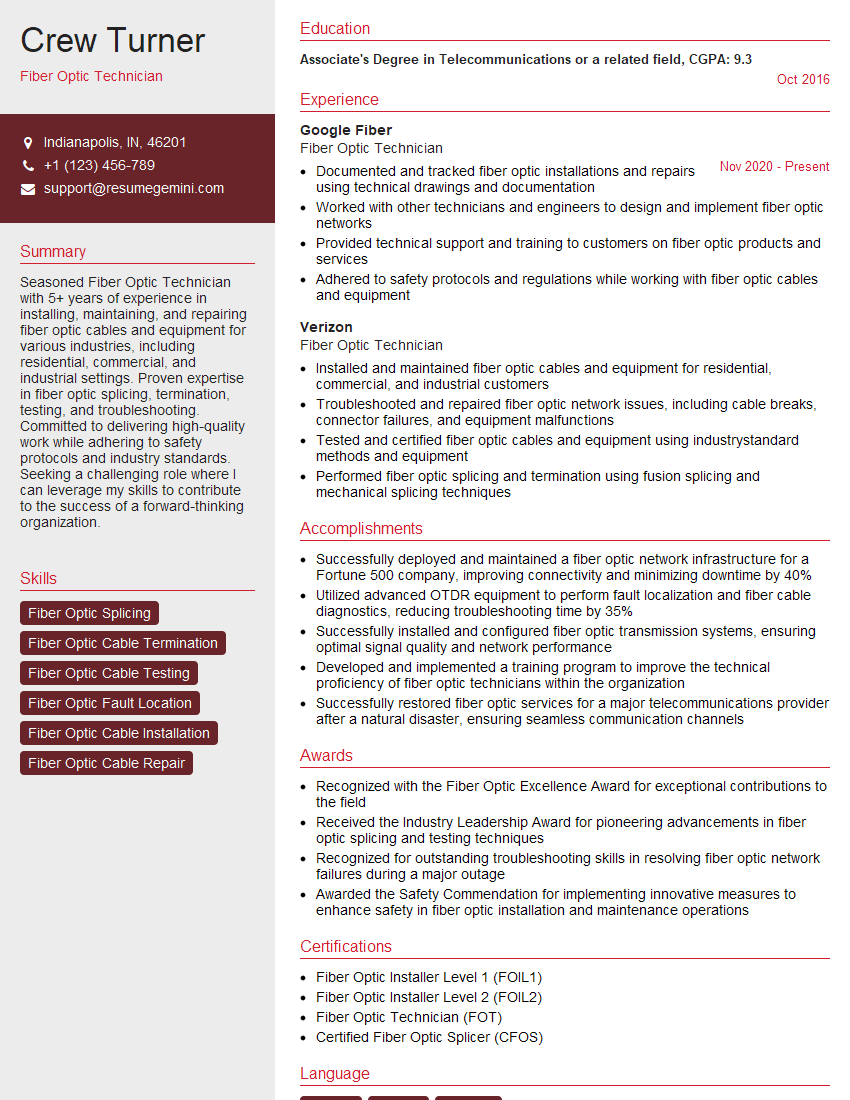
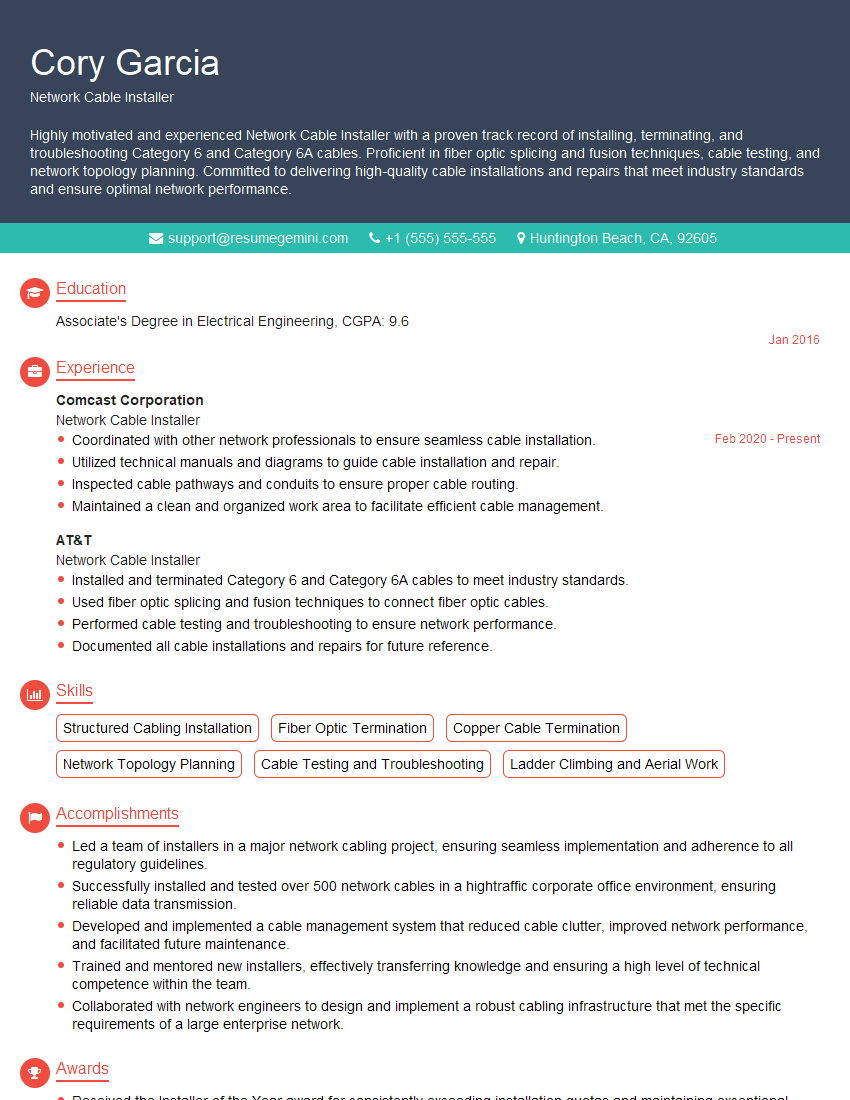
Mastering Construction and Maintenance of Outside Plant (OSP) opens doors to a rewarding career with significant growth potential in the telecommunications and infrastructure sectors. To maximize your job prospects, invest time in crafting an ATS-friendly resume that highlights your skills and experience effectively. ResumeGemini is a trusted resource that can help you build a professional and impactful resume, ensuring your qualifications stand out to potential employers. Examples of resumes tailored to Construction and Maintenance of Outside Plant (OSP) roles are available to guide you through this process. Take charge of your career – build the best possible resume and land your dream job!
Explore more articles
Users Rating of Our Blogs
Share Your Experience
We value your feedback! Please rate our content and share your thoughts (optional).
What Readers Say About Our Blog
Very informative content, great job.
good