Interviews are more than just a Q&A session—they’re a chance to prove your worth. This blog dives into essential Construction Monitoring and Inspection interview questions and expert tips to help you align your answers with what hiring managers are looking for. Start preparing to shine!
Questions Asked in Construction Monitoring and Inspection Interview
Q 1. Explain the importance of pre-construction inspections.
Pre-construction inspections are crucial for identifying potential problems before construction begins, saving time, money, and preventing costly rework later. Think of it as a thorough medical checkup before a major surgery – it’s preventative medicine for your construction project.
These inspections typically involve reviewing the site conditions, verifying the accuracy of the survey data, assessing existing utilities, and confirming that the project plans align with the actual site. For example, a pre-construction inspection might reveal an underground utility line not shown on the plans, which could be disastrous if construction proceeds without this knowledge. This allows for adjustments to the plans and avoids unexpected delays and cost overruns during the construction phase.
A thorough pre-construction inspection also verifies that the site is adequately prepared for construction, such as confirming access points, ensuring appropriate site security, and verifying the availability of necessary temporary utilities like power and water.
Q 2. Describe your experience with different types of construction inspections (e.g., structural, MEP, etc.).
My experience encompasses a wide range of construction inspections, including structural, MEP (Mechanical, Electrical, and Plumbing), and fire protection inspections. Each type requires a specific skill set and understanding of relevant codes and regulations.
- Structural Inspections: I’ve been involved in numerous structural inspections, focusing on foundations, framing, and load-bearing elements. This involves reviewing the structural drawings, verifying the concrete strength, examining the steel connections, and ensuring proper bracing and shoring are in place. I remember one project where a structural inspection revealed a minor crack in a load-bearing wall during the early stages; addressing it promptly prevented a significant structural issue later on.
- MEP Inspections: My experience with MEP inspections involves reviewing the installation of HVAC systems, plumbing lines, electrical wiring, and fire alarm systems. This includes checking for proper sizing, correct installation methods, and compliance with relevant codes like the National Electrical Code (NEC) and the International Plumbing Code (IPC). For example, a miswired electrical circuit detected during an MEP inspection prevented a potential electrical hazard.
- Other Inspections: Beyond structural and MEP, I’ve conducted inspections related to exterior finishes, roofing, and landscaping, ensuring quality and adherence to specifications.
Q 3. How do you identify and document construction defects?
Identifying and documenting construction defects requires a systematic approach. It starts with a thorough understanding of the project plans and specifications. During inspections, I use checklists, visual assessments, and sometimes non-destructive testing methods to identify defects. For instance, I might use a moisture meter to check for water damage in a wall, or I might use a level to check for plumb and square conditions.
Documentation is crucial. I use digital photography and detailed written reports to document each defect, including its location, type, severity, and any proposed remediation. The reports include clear, concise descriptions and photographic evidence to avoid any ambiguity. Using a standardized defect reporting format ensures consistency and simplifies the tracking of issues throughout the project.
For example, if a concrete slab is found to be uneven, I’d document this with a photograph showing the unevenness, noting the precise location, and quantifying the deviation from the plan’s specifications. I’d also note the potential impact of the defect (e.g., potential cracking, future flooring problems).
Q 4. What are your methods for tracking and managing inspection reports?
Tracking and managing inspection reports is critical for maintaining project control and ensuring accountability. I leverage a combination of both digital and physical methods. Digital methods improve efficiency and searchability.
I typically utilize construction inspection software that allows for digital reporting, image uploads, and real-time updates. This software generates a centralized database of all inspection reports, enabling easy tracking of issues and their resolution status. Each report is assigned a unique identifier, linked to specific locations within the project, and assigned a status (e.g., ‘Open’, ‘In Progress’, ‘Closed’). This digital system enables efficient searching, filtering and generating comprehensive reports on overall project quality.
In addition to the software, I maintain a physical filing system for hard copies of critical documents, ensuring redundancy and backup in case of technical issues. This dual approach guarantees efficient report management and data accessibility.
Q 5. How do you handle disagreements with contractors regarding inspection findings?
Disagreements with contractors are handled professionally and collaboratively. The goal is always to reach a resolution that ensures quality and adheres to project specifications.
My approach involves a step-by-step process: Firstly, I present my findings clearly and objectively, referencing the project plans and specifications. I focus on factual data rather than subjective opinions. Then, I engage in open communication with the contractor, explaining the implications of the defect and discussing potential solutions. This collaborative discussion often leads to a mutual understanding and agreement on the necessary corrective actions.
If a resolution can’t be reached through discussion, I escalate the issue to the project management team, involving the relevant stakeholders to reach a consensus. Documentation throughout this process remains crucial. Maintaining a detailed record of all communication and agreements protects all parties involved.
Q 6. Describe your experience with construction drawings and specifications.
My experience with construction drawings and specifications is extensive. I’m proficient in reading and interpreting architectural, structural, MEP, and civil drawings. This includes understanding various symbols, notations, and dimensions. I use this knowledge to effectively conduct inspections, verifying that the work performed matches the design intent.
Understanding specifications is equally important. Specifications describe the quality and performance requirements of various materials and construction methods. I’m familiar with various specification writing formats, such as CSI MasterFormat, and I can cross-reference drawings with specifications to ensure that construction complies with both.
For example, I can read a structural drawing to understand the size and placement of steel columns, then verify that the installed columns match these specifications, and further check if the steel used meets the specified grade and strength. This cross-referencing helps to ensure quality and consistency throughout the project.
Q 7. Explain your proficiency in using construction inspection software.
I’m proficient in using several construction inspection software packages, including (replace with actual software names relevant to your experience, e.g., Procore, PlanGrid, Autodesk BIM 360). My skills extend beyond simply using the software; I understand how to configure the software to meet the specific needs of a project, including customizing forms, creating workflows, and managing user permissions.
For example, I can utilize the mobile capabilities of these platforms to capture photographs and videos on-site, annotate them with defects, and immediately link them to the relevant sections of the plans. This real-time documentation significantly streamlines the inspection process and enhances communication among project stakeholders. Moreover, I’m adept at generating comprehensive reports from the data collected through the software, which are invaluable for project management and quality control.
Q 8. How do you ensure compliance with building codes and regulations?
Ensuring compliance with building codes and regulations is paramount to the success and safety of any construction project. This involves a proactive and multi-faceted approach that begins even before construction starts.
Firstly, I meticulously review all project plans and specifications against the relevant codes – for example, the International Building Code (IBC) or local jurisdiction-specific codes – identifying any potential discrepancies early on. This prevents costly and time-consuming revisions later in the process. Think of it like proofreading a critical document before submission – catching mistakes early is far more efficient.
Secondly, during construction, I conduct regular inspections focusing on critical aspects like foundation work, structural framing, electrical and plumbing installations, and fire protection systems. I meticulously document all inspections with photographic evidence and detailed reports, highlighting any deviations from the approved plans or code requirements. These reports become crucial communication tools, providing timely alerts to the contractor and the owner.
Thirdly, I collaborate closely with the contractor to address any non-compliance issues promptly and effectively. This involves open communication, a focus on finding practical solutions, and ensuring the appropriate corrective actions are taken. Sometimes, this may involve minor adjustments; other times, it may require significant rework. The goal is always to achieve full compliance without compromising project timelines or budget unnecessarily.
Finally, I understand that codes and regulations are continuously updated, therefore I maintain up-to-date knowledge through professional development and continuous learning, ensuring my inspections reflect the most current standards.
Q 9. Describe your experience with quality control procedures and documentation.
My experience with quality control procedures and documentation is extensive and follows a systematic approach. I employ a comprehensive system that covers all stages of a project, from initial design review to final inspection.
This begins with a thorough review of the project plans and specifications to establish clear quality benchmarks. Then, throughout the construction process, I use a combination of visual inspections, testing, and sampling to verify that materials, workmanship, and construction processes meet these pre-defined standards. This might involve checking concrete compressive strength, inspecting weld quality using visual and non-destructive testing methods, or verifying the proper installation of fire-rated assemblies.
My documentation is meticulous and includes: detailed checklists, photographic and video evidence, test results, and any non-conformances identified. All documentation is immediately uploaded to a secure cloud-based system accessible to all project stakeholders. This ensures easy access to the project’s quality control history and facilitates easy tracking of issues. Using a cloud-based system also enables real-time updates and collaboration, promoting efficiency and transparency.
For example, on a recent high-rise project, our detailed documentation of concrete pour procedures and testing results enabled quick identification and resolution of a minor issue with slump consistency, preventing potential structural compromises.
Q 10. How do you prioritize inspection tasks in a fast-paced construction environment?
Prioritizing inspection tasks in a fast-paced construction environment requires a strategic approach. It’s not just about speed, but about maximizing impact and ensuring safety.
I utilize a risk-based approach, focusing on critical activities and high-risk areas first. For example, I would prioritize inspections of structural elements (foundations, columns, beams) before focusing on finishes. This risk assessment is constantly updated as the project progresses, adapting to emerging challenges.
I also employ a scheduling system that integrates with the project’s overall schedule. I coordinate with the contractor to understand their workflow and proactively schedule inspections at key milestones. This minimizes disruption while ensuring timely intervention if issues are identified.
Finally, clear communication is key. I maintain open communication with the construction team, highlighting critical inspection needs and anticipating potential delays. This collaborative approach optimizes efficiency and ensures we address critical elements promptly.
Think of it like a firefighter – they prioritize rescuing people before attending to minor fires. Similarly, I prioritize high-risk areas to prevent major problems, while keeping a vigilant eye on the overall quality.
Q 11. How familiar are you with different types of testing equipment used in construction inspections?
I am highly familiar with a wide range of testing equipment used in construction inspections. My experience encompasses both basic tools and sophisticated instruments.
Basic tools include measuring tapes, levels, plumb bobs, and moisture meters for verifying dimensions, alignments, and material properties. More advanced equipment includes:
- Concrete testing equipment: Slump cones, compression testing machines, and rebound hammers to assess concrete strength and workability.
- Soil testing equipment: Probes, penetrometers, and density gauges to determine soil compaction and bearing capacity.
- Non-destructive testing (NDT) equipment: Ultrasonic flaw detectors, ground-penetrating radar, and magnetic particle inspection tools to assess structural integrity without causing damage.
- Material testing equipment: Various instruments for testing the strength and durability of various materials like steel, wood, and masonry.
My proficiency extends to interpreting the data obtained from these tests, ensuring results are accurately recorded and used to make informed decisions about construction quality and safety. Proper use and calibration of this equipment is critical, and I adhere to strict protocols to ensure reliable data.
Q 12. Explain your experience with reporting and communicating inspection results to project stakeholders.
Reporting and communicating inspection results is crucial for maintaining transparency and collaboration among project stakeholders. My reporting is clear, concise, and consistently structured, facilitating easy comprehension by all parties.
My reports typically include: a detailed description of the inspection, photographic and video evidence, test results, identified non-conformances, and recommended corrective actions. I also provide a clear assessment of the severity of any identified issues, prioritizing critical concerns.
I use various communication methods, tailoring my approach to each stakeholder. For example, I use concise email updates for daily progress, detailed reports for the project owner, and collaborative meetings with contractors to discuss issues and solutions. Clear, timely communication is essential to avoid misunderstandings and facilitate prompt resolution of any issues.
For example, on a recent project, a detailed report with photographic evidence highlighting a minor deviation in a cladding system enabled the contractor to make the necessary correction promptly, avoiding potential delays and cost overruns. Transparent communication avoided unnecessary conflict and ensured everyone was on the same page.
Q 13. How do you ensure the safety of yourself and others during construction inspections?
Safety is paramount during all construction inspections. I meticulously follow established safety procedures and regulations to protect myself and others on the site.
This includes: wearing appropriate personal protective equipment (PPE) at all times, such as hard hats, safety glasses, high-visibility clothing, and safety footwear. I also ensure I am aware of the surrounding environment and potential hazards, such as overhead work, heavy equipment, and confined spaces.
Before entering any site, I perform a site-specific risk assessment, identifying and mitigating potential hazards. I collaborate closely with the contractor to ensure safe work practices are maintained, and I don’t hesitate to halt work if unsafe conditions are identified. Prompt reporting of any accidents or near misses is also crucial to prevent future incidents.
This proactive safety approach prevents incidents and ensures everyone’s well-being – it’s a crucial aspect of my professional responsibility.
Q 14. Describe a time you had to resolve a conflict between the contractor and the owner.
In one project, a dispute arose between the contractor and owner regarding the quality of some finished cabinetry. The owner believed the finish didn’t meet the specified standards, while the contractor claimed it was within acceptable tolerances. The conflict threatened to delay the project and potentially lead to legal action.
My approach was to act as a neutral mediator, employing my expertise to resolve the issue fairly and efficiently. I first reviewed the relevant contract documents, specifications, and industry standards to establish a clear baseline for evaluating the quality of the cabinetry. Then, I conducted a thorough on-site inspection, documenting the discrepancies with photographic evidence and detailed measurements.
I then presented my findings to both parties, explaining my assessment objectively and offering several mutually acceptable solutions. These included options for partial rework, alternative compensation, or acceptance of the work with a price adjustment. Through clear communication, transparent assessment, and a focus on finding common ground, I successfully facilitated a compromise that satisfied both the owner and the contractor. The project continued smoothly, and the conflict was resolved amicably, showcasing my ability to manage conflicts constructively.
Q 15. What is your experience with reviewing submittals and shop drawings?
Reviewing submittals and shop drawings is a critical part of ensuring a construction project adheres to the design specifications and building codes. My experience encompasses a thorough review process, starting with verifying that all required documents are submitted. I then meticulously check for compliance with the contract documents, including architectural, structural, MEP (Mechanical, Electrical, and Plumbing) drawings, and specifications. This involves examining details like dimensions, materials, and installation methods.
For instance, I recently reviewed shop drawings for a complex steel structure. I carefully checked the connection details, ensuring they met the engineer’s calculations and complied with relevant AISC (American Institute of Steel Construction) standards. I identified a discrepancy in the bracing system, prompting a revision that prevented potential structural instability. My feedback is always constructive, aiming to identify potential issues early to avoid costly rework later. I use a checklist to systematically review each drawing and submittal to maintain consistency and minimize oversight.
Beyond technical accuracy, I also assess clarity and completeness. Ambiguous details or missing information are flagged and communicated to the relevant parties. This proactive approach minimizes errors and ensures a smooth construction process. This collaborative process involves detailed communication with contractors to clarify questions and resolve discrepancies efficiently.
Career Expert Tips:
- Ace those interviews! Prepare effectively by reviewing the Top 50 Most Common Interview Questions on ResumeGemini.
- Navigate your job search with confidence! Explore a wide range of Career Tips on ResumeGemini. Learn about common challenges and recommendations to overcome them.
- Craft the perfect resume! Master the Art of Resume Writing with ResumeGemini’s guide. Showcase your unique qualifications and achievements effectively.
- Don’t miss out on holiday savings! Build your dream resume with ResumeGemini’s ATS optimized templates.
Q 16. How do you manage your time effectively to complete all necessary inspections?
Effective time management in construction inspection is crucial. My approach combines proactive planning with flexible adaptation. I begin by meticulously reviewing the project schedule and identifying critical milestones that require inspection. This includes key activities like foundation pouring, steel erection, MEP installations, and final inspections.
I utilize a digital calendar and project management software to schedule inspections and set reminders. This allows me to prioritize tasks based on urgency and potential impact. For example, inspections involving concrete pours need to be done quickly, before the concrete sets, whereas others can be spread out. I also group similar inspections to optimize travel time and improve efficiency.
However, construction sites are inherently dynamic. Unexpected delays or issues may arise. I build flexibility into my schedule, incorporating buffer time and prioritizing communication with the contractors. This proactive approach allows for swift adjustments to address unforeseen circumstances and prevent schedule disruptions.
Q 17. How do you stay up-to-date with the latest construction codes and standards?
Staying current with construction codes and standards is paramount for my role. I actively engage in several strategies to achieve this. Firstly, I subscribe to professional organizations like the ACI (American Concrete Institute) and ASCE (American Society of Civil Engineers), receiving regular updates on code changes and industry best practices. These organizations provide valuable resources, including publications, webinars, and conferences that expand my knowledge base.
Secondly, I regularly review updates on relevant building codes. For instance, I constantly monitor updates to the International Building Code (IBC) and local amendments that affect the regions where I work. I utilize online resources and attend workshops offered by local building departments to ensure my knowledge is up-to-date and aligned with the latest regulatory requirements.
Furthermore, I maintain a network of peers and mentors within the construction industry. Sharing information and discussing recent projects helps keep my perspective informed and challenges my current knowledge, prompting research and professional development. I make a point of attending industry seminars and conferences to stay abreast of new technologies and emerging trends.
Q 18. What software are you proficient in using for construction inspection and documentation?
Proficiency in relevant software is essential for efficient construction inspection and documentation. I am adept at using several software programs, including Autodesk BIM 360, Procore, and Bluebeam Revu. Autodesk BIM 360 facilitates collaborative workflows, allowing me to review models, track issues, and generate reports directly within the platform.
Procore’s project management capabilities are instrumental in organizing inspection data, scheduling, and communication. Bluebeam Revu is excellent for markups on drawings and generating detailed inspection reports. I’m also proficient in Microsoft Office Suite, particularly Excel for data analysis and PowerPoint for presenting findings.
My ability to leverage these software tools enhances my efficiency, improves communication, and provides a comprehensive record of the inspection process. This digitized approach minimizes potential errors and offers clear, easily accessible documentation for future reference.
Q 19. Explain your experience with different types of construction materials and their inspection requirements.
My experience encompasses a wide range of construction materials, each with unique inspection requirements. For instance, concrete inspection involves assessing slump, air content, and compressive strength. I’m trained to identify potential issues like honeycombing or segregation during the pour, ensuring proper curing and strength development.
Steel inspection involves verifying dimensions, grade, and proper welding techniques. I use techniques like visual inspection, and sometimes non-destructive testing methods, to confirm material quality and structural integrity. Wood inspection requires assessing for defects such as knots, decay, or insect infestation. I know to assess the appropriate grade and treatment according to design specifications.
Each material has specific standards and guidelines that inform my inspection approach. For example, masonry inspection requires checking the bond, mortar consistency, and overall stability of the structure. I always follow relevant industry standards and consult with material specialists when necessary to ensure that all materials are compliant and meet the project requirements.
Q 20. Describe your experience with construction project scheduling and its relation to inspections.
Construction project scheduling is intrinsically linked to the inspection process. A well-defined schedule provides the framework for planning inspections, allowing me to anticipate key milestones requiring attention. This proactive approach is crucial for identifying potential problems early and ensuring the project remains on track.
For example, a detailed schedule allows me to schedule inspections of critical structural elements early in the construction process. This ensures the foundation is correctly laid before subsequent stages commence. I frequently review the schedule with the project manager to proactively anticipate potential scheduling conflicts or delays.
Delays in one aspect of construction can impact subsequent stages, creating a ripple effect. By monitoring the schedule closely and performing timely inspections, I can identify potential problems and propose solutions that help keep the project moving forward. This minimizes the impact of delays and helps prevent cost overruns.
Q 21. How do you identify potential construction risks during the inspection process?
Identifying potential construction risks during inspections requires a keen eye for detail and a proactive mindset. My approach involves a combination of visual observation, checking against plans and specifications, and a thoughtful understanding of construction processes.
For instance, during a foundation inspection, I look for signs of inadequate compaction, improper formwork, or potential settlement issues. These could indicate future structural problems. Similarly, I carefully examine the installation of MEP systems, checking for proper grounding, insulation, and fire protection measures, identifying potential safety hazards.
I also consider environmental factors. For example, extreme weather conditions might necessitate adjustments to construction methods or the use of specific protective measures. By documenting potential risks and communicating them clearly to the project team, I contribute to a safer and more efficient construction process. My reports not only highlight existing issues but also help anticipate future challenges, enabling proactive risk mitigation strategies.
Q 22. What is your approach to resolving quality control issues discovered during inspections?
Resolving quality control issues starts with a thorough understanding of the problem. My approach is systematic and focuses on collaboration. First, I carefully document the issue, including photographic evidence, precise location, and a detailed description. Then, I communicate clearly with the contractor responsible, outlining the discrepancy and referencing the relevant specifications or blueprints. We collaboratively discuss potential solutions, prioritizing those that maintain project integrity and adhere to the project timeline. This often involves reviewing the relevant sections of the contract to determine responsibilities and liability. For example, if a subcontractor installed incorrect flooring, we’d work together to determine whether replacement or remediation is the best course of action. Finally, we establish a corrective action plan with clear timelines and responsibilities, and I conduct follow-up inspections to verify the issue has been rectified to the required standard.
I believe in fostering open communication and a collaborative problem-solving environment. This approach leads to fewer disputes and quicker resolutions, improving overall project efficiency and quality.
Q 23. Describe your experience with working with subcontractors and ensuring their compliance.
Working with subcontractors requires a proactive and organized approach. Before work commences, I ensure each subcontractor receives and understands all relevant project documents, including specifications, drawings, and safety protocols. I conduct pre-construction meetings to clarify expectations and address any potential concerns. During construction, regular inspections are crucial for monitoring adherence to plans and standards. I utilize checklists and documented procedures tailored to each trade to streamline inspections and maintain consistency. Communication is key; I frequently engage with subcontractors to clarify questions, address issues promptly, and foster a collaborative relationship. For instance, if a plumbing subcontractor has questions about a complex piping system, I’ll clarify the design intent and coordinate with the engineer as needed. This prevents errors and ensures compliance with the project specifications. Any non-compliance is documented immediately and discussed directly with the subcontractor, working toward a solution that meets quality standards.
Q 24. How do you handle situations where you discover non-compliant work?
Discovering non-compliant work necessitates a firm but fair approach. My first step is documenting the issue thoroughly – photographic evidence, detailed descriptions, and measurements are crucial. I then immediately notify the responsible contractor (general or subcontractor), providing them with the documentation and explaining the non-compliance. A joint site visit is often the next step, allowing for a discussion of the issues and potential corrective actions. The severity of the non-compliance dictates the response; minor issues may be addressed with a simple corrective action plan, while major issues might require more formal procedures, including stop-work orders if necessary. Crucially, the corrective action plan, including timelines and responsibility, is clearly documented and agreed upon. The contractor must demonstrate that the work has been corrected to the required standard before further work is permitted. A final inspection then verifies the remediation. For example, if a structural element does not meet the required strength specifications, I would immediately halt that portion of the work, engage the structural engineer, and document the necessary corrective actions before resuming construction. Maintaining detailed records throughout this entire process is critical.
Q 25. Describe your experience with using checklists and inspection forms.
Checklists and inspection forms are indispensable tools in my work. I customize them for each project based on the specifications and scope of work. They ensure thorough and consistent inspections, covering all critical aspects of the construction process. For example, a checklist for concrete pouring might include items like concrete strength testing, proper curing procedures, and formwork removal protocols. The forms document observations and findings, including dates, times, locations, and photographic evidence. Using digital forms and software enables data management, analysis, and efficient reporting. This digital approach provides real-time access to inspection data and facilitates trend analysis, improving project quality control. I’ve found that well-designed checklists not only maintain consistent quality but also significantly reduce the likelihood of overlooking potential issues.
Q 26. How do you maintain accurate records and documentation of your inspections?
Maintaining accurate records is paramount. I use a combination of digital and physical documentation. Digital records include photographs, videos, and digital inspection forms stored securely on a cloud-based system, providing easy access and version control. Physical records include signed inspection reports, correspondence, and any relevant drawings or specifications. A unique identifier is assigned to each inspection to ensure traceability. All documentation is meticulously timestamped and clearly linked to the specific project and phase of construction. This systematic approach ensures clear accountability and provides valuable data for future reference, risk assessment, and analysis. The combination of digital and physical ensures redundancy and minimizes the risk of data loss.
Q 27. How do you ensure that inspections are completed within the designated timeframe?
Meeting inspection deadlines requires careful planning and prioritization. I start by understanding the project schedule and identifying critical inspection points. I then create a detailed inspection plan, scheduling inspections strategically to minimize disruption and maximize efficiency. This plan is shared with the project team. I regularly review progress and adjust the schedule as needed, communicating any delays or challenges promptly. Effective communication and clear expectations with the contractors, coupled with efficient use of inspection checklists and technology, help to streamline the process. For example, if a delay in material delivery is anticipated, I adjust the inspection schedule accordingly to avoid unnecessary delays. Prioritization is key, focusing on high-risk areas or critical components to minimize potential impacts of missed deadlines.
Q 28. Describe your experience with preparing inspection reports and presenting findings to clients.
Preparing and presenting inspection reports is a crucial part of my role. My reports are clear, concise, and objective, providing a detailed summary of findings, including photographic evidence and supporting documentation. I use plain language to avoid jargon, ensuring the client can easily understand the report’s contents. The report includes a summary of the inspections, highlighting any non-compliances, and recommended corrective actions. During presentations, I use visuals like photographs and diagrams to aid understanding. I’m confident in addressing questions and providing clarification, ensuring clients feel informed and comfortable. The final reports serve as a record of the project’s quality control measures and provide valuable data for future projects. It’s critical to build rapport with the client so that feedback and collaboration are prioritized during these important presentations.
Key Topics to Learn for Construction Monitoring and Inspection Interview
- Building Codes and Regulations: Understanding and applying relevant building codes, safety regulations, and industry standards to ensure project compliance.
- Quality Control Procedures: Implementing and documenting quality control measures throughout the construction process, including material testing and inspection techniques.
- Construction Drawings and Specifications: Interpreting blueprints, specifications, and other project documents to verify work aligns with the design intent.
- Inspection Techniques and Reporting: Mastering various inspection methods (visual, dimensional, material testing) and creating accurate and comprehensive inspection reports.
- Safety Regulations and Practices: Demonstrating a thorough understanding of OSHA regulations and implementing safety protocols on construction sites.
- Problem-Solving and Conflict Resolution: Identifying and resolving construction issues, managing conflicts between stakeholders, and suggesting practical solutions.
- Project Scheduling and Monitoring: Understanding project timelines, identifying potential delays, and communicating effectively with project managers.
- Documentation and Record Keeping: Maintaining detailed and accurate project records, including inspection reports, meeting minutes, and change orders.
- Contract Administration: Understanding the terms and conditions of construction contracts and ensuring compliance.
- Sustainable Construction Practices: Familiarity with environmentally friendly building materials and techniques.
Next Steps
Mastering Construction Monitoring and Inspection opens doors to a rewarding career with excellent growth potential. As this field demands meticulous attention to detail and a strong understanding of building practices, showcasing your expertise through a well-crafted resume is crucial. An ATS-friendly resume is key to getting your application noticed. We strongly encourage you to leverage ResumeGemini to build a professional and impactful resume. ResumeGemini offers tools and resources to create a resume that highlights your skills and experience effectively. Examples of resumes tailored to Construction Monitoring and Inspection are available to help you get started.
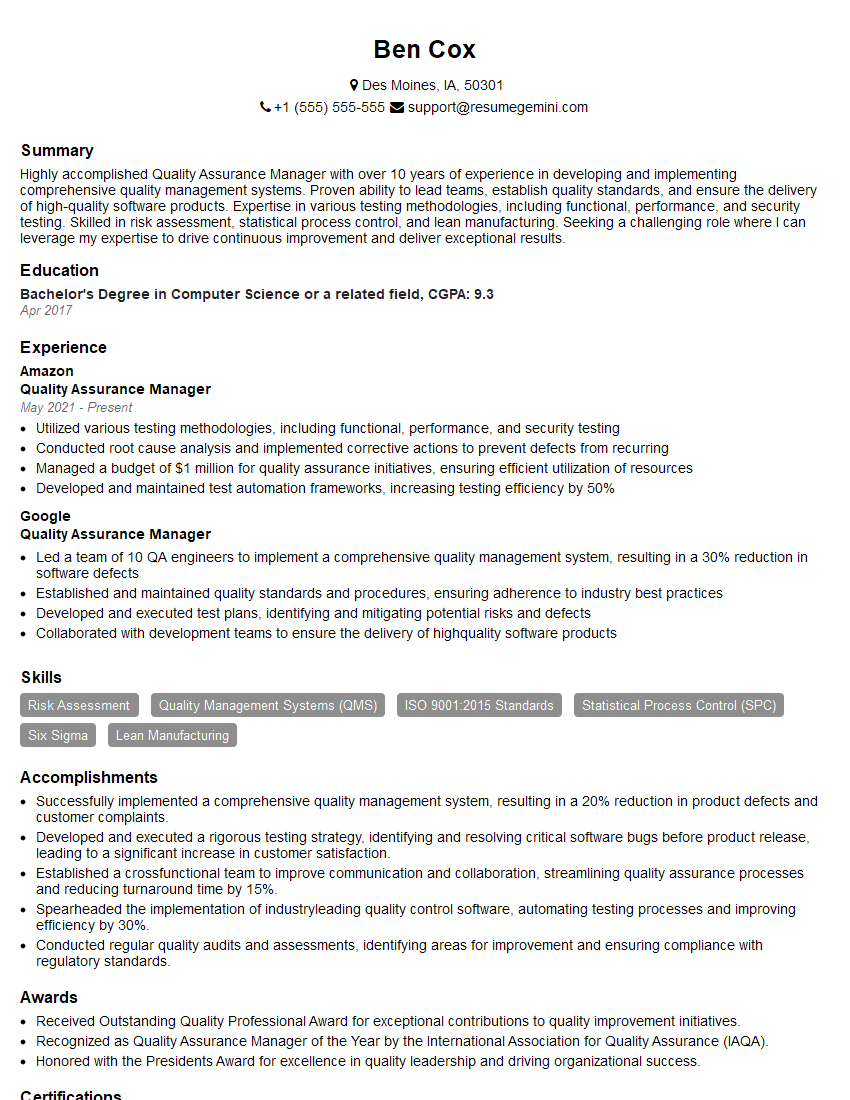
Quality Assurance Manager Resume Sample
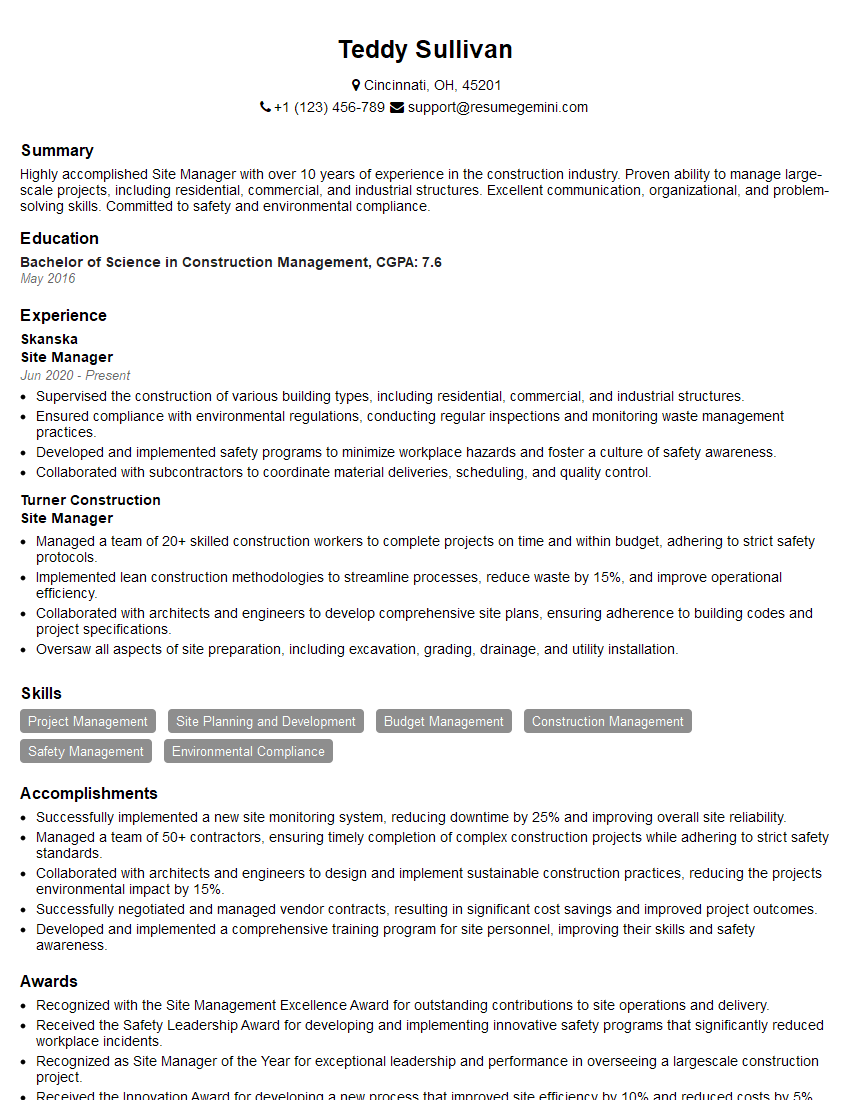
Site Manager Resume Sample

Construction Superintendent Resume Sample

Compliance Officer Resume Sample
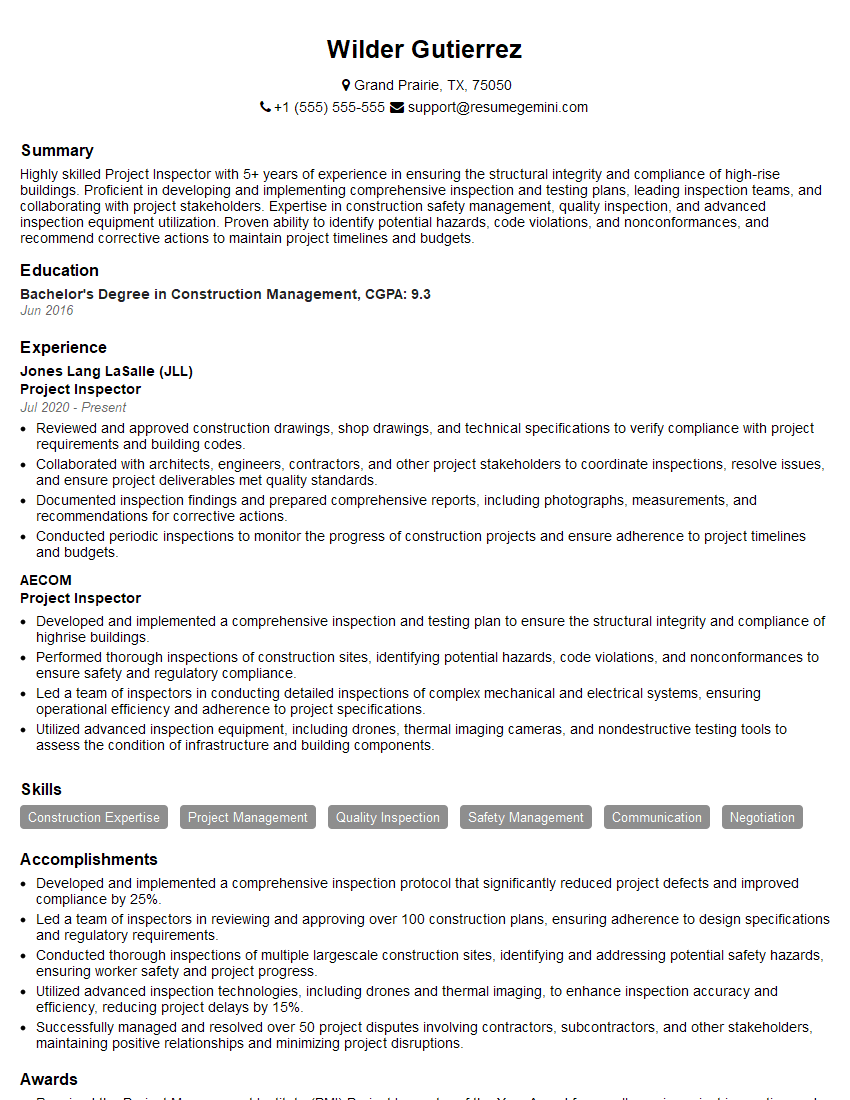
Project Inspector Resume Sample
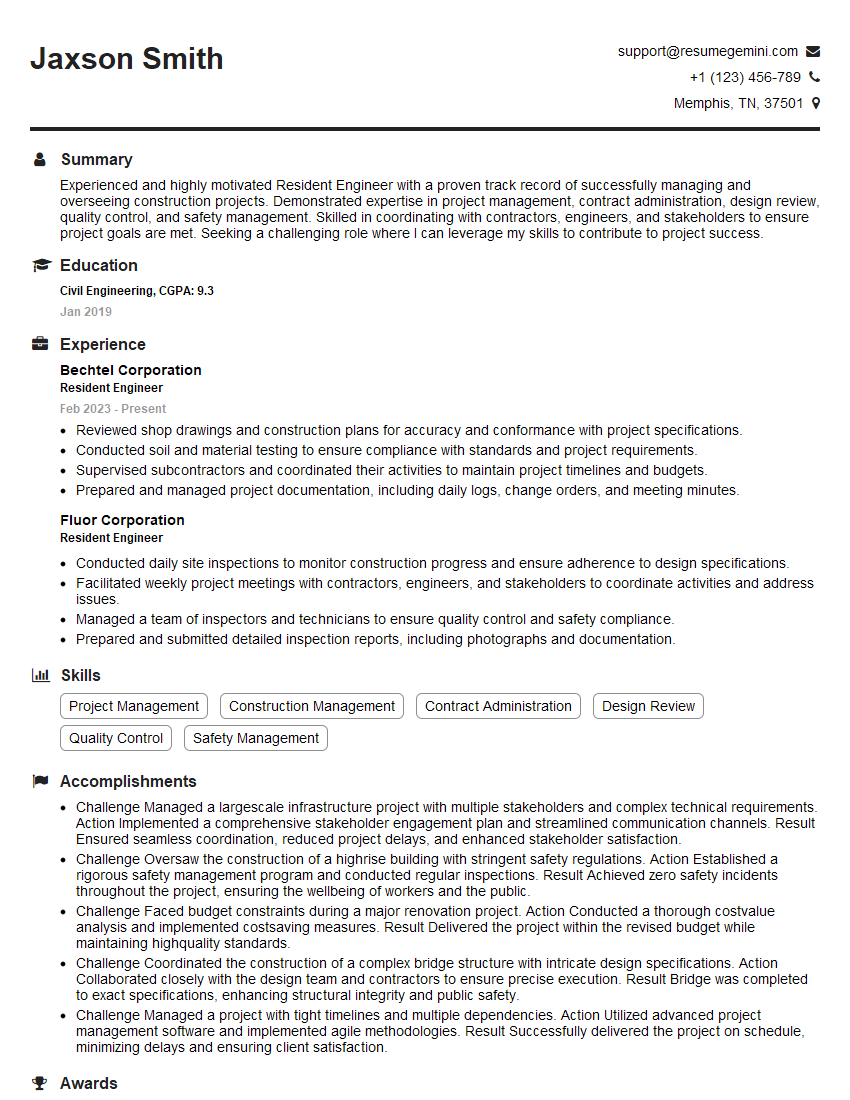
Resident Engineer Resume Sample
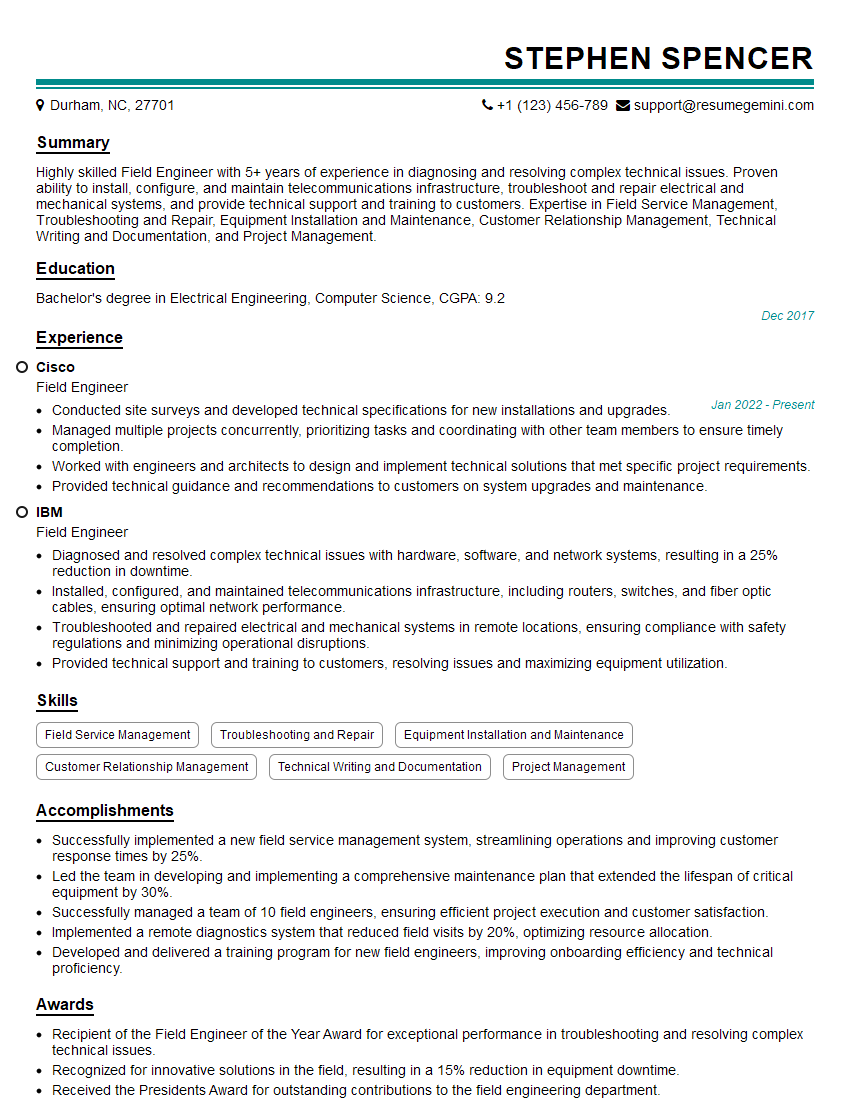
Field Engineer Resume Sample
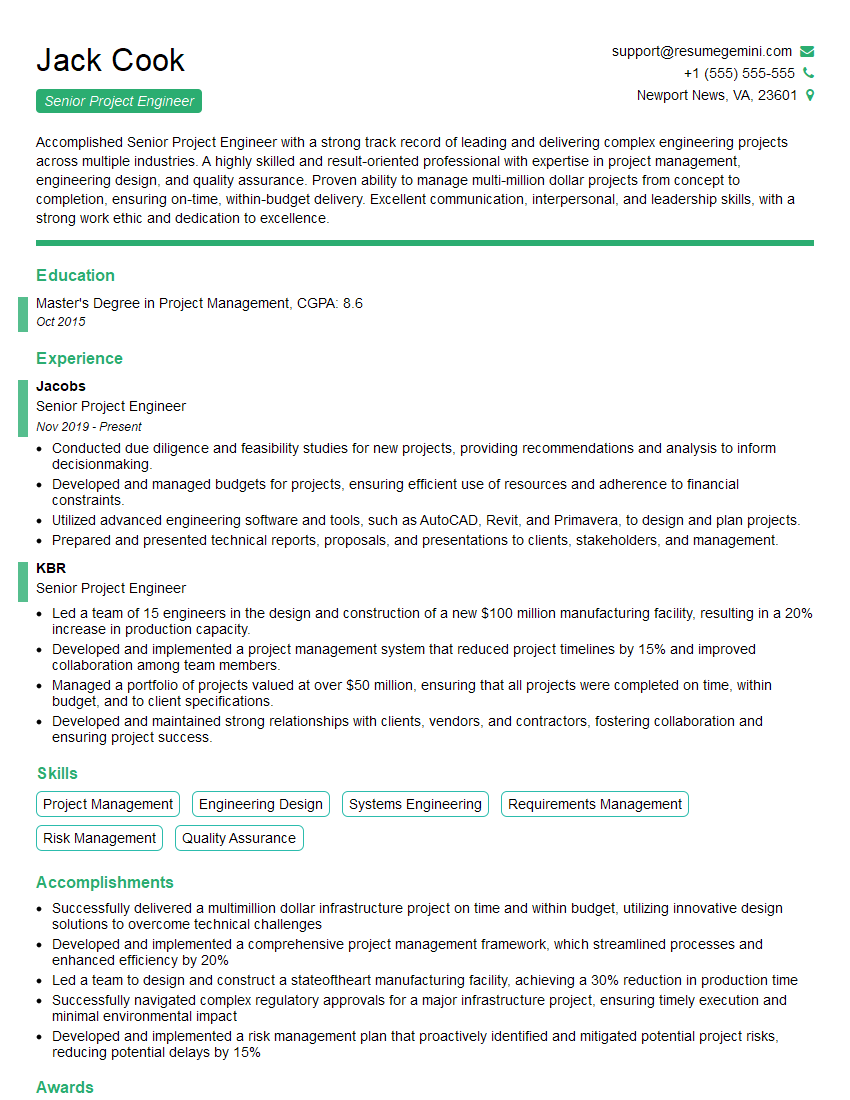
Senior Project Engineer Resume Sample
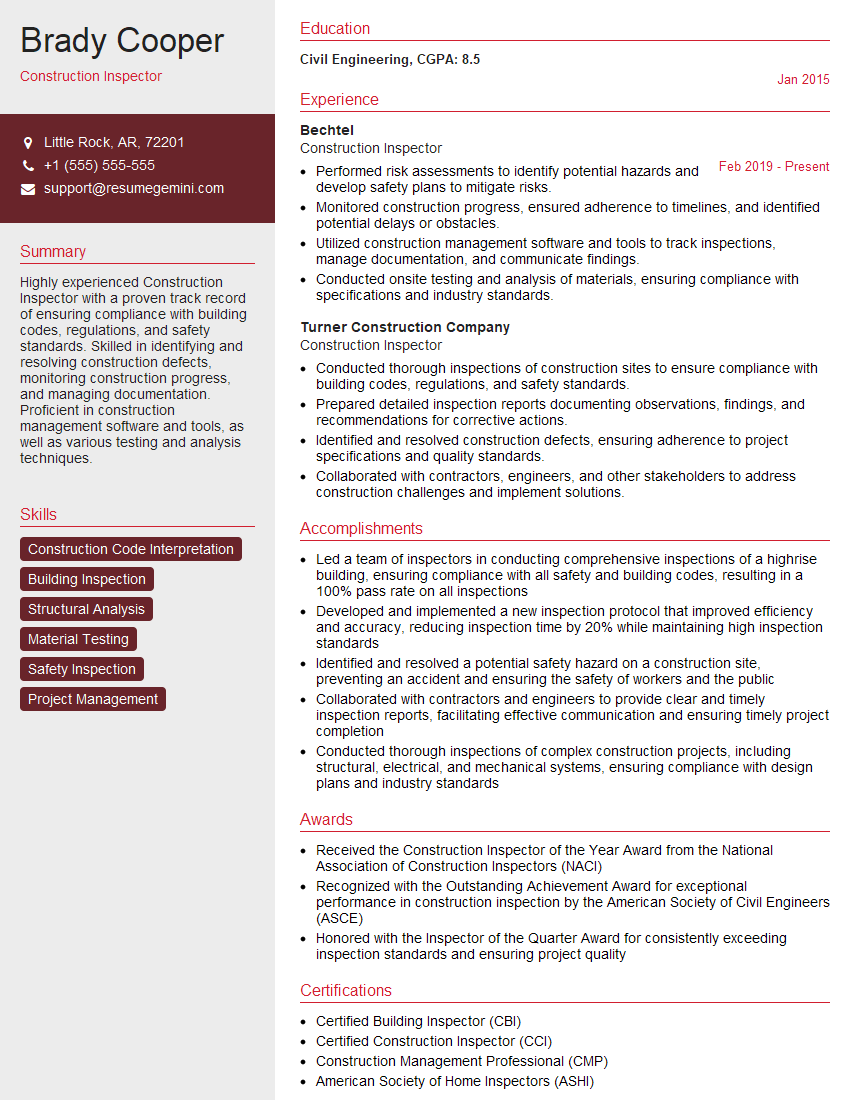
Construction Inspector Resume Sample
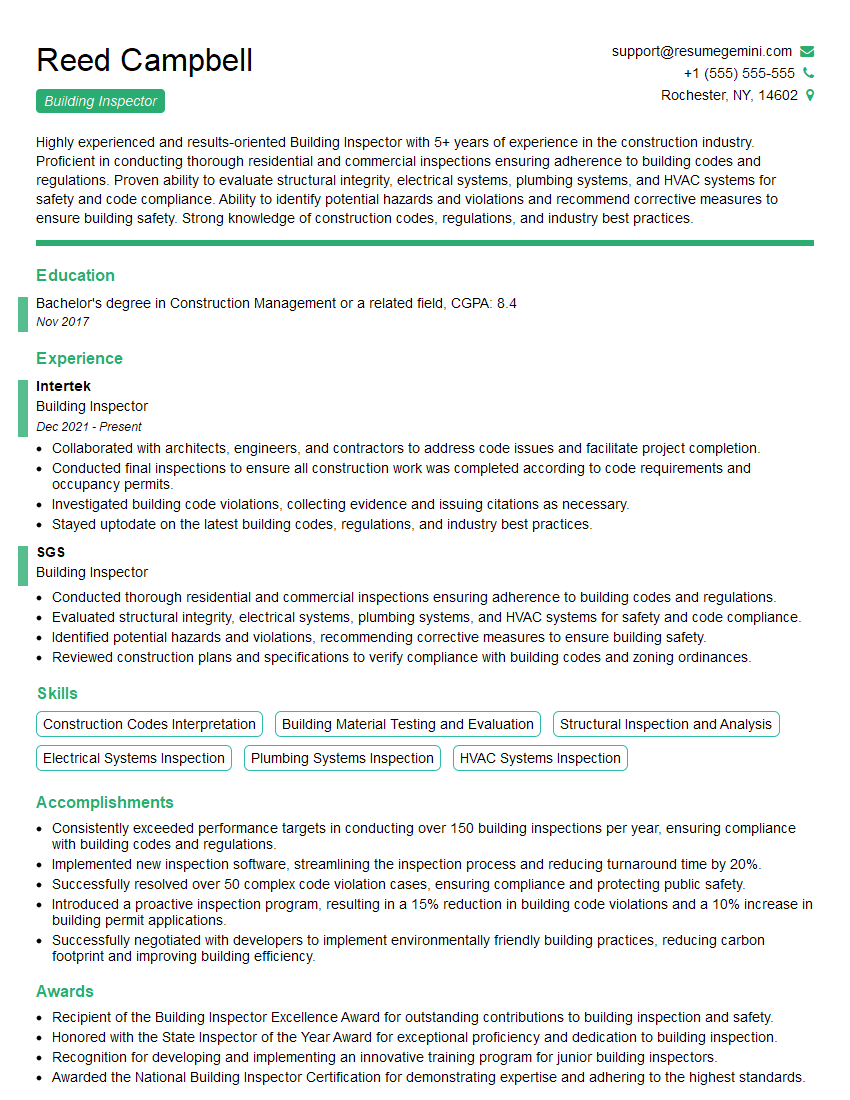
Building Inspector Resume Sample
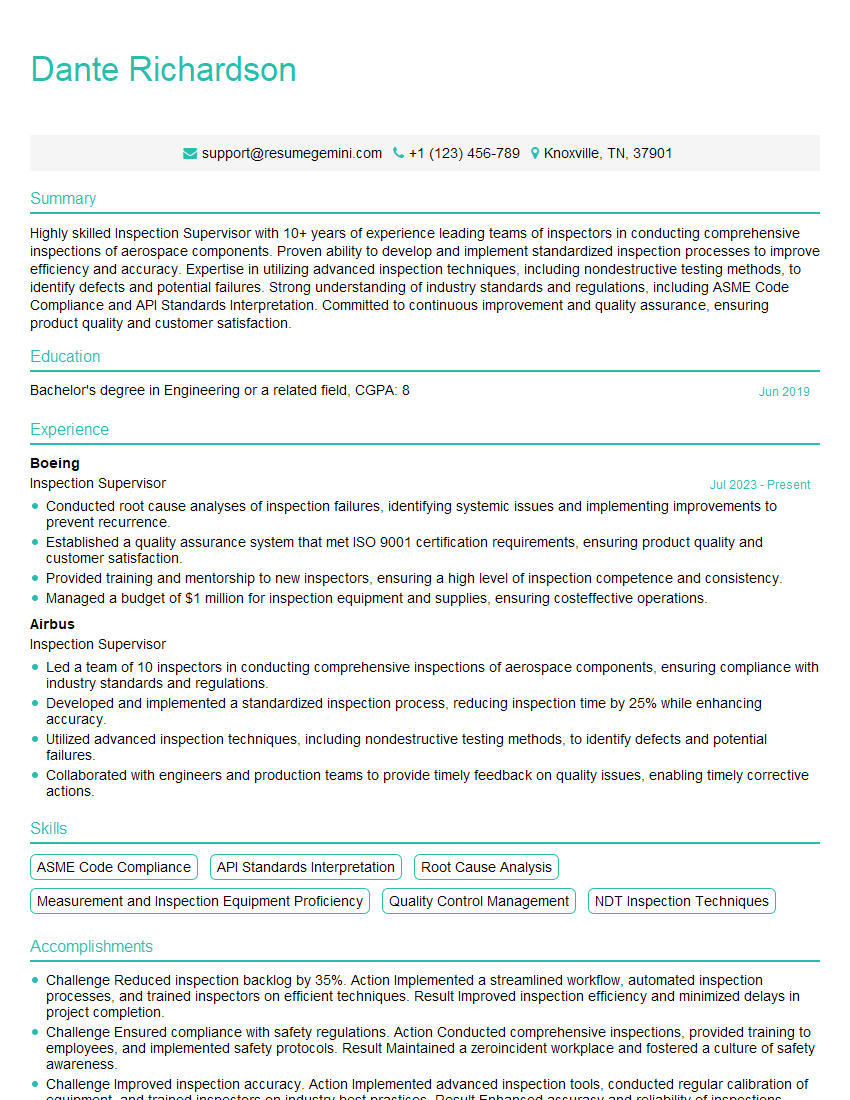
Inspection Supervisor Resume Sample
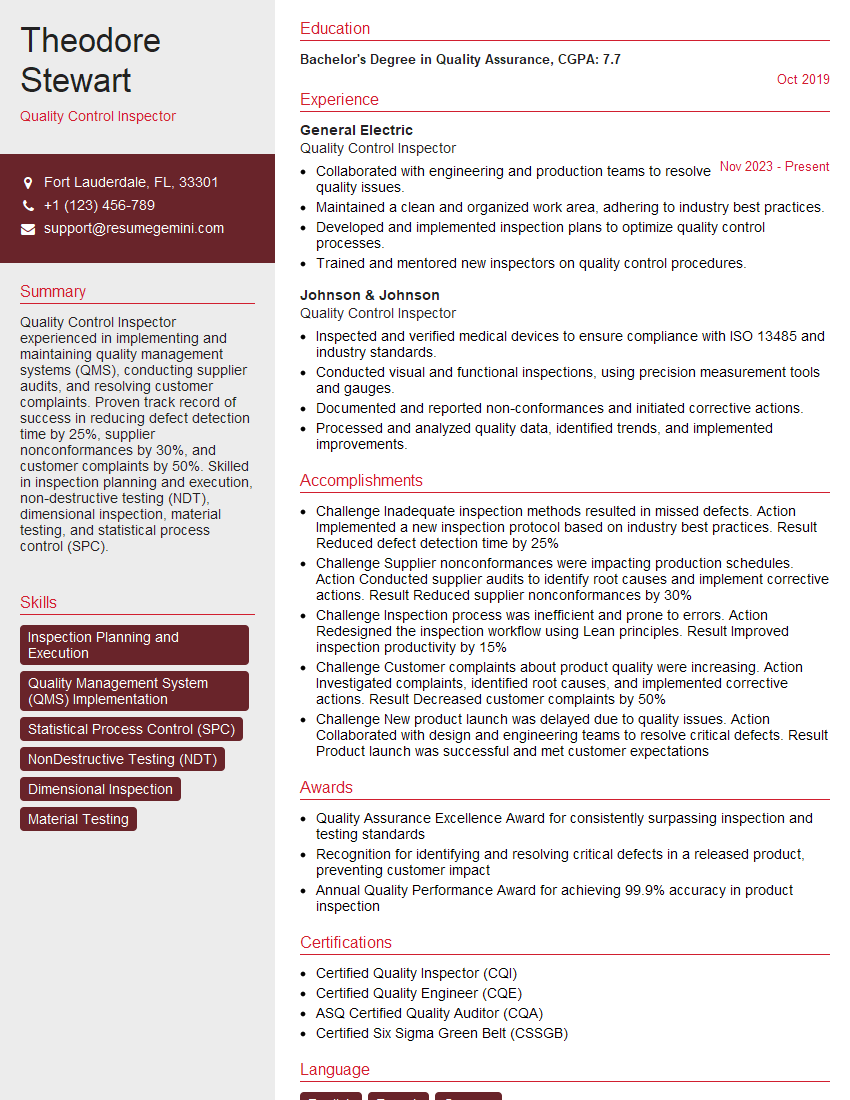
Quality Control Inspector Resume Sample
Explore more articles
Users Rating of Our Blogs
Share Your Experience
We value your feedback! Please rate our content and share your thoughts (optional).