Interviews are more than just a Q&A session—they’re a chance to prove your worth. This blog dives into essential Consumer Safety Regulations Compliance interview questions and expert tips to help you align your answers with what hiring managers are looking for. Start preparing to shine!
Questions Asked in Consumer Safety Regulations Compliance Interview
Q 1. Explain your understanding of the Consumer Product Safety Act (CPSA).
The Consumer Product Safety Act (CPSA) is a U.S. federal law designed to protect the public from unreasonable risks of injury or death associated with consumer products. It establishes the Consumer Product Safety Commission (CPSC) as the primary agency responsible for enforcing its provisions. The CPSA grants the CPSC broad authority to regulate consumer products, including setting safety standards, banning hazardous products, and issuing recalls. It’s essentially a safety net for consumers, aiming to prevent harm before it happens.
Key aspects include the CPSC’s power to investigate product-related injuries, develop mandatory safety standards, and take enforcement actions against manufacturers, importers, and retailers who violate the law. For example, if a toy is found to contain lead paint exceeding safe levels, the CPSC could issue a recall, mandate redesign, or even impose significant fines.
Understanding the CPSA is crucial for anyone involved in the design, manufacture, distribution, or sale of consumer products. Compliance is not merely a legal requirement; it’s a moral obligation to ensure consumer safety.
Q 2. Describe the process for reporting a product safety incident.
Reporting a product safety incident involves several key steps. First, you need to gather all relevant information: the product involved (including model number and manufacturer), the nature of the incident (e.g., injury, near-miss), the circumstances leading to the incident, and any photos or videos that document the event. Then, you should contact the manufacturer directly; many have established reporting mechanisms on their websites. If the manufacturer is unresponsive or if the incident involves serious injury or death, you should immediately report it to the CPSC through their online reporting system or by phone. You can also report it to the relevant regulatory body in your country of residence if outside the US.
For example, imagine a child sustains burns from a malfunctioning space heater. You’d report it with details of the heater, the nature of the burns, how the malfunction occurred, and any photos of the damaged heater. The CPSC uses this information to identify trends in product safety incidents, investigate potential hazards, and take necessary actions to mitigate future risks.
Q 3. How familiar are you with the requirements of the European Union’s General Product Safety Directive (GPSD)?
I am very familiar with the General Product Safety Directive (GPSD) of the European Union. The GPSD is a cornerstone of EU product safety legislation. It establishes general safety requirements for all consumer products placed on the EU market, regardless of their specific nature. Unlike directives that focus on specific product categories (like toys or electrical appliances), the GPSD sets overarching principles. It requires that all products meet a general requirement of safety, meaning they must not endanger the safety or health of consumers when properly installed and used for their intended purpose.
A key element is the responsibility of the economic operator – the manufacturer, importer, or distributor – to ensure their products comply. This involves carrying out risk assessments, keeping detailed documentation, and having appropriate processes in place for identifying and addressing safety hazards. Failure to comply with the GPSD can lead to significant penalties, including product seizures and substantial fines.
Understanding the GPSD is paramount for businesses selling products within the EU; it’s not just about legal compliance but also about safeguarding consumer trust and brand reputation. Non-compliance can significantly damage a company’s image and market position.
Q 4. What are your experiences with conducting product safety risk assessments?
I have extensive experience conducting product safety risk assessments, following methodologies like HAZOP (Hazard and Operability Study) and FMEA (Failure Mode and Effects Analysis). These assessments systematically identify potential hazards associated with a product throughout its lifecycle – from design and manufacturing to use and disposal.
For example, in assessing a children’s toy, I would consider hazards such as choking hazards (small parts), sharp edges, flammability, and toxic materials. The assessment would involve identifying the severity, likelihood, and detectability of each hazard and prioritizing those requiring immediate attention. This process helps to inform design changes, warnings, and instructions to minimize or eliminate those risks. The result is a comprehensive report documenting the identified hazards, mitigation strategies, and residual risks.
I’m proficient in using various software tools to support this process, and I’m adept at translating technical findings into actionable recommendations for product improvement.
Q 5. How would you develop and implement a consumer safety compliance program?
Developing and implementing a robust consumer safety compliance program is a multi-faceted process. It starts with a thorough understanding of all applicable regulations (like the CPSA, GPSD, and other relevant national and international standards). Next, the program needs clearly defined roles and responsibilities, ensuring that each team member knows their part in upholding safety standards.
Key elements include establishing a system for tracking and managing product safety information, developing and implementing risk assessment procedures, a recall plan, and a process for handling customer complaints and incident reports. Regular internal audits are essential to monitor the program’s effectiveness and identify areas for improvement. The program should also include ongoing training for employees on safety regulations and best practices. Finally, the program must be adaptable to changing regulations and emerging technologies.
Imagine a program for a toy manufacturer: This would entail designing toys with safety in mind, rigorously testing materials, conducting thorough risk assessments before launch, implementing a system for tracking complaints, and a pre-defined plan for a recall should a safety defect be discovered.
Q 6. Describe your experience with conducting internal audits related to consumer safety compliance.
I’ve conducted numerous internal audits related to consumer safety compliance, using a structured approach based on industry best practices and regulatory requirements. These audits focus on evaluating the effectiveness of the safety management system, ensuring compliance with relevant standards and regulations, and identifying areas for improvement.
My audit process typically involves reviewing documentation (e.g., risk assessments, test reports, incident reports), interviewing key personnel, conducting on-site inspections of facilities and processes, and analyzing data to identify trends and patterns. The results are summarized in a detailed audit report that includes findings, recommendations, and a plan for corrective actions.
For example, during an audit of a food processing plant, I might examine their procedures for preventing contamination, their sanitation practices, and their handling of customer complaints about potential foodborne illnesses. The audit would highlight deficiencies and recommend corrective actions to minimize risks to consumers.
Q 7. Explain your experience with managing recalls and corrective actions.
Managing recalls and corrective actions requires a swift, organized, and transparent approach. It involves coordinating with various stakeholders, including manufacturers, distributors, retailers, and regulatory bodies. This includes immediately identifying the scope of the problem, assessing the risk to consumers, developing a comprehensive communication plan, and implementing an effective recall strategy.
My experience encompasses all aspects, from determining the root cause of the problem to coordinating the return and repair or replacement of affected products. It also includes managing communication with consumers, regulatory agencies, and the media; ensuring transparency and timely updates are key to minimizing negative impact on the brand and consumer confidence.
For instance, managing a recall of a faulty appliance might involve contacting retailers to remove the product from shelves, creating a public announcement, establishing a process for consumers to return the appliance, and coordinating repairs or replacements. Effective recall management is crucial for preventing further harm and preserving a company’s reputation.
Q 8. How would you handle a situation where a product fails to meet safety standards?
Discovering a product failing to meet safety standards is a serious situation requiring immediate and decisive action. My approach is guided by a prioritization of consumer safety and legal compliance.
First, I would initiate a thorough investigation to identify the root cause of the failure. This involves reviewing design specifications, manufacturing processes, testing data, and any customer complaints. A cross-functional team, involving engineering, quality control, and legal, would be assembled.
Next, depending on the severity of the non-compliance, a recall or corrective action plan would be developed. For minor issues, a corrective action might involve modifying manufacturing processes or providing updated instructions. For major safety concerns, a recall would be necessary. This involves notifying relevant regulatory agencies (like the CPSC or FDA, depending on the product) and consumers. We’d work closely with them to manage the recall effectively and safely.
Finally, a comprehensive review of our processes would be conducted to prevent similar failures in the future. This would include improvements to quality control measures, enhanced testing protocols, and strengthened design verification and validation procedures. We’d also thoroughly document the entire process, ensuring that lessons learned are captured and applied to all future products.
For example, if a children’s toy was found to have small parts that could pose a choking hazard, we would immediately initiate a recall, contact the relevant regulatory agencies, and notify consumers via various channels. We would also redesign the toy to eliminate the hazard and update our manufacturing processes to prevent recurrence.
Q 9. How familiar are you with ISO standards related to product safety and quality management?
I’m very familiar with ISO standards related to product safety and quality management. My experience encompasses ISO 9001 (Quality Management Systems), ISO 14001 (Environmental Management Systems), and ISO 45001 (Occupational Health and Safety Management Systems). These standards provide a framework for building robust and consistent processes ensuring product quality and safety.
Specifically, ISO 9001 helps organizations establish, implement, maintain, and continually improve a quality management system. This includes requirements for risk management, internal audits, management review, and continual improvement. The principles within ISO 9001 are crucial for ensuring that consumer safety is addressed throughout the product lifecycle.
ISO 14001, while focused on environmental management, intersects significantly with product safety, especially when considering the environmental impact of materials and manufacturing processes. Similarly, ISO 45001 emphasizes the safety and health of workers involved in producing the product. If workers are not safe, the quality of the product is likely to suffer and therefore, risks of unsafe products increase. The proper application of these standards contributes to a holistic approach to consumer safety and sustainable manufacturing.
Q 10. Describe your experience with working with regulatory agencies (e.g., FDA, CPSC).
I have extensive experience collaborating with regulatory agencies such as the FDA (Food and Drug Administration) and the CPSC (Consumer Product Safety Commission). This includes submitting pre-market notifications, responding to safety investigations, and managing product recalls.
My experience with the FDA involved working on the approval process for medical devices, ensuring that all necessary testing and documentation were completed to meet their stringent requirements. This included navigating the complexities of 510(k) submissions and pre-market approvals (PMAs).
With the CPSC, I’ve worked on addressing consumer safety issues related to various products, often involving proactive reporting of potential hazards. Understanding their reporting requirements and working with their investigators to provide complete and accurate information was key to maintaining compliance and resolving issues efficiently.
This involvement has equipped me with a deep understanding of their procedures, reporting requirements, and the overall regulatory landscape. I’ve learned to anticipate potential issues, communicate effectively with inspectors, and implement proactive strategies to maintain compliance. For instance, I’ve successfully worked with both agencies to resolve recall issues with minimal disruption to production and minimal impact on consumers.
Q 11. What is your understanding of hazard analysis and critical control points (HACCP)?
Hazard Analysis and Critical Control Points (HACCP) is a systematic, preventive approach to food safety that identifies physical, chemical, or biological hazards in production processes that can cause illness or injury. It focuses on preventing hazards rather than relying solely on end-product testing.
The HACCP system involves seven principles:
- Conduct a hazard analysis.
- Determine critical control points (CCPs).
- Establish critical limits for each CCP.
- Establish monitoring procedures for CCPs.
- Establish corrective actions to be taken when a critical limit is not met.
- Establish verification procedures to confirm the HACCP system is working effectively.
- Establish record-keeping and documentation procedures.
While primarily used in the food industry, the principles of HACCP can be adapted and applied to other industries to ensure product safety. For example, in manufacturing, a similar approach can be used to identify potential hazards in the production process and establish controls to mitigate those risks.
Imagine a food processing plant. Using HACCP, they’d identify potential hazards like bacterial contamination. A CCP might be the cooking temperature of a product. Critical limits would be established (e.g., maintaining a temperature above 165°F for a specific time), and monitoring procedures (e.g., using temperature probes) would be put in place. Deviations from these limits trigger corrective actions, ensuring product safety.
Q 12. How do you stay current with changes in consumer safety regulations?
Staying current with evolving consumer safety regulations requires a multi-faceted approach. I regularly monitor official government websites, subscribe to industry newsletters and publications, and attend relevant conferences and seminars.
Government websites, such as those of the FDA, CPSC, and equivalent agencies in other regions, are primary sources of information on new regulations and updates. Industry publications, like trade magazines and journals, provide expert commentary and analysis of regulatory trends. Attending industry events offers networking opportunities and direct interaction with regulatory experts.
I also utilize specialized databases and subscription services that aggregate and analyze regulatory information across various jurisdictions. This helps me to understand how different regulations interact and create a comprehensive compliance picture. This proactive approach ensures that I’m not only aware of the changes but also understand their implications for my work.
Q 13. Describe your experience with implementing a quality management system (QMS).
I have extensive experience implementing and maintaining Quality Management Systems (QMS), typically based on ISO 9001 standards. This involves establishing clear processes, documenting procedures, training personnel, and conducting regular audits to ensure ongoing compliance.
Implementing a QMS typically starts with a gap analysis, identifying existing practices and comparing them against the chosen QMS standard (like ISO 9001). This is followed by establishing a robust documentation system, covering everything from purchasing and manufacturing to testing and distribution. Next, the system must be implemented, requiring thorough training of all personnel involved. Regular internal audits ensure that the system remains effective and is continuously improved.
For example, in a previous role, I led the implementation of a QMS in a manufacturing facility. This included developing detailed Standard Operating Procedures (SOPs) for all key processes, introducing a robust document control system, establishing a clear escalation path for quality issues, and conducting regular internal audits to check compliance. The result was improved product quality, increased efficiency, and reduced non-conformance rates. We also integrated the QMS with our safety management system, ensuring a consistent and comprehensive approach to both quality and safety.
Q 14. How do you ensure compliance across various geographical regions with differing regulations?
Ensuring compliance across multiple geographical regions with varying regulations requires a strategic approach. This involves identifying and understanding the specific requirements of each region, adapting product designs and processes as needed, and establishing robust communication and tracking mechanisms.
First, thorough research into the specific regulations in each target region is essential. This includes researching individual country regulations as well as regional blocs such as the EU. Then, we develop product specifications and manufacturing processes that meet the most stringent requirements among the targeted regions, often a “highest common denominator” approach. This often involves adjustments to labeling, materials used, and testing protocols.
Maintaining compliance also requires a strong communication system. We establish channels for keeping abreast of changes in regulations and promptly implementing necessary adjustments. Detailed tracking mechanisms are critical to ensuring that each product complies with all relevant regulations in every market where it’s sold. Finally, employing local experts in different regions is often beneficial to navigate specific regulatory complexities.
For example, when launching a product in the EU, we’d need to comply with the CE marking requirements, which involve demonstrating conformity to relevant EU directives. In the US, we would comply with FDA or CPSC regulations depending on the product. By proactively addressing these variations, we can successfully market our products globally while upholding the highest safety standards.
Q 15. What is your experience with data analysis related to product safety incidents?
My experience with data analysis related to product safety incidents involves leveraging various techniques to identify trends, pinpoint root causes, and ultimately improve product safety. This includes using statistical methods to analyze incident reports, identifying common factors contributing to incidents (e.g., specific product defects, user error patterns), and visualizing data to communicate findings effectively to stakeholders. For example, in a past role, I analyzed hundreds of incident reports regarding a particular children’s toy. By employing statistical process control (SPC) techniques, I identified a statistically significant increase in choking hazards linked to a specific batch of the product. This analysis led to a product recall, preventing further harm and demonstrating the critical role of data analysis in proactive safety management.
I’m proficient in using software like R and Python for data manipulation and visualization, creating dashboards that track key safety metrics and trends over time. This allows for informed decision-making regarding product improvements, design modifications, or even more sweeping changes in manufacturing processes. My approach involves not just analyzing the data but also interpreting the narrative it tells – understanding the ‘why’ behind the numbers is crucial for effective preventative measures.
Career Expert Tips:
- Ace those interviews! Prepare effectively by reviewing the Top 50 Most Common Interview Questions on ResumeGemini.
- Navigate your job search with confidence! Explore a wide range of Career Tips on ResumeGemini. Learn about common challenges and recommendations to overcome them.
- Craft the perfect resume! Master the Art of Resume Writing with ResumeGemini’s guide. Showcase your unique qualifications and achievements effectively.
- Don’t miss out on holiday savings! Build your dream resume with ResumeGemini’s ATS optimized templates.
Q 16. How do you prioritize compliance tasks in a fast-paced environment?
Prioritizing compliance tasks in a fast-paced environment necessitates a structured approach. I typically employ a risk-based prioritization matrix, categorizing tasks based on their potential impact and likelihood of occurrence. High-impact, high-likelihood tasks (like addressing a critical safety defect) take immediate precedence. I use project management tools to manage timelines, deadlines, and resources effectively. A helpful visual aid is a Kanban board, where tasks are visually tracked through different stages of completion. Regularly reviewing and updating this matrix, considering emerging regulatory changes and new information, is crucial to adapting to evolving circumstances. Imagine it like a firefighter responding to a blaze – you address the most immediate threats first before tackling smaller fires.
Q 17. What are some common challenges related to consumer safety compliance, and how have you addressed them?
Common challenges in consumer safety compliance often include keeping up with evolving regulations, managing complex global standards, and ensuring consistent compliance across a diverse supply chain. For example, navigating differences between EU and US regulations for a single product can be very demanding. I’ve addressed these challenges by establishing robust compliance programs, including proactive monitoring of regulatory changes, thorough supplier audits, and comprehensive training programs for employees. Implementing a well-structured document control system is also vital to managing the vast amount of regulatory documentation. For example, using a centralized document management system helped me ensure that everyone in my team had access to the most up-to-date safety standards and compliance procedures.
Another significant challenge is effectively communicating compliance requirements to various teams (manufacturing, marketing, etc.) who may have varying levels of understanding. Clear, concise, and accessible communication materials, coupled with regular training sessions, proved effective in resolving this.
Q 18. How do you communicate complex compliance information to non-technical audiences?
Communicating complex compliance information to non-technical audiences requires simplifying technical jargon and using clear, visual aids. I often use analogies, real-world examples, and storytelling to make information more relatable. For instance, instead of explaining intricate legal clauses, I might use a simple scenario to illustrate a potential safety risk and the relevant regulations. Visual aids such as flowcharts, infographics, and short videos are also incredibly helpful. The goal is not just to inform but to ensure that the information is understood and internalized. Active participation in training through Q&A sessions further ensures understanding and addresses any lingering questions or concerns.
Q 19. Describe your experience with using compliance management software.
My experience with compliance management software involves using various systems to manage regulatory documentation, track compliance activities, and conduct risk assessments. I’m familiar with software that facilitates document control, audit trails, and automated reporting. For example, in a previous role, we implemented a system that automated the process of updating safety data sheets, ensuring we always complied with the latest regulatory requirements. This reduced the risk of human error and significantly improved our efficiency. This software also helped in scheduling and tracking compliance audits, ensuring timely completion and mitigating potential risks. The ability to generate reports easily and efficiently for internal and external stakeholders was invaluable.
Q 20. What is your experience with investigating consumer complaints related to product safety?
Investigating consumer complaints related to product safety involves a structured and thorough process. This begins with collecting all relevant information from the complainant, including detailed descriptions of the incident, any injuries sustained, and the product’s condition. Next, I thoroughly examine the product in question, often alongside expert engineers if necessary, to identify the root cause of the reported issue. This might involve conducting physical examinations, analyzing material samples, and reviewing manufacturing records. Throughout the process, meticulous record-keeping is paramount. The findings are then documented in a comprehensive report, outlining the investigation’s steps, conclusions, and any recommended corrective actions, such as design modifications or product recalls. Maintaining objectivity and impartiality throughout is essential to ensure a fair and accurate assessment.
Q 21. Explain your understanding of the different types of product liability claims.
Product liability claims generally fall into three main categories: negligence, breach of warranty, and strict liability. Negligence claims allege that a manufacturer failed to exercise reasonable care in designing, manufacturing, or warning about a product’s risks, resulting in harm to the consumer. Breach of warranty claims involve situations where a product fails to meet the manufacturer’s expressed or implied promises, such as claims of durability or functionality. Strict liability claims hold manufacturers responsible for defects in their products, regardless of whether they acted negligently. For example, a manufacturer could be held strictly liable for a design defect even if they exercised due care in the manufacturing process. Understanding these different types of claims is crucial for effectively managing product liability risks and responding to potential legal actions. It requires a deep understanding of both legal principles and product design and manufacturing processes.
Q 22. How would you create a training program for employees on consumer safety regulations?
Creating a robust employee training program on consumer safety regulations requires a multi-faceted approach. It’s not just about reading a manual; it’s about fostering a culture of safety. I’d start by conducting a needs assessment to identify knowledge gaps. Then, I’d design a training program incorporating various learning methods for maximum impact.
Modular Training: Break down the regulations into manageable modules, focusing on specific areas like product labeling, material safety data sheets (MSDS), recall procedures, and relevant legal standards. This allows for targeted learning and easier retention.
Interactive Elements: Incorporate interactive elements like quizzes, scenarios, and case studies to engage employees and test their understanding. For example, a scenario could present a hypothetical product defect and ask trainees to identify the appropriate response.
Hands-on Activities: Include practical exercises, like mock inspections or product safety assessments. This allows them to apply their learning directly to real-world situations.
Regular Refresher Training: Regulations change, so regular refresher training, perhaps annually or even semi-annually depending on the complexity and frequency of updates, is essential to keep knowledge current. This ensures continued compliance.
Documentation and Testing: Comprehensive documentation, including training materials, attendance records, and assessment results, is crucial for demonstrating compliance to auditors and regulatory bodies.
Finally, I’d incorporate feedback mechanisms to continuously improve the training program’s effectiveness. Post-training surveys and ongoing observation of employee behavior are key to identifying areas needing enhancement.
Q 23. Describe your experience with conducting root cause analysis for product safety incidents.
Conducting root cause analysis for product safety incidents is critical for preventing future occurrences. My approach relies on a structured methodology, often utilizing tools like the ‘5 Whys’ or a fishbone diagram. I’ve successfully employed this in several situations, such as investigating a recall of children’s toys due to a choking hazard.
In this specific case, initially, the problem appeared to be a loose button. Applying the ‘5 Whys’ revealed that the loose button was due to insufficient adhesive used in the manufacturing process. Further investigation unveiled a supplier quality issue; the adhesive’s quality had deteriorated due to improper storage conditions. The fishbone diagram helped visualize contributing factors, including supplier issues, inadequate quality control measures, and insufficient training for factory workers on proper adhesive application. This thorough analysis enabled us not only to address the immediate recall but also to implement corrective actions across the supply chain and improve our internal quality control systems, thus preventing future incidents.
The final report included detailed findings, recommendations, and a timeline for implementing those corrective actions. Crucially, it included demonstrable evidence supporting each conclusion, ensuring accountability and demonstrable improvement in our product safety procedures.
Q 24. How do you balance the need for compliance with business objectives?
Balancing compliance with business objectives is a delicate act, but it’s essential for long-term success. Compliance isn’t an obstacle; it’s a strategic advantage. By proactively integrating compliance considerations into every stage of the product lifecycle, we can minimize risks, protect the brand’s reputation, and avoid costly penalties.
For instance, while choosing a cheaper supplier might seem financially advantageous, if it compromises safety standards, the potential consequences – recalls, legal battles, and reputational damage – far outweigh the short-term savings. Therefore, I would advocate for a cost-benefit analysis that accounts for both direct costs (materials, production) and indirect costs (legal fees, recall expenses, loss of customer trust). This ensures that the decision aligns with both financial goals and regulatory requirements.
Transparency and open communication are crucial. This allows all stakeholders – from engineering and manufacturing to marketing and sales – to understand the importance of compliance and how it impacts their individual roles. The ultimate goal is to build a culture where safety is paramount, and where compliance isn’t viewed as a burden but as an integral part of the business strategy.
Q 25. Describe your experience with preparing compliance reports for regulatory agencies.
Preparing compliance reports for regulatory agencies requires meticulous attention to detail and a deep understanding of the specific requirements of each agency. I have extensive experience preparing reports for agencies such as the Consumer Product Safety Commission (CPSC) in the United States, and other international counterparts.
My approach involves a systematic process:
Data Gathering: First, I meticulously gather all relevant data, including test results, incident reports, corrective action plans, and manufacturing records.
Report Structure: I structure the report according to the agency’s specific guidelines, ensuring it’s clear, concise, and easy to navigate. This often involves using standardized templates and formats.
Data Analysis: I thoroughly analyze the data to identify trends, patterns, and potential areas of concern. This often includes the use of statistical analysis to identify if issues are statistically significant.
Documentation: I carefully document all processes and decisions, maintaining a clear audit trail.
Review and Approval: Before submission, the report undergoes a rigorous internal review process to ensure accuracy, completeness, and compliance with the regulatory requirements.
For example, in preparing a report for the CPSC concerning a product recall, I would include detailed information on the number of units affected, the nature of the defect, the corrective actions taken, and the measures implemented to prevent future occurrences. The report would also include supporting documentation, such as test results, incident reports, and consumer complaints.
Q 26. What is your experience with implementing and maintaining a compliance management system?
Implementing and maintaining a robust compliance management system (CMS) is a cornerstone of responsible business practices. A well-structured CMS provides a framework for proactively identifying, assessing, and mitigating risks associated with consumer safety regulations. My experience includes designing, implementing, and continuously improving CMSs for various organizations, drawing upon industry best practices and leveraging software solutions to streamline processes.
A key element is the establishment of clear roles and responsibilities within the organization. This includes defining who is responsible for each aspect of compliance, from initial risk assessment to ongoing monitoring and reporting. It also includes providing regular updates to employees. I also typically incorporate regular audits – both internal and external – to identify areas for improvement and to verify the effectiveness of the system. This ensures the system stays relevant and updated with changes in regulations.
The system should also include a mechanism for tracking and managing non-conformances, as well as processes for implementing corrective and preventative actions (CAPA). This ensures that any identified issues are addressed promptly and effectively, preventing similar problems from occurring again. Documentation is of utmost importance. Maintaining meticulous records – training records, incident reports, audit results, and corrective actions – is crucial for demonstrating compliance to regulatory authorities and for continual improvement.
Q 27. How familiar are you with the requirements of the Consumer Product Safety Improvement Act (CPSIA)?
I am very familiar with the requirements of the Consumer Product Safety Improvement Act (CPSIA) of 2008. This landmark legislation significantly impacts the safety of children’s products. My understanding encompasses its key provisions, including lead content limits in children’s products, mandatory third-party testing requirements, and the strict regulations regarding the use of phthalates in certain children’s products.
I understand the importance of compliance with the CPSIA’s labeling requirements, which must clearly indicate the presence of lead or other regulated substances exceeding permissible levels. I know that the CPSIA’s scope extends to a wide range of children’s products, including toys, cribs, and children’s clothing. My experience includes guiding companies through the complexities of CPSIA compliance, from initial product design and testing to ongoing monitoring and record-keeping. This ensures that their products consistently meet the rigorous safety standards mandated under this act.
Furthermore, I am aware of the potential consequences of non-compliance, including significant financial penalties, product recalls, and reputational damage. Therefore, a proactive and comprehensive approach to CPSIA compliance is paramount for businesses selling children’s products.
Q 28. Explain your understanding of the importance of documentation and record-keeping in consumer safety compliance.
Documentation and record-keeping are not merely bureaucratic necessities; they are the cornerstones of a robust consumer safety compliance program. They provide irrefutable evidence of compliance, allow for continuous improvement, and protect the organization against potential liabilities.
Think of documentation as a safety net. In the event of a product safety incident or a regulatory audit, comprehensive records can demonstrate proactive efforts to ensure compliance and assist in identifying the root cause of any issue. Without proper documentation, it becomes nearly impossible to trace the history of a product, track its journey through the manufacturing process, or verify adherence to safety standards.
Examples of crucial documentation include material safety data sheets (MSDS), test reports (chemical composition, mechanical strength, flammability), design specifications, manufacturing records, training records for employees, incident reports detailing any consumer complaints or product failures, and corrective action plans outlining steps taken to address identified issues. A well-organized system for record-keeping, possibly leveraging a dedicated database or software system, is crucial for ensuring easy retrieval and auditability of these documents.
Moreover, meticulous documentation fosters a culture of accountability. It allows for transparency, traceability, and the ability to pinpoint the source of errors, thereby facilitating continuous improvement in the organization’s consumer safety practices. Simply put, good documentation is an investment that protects a company’s reputation and minimizes risk.
Key Topics to Learn for Consumer Safety Regulations Compliance Interview
- Understanding Key Regulations: Grasp the fundamental principles and frameworks of major consumer safety regulations (e.g., CPSIA, FDA regulations, etc.). Focus on the core requirements and their implications for product design, manufacturing, and marketing.
- Risk Assessment and Mitigation: Learn how to conduct thorough risk assessments to identify potential hazards associated with products. Practice developing and implementing effective mitigation strategies to minimize risks and ensure compliance.
- Testing and Certification: Understand the various testing methods and certification processes required to verify product safety and compliance. Familiarize yourself with relevant standards and procedures.
- Record Keeping and Documentation: Master the importance of meticulous record-keeping and documentation to demonstrate compliance with regulations. Understand best practices for maintaining accurate and readily accessible records.
- Incident Reporting and Response: Learn how to effectively manage and report product-related incidents. Understand the procedures for investigating incidents, implementing corrective actions, and preventing future occurrences.
- Legal and Ethical Considerations: Develop a strong understanding of the legal ramifications of non-compliance and the ethical responsibilities involved in ensuring consumer safety.
- Practical Application: Consider case studies or scenarios involving real-world product safety challenges and how regulatory compliance was achieved or improved.
- Problem-Solving in Compliance: Develop your ability to analyze complex situations, identify compliance gaps, and propose effective solutions. Practice outlining your problem-solving approach.
Next Steps
Mastering Consumer Safety Regulations Compliance is crucial for career advancement in this vital field. It demonstrates a commitment to ethical practices and showcases your ability to mitigate risks and ensure consumer well-being. To significantly boost your job prospects, create a compelling and ATS-friendly resume that highlights your skills and experience. ResumeGemini is a trusted resource to help you build a professional and impactful resume tailored to your specific experience. Examples of resumes tailored to Consumer Safety Regulations Compliance are available to guide you through the process.
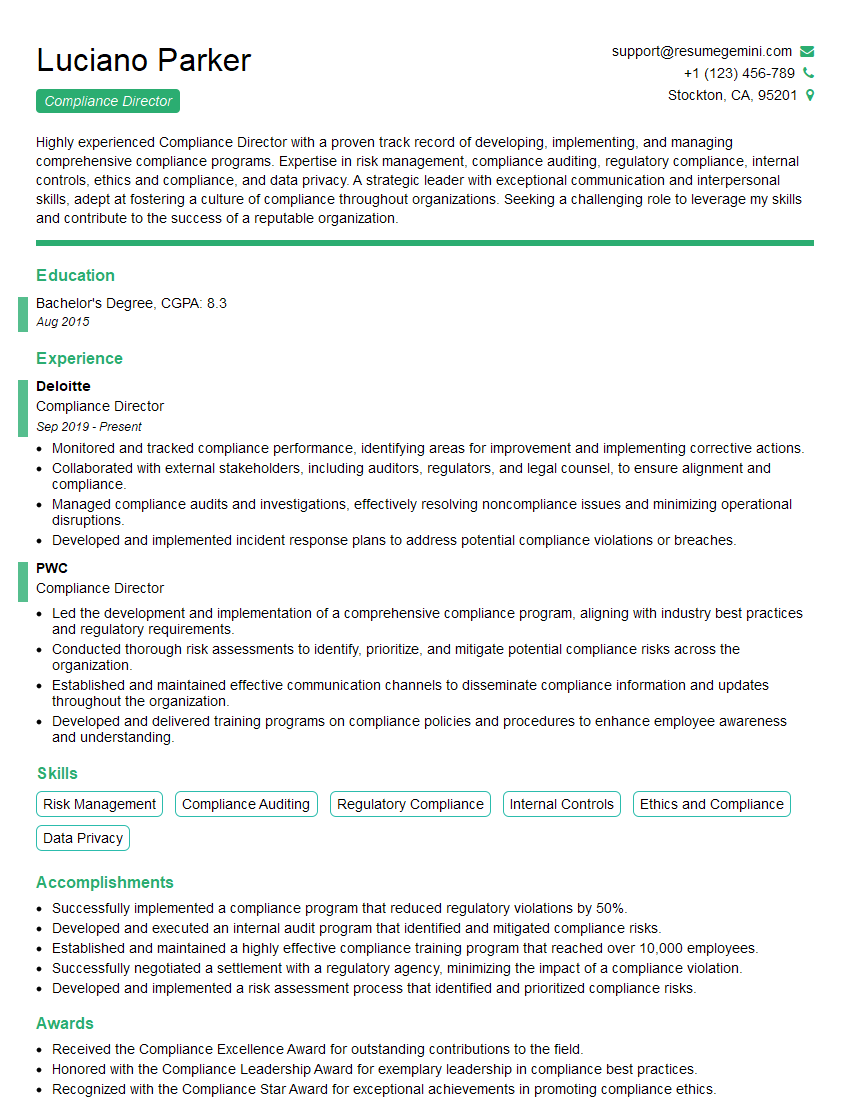
Compliance Director Resume Sample

Quality Assurance Manager Resume Sample
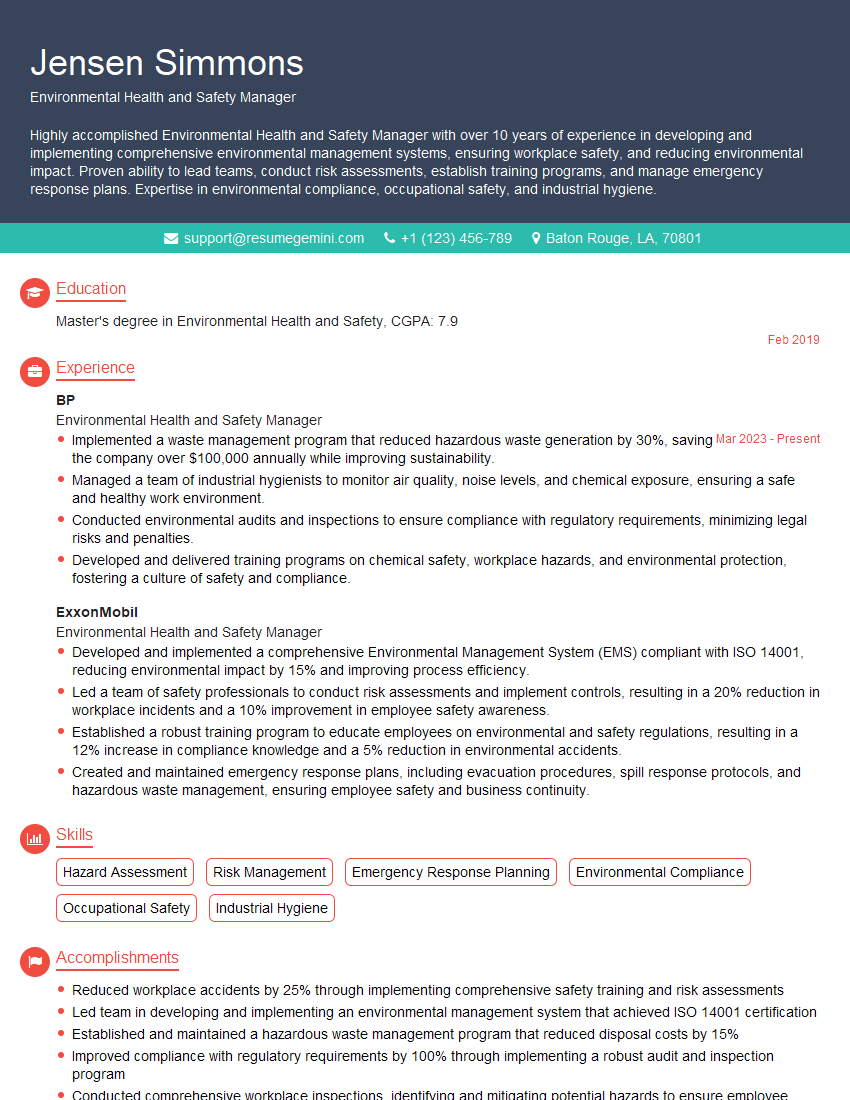
Environmental Health and Safety Manager Resume Sample
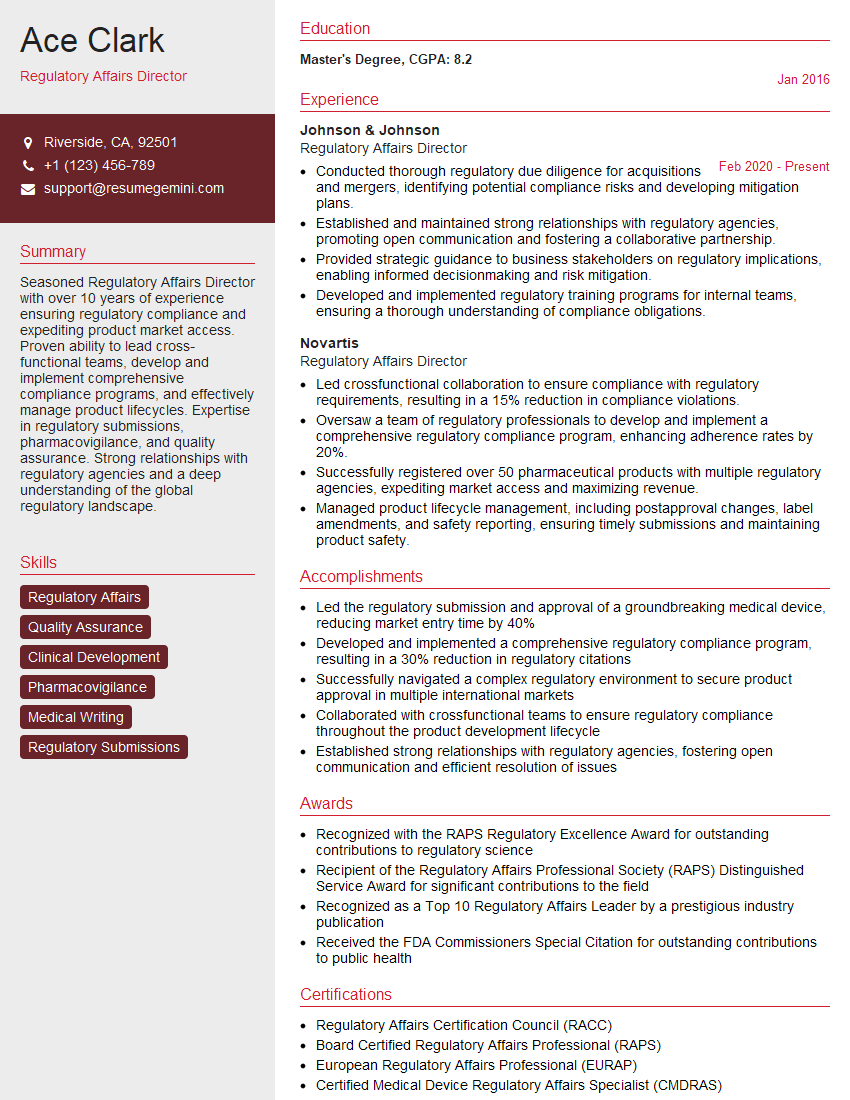
Regulatory Affairs Director Resume Sample
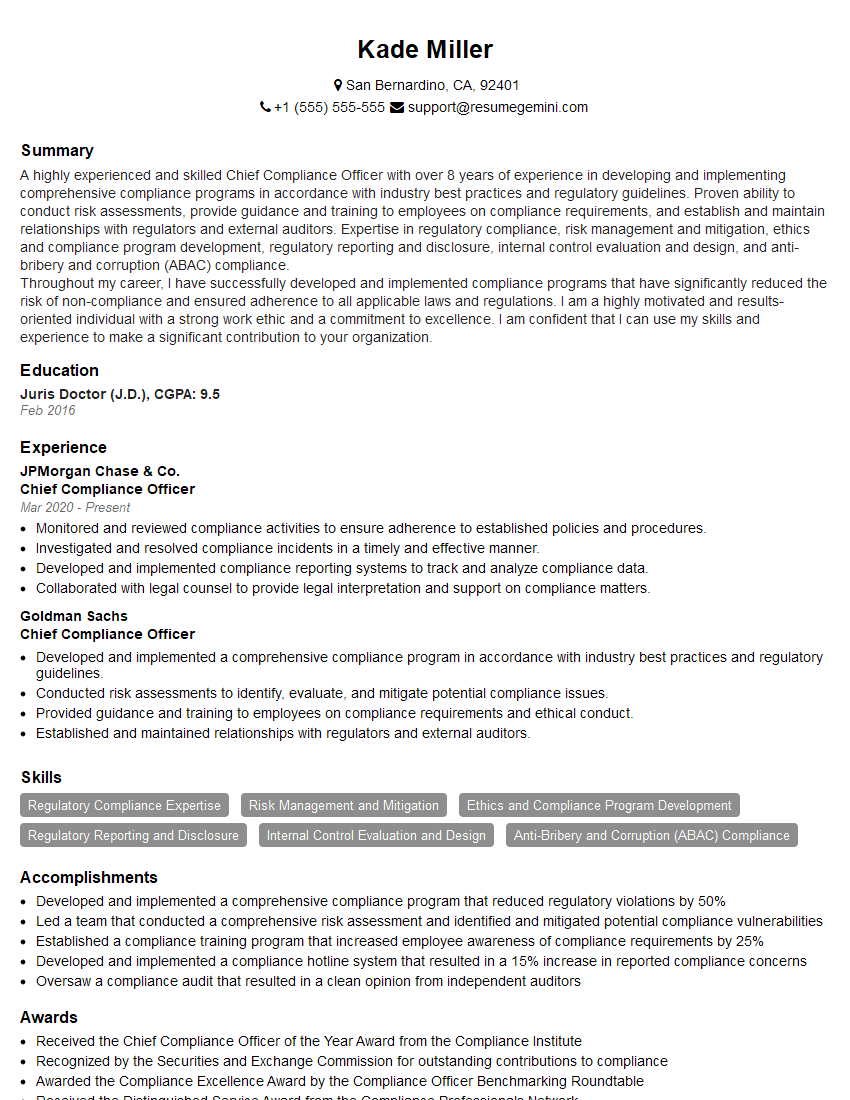
Chief Compliance Officer Resume Sample

Compliance Officer Resume Sample
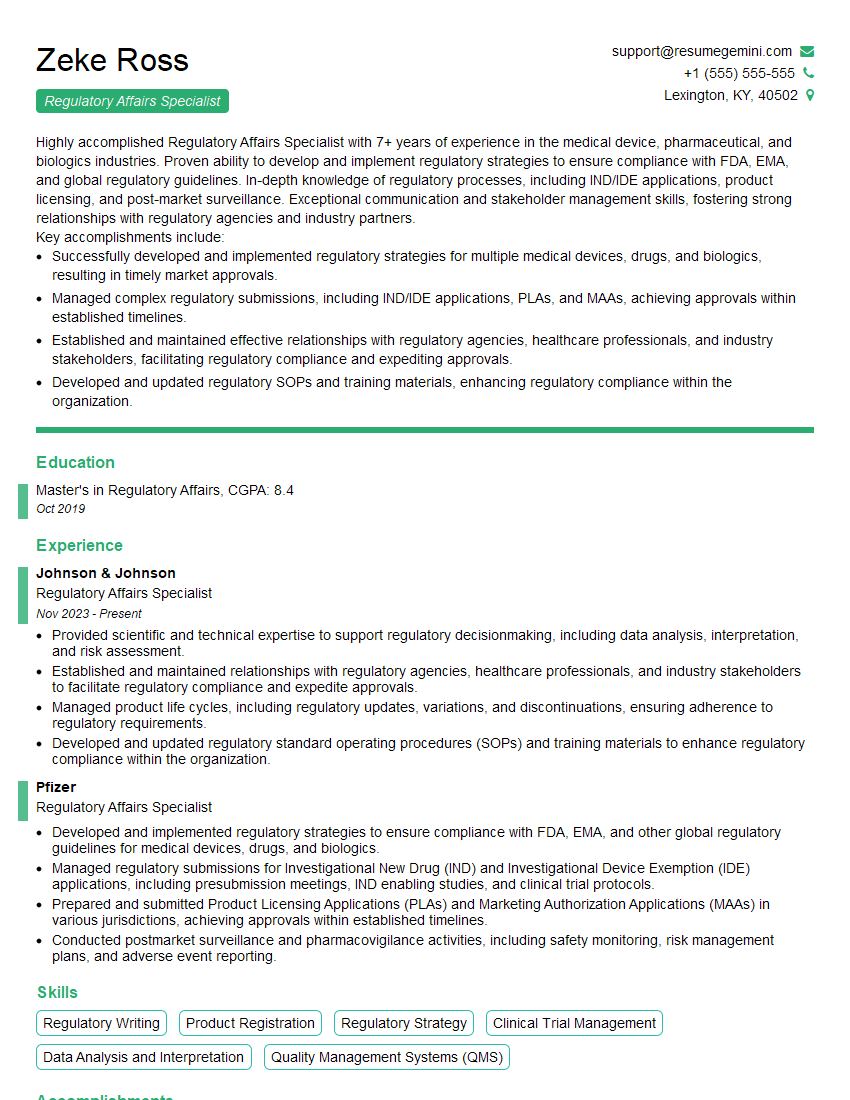
Regulatory Affairs Specialist Resume Sample
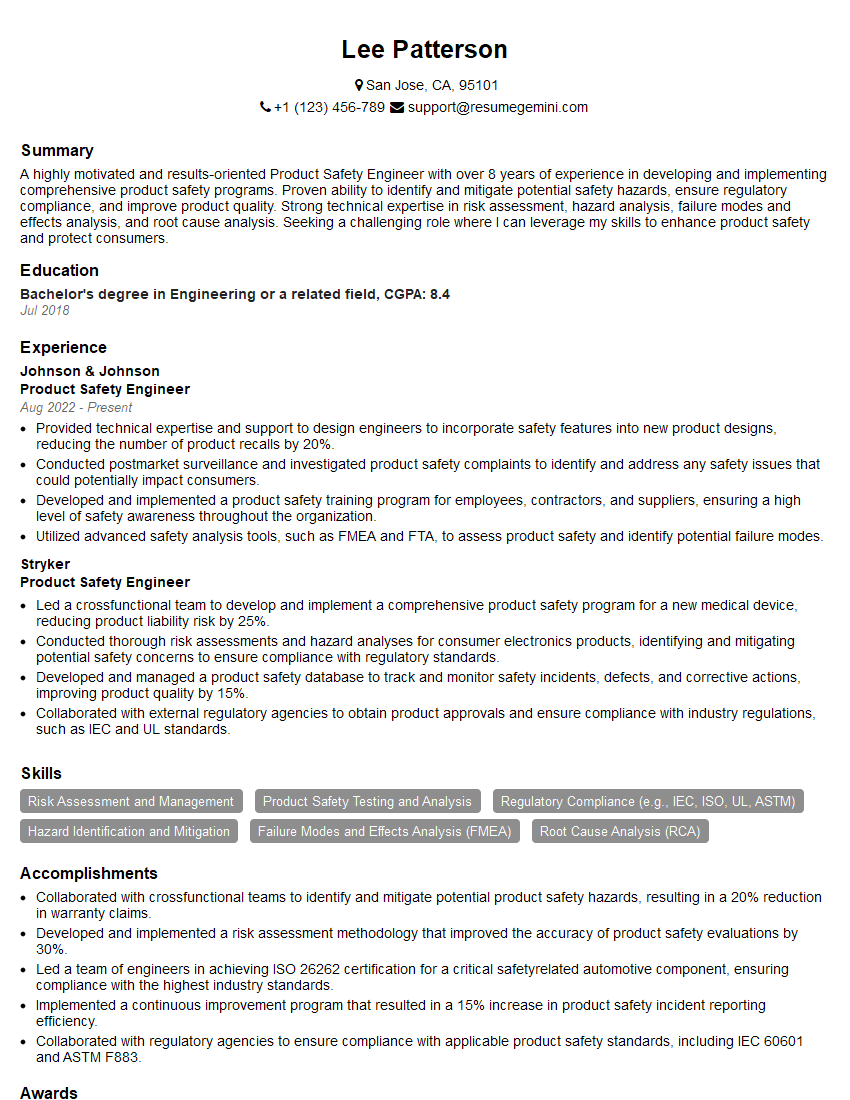
Product Safety Engineer Resume Sample
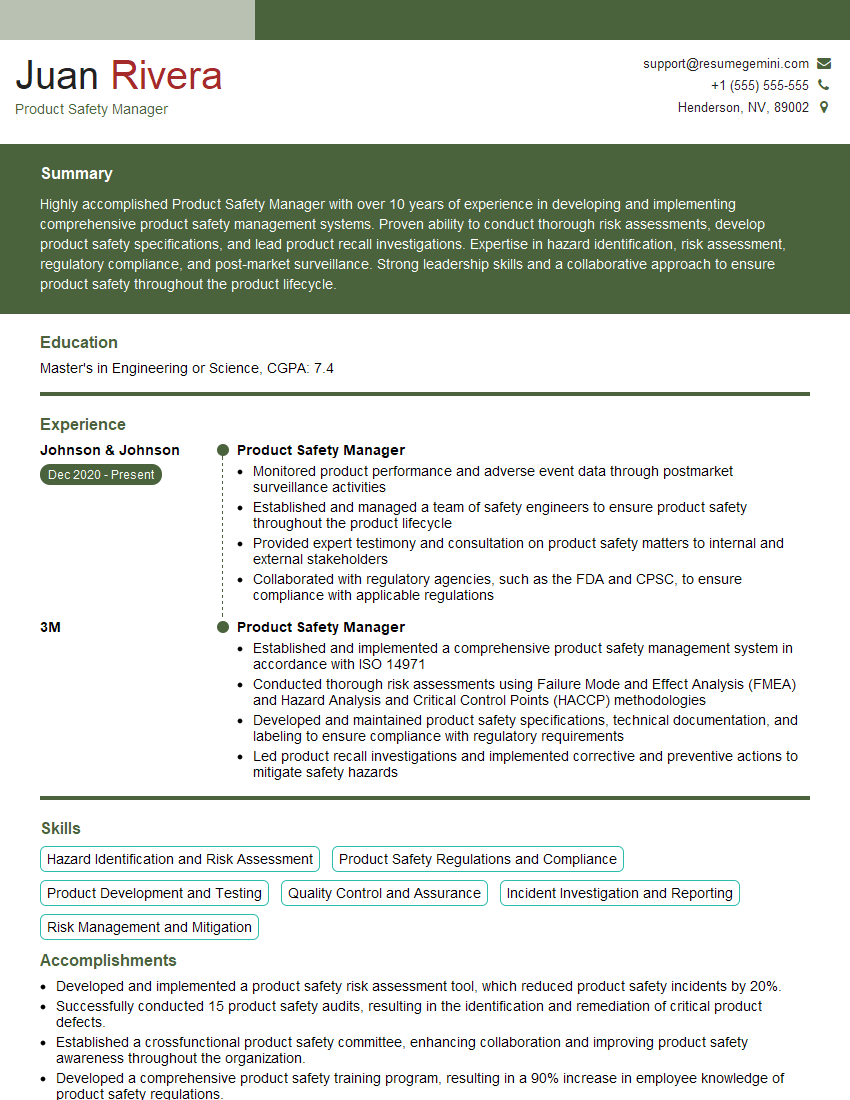
Product Safety Manager Resume Sample
Explore more articles
Users Rating of Our Blogs
Share Your Experience
We value your feedback! Please rate our content and share your thoughts (optional).
What Readers Say About Our Blog
Very informative content, great job.
good