Preparation is the key to success in any interview. In this post, we’ll explore crucial Container Terminal Operations interview questions and equip you with strategies to craft impactful answers. Whether you’re a beginner or a pro, these tips will elevate your preparation.
Questions Asked in Container Terminal Operations Interview
Q 1. Explain the process of container vessel berthing and unberthing.
Berthing and unberthing a container vessel is a complex, coordinated process involving multiple teams and advanced technology. Think of it like docking a giant spaceship – precision and communication are crucial.
Berthing: This begins with the vessel approaching the designated berth. Tugboats assist in maneuvering the ship into position, carefully guided by harbor pilots and terminal personnel using radar and visual cues. Once alongside, mooring lines are secured to bollards on the dock, firmly holding the ship in place. Gangways are then extended to allow access between the ship and the terminal.
Unberthing: This is the reverse process. Mooring lines are carefully released, and tugboats assist in gently pulling the vessel away from the berth. Harbor pilots monitor the vessel’s departure to ensure safe navigation. The entire process must be carefully planned and executed to avoid collisions and damage.
Safety is paramount throughout. Detailed checklists and pre-berthing/unberthing meetings ensure everyone is aware of their roles and responsibilities. Real-time communication systems are essential for coordinating the efforts of tugboat captains, harbor pilots, terminal staff, and vessel crew.
Q 2. Describe your experience with container yard management systems (YMS).
I have extensive experience with various Container Yard Management Systems (YMS), including Navis N4, Oracle Transportation Management, and TOS systems from other major vendors. My work involves the day-to-day operational aspects of these systems, from optimizing container placement and retrieval strategies to generating reports and managing inventory.
For instance, in a previous role, I utilized Navis N4 to implement a new container stacking strategy that reduced yard congestion by 15% by optimizing the placement of containers based on factors like dwell time, vessel schedule, and cargo type. This involved configuring the system’s parameters to prioritize specific containers, and setting alerts to ensure the effectiveness of the strategy. Further, I developed and regularly updated reports to monitor key metrics that helped us make data-driven decisions to improve the efficiency of yard operations.
My experience goes beyond just using the software; I also understand the complexities of system integration, data migration and maintenance and the training of personnel.
Q 3. How do you optimize container stacking to maximize yard space?
Optimizing container stacking is a crucial aspect of maximizing yard space and operational efficiency. It’s like a complex game of Tetris, but with high stakes! We aim to minimize the need to move containers unnecessarily.
- Strategic Grouping: Grouping containers based on destination, next vessel departure, and cargo type reduces handling time and improves workflow.
- Height Optimization: Utilizing stacking cranes to their full height capacity while adhering to safety regulations increases storage density.
- Predictive Modeling: Using data analytics to predict container dwell time and optimize future placement reduces congestion.
- Real-time Monitoring: YMS provides real-time visibility of yard inventory, allowing for proactive adjustments to the stacking strategy. This is particularly important during peak periods.
- Regular Audits: Periodic audits of container placement ensure that the system isn’t becoming inefficient over time.
For example, we might prioritize containers destined for a vessel departing soon, placing them in easily accessible locations for faster retrieval. Containers with longer dwell times can be placed further away.
Q 4. What are the key performance indicators (KPIs) you track in container terminal operations?
In container terminal operations, we track various KPIs to assess efficiency and identify areas for improvement. These are broadly categorized into:
- Throughput KPIs: These measure the volume of containers handled. Examples include containers per hour (CPH), vessel turnaround time (TAT), and gate cycle time.
- Efficiency KPIs: These focus on resource utilization. Examples include crane utilization rate, truck utilization rate, and yard occupancy rate.
- Financial KPIs: These relate to profitability. Examples include operating costs per container, revenue per container, and return on investment (ROI) for equipment.
- Safety KPIs: These track safety performance. Examples include lost-time injury frequency rate (LTIFR) and near-miss reports.
- Customer Satisfaction KPIs: Measuring customer satisfaction through surveys and feedback is crucial for service improvements.
Regular monitoring of these KPIs using dashboards and reporting tools allows us to identify bottlenecks and implement corrective measures.
Q 5. Explain your understanding of different container handling equipment and their applications.
Container handling equipment is diverse, each playing a unique role in the efficient flow of goods. Think of them as specialized tools in a giant assembly line.
- Ship-to-Shore (STS) Cranes: These are giant cranes that transfer containers between ships and the terminal. They are crucial for loading and unloading vessels efficiently.
- Rubber-Tyred Gantry (RTG) Cranes: These mobile cranes operate within the container yard, stacking and retrieving containers.
- Rail-Mounted Gantry (RMG) Cranes: Similar to RTGs but operate on fixed rails, offering greater stability and potentially higher stacking capacity.
- Yard Tractors and Trailers: Used for moving containers short distances within the yard.
- Reach Stackers: Lift containers in layers and are helpful for maneuvering containers in tight spaces.
- Straddle Carriers: Lift containers directly from the ground and transport them.
The selection of equipment depends on various factors including the terminal’s layout, capacity requirements, and budget constraints. Each piece of equipment has its strengths and limitations; understanding these is vital for optimized operations.
Q 6. How do you manage peak operational periods and ensure efficient throughput?
Managing peak operational periods requires a multifaceted approach, drawing on strategic planning, flexible resource allocation, and proactive communication. Imagine a highway system during rush hour – you need to smoothly direct the flow of traffic.
- Forecasting and Planning: Accurately predicting peak periods allows us to proactively adjust staffing levels, equipment allocation, and gate operations.
- Flexible Resource Allocation: Having access to reserve equipment and personnel to increase capacity during surges is essential.
- Improved Gate Management: Streamlining the gate processes by optimizing appointment systems and utilizing advanced technology helps manage truck traffic efficiently.
- Optimized Yard Operations: Implementing efficient container stacking and retrieval strategies using the YMS to reduce congestion.
- Real-time Monitoring and Response: Continuous monitoring of key performance indicators and traffic flow enables quick response to congestion or disruptions.
For instance, during peak seasons, we might hire temporary staff, increase crane operating hours, or implement more flexible shift patterns. Communication with trucking companies about optimal arrival times is also vital.
Q 7. Describe your experience with container tracking and tracing systems.
Container tracking and tracing systems are vital for ensuring the efficient flow of cargo and maintaining transparency throughout the supply chain. Think of it as a real-time GPS system for every container.
My experience involves working with various tracking systems that integrate with the YMS and other terminal operations systems. These systems utilize RFID, GPS, and barcode technologies to monitor container location and status at every stage of its journey, from the vessel to the final destination. This visibility helps customers track their shipments, allowing for proactive problem-solving and improved communication. For example, I’ve used systems that provide real-time alerts for delays, deviations from planned routes, or other potential issues, allowing for timely interventions.
Accurate data management within these systems is crucial. Data quality impacts the reliability of tracking information. Any inconsistencies or gaps need to be addressed promptly to maintain accuracy and integrity.
Q 8. How do you ensure safety procedures are followed within the container terminal?
Safety is paramount in container terminal operations. We achieve this through a multi-layered approach encompassing robust safety procedures, comprehensive training, and rigorous monitoring.
- Safety Procedures: We have clearly defined Standard Operating Procedures (SOPs) for every task, from crane operations to equipment maintenance and hazardous materials handling. These SOPs are regularly reviewed and updated based on industry best practices and lessons learned from incident investigations. For example, our crane operation SOP includes pre-operational checks, load weight verification, and designated signal personnel.
- Training and Certification: All personnel receive comprehensive safety training that is tailored to their specific roles. This includes both classroom instruction and hands-on practical training, followed by competency assessments and certifications. Regular refresher training keeps everyone up-to-date on safety regulations and best practices.
- Monitoring and Enforcement: We employ a robust system of monitoring and oversight to ensure compliance with safety procedures. This includes regular safety audits, safety observation programs, and immediate reporting and investigation of any near-misses or incidents. Disciplinary action is taken when necessary to reinforce the importance of safety.
- Personal Protective Equipment (PPE): Appropriate PPE, such as high-visibility vests, safety helmets, gloves, and safety footwear, is provided and mandated for all personnel in designated areas.
Think of it like a layered security system – multiple layers working together to minimize risk and maximize safety. A single weak link could compromise the entire system, hence our focus on comprehensive and proactive safety management.
Q 9. Explain your knowledge of International Maritime Organization (IMO) regulations.
My understanding of International Maritime Organization (IMO) regulations is extensive. These regulations are crucial for ensuring the safety, security, and environmental protection of shipping and port operations. I’m familiar with several key conventions and codes, including:
- SOLAS (Safety of Life at Sea): This convention sets minimum standards for the construction, equipment, and operation of vessels, and it directly impacts terminal operations concerning vessel safety inspections and cargo handling.
- MARPOL (Marine Pollution): This convention aims to prevent pollution of the marine environment by ships, including regulations on discharge of oily waste, garbage, and other pollutants. Terminals must comply with MARPOL regulations for waste management and handling of hazardous materials.
- ISM Code (International Safety Management Code): This code requires companies to establish and maintain a safety management system. Terminals often fall under this umbrella, requiring safety management systems for their own operations.
- ISPS Code (International Ship and Port Facility Security Code): This code sets standards for security measures to protect ships and port facilities from acts of terrorism and other malicious acts. I have experience implementing and complying with ISPS Code requirements, including access control, security personnel training, and emergency response plans.
Compliance with IMO regulations is not just a legal requirement; it’s essential for ensuring the safety of personnel, protecting the environment, and maintaining the smooth functioning of the port. We regularly conduct internal audits to ensure our compliance and undergo external audits by relevant authorities.
Q 10. How do you handle container damage and loss incidents?
Container damage and loss incidents are handled through a structured process that prioritizes investigation, accountability, and prevention.
- Incident Reporting and Investigation: All damage or loss incidents are promptly reported and thoroughly investigated. This involves collecting evidence, interviewing witnesses, and examining relevant documentation, such as bills of lading and cargo manifests. We use a detailed incident reporting system that captures all relevant details, including location, time, type of damage, and suspected cause.
- Damage Assessment: Once the investigation is complete, the extent of the damage is assessed. This involves examining the container and its contents to determine the cost of repair or replacement. Photographs and detailed descriptions are crucial parts of documentation.
- Liability Determination: We carefully determine liability based on the investigation findings. This often involves examining contracts, insurance policies, and the roles and responsibilities of involved parties (shipping lines, terminal operators, freight forwarders).
- Claims Processing: Once liability is established, the claims process begins. This may involve filing insurance claims, negotiating settlements, and issuing payments to compensate for damages or losses.
- Preventive Measures: A key aspect of our process is implementing preventive measures to reduce the occurrence of future incidents. This involves reviewing SOPs, improving equipment maintenance, enhancing training, and identifying areas for process improvement.
For instance, if repeated damage occurs during stacking operations, we may investigate crane maintenance schedules, operator training, or stacking strategies to identify and rectify the root cause.
Q 11. Describe your experience with customs procedures and documentation.
My experience with customs procedures and documentation is extensive. Efficient customs clearance is critical for timely cargo delivery and overall terminal efficiency.
- Documentation Management: We manage a wide range of customs documents, including import and export declarations, bills of lading, commercial invoices, packing lists, certificates of origin, and other relevant documentation. Our system ensures accuracy and completeness to minimize delays.
- Customs Compliance: We maintain strict compliance with all applicable customs regulations and requirements. This includes adhering to import and export restrictions, accurately classifying goods, and accurately reporting the value of goods.
- Electronic Data Interchange (EDI): We leverage EDI systems to facilitate electronic exchange of customs data, streamlining the customs clearance process and reducing paperwork. This allows us to submit customs declarations and receive clearance notifications electronically.
- Customs Audits: We are prepared for and regularly undergo customs audits to ensure the accuracy and integrity of our records and customs declarations.
- Relationship with Customs Authorities: We maintain positive working relationships with customs officials to resolve issues promptly and ensure smooth clearance processes.
Effective customs management isn’t simply about ticking boxes; it’s about understanding the nuances of various customs regulations, anticipating potential issues, and proactively resolving them to maintain the flow of goods.
Q 12. How do you manage the flow of empty containers?
Efficient empty container management is crucial for optimizing space and reducing costs in a container terminal. Our approach involves a combination of strategies:
- Deployment Planning: We strategically deploy empty containers based on anticipated import and export demand. This requires forecasting future needs and coordinating with shipping lines to ensure sufficient empty containers are available at the right time and location.
- Yard Management System (YMS): Our YMS provides real-time tracking and management of empty containers, optimizing yard space and minimizing search time. This system helps identify and locate empty containers quickly and efficiently.
- Optimized Stacking and Retrieval: We implement optimized stacking techniques to maximize space utilization within the yard. Efficient retrieval strategies ensure quick access to empty containers when needed for export shipments.
- Empty Container Depots (ECDs): We utilize ECDs – dedicated areas for storing and managing empty containers – to facilitate efficient handling and reduce congestion within the main terminal.
- Return to Origin Program: We collaborate with shipping lines and other stakeholders to implement effective ‘return to origin’ programs. This reduces empty container repositioning costs by strategically moving containers to areas where they are needed.
Imagine a well-organized warehouse. Empty containers are like the empty shelves; efficient management means they are ready to be filled with new cargo as soon as possible. Our system ensures this readiness.
Q 13. Explain your experience with scheduling and optimizing vessel calls.
Vessel call scheduling and optimization is a complex process requiring advanced planning and coordination. It’s about balancing vessel arrival times with terminal capacity, cargo handling capabilities, and other operational constraints.
- Berth Allocation: We utilize sophisticated berth allocation algorithms to assign berths based on factors such as vessel size, cargo volume, and turnaround time. These algorithms consider the overall terminal efficiency and minimize vessel waiting time.
- Gate Management: We employ advanced gate management systems to manage the flow of trucks entering and exiting the terminal. This helps minimize congestion and ensures efficient handling of cargo.
- Resource Allocation: Optimal allocation of resources such as cranes, yard equipment, and personnel is essential. We utilize planning tools to anticipate demand and assign resources effectively to minimize delays.
- Collaboration with Shipping Lines: Close collaboration with shipping lines is vital. This involves exchanging information on vessel schedules, cargo forecasts, and any potential disruptions to ensure smooth operations.
- Real-time Monitoring and Adjustment: We continuously monitor operations and make real-time adjustments to the schedule as needed. This ensures responsiveness to unforeseen circumstances, such as equipment failures or weather delays.
A successful vessel call is like a well-orchestrated symphony. Every instrument (resource) plays its part at the right time and in the right place. Effective scheduling and optimization ensure harmony and prevent delays.
Q 14. How do you improve communication and coordination among different teams in the terminal?
Effective communication and coordination among different teams is the cornerstone of efficient container terminal operations. We achieve this through a combination of tools and strategies:
- Integrated Communication Systems: We utilize integrated communication systems, such as terminal operating systems (TOS) and radio systems, to ensure seamless information flow among different teams. This enables real-time updates on vessel arrivals, cargo handling, and other relevant information.
- Regular Meetings and Briefings: We conduct regular team meetings and briefings to discuss operational updates, address potential challenges, and foster collaboration. This ensures everyone is on the same page and can anticipate potential bottlenecks.
- Standardized Procedures: Standardized procedures and workflows ensure clarity and consistency across all teams. This reduces ambiguity and eliminates misunderstandings.
- Training and Development: We invest in training and development programs to enhance communication and teamwork skills. This fosters a collaborative environment and improves overall efficiency.
- Transparent Information Sharing: We prioritize open and transparent communication, sharing relevant information with all teams involved. This includes real-time data on vessel arrival times, cargo volumes, and equipment availability.
Think of it as a sports team – everyone needs to know their role, communicate effectively, and work together to achieve a common goal. Clear communication and coordination ensure smooth operations and avoid costly delays.
Q 15. What are your strategies for reducing container terminal congestion?
Reducing container terminal congestion requires a multi-pronged approach focusing on optimizing every stage of the container journey. Think of it like managing traffic flow in a major city – you need efficient routing, clear signage, and coordinated efforts from all participants.
Improved Yard Management: Implementing advanced yard management systems (YMS) allows for optimized container placement, reducing searching time and improving retrieval efficiency. This is akin to having a sophisticated GPS system for every container in the yard.
Optimized Gate Processes: Streamlining gate operations through technologies like automated gate systems and appointment scheduling reduces dwell time and improves truck turnaround. This is like having express lanes at a toll booth.
Enhanced Vessel Scheduling: Precise vessel scheduling and coordination with shipping lines ensures smoother vessel berthing and departure, minimizing delays. Imagine this as having a well-orchestrated symphony of ship arrivals and departures.
Real-time Data Analytics: Utilizing real-time data analytics to identify bottlenecks and predict potential congestion points allows for proactive adjustments. It’s like having a crystal ball that anticipates traffic jams.
Improved Communication and Collaboration: Fostering strong communication and collaboration between terminal operators, shipping lines, trucking companies, and other stakeholders is crucial for efficient workflows. Think of this as a well-coordinated team working towards a common goal.
Career Expert Tips:
- Ace those interviews! Prepare effectively by reviewing the Top 50 Most Common Interview Questions on ResumeGemini.
- Navigate your job search with confidence! Explore a wide range of Career Tips on ResumeGemini. Learn about common challenges and recommendations to overcome them.
- Craft the perfect resume! Master the Art of Resume Writing with ResumeGemini’s guide. Showcase your unique qualifications and achievements effectively.
- Don’t miss out on holiday savings! Build your dream resume with ResumeGemini’s ATS optimized templates.
Q 16. Describe your problem-solving approach when facing operational challenges.
My problem-solving approach follows a structured methodology. I begin by thoroughly understanding the problem, gathering all relevant data, and identifying the root cause. I then brainstorm potential solutions, evaluating their feasibility, impact, and cost-effectiveness. This involves considering both short-term and long-term solutions. After selecting the best solution, I implement it, monitor its effectiveness, and make adjustments as needed. Imagine it as a detective solving a case – meticulous investigation, analysis, and then strategic action.
For example, if we experience a significant increase in container dwell time, I’d investigate potential causes, such as equipment failures, inefficient yard planning, or issues with gate operations. Based on the findings, I’d then implement solutions, which might involve maintenance scheduling, yard optimization through YMS improvements, or adjustments to gate procedures. Continuous monitoring and data analysis help fine-tune the solution for optimum efficiency.
Q 17. How familiar are you with different types of container sizes and their handling requirements?
I’m very familiar with the various container sizes and their handling requirements. The standard sizes are TEU (Twenty-foot Equivalent Unit) and FEU (Forty-foot Equivalent Unit), but there are also variations like high-cube containers and specialized containers for refrigerated cargo (reefers) or oversized goods. Each type demands specific handling techniques to ensure safety and efficiency.
TEU (20ft): Lighter and easier to maneuver, but requires more space for the same cargo volume.
FEU (40ft): More efficient in terms of space utilization, but requires stronger handling equipment.
High-Cube Containers: Taller than standard containers, necessitating adjustments to stacking heights and crane operations.
Reefer Containers: Require power connections for temperature control and specialized handling to protect the sensitive cargo.
Understanding these variations allows for optimized space utilization in the yard, efficient equipment selection for handling, and careful planning to avoid damage or delays.
Q 18. Explain your experience with preventative maintenance of container handling equipment.
Preventative maintenance is critical in container terminal operations, ensuring high equipment uptime and minimizing costly breakdowns. Our approach involves a combination of scheduled maintenance, condition-based monitoring, and proactive repairs.
Scheduled Maintenance: Regular inspections and servicing according to manufacturer recommendations. This includes lubrication, filter changes, and component replacements, preventing minor issues from escalating.
Condition-Based Monitoring: Utilizing sensors and telematics to monitor equipment performance in real-time, identifying potential problems before they lead to failures. Think of it as having a health check for each piece of equipment.
Proactive Repairs: Addressing minor issues immediately to prevent them from becoming major problems. This minimizes downtime and reduces the overall maintenance cost.
We maintain detailed records of all maintenance activities, allowing us to track equipment performance, predict future maintenance needs, and optimize resource allocation. A well-maintained fleet is the backbone of efficient container terminal operations.
Q 19. How do you ensure the timely delivery of containers to and from the terminal?
Ensuring timely delivery relies on efficient planning, real-time tracking, and seamless coordination among stakeholders. It’s like a well-oiled machine where every part works in perfect harmony.
Integrated Transportation Management Systems (TMS): Utilizing TMS to track containers from origin to destination, providing real-time visibility into their location and status. This is like having a GPS tracking system for every container.
Optimized Truck Scheduling: Implementing appointment scheduling and efficient truck routing to minimize waiting times at the gate and optimize delivery routes. This is similar to having a traffic management system for trucks.
Effective Communication: Maintaining clear communication with trucking companies and other stakeholders to ensure smooth handover and timely delivery. This involves proactive alerts and updates.
Real-time Monitoring: Utilizing data analytics and tracking systems to monitor delivery performance and identify potential delays proactively.
By proactively addressing potential bottlenecks and coordinating all aspects of the delivery process, we ensure that containers reach their destinations on time and in good condition.
Q 20. What are your strategies for improving the efficiency of gate operations?
Improving gate efficiency involves optimizing processes, leveraging technology, and enhancing communication. Think of it as creating a streamlined checkout process at a supermarket.
Automated Gate Systems: Implementing automated gate systems with optical character recognition (OCR) for faster and more accurate container identification and processing. This is like having self-checkout kiosks.
Appointment Scheduling: Implementing an appointment system to reduce truck waiting times and improve traffic flow at the gate. This is like having reserved parking slots.
Improved Documentation Processes: Streamlining documentation processes through electronic data interchange (EDI) and other digital tools to reduce paperwork and processing time. This reduces manual data entry and errors.
Optimized Gate Layout: Designing an efficient gate layout that minimizes congestion and facilitates smoother truck movement. This is like creating a well-designed traffic flow in a parking lot.
Real-time Monitoring and Analysis: Monitoring gate performance metrics to identify bottlenecks and implement improvements. This allows for data-driven decision-making.
Q 21. Explain your experience with different types of container stacking methods.
Container stacking methods significantly impact yard space utilization and operational efficiency. Different methods are chosen based on factors such as container type, size, and weight.
Block Stacking: Containers are stacked in blocks based on destination or other criteria. This is a common method, but requires efficient planning to avoid block congestion.
Bay Stacking: Containers are stacked in bays, which are typically defined by aisle separators. This is useful for better access and retrieval.
Random Stacking: Less structured than block or bay stacking, it often relies on YMS for efficient location tracking. This can increase search times.
Tiered Stacking: Involves stacking containers at different heights using specialized equipment, maximizing yard space utilization.
Choosing the right stacking method requires careful consideration of equipment capabilities, space constraints, and retrieval frequency. The goal is to optimize space and minimize retrieval time, much like maximizing storage space in a warehouse.
Q 22. How do you manage inventory control and ensure accuracy in container records?
Accurate inventory control is the backbone of efficient container terminal operations. It involves meticulously tracking every container’s status – from arrival to departure – ensuring its location and condition are always known. This is achieved through a combination of technologies and processes.
Real-time tracking systems: These systems, often integrated with the Terminal Operating System (TOS), automatically update container locations as they move through the terminal. Think of it like a sophisticated GPS for containers, providing real-time visibility.
Barcode and RFID scanning: Every container is identified using unique alphanumeric codes, scanned at various stages (gate entry, yard movement, vessel loading/unloading). This data is fed into the central system, ensuring accuracy and minimizing manual errors.
Regular reconciliation checks: Periodically, physical counts are conducted to verify the system’s accuracy against the actual on-ground inventory. Discrepancies are investigated and corrected immediately. This is similar to a store doing an inventory check to make sure their stock matches their records.
Data validation and error handling: Robust systems are in place to identify and correct data entry errors, preventing inaccuracies from propagating through the system. This includes automated checks and validation rules to ensure data integrity.
For example, if a container is reported as loaded onto a vessel but the system shows it’s still in the yard, an alert is triggered, prompting investigation and preventing delays or potential mishaps.
Q 23. Describe your experience with various terminal operating systems (TOS).
I’ve worked extensively with several leading TOS platforms, including Navis N4, TOSPAC, and Oracle’s transportation management system. My experience spans various aspects, from system configuration and customization to user training and troubleshooting.
Navis N4: I’ve used N4 to optimize yard planning, gate operations, and vessel scheduling. Its advanced algorithms help streamline workflows and reduce congestion.
TOSPAC: My experience with TOSPAC includes implementing its real-time tracking and reporting features, enhancing visibility across the terminal. Its strength lies in its integration capabilities with other systems.
Oracle Transportation Management: This system has been instrumental in managing the entire supply chain, from booking to delivery. I’ve used it for advanced analytics and reporting, enabling data-driven decision-making.
Each system presents unique challenges and strengths. My approach focuses on leveraging the specific advantages of each platform while addressing its limitations through efficient workflows and customized configurations. For instance, integrating a yard management system with a chosen TOS helps optimize space utilization and improves container retrieval times.
Q 24. How do you use data analytics to improve container terminal efficiency?
Data analytics is pivotal to improving container terminal efficiency. We use data to identify bottlenecks, optimize resource allocation, and enhance decision-making. This involves collecting data from various sources, analyzing it, and translating the insights into actionable strategies.
Identifying bottlenecks: By analyzing dwell times, equipment utilization, and gate throughput, we can pinpoint areas needing improvement. For instance, consistently high dwell times at a specific gate might suggest a need for additional staff or equipment.
Predictive maintenance: Analyzing equipment maintenance data allows us to predict potential failures and schedule maintenance proactively, minimizing downtime and operational disruptions. This is akin to predicting car maintenance needs based on driving history and mileage.
Optimizing resource allocation: Analyzing container flow patterns and vessel schedules helps us optimize equipment allocation (cranes, yard trucks) and personnel deployment, ensuring efficient resource utilization.
Improving vessel turnaround times: By analyzing various factors like crane productivity, berth allocation, and gate operations, we can devise strategies to minimize vessel turnaround time, a critical performance indicator.
For example, using predictive modeling, we can anticipate peak periods and adjust staffing levels accordingly, preventing congestion and delays.
Q 25. What is your experience with implementing new technologies in container terminal operations?
I’ve been involved in several technology implementation projects in container terminal operations. My experience ranges from evaluating new technologies to overseeing their implementation and subsequent optimization. This includes a project involving the implementation of automated guided vehicles (AGVs) for yard operations.
Automated Guided Vehicles (AGVs): We replaced traditional yard trucks with AGVs, resulting in increased efficiency, reduced fuel consumption, and improved safety. The implementation involved thorough planning, staff training, and integration with the existing TOS.
Internet of Things (IoT) sensors: Implementing IoT sensors on equipment provided real-time data on equipment health and operational parameters, enabling predictive maintenance and efficient resource management. This proactive approach reduced unexpected downtime.
Blockchain technology for supply chain transparency: Exploration of blockchain for improved document management and enhanced transparency within the supply chain. This aimed at streamlining processes and reducing documentation delays.
My approach to implementing new technologies emphasizes careful planning, thorough risk assessment, phased rollout, and robust training programs for staff. Continuous monitoring and evaluation are crucial to optimize performance and address any unforeseen challenges. A successful implementation requires strong stakeholder buy-in and a clear understanding of the technology’s impact on existing processes.
Q 26. Describe your understanding of container security regulations and best practices.
Container security is paramount. My understanding encompasses international regulations like the Container Security Initiative (CSI) and the Customs-Trade Partnership Against Terrorism (C-TPAT), as well as best practices for physical security and cyber security.
Physical security: This involves measures like access control systems (e.g., biometric scanners, CCTV surveillance), perimeter fencing, and regular security patrols. It also includes securing containers against theft or tampering.
Cybersecurity: Protecting the TOS and other IT systems from cyber threats is crucial. This involves implementing firewalls, intrusion detection systems, regular security audits, and employee training on cybersecurity best practices.
Compliance with regulations: Adhering to international and national regulations, such as CSI and C-TPAT, requires thorough documentation, regular audits, and proactive measures to ensure compliance.
Container scanning and inspection: Utilizing non-intrusive inspection (NII) technologies for container scanning helps detect contraband and ensure compliance with security regulations. This enhances security while streamlining the inspection process.
For example, implementing a secure access control system with biometric authentication prevents unauthorized access to the terminal and its sensitive areas, safeguarding containers and equipment.
Q 27. How do you address and resolve conflicts between different stakeholders within the terminal?
Conflict resolution is an essential skill in container terminal operations, as various stakeholders – shipping lines, trucking companies, customs officials, and terminal staff – interact daily. My approach focuses on open communication, collaboration, and fair negotiation.
Open communication: Creating a platform for open dialogue helps identify the root causes of conflict and fosters understanding among stakeholders.
Collaboration: Working collaboratively with stakeholders to find mutually acceptable solutions is crucial. This requires empathy, active listening, and a willingness to compromise.
Fair negotiation: Negotiating fair agreements that consider the interests of all parties ensures a sustainable and harmonious working relationship. This sometimes involves mediating between parties to reach a consensus.
Established procedures: Clear and established procedures for handling disputes and complaints help streamline the conflict resolution process and prevent escalation.
For instance, if a dispute arises between a shipping line and the terminal regarding a container’s delivery delay, I would facilitate a meeting between the parties, gather relevant information, and help identify the cause of the delay and potential solutions, ensuring a timely resolution and preventing future occurrences.
Q 28. Explain your approach to training and developing staff in container terminal operations.
Training and development are essential for maintaining a highly skilled and efficient workforce. My approach focuses on continuous learning, practical training, and career development opportunities.
On-the-job training: Providing hands-on training and mentorship opportunities allows new employees to learn practical skills and develop expertise quickly. This includes shadowing experienced personnel and participating in real-world operations.
Specialized training programs: Offering specialized training programs on TOS operation, equipment maintenance, safety protocols, and cybersecurity enhances employee skills and improves overall operational efficiency.
Simulation and scenario-based training: Using simulations and realistic scenarios allows employees to practice handling various situations and learn from mistakes in a safe environment. This helps improve problem-solving skills and quick thinking.
Career development opportunities: Providing career advancement opportunities fosters employee motivation and retention. This might include internal promotions, cross-training, and opportunities for further education.
For example, we implemented a comprehensive training program using virtual reality simulations to train crane operators, leading to improved efficiency and fewer accidents. This is more cost-effective and safer than solely relying on traditional methods.
Key Topics to Learn for Container Terminal Operations Interview
- Container Handling Equipment: Understand the operation and maintenance of various equipment like cranes, straddle carriers, reach stackers, and automated guided vehicles (AGVs). Consider their limitations and optimal use in different scenarios.
- Yard Management Systems (YMS): Learn about the software used for managing container placement, retrieval, and inventory. Practice visualizing efficient yard layouts and understanding the impact of different stacking strategies.
- Safety Procedures and Regulations: Familiarize yourself with industry-standard safety protocols, including risk assessment, hazard identification, and emergency response procedures. Be prepared to discuss practical examples of safe working practices.
- Container Logistics and Supply Chain: Grasp the overall flow of containers through the terminal, from vessel arrival to onward transportation. Understand the importance of efficient scheduling, communication, and coordination with various stakeholders.
- Terminal Operations Planning and Optimization: Explore techniques for optimizing terminal efficiency, such as berth scheduling, truck gate management, and resource allocation. Be ready to discuss challenges and potential solutions.
- Cargo Handling and Stowage Planning: Understand the principles of efficient container loading and unloading, considering weight distribution, stability, and cargo type. Be able to discuss different stowage plans and their implications.
- Technology and Automation in Container Terminals: Research the latest technological advancements, such as automated stacking cranes, RFID tracking, and AI-driven optimization systems, and their impact on terminal operations.
- Problem-Solving and Decision-Making: Prepare examples demonstrating your ability to analyze complex situations, identify root causes of problems, and implement effective solutions under pressure. Focus on your analytical and critical thinking skills.
Next Steps
Mastering Container Terminal Operations opens doors to a rewarding career with excellent growth potential, offering opportunities for specialization and advancement within the logistics industry. To significantly boost your job prospects, creating a strong, ATS-friendly resume is crucial. ResumeGemini is a trusted resource that can help you build a professional and impactful resume, highlighting your skills and experience effectively. Examples of resumes tailored to Container Terminal Operations are available to help you get started.
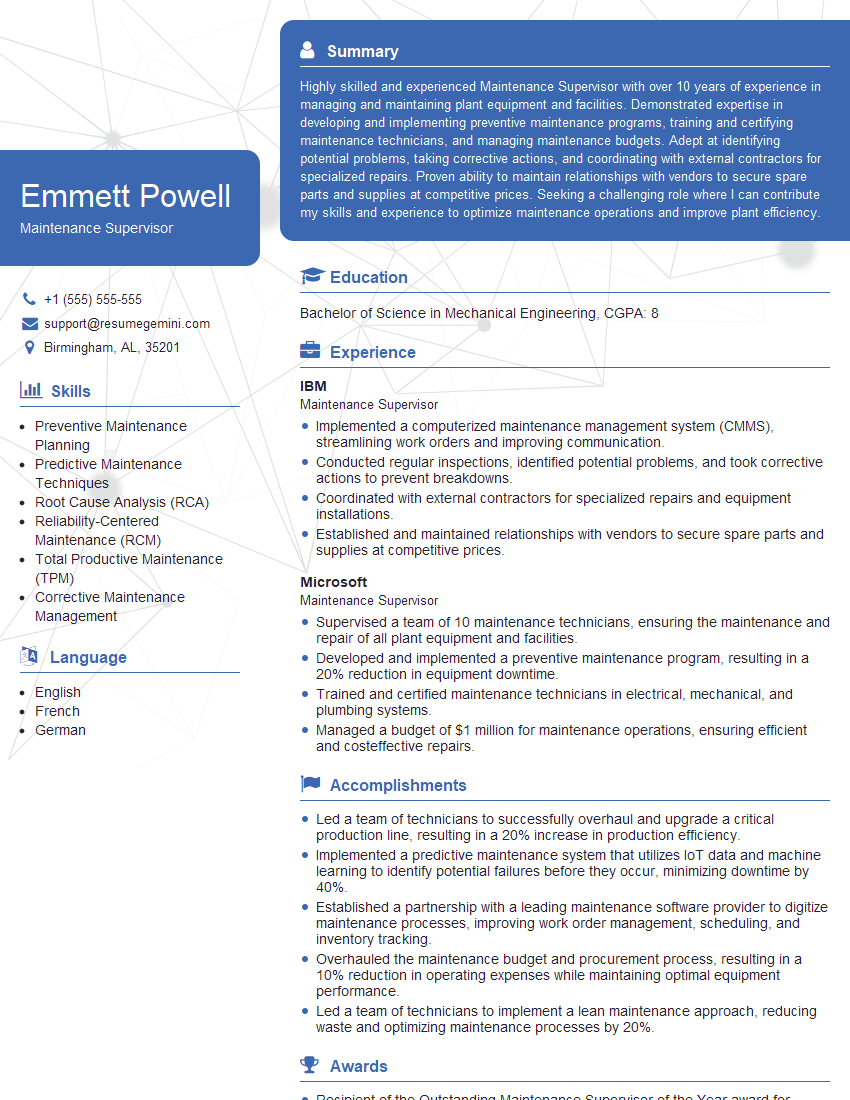
Maintenance Supervisor Resume Sample
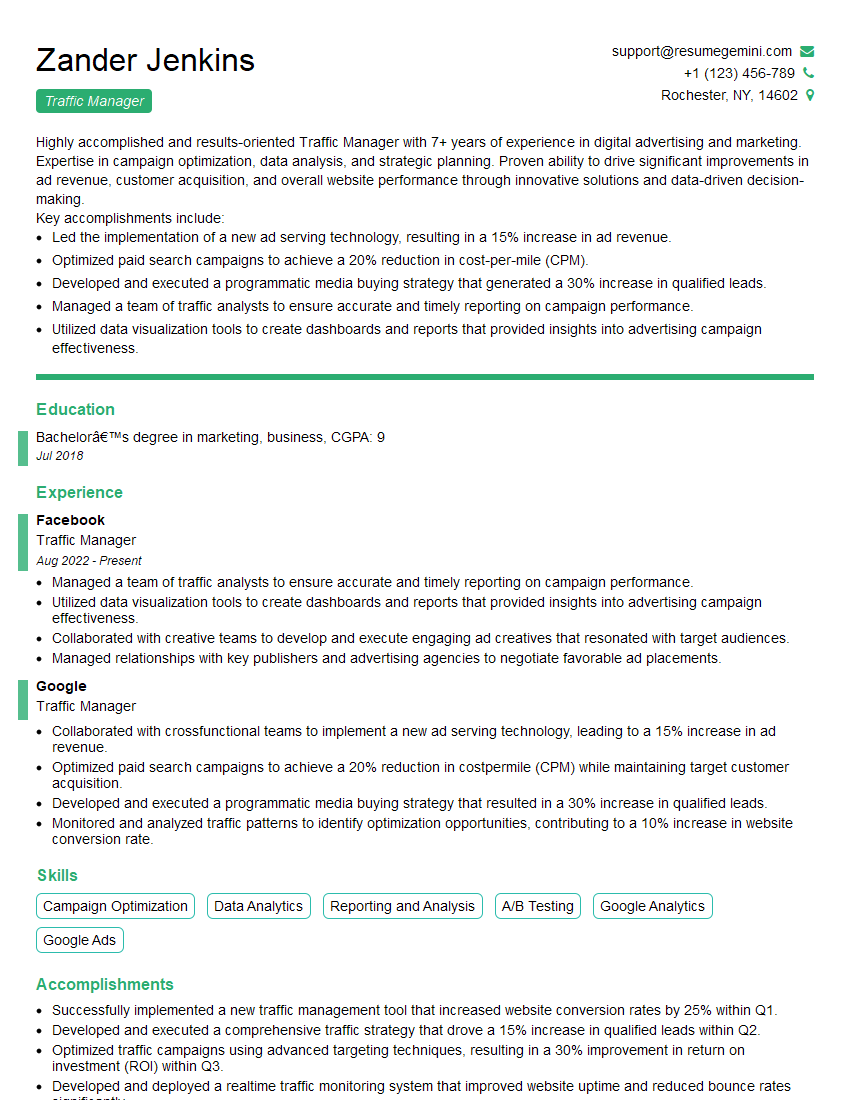
Traffic Manager Resume Sample
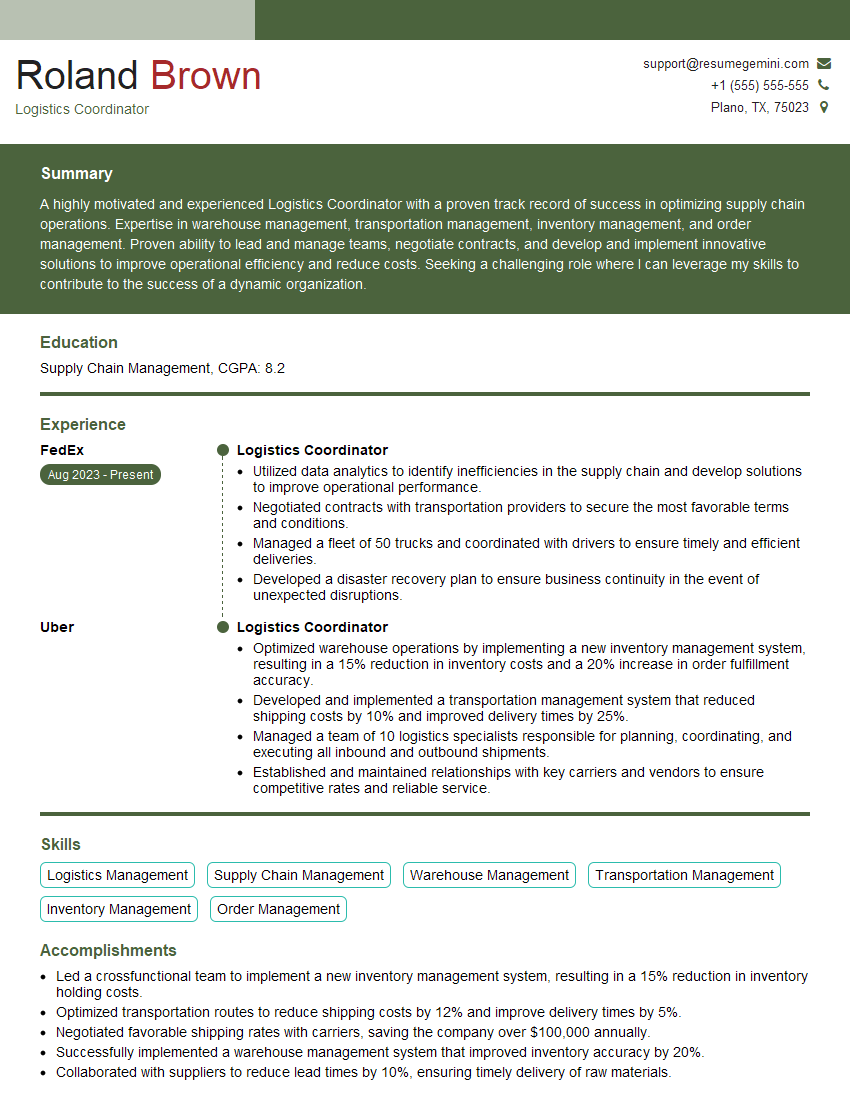
Logistics Coordinator Resume Sample
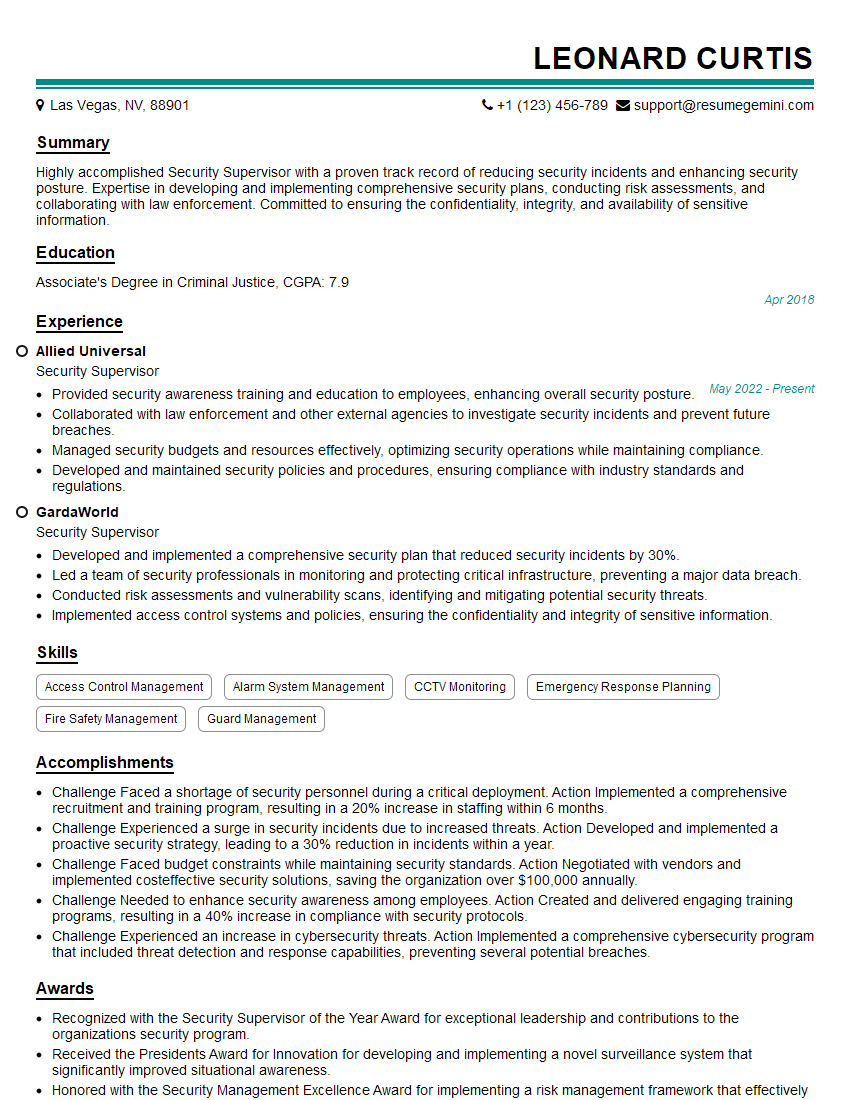
Security Supervisor Resume Sample
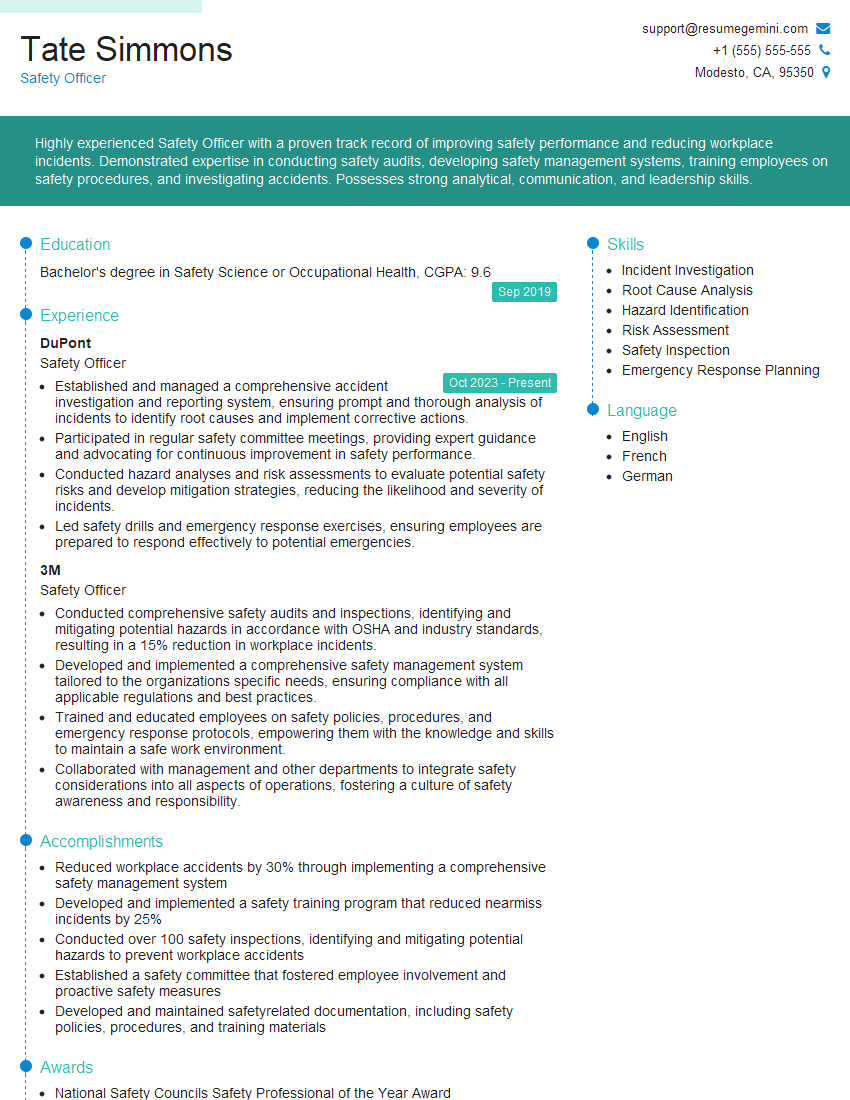
Safety Officer Resume Sample
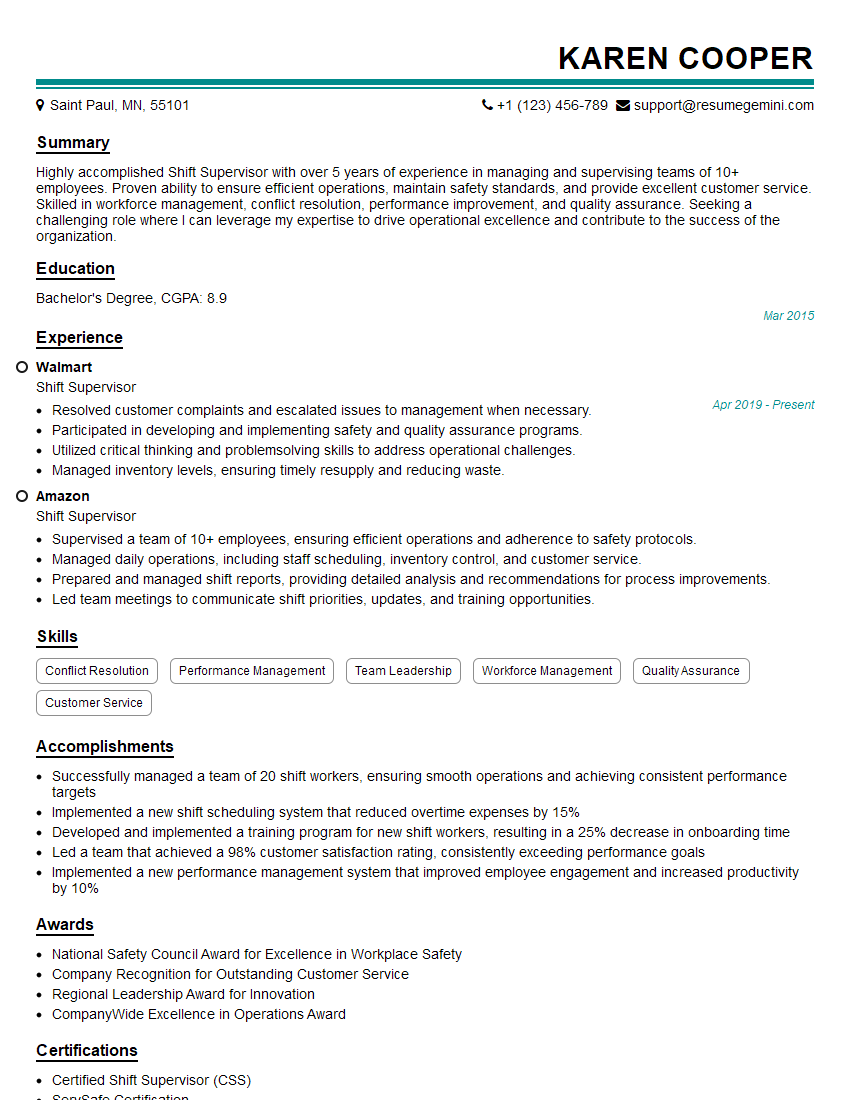
Shift Supervisor Resume Sample
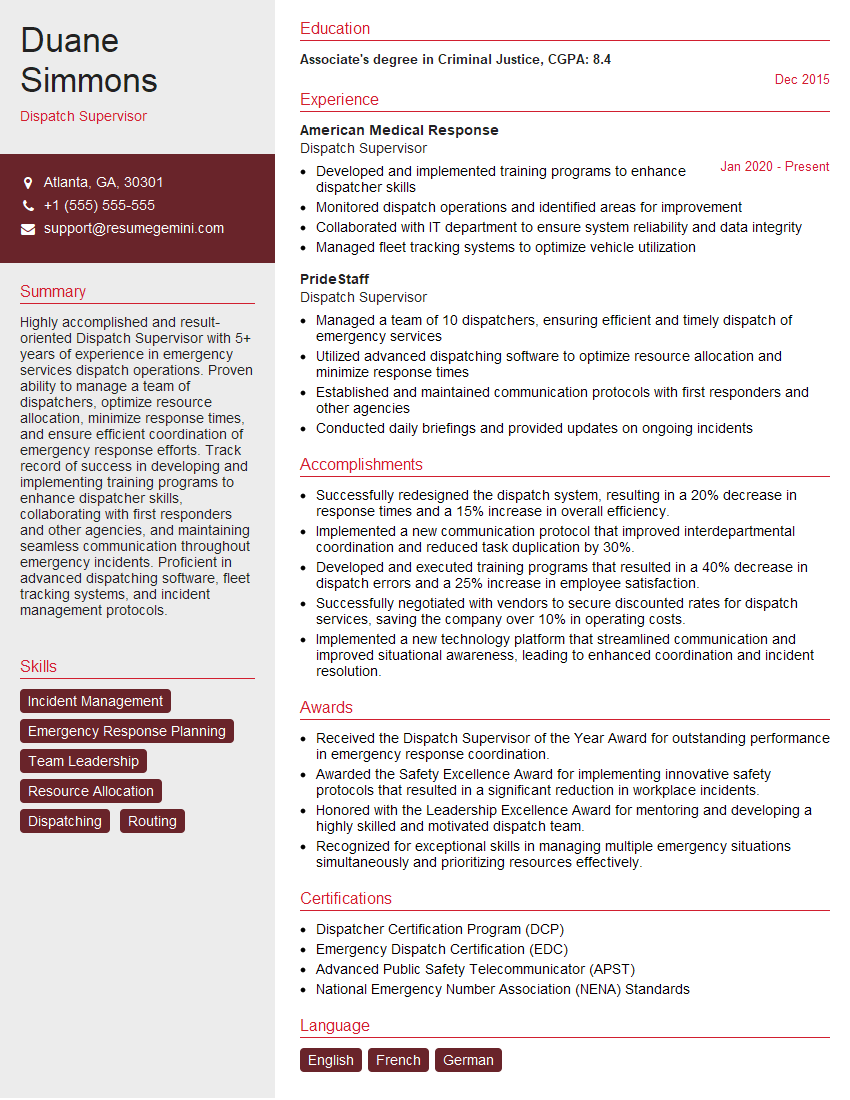
Dispatch Supervisor Resume Sample
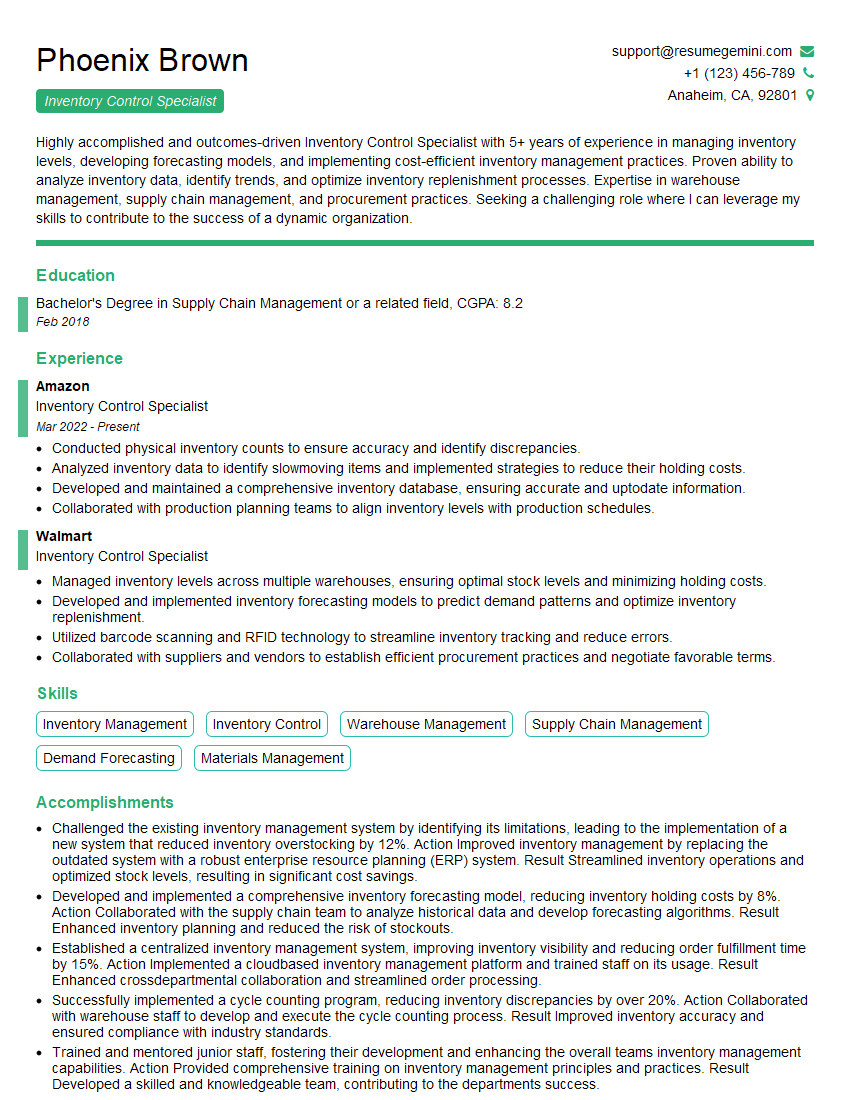
Inventory Control Specialist Resume Sample
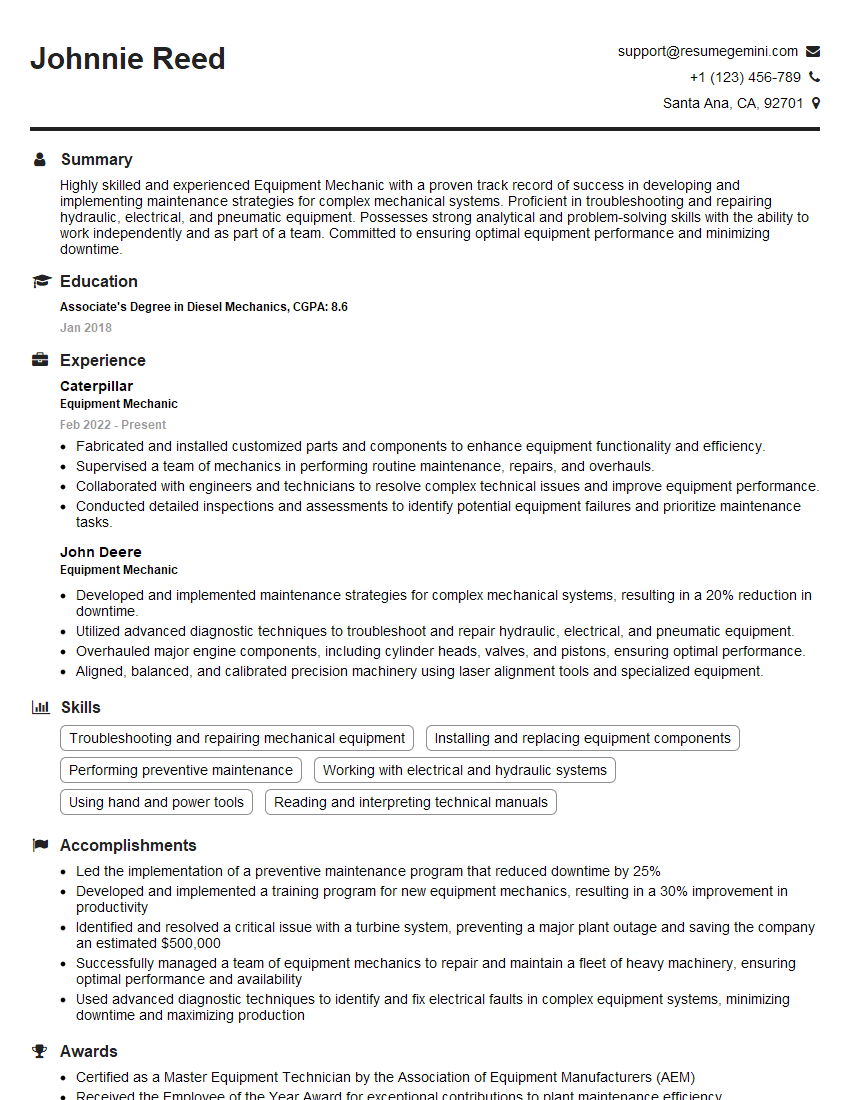
Equipment Mechanic Resume Sample
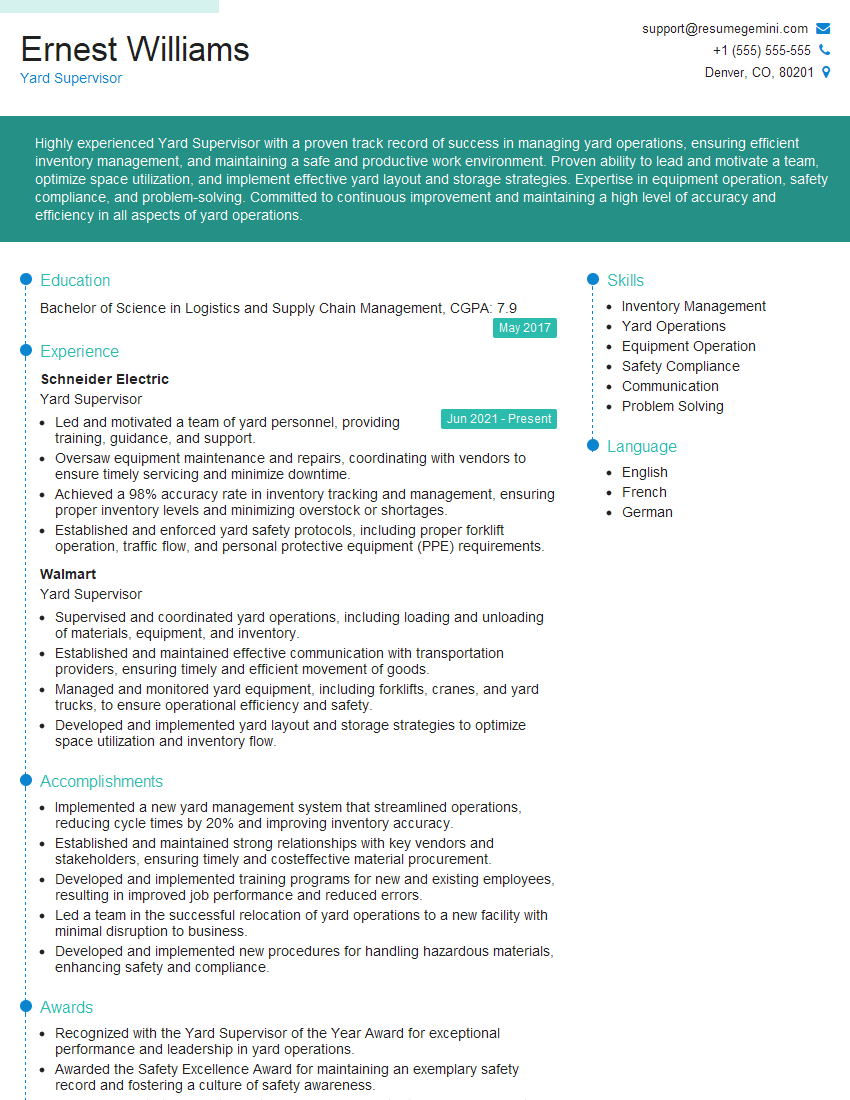
Yard Supervisor Resume Sample
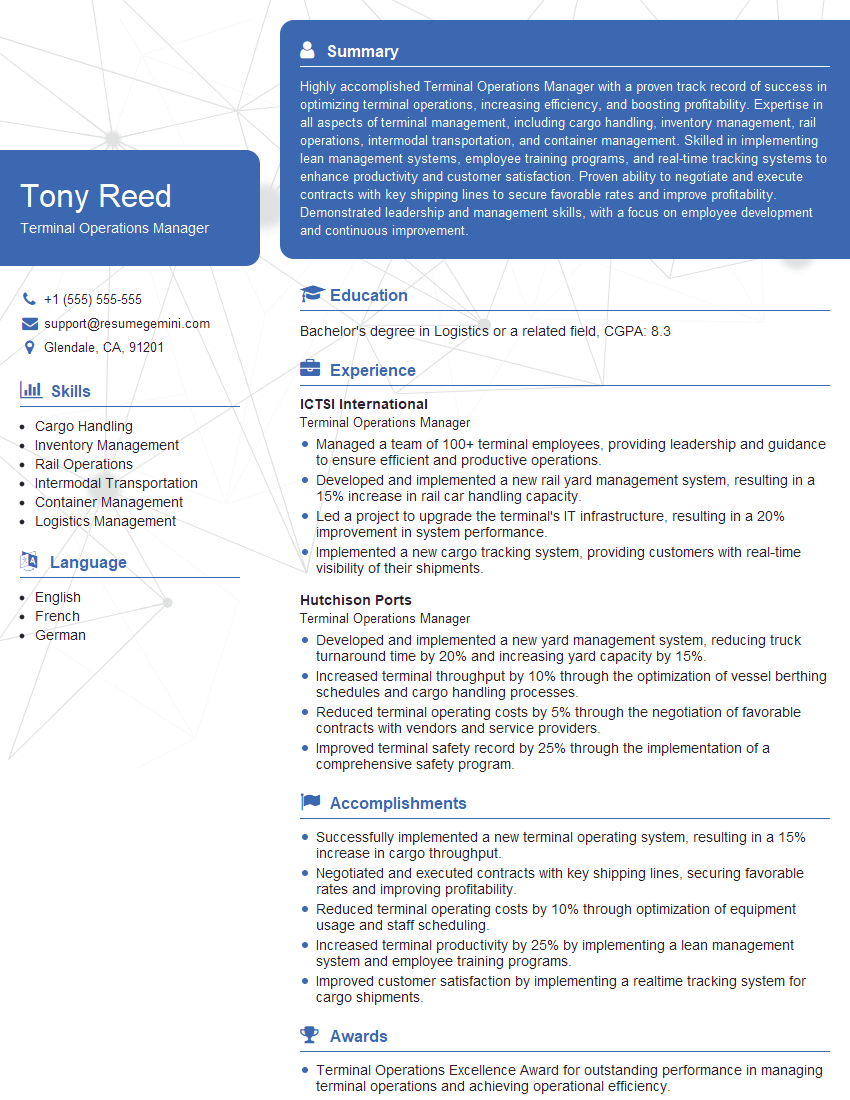
Terminal Operations Manager Resume Sample
Explore more articles
Users Rating of Our Blogs
Share Your Experience
We value your feedback! Please rate our content and share your thoughts (optional).
What Readers Say About Our Blog
good