The right preparation can turn an interview into an opportunity to showcase your expertise. This guide to Containment and Exclusion Methods interview questions is your ultimate resource, providing key insights and tips to help you ace your responses and stand out as a top candidate.
Questions Asked in Containment and Exclusion Methods Interview
Q 1. Explain the difference between containment and exclusion in cybersecurity.
In cybersecurity, containment and exclusion are crucial incident response strategies, but they differ significantly in their approach. Containment aims to limit the spread of a threat—like a wildfire—by isolating the affected system or network segment, preventing further damage. Think of it as building a firebreak. Exclusion, on the other hand, is a more aggressive tactic. It involves completely removing the compromised asset from the network, effectively shutting it down to prevent any further interaction or data exfiltration. This is like completely extinguishing the fire, even if it means losing some resources.
The choice between containment and exclusion depends on several factors including the severity of the threat, the criticality of the affected system, the available resources, and the potential for data recovery. A less critical system with a contained threat might only require containment, while a severely compromised server holding sensitive data might need immediate exclusion.
Q 2. Describe your experience with implementing containment strategies for malware outbreaks.
During my time at [Previous Company Name], I was involved in several malware outbreaks. One particular incident involved a phishing email that deployed ransomware across several workstations. Our immediate response involved implementing a multi-pronged containment strategy. Firstly, we isolated the affected workstations from the network using our firewall, effectively quarantining them. Secondly, we leveraged endpoint detection and response (EDR) tools to identify and terminate the malicious processes. Finally, we performed thorough system scans with multiple anti-malware solutions to identify and remove any residual malware. This combined approach helped contain the outbreak and prevent further spread within our network. We also implemented stricter security awareness training post-incident to prevent similar attacks in the future.
Q 3. What are the key steps involved in isolating a compromised system?
Isolating a compromised system requires a systematic approach. The key steps include:
- Immediate Network Isolation: The first and most critical step is to disconnect the compromised system from the network, preventing further communication and potential lateral movement. This usually involves disabling network interfaces or blocking access via firewall rules.
- System Shutdown (if safe): In some cases, it’s safer to shut down the system to prevent further damage or data exfiltration. This should be done carefully to avoid data loss if possible.
- Forensic Imaging: Create a forensic image of the compromised system’s hard drive. This allows for a thorough investigation without altering the original evidence.
- Malware Analysis: Analyze the malware to understand its functionality, origin, and impact. This information is crucial for remediation and prevention.
- Remediation: Once the analysis is complete, implement the necessary steps to remove the malware and restore the system to a clean state. This may involve reinstalling the operating system or restoring from backups.
Q 4. How do you prioritize containment efforts during a large-scale incident?
During large-scale incidents, prioritization is paramount. We follow a risk-based approach focusing on:
- Criticality of Systems: Systems holding sensitive data or providing essential services are prioritized. We address the most critical systems first to minimize potential damage.
- Speed of Spread: Threats that are rapidly propagating require immediate attention to prevent widespread infection.
- Impact of Breach: We prioritize systems where a breach could have the most significant impact on the business or its clients.
This involves using a triage system that allows us to quickly assess the situation and allocate resources efficiently. We often leverage automated tools to assist in this process, speeding up the identification and containment of threats.
Q 5. What are the limitations of containment strategies?
While containment strategies are effective, they have limitations. Some include:
- Potential for Data Loss: In some cases, aggressive containment measures, such as immediate system shutdown, may lead to data loss if proper backups aren’t in place.
- Incomplete Remediation: Containment might prevent further spread, but it doesn’t guarantee complete removal of the threat. Residual malware might remain, requiring further remediation.
- Complexity of Environment: Complex network environments can make effective containment challenging, especially if proper network segmentation isn’t in place.
- Zero-Day Exploits: Containment strategies may be ineffective against sophisticated zero-day exploits, as security solutions may not have the necessary signatures to detect and contain them.
Q 6. Describe your experience with network segmentation as a containment method.
Network segmentation is a powerful containment method I’ve extensively used. At [Previous Company Name], we implemented a layered network architecture, dividing the network into smaller, isolated segments based on function (e.g., guest network, development network, production network). This limits the impact of a breach. If a threat compromises one segment, it’s less likely to spread to others because the access is restricted by firewalls and access control lists (ACLs). For example, a compromised system on the guest network would not automatically have access to sensitive data in the production network. This proactive measure significantly reduces the attack surface and minimizes the potential damage from a successful intrusion.
Q 7. How do you ensure data integrity during a containment process?
Maintaining data integrity during containment is crucial. This involves:
- Regular Backups: Maintaining regular, tested backups is paramount. These backups act as a fallback should data be compromised or lost during the containment process.
- Read-Only Access: For forensic analysis, access to compromised systems should be read-only to prevent accidental modification or data loss.
- Chain of Custody: Maintain a detailed record of every action taken during the containment process. This ensures the integrity of the investigation and any subsequent legal proceedings.
- Hashing: Creating cryptographic hashes of critical data before and after the containment process allows verification that data hasn’t been altered during the process.
By meticulously following these steps, we can ensure the integrity of the data, providing confidence in the effectiveness of the containment and the subsequent investigation.
Q 8. What tools and technologies are you familiar with for containment and exclusion?
Containment and exclusion rely on a diverse toolkit. My familiarity spans several categories. For network containment, I utilize tools like firewalls (both hardware and software, including next-generation firewalls), intrusion detection/prevention systems (IDS/IPS), and network segmentation technologies like VLANs and VPNs. At the endpoint level, I’m proficient with endpoint detection and response (EDR) solutions, antivirus software, and tools for isolating infected machines. In the cloud, I leverage cloud provider-specific security tools such as AWS Security Hub, Azure Security Center, and Google Cloud Security Command Center, utilizing their built-in capabilities for containment and isolation. For data-centric containment, data loss prevention (DLP) tools are crucial, along with technologies for encrypting sensitive data at rest and in transit.
Furthermore, I have experience with security information and event management (SIEM) systems, which aggregate logs from various sources to aid in identifying and responding to threats. These tools enable me to analyze security events, identify patterns, and take necessary containment actions quickly and effectively. Finally, forensic tools are invaluable for post-incident analysis and determining the extent of compromise.
Q 9. Explain your understanding of incident response frameworks (e.g., NIST, ISO 27001).
Incident response frameworks, such as NIST Cybersecurity Framework and ISO 27001, provide structured approaches to handling security incidents. They offer a common language and methodology, ensuring consistency and efficiency. NIST emphasizes identifying, protecting, detecting, responding to, and recovering from cybersecurity events, offering a lifecycle approach. The framework’s flexible nature allows organizations to tailor it to their specific needs and risk profiles. ISO 27001, a widely recognized standard for information security management systems, focuses on establishing, implementing, maintaining, and continually improving an information security management system. It guides the organization in identifying risks, implementing appropriate controls, and handling incidents as part of a broader security program.
Both frameworks highlight the critical role of containment and exclusion in the response phase. They emphasize isolating compromised systems or data to prevent further damage, while also documenting the response steps to learn from the incident and improve future preparedness. My experience includes practical application of both frameworks, translating their guidance into actionable plans and procedures in various organizational settings.
Q 10. How do you handle containment in cloud-based environments?
Containment in cloud environments requires a nuanced approach leveraging the cloud provider’s built-in security features. This often involves a combination of techniques. First, I would isolate the affected virtual machine (VM) or container by terminating its network connection, using the cloud provider’s tools to shut down or suspend the instance. Next, I’d leverage cloud-native security tools like security groups or network access control lists (ACLs) to further restrict access. This prevents the threat from spreading laterally across the cloud infrastructure. For example, in AWS, I might use security groups to block all inbound and outbound traffic to the compromised instance. In Azure, I’d leverage Network Security Groups for a similar purpose.
Data containment is equally important. I might use snapshotting capabilities to create a copy of the compromised instance’s storage for forensic analysis while preventing any further modification of the original data. Finally, detailed logging and monitoring are essential. Cloud providers offer robust logging services (like AWS CloudTrail, Azure Activity Log, and Google Cloud Audit Logs) that provide visibility into the actions performed on cloud resources, allowing for a comprehensive investigation and evidence gathering. Post-incident, I’d work on strengthening security controls, such as implementing more stringent access controls and enhancing logging and monitoring.
Q 11. What are the legal and regulatory considerations for containment and exclusion?
Legal and regulatory considerations for containment and exclusion are significant and vary depending on the industry, location, and type of data involved. Regulations like GDPR (General Data Protection Regulation), CCPA (California Consumer Privacy Act), HIPAA (Health Insurance Portability and Accountability Act), and PCI DSS (Payment Card Industry Data Security Standard) impose specific requirements on data handling and incident response. These often dictate timelines for notifying affected parties, the type of data that needs to be protected, and the methods used for containment and remediation. Failure to comply can result in substantial fines and legal repercussions.
For instance, in a healthcare setting (HIPAA), a breach involving patient data requires immediate action, including containment of the affected system, notification of authorities, and remediation. Understanding these regulations is crucial in deciding on appropriate containment methods and ensuring they align with legal obligations. Moreover, it is vital to document the entire response process meticulously, preserving evidence for legal investigations, regulatory audits, or potential litigation. This documentation should include timelines, actions taken, and the rationale behind those actions.
Q 12. How do you determine the scope of a containment effort?
Determining the scope of a containment effort involves a systematic approach. It begins with identifying the initial compromise. This often involves analyzing security logs, network traffic, and endpoint activity. The next step is to trace the potential impact of the threat, understanding how far it might have spread. This may involve examining system configurations, file system access logs, and network connections. For example, if a phishing email compromised a single workstation, we would investigate whether the attacker gained access to shared network drives, other systems, or sensitive data.
The scope is defined by the potential impact. If the threat is isolated to a single machine, containment might focus solely on that machine. However, if it has spread, the scope expands to include affected systems, network segments, or even cloud resources. A key consideration is the criticality of the affected systems and data. Highly sensitive systems or data will necessitate more aggressive and broader containment measures. The ultimate goal is to contain the threat, minimize damage, and ensure the preservation of evidence for post-incident investigation and analysis.
Q 13. Explain your process for documenting containment procedures.
Documentation of containment procedures is essential for accountability, future incident response, and regulatory compliance. My process involves maintaining a detailed chronological record of every step taken during the containment process. This includes the date and time of each action, the individual responsible, the specific steps taken, the tools used, and the results observed. For example, if a system was isolated, the documentation would specify the isolation method (e.g., disconnecting the network cable, disabling the network interface), the time of isolation, and the confirmation that the isolation was successful.
I typically utilize a structured approach using a combination of digital documentation (e.g., spreadsheets, incident response tracking systems) and potentially physical evidence collection (e.g., disk images, network captures). The documentation must be clear, concise, accurate, and unambiguous. It also serves as a key component of any post-incident analysis, helping to identify the root cause of the breach and inform the development of preventative measures. All the documentation is securely stored and access is controlled, ensuring its integrity and confidentiality.
Q 14. How do you communicate effectively during a containment operation?
Effective communication is paramount during a containment operation. I utilize a multi-faceted approach depending on the situation and the individuals involved. This includes regular updates to key stakeholders, such as management, legal counsel, and potentially affected users. Communication should be clear, concise, and factual, avoiding technical jargon where possible. During the initial response, communication needs to be quick and focused on the immediate steps being taken to mitigate the situation.
For internal teams, I rely on communication tools such as instant messaging, collaboration platforms, and email. For external communication, prepared statements or official announcements may be needed, depending on the nature and severity of the incident. It’s crucial to maintain consistent communication throughout the containment process and to ensure everyone understands their roles and responsibilities. Regular briefings and debriefings provide opportunities to address questions, assess progress, and coordinate actions effectively. Transparent communication builds trust and maintains confidence during a stressful situation. The communication strategy also needs to account for legal and regulatory requirements related to incident notification.
Q 15. Describe your experience with log analysis for identifying and containing threats.
Log analysis is crucial for identifying and containing threats. It involves systematically examining security logs – records of events on systems and networks – to detect malicious activities. This process starts with identifying potential indicators of compromise (IOCs), such as unusual login attempts, file modifications, or network connections to suspicious IP addresses. I leverage tools like Splunk, ELK stack, or QRadar to correlate data from various sources, like firewalls, intrusion detection systems, and endpoint security agents. For example, observing a surge in failed login attempts from a single IP address coupled with unusual data exfiltration attempts from a specific server, immediately points to a potential intrusion. Based on this, I can create search queries to find further evidence to confirm my suspicions.
Once a threat is identified, log analysis helps contain it by pinpointing affected systems and providing context. This allows for rapid isolation of compromised systems, preventing further lateral movement of the attacker. For instance, if log analysis reveals that malware has spread to several workstations from a compromised server, we can swiftly quarantine the server and disconnect those workstations from the network. Through continuous monitoring, and by developing effective log correlation techniques, we can significantly reduce the impact of security incidents.
Career Expert Tips:
- Ace those interviews! Prepare effectively by reviewing the Top 50 Most Common Interview Questions on ResumeGemini.
- Navigate your job search with confidence! Explore a wide range of Career Tips on ResumeGemini. Learn about common challenges and recommendations to overcome them.
- Craft the perfect resume! Master the Art of Resume Writing with ResumeGemini’s guide. Showcase your unique qualifications and achievements effectively.
- Don’t miss out on holiday savings! Build your dream resume with ResumeGemini’s ATS optimized templates.
Q 16. What are the ethical considerations associated with containment and exclusion?
Ethical considerations in containment and exclusion are paramount. Our actions must always respect individual privacy and legal rights. For example, while isolating a compromised system to prevent further damage, we must ensure we don’t inadvertently block legitimate users or disrupt essential services without proper authorization.
Transparency is key. Individuals affected by containment measures should be informed about the reason and duration of the restrictions. We need to follow established incident response plans and data governance policies, carefully balancing the need for security with the rights of individuals and the organization’s compliance obligations. Moreover, careful documentation of all actions taken is critical for both accountability and for future incident response improvement.
Q 17. How do you validate the effectiveness of containment measures?
Validating the effectiveness of containment measures is an iterative process. Firstly, we verify that the containment method successfully isolates the threat. This might involve checking that the affected system is unreachable from the network or that malicious processes are terminated. Secondly, we monitor the system and network for any signs of further compromise. This includes checking for new IOCs, unusual activity, or attempts to bypass the containment mechanisms. We might use network monitoring tools to observe traffic patterns and endpoint detection and response (EDR) solutions to monitor for suspicious behavior at the endpoint level.
Post-incident analysis is also vital. After resolving the immediate threat, we carefully review the logs to determine if the containment measures were successful in stopping the attacker. This includes examining the extent of damage, analyzing the attacker’s tactics, techniques, and procedures (TTPs), and determining if the containment strategy could have been improved. A successful validation demonstrates that the containment strategy not only stopped the immediate threat but also prevented any future attacks using the same techniques.
Q 18. How do you ensure containment measures don’t impact critical business operations?
Balancing security with business operations requires careful planning and execution. Before implementing any containment measure, we thoroughly assess its potential impact on critical systems and services. This often involves collaborating with business stakeholders to identify and prioritize business-critical applications and services. We then tailor the containment strategy to minimize disruption. This might involve implementing phased containment, starting with less intrusive measures and escalating only if necessary.
For example, instead of completely shutting down a server, we might isolate it from the rest of the network but allow access for specific authorized personnel. Regular communication with stakeholders during the containment process is vital to keep them informed of the situation and to address any concerns. Moreover, we use tools and techniques that minimize downtime and data loss whenever possible, including implementing failover mechanisms and ensuring regular backups.
Q 19. Describe a time when a containment strategy failed. What did you learn?
In one instance, we relied heavily on a signature-based intrusion detection system (IDS) for containment. We believed the signature would reliably identify and block a specific type of malware. However, the attackers used a slightly modified version of the malware, which bypassed our signature-based detection. The malware spread further than anticipated before we detected the breach using more comprehensive log analysis.
The key lesson learned was the limitations of solely relying on signature-based detection. We improved our approach by incorporating behavioral analysis and threat intelligence into our security monitoring and response strategy. This allowed for detection of unknown malware based on anomalous behavior, not just known signatures. We also integrated more diverse log sources into our analysis pipeline, providing a fuller picture of the attack’s progression.
Q 20. What are the common challenges in implementing containment strategies?
Implementing containment strategies presents several challenges. A major one is the complexity of modern IT infrastructure. The interconnectedness of systems and applications makes it difficult to isolate a compromised system without affecting others. Another challenge is the speed at which attacks evolve. Attackers are constantly developing new techniques, making it difficult to anticipate and defend against all threats.
Lack of proper visibility into the IT environment, incomplete or poorly maintained logs, and insufficient automation hinder effective containment. Furthermore, a shortage of skilled security personnel and a lack of well-defined incident response plans can lead to delayed responses and inadequate containment. Finally, the need for constant vigilance, including keeping software up-to-date and regularly training employees on security best practices, is essential yet often overlooked.
Q 21. How do you maintain a balance between security and usability during containment?
Maintaining a balance between security and usability during containment is a delicate act. The goal is to minimize disruption while effectively containing the threat. This requires carefully considering the impact of containment measures on users and applications. We prioritize the least disruptive approach that still provides effective containment. For example, rather than completely shutting down a compromised system, we might restrict access to certain functions or resources, allowing users to continue working with minimal interruption.
Furthermore, clear and timely communication with users about the containment measures and their expected duration is crucial. We provide alternative access methods or workarounds if necessary to minimize inconvenience. It’s a continuous balancing act requiring adaptive responses, based on the nature of the threat and the impact of the containment strategy. This often involves prioritizing the security of sensitive data and systems over immediate user convenience, though minimizing disruption where possible is paramount.
Q 22. Explain your understanding of various containment technologies (e.g., firewalls, intrusion detection systems).
Containment technologies are the bulwark against cyber threats, aiming to isolate and prevent the spread of malicious activity. Firewalls act as gatekeepers, controlling network traffic based on pre-defined rules. Think of them as bouncers at a club, only letting in those with the right credentials. Intrusion Detection Systems (IDS) are like security cameras, constantly monitoring network activity for suspicious patterns. They don’t stop the threat directly but alert security personnel when something unusual occurs. Together, they form a layered defense strategy. For example, a firewall might block malicious traffic from a known compromised IP address, while an IDS would detect unusual port scanning activity indicating a potential intrusion attempt, even if the firewall initially allowed the traffic. Beyond firewalls and IDS, we also have other crucial technologies such as Virtual Private Networks (VPNs) that create secure connections, and Data Loss Prevention (DLP) tools that monitor and prevent sensitive data from leaving the network.
- Firewalls: Network-based or host-based, controlling inbound and outbound traffic.
- Intrusion Detection Systems (IDS): Monitor network traffic for malicious activity, generating alerts.
- Intrusion Prevention Systems (IPS): A step further than IDS, they actively block malicious traffic.
- Virtual Private Networks (VPNs): Create secure connections over public networks.
- Data Loss Prevention (DLP): Prevents sensitive data from leaving the network.
Q 23. Describe your experience with endpoint detection and response (EDR) tools for containment.
Endpoint Detection and Response (EDR) tools are critical for modern containment strategies. They provide visibility into the behavior of individual devices (endpoints) on the network, enabling rapid detection and response to threats. My experience includes deploying and managing several EDR solutions, including Carbon Black and Crowdstrike. These tools allow us to monitor system processes, registry changes, and network communications in real-time. Imagine them as tiny security agents embedded within each computer, reporting suspicious activity back to a central console. For instance, if malware attempts to encrypt files, an EDR solution can detect this activity, isolate the affected endpoint, and even automatically roll back malicious changes. This proactive approach minimizes damage and speeds up incident response.
In one instance, we used EDR to quickly contain a ransomware attack by isolating the infected workstation before the malware could spread to other machines. The detailed logs provided by the EDR tool proved invaluable during the forensic analysis phase, allowing us to identify the initial attack vector and prevent future incidents.
Q 24. How do you handle the containment of zero-day exploits?
Zero-day exploits are a significant challenge because they target vulnerabilities unknown to security vendors. Containment relies on a layered approach, prioritizing rapid detection and isolation. This involves a combination of methods:
- Network Segmentation: Isolating critical systems to limit the impact of a breach.
- Behavioral Analysis: Using EDR and other tools to detect anomalous behavior, even if the malware signature is unknown.
- Threat Intelligence: Staying informed about emerging threats through security feeds and collaboration with other organizations.
- Emergency Response Procedures: Having well-defined steps for rapid isolation and investigation of suspected zero-day attacks.
- Micro-segmentation: Dividing the network into smaller, isolated segments to contain the spread of an attack.
Essentially, we focus on containing the threat before understanding its exact nature. Once isolated, forensic analysis can begin to understand the attack and develop longer-term mitigation strategies.
Q 25. What is your experience with forensic analysis in relation to containment?
Forensic analysis is inextricably linked to containment. The goal is to understand the attack’s scope, methods, and origin. This information guides containment strategies and informs future security improvements. My experience encompasses analyzing system logs, memory dumps, and network traffic to reconstruct attack timelines and identify malicious artifacts. Think of it like reconstructing a crime scene – we meticulously piece together evidence to understand what happened and how to prevent it from happening again. For example, analyzing network logs can pinpoint the source of an intrusion, while memory analysis can reveal the techniques used by malware to evade detection. The findings directly inform the development of improved security controls and future incident response plans. This detailed investigation provides actionable intelligence, allowing us to strengthen our overall security posture.
Q 26. How do you coordinate with other teams during a containment operation?
Coordination is crucial during a containment operation. I work closely with several teams, including incident response, networking, and system administration. Effective communication is key, employing tools like Slack or dedicated incident management systems. A clear chain of command and well-defined roles ensure efficient collaboration. Before any action is taken, a thorough risk assessment is conducted to determine the best course of action while minimizing disruption. Regular status updates maintain transparency and alignment amongst team members. Post-incident reviews are equally important – they allow us to analyze successes, identify areas for improvement, and refine our incident response plan.
Q 27. What are your preferred methods for validating the effectiveness of your containment measures?
Validating containment effectiveness involves a multi-faceted approach. We use both technical and procedural methods. Technically, we monitor system logs and network traffic for any signs of malicious activity after the initial containment. We also conduct penetration testing and vulnerability assessments to identify any weaknesses exploited by the threat. Procedurally, we review the incident response plan to identify gaps and areas for improvement. Successful validation requires a combination of automated monitoring and manual review. Regular security audits help ensure the ongoing effectiveness of containment strategies.
Q 28. How do you stay updated on the latest containment and exclusion techniques?
Staying updated in this field is paramount. I actively participate in online security communities, attend industry conferences and training sessions, and subscribe to relevant security newsletters and blogs. Following researchers and security experts on social media platforms like Twitter provides a valuable stream of up-to-date threat intelligence. I also regularly review vulnerability databases and security advisories from vendors like Microsoft and Cisco. Certifications like SANS GIAC certifications help to maintain a high level of technical proficiency and demonstrate my commitment to continuous learning.
Key Topics to Learn for Containment and Exclusion Methods Interview
- Containment Strategies: Understanding various containment methods, their strengths and weaknesses, and selecting appropriate strategies based on risk assessment.
- Exclusion Principles: Mastering the theoretical underpinnings of exclusion, including barrier selection, decontamination procedures, and waste management protocols.
- Risk Assessment and Mitigation: Developing the ability to identify potential hazards, assess risks accurately, and implement effective mitigation strategies.
- Practical Applications: Exploring real-world scenarios and case studies to understand how containment and exclusion methods are applied in different contexts (e.g., hazardous materials handling, biological research, environmental remediation).
- Emergency Response and Procedures: Familiarizing yourself with emergency protocols and procedures for containment breaches or unexpected events.
- Regulatory Compliance: Understanding relevant regulations and standards related to containment and exclusion in your specific field.
- Technological Advancements: Staying updated on the latest technologies and innovations in containment and exclusion methodologies.
- Problem-Solving and Critical Thinking: Developing your ability to analyze complex situations, identify potential problems, and develop creative solutions.
- Teamwork and Communication: Understanding the importance of effective teamwork and clear communication in implementing containment and exclusion strategies.
Next Steps
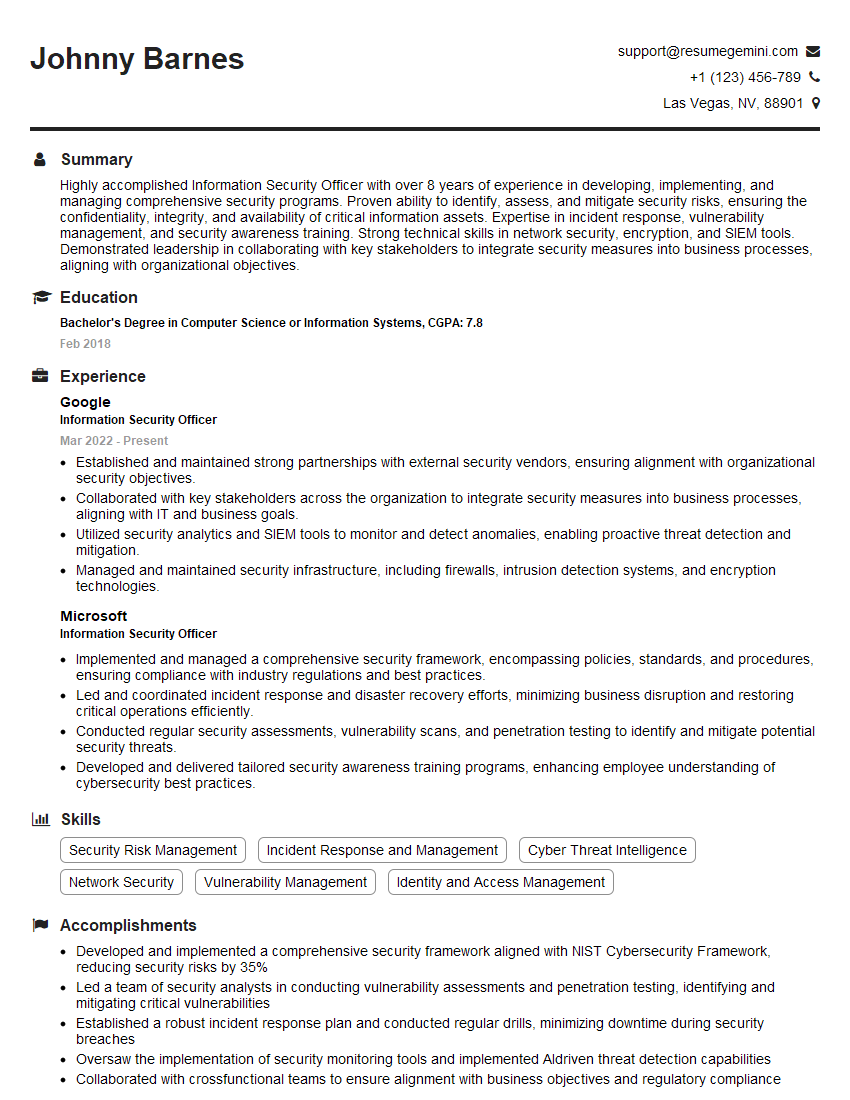
Mastering Containment and Exclusion Methods is crucial for career advancement in many high-demand fields. A strong understanding of these techniques demonstrates competence, problem-solving skills, and a commitment to safety, making you a highly valuable asset to any organization. To maximize your job prospects, it’s essential to create an ATS-friendly resume that highlights your skills and experience effectively. ResumeGemini is a trusted resource for building professional, impactful resumes. We offer examples of resumes tailored to highlight expertise in Containment and Exclusion Methods to help you present your qualifications in the best possible light. Use these resources to build a compelling resume and confidently pursue your career goals.
Explore more articles
Users Rating of Our Blogs
Share Your Experience
We value your feedback! Please rate our content and share your thoughts (optional).
What Readers Say About Our Blog
Very informative content, great job.
good