Feeling uncertain about what to expect in your upcoming interview? We’ve got you covered! This blog highlights the most important Contemporary Acting interview questions and provides actionable advice to help you stand out as the ideal candidate. Let’s pave the way for your success.
Questions Asked in Contemporary Acting Interview
Q 1. Describe your understanding of contemporary acting techniques.
Contemporary acting techniques encompass a broad range of approaches that move beyond the more traditional styles of the past. It’s less about a single ‘method’ and more about a flexible and evolving toolkit. These techniques often emphasize the actor’s physicality, voice, and emotional authenticity, while also incorporating elements of improvisation and collaboration.
- Physicality: Contemporary acting often involves exploring movement, gesture, and body awareness to communicate character and emotion. Think about the subtle shifts in posture and gait used to portray a character’s anxiety or confidence.
- Voice Work: Developing vocal control, articulation, and expressiveness are crucial. This goes beyond simply projecting; it’s about using the voice as an instrument to convey emotion and meaning.
- Emotional Truth: While methods like Stanislavski remain influential, contemporary acting stresses finding truthful emotional connections within the given circumstances of the play, even if the character is quite different from the actor.
- Improvisation and Collaboration: Contemporary productions frequently use improvisation to generate ideas, build scenes, and deepen character relationships. Collaboration with the director and fellow actors is paramount.
For example, a contemporary approach to a Shakespearean role might not rigidly adhere to a traditional, declamatory style. Instead, it might use physicality and subtext to reveal the character’s inner life in a way that resonates with a modern audience.
Q 2. How do you approach character development in a contemporary context?
Character development in a contemporary context is a deeply investigative process. It’s not simply about memorizing lines; it’s about inhabiting the role from the inside out. I use a multi-faceted approach:
- Text Analysis: A thorough study of the script, exploring the character’s relationships, motivations, and internal conflicts. What are their desires? What are their obstacles? What are their unspoken needs?
- Backstory Creation: I develop a rich backstory for the character, even if those details aren’t explicitly mentioned in the script. This backstory helps to inform their choices and behaviors on stage.
- Physical and Vocal Exploration: I experiment with different physicalities and vocal qualities to discover what best embodies the character. How do they move? How do they speak? What are their mannerisms?
- Improvisation and Sensory Exploration: I use improvisation to explore the character’s relationships and interactions with other characters. I employ sensory exercises to connect with the character’s emotions and experiences on a visceral level.
- Collaboration with the Director: I value the director’s input and vision, allowing their guidance to shape and refine my understanding of the character.
For instance, playing a seemingly simple character like a waitress might involve creating a detailed backstory: her dreams, her family life, her relationship with her coworkers. This depth informs every gesture, every line of dialogue, bringing a sense of realism and complexity to the role.
Q 3. Explain your experience with improvisation in contemporary performance.
Improvisation is integral to my work. It’s not just a fun exercise; it’s a powerful tool for character development, scene building, and deepening collaborative relationships. I use it in several ways:
- Character Exploration: Improvisational exercises help me uncover hidden aspects of a character’s personality and motivations. For example, I might improvise a scene where my character unexpectedly meets someone from their past, revealing hidden vulnerabilities or desires.
- Scene Work: Improvisation is helpful in developing scenes and finding new avenues of conflict and resolution that might not have been apparent in the initial script.
- Building Relationships: Improvisational games and exercises enhance my chemistry with other actors, leading to more natural and believable interactions on stage.
- Responding to the Unexpected: Improvisation strengthens my ability to react spontaneously and authentically to unexpected events or changes in a performance.
I remember a production where we used improvisation to develop a fight scene. The initial choreography felt stiff, but through improvisation, we discovered a more organic and emotionally charged sequence of events that better reflected the characters’ relationship and the stakes of the moment.
Q 4. What contemporary playwrights or directors significantly influence your work?
My work is significantly influenced by several contemporary playwrights and directors. Their exploration of complex themes and innovative approaches to storytelling greatly impact my understanding of the art form.
- Playwrights: Sarah Kane’s unflinching portrayal of human vulnerability and trauma resonates deeply with my approach to character work. Similarly, the socially relevant and often darkly comedic works of Martin McDonagh challenge traditional theatrical conventions and demand a nuanced and physical approach to acting.
- Directors: The work of directors like Robert Wilson, known for their visually arresting and deeply symbolic productions, has inspired me to consider the importance of staging and physical presence in conveying meaning. The experimental work of contemporary directors often pushes the boundaries of traditional theatrical form, demanding flexibility and adaptability from actors.
These artists, among others, have challenged me to think beyond traditional acting styles and to embrace innovation and risk-taking in my performances.
Q 5. Discuss your familiarity with different acting methodologies (e.g., Meisner, Stanislavski).
I have extensive experience with various acting methodologies, and I believe that a blend of techniques is often the most effective approach.
- Stanislavski: The core principles of Stanislavski’s system—emotional recall, ‘given circumstances,’ and objective work—remain fundamental to my approach. However, I’ve moved away from some of the more rigid aspects of his system towards a more flexible and contemporary application.
- Meisner Technique: Meisner’s emphasis on truthful living in the moment and reacting truthfully to one’s scene partner greatly improves spontaneity and naturalism. I often use Meisner exercises to sharpen my improvisational skills and deepen my connection with fellow actors.
- Other Influences: I’ve also incorporated elements from other approaches, such as Viewpoints and Viola Spolin’s improvisational games, adapting techniques as needed for specific roles and projects.
Rather than rigidly adhering to one method, I selectively integrate elements from different techniques to create a performance style that best serves the given role and the overall artistic vision of the production.
Q 6. How do you adapt your performance style to different contemporary theatrical genres?
Adapting my performance style to different contemporary theatrical genres demands versatility and a willingness to experiment. My approach is guided by the specific demands of each genre:
- Naturalistic Drama: This style requires a grounded and emotionally truthful performance, often employing subtler physical and vocal choices.
- Absurdist Theatre: Absurdist plays demand a willingness to embrace exaggeration, physical comedy, and unconventional techniques. The focus may shift from realistic emotional portrayal to exploring the absurd aspects of the human condition.
- Physical Theatre: This genre requires a mastery of physical movement, coordination, and stage presence. The storytelling often relies heavily on nonverbal communication.
- Musical Theatre: This combines acting with singing and dancing, requiring excellent vocal control, movement skills, and a strong stage presence.
For instance, playing in a naturalistic drama might involve intimate, realistic interactions, whereas a role in absurdist theatre might require more outlandish behavior and a willingness to break the fourth wall. This adaptability allows me to contribute meaningfully to a diverse range of theatrical productions.
Q 7. How do you handle feedback from directors during contemporary productions?
Feedback from directors is crucial for growth and refinement. I approach feedback with a receptive and collaborative attitude.
- Active Listening: I listen carefully to the director’s feedback, asking clarifying questions if needed to ensure a complete understanding.
- Openness to Suggestions: I approach suggestions as opportunities for improvement, even if they differ from my initial interpretation of the role.
- Experimentation: I’m willing to experiment with different approaches based on the director’s feedback, incorporating their insights into my performance.
- Self-Reflection: I use the feedback as an opportunity for self-reflection, analyzing my performance and identifying areas where I can improve.
- Collaboration: I view the director-actor relationship as a collaborative partnership, valuing their input as an integral part of the creative process.
I’ve had experiences where initial director feedback seemed challenging. However, by remaining open and exploring alternative approaches, I’ve been able to transform these initial concerns into a more nuanced and impactful performance. It’s a continual process of refinement and collaboration.
Q 8. Describe a time you had to overcome a challenge in a contemporary acting role.
One of the biggest challenges I faced was portraying the character of Anya in a production of Uncle Vanya. Anya is a young woman grappling with disillusionment and the complexities of love and loss in a rapidly changing world. The challenge wasn’t simply emoting sadness or longing; it was conveying the internal conflict she experiences – her naiveté juxtaposed with her growing awareness of the harsh realities around her. To overcome this, I spent weeks deeply analyzing Chekhov’s text, exploring Anya’s motivations scene by scene. I also worked closely with the director to develop a nuanced physicality, incorporating subtle gestures and movements that reflected her inner turmoil. For instance, I incorporated moments of almost childlike wonder, followed by sudden withdrawals into a state of deep contemplation, reflecting her fluctuating emotions. We also focused on the subtext; what Anya wasn’t saying was often more revealing than her dialogue. Ultimately, the process involved a constant negotiation between my own understanding of the character and the director’s vision, resulting in a performance that I believe authentically captured Anya’s complexities.
Q 9. How do you prepare physically and vocally for a contemporary role?
Physical and vocal preparation for a contemporary role is crucial. It’s not just about memorizing lines; it’s about inhabiting the character completely. Physically, I begin with movement exercises to understand the character’s physicality. For example, if I’m playing a character who is constantly stressed, I might incorporate tense postures and jerky movements into my daily life during rehearsals. I also work with a movement coach to develop a physical vocabulary that complements the character’s emotional arc. Vocally, I focus on breath control, vocal projection, and articulation, ensuring my voice reflects the character’s age, emotional state, and social background. I might explore different vocal registers and tones – perhaps a higher, more nervous pitch for a character struggling with anxiety, or a lower, more assertive tone for a character in control. I often record myself practicing lines and then listen back critically to refine my delivery. This approach allows me to discover nuances in the text and develop a vocal performance that is both believable and engaging.
Q 10. Explain your approach to portraying complex contemporary characters.
My approach to portraying complex contemporary characters centers around empathy and research. I believe that understanding the character’s motivations, their past experiences, and their relationships is essential. I avoid judging the character; instead, I strive to understand their perspective, even if their actions are morally questionable. I usually begin by creating a detailed backstory for the character, which goes beyond what is explicitly stated in the script. This might involve researching similar individuals, reading biographies, or even interviewing people who share similar experiences. For instance, when playing a character struggling with addiction, I sought out support groups and spoke with individuals who had overcome similar challenges to gain deeper insights into their mindset, behaviors, and vulnerabilities. I then use this research to inform my physicality, voice, and emotional choices, creating a portrayal that is both nuanced and believable.
Q 11. Describe your experience working with ensemble casts in contemporary theatre.
Working with ensemble casts is one of the most rewarding aspects of contemporary theatre. It’s a collaborative process, and the energy is palpable. The key to a successful ensemble performance lies in trust, communication, and mutual respect. Early on in the rehearsal process, I focus on building rapport with my fellow actors, getting to know their approach to the character and how we can work together to create a cohesive whole. Open and honest communication is paramount; we discuss our interpretations of the script, potential challenges, and how we can best support each other on stage. I find that active listening and a willingness to adjust one’s own performance based on the input of others is essential. A successful ensemble isn’t just a sum of its parts; it’s a dynamic, interwoven tapestry, where each actor’s contribution strengthens the overall performance. For example, in a recent production of The Crucible, we spent many rehearsals improvising scenes to deepen our understanding of the character relationships and dynamics. This led to spontaneous moments of theatrical magic during performances.
Q 12. How do you interpret and embody contemporary scripts?
Interpreting and embodying contemporary scripts requires a deep understanding of the text, the historical and social context in which it was written, and the playwright’s intentions. I begin by reading the script multiple times, paying close attention to the language, subtext, and the relationships between characters. I then consider the themes and ideas the playwright is exploring. What are the central conflicts? What are the social, political, or psychological issues at stake? I often do extensive research to gain a deeper understanding of the context of the play and the issues it addresses. This might involve reading critical essays, watching documentaries, or interviewing experts. Once I have a strong understanding of the text and its context, I begin to develop my interpretation of the character, focusing on their motivations, relationships, and emotional journey. I don’t aim to simply reproduce the words on the page; instead, I seek to uncover the meaning behind the lines and translate that meaning into a compelling performance.
Q 13. What are some common contemporary themes you have explored in your acting work?
Contemporary theatre often tackles complex themes that reflect the realities of our times. In my work, I have explored issues such as identity, relationships, social injustice, mental health, and environmental concerns. For instance, I played a character in a play that dealt with the complexities of gender identity, allowing me to explore the challenges faced by transgender individuals and their experiences in a society grappling with societal norms. Another role involved portraying a character struggling with depression, forcing me to carefully research and understand the nuances of this often misunderstood illness. By delving into these sensitive and important issues, I believe we can use theatre as a platform for dialogue and understanding. These plays allow us not just to showcase the plight of those struggling, but also to inspire empathy and action from the audience.
Q 14. How do you stay updated on trends and innovations within contemporary acting?
Staying updated on contemporary acting trends and innovations is an ongoing process. I regularly attend theatre performances, workshops, and conferences. I also actively participate in masterclasses and follow leading figures in the field. I read industry publications, both print and online, and engage with online communities to discuss developments in contemporary performance. Moreover, I closely follow emerging playwrights and their work to remain aware of the evolving themes and styles in contemporary drama. Keeping my creative practice sharp involves experimenting with new techniques, collaborating with diverse artists, and embracing new technologies. This continual exploration helps me broaden my understanding of contemporary acting and refine my craft continuously. The field of acting is constantly changing, and continuous learning is crucial for staying relevant and innovative.
Q 15. Explain your experience with naturalistic acting in contemporary contexts.
Naturalistic acting, in contemporary contexts, aims for a believable portrayal of human behavior, eschewing overt theatricality. It’s about creating a sense of reality on stage, even when dealing with heightened situations or fictional characters. My approach involves deep research and understanding of the character’s background, motivations, and relationships. This goes beyond simply understanding the script’s explicit details; it’s about uncovering the subtext, the unspoken emotions and desires.
For example, in a recent production of a contemporary play about familial dysfunction, I spent considerable time observing real families in similar situations, studying their mannerisms, their silences, the way they interacted—even the subtle shifts in their body language. I incorporated those observed nuances into my performance, creating a portrayal that felt authentic and relatable, rather than simply acting ‘out’ the lines.
This commitment to realism extends to working with physicality and vocal choices. I would focus on achieving genuine emotional responses rather than stylized gestures. By using improvisation and sensory recall techniques, I was able to discover authentic movements and vocal expressions to accurately reflect my character’s inner world.
Career Expert Tips:
- Ace those interviews! Prepare effectively by reviewing the Top 50 Most Common Interview Questions on ResumeGemini.
- Navigate your job search with confidence! Explore a wide range of Career Tips on ResumeGemini. Learn about common challenges and recommendations to overcome them.
- Craft the perfect resume! Master the Art of Resume Writing with ResumeGemini’s guide. Showcase your unique qualifications and achievements effectively.
- Don’t miss out on holiday savings! Build your dream resume with ResumeGemini’s ATS optimized templates.
Q 16. How do you approach emotional vulnerability in contemporary performance?
Emotional vulnerability is crucial in contemporary performance, as it allows for deeper audience connection and a more nuanced portrayal of characters. However, accessing and portraying vulnerability requires a delicate balance. It’s not about simply expressing raw emotion; it’s about crafting a believable emotional arc within the context of the story.
My approach involves a process of preparation, trust, and restraint. Preparation involves detailed character work, exploring the character’s past traumas, relationships, and motivations to uncover the roots of their vulnerability. Building trust with the director and fellow actors creates a safe space for experimentation and emotional exploration during rehearsals. Finally, restraint ensures that the vulnerability is not overplayed or sensationalized. Sometimes, the power of a performance lies in the subtle expressions of emotion—a fleeting glance, a tremor in the voice— rather than large, melodramatic displays.
For instance, in a recent role as a character struggling with grief, I avoided overt weeping. Instead, I focused on subtle physical cues like a slightly trembling hand or a strained breath. These small, carefully chosen moments resonated more deeply with the audience than any exaggerated display of sorrow.
Q 17. Discuss your understanding of the relationship between text and subtext in contemporary scripts.
The relationship between text and subtext in contemporary scripts is critical. The text is what’s explicitly written on the page—the dialogue, the stage directions. The subtext, on the other hand, is the unspoken meaning, the underlying emotions and motivations that lie beneath the surface of the words. Understanding this dynamic is essential for a compelling performance.
A skilled actor doesn’t simply recite the lines; they delve into the subtext to discover the character’s true intentions, unspoken anxieties, and hidden desires. This requires careful analysis of the script, paying close attention to pauses, silences, and the nuances of language. It also involves considering the character’s relationships with other characters and their place within the larger narrative.
For example, a character might say “I’m fine,” (text) while their body language, tone of voice, and subsequent actions clearly suggest otherwise (subtext). The actor’s job is to expose that subtext, creating a layered and believable performance.
Q 18. How do you create believable relationships with other actors in contemporary productions?
Creating believable relationships with other actors is paramount in contemporary performance. It’s not enough to simply rehearse lines together; it requires genuine connection and collaborative work. I believe in fostering a strong rapport with my fellow actors through open communication and mutual respect. This includes spending time outside of rehearsals getting to know each other, discussing our interpretations of the characters and the play, and sharing our own experiences that might inform our performances.
Improvisation exercises, character-building workshops and even informal discussions about the themes of the play help to build trust and create a collaborative energy among the actors, which translates to a more natural and believable dynamic on stage. The relationships on stage are not separate from the relationships that develop off-stage.
For instance, in a production requiring a deep bond between two characters, we would often rehearse scenes repeatedly, exploring different approaches, and discussing how our characters’ emotional states affected one another. This collaborative process allowed for a more organic relationship to form, leading to a more convincing portrayal on stage.
Q 19. How have you integrated new technology into your contemporary acting work?
Technology has profoundly impacted contemporary acting. I’ve integrated new technology in several ways, including utilizing digital tools for character development and utilizing virtual reality (VR) and augmented reality (AR) techniques for rehearsal and performance. Digital platforms provide access to a wealth of resources – historical archives, cultural contexts, and vocal training tools.
For character research, I use online databases and archives to immerse myself in the time period or culture relevant to my role. For example, when preparing for a role set in the 1920s, I spent considerable time researching fashion, music, and societal norms of the time, all done using online resources and digital archives. This information greatly informed my character’s physicality and behavior.
Furthermore, I’ve explored the use of VR and AR technologies in rehearsal. While still somewhat nascent in theatre, these technologies offer potential for creating immersive rehearsal environments and exploring character relationships in novel ways.
Q 20. Discuss your experience working with diverse contemporary directors and artistic visions.
Working with diverse contemporary directors and their artistic visions has been instrumental in shaping my approach to acting. Each director brings a unique perspective, methodology, and creative approach, expanding my understanding of performance and fostering my adaptability. I view this diversity as an opportunity for professional growth.
Some directors prioritize a highly collaborative approach, encouraging actors to actively participate in the creative process. Others prefer a more structured approach, guiding actors toward a specific interpretation of the text. Adapting to these different styles requires flexibility, open-mindedness, and a strong willingness to learn and evolve as an artist.
For example, one director might emphasize physicality and movement, while another might focus on emotional depth and subtext. By embracing these diverse approaches, I’ve enhanced my acting skills and broadened my artistic range.
Q 21. How do you manage your time and energy during intense rehearsal periods?
Intense rehearsal periods require meticulous time and energy management. My approach is multifaceted and involves prioritizing self-care, effective planning, and mindful practice.
- Prioritization & Planning: I create a detailed schedule that allocates specific time slots for rehearsals, script study, physical training, and personal time. I also prioritize tasks based on urgency and importance, focusing on the most critical aspects of the production.
- Self-Care: This is non-negotiable. Sufficient sleep, regular exercise, and a balanced diet are essential to maintain energy levels and prevent burnout. Mindfulness and meditation practices help to manage stress and enhance focus.
- Mindful Practice: I avoid mindless rehearsal repetition. Instead, I approach each rehearsal session with a clear goal and focus on specific aspects that need improvement, utilizing efficient techniques to maximize learning in the allocated time. This ensures focused improvement and prevents burnout from monotonous repetition.
Ultimately, managing time and energy is about finding a balance between the demands of the production and my personal well-being. It’s about creating sustainable practices that ensure both artistic success and personal fulfillment.
Q 22. Explain your experience with stage combat or movement in contemporary performance.
Stage combat and movement are integral to many contemporary performances, adding layers of physicality and storytelling. My training encompasses various styles, from B.A.M. (British Academy of Medieval and Renaissance Combat) techniques for realistic sword fights to more stylized forms like those found in contemporary physical theatre. I’ve worked extensively with fight choreographers, developing characters through carefully constructed sequences. For example, in a recent production of a Sarah Kane play, the choreography involved a tense, almost balletic struggle that reflected the characters’ psychological torment more than pure violence. The focus wasn’t simply on hitting, but on the subtle shifts in power, the build-up of tension, and the emotional impact of the physical interaction.
Beyond combat, movement informs character and setting in contemporary theatre. I’ve explored techniques like Viewpoints and Laban Movement Analysis, using them to create dynamic and expressive physical vocabularies. In a recent project, using Laban, I was able to build a character’s internal anxieties through subtle shifts in weight, posture and gesture, creating a compelling and believable portrayal even without dialogue.
Q 23. Discuss your experience with sensory work in contemporary acting.
Sensory work in contemporary acting is about tapping into the full spectrum of human experience, going beyond the purely intellectual and emotional to encompass the physical sensations. It involves fully inhabiting a character’s world by engaging all five senses. I’ve used this extensively in my work. For example, in a piece exploring homelessness, I spent time on the streets observing, absorbing the sounds, smells, and textures of the environment. The chill of the night air, the rough texture of cardboard, and the overwhelming smells of the city all became integral to my performance. This visceral experience allowed me to bring an authenticity and depth to my portrayal that would have been impossible through purely intellectual understanding.
Sensory exercises often involve memory work – recalling specific sensory details from past experiences to vividly evoke a character’s state of being. Combining this with imaginative exercises, such as imagining a specific scent or texture associated with a character’s past trauma, can unlock powerful emotional responses and create nuanced performances.
Q 24. How do you approach physicality in a contemporary performance?
Physicality in contemporary performance isn’t just about movement; it’s about using the body as a complete instrument of expression. It’s a holistic approach involving posture, gesture, gait, and even breath. I approach it from a place of mindful exploration, drawing upon various techniques like Alexander Technique and Feldenkrais Method to improve my body awareness and control. My training has taught me the importance of release and relaxation in tension, allowing for dynamic and spontaneous movement rather than rigid or contrived gestures.
An example would be playing a character grappling with intense grief. Instead of resorting to over-the-top emotional displays, I might use physicality to subtly convey the weight of their sorrow – slumped shoulders, slow movements, a hesitant gait, and shallow breaths. This subtlety often proves more impactful than exaggerated gestures, fostering a deeper connection with the audience.
Q 25. Describe your understanding of contemporary audience engagement.
Contemporary audience engagement requires recognizing that audiences are increasingly sophisticated and diverse. It’s no longer sufficient to simply deliver a performance; we must actively invite the audience into a shared experience. I believe in creating a sense of immediacy and intimacy, breaking the fourth wall when appropriate, and directly involving the audience in ways that enhance the storytelling.
This could involve incorporating audience interaction or improvisation into the performance, or creating a performance space that is more immersive and less formal. For example, I’ve worked on pieces where the audience is seated amongst the actors, breaking down the traditional separation between performer and spectator. In another project, we used audience participation to directly shape the narrative, creating a unique and memorable experience for each show.
Q 26. Explain your experience with working on both stage and screen in contemporary projects.
My experience spans both stage and screen, and I find the two mediums complement each other. Stage work demands a heightened physicality and vocal projection, honing skills in precise character work and improvisation. Screen acting, on the other hand, emphasizes subtle emotional nuance and close-ups, demanding a different kind of focus. The collaborative spirit of theatre translates well to screen projects, while the intense focus demanded by film enhances my ability to bring detailed emotional depth to my stage performances.
For example, working on a film recently demanded a very nuanced approach to facial expressions and subtle body language. Transferring those skills to the stage meant that I could be more precise and expressive even across a large theatre space. Conversely, the energy and dynamism of a live stage performance helps ground me and connect me with the audience in a way that serves my screen work in being able to inhabit the space convincingly.
Q 27. How do you approach auditioning for contemporary roles?
Auditioning for contemporary roles requires a thorough understanding of the material and a willingness to experiment. I begin by analyzing the script, identifying the character’s key motivations and relationships. I then develop a clear understanding of the director’s vision and style, often researching their previous work. My preparation involves creating a strong physical and vocal foundation, ensuring I have a full understanding of my character’s physicality and emotional range.
My approach is to showcase versatility and preparedness, not just replicating existing performances. In one recent audition, I presented several different interpretations of the same scene, each showcasing a different facet of the character’s personality. This demonstrated my ability to adapt and respond to direction, a valuable asset in contemporary theatre.
Q 28. Discuss your experience utilizing contemporary voice training techniques.
My voice training incorporates contemporary techniques focused on breath control, resonance, and projection. I’ve worked extensively with vocal coaches using methods such as the Linklater Voice Technique and Kristin Linklater’s approach which emphasizes natural vocal production, freeing the voice from tension and strain. This ensures that I can deliver powerful, nuanced performances while maintaining vocal health, even under demanding conditions.
A crucial aspect of contemporary voice training is exploring the connection between voice and body. The way we breathe, hold our posture, and even the way we think affects our voice. I’ve incorporated Alexander Technique principles into my vocal work, promoting ease and efficiency in voice production. This creates a richer, more expressive vocal quality, able to communicate a wider range of emotional nuances, vital to the impact of contemporary performance.
Key Topics to Learn for Your Contemporary Acting Interview
- Physicality and Movement: Understanding and applying contemporary movement techniques, including improvisation, physical theatre, and character-specific physicality. Explore how to articulate intention through movement.
- Voice and Speech: Mastering vocal projection, articulation, and breath control in a contemporary context. Consider the relationship between voice and emotional expression.
- Character Development: Deeply exploring character backstory, motivation, and objective. Practice methods for truthful and engaging character portrayal.
- Text Analysis: Developing strong analytical skills to understand subtext, themes, and the overall intention of a contemporary script.
- Collaboration and Ensemble Work: Demonstrating an understanding of working effectively within an ensemble, actively listening, and supporting fellow actors.
- Improvisation Techniques: Showcasing your ability to think on your feet, react spontaneously, and create believable characters and situations in improvisational exercises.
- Contemporary Acting Styles and Influences: Discuss your knowledge of key figures and movements within contemporary acting, demonstrating a broad understanding of the field.
- Audition Preparation & Self-Marketing: Articulate your strategies for preparing for auditions and showcasing your unique abilities and strengths to casting directors.
Next Steps: Launch Your Acting Career
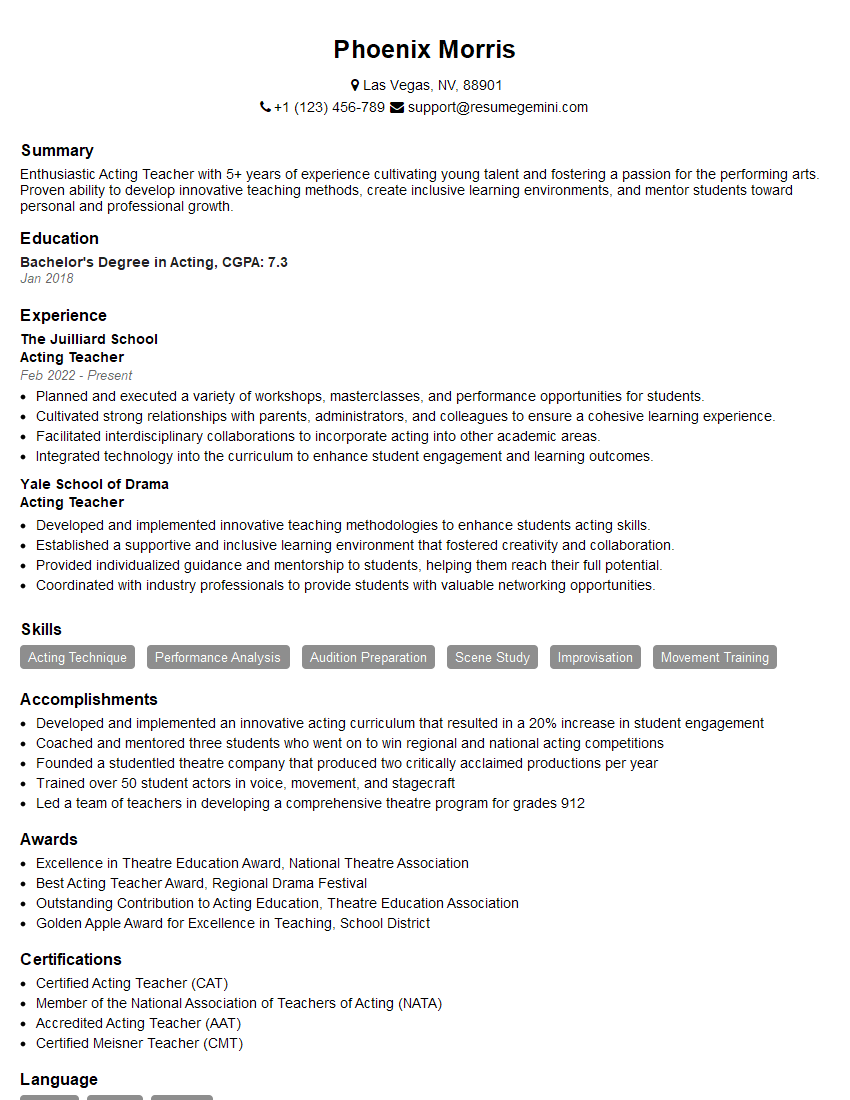
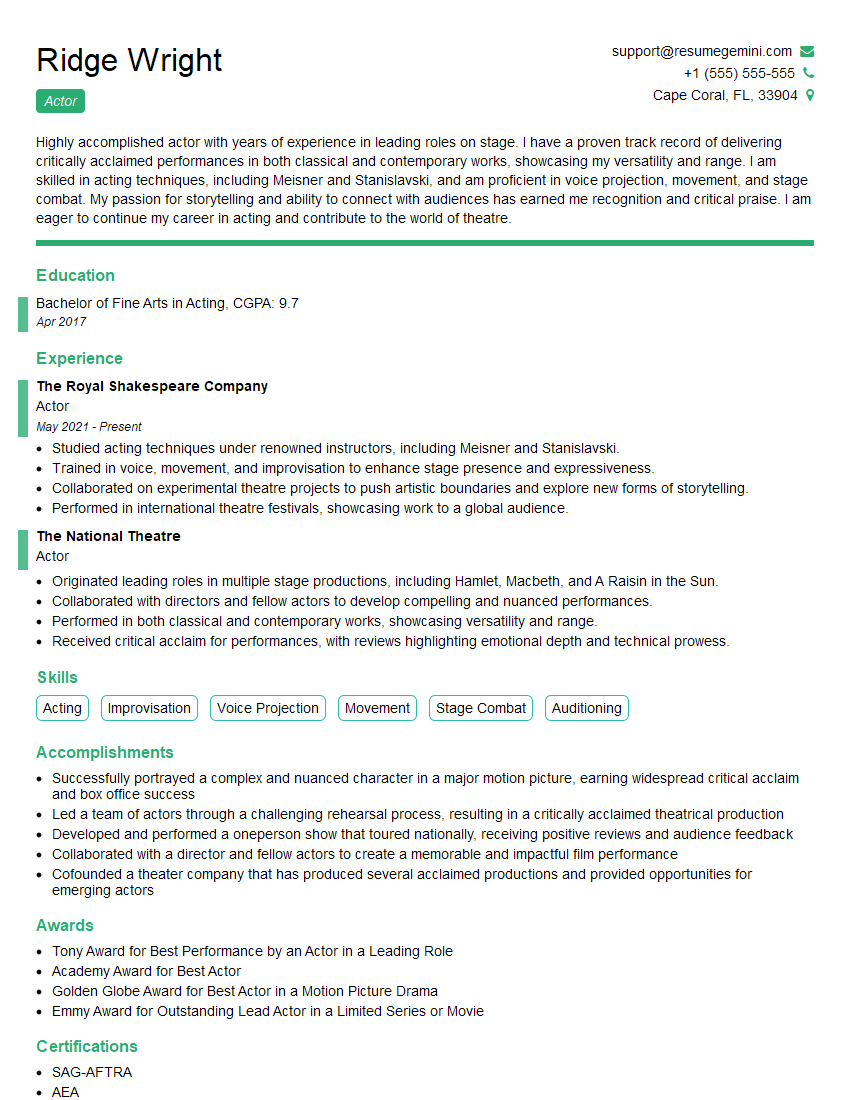
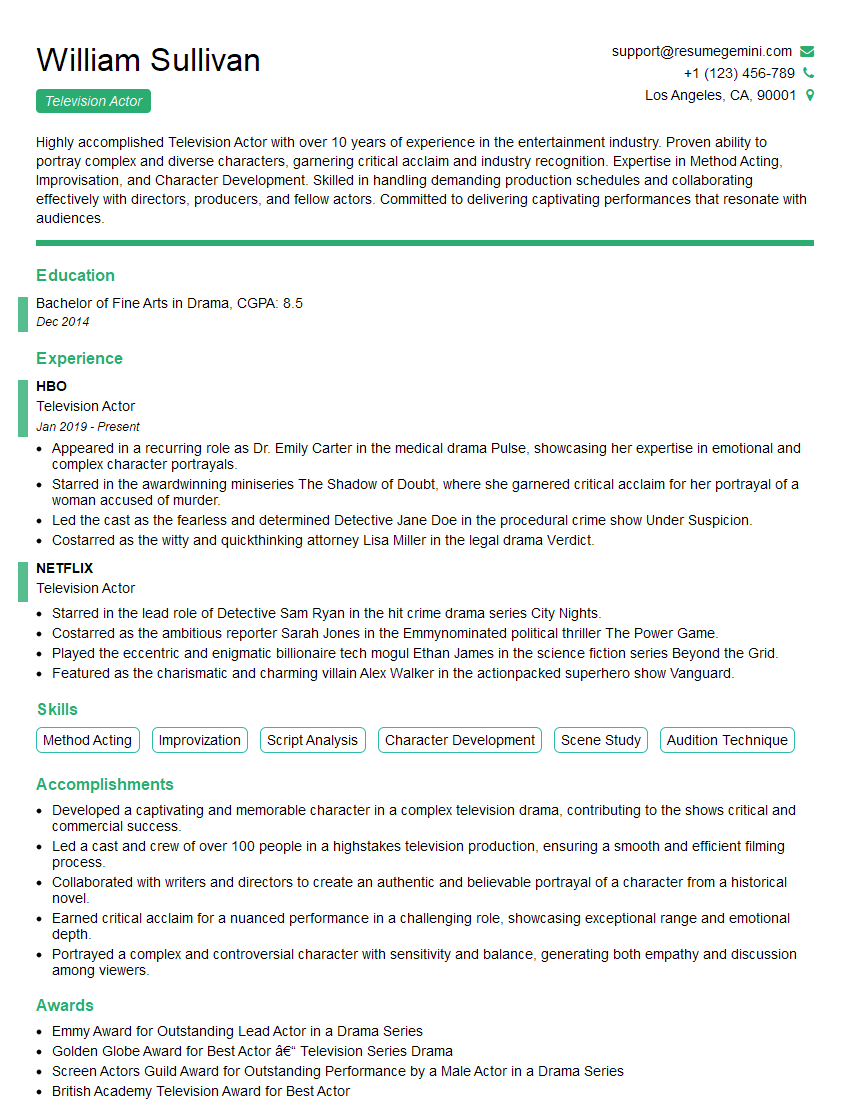
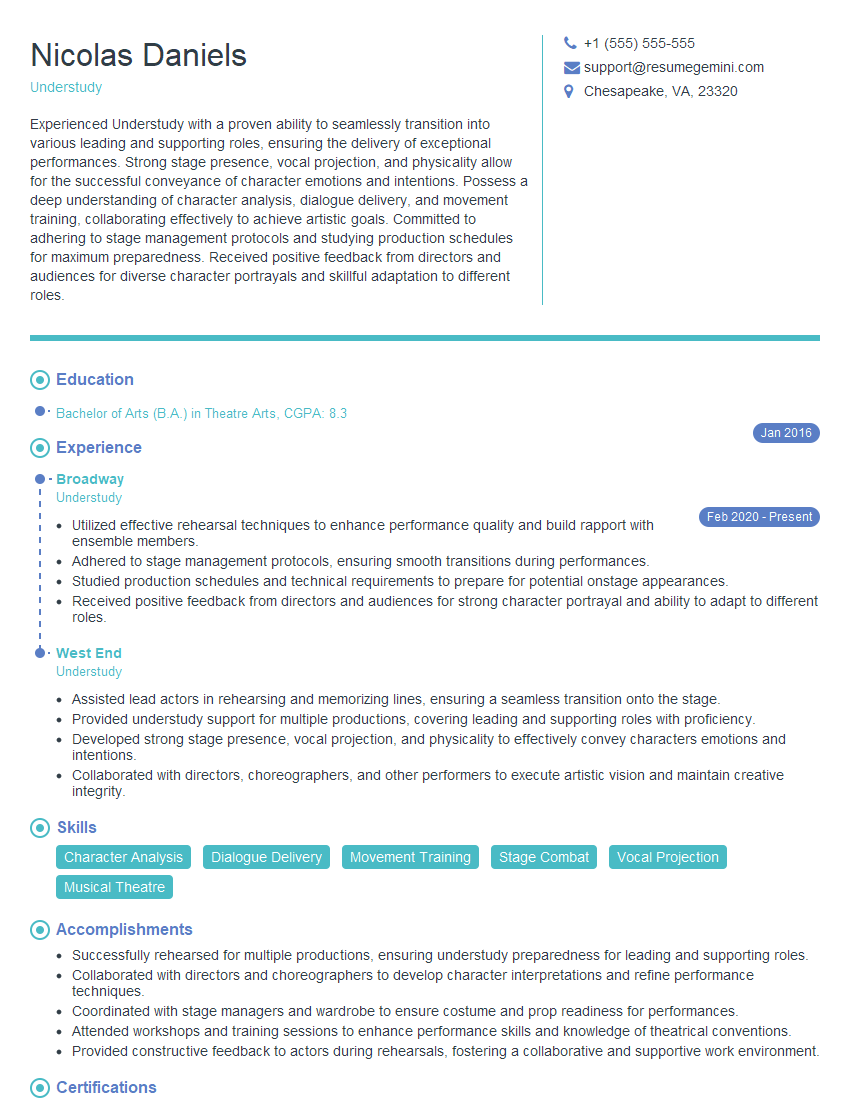
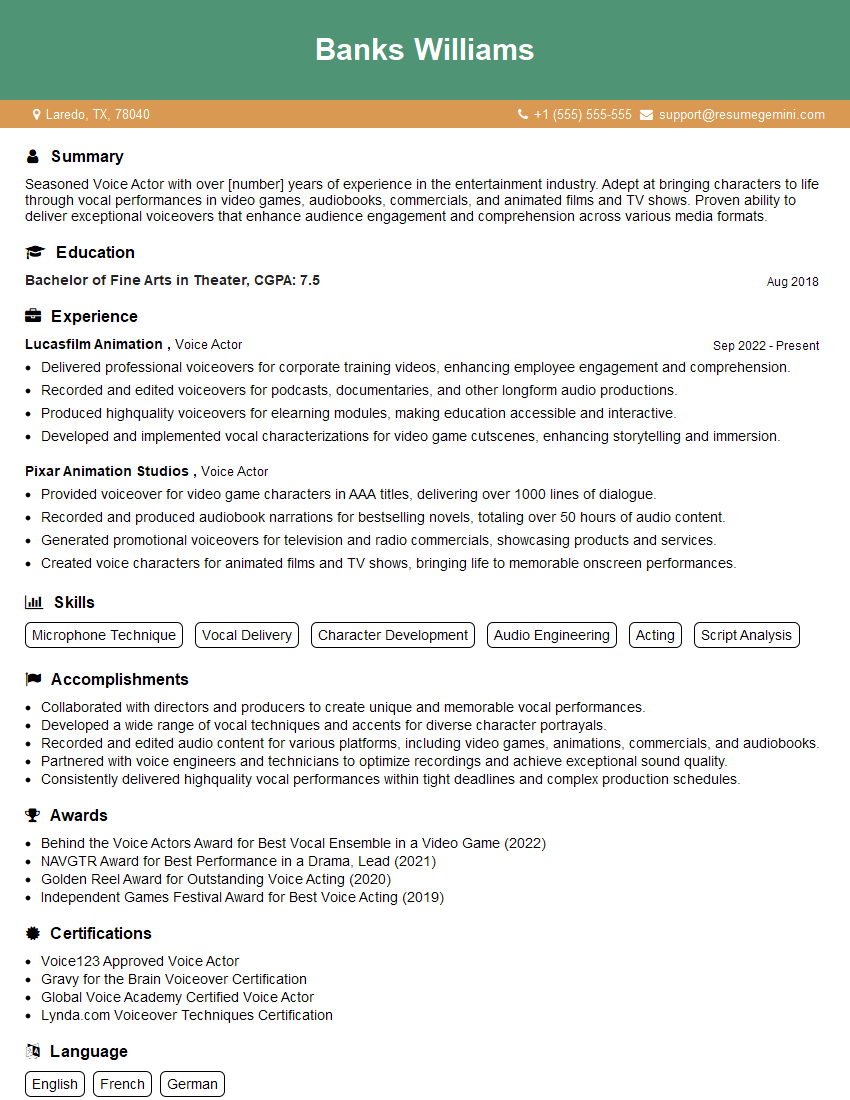
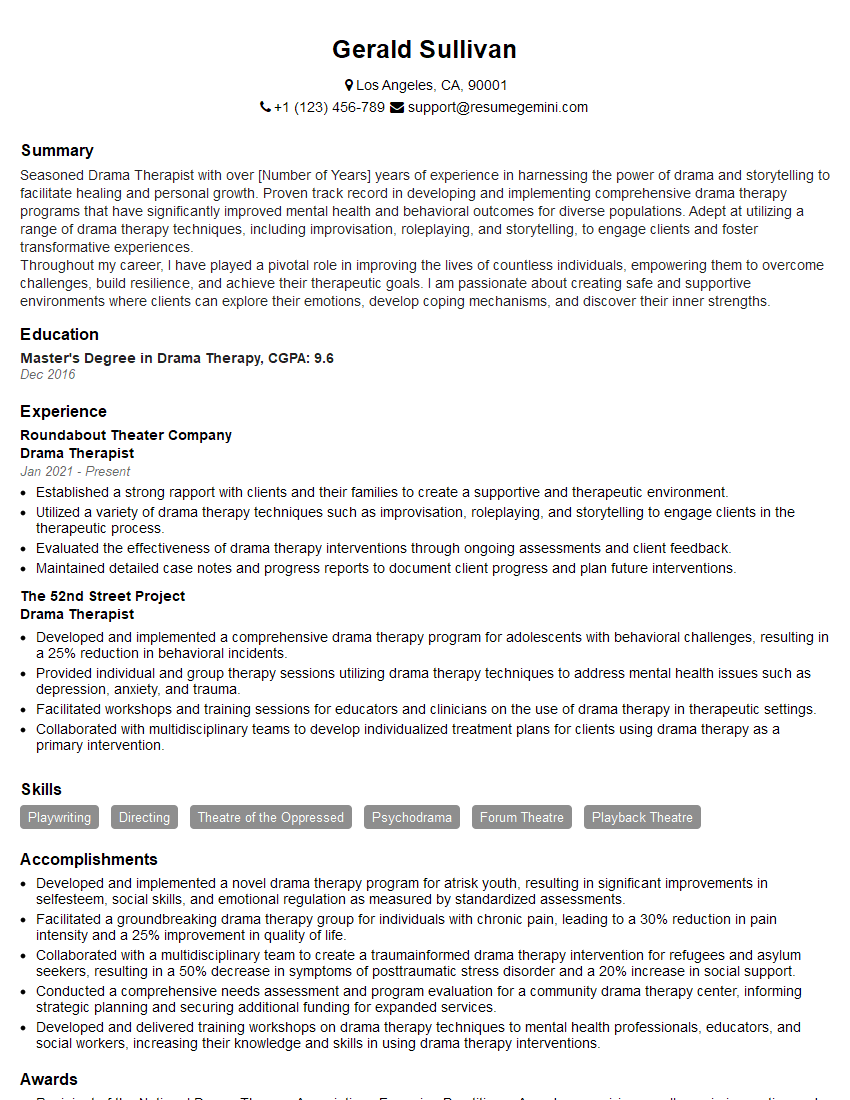
Mastering contemporary acting techniques opens doors to exciting opportunities in theatre, film, television, and beyond. A strong understanding of these core principles will significantly enhance your interview performance and career prospects. To further strengthen your application, focus on creating an ATS-friendly resume that highlights your skills and experience effectively. ResumeGemini is a trusted resource that can help you build a professional and impactful resume tailored to the demands of the contemporary acting industry. Examples of resumes specifically designed for Contemporary Acting professionals are available to guide you.
Explore more articles
Users Rating of Our Blogs
Share Your Experience
We value your feedback! Please rate our content and share your thoughts (optional).
What Readers Say About Our Blog
Very informative content, great job.
good