Every successful interview starts with knowing what to expect. In this blog, we’ll take you through the top Content Writing and Editing interview questions, breaking them down with expert tips to help you deliver impactful answers. Step into your next interview fully prepared and ready to succeed.
Questions Asked in Content Writing and Editing Interview
Q 1. Explain the difference between copywriting and content writing.
While both copywriting and content writing involve crafting text, their goals and approaches differ significantly. Think of copywriting as a direct sales pitch, focused on immediate action. Content writing, on the other hand, aims to inform, engage, and build relationships with an audience over time.
- Copywriting: Primarily focuses on persuasion and driving conversions (e.g., making a purchase, signing up for a newsletter). It’s typically short, punchy, and benefit-driven. Examples include ad copy, website calls-to-action, and email subject lines. A good copywriter crafts compelling narratives that directly translate into sales.
- Content writing: Focuses on providing valuable information, entertaining the reader, or establishing thought leadership. It can take many forms, including blog posts, articles, website content, social media updates, and ebooks. The goal is to attract and retain an audience by building trust and authority.
For example, a copywriter might write a short, persuasive ad for a new phone, highlighting its features and benefits to encourage immediate purchase. A content writer, however, might author a detailed blog post comparing different phone models, offering objective information to help readers make an informed decision. Both are vital, but serve different purposes within a marketing strategy.
Q 2. Describe your experience with SEO writing and keyword research.
My experience in SEO writing encompasses keyword research, on-page optimization, and content strategy development. I utilize a variety of tools, including SEMrush, Ahrefs, and Google Keyword Planner, to identify relevant keywords with high search volume and low competition. My process involves:
- Keyword research: I begin by identifying the target audience and their search intent. This involves brainstorming relevant keywords, analyzing competitor websites, and using keyword research tools to identify long-tail keywords (more specific phrases) and related terms.
- On-page optimization: Once keywords are identified, I strategically incorporate them into the content’s title, headings, meta descriptions, and body text, ensuring natural language flow and avoiding keyword stuffing. I also optimize for readability and user experience.
- Content strategy: I develop content strategies aligned with business goals, encompassing various content formats (blog posts, infographics, videos) to reach a broader audience and improve organic search rankings.
For instance, for a client selling handcrafted jewelry, I wouldn’t just target broad terms like “jewelry.” Instead, I would focus on long-tail keywords like “handmade silver earrings for women,” “artisan-crafted necklaces with gemstones,” or “unique boho-style bracelets.” This approach ensures the content is highly targeted and attracts the right audience.
Q 3. How do you ensure the accuracy and consistency of your writing?
Accuracy and consistency are paramount in my writing. I employ several strategies to ensure these qualities:
- Fact-checking: I meticulously verify all facts and figures using credible sources, including reputable websites, academic journals, and industry reports. I always cite my sources to maintain transparency and allow readers to verify the information independently.
- Style guides: I adhere strictly to style guides like AP Stylebook or Chicago Manual of Style, ensuring consistent formatting, grammar, and punctuation throughout my work. Consistency enhances readability and professionalism.
- Proofreading and editing: I always dedicate ample time to proofreading and editing my work, often using tools like Grammarly and ProWritingAid to catch errors I might have missed. I also conduct multiple rounds of revisions to refine the content’s clarity, flow, and overall impact.
- Peer review: When possible, I seek feedback from colleagues or editors, allowing for a fresh perspective and identifying potential weaknesses or areas for improvement.
For example, if I’m writing about a scientific topic, I wouldn’t rely solely on a single source. I would consult multiple peer-reviewed studies to ensure the accuracy and validity of my claims.
Q 4. What editing tools and techniques are you familiar with?
My editing toolkit includes a range of software and techniques. I’m proficient in using Grammarly and ProWritingAid for grammar and style checks, Hemingway Editor for readability analysis, and Copyscape for plagiarism detection. Beyond software, I utilize various techniques such as:
- Structural editing: This involves reviewing the overall organization and flow of the content, ensuring a logical sequence of ideas and clear transitions between paragraphs.
- Copyediting: This focuses on correcting grammatical errors, punctuation mistakes, and inconsistencies in style and tone.
- Proofreading: This is a final review for any remaining errors, ensuring the text is free of typos and other minor mistakes.
I also rely heavily on my understanding of grammar, style, and the nuances of language to provide detailed and effective editing.
Q 5. How do you handle feedback and revisions on your work?
I view feedback as an opportunity for growth and improvement. My approach to handling feedback and revisions involves:
- Active listening: I carefully read and consider all feedback, paying attention to both positive and negative comments. I strive to understand the rationale behind the suggestions.
- Open communication: I engage in open dialogue with the client or editor to clarify any uncertainties or address concerns. I ask clarifying questions if necessary.
- Organized revisions: I implement revisions systematically, tracking changes using track changes functionality in word processors. This allows for easy review and ensures all feedback is addressed.
- Professionalism: I remain professional and courteous throughout the revision process, maintaining a positive working relationship.
I see revisions not as a criticism, but as a collaborative effort to refine the content and achieve the desired outcome. Each piece of feedback allows for iterative improvements, ultimately leading to a superior product.
Q 6. Describe your process for writing a blog post from start to finish.
My blog post writing process follows a structured approach:
- Idea generation and research: I brainstorm potential topics based on keyword research, audience interests, and current trends. I then conduct thorough research to gather relevant information and ensure accuracy.
- Outline creation: I create a detailed outline, structuring the post logically with an introduction, body paragraphs, and a conclusion. This provides a roadmap for writing and ensures a cohesive flow.
- Writing: I write the blog post according to the outline, focusing on clarity, conciseness, and engaging language. I aim to maintain a conversational tone.
- Editing and proofreading: I carefully edit and proofread the post, correcting grammatical errors, ensuring clarity, and optimizing readability. I might use tools like Grammarly and Hemingway Editor at this stage.
- Optimization: I optimize the post for SEO by incorporating relevant keywords naturally and using appropriate headings, meta descriptions, and image alt tags. I also ensure the images are high-quality.
- Review and publishing: I review the final draft one last time before publishing it. I might share a draft for a second pair of eyes before publishing.
For example, if writing about “sustainable fashion,” I’d research current trends, interview designers, and gather statistics to support my claims. The outline would structure the post logically, perhaps covering the environmental impact, ethical considerations, and practical steps towards sustainable choices.
Q 7. How do you adapt your writing style to different audiences and platforms?
Adapting my writing style to different audiences and platforms is crucial for effective communication. My approach involves:
- Audience analysis: I carefully consider the target audience’s demographics, interests, knowledge level, and preferred communication style. For example, a blog post for tech experts will use different terminology than one for a general audience.
- Platform consideration: The platform dictates the optimal length, format, and tone. A tweet needs to be concise, while a long-form blog post can delve into greater detail. The tone should be consistent with the platform’s overall style.
- Tone adjustment: I adapt my tone to match the platform and audience. A formal tone is appropriate for academic publications, while a conversational tone is better suited for social media posts.
- Style variations: I employ different writing styles depending on the context. A narrative style might work well for storytelling, while a more direct and informative style suits technical documentation.
For example, a LinkedIn post targeting business professionals would utilize a formal tone and professional jargon, while a Facebook post for a younger audience might be more casual and playful. Understanding these nuances ensures the message resonates with the intended audience.
Q 8. How do you ensure your content is engaging and readable?
Engaging and readable content hinges on understanding your audience and employing specific writing techniques. It’s not just about conveying information; it’s about creating a connection.
- Know your audience: Who are you writing for? What are their interests, knowledge levels, and preferred communication style? Tailoring your tone, vocabulary, and style to your audience is crucial. For instance, writing for a scientific journal demands a different approach than writing a blog post for a general audience.
- Strong opening hooks: Start with a compelling sentence or question that immediately grabs the reader’s attention. Think of it like the first impression – you only get one chance to make it count. A statistic, a captivating anecdote, or a thought-provoking question can all work wonders.
- Clear and concise language: Avoid jargon and overly complex sentence structures. Use active voice whenever possible, and break up long paragraphs into shorter, more digestible chunks. Imagine reading a dense wall of text versus a series of concise paragraphs – the latter is far more inviting.
- Use of storytelling and visuals: Weaving in relatable stories and incorporating relevant visuals (images, videos, infographics) can dramatically increase engagement. Stories make information memorable, and visuals break up the text, making it less intimidating.
- Strong calls to action (CTAs): Guide your reader towards the desired outcome. Whether it’s subscribing to a newsletter, making a purchase, or sharing the content, a clear CTA helps you achieve your objectives.
For example, instead of writing ‘Our product improves efficiency,’ I might write, ‘Imagine cutting your workflow time in half. Our product makes that possible!’ This uses a relatable scenario and promises a tangible benefit.
Q 9. How do you measure the success of your content?
Measuring content success goes beyond simply counting views or likes. It requires a multi-faceted approach that aligns with your overall content goals.
- Website analytics (Google Analytics): Track metrics like page views, time on page, bounce rate, and unique visitors. These metrics give insights into how well your content is performing and attracting readers.
- Social media engagement: Monitor shares, comments, likes, and reactions on platforms like Facebook, Twitter, and LinkedIn. This reveals how your content resonates with your target audience.
- Conversion rates: If your content aims to drive conversions (e.g., sales, sign-ups), track conversion rates to assess its effectiveness in achieving its goals. A high conversion rate indicates your content successfully guided readers to the desired action.
- Search engine optimization (SEO): Analyze your content’s ranking in search engine results pages (SERPs). Higher rankings indicate improved visibility and reach.
- Email marketing metrics: If you’re using email marketing to distribute your content, track open rates, click-through rates, and unsubscribe rates to gauge engagement and effectiveness.
- Customer feedback: Gathering feedback directly from readers through surveys or comments can provide invaluable qualitative insights into how your content is perceived and what aspects could be improved.
For instance, if a blog post about a new product has a high bounce rate and low conversion rate, it signals that the content might not be effectively communicating the product’s value proposition. This insight guides future content strategy.
Q 10. What are some common grammatical errors you look for while editing?
Grammatical errors significantly detract from credibility and readability. During editing, I meticulously check for:
- Subject-verb agreement: Ensuring the subject and verb of a sentence agree in number (singular or plural). For example, ‘The dog chases the ball’ is correct, while ‘The dogs chase the ball’ is incorrect.
- Pronoun agreement: Making sure pronouns agree in number and gender with their antecedents. For instance, ‘Each student should bring their own book’ is grammatically incorrect (it should use ‘his or her’).
- Comma splices and run-on sentences: Identifying and correcting sentences improperly joined by only a comma or lacking proper punctuation.
- Misplaced or dangling modifiers: Correcting phrases or clauses that modify the wrong word or have no clear referent.
- Incorrect tense usage: Maintaining consistent verb tense throughout the piece.
- Apostrophe usage (possessives and contractions): Ensuring proper use of apostrophes to show possession or form contractions.
- Incorrect word choice (homophones): Identifying and correcting the use of words that sound alike but have different meanings (e.g., ‘there,’ ‘their,’ ‘they’re’).
I often use grammar checkers as a first pass, but I always manually review the edited text to catch nuances that automated tools might miss. For example, a grammar checker might not identify a subtle shift in tense that affects the overall narrative flow.
Q 11. Explain your understanding of AP style or Chicago style guidelines.
AP (Associated Press) style and Chicago style are two prominent style guides used in writing and publishing. They offer comprehensive guidelines for grammar, punctuation, capitalization, and formatting, though they differ in several key aspects.
- AP Style: Emphasizes brevity, clarity, and consistency. It’s widely used in journalism, news writing, and some corporate communications. Key features include using numerals for numbers 10 and above, avoiding the serial comma (Oxford comma), and following specific rules for capitalization and abbreviation.
- Chicago Style: Offers more flexibility and detailed guidelines, encompassing various writing styles. It’s often preferred in academic writing, books, and scholarly publications. Key features include using words for numbers under 100 (usually), using the serial comma, and providing extensive guidance on citation and bibliography formatting.
Choosing the right style guide depends on the context and audience. I adapt my writing style to match the required style guide, ensuring consistency and adhering to its specific rules. For instance, the use of the serial comma might seem minor, but it’s a crucial distinction between these styles and can lead to ambiguity if not followed consistently.
Q 12. How do you prioritize tasks when working on multiple writing projects?
Prioritizing tasks across multiple writing projects requires a structured approach. I typically use a combination of methods:
- Deadlines: I begin by listing all projects and their respective deadlines. Urgent projects with imminent deadlines take precedence.
- Project importance: I assess the relative importance of each project based on its impact on business goals or client needs. High-impact projects often rank higher.
- Task breakdown: I break down large projects into smaller, manageable tasks. This makes the workload less daunting and allows for more efficient scheduling.
- Time allocation: I estimate the time required for each task and allocate specific time blocks to work on them. This prevents tasks from bleeding into one another.
- Project management tools: I utilize project management tools like Trello or Asana to visualize the workflow, track progress, and manage deadlines effectively. These tools aid in collaboration if the projects involve teamwork.
For example, I might dedicate mornings to high-priority, deadline-driven projects, and afternoons to tasks requiring less immediate attention. This approach maximizes productivity and ensures all projects are addressed systematically.
Q 13. How do you handle deadlines and time management?
Handling deadlines and managing time effectively is paramount in content creation. My approach involves:
- Detailed planning: I meticulously plan each project, breaking down tasks into smaller steps with estimated completion times. This prevents unexpected delays and keeps me on track.
- Time blocking: I dedicate specific blocks of time to focused work on particular tasks. Eliminating distractions during these blocks is key to maintaining productivity.
- Prioritization: I prioritize tasks based on urgency and importance, ensuring that critical tasks are completed before less important ones.
- Realistic estimations: I avoid overestimating my capacity and build in buffer time to account for unforeseen delays or challenges.
- Regular progress checks: I regularly review my progress against the planned schedule, adjusting my approach as needed to stay on track.
- Communication: I maintain open communication with clients or stakeholders to manage expectations and address any potential issues proactively.
One strategy I employ is the Pomodoro Technique: working in focused 25-minute intervals followed by short breaks. This technique enhances concentration and prevents burnout, allowing me to stay focused and productive over extended periods.
Q 14. Describe your experience working with content management systems (CMS).
I possess extensive experience working with various content management systems (CMS), including WordPress, Drupal, and Joomla. My experience spans from basic content creation and editing to advanced customization and plugin integration.
- WordPress: I’m proficient in using WordPress’s intuitive interface for creating and managing posts, pages, and media. I also have experience with various WordPress plugins for SEO, social media integration, and analytics tracking.
- Drupal: I’ve worked with Drupal’s more complex architecture, creating and managing content within its structured environment. My experience includes configuring user roles, permissions, and workflows.
- Joomla: I’m familiar with Joomla’s features for content management and have experience customizing templates and extensions to meet specific needs.
- Content migration: I have experience migrating content between different CMS platforms, ensuring data integrity and minimal disruption.
- SEO optimization within CMS: I understand how to optimize content within these systems for search engines, including keyword integration, meta descriptions, and image optimization.
For example, I recently migrated a client’s website from Joomla to WordPress, ensuring that all existing content was transferred without data loss and that the new site maintained its SEO performance. This involved careful planning, data export and import, and thorough testing after the migration.
Q 15. How familiar are you with different content formats (e.g., infographics, videos)?
My familiarity with diverse content formats extends beyond the basics. I’m proficient in crafting engaging content across various mediums, including blog posts, articles, social media updates, infographics, videos, and even podcasts. Understanding the nuances of each format is crucial for effective communication. For instance, an infographic is ideal for quickly conveying complex data, while a video allows for a more personal and engaging connection with the audience. A blog post provides in-depth information, whereas a social media update needs to be concise and impactful. I tailor my approach to the specific platform and target audience, ensuring the message is optimally delivered.
For example, when creating an infographic, I focus on strong visuals, minimal text, and a clear narrative flow to ensure information is easily digestible. With a video script, I consider pacing, tone, and visual elements to maintain audience engagement. This multifaceted approach guarantees my content resonates with various audiences.
Career Expert Tips:
- Ace those interviews! Prepare effectively by reviewing the Top 50 Most Common Interview Questions on ResumeGemini.
- Navigate your job search with confidence! Explore a wide range of Career Tips on ResumeGemini. Learn about common challenges and recommendations to overcome them.
- Craft the perfect resume! Master the Art of Resume Writing with ResumeGemini’s guide. Showcase your unique qualifications and achievements effectively.
- Don’t miss out on holiday savings! Build your dream resume with ResumeGemini’s ATS optimized templates.
Q 16. How do you research and verify information for your writing?
Rigorous research and verification are cornerstones of my writing process. I begin by identifying reliable sources – peer-reviewed journals, reputable news outlets, government reports, and industry-leading publications. My process is iterative, moving from broad research to targeted fact-checking. I use a combination of keyword research to discover relevant information and then cross-reference findings from multiple sources to ensure accuracy and avoid biases. Any claims or statistics are meticulously documented, creating a clear audit trail for transparency.
For instance, if I’m writing about the impact of climate change, I would consult reports from the IPCC (Intergovernmental Panel on Climate Change), scientific journals specializing in climatology, and credible news sources covering environmental issues. I wouldn’t rely on a single source, but rather triangulate information from various credible sources to ensure the data is robust and reliable.
Q 17. What is your approach to fact-checking and source verification?
Fact-checking and source verification are paramount to maintaining credibility. My approach involves several steps: First, I evaluate the source’s authority and reputation. Is it a known expert in the field? Is the publication or website known for accuracy and unbiased reporting? Then, I scrutinize the evidence presented, looking for inconsistencies, biases, or unsupported claims. If a source cites other works, I trace these back to their original sources. Finally, I cross-reference information with multiple sources to ensure consistency and accuracy. Any discrepancies are investigated thoroughly to determine their validity.
Imagine writing about a new medical treatment. I wouldn’t just rely on a press release from the pharmaceutical company. Instead, I’d examine peer-reviewed clinical trials published in reputable medical journals to corroborate the claims and assess the treatment’s efficacy and safety. This multi-faceted verification ensures factual accuracy and reduces the risk of spreading misinformation.
Q 18. How do you incorporate visual elements effectively into your content?
Visual elements are crucial for engaging the reader. I strategically incorporate visuals to break up large blocks of text, improve readability, and enhance comprehension. My choices depend on the content’s nature and the target audience. For example, charts and graphs effectively present data, while high-quality images enhance storytelling and create visual appeal. Videos and interactive elements can increase engagement further. I always prioritize visuals that are relevant, high-resolution, and aesthetically pleasing, ensuring they complement the written content rather than distracting from it.
When writing a blog post about website traffic statistics, a well-designed graph showing traffic growth over time would be far more effective than simply writing out the numerical data. Similarly, using relevant images can make a travel blog post more engaging and memorable.
Q 19. Explain your understanding of content strategy and planning.
Content strategy and planning are about creating a cohesive and effective content plan aligned with business goals. It begins with defining clear objectives – whether it’s driving sales, increasing brand awareness, or generating leads. Then, I identify the target audience and their needs and preferences. Based on this, I develop a content calendar outlining the type of content to be created, its publication schedule, and the platforms for distribution. This plan also includes a process for evaluating the effectiveness of the content and making necessary adjustments. Essentially, it’s a roadmap for achieving defined goals through strategic content creation.
For example, a company launching a new product might develop a content strategy encompassing blog posts explaining the product’s features, social media campaigns highlighting customer testimonials, and email marketing nurturing potential leads. The success of this strategy would be measured by metrics such as website traffic, sales conversions, and social media engagement.
Q 20. Describe your experience with A/B testing and content optimization.
A/B testing and content optimization are essential for improving content performance. A/B testing involves creating two versions of a piece of content (e.g., headlines, calls-to-action, images) and testing them against each other to see which performs better. Data analytics provide insights into which version is more effective, allowing for iterative improvements. This data-driven approach helps to maximize engagement, conversion rates, and overall content effectiveness. Content optimization involves tweaking elements of the content based on A/B test results and performance analytics to improve its search engine ranking (SEO) and overall user experience.
For instance, I might A/B test two different headlines for a blog post to see which one garners more clicks. If one headline significantly outperforms the other, that information is used to inform future content strategies. Furthermore, I would regularly monitor website analytics to gauge user behavior and identify areas of improvement in terms of engagement and bounce rate.
Q 21. How do you stay up-to-date with industry trends and best practices?
Staying current with industry trends and best practices is a continuous process. I subscribe to relevant newsletters and blogs, attend webinars and conferences, follow industry leaders on social media, and actively participate in online communities. I also regularly review search engine algorithm updates and analyze competitor strategies to identify emerging trends and adapt my techniques accordingly. Furthermore, I invest in professional development opportunities and continuously hone my skills to maintain a competitive edge.
For example, I might follow prominent content marketing influencers on Twitter to get insights on the latest strategies and technologies, or I might read industry reports to stay ahead of algorithmic shifts affecting search engine optimization. This proactive approach ensures my writing remains relevant and effective.
Q 22. What are some of your favorite resources for content writing and editing?
My content creation toolkit is diverse and constantly evolving, reflecting the dynamic nature of the field. I rely heavily on a combination of resources, categorized for clarity.
- Style Guides and Dictionaries: The Chicago Manual of Style and AP Stylebook are indispensable for consistent and accurate writing. Merriam-Webster and Oxford Dictionaries ensure precise word choice.
- Grammar and Writing Tools: Grammarly and ProWritingAid are invaluable for catching grammatical errors and stylistic inconsistencies. They offer suggestions for improving clarity and flow.
- SEO Tools: Tools like SEMrush and Ahrefs help me understand keyword trends and optimize content for search engines, ensuring maximum reach.
- Content Inspiration Platforms: I regularly explore platforms like BuzzSumo and AnswerThePublic to identify trending topics and understand audience queries. This helps me generate relevant and engaging content ideas.
- Industry-Specific Publications and Blogs: To stay updated on best practices and trends, I follow reputable publications and blogs in my chosen niches. This ensures my work remains current and relevant.
For example, recently I used Ahrefs to identify relevant keywords for a client in the sustainable fashion industry. This allowed me to tailor content effectively to attract their target audience organically.
Q 23. How would you approach writing content for a technical audience?
Writing for a technical audience demands precision, clarity, and a deep understanding of the subject matter. My approach involves several key steps:
- Deep Subject Matter Understanding: Before I even begin writing, I thoroughly research the topic to ensure I grasp the technical concepts fully. This might involve consulting technical documentation, expert interviews, or existing research papers.
- Simple Language and Clear Definitions: I avoid jargon whenever possible. If technical terms are necessary, I define them clearly and concisely, often providing illustrative examples or analogies to simplify complex information.
- Structured and Logical Flow: Technical content needs a logical structure. I employ clear headings, subheadings, bullet points, and numbered lists to break down complex information into easily digestible chunks. Think of it as building a roadmap for the reader through potentially challenging terrain.
- Visual Aids: I leverage visuals like diagrams, charts, and tables to visually represent complex data or processes. A picture, after all, is often worth a thousand words, especially when explaining technical details.
- Thorough Editing and Proofreading: Accuracy is paramount in technical writing. I meticulously edit and proofread my work, often employing a second set of eyes for a fresh perspective.
For instance, when writing about cloud computing for a software engineering audience, I would avoid phrases like ‘lift and shift’ unless clearly defined and illustrated with examples of its practical application.
Q 24. How would you handle a situation where you have conflicting information from different sources?
Conflicting information is a common challenge in content writing. My approach is methodical and prioritizes accuracy and credibility:
- Identify the Source Discrepancy: The first step is to pinpoint the exact points of conflict. Note the differing information and the sources providing it.
- Evaluate Source Credibility: Assess the credibility of each source. Consider the author’s expertise, the publication’s reputation, and any potential biases. A peer-reviewed scientific journal holds more weight than an anonymous blog post.
- Seek Additional Sources: Consult additional reputable sources to corroborate or refute the conflicting information. The goal is to find a consensus or identify the most reliable information.
- Document Your Findings: Maintain a clear record of your research, including the sources consulted and your reasoning for choosing a particular perspective. This documentation is essential for transparency and accountability.
- Clearly Indicate Uncertainties: If, after thorough research, uncertainty remains, I clearly indicate this in the content, acknowledging the limitations of current knowledge. For example, I might write, “While studies suggest X, further research is needed to definitively confirm this conclusion.”
Once I have established the most accurate and reliable information, I weave this into the final piece of content, ensuring clarity and transparency throughout.
Q 25. What is your experience with content repurposing and syndication?
Content repurposing and syndication are crucial for maximizing content reach and impact. My experience involves adapting existing content into various formats and distributing it across different platforms.
- Repurposing Techniques: I’ve successfully transformed blog posts into infographics, presentations, social media snippets, email newsletters, and short video clips. This extends the lifespan and reach of the original content.
- Syndication Strategies: I have experience syndicating content through guest blogging on relevant websites, submitting articles to industry publications, and utilizing content aggregators to increase visibility. This expands the audience significantly.
- Maintaining Brand Consistency: While adapting content for different platforms, I meticulously maintain brand consistency in tone, voice, and messaging. The core message stays consistent, though the delivery might vary.
- Tracking and Analysis: I carefully track the performance of repurposed and syndicated content, using analytics to measure engagement and identify which strategies are most effective. This allows for data-driven optimization.
For example, I recently repurposed a lengthy blog post about cybersecurity best practices into a series of short, engaging videos for social media. This resulted in a much wider audience engagement compared to the initial blog post alone.
Q 26. How do you ensure your content is accessible to people with disabilities?
Accessibility is a core principle in my content creation process. I strive to ensure my content is usable and understandable by everyone, regardless of disability.
- Alternative Text for Images: I always include descriptive alt text for all images. This allows screen readers to convey the image content to visually impaired users.
- Captions and Transcripts for Videos: Videos are made accessible through closed captions or transcripts, catering to individuals with hearing impairments or those who prefer to read instead of listen.
- Proper Heading Structure: I use a logical heading structure (
,, etc.) to improve navigation for screen readers and enhance the overall readability of the content. - Sufficient Color Contrast: I ensure sufficient color contrast between text and background to enhance readability for users with visual impairments.
- Keyboard Navigation: I design content to be fully navigable using only a keyboard, excluding reliance on a mouse, ensuring accessibility for individuals with motor impairments.
- Simple Language and Structure: I use clear, concise language and a simple structure to make the content easy to understand for all users, including those with cognitive disabilities.
Following these guidelines allows me to create content that is inclusive and usable by a much wider audience.
Q 27. Describe your experience with collaborating with designers and developers.
Collaboration with designers and developers is crucial for delivering a holistic and impactful user experience. My experience involves:
- Clear Communication: I maintain open and transparent communication with designers and developers. I provide clear briefs outlining content goals, target audience, and desired style. This ensures everyone is on the same page.
- Content Strategy Alignment: I work closely with designers to ensure the visual elements complement and enhance the written content. I discuss things like layout, imagery, and overall aesthetic, aiming for synergy between design and words.
- Technical Considerations: I am aware of the technical limitations and opportunities, ensuring my content aligns with the capabilities of the platform or application. This might involve structuring content for optimal SEO or adapting text length to fit specific design constraints.
- Iterative Feedback Loops: I embrace iterative feedback, incorporating suggestions from designers and developers. I believe in collaboration and am always willing to adjust my writing to meet the project’s overall goals.
- Version Control: I utilize version control systems to track changes and facilitate easy collaboration. This allows for clear communication and smooth workflow management.
For example, while working on a website redesign, I collaborated with the designer to ensure the text flowed naturally within the planned visual layout and worked alongside developers to optimize content for search engine optimization (SEO).
Key Topics to Learn for Content Writing and Editing Interview
- Understanding Your Audience: Developing buyer personas and tailoring content to specific demographics and needs. Practical application: Analyze a target audience and create a content strategy accordingly.
- Content Strategy & Planning: Defining content goals, choosing appropriate formats (blog posts, website copy, social media content), and developing a content calendar. Practical application: Create a sample content plan for a hypothetical client.
- SEO Principles: Keyword research, on-page optimization, and understanding search engine algorithms. Practical application: Optimize a sample piece of text for relevant keywords.
- Different Content Formats: Mastering various writing styles for blog posts, website copy, articles, social media, email marketing, and other content types. Practical application: Showcase writing samples across multiple formats.
- Grammar, Style, and Mechanics: Demonstrate a strong understanding of grammar rules, style guides (AP, Chicago), and punctuation. Practical application: Edit a sample text for grammar and style errors.
- Editing and Proofreading: Mastering techniques for effective editing and proofreading, including identifying and correcting errors in grammar, spelling, punctuation, style, and clarity. Practical application: Perform a thorough edit and proofread of a sample document.
- Content Optimization and Analysis: Using analytics to measure content performance and make data-driven improvements. Practical application: Interpret sample website analytics and suggest content adjustments.
- Collaboration and Teamwork: Working effectively with designers, developers, and other team members. Practical application: Describe your experience in collaborative content creation projects.
- Content Management Systems (CMS): Familiarity with popular CMS platforms like WordPress. Practical application: Describe your experience using a CMS and its functionalities.
- Brand Voice and Consistency: Maintaining a consistent brand voice and tone across all content platforms. Practical application: Adapt your writing style to reflect different brand voices.
Next Steps
Mastering content writing and editing opens doors to exciting career opportunities in diverse fields, offering excellent growth potential and high demand. To maximize your job prospects, crafting an ATS-friendly resume is crucial. ResumeGemini is a trusted resource that can help you build a professional resume that stands out. Take advantage of their tools and resources, and explore the provided examples of resumes tailored to Content Writing and Editing roles to enhance your job search.
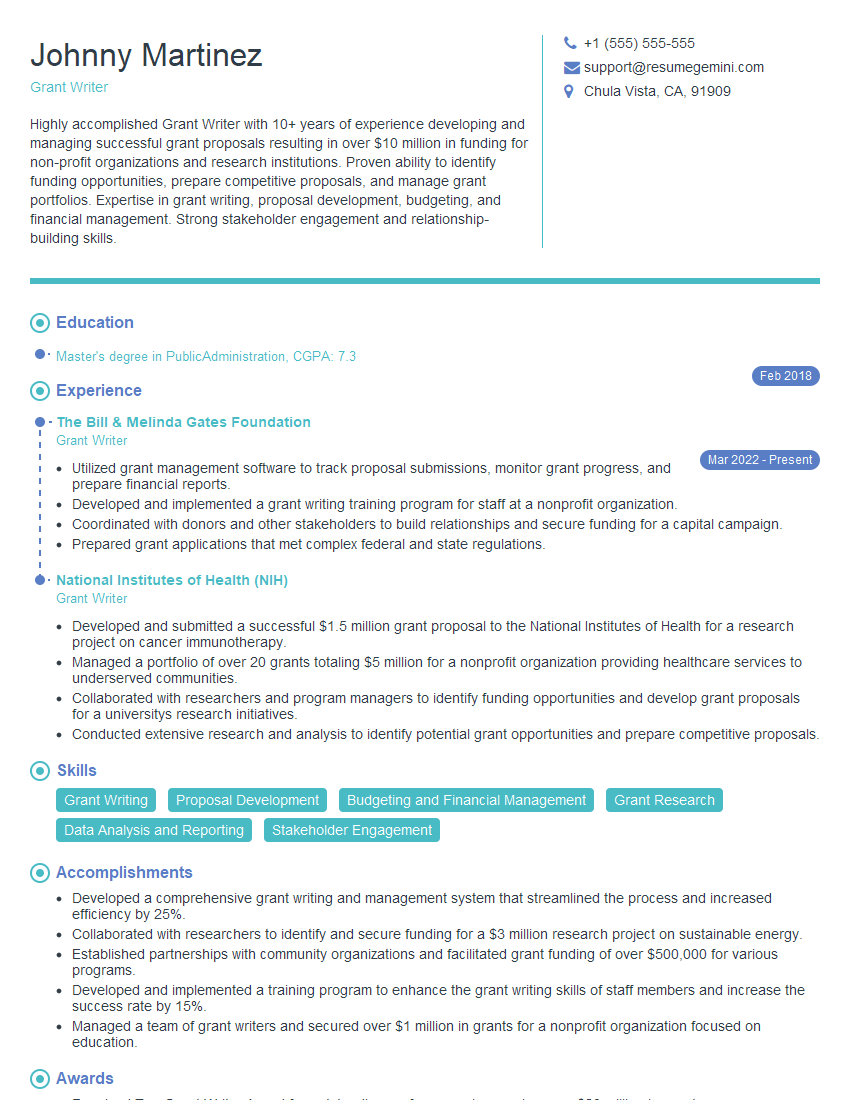
Grant Writer Resume Sample
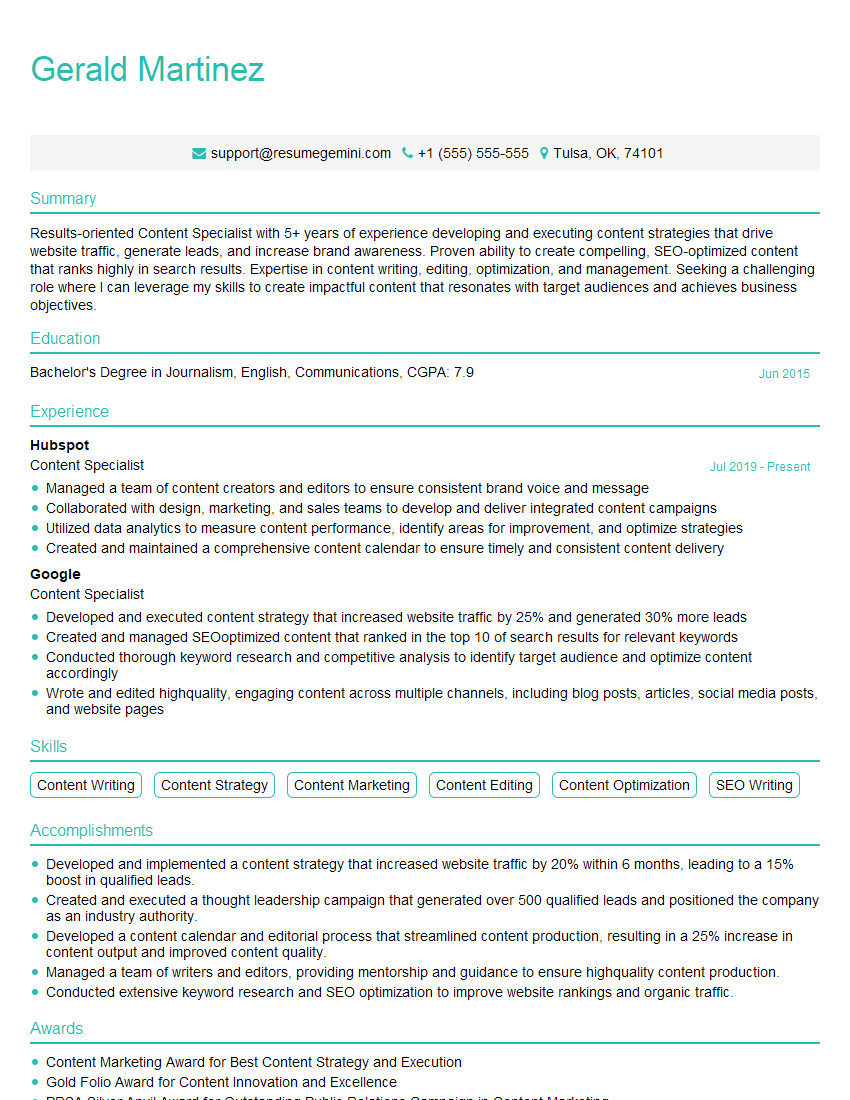
Content Specialist Resume Sample

Content Strategist Resume Sample
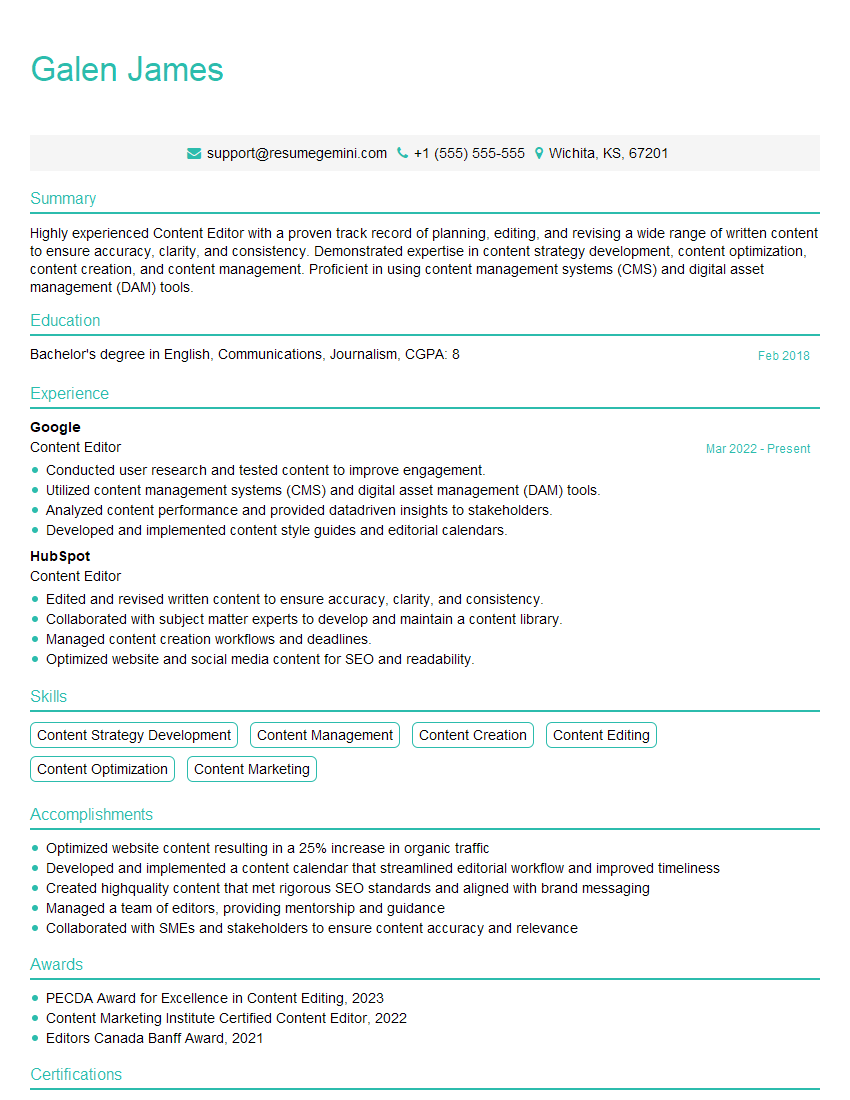
Content Editor Resume Sample
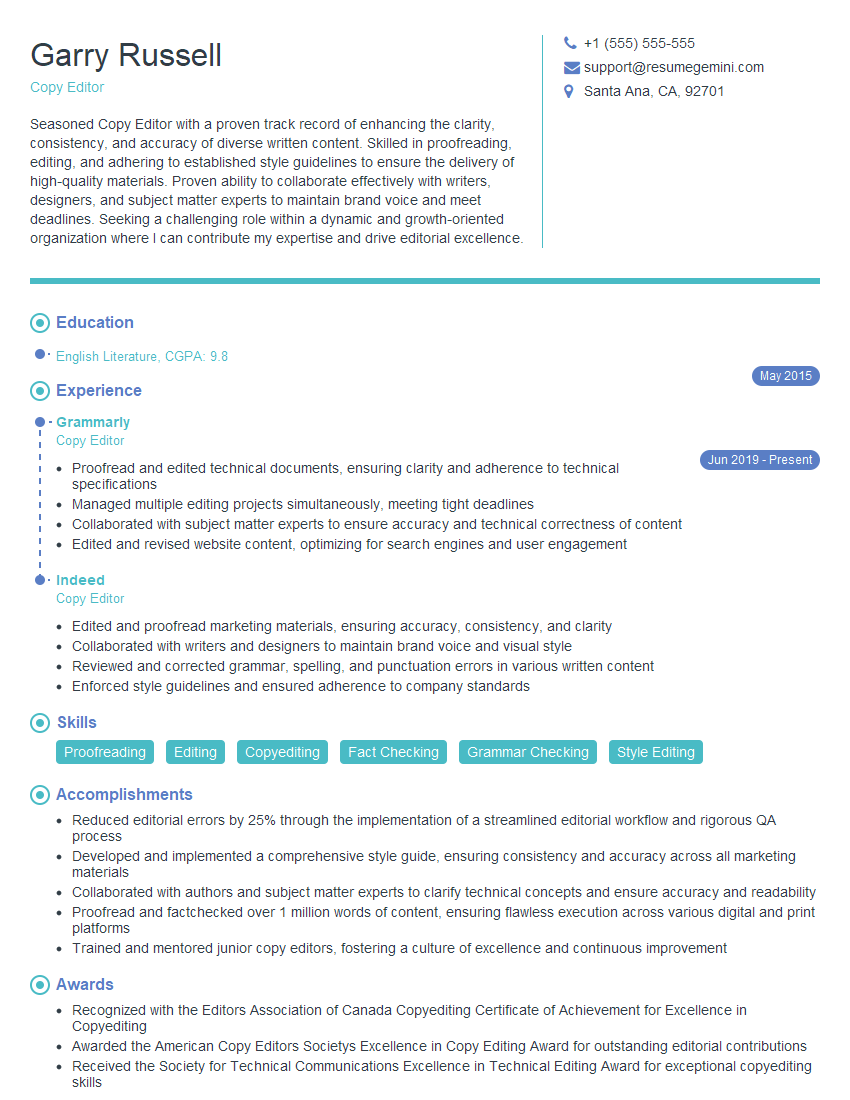
Copy Editor Resume Sample
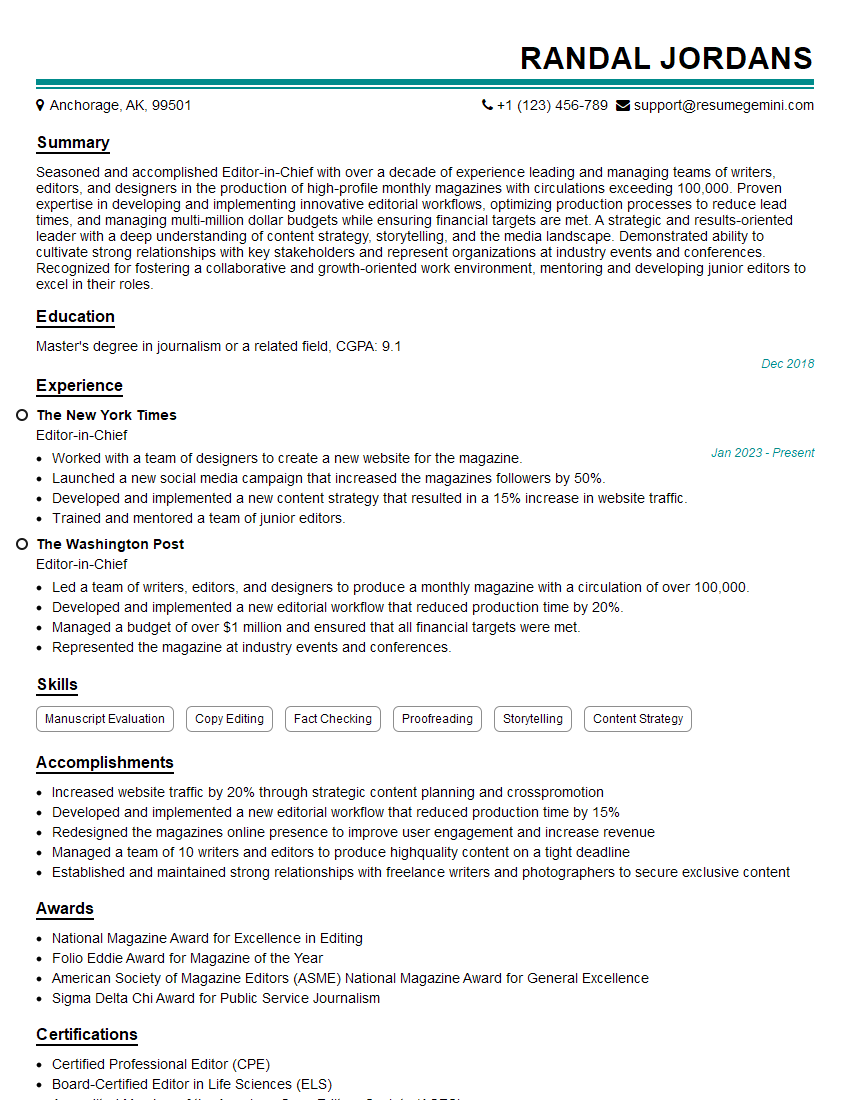
Editor-in-Chief Resume Sample
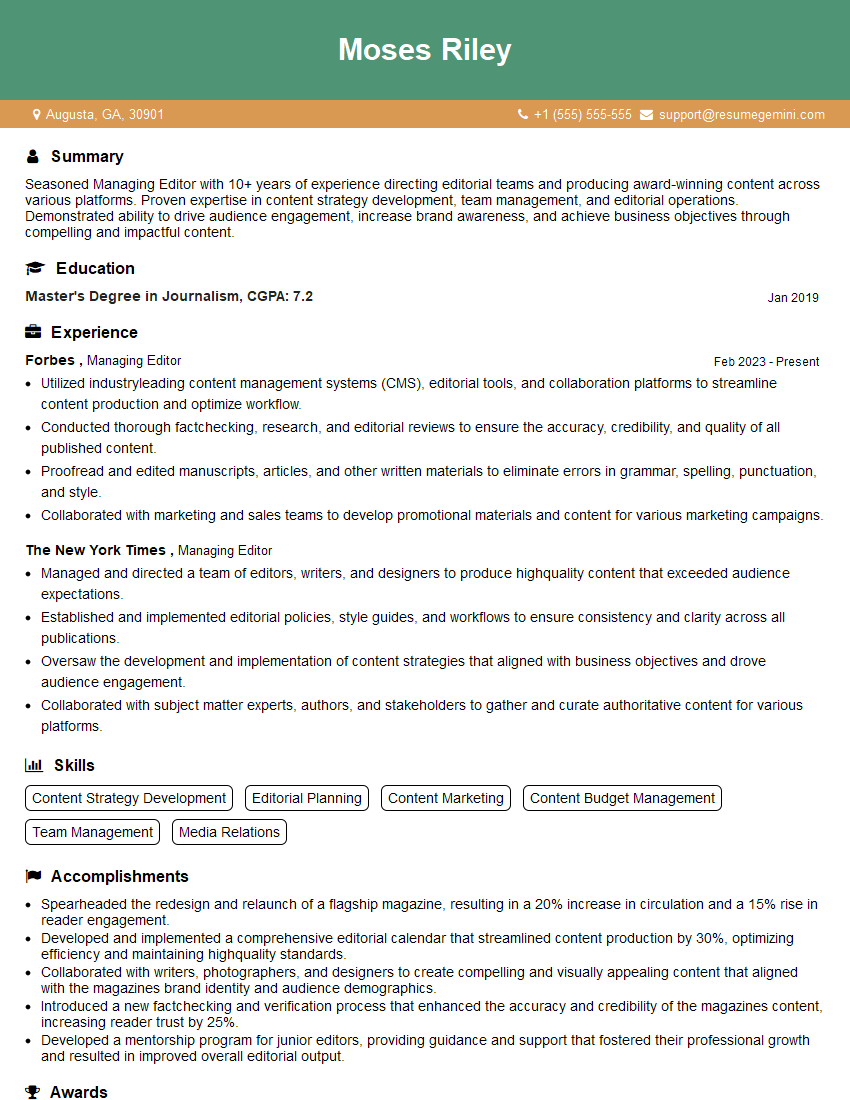
Managing Editor Resume Sample
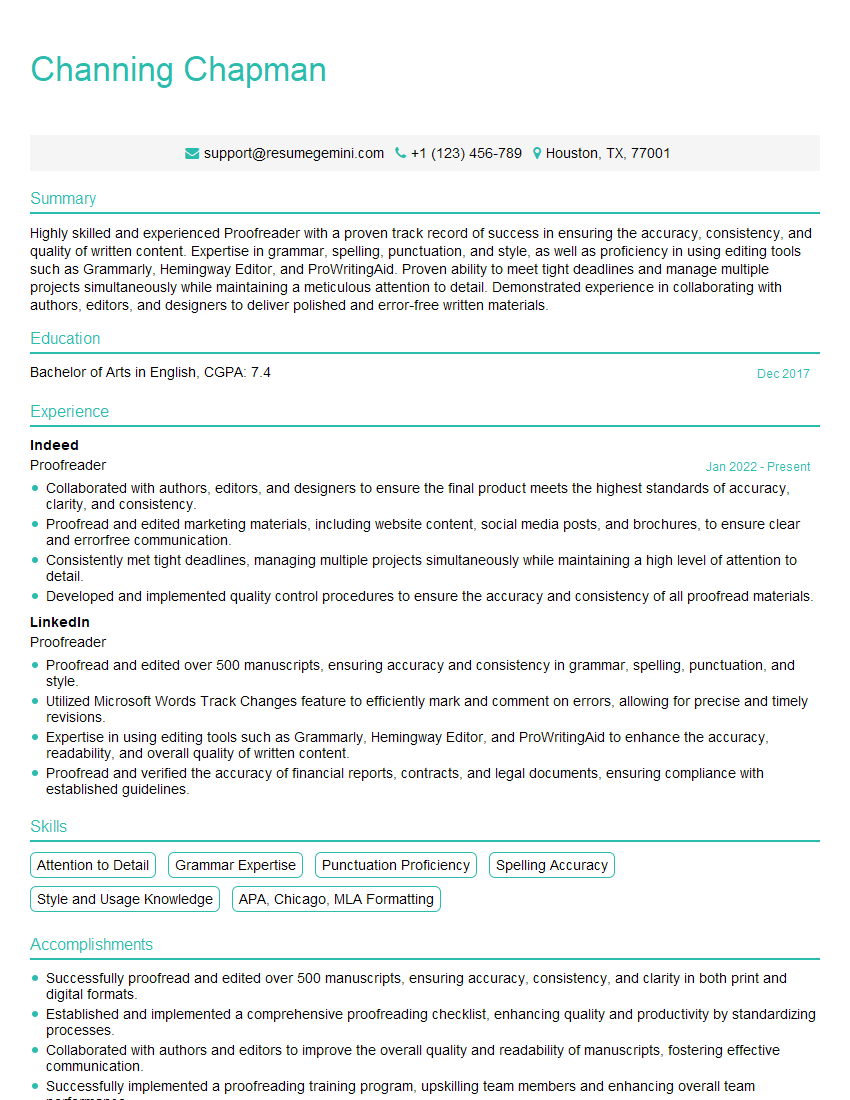
Proofreader Resume Sample
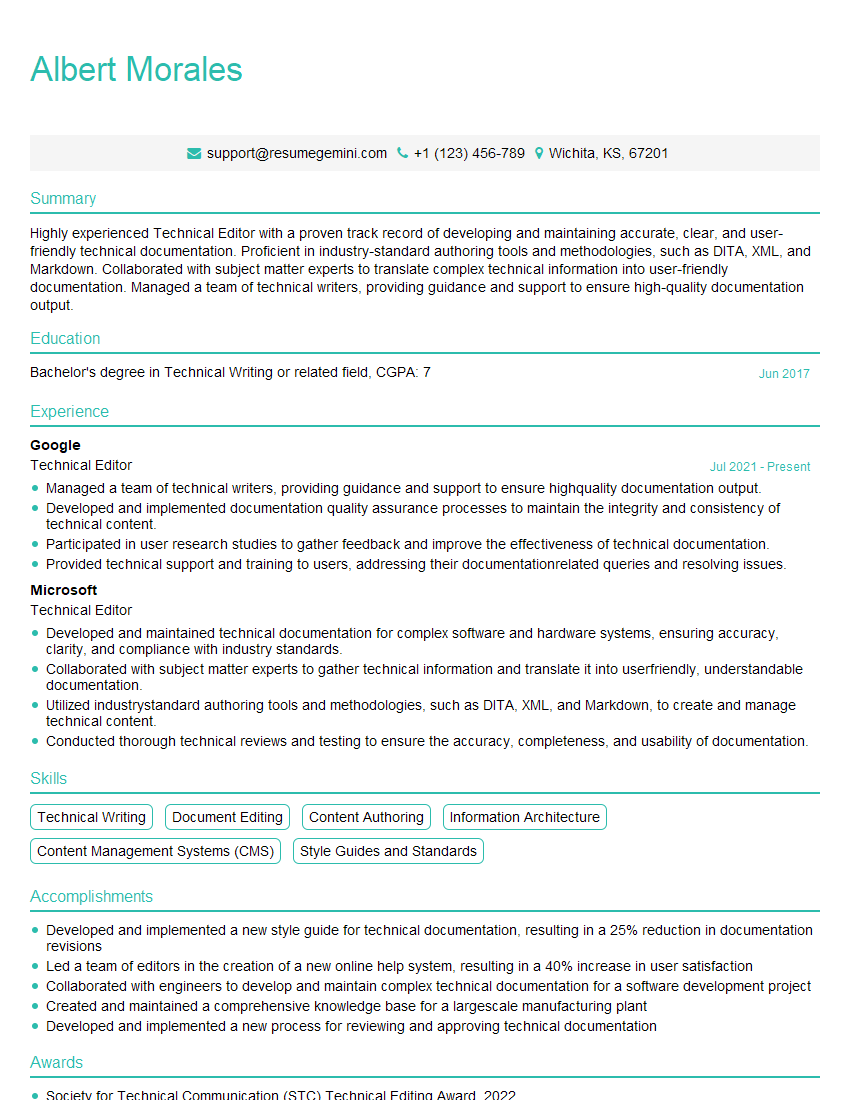
Technical Editor Resume Sample
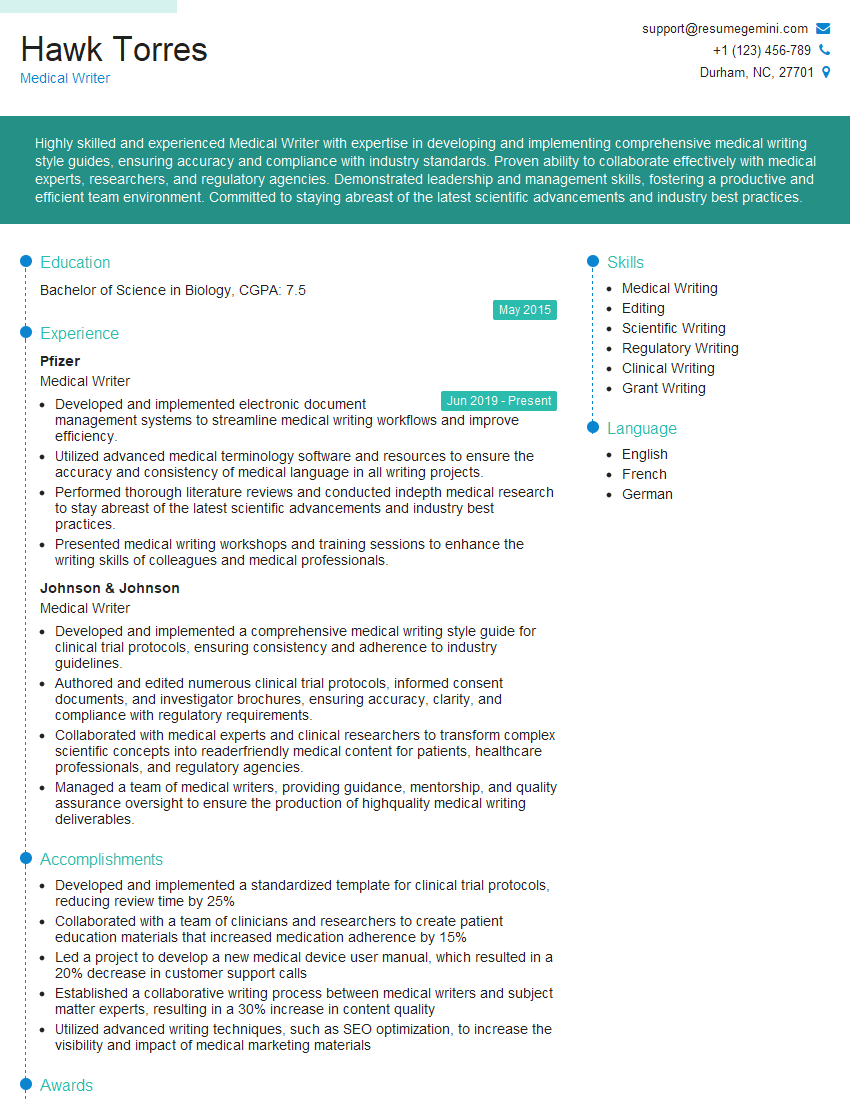
Medical Writer Resume Sample

Technical Writer Resume Sample

Copywriter Resume Sample
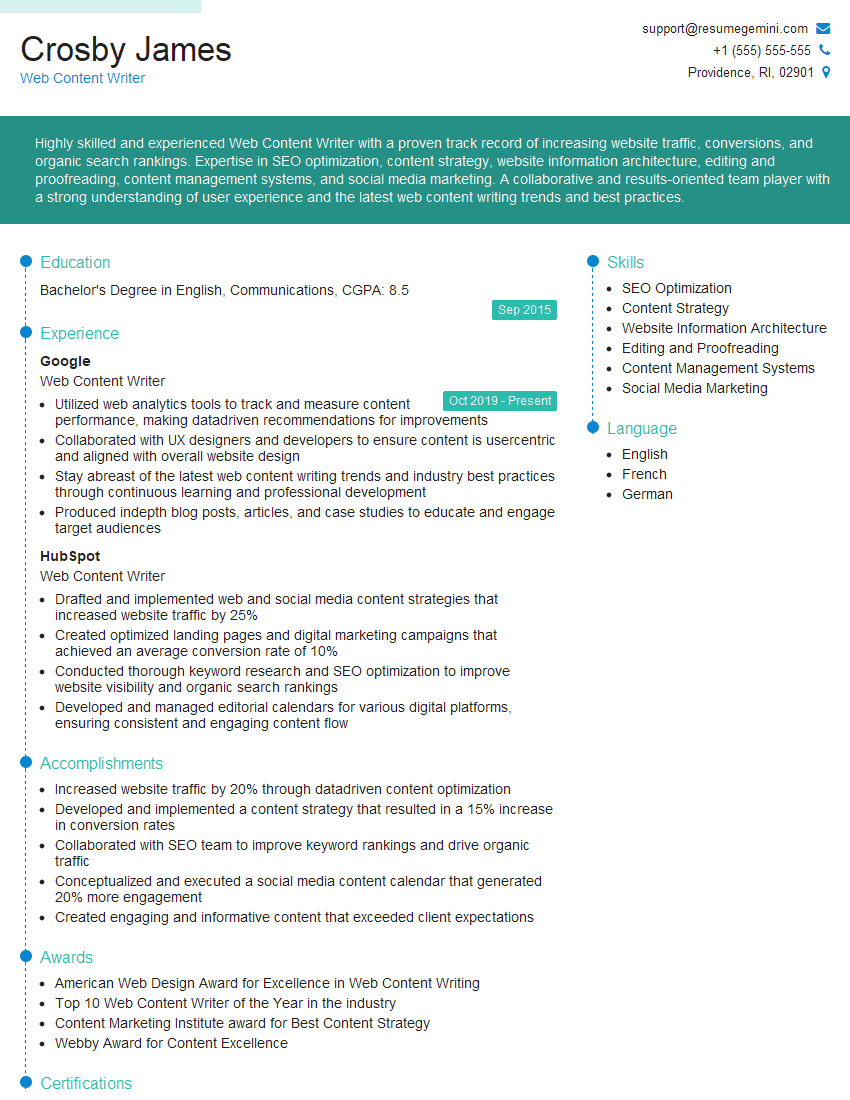
Web Content Writer Resume Sample
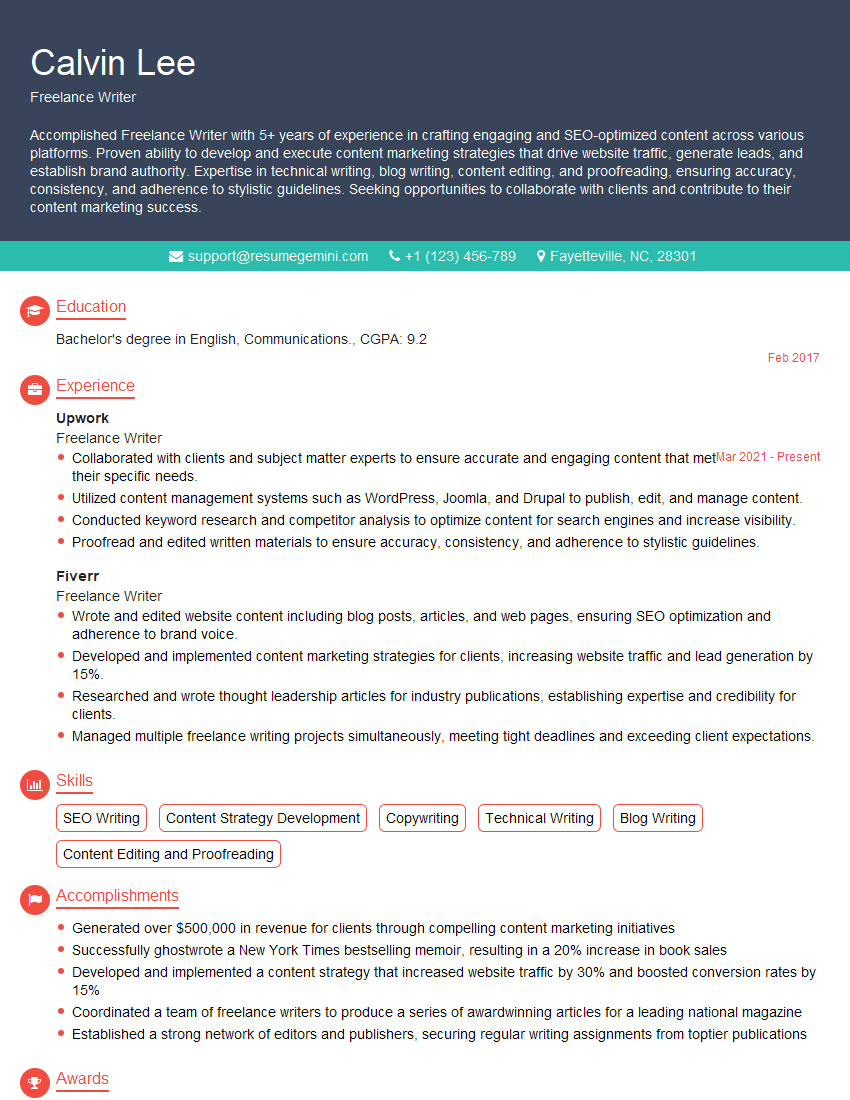
Freelance Writer Resume Sample
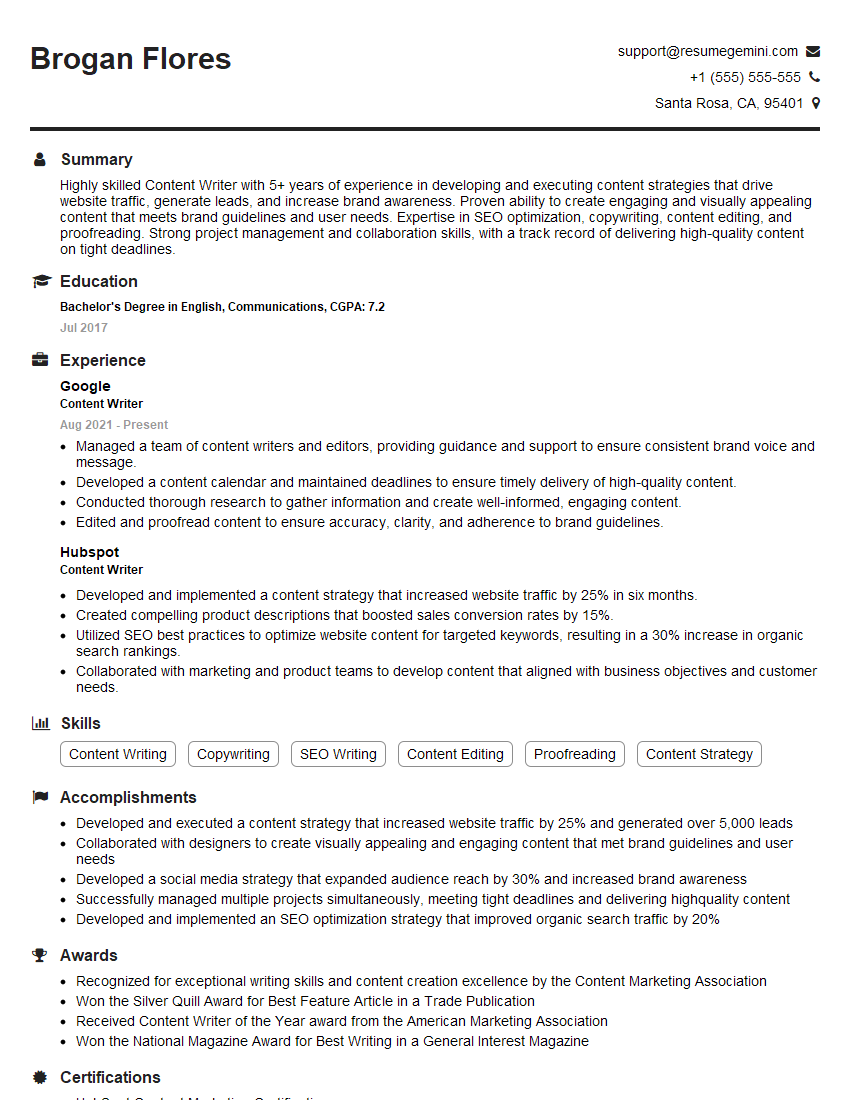
Content Writer Resume Sample
Explore more articles
Users Rating of Our Blogs
Share Your Experience
We value your feedback! Please rate our content and share your thoughts (optional).
What Readers Say About Our Blog
Very informative content, great job.
good