Every successful interview starts with knowing what to expect. In this blog, we’ll take you through the top Contingency Operations Planning and Execution interview questions, breaking them down with expert tips to help you deliver impactful answers. Step into your next interview fully prepared and ready to succeed.
Questions Asked in Contingency Operations Planning and Execution Interview
Q 1. Describe your experience developing contingency plans.
Developing contingency plans involves a systematic process of identifying potential disruptions, assessing their impact, and devising strategies to mitigate their effects. My approach always starts with a thorough understanding of the organization’s critical functions and dependencies. I then work collaboratively with stakeholders across various departments to brainstorm potential threats – ranging from natural disasters and cyberattacks to supply chain disruptions and human error. This collaborative process is crucial because it fosters a shared understanding of risks and ensures the plan reflects the realities of daily operations.
For example, while developing a contingency plan for a large-scale manufacturing plant, I worked with the production, IT, and logistics teams to identify vulnerabilities in their respective areas. This included assessing the impact of power outages on production lines, the vulnerability of IT systems to ransomware attacks, and the potential delays caused by disruptions in the supply chain. The outcome was a multi-faceted plan that addressed each of these vulnerabilities with specific mitigation strategies.
Q 2. Explain your process for identifying potential risks and vulnerabilities.
Identifying potential risks and vulnerabilities is an iterative process that combines qualitative and quantitative analysis. It begins with brainstorming sessions involving subject matter experts from various departments to identify potential threats. Techniques like SWOT analysis (Strengths, Weaknesses, Opportunities, Threats) and Failure Mode and Effects Analysis (FMEA) are frequently used to systematically categorize risks.
Following the brainstorming sessions, I use a structured risk assessment methodology, typically employing a risk matrix that considers both the likelihood and impact of each identified risk. Likelihood is often assessed based on historical data, industry trends, and expert judgment. Impact is evaluated based on its potential effect on various key performance indicators (KPIs), such as revenue, operational efficiency, and reputation. Vulnerabilities are specifically addressed by analyzing the organization’s infrastructure, processes, and systems to identify weaknesses that could be exploited by identified threats. A vulnerability assessment can include network security scans, penetration testing, and audits of business processes.
Q 3. How do you prioritize risks in a contingency plan?
Prioritizing risks is crucial for efficient resource allocation in contingency planning. I typically use a risk matrix that plots the likelihood and impact of each risk. This produces a visual representation allowing for easy prioritization. Risks are categorized into high, medium, and low priority based on their position in the matrix. High-priority risks, those with both high likelihood and significant impact, receive immediate attention, while medium-priority risks are addressed next, and low-priority risks are monitored but may not require immediate action.
For example, a risk of a major power outage that would completely halt production (high likelihood and high impact) would be prioritized over a risk of minor supplier delay (low likelihood and low impact). Quantitative analysis, such as calculating the expected monetary value (EMV) of each risk, can further refine prioritization.
Q 4. What metrics do you use to measure the effectiveness of a contingency plan?
Measuring the effectiveness of a contingency plan requires a combination of quantitative and qualitative metrics. Quantitative metrics include the time taken to activate the plan, the extent of disruption avoided or mitigated, financial losses averted, and the restoration time of critical business functions. These metrics can be tracked and compared against pre-defined targets to assess the plan’s performance.
Qualitative metrics focus on the plan’s usability, clarity, comprehensiveness, and stakeholder satisfaction. Post-incident reviews and surveys provide valuable feedback on areas for improvement. For example, evaluating the effectiveness of a cyberattack response plan might involve analyzing the speed of incident response, the extent of data loss, the restoration time of IT systems, and employee satisfaction with the plan’s effectiveness. Regular testing and training exercises also improve the plan’s overall effectiveness.
Q 5. Describe a time you had to implement a contingency plan. What were the results?
During a severe winter storm, a major client’s data center experienced a prolonged power outage. We had a contingency plan in place that included failover systems and offsite data backups. However, the severity of the storm and the duration of the outage proved more challenging than anticipated. Despite this, the plan allowed us to successfully transition to our secondary data center within four hours, minimizing the downtime. While some data loss occurred due to the unexpected duration of the outage, it was significantly less than would have happened without the contingency plan. The post-incident review highlighted areas for improvement, such as reinforcing redundant power supplies and improving communication protocols. This experience reinforced the value of thorough testing and regular reviews.
Q 6. How do you ensure stakeholder buy-in for contingency planning initiatives?
Ensuring stakeholder buy-in is essential for the successful implementation of a contingency plan. This involves clear communication, collaborative planning, and demonstrating the plan’s value. I start by clearly articulating the potential risks and the impact they could have on the organization. This helps stakeholders understand the necessity of the plan. I then involve stakeholders in the planning process itself, seeking their input and expertise at each stage. This fosters a sense of ownership and commitment.
Regular communication and training updates maintain stakeholder engagement. Following the successful implementation of a contingency plan, I showcase how the plan mitigated potential damage and saved resources. This demonstrates the plan’s effectiveness and reinforces the importance of ongoing investment in contingency planning. A well-structured communication plan, including regular updates and training, is key to maintaining momentum and securing continued support.
Q 7. What are the key elements of a robust business continuity plan?
A robust business continuity plan (BCP) encompasses several key elements. First, it should have a clearly defined scope, outlining the critical business functions and processes to be protected. Next, it requires a comprehensive risk assessment identifying potential threats and their potential impacts. This leads to the development of mitigation strategies, specifying the actions to be taken in response to various scenarios. A detailed recovery plan should include step-by-step procedures for restoring critical systems and operations. These recovery procedures must be tested regularly.
Furthermore, a BCP requires communication protocols for disseminating information during and after an incident. It also needs a thorough documentation strategy, keeping records of all plans, procedures, and post-incident reviews. Finally, an effective BCP incorporates regular reviews and updates to ensure it remains relevant and effective over time. Consideration of both internal and external stakeholders is critical for a robust and comprehensively inclusive plan. It is important to remember that a BCP is a living document; it requires regular review and adaptation to remain effective.
Q 8. How do you incorporate technology into contingency planning?
Technology is crucial for effective contingency planning. It allows for faster information gathering, improved communication, and more efficient resource allocation.
- Geographic Information Systems (GIS): GIS allows for visualizing potential risks, assessing vulnerabilities, and optimizing resource deployment. For example, during a hurricane, GIS can map evacuation routes, identify vulnerable populations, and track the storm’s path in real-time.
- Modeling and Simulation Software: Software like AnyLogic or Arena can be used to simulate different scenarios, allowing planners to test the effectiveness of various response strategies before a crisis hits. This allows for iterative improvement of the plan and identification of potential bottlenecks.
- Communication Platforms: Secure communication platforms like dedicated chat channels, email lists, or even specialized software for emergency management improve the speed and reliability of information dissemination among responders and stakeholders during a crisis.
- Data Analytics: Utilizing data analytics to analyze historical incidents, trends, and vulnerabilities helps predict potential crisis areas and proactively mitigate risk. For instance, analyzing historical crime data can inform police deployment strategies during large-scale events.
Incorporating technology isn’t just about using fancy software; it’s about strategically integrating tools that enhance every stage of the contingency planning lifecycle, from risk assessment to response and recovery.
Q 9. How do you test and update your contingency plans?
Testing and updating contingency plans are not one-off events, but an ongoing process. It’s like regularly servicing your car – you wouldn’t drive across the country without a check-up!
- Tabletop Exercises: These are simulated scenarios where the response team walks through a hypothetical crisis, identifying communication breakdowns, resource allocation challenges, and potential flaws in the plan. For example, we might simulate a major power outage, testing the effectiveness of backup power systems and emergency communication protocols.
- Functional Exercises: These exercises involve testing specific aspects of the plan, like the evacuation process or the activation of emergency response teams. This could involve a partial or full-scale mock evacuation from a building during a fire drill.
- Full-Scale Exercises: These are large-scale simulations that fully test the entire plan. They are resource-intensive but provide the most comprehensive evaluation of the plan’s efficacy. For example, a full-scale exercise might involve multiple agencies responding to a simulated earthquake.
- After-Action Reports (AARs): Following each exercise, a thorough AAR is conducted to identify areas for improvement. This document meticulously details what worked well, what didn’t, and provides concrete recommendations for updates to the contingency plan.
Regular updates are essential to account for changes in the environment, technology, and threats. For instance, updates might include changes in emergency contact information, new communication protocols, or adjustments to resource allocation based on lessons learned from previous incidents.
Q 10. What is your experience with different types of contingency planning methodologies?
My experience encompasses several contingency planning methodologies, each suited to different contexts.
- The Risk Assessment Approach: This method focuses on identifying potential risks, assessing their likelihood and impact, and developing mitigation strategies. It is commonly used in business continuity planning and disaster preparedness.
- The Scenario Planning Approach: This method involves developing multiple scenarios based on different potential events. This allows for a flexible response, adaptable to various unfolding circumstances. This is often used in geopolitical and strategic planning.
- The Failure Mode and Effects Analysis (FMEA) Approach: This systematic approach involves identifying potential failure points in a system or process and assessing their impact. It is particularly useful in complex systems like critical infrastructure management.
- The Agile Approach: In rapidly evolving situations, an agile approach, emphasizing flexibility, iterative development, and adaptation, is preferable. This allows for continuous improvement of the contingency plan as new information emerges.
The choice of methodology depends heavily on the specific context, including the type of contingency, the organization’s resources, and the level of uncertainty involved.
Q 11. How do you communicate effectively during a crisis or emergency?
Effective crisis communication is paramount. It’s about delivering the right information to the right people at the right time. Think of it as a well-orchestrated symphony, not a chaotic cacophony.
- Establish Clear Communication Channels: Designate specific communication channels for different groups (e.g., internal teams, external stakeholders, media). This prevents information overload and ensures messages reach the intended audience.
- Develop Consistent Messaging: Maintain a unified message across all channels to avoid confusion and maintain credibility. Multiple conflicting messages can be extremely detrimental.
- Utilize Multiple Communication Methods: Combine different methods, like email, SMS, social media, and public address systems, to ensure wide reach, especially when considering individuals with varying technological access.
- Provide Regular Updates: Keep stakeholders informed with regular updates, even if there’s no new information. Transparency builds trust.
- Train Personnel: Train communication teams and spokespersons on crisis communication protocols. This ensures consistent messaging and preparedness.
During a crisis, clear, concise, and empathetic communication can be the difference between controlled chaos and a full-blown disaster.
Q 12. Describe your experience with crisis communication strategies.
My experience in crisis communication emphasizes proactive planning and reactive adaptation. It’s not just about reacting to a crisis; it’s about being prepared to manage the narrative.
- Pre-crisis Media Training: Training key personnel on handling media inquiries reduces panic and ensures consistent messaging during a crisis.
- Social Media Monitoring: Monitoring social media platforms for emerging issues and public sentiment allows for proactive communication and addressing misinformation.
- Public Information Campaigns: Develop public awareness campaigns to educate communities about potential hazards and emergency procedures. This can significantly improve the public’s response during a real crisis.
- Damage Control Strategies: Having pre-planned strategies to address misinformation and negative narratives helps maintain credibility and public trust.
- Post-Crisis Review: Conducting post-crisis reviews to evaluate the effectiveness of communication strategies and identify areas for improvement is vital for future preparedness.
I’ve found that a well-defined communication plan, coupled with skilled communication professionals, can significantly mitigate the negative impact of a crisis.
Q 13. How do you manage resources during a contingency operation?
Resource management during a contingency operation is a delicate balancing act—it requires careful planning, efficient allocation, and real-time adaptation. It’s like managing a complex puzzle with constantly shifting pieces.
- Prioritization: Establish clear priorities based on the urgency and impact of needs. This involves assessing the critical needs versus the desirable ones.
- Inventory Management: Maintain a detailed inventory of resources, including personnel, equipment, supplies, and financial resources. Real-time tracking systems are essential for efficient allocation.
- Resource Allocation Protocols: Develop clear protocols for allocating resources based on pre-defined criteria, ensuring equitable distribution and optimized utilization.
- Collaboration and Coordination: Effective collaboration among different agencies and teams is crucial to avoid duplication of effort and ensure efficient resource use. Coordination centers play a key role in this.
- Supply Chain Management: Ensure robust supply chains to guarantee the timely procurement and delivery of essential resources during the operation.
Resource management isn’t just about having enough; it’s about utilizing resources effectively and efficiently to maximize impact and minimize waste.
Q 14. What is your experience with resource allocation in a crisis?
My experience with resource allocation in crises highlights the need for adaptability and strategic decision-making under pressure. It’s not just about numbers; it’s about understanding the human cost and the impact on the overall operation.
- Needs Assessment: Rapidly assessing the needs of affected populations is critical for directing resources where they are most urgently needed. This requires collaboration with local communities and on-the-ground assessments.
- Prioritization Matrix: Using a prioritization matrix, weighing factors such as urgency, impact, and feasibility, helps guide resource allocation decisions during a crisis.
- Real-Time Monitoring: Constant monitoring of resource utilization allows for adjustments and re-allocations as the situation evolves. This iterative approach is crucial in dynamic environments.
- Transparency and Accountability: Maintaining transparency in resource allocation helps build trust and ensures accountability. Detailed records of resource distribution are essential.
- Post-Crisis Evaluation: Evaluating resource allocation decisions after a crisis helps refine processes and protocols for future events.
Effective resource allocation in a crisis requires a combination of strategic planning, real-time adaptation, and a deep understanding of the human element involved.
Q 15. How do you handle unexpected events or challenges during a contingency operation?
Handling unexpected events during a contingency operation relies heavily on proactive planning and a robust, adaptable response framework. Think of it like navigating a complex maze – you have a map (your plan), but unexpected obstacles (unexpected events) will inevitably appear.
My approach involves a multi-step process: 1. Assessment: Rapidly assess the nature and impact of the unexpected event. What systems are affected? What are the potential consequences? 2. Communication: Immediately communicate the situation to relevant stakeholders, ensuring transparency and coordinated action. 3. Prioritization: Prioritize responses based on the impact and urgency of the affected systems. Critical functions need immediate attention. 4. Adaptation: Modify the existing plan or implement pre-defined alternative procedures to address the new situation. This may involve activating backups, deploying alternative resources, or revising timelines. 5. Post-Incident Review: After the immediate crisis is resolved, conduct a thorough review to identify lessons learned and improve future contingency plans. This iterative process continually refines our preparedness.
For example, during a recent cyberattack, our initial plan focused on data backup and recovery. However, the attack was more sophisticated than anticipated, requiring us to activate our incident response team and engage external cybersecurity experts. By adapting our plan in real-time and leveraging our pre-established communication channels, we minimized the damage and restored critical systems quickly.
Career Expert Tips:
- Ace those interviews! Prepare effectively by reviewing the Top 50 Most Common Interview Questions on ResumeGemini.
- Navigate your job search with confidence! Explore a wide range of Career Tips on ResumeGemini. Learn about common challenges and recommendations to overcome them.
- Craft the perfect resume! Master the Art of Resume Writing with ResumeGemini’s guide. Showcase your unique qualifications and achievements effectively.
- Don’t miss out on holiday savings! Build your dream resume with ResumeGemini’s ATS optimized templates.
Q 16. How do you measure the success of a contingency operation?
Measuring the success of a contingency operation isn’t just about whether we restored systems. It’s about evaluating the overall effectiveness against predefined Key Performance Indicators (KPIs). These KPIs should be established during the planning phase and should measure various aspects of the response.
- Recovery Time Objective (RTO): How quickly critical systems were restored to operational status. Did we meet the target?
- Recovery Point Objective (RPO): How much data was lost due to the incident. Did we minimize data loss within our target?
- Financial Impact: The total cost of the incident, including direct and indirect costs. Was the overall cost within budget?
- Business Continuity: Assessment of the impact on overall business operations. Did the operation maintain essential services during and after the incident?
- Stakeholder Satisfaction: Feedback from internal and external stakeholders on the effectiveness of our response.
Success is ultimately measured by the ability to minimize disruption, protect critical assets, maintain stakeholder confidence, and learn from the experience to improve future resilience.
Q 17. Describe your experience with post-incident analysis and improvement.
Post-incident analysis (PIA) is an integral part of continuous improvement. I employ a structured approach to PIA, using a framework like the ‘5 Whys’ to drill down to the root cause of failures. I also utilize root cause analysis (RCA) techniques to identify contributing factors and systemic weaknesses.
A recent PIA following a server failure revealed a critical vulnerability in our redundancy systems. The failure wasn’t just a hardware problem; it highlighted insufficient monitoring and inadequate failover testing. Through detailed analysis and stakeholder interviews, we identified the flaws, implemented corrective actions (improved monitoring and increased frequency of failover drills), and updated our documentation to reflect the lessons learned. This proactive approach significantly enhanced the robustness of our disaster recovery plan.
This process is not just about fixing problems, it’s about building a culture of continuous improvement within the organization. We use the findings to refine our training programs, update our plans, and improve our overall preparedness.
Q 18. How do you ensure the plan remains relevant and updated?
Maintaining a relevant contingency plan requires a proactive and iterative approach. It’s not a ‘set it and forget it’ document. Think of it as a living document that requires regular updates and revisions to keep pace with evolving threats and technological advancements.
- Regular Reviews: Conduct scheduled reviews at least annually, or more frequently if significant changes occur (e.g., system upgrades, regulatory changes).
- Scenario Planning: Regularly practice different scenarios using table-top exercises and simulations to identify vulnerabilities and refine responses.
- Technology Updates: Update the plan to reflect changes in technology infrastructure and security protocols. This includes updating contact information, system details, and recovery procedures.
- Regulatory Compliance: Ensure the plan aligns with relevant industry regulations and standards.
- Feedback Incorporation: Integrate lessons learned from previous incidents and exercises to improve the plan’s effectiveness.
By employing this ongoing maintenance strategy, the plan remains a dynamic and effective tool to safeguard the organization.
Q 19. How do you balance cost effectiveness with plan comprehensiveness?
Balancing cost-effectiveness with plan comprehensiveness is a crucial aspect of contingency planning. An overly comprehensive plan can be expensive and cumbersome, while an inadequate plan leaves the organization vulnerable.
My approach involves prioritizing critical systems and functions. We focus resources on protecting assets that are essential to business continuity. This involves a risk assessment that identifies the potential impact of each system failure. We then allocate resources proportionally to mitigate the most critical risks first. For example, protecting critical data servers may receive a higher priority and more investment than less critical systems.
Cost-effective measures include leveraging existing infrastructure where possible, using cost-effective technologies, and optimizing recovery procedures. We regularly assess the cost-benefit ratio of various recovery strategies to ensure we are investing wisely.
Q 20. What is your experience with regulatory compliance related to contingency planning?
Regulatory compliance is paramount in contingency planning. The specific regulations will depend on the industry and geographic location, but common standards include HIPAA (healthcare), PCI DSS (payment card industry), and various industry-specific regulations.
My experience involves ensuring our plans adhere to relevant legal and regulatory requirements. This includes documenting compliance procedures, conducting regular audits to verify adherence, and incorporating regulatory changes into our plans. We maintain a comprehensive inventory of regulated data, detailing its location, access controls, and backup procedures.
Staying updated on evolving regulations is crucial. We actively monitor regulatory changes and incorporate them into our planning process to ensure continued compliance and avoid potential penalties.
Q 21. Explain your experience with various recovery strategies (e.g., failover, failback).
Recovery strategies, such as failover and failback, are fundamental components of a robust contingency plan. These strategies enable the rapid restoration of systems and services during and after an incident.
- Failover: This is the automatic or manual switching to a backup system or location when the primary system fails. Think of it like a backup generator kicking in when the primary power source goes down. In a database context, this could involve switching to a hot standby database server.
- Failback: Once the primary system is restored and deemed stable, failback involves the process of switching operations back to the original primary system. This ensures that ongoing operations can continue with minimal interruption on the fully operational primary system.
My experience includes designing and implementing various failover and failback mechanisms using technologies such as clustering, virtual machines, and cloud-based solutions. For example, we utilize a geographically dispersed cloud infrastructure to ensure failover to a secondary region in case of a local disaster. Thorough testing of failover and failback procedures is crucial to ensure their effectiveness. Regular drills and simulations are essential to verify the speed and reliability of these recovery mechanisms.
Q 22. How do you assess the potential impact of a disruption on business operations?
Assessing the potential impact of a disruption on business operations requires a systematic approach. We start by identifying critical business functions and processes. Then, we analyze each function’s vulnerability to various potential disruptions – natural disasters, cyberattacks, pandemics, or supply chain failures. This involves considering the likelihood and severity of each disruption. For example, a power outage might have a minimal impact on a business with robust backup generators, but be catastrophic for one without. The analysis typically involves qualitative assessments (expert judgment) and quantitative methods (like business impact analysis, BIA). A BIA assesses the potential financial, operational, and reputational consequences of various scenarios. The outcome helps prioritize mitigation strategies, allowing us to focus on the most critical areas first. Let’s say a manufacturing company identifies that a prolonged internet outage could halt production and lead to significant revenue loss. This would trigger a higher priority for a robust network redundancy plan compared to a disruption with less severe consequences.
Q 23. Describe your experience using specific contingency planning software or tools.
I have extensive experience using various contingency planning software and tools, including Jira Service Management for incident and problem management, Datto Business Continuity and Disaster Recovery for data protection and recovery, and Microsoft Azure Site Recovery for cloud-based disaster recovery. Jira allows for efficient tracking of incidents, problem resolution, and the documentation of contingency plans. Datto provides automated backups and disaster recovery features, minimizing downtime. Azure Site Recovery facilitates replicating on-premise workloads to the Azure cloud, ensuring business continuity in case of a site failure. For example, during a recent project, we utilized Jira to manage the response to a significant server failure. The platform allowed our team to track progress, assign tasks, and maintain transparency across all stakeholders, leading to a quick recovery. We also leveraged Azure Site Recovery to quickly failover to a replicated cloud environment, minimizing business disruption.
Q 24. How do you ensure data security and integrity during a contingency operation?
Ensuring data security and integrity during a contingency operation is paramount. We employ a multi-layered approach, incorporating strong encryption both in transit and at rest, access control measures based on the principle of least privilege, and regular security audits. We use robust backup and recovery mechanisms, adhering to the 3-2-1 rule (three copies of data, on two different media, with one copy offsite). Data encryption protects against unauthorized access in case of data breaches or physical theft. Access controls limit access to sensitive data only to authorized personnel. Regular audits ensure that security controls remain effective. Furthermore, we conduct regular security awareness training for employees to reinforce best practices. We might use tools such as multi-factor authentication (MFA) to add an extra layer of security and regularly test our backups to verify data integrity and recoverability. Imagine a scenario where a ransomware attack encrypts your critical data. A well-executed contingency plan with strong encryption and secure backups will enable you to restore your data quickly and securely, minimizing the impact of the attack.
Q 25. What is your familiarity with different types of disaster recovery sites?
I’m familiar with several types of disaster recovery sites, each offering different levels of protection and cost implications. These include:
- Hot Sites: Fully equipped and ready to operate immediately. They offer the fastest recovery time but are the most expensive.
- Warm Sites: Have basic infrastructure but require some setup before becoming fully operational. They offer a balance between cost and recovery time.
- Cold Sites: Provide basic infrastructure, requiring significant setup and configuration before operation. They are the least expensive but have the longest recovery time.
- Cloud-Based Sites: Leverage cloud computing resources for disaster recovery. This offers scalability and flexibility but relies on reliable internet connectivity.
The choice depends on the business’s recovery time objectives (RTOs), recovery point objectives (RPOs), and budget. A financial institution with strict regulatory requirements might opt for a hot site, while a smaller business might find a warm site sufficient.
Q 26. Explain your understanding of recovery time objectives (RTO) and recovery point objectives (RPO).
Recovery Time Objective (RTO) is the maximum tolerable downtime after a disruption before business operations significantly impact the organization. Recovery Point Objective (RPO) represents the maximum acceptable data loss measured in time. For example, an RTO of 4 hours means the business must be restored within 4 hours of a disruption, while an RPO of 1 hour means that no more than 1 hour’s worth of data should be lost during a recovery. These objectives are critical in determining the appropriate disaster recovery strategy. A business with a low RTO and RPO would require a highly resilient infrastructure, such as a hot site or cloud-based solution, whereas one with a higher tolerance might opt for a warm or cold site. Determining these objectives requires careful consideration of the business’s critical functions and the potential consequences of downtime and data loss.
Q 27. How do you integrate contingency planning with other business processes?
Contingency planning isn’t a standalone process; it needs to be tightly integrated with other business processes. For instance, it should align with IT infrastructure management, security policies, and business continuity management. This ensures that all aspects of the business are prepared for potential disruptions. During the planning phase, we consult with various departments to understand their specific needs and vulnerabilities. Regular reviews and updates to the plan ensure that it remains relevant and effective. The plan should be incorporated into the organization’s overall risk management framework and be subject to regular testing and exercises. This integrated approach ensures that the plan is not only comprehensive but also readily adaptable to changing circumstances and technological advancements.
Q 28. What is your approach to training employees on contingency plans and procedures?
Training employees on contingency plans and procedures is essential for effective execution. We utilize a multi-faceted approach, including regular training sessions, tabletop exercises, and full-scale simulations. These sessions cover roles and responsibilities, communication protocols, and technical procedures. The training is tailored to the specific roles and responsibilities of each employee. For example, IT staff receives training on system recovery, while other employees are trained on communication protocols and business continuity procedures. Tabletop exercises simulate real-world scenarios, allowing employees to practice their responses without disrupting live operations. Full-scale simulations involve a complete shutdown of systems or services, providing a realistic test of the contingency plan. Post-training assessments and feedback sessions ensure continuous improvement of the training program and employee understanding. This approach guarantees that employees are well-prepared to respond effectively to any disruption, helping to mitigate the impact and ensure business continuity.
Key Topics to Learn for Contingency Operations Planning and Execution Interview
- Risk Assessment and Mitigation: Understanding and identifying potential risks, vulnerabilities, and threats; developing strategies for mitigation and risk reduction; applying frameworks like SWOT analysis.
- Contingency Planning Frameworks: Familiarity with various planning methodologies (e.g., linear, cyclical, scenario planning); applying chosen frameworks to develop comprehensive contingency plans; adapting plans based on evolving situations.
- Resource Allocation and Management: Optimizing resource allocation (personnel, equipment, funding) in dynamic environments; managing resource constraints effectively; demonstrating understanding of resource prioritization techniques.
- Communication and Coordination: Effective communication strategies for diverse stakeholders; coordination mechanisms for seamless information flow; techniques for managing communication during crises.
- Scenario Planning and Exercises: Developing and conducting realistic scenarios to test plans; utilizing tabletop exercises and simulations; applying lessons learned from exercises to refine plans.
- Decision-Making Under Pressure: Demonstrating ability to make sound, timely decisions under stress and uncertainty; utilizing decision-making frameworks; effectively communicating decisions to relevant stakeholders.
- Post-Incident Analysis and Review: Conducting thorough post-incident analyses to identify areas for improvement; incorporating lessons learned into future contingency plans; applying continuous improvement methodologies.
- Legal and Ethical Considerations: Understanding the legal and ethical implications of contingency operations; ensuring compliance with relevant regulations and policies; navigating ethical dilemmas related to resource allocation and decision-making.
Next Steps
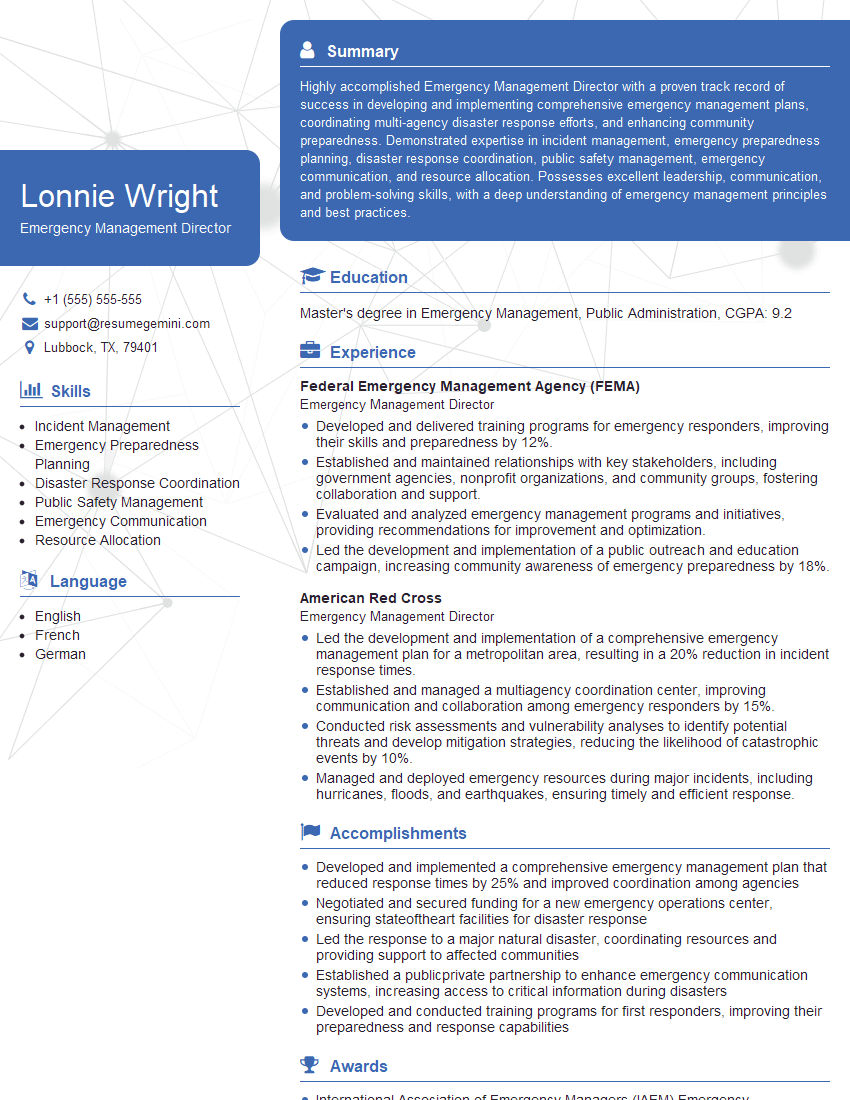
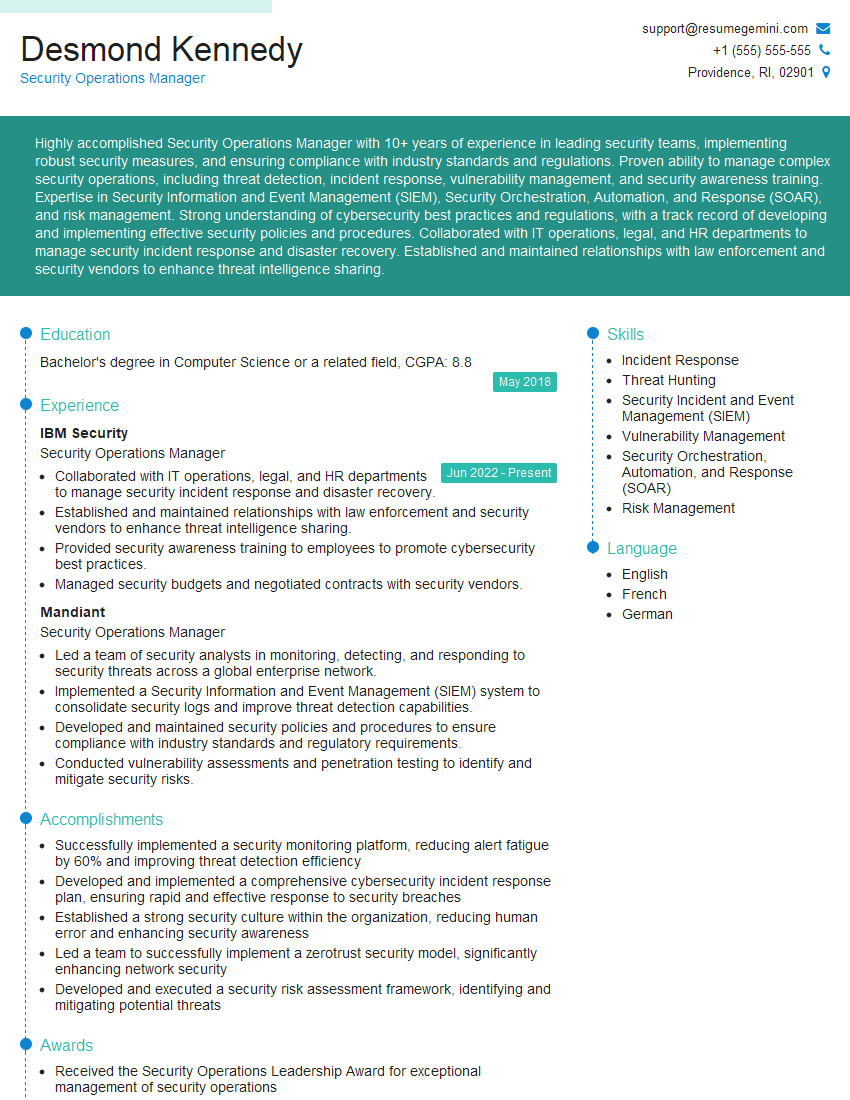
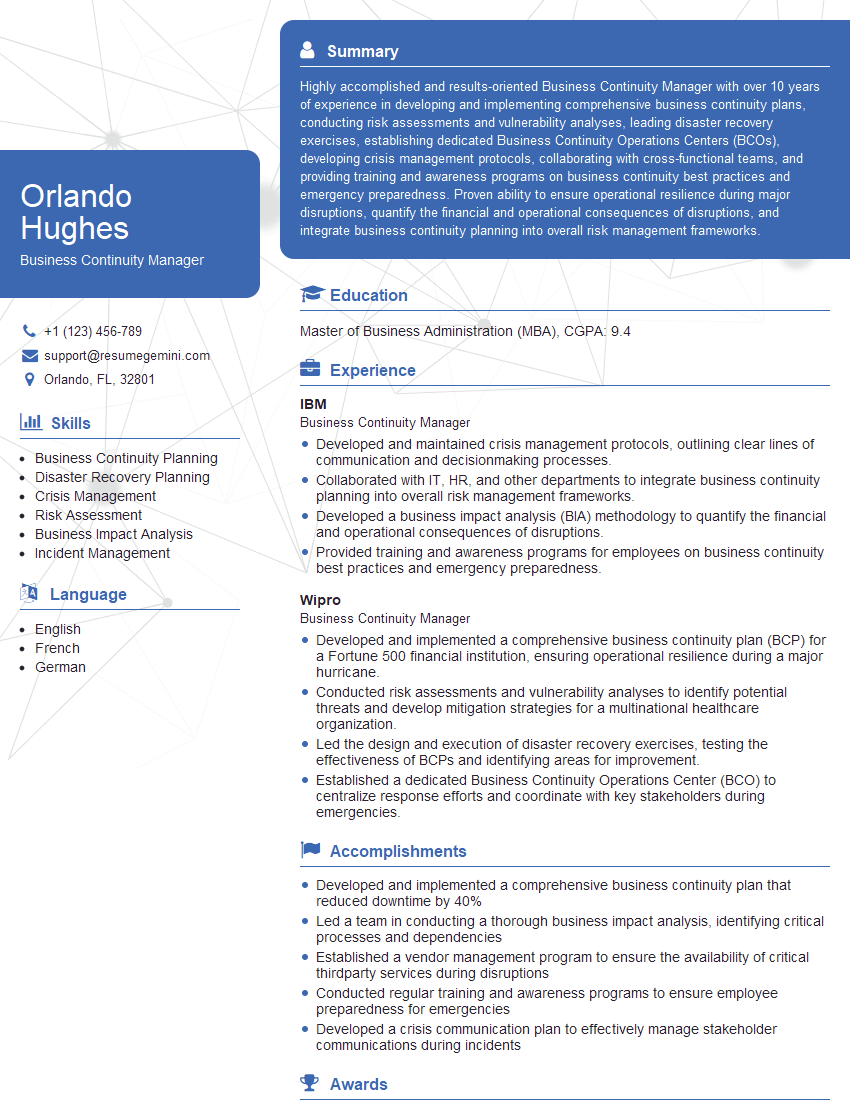
Mastering Contingency Operations Planning and Execution is crucial for career advancement in fields demanding proactive risk management and crisis response. A strong understanding of these principles significantly enhances your value to any organization. To increase your job prospects, it’s essential to create an ATS-friendly resume that highlights your skills and experience effectively. We highly recommend using ResumeGemini to build a professional and impactful resume that showcases your expertise in this critical area. ResumeGemini provides examples of resumes tailored to Contingency Operations Planning and Execution to guide you through the process, ensuring your application stands out from the competition.
Explore more articles
Users Rating of Our Blogs
Share Your Experience
We value your feedback! Please rate our content and share your thoughts (optional).
What Readers Say About Our Blog
Very informative content, great job.
good