Preparation is the key to success in any interview. In this post, we’ll explore crucial Controls Engineering interview questions and equip you with strategies to craft impactful answers. Whether you’re a beginner or a pro, these tips will elevate your preparation.
Questions Asked in Controls Engineering Interview
Q 1. Explain the difference between open-loop and closed-loop control systems.
The core difference between open-loop and closed-loop control systems lies in their feedback mechanisms. An open-loop system operates without feedback; it simply executes a predetermined sequence of actions based on the input. Think of a toaster: you set the time, and it runs for that duration regardless of whether the bread is actually toasted. The output is not measured or compared to a desired value.
In contrast, a closed-loop system, also known as a feedback control system, constantly monitors the output and compares it to the desired setpoint. Any discrepancy (error) is then used to adjust the input, ensuring the output remains close to the setpoint. A cruise control system in a car is a prime example. The system monitors the vehicle’s speed, and adjusts the throttle to maintain the desired speed, compensating for changes in incline or wind resistance.
- Open-loop Advantages: Simple design, low cost.
- Open-loop Disadvantages: Prone to disturbances, inaccurate, and lacks adaptability.
- Closed-loop Advantages: Precise control, adaptable to disturbances, robust.
- Closed-loop Disadvantages: More complex design, higher cost, potential for instability if not properly tuned.
Q 2. Describe your experience with PID controllers. What are the tuning methods you’re familiar with?
PID controllers are the workhorse of many control systems. They use three terms – Proportional, Integral, and Derivative – to minimize the error between the setpoint and the actual output. The Proportional (P) term responds to the current error, providing a control action proportional to the error’s magnitude. The Integral (I) term addresses persistent errors, accumulating the error over time and providing a corrective action to eliminate steady-state errors. The Derivative (D) term anticipates future error by considering the rate of change of the error, preventing overshoot and oscillations.
I have extensive experience tuning PID controllers using various methods. The most common are:
- Ziegler-Nichols method: A simple empirical method that involves pushing the system to its limits to determine its ultimate gain and period. It’s quick, but can lead to suboptimal performance.
- Cohen-Coon method: Another empirical method, offering improved performance compared to Ziegler-Nichols, particularly in avoiding overshoot.
- Auto-tuning: Many modern PLCs and control systems offer auto-tuning features. These algorithms automatically adjust the PID gains based on the system’s response, often producing better results than manual tuning.
- Manual Tuning: This is an iterative process of adjusting the P, I, and D gains individually to observe their effect on the system’s response. It requires a good understanding of how each term affects the system’s behavior and experience in interpreting the response curves.
In practice, I often combine these methods. For example, I might use Ziegler-Nichols as a starting point and then fine-tune the parameters manually or using auto-tuning algorithms for optimal performance.
Q 3. How do you troubleshoot a malfunctioning control system?
Troubleshooting a malfunctioning control system requires a systematic approach. I typically follow these steps:
- Identify the problem: What exactly is malfunctioning? Is the system not reaching the setpoint? Is it oscillating? Are there any alarms or error messages?
- Gather data: Collect data from sensors, actuators, and the control system itself. This might involve checking sensor readings, looking at control signals, examining log files, or using data acquisition tools.
- Analyze the data: Examine the data to pinpoint potential causes. Look for patterns, anomalies, and correlations. Is there a specific input or event that triggers the malfunction?
- Isolate the fault: Use the data analysis to isolate the source of the problem. Is it a faulty sensor, a malfunctioning actuator, a problem with the control algorithm, or something else?
- Test and verify: Implement and test the solution. Verify that the problem is resolved and that the system operates correctly.
- Document the solution: Document the troubleshooting process and the solution to facilitate future maintenance and problem-solving.
For instance, if a temperature control system is not maintaining the desired temperature, I would first check the temperature sensor reading to see if it aligns with the system’s perceived temperature. Then, I’d examine the control signals to the heating/cooling elements. If those signals are correct but the temperature isn’t responding, the problem could be with the heater or the insulation.
Q 4. What are the advantages and disadvantages of using different types of sensors in a control system?
The choice of sensor significantly impacts the performance and cost of a control system. Different sensor types offer varying levels of accuracy, precision, response time, cost, and robustness.
- Temperature Sensors: Thermocouples are robust and inexpensive but less accurate than RTDs (Resistance Temperature Detectors), which are more precise but costlier. Thermistors offer a good balance between cost and accuracy.
- Pressure Sensors: Strain gauge-based pressure sensors offer good accuracy and are widely used but are sensitive to temperature changes. Capacitive sensors are less sensitive to temperature but often more expensive.
- Flow Sensors: Various flow sensors exist, like vortex flow meters (robust but not as accurate at low flows), ultrasonic flow meters (high accuracy but more expensive), and orifice plates (simple but introduce pressure drop).
Advantages of using suitable sensors include increased accuracy, better control performance, and improved safety. However, disadvantages can be higher costs, increased complexity, and the need for specialized calibration and maintenance. For example, using a high-accuracy, high-cost laser displacement sensor might be overkill for a simple positioning system, where a less expensive potentiometer might suffice.
Q 5. Explain your experience with PLC programming (specify the PLC brands you’re familiar with).
I possess extensive experience in PLC programming, primarily with Allen-Bradley (Rockwell Automation) and Siemens PLCs. My experience encompasses various tasks including developing ladder logic programs, structured text programs, and function block diagrams. I’m proficient in utilizing various PLC instruction sets, including timers, counters, math functions, and communication protocols like Ethernet/IP and Profinet.
For example, I developed a PLC program for a automated packaging line using Allen-Bradley PLCs that controlled the conveyor system, robotic arm, and packaging machinery. This involved coordinating multiple I/O signals, managing complex timing sequences, and implementing error handling routines. With Siemens PLCs, I’ve worked on several projects related to process control systems involving complex SCADA integration.
My experience extends beyond simple control tasks; I have a strong understanding of safety standards and have incorporated safety features in the PLC programs I’ve developed, ensuring compliance with relevant regulations.
Q 6. Describe your experience with SCADA systems and their applications.
SCADA (Supervisory Control and Data Acquisition) systems are essential for monitoring and controlling industrial processes. I have significant experience using various SCADA systems, including Wonderware InTouch, Siemens WinCC, and Rockwell Automation FactoryTalk. These systems allow for centralized monitoring and control of geographically dispersed assets, providing real-time data visualization, alarming, and historical trending.
My work with SCADA systems has spanned several applications including:
- Process Control: Monitoring and controlling parameters like temperature, pressure, and flow rate in chemical plants, power plants, and water treatment facilities.
- Manufacturing: Monitoring production parameters, managing equipment performance, and tracking production output in factories.
- Energy Management: Monitoring energy consumption and managing energy distribution in buildings and industrial sites.
- Transportation: Monitoring and controlling transportation systems such as pipelines, railways, and traffic management systems.
In one project, I used Wonderware InTouch to develop a SCADA system for a water treatment plant, allowing operators to remotely monitor water quality parameters, control chemical dosing, and generate reports. The system incorporated alarming and historical data logging, facilitating efficient operation and maintenance.
Q 7. What is a state-space representation of a control system?
A state-space representation of a control system describes the system’s behavior using a set of first-order differential equations. It’s a powerful mathematical model that provides a comprehensive understanding of the system’s dynamics.
The representation is typically expressed in the following form:
ẋ = Ax + Bu: This equation describes the system’s dynamics, wherexis the state vector (representing internal variables like position, velocity, etc.),ẋis the time derivative of the state vector,Ais the system matrix (describing how the states interact),Bis the input matrix (describing how the inputs affect the states), anduis the input vector.y = Cx + Du: This equation describes the system’s output, whereyis the output vector andCandDare output matrices.
The advantages of using state-space representation include:
- Handling of multi-input, multi-output (MIMO) systems easily.
- Suitable for analyzing complex systems with multiple interacting variables.
- Provides a framework for advanced control techniques like optimal control and state feedback.
For instance, a simple mass-spring-damper system can be elegantly represented using state-space, where the state vector might include position and velocity, the input would be the applied force, and the output could be the position. This representation allows for a detailed analysis of the system’s response to various inputs and the design of controllers to achieve desired performance.
Q 8. Explain the concept of stability in control systems and how it’s analyzed.
Stability in a control system refers to its ability to maintain a desired equilibrium state. An unstable system will deviate increasingly from its setpoint, potentially leading to catastrophic failure. Analyzing stability involves determining whether small disturbances will decay or grow over time.
There are several methods to analyze stability. For linear systems, the most common is examining the poles of the system’s transfer function. If all poles have negative real parts, the system is stable. A pole with a positive real part indicates instability. The further the pole is to the left in the complex plane, the faster the system’s response will decay.
Root Locus plots provide a visual representation of pole locations as a gain parameter is varied, helping identify gain values that ensure stability. The Routh-Hurwitz criterion offers an algebraic method to determine stability by examining the coefficients of the characteristic polynomial without actually finding the roots. For nonlinear systems, methods like Lyapunov stability analysis provide mathematical tools to assess stability without explicit solutions. Phase plane analysis and describing functions are also used for nonlinear system analysis.
For example, imagine a self-balancing robot. Stability analysis is crucial to ensure the robot returns to an upright position after being slightly perturbed. An unstable system would fall over. We can use techniques like pole placement to design a controller that guarantees stability.
Q 9. How do you handle nonlinearities in control systems?
Nonlinearities are inherent in most real-world systems, often arising from friction, saturation, dead zones, or complex dynamics. Ignoring them can lead to inaccurate models and poorly performing controllers. Handling nonlinearities requires a multifaceted approach:
- Linearization: For small deviations around an operating point, a nonlinear system can be approximated by a linear model. This simplification allows the use of linear control techniques, but the accuracy is limited to the linearization region.
- Describing Functions: This method approximates the nonlinearity with a linear equivalent based on the input signal’s frequency content. It’s particularly useful for analyzing the stability of systems with nonlinear elements within feedback loops.
- Gain Scheduling: This technique involves designing multiple linear controllers for different operating points, and switching between them based on the system’s state. This provides good performance across a wider range of conditions.
- Nonlinear Control Techniques: These include methods like feedback linearization, sliding mode control, and model predictive control, which are explicitly designed to handle nonlinear systems. They often involve more complex mathematical formulations but provide superior performance in situations where linearization is insufficient.
For instance, consider a robotic arm with friction in its joints. A linear controller might struggle to accurately position the arm due to the nonlinear friction forces. Gain scheduling or a nonlinear control technique like sliding mode control would be more suitable for robust and accurate control.
Q 10. What are your experiences with different control system architectures?
My experience encompasses a variety of control system architectures, including:
- PID Control: I’ve extensively used Proportional-Integral-Derivative (PID) controllers, which are ubiquitous due to their simplicity and effectiveness in many applications. I’m proficient in tuning PID controllers using various methods like Ziegler-Nichols and auto-tuning algorithms.
- State-Space Control: I’ve worked with state-space representations, enabling advanced controller design techniques like pole placement, observer design, and optimal control. This allows for precise control of complex systems with multiple inputs and outputs.
- Model Predictive Control (MPC): I have experience implementing MPC, particularly for systems with constraints and predictive capabilities. MPC is beneficial in applications demanding optimal performance while respecting constraints on actuators or system variables.
- Hierarchical Control Systems: I’ve designed and implemented hierarchical control systems where different levels of control handle different aspects of a system, allowing for efficient management of complex tasks. This approach is commonly used in robotics and industrial processes.
For example, I designed a hierarchical control system for a large-scale industrial process, where a high-level controller managed the overall production rate, while lower-level controllers regulated individual process variables.
Q 11. Describe your experience with control system design software (e.g., MATLAB, Simulink).
I’m highly proficient in using MATLAB and Simulink for control system design and simulation. My expertise includes:
- Modeling and Simulation: I can create accurate models of dynamic systems using Simulink’s block diagrams, facilitating simulations to analyze system behavior and evaluate controller performance before implementation.
- Controller Design: I use MATLAB’s Control System Toolbox to design various controllers, including PID, state-space, and other advanced controllers. I can utilize tools like root locus, Bode plots, and Nyquist plots for analysis and tuning.
- Code Generation: I’m capable of generating C/C++ code from Simulink models, enabling direct deployment on embedded systems for real-time control applications.
- Model Verification and Validation: I’m experienced in using various techniques to verify and validate models, ensuring they accurately represent the physical system.
In a recent project, I used Simulink to model and simulate a complex flight control system, successfully designing a robust controller that met demanding performance specifications. The generated C code was subsequently deployed on the flight controller hardware.
Q 12. Explain your experience with real-time operating systems (RTOS) in control systems.
My experience with real-time operating systems (RTOS) in control systems is extensive. I understand the importance of deterministic timing and resource management in real-time applications. I’ve worked with several RTOS, including:
- VxWorks: I’ve used VxWorks for high-reliability embedded systems, leveraging its features for task scheduling, inter-process communication, and real-time performance monitoring.
- FreeRTOS: I’ve utilized FreeRTOS for smaller-scale embedded projects, appreciating its lightweight nature and ease of integration.
- QNX: I have experience with QNX in safety-critical applications, utilizing its robust features and certification support.
When working with RTOS, I focus on task prioritization, interrupt handling, and memory management to ensure predictable and timely execution of control algorithms. For example, in a robotic control application, I designed a task scheduling scheme to ensure that critical control loops were executed with the required timing precision, even under heavy load.
Q 13. How do you ensure the safety and reliability of a control system?
Ensuring safety and reliability in control systems is paramount. My approach involves a multi-layered strategy:
- Redundancy: Implementing redundant sensors, actuators, and controllers provides fail-safe mechanisms. If one component fails, others can take over, preventing system failure.
- Fault Detection and Diagnosis: Incorporating fault detection and diagnosis algorithms allows for early identification of malfunctions, enabling timely corrective actions. This often involves using analytical redundancy or parity checks.
- Safety Standards and Certifications: Adhering to relevant safety standards (e.g., IEC 61508, ISO 26262) and pursuing relevant certifications (e.g., functional safety certification) demonstrates commitment to safety.
- Formal Verification Methods: Using formal verification techniques (e.g., model checking) can prove the correctness of the control system design, minimizing the risk of unexpected behavior.
- Testing and Validation: Rigorous testing and validation, including simulations and hardware-in-the-loop (HIL) testing, are critical to confirm system functionality and identify potential safety issues.
In one project involving a nuclear power plant control system, safety was the highest priority. We employed triple modular redundancy, comprehensive fault detection, and rigorous testing to guarantee system reliability and prevent accidents.
Q 14. What is your experience with industrial communication protocols (e.g., Profibus, Ethernet/IP)?
I possess practical experience with various industrial communication protocols, including:
- Profibus: I have worked with Profibus in industrial automation projects, leveraging its capabilities for reliable communication in harsh industrial environments. This includes configuration, troubleshooting, and integration with PLCs.
- Ethernet/IP: I’m familiar with Ethernet/IP, a common protocol in industrial automation, and its implementation in control systems. I’ve used it for high-speed data transfer and distributed control architectures.
- Modbus: I’m proficient with Modbus, a widely used protocol for communication between various devices in industrial settings. It’s simple to implement and is excellent for integrating diverse components.
- CAN bus: My expertise extends to CAN bus, commonly used in automotive and other applications needing robust and reliable communication in noisy environments.
In a recent project, I integrated various industrial robots and sensors using Ethernet/IP to create a flexible and efficient manufacturing cell. Understanding these protocols is crucial for seamless integration and efficient data exchange within the industrial ecosystem.
Q 15. Describe a challenging control system project you worked on and how you overcame the challenges.
One of the most challenging projects I undertook involved designing a control system for a highly dynamic robotic arm used in a precision assembly line. The challenge stemmed from the arm’s complex dynamics, including significant nonlinearities and coupled movements, and the stringent requirements for speed, accuracy, and repeatability. The environment also presented unforeseen disturbances, such as vibrations from nearby machinery.
To overcome these challenges, we employed a multi-pronged approach. First, we developed a highly accurate dynamic model of the robotic arm using system identification techniques (which I’ll detail later). This model incorporated the nonlinearities and coupled effects. Next, we implemented a nonlinear control strategy, specifically a feedback linearization technique, to effectively cancel the nonlinearities and simplify the control design. Finally, we incorporated a robust control scheme to mitigate the effects of external disturbances and model uncertainties. This involved using an adaptive controller that continuously adjusted its parameters based on real-time feedback from sensors. We also implemented a sophisticated Kalman filter to estimate the state variables, improving the accuracy and stability of the system. Through rigorous simulations and extensive real-world testing, we successfully achieved the required performance levels, exceeding the initial accuracy targets by a significant margin.
Career Expert Tips:
- Ace those interviews! Prepare effectively by reviewing the Top 50 Most Common Interview Questions on ResumeGemini.
- Navigate your job search with confidence! Explore a wide range of Career Tips on ResumeGemini. Learn about common challenges and recommendations to overcome them.
- Craft the perfect resume! Master the Art of Resume Writing with ResumeGemini’s guide. Showcase your unique qualifications and achievements effectively.
- Don’t miss out on holiday savings! Build your dream resume with ResumeGemini’s ATS optimized templates.
Q 16. What is your experience with different types of actuators?
My experience with actuators spans a wide range, including:
- Hydraulic actuators: I’ve worked with hydraulic cylinders and rotary actuators in applications requiring high force and torque, such as in heavy machinery and industrial robotics. Understanding the complexities of hydraulic systems, including pressure dynamics and leakage, is crucial for effective control.
- Pneumatic actuators: I have experience using pneumatic cylinders and valves in applications needing faster response times than hydraulic systems, often in lighter-duty applications or where a compressed air supply is readily available. Proper modeling of pneumatic systems, accounting for compressibility effects, is essential.
- Electric actuators: This is a broad category encompassing DC motors, servo motors, stepper motors, and linear actuators. I’ve worked extensively with servo motors due to their high precision and responsiveness, essential for applications such as precision positioning and robotic control. Selecting the appropriate motor based on torque, speed, and inertia requirements is critical. I’m also proficient in using various motor drivers and control techniques, such as PID control and field-oriented control.
The choice of actuator depends heavily on the specific application requirements, considering factors such as power requirements, speed, accuracy, cost, and environmental constraints.
Q 17. How do you perform system identification for a control system?
System identification is the process of determining a mathematical model of a dynamic system from measured data. It’s crucial in control engineering because accurate models are the foundation for effective control design. The process typically involves these steps:
- Experiment Design: Carefully planned input signals are applied to the system (e.g., step inputs, sinusoidal signals, pseudo-random binary sequences). The choice of input signal impacts the accuracy and efficiency of the identification process.
- Data Acquisition: System responses are measured using sensors. Data quality is crucial; noise reduction techniques might be necessary.
- Model Structure Selection: Based on prior knowledge and the system’s characteristics, a model structure is chosen (e.g., transfer function, state-space model). This often involves making assumptions about the system’s order and linearity.
- Parameter Estimation: Techniques such as least squares, maximum likelihood estimation, or subspace identification are used to estimate the model parameters from the input-output data. Software tools like MATLAB’s System Identification Toolbox are commonly employed.
- Model Validation: The identified model is validated using independent data sets to ensure its accuracy and predictive capabilities. Metrics such as the fit index and prediction error are used to assess model quality.
For example, in identifying a motor’s transfer function, we might apply a step input to the motor’s voltage and measure its resulting angular velocity. The data is then used to estimate the transfer function’s parameters using a suitable identification method.
Q 18. Explain your understanding of control system modeling and simulation.
Control system modeling and simulation are indispensable for designing, analyzing, and validating control systems before physical implementation. Modeling involves representing the system’s dynamics mathematically, using differential equations or transfer functions. Simulation involves using software tools (like MATLAB/Simulink) to numerically solve these equations and predict the system’s behavior under different conditions.
Modeling approaches include:
- First-principles modeling: Based on fundamental physical laws and equations, often resulting in highly accurate models but can be complex.
- Empirical modeling: Based on experimental data, simpler than first-principles but less accurate and may not extrapolate well.
Simulation allows us to:
- Test different control strategies: Evaluate the performance of various controllers (PID, etc.) under different operating conditions.
- Analyze system stability: Determine if the system is stable and meets performance specifications (e.g., rise time, settling time, overshoot).
- Optimize controller parameters: Fine-tune controller parameters to achieve optimal performance.
- Test robustness: Assess how well the system performs in the presence of uncertainties and disturbances.
A well-designed simulation can save significant time and resources by identifying potential problems early in the design process, preventing costly errors during implementation.
Q 19. What are your experiences with different types of control system architectures (e.g., centralized, decentralized)?
I have experience with both centralized and decentralized control system architectures. A centralized architecture uses a single controller to manage the entire system. This is simpler to design and implement but can be vulnerable to single points of failure. A decentralized architecture employs multiple controllers, each responsible for a portion of the system. This offers greater robustness and scalability but requires careful coordination between controllers.
Consider a large industrial process: a centralized approach might use one large Programmable Logic Controller (PLC) to oversee all aspects of the process. However, a decentralized approach might use multiple PLCs, each managing a specific part of the process (e.g., temperature control, pressure control), with communication between them for coordinated operation. The choice depends on the system’s complexity, safety requirements, and the need for redundancy.
Beyond these, I’m also familiar with hierarchical architectures, which combine aspects of both centralized and decentralized approaches, offering a layered structure for managing complex systems. For instance, a high-level controller might set overall goals, while lower-level controllers handle specific tasks.
Q 20. How do you approach designing a control system for a specific application?
Designing a control system for a specific application is an iterative process. It begins with a thorough understanding of the application’s requirements, including performance specifications (accuracy, speed, stability), environmental conditions, and safety considerations.
- Requirements Definition: Clearly define the system’s goals and constraints, including acceptable levels of performance.
- System Modeling: Develop a mathematical model of the system, incorporating its dynamics and any relevant nonlinearities.
- Controller Design: Select an appropriate control strategy based on the model and requirements (PID, model predictive control, etc.). Consider factors such as stability, robustness, and computational complexity.
- Simulation and Analysis: Use simulation to test the controller’s performance and refine its parameters. Analyze stability using techniques such as Bode plots and root locus analysis.
- Implementation: Implement the controller using hardware and software (e.g., PLCs, microcontrollers, custom circuits). This phase considers aspects like sensor integration and real-time operation.
- Testing and Tuning: Thoroughly test the system’s performance under various operating conditions. Fine-tune the controller parameters to optimize performance.
For instance, designing a temperature control system for an oven would involve defining the required temperature accuracy and stability, modeling the oven’s thermal dynamics, selecting a suitable controller (e.g., PID), and testing its performance using a simulation before implementing it in the actual oven.
Q 21. Explain the concept of feedback linearization.
Feedback linearization is a nonlinear control technique that transforms a nonlinear system into an equivalent linear system, which can then be controlled using linear control methods. This is achieved by finding a transformation of the system’s state variables and control inputs that cancels the nonlinearities.
Consider a nonlinear system described by:
dx/dt = f(x) + g(x)u
where x is the state vector, u is the control input, f(x) represents the nonlinear dynamics, and g(x) represents the input matrix. Feedback linearization aims to find a transformation z = T(x) and a control law u = α(x) + β(x)v such that the transformed system is linear in z and v. The new control input v can then be designed using linear control techniques.
The effectiveness of feedback linearization depends on the ability to find suitable transformations. It is particularly useful for systems with known nonlinearities and is often combined with other control techniques to enhance robustness and handle uncertainties.
However, it’s crucial to note that finding these transformations can be challenging, and the resulting linear system might be sensitive to model inaccuracies. Therefore, careful consideration of these factors is essential when applying feedback linearization.
Q 22. What are your experiences with Model Predictive Control (MPC)?
Model Predictive Control (MPC) is an advanced control strategy that uses a model of the system to predict its future behavior and optimize control actions over a defined horizon. Unlike traditional controllers that react to current errors, MPC anticipates future changes and proactively adjusts the control inputs to keep the system operating optimally. This is achieved by solving an optimization problem at each time step, minimizing a cost function that considers tracking error, control effort, and constraints.
In my experience, I’ve used MPC extensively in the process industries, particularly for applications involving complex, multivariable systems with constraints. For instance, I worked on optimizing a refinery’s crude distillation unit. The MPC controller successfully handled multiple interacting variables like temperature, pressure, and flow rates, while satisfying operational constraints such as product quality specifications and equipment limitations. The result was a significant improvement in product yield and energy efficiency compared to traditional PID control.
Another project involved implementing MPC for a large-scale water distribution network. Here, the challenge was to manage water pressure and flow throughout the network while meeting demand variations and ensuring that pressures stay within acceptable limits to prevent pipe bursts. The MPC controller used a detailed hydraulic model of the network to predict future pressures and flows, optimizing pump operation to efficiently meet demands and respect the constraints.
My MPC expertise includes model development using both first-principles and data-driven approaches, controller design and tuning using various optimization algorithms (e.g., quadratic programming), and implementation and testing on real-world systems. I’m also proficient in using specialized software packages for MPC implementation.
Q 23. Describe your understanding of robust control techniques.
Robust control focuses on designing controllers that perform well despite uncertainties and disturbances in the system. These uncertainties can stem from various sources, including model inaccuracies, parameter variations, and external disturbances. The goal is to create a control system that is insensitive to these variations and maintains stability and performance within acceptable bounds.
Several robust control techniques exist, each addressing different aspects of uncertainty. H∞ control, for example, minimizes the worst-case performance degradation caused by uncertainties. μ-synthesis considers structured uncertainties, providing a more refined analysis compared to H∞. L1 adaptive control addresses uncertainties by estimating and compensating for them using an adaptive control scheme.
In a project involving a robotic arm, we had to account for variations in the arm’s mass and friction due to payload changes. Using H∞ control, we designed a controller that ensured stable and accurate trajectory tracking even with significant variations in these parameters. The controller’s robustness was demonstrated through simulations and real-world experiments with different payloads.
My experience also includes the application of robust control methods in aerospace applications, particularly in designing flight controllers that remain stable and effective despite wind gusts, changes in altitude, and uncertainties in aircraft parameters. This requires careful modeling of the system and selection of the appropriate robust control technique based on the type and nature of uncertainties.
Q 24. How familiar are you with adaptive control strategies?
Adaptive control is a powerful technique where the controller’s parameters are adjusted online to compensate for changing system dynamics. This is especially beneficial when dealing with systems whose characteristics vary over time or are initially unknown. The core idea is to continuously identify the system’s parameters and adjust the controller accordingly to maintain optimal performance.
Several adaptive control strategies exist, including model reference adaptive control (MRAC) and self-tuning regulators (STR). MRAC aims to match the system’s output to a reference model’s output, while STRs employ online parameter estimation and controller design. The choice of technique depends on factors such as the system’s structure, the nature of uncertainties, and the computational resources available.
I’ve applied adaptive control to a chemical process control problem where the reaction kinetics were highly temperature-dependent and varied with time. A conventional PID controller struggled to maintain product quality due to these variations. Implementing an MRAC strategy allowed the controller to adapt to the changing reaction kinetics, maintaining consistently high product quality. The adaptive controller continually adjusted its gains to compensate for the temperature-dependent changes, leading to superior performance compared to fixed-gain controllers.
My work also involves developing adaptive controllers for robotic systems that can learn and adapt to changes in the environment, such as unexpected obstacles or varying surface conditions. This is a challenging area, but the potential benefits in terms of increased autonomy and robustness are significant.
Q 25. What experience do you have with control system testing and validation?
Control system testing and validation are critical steps in ensuring the safe and reliable operation of any control system. It involves a rigorous process of verifying that the designed system meets its specified requirements and performs as intended under various operating conditions.
My experience encompasses a wide range of testing methods, including:
- Simulation testing: Using simulations to evaluate the controller’s performance under various scenarios, including normal operation, disturbances, and failures.
- Hardware-in-the-loop (HIL) testing: Integrating the controller with a realistic model of the plant in a simulated environment to test its interaction with the physical system.
- Real-time testing: Testing the controller on the actual plant under carefully controlled conditions.
For example, in a project involving an autonomous vehicle, we used HIL testing to evaluate the vehicle’s stability control system. This involved simulating various driving scenarios, including emergency braking and lane changes, to verify that the system could maintain stability under challenging conditions. Real-time testing followed, conducted on a test track with safety precautions in place.
A key aspect of my approach is to develop comprehensive test plans that cover all aspects of the system’s functionality and safety. This includes defining clear test objectives, developing test cases, and establishing acceptance criteria. Furthermore, I’m adept at using various testing tools and techniques to ensure thorough and efficient testing. Detailed documentation of test results and analysis is crucial to ensure traceability and compliance with industry standards.
Q 26. How do you handle system integration challenges in control systems?
System integration in control systems can be challenging due to the interaction of multiple components and subsystems. Addressing these challenges requires a systematic approach that considers various factors, including communication protocols, data formats, and timing constraints.
My approach to handling integration challenges involves the following steps:
- Detailed system architecture design: Clearly defining the system’s components, their interfaces, and communication protocols. This often includes creating a block diagram that visually represents the system’s structure and data flow.
- Modular design: Developing individual modules that can be tested and integrated independently. This simplifies the integration process and facilitates troubleshooting.
- Interface definition and verification: Carefully defining the interfaces between different modules and verifying that they function correctly. This often involves developing and using interface test procedures.
- Communication protocol selection and implementation: Selecting appropriate communication protocols (e.g., CAN, Ethernet/IP, Profibus) based on system requirements and implementing them effectively. Proper handling of data synchronization and timing is critical.
- Iterative testing and debugging: Conducting thorough testing at each integration step to identify and resolve issues early on. This includes using debugging tools and techniques to isolate and resolve problems.
For example, in a recent project involving the integration of a control system for a manufacturing process, we encountered challenges related to data synchronization between different PLCs. By using a shared database and carefully defining the timing requirements, we were able to resolve the synchronization issues and ensure seamless operation.
Q 27. Describe your experience with documenting and maintaining control systems.
Thorough documentation and maintenance are essential for the long-term success of any control system. This ensures that the system can be understood, maintained, and updated effectively over its lifetime. My approach to documentation and maintenance includes:
- Creating comprehensive design documentation: This includes detailed descriptions of the system’s architecture, algorithms, and hardware components. This ensures that anyone who needs to understand the system in the future (including myself) can easily grasp the design.
- Developing clear and concise operating procedures: These instructions guide operators on how to safely and effectively operate the system, including startup, shutdown, and troubleshooting procedures.
- Implementing version control: Tracking changes to the system’s software and hardware configurations using version control systems (like Git) enables easy rollback to previous versions if needed.
- Establishing a regular maintenance schedule: This includes periodic inspections, software updates, and hardware replacements to prevent unforeseen failures and ensure the system’s long-term reliability.
- Developing and maintaining a knowledge base: This could be in the form of a wiki or a shared document that captures lessons learned, troubleshooting tips, and best practices.
I have extensive experience using various documentation tools and techniques, including creating detailed block diagrams, flowcharts, and technical specifications. I firmly believe in maintaining a well-organized and easily accessible documentation repository to streamline future maintenance and updates, reducing the risks associated with poorly documented systems.
Key Topics to Learn for Your Controls Engineering Interview
- Feedback Control Systems: Understand the fundamental principles of open-loop and closed-loop systems, including system modeling, stability analysis (e.g., Routh-Hurwitz criterion, Bode plots), and controller design (PID, lead-lag compensators).
- Practical Application: Discuss your experience with designing and implementing control systems for real-world applications, such as robotic arms, process control in manufacturing, or automotive systems. Be prepared to explain your problem-solving approach and the trade-offs involved in different design choices.
- State-Space Representation: Familiarize yourself with state-space models, controllability and observability analysis, and state feedback control design. Be ready to discuss the advantages and disadvantages compared to transfer function methods.
- Digital Control Systems: Understand the principles of digital control, including sampling, quantization, and the Z-transform. Be prepared to discuss the differences between continuous and discrete-time control systems.
- Practical Application: Describe your experience with implementing digital control algorithms using microcontrollers or PLCs (Programmable Logic Controllers). Highlight your skills in programming and troubleshooting.
- Advanced Control Techniques: Explore more advanced topics such as adaptive control, predictive control (MPC), and optimal control. Even a basic understanding can demonstrate your commitment to continuous learning.
- Troubleshooting and Debugging: Be prepared to discuss your experience with identifying and resolving issues in control systems. Showcase your systematic approach to problem-solving.
- Instrumentation and Sensors: Demonstrate a solid understanding of various sensors and actuators used in control systems and their integration into the overall system design.
Next Steps
Mastering Controls Engineering opens doors to exciting and rewarding careers in diverse industries. A strong foundation in these core concepts will significantly boost your interview performance and career prospects. To maximize your chances of landing your dream job, invest time in crafting an ATS-friendly resume that highlights your skills and experience effectively. ResumeGemini is a trusted resource that can help you build a professional and impactful resume. They provide examples of resumes tailored to Controls Engineering, ensuring your application stands out from the competition. Take the next step towards your successful career journey today!
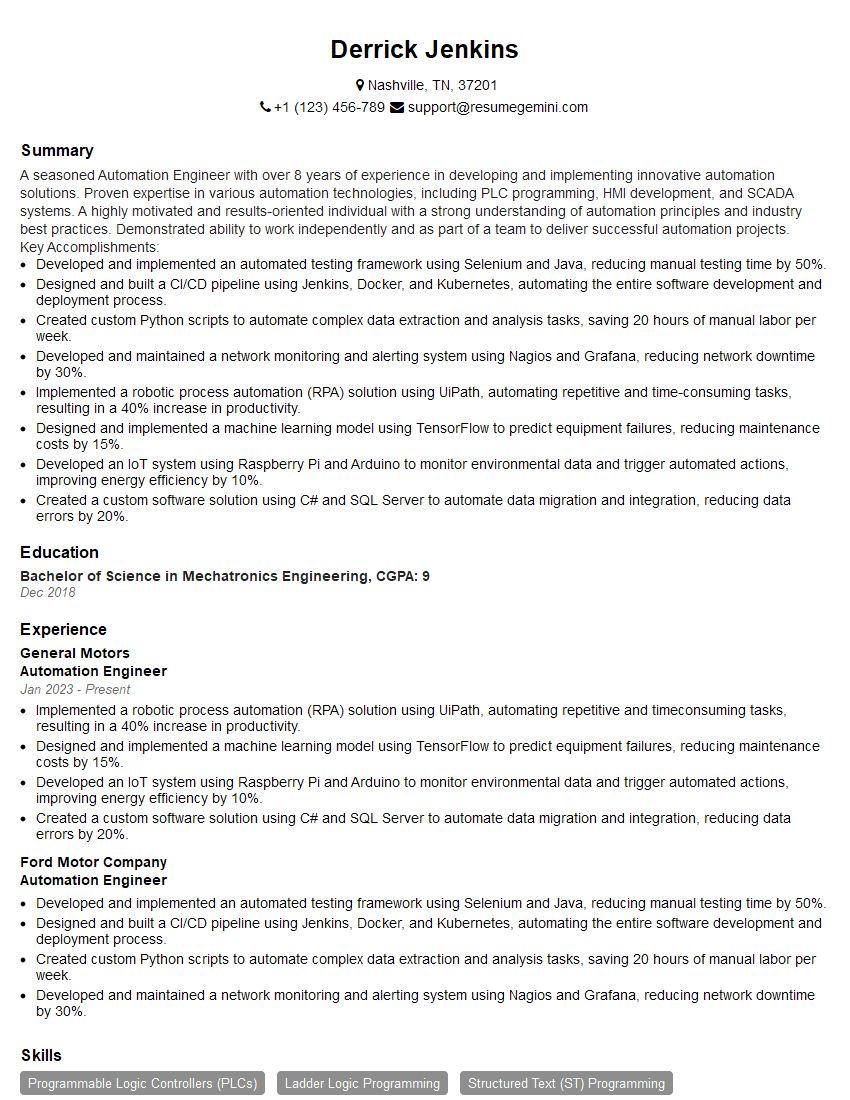
Automation Engineer Resume Sample
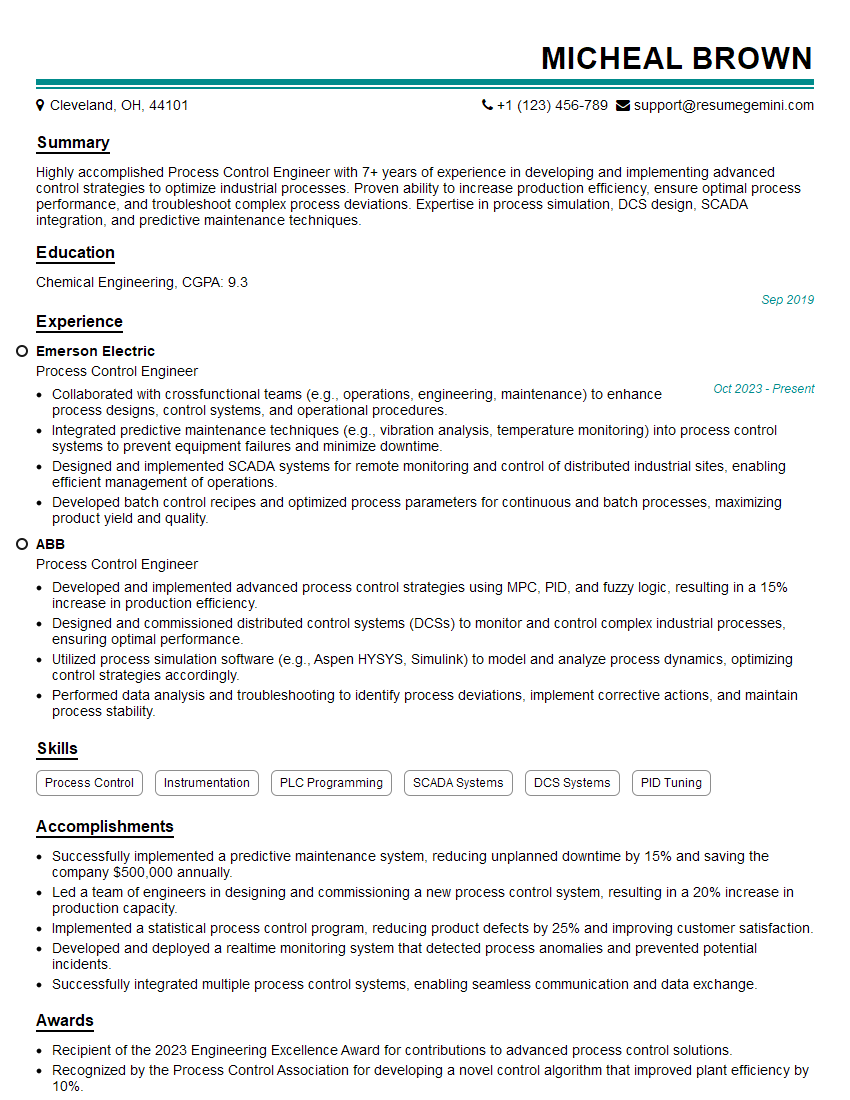
Process Control Engineer Resume Sample
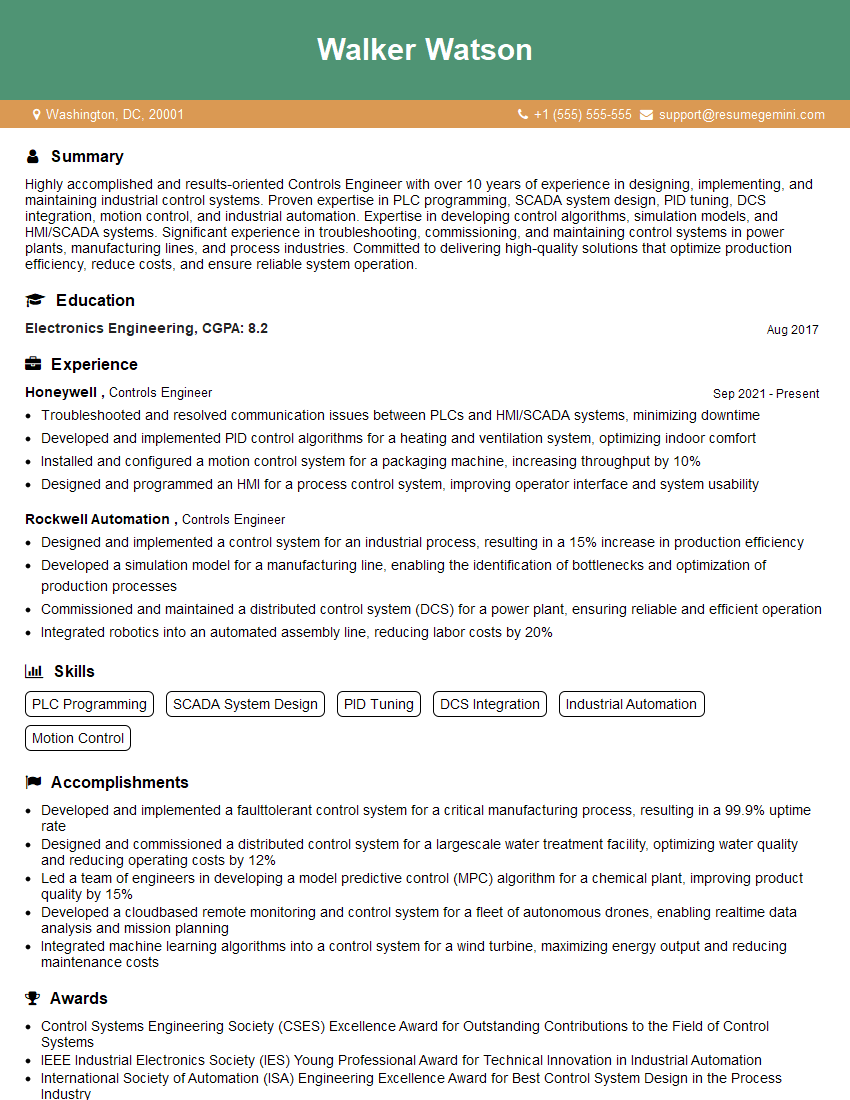
Controls Engineer Resume Sample
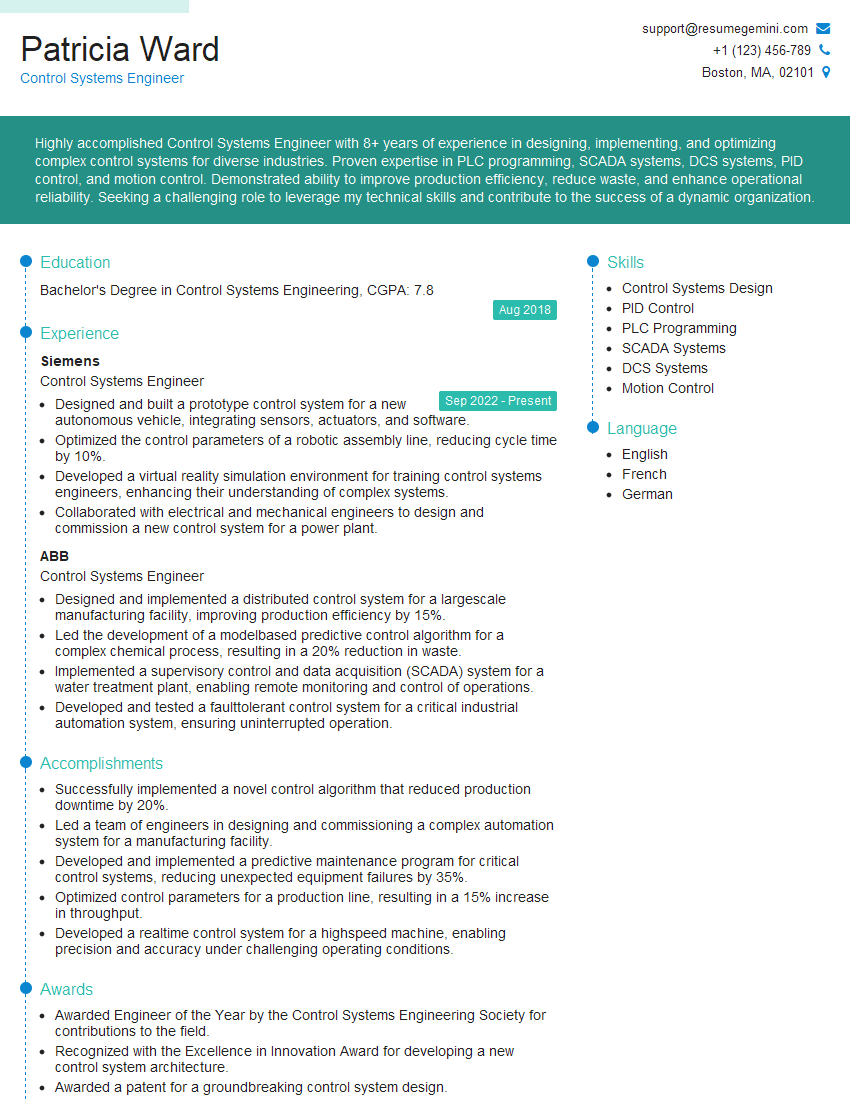
Control Systems Engineer Resume Sample
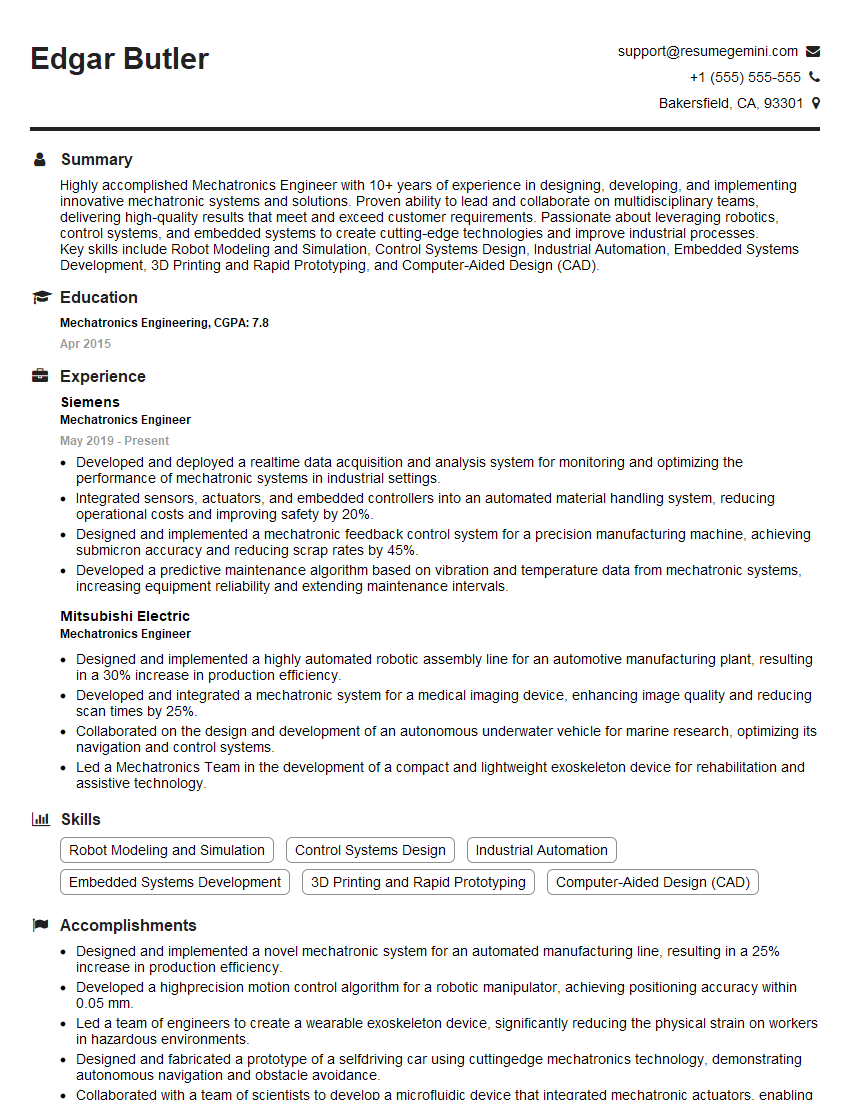
Mechatronics Engineer Resume Sample
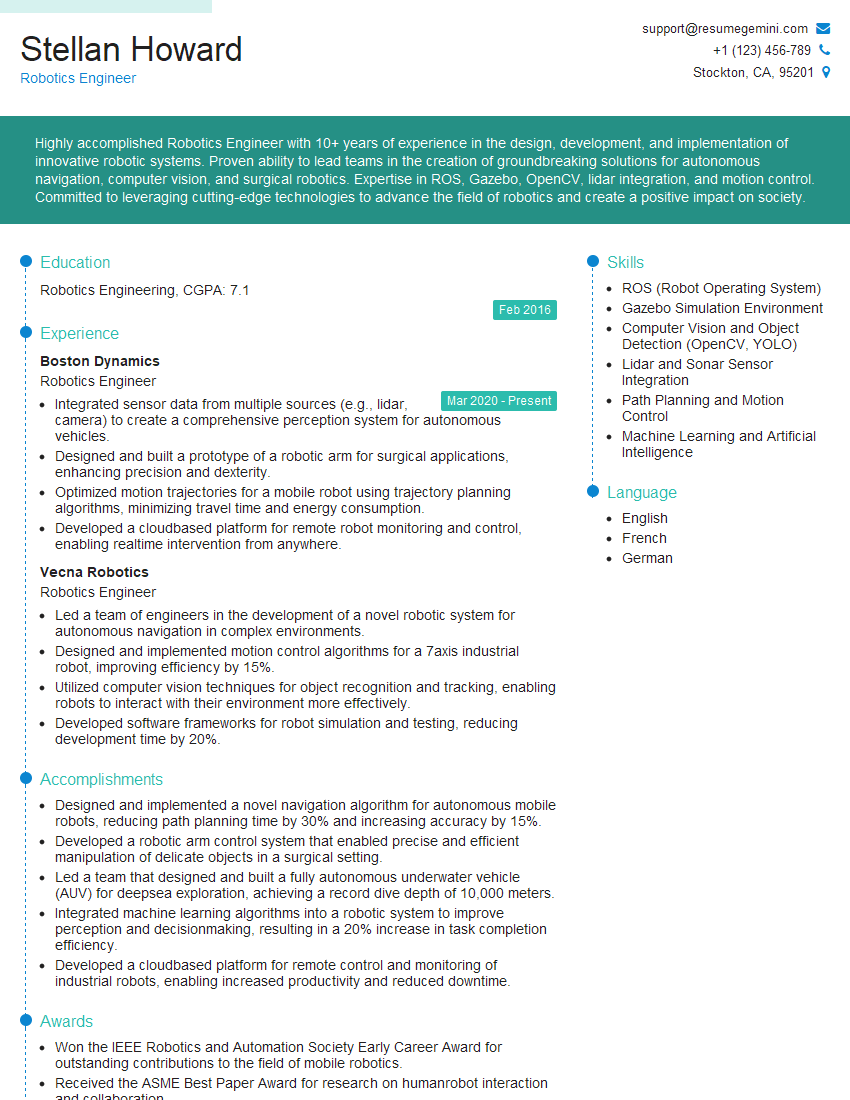
Robotics Engineer Resume Sample
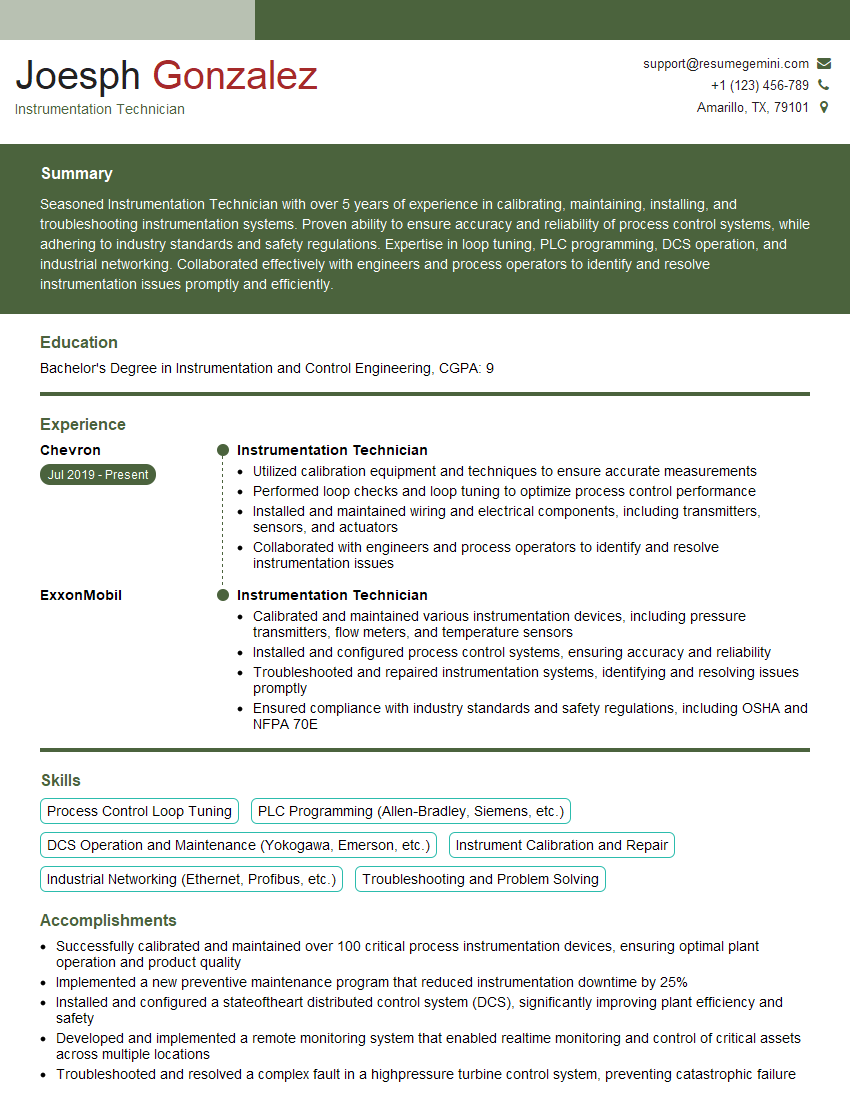
Instrumentation Technician Resume Sample
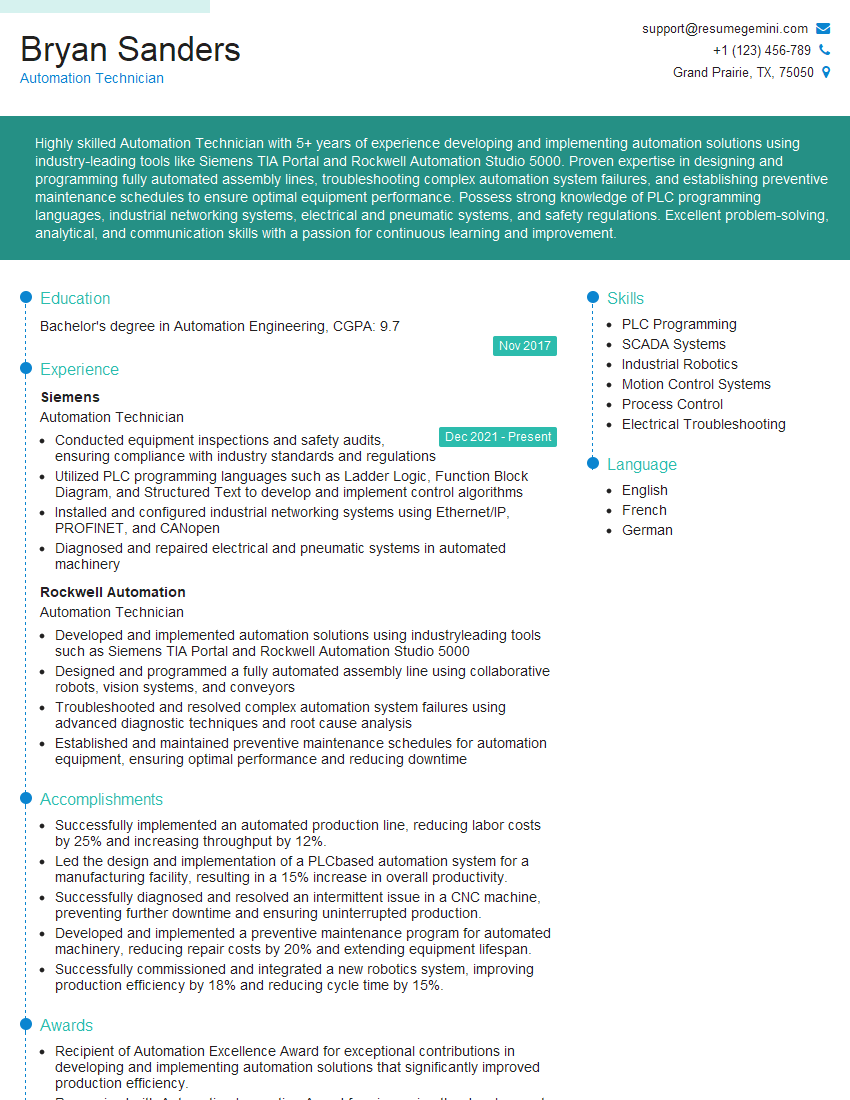
Automation Technician Resume Sample
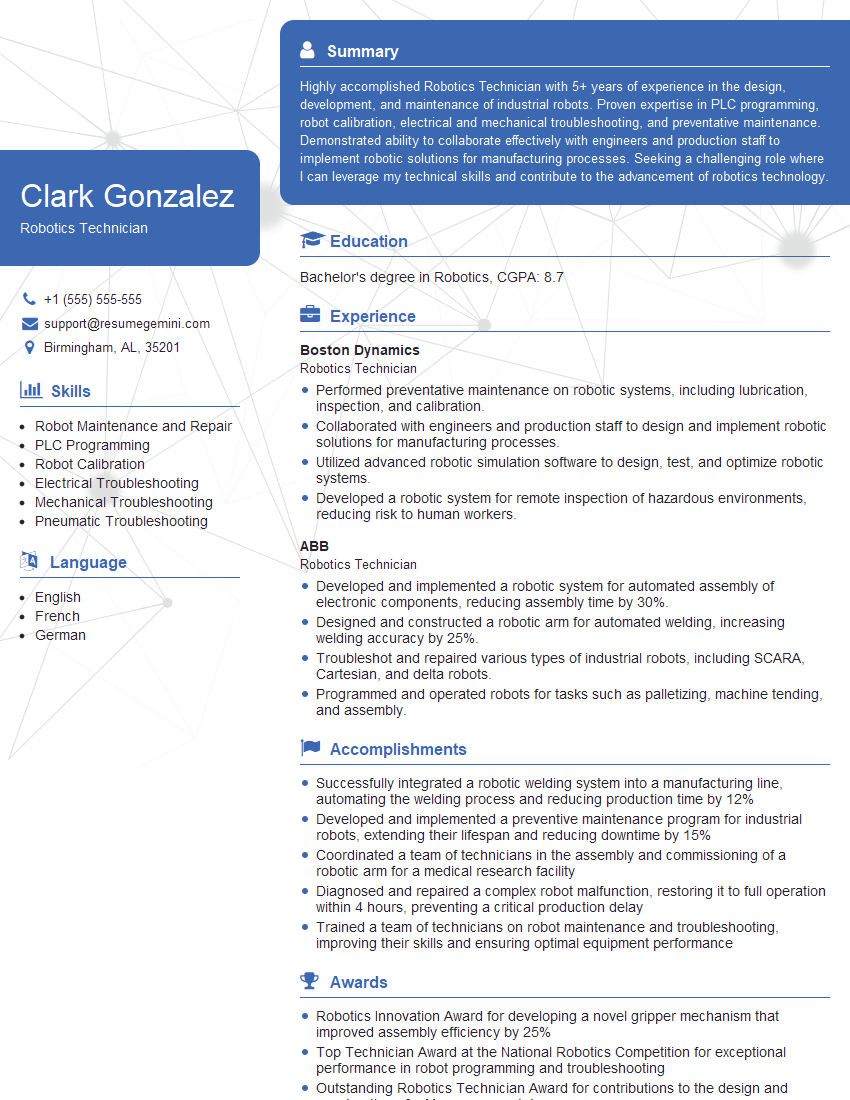
Robotics Technician Resume Sample
Explore more articles
Users Rating of Our Blogs
Share Your Experience
We value your feedback! Please rate our content and share your thoughts (optional).
What Readers Say About Our Blog
Very informative content, great job.
good