The right preparation can turn an interview into an opportunity to showcase your expertise. This guide to Cooling Management interview questions is your ultimate resource, providing key insights and tips to help you ace your responses and stand out as a top candidate.
Questions Asked in Cooling Management Interview
Q 1. Explain the difference between sensible and latent heat.
Sensible heat is the heat that causes a temperature change in a substance without changing its phase. Think of heating water on a stove – the water gets warmer, but it remains water. Latent heat, on the other hand, is the heat absorbed or released during a phase change, such as melting ice (absorbing latent heat) or freezing water (releasing latent heat). The temperature stays constant during the phase transition. For example, ice at 0°C absorbs latent heat to become water at 0°C before its temperature begins to rise. In cooling systems, we’re concerned with both types of heat. Removing sensible heat lowers the air temperature, while removing latent heat reduces the humidity.
Q 2. Describe the refrigeration cycle, including key components and processes.
The refrigeration cycle is a continuous process that moves heat from a colder space to a warmer space. It relies on a refrigerant that changes phase, absorbing heat as it evaporates and releasing heat as it condenses. The key components are:
- Evaporator: The refrigerant absorbs heat from the space to be cooled, evaporating and becoming a low-pressure, low-temperature gas.
- Compressor: This increases the refrigerant’s pressure and temperature, converting it into a high-pressure, high-temperature gas.
- Condenser: The high-pressure gas releases heat to the surrounding environment, condensing into a high-pressure liquid.
- Expansion Valve (or capillary tube): This reduces the refrigerant’s pressure, causing it to evaporate again in the evaporator, starting the cycle anew.
Imagine a water pump circulating water. The evaporator is like a sponge absorbing heat, the compressor is like a pump increasing the pressure, the condenser is like the radiator releasing heat, and the expansion valve is like a valve that regulates the flow. This continuous cycle maintains a lower temperature in the refrigerated space.
Q 3. What are the common types of refrigerants and their environmental impact?
Common refrigerants include HFCs (hydrofluorocarbons), HFOs (hydrofluoroolefins), and natural refrigerants like ammonia and CO2. HFCs, while effective, have high global warming potentials (GWPs). HFOs have significantly lower GWPs, making them a more environmentally friendly alternative. Natural refrigerants have zero or near-zero ozone depletion potential (ODP) and low GWPs, but often require specialized system designs and safety precautions due to their flammability or toxicity. For example, R-134a (an HFC) was widely used but is being phased out due to its high GWP, replaced by HFO blends like R-1234yf with much lower environmental impact. The selection of refrigerants depends on the application, regulatory requirements, and environmental concerns. A life cycle assessment is frequently used to determine the overall impact of the system.
Q 4. How do you troubleshoot a malfunctioning cooling tower?
Troubleshooting a malfunctioning cooling tower involves a systematic approach. First, I’d check water levels, pump operation, and fan functionality. Low water levels indicate a leak or fill issue. A faulty pump will prevent proper water circulation. A non-functional fan reduces heat dissipation. Then, I would inspect the fill media for clogging or damage. This restricts water flow and reduces cooling efficiency. I would also check the water’s chemical balance – high levels of scale or corrosion can severely impact performance. Further investigation might involve examining the air intake for obstructions and checking the pressure drops across the tower. I’d use instruments like a thermometer and pressure gauge for quantitative assessment. Data logging can help identify trends and pinpoint problems over time. If necessary, I would then consult the tower’s manuals or contact the manufacturer for further assistance.
Q 5. Explain the principles of psychrometrics and their application in cooling design.
Psychrometrics is the study of moist air. It helps us understand the relationships between air temperature, humidity, pressure, and enthalpy (total heat content). In cooling design, psychrometric charts or software are essential tools. They allow us to visualize and predict how air properties change during various cooling processes like evaporative cooling, dehumidification, and sensible cooling. For instance, we can use psychrometrics to determine the amount of cooling and dehumidification required to achieve a specific indoor air condition. We might model different scenarios using psychrometric analysis, comparing the efficiency and energy consumption of different cooling strategies. This ensures the design meets the desired conditions while optimizing energy efficiency and minimizing operational costs.
Q 6. What are the different types of air conditioning systems?
Air conditioning systems vary greatly depending on the scale and application. Common types include:
- Split Systems: These have an indoor unit and an outdoor unit connected by refrigerant lines. They are commonly found in homes and small offices.
- Packaged Systems: All components are housed in a single unit, often used for smaller commercial buildings.
- Central Air Conditioning: This system uses a central unit to condition air and distributes it throughout a building using ductwork. Suitable for larger buildings.
- VRF (Variable Refrigerant Flow) Systems: These use a single outdoor unit with multiple indoor units allowing individual temperature control in various zones. Frequently used in larger commercial settings and hotels.
- Chillers: Large-scale cooling systems often used in conjunction with cooling towers to provide chilled water to air handling units. These are typically used in high-rise buildings and industrial facilities.
The choice of system depends on factors like building size, budget, energy efficiency requirements, and climate.
Q 7. Describe your experience with chiller maintenance and repair.
Throughout my career, I’ve extensively worked on chiller maintenance and repair, including preventative maintenance schedules, troubleshooting malfunctions, and overseeing repairs. I have experience with various chiller types, from centrifugal chillers to absorption chillers. One memorable case involved diagnosing a significant drop in chiller efficiency. After thoroughly checking the system and analyzing the operating data, we pinpointed the cause to a failing condenser water pump, leading to inadequate heat rejection. Replacing the pump immediately restored the chiller’s performance, preventing costly downtime and ensuring uninterrupted cooling for the facility. I’m proficient in using diagnostic tools, interpreting data, and executing repairs effectively and safely, always prioritizing preventative measures to maximize chiller lifespan and minimize operational issues.
Q 8. How do you calculate cooling load for a building?
Calculating a building’s cooling load involves determining the total heat gain that needs to be removed to maintain a desired indoor temperature. It’s like figuring out how much ice you need to keep a cooler cold – the bigger the cooler, the more ice (cooling) you need. We consider several factors:
- Sensible Heat Gain: Heat transferred directly resulting in a temperature change. This comes from things like sunlight through windows, warm air infiltration, and heat generated by people and equipment. We calculate this using methods that consider surface area, materials’ thermal properties, solar radiation, and occupancy loads.
- Latent Heat Gain: Heat transferred causing a change in moisture content (humidity). This is added moisture from respiration, cooking, and infiltration. We account for this using psychrometric charts and calculations involving humidity ratios and enthalpy.
- Internal Loads: Heat generated within the building, such as from lighting, computers, and machinery. These are often expressed in BTUs per hour or kilowatts.
- External Loads: Heat transferred from outside sources, such as solar radiation and outside air temperature. This varies by climate and building orientation, which we consider through complex calculations or use specialized software.
The calculation often involves software like HAP (Hourly Analysis Program) or specialized building simulation tools that integrate all these factors. The final result gives us the total cooling load in tons of refrigeration (1 ton = 12,000 BTU/hr), which helps us size the appropriate cooling equipment.
Example: Imagine an office building. We’d consider the size and type of windows, insulation levels, number of occupants, lighting fixtures, and the local climate to determine the total cooling load needed to keep it at a comfortable 72°F.
Q 9. What are the energy efficiency measures for cooling systems?
Energy efficiency in cooling systems is crucial for sustainability and cost savings. We can improve efficiency through several measures:
- High-efficiency equipment: Using chillers, air handling units (AHUs), and other components with higher Energy Efficiency Ratios (EER) or Coefficient of Performance (COP). This means more cooling per unit of energy consumed.
- Variable-speed drives (VSDs): These allow for precise control of fan and pump speeds, reducing energy consumption by only using the necessary power. Think of it like a cruise control for your cooling system.
- Improved building envelope: Better insulation, high-performance windows, and air sealing reduce heat gain, minimizing the cooling load. This reduces the burden on the cooling equipment.
- Demand-controlled ventilation (DCV): Adjusting ventilation rates based on occupancy levels reduces energy waste from over-ventilation. Empty rooms don’t need the same airflow as occupied ones.
- Smart thermostats and building automation systems (BAS): Optimizing cooling schedules, occupancy sensing, and predictive controls can significantly reduce energy consumption. A BAS can constantly monitor and adjust the system based on real-time data.
- Free cooling: Utilizing outside air for cooling when temperatures are sufficiently low, significantly reducing energy use from mechanical chillers. This is effective in many climates during certain seasons.
Implementing these measures in a holistic approach is crucial for optimal energy efficiency.
Q 10. Explain the concept of air handling units (AHUs) and their operation.
Air handling units (AHUs) are the heart of many HVAC systems. They’re essentially large boxes that condition and circulate air within a building. Imagine them as the lungs of the building.
Operation: Air is drawn into the AHU, where it undergoes several processes:
- Filtration: Removing dust, pollen, and other contaminants.
- Heating/Cooling: Using coils to heat or cool the air to the desired temperature. This often involves chilled water or hot water from a central plant.
- Humidification/Dehumidification: Adjusting the moisture content of the air using humidifiers or dehumidifiers. This maintains comfort and prevents mold.
- Mixing: Combining return air with outside air to maintain proper air quality.
- Distribution: The conditioned air is then distributed throughout the building via ductwork.
AHUs can be large, room-sized units or smaller, decentralized units. Their capacity, features, and controls vary depending on the size and type of building.
Example: In a large office building, several AHUs might handle different zones or floors, ensuring efficient climate control across the entire facility.
Q 11. Describe your experience with building automation systems (BAS) for cooling control.
I have extensive experience with building automation systems (BAS) in managing cooling control. BAS are essentially the central nervous systems of modern buildings, allowing for centralized monitoring and control of various building systems, including HVAC. I’ve worked on projects involving various BAS platforms, such as Tridium Niagara, Schneider Electric, and Siemens.
My experience includes:
- Programming and configuration: Developing and implementing control strategies within the BAS to optimize cooling operations, such as scheduling, setpoint adjustments, and fault detection.
- Data analysis: Utilizing historical data from the BAS to identify trends, optimize energy consumption, and predict potential issues. This helps prevent downtime and save energy.
- Troubleshooting and maintenance: Diagnosing and resolving issues related to cooling control through the BAS interface, reducing downtime and improving system performance.
- Integration with other systems: Integrating the cooling system with other building systems, like lighting and security, for enhanced efficiency and coordination. For instance, dimming lights when cooling loads are high.
Example: In a recent project, I implemented a sophisticated control strategy using a BAS that reduced cooling energy consumption by 15% by dynamically adjusting cooling setpoints based on occupancy and outside temperature. This resulted in significant cost savings for the building owner.
Q 12. How do you diagnose and resolve problems with ductwork and airflow?
Diagnosing and resolving ductwork and airflow problems requires a systematic approach. It’s like being a detective for your building’s air circulation.
Diagnosis:
- Visual inspection: Checking for leaks, blockages, and damage to ductwork. This often involves using a borescope to access hard-to-reach areas.
- Airflow measurements: Using anemometers to measure air velocity and volume at various points in the duct system. This helps identify restrictions or imbalances.
- Pressure readings: Measuring static pressure in the ductwork to detect pressure drops indicating blockages or leaks. We often use a manometer for this.
- Temperature readings: Comparing temperatures at different points in the system can reveal areas of inefficient heat transfer or mixing.
Resolution:
- Repairing leaks: Sealing leaks in ductwork using mastic sealant or metal tape.
- Clearing blockages: Removing obstructions from ductwork using specialized cleaning tools.
- Balancing dampers: Adjusting dampers to equalize airflow in different branches of the duct system.
- Replacing damaged sections: Replacing damaged or deteriorated ductwork sections.
- Adding insulation: Improving insulation to reduce heat gain or loss.
Effective ductwork and airflow are crucial for proper cooling and energy efficiency. Neglecting maintenance can lead to significant performance degradation.
Q 13. What safety precautions are essential when working with refrigerants?
Safety when handling refrigerants is paramount. Refrigerants can be toxic, flammable, and contribute to ozone depletion or global warming, depending on their type. Here are crucial safety precautions:
- Proper training and certification: Only trained and certified personnel should handle refrigerants. This ensures a good understanding of the safety procedures and the risks associated with the refrigerants.
- Personal Protective Equipment (PPE): Always wear appropriate PPE, including safety glasses, gloves, and respirators, especially when working with older refrigerants.
- Ventilation: Work in well-ventilated areas to prevent the buildup of refrigerant vapors. Always ensure adequate ventilation during any refrigerant handling work.
- Leak detection: Regularly inspect systems for leaks using electronic leak detectors. Addressing leaks promptly minimizes environmental impact and prevents safety risks.
- Proper handling and disposal: Follow established procedures for handling and disposing of refrigerants. This involves responsible handling during system maintenance and proper refrigerant recovery and recycling.
- Emergency preparedness: Be familiar with emergency procedures in case of refrigerant leaks or accidents. Have the necessary emergency equipment, like spill kits, readily available.
Failure to follow these precautions can lead to serious health consequences or environmental damage. Always prioritize safety when working with refrigerants.
Q 14. Explain different types of cooling towers and their applications.
Cooling towers are essential components in many large cooling systems, rejecting heat from chilled water loops back to the atmosphere. They are like the radiators of a building’s cooling system.
Types and applications:
- Atmospheric Cooling Towers: These rely on natural air circulation for heat rejection. They are simple and cost-effective but have lower cooling efficiency. Suitable for smaller applications with limited space or budget constraints.
- Mechanical-Draft Cooling Towers: These use fans to force air through the tower, enhancing heat rejection efficiency. They are commonly used in larger buildings and industrial applications where cooling capacity is paramount. Further categorized as induced-draft (fans pull air through) or forced-draft (fans push air through).
- Counterflow Cooling Towers: Water flows downwards while air flows upwards, maximizing heat transfer efficiency. These are often used in larger commercial and industrial cooling systems. This counter-flow configuration allows for efficient heat exchange between the water and air.
- Crossflow Cooling Towers: Water flows downwards while air flows horizontally across the water flow. They are generally less efficient than counterflow towers but can be more compact. Often preferred where space is limited.
The choice of cooling tower depends on factors like cooling capacity requirements, space constraints, budget, and environmental regulations. Proper design and maintenance are essential for optimal performance and efficiency.
Q 15. How do you ensure proper ventilation and indoor air quality?
Ensuring proper ventilation and indoor air quality is crucial for a comfortable and healthy environment. It involves a multi-faceted approach focusing on both supply and exhaust air.
- Supply Air: This involves bringing in fresh, filtered air. We need to consider the volume of air required based on occupancy and space size. High-efficiency particulate air (HEPA) filters are often employed to remove airborne particles, and proper filter maintenance schedules are critical. The location of supply vents is also crucial for even air distribution, preventing stagnant zones and ensuring that air reaches all corners of a room.
- Exhaust Air: Equally important is the removal of stale, contaminated air. Exhaust fans strategically placed in bathrooms, kitchens, and other areas where pollutants are generated are essential. The exhaust system should have the proper capacity to handle the volume of air being exhausted.
- Air Quality Monitoring: Implementing CO2 sensors, humidity sensors, and potentially VOC (volatile organic compound) sensors provides real-time feedback on air quality. This data allows for adjustments to the ventilation system to maintain optimal conditions. For instance, if CO2 levels get too high, the system can automatically increase ventilation.
- Building Envelope Integrity: Air leaks in windows, doors, and the building’s structure can compromise indoor air quality by allowing unfiltered outside air to enter. Regular inspections and sealing of leaks is vital.
For example, in a recent project for a large office building, we incorporated a demand-controlled ventilation system that adjusted the airflow based on occupancy sensors. This significantly reduced energy consumption while maintaining excellent air quality.
Career Expert Tips:
- Ace those interviews! Prepare effectively by reviewing the Top 50 Most Common Interview Questions on ResumeGemini.
- Navigate your job search with confidence! Explore a wide range of Career Tips on ResumeGemini. Learn about common challenges and recommendations to overcome them.
- Craft the perfect resume! Master the Art of Resume Writing with ResumeGemini’s guide. Showcase your unique qualifications and achievements effectively.
- Don’t miss out on holiday savings! Build your dream resume with ResumeGemini’s ATS optimized templates.
Q 16. Describe your experience with commissioning and testing of cooling systems.
Commissioning and testing cooling systems is a critical phase ensuring optimal performance and efficiency. My experience encompasses a wide range of systems, from small-scale HVAC units to large-scale chiller plants. The process typically involves:
- Pre-commissioning: Reviewing design documents, verifying equipment specifications, and ensuring all components are correctly installed.
- Functional Testing: Individually testing each component, such as compressors, condensers, evaporators, and pumps, to verify their functionality and performance against design specifications. This often involves specialized equipment to measure pressure, temperature, and airflow.
- Integrated System Testing: Testing the entire system as a whole to ensure all components interact properly and the system operates efficiently as a unified entity. This phase might involve load testing, simulating peak demand conditions.
- Documentation: Creating a comprehensive report detailing all tests performed, results obtained, and any necessary adjustments or corrections. This documentation serves as a baseline for future maintenance and troubleshooting.
In one project, we discovered a significant airflow restriction in the ductwork during integrated system testing, leading to a redesign of the ductwork and ultimately preventing a potential system failure.
Q 17. What are the common causes of compressor failure?
Compressor failure is a major concern in cooling systems, leading to significant downtime and repair costs. Common causes include:
- Lack of Lubrication: Insufficient or contaminated oil can lead to excessive friction and wear, ultimately causing compressor seizure.
- High Discharge Pressure: This can be due to factors like refrigerant overcharge, restricted condenser airflow, or a faulty condenser fan motor. High pressure puts significant strain on the compressor components.
- Low Suction Pressure: Indicates insufficient refrigerant or a problem with the evaporator or metering device. The compressor may be working harder than intended, leading to overheating.
- Electrical Issues: Problems with the motor windings, starting capacitor, or control circuitry can damage the compressor. Power surges are a common culprit.
- Contamination: Presence of moisture or other contaminants in the refrigerant circuit can cause corrosion and damage to the compressor’s internal components.
Think of a car engine – if it lacks oil or runs excessively hot, it’s going to fail. The same principles apply to a compressor.
Q 18. How do you maintain optimal cooling system efficiency?
Maintaining optimal cooling system efficiency requires a proactive approach focused on several key areas:
- Regular Maintenance: Scheduled maintenance includes cleaning or replacing air filters, checking refrigerant levels, inspecting and cleaning coils, and lubricating moving parts. This prevents component wear and tear.
- Leak Detection and Repair: Regularly checking for refrigerant leaks is crucial, as refrigerant loss significantly reduces efficiency. Using specialized leak detection equipment is essential for accurate identification.
- Proper Airflow: Ensuring adequate airflow across condensers and evaporators is crucial. Cleaning coils and inspecting fan motors is key to maintaining optimal airflow.
- System Monitoring: Employing building management systems (BMS) or similar technologies allows for continuous monitoring of system parameters such as pressure, temperature, and energy consumption. Early detection of problems leads to faster remediation.
- Optimize System Settings: Properly configuring the system’s operational parameters, such as setpoints and control sequences, can significantly improve efficiency. This may involve adjusting the thermostat settings or optimizing the control logic.
For example, by implementing a preventative maintenance program, we reduced energy consumption in a commercial building by 15%, resulting in significant cost savings for the client.
Q 19. Explain your understanding of different types of cooling coils.
Cooling coils are essential components in cooling systems, responsible for transferring heat from the refrigerant to the air. Different types exist, each with its own advantages and disadvantages:
- Fin-and-Tube Coils: These are the most common type, consisting of refrigerant tubes surrounded by fins to increase surface area for heat transfer. They are relatively inexpensive and readily available.
- Plate-Fin Coils: These coils use thin, flat plates to increase the surface area for heat transfer, resulting in higher efficiency and compact designs. However, they can be more expensive than fin-and-tube coils.
- Microchannel Coils: These use very small diameter tubes to enhance heat transfer, offering even higher efficiency than plate-fin coils. However, they are more susceptible to clogging and may be more difficult to clean.
The choice of coil type depends on factors such as the cooling capacity required, the space available, the desired efficiency level, and the budget. In applications requiring high efficiency and compact design, plate-fin or microchannel coils are favored. Fin-and-tube coils are often chosen for their lower cost and ease of maintenance.
Q 20. Describe your experience with preventative maintenance schedules for cooling equipment.
Preventative maintenance schedules are the cornerstone of reliable cooling system operation. These schedules are tailored to the specific type and size of equipment but typically include:
- Regular Inspections: Visual inspections of all components, checking for leaks, corrosion, or unusual wear.
- Filter Changes: Replacing air filters on a regular basis (frequency depends on operating conditions and filter type).
- Coil Cleaning: Cleaning coils to remove dirt and debris, which can significantly reduce efficiency.
- Refrigerant Level Checks: Regular checks to ensure adequate refrigerant levels and to identify any leaks.
- Component Lubrication: Lubricating moving parts to reduce friction and wear.
- Electrical System Checks: Inspecting electrical connections, wiring, and control systems.
I usually develop a computerized maintenance management system (CMMS) to track all maintenance activities, ensuring timely completion of tasks and creating a historical record for analysis and improvement. This approach allows for proactive maintenance, preventing major failures and extending the lifespan of the equipment. For instance, a detailed schedule ensures that we proactively replace worn belts before they fail, avoiding costly emergency repairs.
Q 21. How do you manage cooling system emergencies?
Managing cooling system emergencies requires a rapid and effective response. My approach involves:
- Immediate Assessment: Quickly determine the nature and extent of the problem. This often involves checking system parameters, visual inspection, and using diagnostic tools.
- Safety First: Prioritize safety by ensuring the area is secure and preventing further damage or risk to personnel.
- Emergency Repair: Initiate necessary emergency repairs to restore functionality or mitigate the impact of the failure. This may involve temporary repairs to get the system operational until a permanent fix can be implemented.
- Root Cause Analysis: Once the emergency is contained, conduct a thorough root cause analysis to prevent similar events in the future. This often involves reviewing maintenance records, operational data, and possibly involving specialist equipment for diagnostics.
- Communication: Maintaining clear and consistent communication with all stakeholders, including building occupants, maintenance personnel, and management, is crucial throughout the emergency response.
During a recent emergency involving a chiller failure in a hospital, we swiftly mobilized a team, implemented a temporary cooling solution using backup generators and portable chillers, and worked through the night to restore full functionality minimizing disruption to patient care.
Q 22. Explain the principles of heat transfer and their relevance to cooling.
Cooling management fundamentally relies on understanding heat transfer principles. Heat, essentially the energy of molecular motion, moves from hotter regions to colder regions via three primary mechanisms: conduction, convection, and radiation.
Conduction: Direct transfer of heat through a material. Think of a metal spoon heating up in a hot cup of soup – the heat travels through the spoon’s material. In cooling systems, conduction is crucial in heat exchangers where heat moves from the coolant to the surrounding environment.
Convection: Heat transfer through the movement of fluids (liquids or gases). Imagine a radiator warming a room; the warm air rises, creating a convection current that distributes the heat. Cooling systems use forced convection, like fans blowing air over a heat sink, to effectively dissipate heat.
Radiation: Heat transfer through electromagnetic waves. This is how the sun warms the earth. While less dominant in many cooling systems, radiation plays a role in heat dissipation to the surroundings, especially in environments with high temperatures.
Understanding these principles allows us to design efficient cooling systems that maximize heat removal through the most effective pathways. For example, we can strategically position fans to enhance convective cooling, use high-thermal-conductivity materials in heat sinks to improve conduction, or design systems with surfaces that minimize radiation absorption.
Q 23. What are your experiences with different types of cooling system control strategies?
My experience encompasses a wide range of cooling system control strategies, including:
On/Off Control: A simple strategy where the cooling system is either fully on or fully off based on a set temperature threshold. While straightforward, it can lead to temperature fluctuations.
Proportional-Integral-Derivative (PID) Control: This sophisticated approach continuously adjusts the cooling capacity based on the error between the desired and actual temperature. It’s highly effective in maintaining precise temperature stability. I’ve extensively used PID controllers in data center cooling systems, optimizing energy efficiency and preventing equipment overheating.
Predictive Control: This strategy anticipates future temperature changes based on historical data and external factors like ambient temperature and server load. I worked on a project where predictive control reduced energy consumption by 15% by preemptively adjusting cooling capacity.
Model Predictive Control (MPC): MPC utilizes a mathematical model of the system to optimize control actions over a longer timeframe, considering constraints and multiple variables. It’s invaluable in complex systems with multiple cooling zones and varying loads.
I’ve implemented and fine-tuned these strategies using various control systems like programmable logic controllers (PLCs) and building management systems (BMS).
Q 24. Describe your experience with troubleshooting and repairing cooling system control components.
Troubleshooting cooling system control components requires a systematic approach. My experience involves:
Visual Inspection: Checking for physical damage, loose connections, or leaks in components such as pumps, fans, sensors, and valves.
Sensor Calibration and Verification: Ensuring temperature sensors provide accurate readings; a faulty sensor can lead to incorrect control actions. I once spent hours tracing a cooling issue down to a single miscalibrated temperature sensor in a large server room.
Electrical Testing: Using multimeters and other testing equipment to verify voltage, current, and continuity in wiring and components. Locating short circuits or open circuits is crucial in resolving many electrical faults.
Software Diagnostics: Analyzing error codes and logs from PLCs and BMS to identify software problems or malfunctioning control algorithms.
Component Replacement: Replacing faulty components like fans, pumps, or control boards. I’ve gained expertise in efficiently identifying and replacing faulty components, minimizing downtime.
Through experience, I’ve developed the ability to rapidly diagnose the root cause of problems and implement effective repair strategies, keeping systems operational and preventing potential equipment damage.
Q 25. How familiar are you with industry standards and codes related to cooling systems?
I am highly familiar with industry standards and codes related to cooling systems, including ASHRAE standards (like ASHRAE 90.1 for energy efficiency in buildings) and relevant safety codes (like NEC for electrical installations). These codes provide guidelines for design, installation, operation, and maintenance, ensuring system safety, efficiency, and reliability. Understanding these standards is paramount in designing and managing cooling systems that comply with regulations and best practices. In my work, I’ve consistently adhered to these standards, producing designs that are both effective and compliant. For example, in designing data center cooling systems, I’ve incorporated features to meet ASHRAE’s recommendations for minimizing energy use while maintaining appropriate temperature and humidity levels.
Q 26. What are the key performance indicators (KPIs) for evaluating cooling system performance?
Key Performance Indicators (KPIs) for evaluating cooling system performance include:
Temperature: Maintaining the desired temperature range within the cooled space is crucial, and its consistent monitoring is essential.
Humidity: Controlling humidity levels prevents condensation and other problems. Data centers, for instance, require very precise humidity control.
Power Consumption: Minimizing energy usage is a major goal. Tracking energy consumption helps in identifying areas for improvement and optimization.
Coefficient of Performance (COP): A measure of the cooling system’s efficiency – the ratio of cooling capacity to energy consumed. A higher COP indicates better efficiency.
Mean Time Between Failures (MTBF): Indicates system reliability and the frequency of required maintenance or repairs.
Data Center PUE (Power Usage Effectiveness): Specifically for data centers, this measures the total facility power consumption compared to IT equipment power consumption. A lower PUE is better.
Regular monitoring of these KPIs allows for proactive maintenance and optimization, ensuring the cooling system’s long-term performance and reliability.
Q 27. How would you approach the design of a cooling system for a new data center?
Designing a cooling system for a new data center involves a multi-step process:
Load Calculation: Precisely determining the heat load generated by IT equipment, lighting, and other sources. This involves considering factors like server density, power consumption, and ambient conditions.
System Selection: Choosing the appropriate cooling technology based on factors like budget, space constraints, environmental considerations, and required cooling capacity. This might include Computer Room Air Conditioners (CRACs), Computer Room Air Handlers (CRAHs), liquid cooling, or a hybrid approach.
Airflow Management: Designing the airflow pattern to ensure efficient heat removal. This involves strategically placing equipment, using raised floors for cable management and air distribution, and designing hot and cold aisles.
Control System Design: Implementing an appropriate control system, such as a BMS or PLC, to monitor and regulate temperature and humidity. This includes integrating sensors, actuators, and control algorithms.
Redundancy and Failover: Incorporating redundant components and failover mechanisms to ensure system reliability and prevent downtime. Data centers usually require a high level of redundancy.
Maintenance Plan: Developing a preventive maintenance schedule to ensure the system operates reliably and efficiently over its lifespan. Regular inspection and servicing are crucial.
I always use specialized software for simulation and modeling to optimize the design and ensure it meets the required performance and efficiency targets.
Q 28. Explain your understanding of sustainable and environmentally friendly cooling technologies.
Sustainable and environmentally friendly cooling technologies are becoming increasingly important. My understanding includes:
Free Cooling: Utilizing natural sources like outside air or water for cooling when ambient conditions are suitable. This significantly reduces energy consumption compared to traditional mechanical cooling systems. I’ve implemented free cooling solutions in several projects, achieving substantial energy savings.
Adiabatic Cooling: Lowering air temperature through evaporative processes, often combined with free cooling. This technique is energy-efficient and well-suited for certain climates.
Liquid Cooling: Directly cooling IT equipment with liquid instead of air. This technology offers higher cooling efficiency, enabling higher equipment density and reducing energy consumption. I’ve been involved in projects implementing liquid cooling, especially in high-density data centers.
Improved Refrigerants: Using refrigerants with lower global warming potential (GWP) is crucial in reducing environmental impact. Staying up-to-date with the latest developments in refrigerant technology is important for environmentally responsible system design.
Renewable Energy Integration: Powering cooling systems with renewable energy sources, such as solar or wind power, reduces reliance on fossil fuels and lowers the carbon footprint.
I believe in designing cooling systems that minimize environmental impact without compromising performance. This requires a holistic approach, considering energy efficiency, refrigerant choices, and the overall system lifecycle.
Key Topics to Learn for Cooling Management Interview
- Thermodynamics of Cooling Systems: Understanding fundamental concepts like heat transfer, refrigeration cycles (e.g., vapor-compression, absorption), and thermodynamic properties of refrigerants.
- Refrigerant Selection and Handling: Knowing the properties of various refrigerants, their environmental impact (e.g., Ozone Depletion Potential, Global Warming Potential), and safe handling procedures.
- Cooling System Design and Components: Familiarity with the design principles of different cooling systems (e.g., chillers, air conditioners, heat pumps), their key components (compressors, condensers, evaporators, expansion valves), and their functions.
- Cooling System Operation and Maintenance: Understanding the operational principles, troubleshooting common issues, and performing preventative maintenance on various cooling systems.
- Energy Efficiency and Optimization: Knowledge of techniques to improve energy efficiency in cooling systems, including system optimization, energy audits, and the use of advanced control strategies.
- Building Management Systems (BMS) and Controls: Understanding how cooling systems integrate with BMS, including data acquisition, monitoring, and control strategies for optimal performance.
- Safety and Regulations: Awareness of relevant safety regulations and codes of practice related to refrigerant handling, system operation, and maintenance.
- Troubleshooting and Problem-Solving: Ability to diagnose and solve common problems in cooling systems using systematic approaches and diagnostic tools.
- Case Studies and Practical Applications: Analyzing real-world case studies to understand the application of theoretical knowledge to practical scenarios in various settings (e.g., commercial buildings, industrial processes).
Next Steps
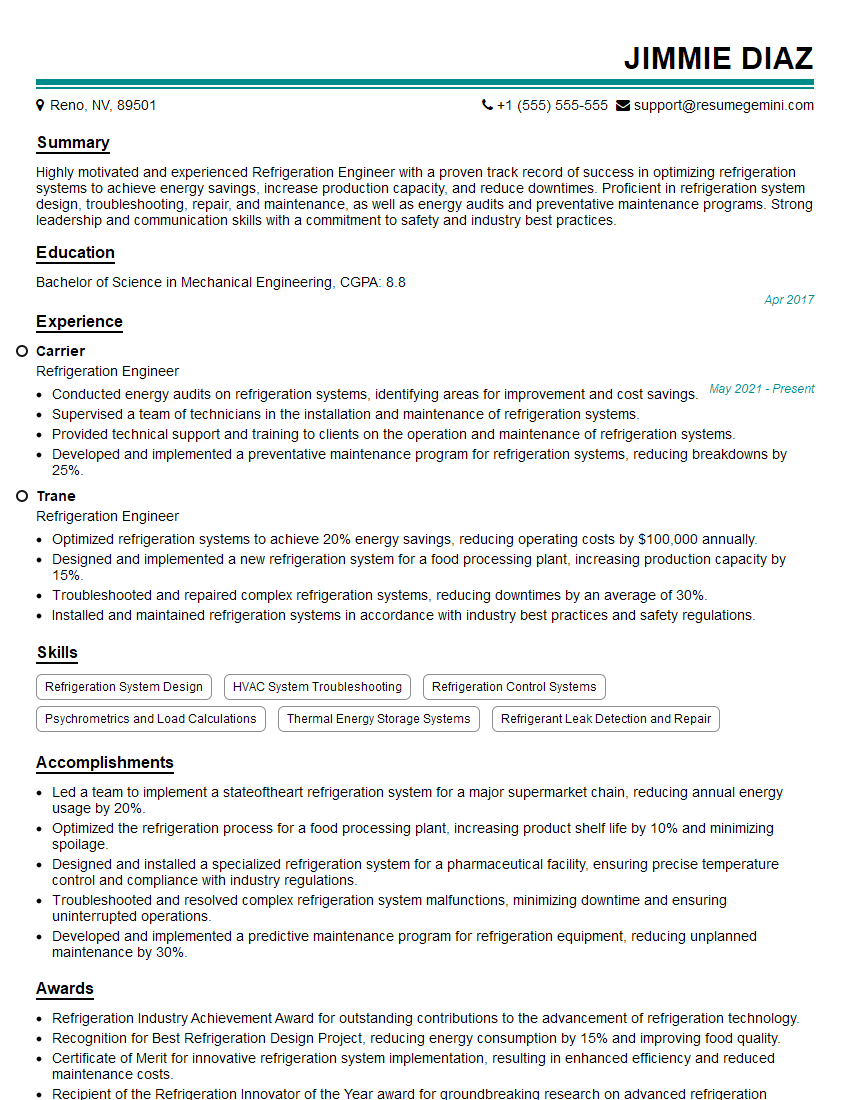
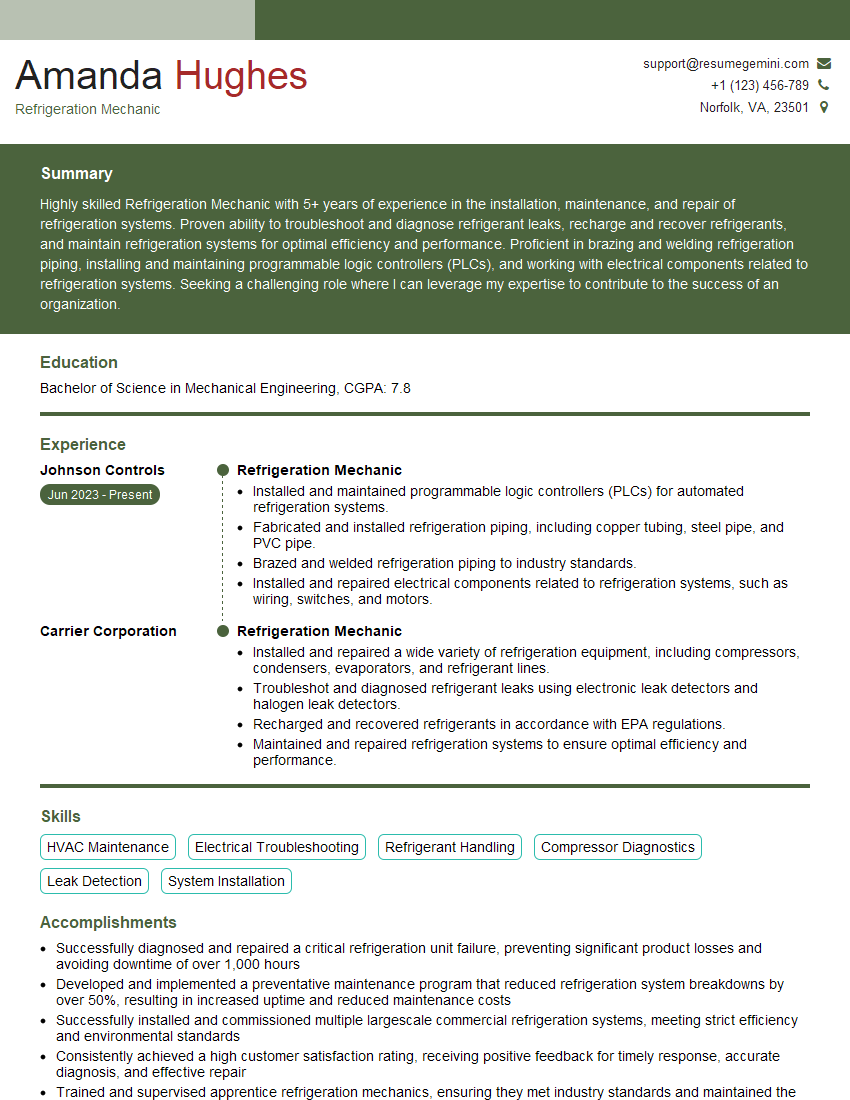
Mastering Cooling Management opens doors to exciting career opportunities and significant professional growth within the HVAC industry. A strong understanding of these concepts will greatly enhance your interview performance and career prospects. To maximize your chances of landing your dream role, it’s crucial to have an ATS-friendly resume that highlights your skills and experience effectively. ResumeGemini is a trusted resource to help you create a professional and impactful resume. They offer examples of resumes specifically tailored to the Cooling Management field, providing you with a valuable template for success. Invest the time in creating a compelling resume—it’s a key step in securing your next opportunity.
Explore more articles
Users Rating of Our Blogs
Share Your Experience
We value your feedback! Please rate our content and share your thoughts (optional).
What Readers Say About Our Blog
Very informative content, great job.
good