Unlock your full potential by mastering the most common Coordination with Architects and Contractors interview questions. This blog offers a deep dive into the critical topics, ensuring you’re not only prepared to answer but to excel. With these insights, you’ll approach your interview with clarity and confidence.
Questions Asked in Coordination with Architects and Contractors Interview
Q 1. Describe your experience managing the coordination between architects and contractors on a large-scale project.
Managing architect-contractor coordination on a large-scale project requires a proactive, organized approach. Think of it like orchestrating a symphony – each instrument (architect, contractor, subcontractor) plays a crucial role, and they must be in perfect harmony. My experience on the construction of the ‘City Centre Plaza’ involved coordinating over 15 different contractors and a large architectural team. This involved establishing clear communication channels, regular meetings, and a robust document management system. I utilized a central project management platform to track progress, share design changes, and manage the flow of information. This prevented siloed working and kept everyone aligned. For instance, early in the project, we identified a potential clash between the HVAC system design and the structural elements. By flagging this early, through scheduled design reviews, we were able to resolve it before construction began, saving time and money.
- Regular Meetings: Weekly meetings with architects and key contractors to discuss progress, challenges, and upcoming tasks.
- Design Review Sessions: Thorough review of architectural plans and contractor shop drawings to identify and address potential conflicts early.
- Centralized Communication Platform: Utilizing a project management platform allowed easy access to all project documents and updates for all parties.
Q 2. How do you handle conflicting design specifications from the architect and the contractor’s proposed solutions?
Conflicting specifications between the architect and contractor require a diplomatic yet firm approach. Imagine it like refereeing a debate – you need to understand both sides, find common ground, and arrive at a solution that meets the project goals and adheres to building codes and regulations. My approach involves:
- Understanding the Conflict: I meticulously review both the architect’s specifications and the contractor’s proposed solutions, understanding their underlying rationale.
- Open Communication: A meeting with all relevant parties – architect, contractor, and potentially relevant subcontractors – to discuss the conflict openly and collaboratively.
- Prioritize Safety and Code Compliance: Ensure any changes are in adherence with safety regulations and building codes.
- Finding a Compromise: Explore alternatives that meet both the design intent and the contractor’s feasibility concerns. This often involves value engineering – finding cost-effective solutions that achieve the same functionality.
- Documenting the Agreement: Once a solution is agreed upon, I make sure it’s formally documented and signed off by all parties.
For example, on the ‘Greenwood Apartments’ project, a conflict arose regarding the exterior cladding. The architect’s preferred material proved too expensive and had long lead times. Through collaboration, we found a suitable alternative that met aesthetic standards while staying within budget and schedule.
Q 3. Explain your process for resolving schedule conflicts between architectural and construction timelines.
Resolving schedule conflicts requires meticulous planning and proactive communication. Think of it as managing a complex puzzle; you need to fit all the pieces together without any overlaps. My process involves:
- Integrated Scheduling: Create a unified project schedule that integrates both architectural and construction timelines, highlighting dependencies.
- Critical Path Analysis: Identify critical path activities that will delay the project if not completed on time. This helps prioritize tasks and allocate resources accordingly.
- Regular Schedule Monitoring: Regularly monitor progress against the schedule, identifying potential delays early.
- Proactive Communication: Communicate potential conflicts and delays to the architect and contractor teams promptly.
- Contingency Planning: Develop contingency plans to mitigate potential delays. This might involve fast-tracking certain activities, or identifying alternative solutions.
For instance, during the construction of a high-rise building, we anticipated delays in the delivery of specific materials. By working closely with the architects and contractors, we were able to reschedule tasks, identify substitute materials, and minimize the impact on the overall project timeline.
Q 4. How familiar are you with BIM (Building Information Modeling) and its role in architect-contractor coordination?
I am highly proficient in BIM (Building Information Modeling). BIM is essentially a digital representation of the physical and functional characteristics of a place. It’s not just a set of drawings; it’s a dynamic database that allows for better coordination between architects and contractors. Think of it as a shared, interactive blueprint that everyone can access and update. In my experience, BIM has significantly reduced clashes, improved communication, and streamlined the construction process. It facilitates early conflict detection, allowing us to address potential issues in the design phase before construction even begins. Specific functionalities I utilize include clash detection software to identify conflicts between different disciplines (structural, MEP, architectural) and 4D BIM for visualizing the construction sequencing.
Using BIM on the ‘Riverside Development’ project allowed us to identify and resolve over 90% of potential construction clashes before the project even went to site. This saved significant amounts of time and money and significantly reduced rework on site.
Q 5. Describe your experience with RFI (Request for Information) processes and how you’ve used them to ensure smooth coordination.
RFIs (Requests for Information) are crucial for ensuring clear communication and resolving ambiguities in the project documents. Think of them as clarifying questions that help maintain a shared understanding. My process for managing RFIs ensures that they are addressed promptly and effectively:
- Clear and Concise RFIs: Ensure that all RFIs are clearly written, concise, and contain all necessary details.
- Centralized RFI Tracking: Utilize a centralized system (often integrated within the project management platform) to track the status of all RFIs.
- Designated Point of Contact: Assign a specific person responsible for handling each RFI.
- Prompt Response Times: Establish and enforce response timeframes for both issuing and responding to RFIs.
- Documentation: Maintain a complete record of all RFIs, responses, and resolutions.
On a recent project, utilizing a dedicated RFI tracking system and enforcing clear timelines ensured that all questions were addressed promptly, preventing any delays caused by unanswered questions.
Q 6. How do you manage and distribute project documents effectively to architects and contractors?
Effective document management is the backbone of successful architect-contractor coordination. I utilize a cloud-based document management system that allows architects and contractors to access and share project documents easily. This system features version control, ensuring that everyone is working with the most up-to-date information. I structure the documents using a clear and logical folder system, making it easy to find specific files. Regular updates are communicated to all parties via the project management software or email.
This system helps prevent the loss of crucial documents, minimizes confusion from conflicting versions, and facilitates efficient collaboration. For example, all drawings are uploaded and version controlled so that all parties are working from the same baseline.
Q 7. How do you facilitate effective communication and collaboration between architects and contractors?
Facilitating effective communication is crucial for success. This involves employing various methods:
- Regular Meetings: Scheduled meetings—both formal and informal—are crucial. These provide a platform for open discussion, resolving conflicts, and keeping everyone informed.
- Open Communication Channels: Maintaining open and easily accessible communication channels using email, instant messaging, and project management software fosters instant dialogue and minimizes misunderstandings.
- Constructive Feedback: Fostering a culture of providing and receiving constructive criticism during design reviews and regular meetings is essential.
- Conflict Resolution Strategies: Establishing clear procedures for resolving conflicts, incorporating mediation or collaborative problem-solving when necessary, avoids disputes.
- Building Trust and Rapport: Cultivating a positive working relationship between architects and contractors is essential. This builds trust and encourages collaboration. Regular social interaction, informal updates, and recognition of good work greatly improve communications.
For example, during the ‘Millennium Park’ project, I fostered a culture of open communication by initiating weekly informal ‘coffee chats’ with the lead architect and contractor. This created a space for informal problem-solving and greatly improved communication.
Q 8. Explain your approach to conflict resolution when disagreements arise between the architect and the contractor.
My approach to conflict resolution between architects and contractors prioritizes open communication and collaborative problem-solving. I believe that most disagreements stem from misunderstandings or unmet expectations. My first step is always to facilitate a calm and respectful meeting between the parties involved. I encourage each side to clearly articulate their perspectives and concerns, without interruption. I act as a neutral mediator, ensuring everyone feels heard and understood.
Next, I work to identify the root cause of the conflict. Is it a discrepancy in the drawings, a differing interpretation of the specifications, a scheduling conflict, or a cost overrun? Once the root cause is identified, we collaboratively brainstorm solutions. This might involve reviewing the relevant documentation, consulting with subcontractors, or exploring alternative design options. The goal is to find a mutually agreeable solution that satisfies both the architect’s design intent and the contractor’s practical constraints. If a compromise can’t be reached immediately, I document all points of contention and propose a plan for further discussion and resolution, possibly involving a third-party expert if necessary.
For example, on a recent project, a disagreement arose between the architect and the contractor regarding the type of flooring to be used. The architect specified a particular type of hardwood, while the contractor argued it was impractical due to the site conditions and cost. Through facilitated discussion, we discovered that the architect was primarily concerned with maintaining the aesthetic vision. The contractor, in turn, was worried about delays and budget overruns. We explored several alternative flooring options that balanced aesthetic appeal with practical considerations and ultimately reached a mutually acceptable solution.
Q 9. How do you ensure that all project drawings and specifications are up-to-date and readily accessible to all parties?
Maintaining up-to-date and accessible project drawings and specifications is paramount for successful coordination. We utilize a centralized, cloud-based document management system that all parties can access. This system ensures everyone is working from the same version of the drawings and specifications, eliminating confusion and minimizing errors. The system allows for version control, so we can track changes, revert to previous versions if necessary, and maintain an audit trail of all modifications.
In addition to the document management system, we establish clear protocols for updating and distributing documents. Any changes to the drawings or specifications, whether due to design revisions or contractor RFIs (Requests for Information), are immediately uploaded to the system, along with a clear description of the change and its impact. Regular project meetings are held to review the latest documents, address any questions or concerns, and ensure everyone is on the same page. We also utilize a robust communication strategy, combining email notifications with the in-built notification system of the document management software, to ensure that all parties are immediately informed of any updates.
For instance, BIM (Building Information Modeling) software often integrates directly with cloud-based document management systems, further streamlining the process. This allows for collaborative work on 3D models and ensures all parties have access to the most recent information in real-time. This integrated approach minimizes discrepancies and ensures consistency throughout the project lifecycle.
Q 10. Describe a situation where you had to manage significant changes to the project scope and how this impacted coordination.
On a recent high-rise residential project, the client decided to add a significant feature mid-construction—a rooftop terrace with a complex irrigation system. This change impacted coordination significantly, requiring a reassessment of the structural design, the HVAC system, and the electrical layout. The original schedule was severely impacted, and we had to carefully manage the changes to avoid cost overruns.
To mitigate these impacts, we immediately held a meeting with the architect, contractor, and relevant subcontractors to discuss the implications of the change. We carefully documented the change request, outlining the scope of work, timelines, and associated costs. The architect created revised drawings and specifications that incorporated the new terrace design. The contractor then developed a revised construction schedule and cost estimate. We utilized a change order system to formally document all modifications, ensuring transparency and accountability. This included regular progress meetings to track the implementation of changes, resolve any emerging issues, and monitor costs and timelines. The key was proactive communication and collaborative problem-solving, which allowed us to successfully incorporate the significant change without compromising the project’s overall quality or delivery timeline. While there were delays, effective communication kept the process transparent and the resulting project remained high-quality.
Q 11. How do you track and manage project costs related to architect and contractor coordination?
Tracking and managing project costs related to architect and contractor coordination requires a robust system of cost accounting and reporting. We use a project management software that allows us to track all expenses related to design revisions, change orders, meetings, communication, and document management. This ensures that we have a clear understanding of the cost implications of the coordination process. The software generates regular reports showing a detailed breakdown of expenses, allowing us to monitor costs against the budget and identify potential issues early on.
In addition to the project management software, we establish a clear budget for coordination activities at the beginning of the project. This budget is reviewed and updated regularly to reflect any changes in scope or unforeseen costs. We also hold regular cost review meetings with the architect and contractor to discuss the progress of the project and identify any areas where costs may be exceeding the budget. This proactive approach allows us to address cost issues promptly and prevent major overruns.
For example, we might allocate a specific budget for software licenses, cloud storage, and consultant fees related to coordinating specialized systems. Regularly comparing actual expenses against the budget helps us spot potential cost overruns and take corrective actions.
Q 12. What software or tools do you use to improve architect-contractor coordination?
We leverage several software tools to enhance architect-contractor coordination. These include cloud-based document management systems (like Dropbox, Google Drive, or dedicated construction management platforms), project management software (like Asana, Monday.com, or Procore), and BIM (Building Information Modeling) software (like Revit or ArchiCAD).
Cloud-based document management systems provide a centralized repository for all project drawings, specifications, and other relevant documents. Project management software helps us track tasks, manage schedules, and monitor progress. BIM software facilitates collaboration on 3D models, allowing architects and contractors to identify and resolve potential clashes and conflicts early in the design process. In addition, we utilize communication tools like Slack or Microsoft Teams to facilitate quick and efficient communication between project stakeholders.
For example, using BIM software, we can detect clashes between MEP (Mechanical, Electrical, and Plumbing) systems and structural elements before construction begins, avoiding costly rework and delays. The integration of these various software solutions creates a comprehensive and efficient system for managing the coordination process.
Q 13. How do you ensure that all parties understand and adhere to the project’s budget and timeline?
Ensuring adherence to the project’s budget and timeline requires a multi-pronged approach that combines clear communication, regular monitoring, and proactive problem-solving. At the outset of the project, we clearly define the budget and schedule, making sure that all parties fully understand their responsibilities and how they contribute to the overall project goals. We use project management software to track progress against the baseline schedule and identify any potential delays.
Regular project meetings are crucial for monitoring progress and addressing any emerging issues. These meetings involve all stakeholders, including the architect, contractor, and key subcontractors. We discuss any deviations from the budget and schedule, identify the root causes, and develop mitigation strategies. Transparent communication is essential to ensuring that all parties are aware of potential risks and challenges. The use of earned value management techniques helps monitor budget and schedule performance against planned values. If deviations arise, we proactively work with the architect and contractor to find solutions that balance cost, time, and quality constraints.
For instance, if a delay is anticipated, we might work with the contractor to explore ways to accelerate the schedule while staying within budget. Or, if costs are rising, we might work with the architect to explore value engineering options that reduce costs without significantly compromising the project’s quality.
Q 14. How do you handle change orders from the architect or contractor?
Handling change orders from the architect or contractor requires a systematic and transparent process. Any proposed change must be formally documented in a change order request, including a detailed description of the change, its impact on the project scope, schedule, and budget, and any supporting documentation. This request is then reviewed and approved by the relevant stakeholders, with clear understanding and consent from the client.
Once a change order is approved, it becomes a legally binding agreement that modifies the original contract. We carefully track all change orders, ensuring they are integrated into the project drawings, specifications, schedule, and budget. This process ensures transparency and accountability, minimizing potential disputes. We also update the project management software to reflect the approved changes, ensuring that all parties have access to the most current information. Communication is crucial to managing the changes so all parties understand the impact and the agreed upon solutions.
For instance, a change order might involve upgrading the building materials to a higher-quality option, which would lead to adjustments in the budget and schedule. The change order would document these adjustments clearly, including updated cost estimates, revised timelines, and potential impact to other aspects of the project.
Q 15. Explain your process for reviewing shop drawings and submittals.
My process for reviewing shop drawings and submittals is rigorous and ensures alignment with the design intent and building codes. It begins with a thorough understanding of the project’s specifications and drawings. I then systematically check each submittal against these documents, verifying dimensions, materials, and installation methods. This involves:
- Verification of compliance: I meticulously compare the submittal to the approved construction documents, ensuring all aspects are compliant.
- Checking for clashes: I look for potential conflicts with other systems or elements of the building, such as MEP (Mechanical, Electrical, Plumbing) clashes.
- Detail review: I examine the details provided for completeness and accuracy. For example, I might look at connection details for structural elements to confirm they meet the specified requirements.
- Material verification: I confirm that the proposed materials meet the specified quality and performance standards.
- Code compliance review: I verify that all relevant building codes and regulations are met.
For instance, on a recent high-rise project, a contractor submitted shop drawings for a complex curtain wall system. My review identified a minor discrepancy in the mullion spacing, potentially affecting the structural integrity. Early detection like this prevented costly rework later on. I document all findings, including approvals, revisions, and re-submissions, maintaining a clear audit trail.
Career Expert Tips:
- Ace those interviews! Prepare effectively by reviewing the Top 50 Most Common Interview Questions on ResumeGemini.
- Navigate your job search with confidence! Explore a wide range of Career Tips on ResumeGemini. Learn about common challenges and recommendations to overcome them.
- Craft the perfect resume! Master the Art of Resume Writing with ResumeGemini’s guide. Showcase your unique qualifications and achievements effectively.
- Don’t miss out on holiday savings! Build your dream resume with ResumeGemini’s ATS optimized templates.
Q 16. How do you ensure that the project meets all relevant building codes and regulations?
Ensuring code compliance is paramount. My approach involves a multi-layered strategy. Firstly, I work closely with the architect to ensure the design itself adheres to all relevant codes from the outset. This often involves engaging structural and MEP engineers who are well-versed in local and national building codes.
Secondly, during the construction phase, I conduct regular site visits and shop drawing reviews, specifically checking for compliance. This is crucial since minor design changes can sometimes unintentionally create code violations. I also leverage digital tools for building information modeling (BIM) to detect clashes and potential code conflicts early on. These tools allow us to virtually construct the building and identify potential issues before they manifest on-site, saving time and money.
Finally, we schedule inspections with the relevant authorities throughout the construction process. This proactive approach ensures timely identification and resolution of any code-related issues, preventing potential delays or penalties.
For example, during a recent school renovation, my review identified a potential issue with the accessibility requirements of the ramps. We addressed this early, preventing potential legal issues and ensuring the school met the Americans with Disabilities Act (ADA) standards.
Q 17. Describe your experience in conducting site meetings and generating accurate minutes.
Site meetings are crucial for effective communication and coordination. I believe in a structured approach. I always prepare an agenda beforehand, distributing it to all attendees, including architects, contractors, subcontractors, and relevant authorities. During the meeting, I facilitate open discussion, ensuring all concerns are addressed. I focus on:
- Clear communication: Encouraging all parties to voice their concerns, suggestions, and challenges.
- Action item assignment: Assigning specific responsibilities and deadlines for addressing issues raised.
- Documenting decisions: Meticulously recording all decisions, including action items, deadlines, and assigned responsibilities.
After the meeting, I generate detailed minutes, including a concise summary of discussions, action items, and assigned responsibilities with deadlines. These minutes serve as a formal record and are distributed promptly to all attendees. I’ve found that clear and concise minutes prevent misunderstandings and keep everyone accountable. I maintain an archive of minutes for easy reference during the project’s lifespan. A well-managed set of minutes proves crucial for dispute resolution and progress tracking if conflicts arise later in the project.
Q 18. How do you monitor the progress of the project and identify potential coordination issues early on?
Project monitoring involves a combination of proactive and reactive strategies. Proactive monitoring includes regularly reviewing the project schedule, attending site meetings, and actively searching for potential issues through my site visits and document reviews. Reactive strategies include addressing identified issues and proposing solutions. Key tools I use include:
- Regular schedule reviews: Comparing the planned schedule with actual progress, identifying any delays or potential issues.
- Progress meetings: Holding regular meetings with the contractor and subcontractors to discuss progress and address challenges.
- BIM coordination: Utilizing BIM software to identify potential clashes and conflicts between different trades before they occur on-site.
- Early warning system: Establishing a system for reporting potential problems, ensuring timely intervention and preventing escalation.
For example, on a recent commercial project, the early review of the subcontractor’s schedule alerted me to a potential delay in the delivery of crucial materials. By proactively communicating with the contractor, I was able to mitigate the risk by securing alternate materials and minimizing the project’s overall impact.
Q 19. Explain your experience with risk management in relation to architect-contractor coordination.
Risk management is integral to successful architect-contractor coordination. My approach involves identifying potential risks, assessing their likelihood and impact, and developing mitigation strategies. This begins even before the project starts through thorough due diligence of the construction documents, contract language, and the selection of the contractor and subcontractors.
Common risks I address include:
- Schedule delays: I mitigate this by establishing realistic schedules with buffer times and contingency plans.
- Cost overruns: I do this through value engineering, meticulous cost control, and robust change management processes.
- Design changes: I minimize this with a thorough design process and a clear change order procedure.
- Communication breakdowns: I address this via clear communication channels and regular meetings.
- Material availability: I counter this through early procurement planning and secured supply chains.
For example, on a recent project, I identified a risk of material shortages due to supply chain issues. We proactively secured alternative materials and incorporated this into the schedule, mitigating the potential impact on the project timeline.
Q 20. How do you ensure the quality of work performed by both the architect and contractor?
Ensuring quality involves a multifaceted approach involving both proactive monitoring and reactive problem-solving. Proactive measures include defining clear quality standards in the project specifications and contract documents, and regular site inspections to observe the contractor’s workmanship. Reactive strategies address issues found during inspections. This involves:
- Regular inspections: Conducting frequent site visits to monitor the quality of work performed.
- Quality control checks: Implementing procedures for checking materials and workmanship throughout the construction process.
- Documentation: Maintaining detailed records of inspections, findings, and corrective actions.
- Communication: Clearly communicating expectations and requirements to both the architect and the contractor.
- Performance evaluations: Regularly assessing the architect’s design and the contractor’s performance based on pre-defined criteria.
For instance, on a previous project, a routine inspection revealed minor deviations from the specified finishes. Addressing these issues promptly, through communication with the contractor, prevented them from becoming major problems, saving time and cost. Moreover, a well-defined quality control system and clear contract language helps prevent costly disputes.
Q 21. Describe your experience with different contract types and their impact on coordination.
My experience encompasses various contract types, each impacting coordination differently. Common types include lump-sum, cost-plus, and design-build.
- Lump-sum contracts: These fix the total project cost upfront. Coordination is critical as changes are expensive and require formal change orders. Clear communication and detailed drawings are essential for avoiding disputes.
- Cost-plus contracts: These compensate the contractor for their actual costs plus a predetermined fee or markup. This can lead to greater flexibility in design changes, but requires close monitoring of costs and a transparent accounting system. Strong coordination is necessary to avoid cost escalation.
- Design-build contracts: These combine design and construction under a single contract. Coordination is streamlined as the designer and contractor are integrated. However, selecting a capable design-build team is crucial for success. Clear definition of responsibilities is important to avoid conflicts.
Each type requires a different approach to coordination. For example, in a lump-sum contract, meticulous planning and upfront coordination are essential to minimize changes during construction. In a cost-plus contract, effective communication and cost monitoring are key to preventing cost overruns.
Q 22. How do you utilize technology to improve communication and coordination among project stakeholders?
Effective communication and coordination are paramount in construction, and technology plays a crucial role. My strategy leverages several platforms to ensure seamless information flow among architects, contractors, subcontractors, and clients. This includes:
Cloud-based project management software: Tools like Asana, Monday.com, or Procore allow real-time updates on tasks, schedules, and issue tracking. For instance, if a contractor encounters a delay, they can instantly update the schedule, notifying everyone involved. This transparency prevents misunderstandings and allows for proactive problem-solving.
Building Information Modeling (BIM): BIM software (like Revit or ArchiCAD) creates a digital representation of the building, enabling collaborative design review and clash detection. This significantly reduces costly errors during construction, as clashes between MEP (Mechanical, Electrical, and Plumbing) systems or structural elements can be identified and resolved virtually before they become physical problems. Imagine discovering a conflict between a duct and a beam – in BIM, it’s easily spotted and adjusted; on-site, it’s a costly demolition and rebuild.
Digital communication platforms: Dedicated project channels on platforms like Slack or Microsoft Teams facilitate instant communication, sharing of documents, and quick resolution of queries. Instead of endless email chains, this allows for focused conversations within specific project threads, keeping everyone informed and engaged.
Drone technology and 360° cameras: These provide detailed site progress documentation, enabling better tracking of work completion and assisting in identifying potential issues early on. Think of it like having a virtual site visit available to all stakeholders, regardless of their physical location.
By integrating these technologies, I establish a centralized hub for project information, promoting transparency, accountability, and efficiency.
Q 23. Explain your strategy for maintaining accurate project records and documentation.
Maintaining accurate project records is critical for successful completion and legal compliance. My strategy centers around a comprehensive, structured approach:
Centralized document management system: A dedicated cloud-based system (e.g., SharePoint, Dropbox) ensures all project documents – drawings, specifications, meeting minutes, change orders, and RFIs (Requests for Information) – are stored securely and accessible to authorized personnel only. This eliminates the risk of lost or misplaced documents and simplifies version control.
Version control and numbering system: A clear numbering system, like using a sequential numbering convention for drawings and revisions, avoids confusion. Version control ensures that everyone is working from the latest approved documents, preventing costly mistakes due to outdated information.
Regular document reviews: Scheduled reviews by both the architect and contractor ensure accuracy, identify discrepancies, and prevent any accumulation of outdated or conflicting information. These are often incorporated into regular project meetings.
Digital record-keeping: Scanning and digitizing all physical documents makes them easily searchable and accessible, even after the project is complete. This assists during future maintenance or potential disputes.
Detailed meeting minutes: Action items, decisions, and responsibilities are clearly documented in meeting minutes, shared with all attendees, and tracked for completion. This provides a clear audit trail of progress and decisions made.
This systematic approach ensures that the project records are complete, accurate, and easily retrievable throughout the project lifecycle and beyond.
Q 24. How familiar are you with LEED or other green building certifications, and how do they influence architect-contractor coordination?
I am very familiar with LEED (Leadership in Energy and Environmental Design) and other green building certifications, such as BREEAM and Green Globes. These certifications significantly impact architect-contractor coordination because they introduce specific requirements and standards that need to be meticulously integrated into the design and construction process.
Material selection: LEED requires the use of sustainable materials with recycled content and low embodied carbon. This requires close collaboration between the architect and contractor to source and procure appropriate materials, ensuring they meet both the design intent and environmental standards.
Energy efficiency: LEED emphasizes energy efficiency measures, such as high-performance building envelopes and efficient HVAC systems. This necessitates coordinated design and installation to ensure optimal performance and compliance with the certification requirements.
Waste management: LEED promotes waste reduction and recycling during construction. The contractor needs to implement detailed waste management plans in close coordination with the architect’s design, to ensure efficient sorting and recycling processes on-site.
Sustainable site development: LEED considers site impacts, such as stormwater management and minimizing land disturbance. This often involves early coordination between the architect and contractor, with input from environmental consultants, to develop strategies for protecting local ecosystems.
Successful LEED certification relies heavily on proactive and detailed communication between the architect and contractor, ensuring that all sustainability requirements are met throughout the entire building lifecycle.
Q 25. How do you measure the success of your architect-contractor coordination efforts?
Measuring the success of architect-contractor coordination involves a multi-faceted approach focusing on both quantitative and qualitative metrics:
On-time completion: Meeting project deadlines indicates effective coordination and planning.
On-budget completion: Staying within budget reflects efficient resource management and proactive issue resolution.
Number of change orders: A low number of change orders suggests a well-coordinated design and construction process with minimal errors or omissions.
Number of RFIs (Requests for Information): Fewer RFIs suggest clear and complete documentation, leading to reduced delays and rework.
Client satisfaction: Positive feedback from the client demonstrates successful collaboration that meets their needs and expectations.
Safety record: A strong safety record reflects careful coordination of site activities and adherence to safety protocols.
Post-occupancy evaluation: Feedback from building occupants regarding building performance and satisfaction with the design and construction quality.
By tracking these metrics, I can identify areas of success and areas needing improvement, continuously refining my coordination strategies.
Q 26. Describe your experience with value engineering and its role in optimizing design and construction.
Value engineering is a systematic process to analyze project costs and identify opportunities to reduce expenses without compromising quality or functionality. It’s a collaborative effort involving architects, contractors, engineers, and often the client. My experience with value engineering includes:
Early involvement: The most effective value engineering happens early in the design phase, allowing for creative solutions that don’t require significant design changes.
Cost-benefit analysis: We meticulously assess the cost of each design element and its impact on the overall project. We evaluate alternatives and determine the most cost-effective solution while maintaining the design’s integrity.
Material substitutions: Exploring alternatives to expensive materials without sacrificing quality or durability. For example, switching to a more cost-effective but equally durable type of flooring.
Design simplification: Streamlining design features without compromising functionality. This might include simplifying structural elements or reducing the complexity of finishes.
Constructability review: The contractor’s input is vital in identifying potential construction challenges that may drive up costs. Early detection allows for proactive mitigation strategies.
For example, on a recent project, we identified that a complex custom-designed railing system could be replaced with a readily available, equally safe, and significantly less expensive alternative. This saved the client a substantial amount while maintaining the design’s aesthetic appeal.
Q 27. How do you handle unforeseen site conditions that impact the coordination process?
Unforeseen site conditions are inevitable in construction. My approach to handling them involves a proactive and collaborative strategy:
Thorough site investigation: Before construction begins, a comprehensive site investigation, including geotechnical surveys and environmental assessments, helps minimize surprises. However, unexpected conditions can still arise.
Open communication: Immediate and transparent communication with all stakeholders is crucial when unexpected conditions are found. This allows everyone to assess the impact and develop a solution collaboratively.
Change order process: Any changes to the scope of work resulting from unforeseen site conditions are documented through a formal change order process. This ensures transparency and avoids disputes regarding additional costs or time extensions.
Contingency planning: Having a contingency plan in place for potential issues reduces the impact of unexpected events. This might include allocating a budget for unforeseen site work and building flexibility into the project schedule.
Expert consultation: Engaging specialized consultants (e.g., geotechnical engineers) to provide expert advice and develop appropriate remediation strategies.
For instance, if unexpected bedrock is encountered during excavation, immediate communication with the engineer and contractor allows for adjustments to the foundation design and a revised construction schedule, minimizing project delays and cost overruns.
Q 28. Explain your experience with project closeout procedures and how coordination plays a role.
Project closeout is a critical phase requiring meticulous coordination between the architect and contractor. It involves a series of steps to ensure project completion, handover to the client, and final documentation:
Completion of punch lists: A punch list, detailing outstanding work, is meticulously reviewed and completed by the contractor, ensuring all aspects of the project meet the agreed-upon standards. This requires careful inspection by both the architect and the client.
Final inspections: Final inspections by relevant authorities (building inspectors, fire marshals, etc.) are scheduled and completed to ensure compliance with all building codes and regulations.
As-built drawings: The contractor provides updated as-built drawings reflecting any deviations from the original design, ensuring accurate documentation for future maintenance and renovations.
Warranty information: The contractor provides comprehensive warranty information for all installed equipment and materials, ensuring the client is aware of maintenance requirements and responsible parties.
Final payment release: Once all outstanding items are completed and inspections are successful, the final payment is released to the contractor.
Project documentation archiving: All project documents, including drawings, specifications, change orders, and inspections reports, are organized and archived securely for future reference.
Effective coordination throughout this phase is essential to ensure a smooth handover, avoid disputes, and protect both the client and the project team.
Key Topics to Learn for Coordination with Architects and Contractors Interview
- Project Planning & Scheduling: Understanding critical path methods, scheduling software (e.g., MS Project), and the role of coordination in maintaining timelines.
- Blueprint Reading & Interpretation: Ability to decipher architectural and engineering drawings, identify potential clashes, and understand construction sequencing.
- Communication & Collaboration: Effective strategies for communicating with architects, contractors, and other stakeholders; conflict resolution and negotiation skills.
- Building Codes & Regulations: Familiarity with relevant building codes and regulations, ensuring compliance throughout the project lifecycle.
- Material Procurement & Management: Understanding material specifications, sourcing, and logistics, coordinating timely delivery to the site.
- Cost Estimation & Budgeting: Participation in cost estimation processes, monitoring expenses, and identifying potential cost overruns.
- Quality Control & Assurance: Implementing quality control measures, conducting site inspections, and ensuring adherence to project specifications.
- Risk Management: Identifying and mitigating potential project risks, including safety hazards, schedule delays, and budget overruns.
- Change Management: Effectively handling design changes, addressing unforeseen circumstances, and maintaining project documentation.
- Technology & Software Proficiency: Demonstrating knowledge of relevant software tools for coordination, such as BIM software (e.g., Revit) and project management platforms.
Next Steps
Mastering coordination between architects and contractors is crucial for career advancement in the construction industry. It demonstrates your ability to manage complex projects, collaborate effectively, and deliver successful outcomes. To significantly boost your job prospects, create an ATS-friendly resume that highlights your skills and experience. ResumeGemini is a trusted resource that can help you build a professional and impactful resume, ensuring your qualifications shine. Examples of resumes tailored to Coordination with Architects and Contractors are available to help guide your resume creation process.
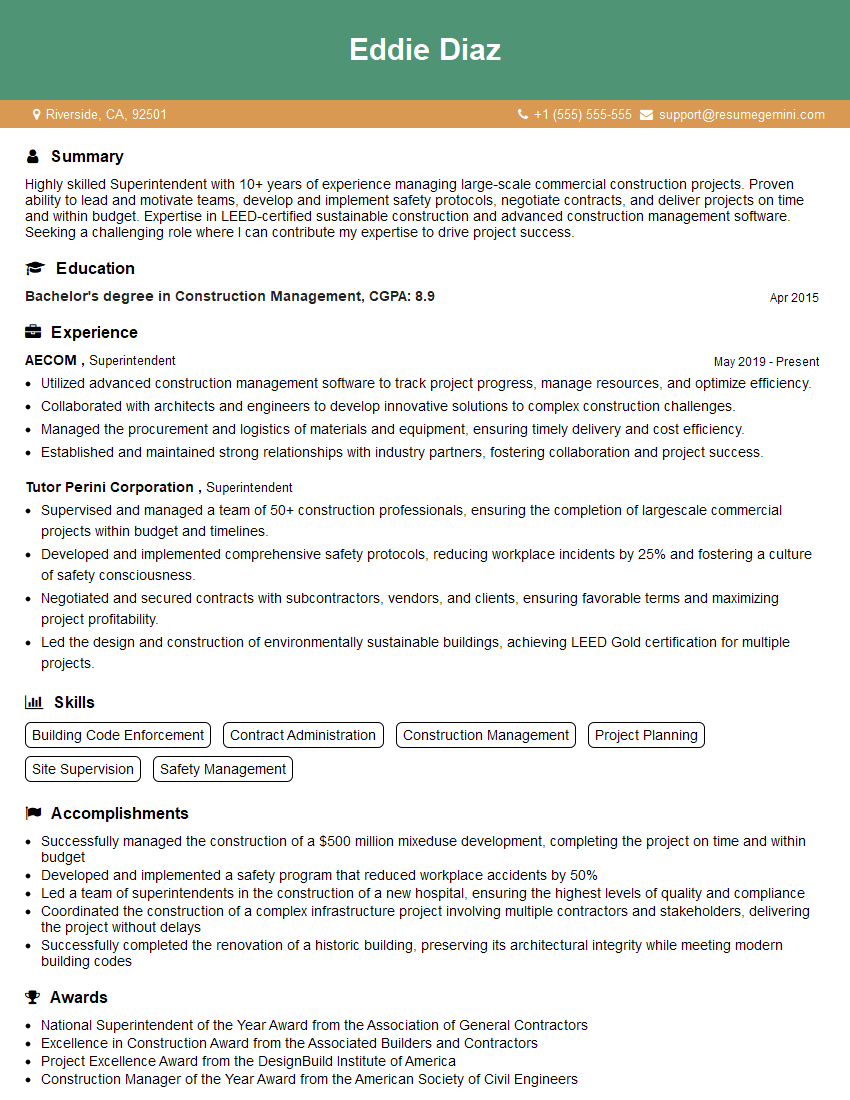
Superintendent Resume Sample
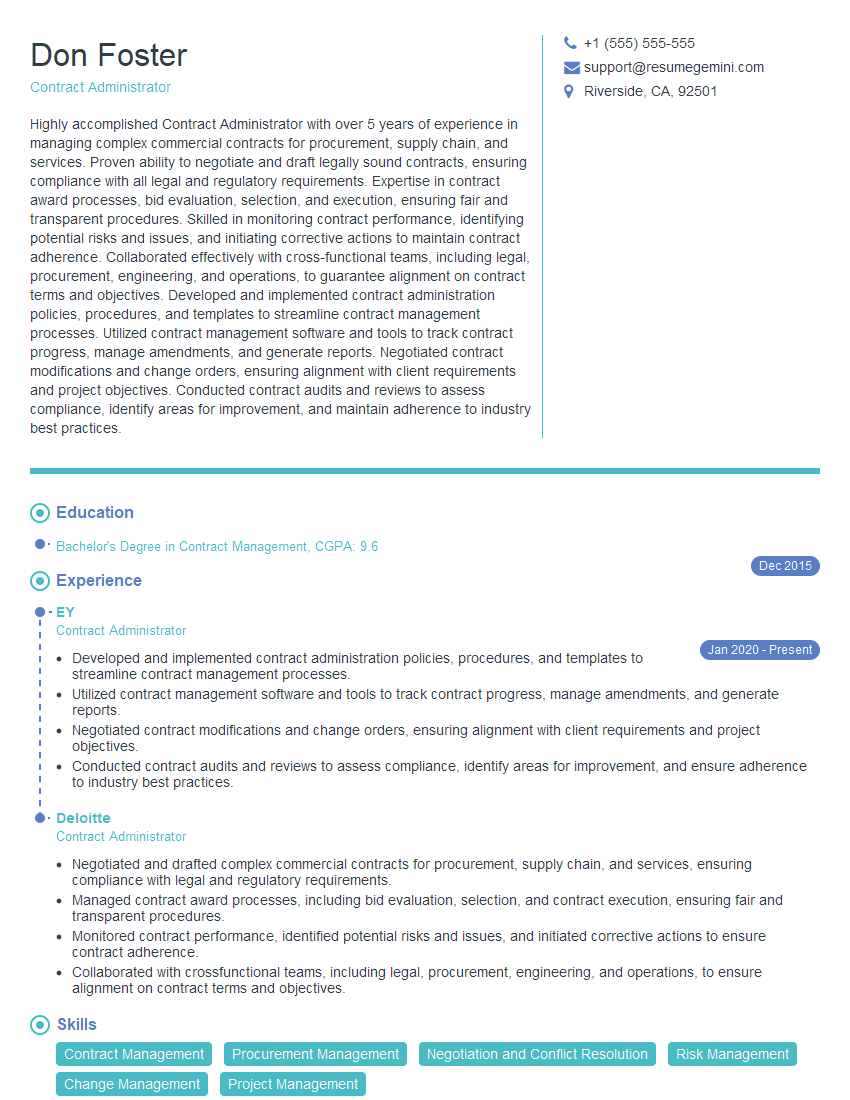
Contract Administrator Resume Sample
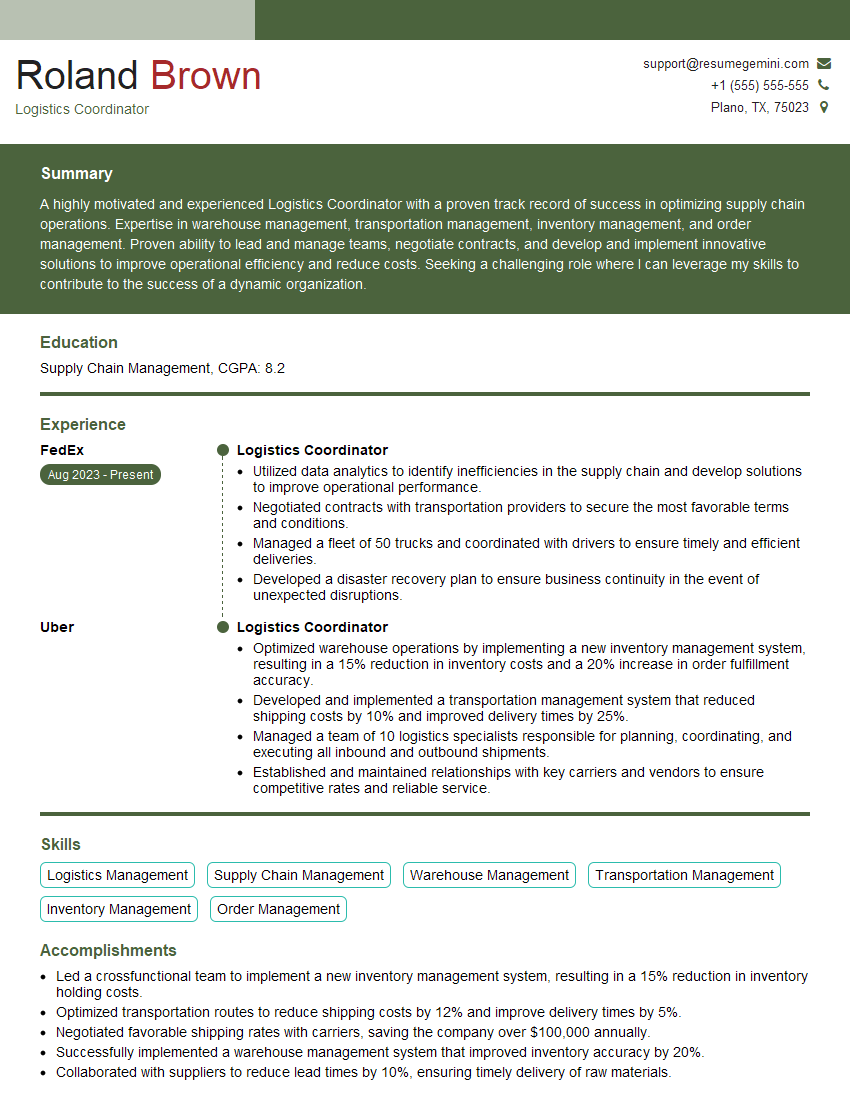
Logistics Coordinator Resume Sample
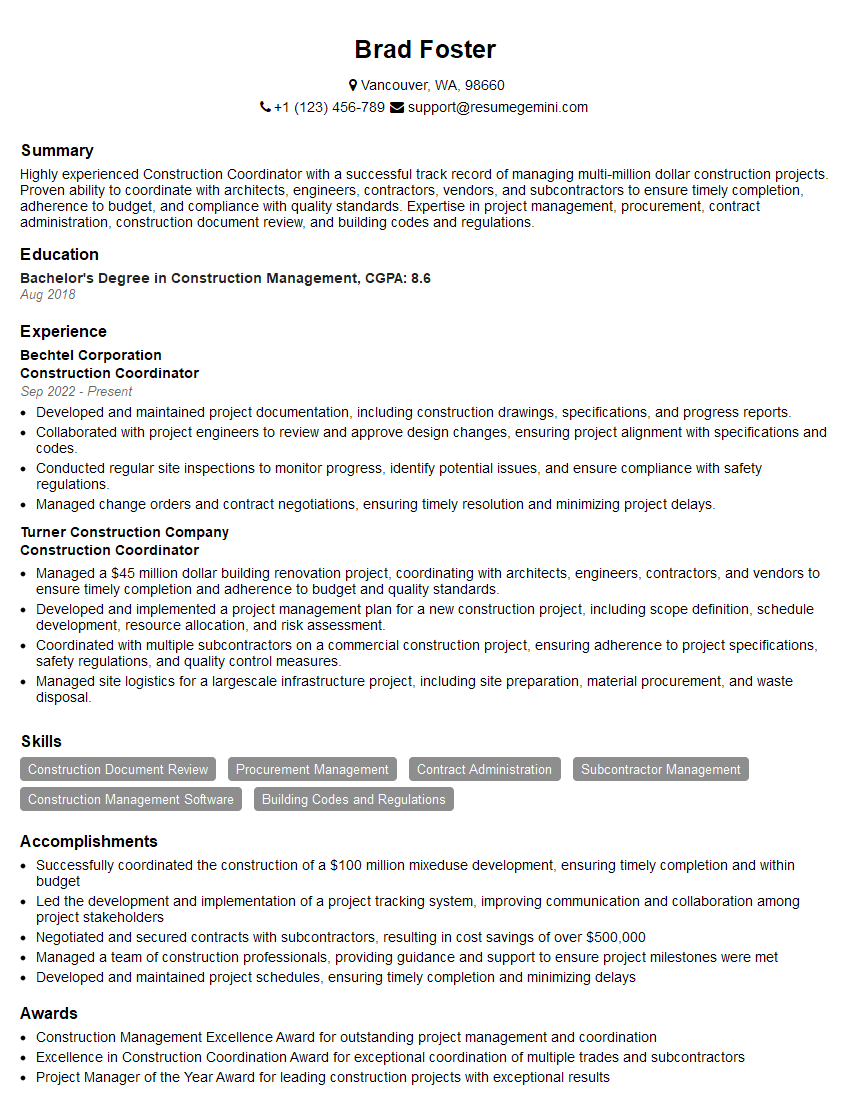
Construction Coordinator Resume Sample
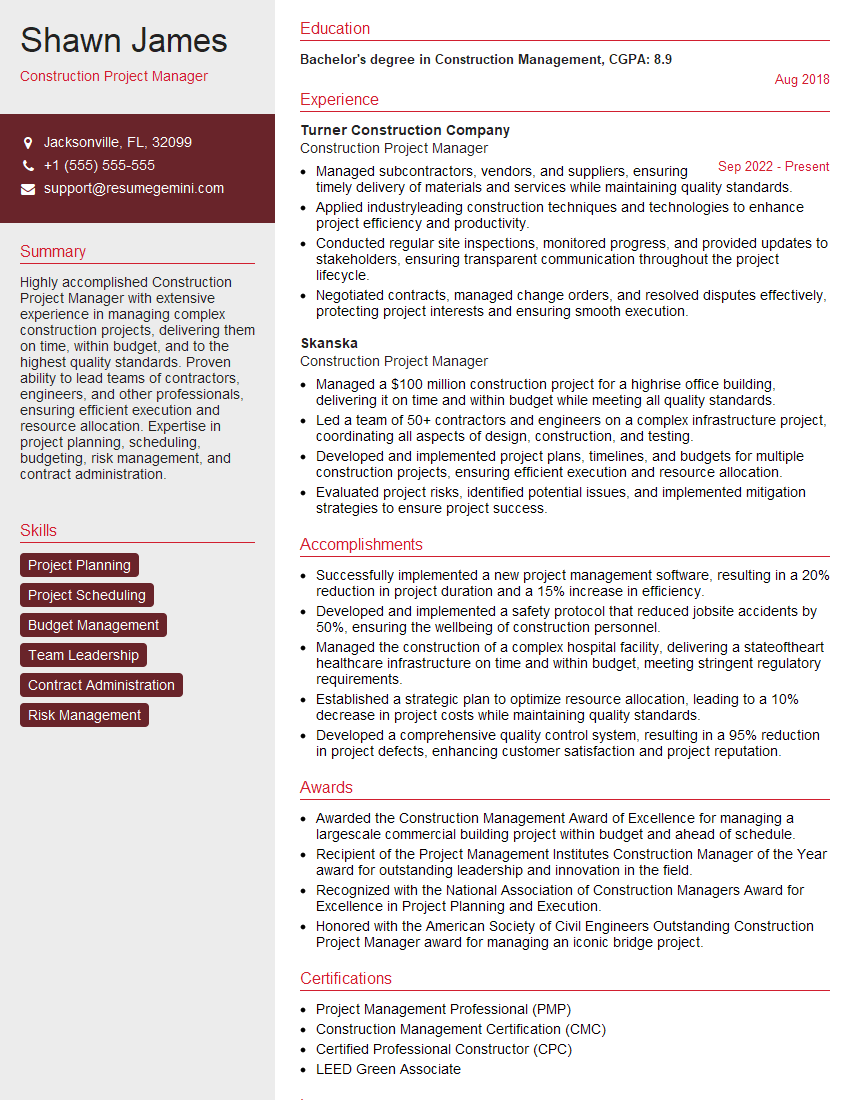
Construction Project Manager Resume Sample
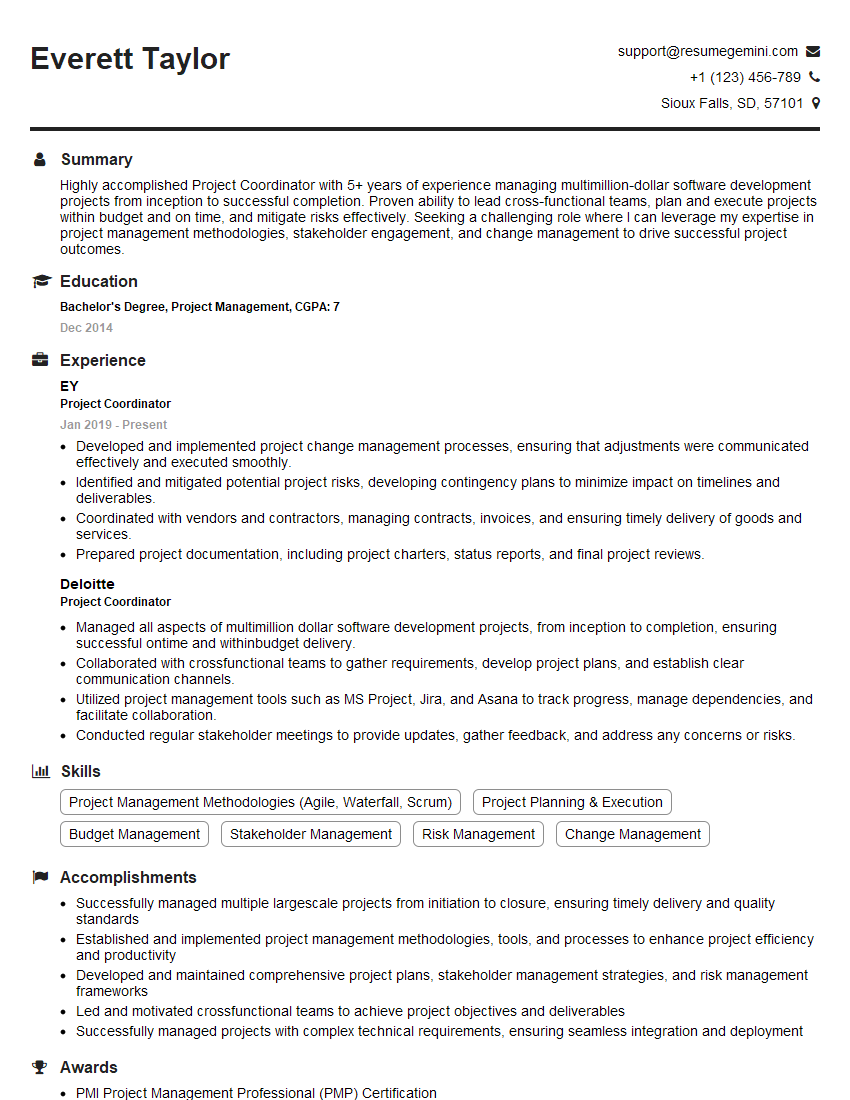
Project Coordinator Resume Sample
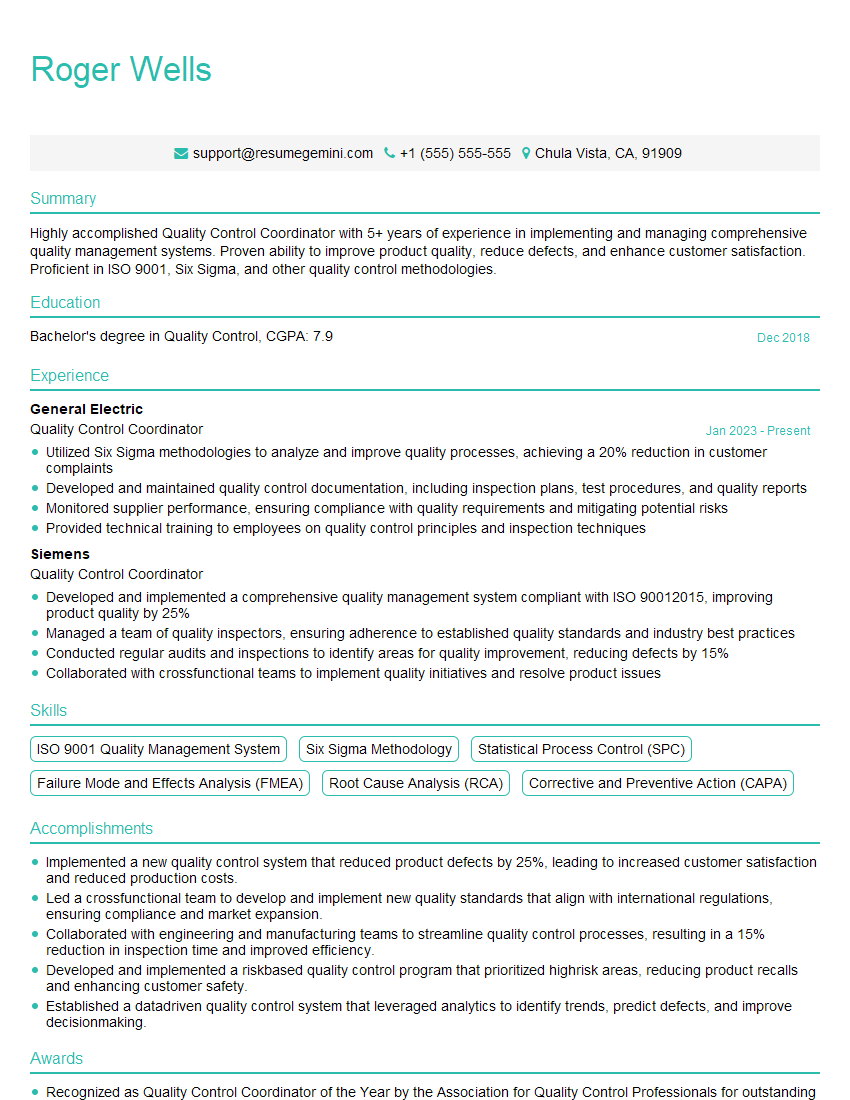
Quality Control Coordinator Resume Sample
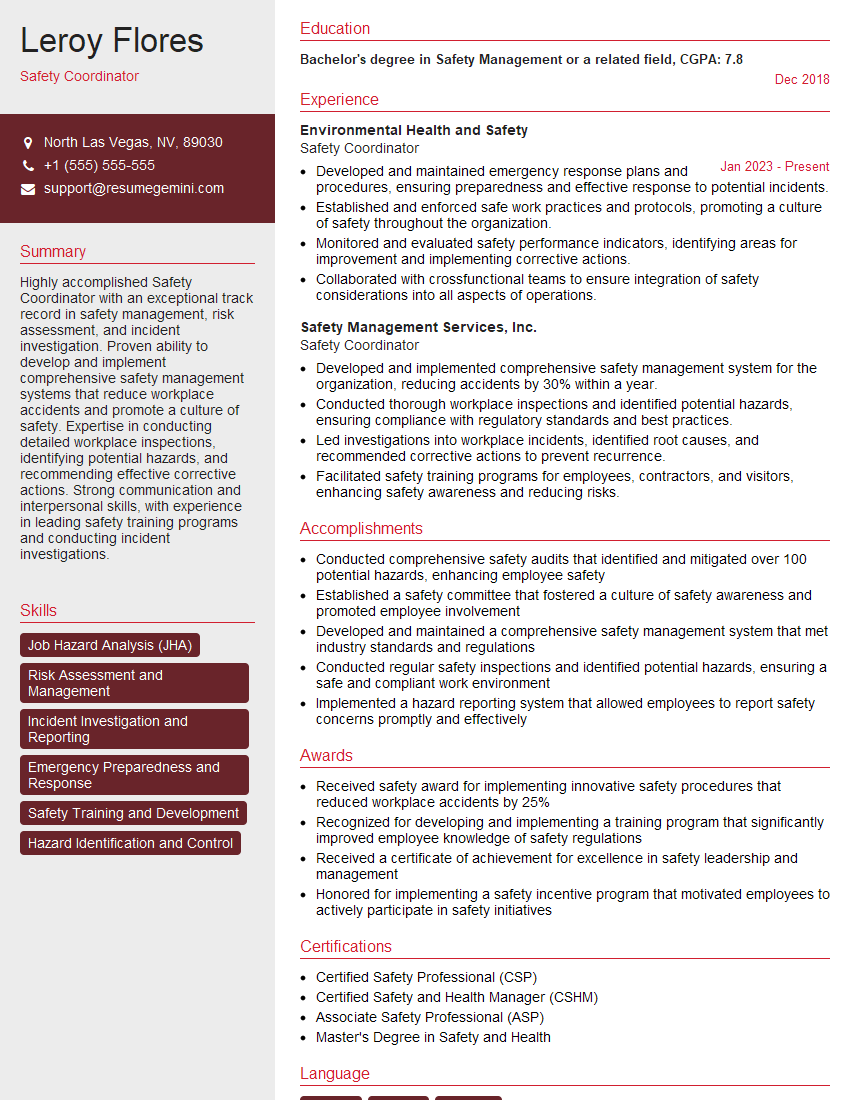
Safety Coordinator Resume Sample

Scheduling Coordinator Resume Sample
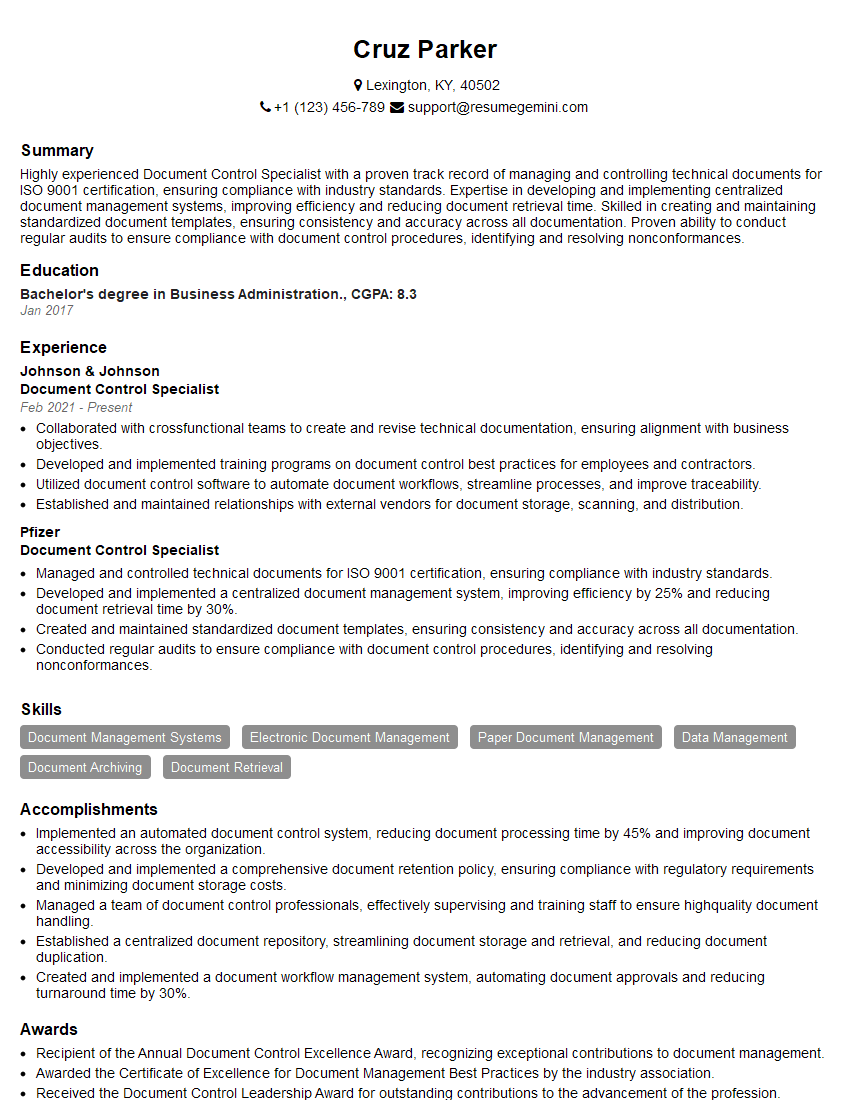
Document Control Specialist Resume Sample
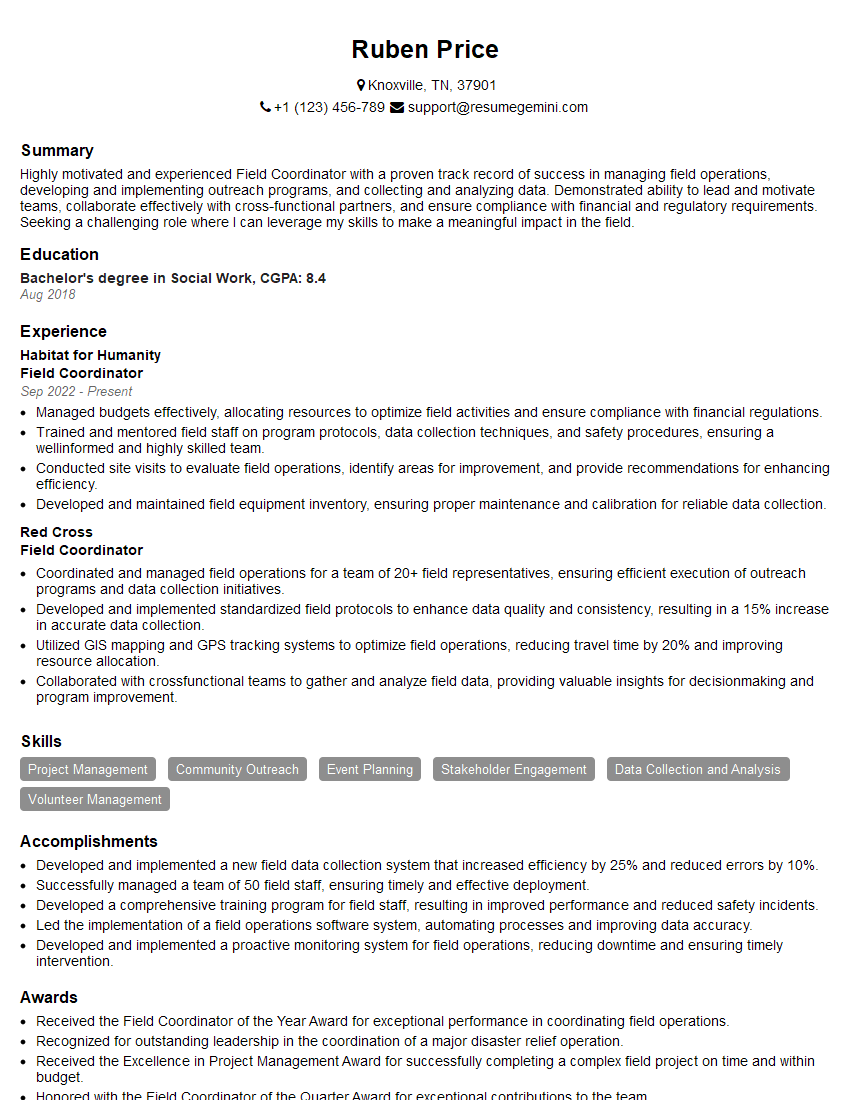
Field Coordinator Resume Sample
Explore more articles
Users Rating of Our Blogs
Share Your Experience
We value your feedback! Please rate our content and share your thoughts (optional).
What Readers Say About Our Blog
Very informative content, great job.
good