Unlock your full potential by mastering the most common Coordination with Other Agencies interview questions. This blog offers a deep dive into the critical topics, ensuring you’re not only prepared to answer but to excel. With these insights, you’ll approach your interview with clarity and confidence.
Questions Asked in Coordination with Other Agencies Interview
Q 1. Describe your experience in managing relationships with multiple agencies.
Managing relationships with multiple agencies requires a multifaceted approach, focusing on clear communication, mutual respect, and a shared understanding of goals. My experience spans numerous projects involving collaborations with government bodies, NGOs, and private sector firms. I’ve consistently leveraged my skills in negotiation, conflict resolution, and relationship building to achieve successful outcomes. For instance, in a recent project involving the development of a community health program, I coordinated efforts between the local health department, several community centers, and a volunteer organization. This involved regular meetings, clearly defined roles, and consistent feedback loops.
- Establishing clear roles and responsibilities: Ensuring each agency understands its contribution and avoiding overlaps or gaps.
- Building strong personal relationships: Establishing trust and rapport fosters effective collaboration and problem-solving.
- Regular communication and reporting: Keeping all stakeholders informed of progress, challenges, and changes.
Q 2. How do you ensure consistent communication across different agencies?
Consistent communication across agencies is paramount. I employ a multi-pronged strategy that includes regular meetings, established communication channels, and a centralized communication hub. This might involve a shared online platform (like a project management software) where documents, updates, and meeting minutes are readily accessible. For example, using Slack or Microsoft Teams for real-time updates, email for formal communications, and regular in-person or video conference meetings ensures everyone stays on the same page. I also establish a clear communication protocol, defining who is responsible for what information and how frequently updates should be shared. This ensures timely dissemination and minimizes confusion.
- Utilize project management software: Centralize documentation and track progress.
- Establish regular communication cadence: Consistent meetings build momentum and identify problems early.
- Maintain clear communication protocols: Define roles and responsibilities for communication tasks.
Q 3. Explain your process for resolving conflicts between collaborating agencies.
Conflict resolution requires a proactive and collaborative approach. My process begins with identifying the root cause of the conflict. This often involves open dialogue with all involved parties to understand their perspectives and concerns. Then, I facilitate a collaborative discussion to find common ground. I might use conflict resolution techniques such as mediation or negotiation to help the agencies find mutually acceptable solutions. It’s important to remain impartial and focus on finding a win-win scenario that aligns with the overall project goals. For instance, in one case, two agencies had differing opinions on a key project metric. By facilitating a discussion focusing on the overall project aims and understanding each agency’s rationale, we arrived at a compromise that satisfied all parties.
- Identify the root cause of the conflict: Understand each agency’s perspective and concerns.
- Facilitate collaborative discussions: Encourage open communication and finding common ground.
- Implement conflict resolution techniques: Mediation or negotiation can help achieve a mutually acceptable solution.
Q 4. How do you handle differing priorities and deadlines among agencies?
Handling differing priorities and deadlines requires careful prioritization and clear communication. I start by understanding each agency’s priorities and constraints. Then, I work collaboratively to create a schedule that accommodates as many priorities as possible. This might involve adjusting timelines, re-allocating resources, or breaking down tasks into smaller, more manageable units. Transparency is key; all agencies need to understand the rationale behind the final schedule. I might use Gantt charts or other visual aids to represent the schedule clearly. For instance, in a large-scale environmental project, one agency had a stricter deadline. We successfully prioritized their tasks and adjusted the overall timeline to ensure their deliverables were met while minimizing impact on other agencies’ work.
- Prioritize tasks collaboratively: Understand each agency’s priorities and constraints.
- Create a flexible schedule: Accommodate varying deadlines where possible.
- Maintain transparency: All parties should understand the rationale behind schedule adjustments.
Q 5. What strategies do you employ to build trust and rapport with external agency partners?
Building trust and rapport with external agency partners is crucial. I focus on establishing open and honest communication, demonstrating respect for their expertise, and actively seeking their input. This includes regular communication, informal check-ins, and celebrating successes together. I build relationships on mutual respect and a shared commitment to the project’s goals. Demonstrating reliability and consistency in my actions and communications is crucial. This builds confidence and fosters a collaborative spirit. For example, I always ensure that agreements and commitments are followed through on, and I regularly seek feedback from partners to improve the collaboration process.
- Open and honest communication: Regular updates and transparent interactions.
- Respect for expertise: Acknowledge and value the contributions of each agency.
- Collaborative problem-solving: Jointly addressing challenges and celebrating successes.
Q 6. Describe a time you had to negotiate resources or funding across multiple agencies.
Negotiating resources or funding across multiple agencies requires a strategic approach. First, I create a detailed budget outlining the project’s needs and justifying the allocation of funds to each agency. I then present this budget to each agency, explaining how their contributions are crucial to the project’s success. Negotiations often involve compromises and adjustments, but my focus is always on achieving a fair and equitable distribution of resources. I might use data-driven arguments to demonstrate the value of investing in each component of the project. In one instance, I successfully negotiated funding from three different government departments by highlighting the synergistic effects of combining their resources, leading to a more efficient and impactful project overall.
- Develop a detailed budget: Clearly outline the project’s resource requirements.
- Present a compelling case for funding: Justify allocations and highlight benefits to each agency.
- Negotiate collaboratively: Find a fair and equitable distribution of resources.
Q 7. How do you effectively manage information sharing and data security across agencies?
Effective information sharing and data security across agencies requires careful planning and adherence to strict protocols. We use secure platforms for data storage and exchange, such as encrypted cloud services or dedicated secure networks. Access to data is restricted based on individual roles and responsibilities, adhering to all relevant privacy regulations. For example, we might use a data governance framework to define clear protocols for data access, storage, and sharing. We also establish a secure communication channel to minimize the risk of data breaches. It’s crucial to have clear agreements outlining data ownership, usage rights, and security responsibilities for each agency involved. Regular security audits and training sessions also enhance data security and compliance.
- Use secure platforms for data storage and exchange: Ensure data confidentiality and integrity.
- Restrict data access based on roles: Enforce the principle of least privilege.
- Establish clear data governance frameworks: Define protocols and responsibilities.
Q 8. What methods do you use to track progress and measure success in interagency projects?
Tracking progress and measuring success in interagency projects requires a multifaceted approach. It’s not enough to simply look at individual agency contributions; we need a holistic view of the overall project goals. I employ a combination of methods to achieve this.
- Project Management Software: Tools like Asana, Trello, or Microsoft Project are crucial for task assignment, deadline tracking, and progress visualization. We use these to create shared project timelines and monitor individual and team contributions against milestones.
- Regular Reporting and Metrics: We establish key performance indicators (KPIs) aligned with project objectives from the outset. These metrics are regularly reported, often weekly or bi-weekly, through shared dashboards and progress reports. This allows for proactive identification of issues and timely adjustments.
- Joint Progress Reviews: Scheduled meetings with representatives from each agency are vital for transparent communication about successes, challenges, and needed resources. These meetings provide a platform to collaboratively review progress against KPIs and make data-driven decisions.
- Qualitative Feedback Mechanisms: Beyond quantitative metrics, qualitative feedback is essential. We use surveys, focus groups, and informal feedback sessions to understand the perspectives of various stakeholders, including end-users, and gauge the project’s overall impact.
For example, in a recent environmental cleanup project involving multiple government agencies, we used a shared online dashboard to track the amount of waste collected by each agency, the number of sites remediated, and the overall budget expenditure. This transparent approach helped ensure accountability and fostered collaboration.
Q 9. How do you adapt your communication style to work effectively with diverse agency representatives?
Effective interagency collaboration hinges on adapting communication styles to the diverse backgrounds and preferences of participating agencies. I believe in a flexible and empathetic approach.
- Active Listening: I start by attentively listening to understand each agency’s perspective, priorities, and communication preferences. This shows respect and helps build rapport.
- Tailored Communication: I adjust my communication style accordingly – sometimes opting for concise emails, other times preferring more detailed reports or face-to-face discussions depending on the audience and information complexity.
- Clear and Concise Messaging: Irrespective of the method, I prioritize clear and concise communication. Jargon is minimized, and information is presented in a structured and easily digestible manner.
- Non-verbal Communication: I pay attention to non-verbal cues – body language, tone of voice – to ensure effective communication and identify potential misunderstandings.
- Building Trust and Relationships: Trust is paramount. Investing time in building strong working relationships with representatives from each agency fosters openness, collaboration, and mutual understanding.
For instance, when working with a team of engineers, I use technical terminology and data-driven communication. However, when communicating with community stakeholders, I simplify language and focus on the project’s practical benefits and impact on their lives.
Q 10. How do you identify and mitigate potential risks in interagency collaborations?
Identifying and mitigating potential risks in interagency collaborations is a proactive process that starts during the planning phase and continues throughout the project lifecycle. It’s crucial to anticipate challenges before they arise.
- Risk Assessment: We conduct a thorough risk assessment at the outset, identifying potential issues such as conflicting priorities, budget constraints, regulatory hurdles, and communication breakdowns. Each risk is categorized by likelihood and impact.
- Contingency Planning: For each identified risk, we develop a corresponding contingency plan outlining strategies to mitigate or respond to the issue if it arises. This involves allocating resources and assigning responsibilities.
- Regular Monitoring: We regularly monitor for emerging risks throughout the project. This involves reviewing project progress, analyzing data, and soliciting feedback from stakeholders.
- Communication and Transparency: Open and transparent communication is key to addressing potential risks. If a problem arises, we address it promptly and collaboratively, involving all relevant agencies.
- Conflict Resolution Mechanisms: We establish clear procedures for resolving conflicts that may arise between agencies. This might involve mediation or escalation to higher management levels.
For example, in a previous project involving land acquisition, we identified the risk of delays due to bureaucratic processes. Our contingency plan included proactive communication with all involved agencies to streamline the approval process and secure necessary permits well in advance.
Q 11. Describe your experience with developing and implementing interagency agreements.
Developing and implementing interagency agreements is a complex but crucial process requiring careful planning and coordination. It involves several key steps:
- Needs Assessment: We begin by clearly defining the objectives and scope of the collaboration, outlining the responsibilities of each agency.
- Agreement Drafting: We then draft the interagency agreement, ensuring it addresses all aspects of the collaboration, including roles, responsibilities, timelines, budget allocation, and conflict resolution mechanisms.
- Legal Review: The agreement is reviewed by legal counsel from all participating agencies to ensure compliance with relevant laws, regulations, and internal policies.
- Negotiation and Approval: The agreement is negotiated and finalized, ensuring all parties agree on the terms and conditions. It then requires approval from relevant authorities within each agency.
- Implementation and Monitoring: Once approved, the agreement is implemented, and its effectiveness is monitored throughout the project lifecycle. Regular reviews ensure that the agreement remains relevant and addresses evolving needs.
I’ve been directly involved in drafting and negotiating several interagency agreements, focusing on clarity, mutual understanding, and adherence to legal and ethical standards. One successful example involved collaborating with multiple city departments to implement a city-wide traffic management system.
Q 12. How do you ensure compliance with regulations and policies across multiple agencies?
Ensuring compliance with regulations and policies across multiple agencies demands a rigorous and systematic approach. It’s vital to understand the specific requirements of each agency and develop strategies to meet them.
- Regulatory Mapping: We begin by carefully identifying all relevant regulations and policies impacting the project, considering both federal, state, and local jurisdictions. This includes environmental regulations, financial guidelines, and ethical standards.
- Compliance Matrix: A compliance matrix is created, outlining the specific requirements of each regulation and the corresponding actions needed to ensure compliance. This is a crucial document for project management.
- Regular Audits and Reviews: Regular audits and reviews are conducted to verify compliance with all applicable regulations. This can involve internal audits, external reviews, or government inspections.
- Training and Education: Personnel from all participating agencies receive training on relevant regulations and policies. This ensures everyone understands their responsibilities and contributes to a culture of compliance.
- Documentation and Record-Keeping: Meticulous documentation and record-keeping are vital for demonstrating compliance. This includes maintaining accurate records of all project activities, decisions, and communications.
For instance, in a project related to public health, we developed a detailed compliance matrix that documented all relevant regulations regarding data privacy, patient confidentiality, and ethical conduct. Regular audits ensured we remained compliant throughout the project.
Q 13. What software or tools do you utilize for interagency communication and collaboration?
Effective interagency communication and collaboration rely heavily on appropriate software and tools. The choice of tools depends on the project’s complexity and the specific needs of the agencies involved. I have experience using a variety of tools.
- Project Management Software: As mentioned earlier, platforms like Asana, Trello, or Microsoft Project are crucial for task management, progress tracking, and document sharing.
- Communication Platforms: Secure platforms like Microsoft Teams or Slack facilitate real-time communication and collaboration, allowing for quick responses and efficient information dissemination.
- Document Management Systems: Shared document repositories (e.g., SharePoint, Google Drive) allow for centralized storage and version control, ensuring that all agencies have access to the latest documents.
- Video Conferencing: Tools like Zoom or Google Meet enable effective virtual meetings and workshops, allowing remote collaboration and reducing the need for travel.
- Data Visualization Tools: Tools like Tableau or Power BI are helpful for creating interactive dashboards that visualize project data, progress, and key performance indicators.
The selection of tools is often made collaboratively, ensuring they align with the technological capabilities and preferences of all participating agencies. For example, in a large-scale infrastructure project, we used a combination of Microsoft Teams for daily communication, SharePoint for document management, and Microsoft Project for task management.
Q 14. Explain your experience in facilitating meetings and workshops involving multiple agencies.
Facilitating meetings and workshops involving multiple agencies requires strong organizational and interpersonal skills. My approach centers on clarity, inclusivity, and effective communication.
- Clear Agenda and Objectives: I start by creating a clear agenda outlining the meeting’s purpose, topics for discussion, and expected outcomes. This is shared with all participants in advance.
- Structured Format: The meeting follows a structured format, with clearly defined time allocations for each agenda item. This ensures that the meeting remains focused and productive.
- Active Participation: I actively encourage participation from all agency representatives, ensuring that everyone has a voice and their perspectives are heard. This often involves using techniques like brainstorming and round-table discussions.
- Conflict Resolution: I proactively address potential conflicts, ensuring that all disagreements are addressed constructively and collaboratively. This may involve mediation or facilitating compromise.
- Actionable Outcomes: The meeting concludes with clear action items, assigned responsibilities, and established deadlines. This ensures that the meeting leads to tangible progress.
In a recent workshop involving environmental agencies and community groups, I used a collaborative whiteboard to capture ideas and suggestions, fostering a sense of shared ownership and commitment. The result was a robust and well-supported plan for a community conservation project.
Q 15. How do you handle sensitive information and maintain confidentiality across agencies?
Handling sensitive information across agencies requires a multi-layered approach prioritizing confidentiality, integrity, and availability. This begins with establishing clear data-sharing agreements that outline permissible uses, access controls, and security protocols. Each agency involved needs to comply with relevant privacy regulations such as HIPAA or GDPR, depending on the data’s nature. We utilize secure data-sharing platforms, encrypted communication channels, and robust access control mechanisms (like role-based access control or RBAC) to limit access to authorized personnel only. Regular security audits and penetration testing further strengthen our defenses. Imagine it like a high-security vault: multiple keys are needed to access the information, and a strict log tracks every access attempt.
For example, in a joint investigation involving law enforcement and social services, we’d utilize a secure portal with separate access levels, granting investigators full access while social workers only see relevant client information. This prevents unauthorized access and maintains client confidentiality.
Career Expert Tips:
- Ace those interviews! Prepare effectively by reviewing the Top 50 Most Common Interview Questions on ResumeGemini.
- Navigate your job search with confidence! Explore a wide range of Career Tips on ResumeGemini. Learn about common challenges and recommendations to overcome them.
- Craft the perfect resume! Master the Art of Resume Writing with ResumeGemini’s guide. Showcase your unique qualifications and achievements effectively.
- Don’t miss out on holiday savings! Build your dream resume with ResumeGemini’s ATS optimized templates.
Q 16. How do you measure the effectiveness of your interagency coordination efforts?
Measuring the effectiveness of interagency coordination involves a combination of qualitative and quantitative methods. Quantitative measures might include tracking the timeliness of information sharing, the number of successful joint operations completed, resource allocation efficiency, and cost savings achieved through collaboration. We also analyze key performance indicators (KPIs) specific to each project’s goals. For example, in a public health crisis, a KPI might be the percentage of the population vaccinated within a specific timeframe.
Qualitative measures are equally crucial, encompassing stakeholder feedback through surveys and interviews. We assess the level of satisfaction with communication, collaboration, and overall effectiveness. This holistic approach provides a comprehensive picture of our interagency coordination’s success. Think of it as grading a team project: both individual contributions and the overall team performance matter.
Q 17. Describe a challenging interagency project and how you overcame the obstacles.
One particularly challenging project involved coordinating a multi-agency response to a major natural disaster. The initial challenge was the sheer scale of the crisis, overwhelming communication channels and resource allocation systems. We had conflicting priorities and jurisdictions among different agencies – emergency response, public health, and infrastructure repair all had urgent needs. We overcame this through establishing a central command center with clear communication protocols. A unified incident command system ensured coordinated decision-making, preventing conflicting orders and improving responsiveness.
Another significant hurdle was the lack of a pre-existing interagency agreement. We quickly developed a memorandum of understanding (MOU) outlining responsibilities and resource sharing. Regular meetings, facilitated by neutral parties, helped address conflicts and foster mutual understanding. This project underscored the importance of proactive planning and pre-established interagency frameworks for emergency situations.
Q 18. How do you build consensus among stakeholders with conflicting interests?
Building consensus among stakeholders with conflicting interests requires active listening, empathy, and a collaborative approach. Starting with a shared understanding of the overarching goals is vital. We use facilitated workshops and structured discussions to identify common ground and explore potential compromises. Techniques like brainstorming and nominal group technique can help generate innovative solutions that satisfy multiple perspectives. The key is to frame discussions positively, focusing on shared interests and potential win-win outcomes, rather than emphasizing conflicting points.
For example, when coordinating land-use planning between environmental protection and economic development agencies, we might utilize a multi-criteria decision analysis to weigh environmental impact against economic benefits, providing a transparent and objective framework for decision-making. Remember, compromise isn’t about yielding; it’s about finding creative solutions where everyone feels heard and valued.
Q 19. How do you address communication breakdowns between agencies?
Addressing communication breakdowns requires a proactive and systematic approach. Firstly, we identify the root cause of the breakdown—is it due to technological limitations, inconsistent communication protocols, a lack of trust, or differing communication styles? Once the cause is identified, we can implement targeted solutions. This might involve updating communication technologies, establishing regular communication channels (e.g., daily briefings, dedicated email lists), clarifying roles and responsibilities, and implementing a standardized communication protocol.
For instance, to overcome technological limitations, we might adopt a secure collaborative platform, while addressing trust issues necessitates building personal relationships and fostering a culture of open communication and feedback. It’s akin to troubleshooting a computer; pinpointing the problem is the first step towards fixing it.
Q 20. How do you ensure all agencies are held accountable for their commitments?
Ensuring accountability across agencies necessitates clearly defined roles, responsibilities, and performance metrics, established early in the project. We utilize progress reports, regular meetings, and a system for tracking milestones to ensure everyone stays on track. Transparent and timely communication is crucial, allowing for early identification and resolution of potential issues. Performance reviews assess agency compliance with agreed-upon commitments, providing feedback and highlighting areas for improvement. A framework for dispute resolution should be in place to address disagreements promptly and fairly.
Using a project management software with task assignments and deadlines provides a clear framework for accountability, while regular stakeholder meetings ensure that everyone is aware of the progress and challenges. It is much like a sports team—each player has a role, everyone’s performance impacts the overall outcome, and regular check-ins keep everyone in the game.
Q 21. What are your preferred methods for conflict resolution in interagency settings?
My preferred conflict resolution methods in interagency settings emphasize collaborative and interest-based approaches. Negotiation, mediation, and arbitration are valuable tools depending on the complexity and nature of the conflict. Negotiation focuses on finding mutually acceptable solutions through direct communication. Mediation involves a neutral third party facilitating communication and helping find common ground. Arbitration, used as a last resort, employs a neutral third party to make a binding decision.
Crucially, a constructive approach prioritizes building strong working relationships. Trust and mutual respect between agencies are fundamental to resolving conflicts effectively. The goal isn’t to ‘win’ but to find collaborative solutions that benefit all parties and the public. It’s like working with a puzzle—the solution is only found when all the pieces fit together harmoniously.
Q 22. Describe your experience with developing and implementing joint strategies.
Developing and implementing joint strategies requires a collaborative approach, starting with a shared understanding of the goals and challenges. My experience involves facilitating workshops and meetings to define objectives, identify key stakeholders, and assign responsibilities across different agencies. We then create a comprehensive strategy document, outlining timelines, milestones, and roles, ensuring everyone is on the same page. For instance, in a recent project involving a city-wide public health initiative, we brought together the health department, the police department, and local NGOs. We held several joint strategy sessions, culminating in a detailed plan that outlined communication strategies, resource allocation, and performance metrics. This collaborative approach ensured buy-in from all parties and facilitated efficient execution.
Q 23. How do you leverage the strengths and expertise of different agencies?
Leveraging agency strengths involves a thorough assessment of each agency’s capabilities and expertise. This is often achieved through initial meetings and information sharing. For example, one agency might have strong data analysis capabilities, while another excels in community outreach. By recognizing these strengths, we can strategically assign tasks, fostering efficiency and maximizing the impact of the joint project. In a recent environmental cleanup project, we identified one agency’s expertise in remediation techniques and another’s proficiency in community engagement. We leveraged these strengths by assigning the first agency to lead the cleanup efforts while the second agency managed public communication and volunteer recruitment. This approach ensured the project was executed effectively and efficiently.
Q 24. How do you deal with agency representatives who are unresponsive or uncooperative?
Unresponsive or uncooperative agency representatives require a proactive and diplomatic approach. I begin by attempting to understand the root cause of the unresponsiveness. Is it a lack of resources, conflicting priorities, or a communication breakdown? Once identified, I tailor my approach. This might involve scheduling individual meetings to address specific concerns, offering additional support or resources, or escalating the issue to higher-level management if necessary. Transparency and open communication are crucial here. In one instance, an agency was unresponsive due to internal restructuring. Once we understood this, we adjusted our communication strategy and worked with their newly appointed liaison, ensuring a smoother collaboration.
Q 25. How do you maintain transparency and accountability throughout an interagency project?
Maintaining transparency and accountability involves establishing clear communication channels and reporting mechanisms from the outset. We use project management software to track progress, share documents, and maintain a central repository of information. Regular meetings, both formal and informal, ensure open communication and address potential issues proactively. We also develop a clear accountability framework, defining roles and responsibilities, and setting measurable goals and key performance indicators (KPIs). Think of it like a shared spreadsheet where everyone can see progress, deadlines, and who’s responsible for what. This approach minimizes misunderstandings and fosters trust amongst participating agencies.
Q 26. Describe your experience with managing budgets and resources across multiple agencies.
Managing budgets and resources across multiple agencies requires meticulous planning and coordination. We create a consolidated budget that outlines the financial contributions and responsibilities of each agency. This budget is regularly reviewed and adjusted as needed. We also establish clear procurement procedures to ensure fairness and compliance. For example, in a large-scale infrastructure project, we developed a shared budget and established a transparent procurement process, ensuring equitable distribution of funds and adherence to regulatory guidelines across all participating agencies. This prevented conflicts and maintained fiscal accountability throughout the project.
Q 27. What are some key performance indicators (KPIs) you use to monitor interagency collaboration?
Key Performance Indicators (KPIs) vary depending on the project objectives, but generally include metrics such as:
- On-time completion of milestones: Tracks progress against the project schedule.
- Budget adherence: Measures financial efficiency.
- Stakeholder satisfaction: Gauges the level of contentment among participating agencies and beneficiaries.
- Outcome achievement: Measures the success of the project in achieving its stated goals.
Q 28. How do you ensure that all communication is documented and easily accessible to all involved parties?
Documenting communication is paramount. We use a combination of methods, including project management software, shared drives, and formal meeting minutes. All emails and important communications are archived, ensuring a complete record of discussions, decisions, and agreements. This central repository is accessible to all involved parties, reducing ambiguity and facilitating efficient problem-solving. Access is carefully managed to protect sensitive information while maintaining transparency for relevant stakeholders.
Key Topics to Learn for Coordination with Other Agencies Interview
- Understanding Inter-Agency Dynamics: Explore the complexities of working with diverse teams, each with its own priorities, processes, and communication styles. Consider how organizational cultures might differ and impact collaboration.
- Communication & Collaboration Strategies: Master effective communication techniques, including active listening, clear articulation, and conflict resolution. Practice strategies for building rapport and maintaining positive working relationships across agencies.
- Project Management & Workflow Integration: Learn how to effectively manage projects involving multiple agencies, including defining roles, responsibilities, and timelines. Understand different project management methodologies and how to adapt them to inter-agency collaborations.
- Data Sharing & Information Security: Examine best practices for securely sharing information and maintaining data integrity across agencies. Understand relevant compliance regulations and protocols.
- Negotiation & Conflict Resolution: Develop skills in negotiating priorities, resources, and timelines with other agencies. Learn practical strategies for addressing and resolving conflicts that may arise during collaborative projects.
- Performance Monitoring & Evaluation: Understand how to track progress, measure success, and address challenges in collaborative projects. Learn how to identify and analyze key performance indicators (KPIs) across agencies.
- Legal & Ethical Considerations: Familiarize yourself with relevant legal frameworks and ethical guidelines that govern inter-agency collaborations. Understand potential risks and mitigation strategies.
Next Steps
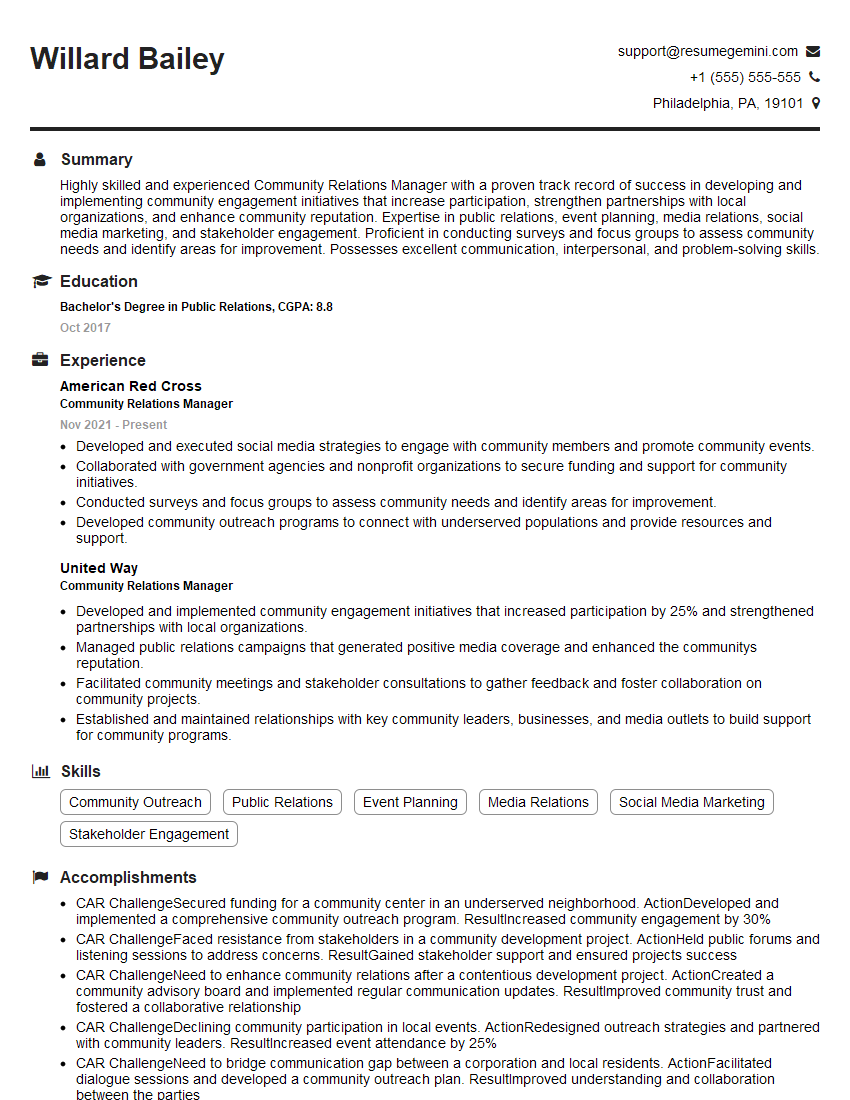
Mastering coordination with other agencies is crucial for career advancement, opening doors to leadership roles and complex projects. An ATS-friendly resume is your key to unlocking these opportunities. Highlight your collaborative skills, project management experience, and problem-solving abilities to impress recruiters. Use ResumeGemini to craft a compelling resume that showcases your strengths and experience in this area. Examples of resumes tailored to Coordination with Other Agencies are available to guide you. Invest the time to build a strong application; it’s an investment in your future success.
Explore more articles
Users Rating of Our Blogs
Share Your Experience
We value your feedback! Please rate our content and share your thoughts (optional).
What Readers Say About Our Blog
Very informative content, great job.
good