Preparation is the key to success in any interview. In this post, we’ll explore crucial Cornhead Harvesting interview questions and equip you with strategies to craft impactful answers. Whether you’re a beginner or a pro, these tips will elevate your preparation.
Questions Asked in Cornhead Harvesting Interview
Q 1. Describe the different types of cornheads and their applications.
Cornheads are the harvesting attachments that fit onto combines, specifically designed for corn. Different types cater to varying field conditions and harvesting preferences. Here are some common types:
- Eight-Row Cornheads: These are the most common and are suitable for average field conditions and sizes. They’re a good balance of efficiency and cost.
- Twelve-Row Cornheads: Ideal for large-scale operations to maximize harvesting speed. However, they require larger combines and are less maneuverable in tight spaces.
- Six-Row Cornheads: Often preferred for smaller fields or hilly terrain, providing better maneuverability. This is also a practical choice for farmers with smaller combines.
- Narrow-Row Cornheads: Designed for fields planted with narrower row spacing (less than 30 inches). This offers increased efficiency in these specific planting configurations.
- Draper Heads (for corn): While typically associated with grain harvesting, certain draper heads can be adapted for corn, offering gentle handling and reduced losses, especially in challenging conditions. They’re particularly beneficial for unevenly matured corn.
The choice depends on factors like field size, row spacing, combine capacity, terrain, and budget. For example, a smaller farm might opt for a six-row head, whereas a large commercial operation would prefer a twelve-row for speed and efficiency.
Q 2. Explain the process of setting up a cornhead for optimal harvesting.
Setting up a cornhead correctly is crucial for efficient and loss-free harvesting. The process involves several key steps:
- Attachment to the Combine: Ensure the cornhead is securely and properly attached to the combine header, following the manufacturer’s instructions precisely.
- Snout Adjustment: Adjust the snout to the correct height, ensuring it’s close enough to the stalks without causing damage to the plants or excessive wear on the head.
- Row Unit Adjustment: Each row unit needs to be aligned correctly and consistently, with the gathering chains and rollers properly tensioned. This prevents uneven feeding and potential clogging.
- Concave Adjustment: The concave needs to be adjusted to match the moisture content and density of the corn. Too tight and you’ll increase wear and potential damage; too loose and you lose efficiency.
- Rotor Speed: Setting the appropriate rotor speed is crucial to efficiently threshing the corn without causing excessive damage or losses. Experimentation based on the crop condition is recommended.
- Splitter Adjustment: The splitters between the rows need to be appropriately adjusted to allow for smooth corn flow and reduce snagging.
- Test Run: After initial adjustments, a test run is essential to fine-tune settings, observing the feeding, threshing, and separation processes. Adjustments might be needed based on observations.
Thinking of it like assembling a sophisticated machine, careful attention to each component guarantees a smooth operation. Overlooking a step could lead to significant losses and machine wear.
Q 3. How do you adjust the cornhead for varying crop conditions (e.g., height, density)?
Adjustments are crucial for optimal harvesting in variable conditions. Here’s how to address different crop characteristics:
- Crop Height: Adjust the header height using the hydraulic controls on the combine. Too high, and you’ll miss corn; too low, and you’ll scalp the ground and cause damage to the head.
- Crop Density: For dense crops, you might need to reduce ground speed and potentially adjust the concave settings to allow for smoother feeding. In sparse crops, you might need to slightly increase speed. Monitor the combine’s feeding and separation capabilities to avoid overloading.
- Moisture Content: High moisture content can lead to increased clogging, so you might need to adjust the concave and rotor speed accordingly. Lower moisture might require less aggressive settings.
- Lodging (fallen corn): If the corn is lodged, you might need to adjust the header height and possibly use a pickup reel to gather the fallen stalks. The concave might require adjustment as well, depending on the condition of the crop.
Think of it as adapting your harvesting strategy to match the unique challenges of each field. Constant monitoring and adjustments are key.
Q 4. What are the common causes of cornhead clogging and how do you address them?
Clogging is a common issue, usually stemming from several factors:
- Wet or Green Corn: High moisture content makes corn stalks stick together, easily clogging the gathering chains, rollers, and the combine itself.
- Dense Crop: Excessive crop density can overwhelm the cornhead’s capacity, leading to build-ups. Reduce ground speed and check for any blockages.
- Improper Adjustment: Incorrectly adjusted row units, concave, or splitters can cause material to jam.
- Foreign Material: Rocks, debris, or other foreign objects can obstruct the flow.
- Damaged Components: Worn-out gathering chains, rollers, or other components can reduce efficiency and lead to blockages.
Addressing Clogging: The solution depends on the cause. Start by stopping the combine, clearing the immediate blockage, and then checking the entire cornhead system for other obstructions. Consider adjusting settings as outlined earlier (concave, rotor speed). Regular maintenance and replacing worn parts are crucial in preventing future clogging.
Q 5. Explain the importance of proper header height adjustment.
Proper header height is vital for several reasons:
- Minimizing Losses: Setting the header too high results in missed ears and stalks, leading to significant yield losses. Too low leads to ground scarring, and potential combine damage.
- Preventing Damage: An improperly adjusted header can damage the cornhead components and the corn stalks themselves, reducing the overall life of the equipment and yield quality.
- Optimizing Efficiency: Correct height ensures the combine takes in the optimal volume of corn for efficient processing, leading to higher throughput.
Imagine trying to cut grass with a lawnmower set too high or too low – the results are inefficient and potentially damaging. The same principle applies to corn harvesting.
Q 6. How do you maintain optimal ground speed during harvesting?
Optimal ground speed is a balance between harvesting capacity and preventing damage or losses. Factors such as crop density, moisture content, and terrain all influence ideal speed.
Maintaining optimal ground speed:
- Observe the Combine: Pay close attention to the feeding, threshing, and separation processes. Overloading the combine leads to losses and potential damage.
- Adjust based on Conditions: Reduce speed for dense, wet, or lodged crops. Increase speed for sparser, drier fields (but always within the safe operating limits of the equipment).
- Monitor Losses: Regularly check for losses during the harvesting process. Adjustments might be necessary to minimize losses based on observation.
- Use Technology: Some modern combines have yield monitors and other sensors that can help optimize ground speed based on real-time data.
Finding the right ground speed is an art that comes with experience. It’s like finding the sweet spot where your combine is efficiently harvesting the corn without being overwhelmed.
Q 7. Describe your experience with different types of combine headers.
My experience spans various combine headers, encompassing different manufacturers and designs. I’ve worked extensively with both conventional cornheads and draper heads adapted for corn harvesting.
Conventional Cornheads: These are the workhorses of corn harvesting, known for their efficiency in typical conditions. I’ve used various sizes (6, 8, and 12 row) and have learned to appreciate the nuances of different designs and manufacturers. Understanding the specific strengths and limitations of each brand’s designs has been essential for maximizing efficiency and minimizing losses.
Draper Heads: Draper heads, while traditionally used for small grains, are gaining traction in corn harvesting, particularly in challenging conditions. Their gentle handling of the crop reduces losses and damage, especially with lodged or unevenly matured corn. However, their setup and operation require specialized knowledge and are less efficient in ideal conditions compared to traditional cornheads.
Experience with different headers helps me adapt my harvesting strategies to various conditions and maximize the performance of any equipment I’m using. It’s about understanding the technology and applying practical knowledge to achieve the best results.
Q 8. How do you identify and troubleshoot mechanical issues in a cornhead?
Identifying and troubleshooting mechanical issues in a cornhead requires a systematic approach. It starts with careful observation. Listen for unusual noises – grinding, squealing, or knocking – which often pinpoint the problem area. Then, a visual inspection is crucial. Look for broken parts, loose bolts, or signs of wear and tear on components like the gathering chains, rollers, and knives.
For example, if the cornhead isn’t feeding properly, I’d first check the gathering chains for proper tension and lubrication. Are they properly tracking? Are there any broken or worn links? If the problem persists, I’d move on to inspect the snapping rolls for wear or damage, ensuring they’re properly adjusted to the stalk diameter. A clogged header could be due to improper stalk alignment or a blocked auger. Understanding the cornhead’s mechanics is essential for effective diagnosis. Often, a simple adjustment, like tightening a loose bolt or replacing a worn part, can resolve the issue. If the problem is more complex, consulting the service manual and potentially seeking professional help is recommended.
Q 9. What safety precautions do you observe when operating a cornhead?
Safety is paramount when operating a cornhead. Before starting, I always conduct a thorough pre-operational inspection, checking all moving parts for proper function and ensuring all safety guards are in place. Loose clothing or jewelry should never be worn. I maintain a safe distance from the moving parts, especially when cleaning or making adjustments. When working near the combine, clear communication with the combine operator is crucial to prevent accidents. I always wear appropriate safety gear including hearing protection, eye protection, and sturdy work boots. Finally, understanding the terrain and avoiding obstacles helps prevent incidents. If the cornhead encounters any unforeseen issues that disrupt normal functioning, I immediately shut down the machinery and assess the situation before attempting any repairs or adjustments.
Q 10. Explain the process of changing knives or snapping rolls on a cornhead.
Changing knives or snapping rolls on a cornhead varies slightly depending on the model, but the general procedure involves first ensuring the machine is completely shut down and the power is disconnected. Safety is the top priority. Then, access the knives or snapping rolls by removing appropriate guards or covers. Using appropriate tools, carefully remove the worn parts, noting their orientation for proper reinstallation. Before installing the new components, inspect the mounting surfaces for any damage. Install the new knives or snapping rolls, ensuring they are securely fastened and properly aligned. After reassembly, double-check all fasteners and replace any worn or damaged parts as needed. A final test run with careful monitoring will help ensure the work was correctly done. Always consult the manufacturer’s service manual for specific instructions for your model of cornhead.
Q 11. How do you ensure efficient material flow through the cornhead?
Efficient material flow through the cornhead is vital for maximizing harvesting speed and minimizing crop losses. This begins with proper setup, ensuring the cornhead is correctly aligned with the combine and the ground. Keeping the gathering chains properly lubricated and adjusted to maintain appropriate tension prevents jams. The snapping rolls should be set according to the stalk diameter for optimal separation of ears from stalks. Regularly checking and cleaning the auger and its associated components is crucial for preventing blockages. A slow auger speed may also lead to material buildup. If the crop is excessively wet or heavy, adjusting the speed of the combine and the cornhead, or making changes to the snapping roll settings can often help maintain efficient material flow. This is where experience and on-the-job adjustments come into play, always considering the environmental conditions.
Q 12. How do you minimize crop losses during harvesting?
Minimizing crop losses during corn harvesting involves a multi-faceted approach. Proper cornhead setup is critical. Adjusting the snapping rolls appropriately to the stalk diameter minimizes ear breakage. Ensuring optimal chain tension and lubrication in the gathering system improves efficiency and reduces losses due to missed ears or stalks. Regular cleaning and maintenance of all components, including the auger and the header, prevents material buildup and loss. Properly aligned rows also help to ensure maximum efficiency. In dense fields, careful consideration of forward speed should be applied to prevent overloading the machine. Observing the combine’s unloading process can identify potential bottlenecks. Paying close attention to details throughout the harvesting process is key to optimizing yield and minimizing losses.
Q 13. What are the key performance indicators (KPIs) you monitor during cornhead harvesting?
Key performance indicators (KPIs) I monitor during cornhead harvesting include the harvest speed, the moisture content of the harvested corn, the amount of harvested corn per acre, the level of crop losses (measured by visual inspection and sometimes with yield monitoring systems), and the number of machine stoppages or breakdowns. I also pay attention to fuel consumption and maintenance costs. By tracking these KPIs, I can optimize harvesting efficiency, identify areas for improvement, and adjust settings based on field conditions and crop characteristics. This data is also important for future planning and equipment maintenance scheduling.
Q 14. Describe your experience with yield monitoring systems.
My experience with yield monitoring systems is extensive. I’ve used various systems, both integrated into the combine and standalone units. These systems provide real-time data on yield, moisture content, and other key metrics. This data is invaluable for optimizing harvesting strategies, identifying areas of higher or lower yield within a field, and making informed decisions about where to focus harvesting efforts. I’ve used this data to adjust header settings, optimize combine speed, and even make decisions about fertilizer application for subsequent years. The accuracy and reliability of yield monitoring systems have improved significantly over the years, allowing for more precise and efficient harvesting operations. The ability to generate reports and analyze yield maps is also a significant benefit. Data from yield monitoring systems is used to ensure I am maximizing yield and profitability across all fields.
Q 15. How do you calibrate yield monitors for accurate data collection?
Calibrating a yield monitor is crucial for accurate data collection during corn harvest. It ensures the readings reflect the actual yield, allowing for informed decision-making. The process usually involves several steps:
- Gathering Information: Before starting, you need to know the specifics of your combine, the cornhead size, and the type of sensor used (e.g., optical or mass flow).
- Establishing a Baseline: This involves running the combine over a known area with a measured yield. For instance, you might harvest a small plot with a known number of rows and length, weighing the harvested corn to determine yield per acre.
- Entering Parameters: Next, you input this known yield into the combine’s yield monitor system. The system uses this information to calibrate the sensors and establish a baseline relationship between sensor readings and actual yield.
- Verification and Adjustment: After the initial calibration, you’ll want to continuously monitor the data, comparing it to manual checks (weighing grain) periodically throughout the harvest to make sure the calibration remains accurate. Adjustments may be needed due to factors like changes in crop density or moisture content.
Think of it like setting the scales before you weigh something – you need a baseline to ensure accurate measurement. Ignoring calibration leads to inaccurate data that can misguide planting decisions and affect profitability.
Career Expert Tips:
- Ace those interviews! Prepare effectively by reviewing the Top 50 Most Common Interview Questions on ResumeGemini.
- Navigate your job search with confidence! Explore a wide range of Career Tips on ResumeGemini. Learn about common challenges and recommendations to overcome them.
- Craft the perfect resume! Master the Art of Resume Writing with ResumeGemini’s guide. Showcase your unique qualifications and achievements effectively.
- Don’t miss out on holiday savings! Build your dream resume with ResumeGemini’s ATS optimized templates.
Q 16. How do you interpret yield map data to optimize future planting strategies?
Yield map data provides a visual representation of the harvest yields across a field. Analyzing this data is essential for optimizing planting strategies for the future. Here’s how I interpret it:
- Identifying High and Low Yield Areas: The map clearly shows areas of high and low yield. High-yielding zones indicate favorable conditions for growth, possibly due to better soil quality, drainage, or nutrient levels. Low-yielding areas may require investigation to identify limiting factors.
- Analyzing Variability: Yield maps highlight variability within the field. This allows for the implementation of variable-rate technology, applying inputs like fertilizers, seeds, or pesticides based on the specific needs of each area of the field.
- Corrective Actions: By identifying problem areas, yield maps inform corrective actions like soil testing to determine nutrient deficiencies, improving drainage in waterlogged zones, or addressing pest or disease issues.
- Data Integration: Yield data is incredibly valuable when integrated with other data such as soil maps, elevation data, and historical weather records, providing a comprehensive picture of the field’s productivity.
For example, a yield map might reveal a consistent low-yield zone along a field’s edge. This could point to drainage issues or insufficient sunlight, informing decisions to improve drainage or adjust planting strategies for next season.
Q 17. Describe your experience with GPS-guided harvesting.
GPS-guided harvesting has revolutionized the efficiency and precision of corn harvesting. My experience with it is extensive. It allows for:
- Automated Steering: The GPS system guides the combine, maintaining consistent swath overlap and preventing skips or double-harvesting, leading to significant yield gains.
- Documentation and Mapping: Accurate data on harvested areas, including yield and GPS coordinates, are automatically recorded, simplifying record-keeping and allowing for the creation of detailed yield maps.
- Improved Efficiency: By eliminating manual steering, operators can focus on monitoring the machine and optimizing harvesting parameters, leading to faster harvest times.
- Reduced Operator Fatigue: Automated steering significantly reduces operator fatigue, especially during long harvest days.
In practice, I’ve seen GPS guidance consistently improve harvest efficiency by 5-10%, reducing fuel consumption and enhancing overall operational profitability.
Q 18. Explain the process of maintaining and lubricating a cornhead.
Maintaining and lubricating a cornhead is crucial for its longevity and optimal performance. This involves a multi-step process:
- Regular Cleaning: After each day’s use, remove any debris (corn stalks, leaves, etc.) from the cornhead using compressed air or a brush. Failure to do so can cause damage to the components.
- Lubrication: Several points require regular lubrication, such as the gathering chains, rollers, and snapping rolls. Using the correct lubricant and following the manufacturer’s recommendations is crucial.
- Inspection of Components: Check for any wear or damage to the gathering chains, sprockets, rollers, and knives. Replace worn parts promptly to prevent costly repairs down the line.
- Knife Sharpening: Dull knives significantly reduce harvesting efficiency and increase crop loss. Regular sharpening is essential, and using a professional sharpening service is generally advisable.
- Snout and Header Adjustment: Check for proper alignment of the snout and the header. Ensuring correct adjustment optimizes crop feeding.
Neglecting maintenance leads to increased downtime, reduced harvesting efficiency, and ultimately, higher costs. A well-maintained cornhead is a key to a successful harvest.
Q 19. What is your experience with preventative maintenance schedules for cornheads?
Preventative maintenance schedules for cornheads are essential for maximizing uptime and minimizing repair costs. My approach usually follows the manufacturer’s recommendations, but I also incorporate my own experience based on the local conditions and the intensity of usage. This includes:
- Pre-Harvest Inspection: A thorough inspection before the harvest begins is critical. This involves checking all components for wear, tear, and damage and replacing or repairing as needed. This is more cost-effective than repairing a failed component in the field.
- Regular Intervals: Lubrication and cleaning should be performed daily or after every few hours of operation, depending on the conditions. More intensive inspections and maintenance, such as knife sharpening, should be scheduled at regular intervals (e.g., every 50-100 hours of operation).
- Seasonal Maintenance: After the harvest season, a thorough cleaning and inspection are essential. This includes storing the cornhead in a dry and protected location to prevent corrosion.
Following a strict preventive maintenance schedule ensures the cornhead remains in peak condition, leading to higher productivity and profitability.
Q 20. How do you handle unexpected equipment breakdowns during harvest?
Unexpected equipment breakdowns during harvest are unavoidable, but a well-prepared plan minimizes downtime. My approach involves:
- Rapid Assessment: Quickly assess the nature of the breakdown. Is it a minor issue that can be fixed quickly, or will it require more significant repair?
- Troubleshooting: Try to diagnose and resolve the problem using available resources (repair manuals, troubleshooting guides, experienced colleagues).
- Repair or Replacement: If the problem cannot be solved on-site, I’ll arrange for repair services or replacement parts. Prioritizing communication with the service providers is vital.
- Minimizing Downtime: While waiting for repairs, I’ll focus on other tasks, such as monitoring other equipment, making arrangements for transportation of harvested crops, or preparing for the next stage of the operation.
- Preventive Actions: After resolving the breakdown, I conduct a thorough investigation to determine the root cause and implement preventive measures to reduce the likelihood of future similar incidents.
In one instance, a snapped gathering chain halted the combine mid-harvest. By having spare parts on hand and utilizing my experience, the repair was completed within two hours, minimizing yield losses and overall downtime.
Q 21. What is your experience with different types of corn (dent, sweet, etc.)?
My experience encompasses harvesting various types of corn, including dent corn (the most common type), sweet corn, and popcorn. Each type presents unique harvesting challenges:
- Dent Corn: This is the most prevalent type, and harvesting techniques are fairly standardized. The focus is on ensuring proper moisture content for optimal storage.
- Sweet Corn: Sweet corn is more delicate, requiring careful handling to minimize damage. Harvesting is often done sooner than dent corn, and often involves different machinery or adjustments to the cornhead.
- Popcorn: Popcorn requires very specific moisture levels at harvest and often requires more careful attention to harvesting methods to ensure the kernels are not damaged.
Understanding the unique characteristics of each type is vital for selecting the appropriate harvesting methods and parameters, preventing damage, and ensuring optimal quality.
Q 22. How does moisture content affect harvesting efficiency?
Moisture content is a critical factor influencing corn harvesting efficiency. Ideally, corn should be harvested at 15-20% moisture for optimal grain quality and storage. Higher moisture levels (above 25%) increase the risk of spoilage and mycotoxin development due to increased fungal growth. This necessitates slower harvesting speeds and potentially additional drying costs, significantly reducing efficiency. Lower moisture levels (below 12%), while leading to less spoilage, can result in increased breakage and lower yields, impacting efficiency by increasing downtime for cleaning and reducing the amount of sellable product.
For example, imagine harvesting a field with 30% moisture corn. The combine’s throughput will be much lower compared to harvesting a field with 18% moisture corn because the higher moisture content requires more careful handling to avoid damage and blockages. This directly translates to more time spent in the field and potentially higher energy costs.
Q 23. Explain the impact of weather conditions on harvesting operations.
Weather significantly impacts corn harvesting. Rain, for instance, halts operations completely as wet corn is prone to damage, leading to spoilage and significant yield loss. Conversely, excessive heat and strong winds can lead to increased drying rates, potentially pushing moisture levels below the ideal range, increasing the risk of grain breakage. Strong winds can also cause difficulties in operating machinery and increase the risk of accidents. Conversely, freezing temperatures can freeze the moisture in the stalks, making them brittle and causing excessive breakage and loss of grain.
For example, a sudden thunderstorm during harvest can require a rapid shutdown of machinery, potentially leading to significant delays and lost productivity until conditions improve. A prolonged period of hot, dry weather might necessitate more frequent checks of moisture content and adjustments to harvesting speed and settings.
Q 24. How do you manage harvesting operations during periods of inclement weather?
Managing harvesting operations during inclement weather involves a multi-pronged approach. Firstly, it’s crucial to monitor weather forecasts closely to anticipate potential disruptions. Having contingency plans, such as alternative storage for partially harvested corn, is essential. Secondly, the harvesting team needs clear communication channels to react quickly to changing conditions. A pre-determined protocol for equipment shutdown and securing machinery should be implemented. During lighter rain, we often use equipment with improved grain handling technology to minimize losses. However, heavy rains necessitate complete stoppage until conditions improve. Finally, post-harvest procedures, such as rapid drying of the collected grain, are critical to mitigate the adverse effects of moisture exposure.
In one instance, we faced an unexpected hailstorm. Our immediate response was to quickly secure the combine and other equipment, preventing damage and potential injury. Later, we assessed the damage and focused on drying the partially harvested corn to prevent spoilage.
Q 25. What is your experience with different harvesting technologies?
My experience encompasses a wide range of harvesting technologies, from traditional pull-type corn heads to advanced self-propelled models. I’ve worked with various header sizes, adapting to different field sizes and crop densities. I’m also familiar with different technologies for grain handling, including various types of augers and cleaning systems. Furthermore, I’m experienced with GPS-guided harvesting systems, which significantly enhance precision and minimize overlapping or missed areas, improving efficiency and reducing losses.
For example, I’ve compared the performance of a 12-row corn head to an 8-row head, concluding that the larger header was significantly more efficient for larger fields with uniform crop density but less maneuverable in irregular fields.
Q 26. Describe your experience working with a team during harvest season.
Harvest season demands seamless teamwork. My experience shows that effective teamwork hinges on clear roles and responsibilities, open communication, and mutual respect. I’ve been part of teams where each member, from the combine operator to the truck drivers and support crew, understood their contributions to the overall process. This collaborative environment ensures that problems are addressed promptly and efficiently. We’ve developed a strong system of regular check-ins, ensuring everyone is aware of the progress and any emerging challenges.
During one particularly challenging harvest, a crucial component on the combine malfunctioned. Teamwork enabled us to quickly diagnose the issue, arrange for repairs, and implement temporary solutions while minimizing downtime. It was a clear demonstration of how teamwork offsets the challenges of a demanding harvesting season.
Q 27. How do you communicate effectively with other members of the harvesting team?
Effective communication is paramount during harvest. We utilize a combination of methods, including two-way radios for immediate communication in the field, cell phones for longer-range contact, and daily briefings to discuss progress, issues, and plans. This combination ensures that information flows smoothly and any problems are identified and addressed swiftly. Nonverbal communication, particularly hand signals, plays a significant role during field operations.
For instance, using hand signals to coordinate the movement of trucks during unloading avoids delays and reduces the risk of accidents. Regular briefings ensure everyone is on the same page regarding daily goals and any adjustments needed to address changing weather conditions or equipment problems.
Q 28. How do you prioritize tasks during a busy harvest season?
Prioritizing tasks during a busy harvest season requires a strategic approach. First, the focus should be on maximizing the time spent harvesting in optimal conditions. This involves prioritizing fields with ripe crops and minimizing downtime. Secondly, preventative maintenance of equipment is crucial, minimizing unexpected breakdowns. Regular checks of machinery and prompt attention to minor issues help prevent them from escalating into major disruptions. Thirdly, careful planning of logistics, including truck scheduling and grain storage, reduces bottlenecks and ensures a smooth workflow. Finally, team communication and collaboration help identify and address unexpected issues or challenges efficiently.
For example, prioritizing fields that are most at risk of weather damage is critical. If a storm is approaching, completing those fields before the weather worsens ensures minimizing potential losses.
Key Topics to Learn for Cornhead Harvesting Interview
- Cornhead Mechanics: Understanding the components, their functions, and interdependencies within a cornhead harvesting system. This includes the snapping rolls, gathering chains, and the overall mechanical process.
- Yield Monitoring and Data Analysis: Practical application of yield monitoring technology; interpreting data to optimize harvesting efficiency and minimize losses. This includes understanding the factors influencing yield variation and how to adjust harvesting parameters accordingly.
- Maintenance and Troubleshooting: Identifying common issues, performing preventative maintenance, and troubleshooting malfunctions in the field. Practical experience with repair and replacement of parts is highly valuable.
- Safety Procedures and Regulations: Understanding and adhering to all safety protocols associated with operating and maintaining heavy machinery in agricultural settings. This includes lockout/tagout procedures and personal protective equipment (PPE) usage.
- Crop Physiology and Harvesting Optimization: Knowing the ideal harvesting stage for corn and how factors like moisture content and stalk strength affect harvesting efficiency and grain quality.
- GPS Technology and Precision Agriculture: Understanding the role of GPS in guiding harvesting equipment, optimizing field coverage, and generating precise yield maps.
- Harvesting Techniques and Strategies: Different harvesting approaches based on field conditions, crop characteristics, and logistical considerations. This includes header adjustment and ground speed optimization.
Next Steps
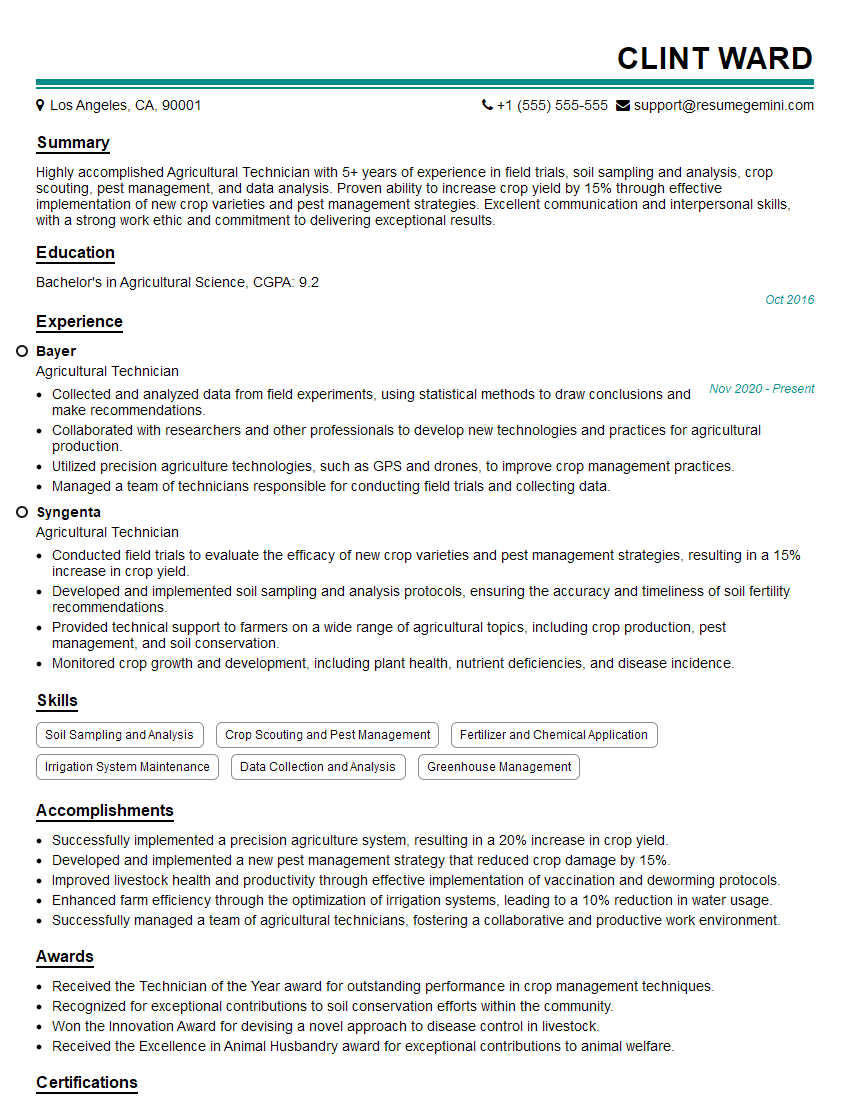
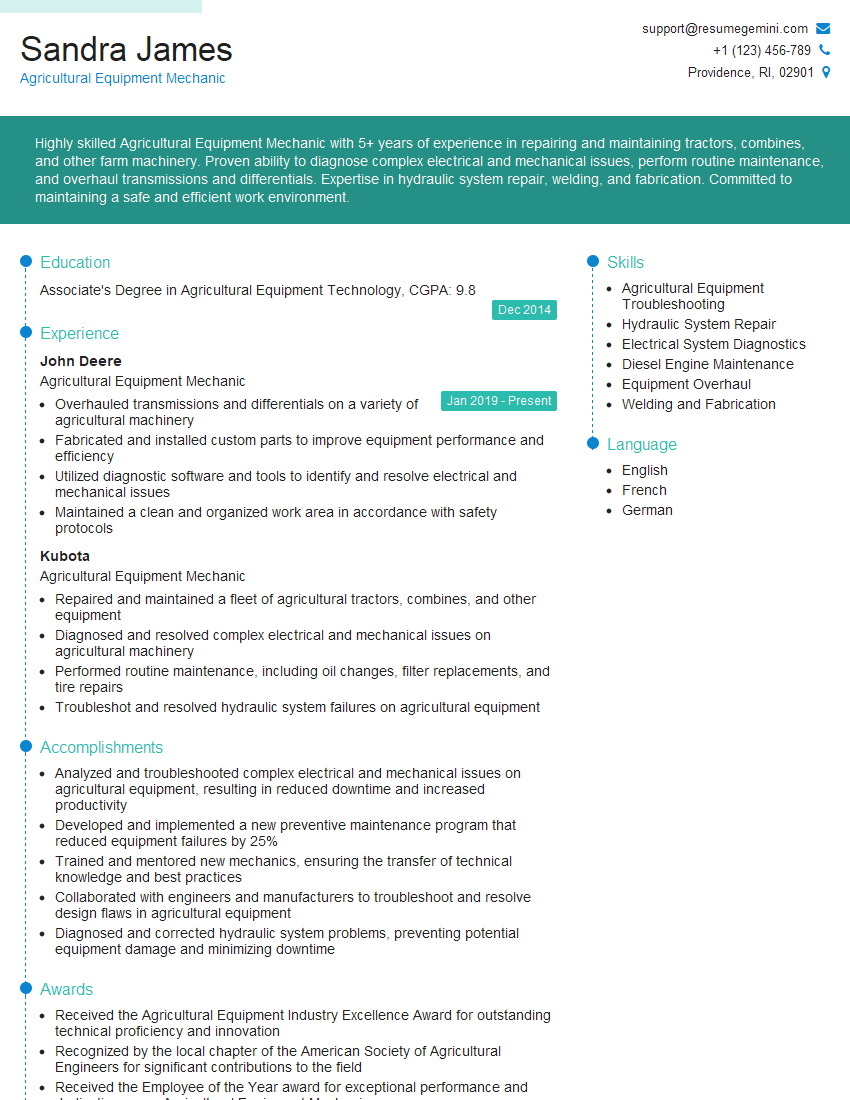
Mastering Cornhead Harvesting opens doors to exciting career opportunities in the agricultural technology sector, offering rewarding roles with high earning potential and the chance to contribute to global food security. To significantly increase your chances of landing your dream job, creating a strong, ATS-friendly resume is crucial. ResumeGemini is a trusted resource that can help you build a professional and effective resume tailored to the specific requirements of Cornhead Harvesting positions. Examples of resumes optimized for this field are available to guide you. Invest time in crafting a compelling resume – it’s your first impression with potential employers.




Explore more articles
Users Rating of Our Blogs
Share Your Experience
We value your feedback! Please rate our content and share your thoughts (optional).
What Readers Say About Our Blog
Very informative content, great job.
good