Are you ready to stand out in your next interview? Understanding and preparing for Cost Control and Estimation interview questions is a game-changer. In this blog, we’ve compiled key questions and expert advice to help you showcase your skills with confidence and precision. Let’s get started on your journey to acing the interview.
Questions Asked in Cost Control and Estimation Interview
Q 1. Explain the difference between cost control and cost estimation.
Cost estimation and cost control are two crucial aspects of project management, but they serve distinct purposes. Cost estimation is the process of predicting the resources (time, money, materials, etc.) required to complete a project. Think of it as creating a blueprint of your project’s financial needs before you start. It involves analyzing project scope, identifying tasks, and assigning costs to each. Cost control, on the other hand, is the process of monitoring and managing actual project costs to ensure they align with the estimated budget. It’s about actively managing the project’s finances during its execution to prevent overspending. It involves tracking expenses, identifying variances, and implementing corrective actions.
Imagine building a house: Cost estimation is like determining the overall cost of materials, labor, and permits before starting construction. Cost control is the ongoing process of monitoring expenses during construction, ensuring you stay within budget and making adjustments as needed (e.g., finding cheaper materials without compromising quality, optimizing labor scheduling).
Q 2. Describe your experience with different cost estimation techniques (e.g., parametric, bottom-up, analogous).
I have extensive experience applying various cost estimation techniques, tailoring my approach to the project’s specifics. Parametric estimating leverages historical data and statistical relationships to predict costs. For example, if I’m estimating the cost of building a software application, I might use historical data on lines of code versus development time and cost to estimate the new project’s cost. This is efficient but depends on the availability of reliable historical data.
Bottom-up estimating involves breaking down the project into individual tasks, estimating the cost of each task, and summing them up to get the total project cost. This provides a granular level of detail but can be time-consuming, especially for large projects. For instance, in a construction project, I’d estimate the cost of each material, labor hour for each task, and equipment rental.
Finally, analogous estimating uses the cost of a similar past project as a basis for estimating the current project’s cost. This is useful when detailed information is scarce but requires careful consideration of differences between the projects. For example, if I’m estimating the cost of building a new warehouse similar to one I built two years ago, I’d use the previous project’s costs as a starting point, adjusting for inflation and changes in material prices.
Q 3. How do you handle cost overruns in a project?
Cost overruns are a significant concern. My approach to handling them is systematic and proactive. First, I’d meticulously analyze the reasons for the overrun, using tools like earned value management (EVM) to pinpoint areas of variance. This might reveal issues like inaccurate initial estimates, unforeseen challenges, or scope creep. Second, I’d develop and implement a recovery plan. This could involve negotiating with vendors for better prices, optimizing resource allocation, prioritizing critical tasks, or requesting additional funding from stakeholders. Third, I’d enhance communication with stakeholders to ensure transparency and build consensus on the corrective actions. Crucially, I’d also conduct a post-mortem to learn from the experience and prevent similar overruns in future projects.
For example, in one project, we faced a cost overrun due to unexpected geological conditions during construction. We addressed it by meticulously documenting the problem, negotiating with suppliers for revised material costs, and adjusting the project timeline. Open communication with the client throughout the process ensured continued trust and a successful project completion.
Q 4. What are some common cost control challenges and how have you overcome them?
Common cost control challenges include inaccurate initial estimations, scope creep (uncontrolled changes to project scope), unforeseen risks, and inadequate change management processes. I’ve overcome these by:
- Implementing robust estimation techniques, involving cross-functional teams for a broader perspective, and using sensitivity analysis to identify areas of uncertainty.
- Establishing a formal change control process to manage project scope changes meticulously. This involves documenting all changes, assessing their impact on cost and schedule, and gaining stakeholder approval before implementation.
- Proactively identifying and assessing potential risks through risk management exercises, developing contingency plans, and allocating resources to mitigate risks.
- Utilizing project management software for accurate cost tracking and reporting, providing timely visibility into project financials and potential deviations from the plan.
In one instance, we utilized a detailed work breakdown structure (WBS) and a more rigorous risk assessment process to prevent cost overruns due to underestimated labor hours. This resulted in a more accurate budget and successful project delivery.
Q 5. Explain your experience with Earned Value Management (EVM).
Earned Value Management (EVM) is a powerful project management technique that I use extensively for cost and schedule control. EVM integrates scope, schedule, and cost to provide a comprehensive assessment of project performance. It uses three key metrics:
- Planned Value (PV): The budgeted cost of work scheduled to be completed by a specific point in time.
- Earned Value (EV): The value of the work actually completed at a specific point in time.
- Actual Cost (AC): The actual cost incurred in completing the work up to a specific point in time.
By comparing these metrics, we can calculate key performance indicators like Schedule Variance (SV), Cost Variance (CV), Schedule Performance Index (SPI), and Cost Performance Index (CPI). These indicators provide valuable insights into project health and help in early detection of potential problems. For example, a negative CV indicates a cost overrun, while an SPI less than 1 indicates that the project is behind schedule.
In a recent project, using EVM allowed us to identify a looming cost overrun early on, prompting timely interventions such as negotiating better deals with suppliers and streamlining some tasks, ultimately enabling project completion within the revised budget.
Q 6. How do you develop a project budget?
Developing a project budget is a multi-step process that requires careful planning and analysis. I begin by clearly defining the project scope and objectives. Then, I break down the project into smaller, manageable tasks, using a Work Breakdown Structure (WBS). Next, I estimate the costs associated with each task, considering factors like labor, materials, equipment, and overhead. This includes creating a detailed resource plan allocating resources and determining their associated costs. Contingency reserves are crucial, built into the budget to cover unforeseen events or risks. Finally, I consolidate all cost estimates to arrive at the total project budget, reviewing and validating it with stakeholders before final approval.
For instance, in a software development project, I’d estimate costs for software licenses, developer salaries, testing, and deployment. A contingency reserve would be included to cover potential software bugs, requiring unexpected additional development hours.
Q 7. How do you track and monitor project costs?
Tracking and monitoring project costs requires a systematic approach. I use project management software to record actual costs against planned costs regularly, typically weekly or bi-weekly. This involves creating a robust cost tracking system, collecting data from various sources (e.g., invoices, time sheets, purchase orders), and performing regular cost variance analysis. Key metrics like the Cost Performance Index (CPI) and cost variance are monitored closely. Regular progress reports are generated highlighting variances, risks, and required corrective actions. These reports are shared with stakeholders to ensure transparency and facilitate timely decision-making. Regular meetings are held to discuss cost performance, identify potential issues, and develop mitigation strategies. This proactive monitoring ensures early detection of potential problems and allows for swift intervention to control costs effectively.
Q 8. How do you identify and mitigate cost risks?
Identifying and mitigating cost risks is crucial for project success. It involves a proactive approach, starting with thorough risk assessment and continuing with strategic mitigation plans.
Risk Identification: This begins with brainstorming potential cost overruns. We use techniques like SWOT analysis (Strengths, Weaknesses, Opportunities, Threats) and a detailed breakdown of the project’s work breakdown structure (WBS) to pinpoint potential problem areas. For instance, a construction project might face risks from material price fluctuations, labor shortages, or unexpected site conditions.
Risk Mitigation: Once identified, we develop strategies to minimize these risks. This could involve:
- Contingency planning: Setting aside a buffer for unforeseen expenses (e.g., 10% of the total budget).
- Risk transfer: Using insurance policies to cover potential losses (e.g., insuring against natural disasters).
- Risk avoidance: Altering the project scope to eliminate high-risk elements (e.g., choosing alternative materials with stable pricing).
- Risk reduction: Implementing controls to minimize the likelihood or impact of risks (e.g., using a robust procurement process to secure favorable material pricing).
Example: In a software development project, a key risk might be delays caused by unforeseen technical challenges. Mitigation could include building in extra time in the schedule, employing experienced developers to reduce the likelihood of bugs, and using agile methodologies to adapt to changing requirements.
Q 9. Explain your experience with variance analysis.
Variance analysis is a core component of cost control, comparing planned budgets to actual expenditures. It helps pinpoint where cost overruns or underruns occur, enabling corrective action.
My experience involves a multi-step process:
- Data Collection: Gathering data on both planned and actual costs. This involves accessing financial reports, invoices, timesheets, and other relevant documentation.
- Variance Calculation: Calculating the difference between planned and actual costs. This can be expressed as a monetary amount or a percentage.
- Variance Analysis: Identifying the reasons behind the variances. This is often the most challenging part and requires investigating various factors – were there changes in material costs, labor rates, or project scope?
- Reporting and Corrective Action: Presenting variance analysis findings to stakeholders and implementing corrective measures. This might involve renegotiating contracts, adjusting schedules, or improving cost monitoring processes.
Example: In a previous project, we identified a significant variance in labor costs. Analysis revealed that the initial estimation had underestimated the time required for certain tasks. This resulted in overtime costs. The solution involved refining the task estimations, providing better training to staff, and implementing stricter time management protocols.
Q 10. What software or tools are you proficient in for cost control and estimation?
I’m proficient in several software tools for cost control and estimation. My expertise includes:
- Microsoft Project: For scheduling, resource allocation, and cost tracking.
- Microsoft Excel: For building detailed cost models, performing variance analysis, and creating financial reports. I’m adept at using advanced features like pivot tables and macros for efficient data manipulation.
- Primavera P6: A powerful project management tool for large-scale projects, allowing for detailed cost breakdown and resource leveling.
- Costpoint: A specialized cost management software that facilitates accurate budget planning, tracking, and reporting.
I also possess experience with specialized industry-specific software. My skills extend beyond individual applications to encompass leveraging data effectively across platforms for comprehensive cost analysis.
Q 11. Describe your experience with different budgeting methods (e.g., zero-based budgeting, incremental budgeting).
I have extensive experience with various budgeting methods, each with its strengths and weaknesses:
- Zero-Based Budgeting (ZBB): This approach starts from scratch each year, requiring justification for every expense. It’s effective in identifying unnecessary spending but can be time-consuming.
- Incremental Budgeting: This method uses the previous year’s budget as a baseline and adjusts it based on anticipated changes. It’s efficient but may perpetuate inefficient spending habits.
- Activity-Based Budgeting (ABB): This allocates funds based on specific activities and their associated costs. It provides better cost visibility and helps prioritize resources.
Example: In a previous role, we transitioned from incremental budgeting to activity-based budgeting for a marketing campaign. This allowed us to better allocate resources to the most effective activities, leading to increased ROI and reduced waste.
Q 12. How do you ensure cost accuracy in your estimations?
Ensuring cost accuracy requires a multifaceted approach:
- Detailed Estimation: Thorough decomposition of the project into smaller, manageable tasks to get precise cost estimations for each.
- Historical Data Analysis: Leveraging past project data to identify trends and refine future estimations. This includes considering factors like inflation and changing market conditions.
- Expert Input: Consulting with subject matter experts to ensure accurate cost assessments for complex tasks or specialized materials.
- Contingency Planning: Building in a buffer to account for unforeseen circumstances, providing a margin of safety against cost overruns.
- Regular Monitoring and Adjustments: Tracking actual expenses closely and making timely adjustments to the budget if necessary. This might involve changing project scope, renegotiating contracts or reallocating resources.
Example: For a large-scale infrastructure project, we used sophisticated modeling techniques to predict material costs and labor requirements, incorporating historical data and market trends. This minimized unforeseen expenses and kept the project within budget.
Q 13. How do you communicate cost information to stakeholders?
Effective communication of cost information is crucial for stakeholder buy-in and project success. I use a variety of methods tailored to the audience:
- Clear and Concise Reports: Presenting cost data in easily digestible formats such as charts, graphs, and tables. This helps to convey complex information efficiently.
- Regular Updates: Providing frequent updates on project costs and variances, enabling stakeholders to track progress and address potential issues early on.
- Visual Aids: Using dashboards, infographics, and other visual aids to effectively communicate key cost metrics.
- Interactive Presentations: Presenting cost information through interactive presentations, facilitating discussions and addressing stakeholder questions directly.
- Tailored Communication: Adapting the style and content of communication based on the audience’s level of understanding and their specific interests.
Example: For a client with limited financial expertise, we prioritized clear and simple visuals, avoiding technical jargon. We used a dashboard to track key metrics and held regular meetings to address concerns promptly.
Q 14. Explain your understanding of the cost-benefit analysis.
Cost-benefit analysis (CBA) is a systematic approach to evaluating the viability of a project by comparing its costs against its expected benefits. It helps determine whether the project is worth undertaking.
The process typically involves:
- Identifying Costs: Listing all direct and indirect costs associated with the project (e.g., material, labor, overhead, opportunity costs).
- Identifying Benefits: Quantifying the project’s expected benefits in monetary terms (e.g., increased revenue, cost savings, improved efficiency).
- Discounting Future Benefits: Adjusting the value of future benefits to reflect the time value of money. This is crucial for long-term projects.
- Calculating Net Present Value (NPV): Determining the difference between the present value of benefits and the present value of costs. A positive NPV indicates the project is financially viable.
- Sensitivity Analysis: Evaluating how changes in key variables might affect the project’s profitability.
Example: Before implementing a new software system, we performed a CBA. We calculated the cost of the software, implementation, and training, and then compared it to the anticipated benefits, such as increased productivity and reduced operational costs. The positive NPV confirmed the project’s financial feasibility.
Q 15. How do you handle changes in project scope and their impact on costs?
Managing scope changes is crucial for cost control. When a project scope changes, it’s like changing the blueprint mid-construction – it inevitably affects costs. My approach involves a structured process. First, I meticulously document the change request, clearly defining the new scope elements and their impact. This includes specifying deliverables, timelines, and resource requirements. Then, I conduct a thorough cost impact analysis, using techniques like parametric estimating or bottom-up estimating to quantify the change’s financial implications. This often involves revisiting the original Work Breakdown Structure (WBS) and updating the cost baseline. Finally, I present the revised cost estimates to stakeholders, explaining the rationale behind the changes. We collaboratively decide whether to proceed with the changes, potentially negotiating trade-offs or finding alternative solutions to minimize cost overruns. For example, on a recent software development project, adding a new feature required additional programming time and testing. The impact analysis showed an increase of roughly 15% in the development budget. By clearly communicating this impact and working with the client, we successfully adjusted the project timeline and secured the necessary budget.
Career Expert Tips:
- Ace those interviews! Prepare effectively by reviewing the Top 50 Most Common Interview Questions on ResumeGemini.
- Navigate your job search with confidence! Explore a wide range of Career Tips on ResumeGemini. Learn about common challenges and recommendations to overcome them.
- Craft the perfect resume! Master the Art of Resume Writing with ResumeGemini’s guide. Showcase your unique qualifications and achievements effectively.
- Don’t miss out on holiday savings! Build your dream resume with ResumeGemini’s ATS optimized templates.
Q 16. Describe your experience with developing and implementing cost control procedures.
Throughout my career, I’ve developed and implemented various cost control procedures, tailored to different project types and organizational contexts. A key element is establishing a robust baseline budget. This involves detailed cost estimating, using a combination of techniques like analogy, parametric, and bottom-up estimating, depending on the project’s nature and available data. Then, I implement a system for tracking actual costs against this baseline. This often utilizes project management software, where we regularly update costs as they are incurred. Crucially, I establish clear reporting and communication protocols. Regular cost performance reports (CPRs) are generated, highlighting variances and potential risks. These reports are then distributed to stakeholders to foster transparency and facilitate proactive decision-making. I also implement Earned Value Management (EVM) to track progress and cost performance. For instance, in a large construction project, I established a system using spreadsheets and monthly reporting to track labor costs, material expenses, and equipment rentals. Regular review meetings helped to identify and address cost overruns promptly.
Q 17. How do you measure the effectiveness of your cost control strategies?
Measuring the effectiveness of cost control strategies involves several key metrics. One is the Cost Performance Index (CPI), which is the ratio of earned value (EV) to actual cost (AC). A CPI > 1 indicates favorable performance (costs are below budget), while a CPI < 1 indicates unfavorable performance. Another metric is the Schedule Performance Index (SPI), which reflects schedule efficiency. Analyzing the CPI and SPI together provides a comprehensive view of project performance. Furthermore, I analyze cost variances—the difference between planned and actual costs—to identify the root causes of overruns or underspends. This helps to improve forecasting accuracy and refine cost control procedures for future projects. For example, on a previous project, consistently high CPI values indicated effective cost management. However, a closer look at cost variances revealed some minor inefficiencies in material procurement, which we addressed to further improve cost control.
Q 18. What are your experience with different types of cost (direct, indirect, fixed, variable)?
Understanding different cost types is essential for effective cost control. Direct costs are directly attributable to specific project activities, such as labor, materials, and equipment used on a construction site. Indirect costs are not directly tied to specific activities but support the project as a whole, like administrative overhead or rent. Fixed costs remain constant regardless of project activity, like monthly rent for an office space. Variable costs fluctuate with project activity, such as materials purchased based on project progress. Effective cost control requires careful tracking of all these cost types. For instance, accurately estimating direct labor costs involves considering labor rates, estimated hours per task, and potential overtime. Similarly, understanding variable costs helps in flexible resource allocation based on project needs. Failure to differentiate between cost types can lead to inaccurate budgeting and poor cost control.
Q 19. How do you prioritize cost-saving initiatives?
Prioritizing cost-saving initiatives requires a strategic approach. I typically use a framework that considers several factors. First, I assess the potential savings for each initiative. Then, I evaluate the risk associated with each option. Some cost-saving measures might compromise project quality or timeline. Next, I consider the ease of implementation. Some initiatives might require significant effort, while others can be easily integrated into existing processes. Finally, I analyze the impact on stakeholders, ensuring that cost-saving measures do not negatively impact their interests. I often use a prioritization matrix, plotting potential savings against implementation effort, which helps visualize the best options. For example, in one project, we prioritized negotiating better supplier contracts (high savings, low effort) over redesigning a component (high savings, high effort) because of time constraints.
Q 20. Describe a time you had to make a difficult decision regarding project costs.
In a previous project, we faced a critical situation where a major supplier unexpectedly increased material prices by 20%. This threatened to derail the project’s budget. The decision was to either absorb the cost (and potentially jeopardize profitability) or redesign the product to use a more affordable alternative. The redesign would involve delays and additional engineering costs. After careful evaluation, including a detailed cost-benefit analysis of both options, we opted for a partial redesign, leveraging some existing components to mitigate the impact on the schedule while significantly reducing the overall cost increase. This approach was challenging as it required additional effort from the engineering team and necessitated careful coordination with the supply chain. However, it ultimately proved to be the most fiscally responsible and project-sustaining solution, demonstrating proactive cost management even under pressure.
Q 21. How do you integrate cost control with project scheduling?
Integrating cost control and project scheduling is vital for effective project management. They are intrinsically linked; schedule delays often lead to cost overruns. I use techniques like Earned Value Management (EVM) to achieve this integration. EVM uses a combination of schedule, budget and actual progress to track project performance and identify potential cost issues early on. For example, by tracking earned value (work completed) against scheduled value, you can identify schedule slippages, which can then be proactively addressed. Additionally, regular review of the project schedule, in conjunction with the budget, allows for better resource allocation and cost control. A delay in one area may necessitate reallocation of resources, which can be evaluated in light of cost implications. It’s a continuous cycle of monitoring, analyzing, and adjusting to keep costs aligned with the project schedule. Using project management software with built-in cost and scheduling features greatly simplifies this integration, allowing for streamlined updates and effective monitoring of the combined factors.
Q 22. How do you use data analysis to improve cost control?
Data analysis is crucial for effective cost control. It allows us to move beyond simply tracking expenses to understanding why costs are what they are and how we can proactively manage them. I leverage data analysis techniques in several ways:
Identifying Cost Drivers: I use regression analysis and other statistical methods to pinpoint the key factors influencing project costs. For instance, analyzing historical data might reveal a strong correlation between overtime hours and material waste, leading to targeted interventions.
Benchmarking: Comparing our costs against industry benchmarks or similar projects helps identify areas where we’re overspending or underperforming. This involves collecting and analyzing data from external sources and internal databases.
Predictive Modeling: By employing techniques like time series analysis or machine learning, I can forecast future costs with greater accuracy. This allows for proactive budget adjustments and resource allocation.
Variance Analysis: Regularly comparing actual costs against budgeted costs helps pinpoint deviations and understand their underlying causes. This often involves creating detailed variance reports and investigating significant discrepancies.
For example, in a recent project, data analysis revealed that a specific supplier consistently provided materials at a higher cost than others offering comparable quality. By switching suppliers, we achieved significant cost savings without compromising project quality.
Q 23. How familiar are you with different accounting standards related to cost accounting?
I’m very familiar with various accounting standards related to cost accounting, including:
Generally Accepted Accounting Principles (GAAP): I understand the principles of cost classification (direct vs. indirect costs, fixed vs. variable costs), cost allocation, and inventory valuation under GAAP. This ensures financial reporting accuracy and consistency.
International Financial Reporting Standards (IFRS): I’m aware of the similarities and differences between GAAP and IFRS concerning cost accounting, enabling me to adapt to different international contexts.
Specific Industry Standards: Depending on the industry, specific cost accounting standards may apply. For example, the construction industry often uses specific methods for tracking and allocating costs to different projects. I have practical experience adapting my approach to such standards.
My understanding of these standards ensures that cost data is accurately reported and analyzed, providing a reliable basis for decision-making.
Q 24. How do you deal with conflicting priorities between cost, schedule, and scope?
Balancing cost, schedule, and scope is a constant challenge in project management. My approach involves a combination of proactive planning, open communication, and a willingness to make informed trade-offs. I utilize techniques such as:
Prioritization Matrix: This helps stakeholders rank competing priorities based on their importance and urgency. It allows for a structured discussion and agreement on which aspects require the most attention.
Earned Value Management (EVM): EVM provides a framework to monitor project performance across all three dimensions (cost, schedule, scope). By tracking earned value, planned value, and actual cost, I can identify potential conflicts early and take corrective action.
Change Management Processes: Formal processes for managing scope changes ensure that cost and schedule impacts are carefully evaluated before implementation. This requires clear documentation and stakeholder agreement.
Negotiation and Collaboration: Open communication and collaboration with stakeholders are critical. This ensures everyone understands the trade-offs and agrees on the best path forward. It’s sometimes necessary to compromise on one area to achieve success in another.
For example, if a project is facing cost overruns, I might collaborate with the project team to explore scope reductions or schedule extensions to mitigate the financial impact.
Q 25. Describe your experience with forecasting future costs.
Forecasting future costs requires a blend of quantitative and qualitative methods. My experience involves:
Historical Data Analysis: Analyzing past project data to identify trends and patterns is the foundation of accurate forecasting. I use statistical techniques like regression analysis and moving averages to extrapolate past trends into the future.
Market Research: Understanding market conditions, such as material price fluctuations and labor rate changes, is crucial. This includes staying updated on industry news and economic indicators.
Expert Judgment: Incorporating the insights of experienced project managers and subject matter experts adds a valuable qualitative dimension to forecasting. This helps account for factors that are difficult to quantify.
Scenario Planning: Developing multiple cost forecasts based on different scenarios (best-case, worst-case, most-likely) helps prepare for potential uncertainties.
For instance, when forecasting costs for a construction project, I would incorporate historical data on labor and material costs, adjust for anticipated inflation, and consider potential delays based on weather conditions. This provides a more realistic and robust forecast.
Q 26. How do you ensure the accuracy of cost data?
Ensuring accurate cost data is paramount. My approach involves:
Robust Data Collection Systems: Implementing a well-defined system for collecting and recording cost data ensures consistency and reduces errors. This often involves using specialized software or spreadsheets with clear input fields and validation rules.
Regular Data Validation: Regularly reviewing and validating cost data against source documents helps identify and correct errors early on. This may involve comparing actual receipts with recorded expenses.
Internal Controls: Establishing robust internal controls, such as segregation of duties and authorization procedures, helps prevent fraud and ensures data integrity.
Automation: Automating data entry and reporting processes minimizes manual errors and improves efficiency. This might involve using accounting software that integrates with project management systems.
For example, I once implemented a system that automatically imported expense reports directly into our accounting software, eliminating manual data entry and significantly reducing errors.
Q 27. How do you build and maintain relationships with stakeholders involved in cost management?
Building and maintaining strong relationships with stakeholders is vital for successful cost management. My approach involves:
Open Communication: Regularly communicating cost updates and potential issues ensures transparency and fosters trust. I utilize various methods such as presentations, reports, and one-on-one meetings.
Active Listening: Paying attention to stakeholders’ concerns and perspectives helps build understanding and address potential conflicts proactively.
Collaboration: Working collaboratively with stakeholders, rather than imposing solutions, ensures buy-in and commitment to cost control measures.
Regular Feedback: Seeking and incorporating feedback from stakeholders helps refine cost management processes and improve communication.
For instance, I’ve found that holding regular cost review meetings with project teams and senior management fosters transparency and allows for early identification and resolution of potential cost issues.
Q 28. What is your approach to continuous improvement in cost control?
Continuous improvement is essential in cost control. My approach emphasizes:
Regular Process Reviews: Periodically reviewing cost management processes helps identify areas for improvement and refine existing methods. This may involve analyzing past project data and identifying bottlenecks or inefficiencies.
Benchmarking and Best Practices: Regularly comparing our performance against industry benchmarks and best practices helps identify opportunities for optimization.
Technology Adoption: Exploring and implementing new technologies that can enhance cost control, such as automated reporting tools or advanced analytics software, is crucial for continuous improvement.
Training and Development: Investing in training and development for staff ensures that they have the skills and knowledge needed to effectively manage costs.
For example, I recently implemented a new project management software that integrated directly with our accounting system, allowing for more efficient cost tracking and reporting. This resulted in reduced administrative overhead and improved accuracy.
Key Topics to Learn for Cost Control and Estimation Interview
- Cost Estimation Techniques: Understand various methods like parametric estimating, bottom-up estimating, and top-down estimating. Learn their strengths, weaknesses, and appropriate applications in different project contexts.
- Budgeting and Forecasting: Master the process of creating realistic project budgets, incorporating contingency planning, and accurately forecasting future costs. Practice applying different budgeting models and techniques.
- Cost Control Mechanisms: Explore methods for monitoring and controlling costs throughout the project lifecycle, including Earned Value Management (EVM), variance analysis, and corrective actions.
- Risk Management and Contingency Planning: Develop a strong understanding of identifying, assessing, and mitigating cost risks. Learn how to incorporate contingency reserves into budgets to account for uncertainties.
- Software and Tools: Familiarize yourself with common software used for cost control and estimation (mentioning specific software is optional, focus on the concept). Practice using these tools to manage and analyze cost data.
- Cost Reporting and Communication: Learn how to effectively communicate cost information to stakeholders through clear and concise reports, presentations, and visualizations. Practice explaining complex cost data in simple terms.
- Value Engineering and Cost Optimization: Explore techniques for identifying cost-saving opportunities without compromising project quality or objectives. Practice applying value engineering principles to different scenarios.
Next Steps
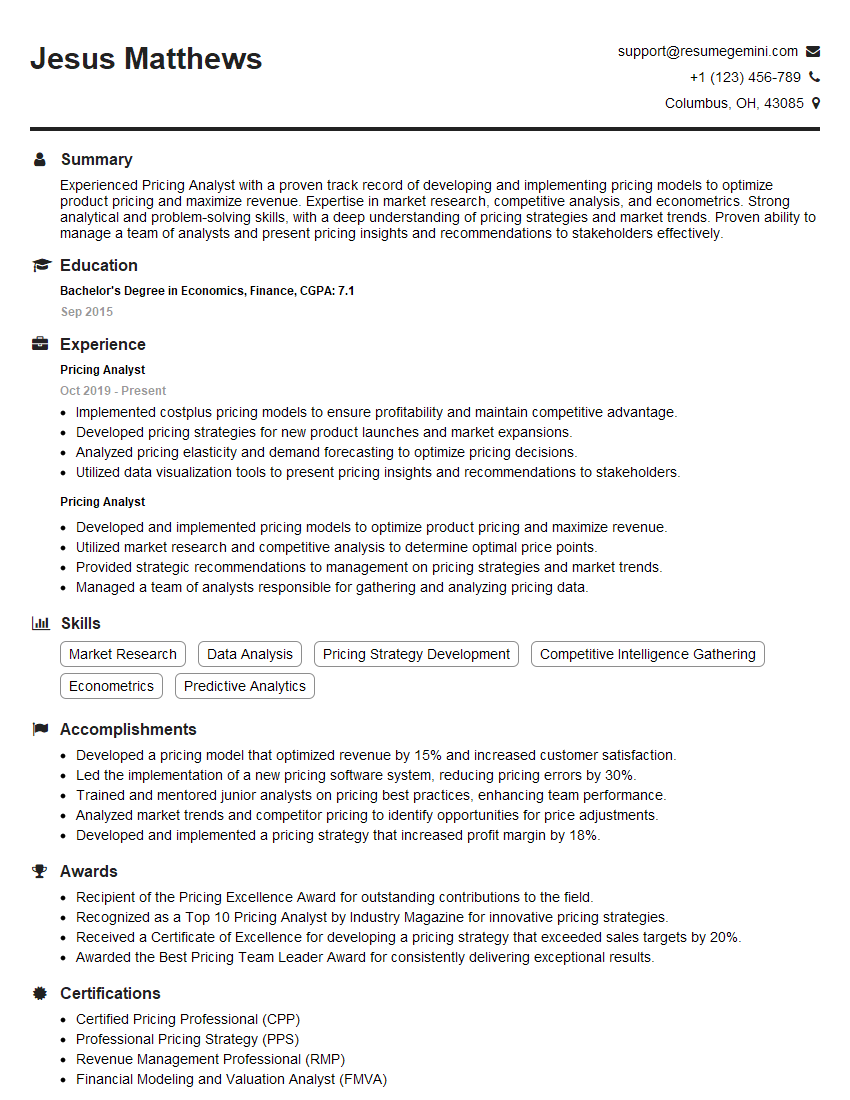
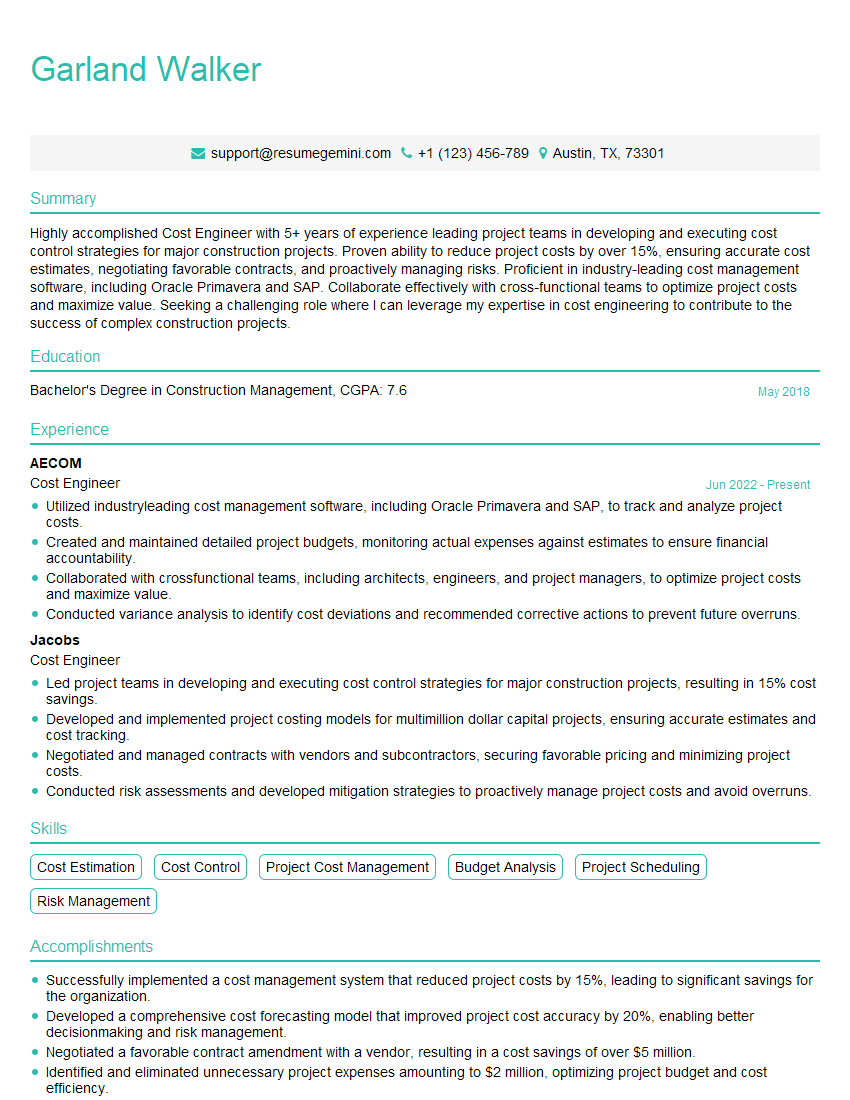
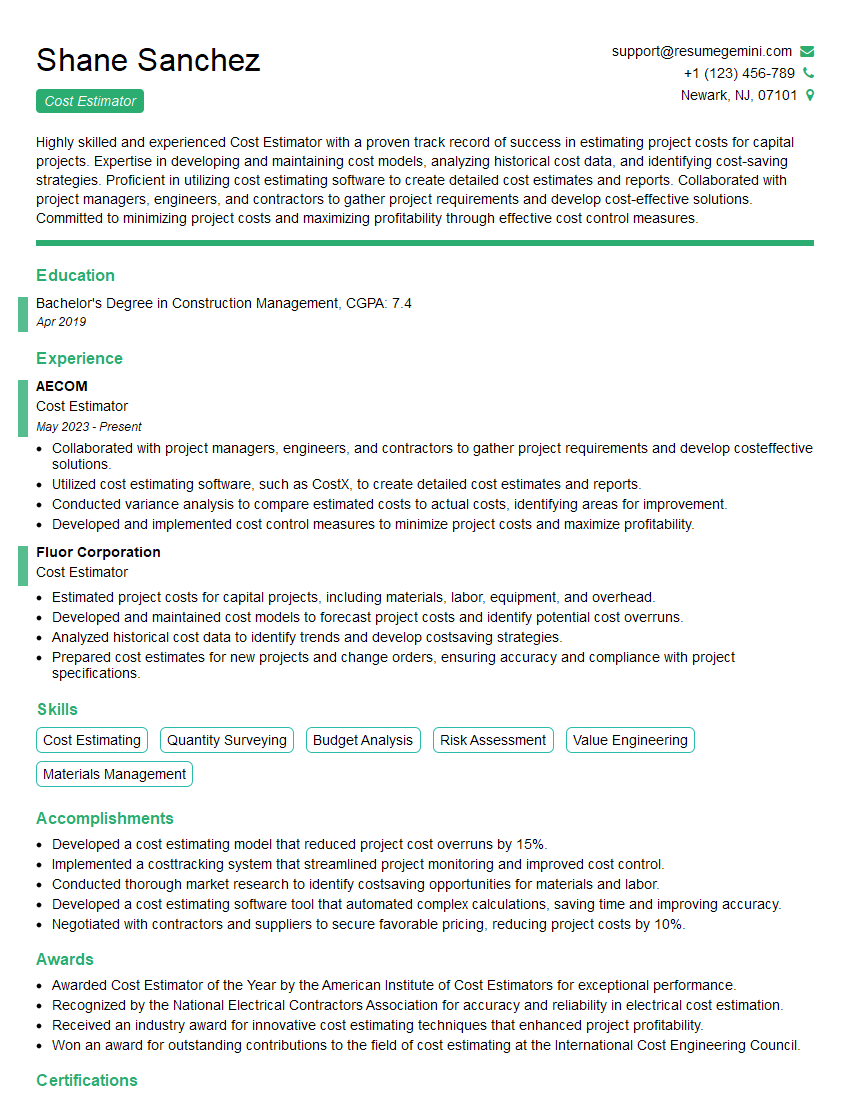
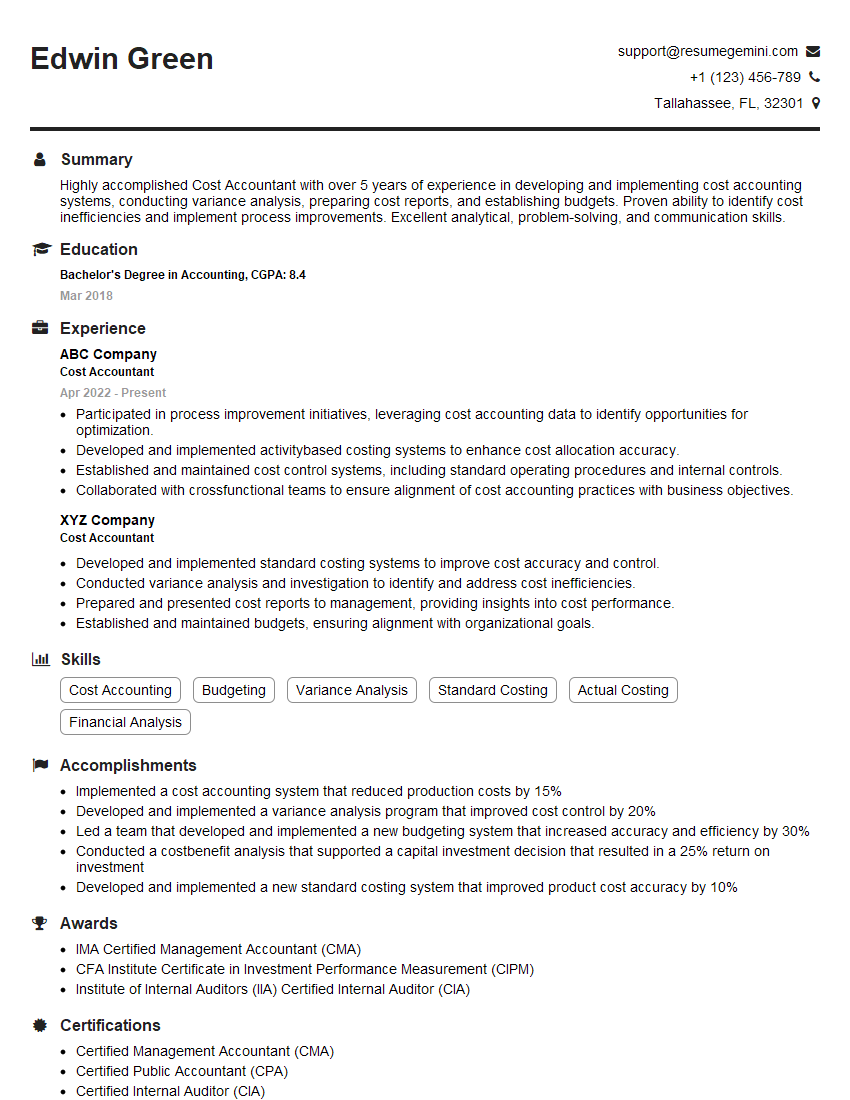
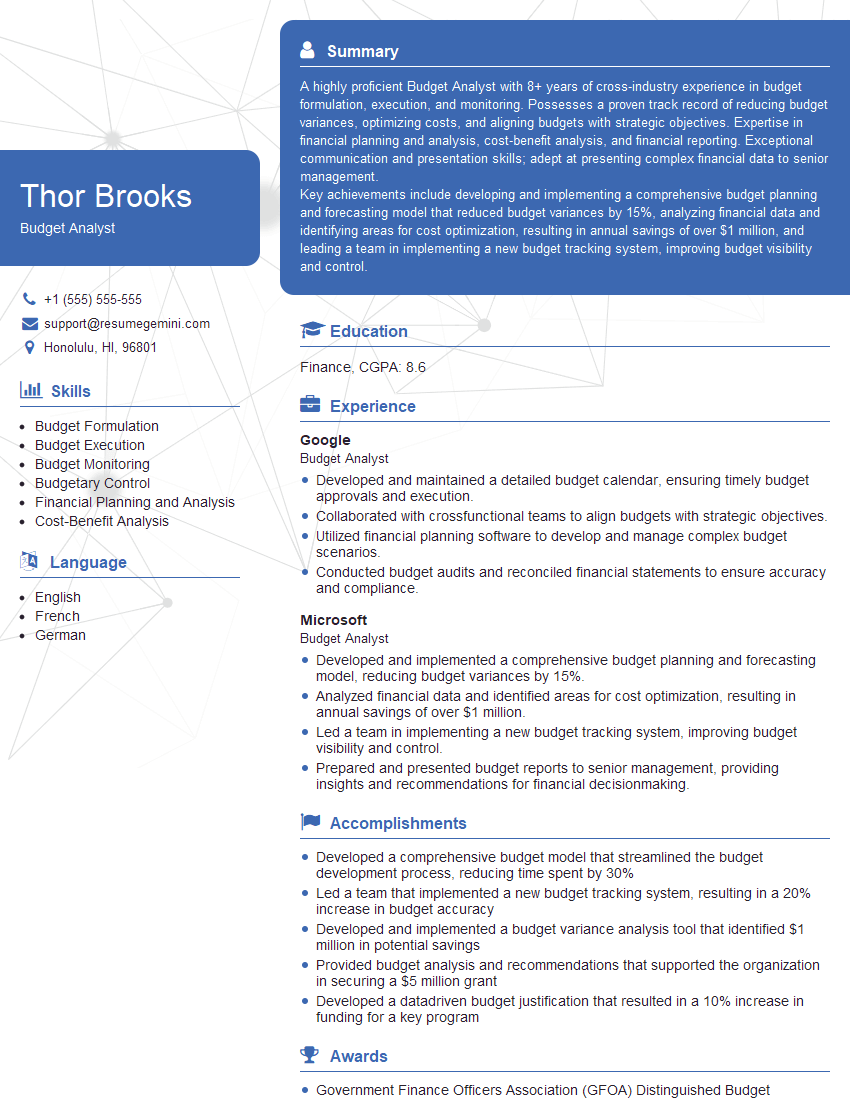
Mastering Cost Control and Estimation is crucial for career advancement in project management and related fields. Strong cost management skills are highly sought after, leading to increased responsibility, higher earning potential, and greater career satisfaction. To maximize your job prospects, focus on building an ATS-friendly resume that highlights your relevant skills and experience. ResumeGemini is a trusted resource that can help you create a compelling and effective resume tailored to the specific requirements of Cost Control and Estimation roles. Examples of resumes tailored to this field are available to help you get started.

Explore more articles
Users Rating of Our Blogs
Share Your Experience
We value your feedback! Please rate our content and share your thoughts (optional).
What Readers Say About Our Blog
There are no reviews yet. Be the first one to write one.