The thought of an interview can be nerve-wracking, but the right preparation can make all the difference. Explore this comprehensive guide to Costume Styling interview questions and gain the confidence you need to showcase your abilities and secure the role.
Questions Asked in Costume Styling Interview
Q 1. Describe your experience with different fabric types and their suitability for various costumes.
Understanding fabric properties is paramount in costume styling. Different fabrics drape, move, and react to light in unique ways, significantly impacting the final look and feel of a costume. For example, a flowing silk would be perfect for a regal gown, emphasizing elegance and movement, while a sturdy canvas would be better suited for a medieval knight’s armor, providing durability and structure.
- Silk: Luxurious, drapes beautifully, ideal for period pieces or elegant designs. However, it can be delicate and expensive.
- Cotton: Versatile, breathable, and relatively inexpensive. Suitable for a wide range of costumes, from casual to period.
- Wool: Warm, durable, and suitable for period costumes or character pieces requiring a textured look. Can be heavier and less breathable than cotton.
- Linen: Durable, breathable, and crisp. Works well for historical costumes, particularly those from warmer climates. Can wrinkle easily.
- Synthetic fabrics (Polyester, Nylon): Affordable, easy to care for, and come in a variety of textures and colors. Useful for costumes requiring specific properties like water resistance or stretch, but can lack breathability and feel less luxurious.
Choosing the right fabric isn’t just about aesthetics; it also involves considering the practicality and comfort of the actor. For a physically demanding scene, a breathable and durable fabric is crucial. A delicate fabric might be unsuitable for action sequences, leading to potential tears or discomfort.
Q 2. How do you manage a tight budget when sourcing costumes?
Budgeting for costumes requires creativity and resourcefulness. My approach involves a multi-pronged strategy:
- Thrift Stores and Vintage Shops: These are goldmines for unique and affordable pieces. Often, with minor alterations, a vintage garment can become the perfect base for a costume.
- Fabric Remnants and Wholesale Suppliers: Purchasing fabric remnants or from wholesale suppliers can significantly reduce fabric costs. Careful planning and pattern design are crucial here to minimize waste.
- Rental Houses and Costume Libraries: Consider renting costumes, especially for less prominent characters or items that would be expensive to create from scratch. This can free up budget for key costumes.
- DIY and Upcycling: Where possible, I embrace DIY solutions, repurposing existing garments or fabrics to create new costumes. This saves money and reduces textile waste.
- Prioritization: Clearly prioritize costumes based on their screen time and importance to the narrative. Main characters might warrant more elaborate costumes, while background characters could use more cost-effective solutions.
For example, on a recent low-budget film, I sourced a beautiful 1920s-style dress from a vintage store, altering it slightly to fit the character. This significantly reduced costs compared to commissioning a custom-made dress.
Q 3. Explain your process for creating a mood board for a costume design.
Creating a mood board is a fundamental step in establishing the visual direction of a costume design. It serves as a visual reference point throughout the design process.
My process involves:
- Gathering Inspiration: I start by collecting images from various sources – magazines, Pinterest, online galleries, and even historical archives – that capture the feeling and style I want to convey. This includes colors, textures, shapes, and overall aesthetics.
- Identifying Key Elements: I analyze these images, identifying key elements like color palettes, silhouette, fabrics, and accessories that align with the character’s personality, story, and the overall film’s aesthetic.
- Organizing the Board: I organize the collected images and elements on a digital or physical board, creating a coherent visual narrative. I might group elements by color, texture, or time period, allowing me to see the overall composition and any potential inconsistencies.
- Refinement and Iteration: The mood board is not a static document. I refine it as the design process evolves, adding or removing elements based on further research, discussions with the director, and practical considerations.
For instance, when designing costumes for a steampunk-themed film, my mood board would incorporate images of Victorian-era clothing, clockwork mechanisms, brass accents, and futuristic elements, all arranged to visually represent the desired blend of eras and styles.
Q 4. How do you handle alterations and fitting adjustments on set?
On-set alterations are inevitable, often due to unexpected issues with fit or the need for quick adjustments during filming. My process for handling alterations and fittings on set is focused on efficiency and minimal disruption to the filming schedule.
- Pre-Production Fittings: Thorough pre-production fittings minimize on-set adjustments. I strive to get the costumes as close to perfect as possible before the shoot starts.
- A Well-Equipped Kit: I always carry a comprehensive kit including needles, thread, pins, scissors, measuring tape, and various notions. A portable sewing machine is also helpful for more substantial alterations.
- Quick Fixes: I am proficient in making quick fixes, such as adjusting seams, hemming, or replacing buttons, using efficient techniques that minimize time spent on alterations.
- Communication: Maintaining clear communication with the actors, director, and wardrobe team ensures that any issues are addressed promptly and efficiently. Feedback is crucial for achieving the desired outcome.
- Prioritization: I prioritize alterations based on their urgency and impact on the filming schedule. Critical issues are handled immediately, while minor adjustments can be tackled later.
For example, I once needed to quickly shorten a costume’s sleeves during a crucial scene. By using efficient hand-sewing techniques, I was able to make the necessary adjustments quickly and discreetly without interrupting the flow of filming.
Q 5. What software are you proficient in for costume design and drafting?
Proficiency in design software is crucial for creating accurate patterns, visualizing designs, and communicating ideas effectively. I’m proficient in several industry-standard software packages:
- Adobe Photoshop: Used for manipulating images, creating digital prints, and enhancing textures.
- Adobe Illustrator: Excellent for creating detailed illustrations, patterns, and technical drawings.
- CLO 3D: A powerful 3D apparel design software which allows for realistic virtual prototyping and fitting. This drastically reduces errors and minimizes the need for extensive alterations.
- Marvelous Designer: Another 3D apparel design program, particularly useful for creating complex draping and intricate designs.
Using these programs, I can quickly create and modify designs, experiment with different fabrics and styles, and generate accurate patterns for production, thereby saving time and ensuring better quality.
Q 6. Describe your experience working with actors during fittings.
Building rapport with actors during fittings is essential for a successful costume experience. It’s not just about ensuring the costume fits; it’s about ensuring the actor feels comfortable, confident, and able to embody their character fully.
My approach involves:
- Active Listening: I pay close attention to the actor’s feedback about the comfort and fit of the costume. Any discomfort, whether physical or emotional, must be addressed.
- Empathy and Patience: I understand that fittings can sometimes be time-consuming and potentially frustrating. Maintaining empathy and patience is key.
- Collaboration: I encourage actors to participate in the design and fitting process, ensuring that their input is incorporated whenever possible. They are ultimately the ones who will wear the costume.
- Professionalism: Maintaining a professional and respectful environment is crucial. Addressing any concerns with sensitivity and discretion is vital.
For example, I recall an actor who was uncomfortable with a particular neckline. By listening to their concerns and suggesting an alternative design, I was able to resolve the issue and ensure they felt completely at ease in their costume.
Q 7. How do you ensure historical accuracy in period costume design?
Historical accuracy in period costume design requires extensive research and attention to detail. It’s about more than just choosing the right silhouette; it’s about understanding the historical context, societal norms, and the evolution of clothing styles across different eras.
My process includes:
- In-depth Research: I thoroughly research the specific time period and location of the setting. This includes studying historical paintings, photographs, and written accounts. Museums and historical societies are valuable resources.
- Understanding the Silhouettes: I carefully study the characteristic silhouettes of the era. This includes understanding the shape and cut of garments, the typical lengths of skirts and sleeves, and the use of specific details like necklines, waistlines, and closures.
- Fabric Selection: I research the types of fabrics commonly used during the period, including their availability, texture, and color. This adds authenticity to the overall look.
- Accessories and Details: I pay careful attention to accessories such as hats, jewelry, and footwear, as these details are crucial for establishing the historical context.
- Consultation with Historians: For particularly challenging projects, consulting with historical costumers or specialists provides valuable insights and ensures accuracy.
For example, when designing costumes for a film set in 18th-century France, I consulted museum archives to accurately recreate the styles, fabrics, and construction techniques of the period. This commitment to research ensured the authenticity of the costumes, adding a layer of depth and historical richness to the production.
Q 8. Explain your understanding of color theory and its application to costume design.
Color theory is the foundational principle behind effective costume design. It’s about understanding how colors interact – their relationships in terms of hue, saturation, and value – to create specific moods, tell stories, and enhance character development. Think of it as a visual language.
For instance, warm colors like reds and oranges often convey energy, passion, or aggression, while cool colors like blues and greens can suggest calmness, sadness, or even mystery. Complementary colors (colors opposite each other on the color wheel, like red and green) create high contrast and visual excitement, while analogous colors (colors next to each other on the color wheel, like blue and green-blue) create a harmonious and serene effect.
In costume design, I use color theory to establish a visual hierarchy. For example, the protagonist might be dressed in vibrant, saturated colors to draw the audience’s eye, while supporting characters might be in muted or more subdued tones. The color palette also directly reflects the setting and time period of the production. A historical drama might require a more muted palette, while a modern musical could utilize a much bolder, brighter range. A character’s costume could even utilize color changes throughout a performance to reflect their emotional arc or evolving personality.
Q 9. How do you manage a large costume inventory for a production?
Managing a large costume inventory requires a meticulous and organized system. I typically utilize a combination of digital and physical methods. A detailed inventory database (often using spreadsheet software or a dedicated costume management program) is crucial. This database should include information on each garment: description, size, materials, condition, storage location, and any associated accessories. Each costume is also given a unique identification number for easy tracking.
Physically, the costumes are stored in a clean, well-organized space. Garments are ideally stored on appropriate hangers or in acid-free boxes to preserve their condition. Regular inspections are necessary to identify any damage or wear and tear. This is particularly important for delicate fabrics or intricate embellishments. A clear system for checking costumes in and out helps prevent loss or accidental damage. Regular cleaning and maintenance schedules are essential – considering dry cleaning vs. hand washing depending on the material – to keep the inventory in optimal condition.
Q 10. Describe your approach to collaborating with a director or production team.
Collaboration is at the heart of successful costume design. My approach involves open communication and a willingness to listen and understand the director’s vision for the production. I typically start by having in-depth discussions to understand their artistic concept, the overall tone, and specific character interpretations. I carefully review the script, paying attention to character descriptions, setting, and significant scenes. Then, I’ll create initial costume sketches and mood boards to visually convey my ideas.
Throughout the process, regular meetings and presentations are crucial for getting feedback and adjusting the designs accordingly. I also collaborate closely with other members of the production team, such as the set designer, lighting designer, and makeup artist, to ensure a cohesive visual experience. Open communication and a willingness to compromise are essential for a harmonious working relationship and a successful final product. For example, I recently worked on a production where the director had a specific color scheme in mind; by collaboratively exploring different fabric textures and shades, we achieved a visual balance that enhanced both the story and the aesthetic.
Q 11. How do you maintain the integrity of costumes throughout a production’s run?
Maintaining costume integrity throughout a production’s run demands proactive measures. Regular inspections are paramount. Before each performance, a thorough check of each costume is vital to identify any potential issues – loose seams, broken zippers, or damaged embellishments. A dedicated costume assistant or dresser is usually essential for larger productions to monitor the garments and deal with minor repairs backstage.
Proper care and cleaning after each performance are equally important. This may include spot cleaning, pressing, and professional cleaning as needed, to remove any dirt or stains. Having a detailed inventory tracking system also helps identify which costumes are experiencing the most wear and tear, so that preventative measures – such as creating duplicate garments or reinforcement techniques – can be employed. Careful handling by performers – avoiding rough treatment or inappropriate actions in the costume – is also critical to preserving its longevity.
Q 12. What are your preferred methods for sourcing vintage or antique costumes?
Sourcing vintage or antique costumes is a fascinating but meticulous process. My preferred methods involve a multi-pronged approach. I begin by researching online resources such as specialized auction websites and antique costume shops. I also actively visit flea markets, antique shows, and estate sales. Building relationships with reputable dealers and collectors is invaluable – they often have access to unique pieces not readily available to the public.
When acquiring vintage or antique pieces, careful examination and authentication are critical. I inspect the garment thoroughly for any damage, repairs, or alterations needed. I might consult with textile conservators to determine the best methods for cleaning and preservation, ensuring its authenticity and integrity is maintained. Proper documentation is essential, including provenance if possible, adding to the piece’s historical value.
Q 13. How do you address challenges with costume malfunctions during a performance?
Costume malfunctions are an unfortunate reality in live performance. Having a well-prepared quick-change area backstage with a dedicated team is essential. This team should possess basic sewing skills and a comprehensive kit of repair tools: needles, thread, safety pins, fabric glue, and spare buttons. In addition, a small selection of neutral-colored fabric swatches might be kept for emergency repairs.
My strategy involves anticipating potential problems. Before a performance, I conduct a final costume check, paying special attention to areas prone to failure (like seams under stress). A ‘go-bag’ might be prepared for each show, containing common repair items and quick replacement pieces for often-used garments. The quick-change crew undergoes regular training to deal with various scenarios. The goal is swift, inconspicuous repairs that maintain the illusion of a seamless performance.
Q 14. Describe your experience with creating character-driven costumes.
Creating character-driven costumes is where the art of costume design truly shines. It involves more than just selecting pretty clothes; it’s about translating the character’s personality, history, social status, and emotional state into visual form. I start by thoroughly analyzing the character’s script and background information, including their motivations, relationships, and overall arc throughout the story.
Then, I use clothing, accessories, and even the fabrics themselves to tell their story. For instance, a character’s worn-out clothing might depict their struggles, while luxurious fabrics might convey wealth and status. Color palettes are meticulously chosen to reflect personality traits and moods. Silhouettes can also speak volumes; a structured silhouette could suggest strength and control, while a flowing one might depict grace and vulnerability. Finally, I consider props and accessories to further enhance the character’s identity and make the costume truly unforgettable. For instance, a simple necklace, worn in a specific way, could embody a hidden detail vital to the narrative.
Q 15. Explain your understanding of different costume construction techniques.
Costume construction is a multifaceted process encompassing various techniques, each chosen based on the design, fabric, and budget. Understanding these techniques is crucial for creating believable and functional costumes.
- Pattern Making and Cutting: This foundational step involves drafting or adapting existing patterns to fit the actor’s measurements. I use both traditional paper patterns and digital pattern-making software for efficiency and accuracy. For instance, I recently used CAD software to create intricate patterns for a historical period drama, enabling precise adjustments and minimizing fabric waste.
- Sewing Techniques: From basic seams like French seams for a high-end finish to more complex techniques like smocking or appliqué for decorative elements, the choice depends entirely on the costume’s style. I’m proficient in various hand-sewing and machine-sewing techniques, including specialized stitches for specific fabrics. I remember creating a delicate lace overlay for a ball gown using a blind stitch to maintain the gown’s elegance.
- Fabric Manipulation: This includes techniques like draping (sculpting fabric directly onto a mannequin), tailoring (constructing garments with structured elements), and embellishment (adding details like beading, embroidery, or trims). The choice is determined by the desired look and feel of the costume. For a recent superhero movie, I used draping to create a dynamic cape that moved fluidly.
- Millinery and Accessories: Creating hats, headpieces, and other accessories like belts, jewelry, and footwear is an integral part of completing the costume. This requires skill in working with various materials like straw, felt, leather, and metal. I once handcrafted a bespoke headdress using feathers and wire, perfectly complementing an elaborate Victorian-era gown.
Career Expert Tips:
- Ace those interviews! Prepare effectively by reviewing the Top 50 Most Common Interview Questions on ResumeGemini.
- Navigate your job search with confidence! Explore a wide range of Career Tips on ResumeGemini. Learn about common challenges and recommendations to overcome them.
- Craft the perfect resume! Master the Art of Resume Writing with ResumeGemini’s guide. Showcase your unique qualifications and achievements effectively.
- Don’t miss out on holiday savings! Build your dream resume with ResumeGemini’s ATS optimized templates.
Q 16. How do you adapt a costume design to fit a specific actor’s body type?
Adapting a design to an actor’s body type is critical for both comfort and visual appeal. It’s not simply about resizing; it’s about understanding proportions and making adjustments that enhance the character’s silhouette.
- Body Mapping: I begin by carefully measuring the actor and identifying key features like shoulder width, waist circumference, and hip size. This information informs pattern adjustments.
- Proportional Adjustments: I may need to lengthen or shorten sleeves, adjust the waistline, or alter the overall shape of the garment to flatter the actor’s physique. For example, if an actor has broad shoulders, I might opt for wider straps or a slightly dropped shoulder line to balance the proportions.
- Fabric Selection: Fabric choice plays a significant role. For an actor with a fuller figure, I might select fabrics with good drape and structure that flatter the body while minimizing the visibility of any imperfections. Conversely, for a slender build, I might incorporate details like ruffles or textures to add volume and shape.
- Construction Modifications: Depending on the design, alterations might involve adding darts, seams, or panels to create a more tailored fit. I might also use boning, corsets, or other structural elements to achieve the desired silhouette while ensuring the costume remains comfortable for the actor.
Ultimately, the goal is to create a costume that not only fits perfectly but also visually enhances the actor’s appearance and contributes effectively to the overall performance.
Q 17. What strategies do you use to streamline the costume creation process?
Streamlining costume creation involves meticulous planning and efficient workflows. This involves several key strategies.
- Detailed Pre-Production: This includes thorough research, creating detailed design sketches, selecting fabrics and trims, sourcing vendors, and developing a comprehensive timeline. The more prepared I am beforehand, the smoother the production process is.
- Efficient Pattern Making: Utilizing digital pattern making software and well-organized pattern libraries save valuable time and resources. Accurate patterns greatly reduce fitting issues and rework.
- Organized Production: A well-organized sewing room, including dedicated storage spaces for fabrics, trims, and tools, minimizes wasted time searching for materials. Clear instructions and consistent communication with the team are crucial.
- Time Management: Establishing realistic deadlines for each phase of the project, from design to final fitting, is vital. This includes regular check-ins and task prioritization.
- Collaboration: Effective communication and collaboration with the director, actors, and other members of the costume team facilitate quick decisions and address potential issues promptly.
For instance, on a recent project with a tight deadline, I used a collaborative online platform to share designs, track progress, and address feedback from the director in real-time, which significantly expedited the process.
Q 18. Describe your experience working with various costume budgets (high, mid, low).
My experience spans a wide range of budgets, and my approach adapts accordingly.
- High Budget: High-budget productions allow for extensive research, sourcing of premium fabrics, bespoke designs, and elaborate details. I can explore unique construction techniques and employ specialized artisans. For example, I once had the resources to commission handcrafted embroidery from a renowned artisan for a historical drama.
- Mid-Range Budget: Mid-range budgets require more creative problem-solving. I utilize cost-effective fabrics and techniques while maintaining the integrity of the design. I may prioritize certain details and simplify others. I might explore more affordable alternatives while still achieving a high-quality aesthetic.
- Low Budget: With low budgets, resourcefulness and ingenuity are paramount. I might source fabrics from thrift stores or utilize upcycled materials. I focus on simplicity in design and construction, opting for versatile garments that can be used across multiple scenes. I’m skilled in adapting designs to maximize existing resources while ensuring a cohesive visual style.
Regardless of the budget, my commitment to achieving the artistic vision remains constant. I adjust my approach to maximize resources while preserving the quality and impact of the costumes.
Q 19. How do you ensure continuity of costumes across multiple scenes?
Ensuring costume continuity across multiple scenes is crucial for maintaining the narrative’s flow and believability. This involves several steps.
- Detailed Documentation: Every costume is thoroughly documented with photographs and notes, specifying each element’s condition and any necessary adjustments for different scenes. This aids in recreating the look consistently.
- Accurate Logging: Each costume is labeled clearly, indicating its specific use in each scene. This ensures that the right costume is available when needed and avoids any mix-ups.
- Regular Checks: The costume team performs regular inspections throughout filming to identify any damage or wear and tear, allowing for prompt repairs or replacements to maintain continuity.
- Consistent Styling: Hair, makeup, and accessories are closely coordinated with the costume design to maintain a unified look throughout the scenes. Small details can significantly impact continuity.
- Redundancy in Key Costumes: For important scenes, additional copies or backup costumes are often prepared to account for unforeseen circumstances like accidents or damage. This prevents delays and ensures a smooth production.
For example, on a recent period piece, we created multiple identical outfits for the lead character to accommodate the lengthy shooting schedule. Each identical costume was meticulously maintained to ensure continuity across different scenes.
Q 20. What is your preferred method for documenting costume designs?
My preferred method for documenting costume designs is a multi-faceted approach combining various techniques to ensure comprehensive records.
- Detailed Sketches: Hand-drawn sketches, including multiple angles and close-ups of design details, provide a visual representation of the design intent.
- Digital Design Software: I use digital design software such as Adobe Photoshop or Illustrator to create more polished and shareable visual representations of the costumes. This allows for easy collaboration and revision.
- Color Swatches and Fabric Samples: Physical color swatches and fabric samples are attached to the sketches and digital designs to ensure accuracy in material selection. This serves as a visual reference for the production team.
- Technical Drawings: For complex designs, technical drawings providing detailed measurements and construction notes are essential. These drawings help seamstresses and other artisans accurately reproduce the garments.
- Photographic Documentation: Photos of completed costumes, detailing their construction and fit on the actor, provide visual documentation for future reference and aid in recreating the costume in the case of needed replacements or adaptations.
This comprehensive documentation ensures that the creative vision can be consistently implemented throughout the production, enabling effective communication and collaboration among the team members.
Q 21. How do you handle conflicting creative visions with a director?
Handling conflicting creative visions requires diplomacy, open communication, and a collaborative spirit. It’s crucial to remember that a successful outcome requires everyone’s input and creative energy.
- Active Listening: I begin by actively listening to the director’s vision and understanding their rationale behind specific choices. This helps identify the core concerns and potential areas of compromise.
- Presenting Options: Instead of directly opposing the director’s ideas, I present alternative design options that address the director’s concerns while incorporating my expertise and perspective. This demonstrates respect and offers creative solutions.
- Visual Communication: Visual aids such as mood boards, sketches, and fabric samples are invaluable in conveying design concepts and helping the director visualize different possibilities.
- Compromise and Collaboration: Finding common ground often involves compromise. I look for ways to incorporate elements from both perspectives, creating a design that balances both artistic visions while maintaining visual cohesion.
- Documentation of Decisions: Once decisions are made, I ensure they are documented clearly for everyone involved. This avoids misunderstandings and keeps the project running smoothly.
For example, I once had a creative disagreement with a director about the color palette of a costume. Instead of directly opposing their choice, I presented a range of color variations, highlighting how each subtly impacted the costume’s overall effect. This led to a collaborative decision that satisfied both of us and resulted in a visually stunning outcome.
Q 22. Describe your experience with creating costumes for specific genres (e.g., fantasy, historical, contemporary).
My experience spans a wide range of costume genres, each demanding a unique approach. In fantasy, I thrive on creating elaborate, often surreal pieces, using unconventional materials and techniques to achieve a believable otherworldly aesthetic. For example, I once crafted a dragon costume using a combination of sculpted foam, metallic fabrics, and LED lighting to create a truly impressive and awe-inspiring effect. Historical costume design requires meticulous research to ensure accuracy and authenticity. I’ve worked on productions set in various periods, from Elizabethan England (requiring detailed embroidery and period-accurate silhouettes) to the roaring twenties (where flapper dresses and Art Deco influences dominated the design). Finally, in contemporary design, I focus on creating costumes that reflect modern trends and styles, while also considering the character’s personality and the story’s overall tone. For a recent modern play, I utilized recycled and upcycled materials to create unique and sustainable costumes that aligned with the play’s environmentally conscious themes.
Q 23. How do you balance creative expression with practical considerations in costume design?
Balancing creative expression with practical considerations is crucial in costume design. It’s like finding the sweet spot between art and engineering. My process begins with brainstorming and sketching, allowing complete creative freedom. However, I then meticulously analyze the designs, considering factors such as budget, fabric availability, construction time, actor comfort, and the practicality of movement during performance. For example, a stunning gown might look amazing on paper, but if it restricts an actor’s ability to move freely or is too difficult to change quickly between scenes, it needs to be redesigned. I often use mood boards and technical drawings to visualize the final product and to address potential challenges proactively. Compromises are sometimes necessary, but the goal is to find creative solutions that don’t sacrifice either artistic vision or practical functionality.
Q 24. What are your methods for addressing last-minute costume changes or requests?
Last-minute changes are a reality in this industry! My approach is rooted in preparedness and flexibility. I always maintain a detailed inventory of my costume stock and keep a supply of basic fabrics and embellishments on hand. When a change arises, I prioritize understanding the reason behind it. Is it an actor’s comfort issue, a director’s creative adjustment, or a wardrobe malfunction? Once the cause is clear, I quickly assess the scope of the change and determine if a simple alteration is sufficient, or if I need to create a completely new piece. My team and I work efficiently, often prioritizing speed without sacrificing quality. Communication is key – keeping the actors, director, and other team members informed at every step of the process ensures everyone is on the same page and reduces unnecessary stress.
Q 25. Describe your process for managing costume maintenance and repairs.
Costume maintenance and repair are vital to a successful production. My process starts with meticulous pre-show preparation: each costume is thoroughly inspected, minor repairs are addressed, and clear labeling and storage systems ensure easy retrieval. Throughout the run of a show, a dedicated dresser or assistant is responsible for quick, routine maintenance after each performance; this includes spot cleaning, pressing, and addressing any small tears or loose seams. For more significant repairs, I use a detailed log to track damage and schedule repairs accordingly. This log ensures accountability and allows for preventative measures to be implemented, perhaps addressing a recurring weakness in a costume’s design. I also collaborate closely with skilled seamstresses and tailors, ensuring that repairs are both prompt and of high quality.
Q 26. How do you ensure the safety and comfort of actors wearing your costumes?
Safety and comfort are paramount. Before the first rehearsal, each actor participates in a fitting where we address any potential issues. This includes checking for proper fit, ensuring that costumes are not restrictive or hazardous (e.g., loose fabrics near open flames, or jewelry that could be easily lost or ingested). We also discuss the materials used in the costume, checking for potential allergies or sensitivities. Fabrics are chosen carefully; prioritizing breathable, non-irritating materials whenever possible. Throughout the production, open communication with the actors is vital. If an actor experiences discomfort during a performance, I take immediate action, making necessary adjustments and prioritising their well-being. Safety checks are carried out regularly by the costume team to ensure the integrity of the costumes.
Q 27. How would you approach designing costumes for a character with unique physical requirements (e.g., prosthetics, mobility issues)?
Designing for actors with unique physical requirements requires a collaborative approach. I start by having a detailed discussion with the actor, their prosthetics specialist (if applicable), and the director to understand the specific needs and limitations. This may involve researching appropriate materials and techniques for integrating prosthetics seamlessly into the costume, or designing costumes that allow for ease of movement despite physical challenges. For example, if an actor uses a wheelchair, the costume would be designed to accommodate it, preventing any tripping hazards or restrictions on movement. Comfort is central; we often incorporate hidden support structures or adaptive closures to enhance the actor’s experience. The goal is to create costumes that facilitate a seamless and expressive performance, enabling the actor to focus on their role without worrying about their attire.
Q 28. What is your experience with sourcing and managing costume rentals?
My experience with costume rentals includes sourcing from a variety of suppliers – from large costume houses to independent vendors specializing in specific periods or styles. A key part of this process is creating a detailed inventory system that tracks rental items, their condition, and any special care instructions. Pre-rental inspections are essential; this includes checking for damage or missing pieces and documenting their condition with photographs. I use a robust contract system that clearly outlines rental fees, insurance, return dates, and responsibility for any damages. Post-rental, thorough cleaning and maintenance are carried out before the items are returned to storage, and any damage is assessed and addressed to maintain the quality of the rental stock for future use.
Key Topics to Learn for Your Costume Styling Interview
- Understanding the Brief: Deconstructing directorial vision, script analysis, and character development to inform costume choices.
- Period Research & Historical Accuracy: Applying research skills to accurately recreate historical costumes or adapt them for a modern context. Consider sourcing materials and techniques.
- Fabric Selection & Manipulation: Demonstrating knowledge of various fabrics, their properties, and how to achieve specific looks through draping, tailoring, or altering existing garments.
- Budgeting & Sourcing: Practical skills in managing budgets, sourcing materials cost-effectively, and negotiating with vendors.
- Collaboration & Communication: Highlighting your ability to collaborate effectively with directors, actors, other designers, and production teams.
- Problem-Solving & Adaptability: Showcase instances where you’ve overcome creative or logistical challenges in costume design and execution.
- Technical Skills: Demonstrate your proficiency in sewing, pattern making, draping, and other relevant technical skills. Be prepared to discuss your level of expertise with specific tools and techniques.
- Sustainability & Ethical Considerations: Discuss your awareness of environmentally friendly and ethically sourced materials and practices within the industry.
- Portfolio Presentation: Be ready to discuss your portfolio, highlighting your design process and showcasing your best work.
Next Steps
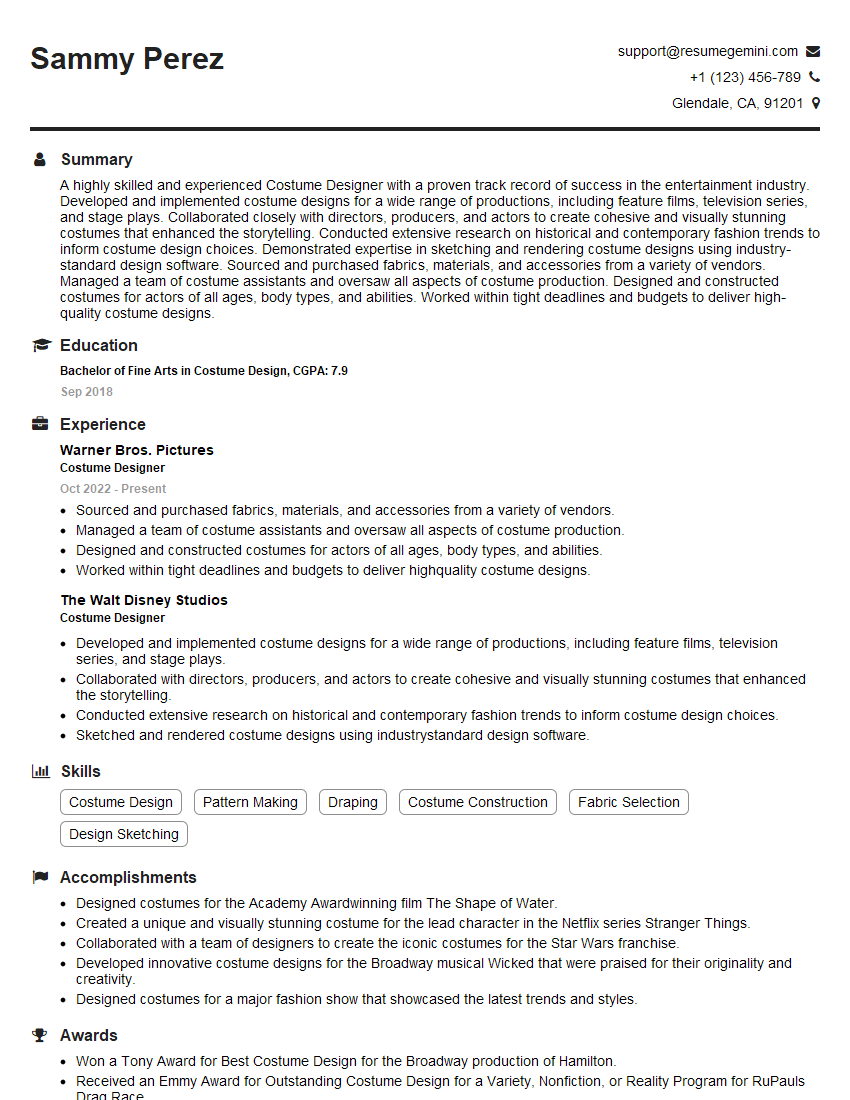
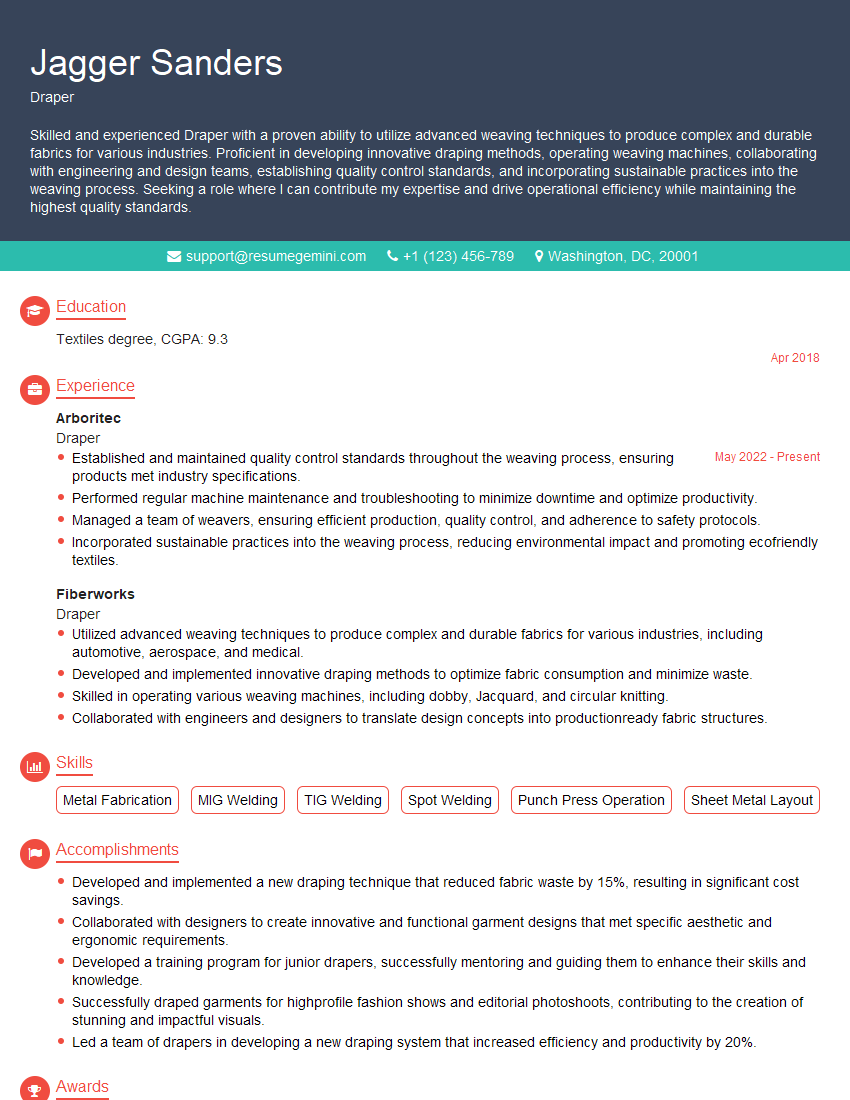
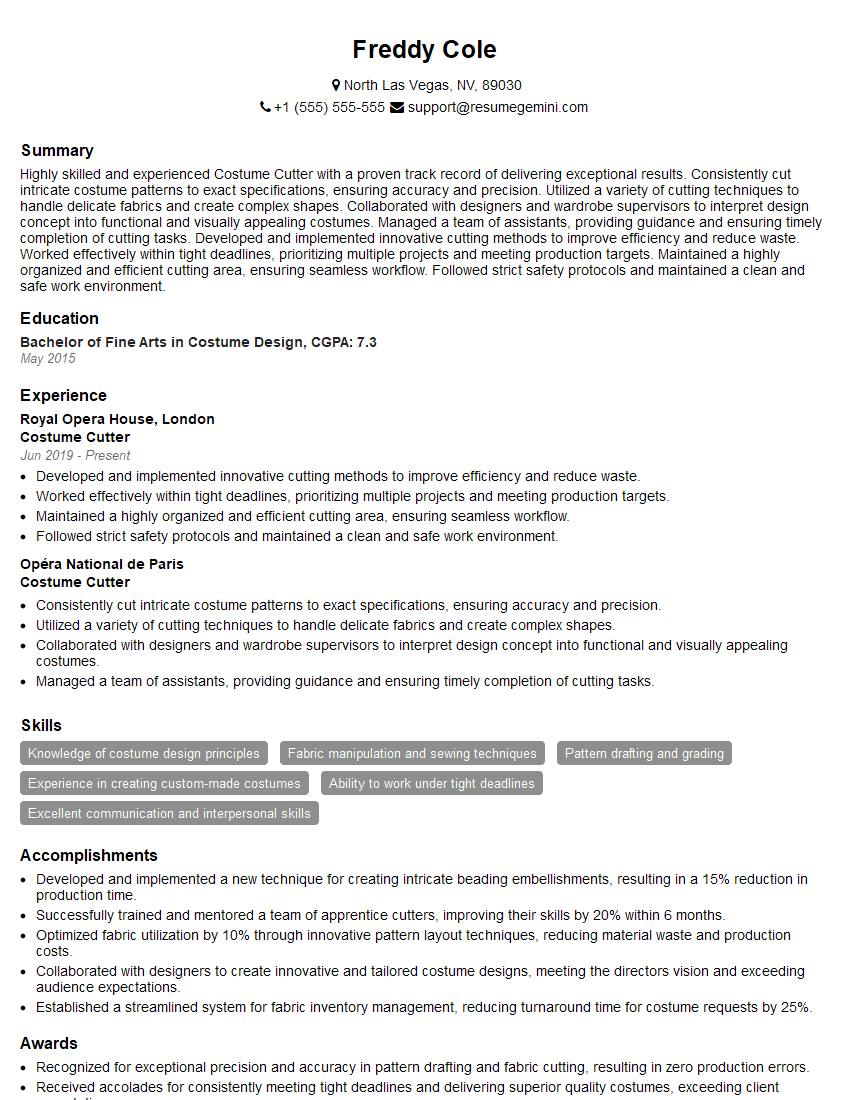
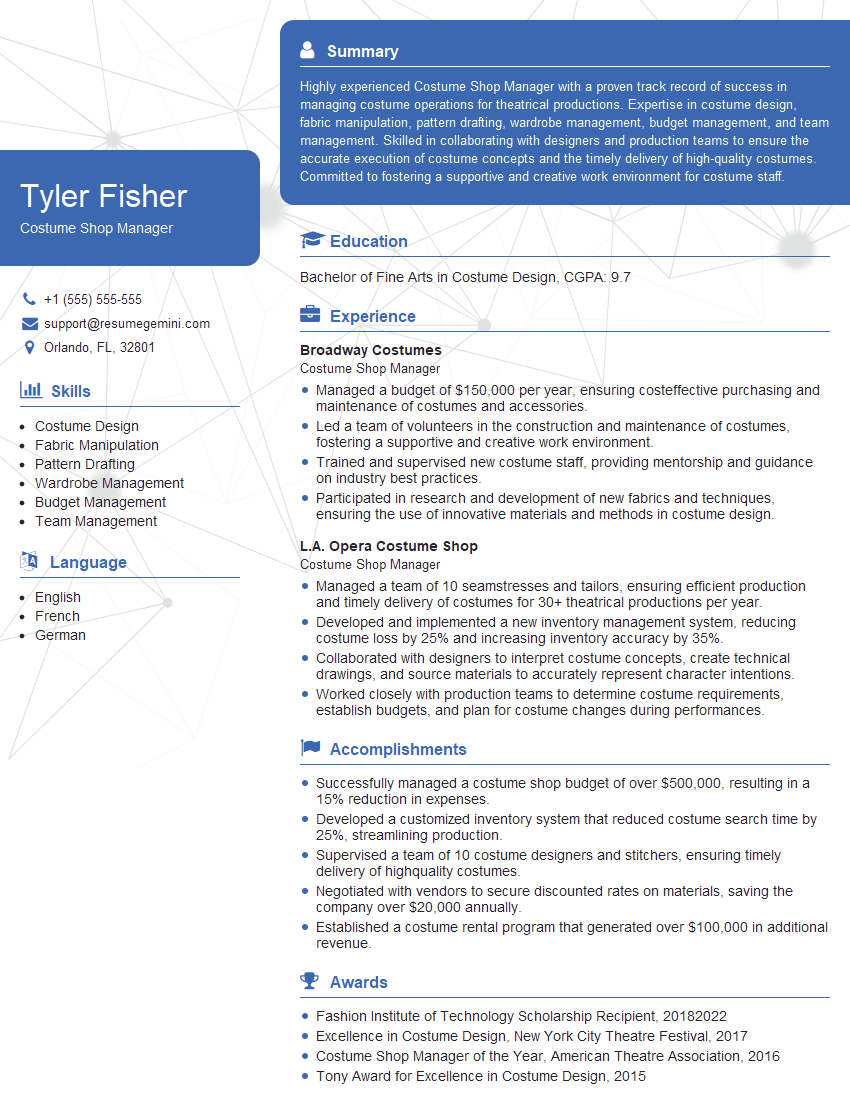
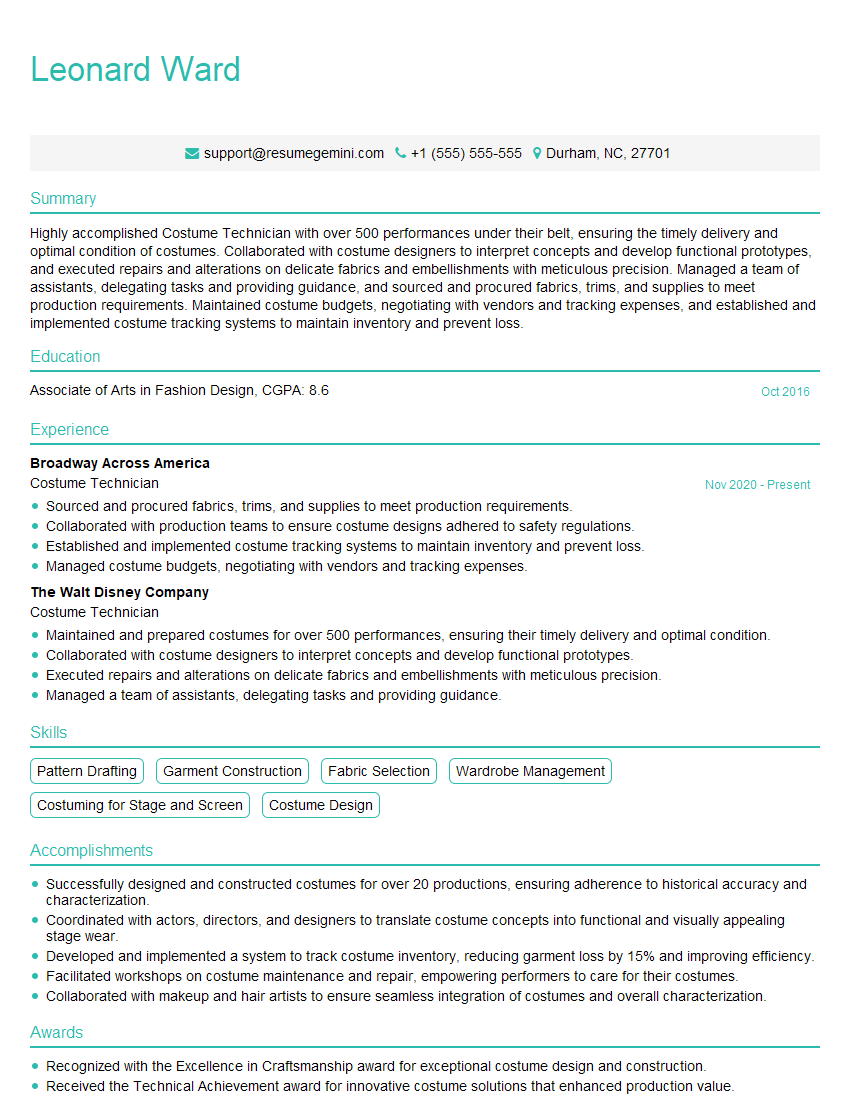
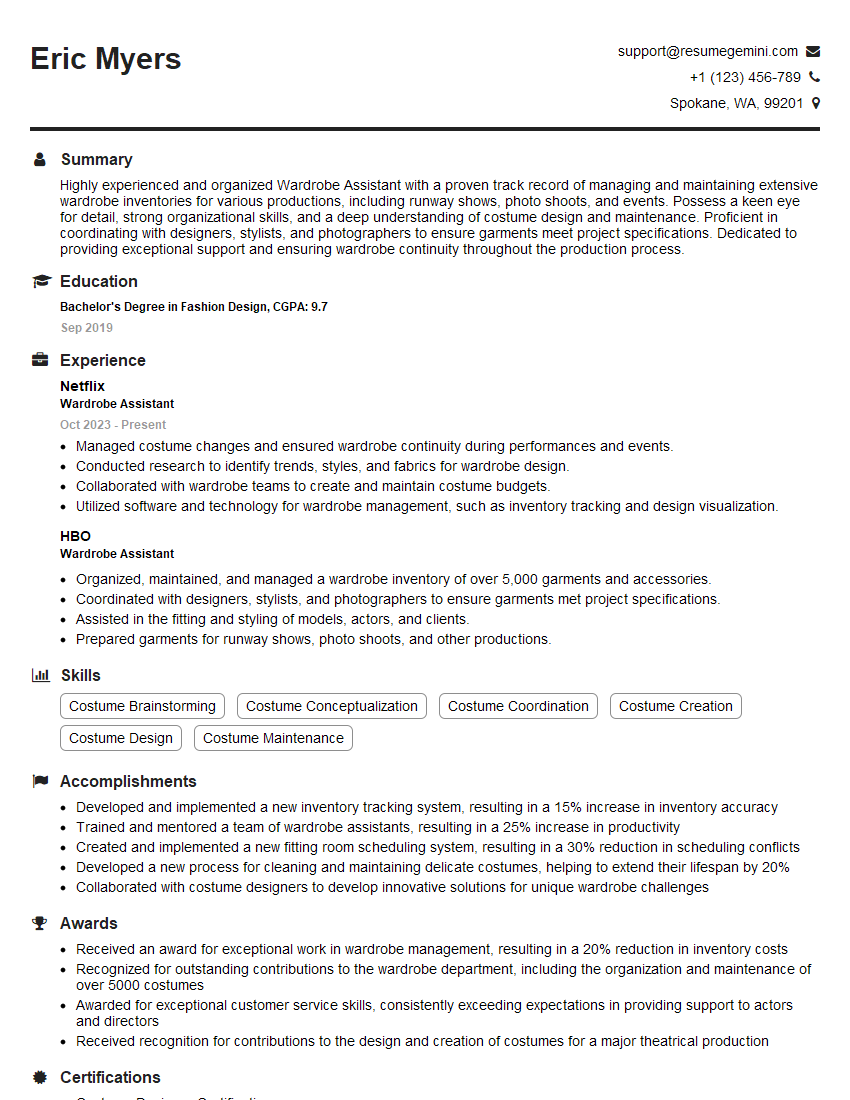
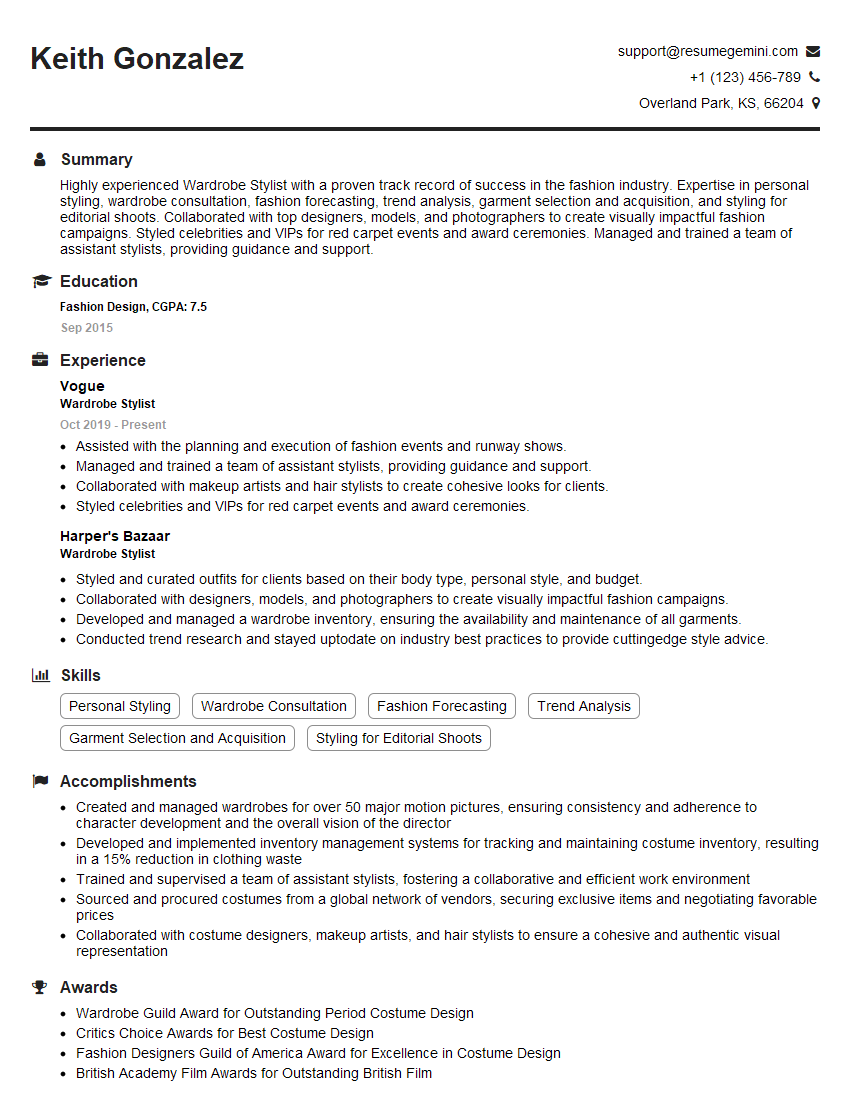
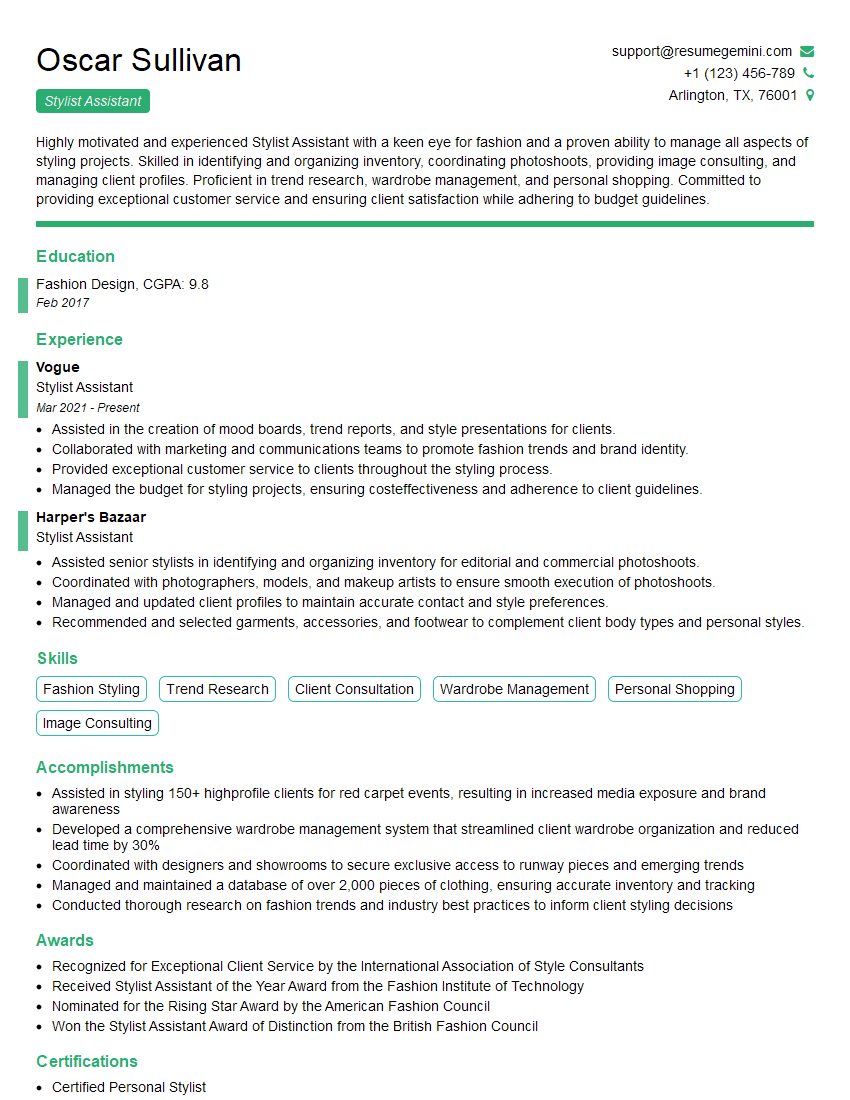
Mastering Costume Styling opens doors to a fulfilling and creative career, offering diverse opportunities in film, theatre, television, and beyond. A strong resume is your key to unlocking these possibilities. Creating an ATS-friendly resume is crucial for getting your application noticed by recruiters. To help you build a compelling and effective resume, we recommend using ResumeGemini. ResumeGemini provides a user-friendly platform and offers examples of resumes tailored specifically to Costume Styling, ensuring your application stands out from the competition. Take the next step toward your dream career today!
Explore more articles
Users Rating of Our Blogs
Share Your Experience
We value your feedback! Please rate our content and share your thoughts (optional).
What Readers Say About Our Blog
Very informative content, great job.
good