Feeling uncertain about what to expect in your upcoming interview? We’ve got you covered! This blog highlights the most important Counterintelligence briefings interview questions and provides actionable advice to help you stand out as the ideal candidate. Let’s pave the way for your success.
Questions Asked in Counterintelligence briefings Interview
Q 1. Describe your experience in developing and delivering counterintelligence briefings.
Developing and delivering counterintelligence (CI) briefings requires a meticulous approach, blending technical expertise with effective communication. My experience spans over [Number] years, encompassing various scenarios – from briefing executive leadership on high-level threats to educating technical staff on specific vulnerabilities. I start by thoroughly researching the topic, identifying key vulnerabilities and potential threats. Then, I structure the briefing logically, moving from the general context to specific details and actionable recommendations. I’ve presented briefings in diverse formats – formal presentations with slides, interactive workshops, and even informal one-on-one sessions tailored to the audience and the sensitivity of the information. For instance, a briefing for executives focuses on the high-level impact and strategic implications of a threat, while a briefing for technical staff delves into the technical details and potential mitigation strategies. Successfully delivering these briefings involves not just conveying information accurately but also ensuring the audience understands the implications and is empowered to act appropriately.
Q 2. Explain the process of assessing the credibility of intelligence sources in a CI context.
Assessing the credibility of intelligence sources in a CI context is paramount. It’s a multi-faceted process that requires a critical and skeptical approach. I employ a structured methodology, starting with evaluating the source’s motivation and potential biases. This includes considering whether the source is seeking personal gain, acting under duress, or genuinely concerned about a threat. Next, I analyze the source’s track record – have they provided accurate information in the past? Are there any inconsistencies in their statements? I also verify information provided by corroborating it with independent sources and evidence whenever possible. Triangulation of information from multiple independent and reliable sources is crucial to confirming the veracity of any claim. Finally, I assess the source’s access to the information in question. Does their position or access allow them to possess this knowledge? Imagine a scenario where an anonymous tip points towards a data breach. I wouldn’t solely rely on the tip; instead, I’d investigate the claim by independently examining system logs, network traffic, and interviewing relevant personnel. This layered approach minimizes the risk of relying on compromised or inaccurate intelligence.
Q 3. How do you tailor a counterintelligence briefing to different audiences (e.g., executives, technical staff)?
Tailoring a CI briefing to different audiences is essential for effective communication and action. Executive briefings prioritize concise summaries of high-level risks and their impact on strategic goals. These briefings usually focus on implications for the organization and potential financial or reputational damage. Technical staff briefings, on the other hand, necessitate detailed explanations of technical vulnerabilities, attack vectors, and specific mitigation strategies. Visual aids like network diagrams, code snippets, or system architecture illustrations are crucial here. For example, when briefing executives about a potential cyberattack, I’d highlight the potential financial losses and reputational damage. But when briefing technical staff, I would detail specific vulnerabilities, malware samples, and steps to patch and secure systems. This customized approach ensures that everyone receives the information they need in a format they understand, fostering a culture of informed decision-making and proactive threat response.
Q 4. What are the key elements of a well-structured counterintelligence briefing?
A well-structured CI briefing follows a clear and logical flow. It begins with a concise introduction outlining the purpose and scope of the briefing. Next, it provides context by presenting relevant background information and establishing the significance of the threat. The core of the briefing is the detailed analysis of the threat – its nature, potential impact, and actors involved. Crucially, the briefing includes actionable recommendations for mitigating the threat, detailing specific steps that can be taken. Finally, a conclusion summarizes key takeaways and identifies next steps. A common framework I use involves: 1) Defining the threat, 2) Assessing its impact, 3) Identifying the actors, 4) Detailing vulnerabilities, and 5) Recommending mitigation strategies. This structure ensures a clear, concise, and action-oriented message.
Q 5. Describe your experience identifying and mitigating counterintelligence threats.
Identifying and mitigating CI threats involves a proactive and reactive approach. Proactively, I conduct regular vulnerability assessments, penetration testing, and security awareness training to identify weaknesses and educate personnel on potential threats. Reactively, I analyze suspicious activities, investigate security incidents, and conduct damage assessments when threats materialize. For instance, in one case, we detected unusual network activity originating from an employee’s computer. Through a detailed investigation, we discovered the employee had been targeted by a phishing campaign and had inadvertently installed malware, potentially exposing sensitive data. We immediately isolated the affected system, initiated a forensic analysis, and implemented measures to contain and mitigate the damage. We also provided the employee with additional security awareness training. This experience highlights the importance of both proactive security measures and prompt reactive responses to identified threats.
Q 6. How do you incorporate visual aids and other multimedia effectively into a CI briefing?
Visual aids are critical for effective CI briefings. They enhance audience comprehension and retention. I use various multimedia, including charts, graphs, maps, images, and videos, to illustrate complex data and concepts. For instance, a network diagram can effectively illustrate the flow of compromised data, while a timeline can show the progression of an espionage operation. When using multimedia, I prioritize clarity and simplicity, ensuring that visuals are relevant, easy to understand, and support the narrative. Overly complex or distracting visuals can detract from the message. I always ensure that the visuals are high-quality and professionally produced, reflecting the seriousness of the subject matter. The choice of visual aids depends heavily on the audience and the specific threat being addressed; a technical audience may appreciate a detailed network map, while an executive briefing might benefit more from a simple chart highlighting key financial impacts.
Q 7. Explain your understanding of different types of counterintelligence threats (e.g., espionage, sabotage, foreign influence).
Counterintelligence threats are diverse and evolving. Espionage involves clandestine efforts to obtain sensitive information, often for economic or political advantage. Sabotage aims to disrupt or damage operations through covert actions, often involving physical damage or cyberattacks. Foreign influence encompasses efforts to manipulate or exploit individuals or organizations to advance foreign interests, potentially through bribery, coercion, or disinformation campaigns. Other threats include theft of intellectual property, technological espionage, and recruitment of insiders. Understanding these threats requires a comprehensive understanding of geopolitical landscapes, adversarial tactics, and technological vulnerabilities. Each threat requires a tailored response, incorporating proactive security measures, threat intelligence analysis, and effective countermeasures. For example, identifying and mitigating foreign influence might involve strengthening internal security protocols and conducting rigorous background checks on personnel, while countering espionage could necessitate strengthening data security and implementing robust counter-surveillance techniques.
Q 8. How do you handle sensitive information and maintain confidentiality during a CI briefing?
Handling sensitive information in a CI briefing requires meticulous adherence to security protocols. This begins before the briefing even starts – ensuring the briefing location is secure, access is controlled, and all materials are appropriately classified and handled. During the briefing itself, I employ several strategies. First, I only discuss information on a ‘need-to-know’ basis, avoiding unnecessary detail. Second, I ensure all materials, both physical and digital, are secured immediately after the briefing. Third, I strictly enforce the use of secure communication channels and avoid discussing sensitive matters in informal settings. For example, if discussing a potential compromise involving a specific individual, I wouldn’t mention their name in a public space or over an unsecured phone line. Instead, I’d use secure communications and only reveal the necessary details to authorized personnel.
Maintaining confidentiality also extends to post-briefing actions. I regularly review my own handling of materials to ensure no breaches in security have occurred and I actively participate in periodic security training to stay updated on best practices and emerging threats.
Q 9. How do you assess the risk associated with disclosing classified information during a briefing?
Assessing the risk of disclosing classified information involves a multi-faceted approach. I start by identifying the classification level of the information – Confidential, Secret, Top Secret – each with escalating levels of damage if compromised. Then, I consider the potential adversary’s capabilities and motivations. For example, a low-level leak of Confidential information might cause minor inconvenience, while the disclosure of Top Secret information to a hostile nation could have catastrophic consequences.
Next, I analyze the context of the briefing itself. Is the audience trustworthy? What is the security of the briefing environment? Are there any potential vulnerabilities that could be exploited? A risk assessment matrix can be useful here, weighing the sensitivity of the information against the likelihood of compromise. Based on this analysis, I tailor the briefing to mitigate risks, perhaps using only summaries of sensitive data or omitting information deemed excessively risky.
For instance, if briefing a group with varying security clearances, I would compartmentalize the information, presenting only the relevant information to each individual according to their clearance level. If concerns exist about technological vulnerabilities, I’d ensure the briefing avoids digital media altogether.
Q 10. Describe your experience in using intelligence gathering techniques to support CI briefings.
My experience in using intelligence gathering techniques to support CI briefings involves a wide array of methods, all conducted ethically and legally. Open-source intelligence (OSINT) plays a crucial role, enabling me to gather publicly available information to corroborate or contextualize classified data. This could involve examining news articles, social media, or company websites to understand the activities of potential adversaries.
Human intelligence (HUMINT) sources, vetted and carefully managed, can also provide invaluable insights. However, this is only done within strict legal and ethical parameters, prioritizing the safety and security of our sources. I have also utilized signals intelligence (SIGINT) and geospatial intelligence (GEOINT) to identify patterns and trends in adversary behavior, allowing for more comprehensive briefings. For example, combining GEOINT data (satellite imagery showing suspicious activity near a sensitive facility) with HUMINT (informant reporting on the same activity) creates a stronger, more credible narrative for the briefing.
Q 11. How do you ensure the accuracy and reliability of information presented in a CI briefing?
Ensuring accuracy and reliability is paramount. This starts with rigorous source validation. I carefully vet every piece of information, cross-referencing it with multiple sources whenever possible. I examine the credibility of the source, considering their biases, motivations, and track record. Information is also checked for consistency with other intelligence, and any discrepancies are flagged and investigated.
Furthermore, I prioritize utilizing multiple intelligence disciplines. Combining data from various sources—HUMINT, SIGINT, OSINT—provides a more robust and reliable picture. Presenting only information that has undergone thorough validation helps maintain the credibility and integrity of the briefing. Transparency is also key; if there’s uncertainty about a piece of information, I explicitly state this, emphasizing the tentative nature of the data.
Q 12. How do you adapt your briefing style to accommodate different communication preferences?
Adapting my briefing style to different communication preferences is crucial for effective information dissemination. I tailor my approach based on the audience’s background, technical expertise, and preferred learning styles. For example, a briefing for senior policymakers would likely focus on high-level strategic implications, while a briefing for technical specialists would delve into the granular details of specific threats.
I use a variety of communication techniques – presentations with visuals, interactive discussions, and even role-playing scenarios – to ensure the information is engaging and accessible. For audiences who prefer a more concise approach, I deliver succinct bullet points; for those who benefit from context, I provide in-depth background information. Active listening and observing the audience’s responses during the briefing allows for real-time adjustments, ensuring the information is effectively communicated and understood.
Q 13. What methods do you use to engage your audience during a counterintelligence briefing?
Engaging the audience is paramount for effective CI briefings. I utilize a range of techniques to maintain interest and facilitate understanding. First, I create a compelling narrative, structuring the information in a logical sequence and incorporating relatable examples. Second, I use visuals such as maps, charts, and images to illustrate key concepts and make complex information more accessible.
Third, I foster active participation through interactive elements – questions and answers, small group discussions, and even the use of relevant case studies. Fourth, I use humor appropriately to lighten the mood and enhance engagement. Finally, I strive to make the information relevant to the audience’s interests and concerns, emphasizing the practical implications of the information presented. For instance, instead of focusing solely on technical details, I might highlight the real-world consequences of a particular vulnerability, making the information more impactful and memorable.
Q 14. Describe your experience in responding to questions and challenges during a CI briefing.
Responding to questions and challenges during a CI briefing requires diplomacy, clarity, and a deep understanding of the subject matter. I start by actively listening to the question, clarifying any ambiguities before responding. I answer honestly and transparently, acknowledging limitations in knowledge when necessary. If a question is beyond my expertise, I state this directly and indicate who might be able to provide the answer. When facing challenges to the presented information, I provide supporting evidence and documentation, calmly and professionally addressing any concerns raised.
It’s crucial to avoid becoming defensive or dismissive; instead, I treat challenges as opportunities to further clarify and strengthen the briefing. Maintaining composure and a respectful demeanor is essential. If a challenge raises legitimate concerns, I may need to adjust future briefings to incorporate new information or perspectives. For example, if a question highlights a gap in my understanding of a particular technology, I would conduct further research before providing updated briefings to ensure future presentations remain accurate and complete.
Q 15. How do you manage interruptions or unexpected questions during a briefing?
Managing interruptions during a counterintelligence briefing requires a calm, professional demeanor and a flexible approach. My strategy involves acknowledging the interruption politely, briefly addressing the question if it’s pertinent and easily answered, or otherwise noting it for later discussion. I’ll explain why addressing it immediately isn’t feasible in the current context, for instance, to maintain the flow of critical information and avoid derailing the main points. I might say something like, “That’s an important question, and I’d be happy to discuss it in more detail afterwards, but to ensure we cover all the crucial aspects of today’s threat assessment, let’s return to [topic] first.”
If the interruption is disruptive or inappropriate, I’ll address it directly but tactfully, perhaps involving a supervisor if necessary. The key is to maintain control of the briefing, ensuring all critical information is delivered without compromising the security or sensitivity of the material. Pre-emptive measures, such as establishing clear ground rules at the beginning of the briefing (e.g., holding questions until the Q&A session), can minimize disruptions. Using visual aids or a clear structure also helps keep the audience focused and engaged, reducing the likelihood of irrelevant questions.
Career Expert Tips:
- Ace those interviews! Prepare effectively by reviewing the Top 50 Most Common Interview Questions on ResumeGemini.
- Navigate your job search with confidence! Explore a wide range of Career Tips on ResumeGemini. Learn about common challenges and recommendations to overcome them.
- Craft the perfect resume! Master the Art of Resume Writing with ResumeGemini’s guide. Showcase your unique qualifications and achievements effectively.
- Don’t miss out on holiday savings! Build your dream resume with ResumeGemini’s ATS optimized templates.
Q 16. How do you use technology to enhance the effectiveness of your CI briefings?
Technology plays a vital role in enhancing the effectiveness of my CI briefings. I utilize secure presentation software to showcase sensitive data, incorporating dynamic visuals like maps, charts, and timelines to illustrate complex information clearly. For example, I might use a secure online platform to display real-time threat intelligence feeds, allowing the audience to visualize potential risks. Such platforms offer features like access control and encryption, ensuring data protection. Interactive elements, like polls and quizzes, can increase audience participation and retention.
Secure video conferencing technologies allow for remote briefings, reaching a wider audience without compromising security. I use data visualization tools to present complex data sets in easily understandable formats, improving comprehension. For instance, I’ve used network diagrams to illustrate potential infiltration routes, showcasing the vulnerability of a system in a clear and concise manner. Finally, careful management of digital materials, employing strict version control and access limitations, prevents leaks and ensures information integrity.
Q 17. Describe your experience in preparing briefing materials and presentations.
Preparing briefing materials and presentations is a meticulous process that begins with thorough research and analysis. I start by defining the audience’s needs and the key objectives of the briefing. Then, I gather information from various sources, ensuring its accuracy and relevance. I tailor the content to the specific audience’s level of understanding, avoiding overly technical jargon unless appropriate. My briefings often include a mix of text, visuals, and real-world examples to keep the audience engaged.
I use storytelling techniques to make complex information more relatable and memorable. For instance, instead of just presenting statistics on espionage attempts, I might share a real (but anonymized) case study, highlighting the methods used and the consequences of the infiltration. I typically structure my presentations logically, moving from a general overview to specific details. I always ensure that sensitive information is appropriately classified and protected, adhering to strict security protocols. Finally, I practice the briefing several times to ensure a smooth delivery and anticipate potential questions.
Q 18. Explain your understanding of the legal and ethical considerations related to CI briefings.
Legal and ethical considerations are paramount in CI briefings. I understand the importance of protecting classified information, adhering to all relevant laws, regulations, and agency policies. This includes ensuring that only authorized personnel have access to sensitive data. I also need to be mindful of privacy rights, avoiding the disclosure of personal information unless it’s directly relevant and legally permissible.
Ethical considerations involve maintaining objectivity, avoiding bias, and presenting information truthfully and accurately. It’s critical to avoid exaggerating threats or misrepresenting information to influence decisions improperly. I’m committed to responsible disclosure of information, protecting the reputations and rights of individuals involved in the situations discussed. Moreover, I must always be aware of the potential impact of the briefing’s content and strive to present information responsibly and ethically, avoiding potential harm to individuals or organizations.
Q 19. How do you ensure compliance with relevant regulations and policies in your briefings?
Ensuring compliance with relevant regulations and policies is an ongoing process. I regularly review updated laws, regulations, and internal guidelines to maintain current knowledge. I strictly follow established procedures for handling classified information, including proper storage, access control, and destruction of sensitive materials. Before each briefing, I ensure that all materials are appropriately classified and that the audience has the necessary security clearance to receive the information.
I maintain detailed records of briefings, including attendee lists, date and time, and the materials presented. This documentation serves as an audit trail and helps to ensure accountability. I also utilize secure systems and platforms for storing and transmitting sensitive information, adhering to strict data encryption and access control protocols. Compliance isn’t just a checklist; it’s an integral part of my professional responsibility, and I actively seek updates and training to stay current with evolving best practices and regulations.
Q 20. How do you measure the effectiveness of your counterintelligence briefings?
Measuring the effectiveness of my CI briefings involves a multi-faceted approach. Immediately after the briefing, I often conduct short feedback sessions to gauge audience understanding and identify areas needing clarification. This could involve informal polls or questionnaires, asking participants to summarize key points or identify areas of confusion.
Longer-term evaluation might involve tracking the implementation of recommendations made during the briefing, or observing changes in behavior or practices. For example, if the briefing focused on phishing scams, I might track reported incidents of successful phishing attempts to determine if the training had any impact. Finally, periodic surveys and interviews with briefings attendees can assess the long-term impact of the training and identify areas for improvement. Data analysis on these feedback mechanisms helps to continuously improve the quality and effectiveness of future briefings.
Q 21. Describe a situation where you had to adapt your briefing strategy due to unexpected circumstances.
In one instance, I was scheduled to deliver a briefing on a new cyber threat to a group of senior executives. However, just before the briefing, we received urgent intelligence indicating a significant escalation of the threat. The original briefing materials became immediately outdated.
My team and I quickly collaborated to rewrite sections of the briefing, incorporating the new information while maintaining a consistent narrative. This required quick thinking and prioritization, focusing on communicating the most critical and immediately actionable intelligence. We also had to adapt our delivery style, transitioning from a more planned presentation to a more dynamic and interactive discussion, emphasizing the urgency of the situation. Though unexpected, adapting quickly and effectively to changing circumstances ensured the executives received timely and relevant information they could use to protect their organizations.
Q 22. How do you stay up-to-date on current trends and developments in counterintelligence?
Staying current in counterintelligence requires a multifaceted approach. It’s not enough to simply read the news; you need a strategic information gathering process.
- Open-Source Intelligence (OSINT) Analysis: I regularly monitor reputable news sources, academic journals, think tanks (like the RAND Corporation or CNA), and industry publications focusing on geopolitical affairs, cybersecurity, and technological advancements. I analyze these for emerging threats and tactics used by foreign intelligence services and other adversaries.
- Professional Networks: I actively participate in relevant professional organizations and attend conferences to network with colleagues and experts, exchanging information and insights on the latest developments. This includes attending briefings and seminars hosted by government agencies and private security firms.
- Specialized Training and Courses: Continuous professional development is crucial. I actively seek out training opportunities focusing on emerging threats, technological advancements relevant to intelligence gathering (like AI and deepfakes), and evolving legal and ethical considerations in CI work. This ensures my skills remain sharp and adaptable.
- Government and Industry Reports: I regularly review reports published by government agencies (like the FBI, CIA, and NSA, where appropriate and accessible) and private sector intelligence firms. These reports provide valuable insights into threat landscapes and emerging counterintelligence challenges.
This layered approach allows me to build a holistic understanding of current trends and anticipate future challenges in counterintelligence.
Q 23. How would you handle a situation where you discover conflicting information during briefing preparation?
Discovering conflicting information during briefing preparation is a common challenge, requiring careful analysis and verification. My approach involves a systematic process:
- Identify and Document the Discrepancy: I meticulously document the conflicting information, noting the sources, dates, and any contextual information. This creates a clear audit trail for future reference.
- Source Evaluation: I critically assess the credibility and reliability of each source, considering factors such as their expertise, potential biases, and track record of accuracy. This often involves verifying information through multiple independent sources.
- Data Triangulation: I attempt to corroborate the information with other sources to determine which account aligns best with the available evidence. This may involve using open-source intelligence to find additional information that supports or refutes the conflicting claims.
- Consult with Experts: If the conflict remains unresolved, I consult with more experienced colleagues or subject matter experts to obtain their assessment and guidance. Their expertise can offer critical insights into resolving ambiguous or conflicting information.
- Transparency and Disclosure: If the conflicting information cannot be fully reconciled, I transparently present the discrepancies to the briefing audience, explaining the process undertaken to evaluate each source and the limitations of the available data. This emphasizes the integrity of the analysis.
This methodical approach ensures a thorough and responsible handling of conflicting information, resulting in a briefing that is as accurate and reliable as possible.
Q 24. Describe your proficiency in using various presentation software (e.g., PowerPoint, Keynote).
I am highly proficient in using various presentation software, including PowerPoint and Keynote. My proficiency extends beyond basic slide creation to incorporating interactive elements and data visualization techniques that enhance audience engagement and understanding of complex information.
- Data Visualization: I utilize charts, graphs, and other visual aids to present complex data in an easily digestible format, maximizing comprehension and impact. For example, I might use a network graph to visually illustrate the relationships between individuals involved in a potential threat.
- Interactive Elements: Depending on the briefing’s security classification and the audience, I may incorporate interactive elements, such as clickable maps or embedded videos, to deepen engagement and knowledge retention. This keeps the audience actively involved and improves their comprehension.
- Security Considerations: I am mindful of security protocols when creating presentations, ensuring that classified information is handled according to established regulations. This includes utilizing secure presentation software and restricting access to sensitive materials.
- Adaptive Presentation Styles: I adjust my presentation style depending on the audience and the sensitivity of the information. For highly technical audiences, I may incorporate more detailed charts and graphs, while for less technical audiences, I might utilize more visual metaphors and analogies to explain complex concepts.
My goal is to craft presentations that are not only informative but also visually appealing and engaging, effectively communicating even sensitive counterintelligence information.
Q 25. How do you incorporate risk assessments into your CI briefings?
Risk assessment is integral to every CI briefing. It ensures the briefing’s content, delivery method, and security measures are appropriate for the audience and context.
My approach involves a structured risk assessment process:
- Identify Potential Risks: I identify potential risks associated with the briefing’s content, such as revealing sensitive information, compromising sources and methods, or inadvertently exposing vulnerabilities. This might include assessing the potential for a foreign power to acquire the intelligence presented in the briefing.
- Assess Likelihood and Impact: I assess the likelihood and potential impact of each risk, using a quantitative or qualitative scale. A high-likelihood, high-impact risk requires significant mitigation.
- Develop Mitigation Strategies: I develop strategies to mitigate identified risks, such as using compartmentalized information, employing strong security protocols, and tailoring the briefing’s content to avoid revealing sensitive information.
- Communicate Risk Assessment: I communicate the results of the risk assessment to relevant stakeholders, ensuring all parties are informed of the potential risks and the mitigation strategies employed.
- Continual Monitoring: Throughout the briefing process, I maintain awareness of the risk environment and adapt as needed. For instance, a sudden geopolitical development might require an immediate reassessment of certain aspects.
This rigorous process ensures that briefings are delivered safely and effectively, minimizing the risk of unintended consequences.
Q 26. Explain your understanding of different types of classified information and their handling procedures.
Understanding different classification levels of information and their handling procedures is paramount in counterintelligence. This knowledge is not only crucial for protecting sensitive information but also for ensuring compliance with regulations and maintaining operational security.
My understanding encompasses the various classification levels (e.g., Top Secret, Secret, Confidential, Unclassified) and their associated handling instructions, including:
- Access Control: Understanding who has authorized access to each classification level and adhering strictly to “need-to-know” principles.
- Storage and Transportation: Secure storage and transportation procedures for classified materials, including the use of approved containers, facilities, and communication channels.
- Dissemination and Reporting: Proper channels for disseminating classified information and reporting any potential security breaches or compromises.
- Destruction Procedures: Secure destruction methods for classified materials when they are no longer needed.
- Specific Handling Instructions: Understanding any special handling instructions associated with particular types of classified information, such as cryptographic material or human intelligence (HUMINT) sources and methods.
Adherence to these procedures is not simply a matter of compliance; it’s a critical component of safeguarding national security and protecting sensitive sources and methods.
Q 27. Describe your experience working with diverse teams and stakeholders in a CI environment.
Effective counterintelligence requires collaboration and communication across diverse teams and stakeholders. My experience includes working with individuals from various backgrounds, including intelligence analysts, law enforcement officers, technology specialists, and representatives from other government agencies and private sector partners.
Successful collaboration is built on:
- Clear Communication: Utilizing clear and concise communication methods to ensure everyone understands their roles and responsibilities. This often involves utilizing secure communication channels tailored to the classification level of the information being shared.
- Active Listening: Demonstrating active listening skills to understand different perspectives and leverage the expertise of team members. This enhances team cohesion and ensures better decision-making.
- Respectful Collaboration: Fostering a culture of respect and trust amongst team members to encourage open communication and effective collaboration. Differences in background and experience are valued as sources of strength.
- Conflict Resolution: Effectively resolving conflicts and disagreements in a constructive manner, ensuring that disputes do not impede the progress of the mission.
My ability to work effectively within diverse teams allows me to leverage the unique skills and perspectives of each member, resulting in a more comprehensive and effective CI response.
Q 28. How do you ensure your briefings are clear, concise, and easily understood by the audience?
Ensuring clarity, conciseness, and audience understanding in CI briefings is essential. It’s about delivering complex information effectively, not just presenting it.
My approach emphasizes:
- Know Your Audience: Tailoring the briefing to the audience’s background and technical expertise. Technical jargon is avoided or clearly defined, simplifying complex concepts without sacrificing accuracy.
- Structured Approach: Employing a clear and logical structure for the briefing, beginning with an overview, presenting key points, and concluding with a summary. This improves information retention and ensures the audience can follow the flow of information.
- Visual Aids: Using appropriate visual aids, such as charts, graphs, and maps, to illustrate key points and enhance understanding. This is crucial for simplifying complex technical concepts.
- Storytelling: Utilizing storytelling techniques to make the information more engaging and memorable. This can make even sensitive counterintelligence data relatable and easier to grasp.
- Feedback Mechanism: Including opportunities for audience questions and feedback to ensure understanding and address any concerns. This is vital for verifying information comprehension and receiving immediate clarifications.
By focusing on these aspects, I aim to deliver briefings that are not only informative but also engaging and easily understood by the audience, regardless of their background.
Key Topics to Learn for Counterintelligence Briefings Interview
- Understanding Threat Actors: Identifying and profiling potential adversaries, including their motivations, capabilities, and tactics.
- Information Security Principles: Applying relevant security protocols and best practices to protect sensitive information within briefings and operations.
- Intelligence Gathering and Analysis: Evaluating the credibility and reliability of information sources; drawing logical conclusions from disparate data points.
- Risk Assessment and Mitigation: Identifying vulnerabilities and developing strategies to mitigate risks associated with the handling and dissemination of classified information.
- Communication and Collaboration: Effectively conveying complex information to diverse audiences; collaborating effectively with team members to achieve shared objectives.
- Legal and Ethical Considerations: Understanding relevant laws and regulations related to intelligence gathering and dissemination; adhering to ethical standards in all aspects of the work.
- Counter-espionage Techniques: Recognizing and responding to potential espionage activities; employing countermeasures to protect sensitive information and personnel.
- Briefing Preparation and Delivery: Structuring and presenting information clearly and concisely; adapting communication style to the audience.
- Case Studies and Problem-Solving: Analyzing real-world scenarios to apply learned concepts and develop practical solutions to complex intelligence challenges.
Next Steps
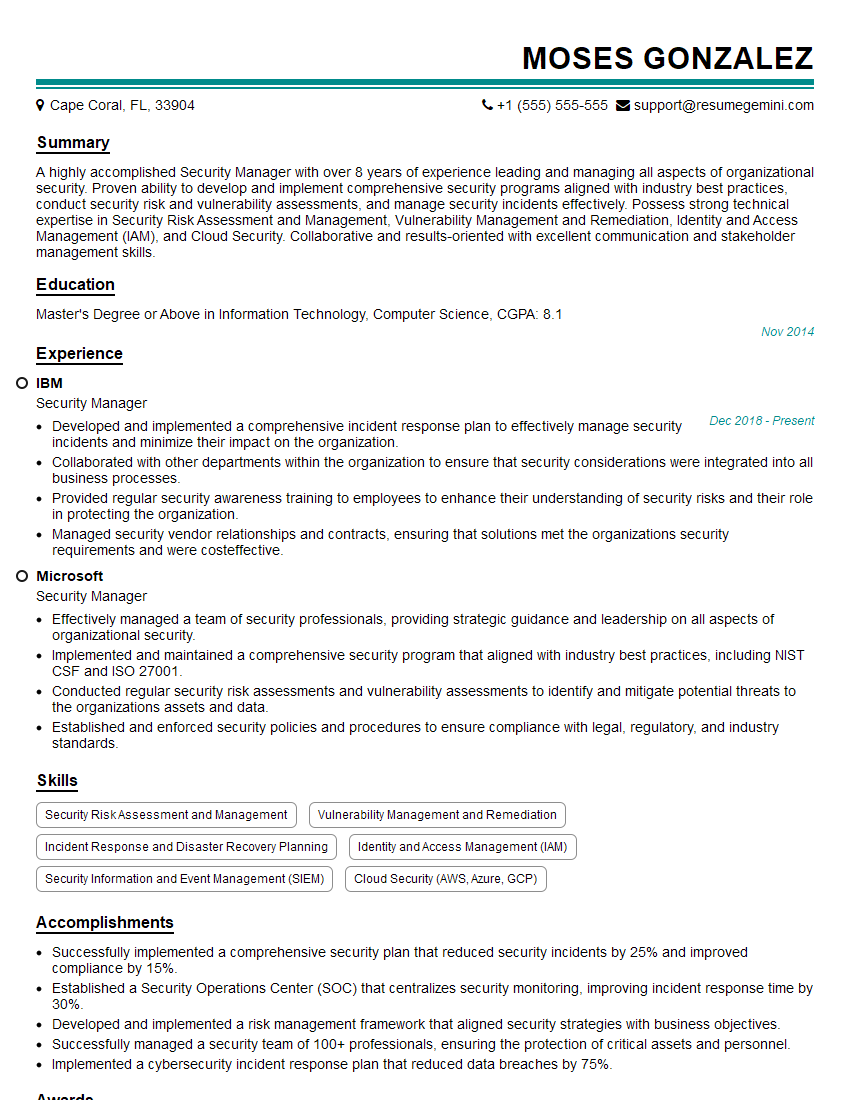
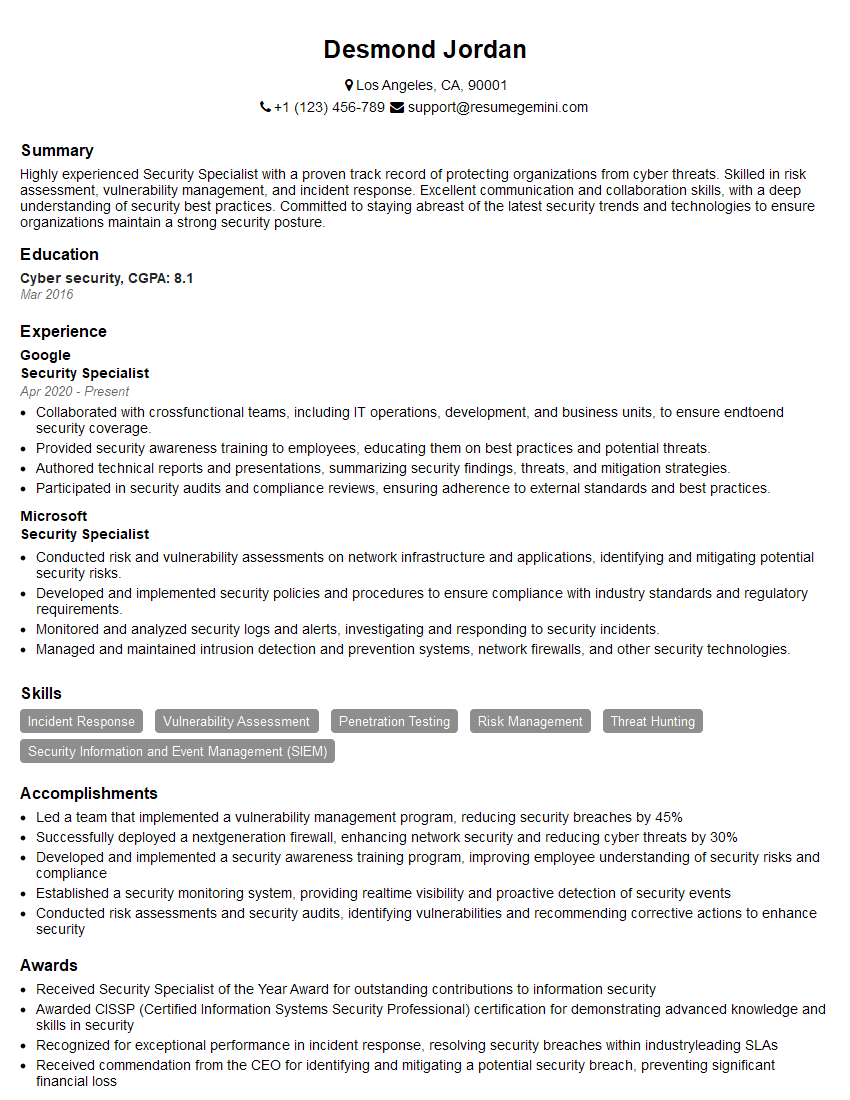
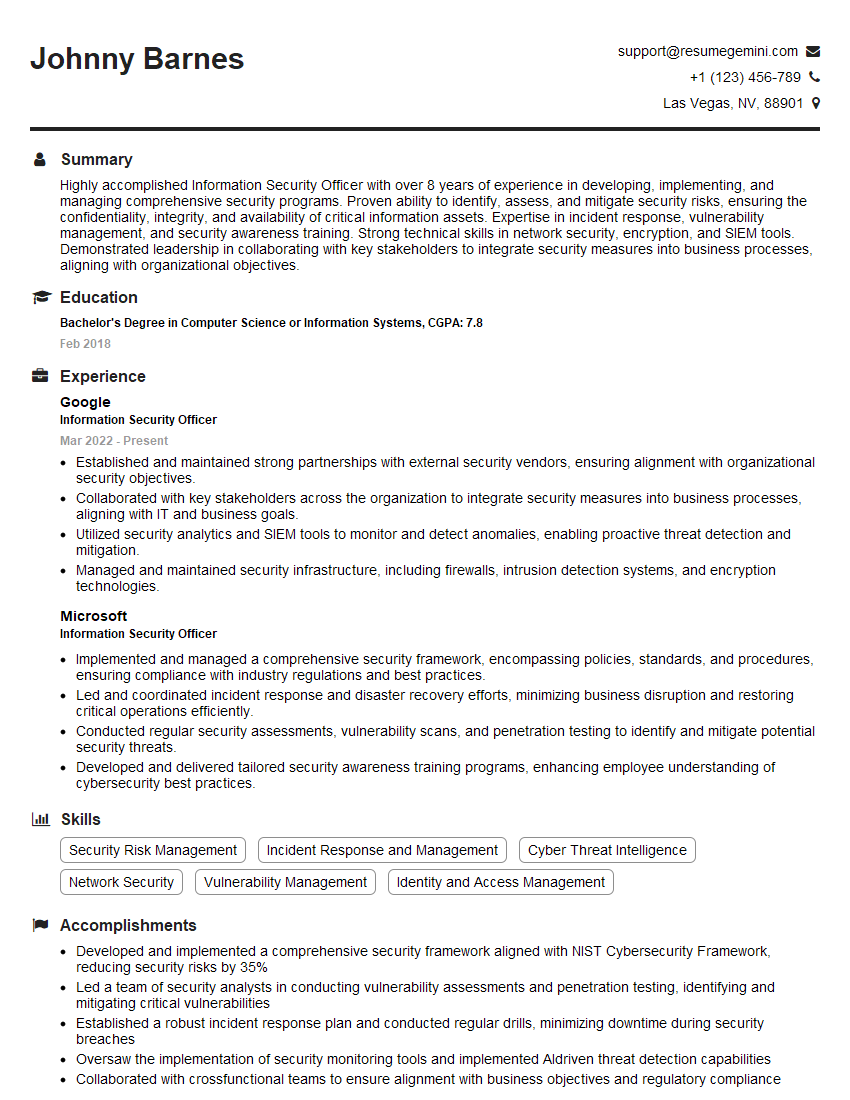
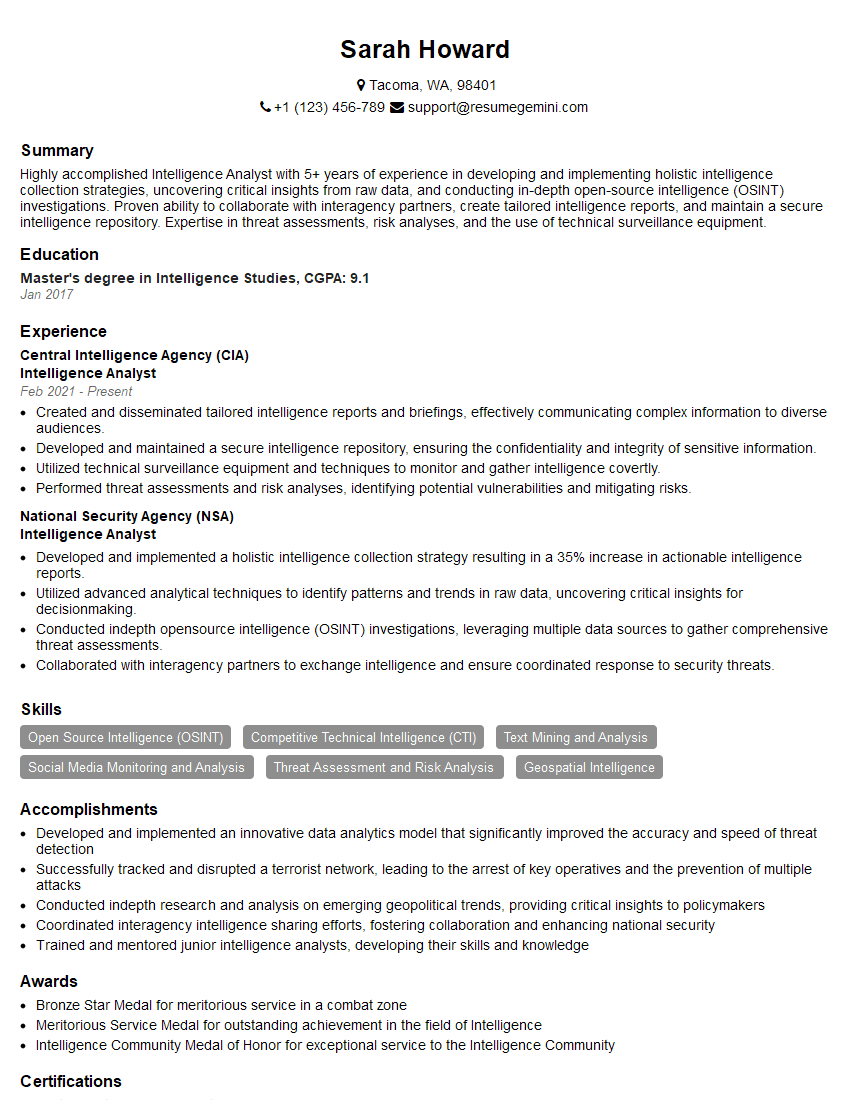
Mastering Counterintelligence briefings is crucial for career advancement in this dynamic field. It demonstrates a deep understanding of critical security principles and your ability to contribute meaningfully to national security. To maximize your job prospects, create a compelling and ATS-friendly resume that showcases your skills and experience effectively. ResumeGemini is a trusted resource to help you build a professional resume that stands out. We provide examples of resumes tailored to Counterintelligence briefings to guide you. Take the next step towards your career goals – craft a resume that reflects your expertise and ambition.
Explore more articles
Users Rating of Our Blogs
Share Your Experience
We value your feedback! Please rate our content and share your thoughts (optional).
What Readers Say About Our Blog
Very informative content, great job.
good